A 6-year-old boy was killed after being struck by an Oklahoma City Public Schools bus near his elementary campus, reported The Oklahoman News.
Authorities reportedly identified the child as Adrian Salgado, a first-grade student at Fillmore Elementary School. He died Dec. 4 at OU Health after being transported from the scene of the crash.
According to the news report, the incident occurred the previous day at 3:15 p.m., as Salgado and two friends were walking home from school. The children were heading east on the south side of SW 51st Street, when they approached Douglas Avenue. Investigators report that an OKCPS bus traveling in the same direction had stopped at a stop sign before attempting to turn south onto Douglas.
As the bus began its turn, two of the children stopped at the corner, but Salgado attempted to run across the street. The side of the bus struck him, knocking him to the ground, where he was run over by the rear wheels. Salgado was reportedly rushed to the Oklahoma University Medical Center, where he was pronounced dead.
“Our thoughts are with the student’s family, loved ones, the first responders and our entire Fillmore community as we grieve this tremendous loss,” the district said via the report. OKCPS added that counselors and support staff will be available on campus to assist students and staff beginning Thursday.
The district also thanked first responders for their rapid actions and said it would work closely with law enforcement as the investigation continues.
HIGH POINT, N.C. — Thomas Built Buses (TBB), a leading manufacturer of school buses in North America and a division of Daimler Truck Specialty Vehicles (DTSV), today gave an update on the expansion of its Type A Minotour production capacity at its legacy manufacturing plant located at 1408 Courtesy Road.
The expansion of the Type A production footprint within the plant builds on Thomas Built’s legacy of innovation and craftsmanship in High Point, home to the company’s original facility dating back to 1916, where the company first produced streetcars before evolving to build Type C, Type D and now Type A buses. It also reflects Thomas Built’s streamlined production strategy, following the relocation of Type D production to the Saf-T-Liner plant earlier this year. Work on the Type A expansion began in late 2024 and is expected to be completed by 2026.
Jeff Allen, senior vice president of operations and specialty vehicles at Daimler Truck North America (DTNA), at Thomas Built’s legacy manufacturing plant located at 1408 Courtesy Road for the celebration of Type A production expansion. (Photo courtesy of TBB.)
“By investing in our legacy facility, we’re honoring more than a century of craftsmanship in High Point while continuing to modernize for the future,” said T.J. Reed, president and CEO of DTSV. “This expansion gives our teams the capacity and tools they need to build even more Type A Minotours for customers across North America.”
The expansion includes a series of modernization efforts aimed at improving workflow, enhancing safety and supporting long-term sustainability. The project will increase production capacity by more than 50 percent, strengthening Thomas Built’s operational efficiency and supporting continued growth in North Carolina. Dedicated space for Minotour production has nearly tripled, now encompassing roughly 72,000 square feet of the building.
“As we expand our capacity, we’re doing so in a way that preserves what makes Thomas Built special — our people, our community and our commitment to building safe, reliable buses for students everywhere,” said Jeff Allen, senior vice president of operations and specialty vehicles at Daimler Truck North America (DTNA). “By investing here in North Carolina, we’re strengthening our operations while ensuring we can serve more customers with greater efficiency, sustainability and innovation.”
About Thomas Built Buses:
Founded in 1916, Thomas Built Buses is a leading manufacturer of school buses in North America. Since the first Thomas Built bus rolled off the assembly line, the company has been committed to delivering the smartest and most innovative buses in North America. Learn more at thomasbuiltbuses.com or facebook.com/thomasbuiltbuses.
Thomas Built Buses, Inc., headquartered in High Point, North Carolina, is a subsidiary of Daimler Truck North America LLC, a leading provider of comprehensive products and technologies for the commercial transportation industry. The company designs, engineers, manufactures and markets medium- and heavy-duty trucks, school buses, vehicle chassis and their associated technologies and components under the Freightliner, Western Star, Thomas Built Buses, Freightliner Custom Chassis Corp and Detroit brands. Thomas Built Buses and Freightliner Custom Chassis Corp. together form Daimler Truck Specialty Vehicles. Daimler Truck North America is a subsidiary of Daimler Truck, one of the world’s leading commercial vehicle manufacturers.
Last month, National School Bus Safety Week was highlighted with videos, PSAs, social media posts and press releases in support of building awareness to the communities we live in and serve. Most of the content I saw specifically highlighted illegal passing awareness. I watched a video shared by the West Virgina Department of Education with the state police department that was simply shocking.
Jimmy Lacy, the transportation director for the state’s Department of Education, and Sgt. Travis Bailes of the Charleston Police Department outline the impact on student safety and state regulations regarding illegal passing. Lacy commented on my social media post, “This is a tough video to watch.”
The video showed footage of a white compact car traveling at a high-rate speed on a two-lane road in a rural area, nearly missing a child crossing the road after exiting their school bus. This near miss could have easily ended in tragedy. You can watch it for yourself at stnonline.com/go/nx.
Another impressive PSA was the brainchild of Katrina Morris, executive director of the Michigan Association of Pupil Transportation and the recent winner of the Peter J. Grandolfo Memorial Award at STN EXPO WEST.
“Tony, I have this idea about getting a famous NASCAR driver to promote school bus safety and illegal passing awareness” Morris told me months earlier at STN EXPO EAST in Charlotte, North Carolina.
Her idea turned into reality, in partnership with ROUSH CleanTech, Blue Bird and other partners, highlighting awareness of illegal passing of stopped school buses. The video features NASCAR driver Ryan Preece at the RFK Racing Museum in Concord, North Carolina. You can watch it at stnonline.com/go/ny.
Doe these efforts move the needle of awareness around illegal passing? Not sure we get a true read on the outcomes of National School Bus Safety Week, but some effort needs to be made by our industry to curb the 39.3 million motorists thought to illegally pass school buses nationwide each year, according to the recent study by the National Association of State Directors of Pupil Transportation Services (NASDPTS).
Engaging the star power of public figures like Ryan Preece might increase interest from mainstream media to get more coverage regarding school bus safety. With the right messaging, we can shift the narrative toward one that highlights the progress we’re making as an industry with a focus on safety and kids. In many cases, the gap between public awareness boils down to the need for broad scale communication to the masses.
The public simply doesn’t understand—or care about, as a NHTSA survey recently found—the rules of the road when it comes to school buses.
Most people understand that the yellow school bus is more than a means of transportation. At least they should. It’s a symbol of family, schools, education and community. The time is now for us to redefine the public’s perception to also build a message around safety. What can you do to enhance safety? Consider investing in innovative crossing control technologies like illuminated signage, crossing gates and LEDs.
“The fully illuminated school bus sign and stop arm can dramatically increase the visibility of a school bus by up to 88 percent in low-light situations according to our efficacy study” said Kevin Smith, president at First Light Safety Company. “Consider that OEMs like IC Bus have standardized this equipment as of August 2025. That is very significant!”
Why wouldn’t you invest in safety technology that works? Is it simply that budget is prioritized over safety? Foundationally as an industry we tout our impressive safety record in school transportation, but we aren’t perfect. Fatalities, injuries and crashes will happen. Are school transportation operations making a best effort to prevent that?
I recommend you take a second look at the available safety equipment, technology and training available to you from partners. Industry trade shows and conferences like TSD, NAPT and STN EXPO offer a great hands-on experiences to demo the products for yourself. Let’s keep driving safety forward, together!
Editor’s Note: As reprinted from the November 2025 issue of School Transportation News.
2027 Juke spotted testing ahead of its launch next year.
Design loosely echoes the Hyper Punk concept model.
The EV is expected to borrow heavily from the latest Leaf.
Nissan offered an early glimpse of the Juke EV earlier this year through a darkened teaser, and now fresh spy shots have caught the upcoming electric crossover out in the wild, testing on European roads.
Dressed in black and white camouflage, the prototype is loosely inspired by the Hyper Punk concept and features large headlights that are hidden behind disguise. We can also see a wide central intake, which appears to have a pronounced sensor.
Baldauf
Moving further back, there’s a rakish windscreen that meets an angular roof. The model also has an upward sweeping beltline and a compact greenhouse.
The front door handles appear to be flush-mounted, while the rear handles are integrated into the upper door trim. Elsewhere, there are aerodynamic wheels and thick side skirts that help to hide the battery pack.
Out back, there’s a liftgate with an angular rear window and a sizable spoiler. They’re joined by split lighting units that have upper turn signals as well as large, squared off brake lights with interesting graphics.
Baldauf
The Juke is expected to borrow heavily from the redesigned Leaf and ride on the same CMF-EV / AmpR Medium platform. This likely means it will use the car’s 52 kWh battery pack, which enables the model to have a WLTP combined range in excess of 271 miles (436 km).
We also wouldn’t be surprised if it uses the Leaf’s entry-level motor, which produces 174 hp (130 kW / 177 PS) and 254 lb-ft (345 Nm) of torque. This enables the model to accelerate from 0-62 mph (0-100 km/h) in 8.3 seconds, before hitting a top speed of 100 mph (161 km/h).
Nissan hasn’t said much about the upcoming model, but they’ve previously confirmed the compact crossover will be launched in fiscal year 2026. It will be built at the company’s Sunderland Plant alongside the Leaf.
Fiat confirmed the Topolino is coming to the United States.
It will apparently arrive next year and slot beneath the 500e.
Euro version makes 8 hp and tops out at 28 miles per hour.
Stellantis dealers are struggling to sell the Fiat 500X years after its demise, but they’re getting some much needed relief as the Italian brand has announced the Topolino is coming to the USA.
Technically, you could fit a couple of them in the same space as a single 500X, so inventory headaches might be minimal. But sarcasm aside, Fiat really has announced it’s bringing the bite-sized model to the States.
The company will share more details next year, but the Topolino is a small two-seat electric vehicle that has a front-mounted motor developing 8 hp (6 kW / 8 PS) and 32 lb-ft (44 Nm) of torque. It’s powered by a 5.4 kWh battery pack, which provides a range of 46 miles (75 km) under the World Motorcycle Test Cycle.
The European model has a top speed of 28 mph (45 km/h) and it can accelerate to that number in ten seconds flat. This would make it ideal for use in neighborhoods, where golf carts have exploded in popularity.
We’ll learn more about the US-spec model in the coming months, but the European Topolino rides on 14-inch wheels. The ultra-compact EV is also sold in Europe as the Citroen Ami and Opel Rocks, though those variants won’t be making their way here. Unless Dodge or Jeep get any weird ideas.
If you thought Japan’s Kei cars were small, just wait until Fiat’s Topolino starts showing up on American roads. The tiny two-seater measures 99.8 inches (2,535 mm) long with a wheelbase that spans 68.1 inches (1,730 mm).
That’s 43.1 inches (1,096 mm) shorter than the slow-selling 500e, which starts at $30,500 before a hefty $1,995 destination fee. Just imagine this thing next to an Escalade or an F-150.
Fiat Unveils Topolino Art Car
The announcement was accompanied by the unveiling of an art car at Miami Art Week. The one-off model was created in collaboration with Romero Britto, who is known for his “vibrant, colorful style that blends elements of cubism, pop art and graffiti.”
Dubbed the Brittolino, the model features a colorful exterior with multiple sections that each has its own unique design. We can also see a contrasting blue roof and doors that have been replaced by ropes. They’re joined by Britto-branded wheels and silver bumpers.
Fiat CEO Olivier Francois said the Topolino “is now everywhere in Europe” and has made several appearances in the United States over the past year, where it has generated “tremendous excitement among consumers.” He added it has been such a hit that “I’m happy to share that we’ll be bringing the Fiat Topolino to the US.”
VW increased ID Buzz incentives, offering up to $10,000 off.
Many dealers list new ID Buzz Pro S models well below MSRP.
Some Colorado stores advertise ID Buzz units in the $30,000s.
2,469 cars. That’s the number of ID. Buzz EVs Volkswagen moved in the first nine months of the year, a figure that makes it the weakest seller in its American lineup, unless you separate out the Golf R and Golf GTI, which, realistically, you shouldn’t.
Given that, it’s no real surprise that VW dealers continue to sweeten the pot on the electric van as the year winds down and they look to clear inventory ahead of the new model year.
What’s VW Offering Now?
If you’ve had your eye on the ID.Buzz, now might be the time to move. Just before the end of November, VW bumped up its Retail Customer Bonus on the ID. Buzz from $2,500 to a way more generous $7,500. While the promotion was introduced as part of Black Friday, it’s sticking around well into January. And that’s not the only offer on the table either.
The ID. Buzz is also eligible for a separate $2,500 Dealer Bonus. That brings potential savings to $10,000, at least in theory. As noted by Cars Direct, the dealer incentive isn’t guaranteed to make it into the buyer’s column. Dealers are within their rights to retain the $2,500 themselves.
So if you’re serious about landing a deal, expect to negotiate. Whether or not that bonus is passed along may come down to how convincingly you make your case.
Both bonuses appear to apply across all trims. The ID. Buzz starts at $59,995 for the Pro S variant, not including the $1,550 destination and delivery fee. Subtract the incentives, and the starting figure can dip to $51,545.
It’s Worth Shopping Around
That’s a solid cut, but as we discovered on Autotrader ourselves, shop around and you’ll find even more aggressive pricing. Several VW dealerships across the country are listing base ID. Buzz Pro S models well under MSRP.
For example, Tynan’s Volkswagen in Aurora, Colorado, has three 2025 Pro S models in its inventory, all with asking prices of just $36,695, a massive $25,500 off the $62,195 stickler. All three have 15 miles or fewer on their odometers.
These aren’t the only cheap ID.Buzz Pro S models available. Karen Radley Volkswagen in Woodbridge, Virginia, has two listed for sale through Autotrader, both available for $45,195 and with a total of zero miles on the clock, for a substantial $17,000 discount from the original $62,195 MSRP.
There are dozens of other Pro S models available across the US for less than $48,000, so if you’re hunting for a deal, there are plenty of good options.
New EVs in Germany now qualify for long-term tax exemptions.
All but one political party voted in favor of the new program.
Purchase incentives will also return starting January 1, 2026.
About two years ago, Germany scrapped a key set of electric vehicle subsidies, only to find out just how dependent its EV market had become on them. The drop-off in sales was sharp enough to prompt a policy reversal.
Now, not only are purchase incentives making a comeback from January 1, 2026, but a generous tax break is being extended for another five years.
It’s been confirmed that any new electric vehicle registered in Germany will be exempt from motor vehicle tax through December 31, 2035. Lawmakers have agreed to keep the registration window open until the end of 2030, meaning any EV signed off before that deadline will enjoy the full exemption through to the end of 2035.
According to Manager Magazin, the original tax exemption had been set to expire at the close of this year. The extension received broad support across parliament, with every party backing it, except for the right-wing AfD.
According to Stefan Korbach, a member of the federal parliament, the tax break is intended to encourage more people to enter the EV market while also supporting Germany’s automotive sector at large.
Purchase Incentives Return
The return of the tax exemption isn’t the only policy lever being pulled to revive electric vehicle demand. As noted, the federal government plans to reintroduce purchase incentives starting in 2026, with a focus on helping lower- and middle-income households afford new EVs.
The program will provide incentives of up to €4,000 ($4,660) toward the purchase of a new EV priced under €45,000 ($52,400), a significant reduction from the previous scheme, which allowed for vehicles up to €65,000 ($75,700).
Eligibility is expected to be limited to individuals earning less than €45,000 ($52,400) annually, which naturally narrows the pool of potential recipients. It’s worth noting that buyers earning under that threshold may find more breathing room in the used EV market rather than in showrooms.
Between 2016 and 2023, Germany’s earlier EV subsidy initiative disbursed around €10 billion ($11.6 billion) in payments to buyers.
Lotus built its first hybrid SUV, based on the electric Eletre.
The hybrid’s 2.0L turbo engine is paired with electric motors.
Combined output could hit 952 hp, topping the Eletre R EV.
Not too long ago, Lotus committed to an all-electric future. The plan was ambitious, but in hindsight, maybe a touch premature. Like several other automakers, it’s now reevaluating that timeline. Enter a new chapter: hybrids. The first model stepping into this transitional role is a familiar face, spun from the current Eletre SUV.
Images released by the Chinese Ministry of Industry and Information Technology (MIIT) confirm what earlier reports suggested. Lotus’s first hybrid offering isn’t a ground-up redesign. It’s a lightly revised version of the existing Eletre, tweaked just enough to accommodate a new powertrain.
Visually, there’s little to give it away. The bodywork remains unchanged apart from a discreet new ‘For-Me’ badge on the decklid. That small emblem is the only outward hint that this Eletre swaps batteries alone for something a little more combustible.
What’s Changed Underneath?
Many technical specifics are still being kept under wraps. What is confirmed is the presence of a 2.0-liter turbocharged four-cylinder engine producing 279 horsepower. That unit will work in tandem with an unspecified electric drive system.
We don’t yet know the size of the battery pack or how many electric motors are onboard, but reports claim that the hybrid setup will deliver a combined 952 hp. That would put it slightly ahead of the fully electric Eletre R, which tops out at 905 hp.
Electric range in the Lotus For-Me depends on the trim, with figures falling between 345 and 355 kilometers (214 to 221 miles) under the optimistic CLTC cycle.
In plug-in hybrid mode, fuel consumption is exceptionally low at just 0.06 to 0.07 liters per 100 km (approximately 392 to 336 mpg), according to WLTC standards.
Once the battery is depleted and the crossover runs on its combustion engine alone, consumption rises significantly to between 6.0 and 6.10 liters per 100 km (around 39 to 38.6 mpg).
The dimensions of the hybrid are identical to the EV. As such, the sleek SUV is 5,103 mm (201 inches) long, 2,019 mm (79.4 inches) wide, and stands 1,636 mm (64.4 inches) tall with a 3,019 mm (118-inch) wheelbase. Weight will vary between 2,575 kg (5,676 lbs) and 2,625 kg (5,787 lbs), depending on the specification.
It’s Coming to Europe
The hybrid version, called the Eletre For-Me, will make its debut in China. But this isn’t a market-exclusive product. Lotus has confirmed that its new plug-in hybrid lineup is headed for Europe as well.
Next in line after the hybrid Eletre is likely a plug-in version of the sleek Emeya sedan. Built on the same platform and sharing many core components with the SUV, the Emeya is an obvious candidate for hybridization. A third model, a smaller SUV, has also been confirmed and is due to arrive in 2027.
Each of these new plug-in hybrids will make use of Lotus’s 900-volt electrical architecture. Among other benefits, that setup supports ultra-fast charging. According to Lotus, charging from 10 to 80 percent will take just ten minutes.
Nissan NX8 debuted in China ahead of its 2026 market launch.
Electric and hybrid versions are powered by CATL battery tech.
The electric NX8 makes up to 335 hp from a single electric motor.
Nissan has introduced a new midsize SUV developed in partnership with Dongfeng in China, marking the latest addition to its growing, budget-conscious N-series lineup. Named the NX8, the model joins the existing N6 and N7 sedans and will be offered with a selection of electrified powertrains.
The SUV’s exterior design follows the same styling language as its sedan counterparts, with clean surfacing and a grille-free front fascia. A full-width daytime running light runs across the split headlights and wraps around the front fenders, while OLED tail lights extend across the rear.
The overall shape leans toward conventional SUV proportions, marked by flush-fitting door handles and pronounced shoulders.
How Big Is It?
The NX8 measures 4,870 mm (191.7 inches) in length, 1,920 mm (75.6 inches) in width, and 1,680 mm (66.1 inches) in height, with a wheelbase of 2,917 mm (114.8 inches).
That makes it 222 mm (8.7 inches) longer than the Rogue (X-Trail) and 152 mm (6 inches) shorter than the Pathfinder. Interestingly, its wheelbase is 17 mm (0.7 inches) longer than the Pathfinder’s, which should translate to slightly better interior space.
Images reveal a suite of sensors along with a roof-mounted lidar unit, hinting at advanced driver assistance tech. Nissan hasn’t revealed the interior yet, but it’s expected to mirror the cabin layout of the N6 and N7, likely featuring a prominent touchscreen and soft-touch materials throughout. The company says the NX8 will offer a spacious five-seat configuration.
What Powers It?
Nissan has confirmed the NX8 will be classified as a NEV (New Energy Vehicle), with specifications recently published by China’s Ministry of Industry and Information Technology.
The fully electric variants will be available with either a single motor producing 288 hp (215 kW / 292 PS) or a more powerful version at 335 hp (250 kW / 340 PS).
A plug-in hybrid or range-extender version will also be offered, pairing a 1.5-liter turbocharged engine making 146 hp (109 kW / 148 PS) with an electric motor rated at 262 hp (195 kW / 265 PS).
All variants will use the latest lithium iron phosphate battery packs supplied by CATL. While range figures and battery capacities have not yet been disclosed, the packs are said to support ultra-fast charging.
The market launch of the Nissan NX8 in China is scheduled for the first half of 2026 with pricing set to be announced closer to that date. As with the N6 and N7 sedans, the SUV will reportedly be exported to other markets in the near future.
When and Where Can You Buy One?
Nissan plans to launch the NX8 in China during the first half of 2026, with pricing to be confirmed closer to its market debut. As with the N6 and N7 sedans, the NX8 is expected to be exported to additional markets after its initial rollout. Whether that will include Western regions like Europe and Australia, however, remains to be seen.
As for pricing, we’ll have to wait for official figures, but if the N6 and N7 are any indication, it’s likely to stay within a very competitive range. The N7, for example, is priced between 119,900 and 149,900 yuan, or roughly $17,000 to $21,200 at current exchange rates.
An environmental group is leading a call for Congress to place a moratorium on the construction of new data centers used to power artificial intelligence.
Mercedes GLB replaces EQB and launches with electric-only options.
85 kWh battery enables 392 miles in single-motor, 382 in dual-motor.
Next year, an entry-level EV will be introduced, as will several hybrids.
A new generation of the Mercedes-Benz GLB has arrived, and while the silhouette remains true to the blocky, upright form of the original, there’s quite a bit going on beneath the surface.
Offered in both 5- and 7-seat configurations, the 2026 GLB debuts as an all-electric model and, for now, serves as a replacement for the EQB in everything but name. Hybrid versions will follow later, but the first wave is electric-only.
Two versions of the new generation GLB are launching out of the gate. The first, labeled GLB 250+ with EQ Technology, features an 85 kWh lithium-ion battery and adopts an 800-volt electric architecture.
It powers a single rear-mounted motor rated at 268 hp and 247 lb-ft of continuous torque, with a short-term boost up to 335 lb-ft. Acceleration from 0–62 mph (100 km/h) takes 7.4 seconds, and range is quoted at 392 miles (630 km) on a full charge, olid figures for a compact SUV in this category.
Sitting above the 250+ is the 350 4Matic with EQ Technology. The name might not stick in your memory, but the numbers probably will. This dual-motor variant adds a front axle motor for all-wheel drive, producing a combined 349 hp and 380 lb-ft of torque.
Range takes a slight dip to 382 miles (615 km), but the extra grunt cuts the 0–62 mph time down to 5.5 seconds.
Mercedes has also confirmed a more affordable electric entry-level version will join the lineup next year, followed by a hybrid variant using 48-volt architecture. Three power levels will be available across front- and all-wheel drive formats.
Starry Eyed
Like other new-generation Mercedes models (think CLA and GLC EQ), the GLB adopts a more expressive front end. A large grille dominates the nose, flanked by redesigned headlights with intricate star-shaped DRLs and a full-width light bar. It’s not a particularly handsome looking SUV, but neither is the outgoing model.
The rear-end is perhaps the most controversial angle of the 2026 GLB. The taillight treatment leans into the styling language seen on the brand’s EQXX Concept from a few years back, with vertically oriented clusters connected by a slim light bar. The signature star pattern makes another appearance here.
How Much Bigger Is It?
The new electric GLB has grown in nearly every direction compared to both the previous EQB and the combustion-powered GLB it effectively replaces in this segment. At 4,732 mm (186.3 inches) in length, it’s 48 mm (1.9 inches) longer than the EQB and a full 98 mm (3.9 inches) longer than the earlier GLB. Width is up as well, now measuring 1,861 mm (73.3 inches), 27 mm (1.1 inches) wider than both predecessors.
Interestingly, height has gone the other way, dropping slightly to 1,687 mm (66.4 inches), which makes it 14 mm (0.6 inches) lower than the previous models.
The wheelbase sees the most notable stretch, now sitting at 2,889 mm (113.7 inches), a 60 mm (2.4 inches) increase over earlier versions. That extra length between the axles should improve interior space, particularly in the second row.
One small trade-off comes in maneuverability: the turning circle has grown marginally, from 11.7 m (38.4 feet) in the old GLB to 11.9 m (39.0 feet) in the new electric version. Boot capacity is also up, with 667 liters (23.6 cubic feet) available in the rear and 127 liters at the front (frunk).
An All-New Cabin
A big step into the future has also been made with the GLB’s interior. Like the CLA, it can be optioned with the Mercedes Superscreen, consisting of a 10.25-inch driver display, a 14-inch infotainment screen, and a 14-inch display for the passenger.
As with other new Mercedes-Benz interiors, the dash of the GLB is almost completely flat, largely free of any interesting design details.
It runs on the fourth-generation MBUX system that includes Microsoft and Google artificial intelligence. The screen runs on the Unity Game Engine and includes the MBUX Virtual Assistant, based on ChatGPT4o. Clearly, Mercedes was eager to make the GLB as tech-focused as possible.
At this point, pricing is confirmed only for Germany. The GLB 250+ with EQ Technology starts at €59,048 ($68,700), while the 350 4Matic comes in at €62,178 ($72,400). US pricing hasn’t been announced yet, but expect a similar spread when it arrives in other markets next year.
EV platforms seem ideal for ultra luxury brands like Rolls Royce today.
Wealthy buyers appear hesitant about fully embracing these EVs.
Two certified Spectres show steep six figure discounts at a dealer.
Electric power should be the ultimate match for ultra-luxury motoring. On paper, nothing suits a Rolls-Royce, Bentley, or Maybach better than smooth, silent propulsion and torque-rich acceleration.
These are brands built on quietness, presence, and seamless power delivery, the very same traits electric vehicles seem born to provide better than any V12 ever has. In theory, this should be a golden era for the top of the market.
Wealthy owners don’t worry about range, rarely road-trip their cars across states, and often have multiple vehicles (and dedicated home charging) to rotate through. So why is it that the first wave of ultra-luxury EVs is landing with a thud on the used market?
The clearest example of this is the Rolls-Royce Spectre. It’s elegant, impeccably built, and quieter than basically everything else in their lineup. Despite that, resale values are cratering faster than it can rocket from 0 to 60.
Are Rich Buyers Backing Off?
Take, for instance, the Spectre listed on Bring a Trailer early last year. With only 99 miles on the odometer and the added appeal of being a “Launch Package” edition, it failed to meet reserve with a high bid of just $451,000. That might sound like a lot, but its MSRP was $521,650.
This week, we also spotted two low-mileage, certified pre-owned examples at a Rolls-Royce Boston dealership, each listed with six-figure discounts off their original MSRP! Don’t get us wrong, no luxury car (outside of hypercars) is going to maintain perfect value.
Rolls-Royce Motorcars Boston
But together, these two Spectres from Herb Chambers originally carried a combined sticker price of $1,064,725. The lower-mileage example, showing just over 2,100 miles, is listed at $385,575, or $136,000 below its original MSRP of $521,575.
The other Spectre, with only 3,822 miles on the odometer, is priced at $385,150, reflecting a massive $158,000 drop from its $543,150 MSRP from about a year ago. That’s enough to buy a brand-new Porsche 911 Carrera T ($143,700) and still have money left over for something else.
Which circles us back to the broader question. Why is it that wealthy buyers are steering clear of super-luxury EVs like the Spectre? Does it come down to tradition and the desire for a classic internal combustion powertrain like a V12 powerhouse?
Is infrastructure anxiety still a factor, even at the top end of the market? Or maybe some buyers simply haven’t driven them enough (or at all) to realize just how rewarding they really are. We’re curious what you think. Let us know in the comments below.
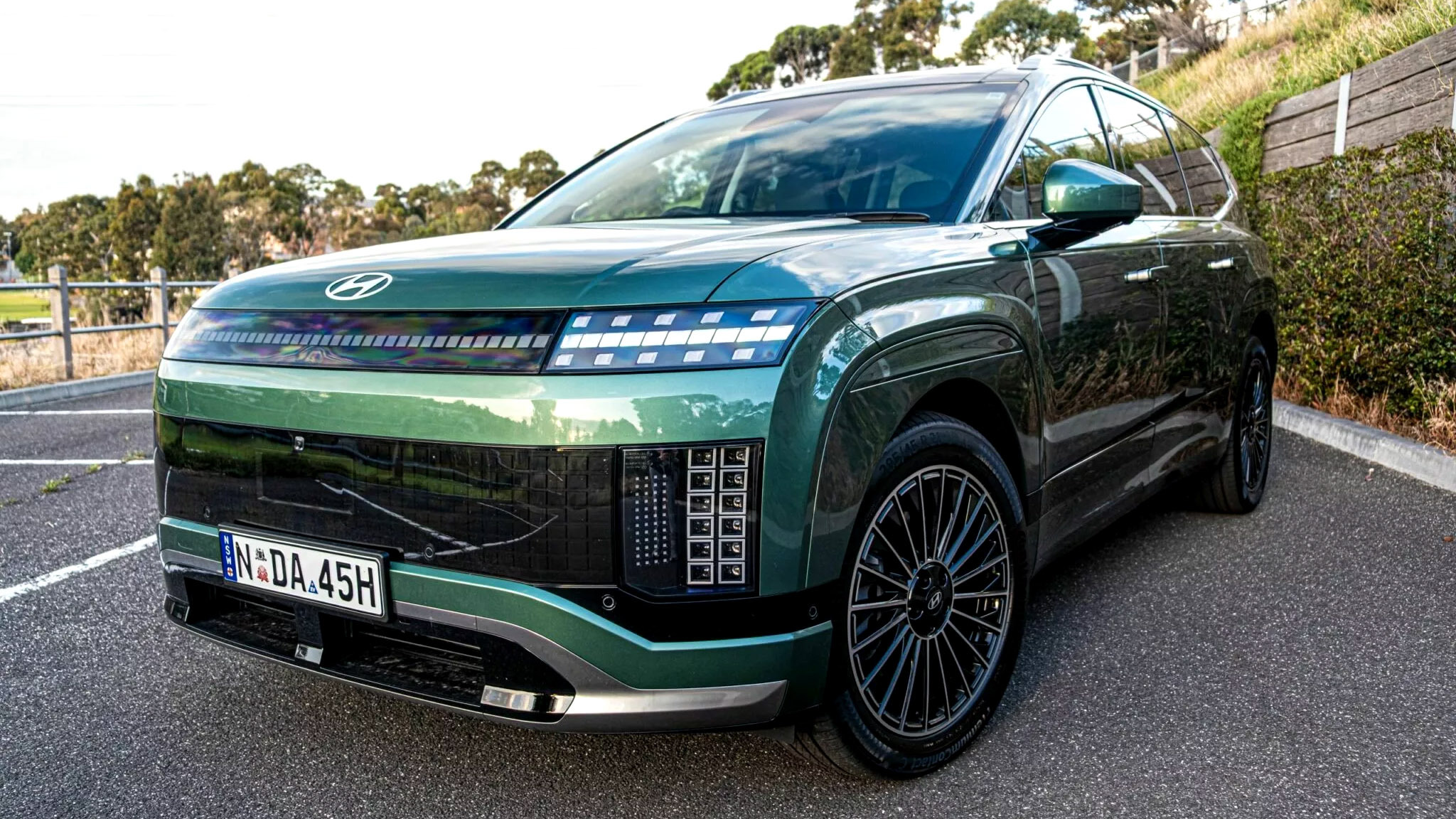
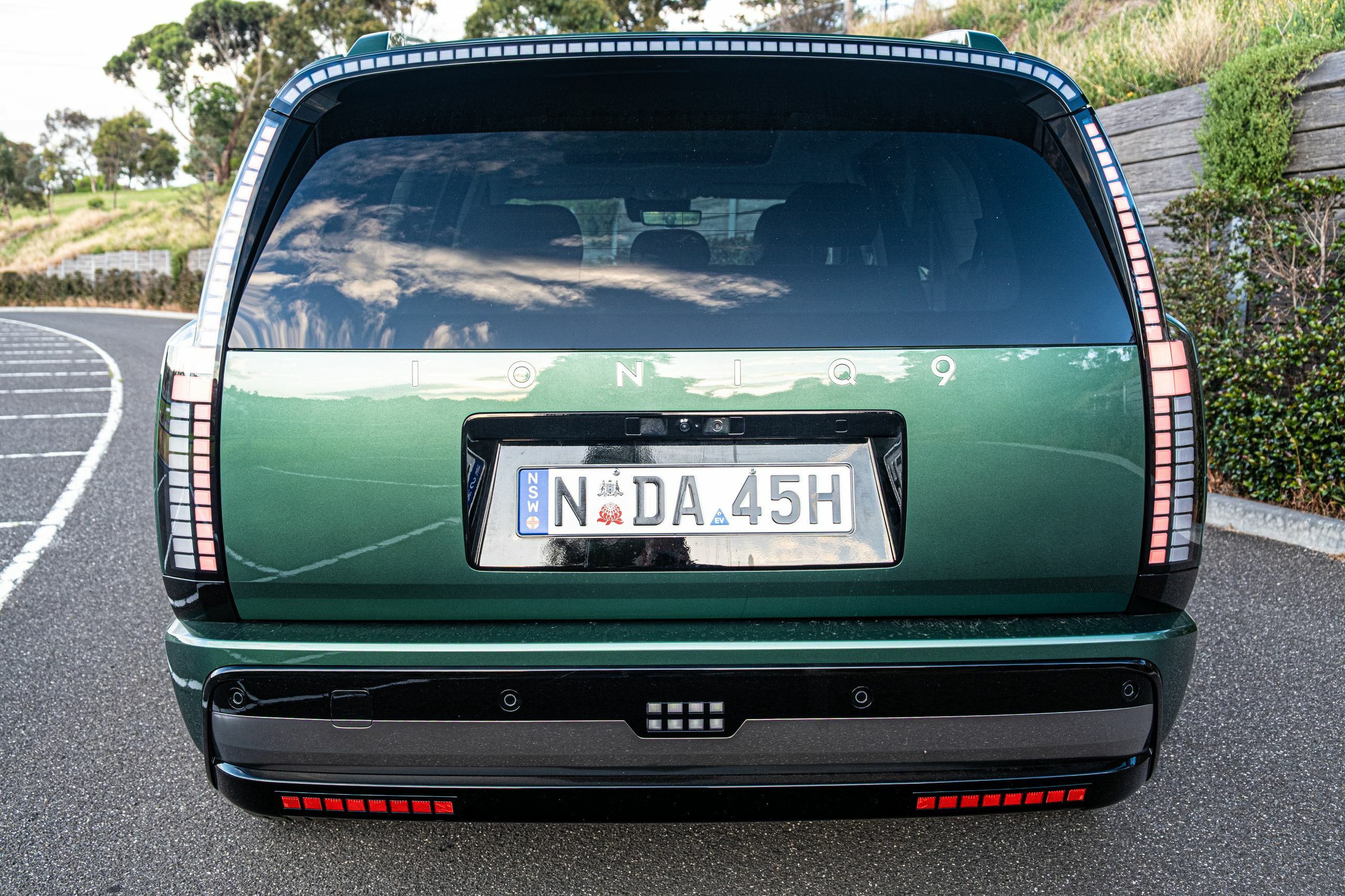
Electric SUVs have come a long way in a short time, but in the three-row space, progress has been surprisingly slow. Hyundai made a big impression on the EV market when it unveiled the striking Ioniq 5 in early 2021. A month later, Kia unveiled its related EV6.
However, following the debut of the Ioniq 5 and the later arrival of the Ioniq 6, Hyundai’s rollout of next-generation EVs has slowed, especially compared to Kia. In the same span, Kia has steadily grown its lineup, recently adding the EV3, EV4, EV5, and EV9 to its expanding electric stable.
This makes the launch of the new Hyundai Ioniq 9 all the more important. You see, it’s related to the three-row Kia EV9, but that model was launched more than 18 months before it, meaning Hyundai has to catch up ground.
QUICK FACTS
› Model:
2026 Hyundai Ioniq 9 Calligraphy
› Starting Price:
AU$128,413 (US$84,000)
› Dimensions:
5,060 mm (199.2 in.) Length
1,980 mm (77.9 in.) Width
1,790 mm (70.4 in.) Height
3,130 mm (123.2 in) Wheelbase
› Curb Weight:
2,721 kg (5,998 lbs)
› Powertrain:
Dual electric motors | 110.3 kWh battery
› Output:
421 hp (314 kW) / 516 lb-ft (700 Nm)
› 0-62 mph
5.2 seconds (0-100 km/h)
› Transmission:
Single-speed
› Efficiency:
22 kWh/100 km as tested
› On Sale:
Now
SWIPE
Working in Hyundai’s favor is the fact that not much has changed in the three-row electric SUV segment since the EV9 launched. Few contenders have emerged in this particular bracket, especially at the price point where both the EV9 and Ioniq 9 are playing.
We recently had the opportunity to spend a full week living with the Hyundai Ioniq 9 in Calligraphy trim, putting it through its paces not just to see how it stacks up against the EV9, but also to ask a tougher question: can it justify its position as the most expensive Hyundai ever sold?
What Does it Cost?
Photos Brad Anderson/Carscoops
While Kia offers several versions of the EV9 in Australia, Hyundai has only launched a single trim variant of the Ioniq 9, known as the Calligraphy. Buyers can choose between six or seven seats, and pricing starts at AU$128,413 (equal to US$84,000 at current exchange rates) including on-road costs.
There’s no denying that’s a lot of cash for a Hyundai. However, it’s surprisingly good value compared to the Kia EV9 GT-Line, the nearest equivalent to the Calligraphy, which is priced from AU$138,915 ($90,700).
Shoppers in the US looking to pick up the keys to the new Ioniq 9 can purchase it for as little as US$58,955. The flagship Performance Calligraphy Design tops out at the range, starting at US$76,490. Although Australia’s Calligraphy model lacks the word ‘Performance’ in its name, it has the same powertrain as the American model.
Beneath the concept-car-like looks of the Ioniq 9 is a huge 110.3 kWh battery, larger than the flagship 99.8 kWh pack in the EV9. This battery feeds a pair of electric motors, each rated at 157 kW (210 hp), or a combined 314 kW (421 hp) and 700 Nm (516 lb-ft) of torque. That gives it a healthy edge over the EV9 GT-Line’s 283 kW (380 hp), although torque remains identical.
A High-Class Cabin
Photo Credits: Brad Anderson/Carscoops
As you’d expect for a vehicle at this price point, the Ioniq 9 Calligraphy’s cabin is exceptionally plush and feels more premium than the EV9, which has too much plastic for our liking.
Like other Hyundai models, there are two 12.3-inch screens in front of the driver, housed within a single curved display that supports wireless Apple CarPlay and Android Auto. Whereas Kia insists on continuing to employ an inconveniently located third screen on the dash for the climate controls, the Ioniq 9 uses a dedicated display under the dash with a touch panel and physical temperature dials.
Our Ioniq 9 was equipped with the eye-catching Dark Wine and Dove Grey two-tone Nappa leather, one of three available two-tone options for those not interested in the standard Obsidian Black trim. The Ioniq 9 is available with digital wing mirrors, but fortunately, our car didn’t have them. By comparison, the EV9 GT-Line is sold exclusively with cameras instead of mirrors.
There are plenty of luxuries found within the cabin, making the Ioniq 9 perfectly suited to any kind of journey. This includes a heated steering wheel, heated, ventilated, and massaging front seats and a wireless phone charger.
Photos Brad Anderson/Carscoops
There’s also a panoramic sunroof, tri-zone climate control, configurable ambient lighting, and a head-up display. Tech enthusiasts will be pleased to know that in addition to having two high-powered 100-watt USB-C ports in the dash, there are also 100-watt USB-C ports on the backs of the front seats for rear passengers.
Those seeking the ultimate in comfort would be wise to opt for the six-seat version, as it replaces the second-row bench seat with a pair of captain’s chairs, which are very similar to the front seats.
However, even in 7-seat guise, the Ioniq 9’s second row is more than large enough to carry three adults in comfort. Even the third row is surprisingly practical. I’m 6’2” (189 cm) and my hair only brushed the headliner, but I did have to slide the second-row seats forward to get any leg room.
There’s no question this ranks among the most premium interiors Hyundai has ever put together. Even so, it doesn’t feel dramatically more upscale than the far more affordable Santa Fe. It shares quite a few components too, including the dual screens, steering wheel, and HVAC controls. Cabin space is only slightly more generous as well. The latest Palisade, for that matter, feels every bit as polished as the Ioniq 9.
Performance and Comfort
Despite not being marketed as a performance vehicle in Australia, that’s exactly what the Ioniq 9 feels like, at least in a straight line. It can hit 100 km/h (62 mph) in 5.2 seconds, an impressive figure considering the seven-seater weighs a portly 2,721 kg (5,998 lbs). Pin the throttle and it lurches forward, squatting at the rear and leaving hot hatches for dead.
However, show the Ioniq 9 a set of corners, and it doesn’t match the surprising agility of the EV9 GT-Line. That isn’t to say it can’t be hustled through corners at impressive speeds, as it can, thanks in part to the Continental PremiumContact tires. But the Ioniq 9 clearly prefers a calmer approach, and with the massaging seats doing their thing, it feels most at ease settling into a smooth cruise.
Hyundai has done a good job of calibrating the steering of its new flagship SUV and it is beautifully light, perfect for a vehicle of this size, ensuring it’s easy to park. While driving the Ioniq 9, I quickly forgot about its weight, although it was a little harder to forget about the sheer size of the thing.
Measuring it at 5,060 mm (199.2 inches) long, it’s 50 mm (1.9 inches) longer than the EV9, and matches the Kia’s 1,980 mm (77.9-inch) width. It’s even 8mm (0.3 inches) longer than a full-size Range Rover.
Range to Match The Speed
Photos Brad Anderson/Carscoops
Thanks to the big battery pack and respectable efficiency, the Ioniq 9 has good, real-world driving range. Hyundai claims it can travel up to 600 km (373 miles) between stops and quotes average efficiency of 20.6 kWh/100 km. During my week with the Ioniq 9, I averaged 22 kWh/100 km, traveled 210 km (130 miles), and had 298 km of remaining range (185 miles).
As with other EVs from Hyundai, Kia, and Genesis, charging is a strong suit of the Ioniq 9. It supports charging speeds of up to 233 kW, meaning the battery can be topped up from 10-80 percent in 24 minutes through a 350 kW charger. AC charging is capped at 10.5 kWh, which is enough for an overnight charge at home.
Given the Ioniq 9’s considerable weight, I expected the ride to be on the firmer side, as is often the case with electric vehicles. Instead, it turned out to be surprisingly comfortable and noticeably softer than the EV9 GT-Line. That said, the lighter and more compact Santa Fe still manages to deliver an even smoother ride.
Brake regeneration is handled by paddle shifters behind the steering wheel, allowing you to cycle between four different levels, including a one-pedal driving mode which works superbly.
Hyundai has also equipped the Ioniq 9 Calligraphy with its Highway Driving Assist 2 system, which includes radar cruise control and an automatic lane-change function. It can even shift the EV to the edge of the lane when passing a truck for added safety. As we’ve come to expect from the South Koreans, the HDA2 system works flawlessly on the highway.
Verdict
As a standalone EV, especially when stacked against pricier rivals like the troubled Volvo EX90, the Hyundai Ioniq 9 makes a compelling case for itself. Yes, it carries a price more commonly tied to Hyundai’s luxury arm, Genesis, but large electric SUVs come at a premium, particularly those that blend comfort, refinement, and capability as well as this one.
However, as we saw with the Kia EV9, it is the competition from within Hyundai’s own lineup that will likely limit the Ioniq 9’s appeal.
For roughly AU$50,000 (US$32,600) less, you can get a seven-seat Santa Fe Hybrid Calligraphy. And if you’re looking for something larger, the all-new Palisade is available as a seven-seater or even an eight-seater, and costs around AU$30,000 (US$19,500) less. Still, if you’re dead set on an electric SUV for the family, the Ioniq 9 is an easy one to recommend.
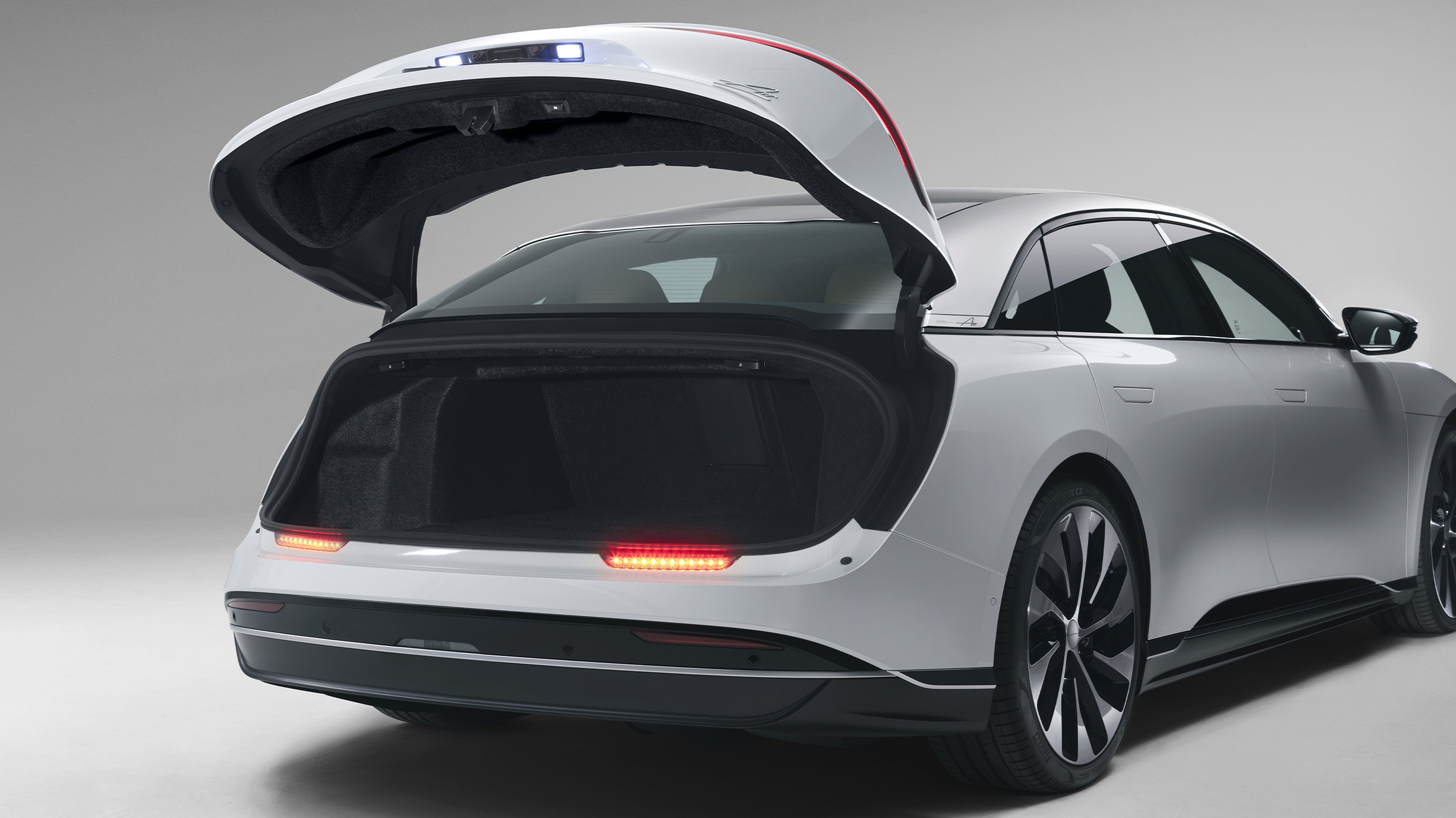
A trunk spill caused limp mode, warning lights, and left the Air stuck.
Warranty coverage was denied, and insurance may reject the repair bill.
It follows a similar Ioniq 5 incident where a water spill cost nearly $12k.
Doctors and health influencers are always telling us that drinking tons of water is the secret to clearer skin, sharper minds, strain-free poops and longer lives. But if there’s one group that absolutely should not stay hydrated, it’s modern electric vehicles, because a few drops could leave them with a massive medical bill.
Just ask Reddit user u/raging_onyx who leased a Lucid Air and saw his Thanksgiving week turn into a $15,000 lesson in why electric cars and water should never meet.
What Happened?
The disaster started with a perfectly innocent trip to a grocery store to refill a water container. But a pothole encountered on the way back tipped that container over, causing a catalog of faults that eventually rendered the vehicle completely immobile.
Within seconds of the spill happening the dash lit up like Times Square, the EV jumped into limp mode, regen braking tapped out, and the driver got a warning to pull over. When he found a local residential area to stop and tried to reboot the system, the Air wouldn’t shift out of Park.
A Very Expensive Lesson
Lucid customer support, in an impressive display of holiday cheer, suggested two things: call insurance, and brace for the possibility the car was totaled. Happy Thanksgiving!
There was more bad news when the first tow truck driver arrived and said he couldn’t move the sedan, since the Air wouldn’t shift into neutral. Fortunately, by the next day, neutral was found and a second truck was able to tow the stranded car.
Finally, the EV reached a service center, where the advisor initially estimated the repair at under $1,000. Bearable, right? This turned out to be off by roughly the price of a used Corolla.
The real number, the rep later confirmed, was about $15,000, and it wouldn’t be covered by warranty, because the spill was technically the driver’s fault.
As of the Reddit post, the driver was still waiting to find out whether his insurance would step in to cover the costs. You’d think the answer would be yes, but that’s not always how these things always play out.
Just last month, we reported on a similar incident involving a Hyundai Ioniq 5. A small water spill in the rear footwell damaged the car’s wiring, and neither the manufacturer nor the insurance company was willing to cover the $11,882 repair bill.
A look back at the most popular charts, articles, data insights, and more from Our World in Data in 2025.<br><br><a href="https://ourworldindata.org/top-of-the-charts-2025-redirect"><img src="https://ourworldindata.org/cdn-cgi/imagedelivery/qLq-8BTgXU8yG0N6HnOy8g/ddab06f1-a4f4-4b0f-24e2-c376b650a600/w=1024"/></a>
Facing an ongoing shortage of school bus drivers, Pasco County Schools in Florida is launching a new incentive program aimed at keeping routes covered and getting students to school on time, reported Bay News.
According to the news report, district officials say 49 of the county’s 297 school bus routes currently lack permanent drivers, resulting in some students arriving late to class. To help solve the issue, the district has approved quarterly bonuses designed to boost recruitment and retain current staff.
Beginning this quarter, drivers with strong attendance will receive a $500 bonus. Those who volunteer for designated high-need routes, often in more remote areas, will earn an additional $250 per quarter.
“Our goal is to ensure that every student gets to school on time so that learning can occur,” said Superintendent John Legg.
For veteran driver Lynn Zion-Weick, who came out of retirement four years ago after seeing an ad for the job, said the work is both meaningful and manageable.
“I’m pretty good with kids and I decided to give it a shot,” she said, adding that today’s buses drive “just like a nice car,” helping ease concerns from new recruits.
While she admits learning the engine components was the toughest part of training, she said the role has only grown more rewarding, especially since she now drives children whose grandparents she once attended school with.
With the driver shortage still pressing, the district is ramping up its hiring efforts. Pasco County Schools will host a school bus driver recruitment event on Dec. 11 and is hopeful the new bonuses will bring more applicants behind the wheel.
GM says strict fuel rules nearly forced it to cut gasoline models.
CEO claims compliance pressure could have closed GM plants.
Trump rollback eases targets automakers struggled to meet fully.
General Motors CEO Mary Barra recently acknowledged that federal fuel efficiency standards were set so aggressively under the Biden administration that her company would have been forced to scale back production of internal combustion engine vehicles just to stay compliant.
Barra shared this during a conversation at a high-profile industry conference hosted by The New York Times, where she discussed the internal pressures major automakers face under the current regulatory environment.
Timing matters, of course, as her comments came shortly after President Donald Trump confirmed that fuel efficiency standards are being rolled back, reducing the pressure on automakers to build EVs and providing them with more flexibility to manufacture and sell more combustion-powered models.
“Had to Start Shutting Down Plants”
Under the Biden-era rules, automakers would have been required to reach a fleet-wide fuel economy average of 50 miles per gallon by 2031. According to Bloomberg, achieving that would have meant electric vehicles making up more than half of all sales by that point.
If GM couldn’t meet those benchmarks, and if the administration didn’t revise the rules to reflect market realities, Barra claims that the company would have had little choice but to curtail sales of its gasoline-powered lineup.
She added that internal forecasts indicated the company would have “had to start shutting down plants” if its EV sales didn’t grow quickly enough.
Barra also touched on several other topics with Andrew Ross Sorkin, the interviewer and the founder and editor at large of DealBook. At one point, he asked her about GM flip-flopping in supporting policies during the first Trump administration, again when Joe Biden was elected, and once more after Trump returned to the White House in January.
Bending The Knee Or Business As Usual?
Barra responded by framing GM’s approach as pragmatic, not political. The company, she said, wants to build vehicles people want to buy, and it simply has to work within the regulatory frameworks set by whoever is in office.
Now, thanks to the rollback of CAFE standards, it will have the freedom to better manufacturer vehicles based on what their customers want, rather than simply what they must build to meet regulatory requirements.
How this will impact the American car industry remains to be seen, but if those rules remain in place in the future, we don’t expect to see EVs accounting for a significant share of the market any time soon.
The upcoming AUDI E7X has been revealed by Chinese authorities.
Arrives next year offering a dual-motor AWD system with 671 hp.
Cabin tech may mirror E5 with wide display and AI-powered assistant.
Audi’s awkwardly named Chinese sub-brand AUDI introduced the E SUV concept at the Guangzhou Auto Show last month and now China’s Ministry of Industry and Information Technology has revealed the production model. It’s known as the E7X and it closely echoes the concept.
The design is instantly recognizable as both have a familiar front fascia with a fully enclosed grille. However, the production model eschews the full light surround seen on the concept. The road-going crossover also has a revised lower intake with what appears to be an active shutter.
Moving further back, we can see traditional and digital side mirrors as well as new cameras or sensors on the front fenders. They’re joined by a roof-mounted Lidar sensor as well as flush-mounted door handles and a variety of wheels in sizes up to 22-inches.
How Big Is It?
The E7X measures 198.8 inches (5,049 mm) long, 78.6 inches (1,997 mm) wide, and 67.3 inches (1,710 mm) tall with a wheelbase that spans 120.5 inches (3,060 mm). That means the production crossover is slightly smaller and shorter than the concept.
Furthermore, to put those numbers into prospective, the model is 0.8 inches (20 mm) shorter than the current Q7. However, its wheelbase extends an extra 2.6 inches (66 mm).
The MIIT didn’t reveal interior pictures, but confirmed at least one variant will be offered with a four-seat setup.
That’s not much to go on, we do know the E5 Sportback has a 27-inch pillar-to-pillar display and an AI-powered avatar known as AUDI Assistant, so it’s reasonable to expect similar tech inside the E7X.
The E5 also sports three-dimensional wood trim, a dual wireless smartphone charger, and an ambient lighting system. They’re joined by a fragrance diffuser and hidden air vents.
Multiple Powertrains And Up To 671 HP
The images reveal quattro and non-quattro variants, which means we can expect an entry-level model with a rear-mounted motor producing 402 hp (300 kW / 408 PS). The all-wheel drive variant, on the other hand, will have 671 hp (500 kW / 680 PS) and a top speed of 143 mph (230 km/h).
The MIIT didn’t have much else to say about the crossover, but the concept had a 109 kWh battery pack that provided a CLTC range of more than 435 miles (700 km). The model also had an 800-volt electrical architecture, which enabled it to get 199 miles (320 km) of range with a ten minute fast charge.
AUDI has previously confirmed the production model will be launched next year, so expect to learn more in the coming months.
All 2026 Mach-E trims gain a design tweak owners asked for.
California Special package returns with Rave Blue accents.
Pricing drops slightly for 2026, with the GT starting at $53,395.
The 2026 Ford Mustang Mach-E has quietly introduced a change that’s small in size but significant in everyday use. Every trim level now comes with real rear door handles.
For owners who spent years pressing a tiny electric pad and awkwardly tugging at the door edge, this is a big quality-of-life upgrade. In fact, it might be even more noteworthy than the new California Special package.
The Blue Oval brand has long faced criticism over its rear door handle situation. Until now, entering the rear seats required touching a small electric door popper on the C-pillar.
Once the door was popped open, a second mechanism would keep it from closing fully until someone opened it up to get into the car or put something in the second row. It was a complex system, now made slightly simpler.
A spokesperson from Ford confirmed the change for the 2026MY to InsideEVs saying:
“All 2026 Mustang Mach-Es get the rear door handle as standard equipment. This was a change as part of our always-on approach that we made due to feedback from our customers who wanted a physical handle on both front and rear. The rear door still uses the same electronic latch release with the button on the door, but now the door can be pulled open with the handle.”
So, for clarification, the majority of the mechanism is unchanged. Users just don’t have to put their hand in the door jamb to open it. We’ve reached out for more information from Ford regarding whether or not this design change had anything to do with critiques over rear-door safety.
We also asked if it has any plans to make ingress easier should the 12-volt battery die. We’ll update this piece if we hear back.
In addition to the new door handles, Ford announced that the California Special package is coming back in a new way. While there aren’t any performance benefits over the GT trim it’s built on, the package features a lot of visual enhancements.
The star of the show is Rave Blue, a color-shifting blue/violet shade meant to echo the Pacific coastline. 20-inch wheels get unique GT/CS lettering and aero inserts. There are blue and silver interior accents and special Navy Pier ActiveX + Miko performance seats, too.
Pricing for 2026 also nudges downward. The Mach-E GT now starts at $53,395, about $1,100 less than last year, while the California Special package adds $2,495. The broader Mach-E lineup starts at $37,795, down $200.

 Login
Login