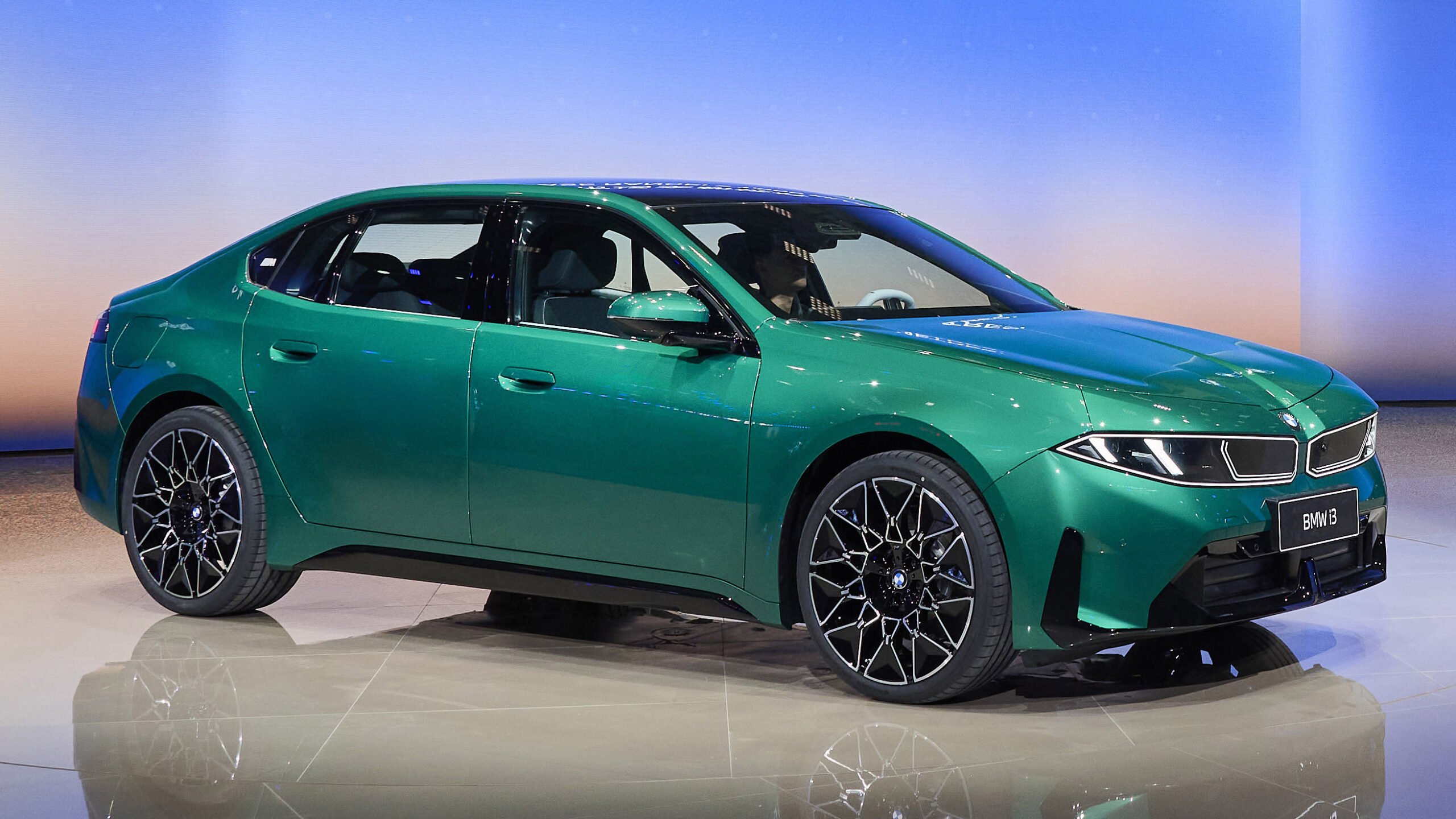
Owners of the new BMW iX3 could get an electric shock while charging their EV.
The iX3 is also being recalled for possible issues with the side airbags.
One of the recalls impacts 4,843 iX3s globally, including 1,071 in Germany.
The second-generation BMW iX3 has been well received by most, marking a serious step up from its predecessor and delivering the kind of driving range usually reserved for Chinese EVs. But the launch hasn’t gone off without a hitch. Two recalls have already been issued for the electric SUV in Germany, and one of them sounds genuinely unpleasant.
The first recall landed at the end of May and covers 145 vehicles built between November 25, 2025, and February 20, 2026. According to BMW, these iX3 models carry an onboard charger, the component that converts AC power to DC, that may be faulty. The defect could leave the SUV’s body panels buzzing with electricity while the car is plugged in.
BMW says it isn’t aware of any injuries so far, but it admits owners could get a nasty shock if they touch the car at the wrong moment. The fix is straightforward enough, as the onboard chargers on affected models will be swapped out, whether or not they actually turn out to be defective. With high-voltage EVs, better safe than sorry. All told, the recall covers 145 cars worldwide, 28 of which are in Germany.
Dangerous Airbags
Then a few days later, on June 1, a second recall followed. This time, BMW says the side airbags may not have been bolted in to spec. The concern is twofold: the airbag might not deploy properly in a crash, and the gas generator could shift out of position and strike occupants.
The affected iX3s were built between December 18, 2025, and May 8, 2026. It’s the bigger of the two campaigns, covering 4,843 vehicles worldwide, including 1,071 in Germany. As with the charger issue, there are no known accidents or injuries tied to the airbag fault.
In this case, BMW says it will inspect the screws that hold the side airbags in place and, if necessary, resolve any issues.
Two of the most recognized and respected names in student transportation safety will be at STN EXPO West to share their expertise with conference attendees.
Industry veterans Richard “Dick” Fischer and Pete Baxter will present a half-day seminar “The Best of the Dick and Pete Show” on Wednesday, July 15. This in-depth session will give attendees invaluable education from two National Association of Pupil Transportation Hall of Fame inductees on safety leadership, organizational learning and risk governance in student transportation.
In this seminar, STN EXPO West attendees will receive a comprehensive student transportation safety training that will dive into real-life school bus safety cases, including Danger Zone safety incidents and the “Titanic tragedy,” a 2016 incident in England, where a school bus carrying 26 children got stuck in deep floodwaters, and reveal the lessons learned. Fischer and Baxter will highlight the dangerous pitfalls of overconfidence, ignoring warning signs or a lack of preparedness or emergency training.
The message of the training will contain an overall theme of continuous improvement through the fostering of a strong safety culture. Attendees will be given safety training modules designed to give student transportation leaders what they need to know to implement safe practices, communication, accountability all to protect every child and school bus driver on every bus ride.
Fischer has spent over six decades championing school bus safety as a school district transportation director, school-bus safety trainer and consultant. He successfully petitioned President Richard Nixon in 1969 to proclaim the first School Bus Safety Week. Even following his official retirement announcement in 2013, he has continued to present training, advocate for the industry, and become involved in national safety discussions.
Baxter is a former state director of student transportation at the Indiana Department of Education and past-president of both the National Association for Pupil Transportation and the National Association of State Directors of Pupil Transportation Services, one of only two industry professionals to hold both offices.
Both Fischer and Baxter have served as expert witnesses in court for legal cases involving school bus collisions and have extensive experience and knowledge to equip student transporters to further safety at their operations.
STN EXPO West will be held July 9-15 at the Peppermill Resort in Reno, Nevada. The conference will feature hands-on training classes, educational sessions, a dynamic keynote presentation, and networking opportunities. Register now at stnexpo.com/west.
A 16-year-old Harrisburg teen has been charged with criminal homicide after the fatal shooting of a 17-year-old student moments after stepping off a school bus.
Jeremiah Moran, 16, is charged with first-degree murder, firearms not to be carried without a license, and possession of a firearm by a minor in connection with the death of a 17-year-old.
Police said the fatal shooting occurred May 29 near an intersection shortly after students were dismissed from school and days before the end of the school year. The 17-year-old had just exited a school bus when investigators say Moran approached and opened fire. The victim was transported to a local hospital for emergency care but died due to his injuries.
Video Shows Fatal Shooting
Investigators reportedly obtained video evidence allegedly showing Moran firing the weapon to shoot the victim, identified as Camar Cordero by local reports. Police said via local news that Moran later admitted to officers that he shot Cordero.
“There still is some of the puzzle that needs to be put together. But at this point in time, I think we have a pretty good understanding of what transpired and as to why it transpired as well,” Harrisburg Police Capt. Kyle Gautsch told local news reporters.
Investigators have not publicly released a motive for the fatal shooting.
However, the shooting prompted a large police response as officers secured the scene and collected evidence. Authorities noted that a school bus visible at the scene was not the bus Cordero had been riding but another bus traveling behind it.
Sixth Street remained closed for several hours while detectives processed evidence. Crime scene tape surrounded a large section of the roadway, where investigators marked multiple pieces of evidence. Witnesses reported seeing clothing and numerous evidence markers within the secured area. The road reopened around 6:15 p.m.
Neighbors who rushed to assist the victim described a chaotic scene in the moments after gunfire erupted. Judith Weaver, who helped organize emergency aid before first responders arrived, said residents immediately worked to help the wounded teen.
“I knew the bus had just let out. So, I went running down there,” Weaver told local news reporters. “Everyone was just so worked up. It was all chaos.”
Weaver said bystanders used available fabric to apply pressure to Cordero’s wounds while waiting for emergency personnel. She credited several community members, including a young girl who assisted efforts to keep the victim conscious.
Lt. Brandon Braughler of the Harrisburg Police Bureau praised residents who responded and cooperated with investigators. “The community came out,” Braughler said. “They’ve been very cooperative helping establish a very large crime scene.”
The fatal shooting has renewed concerns about youth violence in the city. Gautsch urged parents to remain actively involved in their children’s lives and be aware of potential warning signs.
“Make sure you know what’s going on with your children, what’s going on in their heads, and what’s in your lives and their lives,” Gautsch said.
The Harrisburg School District also responded to the tragedy. Superintendent Benjamin Henry said he hopes to hold a memorial in the coming days for Cordero and another student who died last week after being struck by a vehicle.
“As a father and an educator, I refuse to normalize this tragic shooting,” Henry said in a statement, calling on residents, community leaders and elected officials to work together to address violence affecting young people.
Police continue to investigate and are asking anyone with information about the case to contact the Harrisburg Bureau of Police.
CALIFORNIA, Mo. – Durham School Services, a premier transportation provider and leader, is proud to share that its maintenance teams at their Central, Kearney, and Lawson locations have received a total of eight Missouri State Highway Patrol (MSHP) Total Fleet Excellence Awards. The award is given as part of the MSHP’s annual school bus inspection program to recognize maintenance teams for their exceptional dedication to safety excellence and standards. The eight awards were earned from inspections at the following school districts served by Durham: Clarksburg, High Point, Kearney, Latham, Lawson, Russellville, Smithton, and Tipton.
The MSHP conducts school bus inspections on an annual basis for every school bus fleet across the state of Missouri. These inspections include a comprehensive list of crucial assessment areas such as steering and suspension, tires, brakes, seats, lighting and signaling, crossing control arm, and many more, that are thoroughly examined against rigorous criteria to ensure proper safety compliance and utmost functionality. After the inspection is complete, if 90% or more of the fleet passes the inspection with zero out-of-service defects, the team is presented with the Fleet Excellence Award, which includes a certificate and the Patrol’s Total Fleet Excellence sticker, which can be displayed on the window of the bus.
“The Fleet Excellence Award holds great significance to our teams as it is a symbol of their unwavering commitment to ensure our fleets are continuously well maintained and always in top shape,” said Justin Gieck, Central Region Maintenance Manager, Durham School Services. “It is their chance to really shine and is a testament to their great teamwork, determined efforts, and high regard for safety. Earning this prestigious award is not an easy feat, and I am extremely proud of all our teams for this achievement. Congratulations – it is well-deserved and thank you again for the hard work you put in around the clock so that students are riding safe and dependable buses to and from school each and every day.”
If you’re looking for a fulfilling career that plays an important role in supporting the safety of students and your community, we encourage you to join our maintenance team. We offer competitive pay, comprehensive benefits, ASE certification support and bonuses, and more. Text TECH to 63552 or visit our careers page to learn more.
About Durham School Services:
As a premier transportation provider, Durham School Services provides safe, reliable student transportation that communities trust and families depend on. With operational discipline, local commitment, proven safety standards, and clear accountability, we bring deep expertise to every route we operate. Driven by our five values: Safety, Care, Transparency, Communities, and Culture, we deliver transportation that works quietly, consistently, and without disruption.
As school districts enter summer vacation, being cautious around school buses remains a priority. A Florida family joined the local school district and Sheriff in speaking out after a 14-year-old girl was struck by a car while attempting to board a school bus in Lee County.
The sheriff’s office and school district held a bus stop safety news conference May 21 following the incident in Estero, Florida, involving eighth-grader Abigail Westveer and several similar incidents across the county. More than 25,000 drivers were caught illegally passing Lee County school buses over a five-month span, alarming law enforcement officials and school leaders. During the conference, Superintendent Denise Carlin said the district partnered with BusPatrol and the Lee County Sheriff’s Office last year to install stop-arm cameras on school buses.
“We installed cameras on our bus fleet to capture video of drivers who fail to stop when a bus is stopping to pick up or drop off our children,” Carlin said.
Westveer was hit the morning of March 31, when a motorist illegally passed a stopped school bus on the right side where the teenager was walked toward the loading doors, according to the Lee County Sheriff’s Office. Video of the incident shows the girl approaching the bus when the sedan comes from behind the bus and passes on the right side at a high rate of speed.
The BusPatrol footage shows the motorist attempting to brake and steering to the right onto a grassy area to try avoid hitting Westveer. Instead, the motorist side-swiped Westveer, striking the girl in the back with the left side of the vehicle. The teen braces herself moments before impact and is thrown to the ground, sliding several feet.
Seconds later, the video shows the driver, whose identity was not immediately released by authorities, exit the vehicle and run toward the teen as another bystander approaches to help.
“That video sickens me,” Sheriff Carmine Marceno said during the press conference. “When those lights are red and that bus stops, stop your vehicle. It’s that simple,” he continued.
Marceno said the enforcement initiative is focused on changing dangerous driving habits around school buses. “There’s one goal here and one mission: Changing driver behavior. It’s about educating the public and saving lives,” he said. Ninety-plus percent of the violators don’t repeat offend. That means the program works.
“Our goal is not to give everybody a ticket. Our goal is to write no tickets because people comply.”
The Lee County Sheriff’s Office said Westveer “was nearly seriously injured” in the crash, calling the incident “a frightening reminder of how quickly lives can change in just seconds.”
Student Escapes Serious Injury Following Illegal Passing Strike
The incident came only seven weeks after the girl’s father died. The family said they are still mourning his loss while trying to recover from the latest traumatic event.
“I damn near lost my granddaughter because of someone that wasn’t paying attention,” Westveer’s grandfather Brian Masters said during the news conference. “This has got to stop before someone does get killed.”
Lori Masters, the girl’s grandmother, added that despite being hit Westveer was at school the following day. She noted that a responding deputy said the outcome could have been much worse if the girl turned to face the oncoming vehicle instead of bracing for impact.
Authorities confirmed that the motorist received a citation in connection with the incident. Additional details about the citation were not immediately released, but Marceno said their could be further a investigation of the motorist.
In the weeks following the incident, local officials have used Westveer’s story to raise awareness about school bus safety and the dangers of illegally passing stopped buses. “Every violation represents a child who could have been seriously killed or injured,” Marceno said.
BusPatrol President and CIO Justin Myers said the program is designed to reduce dangerous driving behavior around school buses through enforcement and education. “Every single violation that the sheriff’s office issues is an opportunity to permanently change that driver’s behavior,” Myers said.
Under Florida law, motorists traveling in both directions must stop when a school bus displays its stop sign and flashing red lights unless the road is divided by a physical barrier. Drivers who illegally pass a stopped school bus can face multiple penalties depending on the severity of the violation and whether children were endangered or injured. Violating the law is considered a moving violation under Florida Statute 316.172.
Myers said the company has seen illegal passing violations decline significantly in communities using stop-arm camera enforcement technology. “We’ve seen degradation of this behavior in communities by as much as 30, 40, or even 50% in the first couple of years,” he said.
Officials said many drivers either ignore the law or fail to pay attention around school zones and bus stops, creating dangerous situations for students entering or exiting buses. “It is entirely unacceptable, entirely preventable,” Myers said.
“Nothing is more important than making sure every child gets home safely,” the sheriff’s office said in a statement released during the news conference. “Together, we are making Lee County safer, one child, one bus stop, and one school zone at a time.”
In student transportation, communication is not just an operational tool. It is a safety system. As fleets expand across districts, regions and states, traditional communication models are increasingly unable to keep pace with the demands of real-time coordination, incident response and compliance. Forward-looking transportation leaders are rethinking communication not as a standalone function, but as a foundational layer of a modern, safety-critical operating model.
This shift is redefining how drivers, dispatchers and operations teams collaborate to deliver safer and more reliable service for students and families.
The Growing Gap in Legacy Communication Systems
For decades, school transportation has relied on analog radio systems. While historically effective, these systems now present structural limitations in a modern, distributed operating environment: Limited range across rural, suburban and multi-district routes; channel congestion during peak routing windows; fragmented communication across regions and operating companies; lack of integration with routing, safety and compliance platforms; and ongoing infrastructure and maintenance overhead.
At scale, these constraints are not just inefficient. They introduce risks. When communication slows down, safety responses slow down.
Reframing Communication as Strategic Capability
Leading transportation providers are approaching communication transformation with a different mindset. Instead of viewing it as a device upgrade, they are treating it as a core operational capability that directly impacts:
Driver confidence and retention.
Dispatcher effectiveness and workload.
Incident response times and safety outcomes.
Cross-regional coordination during disruptions.
Visibility for leadership and decision-making.
This shift requires strong leadership alignment and a deliberate focus on change management, not just technology deployment. As one operations leader noted, the goal is not to replace radios, but to future-proof communication across the organization.
What Modern Communication Looks Like
Modern communication models in school transportation are defined by a few key characteristics:
1. Real-Time, Nationwide Connectivity
Communication is no longer constrained by geography. Dispatchers can connect with drivers across regions instantly, enabling coordinated responses to weather events, route disruptions, or safety incidents. 2. Seamless Integration with Operations
Communication is increasingly integrated with routing systems, safety platforms and operational dashboards. This creates a unified environment where communication and data work together. 3. Simplicity for Frontline Users
Despite backend complexity, the user experience must remain simple. One-touch communication, intuitive interfaces and minimal training friction are critical for driver adoption. 4. Security and Reliability
As communication becomes digital, encryption, uptime and reliability become essential components of a safety-first architecture.
Execution Matters: The Role of Change Management
Technology alone does not drive transformation. Execution does. Successful implementations typically follow a structured approach: Pilot deployments across diverse operating environments; standardized onboarding and training for drivers and dispatchers; device and workflow standardization to reduce variability; continuous feedback loops to refine usability; and close collaboration between technology, operations and safety teams.
Organizations that invest in change management see faster adoption, higher satisfaction and more measurable outcomes.
Measurable Impact on Safety and Operations
When communication is modernized effectively, the impact is tangible: Faster dispatcher-to-driver response times, often reduced by 30 to 40 percent; improved coordination during emergencies and service disruptions; reduced dependency on physical infrastructure and maintenance overhead; enhanced incident escalation and documentation; and greater consistency across multi-location operations.
More importantly, these improvements translate into better outcomes for students. Faster communication means faster response. And in a safety-critical environment, minutes matter.
Beyond Tech: A Cultural Shift
Perhaps the most important outcome of modern communication is cultural. Drivers feel more connected and supported in the field, dispatchers operate with greater clarity and confidence, and leadership gains real-time visibility into operations. Additionally, organizations move from reactive to proactive decision-making.
This is not just a systems upgrade. It is a shift toward a more connected, responsive and people-centered operating model.
The Road Ahead
As the student transportation industry continues to evolve, communication will play an increasingly central role in enabling: Scalable growth across regions and contracts; compliance with evolving safety and regulatory expectations; integration with AI-driven routing, monitoring and analytics platforms; and a more resilient and adaptive transportation network.
The organizations that lead this transformation will not be defined by the tools they adopt, but by how they integrate communication into the fabric of their operations.
Final Thought
In student transportation, every conversation has the potential to impact
safety. Modernizing communication is not just about efficiency. It is about
ensuring that every driver, dispatcher and operations leader is equipped to
respond, support and protect the students they serve. And that is where technology, leadership and purpose come together.
Editor’s Note: As reprinted from the May 2026 issue of School Transportation News.
Gaurav Sharda is the chief technical officer for student transportation company Beacon Mobility and the 2025 STN Innovator of the Year.
Tesla is worried owners may overload their Model Ys due to a missing label.
The safety concern has been blamed on issues with a vision-scanning tool.
Impacted Model Y owners will be alerted to the recall from July 17.
Recalls usually come dressed up in regulatory language that hides how mundane the underlying problem is. This one is refreshingly honest about it. More than 14,000 examples of the 2025 and 2026 Tesla Model Y are being recalled in the United States, and unlike most Tesla recalls, an over-the-air update will not fix it.
The recall says Tesla noticed a vehicle with a missing certification label during a routine audit of its Fremont factory last month. It was soon discovered that an automated vision-scanning tool, which verifies the presence of a properly affixed certification label, wasn’t performing as it should have.
The certification label lists the vehicle’s weight specifications, the numbers owners check before loading cargo or hitching a trailer. Without it, drivers can exceed those limits without realizing it, and an overloaded Model Y brakes, handles, and crashes differently than the one Tesla engineered.
What’s The Fix?
A total of 14,575 vehicles are caught up in the recall. The list includes 2,697 Model Ys built between November 17, 2024, and February 24, 2025, covering the 2025 model year, plus another 11,878 examples produced from February 25, 2025, through April 21, 2026. It is a large pool of cars, but Tesla says it is not aware of any collisions, injuries, or fatalities tied to the missing sticker, which is about what you would expect from a label-related defect.
Tesla says it repaired the automated scanning tool on April 17 at its Fremont, California, factory and also began performing manual checks to ensure newly produced models have the correct certification label. In addition, the scanning tool at Tesla’s Gigafactory in Texas was also fixed on May 7.
Owners of impacted Model Ys will be alerted to the recall from July 17, and Tesla will inspect affected vehicles and attach the certification label as required.
A teen girl was shot and injured near a school bus stop in Wood Village, Oregon, leading to the arrest of a 14-year old suspect who fled the scene.
According to the police report, Multnomah County Sheriff’s deputies responded around 4:14 p.m. May 15 to reports of a shooting near Northeast 235th Avenue after a school bus driver called 911. When first responders arrived, they found a teenage girl suffering from a gunshot wound.
Deputies immediately began providing life-saving aid until paramedics arrived and transported the girl to a local hospital. Authorities said she was alert and responsive while receiving treatment at the scene.
In an update released a day later, investigators confirmed the teen girl shot is 13 years old and has non-life threatening injuries. Detectives said the circumstances leading up to the shooting and the shooting itself remain under investigation, though preliminary findings indicate the incident may have started with an argument.
Witnesses told investigators the suspect ran from the area immediately after the shooting. Authorities did not believe there was an ongoing threat to the public, and no shelter-in-place order was issued.
Investigators coordinated with the Multnomah County District Attorney’s Office while interviewing witnesses, collecting video footage and processing evidence connected to the case.
The shooting rattled nearby residents, many of whom said they were alarmed to learn the victim was a young teenager. “I was really bummed to find out it was a teenager when I was talking to police,” nearby resident Corbin Mandzij told local news reporters.
Another neighbor expressed concern about violence occurring in a neighborhood with many children. “A stray bullet can go anywhere,” the neighbor told the station. “There’s lots of kids around here, my biggest worry is about the kids.”
Some residents said the shooting happened only steps from their homes. “It was 15 feet from my property line, right outside my front door,” one neighbor said. Others said the incident has left them feeling uneasy.
Teen Girl Shot by 14-Year-Old Boy, Police Allege
Authorities announced Tuesday that a 14-year-old boy accused of shooting the girl turned himself in to the Multnomah County Sheriff’s Office. According to investigators, the surrender was coordinated through the suspect’s attorney after detectives requested he come forward.
The suspect surrendered at the Multnomah County Donald E. Long Juvenile Detention Center and was booked on charges of attempted murder, first-degree assault and unlawful use of a weapon. Because the suspect is a juvenile, authorities said they will not release additional identifying information.
Investigators said the shooting began after two teenage girls got into a physical fight after exiting a school bus. Detectives said both girls knew the 14-year-old suspect. During the altercation, the boy allegedly pulled out a firearm and shot the 13-year-old girl before fleeing the scene. Authorities also confirmed the suspect is not enrolled in the Reynolds School District. However, it was unclear if the suspect was on board the school bus with the girls. The victim remains hospitalized with injuries considered non-life threatening.
The Multnomah County Sheriff’s Office credited deputies, detectives, analysts and members of the U.S. Marshals Pacific Northwest Violent Offender Task Force for their work on the investigation. Authorities also thanked community members who provided cellphone video, tips and other information related to the case.
Perrin Turney has become a familiar and trusted face in the rural Kneeland School District, where his job extends far beyond driving a school bus through the winding roads of Humboldt County.
Turney, a bus driver for Kneeland in rural Humboldt County, was recently named the 2026 California Classified School Employee of the Year for Transportation Services by the California Department of Education. The statewide recognition honors school employees who make significant contributions to public education.
For Turney, the award represents not only personal recognition but pride in the small mountain community he calls home. “Kneeland is a very small school, and not many people outside the area know we exist,” Turney told School Transportation News. “This recognition puts our school and district on the map in a really meaningful way.”
Turney has worked at Kneeland School since 2016, first serving as the school janitor before gradually taking on additional responsibilities. Over the years, he has helped with information technology, managed the school’s water system, supported students in classrooms, and assisted with math instruction for middle school students. He also manages the school website, helps troubleshoot technology issues across campus and fills in wherever needed in the one-school district.
Driving a school bus was never part of his original plan. “Eventually, the school asked if I would be willing to get my commercial license so I could serve as a backup bus driver,” Turney said. “What started as a temporary role became a job I truly care about.”
Now, transporting students safely across the district’s nearly 145 square miles of mountainous terrain has become one of his most important roles.
California School Bus Driver Wears Many Hats
The route presents daily challenges, including narrow roads, potholes, blind curves, black ice, fallen trees, and dense fog that can reduce visibility to only a few yards. Hurricane-force winds and sudden storms can quickly change driving conditions along the route, requiring constant awareness and preparation.
Perrin Turney with Kneeland students.
Turney said he begins each day by checking weather conditions, reviewing school cameras for visible hazards and driving the route himself before students board the bus. “If I feel the road conditions are unsafe, I do not hesitate to call the day off,” he said. “The goal is always the same: Get the students to and from school safely.”
His mornings typically begin before 7 a.m. with a pre-trip safety inspection at the bus yard before he heads out to pick up students in nearby Arcata, Freshwater and along the rural mountain roads leading to Kneeland School. Once students arrive safely on campus, Turney shifts into his other responsibilities for the day, helping with maintenance, assisting students, overseeing technology needs and teaching math.
School leaders say Turney’s calm demeanor and reliability have made him especially trusted among students and families. “Kneeland School District alum Perrin Turney wears many hats in the one-school district, none as important as bus driver,” district officials said in nomination materials supporting his award.
That steady presence has become especially important during unexpected situations on the road. In one memorable incident, steam suddenly poured from under the hood of the bus during a morning route after a coolant reservoir leak. Turney calmly reassured students, safely pulled the bus over and coordinated transportation arrangements while the bus was repaired.
“In those moments, the most important thing is to stay calm, understand the situation, reassure the students and make the safest decision possible,” he said.
Beyond transportation, Turney also created a “Maker’s Space” program that teaches students hands-on technical skills, including 3D printing and technology projects designed to introduce students to current technology trends.
Despite his many responsibilities, Turney said working with students remains the most rewarding part of his job. “Watching students grow into thoughtful, capable and kind people is an amazing thing to be part of,” he said. “The students also teach me how to be a better person.”
Students know Turney as a steady presence who balances safety with humor and compassion. He said consistency helps children feel secure during their rides to and from school.
“The bus should be a safe place, but it should also be a place where students can enjoy themselves a little and decompress,” Turney said.
Turney credits the California school bus driver recognition to the community members, coworkers, and families who supported his nomination.
“I feel grateful,” he said. “I am proud to represent Kneeland, and I could not be happier that this recognition shines a light not just on me, but on the school, the students, the families and the community that make this place so special.”
Heliox, A Siemens Business, a leader in EV charging solutions, is proud to highlight its VersiCharge Blue 80A, engineered for the most demanding fleet and commercial vehicle charging environments. Designed to deliver up to 80A AC (19.2 kW) power output, the VersiCharge Blue 80A ensures that fleet operators can keep vehicles moving efficiently and reduce operational downtime. With Level 2 charging capability via a J1772 connector and a 24-foot cable, this solution is compatible with most standard EVs, E-Trucks and School Buses, and streamlines installation and daily operation for maximum flexibility and reach.
This charger exemplifies robust quality, featuring Buy America compliance to meet government procurement requirements and ENERGY STAR certification to support lower operational costs and high energy efficiency. Safety remains paramount, as the VersiCharge Blue 80A holds multiple UL listings and carries a NEMA 4 and IK10 rating to ensure exceptional resilience against extreme temperatures, humidity, and physical impact. Backed by a 3-year warranty, customers gain peace of mind knowing their investment is safeguarded for the long haul.
Connectivity is central to the VersiCharge Blue 80A’s design, with cellular and Wi-Fi networking providing easy remote monitoring and flexible network-sharing in commercial deployments. Site safety and aesthetics are prioritized thanks to retractable cable management, reducing trip hazards and maintaining a clean, professional appearance. State-of-the-art smart charging features, including ISO15118-2 hardware readiness and OCPP 1.6J support, enable advanced load management, authentication, security, and future compatibility, while Sifinity Setup mobile app configuration simplifies multi-charger installations.
Precise energy tracking is guaranteed by embedded metering, helping operators optimize usage and manage costs. Built for resilient operation, the unit withstands wide temperature swings from -40°C to 50°C (>50°C with derating) and functions reliably in up to 98% humidity, making it ideal for harsh climates and challenging locations. Wall or post mounting options offer flexible installation for any site layout, and over-the-air (OTA) software upgrades future-proof investments by delivering remote updates and new capabilities.
Engineered for versatility, VersiCharge Blue 80A features rated current settings from 12A to 80A to easily accommodate varying power needs across fleet and facility applications. Its recommended wire cross section of 3 AWG with a 90°C minimum ensures safe, high-capacity wiring and consistent performance even under heavy usage. Built-in ground fault and overvoltage protection shield both users and vehicles against electrical risks, while multicolor LED indicators provide instant feedback on charging status, connectivity, and fault diagnostics to streamline site management.
Advanced OCPP and ISO15118-2 user authentication deliver enterprise-grade security and fleet management capability. The charger operates at altitudes up to 6,562 feet, expanding site possibilities in high-elevation regions, and customizable mounting options ensure seamless integration in diverse venues.
With VersiCharge Blue 80A, Heliox, A Siemens Business, is bringing a powerful blend of reliability, safety, and intelligent connectivity to the heart of fleet and commercial EV operations, enabling customers to scale with confidence as electrification demands grow.
About Heliox, A Siemens Business
Heliox, A Siemens Business, delivers world class EV charging equipment, EV charger maintenance and support services, and robust solutions for a broad range of EV fleets. Our portfolio encompasses all aspects of smart and efficient AC and DC charging infrastructure, including IoT-connected hardware, software, and a comprehensive service offering. Heliox manufactures UL compliant products that meet Buy America Act (BAA) and Build America Buy America (BABA) standards. Heliox’s high-quality, field-proven charging products are now backed by Siemens’ financial strength, global reach, and long-term stability—delivering the best of both worlds.
I received an email from an industry colleague challenging me to tackle the topic of world-class safety. That seemed like a daunting task, but I am always up for a challenge.
Why are minimum standards the baseline for many school transportation operations? Why is it the minimum that we strive to meet as an industry? If someone came to me and said we meet the minimum safety standards, I wouldn’t be confident that my child was safe.
Let’s face it—The minimum means you cannot do any less. It is the bare minimum that is required. Almost every parent takes for granted that everything possible is being done to transport their children safely. They have no idea of the many factors that lead to the wide variation of safety practices and equipment that result in a wider variation of safety levels being delivered.
School transportation operations view whatever their states require as the level they need to meet, no more and no less. This is a generalization, as I know many school transportation operators go above and beyond with safety training and safety equipment investment. Still, many others do not.
States have their own requirements, and they are all over the map. California has the highest minimum standard for crossing elementary school students to and from bus stops, for example. Meanwhile, the Federal Motor Carrier Safety Administration Entry Level Driver Training requirement is an effort to raise the minimum standard in every state. Having said that, ELDT simply lists subjects that are to be taught. It does not detail how or to what extent the subjects are to be taught. You can still comply with ELDT but provide minimum training.
What does world-class safety look like? What industry standards are we trying to meet that go beyond the state requirements? We have the National Congress on School Transportation, which will be held every four years starting in 2029. But a lot can change in four years. Plus, it also outlines minimum standards, and most states don’t adopt it in its entirety.
As Senior Editor Taylor Ekbatani reports in this month’s issue, uniformity is key when addressing safety. She writes that laws on when oncoming vehicles stop for a school bus can differ based on divided and undivided roads.
When you compare your first day of the school year to today, is there an improvement in performance, optimization and a reduction in stress? Have any crashes or other safety incidents occurred? School buses have been rolling for many months. As we inch closer to summer, the topic of safety must remain top of mind.
At the end of March, a major crash in Tennessee that resulted in two student fatalities and a half-dozen injuries drew much attention to school bus safety. A lawsuit claims the driver didn’t receive the proper training and the school bus lacked safety technology like seatbelts. The state and federal investigation was ongoing at press time.
Statistically, the school bus is by far the safest way for students to travel to and from school. Still, over the past six school years, at least 62 students were killed in or around school buses or stops, according to STN research.
Six, including the recent Tennessee victims, were passengers in crashes. One choked to death in her wheelchair. Another fell off the wheelchair lift. The rest were hit by the bus in the danger zone, crossing the street as pedestrians, by a passing vehicle, or were shot or beaten to death.
There is no or limited accounting for injuries and other student pedestrians killed or injured around school buses. So, how do we improve safety on and around the school bus? I recommend starting with the parents as they have a vested interest in their child’s safety. The burden of school bus safety can’t fall solely on school transportation and the school bus driver.
Jeff Cassell of the School Bus Safety Company shared recommendations to help mitigate potential tragedy around the school bus. He suggested reducing student crossing as much as possible, teaching the students safe crossing procedures, informing parents of those procedures, ensuring school bus drivers enforce the correct crossing procedures, and installing extended stop arms to make sure passing vehicles stop.
“Safety means you continually do all you can to remove or reduce risk. The required behaviors that remove or reduce risk are a function on the location leadership,” he added. “World-class safety is where an organization follows the safest best practices in every area of their operations. They use the leading practices, processes and training systems to integrate these best practices into every facet of the organization, always, with a structured plan to do so.”
Striving for world-class safety should always be the goal. Keep reinforcing safe behaviors around the school bus with your school bus drivers, kids and parents. As an industry, being 100-percent safe all the time isn’t easy. But removing risk from operations that saves a child’s life is well worth the effort.
A 7-year-old boy died after being struck by a school bus moments after exiting his vehicle in Gloucester County, New Jersey.
According to a news release from the Greenwich Township Police Department, officers responded around 3:40 p.m. May 8 to reports of a “pedestrian motor vehicle crash involving a juvenile and a school bus.”
When officers arrived at the scene, they joined nearby residents in administering emergency medical aid to the child before Gloucester County Emergency Medical Services took over treatment efforts. The boy was transported to Cooper University Hospital, where he later died from his injuries, police said.
Authorities later identified the child as Hunter Smith of Gibbstown. Investigators said they believe the crash happened shortly after the boy exited the school bus. The incident stunned residents in the neighborhood, as emergency lights filled the streets while first responders worked to save the child.
“I heard the police and ambulance and all that stuff,” one neighbor told local news reporters. “I thought it was down the street. Then I come and look out here and, next thing you know, the whole neighborhood’s crawling with red lights and blue lights.”
The neighbor said he frequently saw the boy walking to and from the bus stop. “I see the kid walking up, down the street every day, either going to school or coming from school or to the bus stop,” he said. “It’s tragic, it’s devastating for the family. May God rest his soul.”
Investigation Underway As Video Shows Horrific Aftermath of Incident
Video captured by a Ring doorbell camera and obtained by a local news outlet showed a frantic aftermath moments after the collision. In the footage, a woman can be seen rushing to a nearby home and pleading for help while the school bus remained stopped in the roadway. Several residents gathered around the Smith in an attempt to assist before emergency crews arrived.
The bus involved in the incident was operated by Holcomb Transportation. A spokesperson for the company confirmed to local reporters that the bus driver is a 48-year-old woman who has worked for Holcomb Transportation since 2024 and had no prior issues.
In a statement via local news, Holcomb Transportation said it is “heartbroken” and “deeply concerned” over the tragedy.
“We are fully cooperating with all relevant authorities as they work to determine the circumstances surrounding this incident,” Frank Patrinicola, the company’s director of safety and risk, said in part. “In addition to the official investigation, we have launched our own internal review to understand exactly what happened and to ensure that every appropriate measure is taken moving forward.”
Officials have not released additional details about how the crash occurred or whether any charges are being considered. The incident remains under investigation. In the wake of the tragedy, community organizations and local officials began offering support to grieving residents and students.
A representative from Clonmell United Methodist Church announced it would open Saturday for residents impacted by the incident, according to the police department’s release. The Greenwich Township School District in New Jersey also said counseling services would be available for students.
According to data compiled by School Transportation News, at least eight student fatalities tied to school transportation incidents have occurred during the current 2025–2026 school year, including six pedestrian deaths in which students were struck by school buses. STN research also identified that at least 18 students died in school transportation-related incidents during the 2024–2025 school year. Of those cases, at least eight involved students who were struck and killed by a school bus.
As I continue examining pupil transportation systems around the world, one consistent theme is clear. Italy, like in many other countries we have looked at so far, has an approach vastly different from the American model centered around the iconic yellow school bus.
In the U.S., pupil transportation is highly standardized, centralized and built around dedicated fleets of school buses. In Italy, however, the system is far more decentralized and varied, relying on a mix of municipal services, public transportation, walking, family transport, and in some cases even taxis. It is not uncommon, particularly in certain regions or unique circumstances, for students to utilize taxi services as a means of getting to and from school. This diversity of options highlights a fundamentally different philosophy—one that emphasizes flexibility and integration rather than uniformity.
Italian pupil transportation is not governed by a single national model. Instead, it is managed at the municipal level, meaning each city or town determines whether transportation services are provided, who qualifies and how those services operate. This creates significant variation across the country. In some communities, particularly smaller or rural municipalities, there are dedicated school transport services known as scuolabus. These are typically smaller buses or vans that provide limited routes for students who live farther from school. While these services resemble the American model in function, they are far less standardized and operate on a much smaller scale.
In contrast, many students in urban areas rely heavily on public transportation systems. Buses, trams and regional trains are commonly used by students traveling to and from school. What stands out to me is the level of independence expected of students. It is not uncommon for younger students to navigate these systems on their own, something that would raise significant concern in many parts of the U.S.. In Italy, however, this independence is culturally accepted and supported by the structure of communities and public transit systems.
Walking is also a primary mode of transportation, particularly in densely populated towns and historic city centers where schools are located within close proximity to residential areas. Families may also transport students by car, scooter or bicycle, but the reliance on large-scale, dedicated school bus fleets is minimal compared to the U.S.
A Cacciamali Thesi/Iveco school bus in Rimini, Italy. (Mattia Bartoli/it.wikipedia to Commons.)
U.S., Italy Differ in More Ways
From a safety and security perspective, the differences are equally striking. The U.S. has developed a highly controlled environment around pupil transportation, with strict regulations, specialized vehicles and clearly defined safety procedures such as stop arms, compartmentalization and driver training standards. In Italy, safety is governed more broadly through general traffic laws and community norms rather than a dedicated, uniform system. While some scuolabus routes may include adult monitors for younger children, there is not the same level of standardized supervision or protection that we see in U.S. school transportation.
Cost is another distinguishing factor. In many parts of the U.S., pupil transportation is largely provided at no direct cost to families as part of public education. In Italy, transportation services are often partially subsidized, and families may be required to pay fees depending on the municipality and level of service. Discounts are sometimes available, but the system reflects a shared responsibility between local government and families.
As I reflect on these differences, it is clear that each system is built around its own cultural, geographic and operational realities. The U.S. prioritizes standardization, safety controls and centralized management, while Italy emphasizes flexibility, independence and integration with existing infrastructure. Neither system is inherently right or wrong—each simply reflects different priorities and risk tolerances.
However, from a professional safety and security standpoint, the comparison raises important considerations. The U.S. model provides a higher degree of controlled safety, particularly in managing risk during loading, unloading and transit. Italy’s model, while efficient and cost-effective, places greater responsibility on students and families and relies more heavily on environmental awareness and community structure.
Ultimately, studying systems like Italy’s reinforces the important principle that pupil transportation is not just about moving students from point A to point B. It reflects how a society balances safety, efficiency, costs, independence and responsibility.
As we continue to evaluate and improve our own systems, there is value in understanding how other countries approach the same challenge. Within those differences are insights that can inform better decision-making at home.
Bret Brooks
Bret E. Brooks is the chief operating officer for Gray Ram Tactical, LLC, a Missouri-based international consulting and training firm specializing in transportation safety and security. He is a keynote speaker, author of multiple books and articles and has trained audiences around the world. Bret also presents the online series, Third Thursday Training, to school districts across North America. He can be reached at BretBrooks@GrayRamTacticalTraining.com.
There are always opportunities to share thoughts and help the industry move forward including serving as a committee chair or vice chair of the National Congress on School Transportation. Interested parties are invited to apply for open seats for the 18th NCST, scheduled for May 6-9, 2029 in St. Louis, Missouri.
The NCST, now meeting every four years, seeks to establish a national consensus on school bus standards, best practices and operational procedures. The 18th National Congress is ramping up with the formation of writing committees, and the National Association of State Directors of Pupil Transportation Services extended the deadline to serve on a committee to June 30.
“Writing Committee Chair or Vice Chair positions are not overly daunting,” NASDPTS said in an email to members. “If you have experience in one of the committee areas, you are welcome to apply.”
The email states that the position requires a commitment of around 10 hours per month in 2026 and 2027 with a “slight increase” in years 2028 and 2029 in formalizing proposals for new or updated standards.
“It should be noted that committees do not rewrite sections but only edit existing sections,” the email adds. “We will help walk you through the process, so if you’re new to the NCST or to being a chair or vice chair, we will set you up for success.”
NCST Develops Vehicle and Operational Standards
The National Congress is categorized by Vehicle Specifications and Operational Procedures Committees. The Vehicle Specifications Committee includes school bus specifications, specially equipped school buses, school bus inspections, emerging technologies, and alternative fuels.
Meanwhile, the Operational Procedure Committees consists of general operations, transportation for students with disabilities and special heath care needs, infants, toddlers and preschooler operations, school transportation security and emergency preparedness, activity bus operations and alternative transportation. Alternative transportation is the latest writing committee that was formed for the 17th annual NCST, which was held in Des Moines, last May.
Learn more about the selection criteria for the writing committee chairs and vice chairs in the NCST Manual of Operations. Questions can be directed to NCST Chairman Mike Bullman.
Residents can anonymously report unsafe riding activity to Parker Police.
Police say electric motorcycles follow the same laws as regular motorcycles.
The system is meant to target illegal riding on streets, trails, and parks.
Police departments across the U.S. are struggling to figure out what to do with the explosion of electric motorcycles, Sur-Rons, dirt bikes, and high-powered e-bikes flooding suburban streets and trails. Now, one Colorado town is taking a new approach. It’s asking residents to report riders directly to police through an anonymous online portal.
The Parker Police Department in south Denver recently launched its “E-Bike, Dirt Bike, & E-Motorcycle Safety Reporting” tool, allowing residents to submit locations, rider descriptions, and details about allegedly unsafe behavior. The form includes options like “stunt riding,” “unsafe lane changes,” “running stop signs,” and even “no dangerous actions/just riding.”
Importantly, police are making the important distinction between genuine e-bikes, the ones made for commuting, trail use, and recreation, and electric motorcycles that are often nearly inoperable with the pedals alone. According to the department, many riders are allegedly operating without licenses, insurance, or registration while also damaging parks, trails, and private property. States nationwide have seen an uptick in illegal electric motorcycle use and abuse.
Parker Police also pointed to a recent California case where a mother was charged with involuntary manslaughter after her 14-year-old son allegedly struck and killed an 81-year-old man while riding an electric motorcycle. Officials say the incident highlights the potential dangers associated with improperly used high-powered electric bikes.
That all said, the new system effectively creates a crowdsourced enforcement network where residents can anonymously report riders without any direct interaction with law enforcement. While supporters will likely argue it improves public safety, critics may see it as another example of expanding surveillance culture creeping into everyday transportation.
One local tells Carscoops, “This isn’t an e-bike or e-motorcycle issue. It’s a person issue. If kids are running from the police, it’s a parenting issue. Either way, it’s about the person riding and not the mode of transportation.”
Whether Parker’s new reporting system becomes a model for other cities or a flashpoint in the growing debate over surveillance and micromobility remains to be seen. What’s clear is that towns and police departments are rapidly losing patience with high-powered electric motorcycles operating in legally gray areas, especially as crashes, complaints, and viral social media videos continue piling up.
Hong Kong is considering banning EVs with only electronic door handles.
China will require manual door releases on all new cars from 2027.
Officials say physical handles improve safety after crashes or power failures.
Electronic door handles have become one of the defining design trends of the EV era. They look futuristic, shave a bit of drag off the bodywork, and give cars like the Tesla Model S and Model Y their clean, button-free profiles. But now, Hong Kong is signaling it’s ready to follow China’s lead and shut the door on them.
Specifically, officials there say they’re preparing to ban new EVs equipped solely with electronic door handles. The move comes not long after mainland China’s decision to require physical mechanical releases on all new vehicles beginning in 2027. While Hong Kong is part of China, it maintains its own vehicle regulations and legal framework under the “one country, two systems” arrangement, meaning those rules don’t automatically apply there.
According to the South China Morning Post, Hong Kong Secretary for Transport and Logistics Mable Chan said the government is reviewing the mainland’s newly published GB 48001-2026 standard, which focuses specifically on automotive door-handle safety.
Chan said the Transport Department has already consulted the industry about adopting similar local standards and reminded importers last year that all vehicles must include manual door releases. Somewhat perplexingly, it only applies to EVs, so combustion cars can continue on with hide-away or electric handles.
That said, the EV door handle rule would require both interior and exterior mechanical door handles on future vehicles. The reasoning is simple after you’ve seen videos of EVs catching on fire quickly. Electronic systems can fail after a crash, during a fire, or if a vehicle loses power, potentially trapping occupants inside or slowing emergency responders trying to get in.
Chan said the China’s standard specifically focuses on “addressing issues such as failure in operating door handles after accidents.”
In some vehicles, the emergency mechanical release is hidden, difficult to access, or works differently from what occupants expect in a panic situation. That’s become a bigger concern as automakers increasingly replace traditional hardware with powered systems. Some modern EVs don’t just use electronic exterior handles but also electronic interior door-open buttons, with backup releases tucked away in less intuitive locations.
Ringo Lee Yiu-pui of the Hong Kong, China Automobile Association added that first responders often still lack an exterior mechanical way to access the vehicle during emergencies. He also warned that sales staff frequently fail to explain how emergency releases actually work.
Interestingly, these regulations could very well have a worldwide ripple effect. Automakers rarely engineer market-specific door systems if they can avoid it, meaning these rules could eventually influence vehicles sold in Europe, North America, and elsewhere.
The issue stems from cracking around brake rotor stud holes under load.
Only rear-wheel-drive units with base 18-inch wheels are affected.
Some serviced EVs may also carry the same potentially faulty parts.
The owners of 173 Cybertruck RWDs have a new problem to worry about. Tesla has issued a recall on the short-lived budget variant after discovering the wheels can come off while driving, which ranks somewhere near the top of the list of things you definitely do not want your vehicle to do.
Tesla says that on-road disturbances and cornering forces can cause cracking around the stud holes in the brake rotors. If that happens, the entire wheel stud may separate from the hub. The company is not aware of any crashes or injuries tied to the issue, though it has logged three related warranty claims.
A total of 173 models built between March 21, 2024, and November 25, 2025, are included in the recall. Only Cybertruck RWD versions with the base 18-inch wheels are affected, not those fitted with the optional 20-inch setup.
Tesla first identified a potential problem in August of last year, when pre-production testing revealed some cracking in the brake rotors, even though all studs remained intact at the time. Further investigation, along with field reports, showed the issue was more serious than initially thought.
Not only did Cybertruck RWD models leave the factory with the defect, but some Tesla service centers were also using the potentially faulty brake rotors, so vehicles that have had their brakes replaced may also suffer from the same issue.
What’s The Fix?
While the recall notice lists vehicles produced from March 21, 2024, Tesla says it only began building Cybertruck RWD models with 18-inch wheels on August 28, 2025. Production ended less than three months later, on November 5, with the company citing limited demand for the variant.
Owners can expect notification from Tesla after June 20. They will be asked to bring their trucks to a service center, where technicians will replace the front and rear brake rotors, hubs, and lug nuts with updated, more durable components.
More U.S. Environmental Protection Agency news and webinars on funding, plus how clean energy demand intersects with AI’s need for resources. Conversations continue at ACT EXPO this week and the Green Bus Summit at STN EXPO West in July.
“The tragedy will never leave you.” Shocking real-life stories abound in this special extended episode as 91-year-old industry legend and consultant Richard “Dick” Fischer underscores the need for thorough safety leadership and training. He discusses student transportation history, school bus crashes in the news, drunk and criminal drivers, illegal passing and the Danger Zone. See him live at STN EXPO West and email him to sign up for his free safety newsletter.
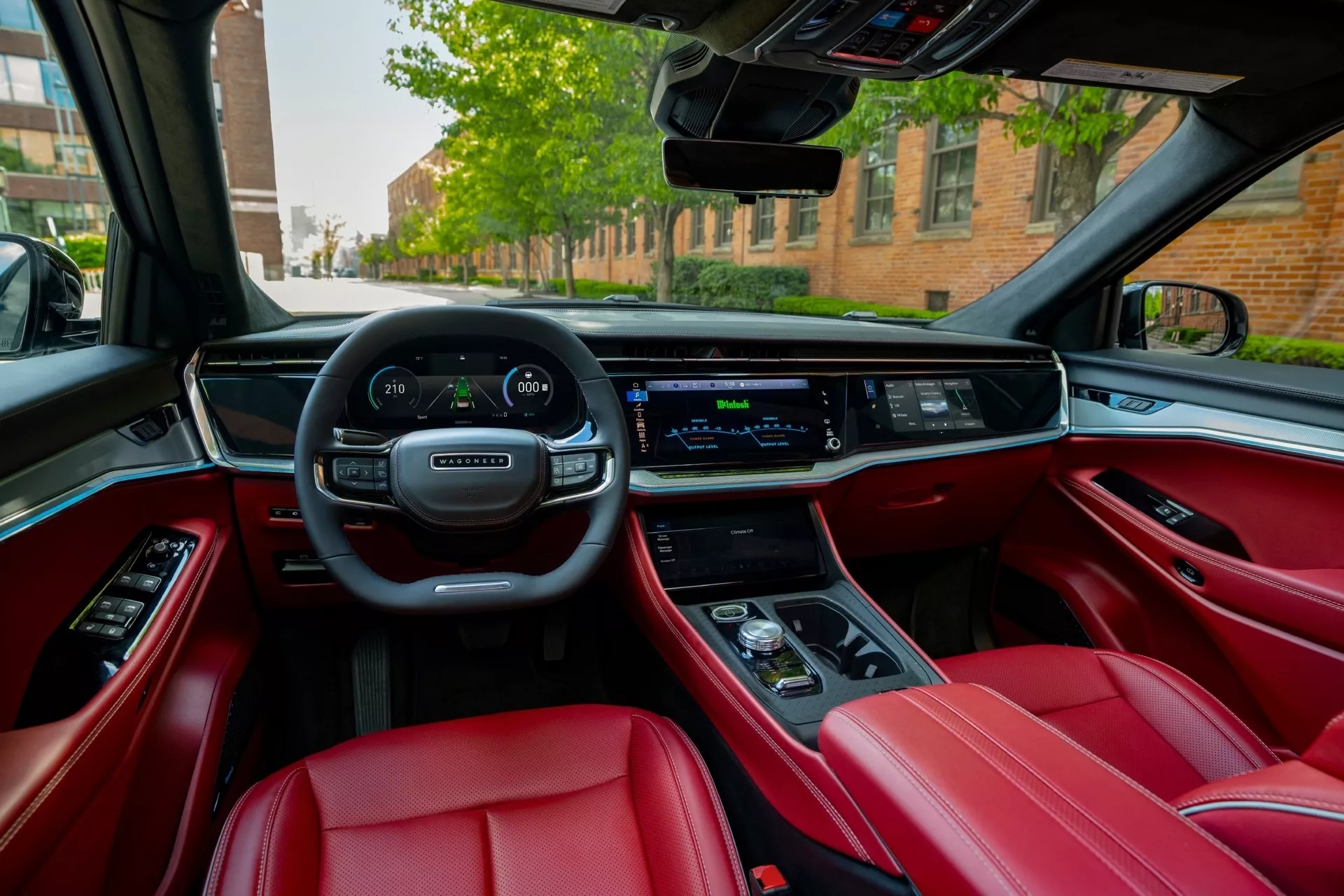
Over 20,000 EVs were just recalled due to blank instrument clusters.
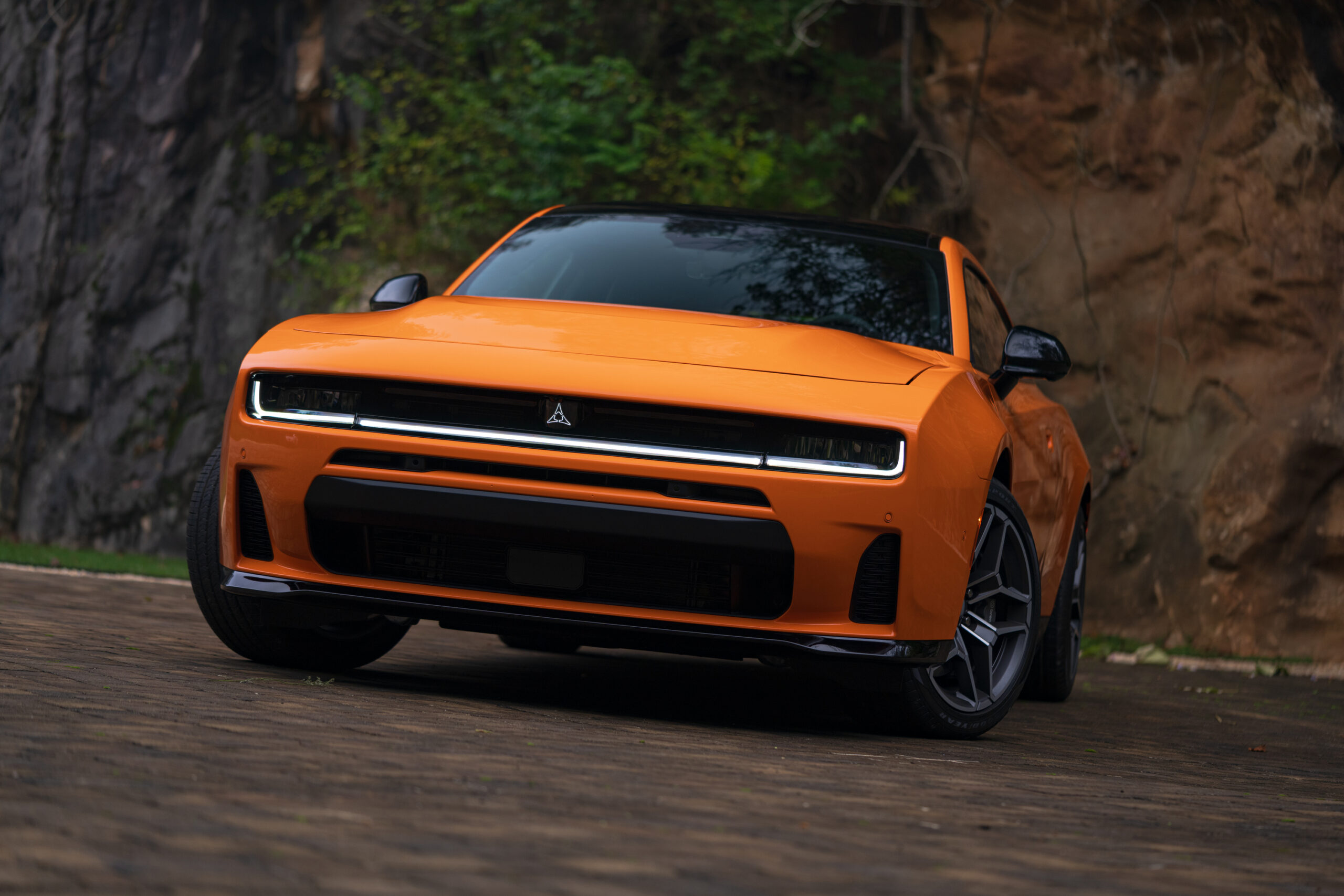
Affected models include the Jeep Wagoneer S and Dodge Charger Daytona.
The issue could hide critical warnings like brake, ESC, and tire pressure alerts.
The shift to more screens in cars was supposed to be the wave of the future. We could customize them, enjoy cute little animations, and pack more info into them than anyone could dream of doing with an analog gauge cluster. Of course, an old-school mechanical cluster can’t disappear for no obvious reason during a drive. Over 20,000 Stellantis vehicles with a digital cluster might have just that happen, so the automaker is issuing a new recall.
According to documents put together by Stellantis and filed with the NHTSA, the issue potentially exists in 100 percent of the 20,271 affected vehicles built from March of 2024 through November 2025. 11,743 are Jeep Wagoneer S EVs, and the other 8,528 are Dodge Charger Daytonas.
Stellantis says it met internally about the issue on March 10, 2026 and worked with its FCA engineering team to understand what was happening through the end of that month and into April. On April 16, it decided to issue the recall but not simply because the gauge cluster was going dark. No, instead, it’s doing this because when the cluster goes dark it can no longer alert the driver to certain information.
Federal Motor Vehicle Safety Standards require that a car can alert a driver to issues with systems like the ABS, TPMS, ESC, and more. When the panel in a Jeep Wagoneer S or Dodge Charger Daytona takes a nap, it can’t tell the driver if there are issues with these key systems. As a result, Stellantis must recall the cars and fix the issue.
Notably, the automaker stopped well short of describing exactly what causes the panel to blank out in the first place. It appears that it’s entirely software-related, as the ‘remedy’ is quoted as “software,” in the filing. Dealers will simply update the cluster software, and that should prevent them from taking a break while the driver is driving.
Perspective of a school bus driver from the back of a bus Photo by Taylor Ekbatani Cover Design by Kimber Horne
The May issue dives into security and connectivity within student transportation departments. Technology meets training and utilization as incidents of violence onboard the school bus require detailed policies to address. Read articles about AI’s role in routing, how modern technology options can modernize transportation communications, maintenance software to assist the garage side of school bus operations and how safety standards are a joint effort between families and transportation personnel.
Hands On
Defining policies for school bus drivers when violence occurs on the school bus is only half the story. Video cameras are showing the full picture.
Features
Route Optimization -With or Without AI-
Transportation directors define what optimization means to their operations by using routing software integrated with various AI features.
Beyond the Garage
Maintenance software helps technicians catch even the smallest of school bus defects that can lead to big out – of- service issues.
Special Reports
The Importance of Uniformity
Education is a key piece of ensuring student safety in the Danger Zone, from educating the public on the rules of the road to educating school bus drivers on proper mirror adjustment to ensure visibility. (And don’t forget the kids.)

 Login
Login