
 Login
LoginPeugeot’s Production 208 GTi Is Here, And It’s Electric
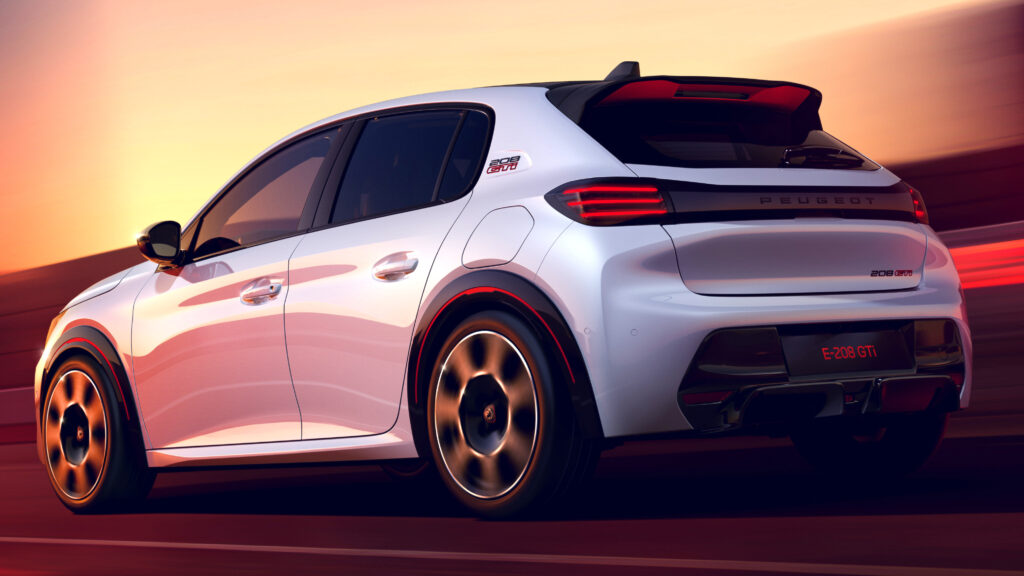
- Peugeot has released the first pictures of the production e‑208 GTi.
- It closely echoes last year’s concept and features numerous red accents.
- Details will be announced next week, but it could have 276 hp.
Nearly one year ago, Peugeot introduced the e‑208 GTi concept on the eve of the 24 Hours of Le Mans. The automaker is now returning with the production model, which will be fully detailed on June 12.
While the automaker is keeping information under wraps, they released a handful of pictures and noted the model “remains incredibly close to the original 2025 concept.” They added the car has a “sporty yet elegant design” as well as “performance figures intended to WOW.”
More: The First Electric GTI Isn’t From VW
The hot hatch certainly looks the part as it has a lightly revised Lion logo with a red surround. The sporty hue can also be found on the outside edges of the grille as well as incorporated into the lighting units. They’re joined by a revamped front splitter, which is painted to match the body color.
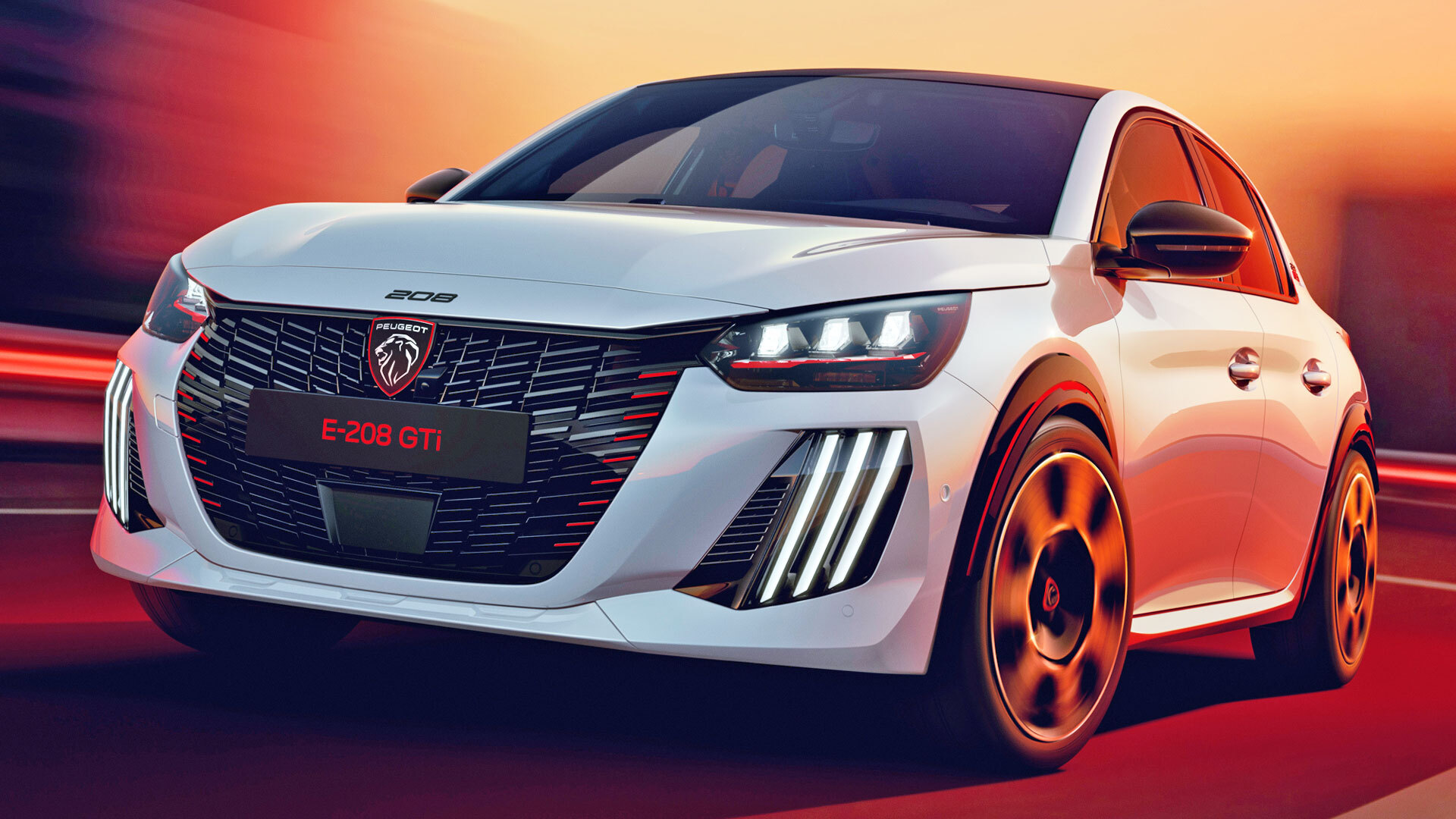
Further back, we can see gloss black mirrors and dark window trim. Other highlights include black fender flares with red accents as well as “208 GTi” badging on the rear pillar. The car also appears to ride on a set of aerodynamically optimized seven-spoke wheels, which are backed up by a braking system with red calipers.
The rear end largely carries over, but the car adopts a new spoiler with a contrasting red accent on the underside. It’s accompanied by a far more aggressive diffuser and a motorsport-inspired central brake light.
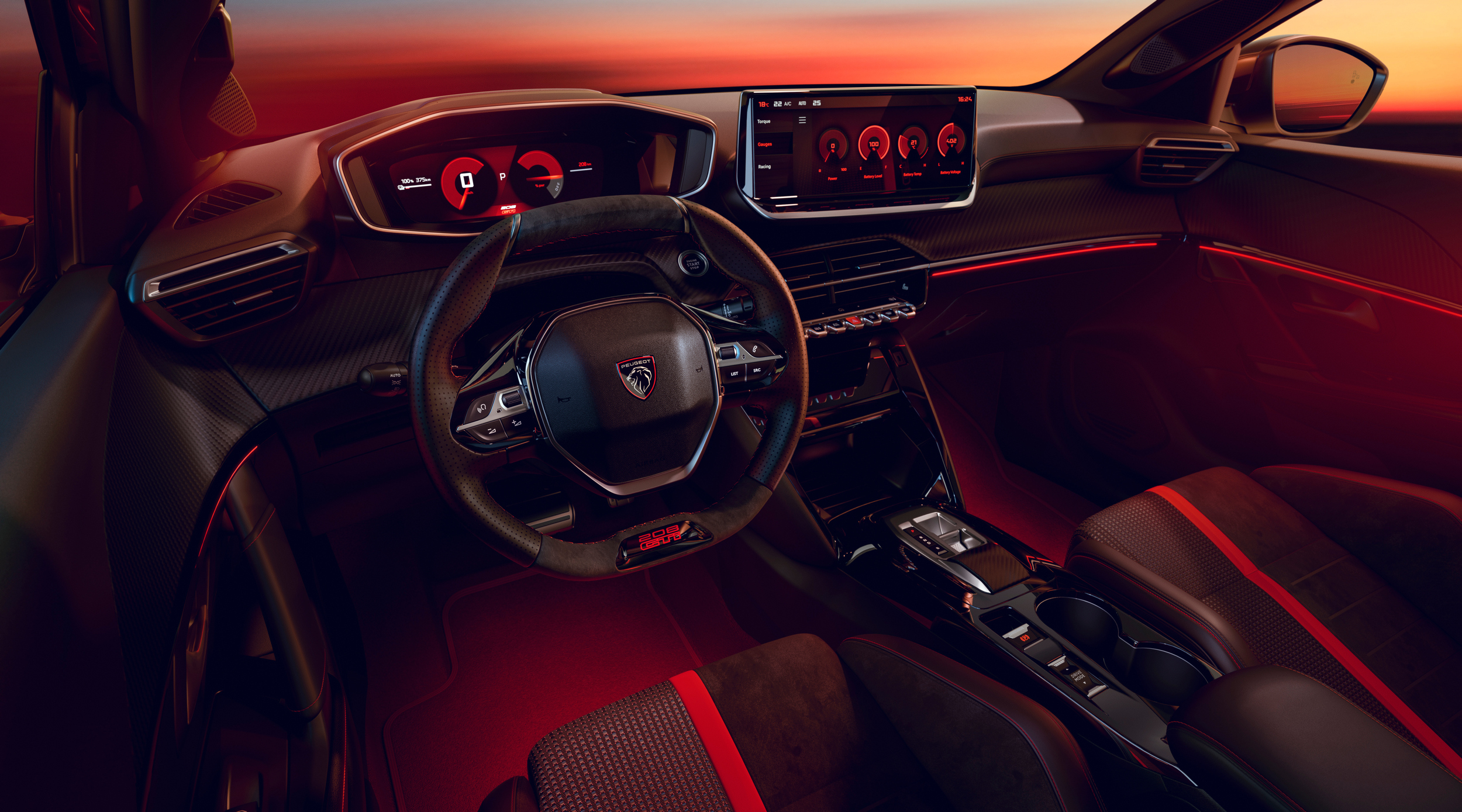
Interior changes are more modest, but we can see a lightly revised flat-bottom steering wheel with “208 GTi” branding. Elsewhere, there are sporty front seats with red center stripes. Other highlights include red contrast stitching, red illumination, and special graphics for the displays.
We’ll learn full details next week, but the concept had a 54 kWh CATL battery that powered an electric motor developing 276 hp (206 kW / 280 PS) and 254 lb-ft (345 Nm) of torque. This enabled the car to accelerate from 0-62 mph (0-100 km/h) in 5.7 seconds, before topping out at 112 mph (180 km/h).
Other highlights included a limited-slip differential and a 100 kW DC fast charging capability that enabled the model to go from 20% to 80% in less than 30 minutes. While Peugeot originally hinted at a range of 217 miles (350 km), the instrument cluster implies the production model can travel 233 miles (375 km) between stops.
