Normal view

There are new articles available, click to refresh the page.
Before yesterdayMain stream

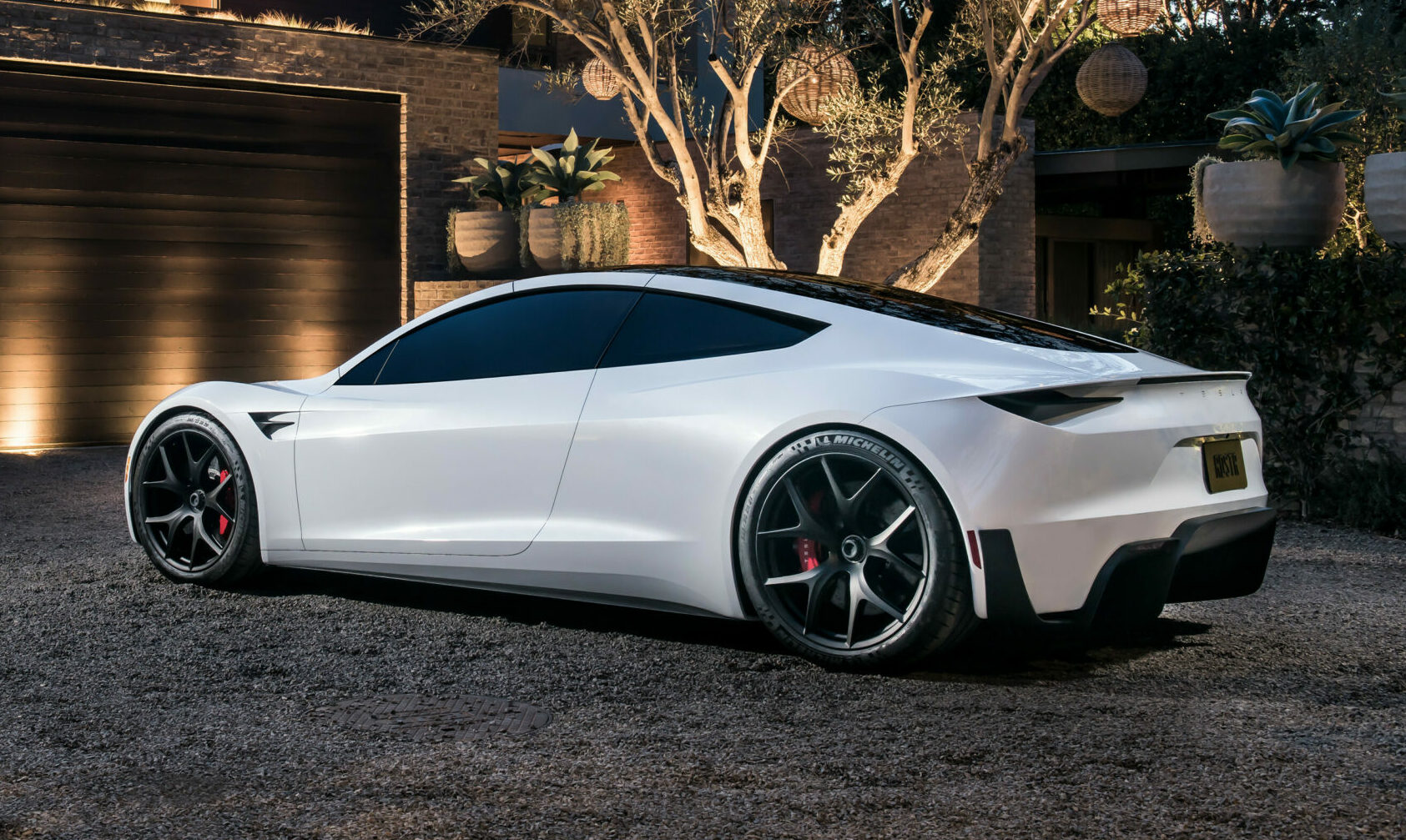
Tesla Roadster Delayed Again, Weeks Late But Years Behind

  • Tesla has delayed the Roadster again, now aiming for a late-April 2026 demo.
  • EV clashes with Tesla’s push toward steering-wheel-free autonomous vehicles.
  • After a decade of hype, the Roadster feels increasingly out of step with its future.

Sit down for this, because it might shake everything you thought you knew. The Tesla Roadster is delayed once again. Now that you’ve recovered from the shock of this news, let it be known that this time the delay is only a few weeks beyond the previous demo date of April 1. Every day that Tesla waits to bring this car to production, the less it makes sense, and that seems to be the viewpoint of the automaker itself.

CEO Elon Musk confirmed the latest delay on his social media platform X, writing in part, “New Roadster unveil probably in late April.” That moves it back from April 1, itself already a revision after missing earlier targets in 2020, 2021, 2022, 2023, 2024, and “late 2025.” Still, Musk insists it will be “a banger next-level.”

The second-generation Roadster has been pushed back so many times that its timeline now spans multiple presidential administrations, several Tesla product cycles, and an entire industry shift toward autonomy. At this stage, it’s starting to get really weird.

More: This Might Be The Tesla Roadster’s Biggest Update Since 2017

Musk and Tesla executives have hyped the Roadster as the “last best driver’s car,” a halo vehicle meant to prove EVs can outperform anything with pistons. Of course, plenty of EVs have come and gone that already made that point (at least on drag strips or shorter race tracks). The kicker is that while Tesla has delayed this car over and over and over again, its own view of the future has dramatically shifted.

True.

New Roadster unveil probably in late April. https://t.co/NShZxpK5cI

— Elon Musk (@elonmusk) March 17, 2026
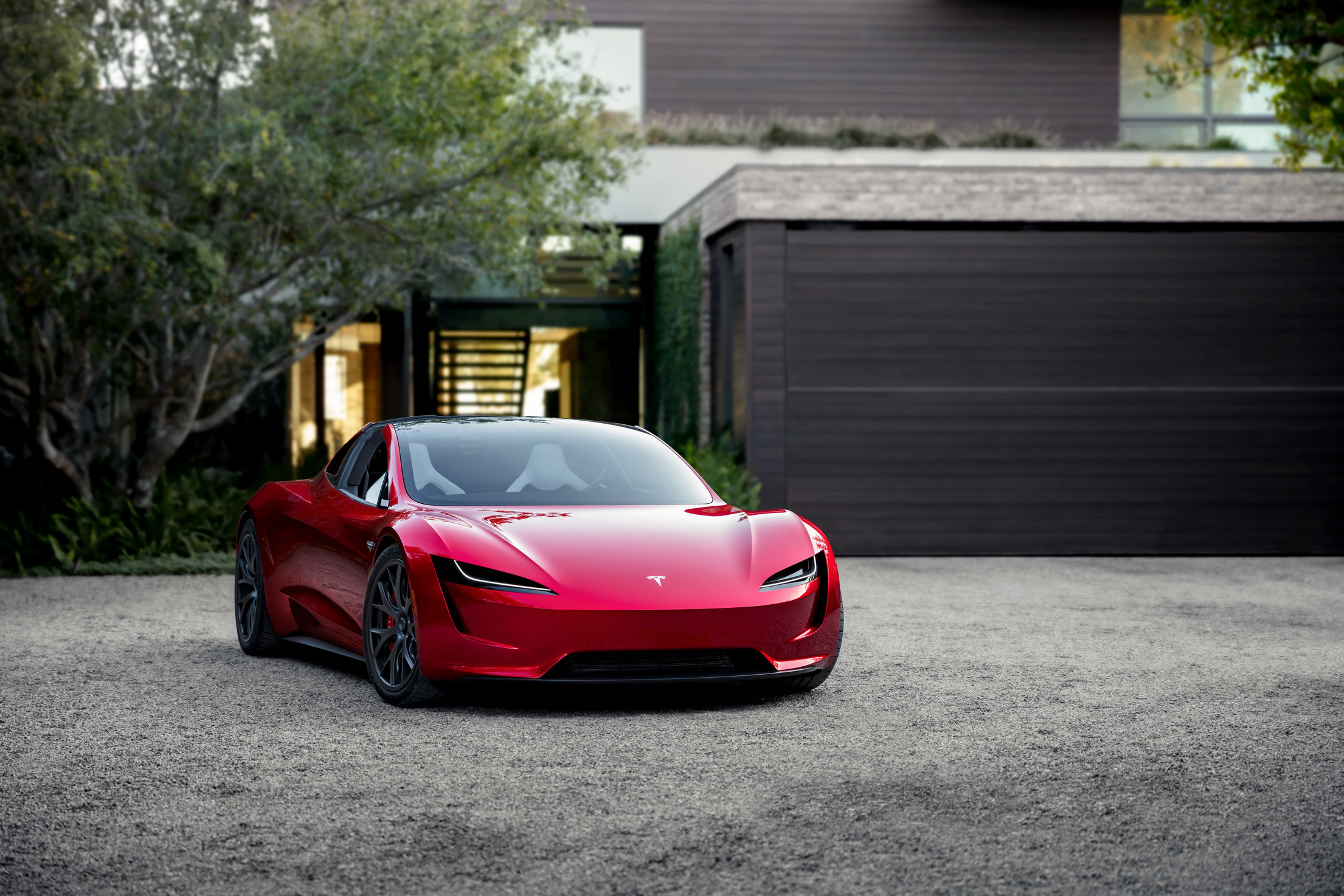
The company is betting heavily on fully autonomous vehicles, including the upcoming Cybercab, which could, in theory, arrive without a steering wheel or pedals at all. That’s the way Tesla initially pitched it before regulations dampened that possibility. That creates a strange contradiction.

On one hand, Tesla says the future doesn’t require human drivers. On the other hand, it’s still teasing a six-figure performance car built entirely around the idea that driving engagement matters. At this rate, it likely doesn’t show up in production form until Tesla actually masters Full Self-Driving (Unsupervised).

New Roadster unveil hopefully next month.

It will be a banger next-level. https://t.co/sO0iB63l07

— Elon Musk (@elonmusk) March 17, 2026

Tesla Files New Seat Patent For A Supercar That’s Been Sitting Since 2017

  • Tesla filed a new “Vehicle Seat System” patent with the U.S. office.
  • The design replaces gears with flexible hinges for motion.
  • Electric motors are swapped for smaller multi-axis actuators.

Tesla has a knack for dropping surprises at just the right time, and its latest patent has sent anticipation for the new Roadster skyrocketing. A filing published this month describes a new approach to performance seating, one that replaces the normal train of metal brackets and hinges with a single sculpted shell.

The document that was first spotted by Teslarati outlines a monolithic frame that integrates the seat base, backrest, headrest, and side supports into a single composite structure. It’s a radical departure from the multi-piece setups of most sports cars. The fact that such materials as Kevlar-nylon and carbon-nylon composites are mentioned gives us an indication of Tesla’s purpose of reducing unnecessary weight while providing the seat with more strength.

Read: This Might Be The Tesla Roadster’s Biggest Update Since 2017

Conventional seats also depend on dozens of connected parts, each of which adds mass and introduces possible points of failure. By making the seat all in one, the engineers are hoping for a lighter build with fewer places for the wear and tear of time.

Design Built For Performance

\\\

The patent also points out the way Tesla wants these seats to behave. Rather than having metal gears recline the structure, they depend on what they call an integrated flexible hinge which means the material itself flexes where it is needed to do so. And that allows the frame to bend in certain areas, but be rigid in others, enabling designers to fine-tune the seat for support during hard acceleration or tight cornering.

Tesla isn’t stopping at the frame though. The patent substitutes for ordinary electric motors and rails with small actuators that can move the seat in various directions. With the six degrees of freedom, the system is capable of moving the seat with more precision than most luxury vehicles. It’s a degree of adjustability normally reserved for high-end performance interiors.

An Imminent Reveal?

 Tesla Files New Seat Patent For A Supercar That’s Been Sitting Since 2017

This patent comes at a time when Tesla fans also are watching closely. Elon Musk recently announced that the Roadster’s design reveal is on April 1, and it’s cause for high expectations for a car that has been stuck in the development limbo for years.

The timeline has stretched far beyond the original plan. Tesla first showed a Roadster prototype back in 2017 and initially targeted a 2020 launch. That deadline came and went. Still, recent trademark filings for updated Roadster badges suggest the company may finally be preparing to reveal the production version in full.

Weight reduction has always been one of Tesla’s tenets as an engineering company, as well as the move to large castings for structural components. A more graduated and integrated seating configuration makes a lot of sense in that strategy, especially for a vehicle that is eyeing extreme acceleration figures.

 Tesla Files New Seat Patent For A Supercar That’s Been Sitting Since 2017
❌
❌