
 Login
Login
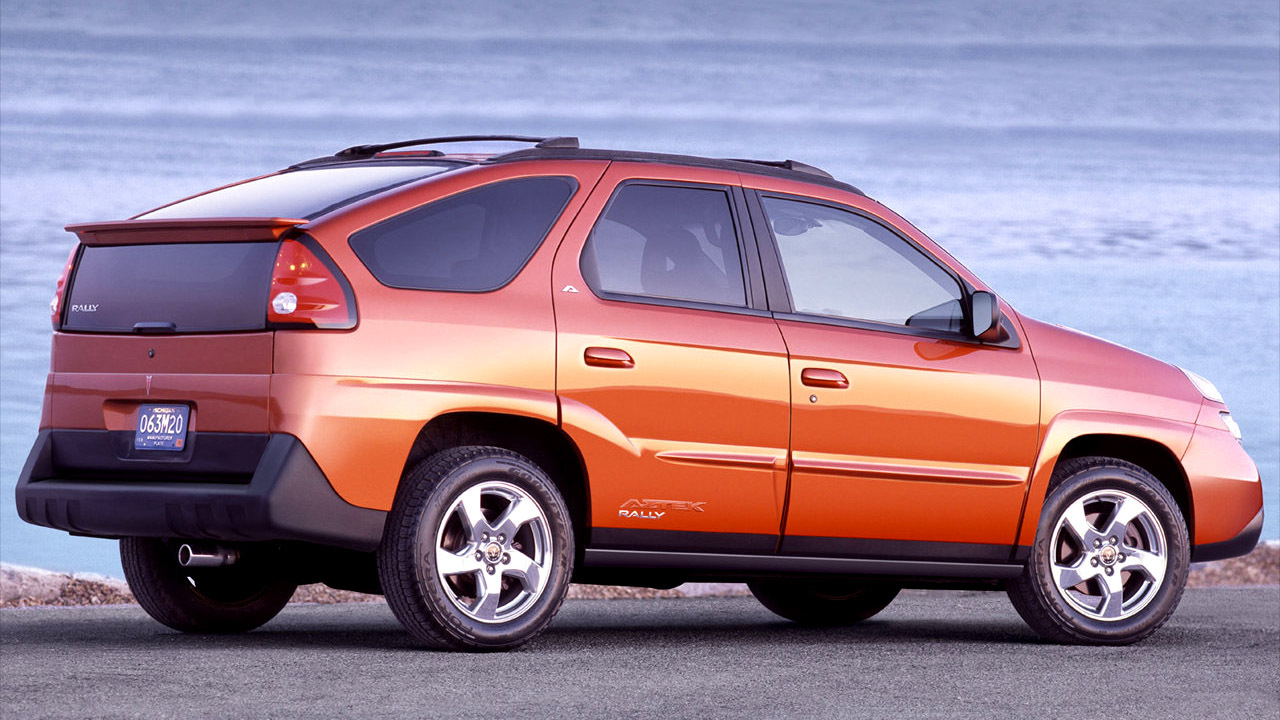
Hyundai’s Ioniq 3 Looks Like Someone Crossed A Veloster With A Pontiac Aztek

- The Hyundai Ioniq 3 is a fully electric “aero hatchback”.
- The new model is the baby brother of the Ioniq 5.
- It shares its underpinnings with the Kia EV3 and EV4.
Hyundai has unveiled a new gateway model for its electric Ioniq range in Europe. The Ioniq 3 develops last year’s Concept Three into a new production model described as an “aero hatchback” though it does come with various crossover styling cues.
More: Hyundai’s Ioniq Concepts Forgot They Were Supposed To Look Like Hyundais, Especially The Lambo One
Measuring 4,155 to 4,170 mm (163.6 to 164.2 inches) in length, depending on the version, the EV is roughly the same size as the Hyundai Bayon. Its 2,680 mm (105.5-inch) wheelbase, however, matches the Elantra. Within Hyundai’s zero-emission lineup, it sits above the Inster and below the Kona Electric, effectively taking on the role of a junior Ioniq 5.
The more experimental bits from the concept have quietly disappeared. No Veloster-style asymmetrical doors here. Just a regular five-door layout that is easier to live with and, more importantly, easier to sell. Up front, split LED lighting is paired with four illuminated dots that echo across the rear, spelling out an “H” in Morse code.
Speaking of the rear, the stubby silhouette flirts with some less flattering comparisons, not least the infamous Pontiac Aztek. A split rear window, bisected by a thick horizontal bar that holds a rear wing, does it no favors, though to be fair, it still comes off better than the much-derided Pontiac effort.
Elsewhere, the production model adds visual weight through chunkier surfacing and more plastic cladding than the concept suggested. Hyundai claims a drag coefficient of 0.263, which is respectable given the shape.
Hyundai showed the range-topping N Line, set apart by sportier bumpers, an integrated diffuser, a rear spoiler, and model-specific 19-inch alloy wheels (base model rides on 16-inch wheels). Those elements are finished in black, tying in with the roof, A-pillars, side skirts, and the cladding around the wheel arches.
Xavier Martinet, President and CEO of Hyundai Motor Europe, said that the Ioniq 3 is “Built for people’s real everyday needs”, combining “segment-leading driving range and aerodynamics with extraordinary levels of space, comfort and practicality”.
High-Tech And Spacious Interior
Inside, the centerpiece is a 14.6-inch free-standing touchscreen, while lower trims make do with a smaller 12.9-inch display paired with a compact digital instrument cluster. Both run Hyundai’s new Google-based Pleos infotainment system, making its debut in a production model. Thankfully, there’s a row of physical switches mounted above the climate vents and additional tactile controls on the N-branded steering wheel.
Hyundai designers integrated the gear lever on the right stalk, freeing up space on the slim two-story center tunnel for cup holders, storage cubbies, and a wireless charging pad. Other highlights include a practical tray on the dashboard, heated and ventilated Relaxation Seats, rear climate vents, a panoramic sunroof, a Bose Premium audio system and a comprehensive Hyundai SmartSense ADAS suite.
More: Hyundai Is Charging Koreans A Fee To Put Pikachu On Their 2027 Kona’s Dashboard
The boot has a double floor with a Ford Puma-style Megabox underneath. Total capacity stands at 441 liters (15.6 cubic feet), which is competitive for something this size.
Two Electric Powertrain Options
Underneath, the Hyundai Ioniq 3 rides on a 400-Volt version of the E-GMP architecture, just like the Kia EV3 and EV4 siblings. At launch, it will be offered in two front-wheel-drive configurations.
The Standard Range model comes with a 144 hp (108 kW / 147 PS) electric motor and a 42.2 kWh battery offering 214 miles (344 km) of WLTP range. The Long Range features a slightly less potent 133 hp (100 kW / 135 PS) electric motor and a larger 61 kWh battery, stretching the range to 308 miles (496 km) on a full charge. Both variants have the same 250 Nm (184 lb-ft) of torque.
What About A Proper Hot Hatch?
For those after something with a bit more edge, Hyundai’s N division is reportedly exploring a baby hot hatch spun from the Ioniq 3. It is an easy leap, given the platform already supports dual-motor setups delivering up to 288 hp (292 PS / 215 kW), as seen in the range-topping Kia EV3 GT-Line.
More: New Elantra N TCR Undercuts The Civic Type R By $7,000 With A Bigger Wing
Besides the extra punch, the Ioniq 3 N will likely benefit from a more aggressive stance along with a unique setup for the chassis and the electronics, borrowing a few tricks from the Ioniq 5 N and Ioniq 6 N stablemates.
Market Availability
The Hyundai Ioniq 3 is set to launch in Europe later this year, with production based in Turkey. That also explains its absence from the US market, where tariffs would push pricing beyond what makes sense for a car in this segment.
It will step into a crowded field, going up against electric subcompact SUVs like the Kia EV3, Mini Aceman, Renault 4 E-Tech, Ford Puma Gen-E, Jeep Avenger, Alfa Romeo Junior, Volvo EX30, and Opel Mokka Electric. On the hatchback side, it will also face off against the Renault 5 E-Tech, BYD Dolphin, MG4 EV, and the upcoming VW ID. Polo.
