
Reading view

There are new articles available, click to refresh the page.

Your Right to Know: Names of police should be public

A panel and camera are mounted on a pole with blurred highway signs and street lights in the background.
Reading Time: 3 minutes

In 2024, a sheriff’s deputy working for the Outagamie County Sheriff’s Department was forced out for being lousy at his job. But even though the deputy, Cristian Morales, was flagged in the state’s negative separation database, he ended up being hired a few months later by the Menasha Police Department. 

Earlier this year, Morales was arrested and accused of stalking an ex-girlfriend using the city’s Flock camera system. He’s now facing criminal charges.

While some folks are suited for the difficult work of being a law enforcement officer, many are not. It’s hardly a controversial statement to say that police, who can arrest people and use force when necessary, should be held to a higher standard than the rest of us.

And yet our reporting at The Badger Project has found that police chiefs and sheriffs in Wisconsin often give these “wandering officers” second or third chances, despite research saying that officers fired or forced out for misconduct are more likely than other cops to reoffend.

At our last count, more than 300 active officers in Wisconsin had been fired or forced out of previous law enforcement jobs. Many of these separations involved novices who couldn’t cut it in a tough job during their probationary period, when the bar for termination is low. But some, we’ve found, lost jobs for misconduct, including drunk driving, writing misleading reports and using sexist and racist language.

In Wisconsin, law enforcement agencies can report to the state DOJ when they fire or force out an officer, so we can track when that cop goes on to get hired by another policing agency. But we are currently unable to track these wandering officers who have been fired or forced out in other states and come to work here because we don’t have a list of all law enforcement officers here.

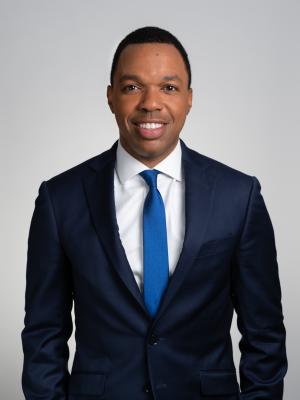
A person with a beard wearing a light blue collared shirt looks toward the camera against a plain gray background.
Peter Cameron

That’s why The Badger Project, along with our partners at the Invisible Institute, a Chicago-based nonprofit journalism organization, requested the full list of names and work histories from the Wisconsin Department of Justice and sued when it refused.

In April, Dane County Circuit Court Judge Rhonda Lanford ruled in our favor and ordered the DOJ to release the records. She cited a previous state appeals court ruling that said law enforcement officers “necessarily relinquish certain privacy and reputational rights by virtue of the amount of trust society places in them and must be subject to public scrutiny.”

Prominent members of Wisconsin’s law enforcement community have criticized the judge’s ruling, saying it goes too far. An appeal could be coming.

Jim Palmer, executive director of the Wisconsin Professional Police Association, wrote an op-ed saying the release of these records could put officers at “risk of harassment, doxxing and worse.” He said officers’ birthdates are part of the records whose release we are seeking. Not so: While our initial records request asked for birthdates or birth years (to distinguish between officers with the same name), our lawsuit only asked for birth years, not months and days.

The state DOJ raised another objection, saying release of the names would jeopardize undercover officers. But what cop uses his or her real name when working undercover? We did not request photos of the officers.

I salute and thank the men and women in law enforcement who are serving their communities. I don’t envy the chiefs and sheriffs who must staff their agencies at a time when finding good job applicants for law enforcement jobs is as hard as ever.

And you know what? We at The Badger Project are not against second chances for cops who screwed up. Perhaps an officer who made a fireable mistake has learned from it. Whether that officer should continue in law enforcement is not for us to decide. Our job, as journalists, is to shine a light on those in power and get facts to the public who are being policed by these folks.

If chiefs or sheriffs want to hire an officer with problems in the past, they should say so publicly and defend their decision. They just can’t make these decisions in secret.

Your Right to Know is a monthly column distributed by the Wisconsin Freedom of Information Council (wisfoic.org), a nonprofit, nonpartisan group dedicated to open government. Peter Cameron is managing editor of The Badger Project, a nonprofit news outlet.

Your Right to Know: Names of police should be public is a post from Wisconsin Watch, a non-profit investigative news site covering Wisconsin since 2009. Please consider making a contribution to support our journalism.

Wealthy U.S. Rep. Wied keeps aggressively trading stocks. A bipartisan bill would ban the practice

U.S. Rep. Tony Wied (R-De Pere) represents the 8th District covering Northeast Wisconsin. (Official U.S. House photo)

Most Americans support banning members of Congress and their families from trading stocks in individual companies.

So says a 2023 University of Maryland study that surveyed about 3,000 registered voters.

Lawmakers in Washington are privy to information the general public may not be and can use it to make advantageous stock trades.

And “the problem is getting worse,” said Kedric Payne, director of the ethics program for the Campaign Legal Center, a government watchdog in Washington. His team focuses on enforcing existing ethics laws and advocating for tougher ones.

Photo of Kedric Payne, senior director of ethics at Campaign Legal Center, a government watchdog nonprofit
Kedric Payne leads the ethics program at the Campaign Legal Center, a government watchdog nonprofit. (Campaign Legal Center photo)

Payne believes the public should know “their elected officials are protecting the public interest and not their own personal interest.”

The STOCK Act, a federal law passed in 2012, requires members of Congress to disclose their trades within about 30 days of the purchase or sale. But the penalty for filing a disclosure report late is a meager $200.

Payne said his organization used to file ethics complaints for congressional stock trading. It’s rare that they file those complaints now since the most common violation is a late report, and the legal penalty for filing late is so insignificant.

While disclosure requirements can help reveal actual or perceived conflicts of interest, Payne said, disclosing conflicts of interest also lessens the public’s trust in government. In effect, the increased transparency doesn’t alleviate whether the trade looks corrupt or is corrupt.

U.S. Rep. Tony Wied, a freshman congressman elected to the Wisconsin 8th in 2024, is no stranger to stock trading. The Republican represents the northeastern portion of the state, and his investment activity consistently outpaces Wisconsin’s other congressional representatives.

businessman from De Pere who was elected to his seat by a wide margin in 2024, Wied formerly owned a gas station chain in the Green Bay area. His district encompasses parts of Door County, Green Bay and Appleton. Like every other member of Congress, his seat will be up for grabs this year in the midterm elections. Wied has said publicly he plans to seek reelection.

Wied recently reported buying between $760,000 and $1.6 million in stock between Feb. 3 and Feb. 19, according to The Badger Project’s analysis of Wied’s periodic transaction report. The disclosure laws only require that members report ranges and not exact values. In the same time period, Wied also wholly or partially sold stock valued between about $600,000 and $1.5 million.

Members of Congress are required to file periodic reports with the Clerk of the House about 45 days after they, their spouse or their dependent children buy or sell a financial asset worth more than $1,000. Wied’s most recent report, filed in March, is five pages long and lists 25 separate transactions. His largest single transaction was a purchase of between $500,000 and $1 million in U.S. treasury bills, a low-risk, low-reward investment.

In comparison, no other representative among Wisconsin’s U.S. House members — Reps Mark Pocan, Gwen Moore, Scott Fitzgerald, Derrick Van Orden, Glenn Grothman, Brian Steil and Tom Tiffany — have filed periodic transaction reports in the last year.

Members must also submit yearly financial disclosures, which list their assets and liabilities.

The sum of Wied’s assets disclosed in his latest annual disclosure ranges from about $6 million to $13 million, according to a review by The Badger Project. U.S. Sen. Ron Johnson, who has millions in commercial real estate and stocks, is the only member of Wisconsin’s delegation in Washington to top that. Johnson reported assets ranging from about $17 million to $81 million in 2025.

Wied’s staff wrote in an email to The Badger Project in January that the congressman’s trades are solely managed by an independent financial advisor and that Wied complies with all ethics laws and guidelines.

Wied’s office did not respond to The Badger Project’s request for comment for this story.

Payne told The Badger Project that Wied isn’t on his group’s radar.

“We haven’t seen anything that would draw this congressman to our attention,” Payne said.

But a congressman’s trades can be aboveboard and still raise suspicion because lawmakers who trade at a high volume will eventually make a transaction that either overlaps with their professional duties or appears to, Payne said.

“It’s only a matter of time for him to have trades over his career that are gonna raise questions whether or not he did anything wrong,” Payne said about Wied. “And when people question if their elected official is prioritizing their interest or prioritizing the official’s personal interest, you have a problem.”

That’s why Payne and his organization have endorsed the bipartisan Restore Trust in Congress Act. The bill was introduced last September and has been stuck in committee since. Among the bill’s 131 co-sponsors are Van Orden and Pocan. If it passes, the proposed legislation would bar members of Congress as well as their spouses and dependent children from both owning and trading individual stocks. Further, members would be required to either divest their current holdings or place them into a blind trust.

“It is a real legislative solution to the problem,” Payne said.

The bill is facing competition as Democrats and Republicans have since introduced their own, “watered down” versions, Payne said. The Stop Insider Trading in Congress Act, introduced by Steil, a Republican, and mentioned by President Donald Trump in his State of the Union address, would prohibit members of Congress from buying individual stocks. But members could continue to own their stocks and sell them. The Restore Trust in Government Act, the Democratic version, would include the president and vice president in the members included in a stock trading ban.

Payne said he has faith that the original bill will pass eventually, but that it will take another scandal to get the public to pay attention and demand Congress to take action.

Tony Wied’s trades in February 2026

SALES
MIN MAX STOCK TRADE DATE
$15,001 $50,000 Paycom Software Inc 2/12/26
$50,001 $100,000 Block Inc Class A 2/12/26
PARTIAL SALES
$15,001 $50,000 Fortinet Inc 2/19/26
$15,001 $50,000 Broadcom Inc 2/19/26
$50,001 $100,000 Western Alliance Bancorp 2/19/26
$15,001 $50,000 Salesforce Inc 2/17/26
$50,001 $100,000 Lam Resh Corp 2/12/26
$100,001 $250,000 Artista Networks Inc 2/12/26
$50,001 $100,000 Take-Two Interactive 2/11/26
$50,001 $100,000 Block Inc A Class 2/11/26
$50,001 $100,000 Western Alliance Bancorp 2/9/26
$50,001 $100,000 Lam Resh Corp 2/9/26
$50,001 $100,000 Take-Two Interactive 2/3/26
$15,001 $50,000 Artista Networks Inc 2/3/26
$50,001 $100,000 Lam Resh Corp 2/3/26
$15,001 $50,000 Ulta Beauty Inc 2/3/26
PURCHASES
$50,001 $100,000 Visa Inc Class A 2/19/26
$15,001 $50,000 Labcorp Holdings Inc 2/19/26
$50,001 $100,000 Charles Schwab Corp 2/19/26
$15,001 $50,000 Micron Technology Inc 2/19/26
$500,001 $1,000,000 U.S. Treasury Bills 2/13/26
$15,001 $50,000 ServiceNow Inc 2/4/26
$50,001 $100,000 Him & Hers Health Inc 2/3/26
$15,001 $50,000 Hubspot Inc 2/3/26
$50,001 $100,000 The Trade Desk Inc Class A 2/3/26

This article first appeared on The Badger Project, an independent, reader-supported news nonprofit in Wisconsin. It is republished here under a Creative Commons Attribution-NoDerivatives 4.0 International License.

A loophole lets Wisconsin lawmakers delete public records

A Capitol dome rises behind bare tree branches at dusk, with columns and a statue atop the dome silhouetted against a pale sky.
Reading Time: 3 minutes

All public employees in Wisconsin must retain records, per the state’s open records law. Except one group. The ones who wrote that law.

State legislators have exempted themselves from the retention portion of the law. Some want to change that.

“The public should not have to worry about legislators having secret conversations or deleting emails,” said state Rep. Clinton Anderson, D-Beloit, who is introducing a bill that would close this loophole despite the fact that the state Assembly adjourned last month for the rest of the year.

Anderson released the bill Monday because it is the start of Sunshine Week, a nonpartisan collaboration among groups in the journalism, civic, education, government and private sectors that shines a light on the importance of public records and open government.

People in suits sit at desks with microphones in a room while a person holds paper at a podium in the foreground.
Rep. Clinton Anderson, D-Beloit, left, listens as the Wisconsin Assembly convenes during a floor session, Jan. 14, 2025, at the State Capitol in Madison, Wis. (Joe Timmerman / Wisconsin Watch)

In Wisconsin, state legislators must comply with a records request, but if they have destroyed the record, they have nothing to send.

“Obviously, it’s troubling,” said Bill Lueders, president of the Wisconsin Freedom of Information Council. “It allows legislators to make things go away that they would rather not see the light of day.”

State Rep. Rob Brooks, R-Saukville, told the Wisconsin Examiner in 2021 that his office “frequently deletes emails during the normal course of business each day.”

And he’s not the only one.

“My office does not delete records on principle, and we should make sure every elected official is held to that same standard,” Anderson said.

In 2025, Gov. Tony Evers stepped in to close this loophole – his 2025 budget proposal included a measure to “remove the Legislature’s exemption from open records law by requiring that records and correspondence of any member of the Legislature be included in a definition of a public record to provide greater transparency for the people of Wisconsin.” The proposal also would have allocated funds and opened a full-time position with the Legislative Technology Services Bureau to carry out this new requirement. But the Republican-controlled Joint Finance Committee removed it from the final budget.

State Sen. Chris Larson, a Democrat from Milwaukee, has introduced bills to close that exemption for state legislators multiple times and is doing so again in the Senate this week in tandem with Anderson.

A person in a suit with a patterned tie and a multicolored ribbon on the lapel stands with a water bottle nearby.
Wisconsin state Sen. Chris Larson, D-Milwaukee, is photographed during a state Senate session on June 7, 2023, in the Wisconsin State Capitol building in Madison, Wis. (Drake White-Bergey / Wisconsin Watch)

Before his election to the state Senate in 2010, Larson served on the Milwaukee County Board of Supervisors. As a public official, he had to maintain all his records there and assumed the same when he arrived in the Legislature.

But as his email inbox filled up and ran low on space, Larson said he was told by IT staff to simply delete old messages.

“People often wonder why so many wildly popular policies go session after session without a vote or even a public hearing, while special interest slop rises to the top of the agenda,” said Justin Bielinski, Larson’s spokesman. “The Wisconsin Legislature’s exemption from record retention requirements creates a perverse incentive to do the people’s business in secret. If lawmakers aren’t going to be responsive to their constituents’ needs, the least we can do is allow people to find out who they are listening to, and whose voices they choose to ignore.”

Larson’s bills to close the loophole have been ignored by Republicans who control the Legislature, he said. The majority party generally pays little attention to bills from the minority.

But the fact the Wisconsin Legislature is even subject to the open records law, albeit with a caveat, makes it one of the more transparent states. Nearly a quarter of all states — 12 in total — do not even allow records from the Legislature to be accessed by the public, according to a study from The Journal of Civic Information. Congress has also excluded itself from open records requests under the Freedom of Information Act.

The exemption for legislators here “completely undermines Wisconsin’s public records law and the ability for citizens to trust their Legislature,” said David Cuillier, director of the University of Florida’s Brechner Freedom of Information Project. “It’s really quite bizarre and an outlier in the United States. The right thing to do is remove it and restore accountability and credibility to the institution.”

The Badger Project is an independent, reader-supported newsroom in Wisconsin.

This article first appeared on The Badger Project and is republished here under a Creative Commons Attribution-NoDerivatives 4.0 International License.

A loophole lets Wisconsin lawmakers delete public records is a post from Wisconsin Watch, a non-profit investigative news site covering Wisconsin since 2009. Please consider making a contribution to support our journalism.

❌