
 Login
LoginCupra’s Electric Hatch Quietly Sharpens Its Look While You’re Distracted By Raval

- Updated Cupra Born prototypes spotted testing with light camo.
- Visual changes appear focused on revised lights and bumpers.
- Facelifted car goes on sale in 2026 alongside smaller Raval EV.
Cupra may be gearing up to steal the spotlight in 2026 with the all-new Raval subcompact EV, but it hasn’t forgotten about the car that helped define its electric identity.
Fresh spy shots of a lightly camouflaged Cupra Born prototype show the brand is still hard at work on a mid-life update for its popular electric hatchback, even if the changes aren’t exactly revolutionary.
Related: Cupra’s New EV Troublemaker Looks Like It Has Circular Saw Blades For Wheels
We last caught the refreshed Born testing around six months ago, and judging by these latest images, Cupra’s approach remains firmly evolutionary rather than radical.
That’s probably not a bad thing, as the Born is still one of the better-looking small EVs on the market, and in our opinion, it’s far more dynamic than the VW ID.3 hatch it’s based on.
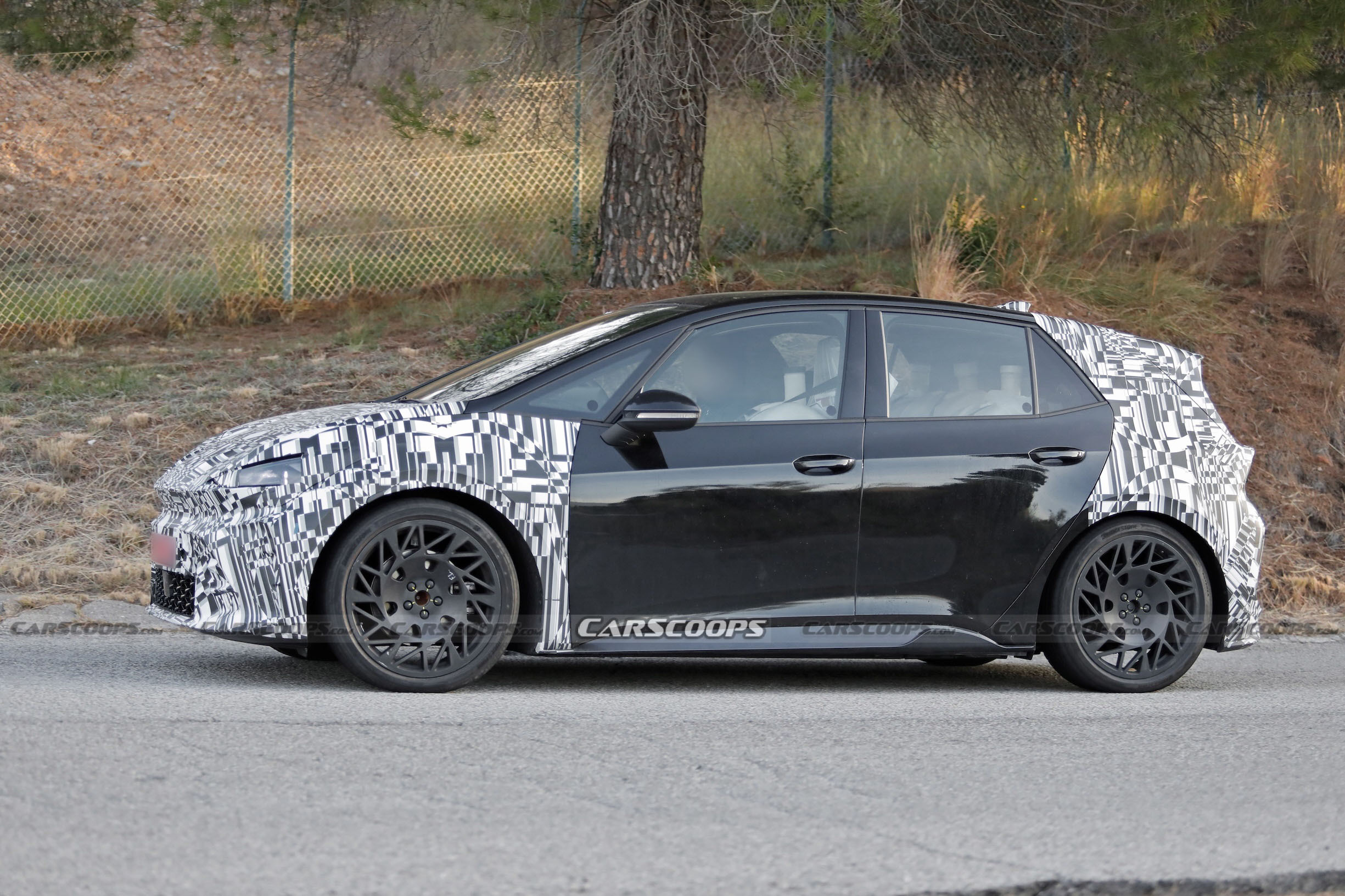
As before, camouflage is concentrated around the front and rear, hinting at redesigned bumpers and updated lighting graphics. Up front, the lower grille appears taller and more sculpted, flanked by vertical outer vents that should add some visual width and aggression.
It’s a subtle tweak, but one that aligns the Born more closely with Cupra’s latest design language seen on models like the Tavascan and Terramar, plus the Raval.
At the back, the refresh seems equally restrained. The rear bumper appears to house a reworked diffuser with a more pronounced lip at the corners, giving the Born a slightly lower, tougher stance. Again, nothing dramatic, but enough to differentiate the facelifted car from earlier models if you know where to look.
A topped and tailed ID.3
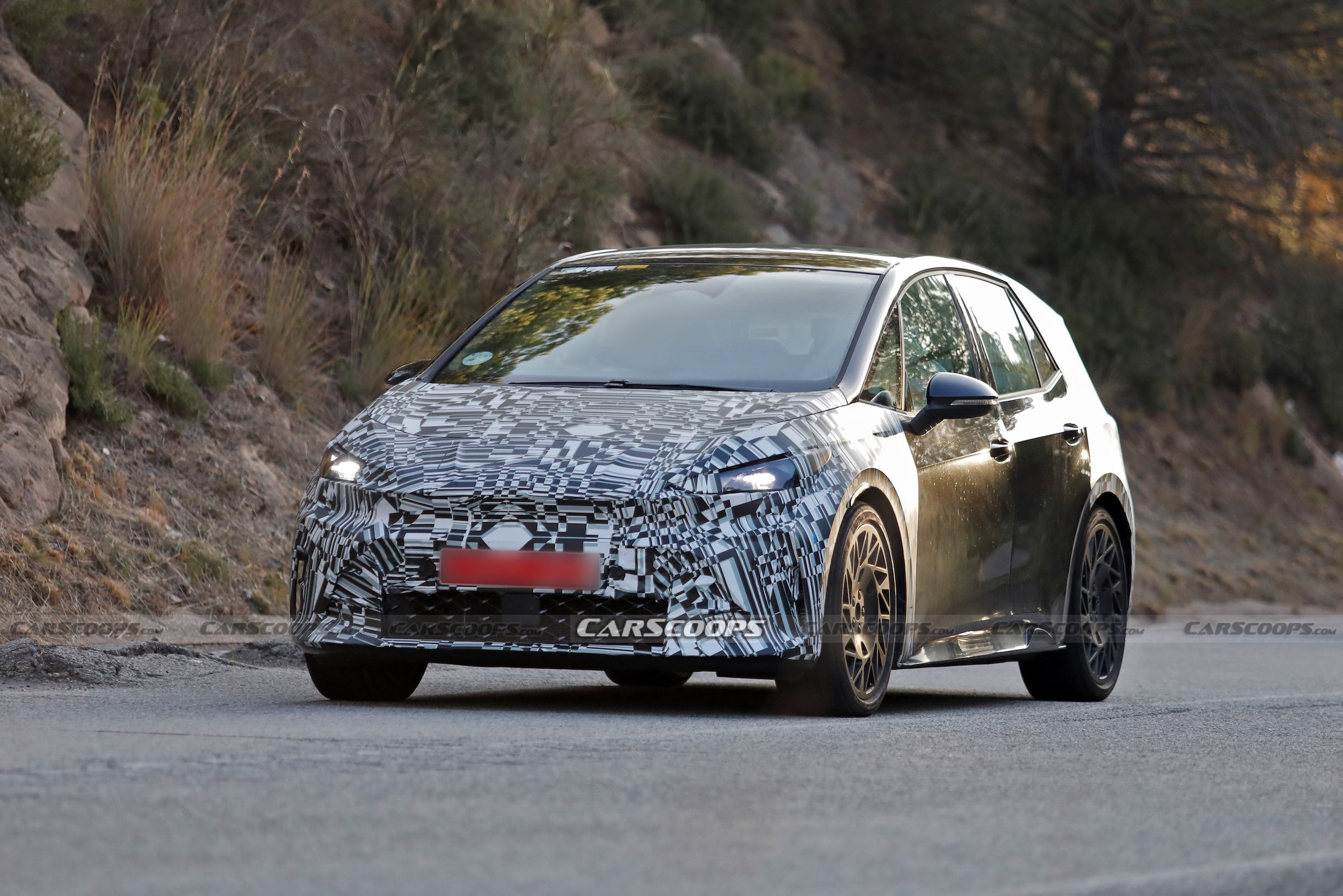
The doors, roofline, and overall proportions appear untouched, which is no surprise considering just how much the Born shares with its Volkswagen ID.3 sibling. In fact, the two cars are so closely related that even the doors are interchangeable, making sweeping body changes impossible without VW Group-wide approval.
Inside, we don’t expect many surprises. Cupra already addressed the Born’s biggest interior weakness in 2024 by fitting VW’s much-improved 12.9-inch touchscreen, and the cabin quality far outshines the ID.3’s, so any further upgrades are likely limited to trim and software tweaks.
Up to 322 hp
Baldauf
Mechanically, the Born lineup should remain familiar. The existing 201 hp (204 PS / 150 kW) and 228 hp (231 PS / 170 kW) rear-wheel-drive variants will likely carry over, alongside the punchy 322 hp (327 PS / 240 kW) VZ hot hatch introduced last year.
While big power bumps aren’t expected, Cupra may try to eke out a few extra miles of range from the 59, 77, and 79 kWh battery options.
With the Born already capable of up to 369 miles (594 km) on a charge, this refresh looks less about reinvention and more about keeping Cupra’s electric hatch sharp so it still looks and feels on the pace in 2026 when the smaller, front-wheel drive Raval arrives.

