Reading view

There are new articles available, click to refresh the page.

VW’s Next Hot Hatch Could Be The First-Ever Rear-Drive GTI
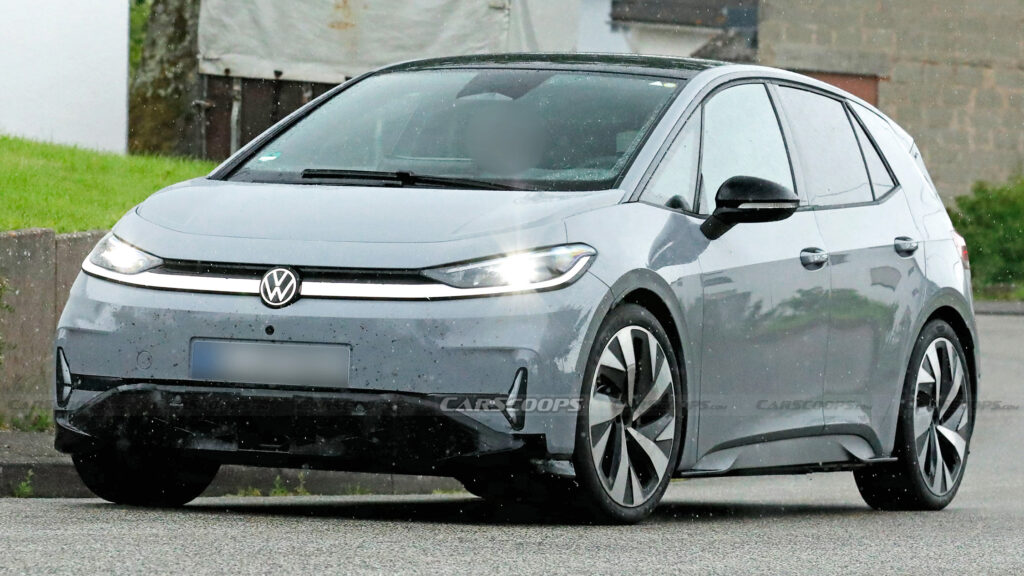
  • A prototype of VW’s sportiest ID.3 Neo has been spotted testing in Germany.
  • Replacement for the old 322 hp ID.3 GTX could get the GTI badge this time.
  • Mostly undisguised Neo test car has an ID. Polo GTi-style lower front bumper.

Volkswagen only recently unveiled the heavily updated ID.3 Neo, but one important version was conspicuously absent. While buyers can currently choose from three sensible powertrains, there’s still no replacement for the departed ID.3 GTX. That now looks set to change.

Related: VW Spent Years Removing Knobs From Its Cars, The ID.3 Neo Puts Them Back

Our spy photographers have caught what they’re calling the first ID.3 Neo GTX prototype testing on public roads. Whether it actually reaches production wearing a GTX badge is another matter entirely.

\\\\\\

Baldauf

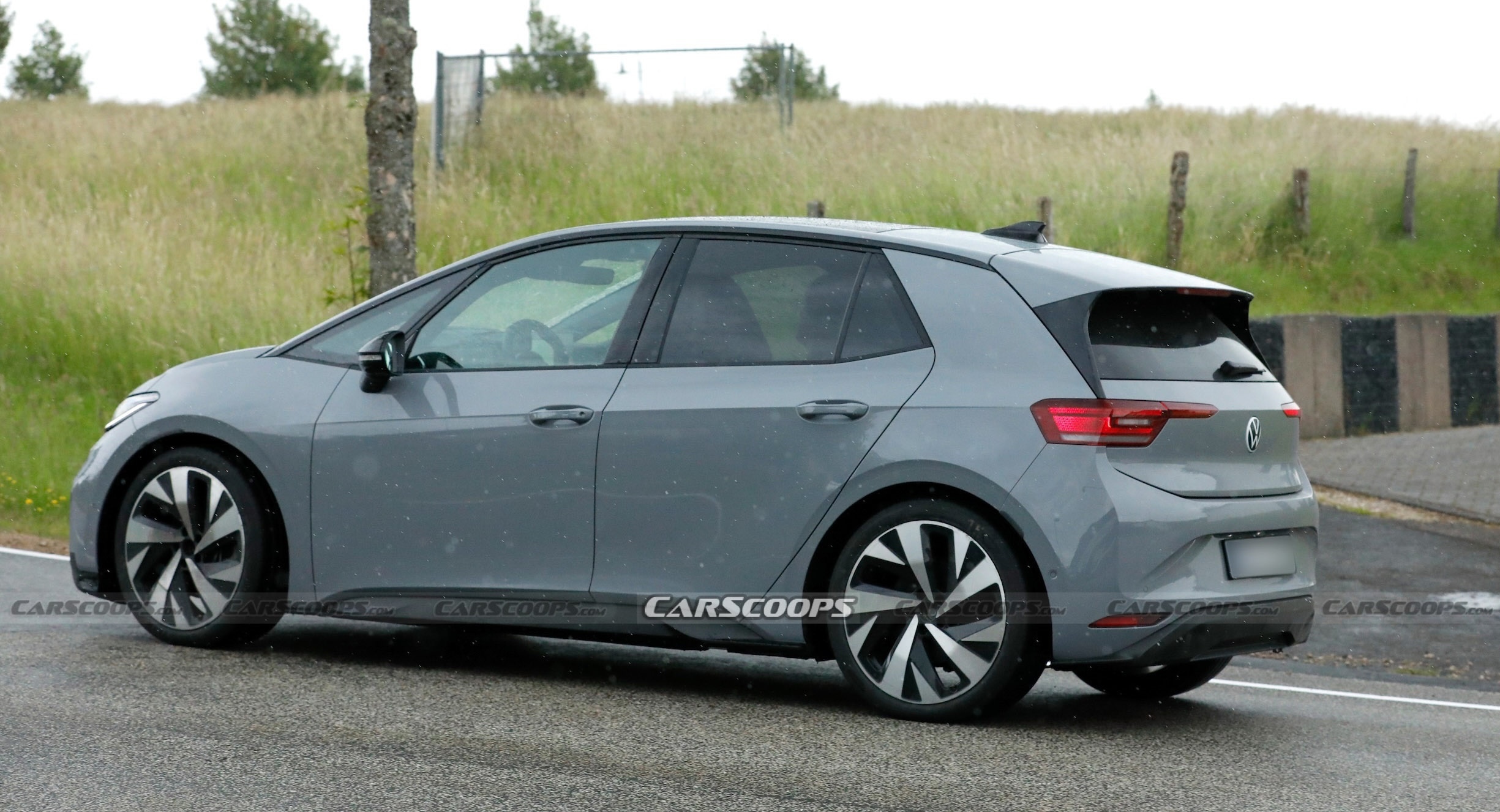
At first glance, the prototype doesn’t look dramatically different from the standard ID.3 Neo. But that’s partly because VW appears to be hiding its work. The lower front intake is disguised though we can still make out it has the same mouth-like shape as the new ID. Polo GTi. And the rear bumper features camouflage covering what looks like a redesigned diffuser section.

The fact that VW gave the hot electric Polo the GTI name is a strong indicator that the most performance-focused ID.3 Neo will get the same honor. Either way, the recipe is likely to remain familiar. Unlike the front-wheel-drive ID. Polo GTI, the ID.3 sits on VW’s older MEB architecture with a rear-mounted motor driving the back wheels. That would give it a layout no GTI has ever enjoyed before if it really does get that badge.

322 HP At A Minimum
 VW’s Next Hot Hatch Could Be The First-Ever Rear-Drive GTI

The most likely outcome is a carryover of the old electric GTX hardware. That would mean up to 322 hp (326 PS) and 402 lb-ft (545 Nm) of torque, and a 5.6-second zero to 62 mph (100 km/h) time. The old GTX achieved 373 miles (600 km) of WLTP range from its 79 kWh battery, but VW might squeeze a few more miles out for the refresh.

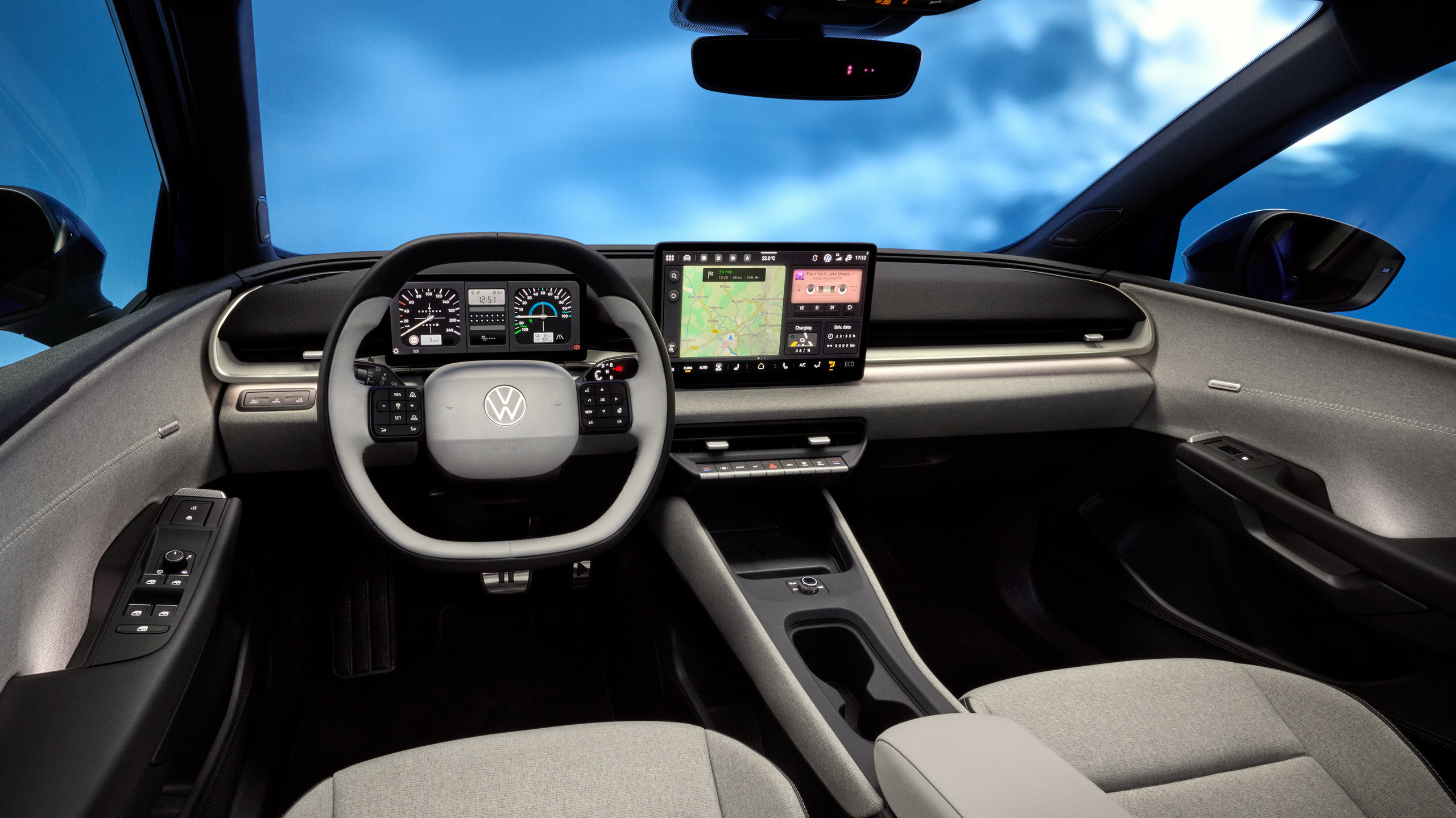
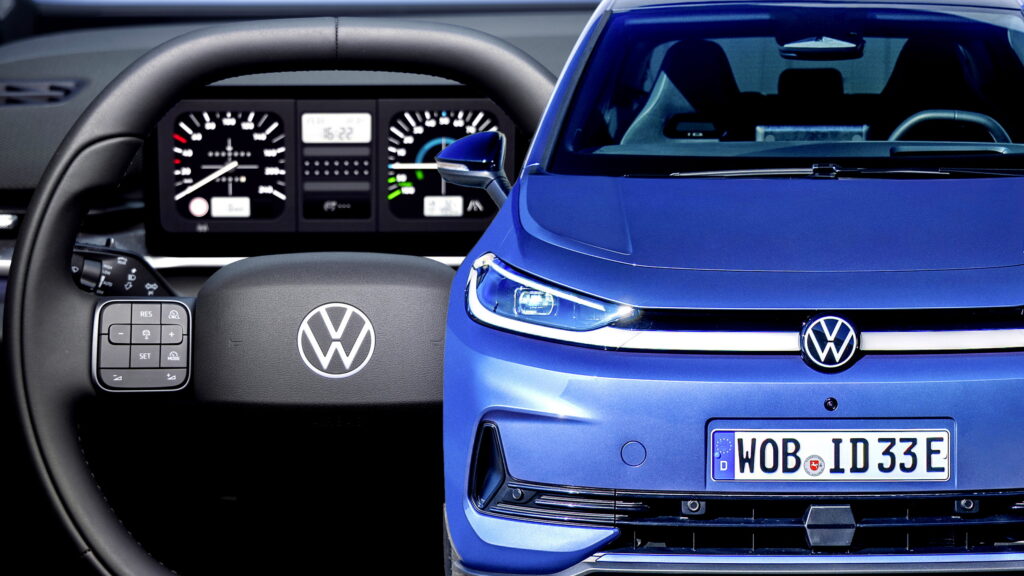
The standard ID.3 Neo currently tops out at 228 hp (231 PS) and offers up to 391 miles (630 km) of range. It also introduced sharper styling, a redesigned dashboard, improved materials, larger screens, and, perhaps most importantly, a return to physical buttons after years of complaints about touch controls. That interior overhaul should carry straight across to the hot version, but hopefully with plenty of plaid upholstery and red detailing.

Look for a European debut later this year, but as with the old GTX and new ID. Polo GTI, this updated electric hot hatch will be off-limits to Americans.
\\\\\\\

Baldauf

VW Spent Years Removing Knobs From Its Cars, The ID.3 Neo Puts Them Back

  • The VW ID.3 Neo arrives as a successor with several key updates.
  • It gets sharper styling and an interior with welcome physical controls.
  • Three battery options are offered, with up to 391 miles of range.

Volkswagen has revealed a heavily updated version of its electric compact hatchback, giving it a new identity and a much-needed hardware boost to carry it through until the electric ID. Golf arrives later this decade. The ID.3 Neo brings cleaner styling and a welcome return to physical controls, along with more power and range at the top end.

The compact EV, still absent from North America, was originally introduced in 2019 and received a mild facelift in 2023. While the ID.3 Neo is not a new generation, it represents a comprehensive update designed to keep it competitive against the growing competition from China.

More: VW’s ID. Lineup Looked Like The Future, Turns Out People Wanted The Past

Starting with the exterior, the biggest change is the adoption of a thicker full-width LED strip that connects the slightly tweaked headlights and is joined by black trim. The VW emblem is positioned slightly lower than before, while the bumper gains sharper intakes.

\\\\\\\\\\\\\\\\\\\\

The rest of the bodywork is carried over, but the A-pillars, roof, rear spoiler, and tailgate gain a body-colored finish, replacing the previous glossy black treatment. According to the company, this makes the ID.3 Neo appear “longer, flatter, and more dynamic” than its predecessor.

Overall, the styling updates are not as extensive as one would expect, but they do bring the compact hatchback closer to the upcoming ID. Polo.

Overhauled Interior

Inside, Volkswagen has listened to critics and replaced its controversial touch-sensitive sliders and with traditional buttons. Those can be found on the new two-spoke steering wheel, and on the center console. The dashboard has been slightly redesigned with simpler lines and improved materials, while a wider center tunnel sits higher than before.

More: Finally, The 2027 VW Atlas Gets A Cabin You Won’t Have To Apologize For

Besides the clicky controls, the centerpiece is a new digital cockpit comprising a larger 10.25-inch instrument cluster and a 12.9-inch infotainment display. Those feature fresh graphics and simpler menus, following the example of the ID. Polo. The Innovision infotainment system comes with an integrated app store, offering options for video streaming, gaming, parking, and charging.

\\\\\\\\\\

Premium features such as an augmented reality head-up display, a panoramic sunroof, front seats with massage and memory functions, and a Harman Kardon Audio system are available as options.

More: VW’s Considering A Flagship SUV For Buyers Who Can Afford A Porsche But Won’t Drive One

In terms of safety, the ID.3 Neo will be available with an enhanced Connected Travel Assist system featuring optional traffic light recognition, and the optional Park Assist Pro with a memory function. Those join various standard ADAS such as Lane Assist, Front Assist, and turning brake function.

Powertrain Options

The ID.3 Neo launches in Europe with three outputs and battery configurations, bringing improved efficiency. The Entry model delivers 168 hp (140 kW / 170 PS) from a 50 kWh battery. The Mid version nudges that to 188 hp (140 kW / 190 PS), paired with a 58 kWh pack.

At the top, the High model makes the case for sticking around a bit longer. It produces 228 hp (170 kW / 231 PS) and uses a 79 kWh battery, good for a claimed WLTP range of 391 miles (630 km). That is the number that matters here, and it does most of the heavy lifting.

\\\\\\\\

Charging capacity has also been improved at 105 kW in the Entry and Mid versions, and up to 183 kW in the High. Furthermore, the EV gains Vehicle-to-Load (V2L) capability, allowing it to power external devices.

More: VW’s New Compact Sedan Costs Less Than Half What Americans Pay For A Jetta

For anyone still holding out for a bit of life, Volkswagen is said to be working on a quicker follow-up to the performance-focused ID.3 GTX. The smart money is on a GTI badge, which gives it some heritage to lean on, even if the driving experience has to do the rest of the talking.

Simplified Lineup

Pre-sales for the ID.3 Neo start in Germany and other European markets on April 16. While official pricing has yet to be announced, VW has simplified the trim structure reducing it to Trend, Life, and Style grades.

\\\\\\\\\\\

VW’s ID. Lineup Looked Like The Future, Turns Out People Wanted The Past

  • VW admits ID. models missed mark on design, usability and emotional appeal.
  • New leadership focuses on customers not egos to reshape future EV lineup.
  • Return of buttons, names and identity aims to reconnect brand with buyers

VW rebounded from the dieselgate scandal determined to do better, but the German brand’s boss has admitted that some of those early efforts landed wide of the mark. Now he’s on a mission to right some ID. wrongs and win back the crowd it drifted away from.

“It was clear to me that we were actually losing our core,” CEO Thomas Schäfer told journalists at the presentation of the heavily facelifted ID.3 Neo. The former Skoda chief, who bagged the top Wolfsburg job in 2022, says the brand had drifted from the VW people knew and loved.

Related: VW ID.4’s Death Could Lead To Birth Of An American Pickup

The problems were everywhere once you started looking. Styling that didn’t quite feel right, confusing touch controls, and a naming strategy that ditched familiar badges in favor of cold tech-speak. Turns out customers didn’t love slider controls for basic functions, and they definitely missed the clarity of names like Golf and Tiguan.

 VW’s ID. Lineup Looked Like The Future, Turns Out People Wanted The Past
The new ID. Polo’s interior.

Schäfer didn’t just tweak things around the edges. He gathered hundreds of managers, threw every issue on the table, and asked for brutal honesty. “We had to change ourselves, we had to create a new mindset,” Auto Express reports the CEO saying. He recalled how his wider team reacted with relief rather than resistance when he laid out the new plan.

Ask The Customer

Engineering boss Kai Grünitz says the reset goes deeper than pretty design. “We are doing customer clinics a lot,” he explained, signalling a shift away from gut feeling toward actual feedback. That means features get tested by real people before making production, not just approved in boardrooms because the CEO has decided he likes something and engineers don’t feel able to push back.

\\\\\\

Exterior styling is getting a rethink, too, following the Schäfer-assisted exodus of Klaus Bischoff, architect of the mostly bland first-generation ID. cars. New creative boss Andy Mindt, who came from Bentley, has pushed for simpler, more timeless shapes, plus interiors that don’t require a tutorial. Physical buttons are coming back, and even door handles are being reconsidered so they actually work when your hands are full.

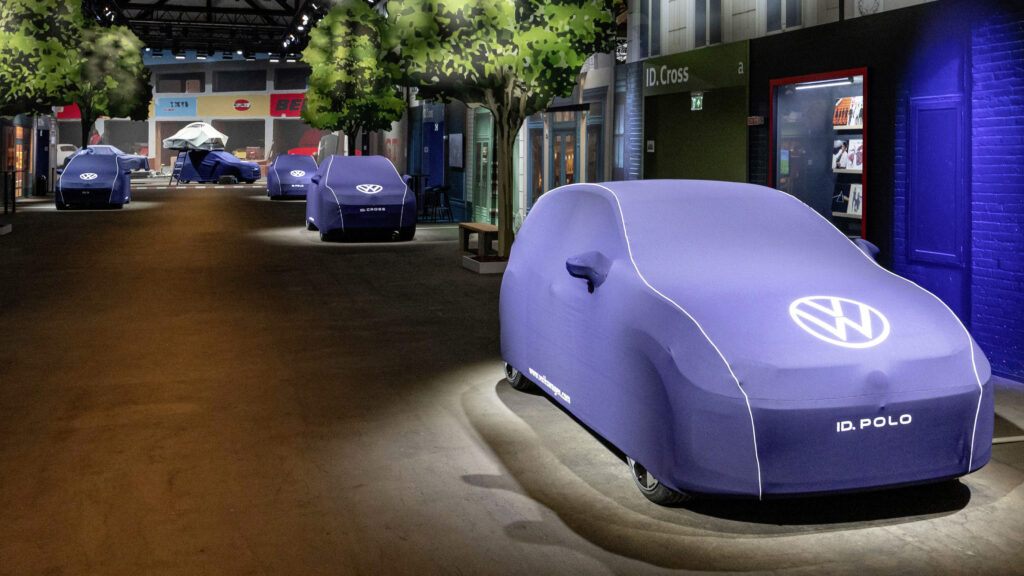
“We sell emotions, we sell memories,” Grünitz said, summing up the new direction, which is really just about getting back to the old direction. If VW can pull that off again with the help of cars like the new ID. Polo (below), maybe the people’s car maker really can find its groove.

\\\\\\\\
❌