
Normal view

There are new articles available, click to refresh the page.
Today — 15 December 2025Main stream

An ever-larger share of ICE’s arrested immigrants have no criminal record

15 December 2025 at 11:00
About 200 local, state and federal law enforcement officers helped execute a raid on an alleged illegal horserace gambling operation in Wilder, Idaho, on Oct. 19, 2025.

There were 105 immigration arrests in October at a horse racetrack in Wilder, Idaho. Idaho saw one of the country’s largest increases in immigration arrests this year through mid-October compared with the same period in the Biden administration. (Photo Courtesy of ACLU of Idaho)

Immigration arrests under the Trump administration continued to increase through mid-October, reaching rates of more than 30,000 a month. But, rather than the convicted criminals the administration has said it’s focused on, an ever-larger share of those arrests were for solely immigration violations.

In 45 states, immigration arrests more than doubled compared with the same period last year, during the Biden administration. The largest increases: There were 1,190 arrests in the District of Columbia compared with just seven last year under the Biden administration. Arrests were also more than five times higher in New Mexico, Idaho, Oregon and Virginia.

“The result stands in contrast to the administration’s objective of arresting the ‘worst of the worst,’” said Ariel Ruiz Soto, a senior policy analyst at the nonpartisan Migration Policy Institute. Heightened enforcement is likely increasing “collateral” arrests of people found during searches for convicted criminals, he said.

Comparisons between the Trump and Biden administrations were calculated by Stateline in an analysis of data released by the Deportation Data Project, a research initiative by the universities of California at Berkeley and Los Angeles. About 93% of arrests could be identified by state.

While more people were arrested this year, a lower percentage are convicted criminals.

The share of arrested immigrants who had been convicted of violent crimes has dropped from 9% in January to less than 5% in October. The share under Biden was consistently between 10% and 11% during the same period in 2024.

The same trend applies to people arrested solely on immigration violations: Immigration violations alone were behind 20% in April, then rose to 44% of arrests in October, according to Stateline’s analysis.

In some states and the District of Columbia, a majority of arrests were for immigration violations alone: the District of Columbia (80%), New York (61%), Virginia (57%), Illinois (53%), West Virginia (51%) and Maryland (50%).

States with high immigrant populations also saw the most arrests this year. The largest numeric increases were in Texas (up 29,403, triple last year’s figure), Florida (up 14,693, a fourfold increase) and California (up 13,345, a fourfold increase).

The two states with the largest arrest rate increases have responded very differently to President Donald Trump’s deportation mission.

“We’re going to resist like all of the Democratic states,” New Mexico Democratic Gov. Michelle Lujan Grisham said in an interview with The Santa Fe New Mexican after last year’s election, referring to mass deportation plans. She proposed legislation to ban U.S. Immigration and Customs Enforcement detention facilities in the state. The legislation failed this year, but Lujan Grisham urged the state legislature to reconsider next year. The state has three privately run ICE detention centers with the capacity for 2,000 people.

Idaho’s Republican governor, Brad Little, is helping ICE under a 287(g) agreement by transporting what his office calls “highly dangerous illegal alien criminals” from county jails to federal custody. The 53 men pictured on the governor’s website have charges ranging from drug possession to sexual assault.

In a news release, the office says the program is intended to take people “after the completion of their sentences,” though an October review by the Idaho Capital Sun found some were transported despite dismissed or still-pending charges.

Nationally, arrests have increased this year from around 17,000 in February, the first full month of President Donald Trump’s current term, to more than 30,000 in September and October. The share of convicted criminals has dropped from 46% to 30%, though the number of convicted criminals arrested still has been higher each month than under President Joe Biden.

Some of the policies that have fed increased arrest numbers face new court battles. This month, a federal judge blocked the administration from making immigration arrests in the District of Columbia without warrants or probable cause.

In August, a federal court blocked the administration’s expansion of expedited removal, which itself allows fast deportations without judicial review. The administration has appealed, arguing that immigrants who have been in the country for less than two years without legal authorization are not guaranteed due process.

Such fast deportations could be used on 2.5 million people, according to a Migration Policy Institute estimate published in September, including 1 million people released at the border with Mexico with court dates and 1.5 million people with temporary protections such as humanitarian parole.

This fall, the share of arrested immigrants with criminal convictions continued to decrease just before and during the federal government shutdown, with only 3% of those arrested and detained having convictions between Sept. 21 and Nov. 16, according to national information analyzed by Transactional Records Access Clearinghouse (TRAC), a data research organization at Syracuse University.

“While ICE is detaining more and more individuals, targeting has shifted sharply to individuals without any criminal convictions,” the TRAC report noted.

Editor’s note: This story has been updated to clarify a reference to October detention statistics analyzed by Transactional Records Access Clearinghouse.

Stateline reporter Tim Henderson can be reached at thenderson@stateline.org.

This story was originally produced by Stateline, which is part of States Newsroom, a nonprofit news network which includes Wisconsin Examiner, and is supported by grants and a coalition of donors as a 501c(3) public charity.
Arrests nationwide have fallen to historic lows, report finds

15 December 2025 at 10:01
Federal and local law enforcement officers arrest a man in Washington, D.C., in August. The number of arrests nationwide fell sharply in 2020 and have stayed down since then, according to a new report from the nonpartisan think tank Council on Criminal Justice. (Photo by Andrew Leyden/Getty Images)

Federal and local law enforcement officers arrest a man in Washington, D.C., in August. The number of arrests nationwide fell sharply in 2020 and have stayed down since then, according to a new report from the nonpartisan think tank Council on Criminal Justice. (Photo by Andrew Leyden/Getty Images)

Arrests in the United States have fallen to levels not seen in decades, according to a new report that reconstructs national arrest trends in the absence of federal data.

The Council on Criminal Justice, a nonpartisan think tank, on Thursday released the first comprehensive national analysis of arrests since federal authorities stopped publishing detailed arrest statistics in 2020.

Arrests plunged during the first year of the pandemic and have remained low, according to the analysis. The national arrest rate in 2024 was 30% below the 2019 level and 71% lower than the peak in 1994. 

Drug arrests have fallen even faster, with adult and juvenile drug-offense arrest rates dropping to about half of what they were in 2019.

In 1980, juveniles made up nearly a fifth of arrests nationwide, but by 2018, their share had fallen to 7%. While adult arrest rates declined 7% between 2020 and 2024, juvenile rates rose 14% over the same period.

Gender patterns have shifted as well. With arrests of men falling more steeply over time, women now account for a larger portion of arrests. Adult women’s share nearly doubled between 1980 and 2020, rising from 14% to about 27%. Girls’ share of juvenile arrests grew from 18% to roughly 31%.

Between 2020 and 2024, arrest rates for Black and Asian juveniles surged 48% and 45%, respectively, compared with an 11% increase among white youth. Rates for American Indian and Alaska Native juveniles fell 4%. 

Among adults, arrest rates increased by 12% for Black people and 18% for Asian people, but declined by 10% for white adults and 17% for American Indian and Alaska Native adults.

Stateline reporter Amanda Watford can be reached at ahernandez@stateline.org.

This story was originally produced by Stateline, which is part of States Newsroom, a nonprofit news network which includes Wisconsin Examiner, and is supported by grants and a coalition of donors as a 501c(3) public charity.

What to know about PFAS pesticides

15 December 2025 at 11:00

On this episode a look what could be sprayed on food and farm fields all around us - plus a bit of Wisconsin history that offers some hope as we confront a new batch of toxic chemicals.

Host: Amy Barrilleaux

Guest: Sara Walling, Clean Wisconsin Water & Agency Program Director

Resources for You:

Under the Lens: What we know about PFAS in Wisconsin's Water

Nitrate pollution's impact on Wisconsn's health and economy

Neonicotinoid pesticides and their impact

Episode 43: The pesticides that could be lurking in your pollinator garden

Episode 33: Wisconsin's bees are acting weird. Here's why.

Episode 29: Trump's Threat to Safe Water (and how WI can fight back!)

💾

Renault’s Smallest And Quirkiest EV Is Dead

  • Renault Group is winding down the short-lived Mobilize brand and the Duo heavy quadricycle.
  • The decision to kill an EV that debuted in 2024 was taken due to limited profitability prospects.
  • The charging and energy services will live on, integrated into Renault’s commercial division.

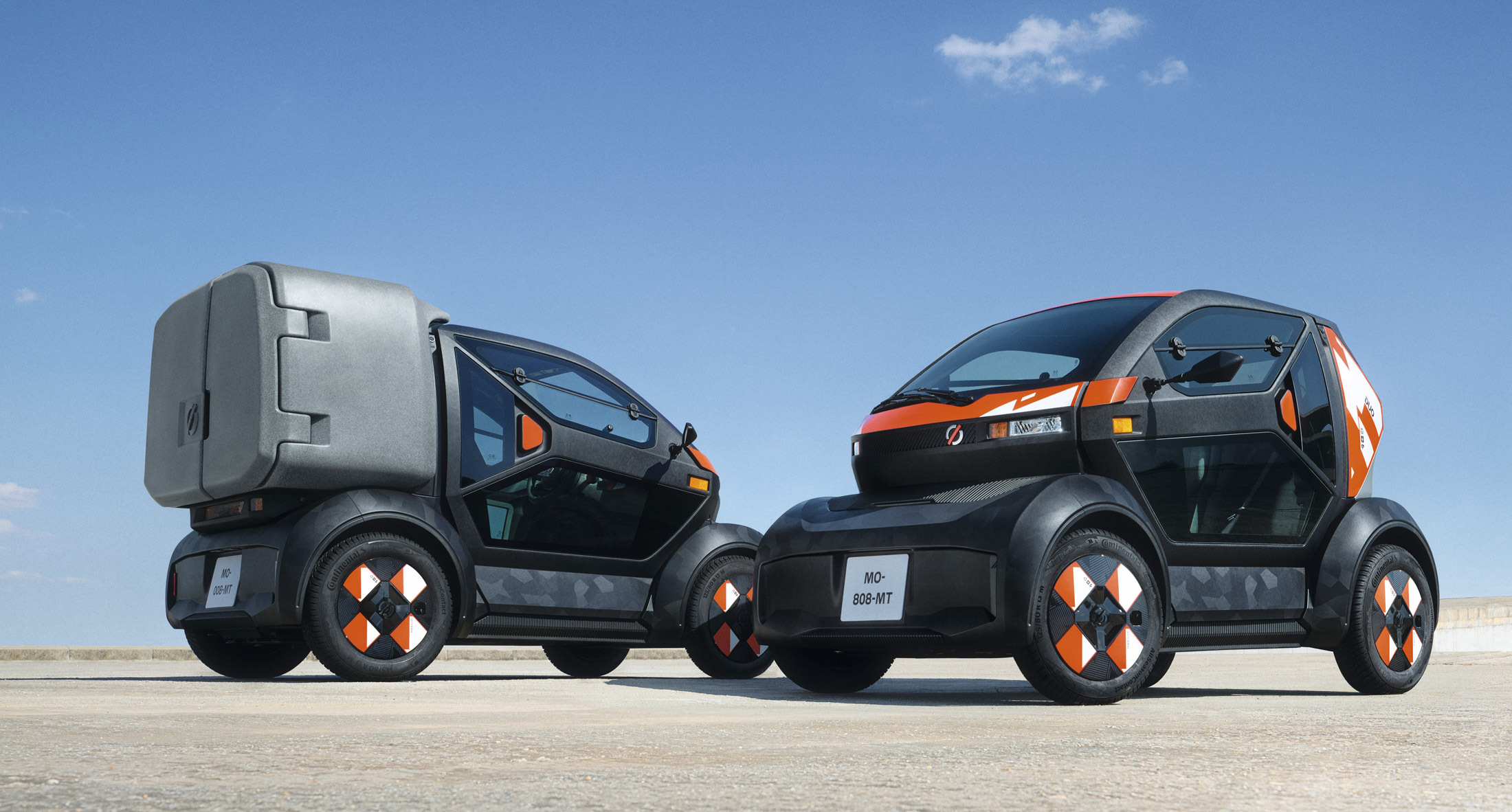
Renault’s chapter in electric micro-mobility might have started with big dreams, but it is ending rather quietly. The French automaker has pulled the plug on the Mobilize Beyond Automotive sub-brand, effectively killing off the Duo and Bento urban EVs before they ever got a chance to succeed in the market.

Mobilize was inaugurated in 2021 to address “opportunities beyond automotive manufacturing”. The company revealed the EZ-1 concept in 2021, which evolved into the Duo and Bento concepts in 2022, and led to the production-spec EVs in 2024.

More: Mobilize Duo And Bento Are Renault Group’s New Subscription-Based Urban EVs

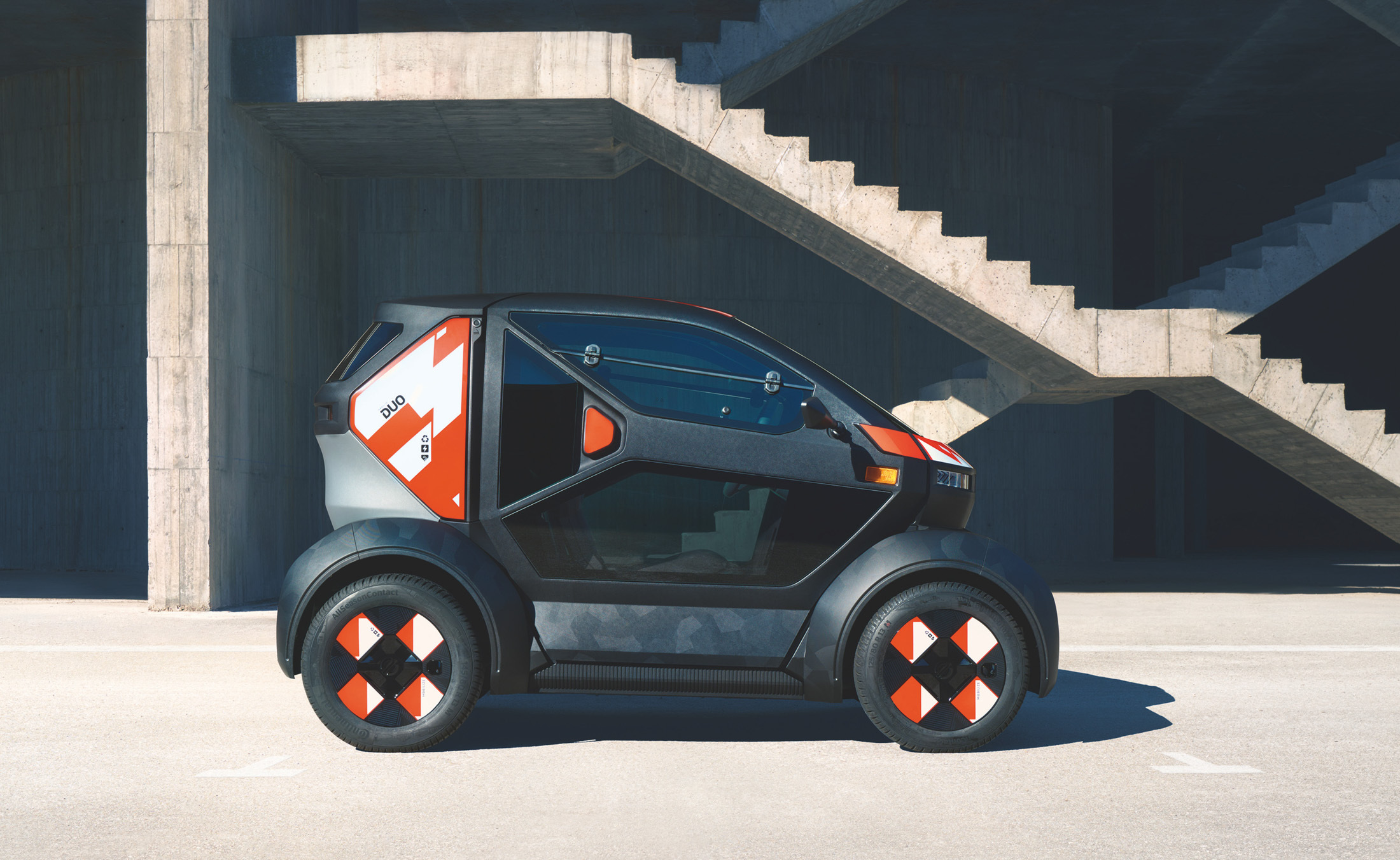
The fully electric heavy quadricycle and its commercial variant featured similar design, character and proportions with the discontinued Renault Twizy that preceded the Citroen Ami, Opel Rocks Electric, and Fiat Topolino rivals. However, the Mobilize-branded models would be offered as part of subscription-based programs instead of traditional ownership.

Just one year after the debut of the production versions and before they even reached the UK market, Renault has formally axed the EVs alongside the entire Mobilize sub-brand which is “no longer a standalone entity”.

 Renault’s Smallest And Quirkiest EV Is Dead
The Moblize Bento (left) and Duo (right).

This signals the end of the car sharing services in Milan, Italy, with Madrid, Spain set to follow the same course in 2026. According to Renault, the activities that are being discontinued either have “limited profitability prospects” or they “do not directly serve the Group’s strategic priorities”.

More: Renault Group’s Mobilize Limo Is A High-Riding Electric Sedan Designed For Fleet Use

Still, not everything is bad news. The electric charging solutions (on site or on the road) remain a priority for the company, as they “help improve customer satisfaction and loyalty” and “support electric vehicle sales”. For this reason, this part of Mobilize will live on integrated within Renault Group’s commercial operations, under the watchful eye of Chief Growth Officer Fabrice Cambolive.

Results of Mobilize’s work until today include over one million charging points accessible to Renault Group drivers across Europe, 100 ultra-fast charging stations in France by the end of 2026, another 100 in Italy, around 90,000 users of the Charge Pass service, and a commercial bi-directional charging (V2G) offer.

Despite the ugly turn, Renault believes that Mobilize “fulfilled its role as an incubator and innovation driver by strengthening the Group’s expertise in new areas, identifying and developing high-potential opportunities, and discontinuing less relevant paths.”

 Renault’s Smallest And Quirkiest EV Is Dead
Mobilize Duo

Male bonobos use hidden clues to boost mating success

14 December 2025 at 15:55
Male bonobos have an impressive ability to detect when females are most fertile, even though the usual visual cues are unreliable. Researchers tracking wild bonobos in the Congo discovered that males skillfully interpret a mix of swelling timing and a female’s reproductive history to pinpoint the optimal moment for mating. By blending these clues, they overcome nature’s misleading signals and maximize their chances of fathering offspring.

Scientists finally uncovered why the Indus Valley Civilization collapsed

14 December 2025 at 16:15
A series of century-scale droughts may have quietly reshaped one of the world’s earliest urban civilizations. New climate reconstructions show that the Indus Valley Civilization endured repeated long dry periods that gradually pushed its people toward the Indus River as rainfall diminished. These environmental stresses coincided with shrinking cities, shifting settlements, and eventually widespread deurbanization. Rather than a dramatic collapse, the civilization appears to have faded slowly under relentless climate pressure.

Harvard gut discovery could change how we treat obesity and diabetes

14 December 2025 at 16:23
Scientists found that certain molecules made by gut bacteria travel to the liver and help control how the body uses energy. These molecules change depending on diet, genetics, and shifts in the microbiome. Some even improved insulin response in liver cells when tested in the lab. The findings could open the door to new ways of preventing or managing obesity and diabetes.

Researchers find how plants survive without sunlight or sex

15 December 2025 at 04:45
The study reveals how Balanophora plants function despite abandoning photosynthesis and, in some species, sexual reproduction. Their plastid genomes shrank dramatically in a shared ancestor, yet the plastids remain vital. Asexual reproduction appears to have evolved repeatedly, helping the plants survive in isolated, humid forest habitats. The research highlights surprising resilience in these bizarre parasitic species.

Indoor tanning triples melanoma risk and seeds broad DNA mutations

15 December 2025 at 05:10
Researchers discovered that tanning beds cause widespread, mutation-laden DNA damage across almost all skin, explaining the sharply increased melanoma risk. Single-cell genomic analysis revealed dangerous mutations even in sun-protected regions. Survivors’ stories underscore how early tanning habits have lifelong consequences. The findings push for stricter policies and clear public warnings.

Researchers identify viral suspects that could be fueling long COVID

15 December 2025 at 03:36
Scientists are uncovering a new possibility behind long COVID’s stubborn symptoms: hidden infections that awaken or emerge alongside SARS-CoV-2. Evidence is mounting that viruses like Epstein-Barr and even latent tuberculosis may flare up when COVID disrupts the immune system, creating lingering fatigue, brain fog, and other debilitating issues.
❌
❌