Reading view

There are new articles available, click to refresh the page.

Barnes leans on statewide experience to make case for Democratic nomination

Barnes, an avid runner and biker, told the Examiner in an interview that politics is an “endurance sport” and that “sometimes you face setbacks” — adding that he faced setbacks every day in the Assembly and views his w loss to Johnson as another setback. There is too much on the line, however, to give up and stop working toward his goals, he said. Barnes speaks to a bike shop owner in Madison. (Photo by Baylor Spears/Wisconsin Examiner)

At a forum hosted by the Madison West High School civics club, former Lt. Gov. Mandela Barnes told students that he would be the strongest Democratic candidate for governor because of his previous statewide experience.

“This will be an incredibly competitive race. It already is. The general election is going to show up fast and furious,” Barnes said in April. “I am the only person who has ever competed at that level.”

Barnes was referring to his 2022 U.S. Senate race, which he lost to Sen. Ron Johnson by about one percentage point. Barnes is now seeking Wisconsin’s top executive office and arguing that nearly winning that Senate seat combined with his statewide experience has uniquely prepared him to take on U.S. Rep. Tom Tiffany, Republican candidate for governor endorsed by President Donald Trump.

Barnes entered the race in December and he’ll need to get through a crowded Democratic primary to make it onto the November ballot. It’s unlikely the rest of the Democratic candidates will drop out to clear the field for him as they did in the 2022 Senate race. Other Democratic candidates on the ballot include state Rep. Francesca Hong (D-Madison), Lt. Gov. Sara Rodriguez, Milwaukee County Executive David Crowley, former Wisconsin Economic Development Corp. CEO Missy Hughes, former head of Gov. Tony Evers’ Department of Administration Joel Brennan and State Sen. Kelda Roys.

Putting in the work

Barnes, 39, grew up in Milwaukee the child of a public school teacher and an auto worker who was a member of United Auto Workers (UAW) union and worked third shift for decades. He first ran for office at 25, winning a seat in the state Assembly. He served two terms in the Legislature before launching a failed campaign for the state Senate.

“I felt that there weren’t enough people who understood what it meant to be born in our state’s poorest and nation’s most incarcerated ZIP code,” Barnes said of his motivation for seeking political office. He came back in 2018 to run for lieutenant governor, winning a spot on the ticket with Gov. Tony Evers in 2018. He served as the state’s first Black lieutenant governor before he challenged incumbent U.S. Sen. Ron Johnson.

Barnes, an avid runner and biker, told the Examiner in an interview that politics is an “endurance sport” and that “sometimes you face setbacks” — adding that he faced setbacks every day in the Assembly and views his loss to Johnson as another setback. There is too much on the line, however, to give up and stop working toward his goals, he said.

“In order for us to truly make Wisconsin the place that it can and should be — not just to catch up to our Midwest neighbors, but to lead this entire country in terms of progress — I have put in that work. I have put in that fight, and there’s nobody who’s put in their work in the advocacy space,” more than he has, Barnes said. “I see becoming governor as the best opportunity to continue that focus, to continue that work.”

Barnes has made it his campaign motto that he will do things the “Wisconsin Way” instead of the “Washington Way.” He criticizes Trump and his ally Tiffany as being “out of control.” 

The Barnes campaign is focused on the rising cost of living for Wisconsin families. 

“There is an affordability crisis that affects almost every household in this state, whether it’s healthcare, whether it’s groceries, whether it’s energy bills, or whether it’s housing, and it feels like there’s no sign of things letting up,” Barnes said. He added that voters are looking for leaders who understand those pressures firsthand.

Barnes spoke with the Examiner about two weeks after the failure of a bill negotiated by Wisconsin’s soon-to-retire Democratic governor and Republican legislative leaders who are also about to leave office that would have spent down the state’s $2.5 billion projected budget surplus to provide tax cuts to Wisconsinites and additional special education funding to schools. He expressed opposition to the deal, which most legislative Democrats along with a handful of Republicans rejected. He said policymakers need to “be more deliberate about negotiating big tasks.” 

An organizer’s mindset

Over the last three years, Barnes has led Power to the Polls Wisconsin, a grassroots voting rights organization dedicated to mobilizing voters, combating voter suppression and advocating for underserved communities of color and working-class families. He also founded Forward Together Wisconsin, a clean energy nonprofit. He brings an organizing mindset to the legislative process.

“People shouldn’t feel like they’re rushed to get legislation passed… I think that there should be more public hearings,” he said, adding, “There’s not a whole lot of public input.”

Barnes said the projected surplus “didn’t just come out of nowhere; it’s because Republicans have withheld investments in our future.” He, like the Democrats who are hoping to win control of at least one chamber of the Legislature in the fall, would like the opportunity to reverse years of Republican budget policy without facing a looming budget deficit, which analysts predicted would result from the tax-cut and school funding deal. 

“The answer to most of our problems is simple,” Barnes said. “It’s just a tax on billionaires, tax the wealthiest, tax large corporations that have every tax advantage at their disposal.” 

“Ultimately, if a state like Wisconsin is a place that fully funds our schools, puts more support into higher education, tech schools, and university system, invests in public transportation,” he added, “that’s how you make the state a much more attractive place.”

Closing tax loopholes

Barnes said he would focus on closing tax loopholes that allow large corporations and wealthy individuals to reduce their tax burden. One example is Wisconsin’s manufacturing and agriculture tax credit, which provides a credit of 7.5% on income from eligible qualified production activities — reducing the effective corporate tax rate on qualifying income from 7.9% to about 0.4%.

Barnes wants to change it so “it benefits our family farmers, not these factory farms, corporate farms” and the “primary benefit also goes to Wisconsin very small businesses versus out-of-state corporations.”

He said he would not seek to raise income taxes on families making $400,000 or less, but those making more should pay more. He didn’t offer specifics, but said that the income tax brackets could change, mentioning Minnesota as an example. Wisconsin’s neighbor’s top income tax rate is currently 9.85%, while Wisconsin’s is 7.65%.

“I’m not saying we’re taxing people into poverty, right? That’s not the case. We’re not taxing people out of the state,” Barnes said. “We’re just looking for a little bit of parity.”

Barnes said that Wisconsin “shouldn’t be left behind anymore.”

Barnes has said he supports increasing state funding so it covers two-thirds of public school costs and has called for repealing Act 10 to restore collective bargaining rights for public employees, including teachers. He also backs increased investment in the University of Wisconsin system and technical colleges, though he has not outlined a specific number. 

Barnes, if elected, will need to win support in the Legislature to advance his agenda. He said he is optimistic about Democrats’ chances of winning the majority, but he would be open to negotiating with anyone should he win office.

“I’m willing to play ball,” Barnes said, though that negotiation commitment would not extend to one of his top promises — Medicaid expansion. He has promised to veto any budget that doesn’t include it, even as candidates have argued over whether an expansion would be the best way to address costs in light of federal changes made by the Trump administration. 

Barnes said an ultimatum would not inhibit his ability to negotiate with lawmakers because the issue shouldn’t be partisan. 

“It is a politicized issue,” Barnes said, noting that Republican-led states including Louisiana have taken the expansion. 

Republican lawmakers who hold the majority in the Legislature, have refused to expand Medicaid since 2010. Barnes said during the student forum that he finds it “very hard” to find common ground with Republicans because the party has become “essentially the Republican party of one person” and he doesn’t want to find himself “in a place where I am validating bad behavior.”

Making a comeback

Barnes argues that his gubernatorial candidacy has the support he needs to win, although there was some public skepticism even before he entered the race. He was the subject of a New York Times article comparing his loss to Johnson in 2022 to former Vice President Kamala Harris’ loss in 2024. The Milwaukee Courier, a prominent Black-owned newspaper, urged him in an opinion piece not to enter the race. 

Barnes said of the criticism that people have “gotta have something to write about.” Asked whether he needed to build back trust with Wisconsin Democrats ahead of running statewide again, he said he didn’t think it was about that. 

“People know how much money was spent against me. People know that I was the most targeted Democrat in the entire country, the target of the largest anti-Democratic candidate super PAC in the country. People know what I was up against and the relationships I built over the course of that race. People know that I was counted out from the very beginning,” Barnes said. “People know how Republican billionaires are willing to spend big, and this is a moment for us to fight back against those corporate interests that have held Wisconsin back, and they’re ready to see this through.”

Barnes’ campaign finance report from December included a mix of donations from Wisconsin-based donors, including those who live in Milwaukee and Madison as well other towns and cities across the state, and many from other states including California, Colorado, Illinois, Massachusetts, New York and Virginia as well as Washington D.C. Barnes also received a donation from the Long Run PAC, a group he launched to support progressive candidates. He has a goal to raise $50 million over the course of the campaign. 

In the first half of the year, Barnes has also received a mix of endorsements from Wisconsin Democrats, including State Reps. Angelina Cruz and Amaad Rivera-Wagner and Green Bay Mayor Eric Genrich and from national political players including California Sen. Adam Schiff, and most recently, the Natural Resources Defense Council Action Fund, a leading environmental advocacy organization. 

Climate change and utility costs

“No one in Wisconsin has done or will do more to tackle the climate crisis while lowering costs for working families than Mandela Barnes,” Jed Ober, managing director of Natural Resources Defense Council Action Fund, said in a statement. 

Barnes has made reducing utility rates one of the key parts of his affordability platform. He says that he’ll seek to freeze rates as governor by appointing commissioners to the Public Service Commission, which regulates utilities and approves rates, who will do so. Utility experts have criticized the plan and said its unclear whether he could carry it out, though Barnes said that criticisms of that plan are being levied by “the industry itself.” 

Barnes has said he would appoint commissioners who have a “demonstrated commitment” through a “thorough interview process” and they will need to have worked alongside the industry and have a “real deep understanding of how we can actually benefit the public to make sure that the PSC is doing its job to represent the public interest.” He added that he would like to increase staffing at the PSC as well. 

Barnes said environmental policy will be a priority. He chaired a climate change task force as lieutenant governor that he noted produced a slate of policy solutions that were later introduced by Democratic lawmakers as a package of 18 bills. 

The Senate race as well as his time serving as the state’s second-in-command helped him enter the race with the most name recognition, according to polling by Marquette Law School. On the other hand, Charles Franklin, the Marquette Law School poll director, looked at the track record of five statewide candidates, Republican and Democrat, who lost an election and ran again for statewide office. He found that name identification and previous campaign experience, including established donors, did not significantly improve the percentage of votes they got in the general election in their second statewide campaign. The last successful “second act” was the 1970s, he said.

Barnes is working to convince enough voters that he can overcome the historical pattern and is the best candidate to compete in November. He is reaching people in a variety of ways, including traveling the state to attend forums and county Democratic Party meetings, where he said he’s been glad to reconnect with people across the state whom he hasn’t seen in a while. 

Through his @MandelaHQ account on X, Barnes has adopted a rapid-response social media style reminiscent of national campaign-style accounts like @KamalaHQ during the 2024 cycle. The account highlights poll results, including a recent one that showed Barnes winning in a matchup against Tiffany, targets Tiffany with humor and memes one post featuring Tiffany at a farm joked that “cows can smell DC stink” — while also promoting policy proposals through short videos. In one video on banning AI-driven dynamic pricing and hidden fees, a group of children raise the price of lemonade after Barnes passes by on a run.

Barnes told students that one of the biggest misconceptions about him is that he doesn’t “get to be as funny” as he’d like.

“It’s tough because in politics, if you crack a joke or people aren’t able to translate sarcasm, like the story’s getting written the wrong way,” Barnes said. “I can’t be as funny as I want to be… sometimes my humor is a little dry. It’s not for everybody.”

Editor’s note: The Examiner is running periodic profiles of the contenders in the Aug. 11, 2026 gubernatorial primary as well as the candidates in the general election Nov. 3. 

GET THE MORNING HEADLINES.

Some high-profile election hopefuls fall short of ballot requirements

Ballot, voting, elections

Ballot (Getty Images)

A total of 333 people filed nomination papers with the Wisconsin Elections Commission to run for office in Wisconsin this fall — the first official act in a campaign season that will see the state elect a new governor and potentially change the balance of power in the state Legislature. 

In the races for statewide offices such as the governor’s race, candidates are required to collect at least 2,000 signatures. Candidates for Congress must file at least 1,000 signatures while state Senate candidates must file 400 and Assembly candidates 200.

Any member of the public can challenge the sufficiency of a candidate’s nomination papers. To challenge a candidate, a person must make a verified complaint to WEC by 5 p.m. Thursday. The candidate will get an opportunity to respond, and the commission will meet June 9 to certify or deny ballot access.

The seven major candidates in the Democratic primary for governor all filed enough signatures to ensure ballot access, according to WEC records. 

Minocqua Brewing Company owner and political gadfly Kirk Bangstad did not reach the 2,000 signature threshold after listing the wrong date on a number of signature forms — writing the date of the Aug. 11 primary rather than the Nov. 3 general election. Circulators who gathered signatures for Bangstad also omitted information on the forms such as the municipality they live in. 

Bangstad, who did not announce his run for governor until early May, will have until Sunday afternoon to file affidavits seeking to fix the errors on the forms. 

“Bangstad is NOT DEAD YET,” a post on the Minocqua Brewing Facebook page stated. 

Former Democratic state Rep. Brett Hulsey, who has regularly turned up at political events around Madison in recent months to draw media attention and tout his run for governor, did not file any signatures with the commission, records show. 

On the Republican side, U.S. Rep. Tom Tiffany filed nearly 4,000 signatures. Tiffany cleared the field of serious contenders after he was endorsed by the Republican Party of Wisconsin and President Donald Trump earlier this year. But 27-year-old medical services technician Andy Manske filed 2,040 signatures to get on the Republican primary ballot.

In the race for lieutenant governor, Democrat Sarah Godlewski and Republican Will Martin filed enough signatures. But WEC only counted 1,977 valid signatures from Republican David Varnam. 

In the state’s congressional races, the once-crowded Democratic primary in the 1st Congressional District to unseat Rep. Bryan Steil will have four candidates: Miguel Aranda, Mitchell Berman, Peter Burgelis and Lorenzo Santos. 

Randy Bryce, an ironworker who previously ran for the seat in 2018 and was the first to announce his intention to challenge Steil for 2026, did not file any signatures and announced he was suspending his campaign. 

In the 3rd Congressional District, where Democrats are again focusing their attention in an effort to unseat Rep. Derrick Van Orden, Democrats Rebecca Cooke and Emily Berge both filed enough signatures to gain ballot access. Berge was the first candidate in the entire state to file her signatures with WEC. Two independents, Alexander Valiensi Kent and Rustin Provance, also filed to run in the race. 

Democratic Rep. Gwen Moore in the Milwaukee area’s 4th Congressional District is set to face a primary challenge from Democratic Socialist Amy Donahue. 

Six potential challengers filed to run in the 6th Congressional District, held by Republican Rep. Glenn Grothman. Seven candidates, including three Democrats and four Republicans, filed enough signatures to run in the 7th District to replace Tiffany, and three candidates filed to run in the 8th District Democratic primary to challenge GOP Rep. Tony Wied. 

In four races, candidates were given an extension until 5 p.m. Thursday because Tiffany, Lt. Gov. Sara Rodriguez, state Rep. Dave Murphy (R-Hortonville) and state Rep. Jenna Jacobson (D-Oregon) did not file declarations of non-candidacy. Murphy is retiring while the other three are running for higher office.

The FBI is contacting Wisconsin election officials. Here’s what we know.

Election worker Josh Del Colle counts ballots at the Milwaukee central count location after the polls had closed for the evening on Nov. 3, 2020. (Eric Kleppe-Montenegro for Wisconsin Watch)

The federal government’s probe into the 2020 election has reached Wisconsin, with several current and former election officials, including multiple people in Milwaukee, confirming they have been interviewed or approached by the FBI.

The exact nature of the investigation remains unclear, though it appears to be at least somewhat centered around the 2020 election. The agency’s election investigations elsewhere in the country have featured subpoenas for ballots and other election records, but legal experts still say it won’t be easy for the federal government to convince a court to give it access to ballots.

Milwaukee County officials are nonetheless preparing for that possibility, in part because they still retain ballots from the 2020 election, though they declined to discuss those preparations or comment on the record. Those ballots contain identifying information that could, in some cases, allow otherwise unidentifiable absentee ballots to be matched to the voters who cast them. Milwaukee is one of the few jurisdictions in Wisconsin that still has ballots from that election, and the city has long been a target of voter fraud accusations and related attacks from the political right.

Elsewhere in Wisconsin — in communities whose elections have faced less scrutiny and in the vast majority of municipalities where 2020 ballots were destroyed according to the standard retention schedules in state law — election officials are less alarmed and are instead focused on preparing for the midterm elections.

Still, news of the FBI interest has created confusion and some fear on the part of voters and election officials.

What happened?

So far, the FBI has contacted multiple current and former election officials in Wisconsin.

The FBI interviewed Wisconsin Elections Commission deputy administrator Robert Kehoe within the last few weeks. The news of the interview was first reported by the Milwaukee Journal Sentinel. The interview focused on the 2020 election, with agents asking Kehoe to explain how Wisconsin elections operate.

The agency has also attempted to contact Milwaukee County Election Director Michelle Hawley. An agent left a business card at Hawley’s home when she was not there. Milwaukee County Clerk George Christensen criticized the agency for approaching Hawley at her home rather than through the county.

“While we cooperate with all legitimate law enforcement actions, we will defend against any attack on our democracy and will defend the rights of voters of Milwaukee County,” Christensen said in a statement.

Agents also left a card for, called and texted a former Milwaukee election official, who confirmed the contact to Votebeat but requested anonymity because of personal safety concerns. That official declined to say whether they responded to the FBI.

Milwaukee Mayor Cavalier Johnson confirmed the FBI has reached out to city employees about the probe.

“The president for whatever reason cannot seem to let it go that he lost an election,” Johnson told a WISN 12 reporter.

Wisconsin Elections Commission spokeswoman Emilee Miklas declined to comment for this story. Other officials declined to speak on the record, and an FBI spokesperson didn’t answer Votebeat questions about the probe.

David Becker, the executive director of the nonpartisan nonprofit Center for Election Innovation and Research and a former Justice Department voting section attorney, said the federal government’s actions appeared more to be aimed at intimidating election officials than producing actionable criminal cases.

He pointed to FBI Director Kash Patel’s public statements in April suggesting arrests related to the 2020 election were coming, as well as federal officials discussing potential cases on social media before they’re brought before courts.

“If you think you’re going to bring charges and prosecute individuals, you don’t do anything that the federal government has done over the last few months,” he said.

Becker also noted that any potential federal crimes connected to the 2020 election are “well beyond the statute of limitations for any potential federal jurisdiction or crimes,” adding, “This is a problem for any investigation relating to 2020.”

Even so, Becker said election officials’ worries were justified. He said the Election Official Legal Defense Network, which he leads, has received more requests for legal assistance from election officials than ever before “even though all of these efforts indicate that the federal government knows it’s got nothing.”

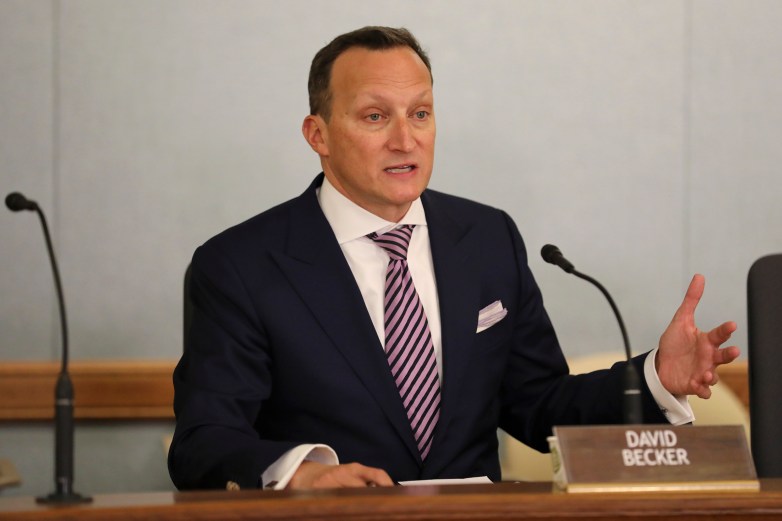
A person in a suit and striped tie sits at a desk between microphones, with a nameplate reading “DAVID BECKER”
David Becker, executive director and founder of the Center for Election Innovation and Research, briefs the media on growing threats to election professionals in Wisconsin at the Wisconsin State Capitol in Madison, Wis., on Dec. 13, 2021. (Coburn Dukehart/Wisconsin Watch)

How do the events in Wisconsin relate to probes elsewhere?

It’s unclear how the FBI interviews in Wisconsin relate to the agency’s scrutiny of the 2020 election in other states.

In January the FBI raided a Fulton County, Georgia, election office seeking records tied to the 2020 election. About a month later, the agency subpoenaed records related to the audit of the 2020 election in Maricopa County, Arizona, which includes Phoenix.

Separately, the U.S. Justice Department has sought access to 2024 ballots in Wayne County, Michigan, home to Detroit.

Those jurisdictions share several characteristics with Milwaukee County.  All are located in highly competitive swing states won by former President Joe Biden in 2020, and all became central targets of President Donald Trump, who repeatedly challenged the election results despite court rulings, audits and reviews repeatedly reaffirming his loss.

Fulton, Wayne, Maricopa, and Milwaukee County are the largest and most heavily scrutinized election jurisdictions in their respective states. Each has been the subject of persistent conspiracy theories about the 2020 election, many of which remain prevalent on social media, even after extensive investigations found no evidence of widespread fraud.

“What’s really disconcerting,” said former longtime Wisconsin election chief Kevin Kennedy, “is the fact that there is a clear pattern here to try and continue to stir up issues that were resolved in every single opportunity there was to review them, whether it was a court case, an independent audit or the actual certification and review process that exists.”

What comes next?

The short answer is that nobody really knows.

Officials have been considering the possibility that the federal government may seize the city’s 2020 ballots, which contain personally identifiable information.

Kennedy said recent actions by the Trump administration offer “no reason to think that information that should be protected is going to be protected.”

Kennedy said Wisconsin’s decentralized election system was intentionally designed to distribute authority among local jurisdictions — both to keep election administration accountable at the community level and to limit the amount of sensitive voter information concentrated in any one place.

“You put that at the national level,” he said, “and it only takes one bad actor — and we’ve got evidence there’s more than one of those already in the federal government — to totally disrupt the process when you consolidate that kind of information that’s protected through the various state and local laws and practices.”

Becker said it will be an uphill battle for the federal government to successfully obtain Milwaukee’s ballots. But he said the mere possibility that federal officials could theoretically identify how individual people voted is deeply troubling.

“That is not the way a democratic society works,” he said. “Now, I don’t think they’re likely going to be able to do that. I think that’s going to be incredibly difficult. It’s not impossible, but the fact that they seem to engender this fear is troubling enough.”

Alexander Shur is a reporter for Votebeat based in Wisconsin. Contact Shur at ashur@votebeat.org.

Votebeat is a nonprofit news organization reporting on voting access and election administration across the U.S. Sign up for Votebeat’s free national newsletter here.

This article first appeared on Wisconsin Watch and is republished here under a Creative Commons Attribution-NoDerivatives 4.0 International License. To republish, go to the original and consult the Wisconsin Watch republishing guidelines.

GET THE MORNING HEADLINES.

FBI agents reportedly seek to question Milwaukee elections official

Election workers count and organize ballots in Milwaukee's Central Count facility. (Photo | Isiah Holmes)

Election workers count and organize ballots in Milwaukee's Central Count facility in April 2023. Milwaukee County officials have reported that FBI agents went to the home of the county's election director this week to question her about the November 2020 presidential elections. (Photo by Isiah Holmes/Wisconsin Examiner)

FBI agents have visited the home of Milwaukee County’s elections director, Michelle Hawley, leaving a business card after attempting to contact her, Milwaukee County Clerk George Christenson said Wednesday, prompting sharp reactions from county officials. 

Citing an unnamed source, WISN 12 News reported that the FBI was interested in 180,000 absentee ballots cast during the 2020 presidential election that reportedly have not yet been destroyed. 

President Donald Trump lost Wisconsin in 2020 by about 20,000 votes, then unsuccessfully sought in court to overturn the results. 

In a statement Wednesday, Christenson said the county will follow up on the FBI’s attempt to interview Hawley. He defended the 2020 presidential election results in Milwaukee as fair, transparent and accurate. 

”This has been proven repeatedly over the last six years by the post-election canvass, the Presidential Election Recount, State court-based challenge, Federal court-based challenge, the forensic audit by the Wisconsin Legislative Audit Bureau, and two additional independent audits,” said Christenson. “Continuing to relitigate settled questions does not strengthen public confidence in elections but it undermines it.” 

Milwaukee County Executive David Crowley, reiterating that Trump lost the 2020 election, said that Trump has “crossed a line if he is sending FBI agents to the private residence of Milwaukee County’s elections director.” 

The Milwaukee Journal Sentinel has previously reported that the FBI recently interviewed Robert Kehoe, deputy administrator for the Wisconsin Elections Commission. 

Local officials “will always cooperate with law enforcement officers and the investigations they are pursuing, but this action raises serious concerns of intimidation,” Crowley said. “Regardless of how this situation evolves, the facts are clear: In 2020, election clerks did their jobs. The election was safe and secure. Donald Trump lost the popular vote in Wisconsin. No amount of fear and intimidation from the Trump Administration will change that truth.”

Trump and his supporters have persisted in denying that Joe Biden won the 2020 presidential election more than five years ago.

Word of FBI agents visiting election officials in Milwaukee comes after the federal agency seized 2020 ballots in Georgia earlier this year. The British newspaper The Independent reported that Director of National Intelligence Tulsi Gabbard was seen at the raid, and the New York Times reported that Trump called her on the phone during the raid.  Georgia was a focus of Trump’s attempt to overturn the 2020 election, when he called Georgia’s secretary of state and falsely claimed he had won the state that year. 

GET THE MORNING HEADLINES.

More Assembly Republicans announce 2026 plans: Rodriguez retiring, Donovan to seek reelection

Rep. Jessie Rodriguez sits for a photo in the Assembly Parlor. Photo by Baylor Spears.

Republican Rep. Jessie Rodriguez (R-Oak Creek) announced she will not run for reelection this year, creating another open seat in an Assembly district that will be decisive in determining partisan control of the chamber in 2027.

Rodriguez, 48, has represented the 21st Assembly District since 2013 when she was first elected in a special election. She noted in her announcement that her son was 3 years old when she first ran. During her time in office she has served on the powerful Joint Finance Committee, helping shape the state’s two-year budget as well as being an outspoken advocate for school choice.

“Throughout my time in office, I have tried to keep family first. But the truth is, it is difficult to do this job well without it affecting the people who care about you most. My family has given me patience, encouragement, and support through long days, busy weeks, and many moments when this work required more of me than they deserved to lose,” Rodriguez said in a Thursday statement. “After a great deal of reflection and many conversations with my family, I have decided that I will not seek reelection this fall.

Her district changed with the new maps adopted in 2024. It sits in Milwaukee County and includes Oak Creek and a portion of the city of Milwaukee around the Mitchell International Airport, and has a slight Democratic lean, according to the Marquette Law School analysis. 

Even under the new maps, Rodriguez won her most recent term in 2024 with 51.3% of the vote against her Democratic challenger. 

Her departure means that Republicans will lose the advantages that come with incumbency in a key district that will determine control of the state Assembly. Republican lawmakers currently hold 54 seats in the Assembly to Democrats’ 45 seats, meaning Democrats need to hold all their seats and win five additional seats in November to win the majority. 

Morgan Hess, the executive director for the Assembly Democratic Campaign Committee, said in a statement that “Rodriguez, like others in the Republican Assembly caucus, sees the writing on the wall.” 

“Rather than serve in the minority, they are calling it quits. Democrats have the momentum to win the majority this fall and today’s announcement brings us one step closer,” Hess said. 

Democrat Dan Bukiewicz, the mayor of Oak Creek, announced his campaign for the seat in January.

Hess said he is a “proven leader in this community and will make an excellent state representative.”

Rodriguez’s announcement adds to the wave of Republicans, including nine Assembly members and six Senate members, deciding not to seek election this fall, including Assembly Speaker Robin Vos (R-Rochester) and Rep. Dean Kaufert (R-Neenah) who was the first Assembly Republican in one of eight key seats to decide against running

Donovan running

Rep. Bob Donovan (R-Greenfield) announced that he will run for a third term to represent Assembly District 61, which covers Greendale and Hales Corner in Milwaukee County. The district has a slight  Republican lean, according to the Marquette Law School analysis, but is one of eight districts that Democrats are targeting to flip. 

Donovan, 69, was first elected in 2022. He joins a handful of other Republican lawmakers from swing districts  seeking another term, including Rep. Patrick Snyder (R-Weston), Rep. Shannon Zimmerman (R-River Falls), Rep. Todd Novak (R-Dodgeville) and Rep. Benjamin Franklin (R- De Pere). 

Rep. Bob Donovan in the Wisconsin Capitol in 2022. (Photo by Baylor Spears/Wisconsin Examiner)

Democrat Ben Brist, a U.S. Army veteran announced he would run for the seat in March. His candidacy could mean Donovan would face someone other than Democrat LuAnn Bird, who he defeated in his first two runs for the Assembly. 

Democratic Party of Wisconsin Chair Devin Remiker said in a statement that Republicans are “abandoning ship.” 

“To those like Bob Donovan and Shannon Zimmerman who have decided to run again, you have 23 days to retire or you will be fired by the voters in November. Your leaders and colleagues know what is coming and it is not the cavalry; it is only defeat,” Remiker said.

GET THE MORNING HEADLINES.

‘Killing our vote’: GOP states rush to break up Black districts after US Supreme Court case

Tennessee State Rep. Justin Pearson, a Memphis Democrat, speaks to a crowd of protesters on May 5, 2026, the first day of a special legislative session called by Republican Gov. Bill Lee to redraw Tennessee’s congressional districts. (Photo by Cassandra Stephenson/Tennessee Lookout)

Tennessee State Rep. Justin Pearson, a Memphis Democrat, speaks to a crowd of protesters on May 5, 2026, the first day of a special legislative session called by Republican Gov. Bill Lee to redraw Tennessee’s congressional districts. (Photo by Cassandra Stephenson/Tennessee Lookout)

The day after the U.S. Supreme Court crippled the federal Voting Rights Act, NAACP President and CEO Derrick Johnson addressed a virtual gathering for the group’s members and supporters where he ranked the landmark decision alongside the court’s most infamous cases.

Dred Scott excluded Black people from American citizenship ahead of the Civil War. Plessy blessed policies of racial segregation in 1896. And now there was Callais. 

The opinion will “probably go down in the history book as one of three of the worst Supreme Court decisions in the history of this nation,” Johnson said.

The Supreme Court’s 6-3 ruling in Louisiana vs. Callais on April 29 cleared states to split apart, for political gain, congressional districts where a majority of residents belong to minority groups. The court’s conservative majority said Louisiana lawmakers acted unconstitutionally when they intentionally created the state’s second majority-Black district, which the justices found unnecessary.

A week after its release, the decision is roiling politics across the South as states move at a rapid pace to recast the political landscape that has taken progressives by surprise. 

Republicans, triumphant over their victory at the court, are rushing fresh gerrymanders through Southern statehouses in time for the November midterm elections in an effort to strengthen their party’s control over the region’s U.S. House delegations. They’re acting at lightning speed, over loud protests, and have nullified votes by suspending ongoing elections.

Democrats, especially Black residents, are furious with both the court and GOP politicians, who they believe are poised to wipe away decades of Black political progress in the region. The new maps that seek to oust Black members of Congress and prevent the election of Democrats in the future recall a Jim Crow past of literacy tests and poll taxes, they say.

“We refuse to let you kill us by killing our vote,” Eliza Jane Franklin, a resident of rural Barbour County, Alabama, told a state House hearing Tuesday.

Eliza Jane Franklin of Barbour County holds up a copy of “Witness to Injustice,” a book by David Frost Jr. about racial violence and the Civil Rights Movement in Eufala, Alabama while speaking to the House Ways and Means General Fund Committee on May 5, 2026 at the Alabama Statehouse in Montgomery, Alabama. Franklin spoke in opposition to a bill that would set new primary dates should the U.S. Supreme Court allow the state to use maps ruled racially discriminatory in the past. (Brian Lyman/Alabama Reflector
Eliza Jane Franklin of Barbour County, Alabama, holds up a copy of “Witness to Injustice,” a book by David Frost Jr. about racial violence and the Civil Rights Movement in Eufala, Alabama, while speaking to the state House Ways and Means General Fund Committee on May 5, 2026. (Photo by Brian Lyman/Alabama Reflector)

Decision kicked off legislative efforts

The Alabama Legislature is moving to authorize a special primary election using a congressional map currently blocked in federal court, if a district court or, ultimately, the Supreme Court allows the state to move forward. At least one of the state’s two Black members of the U.S. House would be vulnerable.

In Louisiana, the governor has suspended the state’s primary elections for the U.S. House, setting aside some 42,000 votes that were already cast. Republican lawmakers will begin advancing a new gerrymander in a matter of days, aiming to force out at least one of the state’s two Black House members.

Florida Republican Gov. Ron DeSantis signed a new map into law Monday that aims to hand his party up to four additional U.S. House seats. State lawmakers approved the map hours after the Supreme Court’s decision. The map has already drawn multiple legal challenges.

The South Carolina Legislature is weighing whether to redraw maps. And Tennessee lawmakers want to gerrymander a Memphis district currently held by U.S. Rep. Steve Cohen, a white Democrat who represents the state’s only majority-Black district. 

“The Supreme Court has opined that redistricting, like the judicial system, should be color-blind,” Tennessee House Speaker Cameron Sexton, a Republican, said in a statement Thursday unveiling a plan to divide the Memphis area among three congressional seats.

House Speaker Cameron Sexton appointed himself to the board of Nashville’s East Bank Development Authority and has played a pivotal role in creating new board to oversee aspects of Nashville — and Memphis — government. (Photo: John Partipilo/Tennessee Lookout)
Tennessee House Speaker Cameron Sexton. (Photo by John Partipilo/Tennessee Lookout)

More states, in the South and elsewhere, are expected to pursue new maps over the next two years. Georgia Republican Gov. Brian Kemp ruled out a special session this year, for example, but supports redistricting before the 2028 election. 

The current moment represents an extraordinary time in America, said Rebekah Caruthers, president and CEO of Fair Elections Center, a nonpartisan voting rights group. But she also called it a reversion “back to America.”

Many thought the presence of Black, Hispanic and Asian American elected officials somehow meant racial discrimination no longer existed, she said.

“And unfortunately, that is a misread of American history,” Caruthers said. “And perhaps it is a retelling of American history for those who want to gloss over America’s very sordid past, especially when it comes to voting rights.”

Midterms impact

The scramble by a handful of Southern states to redraw districts comes as Republicans grasp for any scintilla of advantage ahead of the midterm elections in November. 

A U.S. House under Democratic control would spell the end of much of President Donald Trump’s legislative agenda, produce a wave of investigations into his administration and potentially lead to a vote to impeach him in the House, though the Senate would almost certainly acquit him.

CohenU.S. Rep. Steve Cohen of Tennessee’s Memphis-based 9th district speaks to a crowd before Tuesday’s legislative session. (Photo: John Partipilo/ Tennessee Lookout)
U.S. Rep. Steve Cohen, a Democrat who represents Tennessee’s only majority-Black district, speaks to a crowd before a special legislative session that began May 5, 2026. (Photo by John Partipilo/Tennessee Lookout)

“This is all about Donald Trump wanting to avoid hard questions and oversight hearings about his actions,” Cohen said at a news conference in Memphis.

Seth McKee, a political science professor at Oklahoma State University who has studied Southern politics, said Republicans are attempting to “staunch the bleeding” ahead of unfavorable midterm elections.

“The desperation of this Republican Party, it’s off the charts,” McKee said.

Redistricting push supercharged

Prior to Callais, Trump had already urged Republicans to redraw congressional maps for partisan advantage — a process that typically occurs once a decade after the census. 

Missouri, North Carolina, Ohio and Texas enacted more GOP-friendly maps, while Democrats struck back in California and Virginia. In Utah, Republicans want to block a court-ordered map that’s more favorable to Democrats.

Republican primary voters have given their approval to that approach. On Tuesday, five Trump-endorsed state legislative candidates in Indiana defeated GOP incumbents who had defied the president to block a gerrymander in the state last year.

But until now the Voting Rights Act limited how far that gerrymandering push could extend.

For decades, Section 2 of the 1965 Voting Rights Act helped protect majority-minority districts from gerrymandering and ensured voters could elect Black candidates to Congress in Southern states following the end of state laws that blocked Black citizens from voting. The Callais opinion guts Section 2 by curtailing the consideration of race when drawing legislative maps.

Republicans have praised the decision and many have been clear that they believe the opinion opens up a path to securing additional GOP seats. Trump has endorsed disregarding primary elections that have already been held so that states can pass new maps — which he predicts can net Republicans an additional 20 seats this fall.

“We cannot allow there to be an Election that is conducted unconstitutionally simply for the ‘convenience’ of State Legislatures,” Trump wrote on Truth Social. “If they have to vote twice, so be it.”

Calls for GOP seats

Over the past week, some Republicans have cast majority-minority districts previously protected by the Voting Rights Act as racist because they were drawn with attention paid to the racial makeup of the map. U.S. Sen. Eric Schmitt, a Missouri Republican, wrote on X that there are “no more excuses for keeping racist maps,” for example, and called for their immediate removal.

Other GOP leaders have centered their case for quick action on political power. Like Trump, they have explicitly invoked control of the U.S. House as a reason to gerrymander. While Republicans have the House, their margin of control is razor thin: 217 to 212, with one independent and five vacancies. Even a modest Democratic wave in November will likely sweep away GOP control.

Alabama Senate President Pro Tem Garlan Gudger Jr. and House Speaker Nathaniel Ledbetter said in a joint statement that the state’s lawmakers have a responsibility to offer Alabama a “fighting chance” to elect seven Republican U.S. representatives. Two of the state’s seven districts are held by Democrats.

“Control of the U.S. House of Representatives could come down to just a handful of seats, and when the dust settles, the people of Alabama will know that their Legislature stood firm, acted decisively, and did everything within its power to fight for fair representation,” Gudger and Ledbetter said.

Alabama Republicans want to use a map passed by lawmakers in 2023 that federal courts blocked from taking effect. Alabama’s current map was drawn by a court-appointed special master.

Alabama Attorney General Steve Marshall, a Republican, asked a federal district court Tuesday for an order that would let the state move forward with the gerrymander.

Carsie Evans of Anniston, Alabama holds a sign saying “Who Invited Jim Crow?” outside the Alabama Statehouse on May 4, 2026. The Alabama Legislature began a special session Monday that could result in changes to primary elections and current congressional legislative district lines. (Brian Lyman/Alabama Reflector)
Carsie Evans of Anniston, Alabama, holds a sign outside the Alabama Statehouse on May 4, 2026, the day the Alabama legislature began a special session that could result in changes to primary elections and congressional legislative district lines. (Photo by Brian Lyman/Alabama Reflector)

In Louisiana, Republicans obtained special permission from the Supreme Court to quickly move forward on a new gerrymander after the justices struck down its current map in the Callais decision.

Absentee voting was already underway in Louisiana before Republican Gov. Jeff Landry suspended congressional primary elections set for May 16. Votes already cast for U.S. House candidates won’t count, Republican Secretary of State Nancy Landry, no relation, has said.

Louisiana state lawmakers are set to begin work on a new map this month that will likely break apart a New Orleans district held by U.S. Rep. Troy Carter, a Black Democrat who has fought with the governor.

“The Court’s decision in these cases has spawned chaos in the State of Louisiana,” Justice Ketanji Brown Jackson, one of the Supreme Court’s three liberal justices, wrote in a dissent of the decision to quickly finalize Callais.

Court challenges

Still, Democrats and other opponents of the gerrymandering effort across the South are turning to the courts. Lawsuits have also been filed challenging the suspension of Louisiana’s congressional primaries and Florida’s new map also faces court challenges.

A petition filed in Louisiana state court by Elias Law Group, a major Democrat-aligned voting rights litigation firm, alleges the governor’s decision to halt the congressional primary is unlawful and unprecedented. Only the state legislature has the power to set the state’s election schedule, the petition argues.

“Governors do not get to cancel elections by executive fiat, least of all elections that are already underway, with ballots in voters’ hands and votes already cast,” Lali Madduri, a partner at Elias Law Group, said in a statement.

Regardless of how the legal challenges play out, Democrats say the Callais decision and the ongoing fallout from the decision underscore the need for massive voter turnout in the November election. A large Democratic turnout that results in a significant Democratic majority in the U.S. House would serve as a rebuke to Trump’s gerrymandering campaign, they say.

Blue state gerrymanders

U.S. Rep. James Clyburn, South Carolina’s sole congressional Democrat, said during the NAACP virtual meeting that a Democratic House could pass voting rights legislation. 

“I would hope we could do that because I really think that’s our only hope legislatively,” Clyburn said.

Democrats have long called for the passage of a bill to restore preclearance, a major element of the Voting Rights Act that the Supreme Court paused in 2013, which required states and local governments with a history of racial discrimination to obtain federal permission before making voting changes. 

But the measure would face a certain filibuster in the U.S. Senate. Even if Democrats broke a filibuster, Trump would likely veto it. 

In effect, Democrats’ most realistic opportunity to enact major voting rights legislation relies on regaining control of the White House and Congress and ending the filibuster — a set of conditions that’s out of reach until at least 2029.

In the meantime, more Democrats are calling for aggressive gerrymandering of blue states as a way to punch back. U.S. House Minority Leader Hakeem Jeffries and Rep. Joseph Morelle, both New York Democrats, on Monday announced an initiative to encourage their state to redraw congressional districts ahead of the 2028 election.

Gerrymandering New York would be an intensive effort, likely requiring voters to repeal or suspend anti-gerrymandering provisions in the state constitution. But voters in California and Virginia have previously endorsed Democratic gerrymanders.

“This is just the beginning,” Jeffries said in a statement. “Across the nation, we will sue, we will redraw and we will win.”

Supreme Court voting rights ruling set to reshape local power from statehouses to school boards

Community members arrive at their local polling location to vote in November 2022 in Atlanta. While intense national attention on the fallout from the recent Supreme Court decision gutting a key provision of the federal Voting Rights Act has focused on Congress, the new ruling also applies to state legislative districts and maps for county or municipal elections. (Photo by Megan Varner/Getty Images)

Community members arrive at their local polling location to vote in November 2022 in Atlanta. While intense national attention on the fallout from the recent Supreme Court decision gutting a key provision of the federal Voting Rights Act has focused on Congress, the new ruling also applies to state legislative districts and maps for county or municipal elections. (Photo by Megan Varner/Getty Images)

The U.S. Supreme Court’s new decision gutting a key provision of the federal Voting Rights Act clears the way for state officials to drastically reshape not only Congress but also state legislatures, county commissions, city councils and even local school boards.

The ruling, released last week in a case called Louisiana v. Callais, dismantled some of the final guardrails protecting the electoral power of Black, Hispanic and other racial minority voters that had been enshrined in the Voting Rights Act, a landmark 1965 federal civil rights law that bars racial discrimination in voting access.

The 6-3 decision all but nullifies a provision called Section 2 that required states to draw electoral maps to give racial minority voters the opportunity to elect their chosen candidates.

And while intense national attention on the case’s fallout has focused on the U.S.  House as the 2026 midterm congressional elections loom, the new ruling also applies to state legislative districts and maps for county or municipal elections.

Those localized changes are just hovering further down the road.

“While everyone has been focusing on what this means for the power in Congress, there’s a whole other sector of power that it changes,” said Davante Lewis, an elected member of the Louisiana Public Service Commission and one of the litigants in a case that pushed Louisiana to create the congressional maps that were eventually struck down in the Callais ruling.

“This is a decision on who gets to serve on a school board, who gets to serve on a city council, who gets representation in the judiciary,” Lewis said.

Electoral maps are typically redrawn every 10 years after a census, but the Trump administration has encouraged Republican-led states to redraw districts to favor the GOP, a controversial move that has prompted some Democratic-led states to retaliate with gerrymandering of their own.

“But after 2030, I think we’re definitely going to see the impact of the Callais decision at the state level,” said Travis Crum, a law professor at Washington University in St. Louis whose research focuses on voting rights, race and federalism.

Effects across the South

Critics of the ruling say it will fundamentally dilute the voting and governing power of Black and other minority citizens up and down the ballot, particularly in the South. There, many of the seats held by Black elected officials are in so-called opportunity districts that were created after the Voting Rights Act to allow Black and other minority voters to elect their preferred candidates.

“On the congressional level, we’re in this race to the bottom of redistricting, but when it comes to the state legislative level, we’ll have to wait and see,” Crum said.

In 10 state legislatures across the South, Republicans could gain more than 190 seats currently held by Democrats, most of them Black representatives in majority-minority districts, according to an analysis released in December by voting rights groups Fair Fight Action and Black Voters Matter Fund. At the federal level, one analysis from The New York Times found that Democrats stand to lose a dozen U.S. House seats across the South.

In the hours after the Supreme Court ruling, Republicans across the nation began calling for maps to be redrawn, particularly in states where courts had forced them to create districts where Black or other racial minorities made up the majority of residents.

A US Supreme Court ruling hammered voting rights. What does it mean and what happens now?

“These lines should all be colorblind. You should never be basing a decision on race,” said Arizona Republican state Sen. Warren Petersen, who’s president of the state Senate and running for attorney general.

He told Stateline he believes both congressional and state legislative maps should be redrawn in Arizona — even if it takes litigation.

Mississippi Republican Gov. Tate Reeves called a special legislative session set for later this month, when he wants lawmakers to draw new election maps for Mississippi state Supreme Court districts. A federal judge in Mississippi will have to quickly decide whether to adopt a new map for some special elections scheduled for November.

Democrats, too, took action. In Illinois, lawmakers backtracked on a proposed constitutional amendment that would have directed lawmakers to consider race in drawing district lines, a provision taken directly from the Voting Rights Act. Instead, Illinois Senate President Don Harmon, a Democrat, told Capitol News Illinois that lawmakers want to learn more about the ruling before putting such an amendment on a ballot for voters to decide, to prevent unintended consequences that could undermine voting rights.

In many states, Republicans are focusing first on congressional redistricting. Louisiana Republican Gov. Jeff Landry postponed his state’s U.S. House primaries even though absentee voting has already begun. In Alabama, Republican Gov. Kay Ivey called a special state legislative session aiming to move the state’s May 19 primary in at least a handful of districts. Prominent Georgia Republicans were also calling for their state’s political maps to be redrawn, though GOP Gov. Brian Kemp said in a statement that it’s too late to do that this year.

And in North Dakota, the ruling leaves a tribal redistricting case in limbo. Tribes had used Section 2 of the Voting Rights Act to sue the state over a legislative district map the North Dakota legislature approved in 2021.

Gerrymandering for partisan advantage is legal at the federal level, though some states do have their own laws restricting or prohibiting it. In Florida, Republican Gov. Ron DeSantis is arguing the Supreme Court ruling invalidates voter-approved amendments that prevent the state from gerrymandering districts based on race or political party.

For most states, though, state officials can redraw maps explicitly to favor Republican voters, for example, so long as they don’t state their intention to disadvantage voters based on race.

‘Ripple like wildfire’

Critics of last week’s Callais ruling also worry it will rapidly erode the pipeline that has made it possible for Black and other minority candidates to get elected to office.

“Now, state legislatures can draw maps where they are picking their voters instead of their voters picking them,” said Lewis, the Louisiana commissioner. “They can dilute the power of Black and brown people serving in the state legislature, which means there’s fewer people to fight a congressional map” that pulls voting power away from minority communities.

He worries that if Black Democratic state lawmakers oppose their white Republican colleagues in legislatures with GOP majorities, those colleagues could redraw maps to eliminate the Black lawmakers’ seats, claiming they’re doing it only for partisan reasons.

The diluting of minority voting power, he said, “is going to ripple like wildfire.”

At the most local level, city councils and county boards typically draw those voting maps, but the ruling could be used to apply to them as well, said Crum, the law professor. 

Arizona is one of a handful of states where an independent commission, rather than the state legislature, determines both congressional and legislative districts. Outside of a court order, it can’t convene before the turn of the decade.

Petersen, the Arizona state senator, said he’s prepared to litigate if the state’s redistricting commission doesn’t take action to redraw districts that he said are unconstitutionally drawn. He doesn’t expect new maps before 2028, though.

“We’ve heard complaints from constituents that they don’t like the way their district was drawn,” he said. “We have some people here in Arizona that represent completely far-flung areas.

“I do think you’ll get a better outcome on some of these legislative districts” by removing race-based districting, he said.

Lawmakers in some states have tried to guard against the loss of federal protections by introducing their own state-level voting rights bills. Ten states have their own versions of the federal Voting Rights Act, according to the National Conference of State Legislatures: California, Colorado, Connecticut, Illinois, Maryland, Minnesota, New York, Oregon, Virginia and Washington.

Lawmakers in at least 10 other states have introduced such bills this year alone: Alabama, Arizona, Georgia, Florida, Louisiana, Mississippi, New Jersey, Oklahoma, Rhode Island and Vermont.

The new Supreme Court ruling doesn’t render those laws unconstitutional, said Crum.

“But people who are seeking to undermine those state Voting Rights Acts are certainly going to rely on some of the themes” of the recent ruling, Crum said. “You might see them try and replicate some of the moves the court made.”

Editor’s note: This story has been updated to correct that Maryland has a state-level voting rights law, which was enacted last week.

Stateline reporter Anna Claire Vollers can be reached at avollers@stateline.org.

This story was originally produced by Stateline, which is part of States Newsroom, a nonprofit news network which includes Wisconsin Examiner, and is supported by grants and a coalition of donors as a 501c(3) public charity.

Chaos as procedure: Watch as Democracy erodes in Louisiana

Gov. Jeff Landry speaks during a press conference April 15, 2026, at the State Capitol

Gov. Jeff Landry canceled the U.S. House party primary elections scheduled for May 16 after the U.S. Supreme Court ruled the House district map in use was an illegal racial gerrymander. (Photo by Greg LaRose/Louisiana Illuminator)

Louisiana is not experiencing ordinary political turbulence. We are watching democratic instability unfold in real time.

Within a matter of days, voters across this state have been forced to absorb three major disruptions at once: the dismantling of Black voting representation through the ruling in Louisiana v. Callais; the suspension of congressional primary elections already in progress; and a statewide constitutional amendment that could fundamentally reshape public education in East Baton Rouge Parish and beyond.

The timing could not be more critical. Election Day is May 16. Early voting began Saturday. Absentee ballots have already been distributed. Yet Gov. Jeff Landry’s executive order suspended Louisiana’s closed party congressional primaries after the U.S. Supreme Court invalidated the state’s congressional map. 

Voters are now left in a vacuum of information, told that congressional races will still appear on their ballots, but that their votes in these contests won’t count.

That should alarm every person in this state, regardless of party affiliation.

A democracy cannot function when election rules shift after the machinery of voting has already begun moving. This creates confusion and distrust precisely when public confidence is most fragile. 

Black communities, in particular, understand the historical weight of sudden procedural changes in elections. Louisiana does not get to separate this moment from that history.

This erosion of collective representation is not limited to the ballot box. It is also manifesting in the very structure of our local institutions. 

On the May 16 ballot voters are being asked to decide on Constitutional Amendment 2, which would formally recognize the St. George Community School System with independent authority to receive state funding and raise local revenues though taxes.

When coupled with its implementing legislation, the amendment mandates the transfer of public school lands, facilities and assets from the East Baton Rouge Parish School System to the new St. George system by June 30, 2027. Reports indicate that East Baton Rouge schools could lose roughly $100 million if this separation proceeds.

This is bigger than one city, one amendment or one election cycle. This is about fragmentation: the fragmentation of voting rights, public education and, ultimately, public trust. The people most harmed by this fracturing are always the communities with the fewest resources to absorb the blow: Black families, working-class families, disabled residents and children already navigating underfunded schools.

Supporters of these measures frame them as issues of local control or administrative necessity. But language matters less than outcomes. When systems repeatedly reorganize power away from collective accountability and toward isolated control structures, inequity expands. History has shown us this repeatedly.

The most dangerous part is how normalized this chaos is becoming. Louisianans are being conditioned to accept government by disruption. Maps change overnight, elections pause midstream, public assets become bargaining chips. 

That is not healthy governance. That is democratic erosion dressed in procedural language.

The people of Louisiana deserve clarity before elections begin, not after. They deserve stable representation and public institutions designed to serve communities rather than divide them into competing islands of power. Because once citizens begin believing their vote is conditional, their schools are negotiable, and their representation is disposable, democracy itself begins to fracture.

And fractured systems rarely fail equally.

This story was originally produced by Louisiana Illuminator, which is part of States Newsroom, a nonprofit news network which includes Wisconsin Examiner, and is supported by grants and a coalition of donors as a 501c(3) public charity.

Swing district Republican Rep. Dean Kaufert of Neenah announces retirement

Rep. Dean Kaufert (R-Neenah) announced his retirement Monday. He speaks during floor debate on a GOP Knowles-Nelson bill. (Photo by Baylor Spears/Wisconsin Examiner).

Rep. Dean Kaufert (R-Neenah) criticized heavy spending in state legislative races, which is likely to continue this year, as he announced his retirement Monday. His departure creates an open race for a swing Assembly district that could help determine control of the Assembly. 

Kaufert said in a statement that family and health concerns have led him to retirement. 

“After a great deal of thought and reflection, there comes a time when you simply know it is time,” Kaufert said.  “Family and health concerns have led me to this decision, but it is not one I make lightly.  Representing the Fox Valley has been an honor and privilege.”

Kaufert represents Assembly District 53, which encompasses Neenah, Menasha and part of Appleton. Kaufert was the mayor of Neenah from 2014 to 2022 and also previously served in the state Assembly from 1991 to 2015. 

With new, more competitive legislative maps adopted in 2024, Kaufert came out of retirement to run for the state Assembly in 2024 and won in a close race to the Democratic candidate by about 360 votes — a result that helped Republicans maintain their majority during the 2025-26 legislative session. 

“Making a difference and standing up for those who need a voice — the little guy — has been at the heart of everything I have done,” he said. 

Assembly Majority Leader Tyler August (R-Walworth) thanked Kaufert for his service in a statement. 

“Dean’s decision to return to the Legislature for one more term speaks to his commitment to public service and to this institution. He didn’t have to come back but he chose to step forward and serve again, and we are better for it,” August said. 

Kaufert’s retirement means Republicans will not have the advantage of incumbency in the race for his seat and opens up the race for the district, which will help determine control of the state Assembly in 2027. 

Republican lawmakers currently hold 54 seats in the Assembly to Democrats’ 45 seats, meaning Democrats  would need to hold all their seats and win five additional seats in November to win the majority. 

Kaufert is now the eighth Assembly Republican to decide against running for reelection this session — the first from a swing district. 

Devin Remiker, chair of the Democratic Party of Wisconsin, said in a social media post that the seat is crucial for an Assembly majority, noting that when the district elected Kaufert, it also voted for former Vice President Kamala Harris in the 2024 presidential race by 4.4 percentage points. The district recently voted for Justice-elect Chris Taylor, the Democratic-backed candidate in the April state Supreme Court race by 27.5 percentage points. 

“Republicans see the writing on the wall and the big victory in April has made it clearer than ever that change is coming to Wisconsin this November,” Remiker said. 

Other Republican lawmakers are planning their reelection bids including two incumbents from swing districts: Rep. Shannon Zimmerman (R-River Falls) and Rep. Benjamin Franklin (R- De Pere). 

In his announcement, Kaufert said the political environment in the state Assembly has improved and has led to more bipartisan work, but criticized the increasing negativity and spending in campaigns for office. 

“Campaigns have become increasingly more negative, with vicious personal attacks and an overwhelming influx of out-of-state special interest money,” Kaufert said. “The ‘win-at-all-costs’ mentality — where opponents are too often demonized and unfairly personally attacked — has taken a real toll on me and my family.”

Kaufert said that both parties are to blame, but called the amount of spending by Democrats on his seat, which pays a salary of about $60,000, “ridiculous.” In 2024, Kaufert’s Democratic opponent spent $1.76 million in his campaign for the seat. Kaufert spent $1.24 million, according to campaign finance reports.

Spending on campaigns will likely continue to increase this year, especially with control of the chambers on the line, and Democrats are already investing in the seats that could help determine control.

The Assembly Democratic Campaign Committee, the fundraising arm for the Assembly Democratic caucus, contributed $1 million to Rep. Steve Doyle’s reelection campaign, according to his latest campaign finance reports. It was the most of any Assembly incumbents, according to WisPolitics. The Onalaska Democrat is one of the most “vulnerable” Democratic incumbents, having won his last election in 2024 by just 223 votes. 

Wisconsin election campaign finance laws, adopted in 2015 under the leadership of former Gov. Scott Walker and the Republican-led Legislature, allow political parties to accept unlimited donations from individuals and corporations and transfer unlimited funds to state-level candidates, including those for Assembly. 

GET THE MORNING HEADLINES.

Trump’s DOJ sued over campaign to amass data on millions of voters

Election workers process ballots at the Davis County Administrative Building in Farmington, Utah, on Election Day, Tuesday, Nov. 5, 2024. (Photo by Spenser Heaps for Utah News Dispatch)

Election workers process ballots at the Davis County Administrative Building in Farmington, Utah, on Election Day, Tuesday, Nov. 5, 2024. (Photo by Spenser Heaps for Utah News Dispatch)

Voting rights groups launched a legal challenge Tuesday against the Trump administration’s effort to sweep up sensitive data on millions of Americans with the aim of identifying noncitizen voters, arguing that the U.S. Department of Justice is building a dangerous centralized national voter list ahead of the midterm elections in November.

The federal lawsuit, filed in the District of Columbia by the voting rights and civic group Common Cause with help from other organizations, seeks to block the Justice Department from obtaining and analyzing unredacted state voter lists that include driver’s license and partial Social Security numbers. 

The DOJ plans to share the data with the Department of Homeland Security, which operates a powerful computer program that can verify U.S. citizenship. Democratic election officials say the program has wrongly flagged Americans as possible noncitizen voters and could erode faith in election results.

“This is a blatant, partisan power grab designed to cast doubt on the validity of our elections and whose vote should be counted,” Virginia Kase Solomón, Common Cause president and CEO, said in a statement.

The Justice Department has sued 30 states and the District of Columbia for the data. But at least a dozen other states have provided the data, handing the Trump administration information on millions of registered voters. 

The latest lawsuit by Common Cause, with legal representation by the American Civil Liberties Union, Citizens for Responsibility and Ethics in Washington and other voting rights groups, opens a new front in the legal fight against the Trump administration’s campaign for the data. It represents an attempt to halt the administration from using the voter information it’s already obtained — and stop it from collecting more.

The suit asks a court to order the Justice Department to halt any actions to compile, use or disclose sensitive voter data. The groups also wants the DOJ to delete the data already in its possession.

Alaska, Arkansas, Indiana, Louisiana, Mississippi, Nebraska, Ohio, Oklahoma, South Dakota, Tennessee, Texas, and Wyoming have voluntarily provided, or will turn over, their sensitive voter data, according to the Brennan Center for Justice at New York University, which has been tracking the Justice Department’s efforts.

Federalization of elections

Since taking office last year, President Donald Trump has moved to assert presidential power over federal elections, which under the U.S. Constitution are run by the states. The president and his allies have framed his moves as necessary to ensure the security of elections by purging noncitizen voters.

Trump issued an executive order a year ago that attempted to impose a nationwide requirement that voters must produce documents proving their citizenship. Federal courts blocked the order. He is also pressuring Congress to pass legislation, the SAVE America Act, containing a similar requirement.

Late last month, Trump signed another executive order clamping down on mail ballots. It directs the U.S. Postal Service to restrict the delivery of ballots and instructs Homeland Security to compile lists of voting-age U.S. citizens in each state, effectively building a national database of voters and would-be voters. Several active lawsuits are challenging the order.

“By attempting to interrogate and exploit voter data for political purposes, President Trump’s DOJ isn’t just threatening the privacy of every American—they are building a system designed to imprison the ballot box and silence millions of eligible voters,” Kase Solomón said. “We won’t stand by while Americans’ rights to privacy and voting are under attack.” 

The Justice Department didn’t immediately respond to a request for comment.

In other lawsuits, Justice Department lawyers have argued the agency is entitled to voter data under the 1960 Civil Rights Act, a federal law to combat voting discrimination. DOJ lawyers have also denied that the agency is building a nationwide voter list — but they have acknowledged voter data will be sent to Homeland Security for analysis by SAVE, an online tool short for Systematic Alien Verification for Entitlements.

SAVE was previously used for one-off searches of individual immigrants to check whether they were eligible for government benefits. The Trump administration last year refashioned it into a program capable of checking the citizenship of voters. Some GOP states have begun voluntarily using SAVE to scan their state voter rolls for potential noncitizens.

“That’s how we are going to ensure that they have the proper identification as to each and every voter,” Justice Department Voting Section acting Chief Eric Neff said in federal court in Rhode Island in March, according to a transcript.

DOJ losing streak

Federal judges have so far uniformly ruled against the Justice Department’s efforts to force states to turn over voter data. Federal judges in five states — California, Massachusetts, Michigan, Oregon and Rhode Island — have dismissed the DOJ’s lawsuits.

The Justice Department has appealed some of the rulings. Oral arguments in those cases are set for mid-May.

The DOJ’s most recent court loss came last week in Rhode Island from Judge Mary McElroy, a Trump appointee. In a 14-page order, she ruled that federal voting laws — including the National Voter Registration Act, the Help America Vote Act and the Civil Rights Act — don’t empower the Justice Department to demand state voter data.

“Neither the NVRA nor HAVA authorize DOJ to conduct the kind of fishing expedition it seeks here,” McElroy wrote.

GOP Sen. Jesse James drops challenge against Democratic Sen. Jeff Smith

Sen. Jesse James had dropped his challenge to Sen. Jeff Smith. James speaks at a press conference in April 2025. (Photo by Baylor Spears/ Wisconsin Examiner)

Wisconsin Sen. Jesse James (R-Thorp) is dropping his challenge to Sen. Jeff Smith (D-Brunswick) — making him the fifth Senate Republican to announce his retirement from office.

James had initially announced that he would be running for reelection in October in Senate District 31, which is currently represented by Smith, saying that he would be coming “home.” James and Smith were drawn into the same district under the legislative maps adopted in 2024, and James moved to continue to represent Senate District 23.

James’ retirement announcement comes after his daughter was charged with stealing funds from his campaign. He turned in his daughter to police in 2024, after discovering that, while  working as his campaign treasurer, she withdrew $32,000 from the campaign account over the year without authorization. She had withdrawn the funds to help with her small business.

James, who was first elected to the Senate in 2022, said in a statement that it has been the “opportunity of a lifetime” to serve in the Legislature, but “this role came at a price, a price of being away from my family.”

“For this reason, and for other personal reasons I have decided to retire from the Wisconsin State Senate,” he said.

James’ departure from the race means Republicans are losing the advantage that comes with having an incumbent candidate in yet another key state Senate district.

Sen. Rob Hutton (R-Brookfield) and Sen. Van Wanggaard (R-Racine) have both announced their retirements, and Sen. Howard Marklein (R-Spring Green) is the only incumbent Republican running for reelection in one of the four Senate Districts that Democrats are targeting as a part of their plan to win a majority.

Senate District 31 includes the entirety of Eau Claire County and parts of Dunn, Trempealeau and Chippewa counties. It’s one of 17 odd-numbered districts that will be up for election for the first time under new maps.

Other Republicans not running for reelection include Senate Majority Leader Devin LeMahieu (R-Oostburg) and Sen. Steve Nass (R-Whitewater).

According to a Democratic Party of Wisconsin analysis, Senate District 31 voted in April this year for Justice-elect Chris Taylor, who was backed by the party, by 30 percentage points.

According to an analysis by John Johnson, a research fellow at Marquette University, the current 31st Senate district leaned Democratic in the 2024 presidential election by 2.2 percentage points and went Democratic by 4.7 percentage points in the 2024 Senate race. 

Devin Remiker, chair of the Democratic Party of Wisconsin, said in a statement that Republicans “know that they’re in big trouble without rigged maps designed to protect them from the outrage voters have about rising prices and the disastrous Trump administration.”

“With last week’s blowout victory, the likes of which this state has not seen for over a decade, we will double down to ensure we can deliver real change for working people in November,” Remiker said. “For the Republicans who are staring down the most competitive elections of their lifetimes, with their leaders and colleagues continuing to flee the sinking MAGA ship, I would urge you to join them in retirement before the wave hits this November.”

Another Assembly Republican declines to run 

Rep. Scott Allen (R-Waukesha) also announced his intentions to not run for reelection on Tuesday, saying he would be taking a “sabbatical” from elected office. Allen lost his bid for the office of mayor of Waukesha last week to Alicia Halvensleben, a Democrat. 

“We are blessed with living in the greatest country of all time. Service is the rent that we pay for such privilege,” Allen, one of the most right-wing members of the Assembly, said in a statement. “Protecting our freedoms and opportunities takes work and when we begin to take them for granted, we run the risk of losing them.”

His campaign statement noted that “this action by Rep. Allen may be the only thing that he has ever done that will thrill liberals.”

Allen joins six other Assembly Republicans, including Assembly Speaker Robin Vos (R-Rochester), in not running for reelection.

GET THE MORNING HEADLINES.

Waukesha’s purple wave: Local activists flip the script on partisan school board takeovers

Waukesha, the county seat of Waukesha County, Wisconsin. It is part of the Milwaukee metropolitan area. (Photo by Denis Tangney Jr./Getty Images)

The headlines following Wisconsin’s April 2026 spring election told a story of Democratic triumph: Chris Taylor expanded the  liberal majority on the State Supreme Court, and in a stunning upset, the candidate supported by Democrats, Alicia Halvensleben, defeated Republican state Rep. Scott Allen to win  the nominally nonpartisan mayoral race in the city of Waukesha, in the heart of a Republican-leaning area that has been key to past Wisconsin GOP victories.

But further down the ballot, a quieter, more granular political battle reached a turning point. In school board races across the county, a multi-year, well-funded right wing project to seize control of school policymaking came to a grinding halt due to years of community-led organizing.

Since 2021, the Republican Party of Waukesha County’s WISRED initiative has systematically targeted down-ballot races as part of a precinct-focused strategy aimed to energize conservative voters in low-turnout elections. This relied mostly on manufacturing outrage around “culture war” topics in public education and resulted in partisan majorities installed on school boards across the county.

2026 saw another installment of this effort. This time the county was blanketed by a range of competing, and in some cases overlapping, endorsements from a variety of organizations including WISRED, Moms for Liberty, The 1776 Project PAC, The Heartland Post, Blue Sky Waukesha, The Waukesha Dems, KM Alliance, the Alliance for Education Waukesha, Grassroots Germantown, and Grassroots Menomonee Falls.

This cycle, however, marked a dramatic reversal of fortune for right-wing groups. So-called “conservative” candidates backed by WISRED, Moms for Liberty, and The 1776 Project PAC won around 60% of their races in this Republican stronghold, hardly the dominant track record of previous cycles. 

This shift is not merely the result of a tarnished MAGA brand. It is the direct outcome of parents, students and activists working at the local level to reclaim their school boards for their communities.

There are four districts that stood out this election cycle:

  • Menomonee Falls: In perhaps the most decisive result, the school board flipped from partisan control back to a nonpartisan, community-focused majority. All three candidates backed by WisRed, Moms for Liberty and the 1776 Project were defeated in their bids.
  • Elmbrook: Considered one of the last holdouts against the partisan takeover, the Elmbrook School District successfully defended its nonpartisan board. Incumbent Sam Hughes lost his race despite receiving over $30,000 in in-kind support from conservative PACs, a huge blowout for the WISRED initiative.
  • Waukesha: In the county’s largest district, the Waukesha GOP’s slate was largely defeated. While partisan-backed incumbent Bette Koenig retained her seat, the other two candidates on the WISRED ticket lost. This race also involved a new group, Forward Wisconsin, a PAC exclusively funded by former Lt. Governor Rebecca Kleefisch, that backed those same GOP-supported candidates. The district will now see two community-backed members, Diane Voit and Mitch Gallagher, on the board, up from one.
  • Hartland: Even in the very heart of Republican Waukesha County, the trend held. In the Hartland-Lakeside School District, the WisRed-backed challenger, who had appeared at campaign events with the chair of the Republican Party of Waukesha County, failed. Incumbent Morgan Henning, the non-partisan candidate, successfully retained her seat.
  • Kettle Moraine: One school board candidate, Jay Crouse, stood out for receiving endorsements from each of WISRED, Moms for Liberty, The Heartland Post, Blue Sky Waukesha, the Waukesha Dems, and KM Alliance. Unsurprisingly, Crouse won his race.

After several election cycles, communities are beginning to see and react to the negative consequences of partisan-controlled school boards. The 2026 results show that there is a path for communities to flip the script on the MAGA takeover of public education.

Correction: An earlier version of this piece incorrectly identified Sam Hughes as a challenger instead of an incumbent on the Elmbrook school board.

GET THE MORNING HEADLINES.

❌