American flags hang alongside the official agency flag at the U.S. Department of Justice building in Washington, D.C., in August. The Justice Department is sharing state voter roll data with the U.S. Department of Homeland Security.
(Photo by Jonathan Shorman/Stateline)
A federal judge on Thursday dismissed the request from the U.S. Department of Justice for Wisconsin’s unredacted voter rolls. The ruling marks a defeat in the Trump administration’s renewed effort to scrutinize the election administration of swing states that President Donald Trump lost in 2020.
The federal government first requested Wisconsin’s unredacted voter registration list last summer, making a similar request to most other states. The Wisconsin Elections Commission denied the DOJ request, citing state privacy laws, and pointed the department to the publicly available redacted list.
The DOJ responded by suing WEC for the unredacted list. The federal government has filed similar lawsuits in 30 other states.
Republicans and their allies have for years alleged that the data management practices of state election administrators are vulnerable to fraud. Voting rights groups and Democrats have countered that the Trump administration is seeking to fan the flames of election conspiracy theories and meddle in state elections by collecting massive amounts of voter data.
U.S. Judge James Peterson found that the personal information of voters, including birthdays, Social Security numbers and driver’s license details, isn’t a record the DOJ can demand under the Civil Rights Act.
“Defendants and their amici contend that the government’s position fails for multiple reasons, specifically: (1) a voter registration list is not a record subject to production under Title III; (2) the government has not provided an adequate statement of basis and purpose, as required by the statute; (3) the government has not explained why it needs an unredacted copy of the voter list, as opposed to the publicly available redacted version; and (4) the government’s request is barred by state and federal privacy laws,” Peterson wrote. “The court agrees that a voter registration list is not a record subject to production under Title III, so it will dismiss the complaint on that ground without considering defendants’ other arguments.”
The DOJ has lost parallel efforts to obtain this type of data in eight other federal district courts.
After Peterson’s ruling, attorneys from Law Forward and the ACLU celebrated the decision, stating that it protects Wisconsin’s voters from potential intimidation.
“Requiring Wisconsin to disclose this sensitive personal information despite laws prohibiting just that would have threatened the privacy of Wisconsin voters and the removal of eligible voters from voter rolls for no reason,” said Doug Poland, Law Forward’s director of litigation. “Federal law leaves it to states to administer their own elections, and Wisconsin already has reliable processes for maintaining its voter rolls.”
Poland said the purported premise behind the federal demand — to uncover evidence of noncitizens voting in elections — was a pretext.
“Given the rarity of noncitizen voting, this lawsuit, and similar efforts in other states, are thinly-masked efforts to manipulate and subvert future elections,” he said. “The court recognized this as an illegal attempt to gather and weaponize data on Americans, dressed up in the language of voting rights enforcement. We will continue to stand up to the Trump administration’s illegal schemes to interfere with elections administration and erode the rights of voters in Wisconsin.”
Election worker Josh Del Colle counts ballots at the Milwaukee central count location after the polls had closed for the evening on Nov. 3, 2020. (Eric Kleppe-Montenegro for Wisconsin Watch)
The federal government’s probe into the 2020 election has reached Wisconsin, with several current and former election officials, including multiple people in Milwaukee, confirming they have been interviewed or approached by the FBI.
The exact nature of the investigation remains unclear, though it appears to be at least somewhat centered around the 2020 election. The agency’s election investigations elsewhere in the country have featured subpoenas for ballots and other election records, but legal experts still say it won’t be easy for the federal government to convince a court to give it access to ballots.
Milwaukee County officials are nonetheless preparing for that possibility, in part because they still retain ballots from the 2020 election, though they declined to discuss those preparations or comment on the record. Those ballots contain identifying information that could, in some cases, allow otherwise unidentifiable absentee ballots to be matched to the voters who cast them. Milwaukee is one of the few jurisdictions in Wisconsin that still has ballots from that election, and the city has long been a target of voter fraud accusations and related attacks from the political right.
Elsewhere in Wisconsin — in communities whose elections have faced less scrutiny and in the vast majority of municipalities where 2020 ballots were destroyed according to the standard retention schedules in state law — election officials are less alarmed and are instead focused on preparing for the midterm elections.
Still, news of the FBI interest has created confusion and some fear on the part of voters and election officials.
What happened?
So far, the FBI has contacted multiple current and former election officials in Wisconsin.
The FBI interviewed Wisconsin Elections Commission deputy administrator Robert Kehoe within the last few weeks. The news of the interview was first reported by the Milwaukee Journal Sentinel. The interview focused on the 2020 election, with agents asking Kehoe to explain how Wisconsin elections operate.
The agency has also attempted to contact Milwaukee County Election Director Michelle Hawley. An agent left a business card at Hawley’s home when she was not there. Milwaukee County Clerk George Christensen criticized the agency for approaching Hawley at her home rather than through the county.
“While we cooperate with all legitimate law enforcement actions, we will defend against any attack on our democracy and will defend the rights of voters of Milwaukee County,” Christensen said in a statement.
Agents also left a card for, called and texted a former Milwaukee election official, who confirmed the contact to Votebeat but requested anonymity because of personal safety concerns. That official declined to say whether they responded to the FBI.
“The president for whatever reason cannot seem to let it go that he lost an election,” Johnson told a WISN 12 reporter.
Wisconsin Elections Commission spokeswoman Emilee Miklas declined to comment for this story. Other officials declined to speak on the record, and an FBI spokesperson didn’t answer Votebeat questions about the probe.
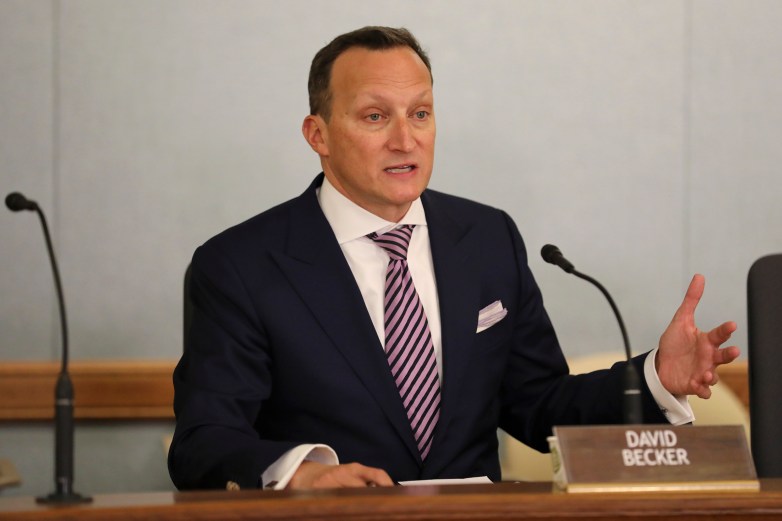
David Becker, the executive director of the nonpartisan nonprofit Center for Election Innovation and Research and a former Justice Department voting section attorney, said the federal government’s actions appeared more to be aimed at intimidating election officials than producing actionable criminal cases.
He pointed to FBI Director Kash Patel’s public statements in April suggesting arrests related to the 2020 election were coming, as well as federal officials discussing potential cases on social media before they’re brought before courts.
“If you think you’re going to bring charges and prosecute individuals, you don’t do anything that the federal government has done over the last few months,” he said.
Becker also noted that any potential federal crimes connected to the 2020 election are “well beyond the statute of limitations for any potential federal jurisdiction or crimes,” adding, “This is a problem for any investigation relating to 2020.”
Even so, Becker said election officials’ worries were justified. He said the Election Official Legal Defense Network, which he leads, has received more requests for legal assistance from election officials than ever before “even though all of these efforts indicate that the federal government knows it’s got nothing.”
David Becker, executive director and founder of the Center for Election Innovation and Research, briefs the media on growing threats to election professionals in Wisconsin at the Wisconsin State Capitol in Madison, Wis., on Dec. 13, 2021. (Coburn Dukehart/Wisconsin Watch)
How do the events in Wisconsin relate to probes elsewhere?
It’s unclear how the FBI interviews in Wisconsin relate to the agency’s scrutiny of the 2020 election in other states.
Those jurisdictions share several characteristics with Milwaukee County. All are located in highly competitive swing states won by former President Joe Biden in 2020, and all became central targets of President Donald Trump, who repeatedly challenged the election results despite court rulings, audits and reviews repeatedly reaffirming his loss.
Fulton, Wayne, Maricopa, and Milwaukee County are the largest and most heavily scrutinized election jurisdictions in their respective states. Each has been the subject of persistent conspiracy theories about the 2020 election, many of which remain prevalent on social media, even after extensive investigations found no evidence of widespread fraud.
“What’s really disconcerting,” said former longtime Wisconsin election chief Kevin Kennedy, “is the fact that there is a clear pattern here to try and continue to stir up issues that were resolved in every single opportunity there was to review them, whether it was a court case, an independent audit or the actual certification and review process that exists.”
What comes next?
The short answer is that nobody really knows.
Officials have been considering the possibility that the federal government may seize the city’s 2020 ballots, which contain personally identifiable information.
Kennedy said recent actions by the Trump administration offer “no reason to think that information that should be protected is going to be protected.”
Kennedy said Wisconsin’s decentralized election system was intentionally designed to distribute authority among local jurisdictions — both to keep election administration accountable at the community level and to limit the amount of sensitive voter information concentrated in any one place.
“You put that at the national level,” he said, “and it only takes one bad actor — and we’ve got evidence there’s more than one of those already in the federal government — to totally disrupt the process when you consolidate that kind of information that’s protected through the various state and local laws and practices.”
Becker said it will be an uphill battle for the federal government to successfully obtain Milwaukee’s ballots. But he said the mere possibility that federal officials could theoretically identify how individual people voted is deeply troubling.
“That is not the way a democratic society works,” he said. “Now, I don’t think they’re likely going to be able to do that. I think that’s going to be incredibly difficult. It’s not impossible, but the fact that they seem to engender this fear is troubling enough.”
Alexander Shur is a reporter for Votebeat based in Wisconsin. Contact Shur at ashur@votebeat.org.
Chief Inspector Megan Williamson processes absentee ballots at the Hawthorne Library on Madison's East Side during the November 2022 election. (Photo by Henry Redman/Wisconsin Examiner)
The Wisconsin Elections Commission should not have ordered the city of Madison to remove 23 late-arriving absentee ballots from its April 7 election count, a Dane County judge ruled.
The ruling, issued last week, was forced by a lawsuit from two of the voters whose ballots were affected. The lawsuit was brought by the voting rights-focused firm Law Forward.
During the April 7 election, the voters returned their ballots on time, but due to what city officials called an election administrator’s error, they were not delivered to the proper polling location until after polls closed at 8 p.m. State law requires that ballots be “delivered to the polling place no later than 8 p.m.”
At a May 6 meeting WEC decided to follow the exact letter of the law and found that the city must exclude the ballots. But the lawsuit argued that voters shouldn’t be punished because of an error outside of their control.
“Voters who comply with every element that is required for them to vote a special absentee vote, and then not being allowed to have the votes count, is contrary to what good law in Wisconsin has been,” Dane County Judge Everett Mitchell said in court.
WEC Chair Ann Jacobs, a Democrat, voted not to count the ballots, but expressed her hope during the commission discussions that a court would overturn the ruling.
“As I have indicated previously, as an administrative agency we are bound by the language of the state statutes which precluded counting those ballots,” Jacobs said in a statement after the ruling. “That said, it has been my firm belief that voters should not be penalized by the actions of a clerk as these 23 voters were. The right to vote should not be predicated on a clerk failing to deliver properly and timely submitted ballots.”
Chief Inspector Megan Williamson processes absentee ballots at the Hawthorne Library on Madison's East Side. (Henry Redman | Wisconsin Examiner)
The voting rights-focused firm Law Forward filed a lawsuit against the Wisconsin Elections Commission Wednesday over the commission’s decision to throw out the spring election votes of 23 Madison voters whose absentee ballots were properly filled out and filed in time, yet were delivered by the city clerk’s office to poll sites after 8 p.m. on Election Day.
The six-member commission voted last week to order the Dane County Board of Canvass not to count the votes in its certification of the election results because the ballots were delivered minutes after the polls closed April 7. State law allows absentee ballots to be returned until polls close. Ballots can be returned through the mail, to absentee ballot drop boxes located around Madison, to the city clerk’s office or directly to the voter’s polling location.
The lawsuit, filed in Dane County Circuit Court, argues WEC’s application of the law is unconstitutional because the voters followed all the rules and their ballots were late through “no fault of their own.”
Madison’s election administration has generated negative headlines several times in the last few years after the city clerk’s office misplaced and failed to count nearly 200 absentee ballots during the 2024 presidential election. The clerk in charge during that election no longer works for the city and the commission has instituted a number of requirements on city election officials to prevent similar errors from happening again.
Law Forward President Jeff Mandell said in a statement that in this case, WEC is overreaching. He pointed to a long history of Wisconsin court precedent that states voters can’t be disenfranchised over administrative failures of election officials.
“These voters did everything Wisconsin law asked of them, and the city and county properly counted their ballots,” Mandell said. “Their votes were cast, received, and counted on Election Day. WEC is now trying to erase them from the record because of a clerical error these voters had absolutely no control over. Failing to count these absentee votes will only erode trust in our elections and jeopardize access to voting in future elections. It’s critical that the court take urgent action to ensure these votes are counted.”
No local or state election results will be changed by the 23 votes. The lawsuit must move quickly because state law requires that the results of the state’s April 7 election must be certified by May 15.

 Login
Login