
Reading view

There are new articles available, click to refresh the page.

Hyundai’s 641-HP EV Gets A Huge Price Cut
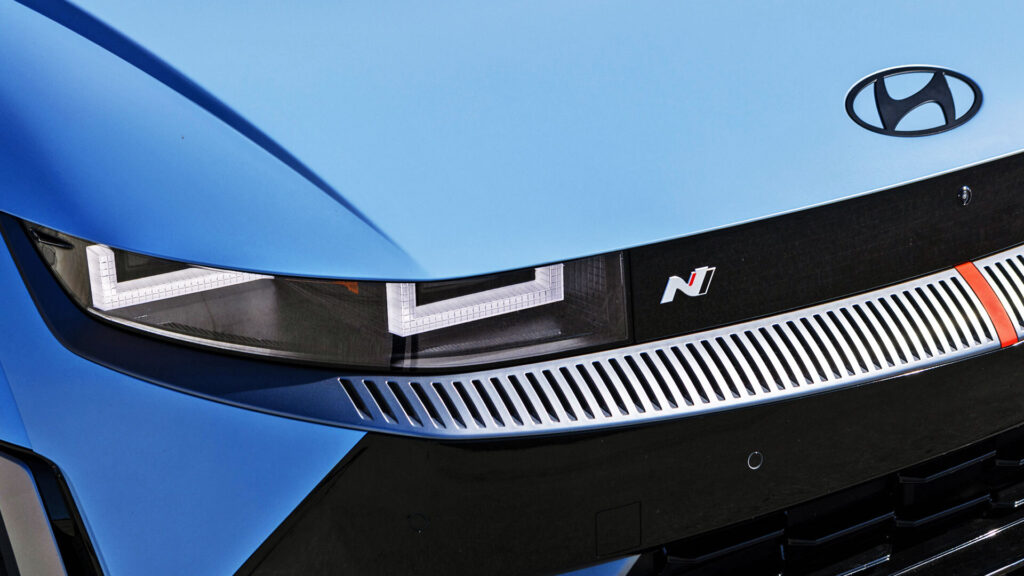
  • Hyundai has finally introduced the 2026 Ioniq 5 N.
  • It gets a $6,300 price cut and a NACS charging port.
  • EV also sports a new paint job and extra equipment.

Automakers have been introducing 2027 models on a regular basis, but Hyundai is just getting around to announcing the 2026 Ioniq 5 N. It’s better late than never as the company has confirmed it will be “more attainable than ever.”

While last year’s model began at $66,200⁠, the 2026 Ioniq 5 N has been slashed to $59,900. That’s a savings of $6,300 and Hyundai didn’t do any shady stuff with the destination fee as it remains unchanged at $1,600.

Review: The Hyundai Ioniq 5 N Is A Ballistic Missile That Redefines EVs

The company said the move aligns with their “broader strategy to increase N leadership by making track-ready performance and technology accessible to more driving enthusiasts.” $61,500 is far from affordable, but what do you expect for a high-performance EV with a dual-motor all-wheel drive system developing 641 hp (478 kW / 650 PS) and 568 lb-ft (769 Nm) of torque. It enables the model to accelerate from 0-60 mph (0-96 km/h) in 3.25 seconds, before hitting a top speed of 162 mph (261 km/h).

\\\\\\\\\\

Getting back to the changes, the 2026 Ioniq 5 N adopts a new North American Charging Standard port for easier access to Tesla Superchargers. Buyers will also find CCS-to-NACS adapters as well as a newly standard Level 1 and Level 2 combination charger.

Additional changes are limited, but there’s a new Performance Blue Pearl paint job as well as a lightly revised interior with rear windows that now have an auto down/up function. Buyers will also find a Forward Attention Warning system with an interior camera as well as an upgraded N Drift Optimizer, which now features ten settings instead of one.
\\\\\\\\\\\\\\\

Hyundai’s EVs Already Fake Engine Sounds, And Now They Might Vibrate Too

  • Hyundai wants to make its EVs even more engaging to drive every day.
  • Future EVs will use the company’s new IMA architecture as their base.
  • Upcoming models could gain richer ICE-inspired sounds and vibrations.

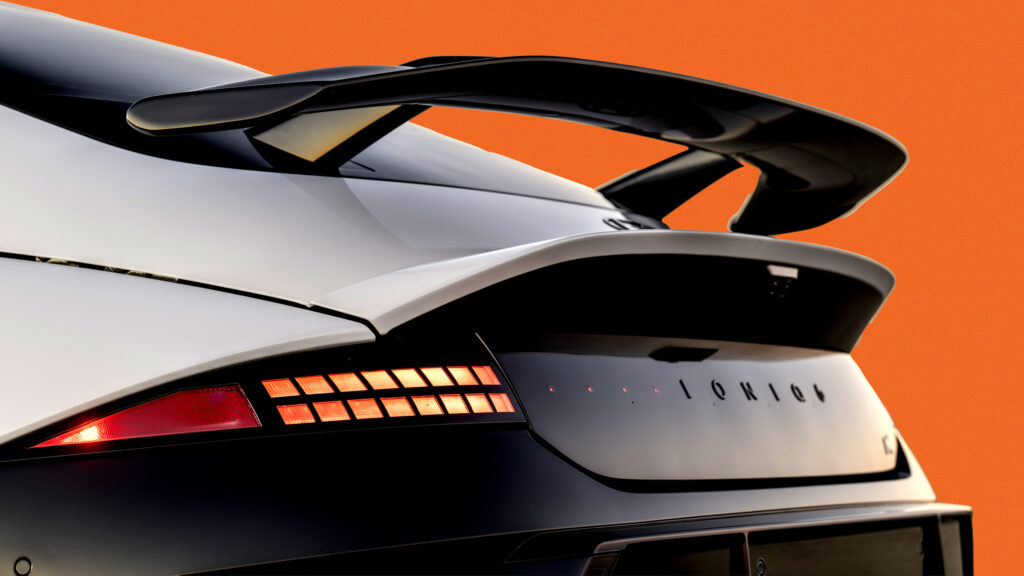
A few years ago, with serious doubt hanging over whether any carmaker could build an EV that put driver engagement first, Hyundai dropped the Ioniq 5 N. It came with an ICE-inspired soundtrack and fake gears, and it kicked off a trend that Porsche, Mercedes-AMG, and BMW M have since chased down and copied. What looked like a gimmick turned out to be the template.

As we recently discovered while testing the Ioniq 6, these fun features have been made even more realistic, and Hyundai believes it can improve them further. According to Hyundai’s global R&D boss, Manfred Harrer, the car manufacturer still considers itself a leader in this technology.

Review: More Porsche Than Hyundai, The Ioniq 6 N Is A Masterstroke

“In the next generation of these cars, I want to make it even more realistic,” he told Autocar. “I want to enhance it further.” According to Harrer, they could further develop the sounds of a backfiring exhaust and add “vibration in the car,” confident that this could usher in the “next level” of engagement.

“There are so many ideas how you can advance it further, but this is all about experience,” he added. “A lot of people say it’s fake, but people like it so there is some beauty – and why not play around with it? We are not the serious Porsche guys. We are fun to drive. We made a great movement and over the years we will enhance it – and the next platform gets this. The demos are already running.”

A New EV Platform Is Coming

\\\\\\\\\\

While there is still some life left in Hyundai’s combustion-powered N cars, with the next-generation i20 N to become a 1.6-liter turbo hybrid and the next i30 N likely receiving a 2.5-liter turbo hybrid, Hyundai’s new IMA architecture will underpin its new range of EVs and their subsequent N-branded versions.

Hyundai has been developing the Integrated Modular Architecture for several years and could launch it in 2028 in the second-gen Ioniq 5. It will retain 800-volt technology, but improvements will be made to charging times and to boost efficiency and thermal management. Harrer referred to it as a “huge evolution” rather than a “revolution,” unlike the current E-GMP architecture.

\\\\\\
❌