❌

Normal view

There are new articles available, click to refresh the page.
Before yesterdayVehicles

Mazda Is Working On A New Midsize Pickup

  • Mazda confirms a next-gen BT-50 pickup is under development.
  • It could feature sharper styling based on shared underpinnings.
  • The new midsize truck is expected to hit the road around 2028.

The Mazda BT-50 might not be as popular as its Toyota Hilux and Ford Ranger rivals, but it remains an important model for the Japanese automaker. The increased competition in the midsize pickup segment has prompted Mazda to consider a new generation, set to arrive over the next couple of years.

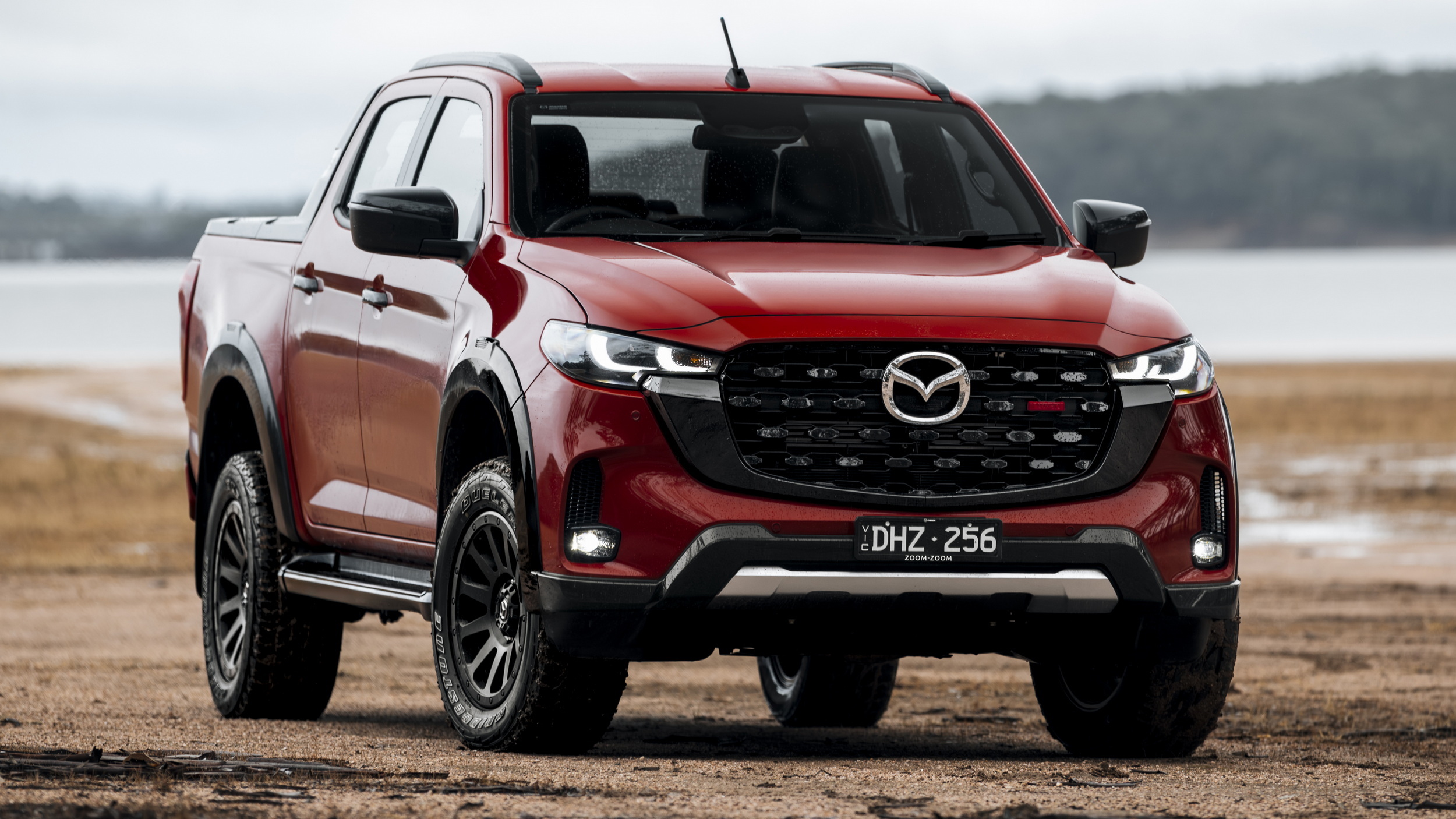
The third generation of the Mazda BT-50 was introduced in 2020, with a mid-lifecycle update following in late 2024. The model is based on the ladder-frame underpinnings of the Isuzu D-Max, with Mazda-specific styling inside-out and is currently offered with non-electrified turbodiesel powertrain options.

More: Mazda Pickup Gets Its Thunder Back, As A New Boss Steps In

Our colleagues at CarsGuide spoke to Vinesh Bhindi, Mazda Australia’s managing director, who confirmed that a new generation of the BT-50 is under development. The high-ranking official didn’t get into details about the specifications, but confirmed it will likely hit the road around 2028.
 Mazda Is Working On A New Midsize Pickup
The current Mazda BT-50 is based on the Isuzu D-Max.

The same publication spoke to Eiji Kimoto, Mazda’s chief designer, who was responsible for the styling of the current BT-50. When asked about the upcoming pickup, Kimoto said: “I am not allowed to speak much about the future product, but I can tell you, please look forward to it”.

More: Bare-Bones Mazda BT-50 Grows Stronger And More Capable

Since Mazda doesn’t have enough R&D resources to develop a pickup on its own, the next BT-50 will likely be the result of a partnership. After all, the first two generations were paired with the Ford Ranger, while the third one migrated to the Isuzu platform.

Collaborative Effort
 Mazda Is Working On A New Midsize Pickup

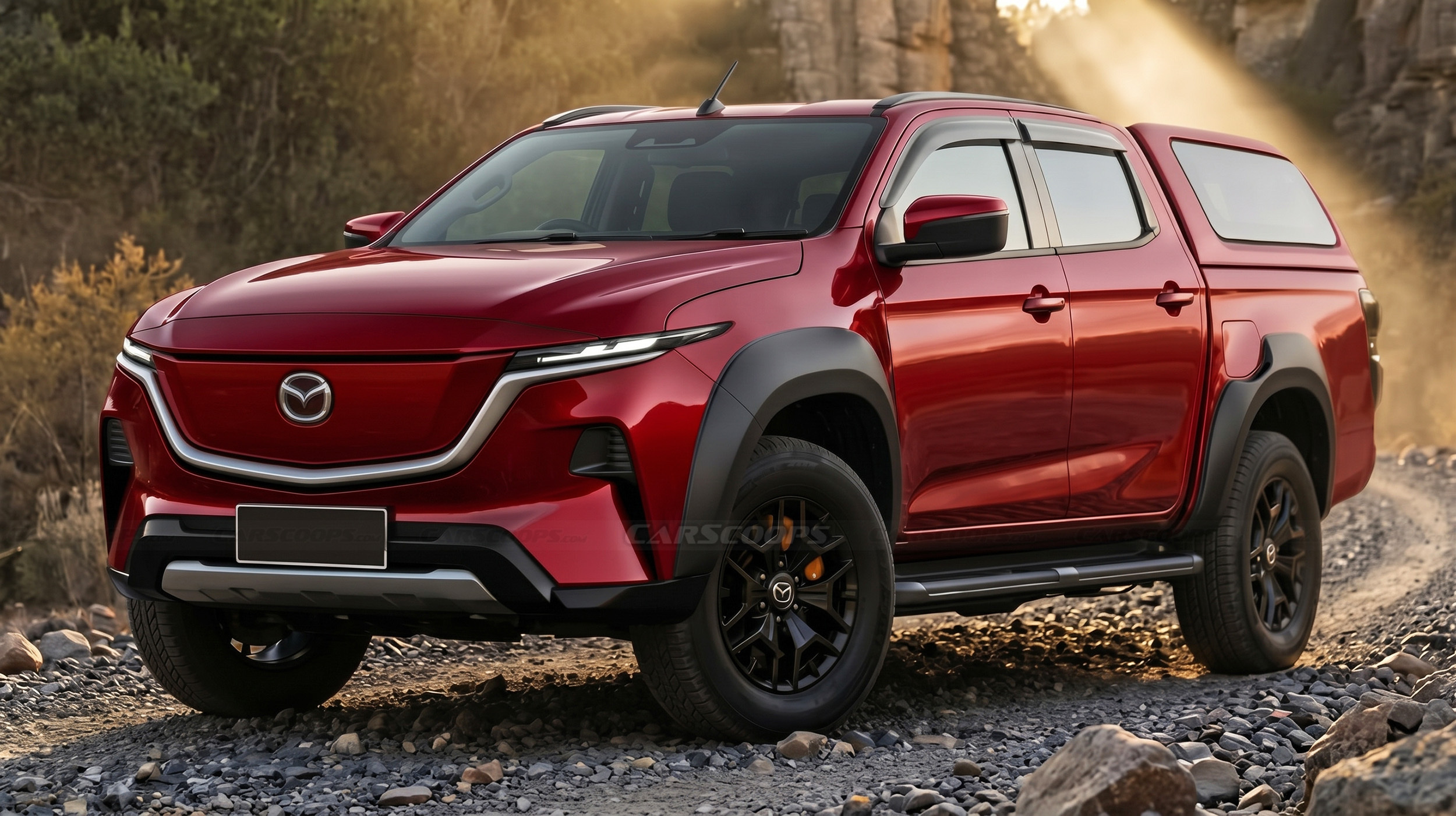
Illustrations: Thanos Pappas / CarScoops

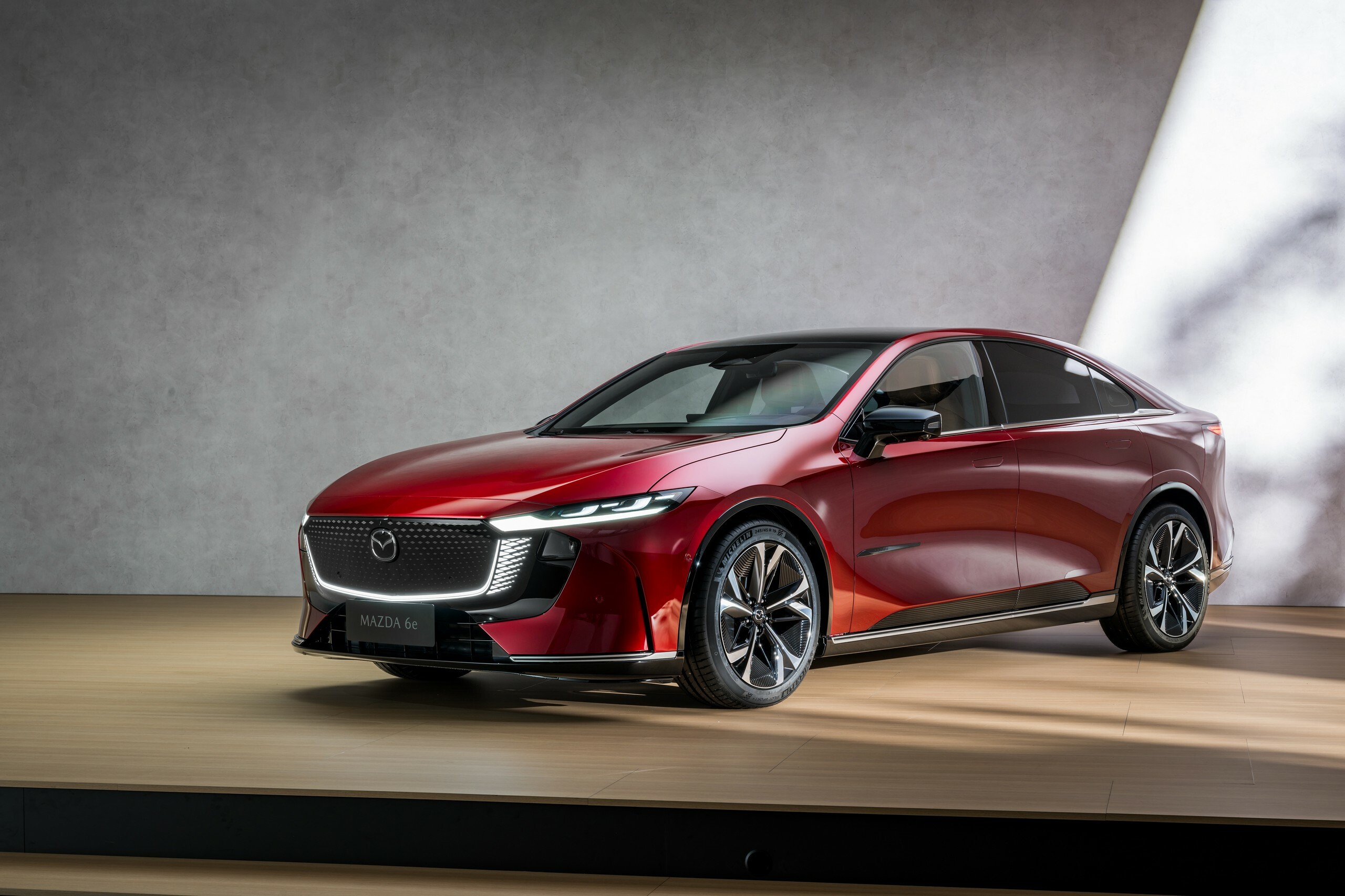
Mazda could continue the partnership with Isuzu, developing the new model alongside the new generation of the D-Max. Another option would be to broaden its collaboration with Chinese automaker Changan, following the 6e sedan and CX-6e SUV projects.

More: Mazda Poised To Build More Chinese-Based EVs

Changan already offers a pickup in the form of the Hunter K50 with a revolutionary range-extender powertrain. However, this one is based on the ladder-frame chassis of the diesel-powered Changan Hunter which has already spawned several siblings from Stellantis brands in South America including the Peugeot Landtrek, the Fiat Titano, the Ram 1200, and Ram Dakota.

Sharp Looks And Upmarket Interior
 Mazda Is Working On A New Midsize Pickup

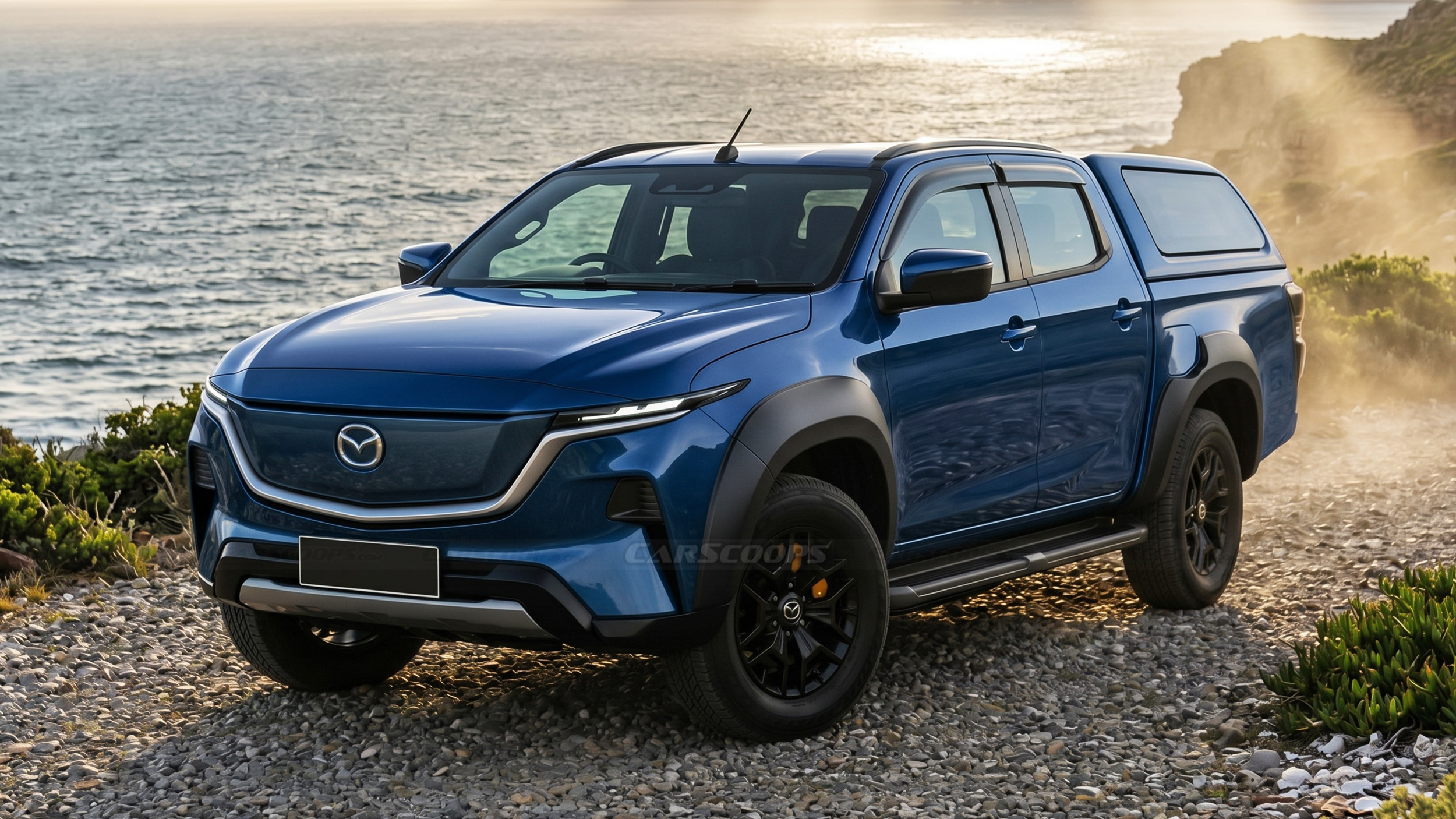
Illustrations: Thanos Pappas / CarScoops

In any case, the next Mazda BT-50 is expected to adopt the brand’s updated styling language with sharp LEDs and sculpted details. In our speculative rendering we used the proportions of the Isuzu D-Max as a base, infusing elements from the Mazda CX-6e alongside wide fender extensions and a rear canopy.

We also expect Mazda to give its truck a more premium interior, in line with the upmarket move of its entire lineup. This could help the next BT-50 stand out in a crowded segment, targeting a specific kind of buyer. As with most midsize pickups in Australia, the model could continue offering rugged trims like the Thunder alongside a selection of optional accessories for off-road enthusiasts.

What About The Powertrain?

Back in 2025, the Mazda Australia boss said there won’t be a fully electric variant of the BT-50 in the foreseeable future, despite the availability of the closely-related Isuzu D-Max EV. He also didn’t perceive PHEV pickups as a threat, adding that diesel powertrains will probably stick around. Still, the local Managing Director admitted they will let the market pinpoint if there’s demand for electrified trucks and consider the options.

Reading between the lines, Mazda could offer some sort of electrified powertrain options for the next BT-50. If it sticks to the partnership with Isuzu they will likely use a mild-hybrid diesel, while the Changan route would probably result in a range-extender option. That would allow the pickup to fulfil market demand while complying with tightening emission regulations and potentially expanding its scope to markets outside Australia.
 Mazda Is Working On A New Midsize Pickup
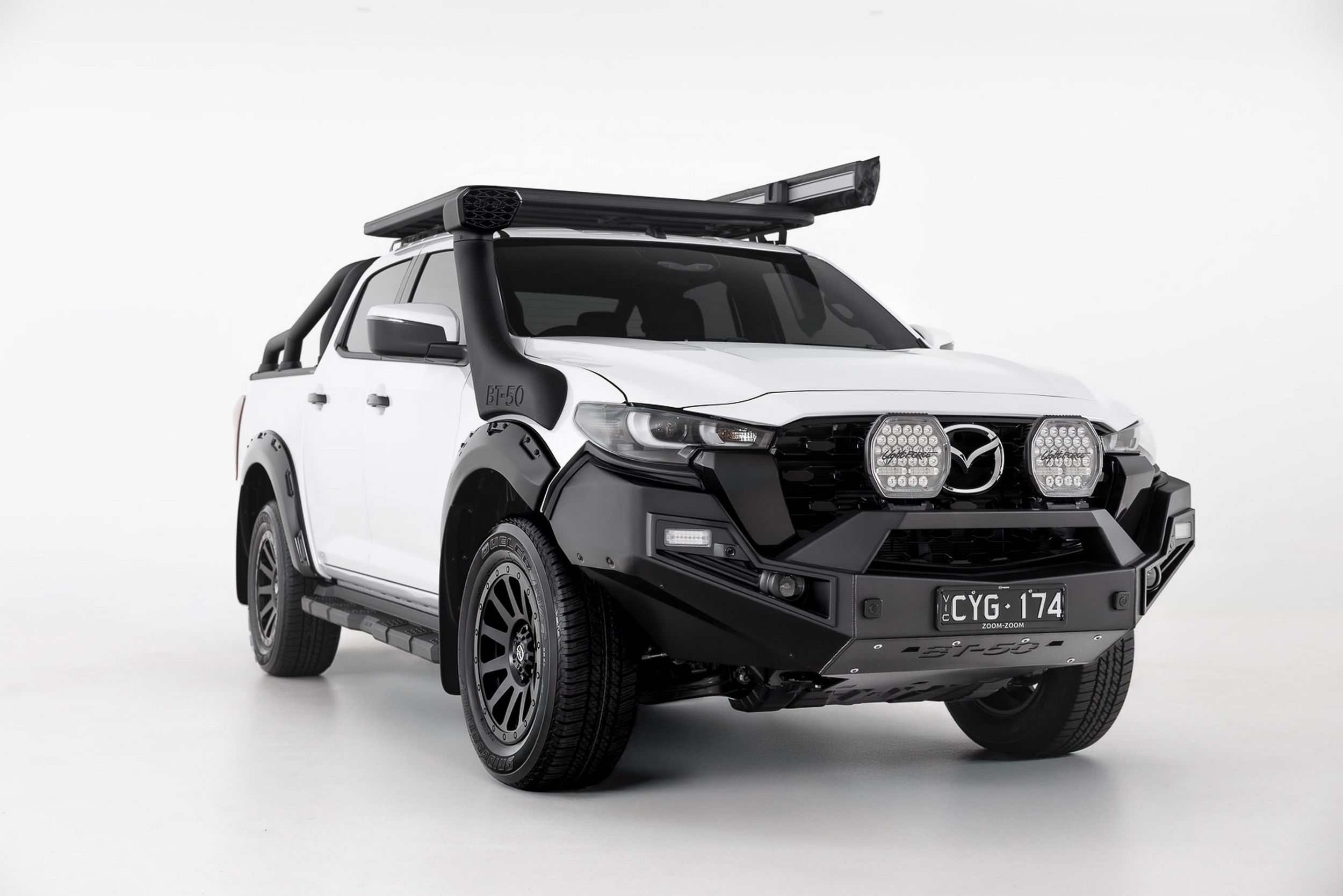
A heavily accessorized example of the Mazda BT-50 in Australia.

It Has An Odd Name, But The Deepal S07 Surprises | Review

PROS ›› Stands out, affordable, efficient
CONS ›› No brand recognition, slow, average range

A few years ago, Australians looking for a mid-size, all-electric SUV had very few options. Now, there’s never been more, and it seems as though a new option arrives every few months.

The Tesla Model Y still moves more units than any of the competition. Still, other models, including the Kia EV5, Hyundai Elexio, BYD Sealion 7, GAC Aion V, and Zeekr 7C, have opened up many options for buyers. Deepal is one of the newer Chinese automakers to launch locally and, backed by Changan, its S07 aims to upset the establishment.

Read: This Chinese SUV Is Like A Cut-Price Xiaomi YU7, Except For What’s Under The Hood

Sporting a coupe-inspired exterior, premium features, and an interior that feels genuinely considered, it seems promising. But is this enough to pull buyers away from the names they already trust? We recently spent a week living with the Deepal S07 to find out.

QUICK FACTS
› Model:2026 Deepal S07
› Starting Price:AU$47,990 (US$34,400)
› Dimensions:187 x 75.9 W x 63.9 in H (4,750 x 1,930 x 1,625 mm)
› Wheelbase:114.1 in (2,900 mm)
› Curb Weight:2,073 kg (4,570 lbs)
› Powertrain:79 kWh battery / single rear motor
› Output:214 hp (160 kW) / 236 lb-ft (320 Nm)
› 0-62 mph7.9 seconds
› Transmission:Single speed
› Efficiency:17.8 kWh/100 km
› On Sale:Now
SWIPE
\\\\\\\\\\

Photos Brad Anderson/Carscoops

Sold in a single configuration and offered with either 19- or 20-inch wheels, the S07 is currently available from AU$47,990 (US$34,400), including all on-road costs, or roughly AU$10,000 (US$7,200) less than when it initially launched locally in early 2025. This is very competitive, making the Deepal AU$2,000 (US$1,400) cheaper than a base Kia EV5, and more than AU$15,000 (US$10,800) less than a Tesla Model Y.

For a brand that has absolutely no heritage in Australia, nailing price is extremely important, so Deepal has at least done a good job in that regard.

The S07 has a 79.97 kWh ternary lithium battery pack, driving a rear-mounted electric motor with 160 kW (214 hp) and 320 Nm (236 lb-ft) of torque, roughly on par with other electric SUVs in this segment. One crucial area where the S07 lags the competition is charging, with a peak DC rate of just 92 kW, meaning it takes 35 minutes to charge from 30 to 80 percent. AC charging peaks at 11 kW. Notably, the S07 includes a 3.3 kW vehicle-to-load function, which is a nice addition.

\\\\\\\\\\\\\\\\\\\\\\\\\\\\\\

Photos Brad Anderson/Carscoops

Changan designed the S07 at its facility in Turin, Italy, and it stands out from much of the competition thanks to the coupe-SUV roofline and sporty lights. By comparison, the interior is typical of many current electric SUVs from China. For what it lacks in originality, it makes up for it with its material choices.

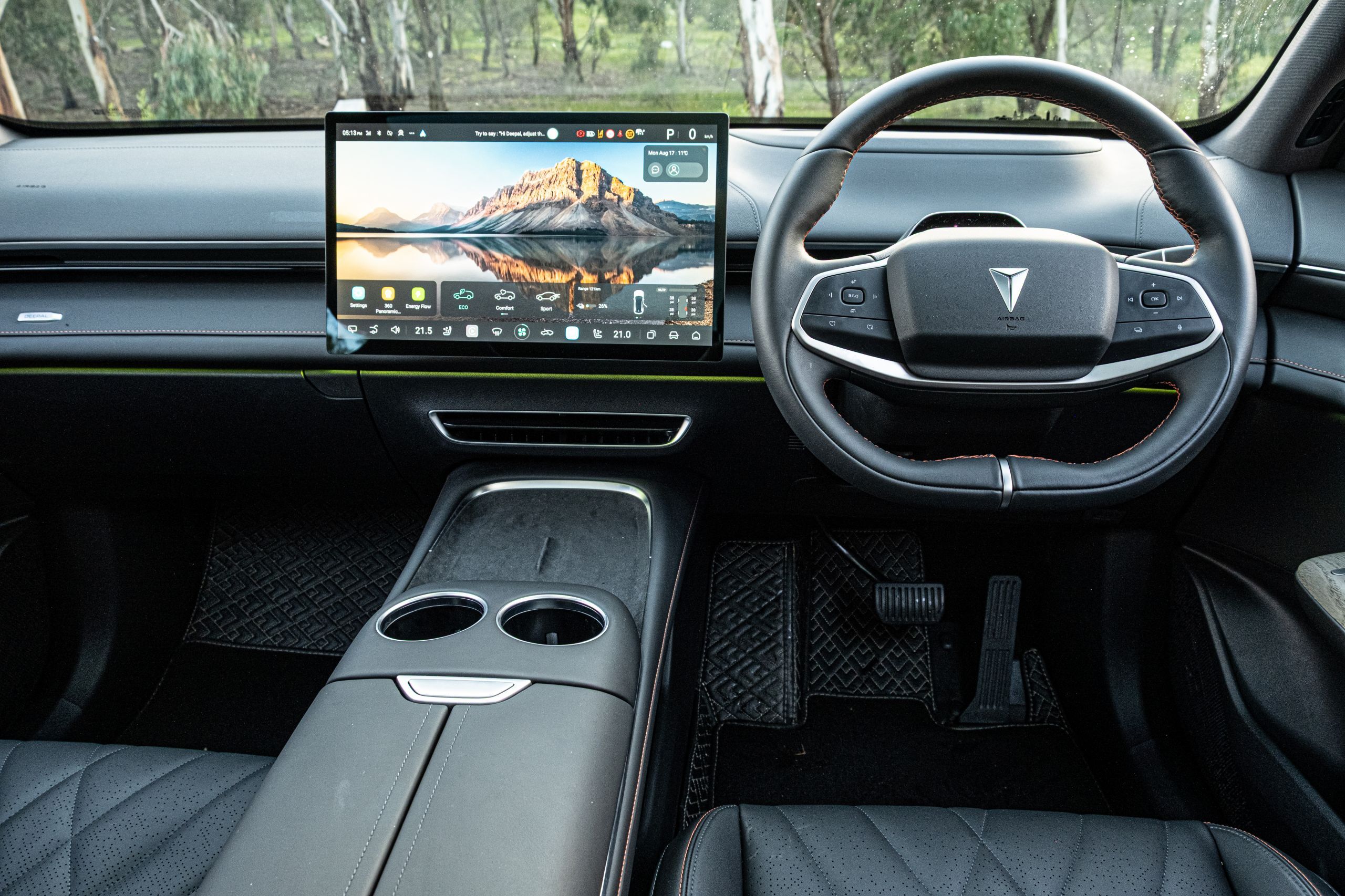
A 15.6-inch central infotainment display comes standard across the range and supports wireless Apple CarPlay and Android Auto. Like a Tesla Model Y, but unlike many of its competitors, the S07 doesn’t feature a separate digital instrument cluster, which is unfortunate. It somewhat makes up for this with a large, augmented-reality head-up display, but I would prefer a cluster.

The party piece of the S07’s cabin is that the central screen can sit centered or be angled toward the driver or passenger. It may only sound like a small thing, but it’s a great idea. After driving the Deepal for a week with the screen directed at me, it felt odd to step into another car with the screen centered. Several BYD’s have screens that can be positioned in portrait and landscape modes, but Deepal’s idea is better.

\\\\\\\\\\\\\\\

Photos Brad Anderson/Carscoops

Diving deeper into the screen reveals a tablet-like software package that’s easy to navigate, if a little overwhelming because of all the different controls and settings. The graphics are clear, and the responsiveness is excellent. Swipe down from the top, and you can configure several shortcut controls. You can also operate the climate control through the screen. It works okay, but I often had trouble turning the different vents on and off, as well as directing the air.

An annoying AI-powered voice assistant is also featured, greeting the driver every time they sit inside. Thankfully, you can turn it off.

The driving position is good, although it’d be nice if the seat could be lowered and there were more steering wheel adjustments. Soft-touch synthetic black leather adorns most interior parts, including the wheel, seats, center console, dashboard, and door panels, giving the cabin a premium feel. At the same time, the orange contrast stitching added some sporty flair. Our tester also had the same synthetic leather on the floor mats, which felt a little cheap.

 It Has An Odd Name, But The Deepal S07 Surprises | Review

At the rear, there’s enough space to fit two large adults with ease, plus separate climate controls and toggles to move the front passenger seat forward and back. Practicality is respectable, but far from class-leading. With the rear seats upright, you can fit 445 liters (15.7 cubic feet) in the rear, or 1,385 liters (48.9 cubic feet) with the seats folded down.

Smooth But Soulless

There’s a lot to like about the S07, although there are certainly elements that could be improved.

When the S07 first launched, it drew fierce criticism for feeling unfinished and having poorly calibrated safety systems. Several software updates over the past year have improved things, and they seem to have mostly worked.

When I first stepped into the Deepal, I was relieved to see that the overzealous driver monitoring system can be easily disabled through the swipe-down menu and, importantly, it remains off even after the S07 is turned off and switched back on. When I did use it, I found it overbearing, frequently telling me I was distracted no matter how focused I actually was.

\\\\\\\\\

Photos Brad Anderson/Carscoops

The S07 isn’t particularly quick, not that you’d expect, given it has a single motor. It takes about 7.9 seconds to reach 100 km/h (62 mph), and although this won’t get your heart pumping, it’s more than adequate for everyday driving.

Read: Avatr 07 Revealed As Yet Another Chinese EV Looking To Shock Tesla Model Y

The rear-wheel-drive setup also means the S07 avoids the torque steer found in some front-wheel-drive competition, like the Kia EV5 and Hyundai Elexio. The lighter front end also gives the S07 a pointy, direct feel when turning, while staying surprisingly flat through sweeping corners and tight hairpins.

The level of regenerative braking is highly customizable, which is welcome, but what’s not so welcome is the lack of a one-pedal driving mode, which seems like a silly exclusion in this day and age. Compounding that, the transition from regen to the mechanical brakes isn’t as smooth as it could be. It also doesn’t use steering wheel paddles for regen adjustments on the fly.

 It Has An Odd Name, But The Deepal S07 Surprises | Review

Ride comfort is good, and the S07 walks the fine line between sportiness and plushness well, quickly responding to imperfections in the road without sending too many thumps into the cabin. I think it could be a little softer, but that’s really clutching at straws. 

Deepal quotes a combined efficiency of 18.6 kWh/100 km and says the S07 gets up to 475 km of range, roughly on par with similarly priced competition. I averaged 17.8 kWh/100 km, so that claimed range is certainly achievable in the real world. It’s just a shame that using a public DC fast charger gets a little annoying given the slow peak speeds.

The automated driving functions need further improvement. While things like adaptive cruise control and lane-centering work relatively well, the S07 often hugs freeway lane lines rather than sitting in the center of a lane.

\\\\\\\\\\\\\\\\\\\

Photos Brad Anderson/Carscoops

Verdict

The Deepal S07 isn’t the best vehicle in the class, but at the current price point, it is a compelling package. Buyers eager for an EV that makes a statement on the road will find that in the S07, particularly in bright colors like Cosmic Yellow or Sunset Orange.

Sales data in Australia shows the S07 is performing reasonably well, with 522 examples sold through the end of June, making it more popular than something like a Leapmotor C10 and roughly on par with the Hyundai Elexio, although well down from the more than 3,000 Kia EV5s sold over the same time. For now, it’s not the best choice in the market, but it’s a solid option if you want something a little different. You’ll just have to live with the fact that you’ll be telling people you drive a Deepal.

\\\\\\\\\\\\\\\\\\\\\\\\\\\\\\\\\\\\\\\\\\\\\\\\\\\\\\\\\\\\\\\\\\\\\\\\\\\\\\\\\\\\\\\\\\\\\\\\\

Photos Brad Anderson/Carscoops

Mazda Poised To Build More Chinese-Based EVs

  • The Mazda 6e and CX-6e are both based on Deepal-branded Changan models.
  • A more affordable electric SUV based on the Deepal S05 is possible.
  • Surging fuel prices have prompted an increase in demand for Mazda’s EVs.

While many of its closest competitors rushed to develop attractive EVs, Mazda dragged its feet for several years, at one stage only selling a single EV in the form of the disappointing and short-lived MX-30. Now, it’s selling attractive 6e/EZ-6 and CX-6e/EZ-60 in certain markets, and more EVs are on the way.

In a bid to quickly bring two new EVs to the market, as well as slash development costs, Mazda leaned on its partnership with Changan in China, basing the 6e on the Deepal L07 and building the CX-6e around the Deepal S07. Although they may not have dedicated Mazda routes, the updates go beyond a simple rebadge.

Read: Mazda’s Electric SUV Gains LiDAR Self-Driving Tech For Under $22k

According to Mazda Australia managing director Vinesh Bhindi, the 6e and CX-6e launched just as fuel prices soared due to the conflict in the Middle East, prompting a surge in the demand for EVs. With this in mind, the company has already started speaking with Changan about what other models it could use to build its own EVs.

 Mazda Poised To Build More Chinese-Based EVs
Mazda CX-6e

“Consumers have started to accept EV as a viable option in their lifestyle. It’s unfortunate it probably took fuel supply and fuel price [increases], because there is a bigger impact on the economy,” Bhindi told Go Auto.

“Our 20-year partnership with Changan Automotive in Nanjing is a strong partnership. We have started talking about what other opportunities could be there,” he added.

A Smaller Electric SUV?

 Mazda Poised To Build More Chinese-Based EVs
Mazda 6e

Bhindi did not say what form future EVs from Mazda could take. One possibility is an electric SUV smaller than the CX-6e. Such a model could be based on the Deepal S05. Changan has been selling this model in China for the past two years. It shares the same EPA1 platform as the larger S07 and could easily be adapted by Mazda for a smaller and more affordable model.

While the 6e and CX-6e use the bones of two Changan models, Mazda builds them in a different factory, and its engineering teams from Japan and Europe were used extensively to develop them. If Mazda is serious about growing its EV sales, once again tapping Changan seems like the easy way to go about it.

\\\\\\\\\\\

Deepal S07

Mazda’s Electric SUV Gains LiDAR Self-Driving Tech For Under $22k

  • Mazda has introduced an updated EZ-60 in China, one year after its launch.
  • The SUV gains a LiDAR sensor and more advanced autonomous capabilities.
  • It retains the EV and EREV powertrain options, starting at ¥113,900 ($17,000).

The Mazda EZ-60 – known as the CX-6e in export markets – has been on sale in China for only one year, but that didn’t stop the Changan Mazda joint venture from giving it an early technological update. The SUV, which is available with range-extender and fully electric powertrains, gains upgraded sensors enabling more advanced semi-autonomous capabilities.

The highlight of the refreshed EZ-60 is the addition of a roof-mounted LiDAR. This is combined with three millimeter-wave radars, 12 ultrasonic sensors, and 11 high-definition cameras, continuously monitoring the surrounding environment. The impressive setup allows Navigation-on-Autopilot (NOA) driving on highways when travelling at speeds of up to 130 km/h (81 mph), and in urban traffic at speeds of up to 80 km/h (50 mph).

More: Mazda Says The SUV Boom Still Isn’t Over. Sorry Sedan Fans

According to Mazda, the model can now handle roundabouts and highway ramps, perform automated lane changes, U-turns, and features autonomous parking with upgraded memory. The systems are classified as Level 2+ and have been tested in hazardous scenarios including nighttime driving under heavy rain conditions and navigating narrow mountain passes with tree branches encroaching into the travel lane.

\\\\\\\\\\\\

Changan Mazda / Weibo

Setting aside the LiDAR pod on the roof on certain trims, the exterior design of the 4,850 mm (190.9 in) long SUV remains unchanged.

More: Big Changes Coming To Mazda’s Large SUVs After Sales Sputter

The same applies to the interior with the carry-over 26.45-inch infotainment display stretching on the passenger side of the dashboard and nine airbags fitted as standard. High-spec trims are equipped with a 50-inch augmented reality head-up display (optionally upgraded to 100-inch projection), and dual front zero-gravity seats with eight-point massage function that can recline by 120 degrees transforming into beds.

\\\\\\\\\\\\\\\

Changan Mazda / Weibo

Under the skin, the EZ-60 retains Changan’s EPA1 architecture with carry-over EREV and BEV powertrain options. Both employ a rear-mounted electric motor producing 255 hp (190 kW / 258 PS). The BEV has a 77.94 kWh battery offering a CLTC range of up to 373 miles (600 km).

More: No, Mazda Hasn’t Confirmed A New 300-HP AWD Mazdaspeed3

The EREV adds a 1.5-liter gasoline engine producing 97 hp (72 kW / 98 PS) which acts purely as a generator for the 31.73 kWh battery pack. This allows an alleged combined range of up to 808 miles (1,301 km) between charging and refueling stops.

\\\\\\\\

Changan Mazda / Weibo

The 2027 Mazda EZ-60 is already available to order in China. Pricing starts at ¥113,900 ($17,000) for the base EREV 200 Air trim but the LiDAR-equipped range begins with the EREV 200 Pro LiDAR at ¥145,900 ($21,700) and tops out at ¥166,900 ($24,900) for the flagship EV 600 Max LiDAR.

More: Mazda Priced Its New CX-6e At $20,500 In China And Nearly Double That In Australia

It remains to be seen whether the aforementioned updates will find their way into the Mazda CX-6e in the near future. The model landed in the Old Continent and in Australia earlier this year, so Mazda might wait before introducing any new features to export markets.

\\\\\\

Changan Mazda / Weibo

❌
❌