Normal view

There are new articles available, click to refresh the page.
Today — 9 June 2026Main stream

A Thief’s Getaway Waymo Had 29 Cameras Watching, And Police Still Got Nothing

  • Waymo deleted interior footage of the suspect before police contacted them.
  • Police haven’t been able to identify the suspect using their rider account.
  • Six months after the theft, SF authorities continue searching for the suspect.

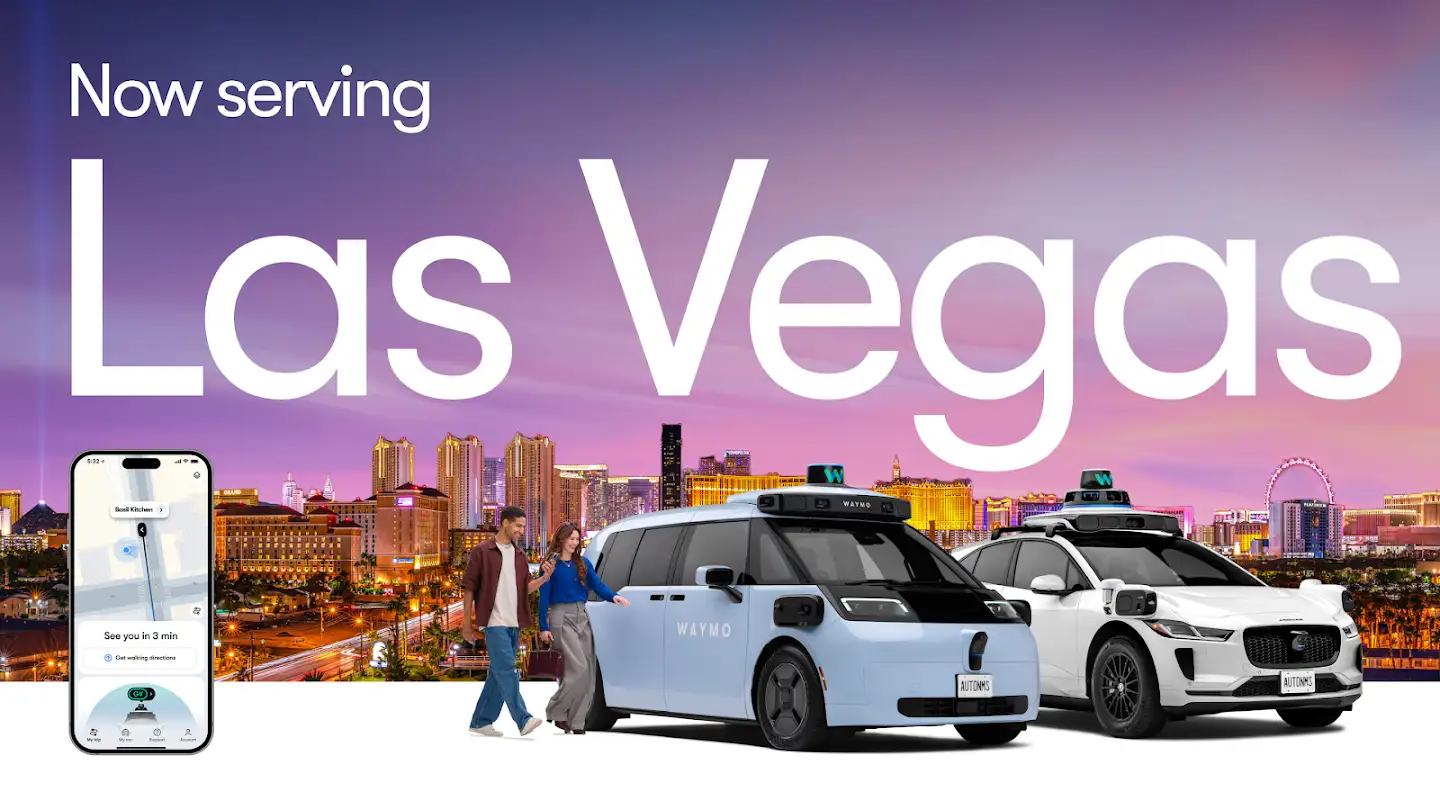
A Waymo robotaxi can be fooled into rolling straight into a flooded street, but it turns out the same self-driving cars have no trouble pulling getaway duty for a crime. They are, it seems, alarmingly good at helping criminals disappear.

Earlier this year, an unidentified suspect walked into a Hot 8 Yoga studio in San Francisco and left in a hurry with an armful of pricey activewear. He had arrived by Waymo and used the same car to escape, dumping the loot into the trunk of the autonomous I-Pace before riding off.

Watch: Dozens Of Empty Waymo Robotaxis Keep Circling An Atlanta Cul-De-Sac For Hours

As reported by the San Francisco Chronicle, local authorities took their time looking into the theft. A search warrant landed on Waymo in April, ordering the company to hand over everything it knew about the account behind the ride, along with video from inside and outside the car to help identify the thief.

However, by the time the search warrant was filed in April, Waymo had already wiped the cabin footage. The company doesn’t publicly say how long it keeps video, and on top of that, its exterior cameras always blur faces for privacy reasons. So despite each robotaxi packing a small arsenal of high-definition cameras, none of them helped track down the thief.

That’s a tough pill to swallow when you consider the hardware involved. According to Waymo’s website, its latest Jaguars feature 29 cameras that provide a full 360-degree view of their surroundings. The user’s account information didn’t lead police to a suspect either, perhaps because whoever booked the ride used stolen credentials or a burner phone.

All For Some Men’s Shorts

 A Thief’s Getaway Waymo Had 29 Cameras Watching, And Police Still Got Nothing

The studio manager of Hot 8 Yoga says footage from outside the location shows the Waymo dropping off the individual and waiting for him to return with the stolen loot. Although he only made off with a bunch of men’s shorts, it’s certainly possible this case might encourage other criminals to escape in robotaxis.

Los Angeles saw a version of this last year, when someone bolted from a grocery store theft in a Waymo. That one ended differently. Police caught up with the robotaxi, forced it to the side of the road, and arrested the suspect.

 A Thief’s Getaway Waymo Had 29 Cameras Watching, And Police Still Got Nothing
Before yesterdayMain stream

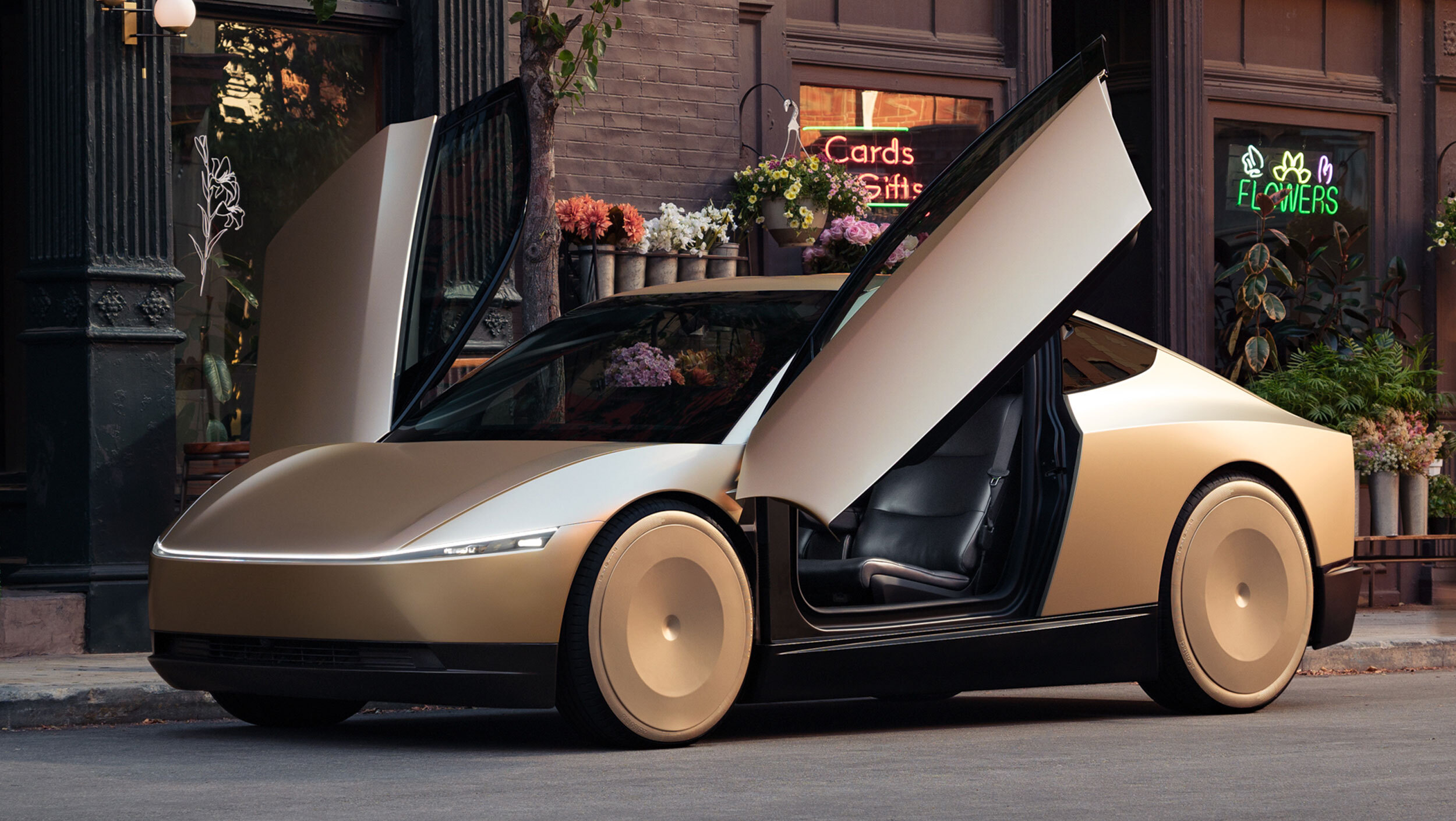
Tesla’s New Camera Design Could Borrow A Trick From Your Windshield

  • Tesla may finally have a fix for problems tied to its vision-only system.
  • A new patent shows camera units fitted with tiny wipers and water sprayers.
  • Cybercab prototypes have been spotted carrying camera-cleaning hardware.

Many automakers chasing autonomy have settled on roughly the same hardware recipe: cameras, radar, and LiDAR, each covering for the others’ weaknesses. Tesla went the other way. Its driver-assist suite leans entirely on cameras, no radar, no LiDAR. While using a vision-only system has some advantages, it also has some drawbacks, including issues caused by dirty camera lenses.

Tesla is aware of the problem. Recent Cybercab prototypes have turned up wearing small washer jets aimed at the exterior cameras, spraying them clean as needed. A patent filing suggests the company wants to go further than a squirt of fluid.

Read: Tesla’s Model Y Robotaxis Can Squirt Now, But Yours Still Can’t

An image from the patent depicts the entire camera unit, including a tiny fluid reservoir that can spray water onto the camera’s lens. Tesla has also designed a tiny wiper blade that can sweep across the lens, ensuring it’s as clean as possible. This blade will be driven by a small wiper motor, also incorporated into the camera’s housing, Not A Tesla App notes.

It’s an innovative solution and could help to overcome some of the issues Tesla’s vision system experiences. Of course, a setup like this won’t help Tesla’s cameras in dealing with sun glare, for example, which can impact how the automated driving systems work.

 Tesla’s New Camera Design Could Borrow A Trick From Your Windshield

It’s also unclear if all of the exterior cameras used by current Tesla models could be fitted with these units, as they are noticeably larger than just having a camera. At the very least, Tesla may be able to squeeze camera units like these into the front of its vehicles, as well as the front quarter panels, and the rear, among the most important cameras it uses to capture 360-degree images.

Of course, these camera units will be more expensive than those currently used and, with more moving parts, will also be more prone to failure. But, as Tesla seeks to achieve full autonomy, they may be necessary.

\\\\\\

In 2020, Tesla Was Supposed To Have 1 Million Robotaxis. It Currently Has 20

  • Tesla’s current unsupervised fleet across the entire US is just 20 cars.
  • California regulators still block Tesla from running any unsupervised cars.
  • In the past 30 days, just 92 vehicles have been used in the robotaxi fleet.

Back in October 2019, Tesla chief executive Elon Musk told investors the company would have more than a million robotaxis on the road within a year. Six years on, Tesla has not only missed that deadline by an embarrassing margin, the US fleet it actually runs is getting smaller.

The long-promised robotaxi service finally launched in Texas last year, starting in a fenced-off corner of Austin with safety drivers riding shotgun. It has since spread to Dallas, Houston, and the Bay Area in California, but the scale remains a rounding error next to Waymo, the company that has quietly built the lead Tesla keeps talking about.

Watch: Tesla Robotaxi Driver Caught Asleep Proves Humans Are Still The Weakest Link

Data from the Robotaxi Tracker service reveals that across the four regions, Tesla has had just 20 unsupervised vehicles in use during the past seven days. Of these, 14 are operating in Austin, 3 are in Dallas, and 3 are in Houston. Crucially, California regulations continue to prevent Tesla from operating a single unsupervised robotaxi in the state. It’s not as if there are loads of human-driven Tesla robotaxis in the Bay Area, either.

The total fleet peaked around December 2025 and January 2026 and has been in steady decline ever since.

A Shrinking Fleet

 In 2020, Tesla Was Supposed To Have 1 Million Robotaxis. It Currently Has 20

Electrek reports that over the past week, the total number of cars operating in Tesla’s total robotaxi fleet, including supervised and unsupervised cars, was just 34 vehicles. In April, there were 107 vehicles operating in the Bay Area fleet, but currently there are just 9. Those Bay Area cars were never true robotaxis to begin with, operating with safety drivers under California’s Transportation Charter-Party permit.

An analysis of activity over the past 30 days shows that just 92 vehicles in total were used by the robotaxi service across the country, of which 33 were operating unsupervised. Most of these, 52 to be precise, are in use across the Bay Area. It’s worth reiterating, however, that these vehicles in California are driven by people, just like a normal ride-hailing service.

Tesla hasn’t explained why its robotaxi fleet is shrinking, but it’s likely related to safety issues that the company is experiencing. As we revealed in January, vehicles operating in Tesla’s robotaxi fleet were involved in an incident every 55,000 miles, roughly four times the average number of miles driven by people.  

 In 2020, Tesla Was Supposed To Have 1 Million Robotaxis. It Currently Has 20

Waymo’s Self-Driving Cars Can’t Stop Diving Into Floods, So It Paused 5 Cities

  • Waymo has suspended robotaxi service across five major US cities this week.
  • The pause follows a recent recall covering nearly 3,800 autonomous vehicles.
  • One Waymo sat stranded in Atlanta floodwaters until a human stepped in.

For a company built on the premise that machines see the road better than humans do, getting repeatedly outsmarted by puddles is not a great look. The Alphabet-owned firm has suspended operations in five U.S. cities while it works out why its robotaxis keep mistaking flooded streets for drivable ones.

Read: Waymo Recalls Thousands Of Robotaxis After One Got Washed Away In A Flood

The flooded-road problem first surfaced earlier this month, when a Waymo robotaxi drove onto a submerged road in San Antonio, Texas, on April 20 and was swept into a creek. No one was on board, which is the only saving grace. The incident pushed Waymo to recall close to 3,800 robotaxis to fix how they handle these conditions.

The Atlanta Incident

While the company continues working on a fix, another one of its vehicles got stranded in floodwaters after heavy rain in Atlanta, Georgia, earlier this week. 10News reports the EV was stuck for roughly an hour before the floodwaters receded, at which point a human driver was able to jump behind the wheel.

Following the Texas incident, Waymo paused service in San Antonio, and the suspension now extends to Austin, Atlanta, Dallas, and Houston, partly in response to the severe weather sweeping across Texas this week.

Speaking with TechCrunch, Waymo says it uses National Weather Service alerts to prepare its vehicles for difficult weather conditions. However, in the case of the flash flood in Atlanta, it says a storm produced so much rainfall in such a short period that the robotaxi got stuck before any alert was issued.

As part of the recall issued last week, Waymo said it was rolling out operational restrictions in areas with an elevated risk of flooded, higher-speed roads, and added that work on a “final remedy” is still underway.

 Waymo’s Self-Driving Cars Can’t Stop Diving Into Floods, So It Paused 5 Cities

Tesla’s Still Testing Its Vision-Only Robotaxi, Xpeng Just Started Building One

  • The company’s GX robotaxi will be offered with three seating configurations.
  • Xpeng relies on a vision-only system like Tesla, rather than using LiDAR.
  • The tech firm has permits to test Level 4 autonomous systems in China.

Xpeng is the latest Chinese car manufacturer to dive headfirst into the world of robotaxis, unveiling a specifically equipped version of the GX and quickly starting production.

Unlike companies like Tesla, Rimac, and Geely that have designed bespoke robotaxis from the ground up, Xpeng’s model is essentially just a specially equipped version of the GX it sells to the public. Using the GX as the basis for its robotaxi will significantly help the car manufacturer cut development and production costs.

Read: 200 Robotaxis Stopped In Traffic, Now China Has Stopped Issuing Permits

Xpeng hasn’t said whether its self-driving GX has the range-extender powertrain of the consumer model or instead the same all-electric powertrain. What we do know is that it’s powered by four in-house Turing AI chips with 3,000 TOPS of on-board computing power. It also includes steer-by-wire.

The SUV has been developed exclusively in-house and offers Level 4 self-driving capabilities. As of January, Xpeng has been testing its L4 vehicles on public roads across China and plans to launch pilot operations for its robotaxi service in the second half of this year.

Humans Still Play An Important Role

\\\\\\\\\\

Just like the robotaxis being tested by Tesla, Xpeng’s models will initially have a human supervisor behind the wheel in case anything unexpected happens. However, the Chinese firm plans to ditch these “safety officers” by early 2027.

The Xpeng GX robotaxi also differs from most others being tested in China in that it relies on a vision-only system, also like Tesla. This means there’s no LiDAR or high-definition maps, instead relying on cameras and an advanced AI model.

While we haven’t been able to find any images of the robotaxi’s interior, it apparently includes privacy glass, rear entertainment screens, plush new seats, and will be produced in five-, six-, and seven-seat configurations.

\\\\\\\

Xpeng Has Started Building Its Own Robotaxi, But It Doesn’t Look Like Any Other

  • The company’s GX robotaxi will be offered with three seating configurations.
  • Xpeng relies on a vision-only system like Tesla, rather than using LiDAR.
  • The tech firm has permits to test Level 4 autonomous systems in China.

Xpeng is the latest Chinese car manufacturer to dive headfirst into the world of robotaxis, unveiling a specifically equipped version of the GX and quickly starting production.

Unlike companies like Tesla, Rimac, and Geely that have designed bespoke robotaxis from the ground up, Xpeng’s model is essentially just a specially equipped version of the GX it sells to the public. Using the GX as the basis for its robotaxi will significantly help the car manufacturer cut development and production costs.

Read: 200 Robotaxis Stopped In Traffic, Now China Has Stopped Issuing Permits

Xpeng hasn’t said whether its self-driving GX has the range-extender powertrain of the consumer model or instead the same all-electric powertrain. What we do know is that it’s powered by four in-house Turing AI chips with 3,000 TOPS of on-board computing power. It also includes steer-by-wire.

The SUV has been developed exclusively in-house and offers Level 4 self-driving capabilities. As of January, Xpeng has been testing its L4 vehicles on public roads across China and plans to launch pilot operations for its robotaxi service in the second half of this year.

Humans Still Play An Important Role

\\\\\\\\\\

Just like the robotaxis being tested by Tesla, Xpeng’s models will initially have a human supervisor behind the wheel in case anything unexpected happens. However, the Chinese firm plans to ditch these “safety officers” by early 2027.

The Xpeng GX robotaxi also differs from most others being tested in China in that it relies on a vision-only system, also like Tesla. This means there’s no LiDAR or high-definition maps, instead relying on cameras and an advanced AI model.

While we haven’t been able to find any images of the robotaxi’s interior, it apparently includes privacy glass, rear entertainment screens, plush new seats, and will be produced in five-, six-, and seven-seat configurations.

\\\\\\\

EVs Owners Could Be Hit With New $130 Annual Fee

  • EVs and plug-in hybrids could be hit by new fees from the US government.
  • Under a new proposal, EV owners would have to pay $130 annually.
  • Fee would then increase $5 every two years, before maxing out at $150.

Common ground is anything but common in Washington DC, but two key members of the United States House Committee on Transportation and Infrastructure have unveiled a new bipartisan, surface transportation reauthorization bill. It would last five years and see the country invest in America’s “roads, bridges, transit, rail transportation, and highway and motor carrier safety programs.”

The bill was unveiled by Sam Graves (R-MO) and Rick Larsen (D-WA), and is known as the BUILD (Building Unrivaled Infrastructure and Long-term Development) America 250 Act. The proposed piece of legislation is over 1,000 pages long and “focuses on proven surface transportation infrastructure programs.” It also promises the “largest ever investment in America’s bridges” as well as the “first-ever autonomous commercial motor vehicle framework.”

More: Congress Wants EV Owners To Pay New Fees As Gas Taxes Stay Frozen

While there’s a ton of things in the proposal, it calls on the Federal Highway Administration to impose new fees on eco-friendly vehicles. Electric vehicles would be charged $130 annually, while plug-in hybrids would get hit with a $35 tax. The fees would be collected by states and then passed onto the federal government.

Starting in 2029, the fees would increase by $5 every two years. However, they would be capped at $150 for EVs and $50 for plug-in hybrids. States can also keep up to 1% of the money collected for “administrative expenses.”

 EVs Owners Could Be Hit With New $130 Annual Fee

The new fees aim to ensure all motorists pay for repairs and upkeep as the government currently relies on a federal gas tax, which has been frozen for over three decades. It’s 18.4 cents per gallon of gasoline and 24.4 cents per gallon of diesel.

While that’s just one very small section of the BUILD America 250 Act, there are other interesting sections. As Reuters pointed out, one would require human safety drivers on autonomous school buses.

It’s buried on page 664 and says “The safety standard established under subsection (a)(1) shall require a human operator to be located within the vehicle during the operation of any ADS-equipped commercial motor vehicle transporting” hazardous materials or “primarily minors.” The latter, obviously, includes school buses.

 EVs Owners Could Be Hit With New $130 Annual Fee

BMW And Mercedes Dropped LiDAR Over Cost, China Puts It On A $10K Hatch

  • BYD has rolled out a revised version of the little Seagull hatch in China.
  • The tiny EV starts at $10,300, or $13,400 with BYD’s DiPilot 300 ADAS.
  • DiPilot 300 isn’t fully autonomous, but can handle city streets, stoplights.

Though camera-loving Tesla swears otherwise, most experts agree that Lidar is the gold standard of driver assistance sensing technology. It’s better at judging distances and detecting unlit objects than cameras, and sees in more detail than radars. But it’s also expensive, or at least it is in Europe and America, where it’s restricted to $100k+ luxury cars. In China, though, you can now get it on a $10,000 micro EV.

BYD has just refreshed its Seagull subcompact for its domestic market. The Seagull is the tiny 3,780 mm (148.8 inches) electric hatch sold as the Dolphin Surf in Europe. For MY26 there are a couple of new colors, Mango Orange and Mint Green, fresh 16-inch Starlight wheels and new LED taillights, though the 74 hp (75 PS / 55 kW) powertrain is carried over.

Related: BMW Removes Level 3 Self-Driving Tech From New 7-Series

But the big news is the availability of a driver assistance system that combines a Lidar sensor with more commonly available radar and camera-type sensors. The Lidar tech comes as part of the optional DiPilot 300, an ADAS system that’s the mid-point of three BYD “God’s Eye” assistance packages. You can tell if the Seagull you’re looking at has DiPilot 300 because it looks like someone’s grafted on the roof snorkel from a McLaren 675LT.

A base Seagull Vitality Edition with the smaller 30.1 kWh battery and 190-mile (305 km) range costs ¥69,900 ($10,300), Car News China reports, while the poshest Flying Edition with a bigger 38.9 kWh power pack and 252-mile (405 km) range runs to ¥85,900 ($12,600). But add on the DiPilot 300 option and those prices jump significantly to ¥90,900 ($13,400) and ¥97,900 yuan ($14,400).

Lidar Works, But At A Price

 BMW And Mercedes Dropped LiDAR Over Cost, China Puts It On A $10K Hatch

A $3,100 option on a $10,300 car is kind of crazy, but then Lidar is expensive. That’s why BMW and Mercedes, who both previously offered the technology as part of their hands-off Level 3 assistance packages on their 7-Series and S-Class flagships, have dropped the circa-$7k options from the newest version of those cars.

Instead, both German brands are switching their attention to Level 2 systems that still require drivers to look at the road, but unlike the Level 3 systems – which were restricted to freeways – can operate hands-free in urban environments. Both brands will return to L3 tech at a later date.

Despite the presence of a Lidar sensor, the Seagull’s DiPilot 300 is also an advanced Level 2 system, not Level 3. But BYD is talking about L3 as a future development for some of its cars, and you wouldn’t want to bet against even the humblest models like the Seagull getting it in a few years.

\\\\\

BYD

The New MG 07 Flagship’s Looks Say Porsche Taycan, Its Price Says Corolla

  • MG has revealed the exterior design of their new 07 flagship.
  • The Porsche Taycan knockoff will cost less than $29,410.
  • Offers autonomous tech as well as PHEV and electric options.

Following a teaser in March, SAIC MG has revealed the upcoming 07. It’s a flagship that has been “engineered to be the ultimate choice in the new energy coupe segment.”

Sporting a design that rivals “luxury coupes in the ¥700,000 ($102,930) class,” the 07 will offer “top-tier styling” for less than ¥200,000 ($29,410). That’s a not so subtle reference to the Porsche Taycan, which begins at ¥918,000 or $134,985 in China.

More: China Isn’t Buying Porsches, But It Sure Loves Making Cars That Look Like Them

The similarities are readily apparent as the 07 looks like a pudgy Taycan. However, something has been lost in translation as it doesn’t seem quite right.

\\\\\\\\\

That being said, the model looks fairly good and sports C-shaped lighting units as well as a bulging hood. They’re joined by a wide lower intake that appears to have an active shutter grille and a prominent sensor.

Moving down the side, there’s a rakish windscreen that flows into a long curved roof. The latter is notable for having a lidar sensor mounted above the windscreen. Other highlights include Taycan-style front fender vents and door handles as well as a similar rear end. However, the MG’s booty could use some time at the gym.

MG has been coy on specifics, but they used Auto China to reveal the 07 rides on SAIC’s next-generation NEV platform. It will be offered with both electric and plug-in hybrid powertrains.

 The New MG 07 Flagship’s Looks Say Porsche Taycan, Its Price Says Corolla

The automaker also announced higher-end variants – that cost around ¥300,000 ($44,112) – will use the Momenta R7 autonomous driving system. It promises to provide Urban Navigate on Autopilot as well as a “seamless parking-space-to-parking-space driving experience.”

MG went on to say the system doesn’t simply imitate human driving as it also “possesses physical scene understanding and predictive reasoning similar to an experienced driver.” This reportedly enables proactive defensive maneuvers to increase safety.

We’ll likely learn more in the coming weeks, but the car will apparently show turquoise lights when being driven autonomously.

 The New MG 07 Flagship’s Looks Say Porsche Taycan, Its Price Says Corolla
❌
❌