Reading view

There are new articles available, click to refresh the page.

Mach-E Owner Watched A Car Hacking Video, Then Found The Same Device Under His Dash

  • A Mach-E owner discovered a hidden tracking module beneath his dashboard.
  • The device appears linked to a recently disclosed security vulnerability.
  • Most owners face little real-world hacking risk despite the alarming headlines.

Car hacking is becoming a more alarming issue every day, it seems. Just this week, security researchers announced that they’d found another major vulnerability that could affect any car from any brand built in the last few decades. After watching a video about the hack, one Ford owner found exactly that same type of device in his own car. Here’s why you might want to take a peek in your own vehicle and why the threat in this case isn’t as scary as it may seem.

More: Toyota GR Corolla Buyer Finds Dealer-Installed GPS Tracker Hidden In Car

The Reddit user said the idea came after watching a recent Wired video detailing security researchers’ discovery of vulnerabilities in the KARR Security System. That’s an aftermarket alarm and tracking device frequently installed by dealerships. We’ve covered similar products in the past. In this case, the owner was simply curious, so he pulled a panel out from under his dash and, sure enough, found the module.

How To Find One In Your Own Car

These devices are often plugged into the OBDII port via a splitter, so they’re hard to spot initially. Some can route directly to or from the battery as well. The owner wasted little time removing the module, which appears to have been installed using a plug-and-play T-harness beneath the dashboard. With that simple action, he disconnected himself from the vulnerability. If you have a similar device hidden in your vehicle, removal is often that simple.

Researchers at the University of California San Diego recently disclosed a Bluetooth vulnerability affecting certain KARR Security System modules, estimating that more than two million vehicles could have the devices installed. According to the researchers, the flaw could allow someone within Bluetooth range to unlock a vehicle, trigger its alarm, or disable its ignition until the owner installs a firmware update. Importantly, they cannot start the car with this hack. The company behind the system has since released a patch.

Why You Probably Shouldn’t Panic

That said, this isn’t a reason for owners to panic. While the researchers successfully demonstrated the vulnerability in controlled testing, exploiting it requires specialized software and close proximity to the vehicle. Moreover, while two million cars is an objectively big number, it also accounts for less than one percent of cars on the road in America. With that in mind, the chances of someone targeting your car this way remain extremely low.

Instead, the bigger takeaway may be that many owners have no idea aftermarket electronics are tucked behind their dashboards in the first place. Dealers often install them for theft prevention, inventory management, or as part of an optional security package. In this case, our Mustang Mach-E owner says his purchase paperwork never mentioned it. Thankfully, a little insight into its possible existence was enough for him to find and delete it.
Tracker found in Mach-E
by u/EpicLift in MachE

Photos: Epiclift on Reddit

Volkswagen’s Level 3 Debuts On Two Cars The West Will Never See

  • Volkswagen is preparing Level 3 automated driving for China by next year.
  • Horizon Robotics supplies the AI foundation models behind the new stack.
  • Seven new energy vehicles get an urban L2++ upgrade later this year.

Volkswagen’s driver assistance tech in the West has never threatened the class leaders, but in China the company plans to put Level 3 automated driving in customer cars in the second half of 2027. Level 3 means the car handles the driving within set conditions and the driver stops being the moment-to-moment backup, something no VW-badged model in Europe or North America can do today.

The German automaker is working alongside Chinese firm Horizon Robotics to make it happen. The duo operate a joint venture known as Carizon and, through a strengthened deal agreed to between the companies, Horizon’s AI foundation-model capabilities will be used to develop and accelerate the creation of an advanced new AI driving solution for VW.

Read: VW Ruled China For 25 Years, Now Young Buyers Call It Their Parents’ Car

 Volkswagen’s Level 3 Debuts On Two Cars The West Will Never See

The automaker’s unified AI driving model will be trained to handle end-to-end driving tasks and, thanks to Horizon’s technologies, better anticipate the behavior of other road users, creating a safer and more reliable system.

This driving stack will be integrated within VW’s China Electronic Architecture (CEA), its first locally developed zonal electronic and electrical architecture. This will ensure the complex automated driving functions can be added to several model lines not only in China, but also in the “Global South,” according to VW.

 Volkswagen’s Level 3 Debuts On Two Cars The West Will Never See
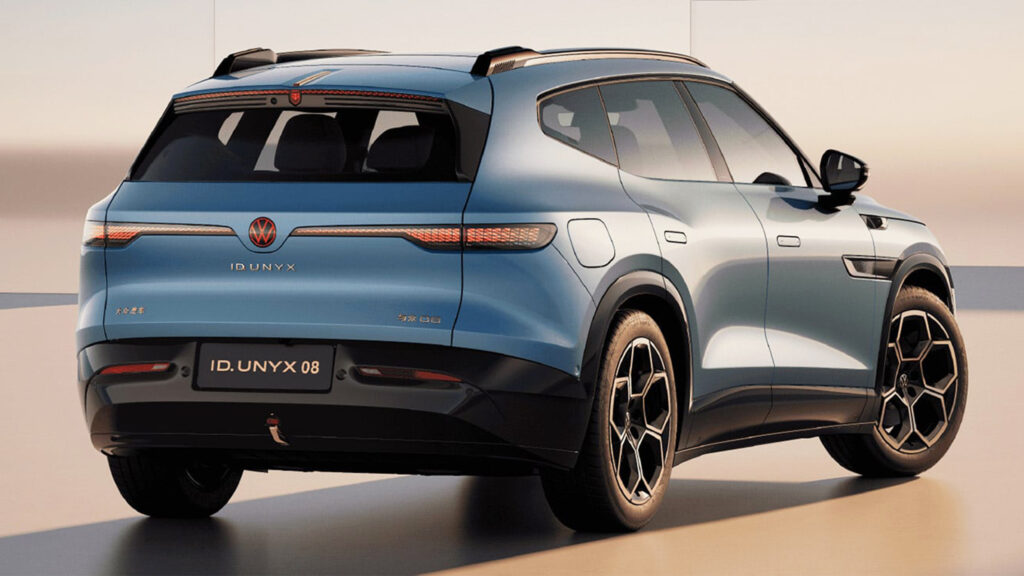
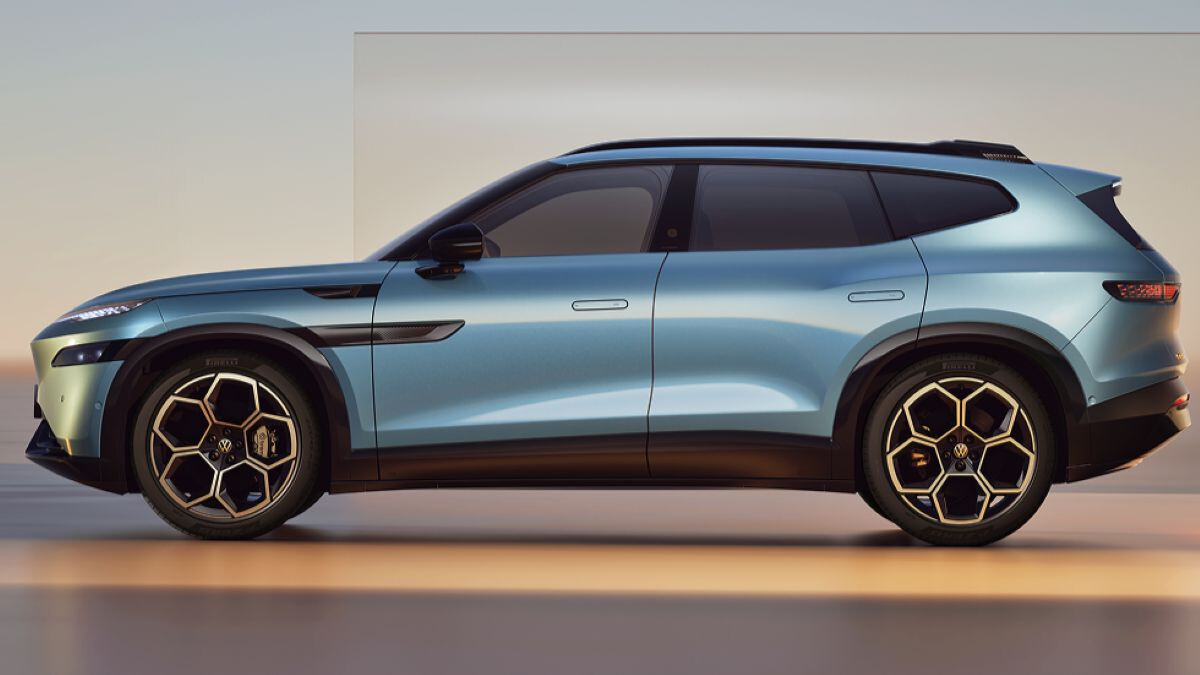
VW ID. Unyx 07

Carizon’s L2+ ADAS already appears in several VW models sold in China, among them the ID. Unyx 07 and ID. Unyx 06, with highway Navigate on Autopilot and memory parking. An L2++ version arrives later this year, extending Navigate on Autopilot into cities and destined for seven of VW’s new energy vehicles in the Chinese market.
“China has become one of Volkswagen Group’s key innovation and technology hubs, particularly in software, artificial intelligence and automated driving,” VW Group chief executive Oliver Blume said. “Our deepened collaboration within CARIZON further strengthens our ability to develop and scale AI-based solutions for automated driving.”
 Volkswagen’s Level 3 Debuts On Two Cars The West Will Never See

Ford’s $30K Electric Truck Will Run Apple Maps, Not Google

  • Ford is leaning on Apple Maps and their data for future vehicles.
  • $30,000 electric truck will have Apple-powered navigation system.
  • Next-gen BlueCruise will use Apple data for improved hands-off driving.

Android Automotive OS and Google Maps have been adopted by a number of automakers, but Apple is fighting back with a MapKit for Automotive SDK. It promises to provide a “beautiful and easy-to-use navigation experience powered by Apple Maps directly to the vehicle’s displays.”

The technology will be integrated into Ford’s Universal Electric Vehicle Platform, which will underpin their highly anticipated $30,000 pickup as well as an assortment of other affordable EVs. Furthermore, Ford will use “road-level information from Apple Maps as part of the development of its next-generation BlueCruise” semi-autonomous driving system. The automaker said this will result in a more seamless hands-free driving experience.

More: Ford’s $30K Electric Truck Looks Tiny Next To Expedition In New Spy Photos

The companies didn’t release pictures or many details, but said drivers can expect natural language turn-by-turn directions as well as real-time traffic and incident information. Users can also look forward to an intuitive search feature with “detailed place cards.” There will also be multiple “routing options to help users easily find the best route to their destination.”

While the automaker and tech giant didn’t elaborate, there’s little doubt the routing options will factor in recharging stops for long distance trips. This functionality is already built into Apple Maps as it monitors the battery and analyzes elevation changes as well as other factors along your route to identify appropriate charging stations along the way. It can also provide real-time charging station availability and help to find the nearest compatible charging station when the battery gets extremely low.

\\\\\\\\\\

Baldauf

Aside from already existing features, Ford confirmed the new integration will have a battery preconditioning function. This likely means that when drivers navigate towards a charging station, the battery will precondition itself for optimal charging when it arrives.

Ford CEO Jim Farley remarked, “Our new midsize electric vehicle will be priced around $30,000 and redefines what advanced technology can be – simple, useful, and truly attainable for more customers. We’re proud to embed Apple Maps’ navigation and mapping technology directly into our Universal Electric Vehicle Platform, giving customers the ultimate navigation experience alongside our Ford app, a full suite of software, and next-generation BlueCruise, all enabled by a new zonal architecture.”

Apple’s senior vice president of Services and Health, Eddy Cue, added “With our new MapKit for Automotive SDK, we’re bringing Maps further into drivers’ daily lives, giving them an incredibly accurate and easy-to-use navigation system that is seamlessly integrated into Ford vehicles.”

 Ford’s $30K Electric Truck Will Run Apple Maps, Not Google

Apple CarPlay

After 62,000 Miles, The Healthiest EV Battery Belonged To A Kia, Not A Tesla

  • Hyundai Motor Group swept the top three places for battery performance.
  • The analysis ranked the Model 3 as Tesla’s best-performing vehicle.
  • Other strong performers include the Volvo XC40 Recharge and Polestar 2.

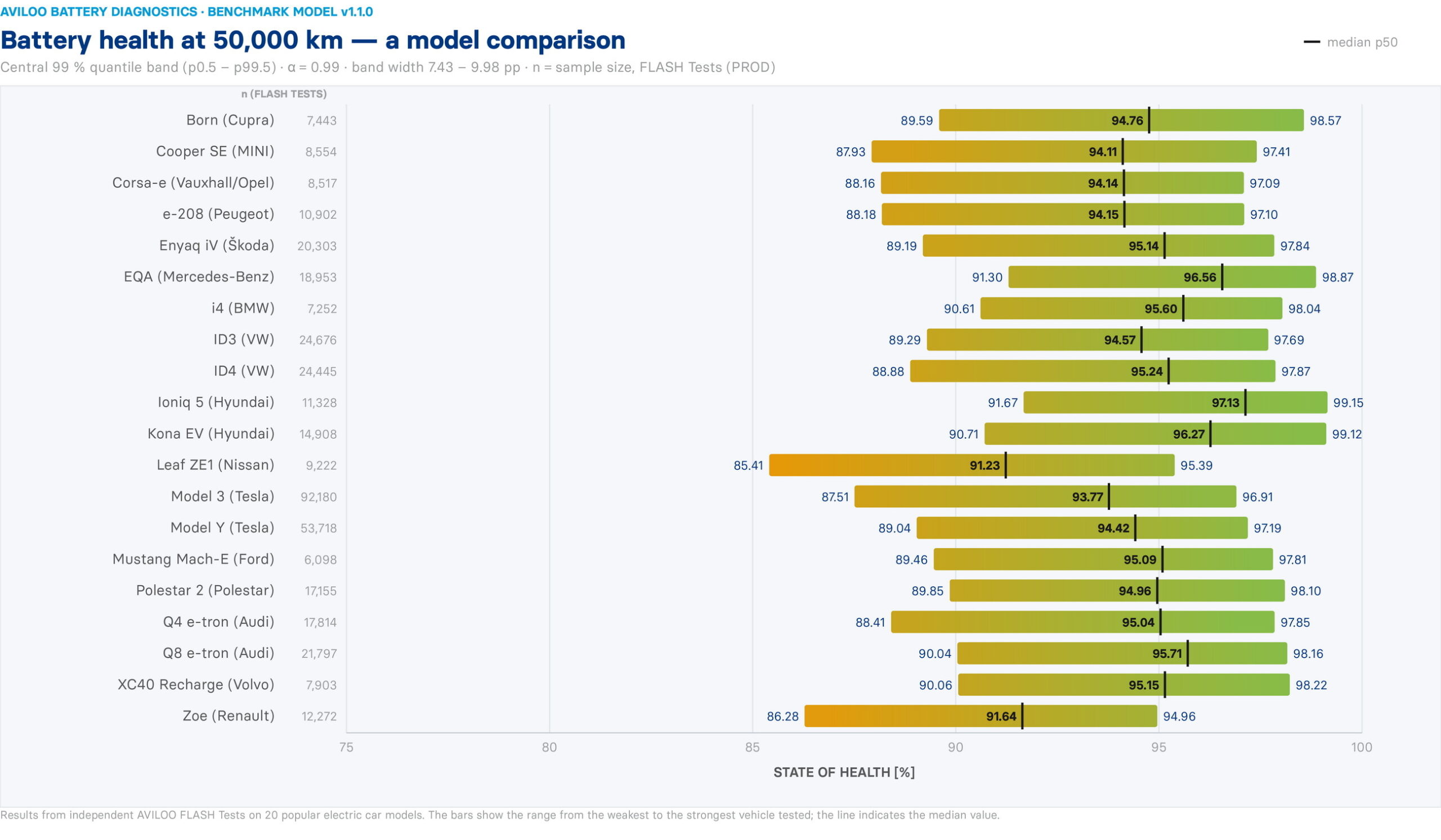
Several years ago, prospective EV buyers had every reason to feel nervous about how long the battery pack would last. Battery technology has come a long way since EVs went mainstream, though, and a new study out of Sweden puts a number on how much capacity new EVs hold onto after 62,000 miles, or 100,000 km, of driving. The results may surprise you.

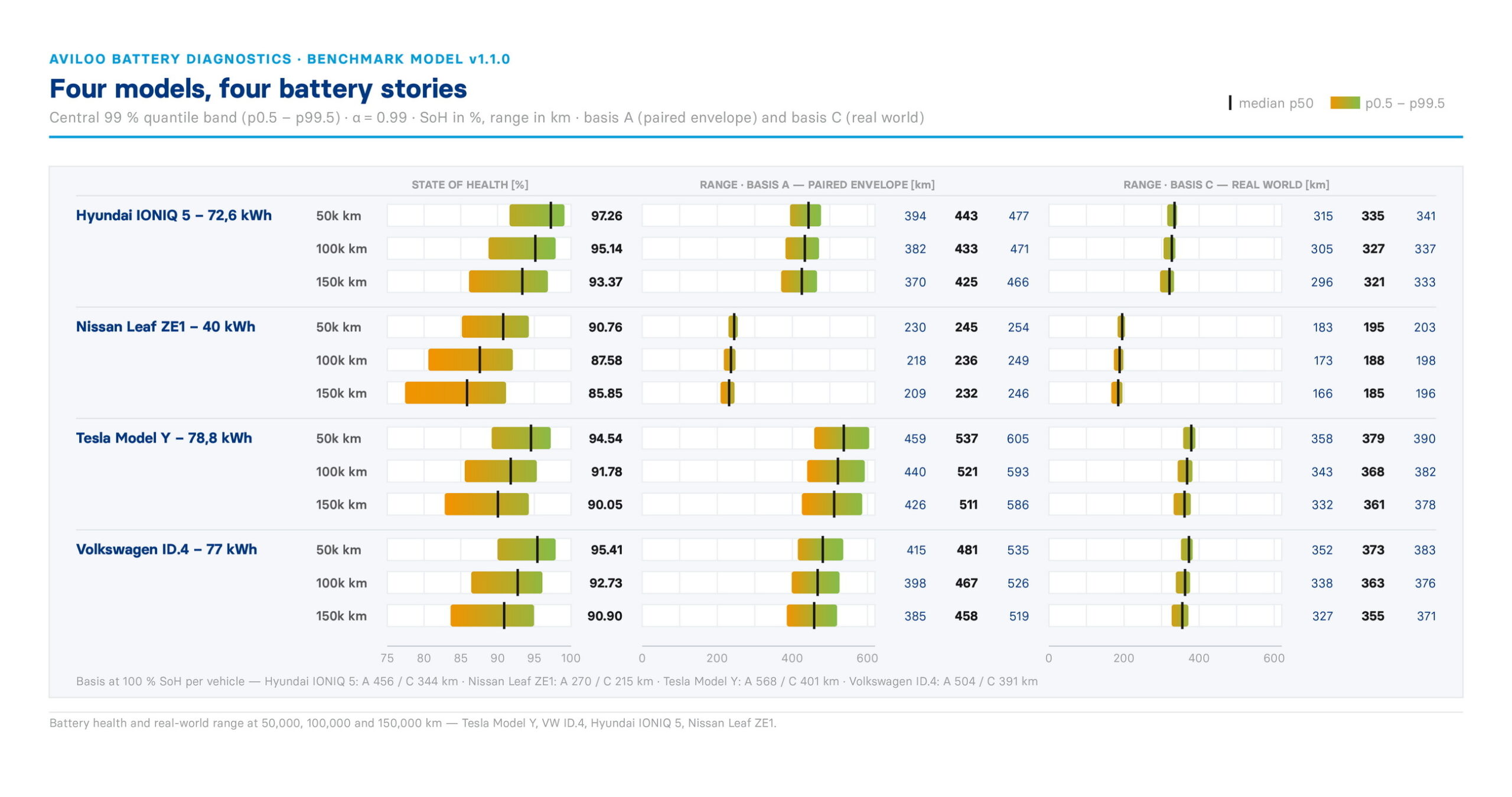
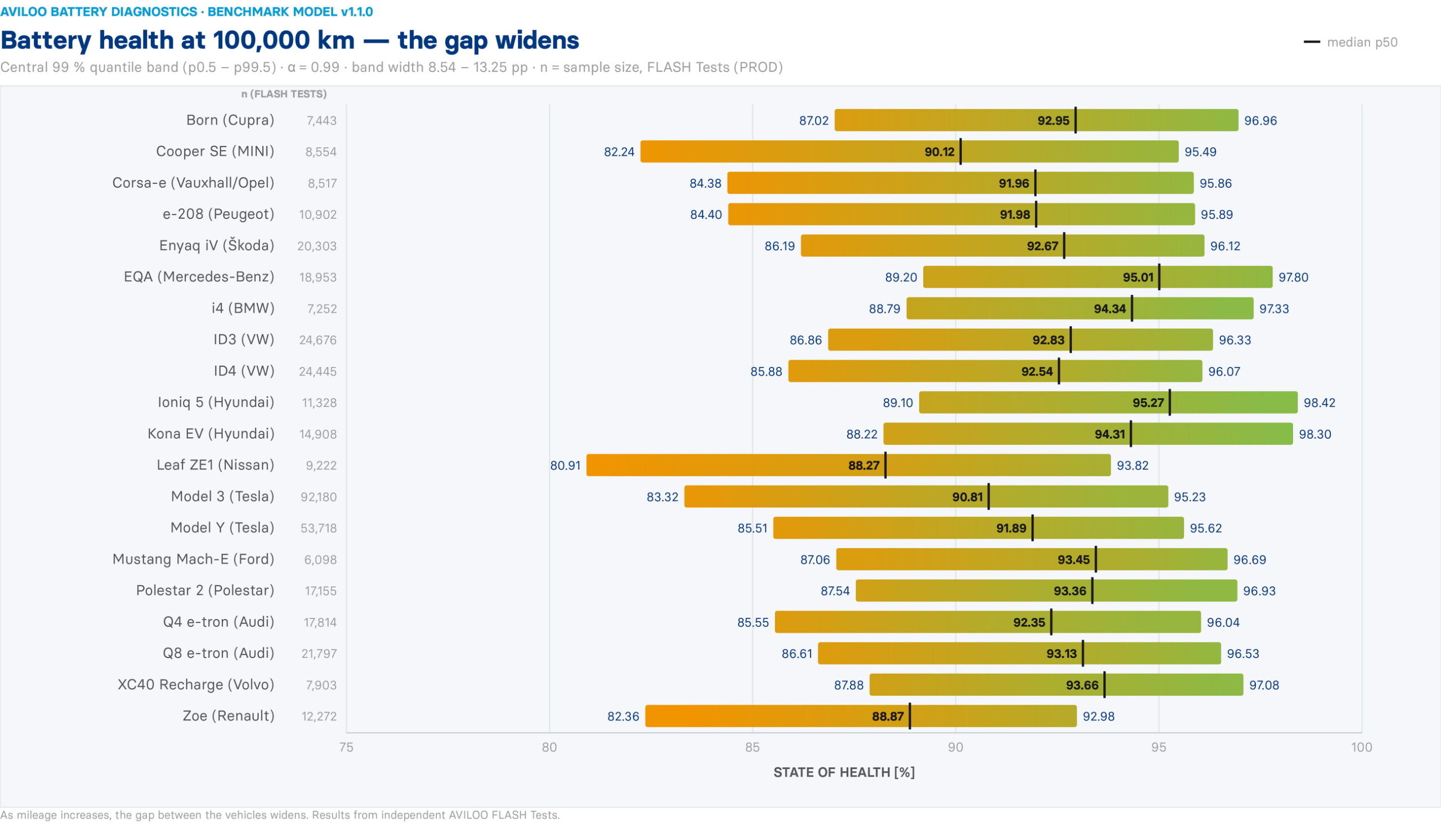
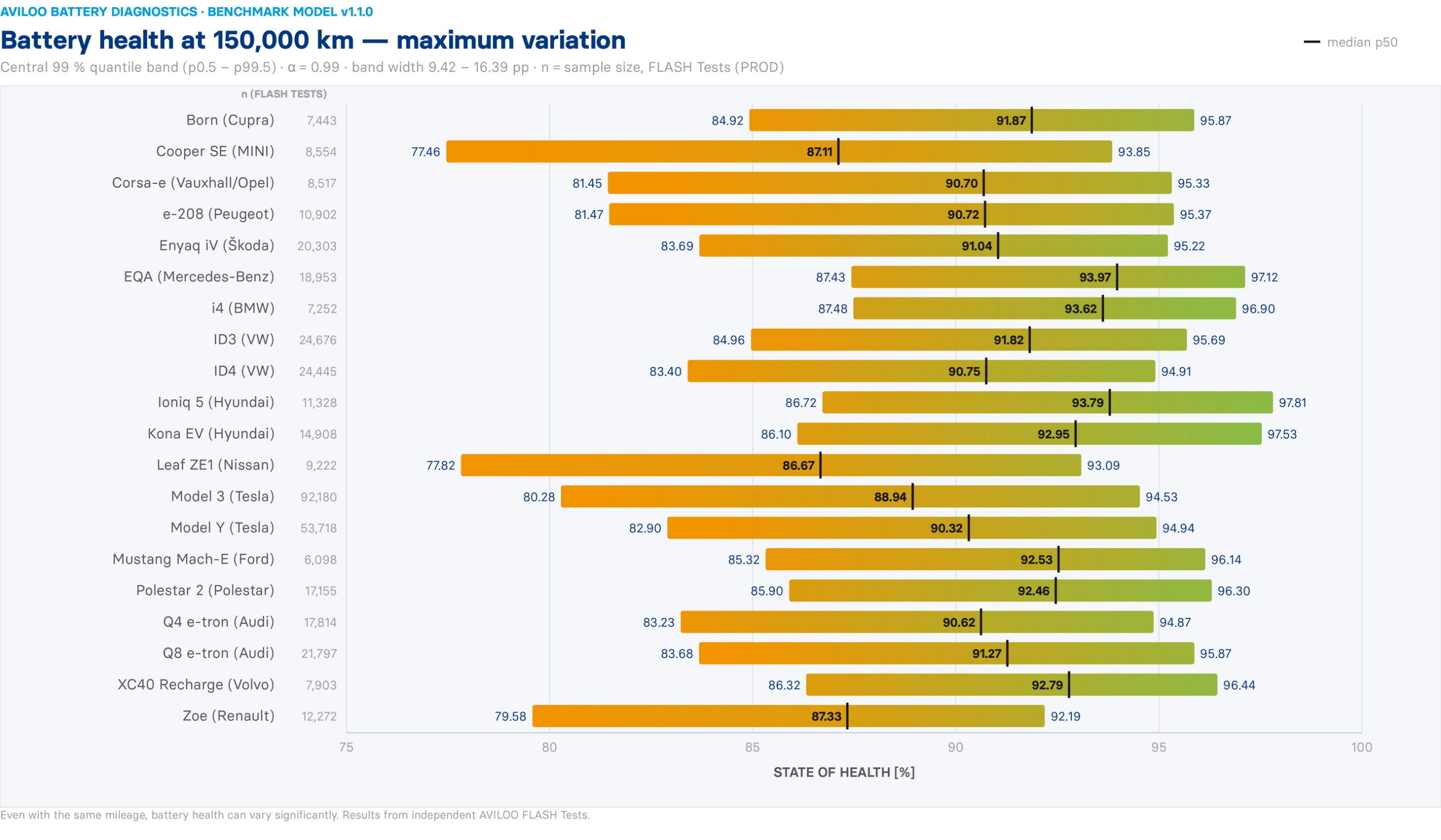
The study, run by online car marketplace Carla, went through 9,954 battery tests of EVs sold in Sweden between 2022 and 2026, using a diagnostic tool from AVILOO that measures a pack’s true state of health instead of leaning on the estimates the car itself provides. That distinction matters, because in-car readouts can sometimes paint a rosier picture than reality.

Read: A Seven-Year-Old Tesla Model 3 Survived 380,000 Miles, Its Range Did Not

The Kia e-Niro came out on top, hanging on to an impressive 97.25 percent of its original capacity after 62,000 miles. It shares its 64 kWh battery with the Hyundai Kona, which nearly matched it at 97.18 percent, and the podium stayed within the Hyundai Motor Group family thanks to the Kia EV6 and its 77.4 kWh pack in third place.

Top-Performing EVs
ModelBattery Health
After 62K Miles
Kia e-Niro – 64 kWh97.25%
Hyundai Kona – 64 kWh97.18%
Kia EV6 – 77.4 kWh95.95%
Volvo XC40 Recharge – 69 kWh (CATL)94.70%
Polestar 2 – 78 kWh (CATL)94.35%
BMW i3 – 120 Ah93.77%
Polestar 2 – 78 kWh (LG Chem)93.53%
Tesla Model 3 – 60.5 kWh (CATL LFP)93.34%
Audi e-tron 50 – 71 kWh93.02%
Audi e-tron 55 – 95 kWh92.93%
Skoda Enyaq iV – 77 kWh92.88%
Tesla Model 3 – 78.8 kWh (LG Chem)92.83%
Tesla Model S – 96 cells92.80%
Volkswagen ID.4 – 77 kWh92.77%
Skoda Enyaq iV – 77 kWh92.60%
Tesla Model X – 96 cells92.52%
Volkswagen ID.4 – 77 kWh92.27%
Tesla Model Y – 78.8 kWh (LG Chem)92.18%
Audi Q4 e-tron – 77 kWh92.18%
Volkswagen ID.3 – 58 kWh91.79%
SWIPE

The strongest European EV was the Volvo XC40 and its CATL-sourced 69 kWh battery, which held 94.70 percent of its capacity after 62,000 miles, trailed closely by the Polestar 2 and its 78 kWh CATL pack at 94.35 percent. The BMW i3 and the LG Chem version of the Polestar 2 landed close behind at 93.77 percent and 93.53 percent.

What About Tesla?

 After 62,000 Miles, The Healthiest EV Battery Belonged To A Kia, Not A Tesla
Tesla Model 3

The best-placed model from EV leader Tesla was the Model 3 fitted with a 60.5 kWh LFP battery from CATL, retaining 93.34 percent of its capacity. This put it slightly above the Model 3 with an LG Chem-sourced NMC battery at 91.5 percent.

Among the other EVs ranked inside the top 20 were the Audi e-tron 50 and 55 at 93.02 and 92.93 percent, respectively, the Skoda Enyaq iV at 92.88 percent, the Tesla Model S with 92.80 percent, the VW ID.4 at 92.77 percent, and the Tesla Model X at 92.52 percent.

The bigger lesson here is that the old fear of an EV’s battery dying young no longer holds up. Every car in this ranking kept more than 90 percent of its capacity past 62,000 miles, and most owners will not even reach that figure until three or four years of driving. The pack is now likely to outlast the car wrapped around it.

 After 62,000 Miles, The Healthiest EV Battery Belonged To A Kia, Not A Tesla
Kia Niro EV

Geely’s New Sedan Claims 450 Miles From A Battery Most EVs Would Call Small

  • Geely folded 16 drivetrain components into one 165-pound unit.
  • Magnesium housing keeps electrical losses unusually low.
  • The Galaxy TT set a Guinness efficiency record at Qinghai Lake.

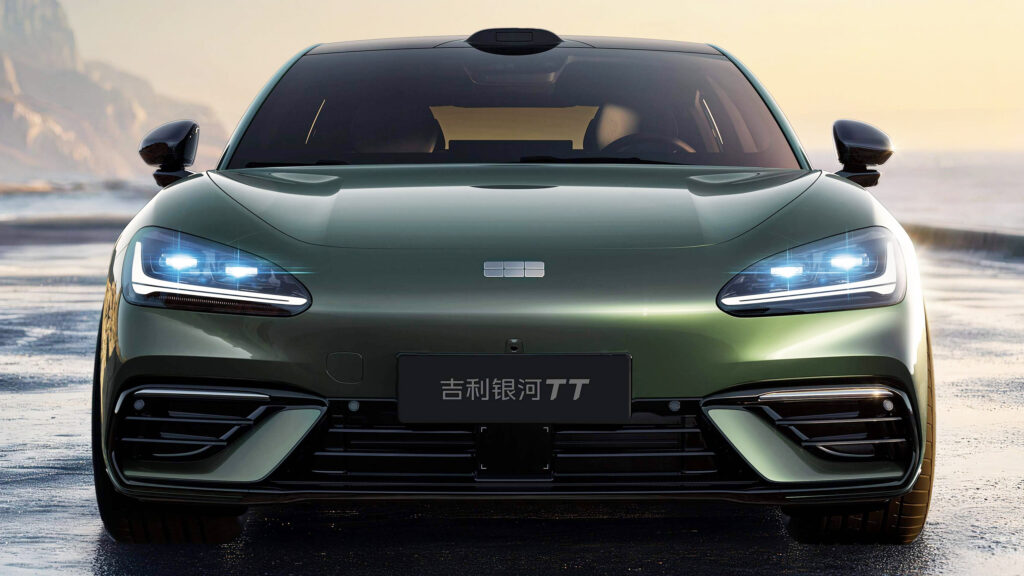
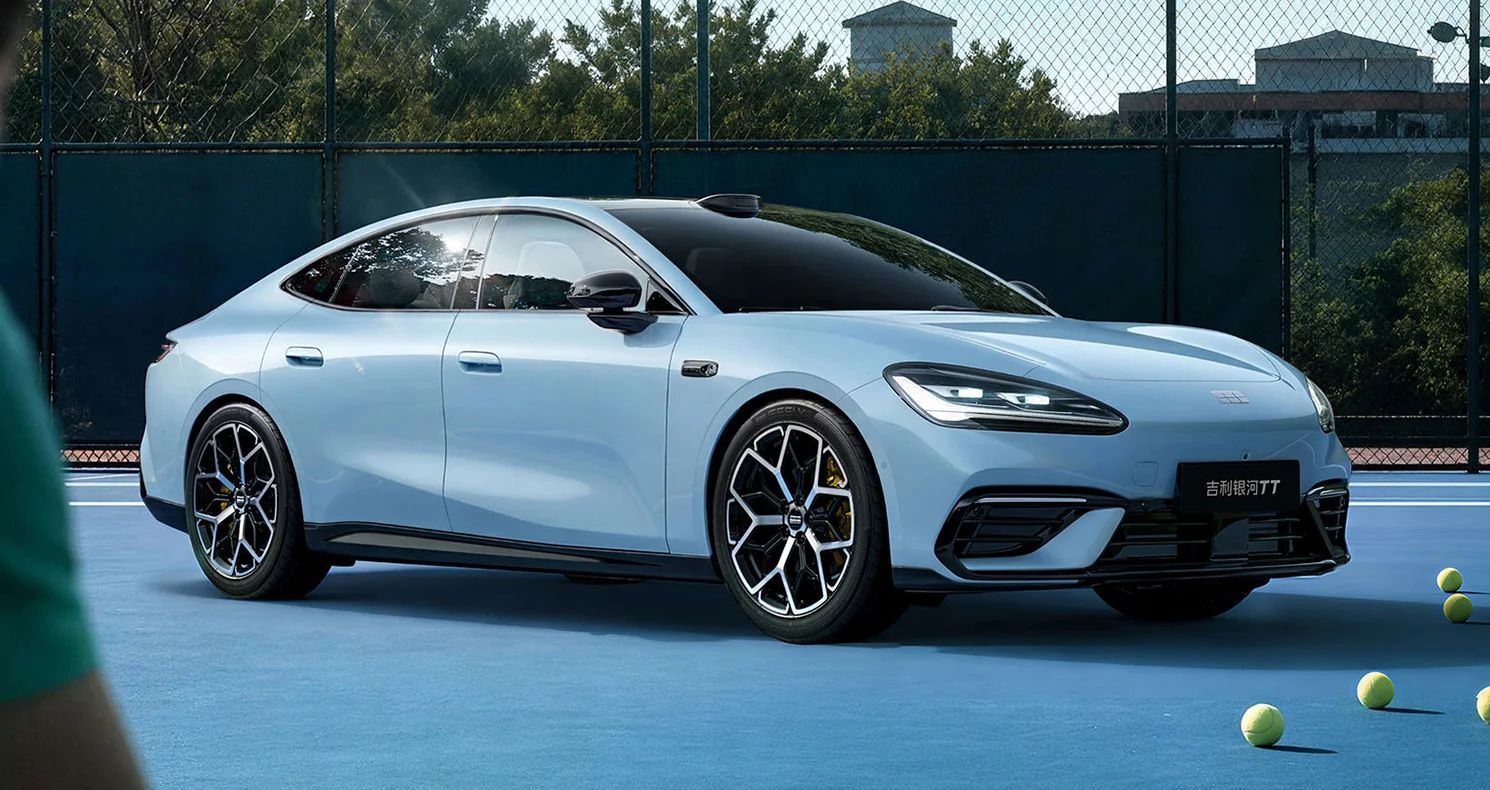
Geely previewed the new Galaxy TT sedan a few weeks ago and made no secret of what it was aiming at, which is the Xiaomi SU7. Now comes the part that actually matters, the powertrain underneath it, built with help from InfiMotion, one of Geely Auto Group’s electric drivetrain technology partners.

Referred to by Geely as its 16-in-1 Intelligent E-Drive system, it consolidates a long list of key electric drive hardware into a single unit weighing 165 lbs (75 kg). Tucked inside are the motor, the DC-to-DC converter, the on-board charger, the vehicle control unit, the motor controller, and the high-voltage battery management systems.

Read: Geely’s New Galaxy TT Goes Straight After Xiaomi’s Best-Selling SU7

The housing is made of lightweight, strong magnesium. Thanks to the unit’s incredibly low weight, electrical losses have been kept to a minimum. In fact, Geely says the system has been shown to achieve an efficiency rating of 93.8 percent. While this is based on the notoriously generous CLTC cycle, it is among the most efficient electric powertrains on the planet.

High Efficiency

 Geely’s New Sedan Claims 450 Miles From A Battery Most EVs Would Call Small

What does this mean for owners? Geely says the Galaxy TT averaged just 8.2 kWh/100 km during an efficiency run around China’s Qinghai Lake, taking a Guinness World Record for the lowest energy consumption on a circumnavigation of the lake by a production battery-electric sedan.

The Galaxy TT will be offered with three battery packs. The first is a 52.4 kWh unit; the mid-tier model has a 63.8 kWh pack, and the range-topper uses a 75.2 kWh battery. All three work alongside an 800-volt electrical architecture, and the EV’s range will extend up to 450 miles (725 km).

\\\\\\\

You’ll no doubt notice that for a vehicle of this size, these battery packs are quite small. If you can make a car that’s incredibly efficient, then there’s obviously no need to install a big and heavy battery pack. Geely has yet to announce full powertrain details for the entire range, but notes that an all-wheel-drive, twin-motor version will deliver up to 425 kW, allowing the Galaxy TT to hit 100 km/h (62 mph) in just 3.8 seconds.

Geely also says the system relies on AI-assisted torque management for quicker responses and more precise power delivery, while a 54-channel directional cooling setup can cut peak motor temperatures by as much as 15°C (27°F) during sustained high-load driving.

A Second Record, Sideways

Separately, the Galaxy TT picked up a second Guinness World Records title, this one for the longest continuous twin-vehicle drift on a wet surface by electric vehicles, covering more than 46 km (28.6 miles). The demonstration was meant to prove out torque response, thermal management, and performance consistency under sustained high-load conditions.

\\\\\\\\\\\\

New Lexus Supercar To Debut Toyota’s Solid-State Batteries

  • The next-generation Lexus LFA may reset expectations of electric supercars.
  • This enticing new model shares its aluminum architecture with the Toyota GR GT.
  • Lexus isn’t interested in using simulated gear shifts like Hyundai and Porsche.

Amid a sea of high-revving, big-capacity supercars and hypercars at last week’s Goodwood Festival of Speed, the future Lexus LFA made a subtle and very silent dynamic debut. The successor to the company’s iconic supercar, you see, will be all-electric.

Lexus previewed the next-gen LFA last December, showcasing it alongside the Toyota GR GT, which shares its aluminum architecture. However, whereas that car uses a powerful V8 engine, the new LFA will be electric, a far cry from the original car’s all-screaming, all-conquering, Yamaha-tuned V10.

Read: These Future Supercars From Toyota And Lexus Share DNA But Not A Soul

While this will disappoint many rev-heads, the new LFA could get tech enthusiasts very excited.

First Lexus On Solid-State Cells

 New Lexus Supercar To Debut Toyota’s Solid-State Batteries

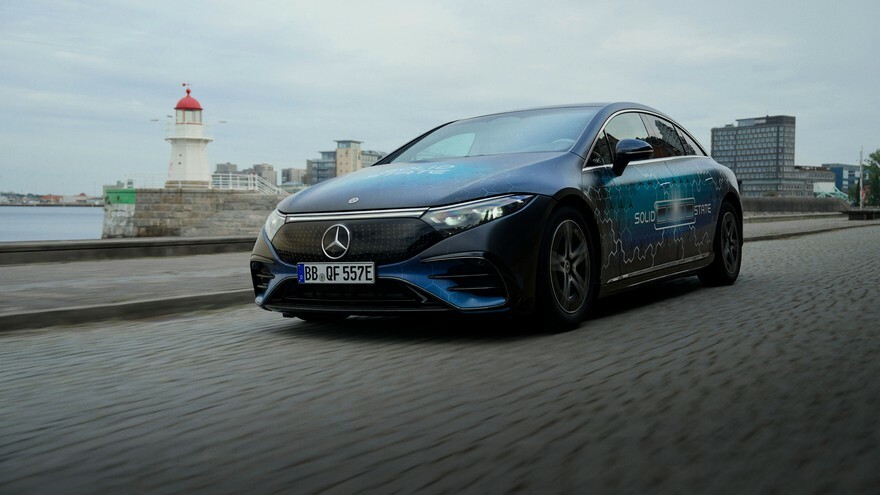
According to a report from Autocar, the new LFA will be the first production Lexus to run advanced solid-state battery cells. Toyota has spent years developing them, and they now look close to ready for the road. Solid-state cells hold more energy in less space than the conventional liquid-based packs in use today, which is where their advantage lies.

Speaking to the publication, Shogo Kasamatsu, who penned the recent LFA concept, said Lexus wants to upend how people think about performance EVs. The concept’s restrained look drew on the original LFA, which he called “a very humble design, very artistic, and based on its true function.” The car was shaped to carry that message, he added, rather than march in step with Lexus’s current design language.

Similarly, LFA program general manager Yukihiro Yukita said Lexus wants to convince supercar buyers to opt for the LFA over a more conventional, ICE-powered alternative. He acknowledged that weak demand for high-priced performance EVs is the program’s biggest hurdle, but said Lexus intends to lead the shift from combustion supercars to electric ones.

Making A Fun EV?

\\\\\\\\

“What I get from the market is that a BEV is fake,” he said, “because we imitate the sound [of an ICE], but that’s not something we want to do.” Lexus has no interest in trailing Porsche, Hyundai, and Mercedes-AMG by faking gear shifts or piping in engine noise. Yukita wants drivers to “feel like they are driving with an engine” without cheaply mimicking one.

“We’re not just wanting to replicate the sound of the engine, we want to redesign the sound itself,” he said. Engineering teams will strip out unnecessary noise and vibration and rework what remains, sharpening the sensory experience rather than manufacturing a fake one. EVs give up the sound and vibration that pull a driver in, he admitted, but electric motors answer with a responsiveness and linearity no combustion engine can match.

It all sounds rather fascinating, but it’s hard to imagine how Lexus will be able to get anywhere close to matching the thrills of that old V10.

\\\\\\\\

The Average Electric Car In China Is Younger Than Your Phone

  • The typical Chinese EV has been on the road for less than two years.
  • Nine in ten of the country’s EVs get replaced in under five years.
  • Seven in ten gas cars in China stay beyond the five-year mark.

I’ve been using my trusty Samsung smartphone for three years and have never owned a car that wasn’t at least seven years old when I purchased it. Things are different in China, where it’s been revealed that the average age of EVs on local roads is less than the length of time most people keep a smartphone.

A recent report from the China Association of Automobile Manufacturers and Hejun Consulting, cited by Bloomberg, puts the average age of EVs on Chinese roads at just 1.8 years. The average combustion car in the country is about 8.2 years old by comparison. Across every powertrain, the typical vehicle is under 7 years old, versus 12.8 years in America. None of this means buyers are grabbing an EV, running it for two years, and flipping it for something new.

Read: The Average Chinese Car Is Under 7 Years Old, America’s Is Nearly 13, And That Helps Its 2030 EV Push

 The Average Electric Car In China Is Younger Than Your Phone

Electric vehicles only really surged in popularity across the country after 2021, ultimately reaching a 60 percent penetration rate of the new car market in 2026. As such, it makes sense that the typical EV on the road in China is less than two years old.

How Long Are People Owning Them For?

A white paper last year found that 70 percent of fuel-powered vehicles in China stay with their owners for more than five years before replacement. Flip to the other side, and Sohu reports that 90 percent of new energy vehicles, EVs included, get swapped out in under five years.

 The Average Electric Car In China Is Younger Than Your Phone

There are several reasons for this, but perhaps the most important is that EVs now behave more like tech products. Many ICE cars built in 2000 had engines and transmissions very similar to those produced in 2010, so there was often no need for car owners to upgrade their vehicles quickly. In the EV world, things are different.

Batteries, electric motors, electronic controls, self-driving systems, and on-board technologies have developed rapidly in recent years, meaning an EV launched in China just three years ago may feel dated compared to a brand-new alternative. Additionally, the development cycle of EVs is much faster, especially in China, than that of ICEs, allowing car manufacturers to introduce all-new models much more quickly than previously possible.

 The Average Electric Car In China Is Younger Than Your Phone

Green Bus Summit with Blue Bird: Slash Your Bus Fuel & Maintenance Budget by Adopting the Right Powertrain

RENO, Nev. – At the 2026 STN EXPO West Conference, Stephen Whaley, alternative fuels manager at Blue Bird, and Todd Mouw, executive VP of sales, marketing and customer success at ROUSH CleanTech, led a Green Bus Summit discussion offering a deep dive into the urgent challenges and innovative solutions facing student transportation.

This is read by an automated voice.

Against the backdrop of a 57 percent surge in fuel costs and tightening California Air Resources Board (CARB) emissions standards in 2027 and 2035, Whaley highlighted the transformative potential of propane buses powered by the Roush/Ford 7.3L engine. These buses are future-proof for emissions compliance, requiring no particulate filter or diesel exhaust fluid, and feature a three-way catalytic converter.

Whaley explored propane’s advantages in detail: its domestic production reaches 30 billion gallons annually, supported by a robust infrastructure of bulk plants and 30,000 delivery trucks, ensuring resilience and price stability – $1.54 per gallon versus diesel’s $4.88. The U.S. Department of Energy’s fueling station locator app aids fleet logistics and propane’s performance and range make it suitable for both small and large districts. With 1,200 school districts across 49 states nationwide using propane – Mississippi being the only holdout – and eight of the last nine School Transportation News Transportation Director of the Year awardees operating propane buses, its adoption is widespread and growing.

Real-world case studies brought the benefits to life. Kay Cornelius, director of transportation for St. Louis County Schools in Minnesota, uses propane for 100 percent of her school bus operations, including the robotics team’s travel over 1,200 miles. Mike Bullman, director of transportation for the South Carolina Department of Education, secured 200 propane buses through Clean School Bus Program funds and finds the fuel financially self-sustaining. Anthony Jackson, director of transportation for Bibb County School District in Georgia, saved $1 million a year using propane buses instead of diesel.

Some districts, Whaley said, leverage savings to boost retention by increasing school bus driver wages.

He explained that propane’s quieter rides and rapid cabin heating enhance student readiness, especially for students who have special needs or noise sensitivity, or who require Individualized Education Programs. He related that Diana Mikelski, recently retired director of transportation for Township High School District two eleven in Illinois, saw improved classroom calm and student readiness after switching to propane.

Mouw confirmed that Roush supports districts with free technician training – which can be web-based, on-site, or at a factory – as well as rapid warranty and parts support. Attendees were invited to tour a Ford engine plant producing 1,000 engines daily as well as Roush headquarters in Michigan.

Propane’s infrastructure, portability and resilience make it a practical, sustainable choice for school transportation, Whaley summed up. The session concluded with a call to action: utilize incentives like AmeriGas’ free fuel offer, ownership calculators, peer connections and firsthand technology exploration. Propane and EV powertrains offer compelling financial, operational and environmental advantages, positioning them as optimal solutions for districts facing rising costs and regulatory demands.

Written with assistance of AI from a session transcript.


Related: (STN Podcast E306) Sci-Fi School Bus? ACT EXPO Takeaways on Tech, Robots, Propane & More
Related: Propane Grabs Spotlight as Fleets Seek Less Expensive, Cleaner Fuel
Related: Panel Shares How Propane School Buses Deliver Students, Savings
Related: Transportation Director Shares How Propane Buses Benefit Special Needs Routes

The post Green Bus Summit with Blue Bird: Slash Your Bus Fuel & Maintenance Budget by Adopting the Right Powertrain appeared first on School Transportation News.

A Tesla Driver Appears To Nap At 62 MPH With Two Kids Reportedly In The Back

  • This Tesla driver was spotted sleeping while traveling at up to 62 mph.
  • According to a fellow motorist, two kids were sitting in the back seats.
  • It appears the driver’s sunglasses fooled the driver monitoring system.

Footage circulating online appears to show a woman behind the wheel of a Tesla Model Y traveling along the Trans-Canada Highway between Golden and Revelstoke, all while seemingly fast asleep. If accurate, the episode points to some worrying gaps in the vehicle’s driver-monitoring system.

Fellow Canadian motorist Carleigh King spotted the drowsy driver on Sunday afternoon. In the video, the woman’s head is slumped over, and she appears blissfully unaware that she’s snoozing at approximately 62 mph (100 km/h). It’s a terrifying watch, though far from the only time we’ve come across something like it.

Also: A $10 Ronaldo Doll Head Is Fooling Tesla So Drivers Can Doze Off

The Tesla in question is presumably fitted with Tesla’s Full Self-Driving (Supervised) package, which includes a driver-monitoring system. This setup uses the Model Y’s in-car camera to track the driver’s eye movements and torque sensors in the steering wheel to detect whether the driver is alert. However, as we’ve seen in the past, the camera system can be easily fooled by wearing sunglasses, like this driver did.

She Wasn’t Driving Alone…

Speaking with CBC, King says that, shockingly, the woman wasn’t driving by herself. In fact, there were reportedly two children sitting in the Tesla’s rear seats, meaning their lives were also in danger because of the driver’s slumber. It’s unclear how the driver circumvented the steering wheel’s torque sensors, but we do know that several companies sell cheap accessories to bypass them.

Watch: Viral Video Shows Older Tesla Driver And Passenger Both Asleep At Highway Speed

According to Cpl. Michael McLaughlin from the B.C. Highway Patrol, the driver could face some serious charges for her careless behavior.

“Anything from a simple violation ticket all the way up to criminal charges for dangerous operation of a motor vehicle,” he said. “There could also potentially be criminal charges related to negligence if there are children in the vehicle and those children are put at risk by the driver not supervising as the vehicle is traveling down the highway.”

 A Tesla Driver Appears To Nap At 62 MPH With Two Kids Reportedly In The Back

Lead Image: Castanet News

Lexus Killed Its Next EV Sedan, Then Approved Its Replacement The Same Day

  • Lexus shelved the production version of the LF-ZC sedan concept.
  • Its gigacast modular platform survives and is still heading to production.
  • The smart money says the new EV arrives as a crossover, not a sedan.

In late 2023, Lexus pulled the wraps off its innovative LF-ZC concept, a high-riding sedan riding on a new electric platform, with a launch planned for this year and the BMW i3 in its sights. The timeline slipped to mid-2027 before Lexus killed the program outright last month, ending a project that never made it past the concept stage.

Scrapping the LF-ZC doesn’t mean Lexus is walking away from electric cars. As we recently reported, much of the engineering created for the concept survives and heads to production anyway. That includes the gigacasted modular structure, which splits the body into separate front, center, and rear sections that bolt together as one.

Read: The 2027 Lexus TZ Borrows The Highlander’s Bones And The LFA’s V10 Voice

 Lexus Killed Its Next EV Sedan, Then Approved Its Replacement The Same Day

In addition, the electrical and electronic platform used for new advanced driver-assistance systems will reach production, as will the concept’s prismatic battery cells. We may not have to wait long to see them reach the road.

Toyota vice president and chief technology officer Hiroki Nakajima says Lexus has already settled on a “successor vehicle” to take the place the canceled LF-ZC left open, which means the replacement was decided before the original was even cold.

Some Of The Hard Work Is Already Done

 Lexus Killed Its Next EV Sedan, Then Approved Its Replacement The Same Day

“We did indeed discontinue development,” he told Nikkei CrossTech. “It was at a point where we needed to make significant investments, such as arranging molds and mass production equipment for the LF-ZC. However, many new technologies cultivated during the development of the LF-ZC, such as Gigacast, a new electrical and electronic platform for advanced driver-assistance systems (ADAS), and miniaturization and weight reduction, have already been completed. We will develop a successor vehicle that utilizes these new technologies.”

 Lexus Killed Its Next EV Sedan, Then Approved Its Replacement The Same Day

Nakajima-san went on to reveal that Lexus approved a “successor” to the LF-ZC on the same day it canceled development of that model, agreeing to repurpose the LF-ZC’s technologies for this new model.

We don’t yet know what form this new EV will take. The safe money points to an electric crossover or SUV, on the logic that either would move more metal than another sedan. The new BMW iX3 and Mercedes-Benz GLA EQ just hit the market, and it’s possible Lexus may fancy its chances in developing a competitor to them.

\\\\\\\

Tesla’s Cybercab Weighs 700 Pounds Less Than The Lightest Model 3

  • The Tesla Cybertruck tips the scales at 3,113 lbs, which is quite light for an EV.
  • Recent Cybercab prototypes have been spotted with a steering wheel and pedals.
  • The EV’s real-world driving range will likely be around 280-290 miles.

A growing number of Tesla Cybercab prototypes have been seen out and about in the US, and we now have some juicy new details about the EV. Not only is it light, but it’s also shaping up to be very efficient, not that this should come as much of a surprise.

Documents submitted by Tesla to the Environmental Protection Agency (EPA) reveal that the Cybercab tips the scales at just 3,113 lbs (1,412 kg), which is reasonably light for a modern EV but about what you’d expect for one with just two doors and two seats. That makes it roughly 700 lbs lighter than the lightest Tesla Model 3 currently on sale.

The EPA data also notes that it has a gross vehicle weight rating of 3,730 lbs (1,691 kg), meaning the payload capacity is 617 lbs (280 kg), enough for a two-seater.

Read: Tesla’s CyberCab Promises 300-Mile Range with Surprisingly Small Battery

Then there’s power. The Cybercab will be driven by a single front-mounted electric motor producing 219 hp. That’s nothing compared to something like a Tesla Model S Plaid, but the Cybercab has been primarily designed as a robotaxi, so it doesn’t need to be a performance car. The EPA documents don’t precisely reveal battery details, other than noting it has a 146-amp-hour battery operating at 326 volts, which works out to 48 kWh.

EPA filings also indicate an efficiency rating of 165 Wh/mi, making the Cybercab the most efficient Tesla revealed to date and potentially one of the most efficient EVs on the market.

What About The Range?

\\\\\\\

The Cybercab’s driving range will obviously be hugely important. Using the EPA’s calculated test cycle, the range is listed at 418.2 miles (673 km). Crucially, this is simply under lab-testing conditions and not a real-world figure. InsideEVs expects the real driving range to be more like 280-290 miles (450-467 km).

It remains to be seen when exactly the Cybercab will launch. Tesla previously said it’d land before 2027, but we’re now halfway through the year, and it’s unclear if that deadline is still achievable. It’s also worth noting that while the Cybercab was initially conceived exclusively as an autonomous vehicle, prototypes have been filmed testing with a steering wheel and pedals, so it’s reasonable to expect it to first arrive with human-operated controls while Tesla continues to develop its self-driving systems.

\\\\\\\\

The Rivian R2’s Radio Needs Cell Signal The Wilderness Doesn’t Have

  • Listening to music or radio in the R2 will require an internet connection.
  • The R2 includes iHeartRadio stations as standard but skips AM and FM.
  • Unlike the R2, the Rivian R1 keeps FM radio but still omits AM.

Just a few short years ago, some car buyers were up in arms that new vehicles from some of the industry’s biggest names no longer shipped with AM radio. As it turns out, it’s not just AM radio that’s at risk of going extinct, as even FM radio is being omitted from some new vehicles.

Among the first new cars not to ship with a basic FM radio are the entry-level versions of the Tesla Model 3 and Model Y, and it appears that the new Rivian R2 also comes without it. An image recently snapped from the R2’s owner’s manual notes that while it offers a slew of different media sources, FM radio is not among them.

Read: Rivian Won’t Add Buttons Back, Says You Should Talk To Your Car Instead

The closest thing offered with the R2 is the ‘Rivian Digital Radio,’ powered by iHeartRadio. The typical service provided by iHeartRadio combines digital radio with the ability to tune in to terrestrial FM and AM, and Rivian’s solution presumably does the same. However, iHeartRadio requires cell coverage, so it will probably be useless for Rivian R2 owners looking to venture into the wilderness where they cannot access the internet.

Cost-Cutting?

R2 Doesn’t have FM/HD Radio
by u/AdamUCF in Rivian

The manual notes that the R2 also supports Apple Music, Audible, Spotify, Tidal, and TuneIn, but all of these require the Connect+ package or a personal Wi-Fi hotspot. TuneIn operates similarly to satellite radio, providing access to live feeds from over 100,000 local radio stations, but, of course, it requires an internet connection.

News of the R2’s lack of FM radio doesn’t appear to have gone over well among owners on Reddit, with several saying the absence of this feature alone is a deal-breaker. We’ve reached out to Rivian seeking additional information about the lack of FM radio and why it hasn’t been included in the R2 and will update this story when we hear back.

\\\\\\\\\

GM Wants Your Parked EV To Sell Power Back To The Grid, But There’s A $20,000 Catch

  • GM says its EV fleet could help steady strained power grids nationwide.
  • More than 250,000 GM EVs exist, but grid gear costs about $20,000.
  • Owners may wait five years to break even, and EV fans worry about wear.

Most electric vehicles spend their nights doing absolutely nothing. They sit in driveways, plugged into chargers, waiting for morning. General Motors thinks that’s a missed opportunity and wants those parked Chevy, Cadillac and GMC EVs to become part of America’s energy infrastructure with the help of a simple software update – and an expensive hardware one.

In an open letter addressed to utility companies and energy policymakers, GM Energy vice president Wade Sheffer outlined the company’s vision for vehicle-to-grid technology. Instead of only drawing electricity from the grid, compatible EVs could also send energy back when demand spikes or supplies tighten.

Related: Ford Already Backed Away From One EV Truck, Now GM Is Backing Away From Four

GM says it already has more than 250,000 bidirectional-capable EVs on American roads. According to the company, those vehicles collectively store enough energy to help power roughly 120,000 homes for up to a week. As Sheffer put it, “The technology is already parked outside. Let’s turn it on together.”

The concept isn’t entirely new. Bidirectional charging systems have already been promoted as a way to keep homes powered during blackouts. GM now wants to expand that capability so EVs can help support local grids, potentially creating a new revenue stream for owners while reducing strain on utilities.

Of course, there’s a catch. Actually participating requires more than simply owning a compatible EV. Drivers need specialized bidirectional charging equipment, and current systems don’t come cheap. Wired reports that the required hardware package can cost around $20,000 before installation expenses are added, so it might take five years just to break even.

Bureaucratic Nightmare

 GM Wants Your Parked EV To Sell Power Back To The Grid, But There’s A $20,000 Catch

There are other hurdles too. Utility companies operate under different rules and regulations depending on where they’re located, meaning widespread adoption will require cooperation from thousands of organizations. GM is already working with Pacific Gas and Electric in California and DTE Energy in Michigan, but scaling the technology nationwide will be a much bigger challenge.

Beyond that, and the inevitable shock at the $20k setup cost, there’s the question many careful EV owners are likely to ask, which us if you’re regularly using your EV’s battery to support the grid, what impact does that have on long-term battery health? GM didn’t address that topic in detail in its letter, though it will almost certainly be part of the conversation as vehicle-to-grid programs expand.

For now, GM’s proposal remains more vision than reality. But with growing pressure on electrical grids from extreme weather, rising energy demand, and expanding AI infrastructure, future EVs could one day be doing a second job while you’re asleep.

 GM Wants Your Parked EV To Sell Power Back To The Grid, But There’s A $20,000 Catch

GM

Two Suitcase-Sized EV Motors Make 3,111 HP, Or So The Claim Goes

  • Kosmera has created an EV drive unit the size of a suitcase with 1,555 hp.
  • Dreame’s wild, all-electric sedans are badged the Star Matrix and Star Razer.
  • Both of the EVs will run a 1,200-volt electrical architecture and four motors.

Kosmera, one of several new brands spun up by Chinese technology company Dreame, the firm known for its vacuum cleaners, arrived in January with two wild high-performance sedans that looked an awful lot like Bugattis. Now we have more detail on the pair, and if Kosmera hits its targets, these could rank among the most powerful production cars in the world.

The company is currently developing a dual-motor axle module using advanced axial-flux motors, with one module mounted at the front axle and another at the rear. Each module includes a silicon carbide inverter and a carbon-fiber-reinforced rotor. According to Kosmera, the compact package will supposedly deliver 1,555 hp (1,160 kW).

Read: Chinese Brands Bring Not One, Not Two, But Three Bugatti-Style Super Sedans To CES

Stack two modules together for a total of four electric motors and peak power could hit a ridiculous 3,111 hp (2,320 kW). Reach that figure and it would outgun BYD’s Yangwang U9 Xtreme and its claimed 2,978 hp. Kosmera says the motors “fit in a 20-inch suitcase,” smaller than the 23-inch carry-on you’d haul to the airport.

Hypercar Power In A Sedan

 Two Suitcase-Sized EV Motors Make 3,111 HP, Or So The Claim Goes

The electric motors have been developed through Kosmera’s own Axion Power division and are paired with a 1,200-volt electrical architecture. It’s targeting a power density of 60.5 kW/kg or 81.1 hp/kg and notes thermal management, bearing systems, and magnetic flux control technologies are all being developed in-house. The company notes thermal management, bearing systems, and magnetic flux control technologies are all being developed in-house, and says the motors will also enable complex torque vectoring.

Kosmera Star Matrix
\\\\\\\\\\\\\\\\\\\\\\\\

It appears both of Kosmera’s high-performance sedans will use these trick drive modules. The first model, known as the Star Matrix, has obvious design cues from models like the Bugatti Chiron, Mistral, and Brouillard. It includes a huge horseshoe grille at the front, massive air intakes, a carbon fiber chin spoiler, and intricate LED headlights.

Of course, whereas all of these Bugatti models have just two doors, the Star Matrix is a four-door sedan. The sides look particularly sleek, while found at the rear is a prominent light bar, a fixed rear spoiler, and a large diffuser. Images released of the cabin show it will be a four-seater.

The second model is known as the Star Razer. It features fewer Bugatti cues, other than the C-line on the sides. It, too, is a four-door, but whereas the Star Matrix’s doors open like any normal car, the front doors of the Star Razer are supercar-inspired butterfly doors, and the rear doors are coach-style butterfly doors. This means the car has no fixed B-pillars.

Kosmera Star Razer
\\\\\\\\\\\\\\\\\\\\\\\\

The Dodge Charger EV Now Has A Solid-State Battery, But You Can’t Buy It

  • Factorial’s solid-state batteries can charge from 15-90 percent in 18 minutes.
  • Stellantis is now starting a road-testing program for the innovative new battery.
  • Factorial counts Hyundai, Kia, Mercedes, and Stellantis among its investors.

Solid-state batteries could rewrite the rules for EVs, and nearly every major automaker has a team chasing them toward production. Stellantis belongs on that list, and it has just started testing advanced solid-state cells in what is arguably its least desirable EV.

Working with American battery manufacturer Factorial, Stellantis has equipped a Dodge Charger Daytona with new solid-state cells. The company says the cells were incorporated into the battery pack through a “new mechanical architecture,” designed in-house.

Read: Mercedes Needed A Solid-State Battery To Match Lucid’s EV Range Record

We don’t know how large the battery pack on this Charger Daytona prototype is, nor what driving range it offers. With that being said, Factorial’s cells have an energy density of up to 375 Wh/kg and can charge from 15 percent to 90 percent in just 18 minutes, all while working seamlessly in temperatures ranging from -30°C through to 45°C (-22°F – 49°F).

Stellantis will now commence a road-testing program for the solid-state battery pack, ensuring it’s up to scratch and delivers the reliability, range, and charging performance needed for solid-state battery technology to be adopted at scale, potentially replacing LFP and NMC batteries.

Mercedes Using The Same Tech

 The Dodge Charger EV Now Has A Solid-State Battery, But You Can’t Buy It

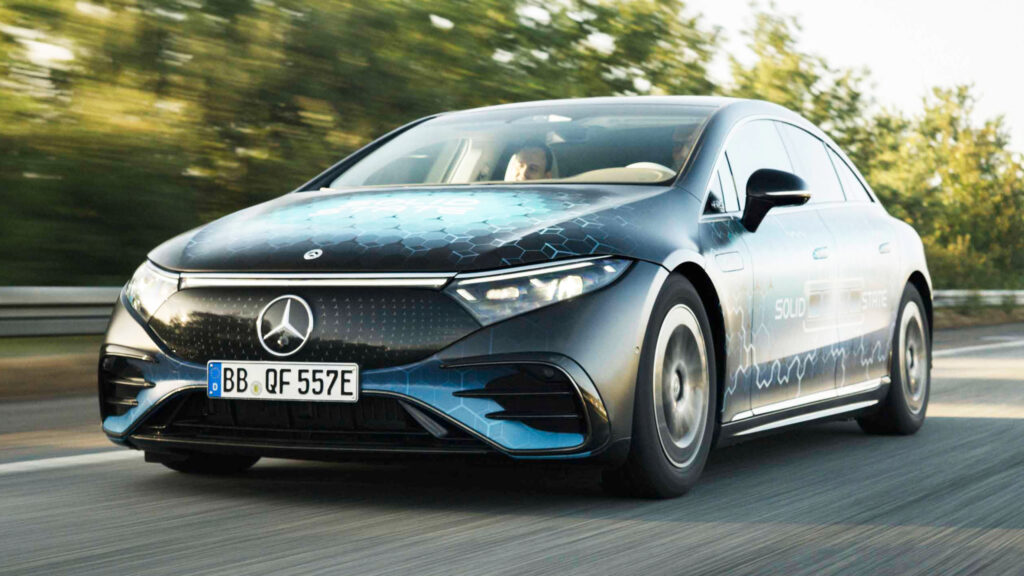
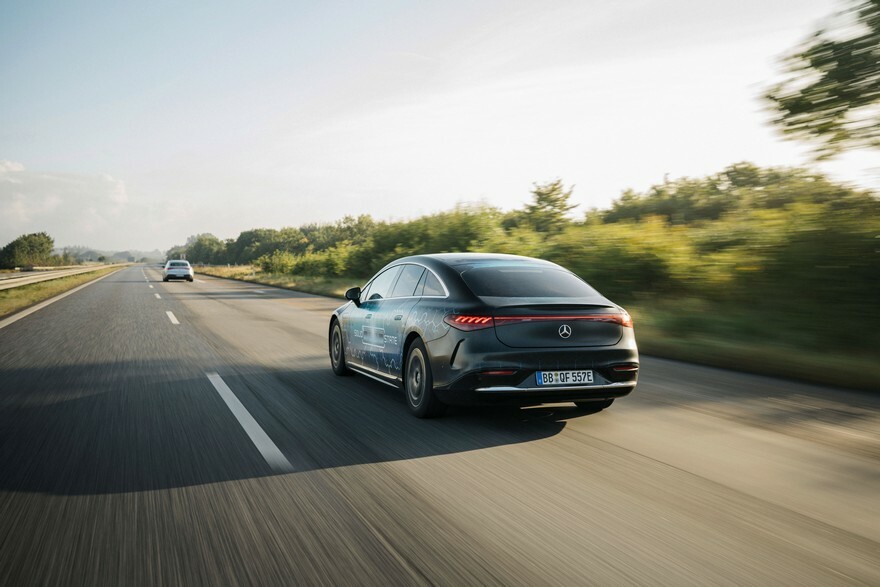
While you may not be familiar with Factorial, the company has financial backing from Mercedes, Hyundai, Kia, and Stellantis. Last year, a Mercedes-Benz EQS prototype covered 748.8 miles (1,205 km) on a solid-state pack from Factorial. What makes that run more impressive is that the car finished with an estimated 85 miles (137 km) of range to spare, so it could have gone even farther.

“We are deeply honored to work alongside Stellantis, one of the world’s great mass-market automakers, on this STLA Large-based development car,” Factorial chief executive Siyu Huang said. “What we have built together, from cell chemistry to pack architecture to enable real-world road testing, is exactly the kind of deep, full-stack collaboration that solid-state has always required.”

Stellantis hasn’t said when it wants to start producing and selling cars with solid-state batteries, but it’s likely at least a few years off.

\\\\\\

GM’s Cheaper Battery Could Knock $6,000 Off The Silverado EV Without Losing A Mile Of Range

  • GM may limit LFP tech to data storage and use LMR batteries for its EVs.
  • Lithium manganese-rich batteries offer a similar range to LFP but cost less.
  • A Silverado EV with LMR batteries could cost $6,000 less than an LFP one.

General Motors has revealed it may pivot away from manufacturing lithium-iron phosphate (LFP) batteries for its EVs in the US, focusing solely on new lithium manganese-rich (LMR) cells.

The Detroit giant has spent years developing LMR batteries, and the original plan called for building them next to conventional LFP cells. However, following recent confirmation that GM’s Tennessee battery plant with LG Energy Solution will now produce only LFP batteries for grid and data center customers rather than for cars, GM is doubling down on its pursuit of an LMR future.

Read: 700 Laid-Off Workers Rehired As GM Changes What Its Battery Plant Builds

While speaking with Reuters, GM battery chief Kurt Kelty described the LMR as the “workhorse” for GM, noting it will cost about the same as an LFP pack but store more energy while weighing roughly the same. “There is a possibility where LFP does not ​earn its way into our portfolio,” Kelty added. “That’s where we’re going to be using the big volume.”

Same Range, Cheaper Price

 GM’s Cheaper Battery Could Knock $6,000 Off The Silverado EV Without Losing A Mile Of Range

The vast majority of EVs released by GM in recent years have used nickel manganese cobalt (NMC) batteries, offering improved range over LFPs but not as well suited for charging to 100 percent capacity. The new Chevrolet Bolt is an exception to this, using LFP batteries sourced from Chinese battery behemoth CATL.

Moving forward, Kelty told TechCrunch that NMC batteries will be restricted to high-end GM vehicles, whereas LMR ones will be better suited to more affordable models. For the Chevrolet Silverado EV, which is currently equipped with an NMC battery, GM says an LMR battery of similar weight and size could retain the same 400-mile range while reducing the vehicle’s cost by at least $6,000.

“That is really going to be our bread and butter,” Kelty said when speaking about the LMR battery. “That is going to be our main product line.” Finally, it’s worth noting that GM isn’t alone in developing LMR batteries, as cross-town rival Ford is doing the same.

\\\

GM’s LMR batteries

Denza’s 1,139-HP Wagon Will Now Drift Any Shape You Draw On The Screen

  • The Denza Z9 is blisteringly fast, and as it turns out, a lot of fun.
  • A recent OTA update added autonomous drifting to the Shooting Brake.
  • A trio of electric motors allows the Z9 to churn out a combined 1,139 hp.

Right as Denza lines up the Z9 GT for its international launch, the BYD sub-brand has pushed an over-the-air update to owners in China that turns the electric shooting brake into a self-drifting machine. We have no idea how Denza received regulatory approval for the system, but it’s cool as heck.

According to Chinese media, the system is extraordinarily easy to use. Owners simply need to draw a shape on the Z9 GT’s infotainment system, and the car will automatically start to drift in that exact shape, leaving thick circles of rubber on the road. It’s a pretty wild sight to behold, and we’re sure owners will soon start directing their EVs to drift into the most intricate shapes imaginable.

Read: BYD’s Denza GT Costs $40K In China, Someone In France Paid Over $800,000

The Z9 GT has more than enough power to drift, even with all-wheel drive. The all-electric model sports a large 122.49 kWh battery pack, a 308 hp electric motor at the front axle, and two 416 hp motors at the rear axle, delivering a combined 1,139 hp and 892 lb-ft (1,210 Nm) of torque. Denza also sells the Z9 as a plug-in hybrid, which includes a 2.0-liter turbocharged four-cylinder and less-powerful electric motors, although it’s unclear whether it, too, can autonomously drift like the EV.

Perhaps the only way we can think of to improve the system is if it could automatically detect tread wear and, when the tires are worn, order a new set of tires.

\\\\\\\
BMW Did It First

While this appears to be the first use of an autonomous drift function on a production car, it’s not the first time we’ve seen a car sliding without a driver behind the wheel. At the Consumer Electronics Show in January 2014, BMW unveiled a wild M235i Coupe equipped with its own advanced self-driving systems.

Not only could this prototype complete a high-speed slalom by itself and race around a track without any driver inputs, but it could perform high-speed powerslides, perfectly managing and controlling oversteer without the driver needing to touch the pedals or the steering wheel. Likely due to safety concerns, BMW never offered such a system in any of the cars it sells to customers.

Rivian Won’t Add Buttons Back, Says You Should Talk To Your Car Instead

  • Rivian refuses to bring back the physical buttons rivals are restoring.
  • Its software chief believes voice should be the primary car interface.
  • The new R2 ditches HVAC buttons for scroll wheels on the steering wheel.

Some automakers have caved to buyer demand and started bringing physical buttons back, including VW, Audi, Mercedes-Benz, and Hyundai. Rivian, on the other hand, has no interest in joining them, insisting its advanced AI-driven voice assistant is simply a better way to control a vehicle’s functions.

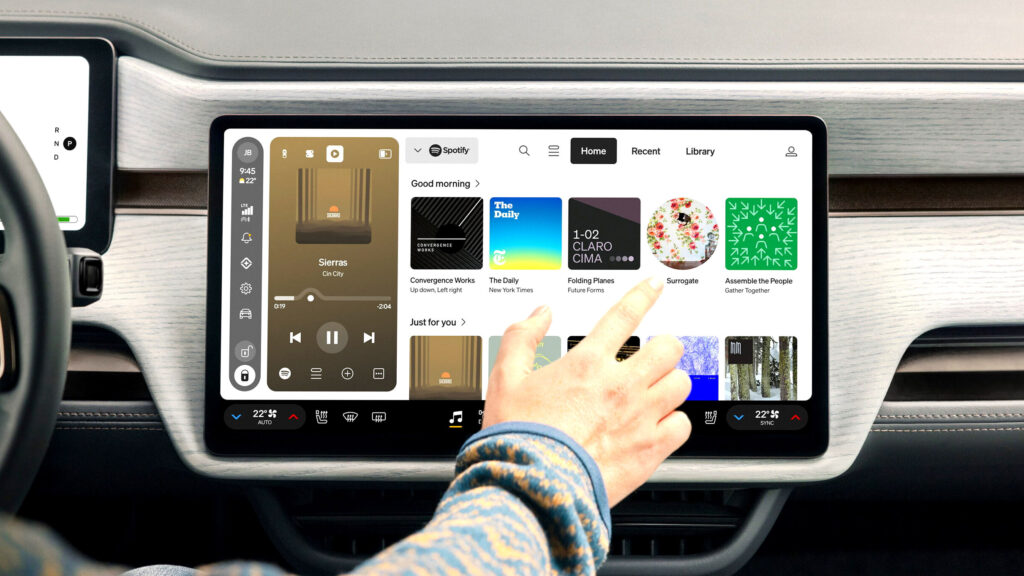
While recently speaking with Rivian’s chief software officer, and co-CEO of the Rivian and VW joint venture, Wassym Bensaid, The Verge dug into the new Rivian Assistant, which rolled out to existing R1 models in mid-May. It’s built on a shared, multimodal AI foundation and can handle core vehicle functions, HVAC included.

Read: For $50 A Month, Rivian Will Make You A Passenger In Your Own EV

Existing Rivian R1 models, along with the new R2, are largely free of physical buttons, and given the brand’s commitment to its new assistant, that isn’t likely to change anytime soon.

“I deeply believe that voice has the chance to be the primary interface in the car,” Bensaid told The Verge. “I also think that buttons can exist, but they shouldn’t be the primary way with which you interact with the car. I think there’s more that is possible with voice since you can do more than one single function. You don’t have to fiddle with so many functions.”

Are Scroll Wheels The Solution?

“You don’t have to go deep into the touchscreen to look into specific features. A great voice experience can elevate all of that, allow users to talk to the car as a human would, and really take the overall experience to the next level,” he added.

Bensaid went on to note that in the R2, there are no traditional HVAC buttons; instead, the large scroll wheels on the steering wheel can be used to adjust settings like fan speed on the fly. While not quite a button, they do seem like a better solution than tapping on a small icon on the touchscreen to tweak the fan speed.

 Rivian Won’t Add Buttons Back, Says You Should Talk To Your Car Instead
Scroll wheels on the Rivian R2’s steering wheel

According to Rivian, “the only reason that drivers and consumers do not interact with the car through voice is that, to put it really bluntly, the technology has been broken,” up until this point. A key difference between Rivian’s Assistant and those of competitors is that it uses its own Android-based infotainment system, which doesn’t offer support for Android Auto or Apple CarPlay, so the AI-assistant works seamlessly regardless of what screen is displayed.

Rivian also points out that the system takes a more conversational approach than traditional voice assistants. Instead of barking “Open the frunk,” for instance, you can simply say “I have a bag in the front of the car,” and the assistant will pop the frunk for you. It all sounds rather slick, though we’d still take a few physical buttons. What about you?

\\\\\\\\

Rivian Doesn’t Care How Much You Like Interior Buttons, Voice Control Is Better

  • The EV maker says voice control will be the primary interface for new vehicles.
  • Owners of the Rivian R2 will be able to tweak fan speed through the steering wheel.
  • Rivian started rolling out its new AI-powered Assistant for the R1 models last month.

Some car manufacturers have caved to demand from buyers to bring back physical buttons, including VW, Audi, Mercedes-Benz, and Hyundai. Rivian doesn’t seem interested in following suit, declaring that its advanced AI-driven voice assistant system is a better way to control a vehicle’s functions.

While recently speaking with Rivian’s chief software officer, and the co-CEO of the Rivian and VW joint venture, Wassym Bensaid, The Verge dived head-first into the new Rivian Assistant, introduced to existing R1 models in mid-May. It’s built on a shared, multimodal AI foundation and can control core vehicle functions, including HVAC.

Read: For $50 A Month, Rivian Will Make You A Passenger In Your Own EV

Existing Rivian R1 models, as well as the new R2, are largely devoid of physical buttons, and given the brand’s commitment to its new assistant, it doesn’t appear as though this will change.

“I deeply believe that voice has the chance to be the primary interface in the car,” Bensaid told The Verge. “I also think that buttons can exist, but they shouldn’t be the primary way with which you interact with the car. I think there’s more that is possible with voice since you can do more than one single function. You don’t have to fiddle with so many functions.”

Are Scroll Wheels The Solution?

“You don’t have to go deep into the touchscreen to look into specific features. A great voice experience can elevate all of that, allow users to talk to the car as a human would, and really take the overall experience to the next level,” he added.

Bensaid went on to note that in the R2, there are no traditional HVAC buttons; instead, the large scroll wheels on the steering wheel can be used to adjust settings like fan speed on the fly. While not quite a button, they do seem like a better solution than tapping on a small icon on the touchscreen to tweak the fan speed.

 Rivian Doesn’t Care How Much You Like Interior Buttons, Voice Control Is Better
Scroll wheels on the Rivian R2’s steering wheel

According to Rivian, “the only reason that drivers and consumers do not interact with the car through voice is that, to put it really bluntly, the technology has been broken,” up until this point. A key difference between Rivian’s Assistant and those of competitors is that it uses its own Android-based infotainment system, which doesn’t offer support for Android Auto or Apple CarPlay, so the AI-assistant works seamlessly regardless of what screen is displayed.

Rivian also notes that it provides a more conversational approach than traditional voice assistant systems. For example, you don’t have to say “Open the frunk,” and can instead say “I have a bag in the front of the car,” and the system will automatically open the frunk. It all sounds rather nice, but we’d still prefer some physical buttons. What about you?

\\\\\\\\

BYD Wants To Sell Humanoid Robots Right Next To Its Cars

  • BYD’s humanoid robots could include technology similar to that in its cars.
  • It’s possible the car manufacturer could work alongside existing robot firms.
  • Last year, rival brand Chery unveiled its own advanced humanoid robot.

The man who once couldn’t stop laughing at BYD probably isn’t laughing now. Back in 2011, Elon Musk dismissed the Chinese company outright when asked about it. These days BYD outsells Tesla over the course of a year and ranks among the largest carmakers on the planet, and like the brand it has overtaken, it now wants a piece of the world beyond cars.

Earlier this week, BYD executive vice president Li Ke revealed that the company is developing its own humanoid robots, noting that they will share common technologies with the brand’s cars. In addition, they could also be sold through BYD’s existing dealership network, not only in China, but also in other markets.

Read: BMW’s New Humanoid Workers Never Take A Break Or Get Paid

BYD hasn’t stated when its own humanoid robots could be ready to hit the market, nor has it said how it will develop and manufacture them. It’s possible they could be brought to life through an open platform where BYD works alongside established robotics companies, according to CarNewsChina. This would likely slash development times by relying on firms with extensive experience in this space.

China’s Robotic Future

 BYD Wants To Sell Humanoid Robots Right Next To Its Cars

While it’s Tesla that generates plenty of headlines for its humanoid robot, dozens of Chinese technology companies have already developed robots seemingly far more advanced than what Musk’s company has done. Earlier this year, more than 100 humanoid robots from different companies participated in a half-marathon in China. The winning robot, created by smartphone manufacturer Honor, needed just 50 minutes and 26 seconds to complete the half-marathon, almost seven full minutes quicker than the fastest half-marathon ever run by a human.

BYD isn’t the first Chinese brand to venture into the world of humanoid robots, either. Last year, Chery unveiled its own feminine humanoid robot, the Mornine M1, built by the company’s AiMoga subsidiary. Complete with long blonde hair, fake breasts, and a BBL, it’s a bizarre-looking creation that went on sale last month. It’s not cheap, however, starting at 285,800 yuan, or more than $41,000.

 BYD Wants To Sell Humanoid Robots Right Next To Its Cars
Chery’s Mornine M1 | Lead image Xpeng

❌