Reading view

There are new articles available, click to refresh the page.

NASA Helped Ferrari Fix The Luce EV’s “Disturbing” Acceleration
  • The Ferrari Luce has paddle shifters to adjust the torque deployment.
  • Ferrari will also enhance the motors’ sounds for added auditory pleasure.
  • Unlike some of the brand’s other cars, the Luce won’t be a track model.

The high-end EV market is facing some struggles, but despite this, Ferrari is plowing ahead with its first-ever electric car, the aptly named Luce. While the brand is perhaps the last you’d ever expect to enter the EV world, it’s confident the model will offer all the driving thrills expected of a Prancing Horse.

During a recent interview, Ferrari chief executive Benedetto Vigna insisted that the Luce will deliver each of the five key drivers of driving thrills, ensuring it is befitting of the brand’s badge and can succeed where some EVs have failed: to tug at the emotional heartstrings.

Read: Ferrari Breaks Its Silence On Luce Trademark Rights After Mazda Filing

Speaking with Autocar India, Vigna said one element “is longitudinal acceleration,” agreeing with the interviewer that perhaps this acceleration in EVs is too linear, and also “too much, because sometimes it’s disturbing our brain.” He went on to reveal that Ferrari has worked with NASA to “understand what is the level of acceleration that is disturbing people,” and that too much acceleration is not a good thing.

Sounds And Shifts

\\\\\\\\\\\\\\

SHProshots

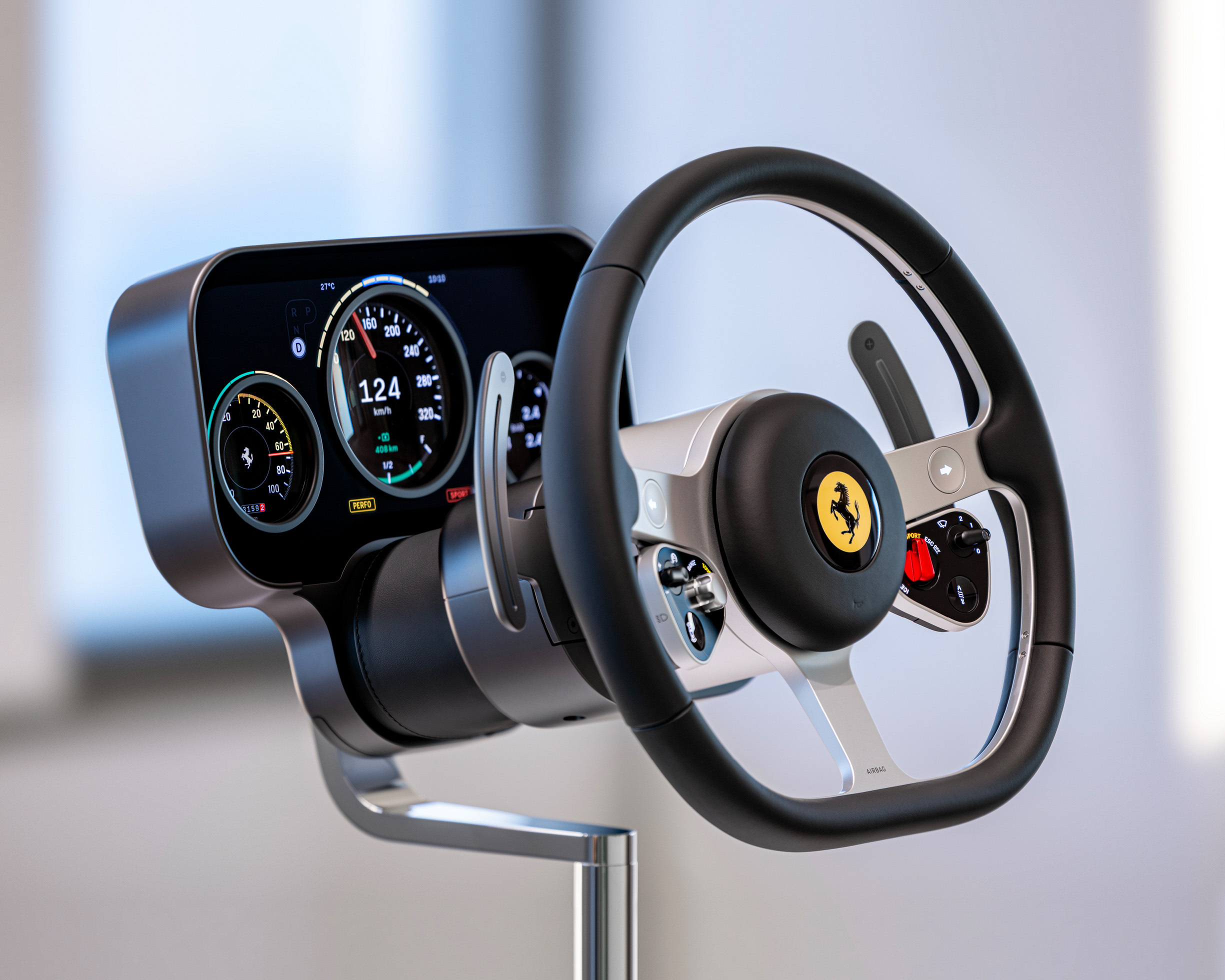
Another important contributor to driving thrills is “transversal acceleration, followed by the braking experience, the gearshift, and the sound. As recent images of the Luce’s interior revealed, it will include paddle shifters, and unlike some EVs, these won’t be used to adjust the level of brake regeneration but instead to adjust the level of torque engagement.

Vigna stopped short of confirming that the system will mimic traditional shifts, as in the Hyundai Ioniq 5 N, but it certainly sounds like that is what Ferrari is aiming for. Then there’s the all-important sound.
 NASA Helped Ferrari Fix The Luce EV’s “Disturbing” Acceleration

As patents have revealed, Ferrari won’t aim to mimic the sound of an internal combustion engine with the Luce, and instead will amplify the sounds of the electric motor.

“The electric motor is not silent,” he said, “there is a sound there. The problem sometimes today [is that] most of us associate the sound of electric motor with something high frequency that is disturbing. But, there are also low frequency, there are also ways to pick up the sound in an authentic way, in the original way, to avoid the two looking like a DJ.”

Vigna went on to add that the Luce will have a driving range of over 311 miles (500 km), and while that may not sound all that impressive, he noted it has not been designed with track use in mind, indicating that the battery technology is not in a place to make such cars achievable.

Ferrari Teases The Luce’s Exterior In The Shadiest Way Possible

  • Ferrari fits the Luce with a 122 kWh battery and over 986 hp.
  • Its exterior may blend modern design with subtle retro cues.
  • Deliveries are expected to begin in 2027 after the May reveal.

While there will always be enthusiasts who scoff at Ferrari launching an EV, there’s an inevitability that even the most exotic of car manufacturers would need to venture into all-electric vehicles. Ferrari is doing exactly that with the Luce, and the company has now released a short clip offering a glimpse of its exterior. Well, sort of, because there is not much, if anything, to make out.

Just like the interior, the Luce’s exterior design has been penned by LoveFrom, the firm led by Jony Ive, the designer who helped shape products like the iPhone and iPad.

Read: Ferrari’s Luce EV Has A Glass Key And Buttons That Click Like A Rifle Bolt

In this video, we’re given a brief teaser of the electric car, filmed at night. Don’t expect to see much detail, though, as the car appears to be wearing the same white-and-black camouflage seen on recent prototypes.

What Will Power It?

What we can say with confidence is that the Luce will be a four- or five-seater, slightly smaller and sleeker than the Purosangue. Power will come from four electric motors, combining to produce more than 986 hp, enough to send the car to 62 mph (100 km/h) in 2.5 seconds and on to a top speed of 193 mph (310 km/h), an impressive figure for an EV.

Integrated into the Luce’s floorpan will be a large 122 kWh battery pack that supports charging speeds of up to 350 kW, giving the Luce a range exceeding 329 miles (530 km). To ensure the first electric Ferrari still delivers some sense of drama from behind the wheel, the company has developed a system that amplifies the powertrain’s mechanical vibrations, producing distinctive tones that vary with speed and torque delivery.

Ferrari has confirmed the Luce will be revealed in full in May, with the first customer deliveries expected to begin next year.

\\\\\\\\\\\\\

Ferrari Luce interior

The Man Who Popularized Touch Screens Says Touch Controls Don’t Belong In Cars

  • The Luce’s interior is dominated by aluminum switches and toggles.
  • Even the screens of Ferrari’s EV are analog-inspired with physical controls.
  • Jony Ive says carmakers have made a mistake pursuing touchscreens.

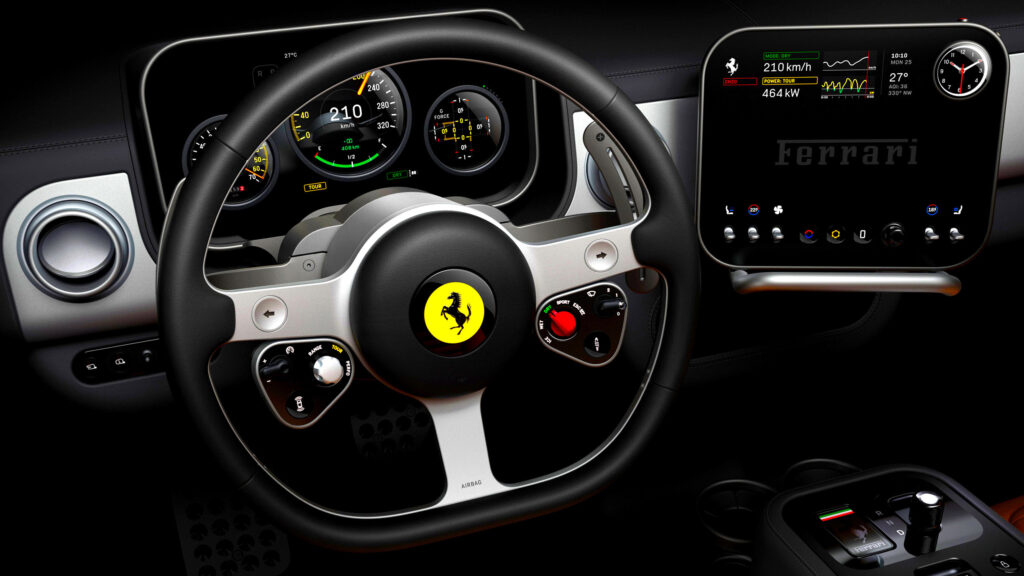
Ferrari unveiled the interior of its first-ever EV this week, the Luce, created in collaboration with Jony Ive, former Apple design chief and the creative force behind the iPhone, iPad, and MacBook. It’s a retro-themed bonanza with plenty of physical buttons, switches, and toggles, representing a radical departure from the screen-focused and minimalist designs of most electric cars.

Read: Ferrari’s Luce EV Has A Glass Key And Buttons That Click Like A Rifle Bolt

The approach may seem counterintuitive at first, especially given Ive’s legacy at Apple, where he helped usher in the age of touchscreens. But the British-American designer’s reasoning is rooted in practicality rather than nostalgia. As it turns out, he never believed touch interfaces belonged in cars in the first place.

Touch Isn’t Always The Answer

“The reason we developed touch [for the iPhone] was that we were developing an idea to solve a problem,” he told Autocar. “The big idea was to develop a general-purpose interface that could be a calculator, could be a typewriter, could be a camera, rather than having physical buttons. I never would have used touch in a car [for the main controls].”

“It is something I would never have dreamed of doing because it requires you to look [away from the road],” Ive added. “So that’s just the wrong technology to be the primary interface.”

\\\\\\\

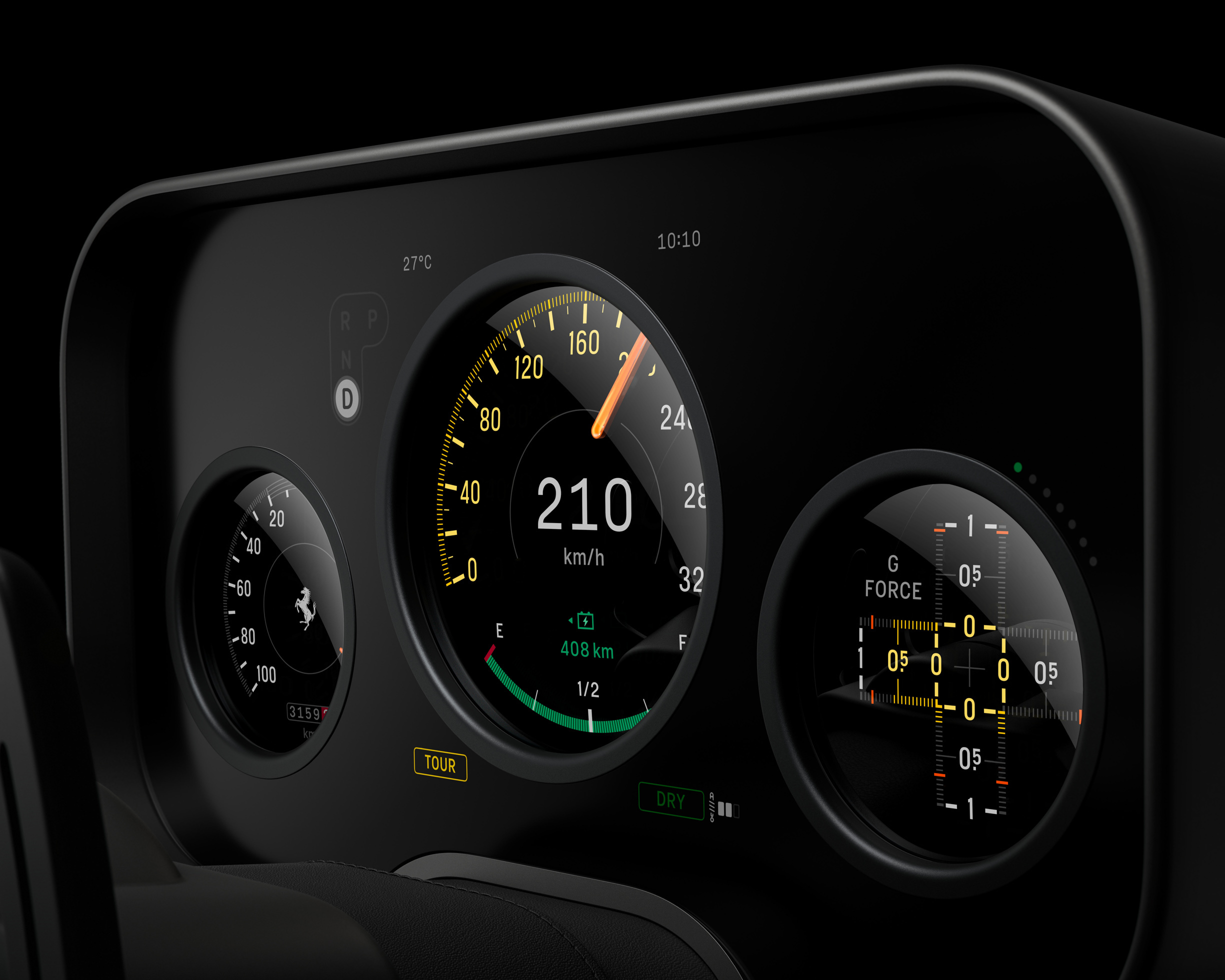
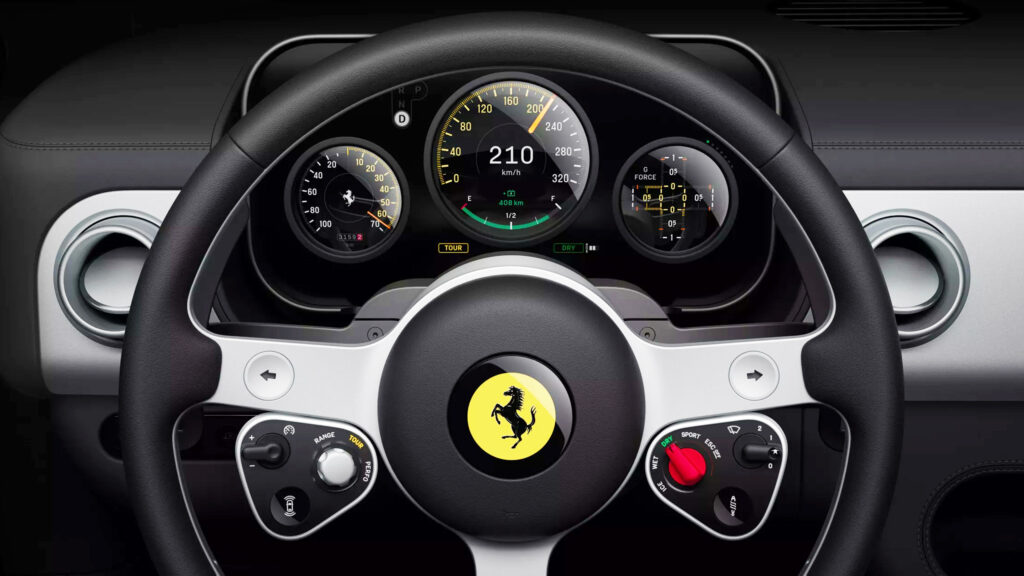
This isn’t to say the Ferrari Luce is completely devoid of screens. The gauge cluster features OLED panels from Samsung, designed to mimic the look of classic analog dials. The needle, though, is a physical piece made from anodised aluminium and backlit by 15 LEDs. In the center of the dash sits a touchscreen, angled slightly toward the driver.

Feel Your Way Around

Yet nearly every essential function, including climate controls, drive settings, even audio, can be adjusted through metal toggles or rotary knobs. Ive notes that “every single switch feels different, so you don’t need to look.”

When asked what sets the Luce’s screen apart from others, Ive said, “So much of what we did was so that you could use it intuitively, enjoy it and use it safely.”

In addition to real switches beneath the center touchscreen, the Luce features tactical dials and buttons on the steering wheel and center console, and even an airplane-inspired panel in the headliner. It looks like a welcome reprieve for the haptic controls of many recent Ferrari models, like the SF90.

“I think what happened was touch was seen almost like fashion,” Ivy explained. “It was the most current technology, so [companies thought] ‘we need a bit of touch’, then the next year ‘we’re going to have an even bigger one’, and it will get bigger and bigger.”

He added, “I think the way that we design [car interiors] isn’t that we’re trying to solve problems [like we did with the iPhone].” That, in his view, is where much of modern automotive UX design goes astray.

\\\\\\\\\

Ferrari’s Luce EV Has A Glass Key And Buttons That Click Like A Rifle Bolt

  • Ferrari’s first EV named Luce, pairs retro tactility with futuristic digital tech.
  • Exposed aluminum and innovative layered displays are like nothing else.
  • Nardi-style steering wheel features power and chassis manettinos toggles.

If you thought Ferrari’s first EV would feel like an iPad on wheels, think again. The new cabin designed by former Apple man Jonny Ive is a gorgeous fusion of digital tech, tactile physical controls, and some retro styling cues guaranteed to make even a trip to the corner store feel like a Mille Miglia run.

Meet the Ferrari Luce, a name that means light and quietly hints that electrons can still have a pulse. Before we even see the bodywork in May, the Italians have pulled back the curtain on the interior to prove to us that maybe an electric Ferrari isn’t the devil’s work after all.

Related: Ferrari Found A Way To Make Fake EV Noise Sound Honest

That design energy comes courtesy of LoveFrom, the creative outfit founded by Jony Ive and Marc Newson. Ive is famous for his work on touchscreen tech juggernauts like the iPhone and iPad, but for this project, he was adamant that the Luce needed plenty of real switches.

\\\\\\\\\\\

Toggles Are Back

So the Luce doubles down on physicality. Real buttons. Real toggles. Real rotary controls that click with satisfying precision. Ferrari says test drivers went through more than 20 rounds just to perfect the feel and sound of each switch. It is basically ASMR for your fingertips, especially the launch control switch, which is located above your head, aircraft-style.

 Ferrari’s Luce EV Has A Glass Key And Buttons That Click Like A Rifle Bolt

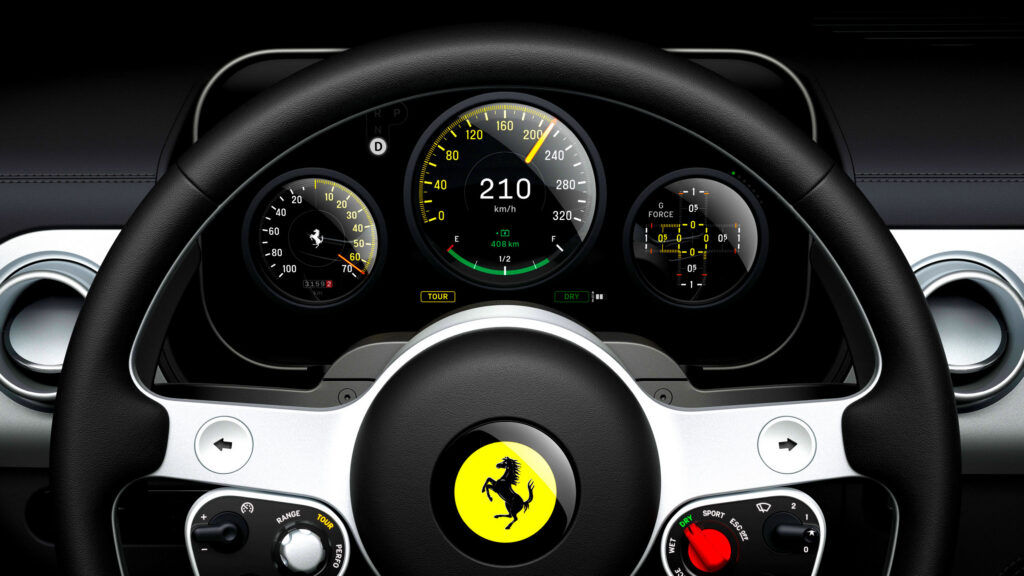
Front and center is a steering wheel that looks like it time-traveled from the 1960s. Three slim spokes, exposed aluminum, and a layout inspired by classic Formula One cars. Nineteen CNC-machined parts make it lighter than a typical Ferrari wheel, yet it’s packed with finger controls so you can adjust things without playing touchscreen whack-a-mole.

Real Or Virtual?

 Ferrari’s Luce EV Has A Glass Key And Buttons That Click Like A Rifle Bolt

Behind it sits a wild instrument binnacle developed with help from Samsung Display. Two wafer-thin OLED panels overlap to create deep, layered dials that look almost analog at a glance. There’s even a physical needle sweeping across digital graphics because apparently pixels alone weren’t dramatic enough.

According to Ferrari, the Luce’s digital displays were “inspired by both historic automotive cues and the purposeful, clear graphics found in aviation, particularly helicopters and aircraft.” The influence is easy to spot. The layout and typography are unmistakably automotive, a modern tribute to the Veglia and Jaeger instruments from classic Ferraris.

Start-Up Buzz

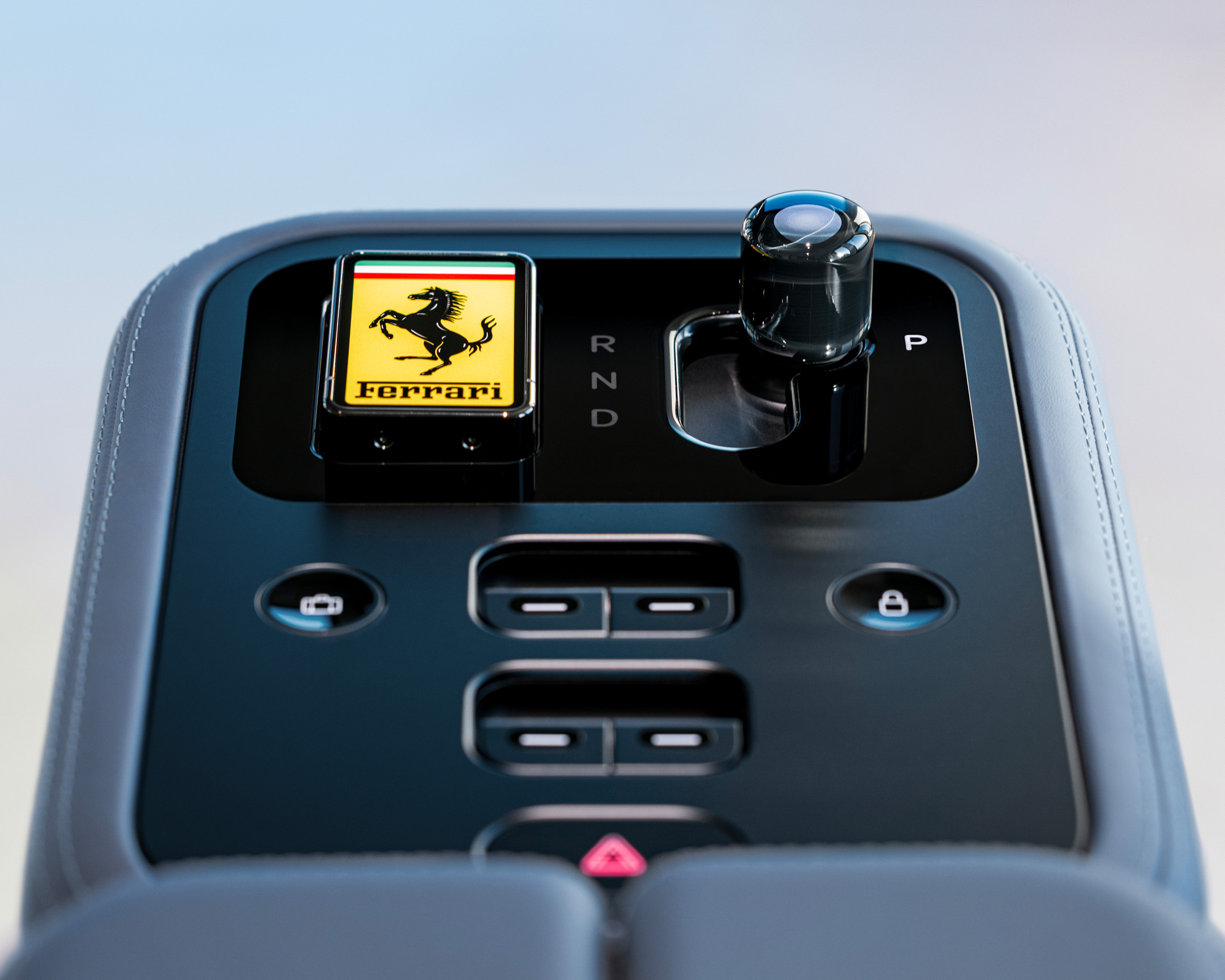
Ferrari messed up with the SF90, putting a nasty touch-sensitive start button on the steering wheel that killed much of the buzz you normally get from firing up a Maranello car. But it has redressed the balance with the Luce’s startup ritual. First, you insert a chunky glass key into a dock on the console. Its color shifts, then the drive selector wakes up in a coordinated light show.

 Ferrari’s Luce EV Has A Glass Key And Buttons That Click Like A Rifle Bolt

We’ll have to wait until May to see the Luce’s exterior, though it’s likely we’ll learn more about the powertrain and chassis package between now and then.

Many of us thought we’d find it hard to get excited about an electric Ferrari, no matter how quickly it laps Fiorano, but if the rest of the car is as thoughtful and original as this cockpit there’s going to be plenty to love, even if it doesn’t have gas in its veins.

\\\\\\\\\\\\
❌