Reading view

There are new articles available, click to refresh the page.

Xiaomi Updates The SU7, Gets 15,000 Orders In 8 Hours
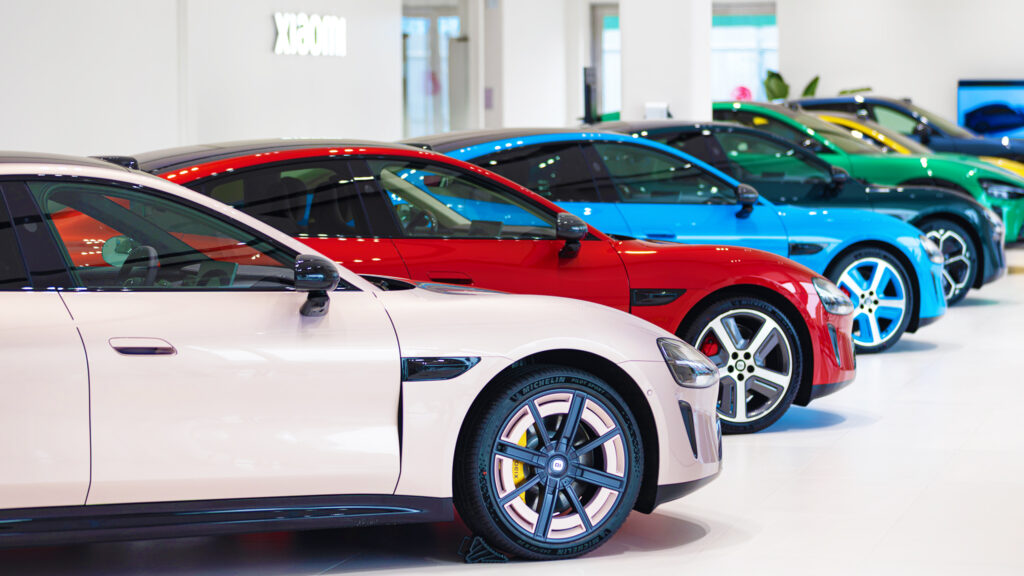
  • The updated SU7 looks the same, but changes have been made under the skin.
  • Xiaomi is selling the electric sedan with 73 kWh and 96.3 kWh battery packs.
  • Prices start at 219,900 yuan ($31,900) and top out at 303,900 yuan ($44,000).

It’s been only two years since the Xiaomi SU7 hit the market, and it has quickly become one of the most popular electric sedans in China. An updated version has just been launched, and it promises to be even better while still remaining an absolute bargain.

Ordinarily, it takes car manufacturers four or five years to update a model, but Xiaomi is more like Apple than a traditional car brand, and it’s used to updating its products on a yearly basis, so it’s perhaps no surprise the SU7 has already been refreshed. Like before, it’ll continue to be sold in Standard, Pro, and Max configurations, and it took just 8 hours for local enthusiasts to place 15,000 orders.

Read: Xiaomi Finally Fixed A Feature Owners Said Was Fake, For Real This Time

The base SU7 Standard is equipped with a 73 kWh lithium-iron phosphate battery and a rear-mounted motor with 315 hp (235 kW). It has a claimed CLTC range of 447 miles (720 km), and starts at just 219,900 yuan or around $31,900. Sitting above it is the SU7 Pro, fitted with a larger 96.3 kWh LFP battery and the same 315 hp (235 kW) motor, boosting its range to 560 miles (902 km) and bumping up the price to 249,900 yuan, roughly $36,200.

\\\\\\\\\\\\\\\\\\\\\\\

The SU7 Max comes equipped with a 101.7 kWh ternary lithium battery, dual motors delivering 681 hp (508 kW), and a 519-mile (835 km) range. It starts at 303,900 yuan or $44,000. There’s no word on whether an update is also being readied for the hypercar-rivaling SU7 Ultra, but changes are likely in the works.

Visually, the new model looks largely the same as the outgoing SU7, though all versions now come with a roof-mounted LiDAR, a 4D millimeter-wave radar, and the Nvidia Thor-U computing system. A new radar has also been added up front, and the rear tires are slightly wider, perhaps to improve grip and reduce the risk of crashes like this.

An Important Door Solution

\\\\\\\\\\\\\\\\\\\\\\\\\\\\\\\

Xiaomi has also added a new door unlocking mechanism with a triple-redundancy system, no doubt to ensure drivers don’t get stuck inside should they be involved in a serious accident. The mechanical release on the front passenger doors is also now finished in bright red, making it easier to spot in an emergency.

The rest of the interior is familiar, although the infotainment screen is slightly bigger at 16.1 inches. The dual wireless phone chargers have been retained, but Xiaomi has repositioned the cupholders from a vertical configuration to a horizontal one. It’s also removed the vertical row of buttons that had been fitted to the console, instead shifting them between the charging pads and the cupholders.
\\\\\\\\\

A $103K Chinese Luxury Sedan Outsold The BMW 7, Panamera, And Maybach S-Class Combined

  • Sales of the Maextro S800 now exceed key German luxury rivals.
  • Domestic EV brands are winning buyers once loyal to foreign cars.
  • Porsche deliveries in China dropped 26 percent last year.

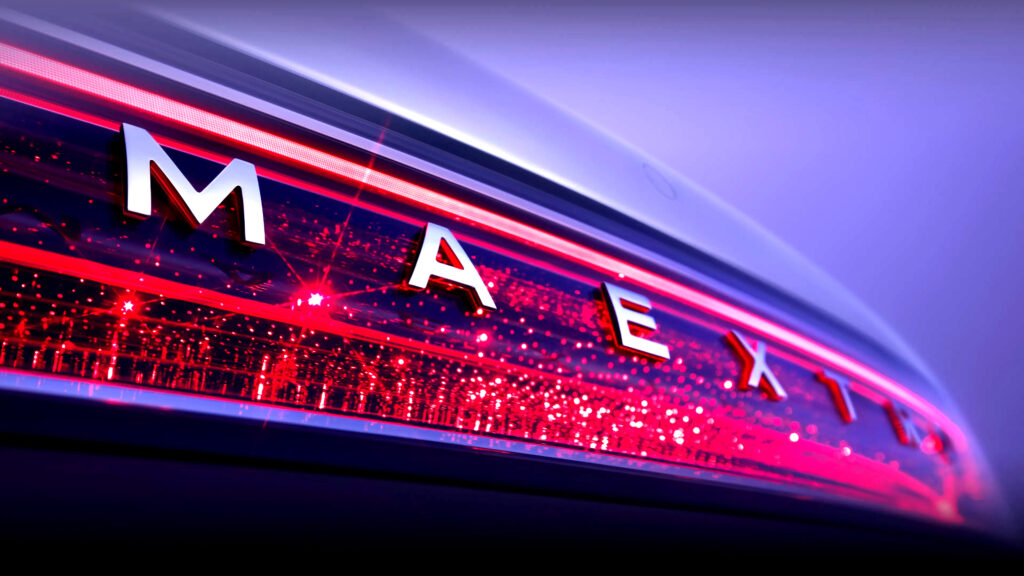
Most people outside China have probably never heard of the Maextro S800. Yet this large Chinese luxobarge has quietly begun outselling some very familiar names. In recent months, it has moved more units than the Porsche Panamera, BMW 7-Series, and Mercedes-Maybach S-Class combined in China.

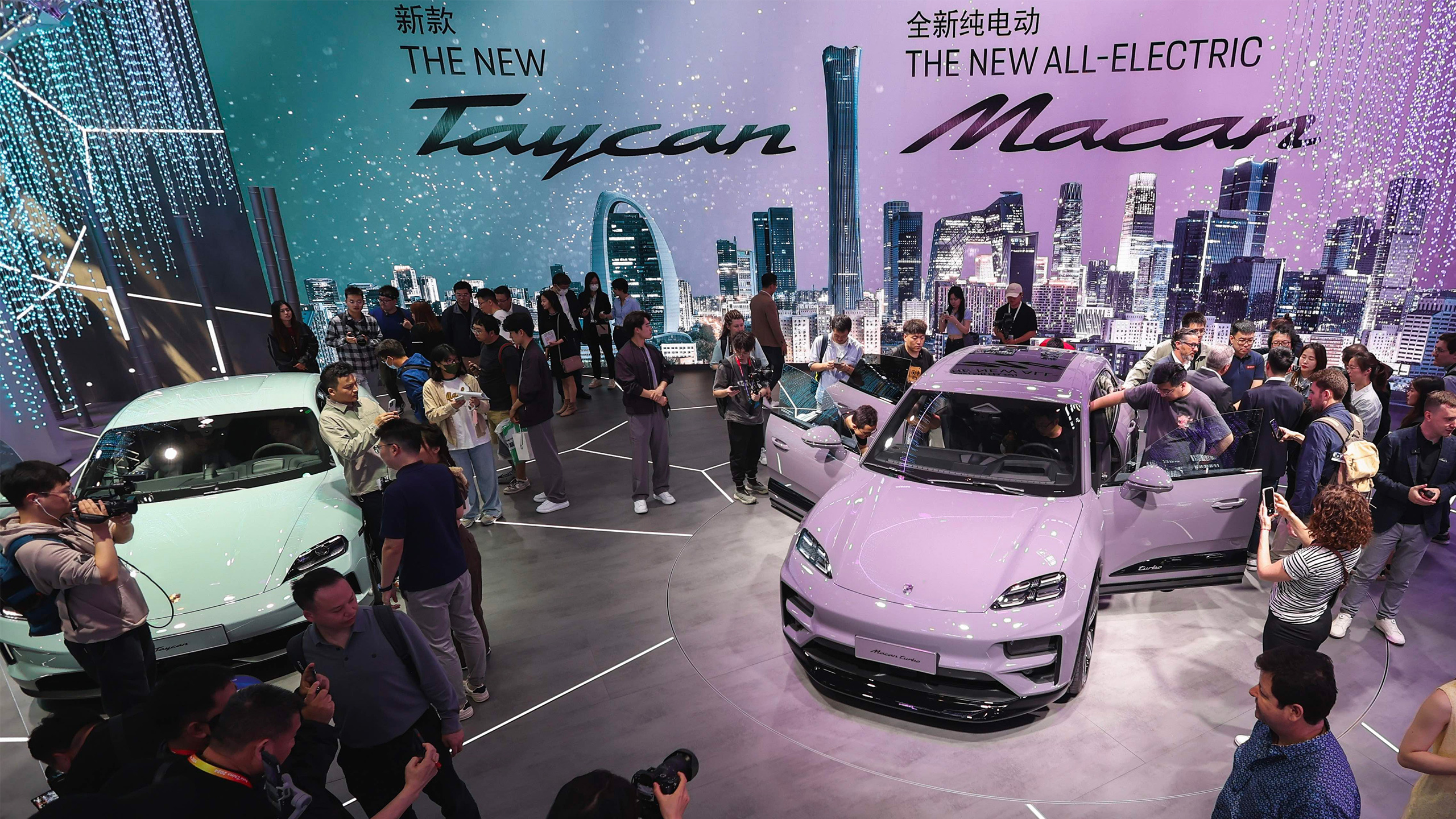
Foreign automakers are all struggling to compete with homegrown competition in the Chinese market, not least of all, Porsche. The German sports car brand is at a problematic stage, experiencing one of the biggest drops in sales, both in China, and globally.

Read: Porsche Is Shutting Down A Third Of Its Dealerships In China

The number of deliveries in China fell by approximately 26 percent last year, Bloomberg reports. And, for all its territories in 2025, Porsche had supplied approximately 279,449 cars to customers all around the world. That’s 10 percent below the year prior.

Chinese Demand Wanes

\\\\\\\\\\\\\\

Maextro S800

For years, China had been Porsche’s single most important growth engine. Wealthy buyers were drawn in by the brand’s reputation for performance and status. That dynamic has shifted with the emergence of a new generation of consumers, who are more aware of the advantages of electric vehicles and the idea of electric propulsion.

Combine that with Chinese automaker’s unique grasp of how to cater to the wants and needs of the home market consumer, as well as the ability to consistently beat Western offerings on price and performance, and it’s little wonder why cars like the S800 are doing so well in a segment that was once rich with Germany’s finest.

Still, the rate at which Chinese automakers have been able to capitalize within the luxury automobile market is nothing short of alarming. Their model lines are competing head-on with long-established luxury brands throughout Europe and, in most instances, provide highly advanced digital and battery technology that buyers are seeking.

However, for consumers, local EV makers are viewed as a representation of innovation, rather than being compromised, especially when it comes to younger buyers.

Strong Local Offerings

\\\\\\\\\\\\\\\

Maextro S800

Brands like Huawei’s Maextro, Xiaomi, and BYD have gained market share in the luxury EV range. The S800, for instance, starts at the equivalent price of $103,000, which is around 40 percent cheaper than the Panamera.

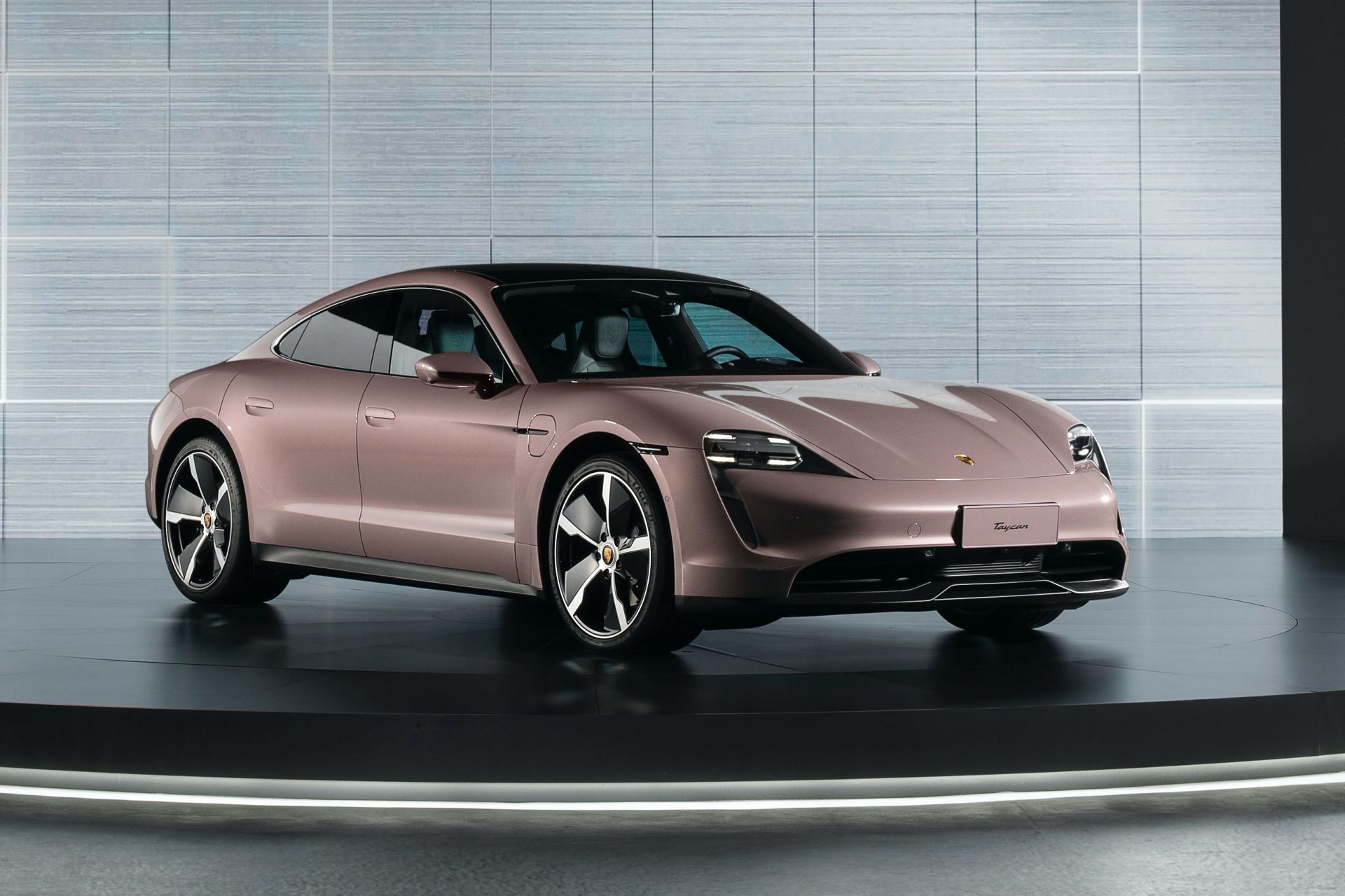
Xiaomi’s SU7 EV, meanwhile, is not only quicker than the all-electric Taycan to 100 km/h (2.1 seconds vs 2.7 seconds), it has a higher top speed (350 km/h vs 270 km/h) and offers nearly double the horsepower and torque (1,548 PS / 1,770 Nm vs 884 PS / 890 Nm). And it does all that, while costing a third of the price of the Porsche.

Having expansive product offerings and high levels of domestic loyalty, such firms have started attracting clients who, not too long ago, would have only considered a car with a foreign badge as worthy.

But, in the case of Porsche, this change is a challenging fact. Prestige alone is no longer sufficient to ensure success. So much so that Bloomberg reports that Porsche is not only downsizing its dealer structure, but is also in the process of winding down its EV charging network.

Righting The Ship

 A $103K Chinese Luxury Sedan Outsold The BMW 7, Panamera, And Maybach S-Class Combined

Under the leadership of its new CEO, Michael Leiters, Porsche has started to re-evaluate its strategy. The company is leaning on its traditional strengths, focusing on relatively high-margin sports cars and SUVs and pushing a bit heavier on the full complexity electrification. The idea is not to compete on price with the domestic manufacturers of EVs but to shore up what makes the brand unique.

Leiters has told investors the company is looking to see margins improve, though modestly this year. These difficult times have tightened Porsche’s operations’ profit margins, and the company hopes for better cost control and a well-defined product strategy to stabilize performance. The approach is cautious optimism as opposed to quick promises of a turnaround.

China Still Remains Part Of The Plan

 A $103K Chinese Luxury Sedan Outsold The BMW 7, Panamera, And Maybach S-Class Combined

Even though Porsche are scaling back their presence in China, they’re not ready to throw in the towel just yet. “The needs of Chinese customers have fundamentally changed,” Porsche China President Alexander Pollich said. “We are a niche brand, a small-scale manufacturer that can hardly change the economic environment, nor reverse the overall market trend. What we can do is to truly examine ourselves and strengthen the core capabilities.”

Porsche will be launching the all-electric Cayenne in the near future and will also introduce more gasoline-powered and plug-in hybrid SUVs, with China-only models high on the agenda. To support this effort, the company is establishing an all-new development hub in Shanghai that will operate independently from Germany.

First on the agenda is designing a new infotainment system that can better match the unique demands of Chinese buyers, likely with native integration for the local apps many owners use daily, rather than relying on the global software stack developed in Germany. In a market that is evolving as quickly as China’s, that kind of local focus may prove just as important as performance or prestige.

 A $103K Chinese Luxury Sedan Outsold The BMW 7, Panamera, And Maybach S-Class Combined

Xiaomi Finally Fixed A Feature Owners Said Was Fake, For Real This Time

  • Xiaomi engineered working vanes to make its aero hood functional.
  • Last year, the company was sued over an aero hood that did nothing.
  • The upgrade installs at a dealer and takes about two to three hours.

Xiaomi looks ready to close the chapter on the ‘fake’ aerodynamic hood controversy that rattled the company last year. The Chinese carmaker has now turned its optional carbon fiber hood into a genuinely functional component, a response that many established carmakers might study with interest.

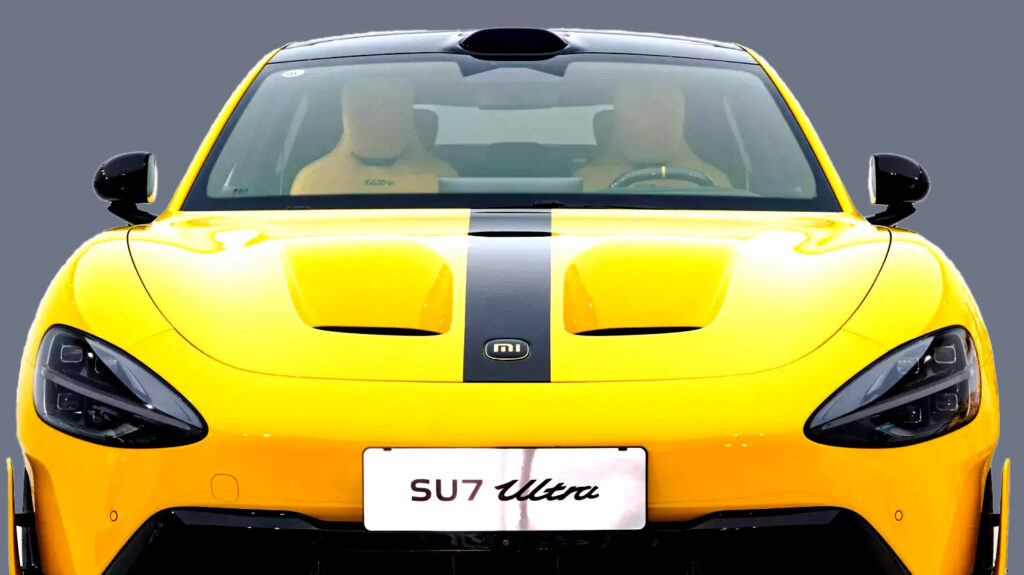
Back in early 2025, Xiaomi began offering a special carbon fiber hood for the SU7 Ultra. The design took inspiration from the record-setting SU7 Prototype and featured two prominent air ducts that were supposed to help cool the brakes and battery. On paper, it sounded convincing. In practice, it turned out to be something else.

Read: Xiaomi Will Have To Pay Owner For Faking It

Soon after customers started taking delivery of SU7s equipped with the 42,000 yuan ($6,100) hood, owners discovered the promised performance benefits simply were not there. The structure beneath the hood had not been changed at all, meaning the vents were purely decorative and did nothing for cooling or aerodynamics.

Unsurprisingly, the reaction was swift. Owners pushed back, some threatened to walk away from the brand, and the situation quickly spilled into the courts.

\\\\\\

Making The Carbon Hood Functional

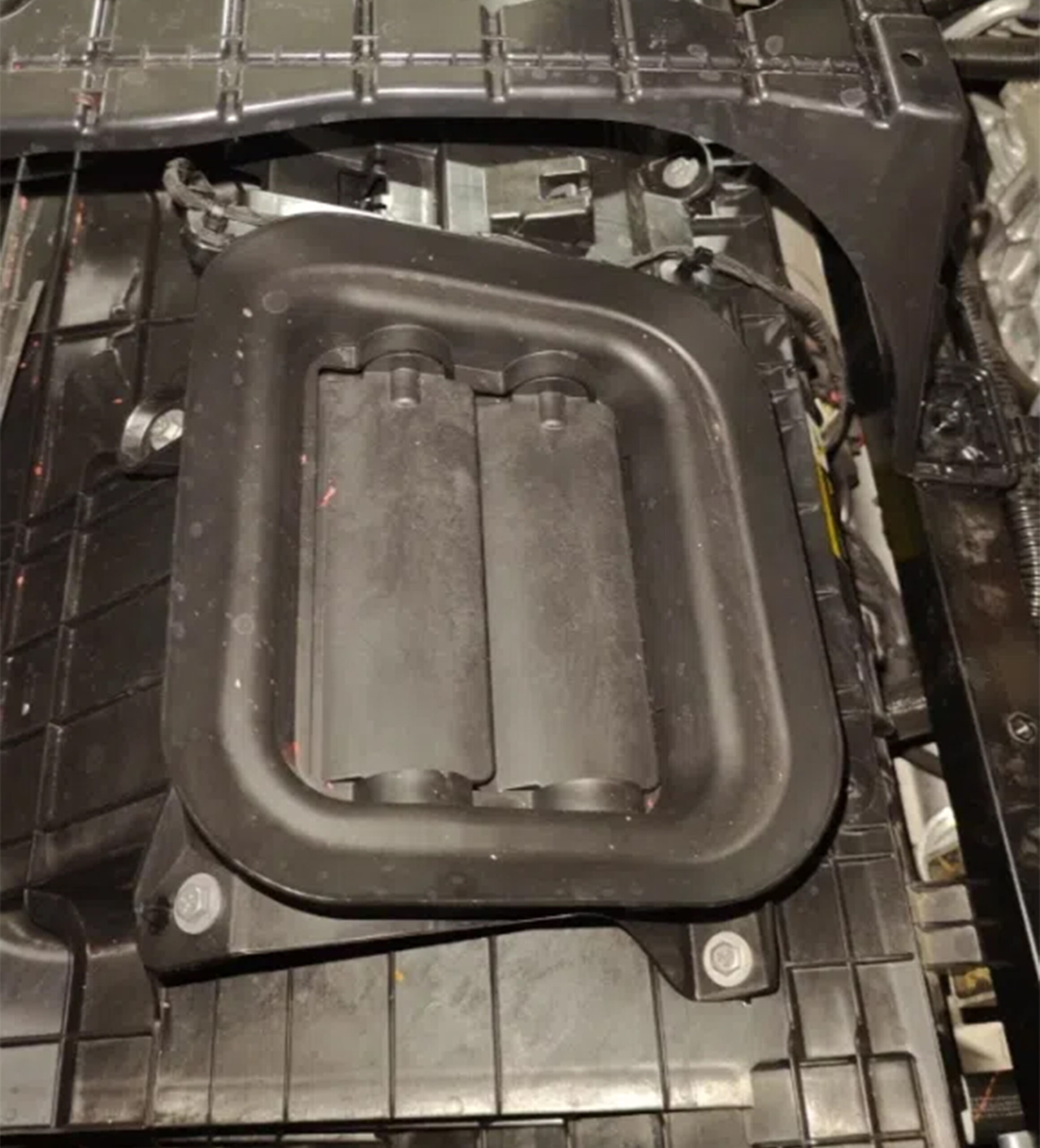
Fast forward 12 months, and Xiaomi has announced it will start making these hoods functional to owners, free of charge. The company says that engineers have modified the internal structure of the front air ducts so they can work with the active grille and increase downforce over the front axle.

According to CarNewsChina, fitting the upgrade takes between 2 and 3 hours and includes the fitment of adjustable plastic vanes beneath the carbon fiber hood. It’s a big win for owners, and Xiaomi will be hoping the move helps repair some of the trust lost during the controversy.

The controversy had already reached the courts before this fix arrived. In October last year, a Chinese court sided with an SU7 Ultra owner who sued Xiaomi over the hood. The ruling required the company to refund the owner’s hood deposit, pay 126,000 yuan ($18,300) in compensation, and cover 10,000 yuan ($1,400) in legal fees. Xiaomi also promised 20,000 reward points to each customer who bought the hood, worth roughly 2,000 yuan ($290)

 Xiaomi Finally Fixed A Feature Owners Said Was Fake, For Real This Time
❌