Reading view

There are new articles available, click to refresh the page.

Opel And Alfa Romeo’s Next EVs May Be Built Around Chinese Tech, Not German Or Italian
  • A new Opel EV may be built at a Spain plant alongside the Leapmotor B10 model.
  • Leapmotor is expected to supply key electrical and electronic parts to Stellantis.
  • Stellantis aims to deepen its ties after buying a 20 percent stake in the company.

Facing mounting pressure to cut costs and speed up timelines, Stellantis is looking beyond its own engineering bench. The automaker is reportedly exploring a plan to co-develop a new EV for Opel, and possibly Alfa Romeo too, with Leapmotor, leaning heavily on the Chinese firm’s underlying technologies.

Read: Stellantis’ Plan For Canada Looks Less Like A Car Factory And More Like A Chinese IKEA, Says Official

The move comes as Stellantis recalibrates its EV strategy following a $25 billion writedown tied to scaling back parts of its electric vehicle roadmap.

China-Based Development Plans

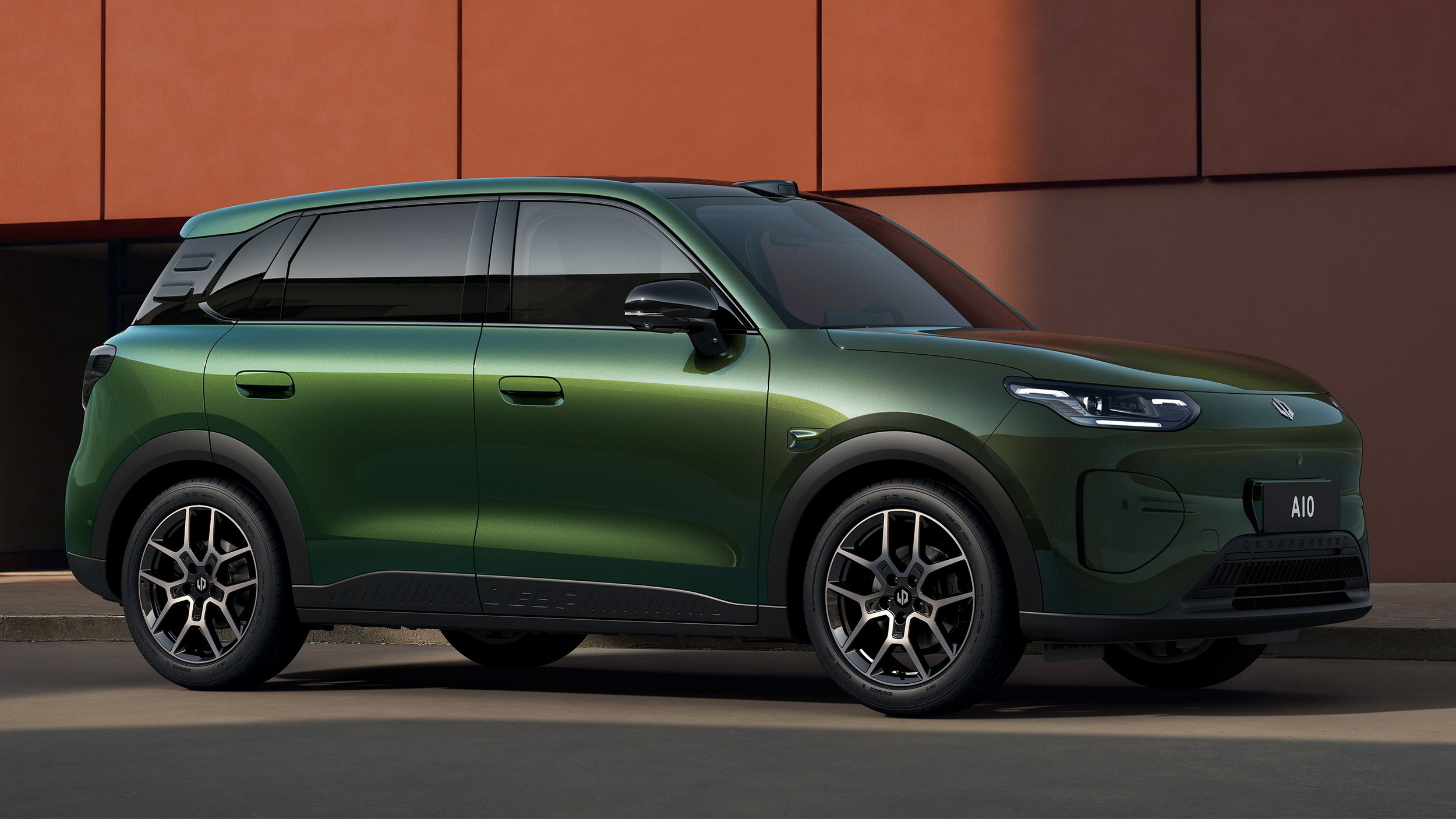
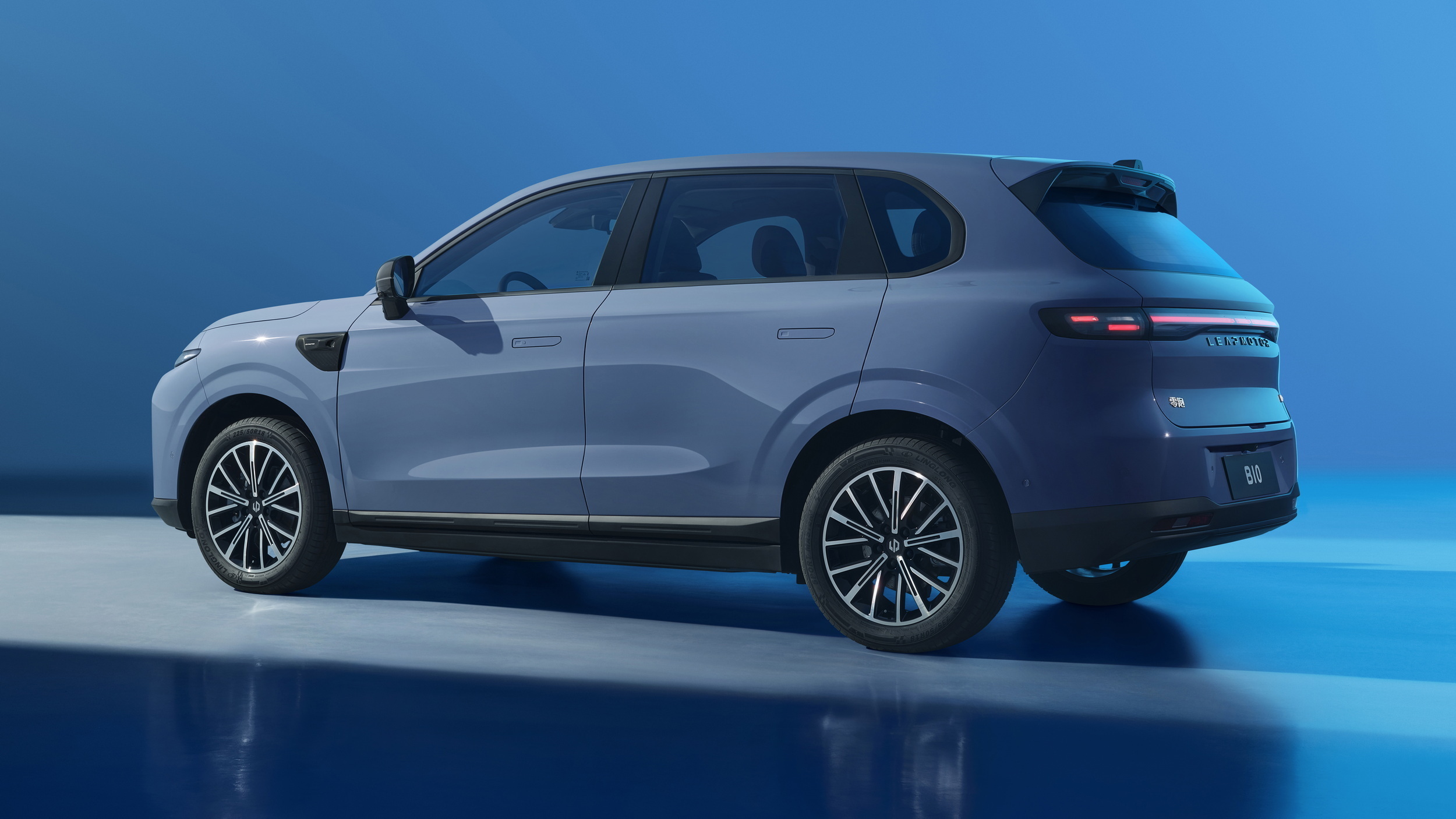
Unnamed sources claim that the new Opel could use the same architecture as the Leapmotor B10. Whether it will share the exact same powertrain remains unclear, but Leapmotor is expected to supply key systems, including electrical and electronic components, effectively doing much of the heavy lifting under the skin.

In addition, much of the development work would take place in China, with Opel focusing primarily on exterior design. Reuters reports that discussions between the two companies began late last year, and a deal could be finalized in the coming weeks.

Stellantis acquired a 20 percent stake in Leapmotor in 2023 and has since supported the brand’s international expansion through their joint venture, Leapmotor International. This entity oversees sales and production outside China. If approved, the new Opel SUV would be built at Stellantis’ Zaragoza plant in Spain, which is also set to assemble the Leapmotor B10 starting later this year.

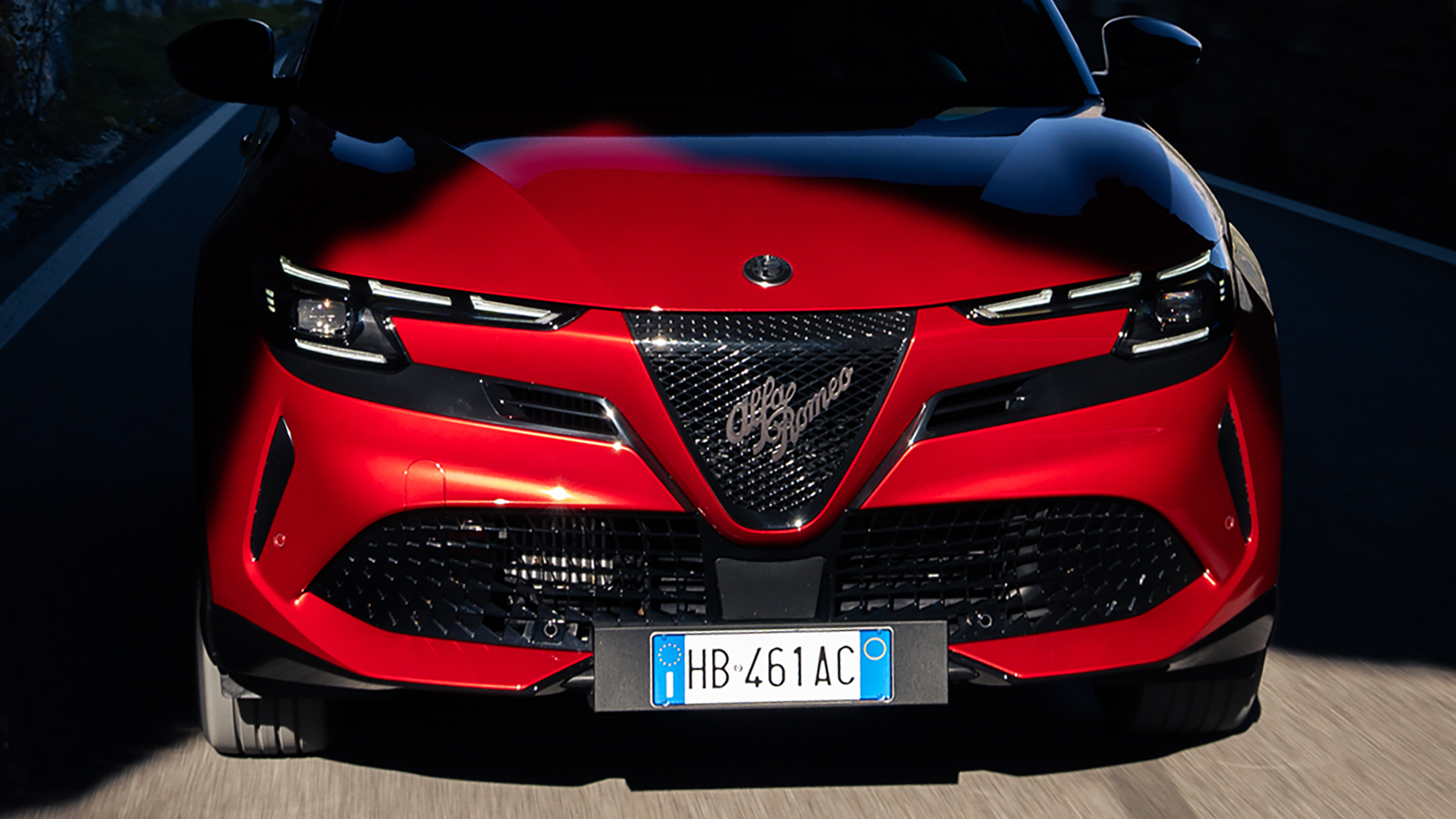
An Alfa Romeo Next?
 Opel And Alfa Romeo’s Next EVs May Be Built Around Chinese Tech, Not German Or Italian

It is understood that the new Opel could enter production in 2028, with annual output targeted at around 50,000 units. Leapmotor has responded cautiously to the reports, noting that it continues discussions with partners, including Stellantis, but has no plans for full platform-level collaboration. Instead, it remains focused on supplying its own in-house components.

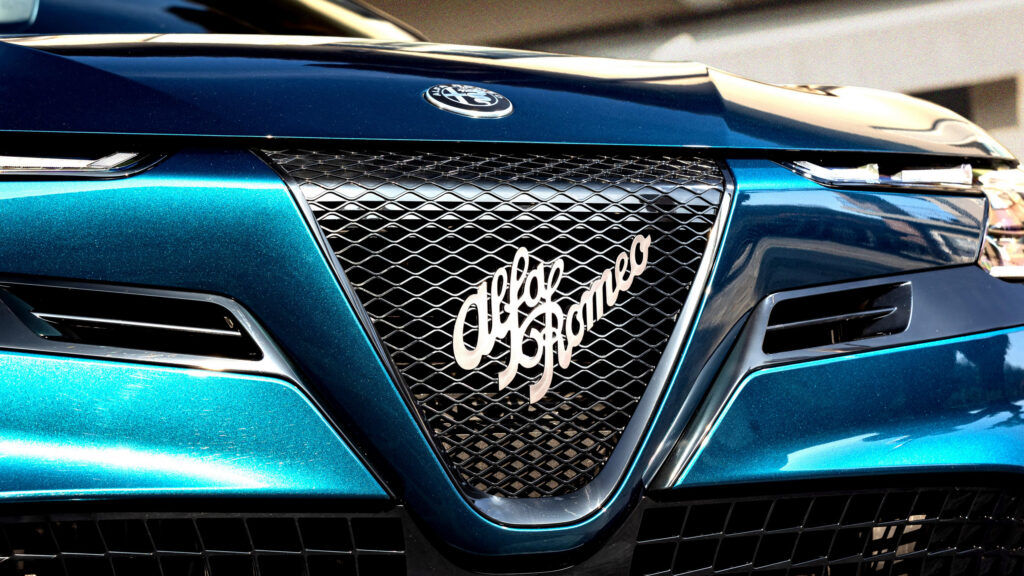
The close-knit partnership between Stellantis and Leapmotor may extend beyond a single Opel EV. Early discussions have considered applying Leapmotor’s technology to smaller A-segment models, which would likely require separate production lines. The same report also points to a possible Alfa Romeo model based on the B10 architecture, which could also be produced in Zaragoza.
 Opel And Alfa Romeo’s Next EVs May Be Built Around Chinese Tech, Not German Or Italian

Stellantis Is Building Something The ID. Polo GTI Crowd Will Want To Know About

  • Opel confirmed the GSE will be its most powerful production Corsa to date.
  • Nürburgring testing focused on chassis tuning, steering, and ESC calibration.
  • Hatch is expected to borrow its 278-hp electric powertrain from the Mokka GSE.

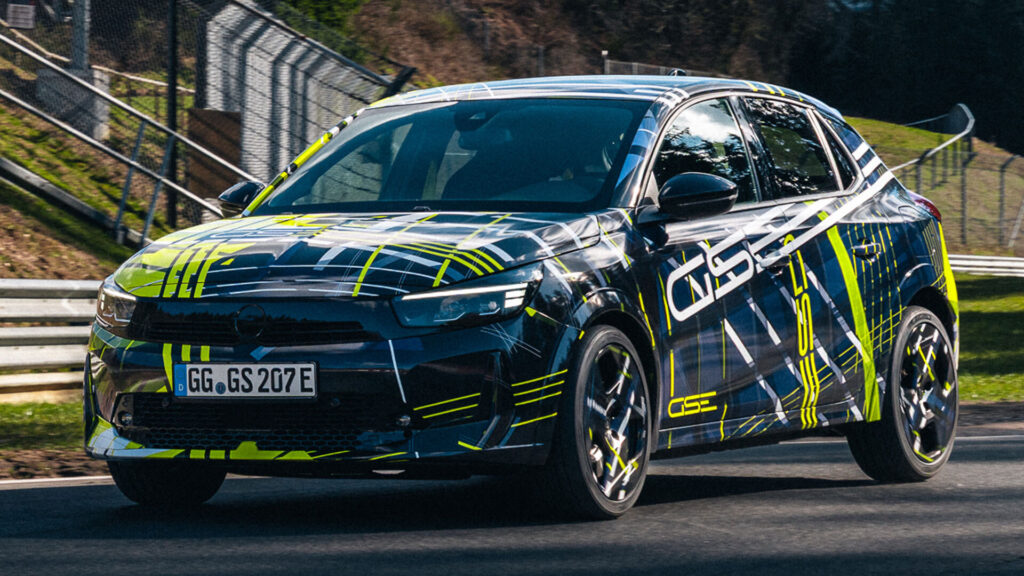
Opel announced plans for a Corsa GSE earlier this year and the automaker recently took the hot hatch to the Nürburgring for testing. Unsurprisingly, the brand’s answer to the upcoming Volkswagen ID. Polo GTI was spotted not only by spy photographers, but also by the company’s own cameras.

We’ll get to the details in a moment, but Opel said testing was primarily focused on fine-tuning the chassis. They went on to say the upcoming model will “be the most powerful series Corsa ever built” and have “specific throttle, steering, and ESC tuning.”

More: New VW ID. Polo And ID. Polo GT Leaked Ahead Of Their Debut

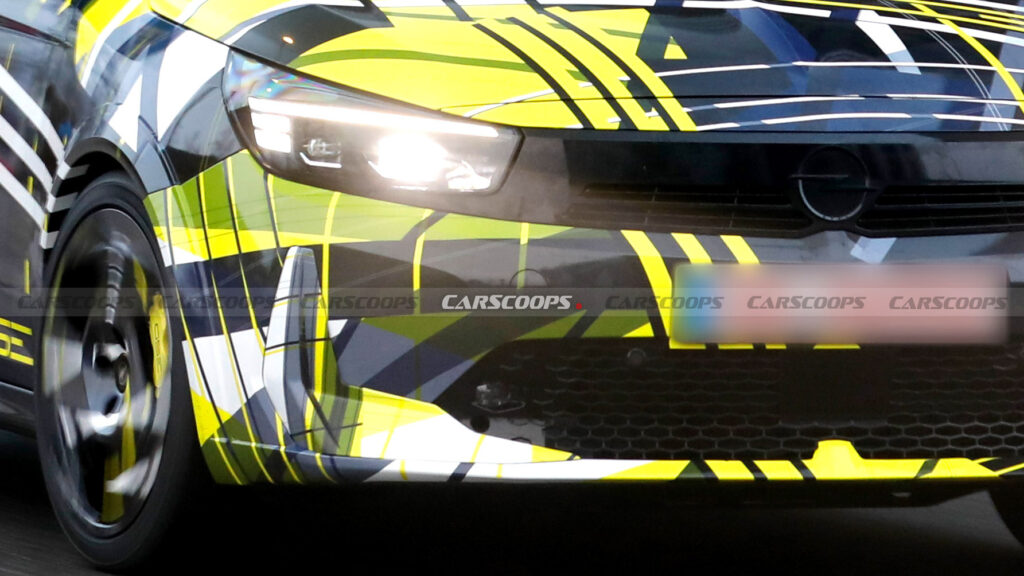
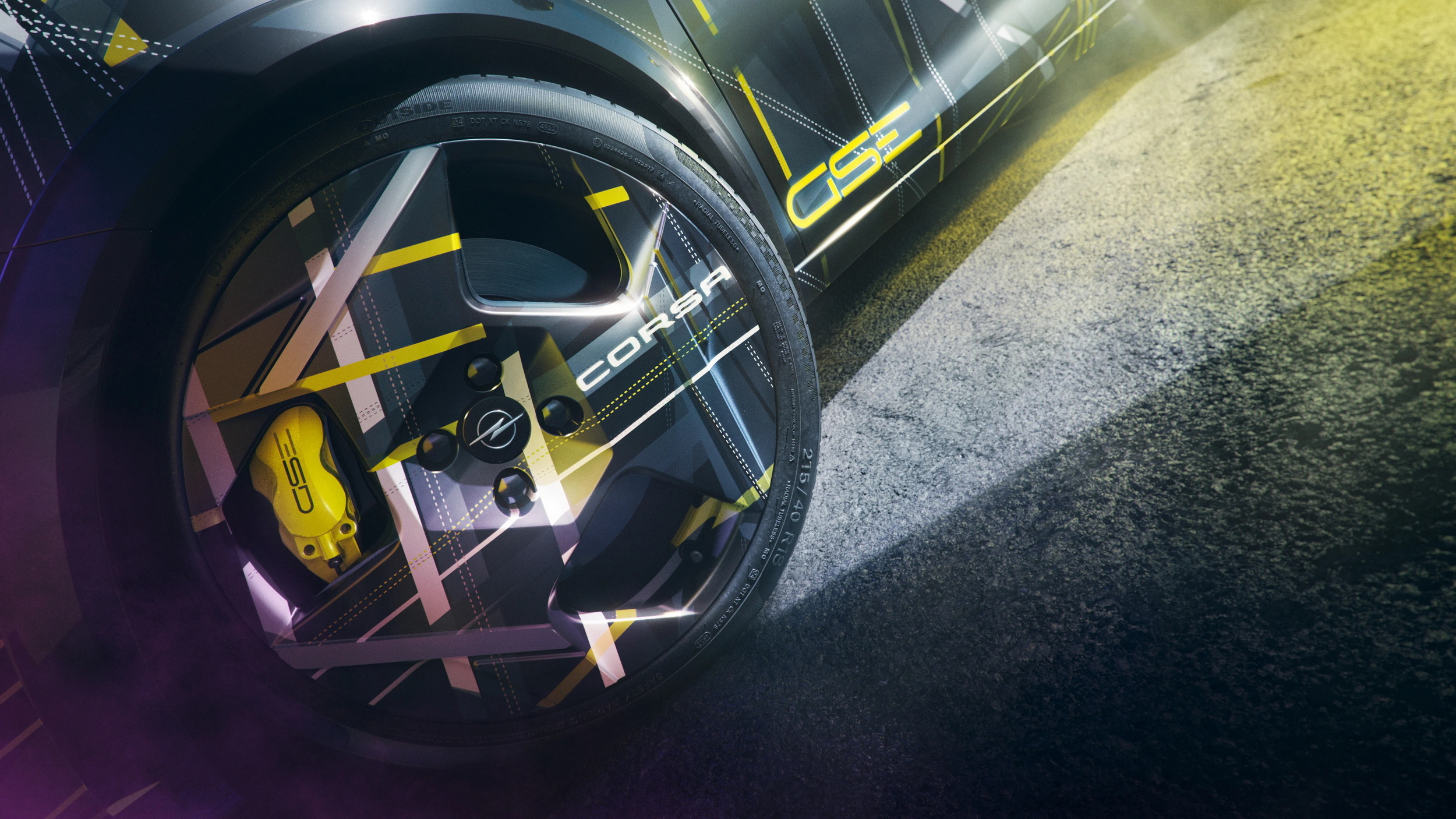
While the company is keeping details under wraps, we can see a lightly revised front end with triangular air curtain accents. They’re joined by extended fender flares and aerodynamically optimized wheels, which are backed up by yellow brake calipers with GSE badging.

The changes largely fly under the radar, but the production model could be hiding a few tricks up its sleeve. That remains to be seen, but we can expect to learn more as we approach the car’s unveiling at the Paris Motor Show in October.

\\\\\\\

Opel

One thing that isn’t much of a mystery is the powertrain as the hatchback is expected to borrow heavily from the Mokka GSE. This means we can likely expect a 54 kWh battery that powers a front-mounted motor developing 278 hp (207 kW / 281 PS) and 254 lb-ft (345 Nm) of torque. It enables the crossover to accelerate from 0-62 mph (0-100 km/h) in 5.9 seconds, before hitting a top speed of 124 mph (200 km/h).

More: Stellantis Outguns Polo GTI With New Corsa GSE

The upgrades should extend beyond the powertrain as the Corsa GSE will likely be equipped with a limited-slip differential, unique axles, and a sport-tuned suspension with special shock absorbers.

\\\\\\\\\\\\\\\\\\\\\\\\\\\\\\\\\\\\\\\\\\\\\\\\\\\\\\\\

Baldauf

Stellantis Outguns Polo GTI With New Corsa GSE

  • Opel’s Corsa GSE has been spied ahead of a debut later this year.
  • It’s expected to get a single 278 hp motor with limited-slip diff.
  • Visually and mechanically it shares much with Mokka GSE SUV.

Opel’s famous hot hatch badge is back on a GTI-type subcompact, and this time it doesn’t need a turbocharger or fancy ICE breathing to make trouble. Fresh spy shots confirm the Corsa GSE is on the way, giving the long retired Opel OPC and British Vauxhall VXR bloodline a fully electric reboot with considerably more zap than before.

We already saw a teaser last week, zoomed in tight on a wheel like it was hiding state secrets. Now the prototypes are out stretching their legs, wearing camo but not bothering to disguise the yellow brake callipers and chunky wheels that scream performance model.

Related: The Stellantis Hot Hatch You’ll Never Buy But Can Still Drive At Home

Visually, expect something close to the Mokka GSE SUV that debuted last year. That means dynamic-looking wheel rims, plenty of moody black detailing and a lower stance resulting from uprated springs and dampers. The body panels appear largely unchanged from the facelifted Corsa, but sharper bumpers and extra cladding should help it stand apart from lesser trims in supermarket car parks.

Close To 280 hp

\\\\\\\\\\

Baldauf

Under the skin, the smart money says it’ll also mirror the Mokka GSE and its Stellantis cousins. Expect a front-mounted electric motor pushing out around 278 hp (281 PS / 207 kW) and 255 lb-ft (345 Nm) of torque, plus a Torsen limited slip differential and stiffer suspension are expected to keep torque steer tantrums in check.

Opel claims a 5.9-second zero to 62 mph (100 kmh) time for the Mokka, so the lighter Corsa should knock a couple of tenths off that, matching the 5.7 seconds Peugeot quotes for the Corsa GSE’s French brother, the 208 GTI.

\\\\\\\\\

Baldauf

Power will likely come from the familiar 54 kWh battery pack fitted to both the Mokka and 208. But the driving range will come in closer to the 208’s 217 miles (350 km) than the 201 miles (324 km) Opel says the taller, heavier Mokka can deliver between charges.

Competition Hotting Up

The 208 GTI marks the first time Peugeot has dropped a GTI badge on an EV, but it won’t the £35-40k Corsa GSE’s only competition. Alpine and Mini already have hot hatch EVs on sale and VW launches its first electric GTI this year, the ID. Polo GTI.

From what we’ve seen the Polo is going to have the upper hand when it comes to design, both inside and out, but with only 223 hp (226 hp / 166 kW), it’s not going to have the firepower of the Stellantis duo.

 Stellantis Outguns Polo GTI With New Corsa GSE
Opel

After Burning $26 Billion On EVs, Stellantis Might Turn To China For EVs

  • Stronger Leapmotor ties could sharpen its VW, Renault fight.
  • A US ban on Chinese tech cars still poses a real hurdle.
  • Stellantis booked $26.1 billion in EV strategy write-downs.

Stellantis is deepening its ties with China’s fast-moving EV sector as it searches for a more efficient path through the electric transition. In 2023, the group inked a deal with Chinese EV startup Leapmotor, purchasing a 20 percent stake in the firm for $1.1 billion. The agreement made Stellantis the exclusive distributor of Leapmotor models in Western markets.

Now, it appears the relationship could extend beyond distribution, with Stellantis potentially tapping into its partner’s EV technology for brands such as Fiat, Opel, and Peugeot.

 After Burning $26 Billion On EVs, Stellantis Might Turn To China For EVs

According to Autonews, unnamed sources say Stellantis wants access to Leapmotor’s battery and EV powertrain technologies. It’s understood that discussions are in their early stages, but using Leapmotor’s systems would help Stellantis save billions of dollars in development costs, and allow it to more quickly roll out rivals to vehicles from Chinese competitors like BYD and MG, in addition to legacy brands including the VW Group and Renault.

Read: Stellantis’ Chinese Partner Built A Minivan That Makes The Pacifica Feel Ancient

However, actually using Leapmotor’s battery and EV technologies could prove challenging. For example, vehicles using connected systems linked to China will be banned from importation and sale in the US from 2027.

What’s Next for the Partnership?

 After Burning $26 Billion On EVs, Stellantis Might Turn To China For EVs

While speaking about the collaboration between the two companies, Stellantis chief executive Antonio Filosa said the “technical partnership… will help us in getting to higher level of competitiveness especially with electric cars and it is very important for Europe.”

He added the partnership will also “improve our collaboration also on new tech development,” noting that “2025 was a year of strategic implementation for the partnership, setting the stage for deeper integration”, according to Autonews.

EV Write-Downs And Reset

Earlier this month, Stellantis announced write-downs and charges of €22.2 billion ($26.1 billion) as it scaled down its EV strategy. However, it knows it can’t back away from EVs entirely, hence why it’s interested in deepening its ties with Leapmotor.

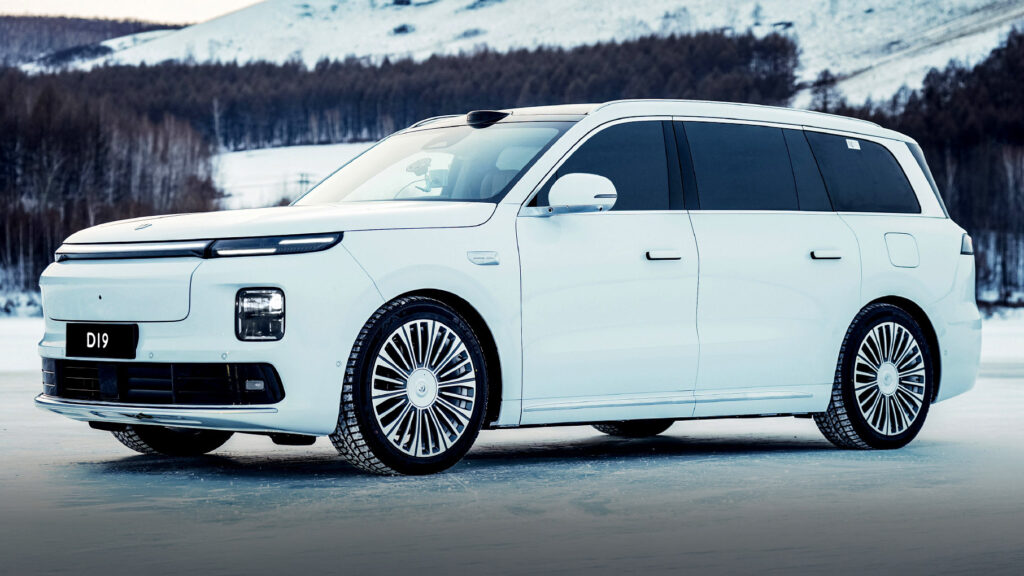
Through the Leapmotor International joint venture, Stellantis has helped the Chinese brand launch several of its models, like the C10 and B10, in markets including Europe and Australia. For a brief period, it was also building the small T03 in Poland, but this ended last year amid fluctuations in international trade policies. This year, Stellantis plans to start building Leapmotor vehicles at its Zaragoza plant in Spain.

 After Burning $26 Billion On EVs, Stellantis Might Turn To China For EVs
❌