❌

Reading view

There are new articles available, click to refresh the page.

Jeep Could Go Back To Basics With A Modern Willys

  • Jeep is exploring a modern Willys revival for European markets.
  • It could take the form of a low-cost EV targeting Chinese rivals.
  • Jeep will expand its European lineup to six models by 2030.

Jeep might not be part of the massive Stellantis stand at the Paris Motor Show, but it still managed to steal our attention with an unexpected announcement. The European chief of the American brand hinted at a new project inspired by the spirit of the iconic Willys Jeep.

Xavier Peugeot, Head of Jeep Brand Enlarged Europe, revealed bits of information about the future project during a press briefing in Paris. As reported by Autocar, he said that the Willys is a key topic of interest for the brand, and one of several new ideas for future products.

More: 2027 Jeep Cherokee Trailhawk Debuts With A Lift And Real Off-Road Capability

The high-ranking official clarified that Jeep is “not confirming any concrete launch”. Still, he implied that the Willys project could follow after the confirmed launches from Jeep’s current “Road to 2030” strategic roadmap.
 Jeep Could Go Back To Basics With A Modern Willys

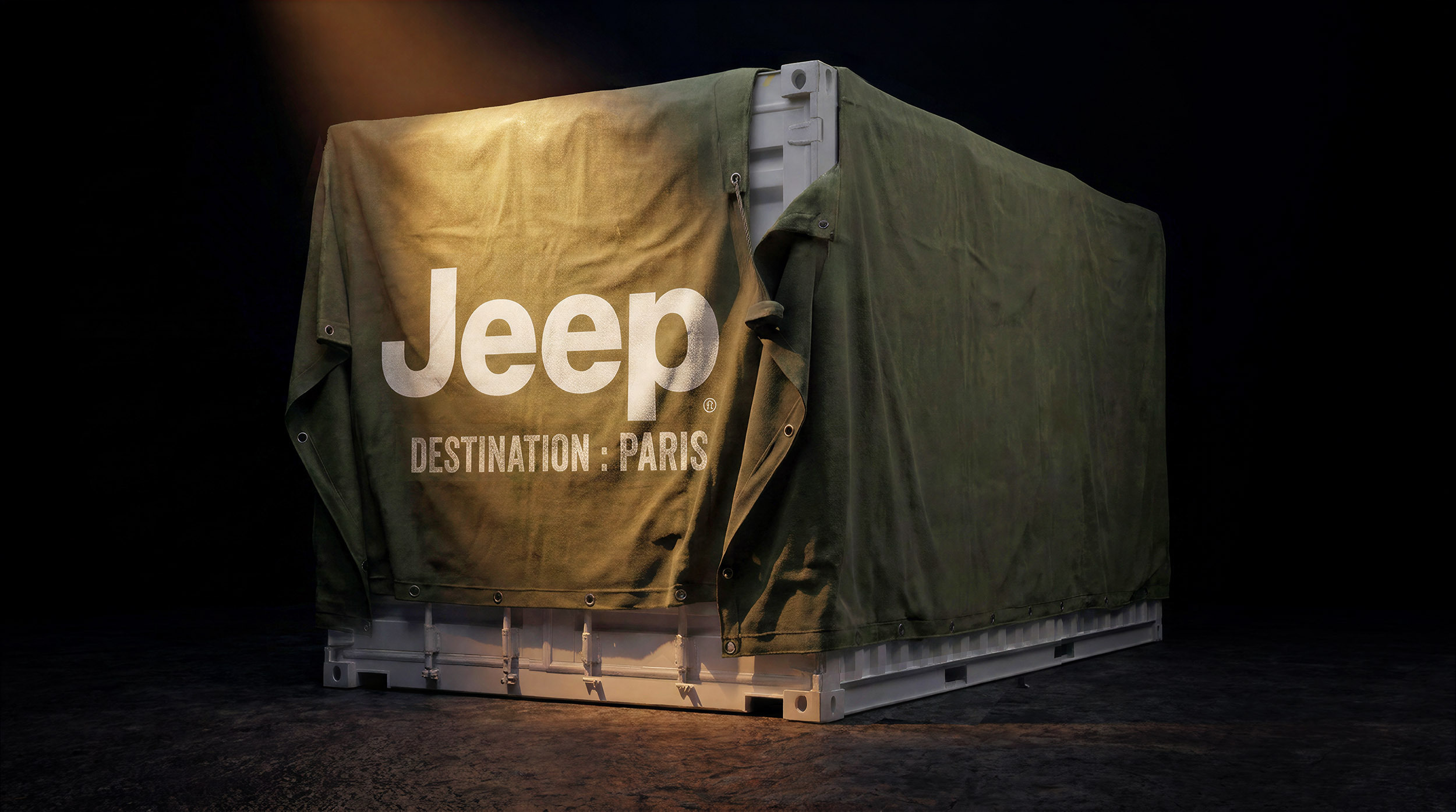
During the presentation, Peugeot showed an image of the Willy’s Jeep next to a wooden crate, featuring a “Not Fragile” stamp. This explains the mysterious teaser of a shipping container shared by Jeep last week.

Review: The New 2027 Jeep Compass e-Hybrid’s Rugged Looks Write A Check It Can’t Cash

Italian media Quattroruote reports that Jeep is currently evaluating ideas combining a compact footprint, off-road capability, electrification, and iconic styling. This suggests that the Willys revival could be positioned in the small segment, potentially below the Avenger and the future Renegade.

Peugeot admitted that Jeep’s values are important to fight the Chinese models in Europe, with the Willys described as “a key card to play.” Still, the project is at an early ideation stage, with the European chief adding: “Give us some time and we’ll come back to tell you more.” 

 Jeep Could Go Back To Basics With A Modern Willys

Jeep

Reading between the lines, a new Willys-inspired Jeep is not expected to hit European markets before 2030. While details are scarce, we picture a small boxy SUV with a no-frills character, an electrified powertrain, and an affordable price tag. However, before the project gets the green light for production, Jeep has several new models in store.

More SUVs For Europe

The company plans to expand its European lineup from two to six models by 2030. The recently facelifted Avenger and the new Compass will be joined by a new generation of the Renegade, the fully electric Recon, a yet-unnamed B-SUV (subcompact) and and a flagship D-SUV (midsize) developed in collaboration with Dongfeng.

More: Jeep’s Next Flagship SUV For Europe Comes From China, Not America

Xavier Peugeot confirmed the upcoming arrival of the Renegade, adding that Jeep “would be mad not to consider it” based on the sales of the original. He also said that the Recon will arrive in Europe in 2027 serving as a fully electric replacement for the five-door Wrangler.

 Jeep Could Go Back To Basics With A Modern Willys

Jeep

BYD’s Atto 8 Charges In Less Time Than You’ll Spend Scrolling Netflix Tonight

  • BYD’s electric Atto SUV charges faster than any rival – with the right charger.
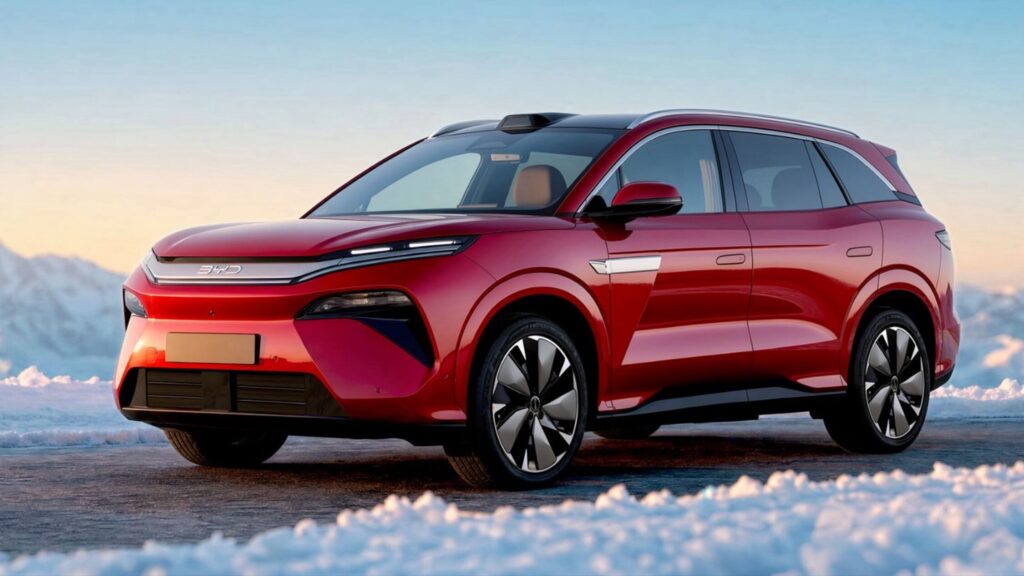
  • The 115-kWh Blade battery can charge from 10% to 70% in five minutes.
  • Most potent version makes 764 hp and gives a 374-mile WLTP electric range.

Fast electric SUVs are nothing new. But BYD’s new Atto 8 is fast in a straight line and at the charging station. You might even spend less time topping up the battery than you would pumping gas into a combustion SUV and paying for it.

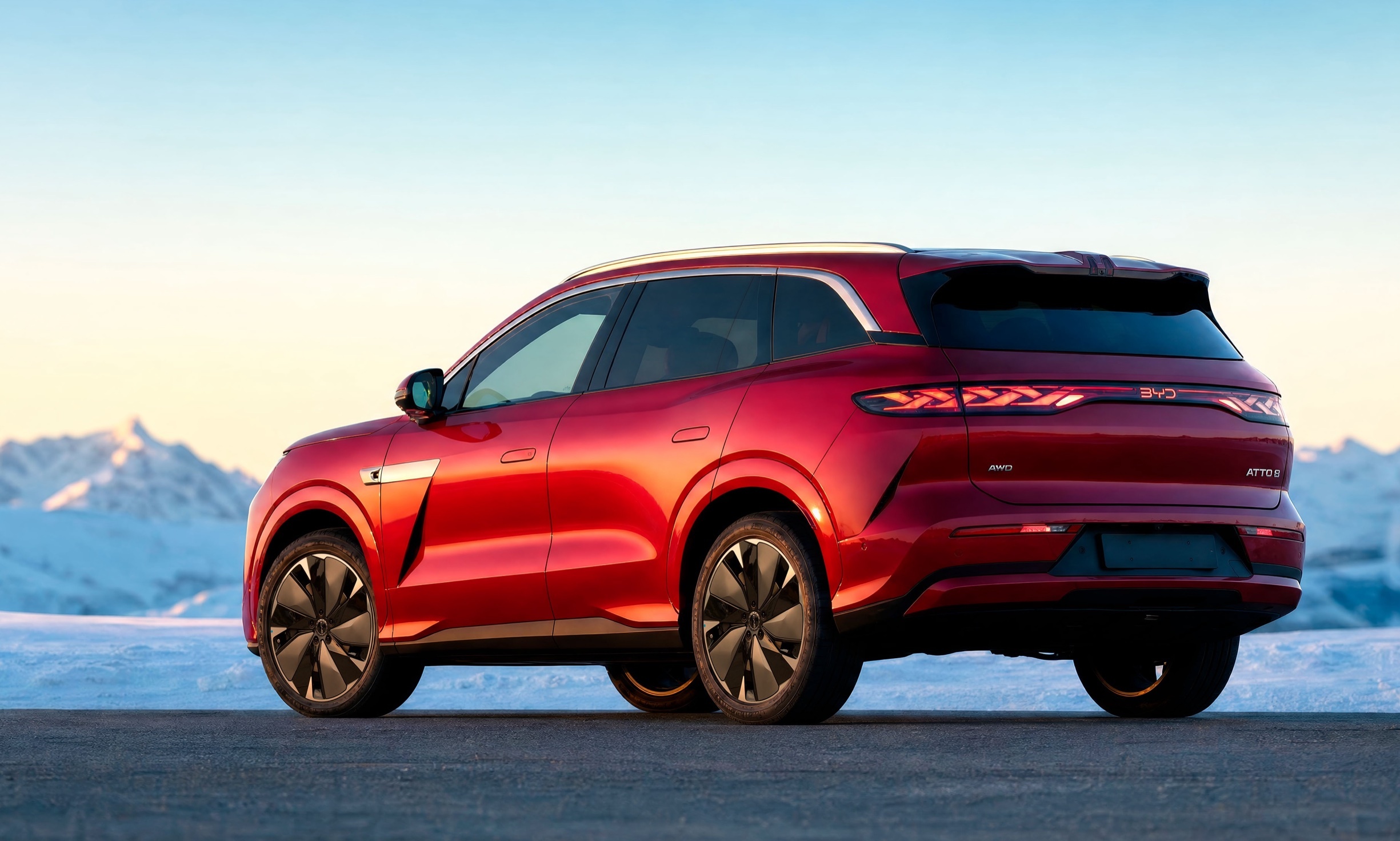
The Atto 8 made its European debut at this week’s Paris Motor Show, and on the stand, it doesn’t look particularly groundbreaking. Sure, it’s BYD’s first three-row vehicle for Europe, where it will take on the new Skodq Peaq. But the design, a predictable mashup of existing BYD styling cues, is entirely forgettable.

Review: The BYD Seal 6 Is A Perfectly Adequate EV Sedan, But That’s About It

It’s a different story under the skin. The Atto 8 is powered by BYD’s second generation Blade battery, and the generous 115 kWh capacity is actually the least interesting thing about it. Because the real story is the Atto 8’s ability to charge that huge battery from 10-97 percent full in only nine minutes.

And you can cut that almost in half by settling on a 10% to 70% fill, pulling the plug before the charge rate slows for the final push. Even in chilly (-30 C) weather, a 20-97 percent charge is done in 12 minutes. That compares with a 10% to 80% fill time of 28 minutes for the new Skoda Peaq.

BYD’s Flash Charging technology makes those feats possible, but only if you can find a Flash charger. The automaker is still building the infrastructure, so they’re few and far between right now, although BYD says 3,000 Flash stations will be live across Europe by the end of 2027.
Choose 456 HP Or 764 HP

 BYD’s Atto 8 Charges In Less Time Than You’ll Spend Scrolling Netflix Tonight

Both versions of the 198-inch (5 m) SUV get the same battery and charging capabilities, but not the same powertrain. The entry level Design comes with a 456 hp (462 PS / 340 kW) electric motor and rear-wheel drive. That might sound like a solid number of horses, but the weight of the huge battery means zero to 62 mph takes a leisurely 8 seconds.

Atto 8 Excellence adds a second motor, boosting overall output to 764 hp (775 PS / 570 kW), and chopping the sprint time to 4.6 seconds. But it also chops the available range. The RWD 8 can over a respectable 405 miles (652 km) on a fill, and the dual-motor SUV, a less impressive 374 miles (602 km).

26-Inch Head-Up Display

 BYD’s Atto 8 Charges In Less Time Than You’ll Spend Scrolling Netflix Tonight

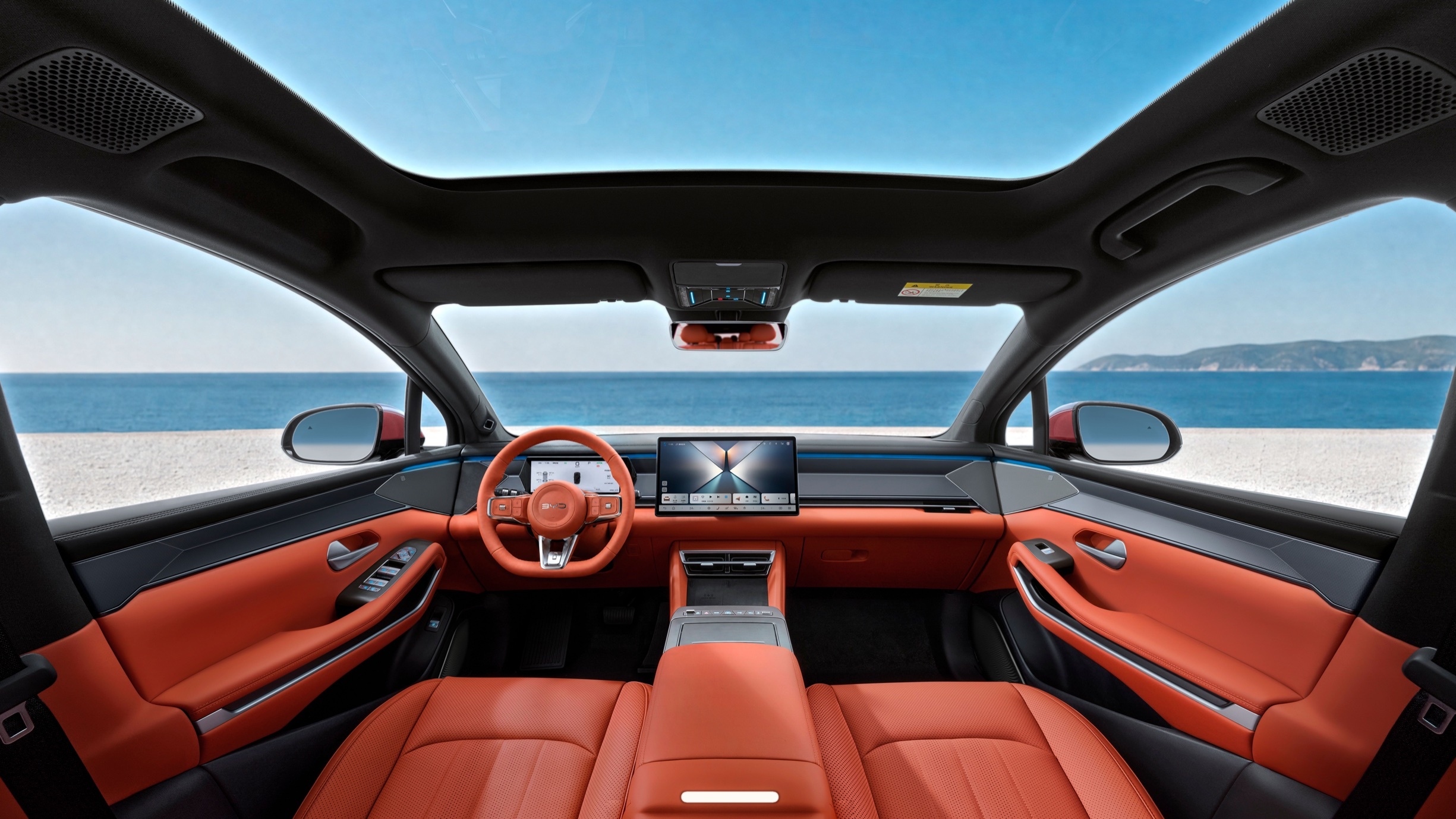
The Atto 8’s flagship status in BYD’s lineup means it comes loaded with standard equipment, including a panoramic glass roof, a 26-inch head-up display, and heating, ventilation and massage functions for both the front seats, and the outer pair in the middle row. Both models get dual 50W smartphone chargers, and Excellence models attempt to justify their name with a refrigerator.

Will it also be excellent value? We’ll find out later this year, closer to the spring 2027 on-sale date, by which time BYD might have plumbed in a few more Flash chargers.

\\\\\

BYD

Leapmotor’s Fast, Affordable B03 Lands In Europe, And VW And Renault Should Be Worried

  • Leapmotor is taking on the VW ID. Polo with the B03 subcompact electric hatch.
  • A 191 hp motor driving the front wheels pulls it to 62 mph in just 7.6 seconds.
  • The 54 kWh battery provides a WLTP range of 242 miles and V2L functionality.

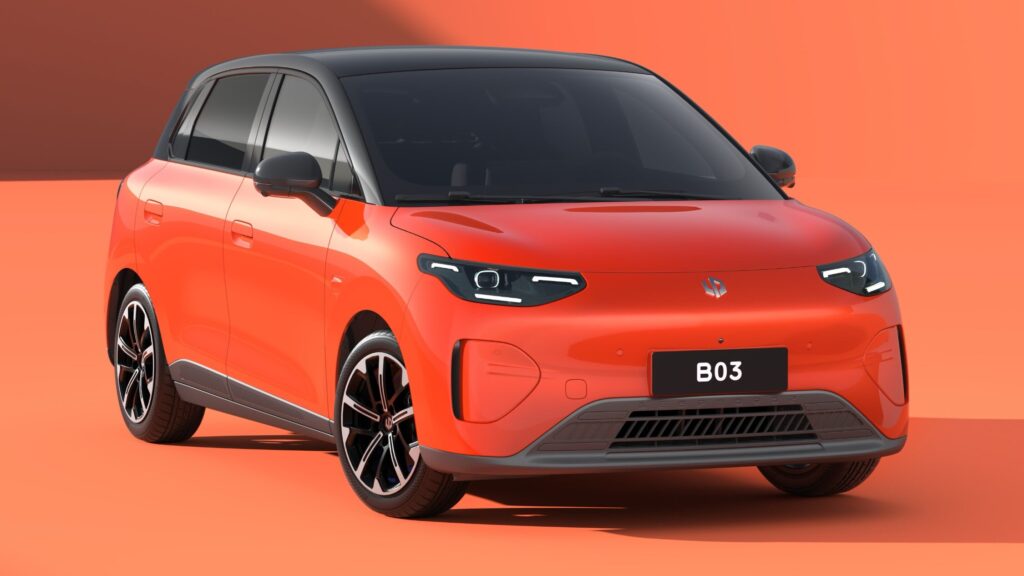
Chinese brands are out in force at this week’s Paris Motor Show, and the Leapmotor B03 is one of the cars putting Western brands on high alert. The B03 is a subcompact electric hatch designed to steal customers away from the VW ID. Polo and Renault 5 by offering more performance, more equipment and more range for a whole lot less cash.

You might have seen the B03 wearing another badge. The same car is known in China as the B05, where it costs less than €7,500 ($8,400), and even comes with Lidar driver assistance technology. Europe’s version misses out on the Lidar, and predictably is vastly more expensive, with an estimated target price of around €25,000 ($28,000). But it’s still likely to prove a hit with drivers who buy with their head, rather than their heart.

Related: Chinese Brands Are Building 90,000 Cars In Europe. In Ten Years, Make That 1.5 Million

The subcompact B03 slots above the existing T03, and below the crossover B03X says Leapmotor, which is part-owned by Stellantis. It comes standard with a 53 kWh battery that delivers a WLTP range of 242 miles (389 km). Rivals like the VW ID. Polo and Renault 5 can match, or even beat, that range claim, but not in their affordable entry-level configurations.

Almost Hot-Hatch Quick

 Leapmotor’s Fast, Affordable B03 Lands In Europe, And VW And Renault Should Be Worried

Same goes for the powertrain. The B03 is powered by a single 191 hp (194 PS / 143 kW) electric motor that’s powerful enough to haul it to 62 mph (100 kmh) in just 7.6 seconds. That makes it only two tenths slower than the Alpine A290 GT hot hatch.

The Leapmotor wins don’t end there. Its 133 kW max charge rate is faster than anything Renault or VW can deliver, and allows the B03 to charge from 10-80 percent in 21 minutes. The Chinese car’s trunk is also significantly bigger than the Renault 5’s, and although the Polo’s is bigger again, only the B03 lets you crank the passenger seat fully flat to carry long loads. You also get an underfloor storage box for wet or muddy boots and clothes.

Instantly Forgettable

 Leapmotor’s Fast, Affordable B03 Lands In Europe, And VW And Renault Should Be Worried

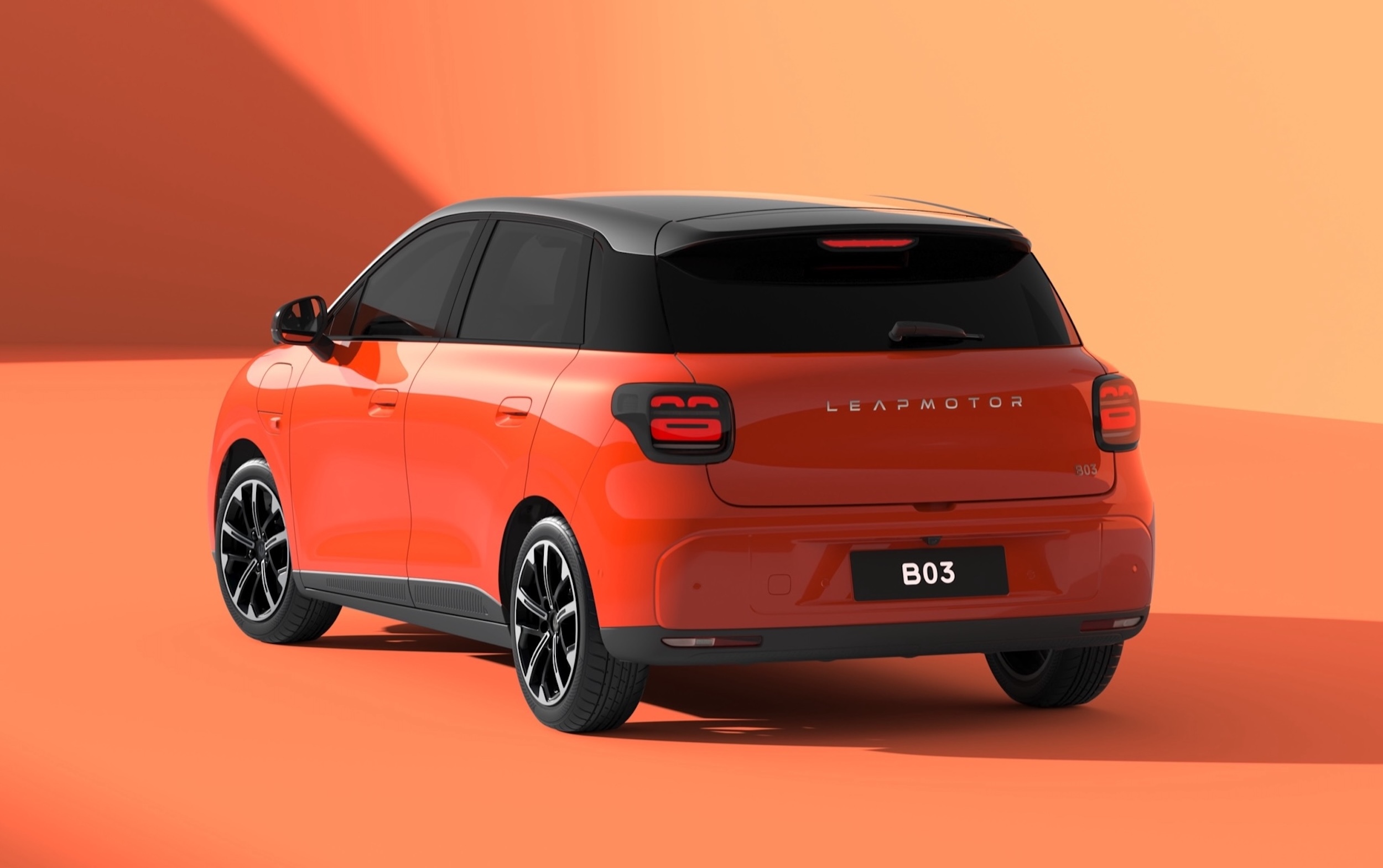
What you don’t get is a memorable design. The B03 is blandly handsome on the outside, and the interior looks like the cabin of any number of other Chinese cars. It pairs a 14.6-inch touchscreen with an 8.8 inch digital gauge cluster, and promises easy voice-activated access to many functions. Which is a good thing, because real switches are in short supply.

But bland or not, the strong power and range specifications, and a generous equipment list that includes automatic LED lights, electrically folding mirrors, a heated six-way power driver’s seat, a heat pump and V2L capability, is going to have plenty of appeal for buyers who prioritize value when European sales kick off in 2027.

\\\\\\\\\\\\

Leapmotor

New Smart #2 Is Here To Reclaim City Streets

  • Smart revealed the all-new #2 at the Paris Motor Show.
  • The two-seater EV measures 2,746 mm (108.1 in) long.
  • It rides on a Geely architecture and has a 180-mile range.

Thirty years ago, Smart introduced its first model, later known as the Fortwo. The iconic two-seater city car was discontinued in 2024, but it finally got a direct successor with the all-new Smart #2.

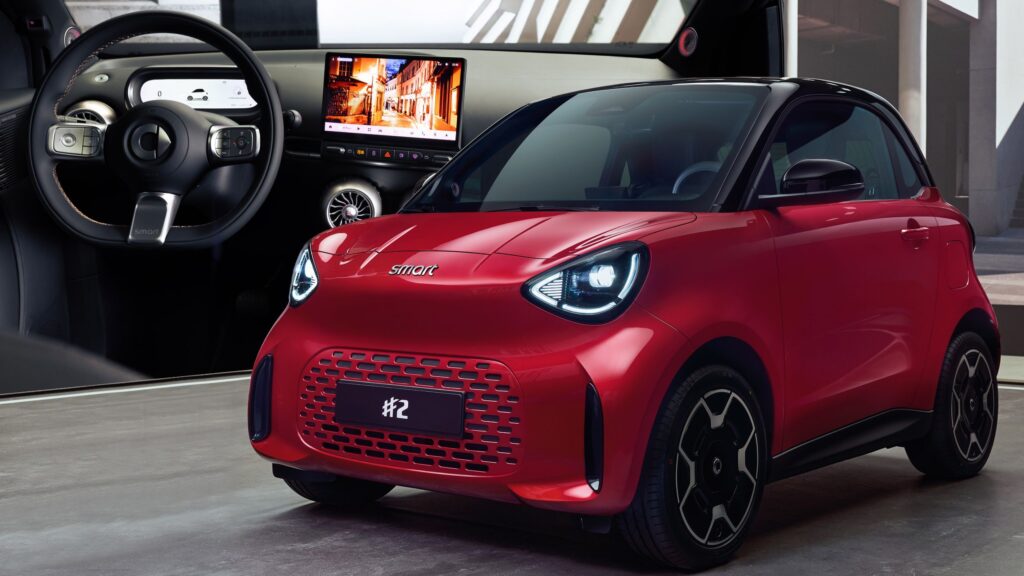
The production version of the EV debuted at the Paris Motor Show, six months after the Smart Concept #2. Visually, it looks like an evolution of the Fortwo, with modern details that have been toned down compared to the concept car.

More: Smart Thinks Its E-Class-Sized Sedan Looks Like A Shark, And Stands By It

Changes include the redesigned graphics on the aggressive headlights and the round taillights, the smaller alloy wheels, the conventional door handles, and the simplified bumpers. The shut line of the hood has been moved higher on the nose, while the side intakes on the front bumper are doing without the fancy pixel screens. Other highlights include the body-colored mesh on the grille, the floating roof, the frameless windows, and the traditional split tailgate.

\\\\\\\\\

Smart #2 Couture Edition

The lineup includes the Pure, Pure+, and Premium trims. Smart has also unveiled the concept-inspired #2 Couture Edition which is limited to 999 units in Europe. This one is distinguished by the special grille cover that looks like a Luis Vuitton bag, and the aero extensions on the front and rear bumpers. The body is painted in Atelier White Matte with a Platinum Gold roof, and rides on 16-inch Lyra wheels with gold accents.

The Smart #2 is a pint-sized EV measuring 2,746 mm (108.1 in) long, with the Couture Edition adding an extra 18 mm (0.7 in) due to the bumper add-ons. Still, the new model is 51 mm (2 in) longer than the last Fortwo, and a full 246 mm (9.7 in) longer than the original Smart from the late ’90s. Despite the extra length, the company was able to retain the 6.95 m (22.8 foot) curb-to-curb turning radius of the original.

Well-Equipped Two-Seater Cabin

\\\\\\\\\\\\\\\\\\\\\

Smart #2 Premium

Inside, the dashboard has a simple layout with round climate vents, a standard 10.1-inch infotainment display, an 8.8-inch digital instrument cluster, a special mounting base for gadgets, and a three-spoke steering wheel with integrated buttons. Smart claims that the cabin is “spacious and practical”, with bench-style seats and a cargo capacity of 305 lt (10.8 cubic feet).

More: You Can Buy A Used Mansory Smart With Less Power Than A Base Corolla For Just $80,000

Equipment is generous, especially in the flagship Premium which comes standard with a glass roof, heated seats, faux leather upholstery, and a seven-speaker Sennheiser Sound System.

Advanced Underpinnings

\\\\

The Smart #2 might have been designed by Mercedes, but it rides on the bespoke Electric Compact Architecture (ECA) engineered by Chinese automaker Geely.

The EV is powered by a rear-mounted electric motor producing 81 hp (60 kW / 82 PS) and 130 Nm (95.9 lb-ft) of torque. More importantly, the 35.8 kWh LFP battery pack offers a WLTP range of 290 km (180 miles), which is more than double the 135 km (84-mile) range of the EQ Fortwo. The battery is compatible with 65 kW DC fast charging, going from 10-80% in 20 minutes, and supports V2L.

Despite its urban focus, the company gave emphasis on driving dynamics, with wider tracks, a low-center of gravity, and a five-link rear suspension which is unique to the segment. Smart also went big on safety, with a new version of the signature Tridion Cell Evo structure, and loads of ADAS including Pilot Assist, Adaptive Cruise Control, Blind Spot Detection, Rear Collision Mitigation, and Rear Cross Traffic Alert.

\\\\\\\\\\\\\\\\\\\\\\\\\\\\\

Smart #2 Premium

Dr. Tilo Schweers, Vice President R&D Europe of smart Europe GmbH, said: “Getting the balance right in a car this compact meant tuning every detail, from chassis hard points and steering ratio to the right tyre compound for both city streets and open highways. We tested the smart #2 on proving grounds, in wind tunnels, and on public roads across different climates, because confidence behind the wheel must hold up in the real world, not just on paper.”

More: Can Pixels Beat Nostalgia? We Compared Nissan’s New Sub-€20k EV To Its Renault Twin Up Close

Smart has yet to reveal pricing, but Autocar reports the #2 will start at £17,900 ($23,700) in the UK. Since the Smart #2 is far more sophisticated compared to two-seater heavy quadricycles like the Citroen Ami and Fiat Topolino, rivals include four-seater urban EVs such as the Renault Twingo E-Tech, Nissan Pixo, Dacia Spring EV, and the upcoming VW ID. Up!.

Besides Europe and the UK, the Smart #2 will also go on sale in other markets including China.

\\\\\

Citroën Already Brought Back The 2CV, Now Its Fourgonette Van Could Get the Same Treatment

  • A panel van version of the Citroën 2 CV Concept has debuted at the Paris Motor Show.
  • It reimagines the popular 2CV Fourgonette van Citroën built between 1951 and 1978.
  • Citroën describes the van as a “passion project” and won’t confirm production plans.

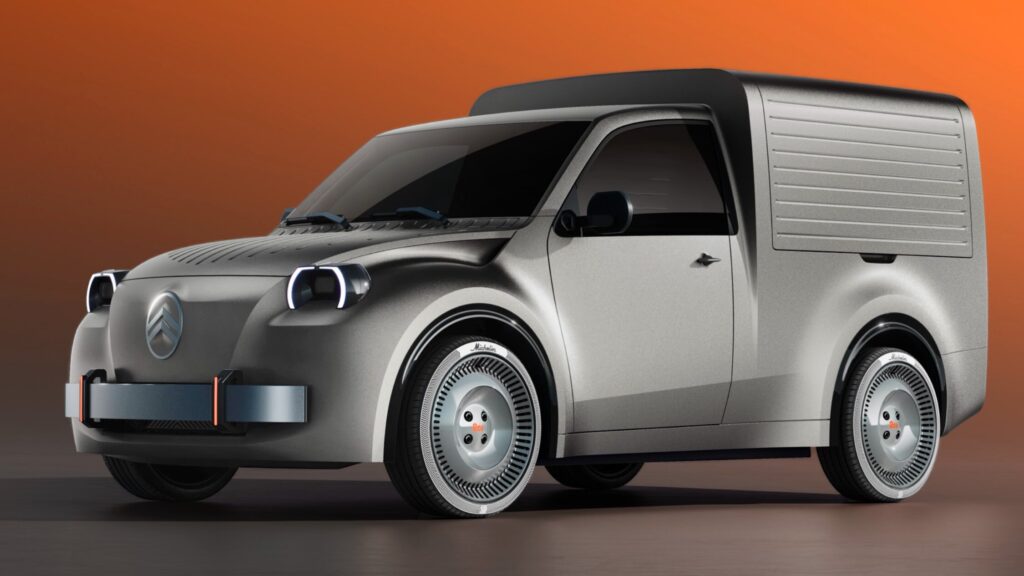
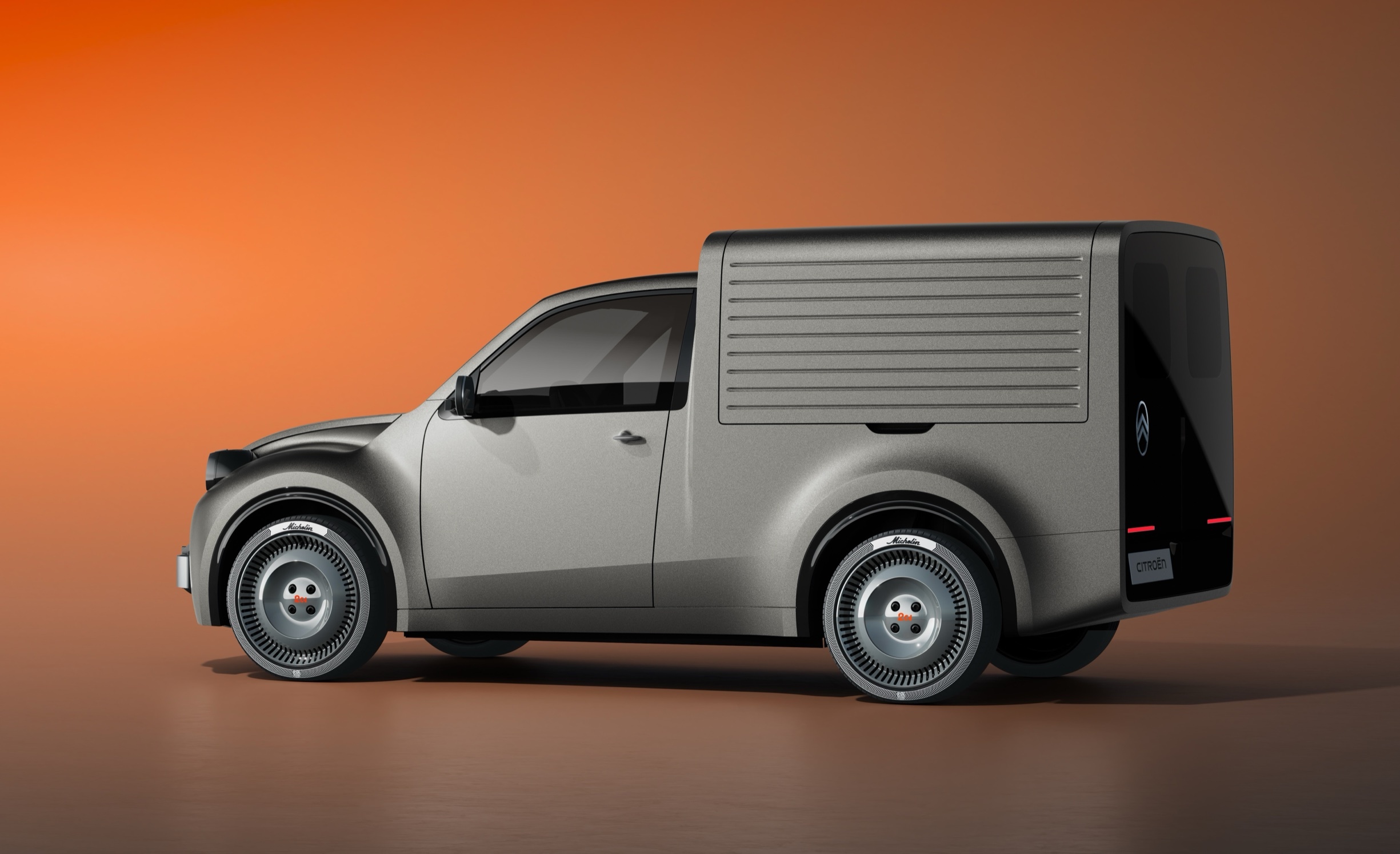
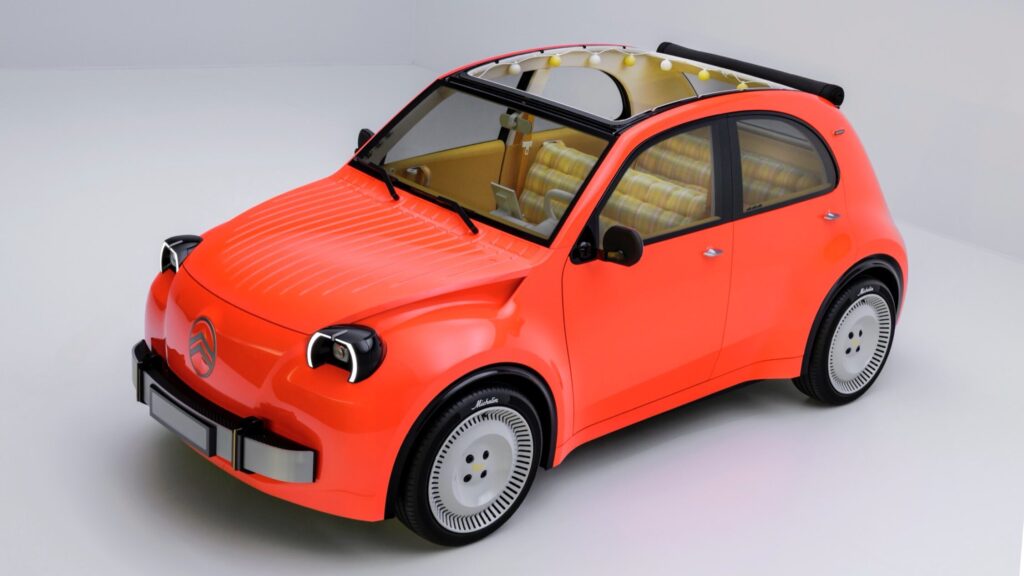
The Citroën 2CV’s return is arguably the biggest news at this year’s Paris’ Motor Show. But the four-door family car with the rollback roof might not be the only 2CV making a comeback. Citroën’s designers have also reimagined the classic 2CV Fourgonette van.

The stubby commercial vehicle marries the front half of the new electric 2 CV hatch concept with a with a square box that swaps back seats for extra load carrying capacity. Cargo is loaded either through the split rear doors, or via a flip-up panel on the side.

Related: Citroen’s 2CV is Back, And It’s Still A Safe Space For Eggs

Production of the original 2CV-based Fourgonette panel van ran from 1951 to 1978, but the survivors were still powering businesses across France well into the new millennium. And while Citroën has yet to confirm the concept van for production – unlike the hatch, which morphs into a production car for 2028 – it’s not hard to see it getting the corporate thumbs up.

Citroën’s conventional ë-Berlingo is already a popular van option in Europe, but it doesn’t have anywhere near the sense of fun or emotional draw that a new Fourgonette would. And that’s before you consider the price advantage. The cheapest ë-Berlingo costs over €24,000, but Citroën says the 2CV hatch will cost around €15,000, which would suggests a van variant might be even more affordable.

Urban Missions

 Citroën Already Brought Back The 2CV, Now Its Fourgonette Van Could Get the Same Treatment

Hitting that price target would inevitably mean making do with a small capacity electric battery, although Citroën hasn’t revealed the size of the hatch’s power pack yet. But the Fourgonette’s brief would be to cover small urban journeys, the kind of use where a long electric driving range isn’t necessary.

Citroën hasn’t shown any pictures of the Fourgonette’s interior, though it should mirror the 2CV concept’s, maybe minus some of the more cutesy elements and colors. We’d expect to see a simple one-spoke steering wheel and basic seating, but the panel van misses out on the retractable roof.

“The 2CV Fourgonnette was more than just a workhorse. It was part of everyday life,” Xavier Chardon, CEO of Citroën and DS Automobiles said of the original van. “Simple, ingenious and accessible, it above all possessed something few commercial vehicles have: a soul. That is the spirit we are bringing back to life today, because being useful should never mean being ordinary.”

\\\\\\\\\\\\

Citroën

Opel Is Keeping The Estate Alive With Its STX Concept

  • The Sports Tourer eXperimental Concept shows the future of Opel estates.
  • Opel has equipped the concept with an all-wheel-drive electric powertrain.
  • A reimagined version of the Opel Vizor is positioned at the concept’s front.

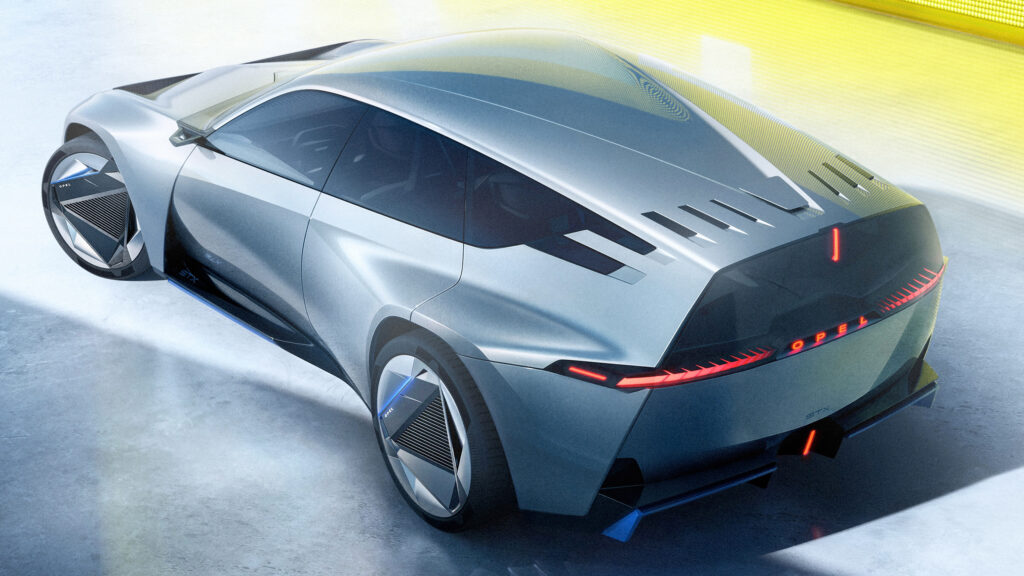
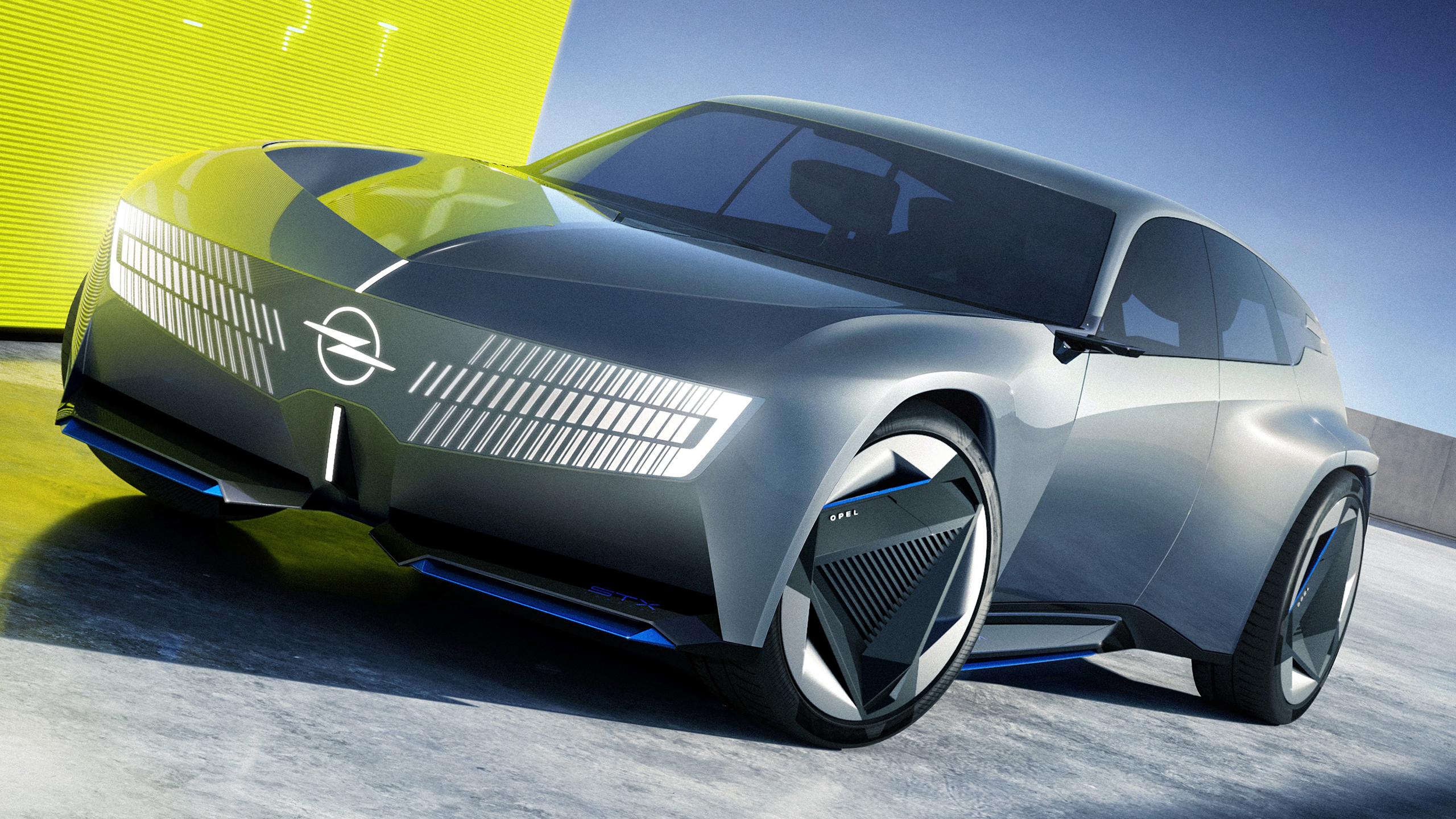
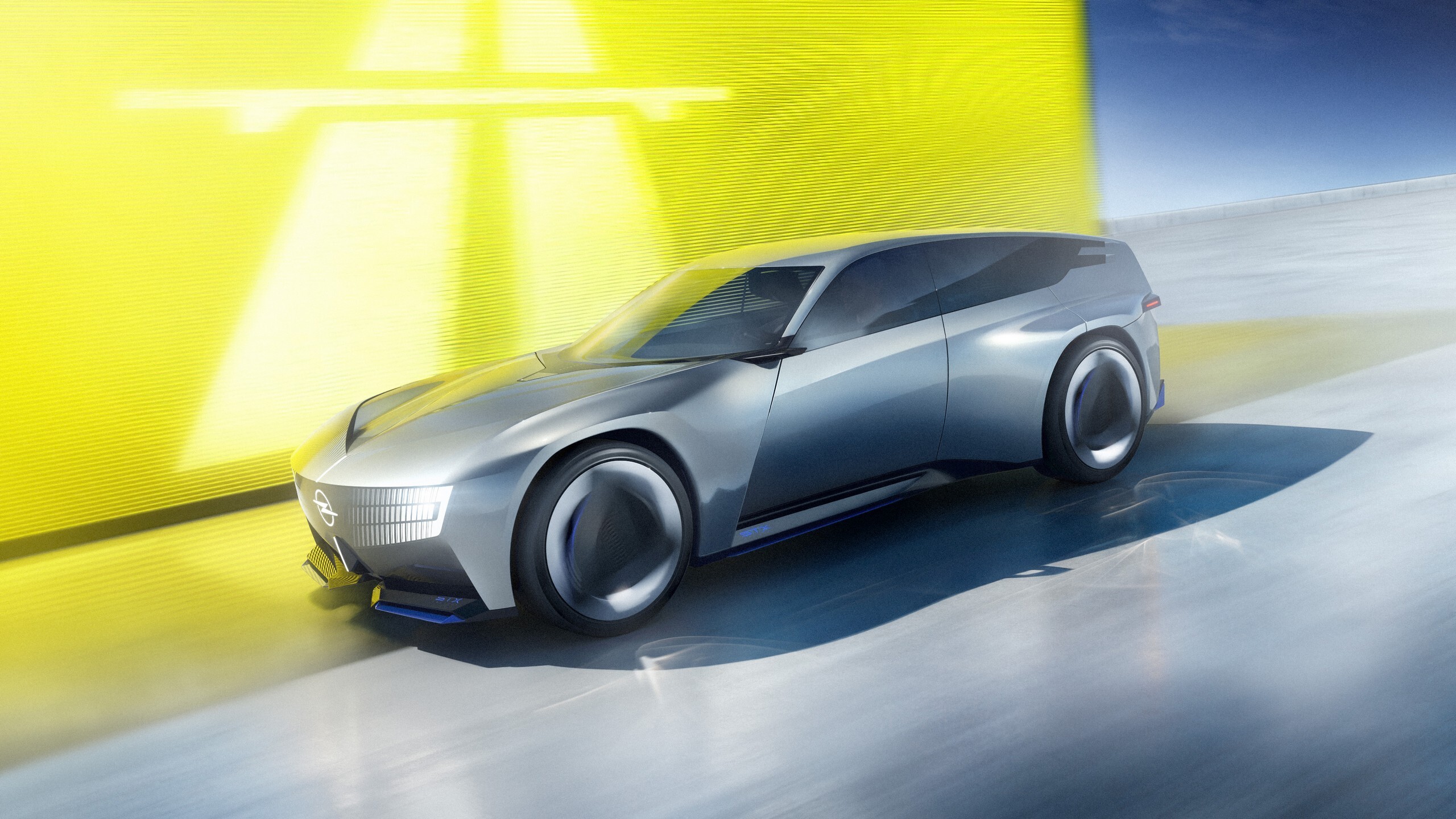
The rise of SUVs has long threatened to kill off the estates and station wagons that we all love, but several European car manufacturers still see a future in them. This includes Opel, which has just unveiled its wild STX Concept in Paris, also known as the Sports Tourer eXperimental Concept. Long live the estate.

European estates have long been characterized by their evocative shapes and low rooflines. The STX Concept checks both boxes and, according to Opel, previews a more emotional, bold, pure, and more efficient design language that will influence future models.

Read: The Stellantis Hot Hatch You’ll Never Buy But Can Still Drive At Home

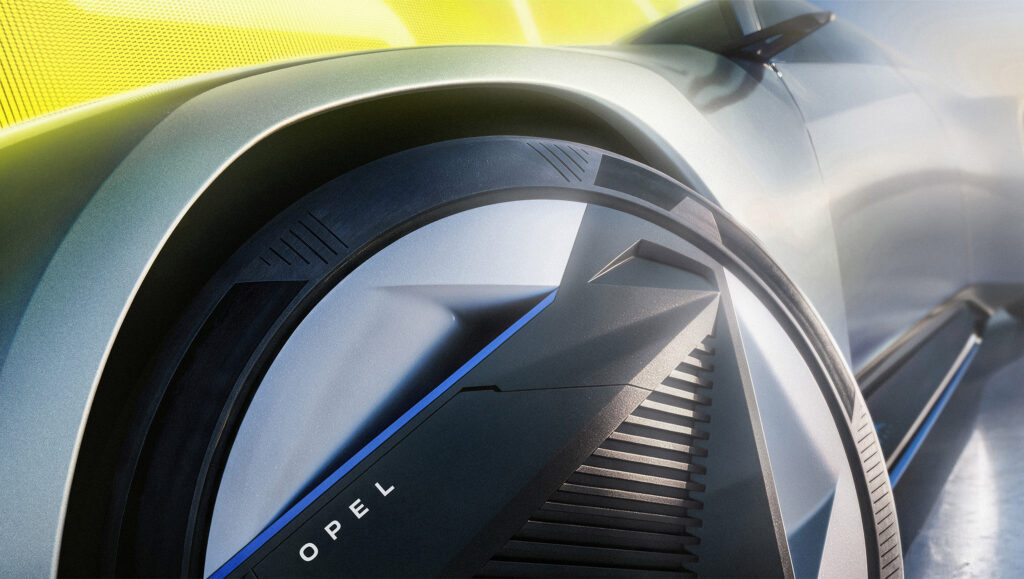
It’s been more than 70 years since Opel launched the Olympia Rekord Caravan, its first estate, and while the STX Concept looks nothing like it, it’s just as striking. The front end stands out thanks to the latest interpretation of the Opel Vizor with aggressive LEDs that gently fade towards the center. As the STX Concept has been designed around an electric powertrain, the Opel Vizor fills the space that would have historically housed the grille.

What Else Makes This Concept Special?

 Opel Is Keeping The Estate Alive With Its STX Concept

The hood is quite long given there’s no engine under it, allowing the concept to retain relatively traditional proportions. The wild, two-tone triangular wheel design is very untraditional by comparison, and when in motion, almost making it appear as though the concept is floating above the pavement.

For as sharp and bold as the front half of the car is, the rear is even more flamboyant. A key highlight is the bulging wheel arches and the thick C-pillars that flow seamlessly into the roof and the rear window. Unlike a typical estate, the roof and rear window of the STX Concept don’t gently taper off to a short tailgate. Instead, the window sits more upright, reminding us of the iconic Ferrari 250 GT SWB Breadvan.

 Opel Is Keeping The Estate Alive With Its STX Concept

Opel has not published any photos of the concept’s interior but says it will build on the ‘Painting with Light’ idea it introduced with the Opel Experimental concept from 2023 and the Opel Corse GSE Vision Gran Turismo launched two years later. Few details have been provided about the concept’s powertrain, other than the fact it has all-wheel drive and delivers enough grunt to send the car through to over 124 mph (200 km/h), a figure that won’t exactly get car enthusiasts excited.

What will get enthusiasts excited is that Opel remains committed to estates through the electric era. According to Opel chief executive Florian Huettl, “the STX Concept gives a taste of how exciting and emotional the estate of tomorrow can be – with maximum functionality and efficiency. The study shows characteristic features that will be found in future Opel models and underlines Opel’s role as an estate pioneer in Europe.”

\\\\\\\\\\\

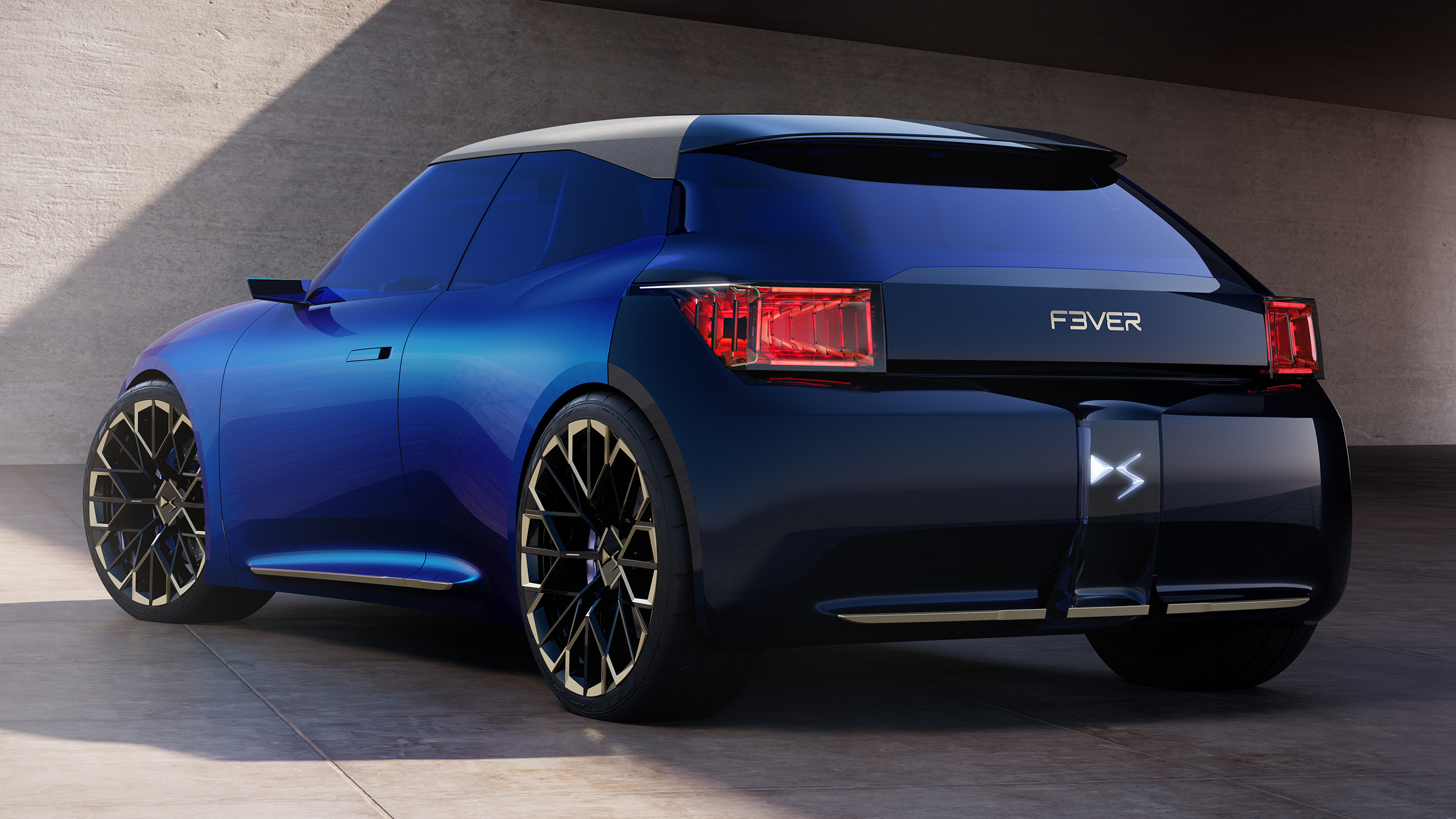
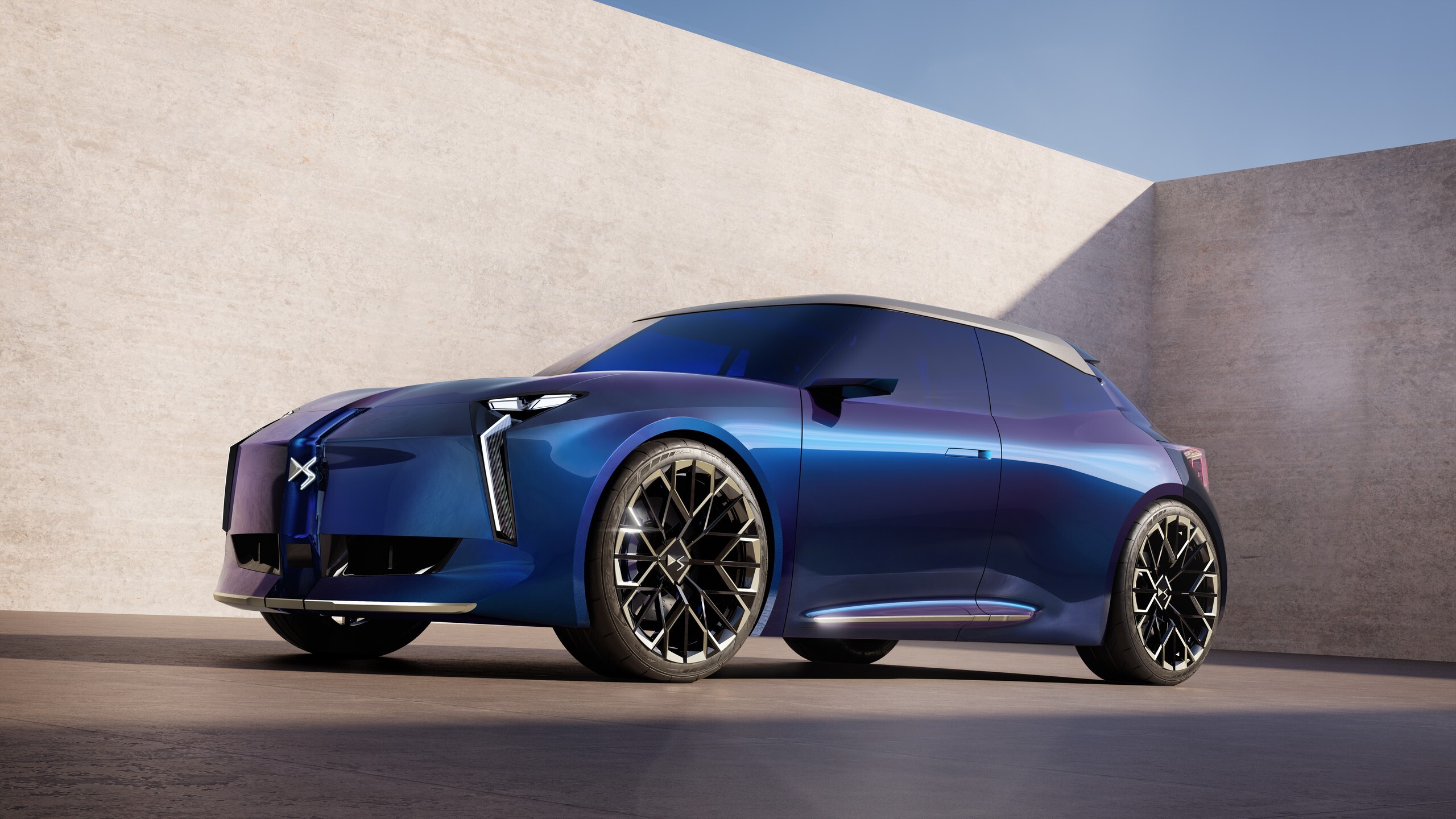
The Future Of DS Looks Very Bright Thanks To The F3VER Concept

  • This striking hatchback may preview the next-generation DS 3.
  • The concept has a two-tone blue paint scheme and dramatic LEDs.
  • DS has imagined the concept as using an advanced electric powertrain.

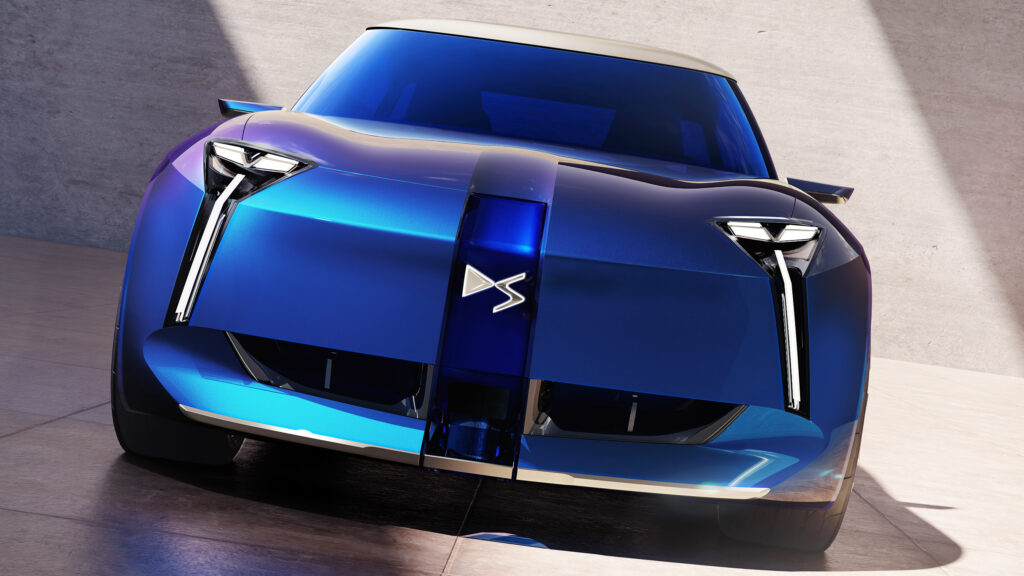
Nobody likes catching a fever, but that’s exactly the feeling DS Automobiles hopes to achieve with its new concept, albeit a positive fever. Dubbed the DS F3VER and presented at the Paris Motor Show, it provides a look into the company’s future and its “uncompromising vision of mobility.”

The DS F3VER is a bold hatchback that looks very different to any of DS’s current production models. The front-end is based around what the brand describes as a totem; a central element with a darker blue finish than the rest of the front that houses an illuminated DS badge. Wild Y-shaped headlights and LED daytime running lights also scream for attention, as does the silver element at the base of the bumper.

Read: DS Redesigns Their Best-Seller And Gives It A New Name

A silver ring of paint wraps around the concept’s roof, and there are even dramatic blue side windows. The entire rear end wears a darker shade of blue than the front and sides, and while combining two blues might seem odd, it actually works. Helping to bring the design together are the geometric wheels. The car also rocks a ‘totem’ section at the rear, similar to the front.

 The Future Of DS Looks Very Bright Thanks To The F3VER Concept

At 164.8 inches (4.19 meters) long, the DS F3VER is roughly the same length as a new Renault Clio, but it’s much wider at 72.4 inches (1.84 meters). It has a very muscular stance, which isn’t common on modern hatchbacks.

While the F3VER is a concept, DS says it’s quite practical. It rocks a 106.2-inch (2.7-meter) wheelbase and has a 14.1 cubic-foot (400-liter) trunk, so it could work well on a road trip. Of course, practicalities are rather irrelevant on a concept, but it’s nice to know the carmaker is committed to making its future models look good without adversely impacting their usability.

A Look At The Next-Gen DS 3?

 The Future Of DS Looks Very Bright Thanks To The F3VER Concept

According to DS, the F3VER delivers “powerful desirability, extensive ultra-customization and freedom of use suited to every moment in life.” While DS has only described the F3VER as a preview of its future, it’s possible the next-generation DS 3 will take inspiration from it, offering high levels of personalization while blending the practicality and style expected of one of the brand’s models.

Sadly, DS hasn’t shown the concept’s cabin, so we don’t know if it’s also gearing up to modernize the cabins of its future models. Nonetheless, if it can produce a car that looks as striking as this from the outside, it could win over plenty of customers, regardless of what the cabin may look like.

\\\\\\\\\\\\\

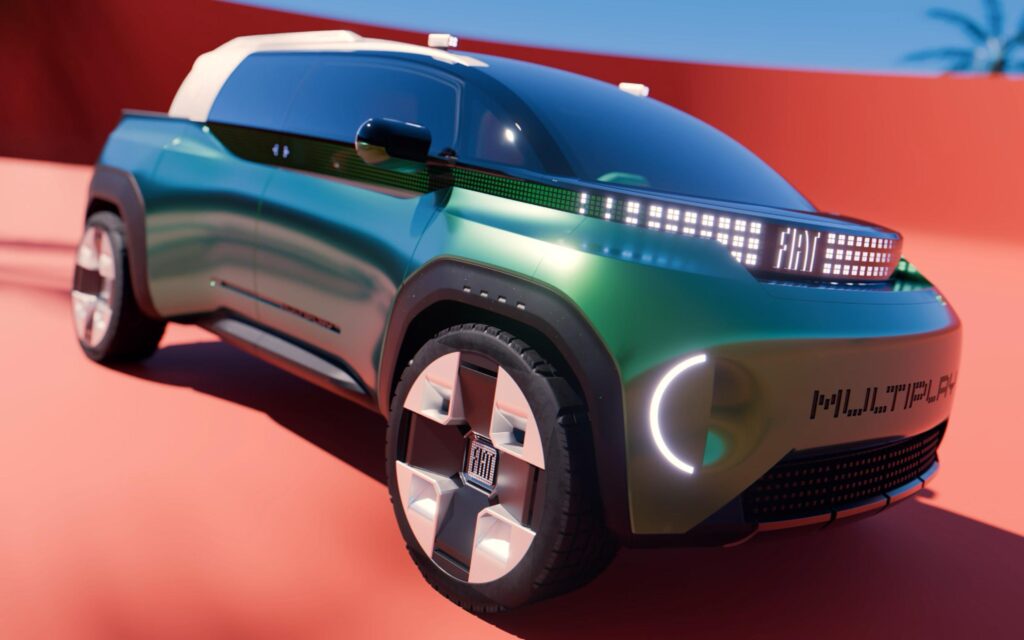
Fiat Multiplay Is A Pickup, An SUV, And A Minivan

  • Fiat has launched the new Multiplay concept in Paris.
  • It combines elements from SUVs, MPVs, and pickups.
  • It has a family-friendly cabin in the spirit of the Multipla.

Fiat Multipla fans rejoice, the spirit of the polarizing minivan is back in a quirky concept. The Multiplay is a modular vehicle that transforms from a family-friendly SUV with minivan traits into a lifestyle pickup.

The “3-in-1” concept takes center stage at the Paris Motor Show. In Fiat’s own words, the goal was to combine “the space efficiency of an MPV, the character of an SUV and the versatility of a pick-up”, creating a single vehicle that meets the needs of “a family juggling work, school, sport and outdoor activities”.

More: Fiat Revives The Multiplina And Rolls Out New Topolino Editions

Visually, the Multiplay looks like an evolution of the Fiat Concept Pick-Up from 2024, albeit with a much shorter hood, a different greenhouse, and a revised lighting signature retaining the pixel-style LEDs from the Grande Panda. It also has a generous ground clearance and plastic cladding around the wheel arches looking like a crossover minivan.

\\\\\\\\\\

Stellantis

However, the coolest feature is its ability to transform into a different bodystyle thanks to what Fiat calls the “Metamorfosi” architecture. The rear section of the roof slides forward together with the third row of seats, turning the Multiplay into a dual-cab four-seater pickup with an exposed cargo are at the back.

More: Fiat’s Cheapest Crossover Hatchback Gains A New Name And A New Mission

In truck form, the concept has a split tailgate, a retractable bed cover and a clever system on the modular floor for securing cargo in place. Furthermore, the roof spoiler can rotate, revealing an integrated bike rack for carrying a pair of bicycles.

\\\\\\

Stellantis

The Multiplay measures 4.45 m (172.5 in) long which is shorter than a Jeep Compass. Still, when dressed as an SUV it has a three-row interior with a 6+1 seat configuration designed for family use.

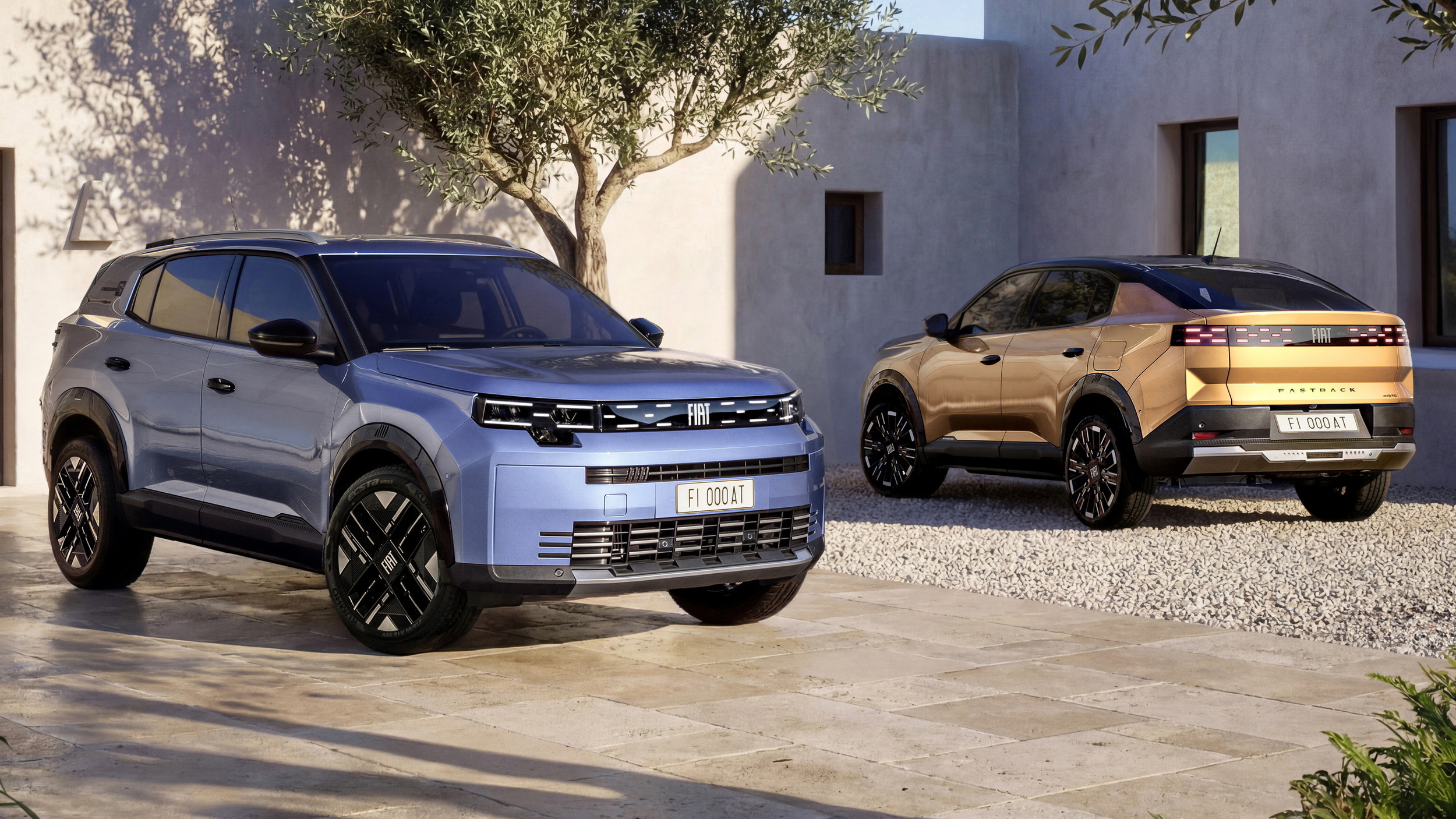
More: Fiat’s New Grizzly SUV Is Hunting The Dacia Bigster, And It Didn’t Come Alone

The number six is used deliberately, as the 1955 Fiat 600 Multipla could seat six people in three rows despite measuring 3.5 m (137.8 in) long. In a similar context, the 1998 Fiat Multipla came with a two-row six-seater layout while measuring only 3,994 mm (157.2 in) long.

The +1 refers to a “Petsenger seat” in the second row, distinguished by the lack of a seatback and the green upholstery. The rest of the interior is bathed in orange, with green details on the futuristic dashboard, a yoke steering wheel and an ultra-wide display. Another cool touch is the front passenger seat which folds down into a comfortable recliner in combination with the cylindrical pillow on the dash.

\\\\\\\\

Stellantis

The automaker didn’t get into specifics about the underpinnings or the powertrain type of the concept. Still, with no room for a combustion engine up front, it is most likely an EV.

Will They Make It?

Fiat insists that the Multiplay doesn’t preview a specific production model. Instead, it was conceived as “a laboratory of solutions for tomorrow’s mobility” meaning that some of its quirks could find their way into the future lineup.

While the “3-in-1” concept is too crazy for production, Fiat could always introduce a unibody pickup based on the underpinnings of the Grizzly and Grizzly Fastback. This could adopt a Panda-inspired styling language and eventually replace the Fiat Toro in South America. The production version of the Concept Pick-Up from 2024 could ride on the Smart Car architecture, which is compatible with gasoline, mild-hybrid, and fully electric powertrains.

 Fiat Multiplay Is A Pickup, An SUV, And A Minivan

Citroen’s 2CV is Back, And It’s Still A Safe Space For Eggs

  • Citroen is taking on cut-price Chinese EVs with a homage to the iconic 2CV.
  • A production version of the retro 2 CV Concept hits showrooms in late 2028.
  • In-door egg storage nods to the original 2CV’s quirky egg-friendly design brief.

The Mini Cooper, Fiat 500, VW Beetle, Renault 5, Chevy Camaro, and other classics have been resurrected to push our nostalgia buttons over the last 30 years. But the Citroën 2CV was always a glaring absentee from the list, until this week’s Paris Motor Show. This is the 2 CV Concept, and it’s more than a bit fun. A production version arrives in 2028, Citroën promises.

Previous Citroën CEOs vowed they’d never resurrect the iconic 2CV, despite it remaining the brand’s most famous car. More than 3.8 million were sold between 1948 and 1990. But now Citroën, like other legacy brands, is making use of its heritage to remind us why we should stick with it as Chinese automakers take an ever larger slice of the European car market.

Review: Stellantis Gave Citroen C3 And Fiat Grande Panda The Same Bones, But Not The Same Soul

The result is a four-door electric hatch concept that doesn’t just dip its toe in retro waters. It free dives right to the bottom. All the classic design cues are present. The plunging, ribbed hood, the bug-eye headlights on fenders that stand proud of the flat bodywork, and the roll-back canvas roof. But there’s a pumped-up muscular look this time around, and the wide track and 19-inch wheels fill the fenders like no original 2CV ever did.

It’s also around 8 inches (0.2 m) smaller than the OG tin snail, at 148 inches ( 3.76 m) long. Citroën says that size makes it easy to park in cities, but it will also help keep the cost of the production version down to just €15,000 ($16.8k / £12.7k).

Removable Seats, Egg Storage

\\\\\\\\\\\\\\\\

The interior definitely doesn’t scream ‘budget car,’ even if it does channel the simplicity of the original. The bench seats can be removed for picnics, and a portable hamper on the floor serves as a console and storage cubby. The doors even have an integral egg box. Why? Because the original 1930s design brief for the 2CV called for a car that could carry a basket of eggs across a rutted field without any breakages.

Other retro details include a single-spoke steering wheel and transmission shifter that sprouts from under the dash. But that shifter is hooked up to an electric drivetrain here, not an air-cooled 2-cylinder and four-speed manual.

Citroën hasn’t revealed anything about the motor and battery. But it’s unlikely to be fast, or go far on a charge. The target price makes it impossible. Rival Renault’s base model Twingo produces 81 hp (82 PS / 60 kW) and lasts 163 miles (262 km), which might offer some kind of guide. We’ll find out more in the run up to the production 2CV making its global debut at the 2028 Paris Motor Show, exactly after the original premiered at the same event.

\\\\\\\\\\\\\\\\\\\\\\

Citroën

Alpine’s Hot Hatch Just Became More Stylish With A Simple Trick

  • Alpine introduced a new Collection trim for the electric A290.
  • Body-colored wheel arches replace standard black cladding.
  • Available with 180 hp or 220 hp, it also gets an exclusive interior.

The Alpine A290 was introduced in 2024 as a hotter version of the Renault 5 E-Tech with a custom bodykit and more powerful electric powertrain options. Two years later, Alpine has introduced the A290 Collection trim, refining the exterior design while adding special touches inside the cabin.

The new spec was corrected by the Atelier Alpine personalization program and is available across the A290 lineup including the GT, GT Performance, and GTS trims.

More: Alpine Teases Next A110’s Design, But It’s What’s Underneath That Will Make Or Break It

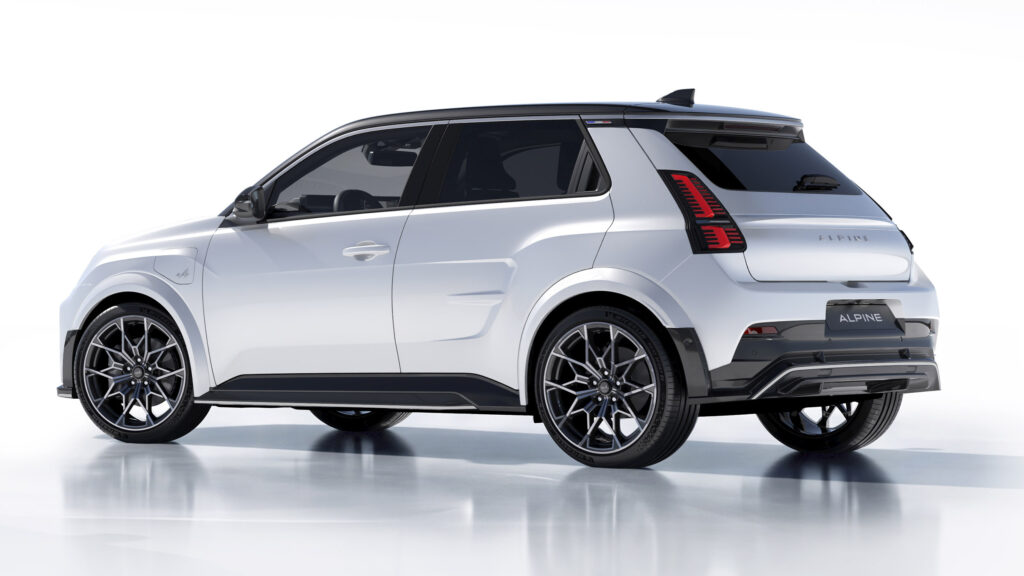
The A290 Collection comes standard with a Blanc Nival (Snow White) shade although buyers can also choose the more sophisticated Bleu Orage Mat (Matte Storm Blue) color. In both cases the roof is finished in Deep Black, matching the aero add-ons on the bumpers and side skirts.

\\\\\\\\

Alpine

Still, the highlight is the body-colored fender extensions. These look much nicer compared to the crossover-inspired black cladding found on the standard A290 and the closely-related Renault 5 E-Tech.

Review: The Fun 2026 Renault 5 EV America Will Never Get To Buy

Another special treat is the 19-inch diamond-cut alloy wheels with a snowflake design, featuring Silver Grey front brake calipers. Finally, the model gets chrome Alpine monograms on the charging port and an optional French flag on the C-pillar.

The interior combines Deep Blue and Evee Grey colors for the seat upholstery, and the stylish inserts on the door cards, dashboard, and center console. There is also a black heated steering wheel which is optionally available in blue.

\\\\\\

Alpine

The Collection treatment is applied to both powertrain flavors, with a single electric motor generating 178 hp (130 kW / 180 PS) or 217 hp (160 kW / 220 PS). The standard 52 kWh battery pack is good for 236 miles (380 km) of WLTP range.

More: Alpine’s Latest Creation Has Pop-Down Headlights

The fully electric hot hatch is important for Alpine as it currently accounts for 70% of its sales. Furthermore, nearly 80% of A290 buyers are coming from a brand outside the Renault Group.

The Alpine A290 Collection will be exhibited at the Hall 6 of the 2026 Paris Motor Show, held in the French capital between October 12 and 18. It will be joined by highly personalized examples of the A390 fastback crossover, a sculpture of the next-generation A110 sports car and a mysterious concept that could evolve into a production GT.

\\\\

Alpine

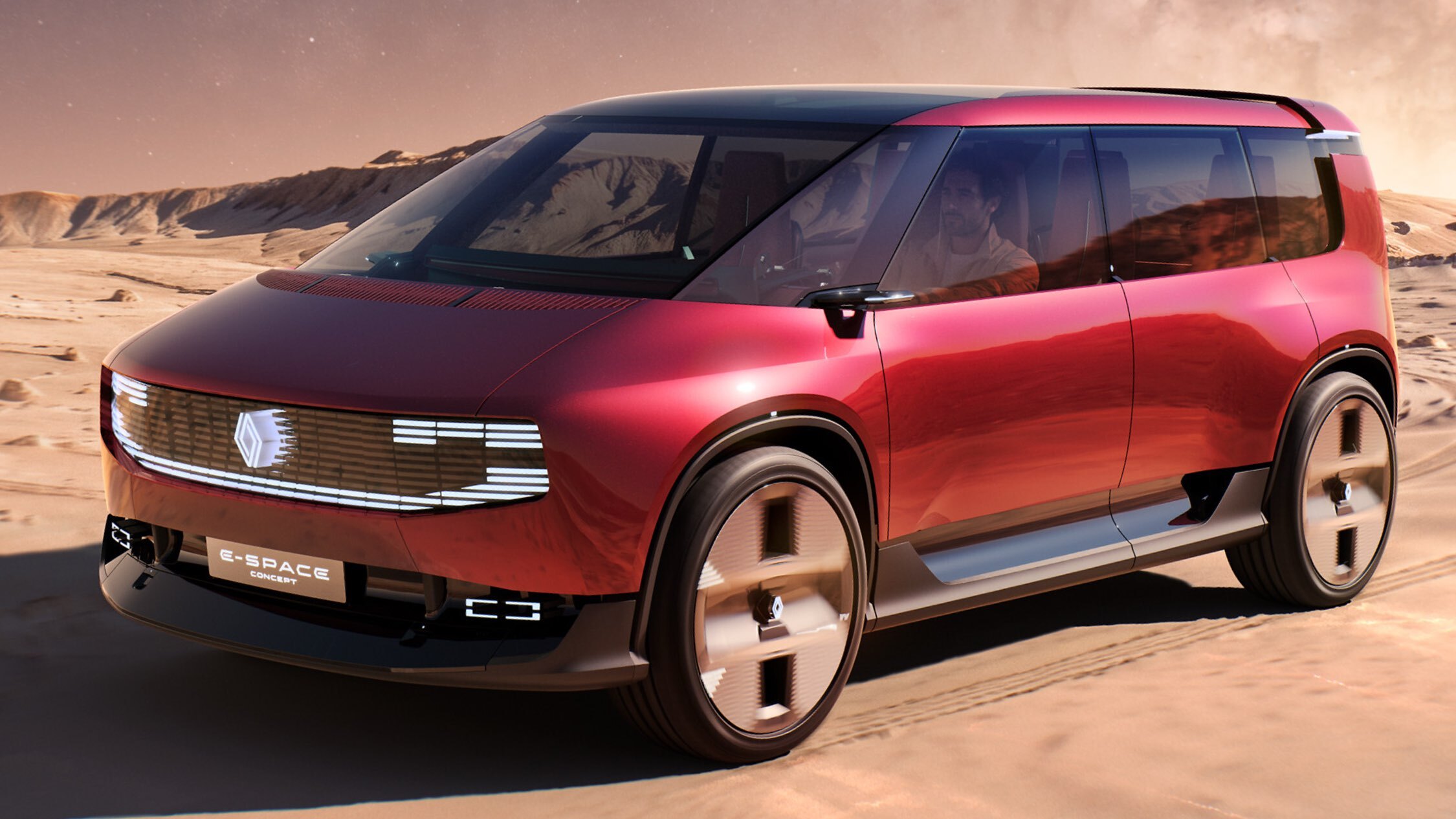
Renault’s E-Space Concept Reboots A Minivan Icon

  • Renault is reinventing its Espace as an electric minivan concept.
  • The EV makes its debut at the Paris Motor Show later in October.
  • Tech details are scarce, but it matches a Honda CR-V for length.

The car that reinvented family transport for European drivers in the 1980s is itself being reinvented. Renault’s E-Space Concept, an electric reboot of the Espace minivan, makes its debut at the Paris Motor Show next week, and Renault’s pattern of quickly turning concepts into real production cars tells us this VW ID. Buzz rival could be in showroom two years from now.

Renault calls the newest EV a “future-focused version of the original” – that original being the boxy, fiberglass-bodied van (MPV to Europeans) from 1984. The first-generation Espace launched in Europe only a few months after Chrysler’s K-car minivans debuted in the US. More recently the Espace badge has been used on a three-row, combustion SUV, a clear sign of how far minivans had fallen out of favor.

Related: Millennials Grew Up Mocking Minivans, Now They Can’t Buy Them Fast Enough

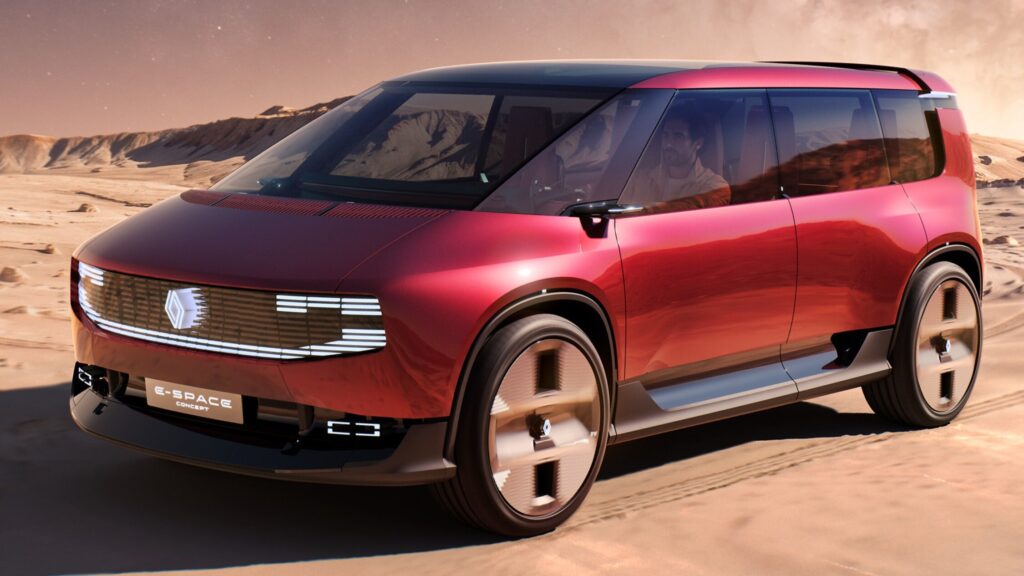
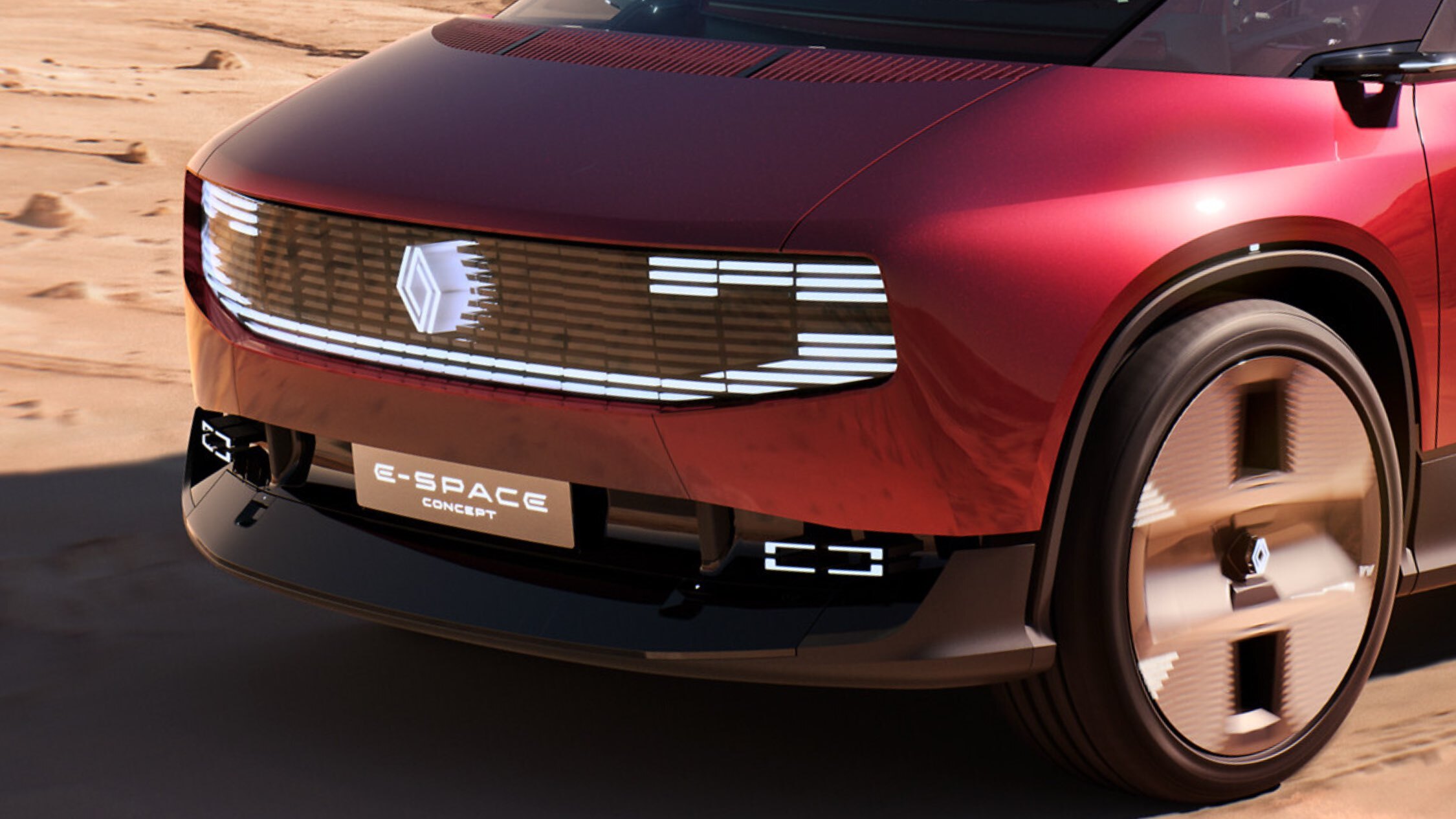
But maybe the tide has turned. Renault clearly wants us to remember what made the original Espace great, and includes some subtle retro influenced to help us. The stubby nose features a short hood and vertical face, this time with LED lights and an illuminated Renault diamond badge, and the windshield is raked like a sports car’s.

A perfectly horizontal waist line runs through to a vertical rear end and maximizes interior space, though Renault doesn’t offer any data about seating capacity or luggage space. Previous Espace models have had both two- and three-row seating configurations, sometime with front captain’s seats that swivelled 180 degrees, and though there are no interior images yet, it looks like the concept is a two-row van.

Honda CRV-Sized

 Renault’s E-Space Concept Reboots A Minivan Icon

Renault hasn’t given much away in terms of tech specs, only revealing that the concept is 4.7 m (185 inches) long, making it roughly the same length as a Honda CR-V. But it previously confirmed a new RGEV platform for compact cars that gains 800-volt electrics, while costing 40 percent less to build than its current cars.

The new motor that comes with the RGEV architecture makes up to 271 hp (275 PS / 202 kW), versus 217 hp (220 PS / 162 kW) for today’s equivalent, and Renault said a range-extender option could boost electric driving range from 466 miles (750 km) to 879 miles (1,400 km).

Could Be Two Years From The Showroom

 Renault’s E-Space Concept Reboots A Minivan Icon

It took three years for Renault to productionize its Renault 5 concept, but only two to bring the Twingo to the road. The smaller car was developed with Chinese help to supercharge the development process. If the E-Space gets the same treatment, we could see a fully legal version on the road in Europe two years from now.

Renault’s lack of presence in the US means it won’t be offered in the US, which is a shame, because minivan sales in North America have experienced a resurgence lately. Having abandoned them for more fashionable SUVs years ago, buyers are rediscovering how useful minivans really are, with millennials the driving force behind the trend.

One Of Several Paris Debuts

\\\\\

The E-Space will be a major draw to Renault’s stand at this month’s Paris Motor Show, and we wouldn’t be surprised if it also had an original (above) on hand to stoke the nostalgia. But the E-Space won’t be the only draw. The brand is also showing its Gordini 8 electric coupe concept, a Twingo electric subcompact with a new Twingobay panoramic glass roof, the facelifted Scenic and Megane, and the 4 JP4x4 concept it previewed at this year’s Roland-Garros French Open tennis tournament.

\\\\\\

Renault

Alpine’s Latest Creation Has Pop-Down Headlights

  • Alpine teased the PS1 concept ahead of its Paris debut on Oct 12.
  • The Project Special 1 features retro-inspired pop-down headlights.
  • It could preview an A310 revival in the form of an electric 2+2 GT.

Alpine fans might be excited to see the sculpture of the next-gen A110 sportscar in Paris Motor Show, but the company has another ace up its sleeve. A new concept car dubbed PS1 will be unveiled at the same event, likely previewing a future production model.

The PS1 name has nothing to do with the legendary Playstation console, as it is short for Project Special 1. In other words, it will be the first example of the “special projects” pillar from Alpine’s future product strategy, likely positioned above the “Extraordinary Everyday” pillar including the A290 hot hatchback and A390 sport fastback volume sellers, and the “Icons” pillar spearheaded by the A110 sportscar.

More: Americans Might Force Alpine To Put Gas Back In Its New Electric Sports Car

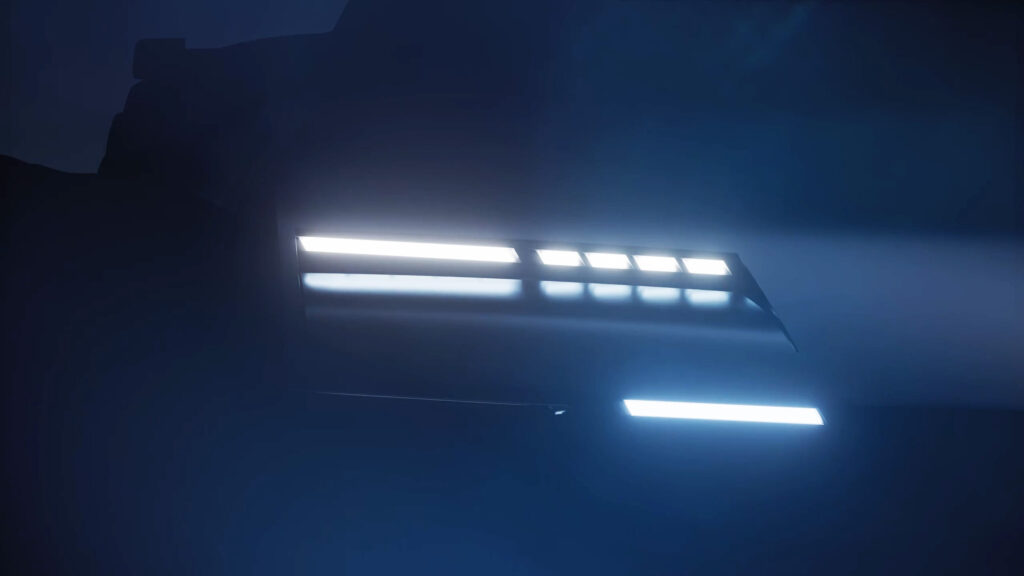
The official teaser is focused on the unconventional headlight design of the concept. When not in use, the lights remain hidden under a cover that sits flush with the flat hood. These covers recess into the bodywork, revealing slim LEDs with the colors of the French flag.

The pop-down headlight mechanism is similar to Eccentrica’s modernized version of the Lamborghini Diablo and sends retro-futuristic vibes. At the same time, this design would comply with safety regulations for production models, unlike the pop-up headlights that pose a threat to pedestrians in the case of an accident.

\\\\\

Alpine

The dark teaser doesn’t reveal the bodystyle of the PS1, but we can still see a portion of the its wide fenders and mirror-replacing cameras hinting at a low and aerodynamic stance.

More: Alpine’s New 911 Rival Is Hiding Under This Little Known French Racecar

The rectangular shape of the headlight clusters and the surfacing are reminiscent of the classic A310 produced between 1971 and 1984. In fact, Alpine is working on a new generation of the grand tourer with a 2+2 layout and a fully electric powertrain. This makes us believe that the concept could preview an upcoming zero-emission Porsche 911 rival, sharing its Alpine Performance Platform (APP) with the next A110.

Alpine said that this will be the only hint before the actual reveal which is scheduled for the press day of the Paris Motor Show on October 12. The PS1 will be showcased next to the new A110 Sculpture, and several examples of the A290 hot hatch and A390 sport fastback with new colors, trims and finishes by the Atelier Alpine personalization program.

Citroen Is Reviving The Iconic 2CV As An Affordable EV

  • Citroen teases a new 2CV concept, ahead of its debut on October 11.
  • The modern reincarnation of the iconic French car will be electric.
  • A production version is expected in 2028, with a sub-€15k price tag.

Citroen is ready to shake up the Paris Motor Show with the return of the legendary 2CV. The model is back after a 36-year hiatus, in the form of a fully electric city car with styling references to the original and a focus on affordability. The new 2CV will initially debut as a concept, but a production version is expected to follow in 2028.

The much-anticipated return of the 2CV was officially confirmed earlier in 2026, following years of rumors and speculation which were often dismissed by the company. This means that the French castle has fallen, with a new 2CV joining other reincarnations of iconic designs from the past such as the rival Fiat 500 and the discontinued VW Beetle.

More: Fiat Is Reviving Its Most Polarizing Model With An SUV That Doubles As A Pickup

One week before its unveiling, which is scheduled for October 11 in Paris, the French automaker has published a few teasers of the concept on its social media channels. Citroen Design Director, Pierre Leclercq, has also shared some of them on his profile, with the caption “exciting time”.

\\\\\\\\

Citroen / Instagram

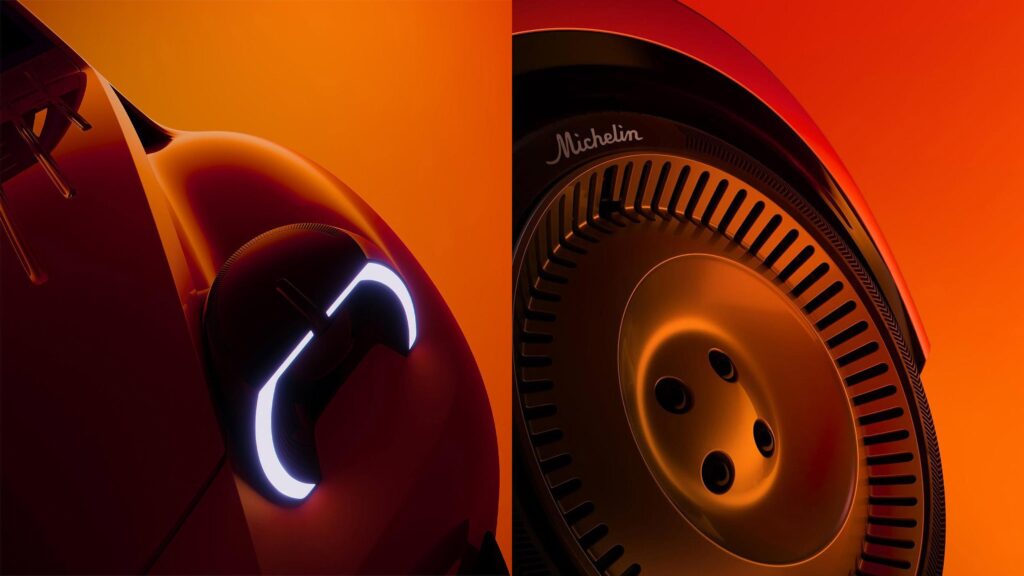
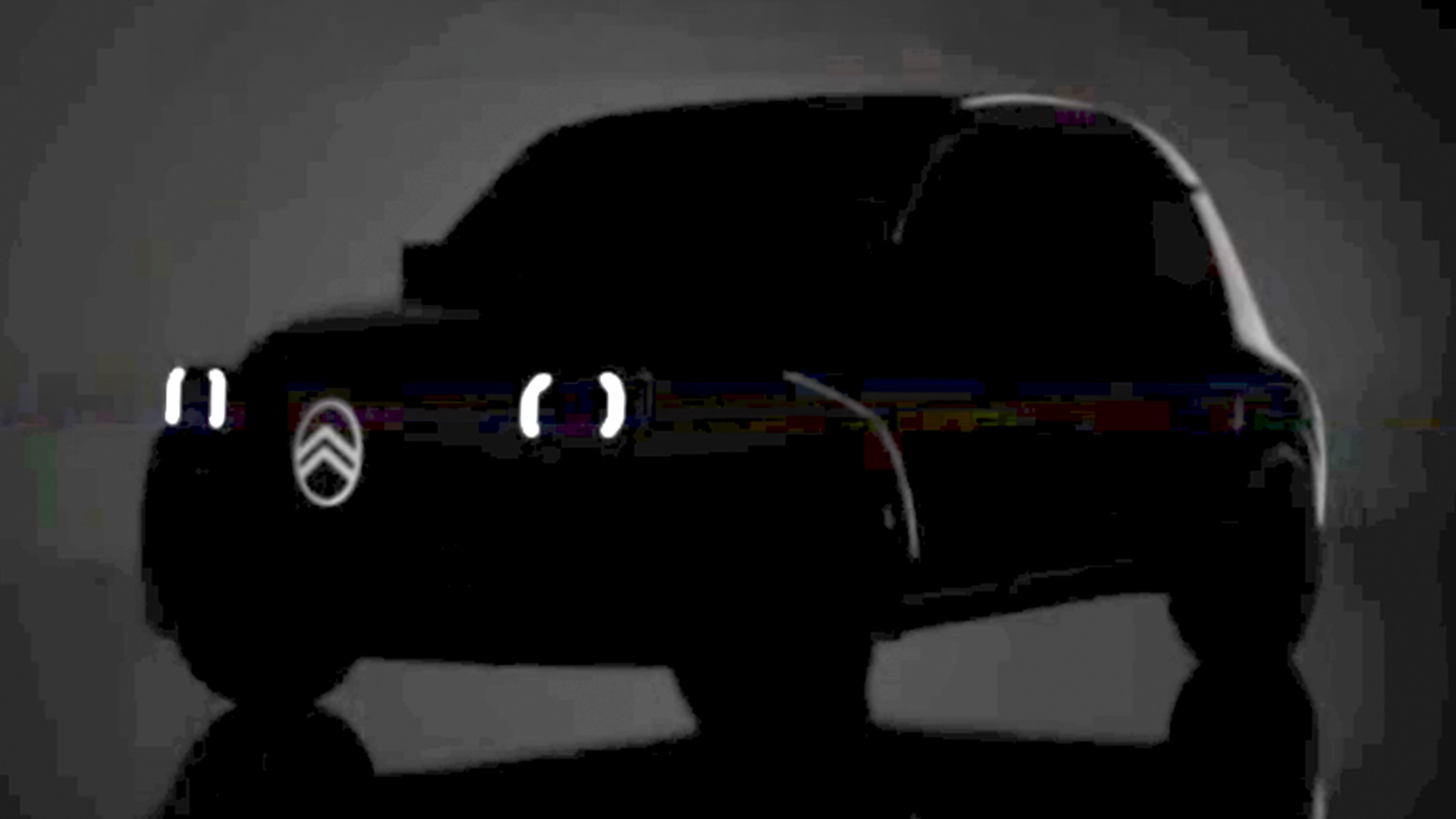
The teasers depict the grooved hood and the semi-circular LED headlights that stick out of the bulbous fenders. We can also see the retro door handles and wheels, as well as the indicators on the C-pillar. An earlier teaser suggests that the new 2CV will adopt a similar silhouette to its predecessor, and wear an illuminated double-chevron emblem on its nose.

More: Cheap Thrills: Stellantis Adds Extra Plastic And Mobile Office To Base Vans

The company said that the new concept “revives an icon of the brand and brings the spirit of the 2 CV into the modern world to make mobility simpler, more accessible, more human and more desirable.”

The urban EV will likely have a smaller footprint than the Citroen C3 subcompact crossover hatchback, effectively serving as a replacement for the discontinued C1 and C2 urban dwellers.

Affordability Is The Key

 Citroen Is Reviving The Iconic 2CV As An Affordable EV

Citroen / Facebook

Citroen didn’t reveal information about the technical specifications of the concept, other than confirming the fully electric powertrain. The new 2CV is expected to ride on a bespoke platform, designed under the upcoming regulations of European Union for affordable EVs. The same underpinnings will reportedly be used by an upcoming Fiat, continuing the tradition of the smaller Citroen Ami and Fiat Topolino, as well as the larger Citroen C3 and Fiat Grande Panda twins.

Review: Stellantis Gave Citroen C3 And Fiat Grande Panda The Same Bones, But Not The Same Soul

During interviews with media earlier this year, Citroen CEO, Xavier Chardon, revealed that the production model should be priced from under €15k ($17k) before subsidies. This would make it the most affordable car by Citroen, as the even cheaper Ami is classified as a heavy quadricycle.

When the model goes on sale, it will face competition from other brands in Europe’s ultra-affordable EV segment. This will be slightly cheaper compared to traditional A-Segment hatchbacks such as the Renault Twingo, Nissan Pixo, Dacia Spring, Honda Super-N, BYD Dolphin Surf, and the upcoming VW ID. Up. At the same time, contestants will be safer and more refined than the dirt-cheap heavy quadricycles.

Filling The Shoes Of An Icon

 Citroen Is Reviving The Iconic 2CV As An Affordable EV

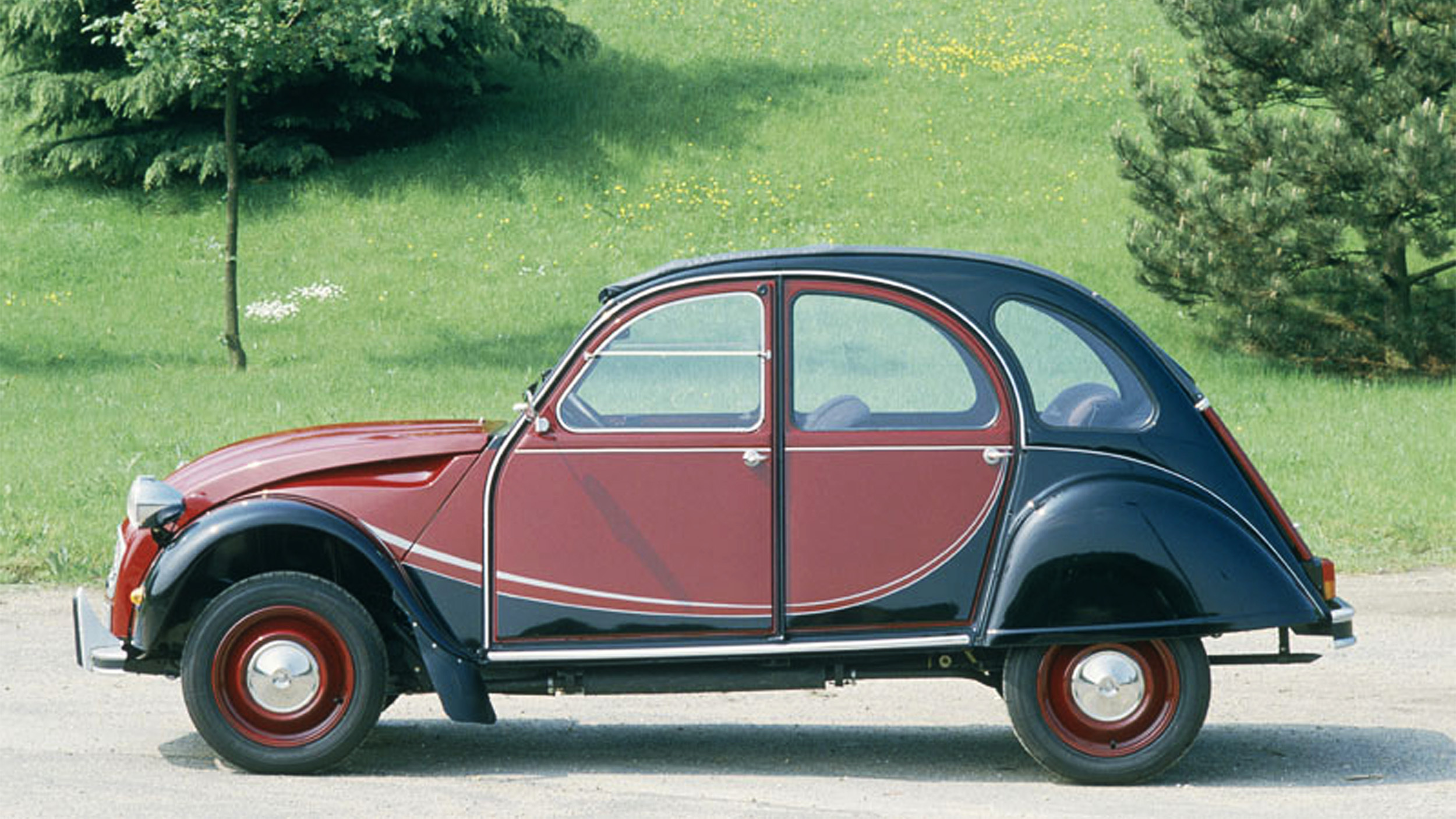
1980 Citroen 2CV Charleston

The original Citroen 2CV made its debut at the 1948 Paris Motor Show, although the brief for its creation was submitted in the ’30s. This “umbrella on wheels”, also known as the “Tin Snail” was engineered to carry two farmers, a 50 kg (110 lb) sack of potatoes, or a basket of eggs across a plowed field at 60 km/h (37 mph) without breaking a single shell.

More: Citroen Makes Budget Models More Expensive With Stylish New Outdoor Edition

Over its remarkable 42-year production run, the iconic model – named after the two taxable horsepower of its engine – received many incremental updates but retained its signature shape and the unique interconnected suspension setup. By the time the final example rolled off the factory in 1990, Citroen had produced 5.1 million units worldwide.

Other Concepts and Special Editions In Paris

Besides the 2CV, Citroen will unveil another concept at the Paris Motor Show, described as “a surprise that will set visitors’ hearts beating.” The brand’s stand will also include the C3 Aircross Marine Nationale Concept, the new Outdoor lineup (Ami, C3, and C3 Aircross), the Collection series (C3, C3 Aircross, and C4), the C5 Aircross Emeraude special edition, and the GEN4 Formula E racer.

Fiat Is Reviving Its Most Polarizing Model With An SUV That Doubles As A Pickup

  • Fiat has teased a new concept for Paris Motor Show, called the Multiplay.
  • It will combine the practicality of a pickup with the comfort of an SUV.
  • Profile graphics honor the Fiat Multipla generations from 1956 and 1998.

Stellantis will storm the Paris Motor Show with a number of concepts, and Fiat is getting a piece of the action. The automaker has announced a new Fiat Multiplay concept, referencing both the classic 600 Multipla from the mid ’50s and the modern Multipla from the late ’90s. However, unlike its predecessors, the concept won’t be a minivan and has nothing to do with the Multiplina micro-MPV.

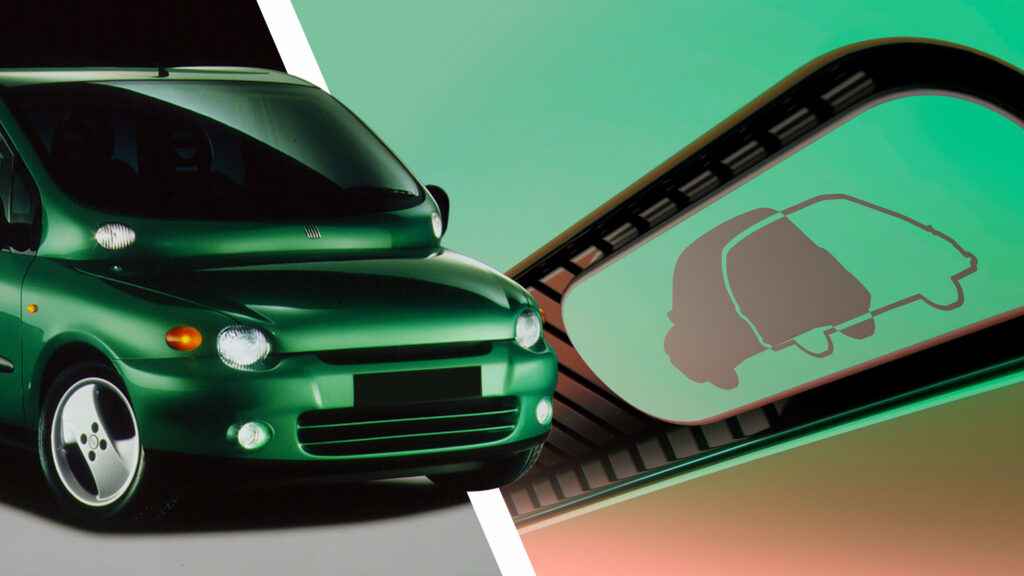
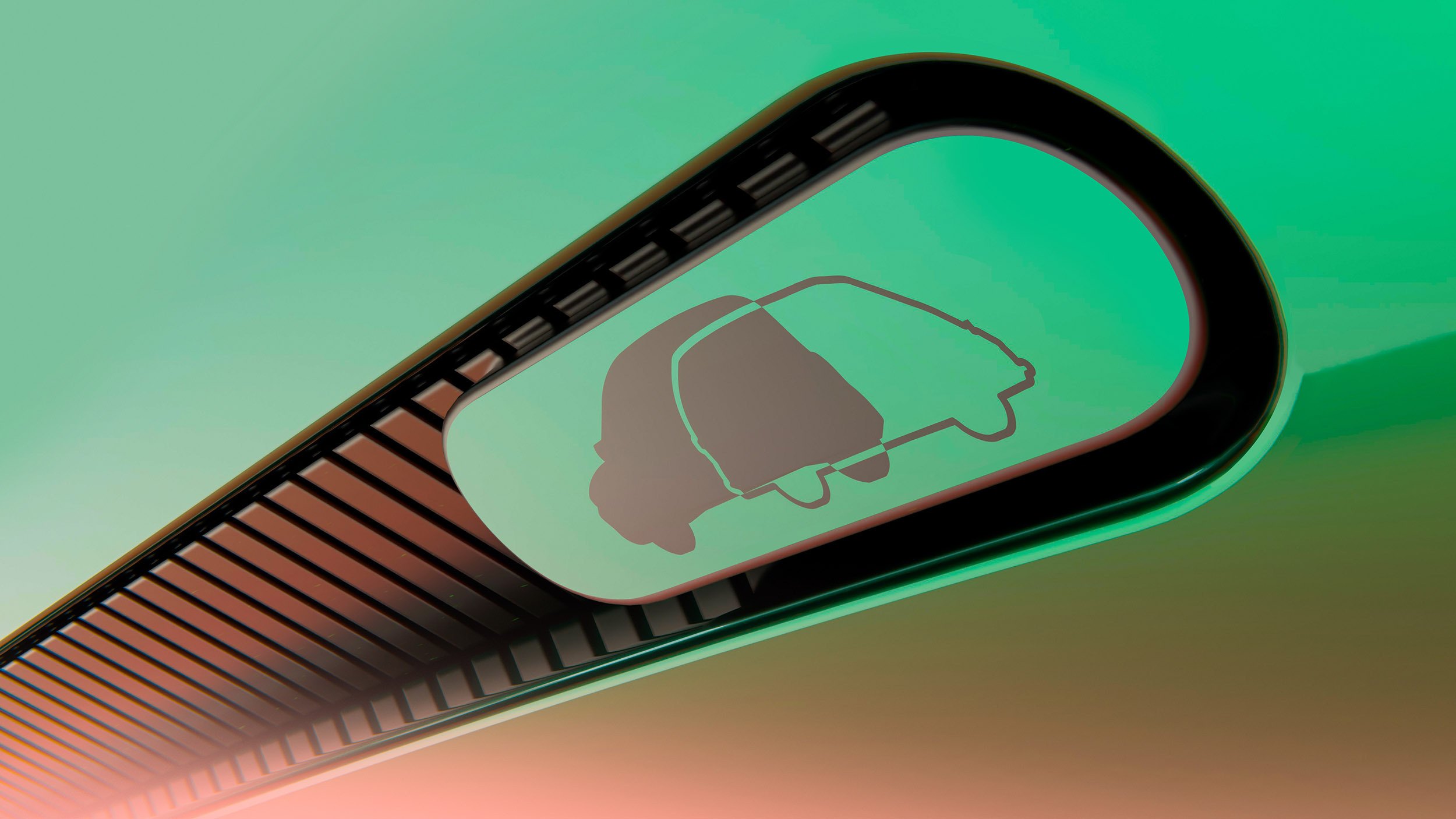
The official teaser doesn’t reveal much about the design of the Multiplay, as it is focused on an oval-shaped insert, likely positioned on its profile. The insert has a modern black pattern and a body-colored section with the overlaying silhouettes of both Multipla models.

More: Fiat’s Cheapest Crossover Hatchback Gains A New Name And A New Mission

Fiat described the model as a “new concept of mobility” promising it will be “flexible, accessible, and radically useful”. The automaker claims that innovation “lies in reimagining space, freedom, and shared everyday life”.

What is interesting is the company’s description of the bodystyle. The Multiplay is said to combine “the open load space and outdoor versatility of a pickup with the comfort and flexibility of an SUV”. The different configurations will be interchangeable in “a few movements” thanks to an “ingenious mechanism”.

\\\\\

2024 Fiat Concept Pick-Up

Despite being presented in concept form, Fiat hints at a potential production version adding that the Multiplay “could create an entirely new category by responding to the way people live today, as the boundaries between family life, leisure, work and adventure become increasingly fluid.”

More: Stellantis Is Using A 15-Year-Old Fiat To Stop Italy From Handing Autobianchi To China

Reading between the lines, this sounds a lot like the Panda-themed Concept Pick-Up from 2024, that could evolve into a potential sibling of the upcoming Grizzly and Grizzly Fastback production SUVs. After all, the Italian brand admits that the concept serves as “a source of inspiration for the future development of products that will complete its affordable family transportation range”.

If this is the case, expect the pickup/SUV to ride on Stellantis’ Smart Car architecture, which is compatible with gasoline, mild-hybrid, and fully electric powertrains.

The Multipla Heritage

 Fiat Is Reviving Its Most Polarizing Model With An SUV That Doubles As A Pickup
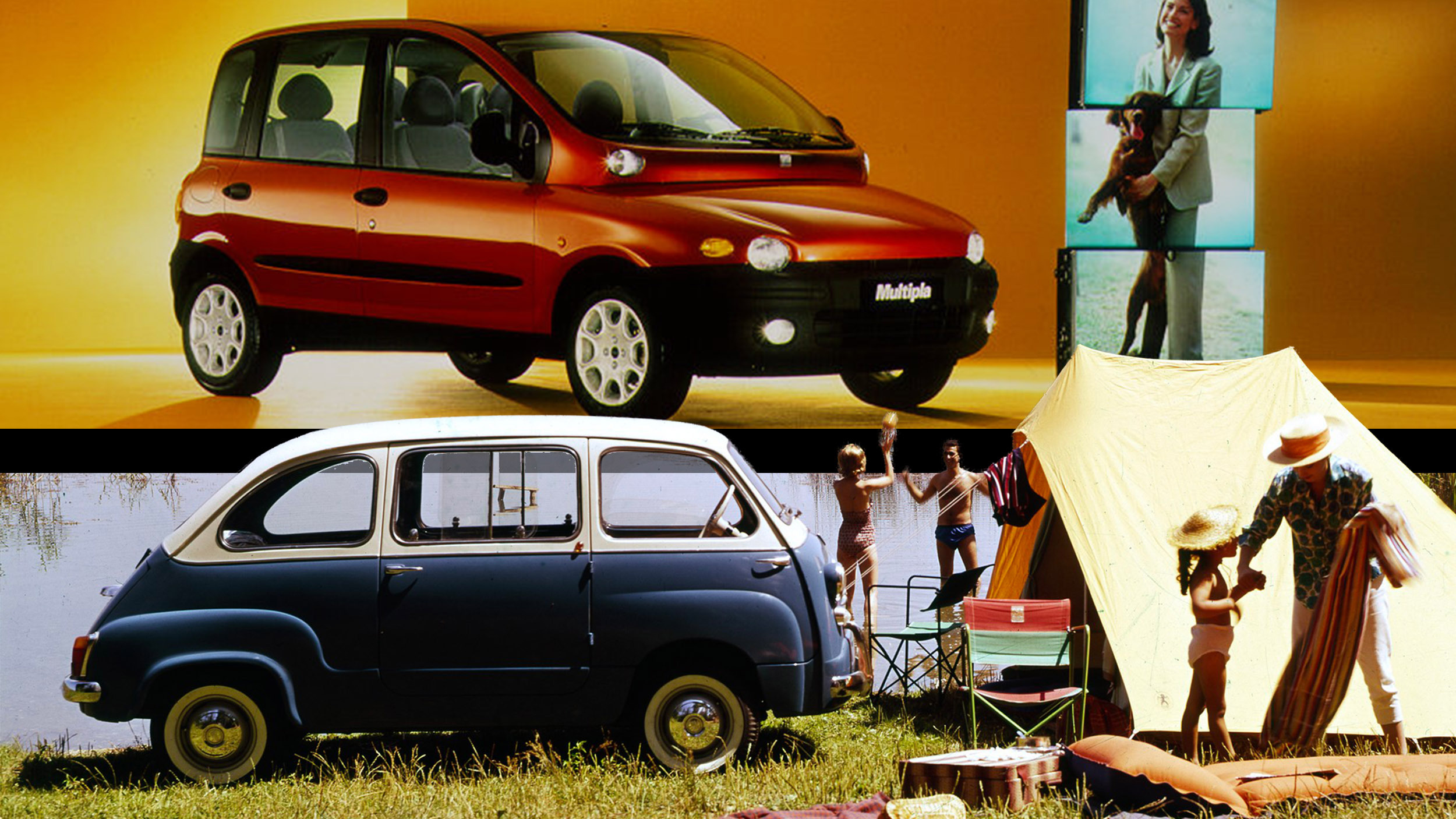
The 1998 Fiat Multipla (above) and the 1956 Fiat 600 Multipla (below).

The original Fiat 600 Multipla was introduced in 1955 with a single-volume body measuring 3.5 m (137.8 in) long and a three-row six-seater interior. It was based on the underpinnings of the Fiat 600, but featured an LCV-inspired cab-over design that proved to be beneficial for packaging.

More: The Fiat Multipla Deserves A Comeback, And This Is The Perfect Starting Point

Decades later, the moniker was revived in the Multipla which entered production in 1998 following the concept from 1996. The compact minivan became notorious for its two-story headlights and unconventional shape, but managed to gather a cult following. It was also able to carry six occupants, albeit in two rows of seats, measuring only 3,994 mm (157.2 in) long.

It remains to be seen whether Fiat designers will infuse enough practicality to the Multiplay pickup/SUV inspired by the ingenious mininvans from the past.

 Fiat Is Reviving Its Most Polarizing Model With An SUV That Doubles As A Pickup
Fiat Multiplay Teaser.

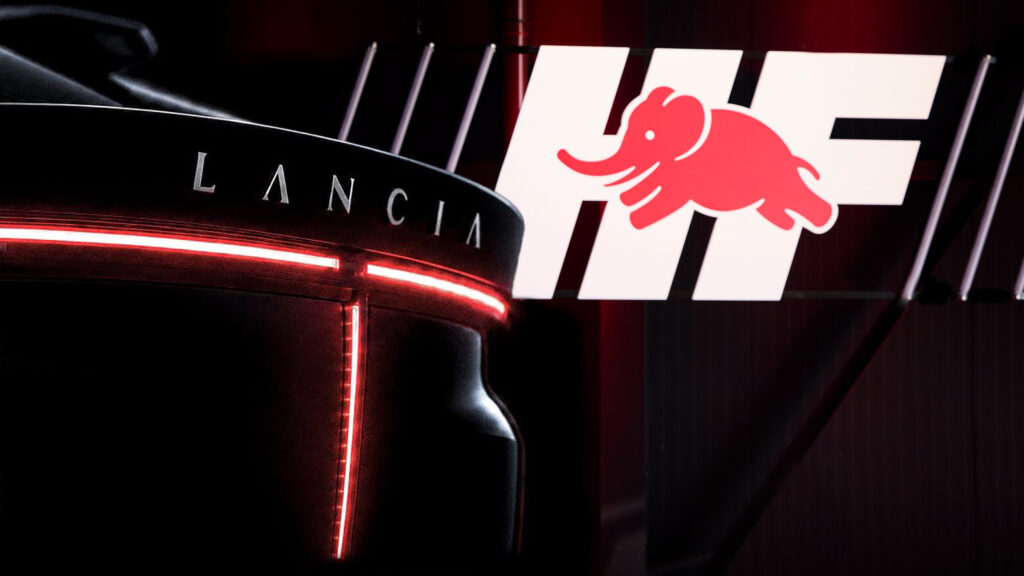
Lancia Brings Back The HF Integrale Badge For Its Flagship EV

  • The Lancia Gamma fastback crossover is heading to Paris.
  • Dual-motor HF Integrale packs 370 hp and all-wheel drive.
  • Electric range reaches up to 675 km for top AWD variant.

The new Lancia Gamma is coming at the Paris Motor Show, and the highlight is the range-topping version that has been confirmed to adopt the HF Integrale moniker.

Unlike the iconic Delta HF Integrale rally-bred hot hatch from the ’90s, the new Gamma HF Integrale will feature a fully electric powertrain. Dual electric motors produce combined 370 hp (276 kW / 375 PS), offering AWD capabilities. The range in this configuration is estimated at 675 km (419 miles) between charges.

More: The Lancia Gamma Returns As A Fastback Crossover, Not A Sedan

The automaker promised that the performance flagship of the fastback crossover will inherit “the character and sporting spirit that have always been part of Lancia’s identity”. This doesn’t say much but we hope that the model will at least get a sharper chassis setup.

Lancia has only shared photos of the regular Gamma, but a prototype of the HF Integrale has been spotted testing in Italy without any sign camouflage. The 4.67 m (183.9 in) long crossover was painted in a Nero Vulcano shade, and rode on black alloy wheels featuring white outer rings.

More: This Lancia Was Built For Italian Politicians, Now It Sleeps Two In A Field

The bumpers appear to be unchanged from the rest of the lineup, but the side skirts gain HF Integrale badges. The black color of the prototype’s bodywork didn’t allow us to see whether the glossy black cladding will gain a body-colored finish, potentially contributing to a sportier stance.

Interestingly, this is the first time Lancia uses the HF Integrale moniker in a production model since the ’90s. The company recently revived the name on the Ypsilon Rally2 rally car, but the fully electric hot hatch version of the roadgoing Ypsilon is simply called HF, joined by a lesser HF Line which is essentially an appearance package.

Other Versions

\\\\\\\\\

Lancia Gamma

The Gamma lineup at the Paris Motor Show will also include the LX trim, shown in hybrid and fully electric forms. Bear in mind that the entry-level hybrid 1.2-liter engine produces 143 hp (107 kW / 145 PS). As for the zero emission variants with a single-motor configuration, they get 227 hp (169 kW / 230 PS) with a 540 km (335-mile) range, or 242 hp (180 kW / 245 PS) with a 740 km (460-mile) range.

More: Has Stellantis Cancelled The Return Of Lancia’s Delta?

The Lancia Gamma is manufactured at the Stellantis plant in Melfi, Italy, next to the mechanically-related DS No8. The fastback crossover will soon go on sale in European markets, as the second model in Lancia’s new era after the Ypsilon. The Italian brand had originally planned a revival of the Delta for 2028, but the hatchback has since disappeared from the revised product plan.

 Lancia Brings Back The HF Integrale Badge For Its Flagship EV

Stellantis

Stellantis’ New Concept Proves Wagons Aren’t Dead, They’re Just Getting Sexier

  • Sleek Opel STX Concept teased ahead of the Paris Motor Show.
  • It has wide fenders, a vented hood, aero wheels, and an LED grille.
  • The sporty estate is rumored to preview the next-gen Opel Astra.

Stellantis has shared more teasers and information about the upcoming Opel Sports Tourer eXperimental (STX) Concept ahead of its premiere at the Paris Motor Show on October 12. The model communicates the brand’s vision for the future of wagons, most likely previewing the next generation of the Opel Astra.

The new teasers are more revealing than the first one, giving us a good idea of what to expect. Overall, the STX Concept is not your typical wagon, as it adopts a sporty stance with futuristic details.

More: This Stellantis Brand Thinks A Wagon Might Make More Sense Than A Hatchback

The front end features an evolution of the Opel Vizor grille, which is now body colored with an LED pattern and an illuminated Opel Blitz emblem. This is joined by the vertical LEDs forming the Opel Compass, and a sculpted bumper with horizontal cooling intakes.

Still, the coolest detail is the view of the profile, with the wide fenders on the rear axle making it look more like a performance model than a family-focused offering.

\\\\

Opel

Opel said that aerodynamic efficiency played a crucial role in the development of the concept. One example is the design of the three-section alloy wheels, which is said to reduce consumption while offering improved “directional stability and driving pleasure at high speeds on the German Autobahn”.

More: Opel Astra GSE Line Brings OPC-Like Power, But Don’t Call It A Hot Hatch

In a similar context, an earlier press release confirmed that the concept features an “active aerodynamic system that continuously adapts to the driving situation, using moving elements at the rear to optimize airflow, reduce drag and improve stability.”

Sister brand Vauxhall – which also announced a redesigned Griffin logo – has shared an additional image of the STX Concept taken from above. This reveals a pair of vents that create a V shape on the hood and form front spoiler, similar in theory to the fully electric Dodge Charger Daytona. The windshield extends on the hood, with the “TECHHUE” lettering on its base hinting at a new technology.

\\\\\\\\\\\

Vauxhall

Stellantis didn’t reveal the powertrain type of the STX Concept, but judging from their product portfolio it will be either fully electric or hybrid.

More: Opel’s Cheapest New Car Is Now A Family SUV With Three Pedals And Steelies

Opel doesn’t openly admit it, but the sporty wagon is expected to evolve into the next generation of the Astra, which is rumored to abandon the traditional hatchback bodystyle. The compact model has been confirmed to be renewed before 2030 alongside the smaller Corsa. Both will ride on the multi-energy STLA One architecture with an EV-first strategy. However, we wouldn’t be surprised if they eventually adopt range-extender tech from Leapmotor.

A potential rival of the future estate from Opel is the next generation of the Skoda Octavia. This one was previewed by the Vision O concept and is expected to hit the road in 2028 with a wagon bodystyle and a electric/range-extender powertrains.

 Stellantis’ New Concept Proves Wagons Aren’t Dead, They’re Just Getting Sexier
The current Opel Astra Sports Tourer.

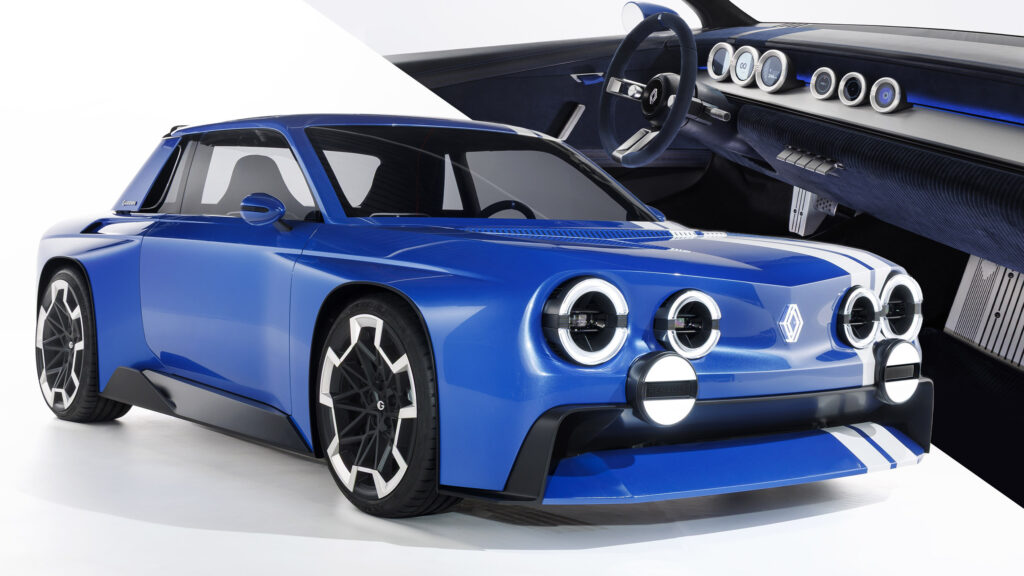
Renault 8 Gordini Is Back As A Bold Electric Coupe With Rally Heritage

  • Renault has unveiled a fully electric reboot of the 8 Gordini.
  • The concept features café racer styling and a 270 hp motor.
  • It is not destined for production and will remain a one-off.

Renault is clearly not done reviving past icons with the R4 and R5 production models. The automaker has just launched a new concept car, inspired by the Renault 8 Gordini from the ’60s. The modern reincarnation of the classic rally sedan is a two-seater coupe with a fully electric powertrain and a retro-flavored design. Unfortunately, it is not destined for production, although elements from its design might influence future models.

The original Renault 8 Gordini was launched in 1964 as the high-performance version of the rear-engined rear-wheel-drive family sedan designed for winding mountain passes. The “la Gorde” featured an upgraded engine with nearly double the horsepower of the donor vehicle, a lowered suspension, beefier brakes, four or six headlights, and a blue paint with white racing stripes.

More: Updated Renault 5 Borrows The Clio Williams Look But Gains Miles, Not Speed

The new Renault 8 Gordini Concept evokes the Café racer spirit of the original, looking like a reverse restomod with a low and wide stance. The coupe measures 4.12 m (162 in) long, 1.88 m (74 in) wide, and 1.27 m (50 in) tall, riding on 19-inch and 20-inch alloy wheels.

\\\\\\

Six round LED headlights are mounted on a grille-less V-shaped nose, with flush taillights disappearing into the bodywork when not in use. The coupe also features sporty bumper intakes with a body-colored splitter, boxy and wide fenders, flying buttresses on the C-pillars, a roof spoiler, a rear ventilation grille, and a large diffuser. Of course, it wears the iconic blue livery with white stripes running along the carbon fiber body.

More: Renault Rafale Hypnotic Is The Brand’s Most Expensive SUV To Date

The interior is a celebration of minimalism and a nod to the analog era. Instead of oversized screens, Renault added six round dials with thick bezels, mounted on a brushed aluminum strip on the dashboard. We also find tasteful Alcantara inserts, an aluminum center console with physical switches, and a pair of bucket seats with black and blue corduroy upholstery.

The French automaker revealed that its designers were so enthusiastic about the brief, they submitted over 300 sketches. Alexandre Malval, Renault’s Vice President of Design, said that the goal was “to spark emotion by drawing on both our heritage and modern times, bringing together the icons of yesterday and the future.”

\\\

Renault didn’t share information about the underpinnings of the concept, other than revealing it is powered by a single electric motor which is good for 266 hp (198 kW / 270 PS) sending power to the rear wheels.

More: Renault’s $185,000 R5 Turbo Exposes What’s Really Wrong With EVs

While we would like to believe otherwise, Renault made it clear that the R8 Gordini concept is a one-off and it’s not going to evolve into a production model. Instead, it serves as a follow up to homage projects like the R17 electric restomod x Ora Ïto concept car, and the Renault 5 Diamant art car.

The new concept will make its first public outing at the Renault Carwalk on September 24, before being exhibited at the Paris Motor Show next month. Eventually, it will end up at the new Renault Collections museum in Flins which is scheduled to open its doors for the public in around 15 months.

\\\\

Renault

Stellantis Is Working On A New Wagon, But It’s Not Coming To America

  • A new Opel STX Concept will debut at the Paris Motor Show.
  • It shows the brand’s vision for a future aero-efficient estate.
  • It might evolve into the next Opel Astra, arriving before 2030.

Stellantis has shared the first teaser of the Opel Sports Tourer eXperimental (STX) Concept ahead of its unveiling at the Paris Motor Show on October 12. The concept is believed to preview a future production wagon, that could replace the Opel Astra before the end of the decade.

According to the automaker, the Opel STX Concept represents “its vision for the future of estate cars”. Opel has been offering family-friendly wagons since the Olympia Rekord Caravan from 1953, while the Sports Tourer moniker is used for the estate variant of the current Astra.

More: Opel Astra GSE Line Brings OPC-Like Power, But Don’t Call It A Hot Hatch

Florian Huettl, Opel CEO, said: “As the name indicates, the Opel STX Concept will give our vision of the future of an aero-efficient estate – a body style that Opel played a pioneering role in establishing in Europe. It shows our next generation design language and feature elements that you will see in future production models.”

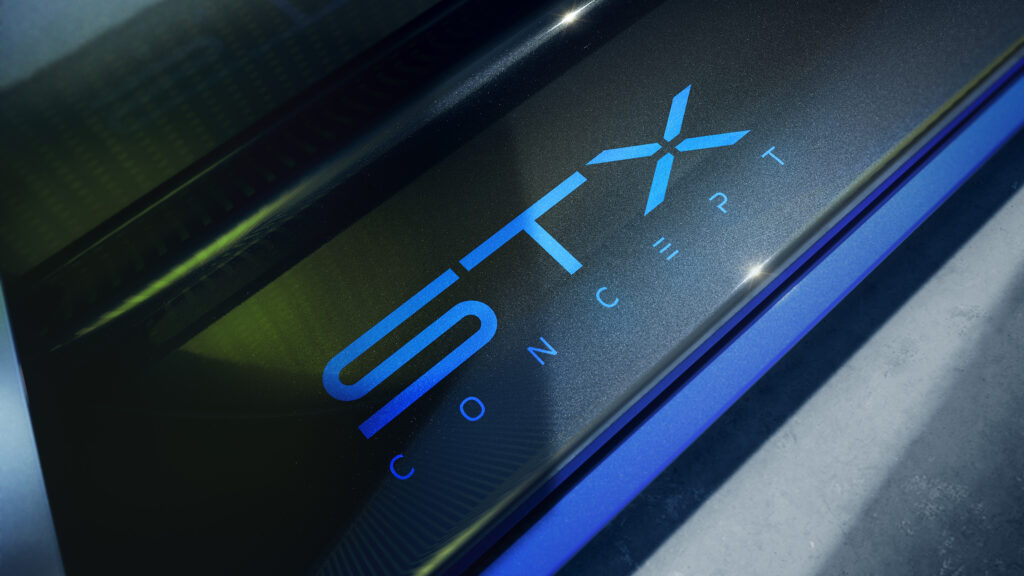
The announcement is accompanied by a single teaser that doesn’t reveal much about the design. What we can see is STX concept lettering on what appears to be a portion of the front bumper, featuring a carbon-style finish against a blue or silver bodywork. The company didn’t mention anything about the concept’s powertrain type, but chances are it will feature some sort of electrification.

 Stellantis Is Working On A New Wagon, But It’s Not Coming To America
The current Opel Astra Sports Tourer.

Stellantis has confirmed that the next generation of the Astra will arrive before 2030. The model will ride on the new STLA One architecture, offering the option between fully electric and hybrid powertrains.

More: This Stellantis Brand Thinks A Wagon Might Make More Sense Than A Hatchback

Furthermore, the Opel CEO has revealed that an estate variant of the next Astra has been locked in, while hinting that the hatchback’s shape may evolve into a non-traditional bodystyle. Reading between the lines, the Astra could evolve into a sporty compact wagon and the upcoming concept might give us a good idea of what to expect.

The official debut of the Opel STX Concept is scheduled for October 12 at the Mondial de l’Automobile in Paris, although the automaker might share more teasers and additional information as we move closer to that date. The wagon will be joined by the GSE 27FE single seater for the upcoming Formula E championship, the fully electric Corsa GSE hot hatch, and the new Astra GSE Line trim.

 Stellantis Is Working On A New Wagon, But It’s Not Coming To America
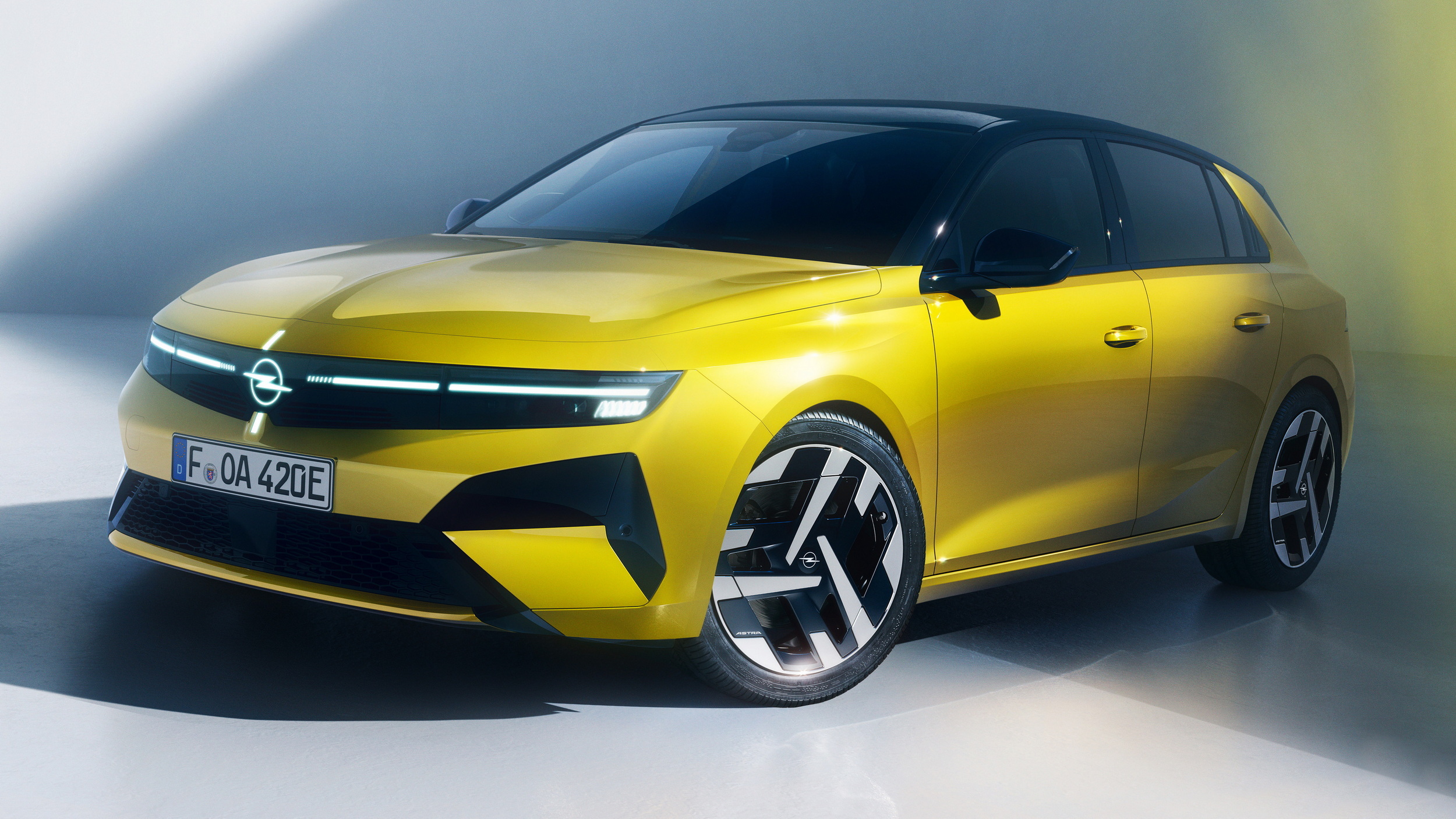
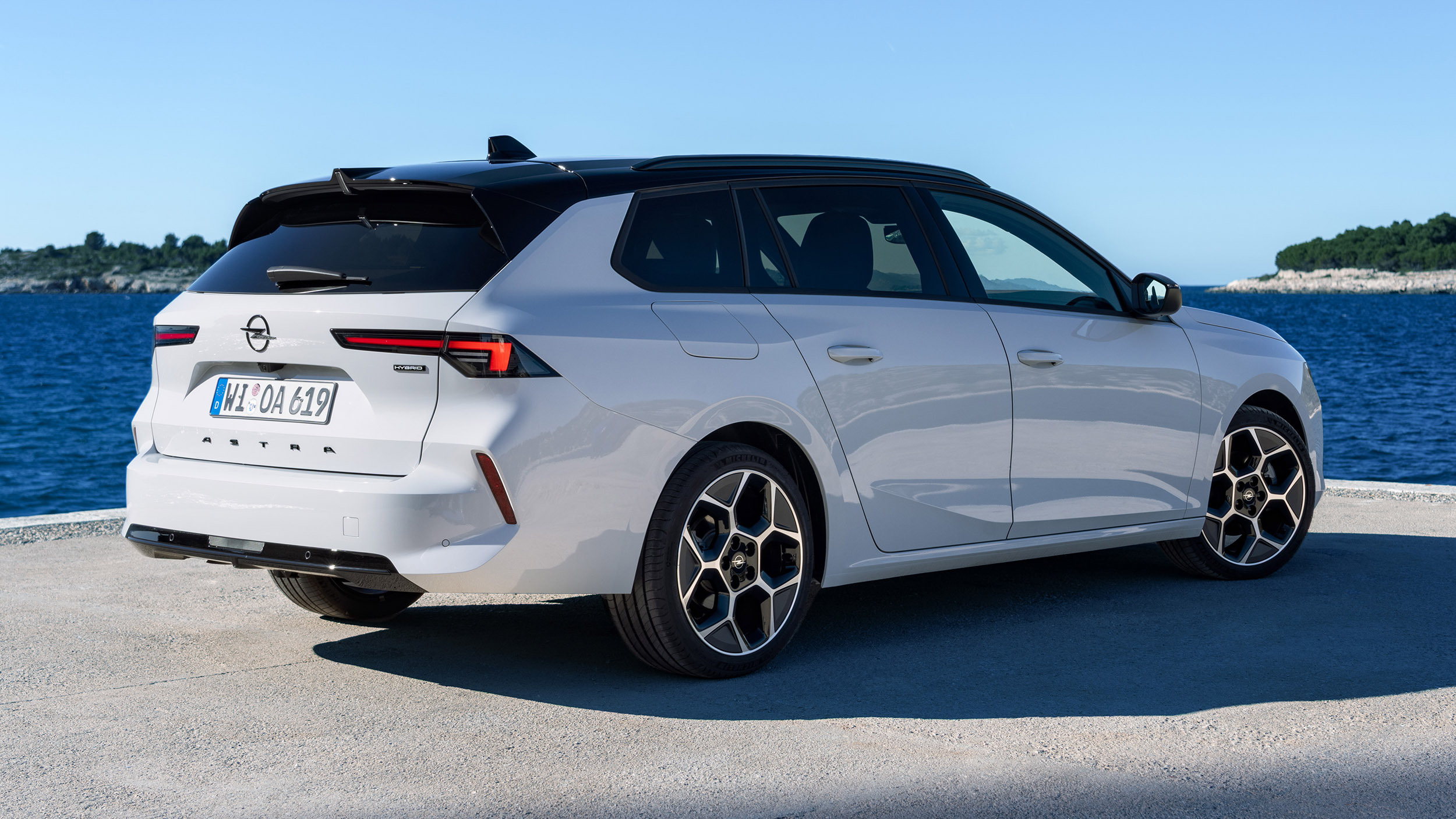
Opel Astra GSE Line

Opel Astra GSE Line Brings OPC-Like Power, But Don’t Call It A Hot Hatch

  • New Opel Astra GSE Line produces up to 276 hp in fully electric form.
  • It replaces the GS trim, available across the entire powertrain lineup.
  • Despite the OPC-matching power, it doesn’t promise hot hatch thrills.

The Opel Astra is one of the most popular compact cars in Europe, but the latest generation never got a proper hot hatch variant to rival the VW Golf GTI. While this is still the case, Stellantis has dialed up the power with a new Astra GSE Line trim, matching the power output of long-gone Astra OPC models in its most potent fully electric form.

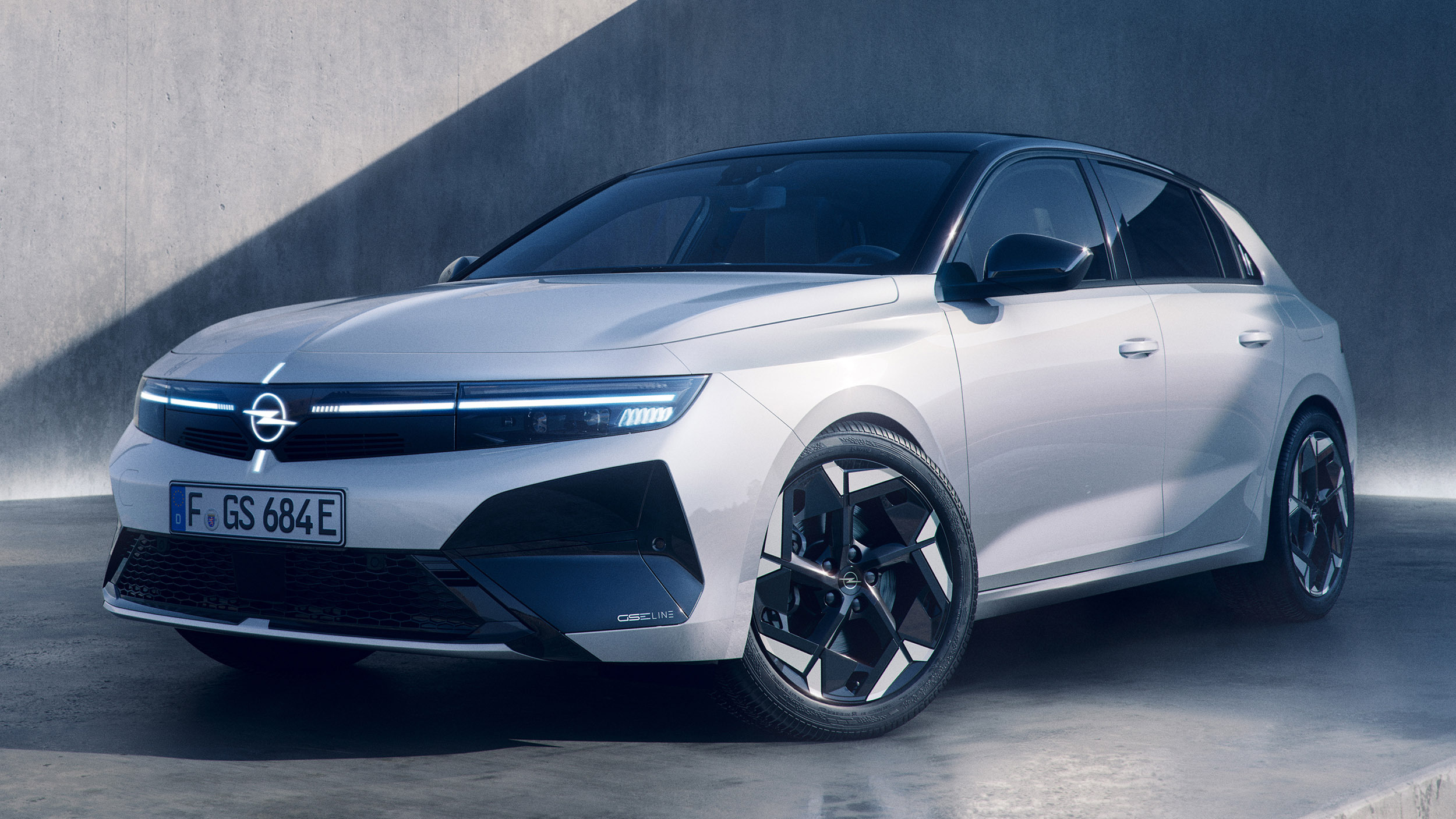
Opel used to offer a GSe variant of the Astra with 222 hp (165 kW / 225 PS) from a plug-in hybrid powertrain, while featuring sportier looks and a sharper chassis setup. The new GSE Line is a replacement for the sporty GS trim, and will be available with every available powertrain option in the Astra lineup, including gasoline, mild-hybrid, plug-in hybrid and battery electric models.

More: Opel’s New Corsa GSE Beats Peugeot’s GTI Using Peugeot’s Own Powertrain

The big news is that the flagship Opel Astra GSE Line will inherit the single electric motor from the new Corsa GSE and Mokka GSE siblings, producing 276 hp (206 kW / 280 PS). This matches the output of the turbo 2.0-liter engine in the Astra OPC J, sold between 2012 and 2018. Still, don’t expect it to be a full-blown hot hatch.

 Opel Astra GSE Line Brings OPC-Like Power, But Don’t Call It A Hot Hatch
The Opel Astra GSE Line (above) compared to the Astra GS (below) it replaces.
 Opel Astra GSE Line Brings OPC-Like Power, But Don’t Call It A Hot Hatch

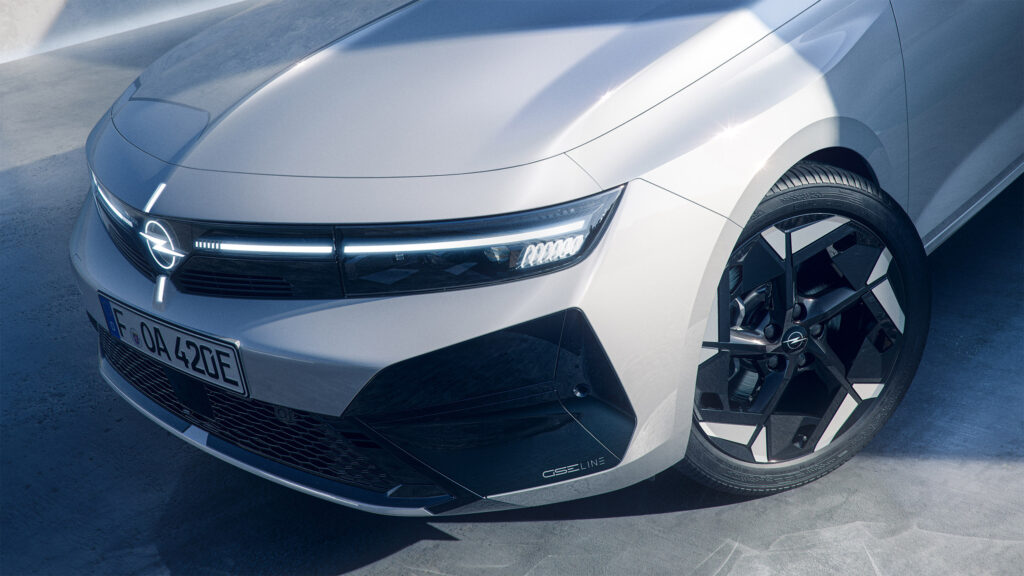
Visually, the GSE Line adopts a sportier stance than the GS it replaces and the rest of the facelifted Astra lineup. The front bumper molding is the same, but there’s extra glossy black trim around the side intakes with discreet “GSE Line” lettering.

More: This Stellantis Brand Thinks A Wagon Might Make More Sense Than A Hatchback

Other changes include the trim-specific LED color in the Opel Vizor grille and 17-inch diamond-cut alloy wheels, which are optionally available in an 18-inch version. The company only showed photos of the hatchback, so we don’t know whether the GSE Line treatment will be applied to the wagon.

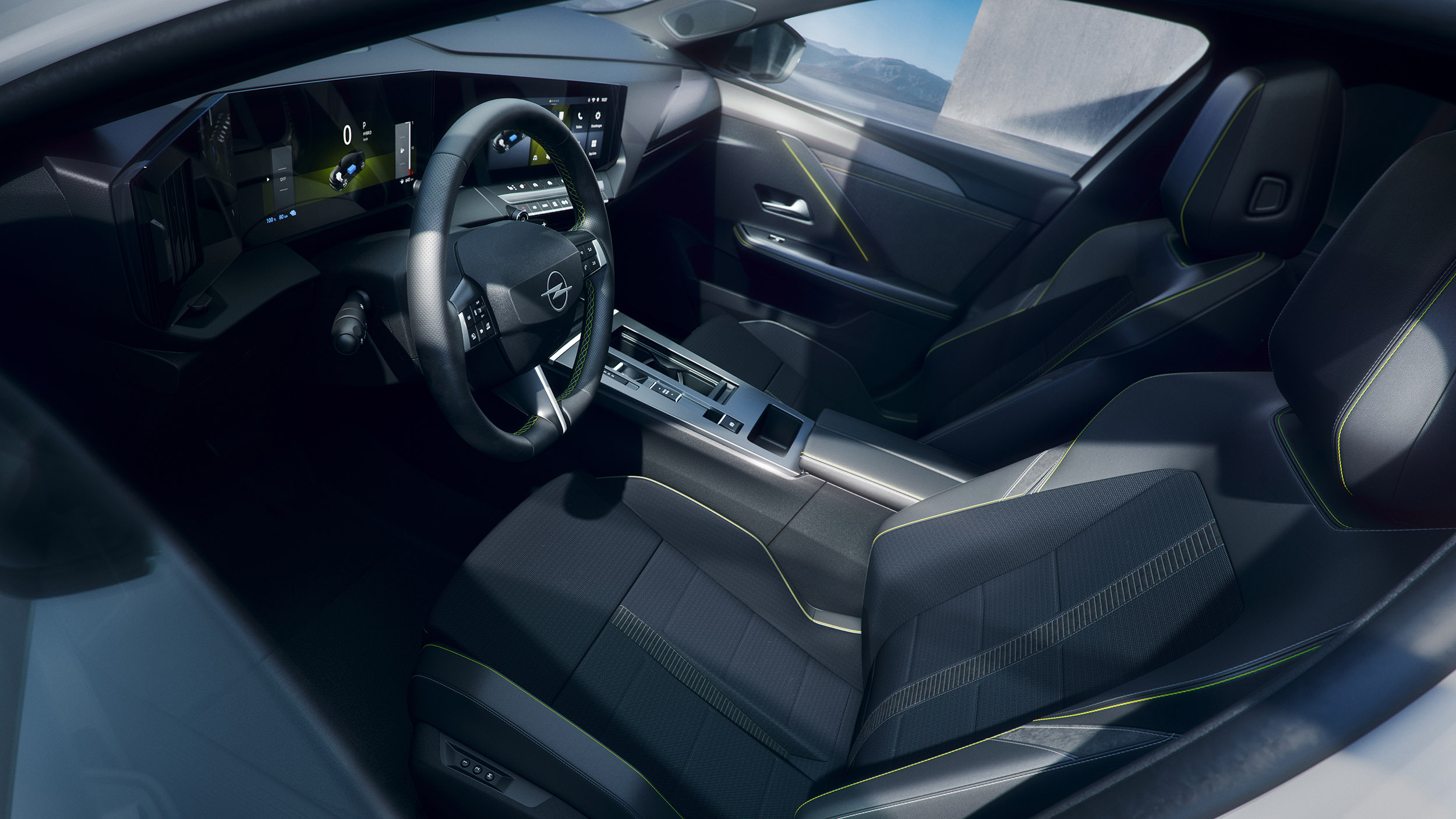
Inside, designers added bright yellow stitching and piping to the steering wheel, door cards, and center armrest, alongside aluminum sports pedals and an optional pair of sports seats with integrated headrests. As with the lesser Astra trims, the digital cockpit comprises dual 10-inch displays.

 Opel Astra GSE Line Brings OPC-Like Power, But Don’t Call It A Hot Hatch

Opel didn’t mention any chassis tweaks, suggesting the GSE Line will likely get a standard suspension, although that may vary depending on the powertrain under the hood. Note that the Astra GSe PHEV did have a sportier setup, including a recalibrated steering, new ESP settings, and a 10 mm (0.4 inches) lowered suspension with new springs and oil-filled Koni FSD dampers.

More: Stellantis Confirms The Next Astra And Corsa Land Before 2030

Marc Fetzer, Opel Vice President Current Product, said that the Astra GSE Line will show how the “extra sportiness” of the GSE models can be combined with “maximum practicality for everyday use”, while giving customers a “free choice” between powertrains.

The new Opel Astra GSE Line will make its first public outing at the Paris Motor Show next month, followed by a market launch in spring 2027. Opel has confirmed that further GSE Line models will follow later in 2027, likely including the Grandland SUV.

\\\\\\\\

Stellantis

❌