❌

Reading view

There are new articles available, click to refresh the page.

The Peugeot E-T16 Concept Is An Electrified Group B Rally Homage
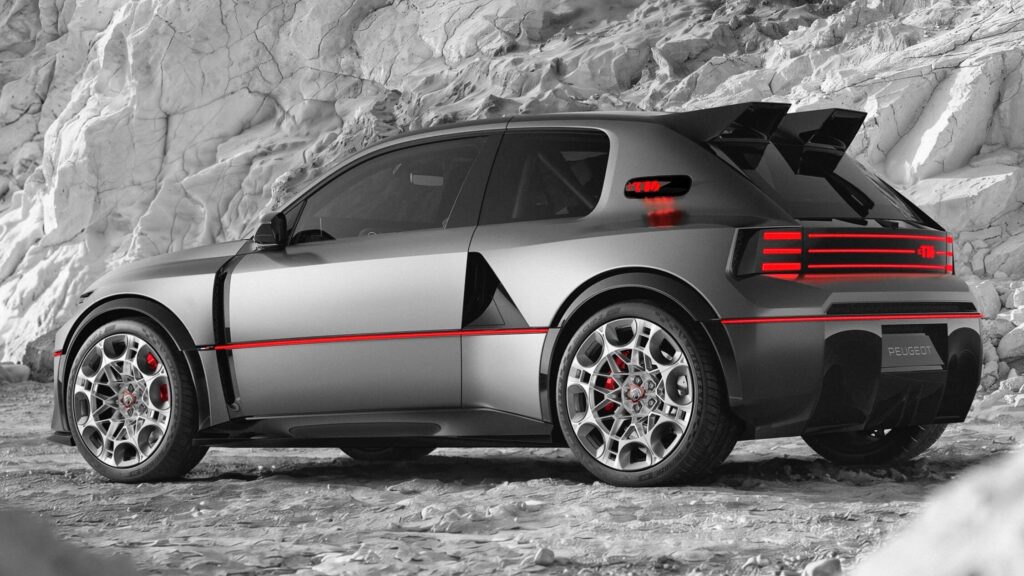
  • Three electric motors deliver 816 hp and 0-62 mph in 2.5 seconds.
  • An 85-kWh battery provides up to 248 miles of WLTP electri range.
  • Radical styling and steer-by-wire tech preview next-generation E-208.

Peugeot has a long history of building some seriously fun and somewhat bonkers hot hatches. That said, this latest creation makes some of the crazier things it’s built look downright sensible. This is the E-T16 Concept, an electric monster that pays tribute to Peugeot’s legendary 205 T16 rally car. It can hit 186 mph (300 kmh) in just 16 seconds, has three electric motors, and looks like something that escaped from a Group B fever dream. And Peugeot says that some of its tech and styling will actually reach production.

The new concept celebrates 40 years since Peugeot’s 205 T16 won consecutive World Rally Championships in 1985 and 1986. That T16 remains one of the most recognisable machines from the Group B era, and the new E-T16 isn’t shy in its reverence. Peugeot Sport says it’s the start of a new breed of “Hyperhatch.” That’s a category I think most of us can get behind.

More: 2027 Peugeot 208 Spied With Sharp Looks, Square Wheel, And New Platform

The E-T16 uses three electric motors, with one driving the front wheels and two powering the rear. Together, they produce 815 hp (608 kW), making this the most powerful Peugeot ever built. That power translates into a 0-62 mph (100 kmh) time of just 2.5 seconds, which even the original Group B rally weapons would struggle to match. There’s more to the engineering than straight-line speed, too.
 The Peugeot E-T16 Concept Is An Electrified Group B Rally Homage

The concept features torque vectoring across both axles, three driving modes, and a fourth customizable setting. It also gets 15-inch (380 mm) brake discs at all four corners, Michelin tires measuring 275 mm up front and 315 mm at the rear, and a vertically mounted hydraulic handbrake. Perfect for those tough hairpin turns on the Col de Turini.

A new battery cooling system that extracts heat via the sides of the cells, rather than at the base, ensures you can stay at rally pace for longer. Peugeot says the change allows the car to do three consecutive laps at the Nürburgring Nordschleife without dropping power output. Just three laps? If you ever needed a reminder of just how differently combustion cars can approach long stints on a race track, there it is.

Group B Swagger

\\\\\\\\\\\\

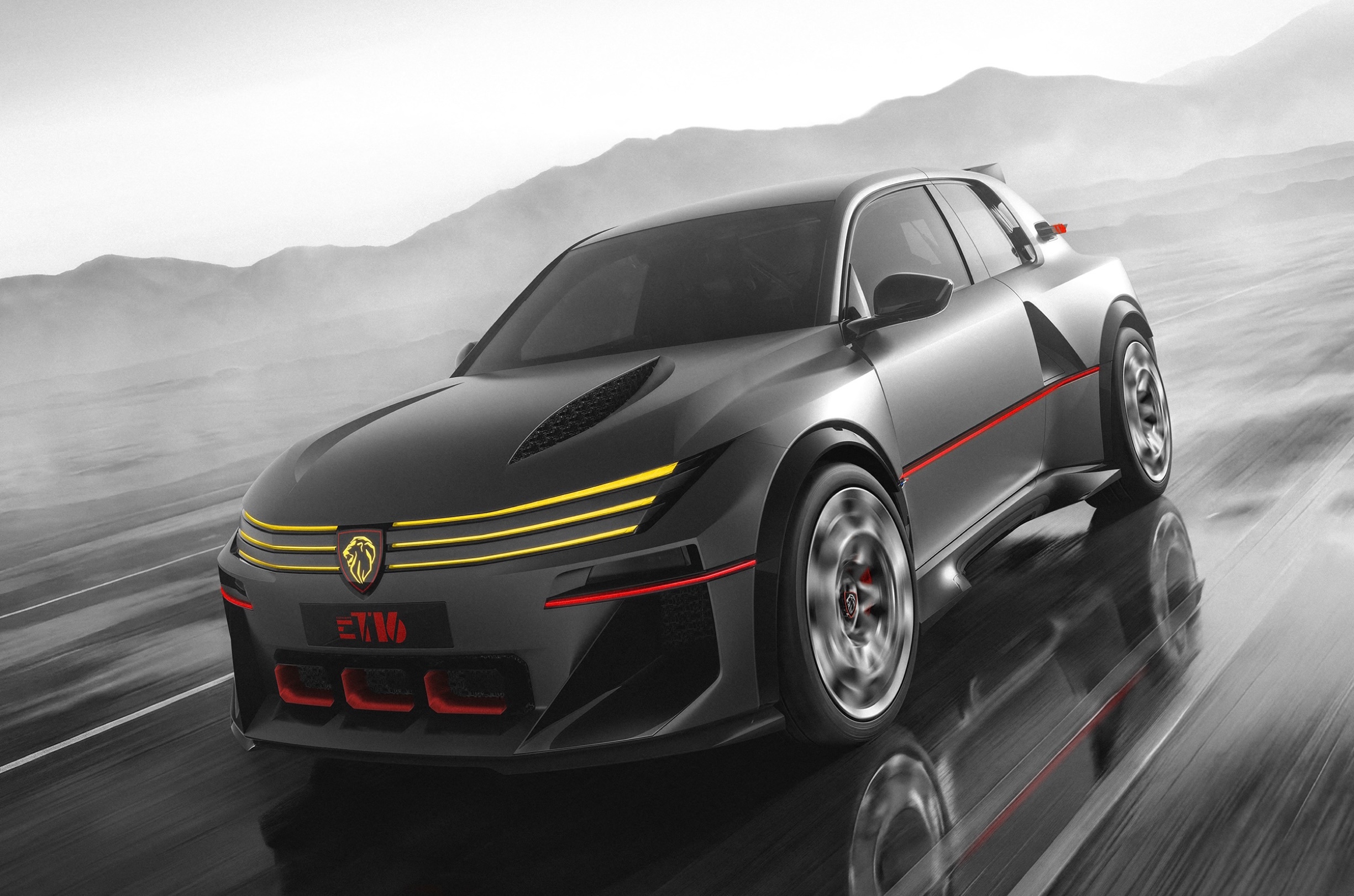
Visually, the E-T16 takes plenty of inspiration from its famous ancestor. The widened fenders, enormous rear wing, and aggressively sculpted bodywork are clear nods. Winchester Matte Grey paint, silver wheels, and a red illuminated stripe that wraps around the body, are additional hat tips to the original 205 T16.

The rear end swings up just like it did on the original rally car, but this time there’s not a gas engine back there but an electric powertrain. The bodywork also incorporates a rear diffuser with adjustable aerodynamic blades, massive front cooling intakes, and a floating C-pillar designed to direct airflow toward the rear. Again, this isn’t a production car, but boy, oh boy, did Peugeot lay the groundwork for one that would have us all reaching for our check books.

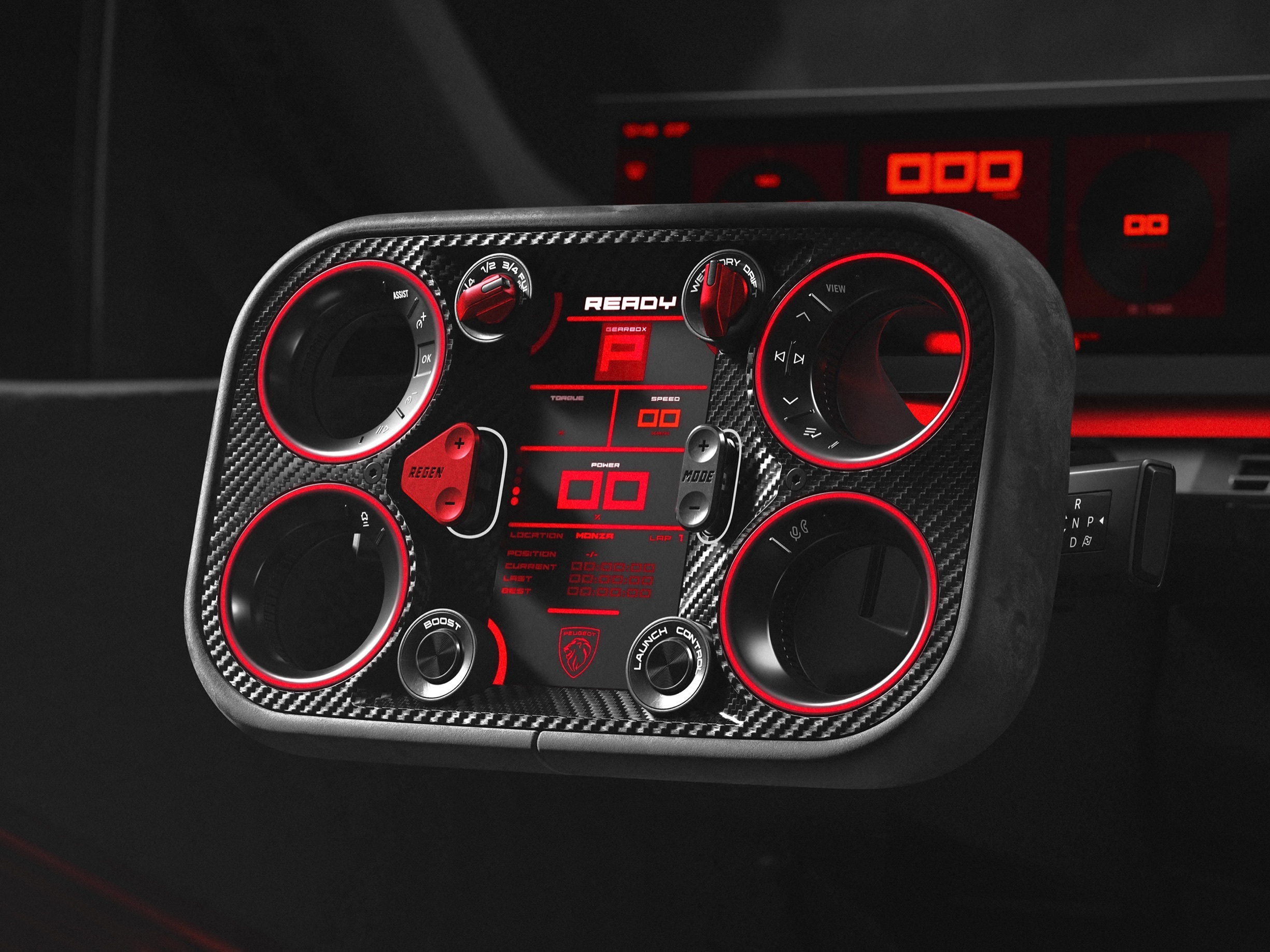
The design previews what we can expect of the next-gen E-208, albeit in a less macho form, Peugeot says. The 2027 production hatch gets the same horizontal interpretation of Peug three-claw lighting signature and the cabin also hints at where future road cars are headed. A curved 21-inch panoramic display stretches across the dashboard, while Peugeot’s unusual Hypersquare steering wheel dominates the cabin.

Steer-By-Wire
 The Peugeot E-T16 Concept Is An Electrified Group B Rally Homage

That wheel isn’t only interesting because of its shape. It’s connected – or not, as it happens – to the front wheels via steer-by-wire tech. The production E-208 will get the same Hypersquare wheel and steer-by-wire technology. Hopefully a GTI variant might also get the configurable display. Whether or not it’ll also get the carbon fiber bucket seats is less certain.

Peugeot customers have a lot to look forward to even if just a little of this concept’s design and tech makes it to production. But it would be a crying shame if the brand didn’t put something like the E-T16 into production, having now given us a glimpse of what’s possible.
\\\\\\\\

Peugeot

Renault 8 Gordini Is Back As A Bold Electric Coupe With Rally Heritage

  • Renault has unveiled a fully electric reboot of the 8 Gordini.
  • The concept features café racer styling and a 270 hp motor.
  • It is not destined for production and will remain a one-off.

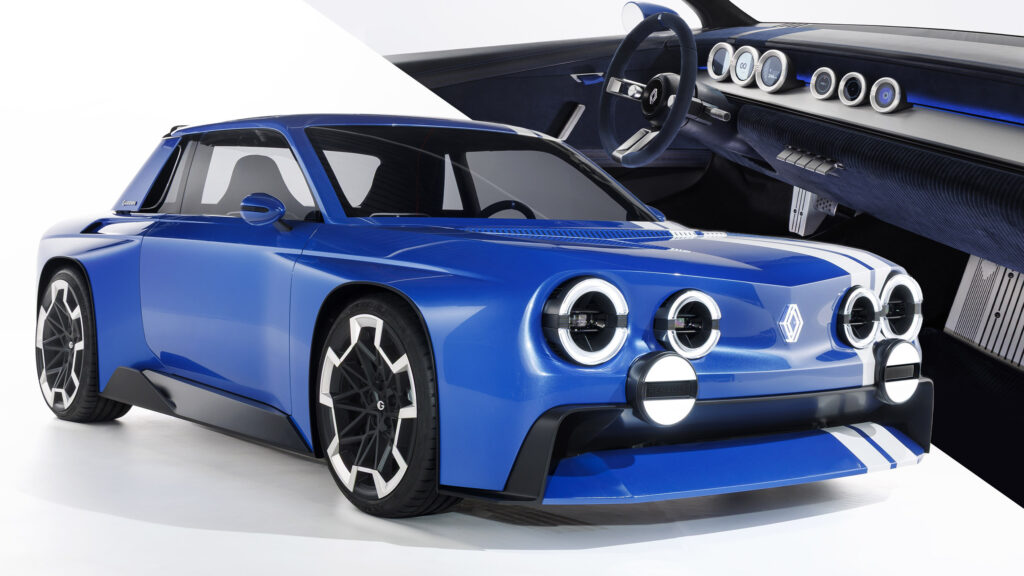
Renault is clearly not done reviving past icons with the R4 and R5 production models. The automaker has just launched a new concept car, inspired by the Renault 8 Gordini from the ’60s. The modern reincarnation of the classic rally sedan is a two-seater coupe with a fully electric powertrain and a retro-flavored design. Unfortunately, it is not destined for production, although elements from its design might influence future models.

The original Renault 8 Gordini was launched in 1964 as the high-performance version of the rear-engined rear-wheel-drive family sedan designed for winding mountain passes. The “la Gorde” featured an upgraded engine with nearly double the horsepower of the donor vehicle, a lowered suspension, beefier brakes, four or six headlights, and a blue paint with white racing stripes.

More: Updated Renault 5 Borrows The Clio Williams Look But Gains Miles, Not Speed

The new Renault 8 Gordini Concept evokes the Café racer spirit of the original, looking like a reverse restomod with a low and wide stance. The coupe measures 4.12 m (162 in) long, 1.88 m (74 in) wide, and 1.27 m (50 in) tall, riding on 19-inch and 20-inch alloy wheels.

\\\\\\

Six round LED headlights are mounted on a grille-less V-shaped nose, with flush taillights disappearing into the bodywork when not in use. The coupe also features sporty bumper intakes with a body-colored splitter, boxy and wide fenders, flying buttresses on the C-pillars, a roof spoiler, a rear ventilation grille, and a large diffuser. Of course, it wears the iconic blue livery with white stripes running along the carbon fiber body.

More: Renault Rafale Hypnotic Is The Brand’s Most Expensive SUV To Date

The interior is a celebration of minimalism and a nod to the analog era. Instead of oversized screens, Renault added six round dials with thick bezels, mounted on a brushed aluminum strip on the dashboard. We also find tasteful Alcantara inserts, an aluminum center console with physical switches, and a pair of bucket seats with black and blue corduroy upholstery.

The French automaker revealed that its designers were so enthusiastic about the brief, they submitted over 300 sketches. Alexandre Malval, Renault’s Vice President of Design, said that the goal was “to spark emotion by drawing on both our heritage and modern times, bringing together the icons of yesterday and the future.”

\\\

Renault didn’t share information about the underpinnings of the concept, other than revealing it is powered by a single electric motor which is good for 266 hp (198 kW / 270 PS) sending power to the rear wheels.

More: Renault’s $185,000 R5 Turbo Exposes What’s Really Wrong With EVs

While we would like to believe otherwise, Renault made it clear that the R8 Gordini concept is a one-off and it’s not going to evolve into a production model. Instead, it serves as a follow up to homage projects like the R17 electric restomod x Ora Ïto concept car, and the Renault 5 Diamant art car.

The new concept will make its first public outing at the Renault Carwalk on September 24, before being exhibited at the Paris Motor Show next month. Eventually, it will end up at the new Renault Collections museum in Flins which is scheduled to open its doors for the public in around 15 months.

\\\\

Renault

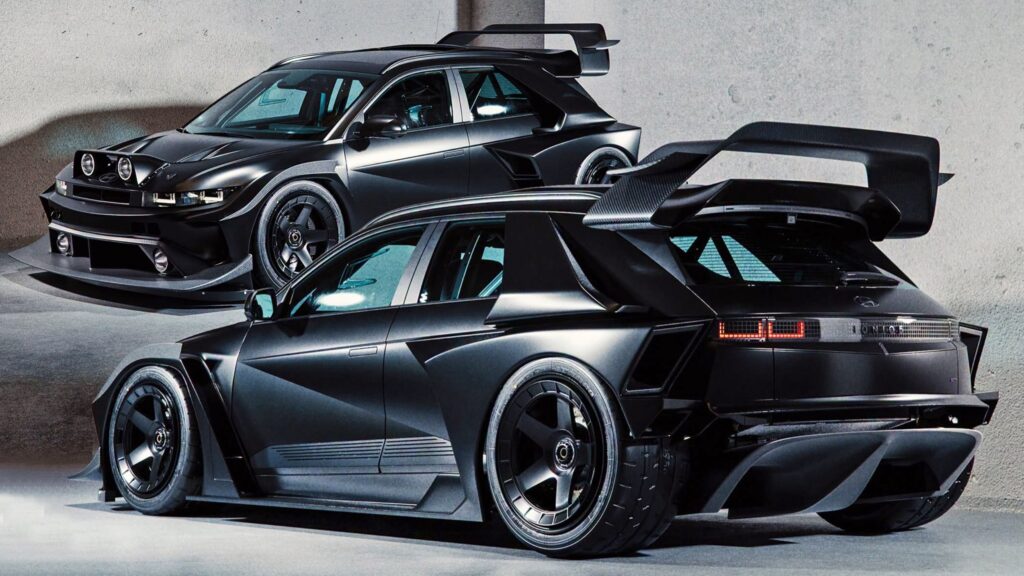
Hyundai Ioniq 5 N Imagined As A Group B Monster With ICE Power

  • Khyzyl Saleem created a Group B-inspired Hyundai Ioniq 5 N.
  • The concept ditches the EV powertrain for WRC turbo ICE power.
  • The ultra-aggressive bodykit takes cues from classic rally icons.

The Hyundai Ioniq 5 N is one of the most exciting performance-focused EVs, and while it is technically based on a crossover, it looks like a proper hot hatch. The sharp lines of the model inspired independent designer Khyzyl Saleem to create a wild concept, evoking the spirit of the Group B Rally icons from the ’80s.

The model is dressed with a custom bodykit, altering its proportions and making it look ready for the special stages. The front end has been redesigned with a pronounced carbon fiber splitter and extra LEDs on the vented hood.

More: Coga Takes Hyundai Ioniq 5 Beyond N With Very Wild, Very Pink Body Kit

The profile features ultra-wide fender extensions with integrated cooling intakes. The flying buttresses over the C-pillars are reminiscent of the Lancia Delta S4, which is a fitting homage since the greenhouse of the Ioniq 5 sends subtle Delta vibes.

The tail is even more aggressive with a massive wing and an equally large diffuser. The rally car treatment also includes Lexan windows, a roll cage, and a new set of five-spoke alloy wheels finished in black. The designer also created a slightly different version with a smaller rear wing and a bronze shade, looking like a homologation special.

\\\\\\

Khyzyl Saleem / Facebook

Hyundai never experimented with a Group B entry, but they retain a strong presence in WRC, competing at the highest level against Toyota Gazoo Racing. The Korean automaker started with the Accent WRC in 2000, followed by the i20 WRC in 2014, and the more recent i20 N Rally1 in 2022. With the i20, Hyundai won two WRC Manufacturer’s titles in 2019 and 2020, and one Driver’s title in 2025 (Thierry Neuville).

Swapping EV For ICE?

Taking inspiration from Hyundai’s motorsport involvement and, despite the fully electric nature of the donor Ioniq 5, Khyzyl said he likes to imagine the concept with a combustion engine. More specifically he wants the “screaming” turbocharged 1.6-liter four-cylinder engine from the WRC rally car – presumably in mid-ship position – although he would also consider rotary power.

More: Hyundai’s EVs Already Fake Engine Sounds, And Now They Might Vibrate Too

After the latest regulatory changes that removed the hybrid boost from Rally1 contestants, the turbo engines have a maximum permitted output of 375 hp (280 kW / 380 PS). This is lower than the 641 hp (478 kW / 650 PS) from the dual electric motors of the roadgoing Ioniq 5 N, making us wonder if Hyundai could come up with a more potent hybrid setup.

In any case, the Group B-inspired Ioniq will likely stick to the digital world. Still, the project is part of a broader collaboration between Hyundai USA and Khyzyl Saleem. Last month, the company shared renderings of a Baja-inspired Santa Fe concept on social media, asking their followers which Hyundai model should the_kyza try next.

\\\\\

Khyzyl Saleem / Facebook

❌