Reading view

There are new articles available, click to refresh the page.

Geely’s Golden Brick Battery Charges Faster Than BYD, But Good Luck Finding A Plug For It

  • Geely claims its latest batteries charge faster than BYD’s mk2 Blades.
  • Energee Golden Brick charges from 10-70 % in just 4 minutes 22 secs.
  • BMW warns extreme charging speeds could bring durability trade-offs.

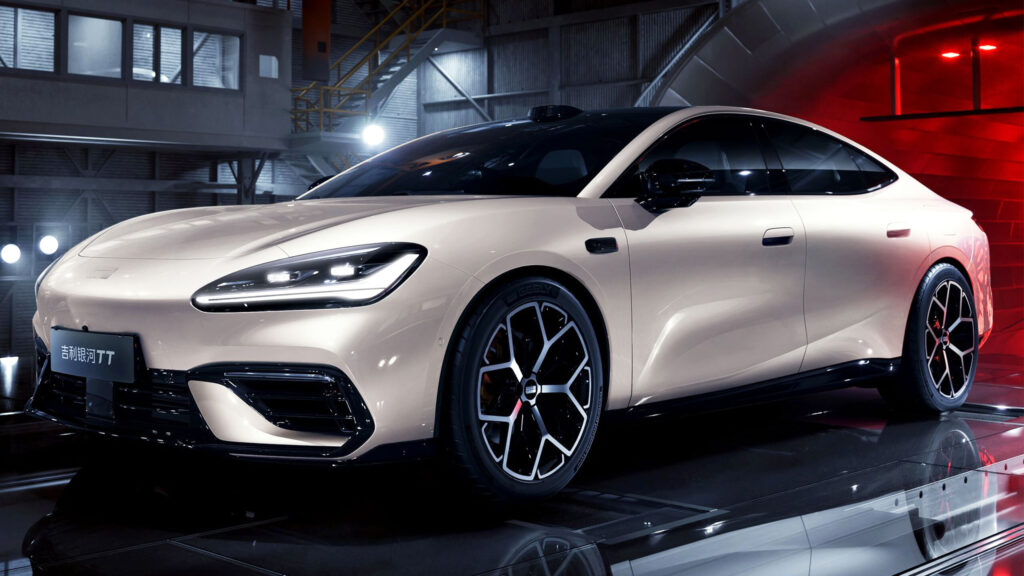
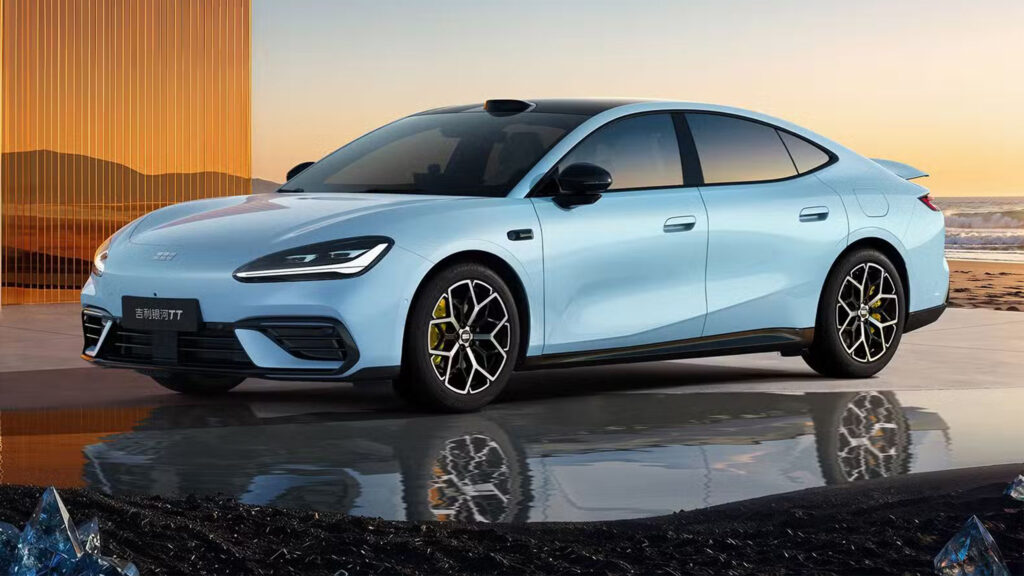
Forget zero to 60 mph (97 kmh) times, the EV world has a new kind of electric performance battleground and China’s Geely just claimed top honors. It says its new batteries can charge even faster than the BYD batteries that sent us into a spin last month with their crazy top-up times.

Geely’s Lynk and Co brand says its latest 95 kWh battery – the hopefully not prophetically named 900V Energee Golden Brick – can charge from 10 to 70 percent in just 4 minutes 22 seconds. That compares with BYD’s megawatt flash charging results of 5 minutes for the same race, an achievement that itself is way ahead of anything European or American automakers can deliver.

Related: BYD Says Its New Battery Can Recharge As Fast As Filling Up Your Gas Tank

Stretch the experiment from 10-80 percent and the Geely EV does the job in 5 minutes 32 seconds, and even going from 10-97 percent, which takes account of batteries charging more slowly as they get close to full, the clock only registers 8 minutes 42 seconds. BYD’s second-generation blade battery needs 9 minutes to get to 97 percent when hooked up to one of the company’s new megawatt flash chargers.

Destroys Western EVs

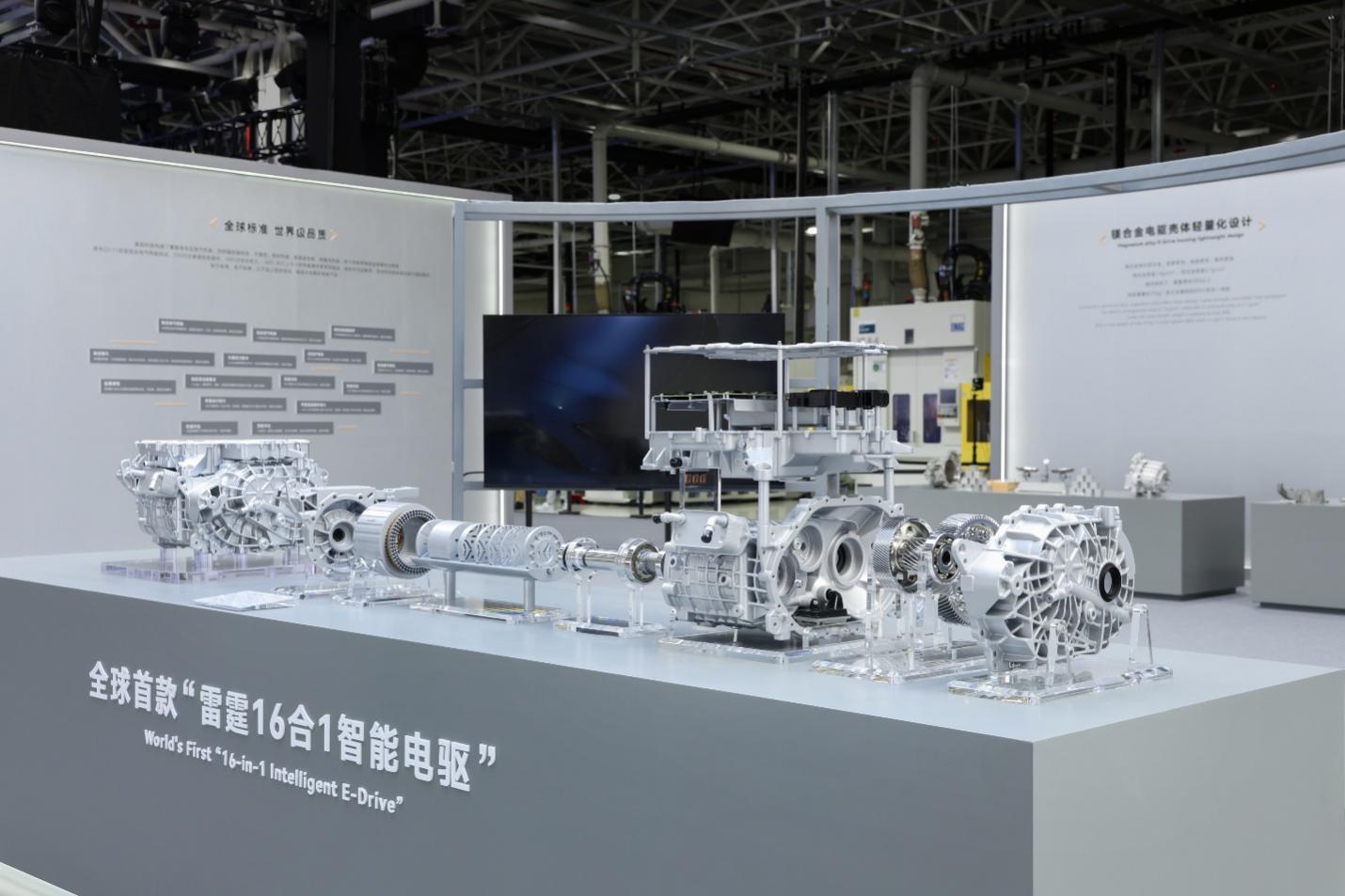
The secret sauce is a high voltage setup paired with seriously beefy charging hardware. We’re talking peak power of around 1,100 kW with strong input of more than 500 kW at 75 percent charged, and 350 kW at 97 percent. That 350 kW figure is higher than the peak charge rate achieved by all but the fastest-charging Western EVs.

There is a catch though, or more likely several. These charge speeds rely on next level charging stations that aren’t exactly everywhere yet. Geely’s network is growing, but it’s way behind BYD in terms of super-fast rollout, being about one quarter the size, Car News China reports. So while Geely may have bragging rights today, the real winner could still be whoever builds the infrastructure fastest.

 Geely’s Golden Brick Battery Charges Faster Than BYD, But Good Luck Finding A Plug For It

BMW Not Convinced

Not everyone’s convinced this race is worth winning anyway. BMW has been openly skeptical about the obsession with ever faster charging.

“You always have to be careful with those kinds of announcements,” BMW’s battery production boss, Markus Fallböhmer told Carsales last month. “It is possible to optimize one single performance indicator, but you have to make compromises on other sides.”

That’s BMW’s polite way of saying there’s no free lunch. Push charging speeds high enough and something else may give, whether that’s longevity, cost, or overall performance.

 Geely’s Golden Brick Battery Charges Faster Than BYD, But Good Luck Finding A Plug For It
Geely

There’s No Defending The Design Of Geely’s New SUV

  • Geely has teased the upcoming Zhanjian 700.
  • It’s heavily inspired by the Land Rover Defender.
  • SUV features a tri-motor four-wheel drive system.

If imitation is the sincerest form of flattery, Land Rover must be blushing as Geely is gearing up to introduce the new Zhanjian 700. It apes the Defender and is being billed as an “AI all-terrain hardcore SUV.”

The automaker isn’t saying much at this point, but the model was previewed by a concept at last year’s Shanghai auto show and looks more British than Chinese. The similarities are striking as both models have rectangular headlights with circular daytime running lights. The 700 even incorporates the Defender’s single bar grille, although here it’s illuminated and features a logo in the center.

More: Geely’s Swimming Defender Clone Wants Land Rover’s Lunch

The design déjà vu continues further back as we can see familiar body work and similar front fender vents. They’re joined by plastic body cladding and a Defender-esque greenhouse. That being said, the 700 eschews Land Rover’s side-mounted panel and features a beltline that kicks up at the rear doors.

Rounding out the highlights are a contrasting white roof, two-tone wheels, and a rear-mounted spare tire carrier. The model also has blacked out pillars as well as a roof rack.

 There’s No Defending The Design Of Geely’s New SUV

The interior image isn’t very revealing, but we can see a lever-style shifter with a leather grab handle. It’s flanked by two metallic controls and one of them could be the drive mode selector.

While that remains to be seen, the 700 has high quality switchgear and a row of dedicated off-road buttons. This appears to include a ride height selector, a 4L button, and a locking rear diff.

 There’s No Defending The Design Of Geely’s New SUV

Geely was tight-lipped on specifics, but said the model has an integrated frame as well as a tri-motor four-wheel drive system for “intelligent electric performance.” While that implies the vehicle is fully electric, that might not be the case as there are doors on both sides of the rear fenders.

One of them could be a charging port, while the other is for the gas tank. This would make sense as previous reports have suggested the model could have a 1.5- or 2.0-liter engine as well as a 70 kWh battery pack.

While a number of questions remain, the Zhanjian 700 will likely debut at Auto China next month. We can expect to learn more then, but Geely hinted the SUV won’t be cheap as it will compete in the “high-end off-road segment” and deliver “flagship-level performance.”

\\\

Two Things Bother Us About The 2026 Geely EX5, But The Price Tag Kills Both | Review

PROS ›› Sleek looks, cheap, efficient, comfortable ride CONS ›› Annoying safety tech, smallish trunk, not fun to drive

The all-electric SUV space has transformed at a remarkable pace in recent years, shifting from niche curiosity to mainstream battleground. Over the past five years in particular, growth has been rapid, driven in no small part by a surge of ambitious entrants from China.

If you’re a Carscoops regular, you’ll no doubt be familiar with all of the new and compelling EVs coming out of the People’s Republic. It’s bad news for those living in the US, as none of them are available, but across Europe, Asia Pacific, and elsewhere, these EVs have forced legacy carmakers to up their game and cut prices, which is great news for consumers.

Read: Geely’s Swimming Defender Wants Land Rover’s Lunch

One of the country’s key players is the Geely Group, which continues to expand the reach of its core brand alongside a portfolio that includes Lotus, Volvo, Polestar, and Zeekr. In markets such as Australia, its most significant new EV is the Geely EX5, aimed squarely at the Tesla Model Y and competing Chinese models like the Xpeng G6 and BYD Sealion 7. It may not turn many heads or deliver an especially engaging drive, but it does tick loads of boxes.

QUICK FACTS
› Model:2026 Geely EX5 Inspire
› Starting Price:AU$45,990 ($32,500)
› Dimensions:181.7 L x 74.8 W x 65.7 in H (4,615 x 1,901 x 1,670 mm)
› Wheelbase:108.3 in (2,750 mm)
› Curb Weight:1,765 kg (3,212 lbs)*
› Powertrain:60.2 kWh battery / single electric motor
› Output:215 hp (160 kW) / 236 lb-ft (320 Nm)
› 0-62 mph6.9 seconds*
› Transmission:Single-speed
› Efficiency:16.2 kWh/100 km*
› On Sale:Now
SWIPE

*Manufacturer

\\\\\\\

Photos Brad Anderson/Carscoops

What Do You Get For Your Money?

Two versions of the Geely EX5 are currently available in Australia – the Complete and the Inspire. Last month, we lived with the flagship Inspire for a week. Prices start at AU$41,990 ($29,600) for the Complete and rise to AU$45,990 ($32,500) for the Inspire, which translates to AU$50,061 ($35,300) when factoring in on-road costs.

Neither the Complete nor the Inspire offers any optional extras. All customers must choose from one of six available paint finishes and two available interior colors.

The EX5 is slightly smaller than a Tesla Model Y and BYD Sealion 7, but it’s also considerably cheaper. The new Model Y Premium Rear-Wheel Drive starts at AU$58,900 ($41,600), a difference of AU$16,910 ($12,000), while the larger Sealion 7 kicks off from AU$54,990 ($38,800). The EX5 also undercuts the Xpeng G6, starting at AU$54,800 ($38,700), and the Leapmotor C10, priced from AU$47,990 ($33,900).

 Two Things Bother Us About The 2026 Geely EX5, But The Price Tag Kills Both | Review

The EX5 is based on Geely’s GEA architecture and features a compact 60.2 kWh lithium-iron phosphate battery pack with a single electric motor driving the front wheels. Both versions deliver the same 160 kW (215 hp) and 320 Nm (236 lb-ft) of torque.

Due to the small battery pack, the 430 km (267 miles) quoted range of the Complete and the 410 km (255 miles) driving range of the Inspire aren’t all that impressive, but the EX5 does promise to be pretty efficient, averaging as low as 15.8 kWh/100 km.

A Sleek Cabin

\\\\\\\\\\\\\\

Photos Brad Anderson/Carscoops

I stepped into my week with the EX5 just after handing back the keys to Geely’s new Starray EM-i plug-in hybrid. From behind the wheel, the two look and almost feel the same, which is certainly no bad thing.

The EX5’s basic dashboard, steering wheel, door panels, and floating center console are all virtually identical to the Starray. While it’d be nice to have a little more differentiation between the two models, I can’t imagine there’ll be any EX5 buyers not completely satisfied with the fit and finish of the cabin.

Perched in the center of the dashboard is a 15.4-inch infotainment display using Geely’s Flyme OS. It’s an excellent system, using a snappy processor and having logical and easy-to-understand menus. I especially liked the ability to customize which functions remained fixed to the taskbar at the base of the screen, such as temperature controls, fan speed, and seat adjustments.

 Two Things Bother Us About The 2026 Geely EX5, But The Price Tag Kills Both | Review

A large 10.2-inch digital cluster is also used. Just like in the Starray EM-i, only the right side of it can be configured to display things like your media and trip functions. The rest of the screen remains unconfigurable.

Review: The 2026 Geely Starray EM-i Undercuts RAV4 By $5K And Feels Twice The Price

Our tester had the available black interior finish, and it felt more premium than the price tag would suggest. There are some areas with piano black plastic, including the steering wheel and parts of the door panels, but Geely hasn’t gone overboard with them. Found on the floating center console are climate-control shortcuts and a configurable scroll wheel.

The Good And The Bad

\\\\\\\\\\\\\\\\\\\\\\\\\

Photos Brad Anderson/Carscoops

Sliding into the driver’s seat for the first time, I was relieved that the faux leather felt very real and was beautifully soft to the touch. However, I was disappointed that, like in the Starray, there is no ability to adjust the lumbar support. This is an odd exclusion, particularly given that Geely has gone to the trouble of fitting ventilated, heated, and massaging front seats.

Speaking of the massage seats, they are superb and remarkably forceful, unlike most other cars in this price range with massage seats.

When launched, the EX5 only included wireless Apple CarPlay, but no Android Auto connectivity. Thankfully, our test car benefited from a software update just before we collected it, adding wireless Android Auto, which worked seamlessly. The Inspire also comes standard with a panoramic sunroof and a solid 16-speaker audio system.

Externally, the EX5 looks quite small, but much to my surprise, there’s plenty of room for adults in the second-row, including plenty of legroom and headroom. However, it seems Geely has robbed some cargo volume to make the rear seats as spacious as they are.

As such, there’s just 302 liters (10.6 cubic feet) of space in the rear, although this does increase to 410 liters (14.5 cubic feet) if you include the generous under-floor storage area. Fold the seats down, and you’re looking at 1,877 liters (66.2 cubic feet), or about 200 liters (7 cubic feet) less than the Starray.

Smooth And Sharp

\\\\\\\\\\\\\

Photos Brad Anderson/Carscoops

Spend any amount of time behind the wheel of the EX5, and it’s obvious that it feels just as polished as some of the more expensive competition.

As an EV like this should, it’s quiet on the open road, but it does have an especially loud pedestrian warning hum when driving at lower speeds. Figures of 160 kW (215 hp) and 320 Nm (236 lb-ft) are largely par for the course for a vehicle like this, and just so happen to be identical to the recently-launched Hyundai Elexio.

Review: Hyundai’s Chinese 2026 Elexio Gets So Much Right, And That’s The Frustrating Part

Power feels absolutely adequate. Were this a combustion-powered SUV, it may feel a little underpowered, but as all of the grunt is available the moment you stab the throttle, the EX5 gets going surprisingly well. Indeed, it can hit 100 km/h (62 mph) in 6.9 seconds, which is very respectable. Geely has also done a good job of ironing out any hints of torque steer under hard acceleration.

 Two Things Bother Us About The 2026 Geely EX5, But The Price Tag Kills Both | Review

Efficiency is also good. I averaged 16.2 kWh/100 km during my time with it, a lot better than I recently averaged in the larger and admittedly heavier Hyundai Elexio.

The ride also feels polished and plush, and that’s not something that can be said about many EVs. Given these vehicles have heavy battery packs in the floor, carmakers often give them quite harsh suspension setups. That’s not the case here as the EX5 eases over bumps smoothly and comfortably. Similarly, the steering is light and direct with several different settings to tweak the weighting.

What Could Be Improved?

\\\\\\\\\\\\\

Photos Brad Anderson/Carscoops

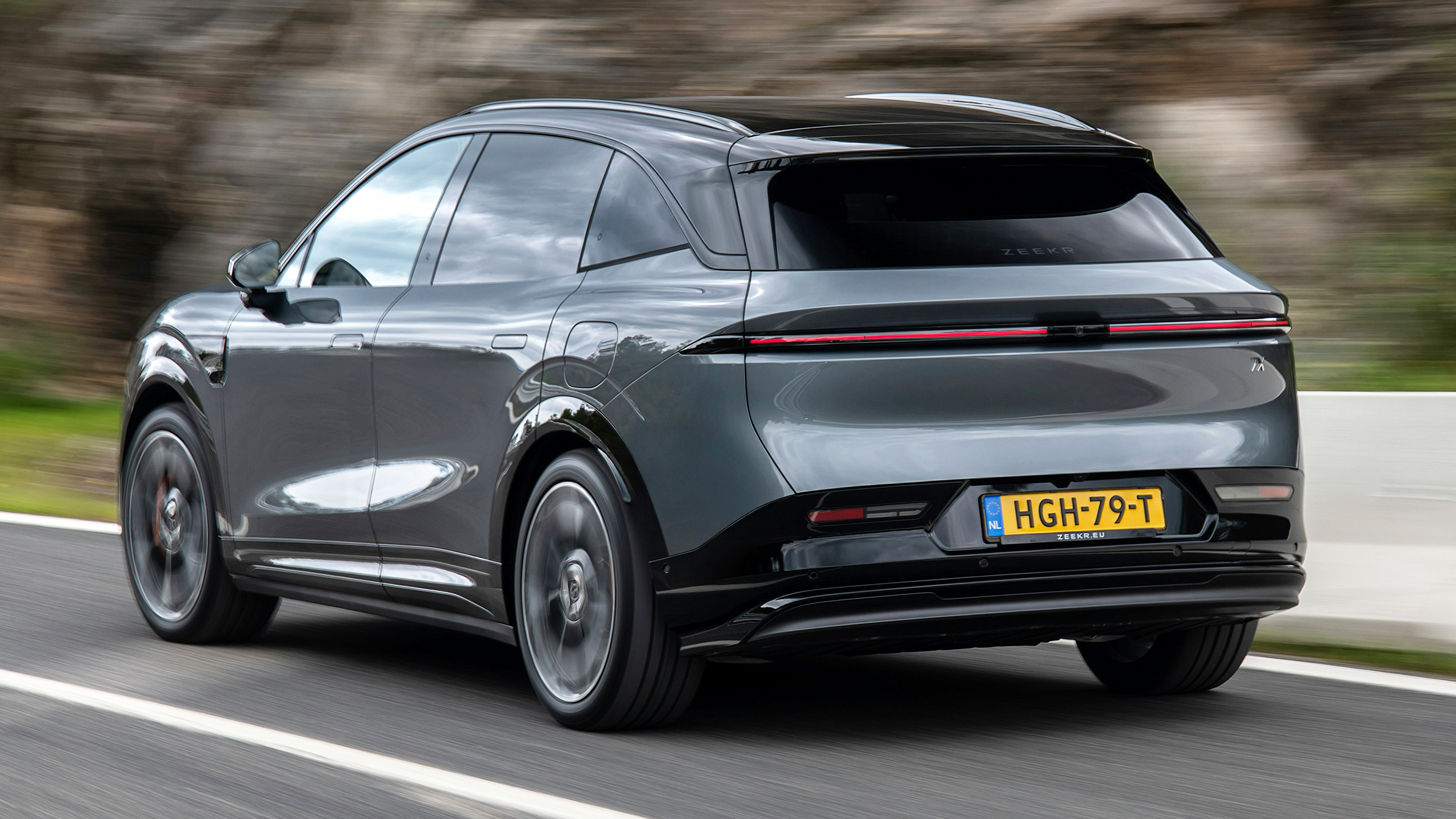
Just like we found in the Starray, most of the frustrations with driving the EX5 can be traced back to overzealous safety systems, like the speed limit warning and the driver monitoring system. In the more expensive Zeekr 7X, also from the Geely Group, these systems can be easily and quickly disengaged by swiping down from the top of the central screen and pressing on the large shortcut settings. Additionally, they stay off, even after you’ve left the car.

Things aren’t so easy in the EX5, as you have to dive into the menu in a process that can take 10-15 seconds. Whenever I would get ready to drive off, I’d have to disable them. It’d be nice to see Geely tap some of Zeekr’s UX engineers on the shoulder for some advice on how to incorporate similar shortcut toggles.

Is the EX5 particularly fun or engaging to drive? No, as it simply doesn’t have the performance or suspension setup to thrill, but it handles well, thanks in large part to the fact that it’s relatively light.

Shortly after we returned the keys to our 2025 model, Geely presented the 2026 EX5 in Australia, complete with a slightly larger 68.39 kWh battery, but retaining the same 160 kW (215 hp) front-mounted motor. In the future, we’d like to see Geely broaden the EX5’s appeal further, perhaps by launching a more powerful all-wheel drive version.

 Two Things Bother Us About The 2026 Geely EX5, But The Price Tag Kills Both | Review

Verdict

As it stands, the Geely EX5 is a very solid choice for those in the market for an all-electric, mid-sized SUV. While it’d be nice for some of the safety systems to be calibrated more accurately, the minor niggles they have aren’t a deal-breaker.

For growing families, the EX5 could prove to be a little too small, so it would be best suited to couples and those with young children. It’s well-priced, reasonably efficient, and comfortable to drive daily. However, even though the model we drove is known as the EX5 Inspired, it felt a little uninspired and isn’t the type of vehicle that tugs at the heartstrings, as is the case with a number of alternatives.

\\\\\\\\\\\\\\\\\\\\\\\\\\\\\\\\\\\\\\\\\\\\\\\\\\\\\\\\\\\\\\\\\\\\\\\\\\\\\\\\

Photos Brad Anderson/Carscoops

Smart Thinks Its E-Class-Sized Sedan Looks Like A Shark, And Stands By It

  • Smart has shared more photos of the #6 ahead of its market launch in China.
  • The flagship fastback sedan adopts shark-inspired styling cues and active aero.
  • It will be initially available with a PHEV powertrain offering a 1,125-mile range.

Smart may be best known for its pint-sized two-door hatchbacks, but its lineup has been steadily expanding to include SUVs and coupe-style crossovers. Now it is pushing further upmarket with something entirely different. The Geely and Mercedes-backed brand has unveiled its first fastback, pairing an aerodynamic silhouette with what it describes as, “shark-inspired” styling cues.

More: You’re Not Wrong, The New Mercedes GLB Looks Suspiciously Like A Smart

Following its earlier appearance in regulatory filings, Smart has now released a fresh batch of images of the #6 EHD. Mercedes-Benz was responsible for the exterior, and Smart says the whole thing takes its cues from marine predators.

At the front, the hood integrates functional air channels that Smart has branded “Bionic Shark-Gills.” Around the rear, a four-stage adjustable spoiler is said to echo the movement of a shark’s tail Or so the company claims, so take that with a pinch of seal salt.

Other details include tightly drawn body surfacing along the profile, aggressive LED headlights linked by a central grille element, and full-width LED taillights set within a sculpted rear panel.

\\\\\\\\\\

At 4,906 mm (193.1 in) long, the #6 sits in executive sedan territory, being closer to a Mercedes E-Class or BMW 5-Series than anything Smart used to build. The 2,926 mm (115.2 in) wheelbase is the longest the brand has put into production, which should pay dividends for cabin space.

The interior has yet to be revealed, but spy shots suggest it will feature a tall center tunnel and a large infotainment display with the latest tech, similar to the Smart #5 SUV.

Electrified Powertrains

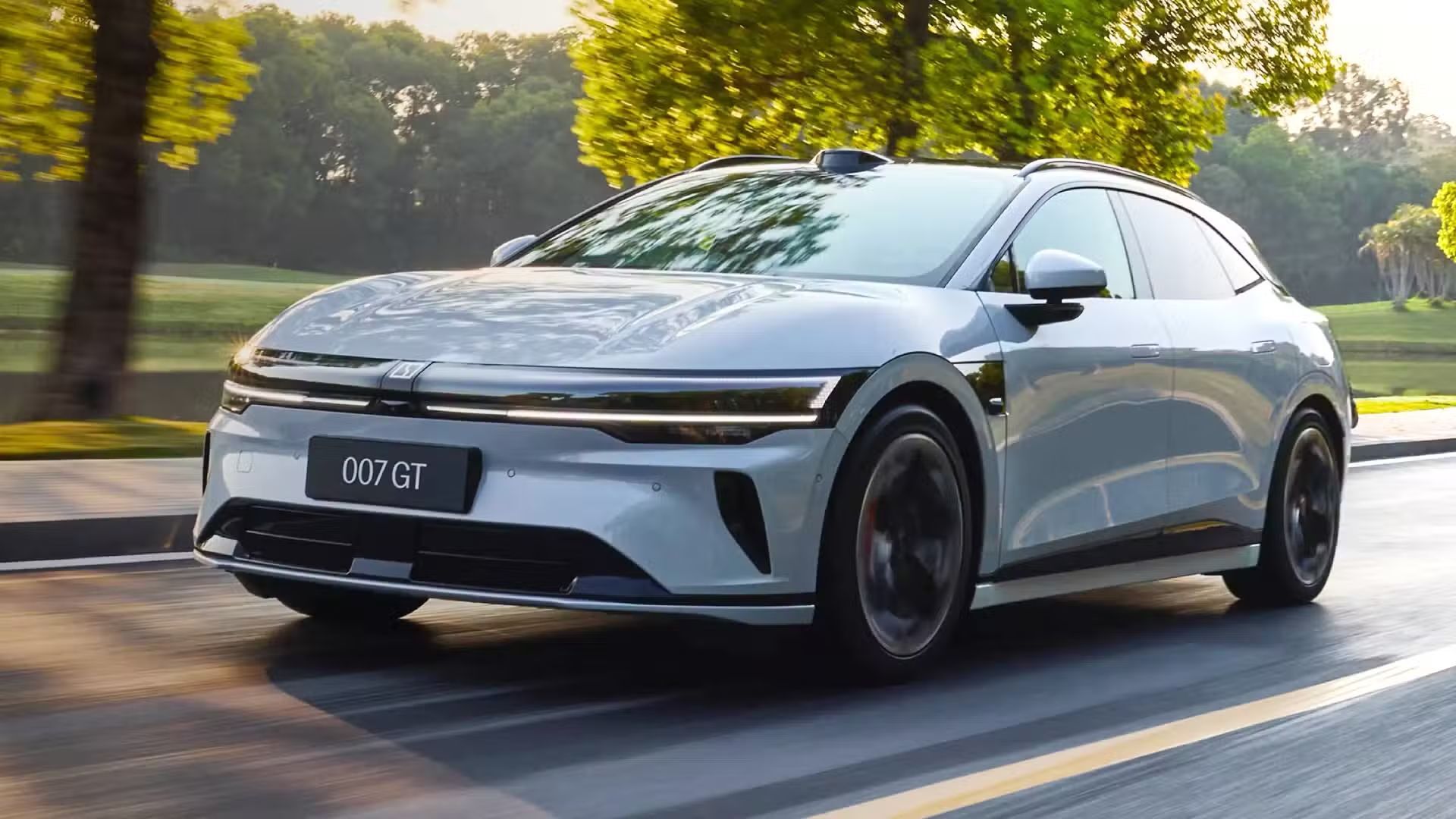
The Smart #6 sits on Geely’s PMA2+ architecture, a further development of the widely used SEA platform that also underpins models like the Zeekr 007 and its GT counterpart. It will debut as a plug-in hybrid, with fully electric versions set to follow, including a range-topping Brabus variant.

More: Smart’s About To Drop A #2 On The City Car Segment

The EHD, short for Extended Hybrid Drive, uses Geely’s NordThor 2.0 system. It pairs a turbocharged 1.5-liter gasoline engine with a front-mounted electric motor, delivering a combined 429 hp (320 kW / 435 PS). The headline figure is range, with a claimed 1,810 km (1,125 miles) on the CLTC cycle, including up to 285 km (177 miles) in electric-only driving.

The Smart #6 EHD is scheduled to launch in China in the coming months, ahead of a global rollout. Pricing will be announced at a later date.

\\\\\\\

Smart

China’s No. 2 Automaker Is Making A Play For Canada

  • Geely is preparing to launch its EV lineup in Canada soon.
  • The company is competing with BYD for early market entry.
  • Local production remains a possibility for market expansion.

Geely has begun taking the necessary steps to launch its vehicles in Canada and could start sales as early as this year. The move places it in direct competition with BYD, as both aim to become among the first Chinese EV-focused brands to enter the Canadian market following a recent trade deal between the two countries.

They are both locked in a race against Tesla, which appears positioned to secure, if not all, then most of the first batch of 24,500 Chinese-made EV permits available at a reduced tariff rate.

Geely Group chief executive Andy An says the company expects to secure the required certifications from Canadian officials soon, clearing the way for local sales. The automaker has been steadily climbing the ranks among the world’s largest car manufacturers and is now setting its sights on expansion across several key markets.

Read: Canada Could Give China’s Biggest Carmaker A Backdoor Into The US Market

“We’re not only considering the Canadian market, but also Brazil, South America, Eastern Europe, and Southeast Asia,” An told Bloomberg. “Geely’s globalization is mostly through exports right now, but we will look to localize production.”

 China’s No. 2 Automaker Is Making A Play For Canada

Geely ranks just behind BYD as China’s second-largest car manufacturer, and it already has a foothold in both Canada and the United States through Polestar and Volvo. Even so, steep 100 percent tariffs have long made exporting additional China-built models to Canada a tough business case.

Things are changing. Earlier this year, Canada and China agreed to a pivotal new trade deal, announcing that up to 49,000 Chinese-built EVs will be eligible for importation into the country at a reduced tariff rate of just 6.1 percent. That ceiling is expected to climb over time, reaching roughly 70,000 vehicles annually.

With those barriers easing, Geely, along with rivals like BYD and Chery, is lining up a Canadian market entry. The simplest route is to ship existing EVs from China, but local production, either through partnerships or independent operations, is very much on the table. Chery, for its part, is already recruiting in Canada as it prepares for its own arrival.

 China’s No. 2 Automaker Is Making A Play For Canada

Mercedes’ Future EVs May Be More Chinese Than You Think

  • Mercedes explores deeper ties with Geely for future EV tech.
  • Talks focus on reducing costs and speeding development cycles.
  • New entry EV platform could debut around 2030 replacing MMA.

Mercedes-Benz has a pair of very interesting new EVs in its line-up, namely the latest-generation CLA and GLC, but that doesn’t mean it’s not thinking even further into the future. According to a new report, the brand may look to deepen ties with China’s second-largest car manufacturer for its next generation of EVs.

Unnamed sources claim that Mercedes has had early-stage discussions with Geely about its future EVs. It’s possible these vehicles will feature componentry from the Chinese brand, which would no doubt help cut engineering costs and shorten development times.

Read: 2026 Mercedes CLA To Get A 2.0L Turbo Engine Built By China’s Geely

While Geely declined to comment on the report, a Mercedes spokesperson acknowledged that the firm “is continually reviewing ways to make research and development faster, better and more efficient — both in China and globally.” Importantly, the same spokesperson told Bloomberg that there are no discussions about Mercedes and Geely sharing platforms.

Germany Joins With China

 Mercedes’ Future EVs May Be More Chinese Than You Think

This contrasts with what fellow German brand VW has done. It has partnered with Chinese brand Xpeng and is sharing architectures with the relatively young EV startup for some of its future EVs, including a new ID-badged sedan. Companies like Xpeng, as well as BYD, Geely, Chery, and others, have streaked ahead of many Western legacy automakers, developing more advanced batteries and electric motors.

Mercedes already has very strong ties with Geely and operates the Smart brand with its Chinese partner. Once exclusively a purveyor of small city cars, the Smart brand has been revitalized as an EV manufacturer with designs penned by Mercedes, while engineering and manufacturing are handled by Geely.

While Mercedes says it’s not interested in platform sharing with Geely, a recent report from China claims that the German company could develop its next-gen EV platform using Geely’s GEEA electronic and electrical architecture as its base. This report from 36Kr claims that the new platform has been dubbed ‘Phoenix’ and will be used for entry-level EVs sold worldwide, potentially launching as soon as 2030 as a replacement for the current MMA architecture.

 Mercedes’ Future EVs May Be More Chinese Than You Think
Geely Galaxy M7

BYD Sales Crash 41% In China As Its Main Rival Takes The Lead

  • BYD’s China sales have tumbled 36 percent in 2026.
  • About half of BYD vehicles this year were exported.
  • Geely sold 76,000 more vehicles than BYD in China.

For much of the past three years, it has often seemed as though BYD could do no wrong. The company steadily launched new models, expanded its lineup, and watched its sales climb at an impressive pace. However, the start of 2026 has been alarmingly slower, allowing fellow Chinese automaker Geely to pull ahead.

Through the first two months of this year, BYD has sold 400,241 vehicles, down 36 percent from the year prior. Of these, 190,190 vehicles were sold in February, a drop of 9.5 percent from the past month, due in large part to the Lunar New Year holiday, but it was also a 41 percent drop compared to the same month last year.

Apparently, shrinking tax breaks and a dip in buyer confidence are starting to cool the market. Plenty of shoppers are opting to wait it out, holding off to see what new models land and whether government trade in schemes become clearer before committing their cash.

Read: A Chinese Brand Just Knocked Ford Out Of The Global Top Six

While BYD is facing some struggles at home, it continues to gain popularity in foreign markets. In February alone, it exported 100,600 of its new energy vehicles, consisting of EVs and plug-in hybrids. Include January in those figures, and BYD has exported 201,082 vehicles.

 BYD Sales Crash 41% In China As Its Main Rival Takes The Lead

Competitors Step Up

While BYD is facing growing pains, several other Chinese automakers are enjoying the opposite problem. Through the first two months of 2026, Stellantis partner Leapmotor’s sales have climbed 19 percent to 60,126 units. Xiaomi’s EV division is up 48 percent year over year to more than 59,000 units. Zeekr has posted an 84 percent surge across January and February, while Nio deliveries have jumped 77 percent, according to CNBC.

Geely is also having a particularly strong run. So far this year, it has delivered roughly 76,000 more vehicles than BYD. That is notable because it marks the first time Geely has outsold BYD for at least two consecutive months since 2022. While Geely currently leads within China, it trails slightly in overseas markets, exporting 181,891 vehicles so far this year.

According to Bloomberg, BYD chief executive Wang Chuanfu acknowledged the growing pressure back in December. He said rival automakers had begun closing the technological gap that once gave BYD a clear edge, something that now appears to be showing up in the sales figures.

 BYD Sales Crash 41% In China As Its Main Rival Takes The Lead
Geely Galaxy Xingyuan
❌