❌

Reading view

There are new articles available, click to refresh the page.

Alpine’s Latest Creation Has Pop-Down Headlights
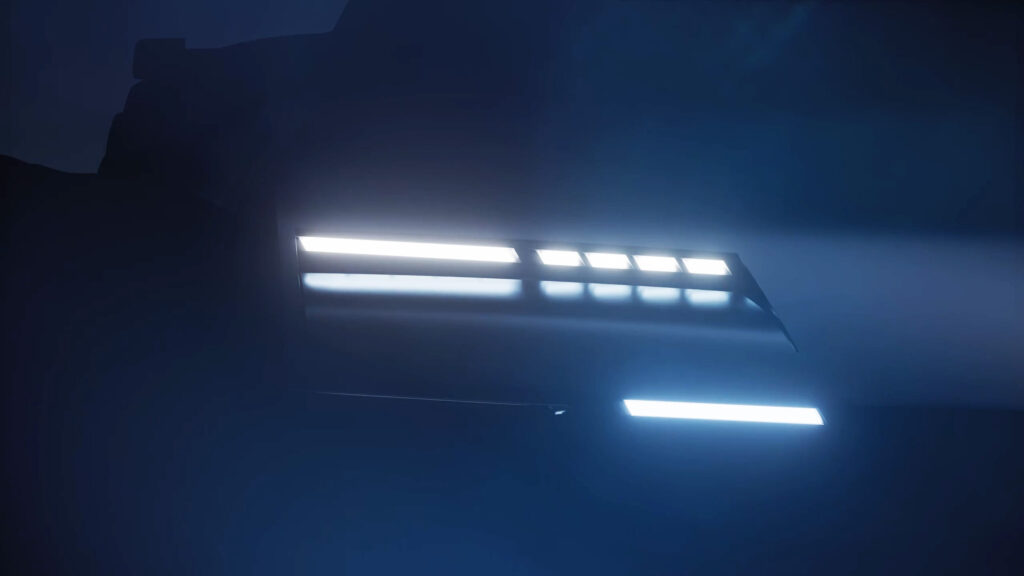
  • Alpine teased the PS1 concept ahead of its Paris debut on Oct 12.
  • The Project Special 1 features retro-inspired pop-down headlights.
  • It could preview an A310 revival in the form of an electric 2+2 GT.

Alpine fans might be excited to see the sculpture of the next-gen A110 sportscar in Paris Motor Show, but the company has another ace up its sleeve. A new concept car dubbed PS1 will be unveiled at the same event, likely previewing a future production model.

The PS1 name has nothing to do with the legendary Playstation console, as it is short for Project Special 1. In other words, it will be the first example of the “special projects” pillar from Alpine’s future product strategy, likely positioned above the “Extraordinary Everyday” pillar including the A290 hot hatchback and A390 sport fastback volume sellers, and the “Icons” pillar spearheaded by the A110 sportscar.

More: Americans Might Force Alpine To Put Gas Back In Its New Electric Sports Car

The official teaser is focused on the unconventional headlight design of the concept. When not in use, the lights remain hidden under a cover that sits flush with the flat hood. These covers recess into the bodywork, revealing slim LEDs with the colors of the French flag.

The pop-down headlight mechanism is similar to Eccentrica’s modernized version of the Lamborghini Diablo and sends retro-futuristic vibes. At the same time, this design would comply with safety regulations for production models, unlike the pop-up headlights that pose a threat to pedestrians in the case of an accident.

\\\\\

Alpine

The dark teaser doesn’t reveal the bodystyle of the PS1, but we can still see a portion of the its wide fenders and mirror-replacing cameras hinting at a low and aerodynamic stance.

More: Alpine’s New 911 Rival Is Hiding Under This Little Known French Racecar

The rectangular shape of the headlight clusters and the surfacing are reminiscent of the classic A310 produced between 1971 and 1984. In fact, Alpine is working on a new generation of the grand tourer with a 2+2 layout and a fully electric powertrain. This makes us believe that the concept could preview an upcoming zero-emission Porsche 911 rival, sharing its Alpine Performance Platform (APP) with the next A110.

Alpine said that this will be the only hint before the actual reveal which is scheduled for the press day of the Paris Motor Show on October 12. The PS1 will be showcased next to the new A110 Sculpture, and several examples of the A290 hot hatch and A390 sport fastback with new colors, trims and finishes by the Atelier Alpine personalization program.
The Man Who Flattened Supercars With An EV Now Says Gas Is The Future Of Supercars

  • Mate Rimac thinks combustion supercars will survive as mainstream cars electrify.
  • Bugatti buyers increasingly spend huge money making exclusive cars more personal.
  • Rimac says speed matters less when cheap EVs can embarrass yesterday’s exotics.

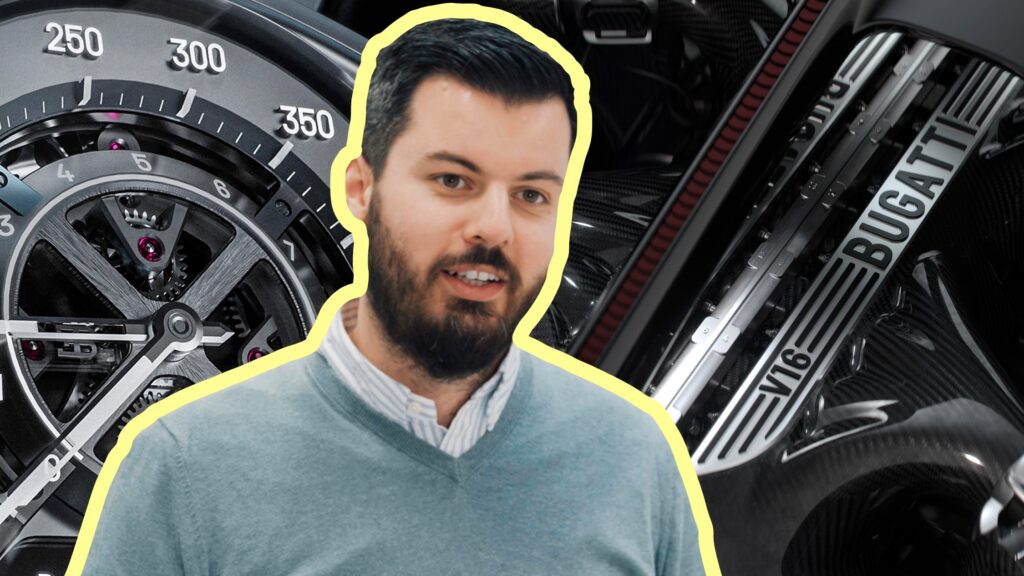
Mate Rimac made his name with outrageously rapid electric cars, so to hear him championing combustion power and professing that performance is not a top priority kind of warps the space-time continuum. It would be like reading that Thomas Edison, after spending years perfecting the light bulb, announced that candles were better after all. Yet the Bugatti boss thinks old-school engines can have a lucrative life ahead.

Speaking to CNBC, Rimac argued that the car market is splitting. Everyday transport will go electric, while the expensive stuff becomes more mechanical, emotional and deliberately extravagant. His comparison is the watch business, where cheap digital technology handles the practical job brilliantly, yet wealthy buyers still happily spend fortunes on intricate mechanical timepieces.

Related: Even Veyron Owners Balk At $42,000 Tires, But Bugatti’s $3,600 Fix Has A Catch

\\\\\\\

“For normal cars, normal people, the vast majority will be electric,” Rimac told CNBC. “The upper segment, like sports cars and upwards, are going to stay combustion for a very long time, exactly like watches.”

There’s some delicious irony here. Rimac’s Nevera showed just how comprehensively an EV could flatten contemporary combustion supercars in straight-line tests. What it didn’t do quite so spectacularly was fly out of showrooms. The Nevera’s sales struggle proved that enormous performance alone doesn’t necessarily create enormous desire.

16 Cylinders, No Turbos

 The Man Who Flattened Supercars With An EV Now Says Gas Is The Future Of Supercars

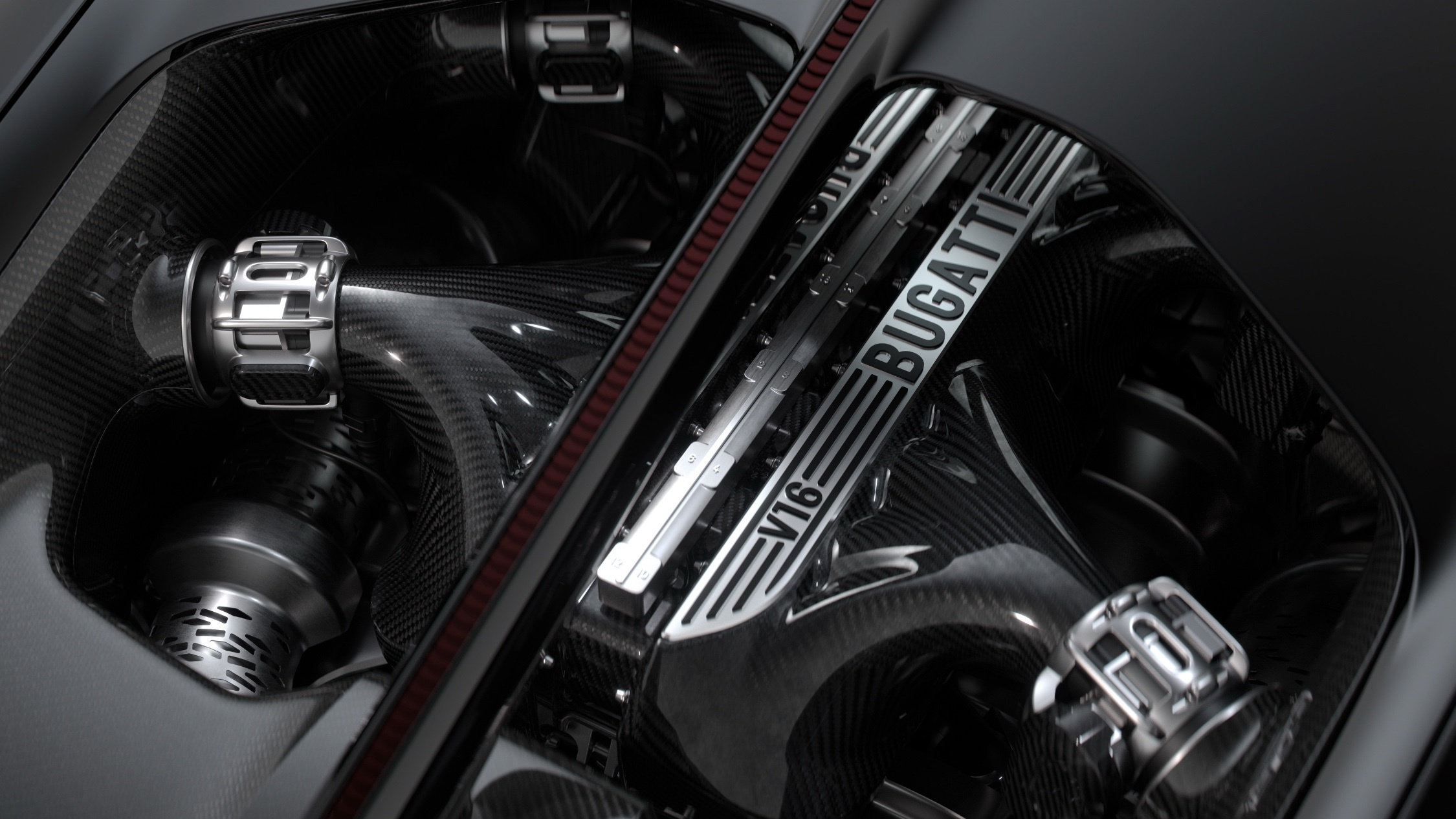
Bugatti – which considered, then rejected, the idea of making its Chiron successor an EV – appears to have absorbed that lesson. Its Tourbillon pairs electric assistance with a naturally aspirated 8.3-liter V16, producing 1,775 hp (1,800 PS) in total. Rimac is even talking about making a manual transmission available on some future models.

The hyper-luxury automaker also rejects the kind of digital dashboard now fitted to almost every new car for an intricate mechanical-style instrument cluster that still looks special when the car’s asleep and shouldn’t resemble obsolete consumer electronics in 15 years.

Both of those features, the engine and the cluster, shift the emphasis away from outright speed, which is becoming a pretty lousy differentiator. When relatively affordable EVs can deliver acceleration that would’ve embarrassed yesterday’s hypercars, adding another tenth of a second or another 100 hp mostly buys bragging rights, and almost no real customer benefit.

“Performance Is Secondary”

 The Man Who Flattened Supercars With An EV Now Says Gas Is The Future Of Supercars

“You can get a car that’s faster than any performance car from 10 years ago for like $50,000 from China,” Rimac told CNBC. “Performance is really becoming secondary.”

Character, theater and craftsmanship are harder for the likes of Xiaomi to commoditize. Tourbillon customers seem to agree. All 250 cars are spoken for, despite a roughly $4.5 million starting price, and Rimac says buyers typically pile another $600,000 to $700,000 into personalization. Bugatti’s latest one-offs, like the Destrier, push that philosophy further. Rimac says rich clients increasingly want objects that feel unmistakably theirs, rather than merely expensive versions of what somebody else owns.

Those of us without hypercar budgets though, might have to settle for an EV that makes fake combustion noises. But at least it’ll be ICE-supercar quick.

\\\\\\

Bugatti

Dreame Is Over: Chinese Vacuum Brand Behind Copycat Bugatti Reportedly Quits Before Selling A Single Car 

  • China’s Dreame is reportedly shutting its car operation barely a year after launching.
  • Concepts promised rocket thrust, solid-state batteries, and outrageous acceleration.
  • Brand appeared at CES 2026 with its first car, but by the spring it was shedding jobs.

Dreame’s adventure into the car business appears to have lived up to its name, according to a report from China Economy. After teasing Bugatti-like hypercars, ultra-luxury SUVs, rocket propulsion, and performance figures that sounded suspiciously like cheat codes, the Chinese vacuum cleaner giant is reportedly pulling the plug on its automotive ambitions barely a year after announcing them.

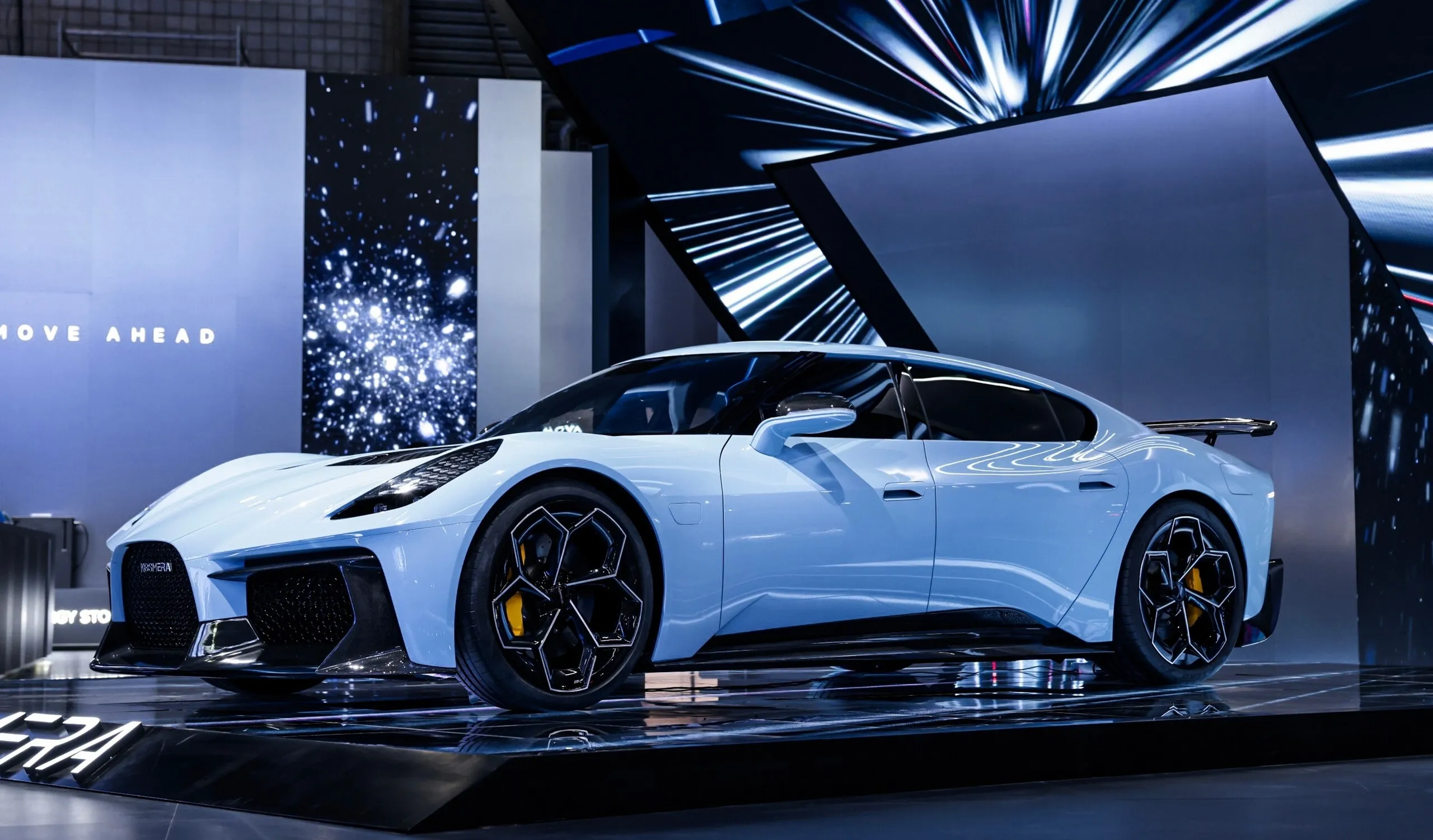
The tech firm entered the automotive world in August 2025 in controversial style when it dropped renders showing its first car would be a four-door coupe whose design was shamelessly ripped from Bugatti’s Chiron. Weeks later it revealed images of an SUV that had clearly been copying a Rolls-Royce Cullinan’s homework.

Related: If You Ever Dreamed Of A Cheap Bugatti Sedan, China Has You Covered

\\\\\

By early 2026, Dreame’s new “Starry Sky” auto division was showing a physical supercar concept at CES, which, as it turned out, looked nothing like a Bugatti after all. The Nebula Next 01 was followed in March by an X-badged SUV brother, and in April by the Nebula Next 01 Jet Edition, a rocket-propelled coupe that could allegedly reach 62 mph (100 kmh) in just 0.9 seconds.

If you were thinking at the time that sounded slightly too good to be true, some alleged behind-the-scenes details reported by Car News China will leave you feeling vindicated. Former employees told China Economy that Dreame’s CES supercar didn’t have a proper chassis and had to be moved remotely. They claim the Rocket Car was allegedly sourced from a model-making company before being modified with a chassis and thrusters to put on a convincing show.

Funding Scrutiny

\\\\\

Now the show, and the dream, is apparently over. An automotive workforce that once approached 1,000 people has reportedly been reduced to only a few dozen staff tasked with winding things down. Chinese government scrutiny over investment funding is also said to have complicated matters.

Like Porsche trimming side ventures while refocusing on sports cars, Dreame is returning to businesses it actually knows, including vacuums, robotic lawnmowers, electric two-wheelers, and robots. Sometimes you’ve just got to clean up your own mess, and Dreame at least has the tools for the job.

 Dreame Is Over: Chinese Vacuum Brand Behind Copycat Bugatti Reportedly Quits Before Selling A Single Car 

Dreame

❌