Reading view

There are new articles available, click to refresh the page.

Mitsubishi’s Building A Kei-Sized Pajero, And A Nissan Pickup For America
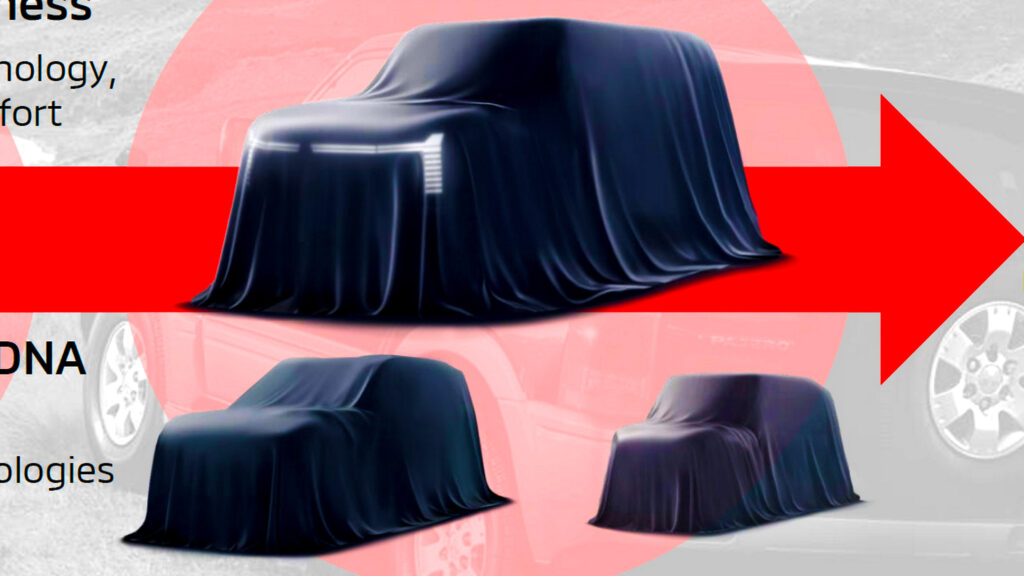
  • Mitsubishi confirms the launch of 13 new models over the next six years.
  • The lineup includes a baby Pajero and a new pickup for North America.
  • Five hybrids, five PHEVs, and three BEVs dominate the strategy.

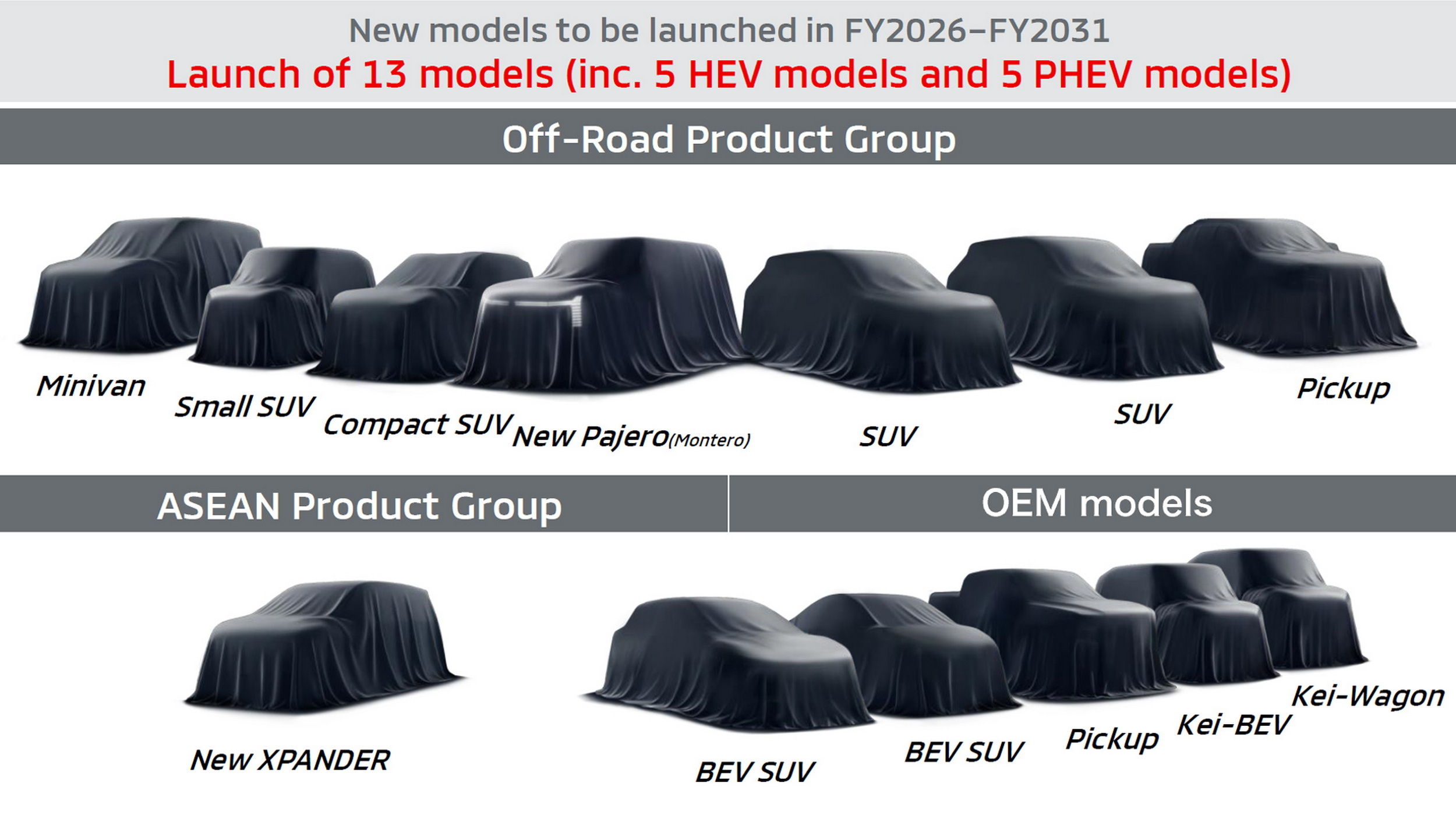
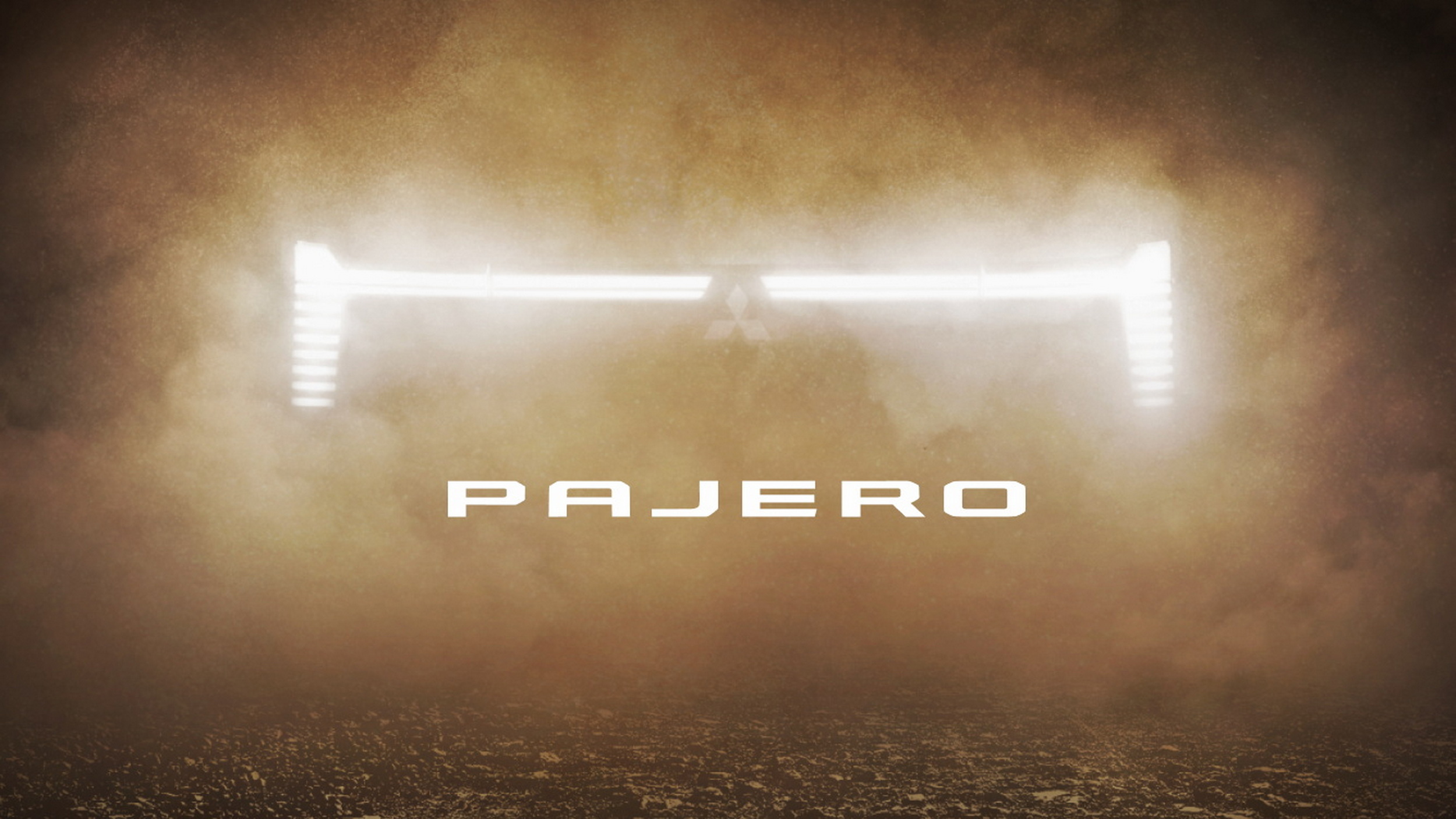
Mitsubishi has confirmed the return of the Pajero, previously sold as the Montero in markets like North America, reborn as a flagship cross-country SUV on ladder-frame underpinnings. That alone would be news. It is also just one of thirteen model debuts the Japanese firm has promised over the next six years.

One of the more important details to emerge is that the Pajero name will spread across a family of vehicles, led by that flagship SUV based on the Triton pickup, joined by a compact SUV and a small one that could slot into the kei car segment. The baby Pajero looks to be a different animal from the existing Delica Mini, itself one of the most rugged-looking kei cars Japan has to offer.

More: This Strange Off-Road Minivan Keeps Getting Facelifts After Nearly 19 Years And Still Sells Out

There is also a minivan coming under what Mitsubishi calls its off-road product group, which reads like a successor to the aging, but still popular in Japan, Delica D:5. That van has soldiered on since 2007 with two facelifts to its name. Rounding out the off-road push are two more SUVs Mitsubishi is staying quiet about, plus a pickup that may well turn out to be the facelifted Triton.
 Mitsubishi’s Building A Kei-Sized Pajero, And A Nissan Pickup For America

Over in ASEAN markets, Mitsubishi will roll out a new generation of the Xpander, the hybrid crossover minivan that first appeared in 2017 and was facelifted in 2022.

More: Mitsubishi’s New 400HP Compact Comes From The Same Factory As Your iPhone

The other five launches will be the fruit of collaboration with other brands. There is a fully electric coupe-SUV built on the Nissan Leaf, another electric SUV developed with Foxconn, a pair of Nissan-sourced kei wagons offered in combustion and EV forms, and a new pickup.

Two Pickup Projects With Nissan, Maybe Three
 Mitsubishi’s Building A Kei-Sized Pajero, And A Nissan Pickup For America

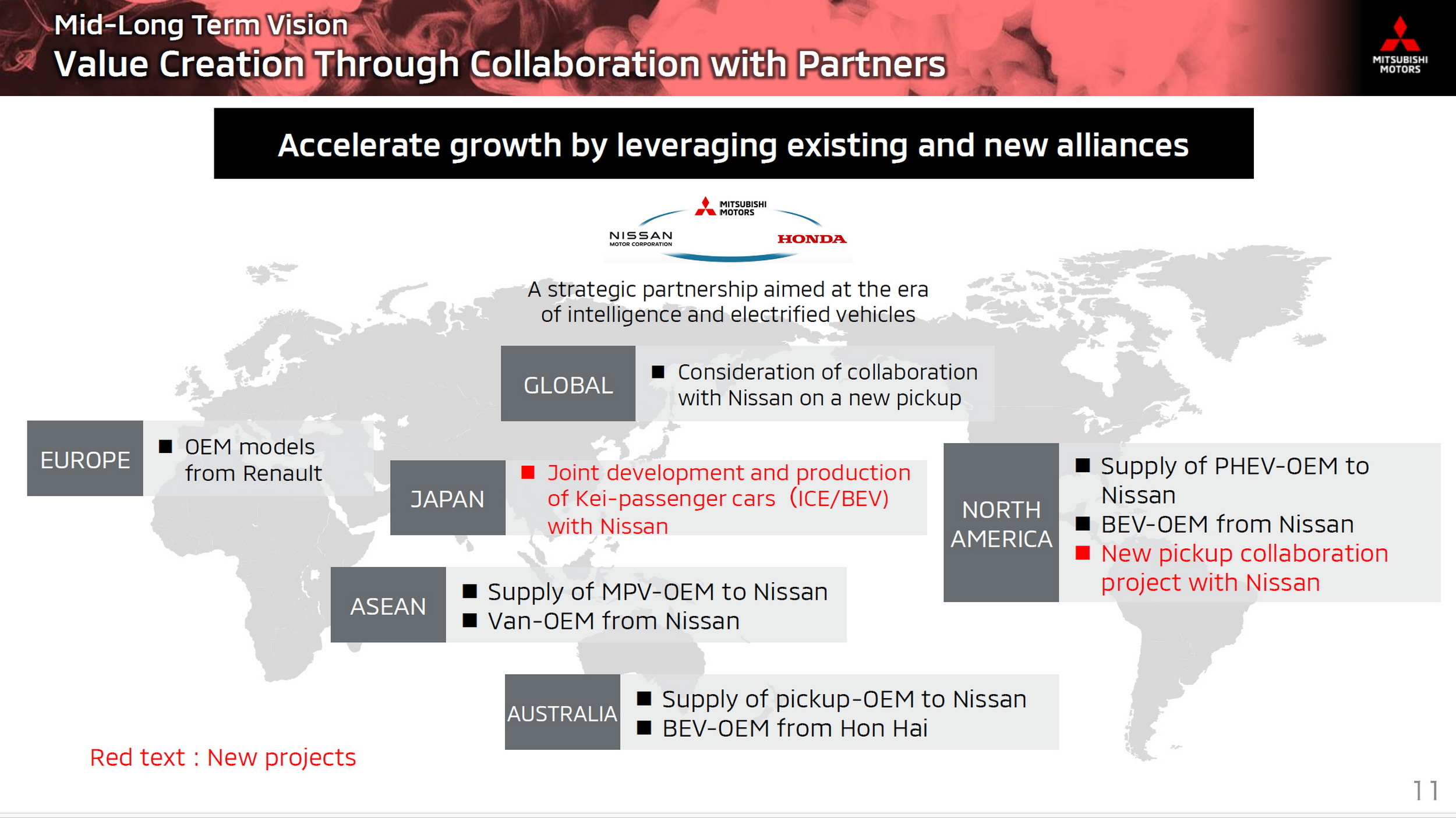
Speaking of trucks, another slide in the presentation mentions a new “pickup collaboration project with Nissan” for North America. A separate global pickup project is also under consideration, again with Nissan, alongside an updated Triton that is likely already in development

More: Mitsubishi’s New Triton Raider Got Everything Except The One Thing It Needed

Worth untangling the web here. The Australian-spec Nissan Navara is based on the current Mitsubishi Triton, while the electrified Nissan Frontier Pro draws on the Chinese Dongfeng Z9. That second one could feed into the global project, since it is rumored to reach Europe wearing Navara badges and could just as easily put on a Mitsubishi suit for markets with strict emissions rules.

HEVs, PHEVs, and BEVs

In terms of powertrains, Mitsubishi’s future relies heavily on electrification. The company announced that five of the 13 upcoming models will be self-charging hybrids, and another five will be plug-in hybrids.
 Mitsubishi’s Building A Kei-Sized Pajero, And A Nissan Pickup For America

Since three models are listed as BEVs in the official teaser, there is no room for any non-electrified offering. That is a little puzzling, since the Pajero was thought to use the 2.4-liter turbodiesel from the Triton, though that engine could presumably gain hybrid assistance.

More: Mitsubishi Is Still Selling A New 4WD Pickup For Used Corolla Money

In fact, Mitsubishi explicitly states they are developing in-house PHEV/HEV-dedicated engines boasting a world-class 48% thermal efficiency, confirming their deployment across all models – including those riding on ladder-frame underpinnings.

To fight off rapid-fire releases from new competitors, the brand is using AI and digital transformation to slash development lead times by 20%. They are shrinking the timeline from the current 45 months down to 36 months to get these 13 models to market faster.
\\\\\\\\\

Mitsubishi

Chery Just Lined Up A Kei Car For Japan, And Suzuki Should Be Worried

  • Chery is entering Japan through a joint venture called Emta.
  • The first model is a boxy electric kei hatchback due in 2027.
  • A Japanese factory could come after 2030 if sales targets land.

Chery’s global appetite shows no sign of slowing, and the Chinese brand has now identified its next target: Japan’s kei car segment. The company is taking part in a newly formed joint venture built around electric vehicles, the most protected corner of one of the world’s most insular markets.

The Singapore-based outfit, EMT (Electric Mobility Technology), is a five-way alliance. Chery and fellow Chinese automaker Jiangsu Yueda Automobile Group sit alongside Japanese retailer Autobacs Seven, Chinese battery maker Gotion, and Japanese industrial painting firm Anest Iwata. The venture will trade under the Emta brand, short for Easy, Made To All.

More: Chery Borrowed The RS6’s Face, The A5’s Profile, And The A7’s Tail, All On One Sedan

According to Car News China, Emta has staffed itself with executives drawn from Honda, Mazda, and Nissan. The CEO is He Xiaoqing, whose track record includes senior posts at Changan Ford, SAIC, and Chery itself.

The Emta #01 Leads The Charge

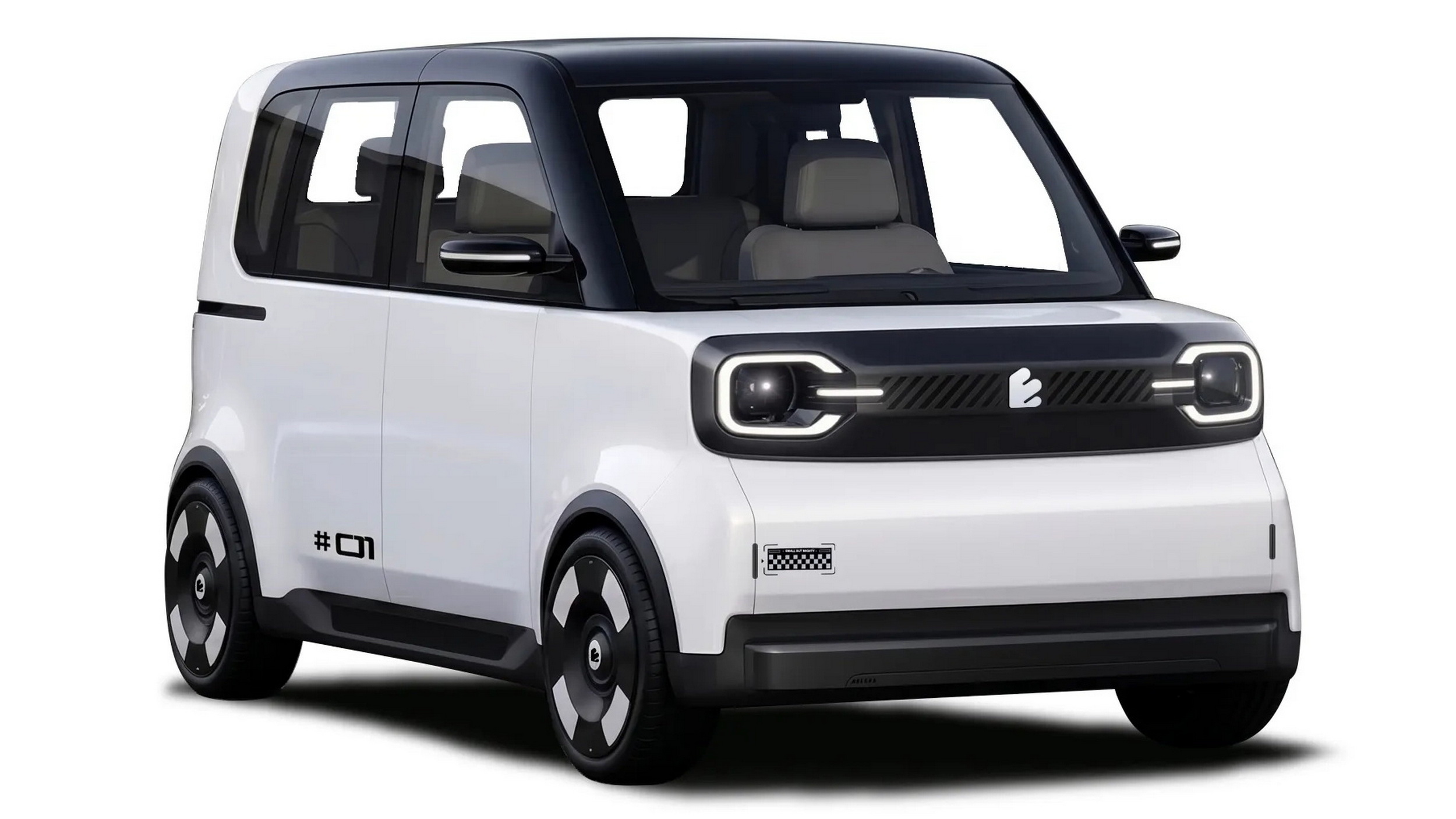
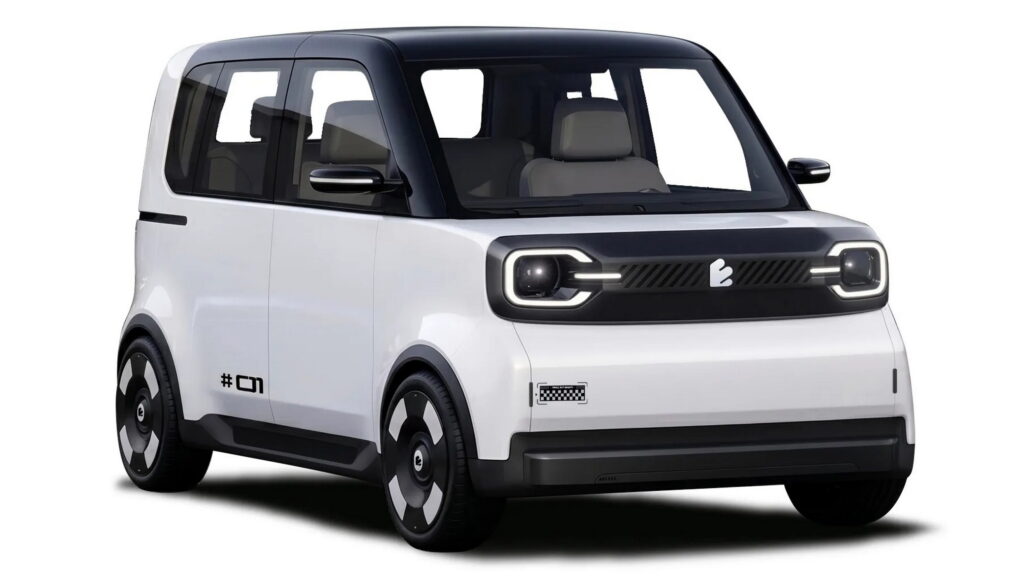
The opening act is the Emta #01, a small electric hatchback due in production form in the second half of 2027. The styling is boxy and clean, with covered-grille LED graphics that hint at Suzuki more than at anything Chinese. Rear sliding doors round out the package, simplifying access to a cabin that, by kei standards, needs every millimeter it can find.

 Chery Just Lined Up A Kei Car For Japan, And Suzuki Should Be Worried

The Emta #01 measures 3.4 m (133.9 inches) long, putting it in the same footprint as Chinese microcars like the Chery QQ Ice Cream. Full technical specs are still under wraps, but the car will ride on Chery underpinnings, almost certainly with a Gotion battery pack. Expect the latest infotainment and connectivity tech on board, along with Level 2 ADAS.

More: BYD’s Tiny EV Has Japan’s Best-Selling Kei Car Rethinking Its Entire Future

Production will take place in China, with Autobacs Seven handling sales in Japan. Emta wants the price to land somewhere close to a conventional ICE-powered kei car. When it arrives next year, the Emta #01 will be only the second kei car of Chinese origin, following the BYD Racco.

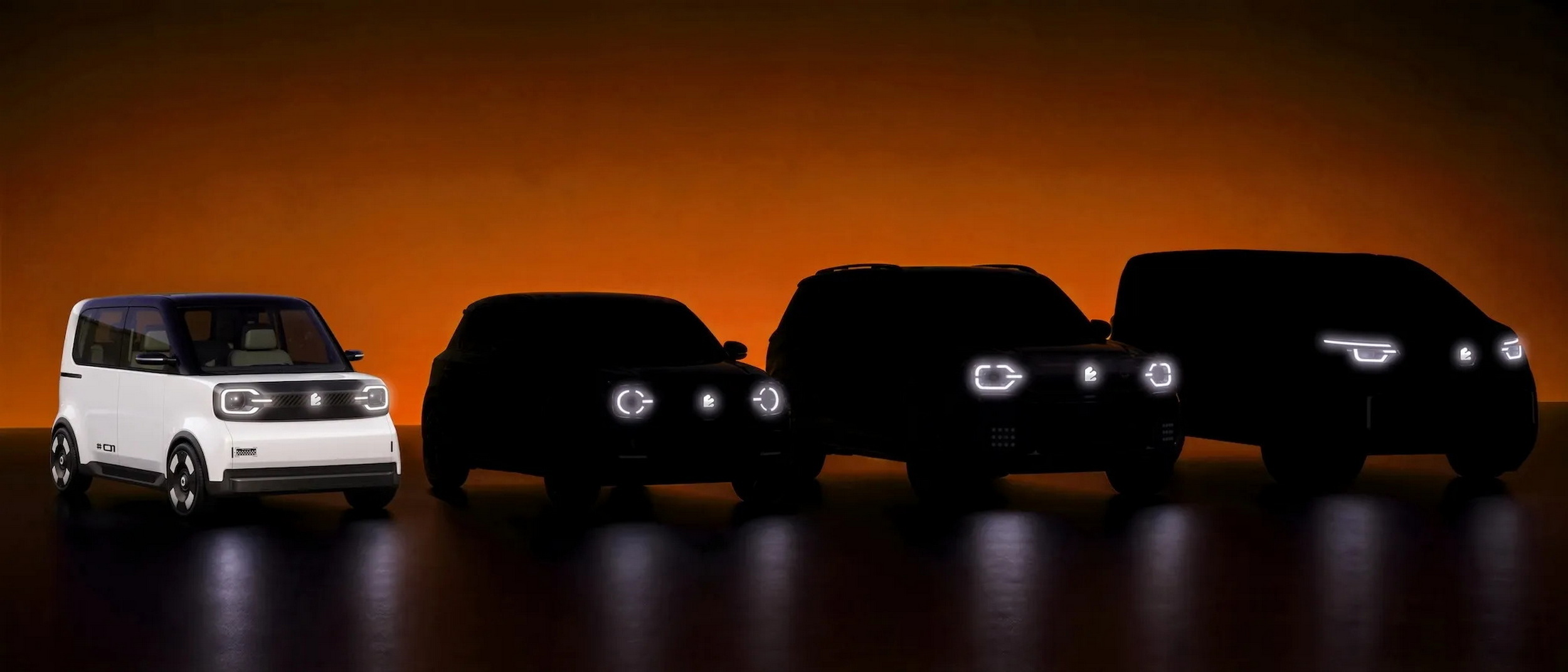
Following the 2027 launch, Emta plans to expand its lineup with three additional EVs by 2029. The official teaser suggests that those will be a small hatchback, a small crossover, and a minivan. The long-term goal is to establish a Japanese factory after 2030 if sales targets are met.

 Chery Just Lined Up A Kei Car For Japan, And Suzuki Should Be Worried

EMTA

Chery-Backed Brand Wants To Invade Japan With An Electric Kei Car

  • Chery forms Emta joint venture to sell EVs in Japan.
  • The first model lands in H2 2027 with modern styling.
  • The lineup will expand with three more EVs by 2029.

Chery is a Chinese brand with an impressive global expansions over the past years, and since the world keeps buying, the sky’s the limit. The company has now set its sights on Japan’s kei car segment, participating in a newly established joint venture focused on EVs.

Singapore-based firm EMT (Electric Mobility Technology) is a multi-party alliance splitting equity between Chinese automakers Chery Automobile and Jiangsu Yueda Automobile Group, Japanese retail company Autobacs Seven, Chinese battery maker Gotion, and Japanese industrial painting firm Anest Iwata. The joint venture will operate under the Emta brand, which is short for Easy, Made To All.

More: Chery Borrowed The RS6’s Face, The A5’s Profile, And The A7’s Tail, All On One Sedan

As reported by Car News China, Emta’s management team includes people with experience at Honda, Mazda, and Nissan. The CEO is He Xiaoqing, whose background includes executive roles at Changan Ford, SAIC, and Chery.

The first model will be the Emta #01, a tiny electric hatchback scheduled to debut in production form in the second half of 2027. The EV adopts a boxy silhouette, clean surfacing, and a face reminiscent of Suzuki with modern LEDs integrated within a covered grille. It also has rear sliding doors, allowing easier access to the cabin.

 Chery-Backed Brand Wants To Invade Japan With An Electric Kei Car

The Emta #01 measures 3.4 m (133.9 inches) long, which is similar to Chinese microcars like the Chery QQ Ice Cream. Technical specifications remain under wraps, but the model will ride on Chery underpinnings, likely fitted with a Gotion battery pack. It is also expected to offer the latest infotainment and connectivity tech, along with Level 2 ADAS.

More: BYD’s Tiny EV Has Japan’s Best-Selling Kei Car Rethinking Its Entire Future

Production of the EV is scheduled to take place in China, with Autobacs Seven being responsible for sales in Japan. Emta wants to offer it at an affordable price tag, comparable to ICE-powered kei cars. When it arrives next year, the Emta #1 will be the second kei car of Chinese origin after the BYD Racco.

Following the 2027 launch, Emta plans to expand its lineup with three additional EVs by 2029. The official teaser suggests that those will be a small hatchback, a small crossover, and a minivan. The long-term goal is to establish a Japanese factory after 2030 if sales targets are met.

 Chery-Backed Brand Wants To Invade Japan With An Electric Kei Car

EMTA

Honda Previews New Fastback Sedan And Next Acura RDX, And Neither Is An EV

  • Honda will roll out 15 hybrid models worldwide by the end of 2029.
  • Two new prototypes appear to preview the next Accord or Civic, and RDX.
  • A $9.9 billion EV write-down forced Honda’s full strategic reset.

Honda has overhauled its product strategy and put hybrid technology at the center of the global lineup, a course correction triggered by the costly cancellation of several high-profile EV projects. The automaker pulled the wraps off two prototypes that appear to telegraph the next Accord sedan and Acura RDX SUV, alongside a commitment to launch 15 hybrid models by 2029

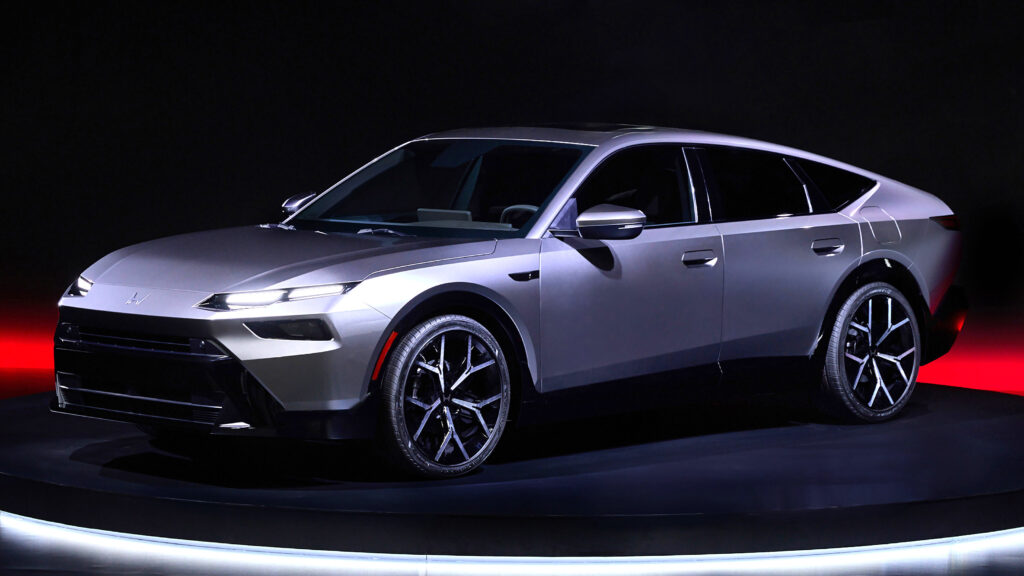
The Honda Hybrid Sedan Prototype and the Acura Hybrid SUV Prototype will both reach production within two years. Honda has not named either car or even confirmed a segment, but the proportions tell their own story. The fastback-style sedan looks like the next Accord, though the Civic can’t be completely ruled out, while the SUV is unmistakably the RDX successor.

More: Honda’s $15.9 Billion EV Disaster Just Delayed The Next Accord, Odyssey, And MDX

The sedan wears a five-door fastback profile, sharp surfacing, slim LED lighting, and a small amount of black cladding. The boxy nose recalls the Civic development mule Honda showed last year.

\\\\\\

Honda Hybrid Sedan Prototype

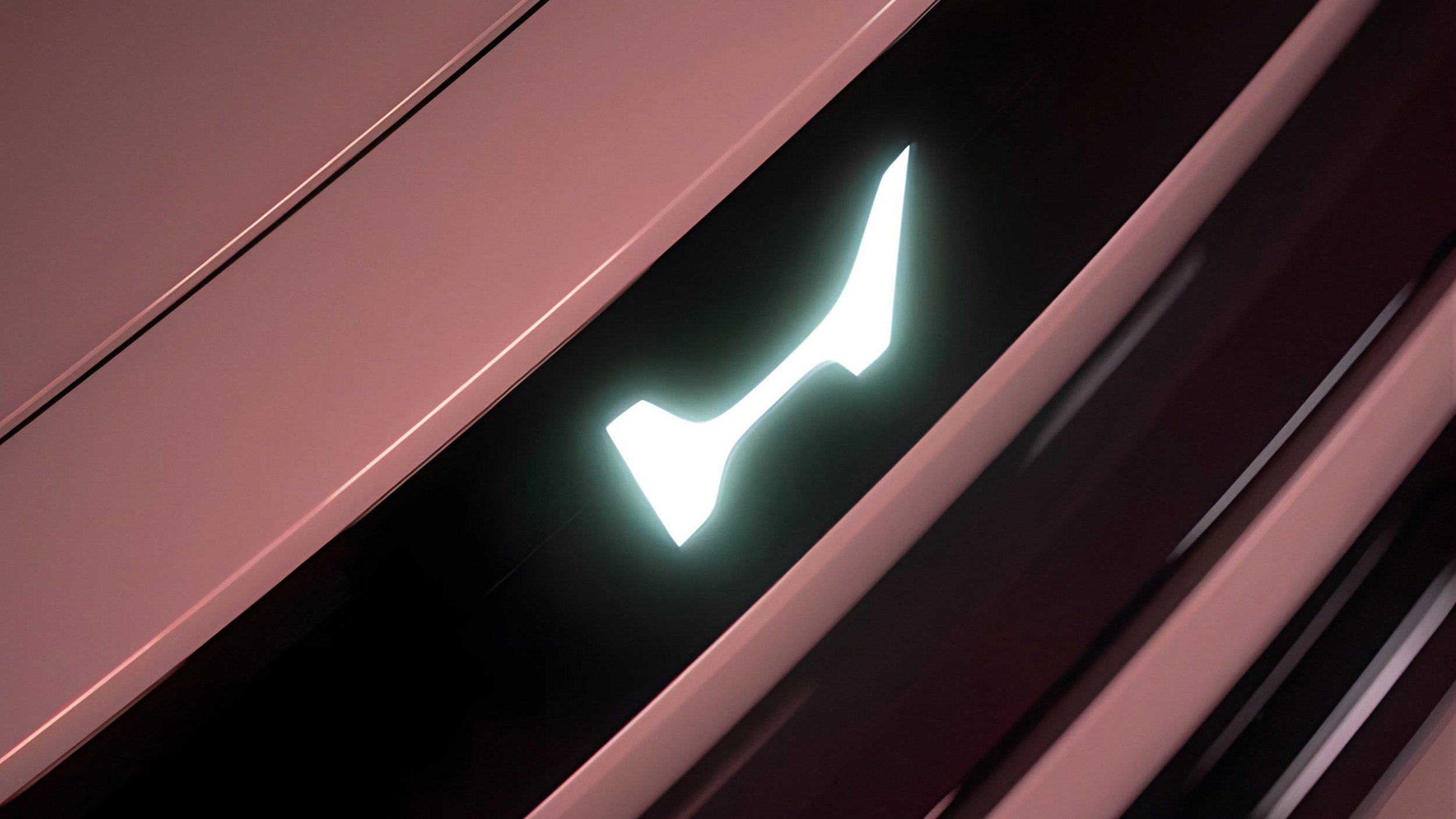
On the other hand, the Acura SUV has a more sculpted body with aggressive front bumper intakes, toned shoulders, and V-shaped taillights. Its silhouette matches the official teaser from January 2026, leaving little doubt this is indeed a successor to the discontinued RDX.

More: Acura’s Losing Its RDX For Two Years, And Dealers Know What Happens Next

Both vehicles sit on a next-generation hybrid architecture due in 2027. Honda is targeting a 30 percent reduction in production costs and a fuel-economy improvement of more than 10 percent over 2023 levels. A new electric all-wheel drive unit is part of the package, alongside what Honda promises will be sharper driving dynamics. The next-gen ADAS suite follows in 2028.

Honda said that North America will be one of the “key focus regions” of the hybrid rollout. In 2029, the company will debut large hybrid models in the D-Segment and above, tailored to the needs of the region.

\\\\\

Acura Hybrid SUV Prototype

In order to support the rollout, Honda will “reallocate all excess capacity” at the Ohio plant to production of vehicles with gasoline and hybrid powertrains. Furthermore, all US plants will be converted to support production of hybrids.

Finally, the the joint venture between Honda and LG Energy Solution will switch part of the EV battery production to hybrid batteries while increasing local components by more than four times the current level to fight supply shortage and tariffs.

Other Markets

The Japanese automaker is doubling down on market-specific needs to stabilize its business foundation following a period of strategic realignment. In its home market, the focus shifts toward electrified kei cars, led by the upcoming N-Box EV scheduled for a 2028 debut. The next-gen hybrid and ADAS tech will be introduced in the updated Vezel, while the lineup will expand with Sport Line and Trail Line trim levels.

More: Honda Went To China, Saw The Future, And Reached Back To The 1960s

In India, the play is compact and midsize cars due in 2028, along with continued investment in the motorcycle business to expand local production. China is more complicated. Honda plans to use locally standardized components and roll out new electrified vehicles built on platforms supplied by Chinese partners.

Investing In Hybrids Over EVs

 Honda Previews New Fastback Sedan And Next Acura RDX, And Neither Is An EV

Honda is going through a challenging financial period, reporting its first annual net loss since 1957. The loss totaled ¥423.9 billion ($2.68 billion), largely driven by a massive ¥1.57 trillion ($9.94 billion) write-down following the restructuring and cancellation of EV projects.

Honda is still publicly optimistic about the recovery, targeting a record operating profit above ¥1.4 trillion ($8.86 billion) for the fiscal year ending March 2029.

More: Honda’s $11 Billion Canadian EV Plant Just Got Shelved Because America Wants Hybrids

The investment plan tells you everything you need to know about where Honda thinks the next decade is going. Of the ¥6.2 trillion ($39.25 billion) earmarked through 2029, ¥4.4 trillion ($27.85 billion) goes to gasoline and hybrid powertrains, with another ¥1 trillion ($6.3 billion) for software.

Spending on pure EVs has been trimmed to ¥0.8 trillion ($5.06 billion). Anything beyond that gets decided after 2030, and Honda has made clear it would rather partner with someone else than build its next EV platform alone.

\\\\\

Honda

Japan’s Favorite $11,800 EV Just Got A Facelift Before BYD Comes For Its Crown

  • Facelifted Nissan Sakura adopts a redesigned grille and bumper.
  • It also gains a new color and an extra cup holder inside the cabin.
  • There are no changes to the 63 hp e-motor and 20 kWh battery.

Update: After a short teaser run, Nissan has now fully revealed the model in Japan, with fresh images and additional details added below.

Nissan’s Sakura isn’t broken, but it is getting older. Japan’s best-selling EV has now been given a light facelift to keep it competitive in the kei segment, just as a high-profile challenger from China, BYD, enters the scene. The tiny electric car has been around since 2022, when it emerged as the production version of Nissan’s IMk concept from three years prior.

Fresh Face And Floral Hues

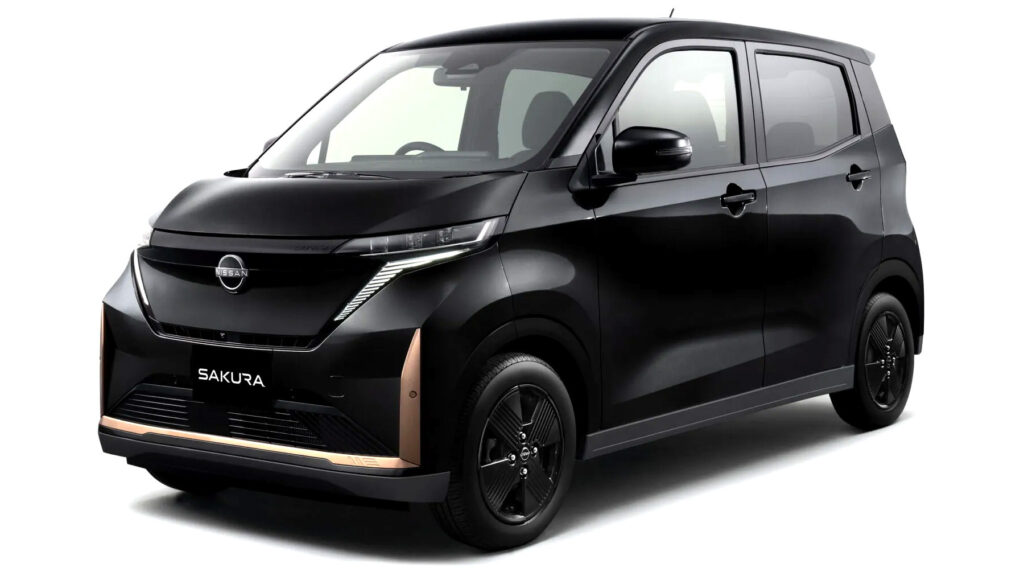
The most noticeable change is up front, where a redesigned fascia introduces a body-colored grille section that mimics the Nissan Leaf. It’s paired with a revised bumper that brings sharper angles and more pronounced vertical elements along the sides. The LED headlights carry over unchanged, as does the sheet metal along the profile and the back.

More: Nissan’s New Skyline Borrows Its Most Iconic Detail From The GT-R

Interestingly, these updates are only effective to the X and G grades, with the entry-level S retaining the old design.

\\\\\\\\\\\

The color palette gains a new shade called “Minamono Sakura”, inspired by cherry blossoms floating on water. This is combined with copper accents and a Sterling Silver roof creating an unusual tri-color finish for the flagship Sakura G.

Key-Sized Improvements Inside

The interior looks familiar, but Nissan has introduced several functional upgrades. The drive mode switch has been moved to a more ergonomic position, and the passenger side now includes an additional cup holder.

More: Nissan Killed The Xterra Eleven Years Ago. It Just Teased Its Return

Designers didn’t seem to bother changing the 7-inch digital instrument cluster and 9-inch infotainment, but they did relocate the USB Type-C ports lower in the center console.

For the mid-range X trim, Nissan has moved several popular options to the standard equipment list, including the Intelligent Around View Monitor, heated front seats, and a steering wheel heater. The EV also gains auto lock and unlock functions, a rear seat reminder, a locking mechanism for the charging port, and an optional 1500W AC power outlet.

\\\\\\\\\\\\\\\\

Mechanically, the Sakura remains powered by a single electric motor producing 63 hp (47 kW / 64 PS) and 195 Nm (144 lb-ft) of torque. The carry-over 20 kWh lithium-ion battery provides a range of up to 180 km (112 miles) under the WLTC cycle.

More: Nissan’s 2027 Rogue Is Gunning For The RAV4, And Its Hybrid Works Nothing Like Toyota’s

The facelifted kei car is available to order in Japan, with the first deliveries expected this summer. Pricing ranges from ¥2,448,600 ($15,400) for the base X trim to ¥2,998,600 ($18,900) for the flagship G. If you take into consideration Japan’s current clean energy subsidies of ¥580,000 ($3,650), the starting price drops to approximately ¥1,870,000 ($11,800).

Nissan says the model has been Japan’s best-selling EV for four consecutive years, recording 14,093 sales in 2025. Competition comes from familiar domestic rivals, including the Mitsubishi eK X EV twin, the Honda N-One e: and N-Van e:, as well as the upcoming BYD Racco.

\\\\\\\\\\\\\\\\

Nissan

❌