Reading view

There are new articles available, click to refresh the page.

Mercedes’ EV Push In America Has Nothing To Do With What American Buyers Want

  • Mercedes will continue offering EVs across US for the foreseeable future.
  • The company expects pockets of demand despite lost federal tax incentives.
  • US supply remains tight as Europe and China continue to absorb inventory.

Mercedes-Benz is not stepping back from electric vehicles, despite competitors scaling back amid slower adoption rates. The news comes as US demand for EVs cools following the rollback of federal tax credits.

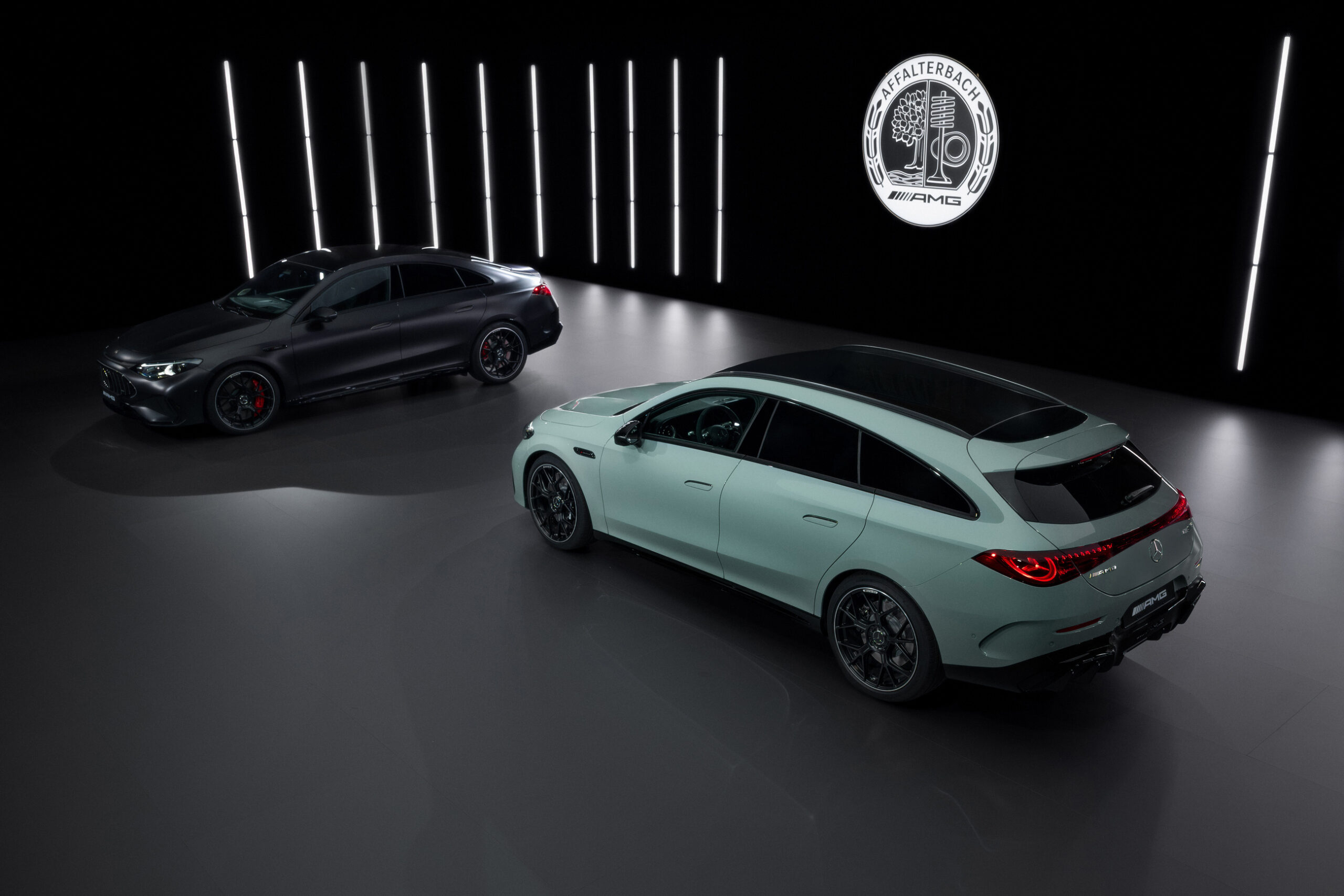
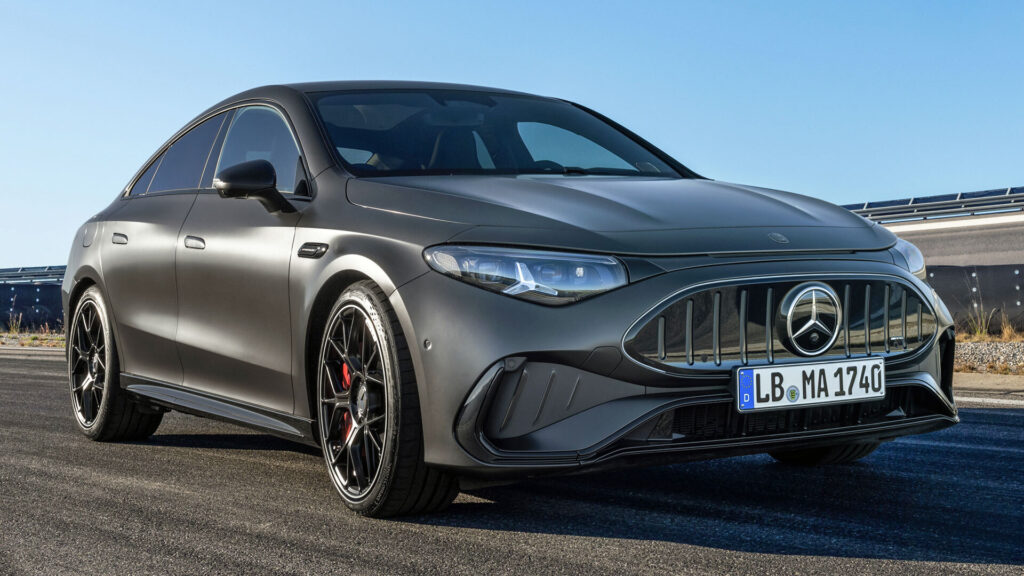
Instead, during the next three years, Mercedes will introduce a number of new electric models to the United States, including three AMG performance EVs and battery-powered versions of popular models such as the GLC crossover, E-Class and the C-Class sedan that was previewed today.

The Global Need To Go Electric

The update to Mercedes’ plans came from Adam Chamberlain, the CEO of Mercedes-Benz USA, speaking to AutoNews, who explained the company’s position. Mercedes is sticking to its EV plans due to the requirement from global markets, said Chamberlain. Strict international regulations, especially in China and Europe, mean that for a brand selling worldwide, it is impossible to turn its back on EVs.

Also: Mercedes Heard ‘Too Many Screens’ And Built A New C-Class EV That’s One Giant Screen

However, unlike other manufacturers, they won’t be pushing electrification on consumers, hoping they’ll switch. Instead, Mercedes has moved to flexible vehicle platforms. Rather than their initial approach of offering a separate line of EVs, Merc’s current plan is to design cars compatible with gasoline engines, hybrids, or full battery-electric power.

American Demand For EVs Remains

 Mercedes’ EV Push In America Has Nothing To Do With What American Buyers Want
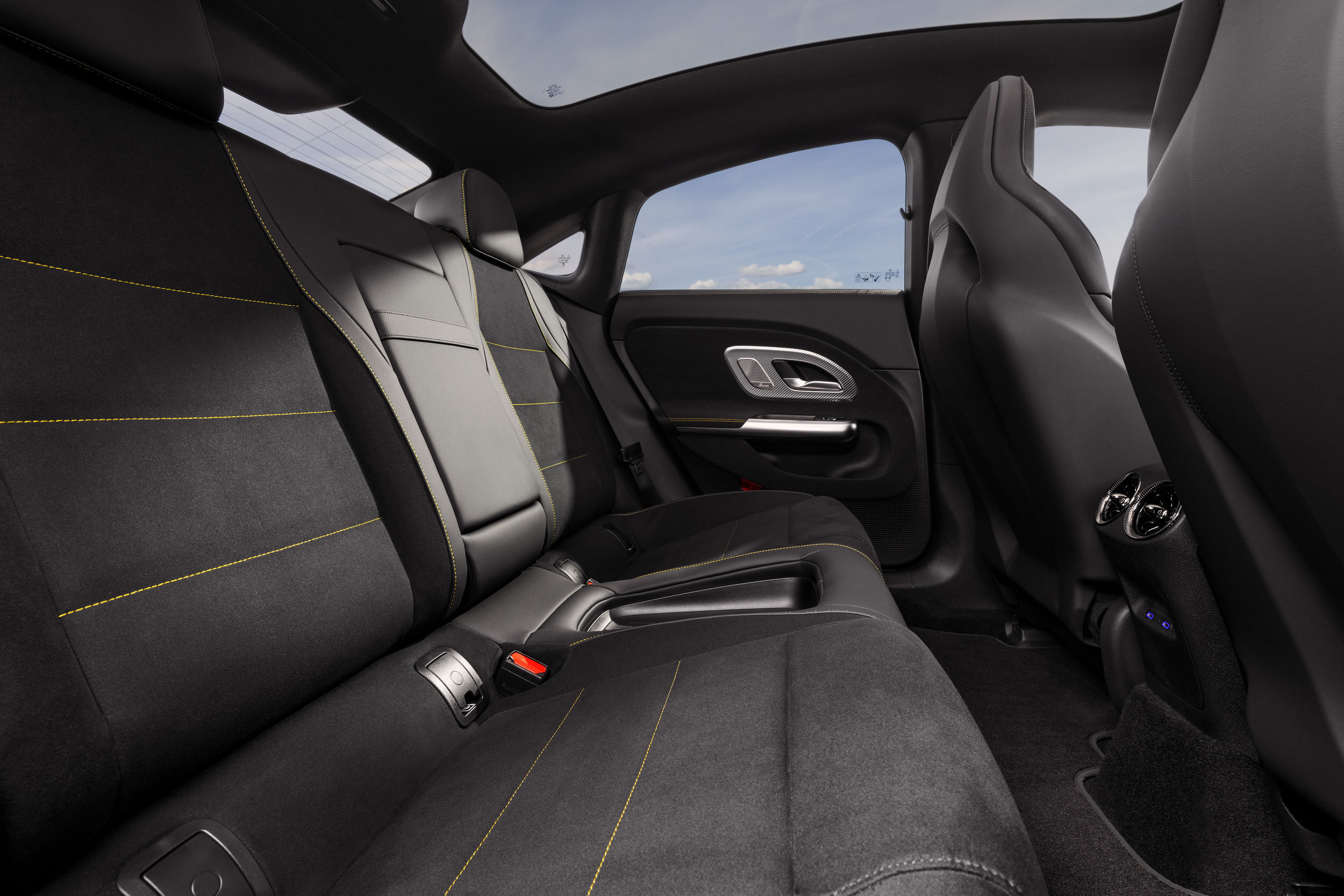
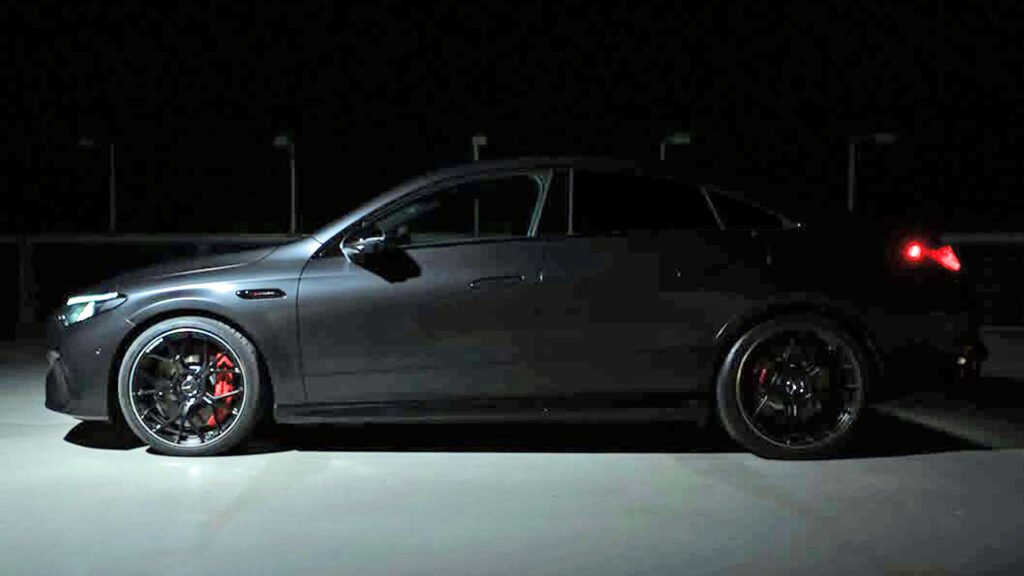
The upcoming Mercedes-Benz C-Class with EQ Tech.

Mercedes predicts pockets of demand among US consumers for EVs in the foreseeable future, despite the loss of federal incentives. While the company predicts EVs to constitute approximately 5 percent of its retail sales in the U.S. this year, that’s partly down to limited production and strong demand from Europe and China.

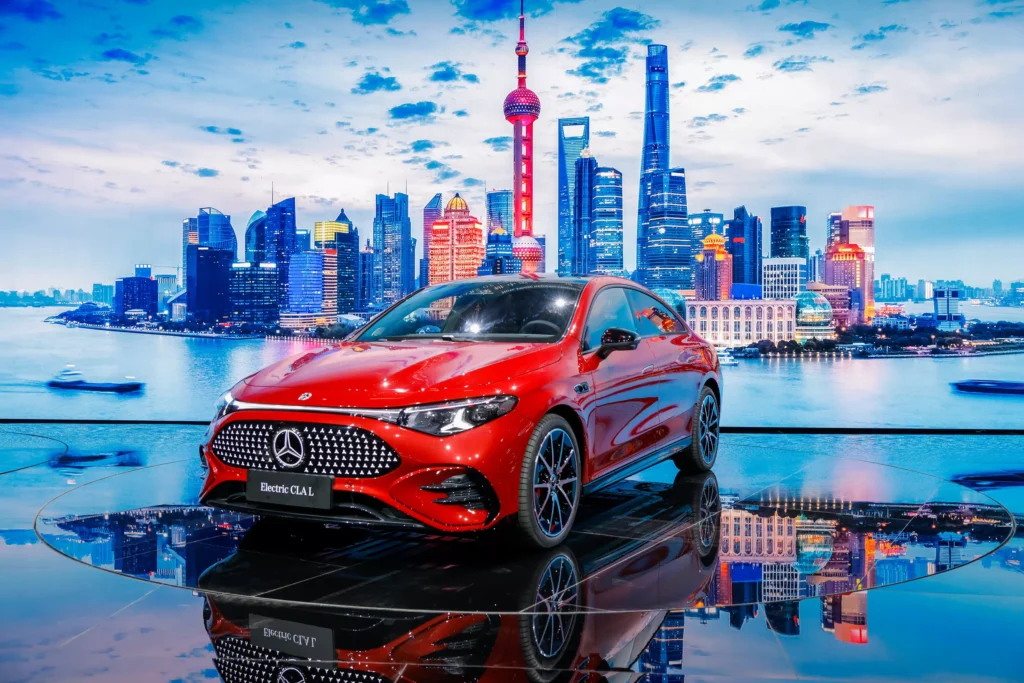
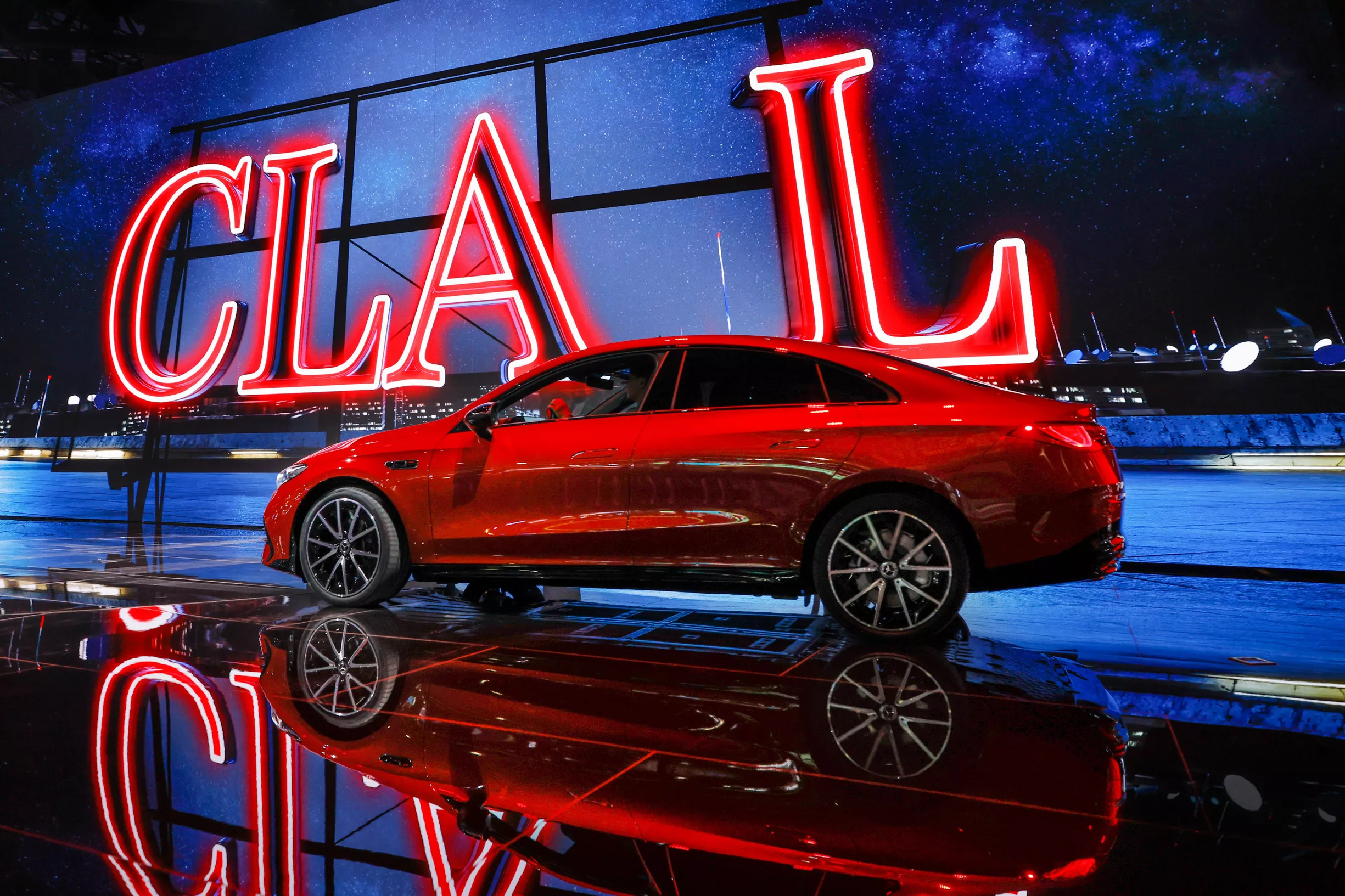
On the national scale, approximately 14 percent of consumers indicate that they would give serious consideration to an EV next time. In California, it grows to 28 percent. So, there is demand, but it is unevenly distributed. In fact, according to the report, Mercedes US have only been able to allocate around 200 electric CLA’s for customers, all units of which have been spoken for.

Read: Mercedes’ Future EVs May Be More Chinese Than You Think

Chamberlain thinks the U.S. EV sales would rise to 10 to 15 percent in the year 2021, with the supply increasing and more mainstream electric models coming into the market, such as battery versions of the GLC and C-Class. Nevertheless, profitability is still its focus. He made sure it was evident that Mercedes is not going to produce tens of thousands of vehicles without confirmed demand in its bid to achieve market share.

 Mercedes’ EV Push In America Has Nothing To Do With What American Buyers Want

Mercedes Sales Are Out And The Most Interesting Thing Is What They Won’t Tell Us

  • Mercedes continues to struggle as global sales fell 6% in Q1.
  • The company was hammered by a 27% decline in China.
  • Automaker boasts about EVs, but wants you to forget some.

We’re nearly a third of the way through April, but first quarter sales data continues to trickle out. Some of the latest numbers are from Mercedes and they’re painting a mixed picture.

Starting in the United States, Q1 passenger car retail sales fell approximately 3% to around 70,000 units. Unfortunately, it’s hard to get an accurate picture of things as the automaker no longer breaks sales down by model. Instead, the company now lumps vehicles together and cherry picks numbers that it likes.

More: Germany’s EV Market Was In Freefall A Year Ago, Now EVs Are Outselling Gas Cars

With that massive and annoying caveat aside, Mercedes said they had a “strong performance despite significant market headwinds.” Maybach sales jumped 22%, while the G-Class saw a 16% increase. The SL received a 47% boost, while the GLC and GLE were up 17% and 19%, respectively.

Mercedes also claimed that “customer interest and excitement surrounding the CLA continues to build across the U.S. market.” However, the company declined to provide numbers, so they were presumably pretty bad. The automaker stopped short of confirming this, but implied the situation will improve as “wider availability” is expected in the second quarter as they originally prioritized European sales.

Mercedes US Retail Sales Q1
 Q1 2026Diff.
Mercedes USA Passenger Cars70,000-3%
Mercedes Vans USA8,500-6%
Total Sales78,500-3%
SWIPE
 Mercedes Sales Are Out And The Most Interesting Thing Is What They Won’t Tell Us

The firm didn’t even bother mentioning the EQE, EQE SUV, EQS, or EQS SUV. This implies sales were as hot as an Anchorage dumpster fire in January, but surely a yoke will turn things around.

On the van side of the equation, sales fell 6% to roughly 8,500 units. The automaker could barely feign interest, but said they remain “focused on delivering versatile, premium van solutions that support evolving business needs.”

That’s meaningless nonsense, but at least we can look forward to the new VLE and VLS. The latter is getting an ultra-luxurious Maybach variant that promises private jet levels of comfort.

Sales Down Globally As Well

 Mercedes Sales Are Out And The Most Interesting Thing Is What They Won’t Tell Us

Zooming out, global passenger car sales fell 6% in the first quarter to around 419,400 units. This came despite a 9% increase in EVs, which found around 44,300 takers.

Speaking of which, the automaker said the “new electric GLC has generated more orders in the first three months than any other electric vehicle in our history.” They added order books for the CLA, GLB, and GLC EVs are “filled well into the second half of the year.”

EVs weren’t the only bright spot as European orders for the facelifted S-Class were “above expectations.” The automaker is also expecting to receive a boost from the updated GLE and GLS.

 Mercedes Sales Are Out And The Most Interesting Thing Is What They Won’t Tell Us

Confusingly, the global release said American car sales climbed 20% to 81,100 units. The company noted these are rounded “preliminary figures,” but that’s significantly more than the 70,000 mentioned earlier. However, this appears to be a case of retail sales vs overall numbers.

[Update: Despite being labeled as “Mercedes-Benz Cars sales” in the international release, the US figure of 81,100 units is said to be total group sales. This implies it includes the 70,000 car and 8,500 van retail sales as well as an additional 2,600 fleet sales.]

This, combined with a lack of model level details, results in a confusing maze of piecemeal information that – at times – seems contradictory. Regardless, the brand is tanking hard in China as sales were down 27% to around 111,600 units.

When it comes to vans, global sales fell 3% to approximately 80,300 units. Sales of EVs spiked 29%, but Mercedes only sold 6,100.

Mercedes Global Sales Q1
 Q1 2026Diff.
Mercedes-Benz Group499,700-6%
–    thereof BEVs50,400+11%
   
Mercedes-Benz Cars419,400-6%
–    thereof BEVs44,300+9%
   
Mercedes-Benz Cars sales by segment*  
–    Top-End61,500-5%
–    Core248,000-6%
–    Entry109,800-7%
   
Mercedes-Benz Cars sales by regions and markets  
Europe**158,400+7%
–    thereof Germany49,300+9%
Asia153,500-23%
–    thereof China111,600-27%
North America***89,600+16%
–    thereof U.S.81,100+20%
Rest of World17,900-14%
SWIPE

Mercedes’ Future EVs May Be More Chinese Than You Think

  • Mercedes explores deeper ties with Geely for future EV tech.
  • Talks focus on reducing costs and speeding development cycles.
  • New entry EV platform could debut around 2030 replacing MMA.

Mercedes-Benz has a pair of very interesting new EVs in its line-up, namely the latest-generation CLA and GLC, but that doesn’t mean it’s not thinking even further into the future. According to a new report, the brand may look to deepen ties with China’s second-largest car manufacturer for its next generation of EVs.

Unnamed sources claim that Mercedes has had early-stage discussions with Geely about its future EVs. It’s possible these vehicles will feature componentry from the Chinese brand, which would no doubt help cut engineering costs and shorten development times.

Read: 2026 Mercedes CLA To Get A 2.0L Turbo Engine Built By China’s Geely

While Geely declined to comment on the report, a Mercedes spokesperson acknowledged that the firm “is continually reviewing ways to make research and development faster, better and more efficient — both in China and globally.” Importantly, the same spokesperson told Bloomberg that there are no discussions about Mercedes and Geely sharing platforms.

Germany Joins With China

 Mercedes’ Future EVs May Be More Chinese Than You Think

This contrasts with what fellow German brand VW has done. It has partnered with Chinese brand Xpeng and is sharing architectures with the relatively young EV startup for some of its future EVs, including a new ID-badged sedan. Companies like Xpeng, as well as BYD, Geely, Chery, and others, have streaked ahead of many Western legacy automakers, developing more advanced batteries and electric motors.

Mercedes already has very strong ties with Geely and operates the Smart brand with its Chinese partner. Once exclusively a purveyor of small city cars, the Smart brand has been revitalized as an EV manufacturer with designs penned by Mercedes, while engineering and manufacturing are handled by Geely.

While Mercedes says it’s not interested in platform sharing with Geely, a recent report from China claims that the German company could develop its next-gen EV platform using Geely’s GEEA electronic and electrical architecture as its base. This report from 36Kr claims that the new platform has been dubbed ‘Phoenix’ and will be used for entry-level EVs sold worldwide, potentially launching as soon as 2030 as a replacement for the current MMA architecture.

 Mercedes’ Future EVs May Be More Chinese Than You Think
Geely Galaxy M7
❌