Normal view

There are new articles available, click to refresh the page.
Before yesterdayMain stream

Google Maps Now Plans EV Charging Stops Automatically, But Not For Every Car

  • Google Maps is rolling out new trip planning features for EVs.
  • Users can now see how much battery usage trips will take.
  • Drivers will also see recommended charging stops along the way.

Electric vehicle owners are in for a treat as Google Maps is bringing new trip planning features to more than 350 vehicles with Android Auto. This promises to make long-distance trips less stressful as drivers won’t have to worry about running out of juice or bouncing between multiple apps to find a charging station.

To use the new features, owners need to add their vehicle to Google Maps. This can be done by opening the app, selecting your profile, scrolling down to Settings, and tapping Your Vehicles. They can then select Electric and add their make and model of EV.

More: Google Maps Biggest Update In A Decade Looks Great And Can Even Plan Trips

With this information in hand, Google Maps can use vehicle information to calculate several important details. For example, when you set a destination, the app will estimate battery usage for the trip.

Users can add their current battery level to unlock more features, including recommended charging stops, estimated arrival battery level, and an updated ETA based on charging time. There’s even an option that allows you to select how much battery charge you want left when you arrive at your destination, so you’re not immediately forced to recharge.
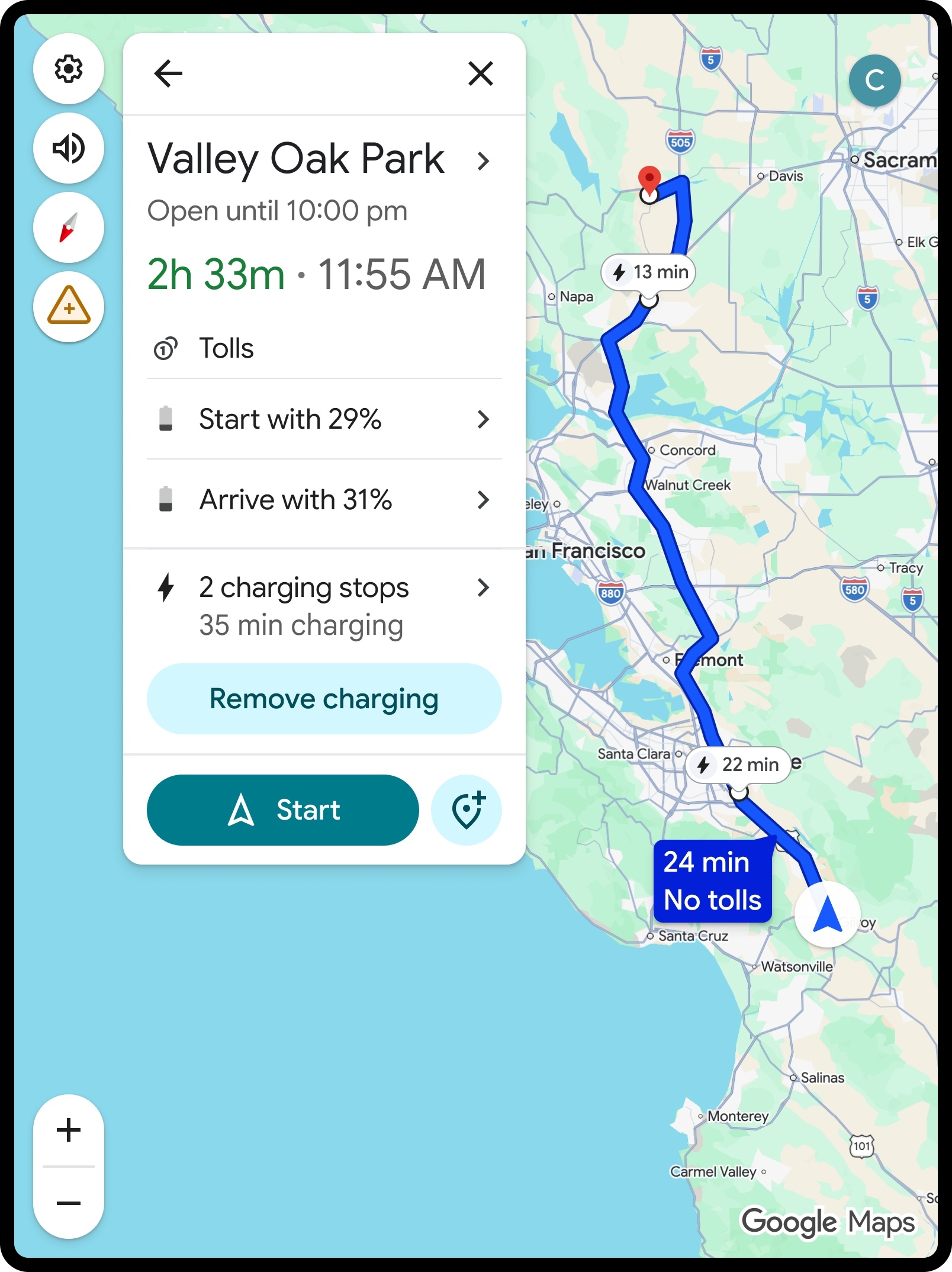
 Google Maps Now Plans EV Charging Stops Automatically, But Not For Every Car

This sounds like a pretty handy update, and the tech giant said the predictions are made possible by a combination of AI and “advanced energy models that analyze vehicle details, like weight and battery size, alongside Maps’ real-time information about traffic, road elevation, and weather.” All of this means drivers will be well-informed and won’t have to worry about planning routes or charging stops ahead of time.

The new features are rolling out today in the United States and will support 16 brands, with additional companies coming in the future. As of now, that list includes Audi, BMW, Chevrolet, Fiat, Genesis, Hyundai, Jaguar, Kia, Lexus, Lucid, Mercedes, Nissan, Porsche, Subaru, Toyota, and Volkswagen.
\\\\

Cupra Gave The Tavascan New Screens And Air Vents That Think For Themselves

  • Cupra has introduced the updated Tavascan.
  • It offers a new entry-level variant with 188 hp.
  • Crossover gains new displays and technology.

Cupra hit the brakes on their American road trip, but the company isn’t resting on their laurels. That’s clear today as the automaker has introduced an updated Tavascan.

Set to be launched this summer, the updated model has a new entry-level variant that features a 58 kWh battery pack as well as an electric motor producing 188 hp (140 kW / 190 PS). The company was coy on additional details, but said the model will deliver an “engaging driving experience” and have around 270 miles (435 km) of range.

More: Cupra Born Gets Born Again With Real Buttons And A New Face

There’s no word on pricing, but the entry-level variant should be significantly cheaper than the existing Endurance and VZ trims, which use a larger 77 kWh battery. Those models are also far more powerful as they’re rated at 282 hp (210 kW / 286 PS) and 335 hp (250 kW / 340 PS), respectively.

Speaking of the Endurance and VZ, they gain a new Launch Control function. All models also appear to have a new one pedal driving mode, which applies the regenerative brakes as soon as you lift off the accelerator.

Updated Interior With New Tech

 Cupra Gave The Tavascan New Screens And Air Vents That Think For Themselves

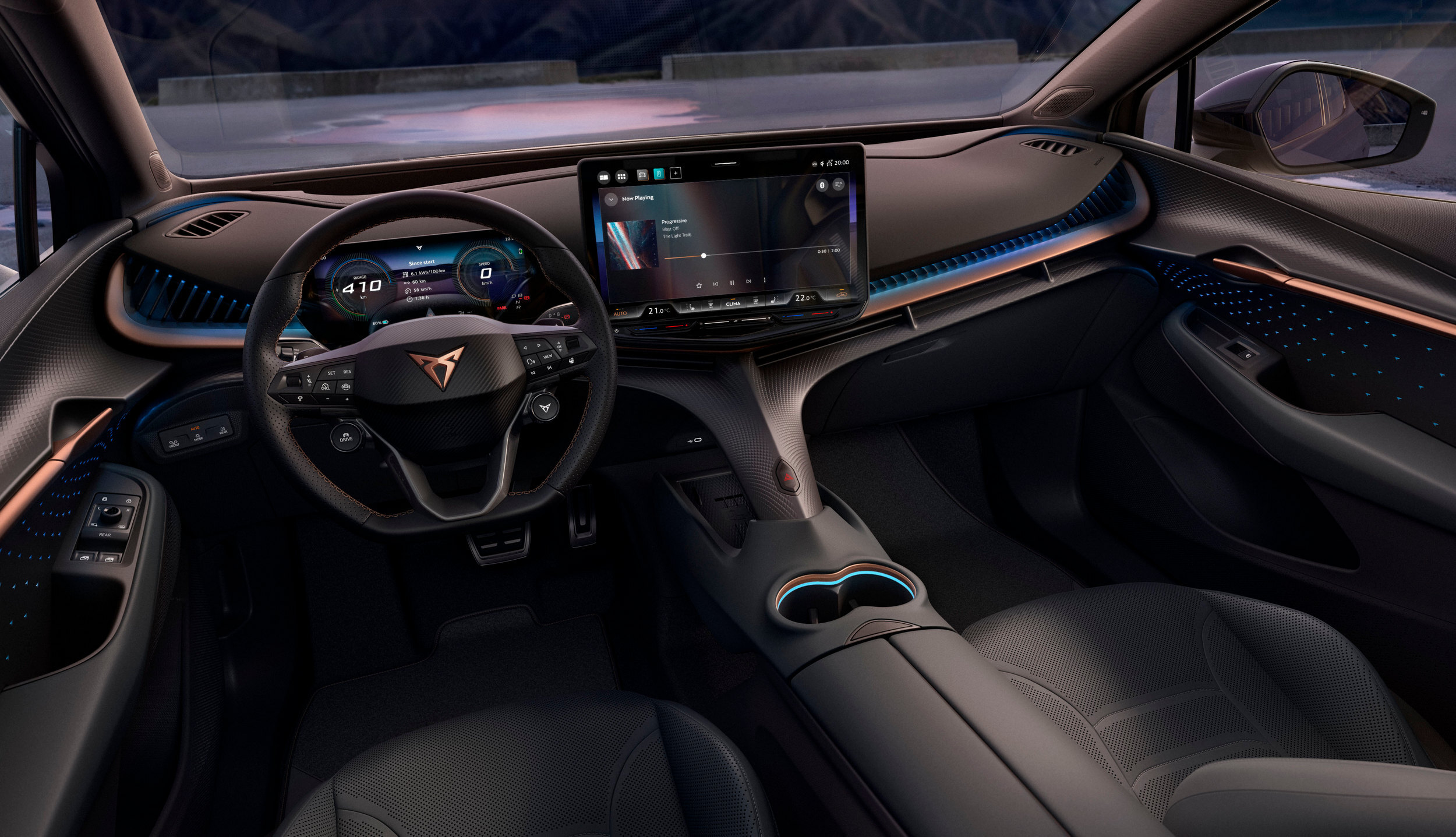
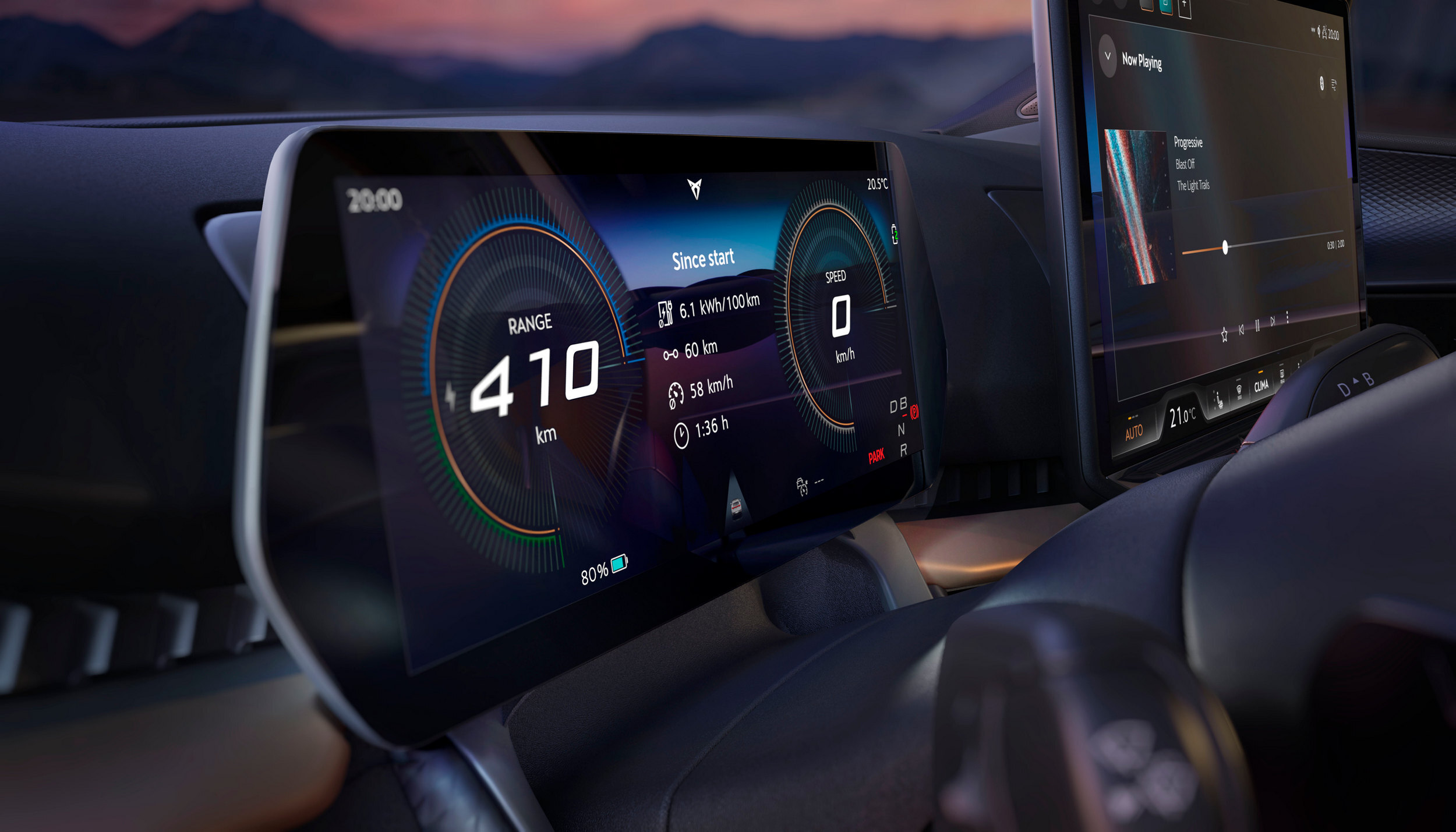
The changes continue inside as the Tavascan has been equipped with a larger 10.25-inch digital instrument cluster and a new infotainment system running Android OS. The latter promises a more intuitive user experience as well as access to an assortment of popular apps.

Despite the focus on technology, Cupra is rocking it old school with a new steering wheel that has physical buttons. That’s a welcome change, but the touch sliders remain.

On the subject of climate control, the crossover has “new electric air vents that activate even before the driver enters the cabin.” As Cupra explained, the system detects the key approaching the vehicle and begins to pre‑circulate air. Once people step inside, the vents apparently adjust direction based on where they’re sitting and the position of the sun. The vents can also be controlled by voice command for “added convenience.”

 Cupra Gave The Tavascan New Screens And Air Vents That Think For Themselves

Needlessly complicated air vents aside, the updated Tavascan has digital key technology that enables owners to unlock, start, and share access to the vehicle using a smartphone. One ‘key’ is reserved for the owner, while four others can be shared.

Buyers will also find a new premium audio system with Sennheiser Contrabass technology. It uses “psychoacoustic techniques to deliver deep, punchy low‑end frequencies” to deliver a “rich, enveloping soundscape.”

Other Minor Changes

\\\\\\

On the styling front, there isn’t much to report other than a new Dark Void paint job. The purple hue is described as a “deep and expressive new color that enhances the sculptural presence of the Tavascan and reinforces its progressive identity.

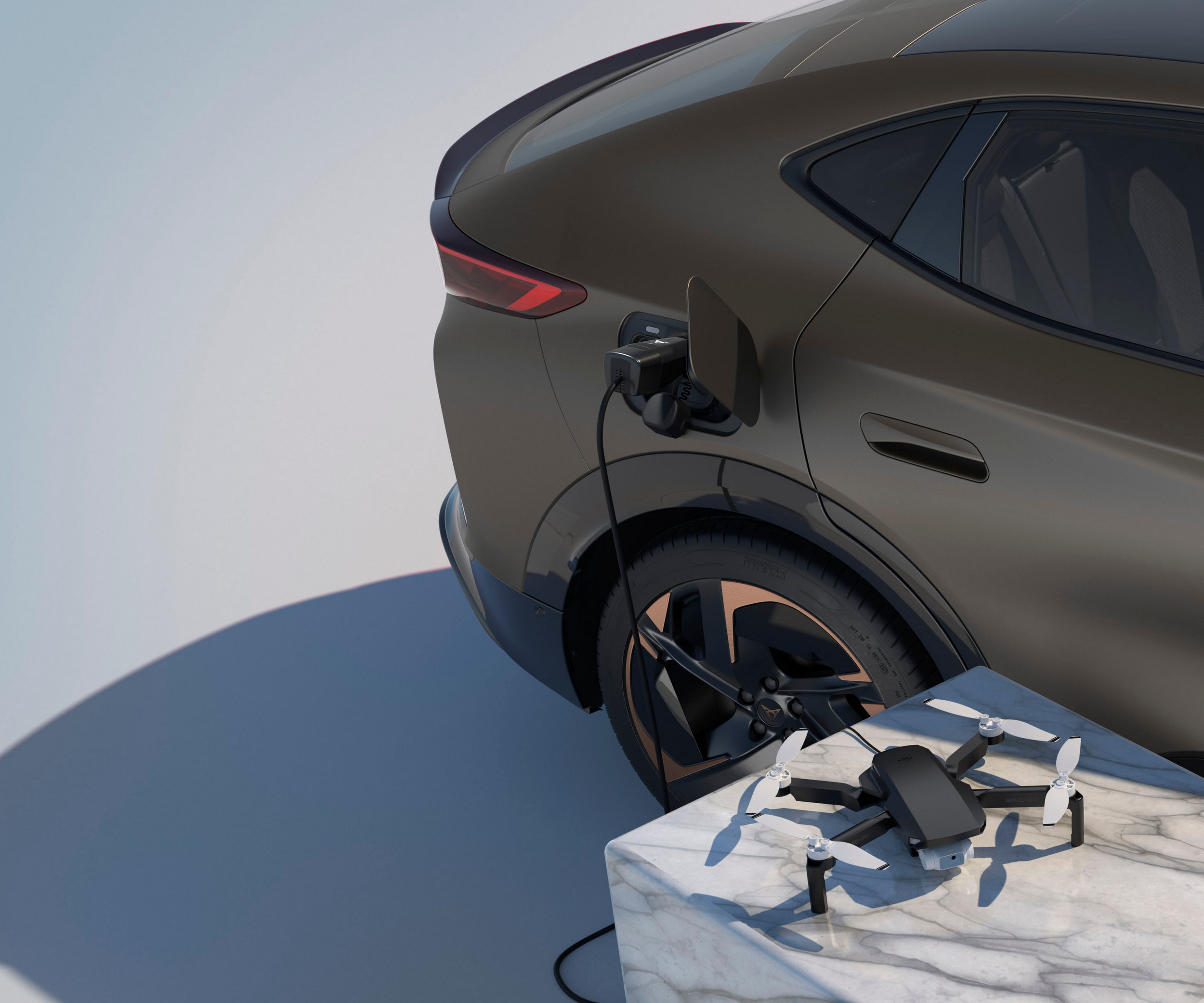
Last but not least is a new vehicle‑to‑load function, which is enabled via a dedicated adapter that plugs into the charging port. It effectively turns the crossover into a massive battery bank.

 Cupra Gave The Tavascan New Screens And Air Vents That Think For Themselves

Gravity Finally Gets What Lucid Drivers Have Been Asking For

  • Lucid adds CarPlay and Android Auto to Gravity via OTA update.
  • New Gravity models get it standard, and the Air already has it.
  • The update addresses a long running request from many owners.

Every automaker has its own take on how infotainment should work. Android Auto and Apple CarPlay make that experience far more uniform. Up until now, though, Lucid Gravity owners haven’t had access to either. Now, a big software update is coming, and it’ll remedy the situation for the luxury SUV owners.

The update is part of the latest version of Lucid’s software, and it allows drivers to connect their phones to access navigation, music, messages, and apps directly through the vehicle’s infotainment display. Both wireless and wired connections are supported, depending on the device. According to Lucid, the rollout begins in North America first, with other markets expected to follow shortly after.

CarPlay And Android Auto Arrive

The addition of smartphone mirroring may seem like a small update, but it’s a big deal for owners. Apple CarPlay and Android Auto are among the most requested features in modern vehicles, and their absence has been a frequent complaint from Lucid customers despite the company’s otherwise advanced software system.

 Gravity Finally Gets What Lucid Drivers Have Been Asking For

“Apple CarPlay and Android Auto are two of the most sought-after features by our customers,” said Emad Dlala, SVP of Engineering and Software at Lucid. “We are now providing a seamless connection between mobile devices and the Lucid Gravity. We’re excited to introduce these features to Lucid Gravity, which now offers even greater comfort and convenience for owners.”

Read: Lucid Shows Its Pedal-Free Future As It Confirms Subscription For Its Current Cars

From here on, every new Gravity leaving the factory will include Apple CarPlay and Android Auto as standard equipment. The Air sedan already lists both systems on its infotainment menu, so the SUV was the obvious next step.

Do Older Gravity Models Get It?

Yes, existing Gravity owners will receive the capability through the OTA update without needing to visit a dealer. This is a key selling point for the brand; not just these pieces of software themselves, but the ability to update the car.

According to Lucid, more than 95 percent of the vehicle’s functions can be refined or expanded through over-the-air updates. Put another way, it hopes to consistently introduce new capabilities without hardware changes. This move will no doubt add value to potential buyers.

 Gravity Finally Gets What Lucid Drivers Have Been Asking For

Ford’s Electric Explorer Fixes Two Of Its Biggest Early Weaknesses

  • Ford has announced a series of updates for the Explorer EV.
  • Standard Range gets upgraded motor and new LFP battery.
  • SUV gains upgraded technology and new special edition.

The European market Ford Explorer EV hasn’t lived up to expectations, but it’s getting better with age as the company has announced an updated powertrain and a new special edition. The automaker has also updated the infotainment system and added several new driver assistance systems.

Starting with performance, the Explorer Standard Range adopts a new lithium iron phosphate battery and an “enhanced” electric motor that produces 188 hp (140 kW / 190 PS) and 258 lb-ft (350 Nm) of torque. Thanks to these changes, the model offers a WLTP range of up to 276 miles (444 km), which is an increase of more than 37 miles (60 km).

As for the motor, the output appears to climb by 20 hp (15 kW / 20 PS) and 30 lb-ft (40 Nm). This lowers the 0-62 mph (0-100 km/h) time from 8.7 to 8.0 seconds.

New Driver Assistance Technology

\\\\\\\

Besides powertrain updates, the Explorer gains an improved Intelligent Adaptive Cruise Control system with Traffic Light Recognition. It can automatically slow or stop the crossover if it detects a red or amber light ahead.

The model also receives Reversing Assist, which automatically records the vehicle’s last 164 feet (50 meters) of travel and can replicate the steering in reverse. The system is designed for backing out of tight quarters, such as alleys, and drivers need to operate the accelerator and brakes.

More: Ford Turns VW ID.4 Into Explorer EV For Europe

It’s accompanied by Trained Park Assist, which enables owners to program a parking maneuver that is up to 164 feet (50 meters) long. Once learned, the vehicle can automatically park itself while taking care of acceleration, braking, and steering.

The EV also has a new one-pedal driving mode as well as a driver monitoring system known as Driver State Assist. If the driver becomes unresponsive, the Explorer can turn on the hazard lights, come to a controlled stop, unlock the doors, and call emergency services.

Pro Power And Updated Infotainment

 Ford’s Electric Explorer Fixes Two Of Its Biggest Early Weaknesses

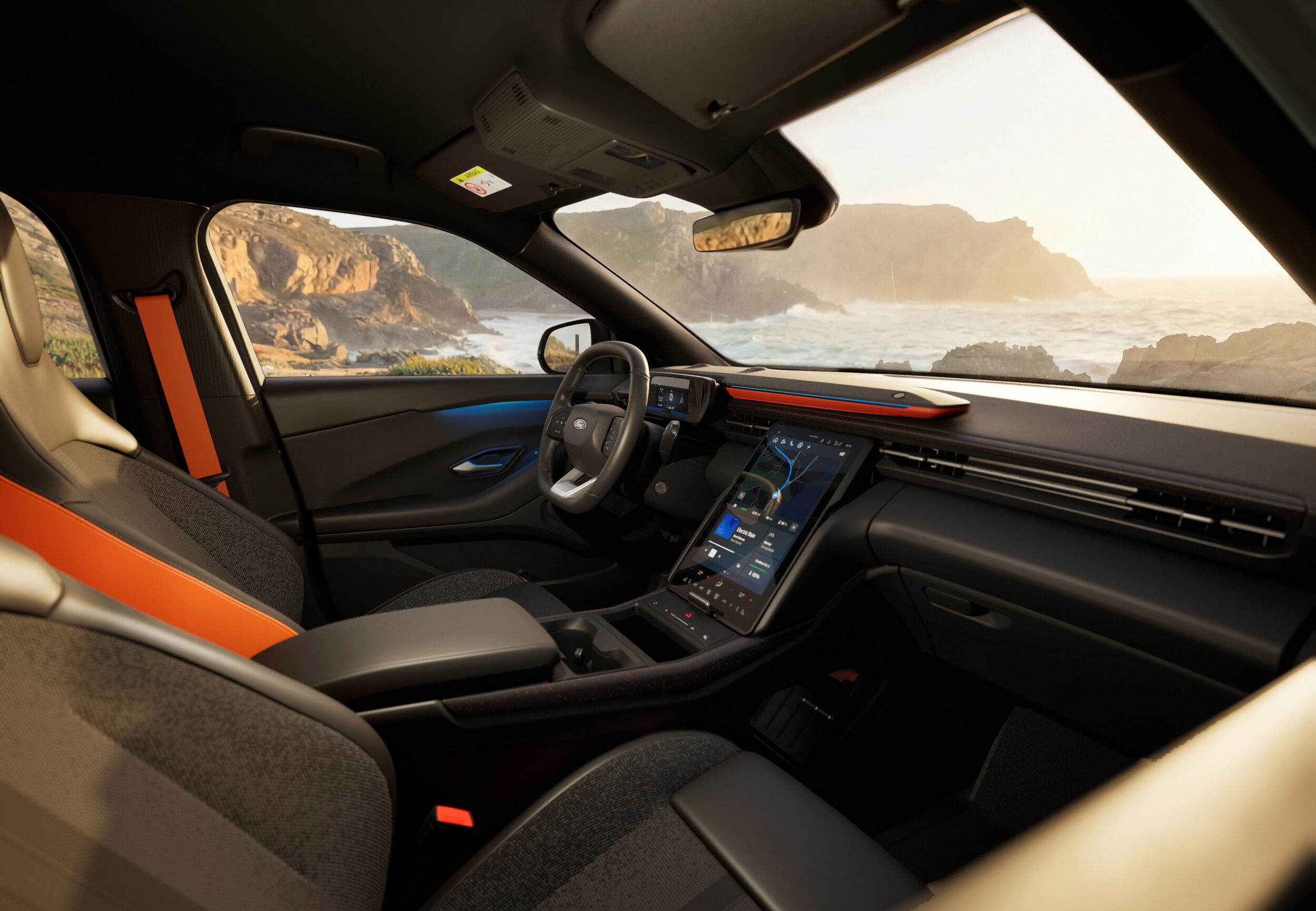
Speaking of technology, the 14.6-inch infotainment system is now based on Android for “smoother operation.” The system has also been given a fresh design theme that promises greater clarity and ease of use.

Furthermore, Pro Power Onboard turns the Explorer EV into a big battery pack. An outlet is located in the cargo area and it can be accompanied by an optional adapter that plugs into the vehicle’s charging port. These outlets enable owners to export 2.3 kW of power to other devices such as laptops, lights, or power tools.

Explorer Collection

 Ford’s Electric Explorer Fixes Two Of Its Biggest Early Weaknesses

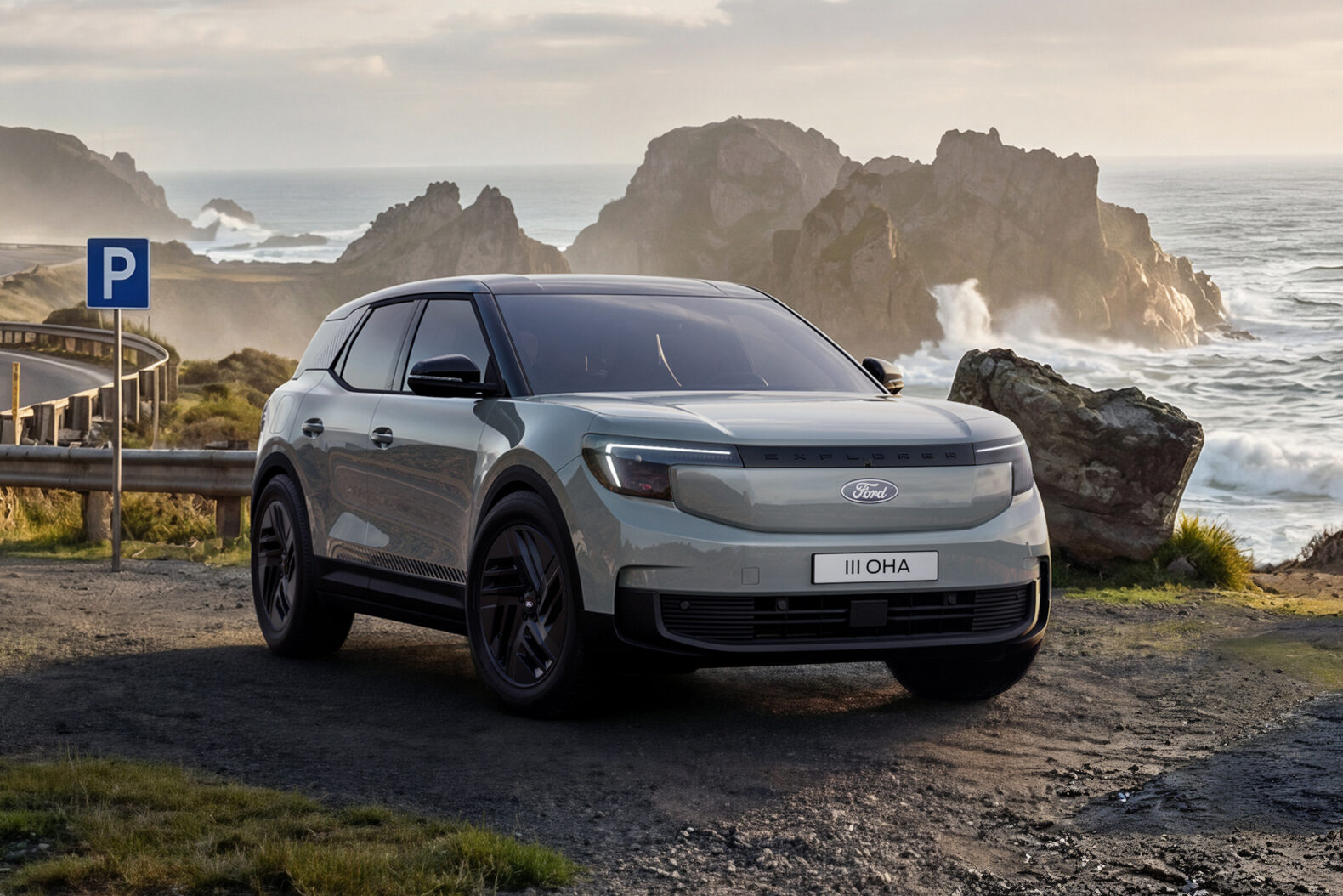
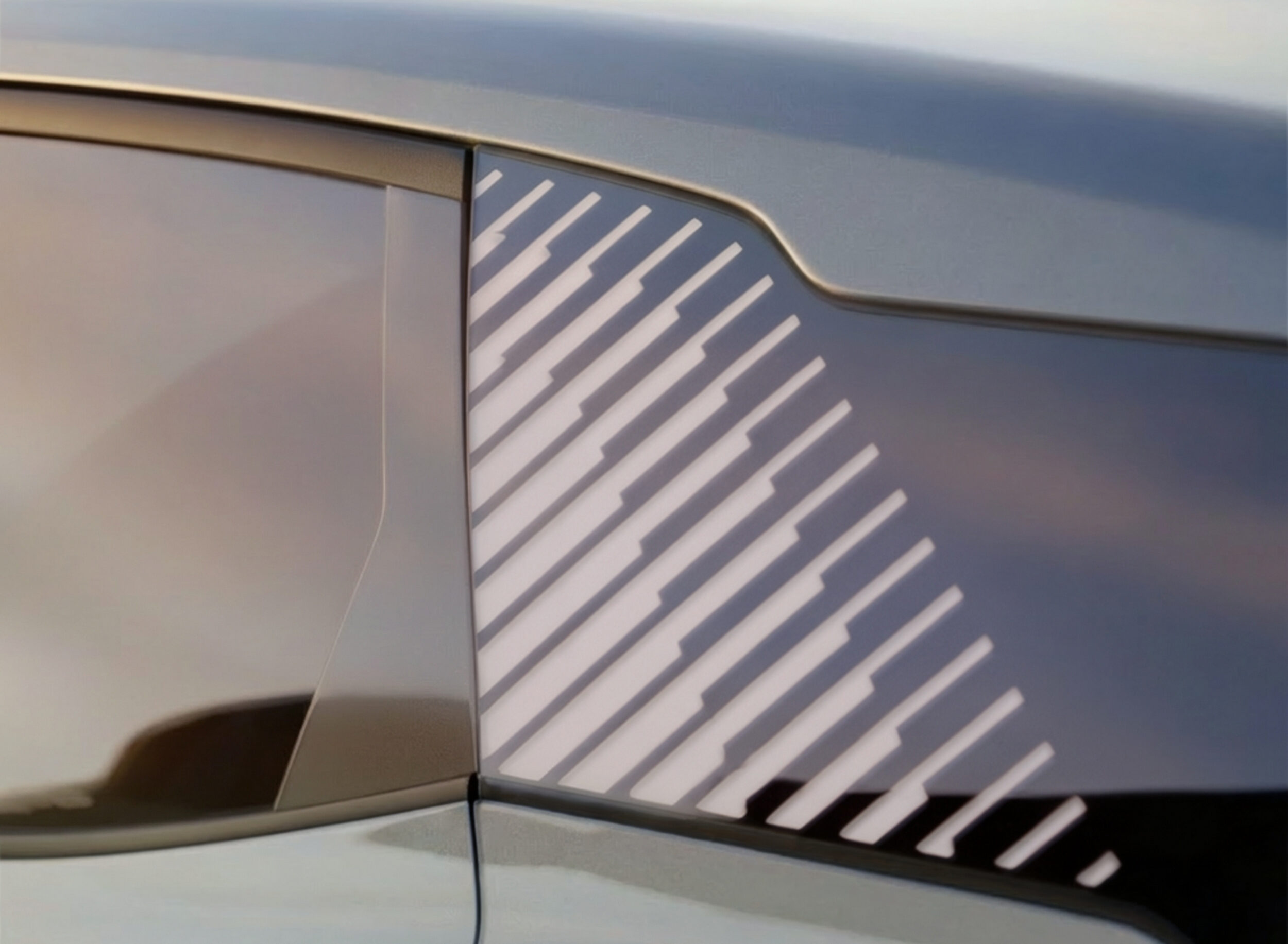
Buyers looking for something more unique can opt for the Explorer Collection. The special edition features a unique Cactus Grey exterior with 20-inch wheels sporting a Satin Black finish. The model is also notable for having a black roof, black skid plates, and black graphics.

The Black Onyx interior has contrasting orange accents on the seats, seatbelts, and dashboard. Elsewhere, there is black and orange speckle effect trim as well as “2D knit” inserts on the seats. The latter is said to be inspired by the “texture and appearance of high-quality sport clothing.”

 Ford’s Electric Explorer Fixes Two Of Its Biggest Early Weaknesses
❌
❌