Reading view

There are new articles available, click to refresh the page.

From Cornfields to Consumer Products: How Biotechnology Could Create New Opportunities for Farmers 

When most people think about biotechnology, they often think about medicine or science labs. But during our most recent Forum, leaders from across agriculture, manufacturing, research, and policy explored a different reality: biotechnology is increasingly becoming part of the future of farming itself. 

And in many ways, that future is already here. 

The conversation centered on the growing “bioeconomy,” a term used to describe products and industries powered by biological resources and life science innovation. While that may sound technical, the real-world applications are surprisingly familiar. 

Paper products. Household cleaners. Clothing fibers. Food ingredients. Renewable fuels. Packaging materials. Even alternatives to plastics and industrial chemicals. 

Many of these products can now be created using agricultural feedstocks and advanced fermentation technologies, opening the door to entirely new markets for farmers and rural communities. 

Agriculture’s Expanding Role 

Biotechnology is increasingly being viewed as a solution to some of the world’s biggest challenges, including food security, climate resilience, health, and sustainable manufacturing. 

For decades, agriculture has largely focused on producing food, feed, and fuel. But biotechnology is rapidly expanding what crops and agricultural byproducts can become. 

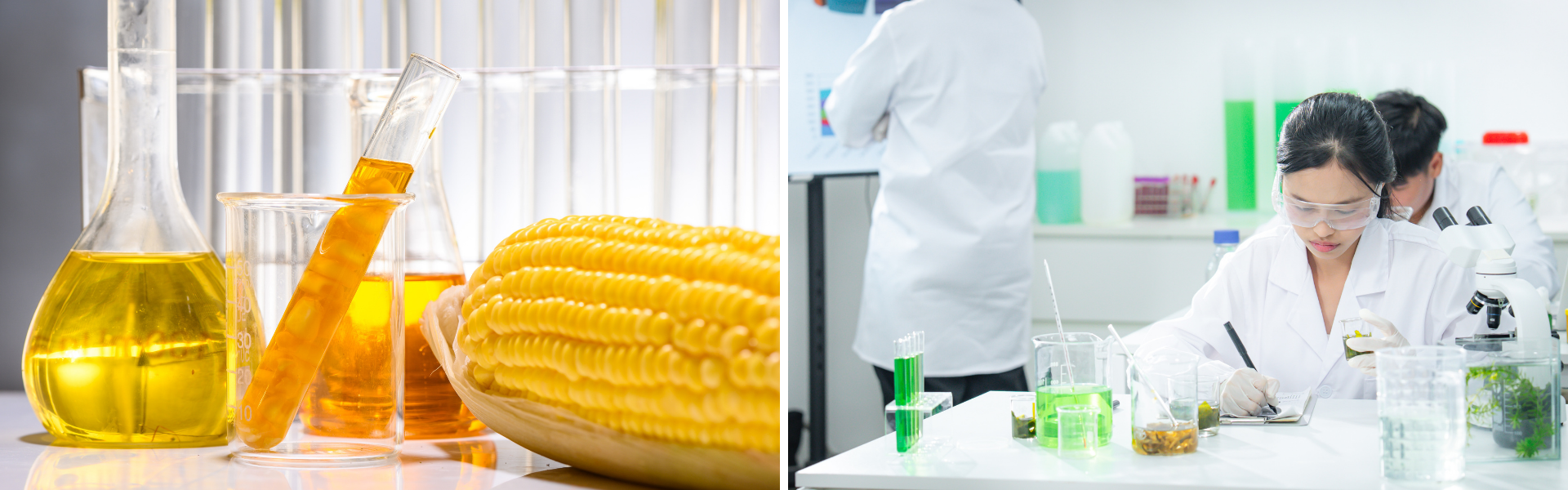
One topic discussed throughout the Forum was precision fermentation, a process that uses feedstocks like corn sugar, soy glycerol, sorghum, sugar beets, and sugar cane to create products through fermentation. In simple terms, plant materials are placed into fermentation systems where microorganisms produce ingredients and materials that can later be used in consumer goods and manufacturing.  

The products created through these systems can range from natural food dyes and personal care products to polymers designed to replace petroleum-based plastics. Speakers noted that many major companies have already been using fermentation technologies in parts of their product portfolios for years.  

For agriculture, that means crops may increasingly serve as the foundation for industries far beyond traditional commodity markets. 

A Growing Consumer Market 

Consumer awareness around plant-based and bio-based products is also growing. 

Research shared during the forum showed that 67% of consumers say they use plant-based products monthly, while 86% say they are likely to include plant-based products in the next three months.  

Importantly, panelists emphasized that these products are not limited to food. Consumers are already encountering bio-based materials in: 

  • disposable food service ware  
  • household cleaning products  
  • paper goods  
  • clothing and textiles  
  • personal care products  

Speakers also noted that consumers increasingly view agriculture more favorably when they understand the role farmers play in producing these materials and products.  

Why the Midwest Matters 

The Midwest is particularly well-positioned to play a major role in the bioeconomy because of its strong agricultural production and existing infrastructure. 

Illinois, Indiana, and Nebraska were repeatedly highlighted during the discussion as regions likely to see continued growth in biomanufacturing and fermentation technologies. Biomass and agricultural feedstocks are often processed close to where they are produced because transportation can be expensive and inefficient.  
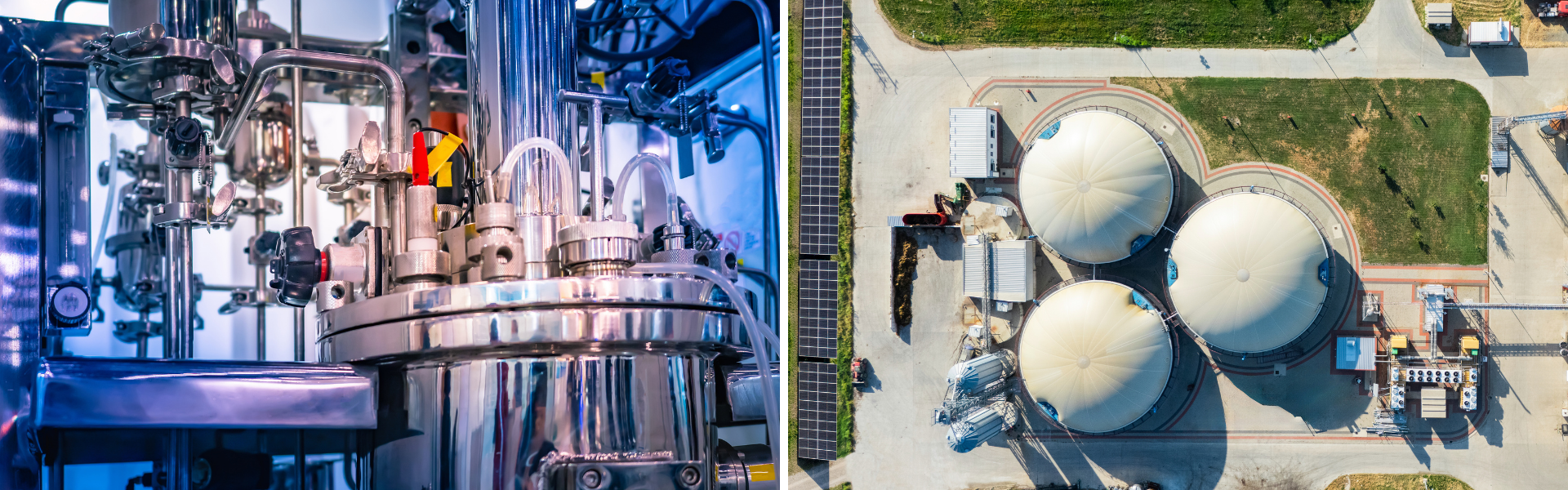
Panelists also discussed how biotechnology could help strengthen rural economies by creating additional demand for agricultural products while supporting domestic manufacturing and reducing reliance on imported materials. 

At a time when farmers continue to face rising input costs and economic uncertainty, many speakers described biotechnology as an opportunity to diversify markets and create additional value streams tied to agriculture. 

The Biggest Barrier: Infrastructure 

Despite the enthusiasm surrounding biotechnology, one challenge surfaced repeatedly throughout the forum: the United States lacks enough infrastructure to scale many of these technologies. 

One speaker compared the process to baking cookies: 

  • The lab stage is like baking in a home kitchen  
  • Pilot facilities are like a larger commercial kitchen  
  • Demonstration facilities represent scaling for broader production  
  • Full manufacturing is the equivalent of getting products onto grocery store shelves  

The problem, panelists explained, is that many technologies struggle to move beyond the pilot stage because building manufacturing infrastructure is expensive and complex.  

The Integrated Fermentation and Biomanufacturing (IFAB) initiative was highlighted as one effort working to address this gap. Federally and state-funded investments are helping build shared infrastructure, including fermentation tanks and pilot facilities, so companies do not each need to independently build costly manufacturing systems from scratch. 

Several speakers stressed the need for additional investment in pilot facilities, demonstration infrastructure, feedstock processing, and manufacturing systems to help promising technologies successfully reach commercial scale. 

Without that investment, some companies may continue moving operations overseas to countries with lower costs and stronger infrastructure support. 

Research and Policy Will Shape the Future 

The conversation also focused heavily on the role of research and public policy in determining whether the United States can remain competitive in the growing bioeconomy. 
Panelists discussed federal initiatives supporting biomanufacturing, renewable fuels, and rural infrastructure, along with state-level investments designed to position regions like Illinois as leaders in agricultural innovation.  

At the same time, concerns were raised about declining agricultural research funding and increasing global competition from countries like China and Brazil. 

Several speakers emphasized that continued investment in agricultural research, crop science, and biotechnology will be critical to improving yields, increasing efficiency, and developing sustainable solutions that can meet future demand without dramatically expanding agricultural land use.  

Building Public Trust & Understanding 

Throughout the discussion, panelists repeatedly returned to one final theme: public trust and understanding matter. 

Many consumers still do not fully understand what biotechnology is, how bio-based products are made, or how they fit into everyday life. Speakers stressed the importance of transparency and communication that helps people connect these technologies to practical outcomes, whether that means safer manufacturing jobs, more sustainable materials, or new opportunities for farmers and rural communities. 

The post From Cornfields to Consumer Products: How Biotechnology Could Create New Opportunities for Farmers  appeared first on Farm Foundation.

Finding Common Ground in a Divided World

Farm Foundation is pleased to share the release of Finding Common Ground in a Divided World; a global collaborative paper developed through the Global Forum on Farm Policy and Innovation (GFFPI).

Designed as a catalyst for conversation, this paper brings together diverse perspectives on agricultural sustainability and policy. It was intentionally crafted to frame key issues ahead of a series of dialogues held in October 2025 and later refined to incorporate the key insights that emerged from those discussions. The result is a forward-looking vision of how the global agriculture community can build stronger collaboration, drive innovation, and foster more coherent agricultural policy across agrifood systems.


Authors & Organizational Affiliation

Section 1 — Common Ground

  • Emmanuelle Mikosz — Director General, Forum for the Future of Agriculture (EU)
  • Tyler McCann — Managing Director, Canadian Agri-Policy Institute (Canada)
  • Katie McRobert — Executive Director, Australian Farm Institute (Australia)
  • Shari Rogge-Fidler — President & CEO, Farm Foundation (United States)

Section 2 — Deep Dives

  • Michael Robertson, Andy Hall, Rohan NelsonCommonwealth Scientific and Industrial Research Organisation (CSIRO – Australia)
  • Gail Tavill — Chief Sustainability Officer, OSI Group (United States)
  • Dr. Tassos Haniotis — Special Advisor for Sustainable Productivity, Forum for the Future of Agriculture (EU); Senior Guest Research Scholar, International Institute for Applied Systems Analysis (IIASA)
  • Vivian Hoffmann — Senior Research Fellow, International Food Policy Research Institute (IFPRI); Associate Professor, Carleton University, Department of Economics and School of Public Policy and Administration

Section 3 — What We Learned

  • GFFPI Leadership Team, and
  • Dr. Sunghun Lim — Agricultural Economics Fellow, Farm Foundation

About GFFPI 

The Global Forum on Farm Policy and Innovation (GFFPI) is a collaborative platform formed by four leading independent agricultural institutes from Australia, Canada, the European Union, and the United States. The partnership uses evidence-based insights and emerging research to fuel dialogue, unlock new thinking, and identify opportunities to advance sustainable agriculture globally. 

Founding organizations: 

  • Farm Foundation 

The post Finding Common Ground in a Divided World appeared first on Farm Foundation.

A Collaborative Look at Biotech Acceptance 

The January Round Table Meeting brought together thought leaders, farmers, innovators, and decision-makers from across the food and agriculture value chain to tackle some of the industry’s most pressing challenges. As we closed the meeting, we turned our focus to a topic that continues to shape the future of agriculture: biotech acceptance among key stakeholder groups. 

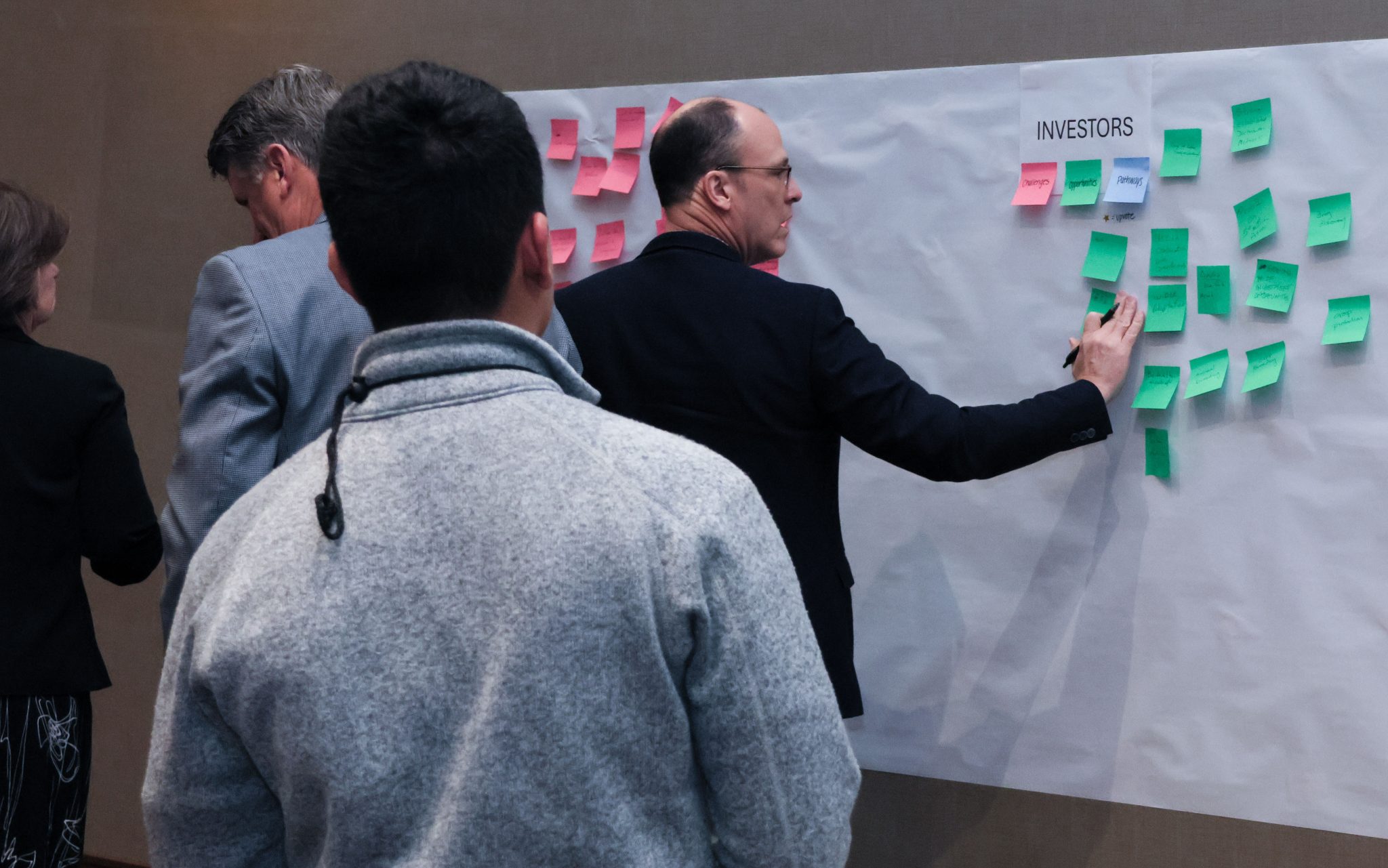
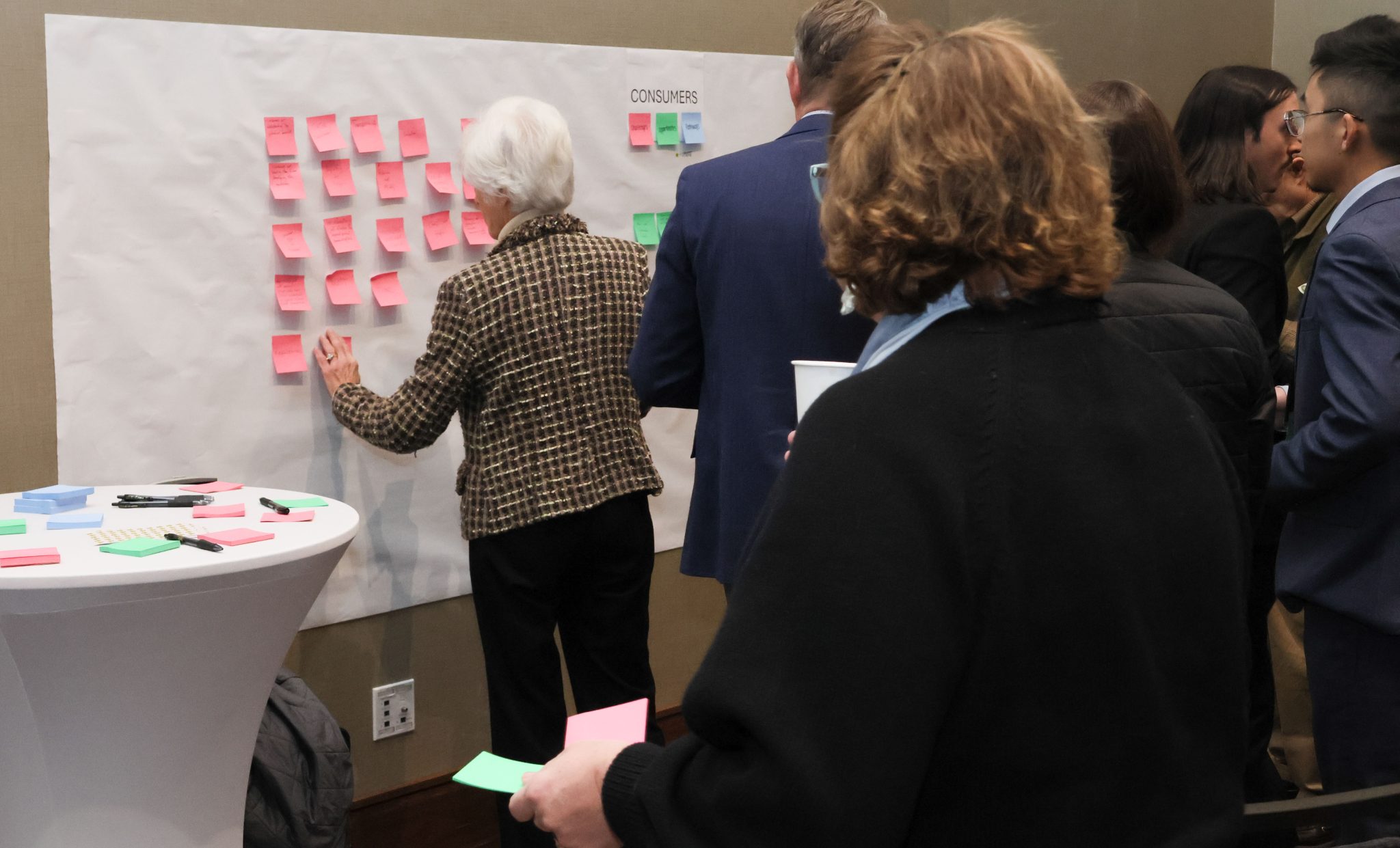
Through an engaging and interactive event storming session, participants explored the perspectives of producers, regulators, consumers, and investors. Each group shared unique insights, identified challenges, and brainstormed actionable solutions to build trust and drive innovation in biotechnology. 

In this blog post, we’ll break down the key takeaways from the discussion, highlighting both the obstacles and opportunities ahead. 

Producers: Championing Innovation and Access 

The producer discussion highlighted the challenges and opportunities faced by producers when it comes to biotech acceptance:

  • Information and Education: Producers need access to clear, consistent information across the value chain to make informed decisions.
  • Adoption of Innovation: Ensuring traits and technologies are accessible at reasonable costs is critical for adoption.
  • Consumer-Centric Traits: Producers want to see more biotech traits developed that directly benefit consumers, creating stronger alignment across the food system.
  • Cost Reductions: Biotech solutions must also address the bottom line for producers.

Proposed Solutions for Producers: 

Efforts should focus on developing accessible innovations, providing educational support, and aligning product development with consumer demand. 

Regulators: Bridging Science and Policy

The regulator discussion revealed the critical role regulators play in shaping biotech acceptance and how current challenges can be reframed into opportunities:

  • New Administration, New Opportunities: A shift in the political administration opens doors for resetting regulatory approaches and fostering new collaborations.
  • Better Storytelling for New Products: Biotech innovations with tangible benefits—especially those connected to producers—offer compelling stories that can resonate with policymakers and the public.
  • Breaking the Litigation Cycle: Regulation often stems from fear rather than science, perpetuating a cycle of litigation and mistrust.

Proposed Solutions for Regulators:

  1. Voting and Education: Engaging policymakers and educating them on science-based regulation are critical first steps.
  2. Collaboration: Building stronger connections among businesses, government, consumers, and advisory groups can help align priorities. Farm Foundation can play an active role in fostering these partnerships.
  3. Regulatory Reform: Streamlining FDA processes and addressing outdated regulatory hurdles can pave the way for innovation.

Consumers: Shifting Perceptions Through Education and Benefits 

The group discussing consumer perspectives highlighted a gap between biotech advancements and consumer understanding:

  • Misinformation and Lack of Education: Many consumers receive conflicting or inaccurate information about biotech products, leading to confusion and mistrust.
  • Perceived Lack of Benefits: Consumers feel biotech advancements have largely been producer-focused, with limited visible advantages for them.
  • Health Concerns: Human health remains a key focus, with some consumers wary of biotech’s potential impact.
  • The Power of Partnerships: Collaboration with organizations and the amplification of collective voices can build trust and credibility.
  • Innovation for Consumers: Biotech has the potential to create exciting new products that directly benefit consumers, such as healthier or more sustainable food options.

Proposed Solutions for Consumers:

  1. Education Campaigns: Leverage influencers, social media, and in-store experiences like product tastings to dispel myths and share success stories.
  2. Engaging Youth: Develop interactive games or resources through programs like FFA and 4-H to educate younger generations about GMOs and biotech innovations.
  3. Consumer-Centric Traits: Focus on developing biotech traits that resonate with consumer priorities, such as nutrition, sustainability, or affordability.

Investors: Fueling Innovation Ecosystems 

The investor discussion zeroed in on the financial and structural needs to support biotech innovation:

  • Capital Access: Long-term funding models, such as 15-year funds or farmer angel networks, are essential to sustain biotech development.
  • Regulatory Streamlining: Investors need clarity and predictability in the regulatory process to confidently back biotech ventures.
  • Strengthening Partnerships: Enhanced collaboration between universities, startups, and industry players can accelerate the innovation pipeline.
  • Consumer-Focused Tools: Developing tools for growers that directly benefit consumers can increase market demand for biotech products.

Proposed Solutions for Investors:

  1. Encourage Collaboration: Foster partnerships between public and private sectors, as well as between universities and startups, to create a thriving innovation ecosystem.
  2. Regulatory Education: Streamline regulatory processes and keep investors informed about ongoing progress in both their specific areas of work and the broader biotechnology regulations to minimize uncertainty and improve decision-making.
  3. Long-Term Investments: Create funding mechanisms that align with the extended timelines often required for biotech innovation and adoption. 

Advancing Biotech Acceptance Together 

The January Round Table Meeting’s closing session highlighted a critical truth: advancing biotech acceptance requires a collective effort. From producers navigating innovation access, to regulators striving for science-based policy, to consumers seeking clarity and benefits, and investors fueling the innovation ecosystem—each stakeholder group brings unique perspectives and challenges to the table. 

What became abundantly clear during the discussion is that collaboration is not just beneficial; it’s essential.

By bridging gaps between groups and fostering mutual understanding, we can create a future where biotech innovations are not only accepted but embraced for their ability to transform agriculture, enhance sustainability, and improve lives. 

At Farm Foundation, we are committed to serving as a convener and catalyst for progress. Whether it’s educating policymakers, engaging consumers, or fostering partnerships between universities, startups, and industry leaders, we aim to ensure that every voice is heard and every challenge met with actionable solutions. 

Together, we grow stronger—and with that strength, we can unlock the full potential of biotechnology for the betterment of society. 

The post A Collaborative Look at Biotech Acceptance  appeared first on Farm Foundation.
Bridging Innovation and Agriculture: Insights from the Farm Robotics Challenge Panel 

Farm Foundation recently hosted a thought-provoking panel discussion in partnership with the Farm Robotics Challenge, offering college students a unique opportunity to gain insight into real-world agricultural challenges and how technology can play a pivotal role in addressing them. The panel brought together voices from across the agricultural value chain—farmers, innovators, and industry leaders—to discuss the future of robotics in farming and provide direct feedback to the student teams as they embark on their robotics projects. 

If you would like to watch the panel discussion, you can access the full recording here. 

Who Participated? 

The panel featured an incredible lineup of experts and practitioners who shared their perspectives: 

Klaas Martens: Klaas is a third-generation farmer in New York. He operates Martens Farm and Lakeview Organic Grain Mill with his wife Mary Howell Martens and their son Peter. On 1,600 acres, he produces numerous crops, including corn, soybeans, spelt, wheat, einkorn, emmer, triticale, buckwheat, oats, barley, rye, cabbage, dry beans, and hay. He’s been farming since the 1970s and shifted to organic farming in the 90s. Klaas is a Farm Foundation Round Table Fellow.

David Hill: Southern Hill Farms, owned and operated by the Hill family, has deep roots in agriculture. David and Lisa Hill, along with their sons Michael and Kyle and daughter-in-law Brooke, continue a farming legacy that began with Lisa’s grandfather in Virginia and extended to Central Florida in the mid-20th century. Starting with ornamental trees in Clermont, the Hills diversified in 2010 by planting blueberries, eventually welcoming the public in 2014 for u-pick events and community gatherings. Today, Southern Hill Farms is a beloved Central Florida destination, known for its Fall Festival, farm market, and family-friendly experiences. David is also a Farm Foundation Round Table Fellow.  

Kevin Seidel: Kevin Seidl is a group product manager for the John Deere Operations Center™ (JDOC) at John Deere. He leads a group of product managers responsible for key features within the JDOC, with a specific focus on live remote monitoring and equipment & agronomic analysis capabilities. As a software engineer, Kevin has built some of the foundational features of the JDOC program. Throughout his 15-plus years at John Deere, he has had various product management roles of increasing responsibility, where he has focused on the JDOC’s monitoring and analysis capabilities. Kevin earned a bachelor’s degree in computer science from Bradley University and a master’s in business administration from the University of Iowa. 

Moderator: Tim Brennan, VP of Programs and Strategic Impact at Farm Foundation, who guided the discussion and connected the insights to Farm Foundation’s broader mission. 

Key Themes and Insights 

1. Automation and the Labor Shortage 

Farmers face ongoing labor shortages, making automation and robotics an urgent need rather than a luxury. Panelists emphasized that technology should not replace workers but rather enable farmers to address gaps in their workforce. Solutions like autonomous machinery and follow-me functionality were highlighted as transformative tools that could alleviate these challenges. 

2. Harvesting Challenges and Opportunities 

One of the most pressing issues discussed was the need for robotics to address harvesting challenges, particularly in specialty crops like strawberries. Unlike blueberries, which already have some mechanical solutions, strawberries require precision to pick ripe fruit without damage. Developing robotics capable of 24/7 harvesting could revolutionize the industry. 

3. Smaller, Smarter Machines for Soil Health 

Larger machinery has contributed to significant soil health concerns, including compaction and increased energy use. Panelists discussed the opportunity for robotics to lead the way toward smaller, lighter, and more collaborative machines. These innovations would not only protect soil but also reduce operational energy demands. 

4. Practical, Farmer-Centered Solutions 

A recurring theme throughout the discussion was the importance of creating practical, problem-solving technology. Farmers need innovations that work in diverse conditions, are reliable, and solve specific challenges like soil conditions or adverse weather. 

Farm Foundation’s Mission in Action 

Hosting this panel aligns directly with Farm Foundation’s mission: to build trust and understanding at the intersections of agriculture and society. By partnering with the Farm Robotics Challenge, Farm Foundation supports the next generation of innovators and provides a vital space for collaboration between farmers and technology developers. 

This event highlighted the importance of bringing real-world agricultural perspectives to the forefront, ensuring that technology is grounded in practicality and addresses the evolving needs of those throughout the food and agriculture value chain

What’s Next? 

As the student teams dive into their robotics projects, we look forward to seeing how their ideas take shape and how they tackle the challenges outlined during the panel. The Farm Robotics Challenge serves as a testament to the power of collaboration and innovation in shaping the future of agriculture. 

We’re proud to continue fostering connections between agriculture, technology, and society, and we can’t wait to see how these students contribute to a more innovative and sustainable agricultural future. 

The post Bridging Innovation and Agriculture: Insights from the Farm Robotics Challenge Panel  appeared first on Farm Foundation.

Golden Rice and the Path to Sustainable Agricultural Innovation

In the Perspectives guest blog series, Farm Foundation invites participants from among the varied Farm Foundation programs to share their unique viewpoint on a topic relevant to a Farm Foundation focus area. Dr. Sandro Steinbach, the 2024 Farm Foundation Agricultural Economics Fellow, contributed this guest blog. He can be reached at sandro.steinbach@ndsu.edu. A version of this blog, co-written with Martha King, then Farm Foundation’s vice president of programs and projects, was published in October 2024 as part of the 2024 Global Agricultural Productivity (GAP) report from the GAP Initiative at Virginia Tech. It can be found on page 17 and 18 of the report.


As climate pressures and sustainability demands grow, the agricultural sector faces challenges in adopting productivity-enhancing innovations. Golden Rice, a revolutionary crop, offers valuable lessons in overcoming barriers to innovation, which is critical for a resilient and sustainable agricultural future.

Addressing the Urgent Need for Sustainable Productivity

The global population is set to reach 8.5 billion by 2030, amplifying demands on food production amidst climate change impacts. Sustainable productivity growth—measured by total factor productivity (TFP) and environmental impact—is essential to meet these needs. TFP growth depends on effective resource use and adopting new technologies that can deliver more food with less environmental impact. The Golden Rice initiative exemplifies how trade, innovation policies, and R&D can work together to foster TFP growth and meet global food security needs.

Golden Rice: A Collaborative Innovation

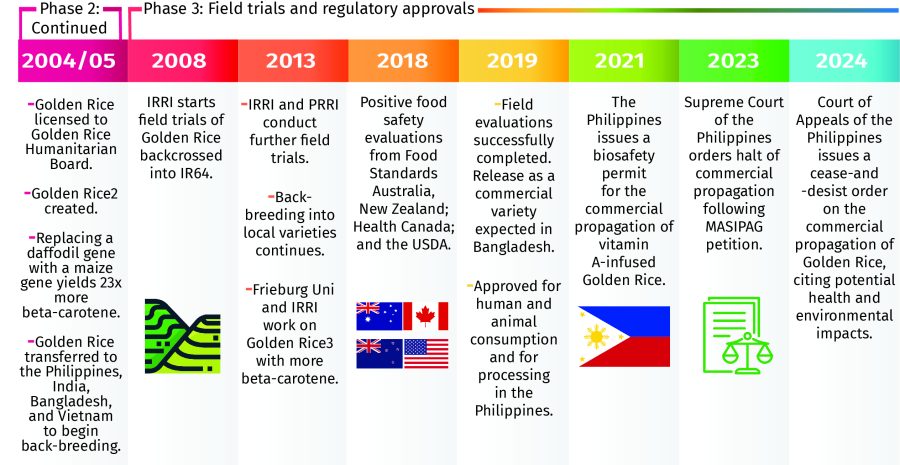
Rice, a staple for billions, became the focus of an ambitious global health initiative to address vitamin A deficiency in developing countries. Initiated by the Rockefeller Foundation in 1982, Golden Rice resulted from decades of international collaboration. Figure 1 illustrates its development timeline, from lab research to regulatory approval. However, the journey faced significant challenges, including regulatory hurdles and public skepticism. Golden Rice’s story underscores the importance of supportive policies for adopting innovations that can profoundly impact global nutrition and agricultural productivity.

Figure 1. Innovation and Adoption Timeline of Golden Rice
Note. The figure shows the innovation and adoption timeline of Golden Rice. The illustration is adapted from Kelly et al. (2019).

How Trade Enables Cross-Border Innovation and Development

International trade is pivotal in advancing agricultural innovation by facilitating the exchange of ideas, resources, and technology. The development of Golden Rice brought together scientists from multiple countries, including Switzerland, Germany, the United States, and the Philippines, showcasing how trade fosters collaborative breakthroughs that address global challenges. This cross-border cooperation exemplifies the value of international R&D networks in scaling agricultural technologies across diverse environments, regulatory frameworks, and public needs.

The Role of Innovation Policies in Agricultural Advancement

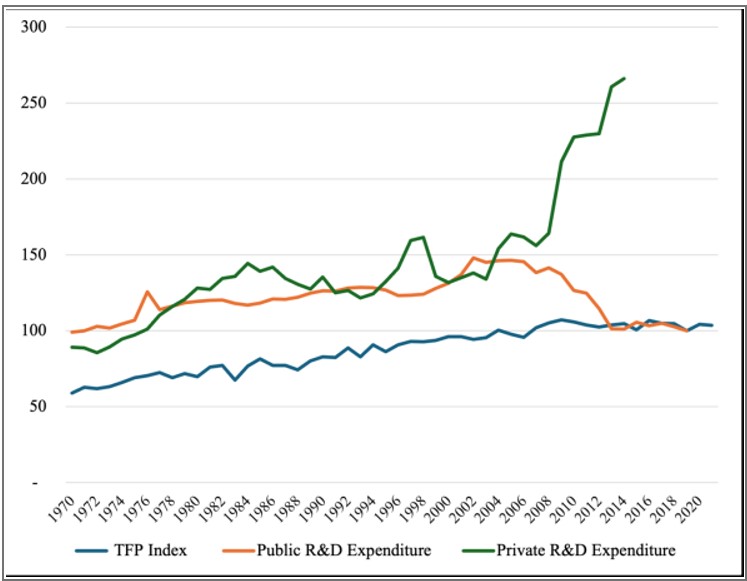
As illustrated in Figure 2, R&D investment in the United States initially spurred significant TFP growth, with public R&D investments driving agricultural productivity. However, recent declines in public R&D funding have coincided with slower TFP growth, highlighting the need for robust innovation policies. Supportive policies, including intellectual property protections and transparent regulatory frameworks, are essential for translating scientific discoveries into practical technologies. Golden Rice’s development benefited from these policies, yet its adoption has been slowed by regulatory barriers, particularly concerning genetically modified organisms (GMOs). This experience highlights the role of flexible, science-based regulatory frameworks that balance public safety with innovation needs.

Figure 2. Agricultural TFP Growth Stalling due to Limited Public R&D Investments
Note. The figure shows agricultural TFP and R&D expenditure growth in the United States from 1970 to 2021. The R&D expenditures are in constant 2019 dollars and each time series are indexed to 2019. Data is sourced from the International Agricultural Productivity and R&D Expenditure databases maintained by the U.S. Department of Agriculture Economic Research Service.

Lessons from Golden Rice on TFP Growth Potential

Golden Rice offers significant potential to boost TFP by providing enhanced nutrition without requiring additional resources. This crop addresses vitamin A deficiency and aligns with sustainable agricultural practices by reducing dependency on supplements. However, its success relies on supportive trade and innovation policies allowing global distribution. Countries like the U.S. and Canada, which have open trade policies, facilitated quicker adoption, while regions with GMO restrictions face delays. Aligning trade policies with innovation objectives can remove barriers, allowing beneficial technologies to contribute to TFP growth and broader sustainability.

Overcoming Barriers to Agricultural Innovation

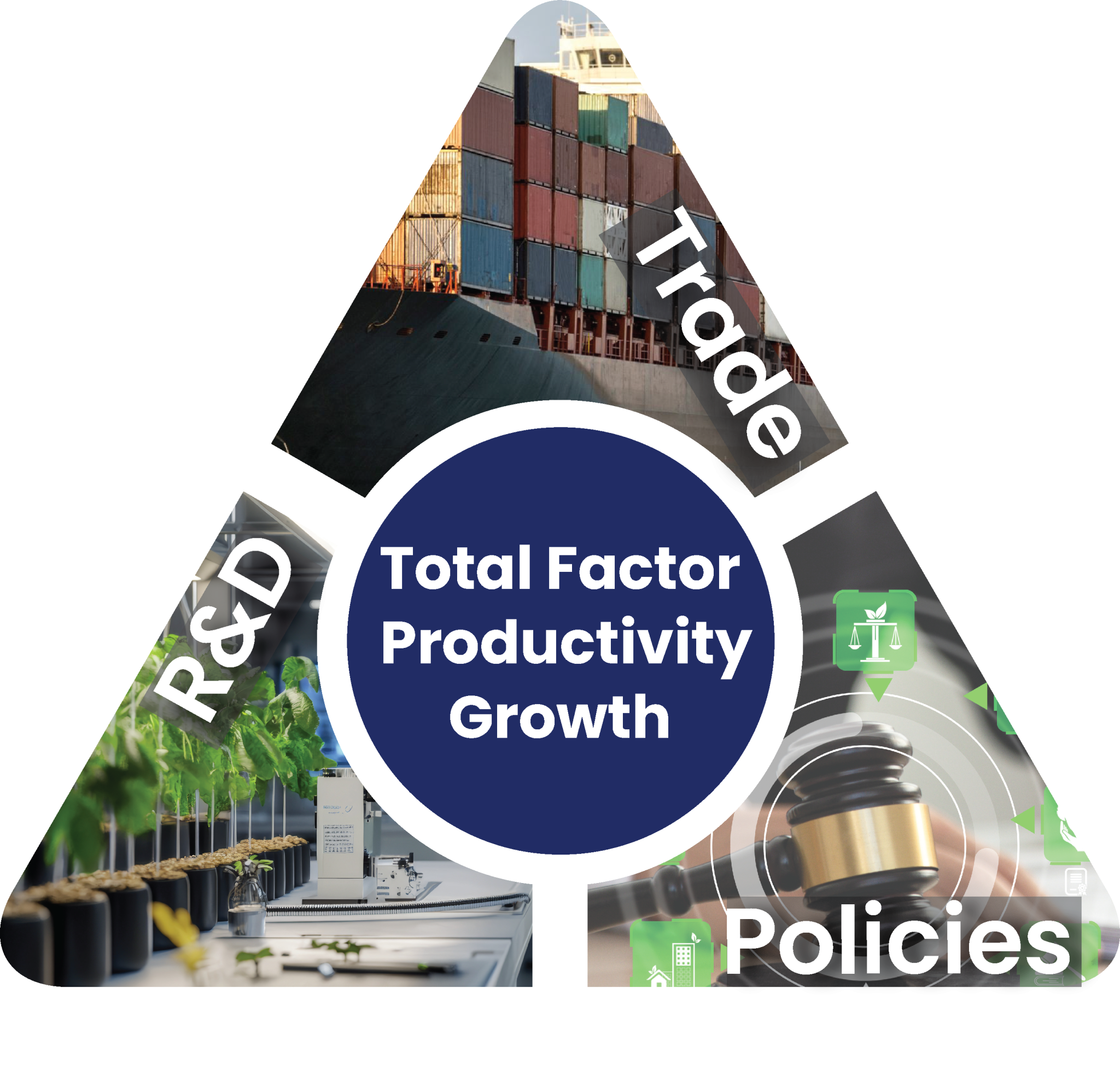
Figure 3. The figure shows how trade, public policies, and R&D align to foster TFP growth.

Golden Rice’s journey from innovation to adoption is a case study of the challenges faced by agricultural technologies. Major obstacles include restrictive regulatory frameworks, trade barriers, and socio-economic challenges such as limited infrastructure and market access. To ensure these innovations reach farmers, streamlined and science-based regulatory approaches are essential. Figure 3 summarizes three key policy recommendations: harmonizing trade policies, developing adaptive regulatory frameworks, and fostering public-private partnerships to support innovation and adoption.

Building a Framework for Future Agricultural Innovation

The Golden Rice experience emphasizes the need for aligned global trade and policy frameworks that support sustainable productivity. As new agricultural technologies emerge to address pressing issues like climate change and food security, streamlined policies can accelerate their adoption. Policymakers must encourage R&D investments that drive TFP growth, ensuring innovations reach regions where they are needed most. Golden Rice is a valuable lesson in leveraging trade and policy to support the rapid dissemination of agricultural technology, enabling a more resilient and food-secure world.

The post Golden Rice and the Path to Sustainable Agricultural Innovation appeared first on Farm Foundation.
Biofuel production: Rhodococcus strain N1-S transforms succinic acid production

As the global push for sustainable biofuels intensifies, lignocellulosic biomass has emerged as a prime candidate for biofuels and biochemicals owing to its abundance and renewability. This biomass, derived from plant materials, holds great promise as a feedstock for biofuel production. However, the pretreatment process required to break down lignocellulose often yields toxic byproducts like lignin-derived phenolic compounds and furanyl aldehydes.

❌