Hosted by U.S. Trade Representative Jamieson Greer, the ministerial comes at a time when President Donald Trump's tariffs, a trade war with Canada and high fuel prices sparked by the war in Iran have left Americans uneasy about the economy.
Watches are on display in a Swatch store on April 3, 2025, in Miami Beach, Florida. The Swiss company, and other in 60 countries that make up more than 99% of U.S. imports, is subject to Trump administration tariffs tied to labor standards. (Photo by Joe Raedle/Getty Images)
WASHINGTON — Small businesses will once again challenge President Donald Trump’s tariffs in federal court this week as they continue to feel the squeeze of the administration’s roller coaster policy on import taxes.
Spice importer Burlap & Barrel and rare watch importer Collective Horology will argue Wednesday in the Court of International Trade in New York City that the Trump administration did not properly establish forced labor cases against dozens of U.S. trading partners before levying duties on goods that numerous American importers buy.
The Office of the United States Trade Representative announced in late July that products from 60 top U.S. trading partners will be tariffed at 10% or 12.5%, depending on whether governments have or have not developed laws meant to combat forced labor. The new tariffs cover 99.4% of all goods imported into the United States, according to the office.
The plaintiffs, represented by the legal advocacy nonprofit Liberty Justice Center, allege the administration exceeded its tariff authority delegated by Congress under the forced labor statute, Section 301 of the Trade Act of 1974.
The plaintiffs also argue the tariffs are “arbitrary and capricious” because U.S. trade officials relied on “generalized assertions” that labor policies in 60 economies imposed concrete economic harm to the U.S.
Trade law expert blasts Trump usage
Ambassador Alan Wm. Wolff, a former trade official who helped draft the forced labor statute and filed a brief in support of the small business plaintiffs, said Section 301 was “designed for sort of a rifle shot of retaliation against a single foreign country doing some particular act that’s been verified.”
Wolff served in the Carter and Ford administrations, and later as a deputy director-general at the World Trade Organization.
“I sat through the executive sessions of the committees that were drafting the statute,” he said. “No one ever conceived of the idea that you could just create a sort of a fake, bogus test for other countries – 60 of them — that none of them could meet.”
Wolff told States Newsroom in an interview Sept. 21 that the statute has never been used in this way.
“If the U.S. was serious about forced labor being dealt with in this fashion … it would say, ‘Well, we’ll review it every six months, and if you put in a statute that has the following provisions, we would probably lift the tariff,’” he said.
“There’s none of that because the purpose is to have the tariff, not to combat forced labor,” he continued.
The Department of Justice declined to comment Monday on ongoing litigation.
The White House and the Office of the United States Trade Representative did not respond Monday.
One tariff after another
The legal challenge on behalf of small business plaintiffs is not the first one to be brought by the Liberty Justice Center, a nonprofit that focuses on “high-impact cases that defend individual liberty and challenge government overreach,” according to its website.
In February, the organization secured a victory against the Trump administration when the U.S. Supreme Court ruled the president’s unprecedented executive tariffs under the International Emergency Economic Powers Act, referred to as IEEPA, were unconstitutional.
The organization won the case on behalf of several small business plaintiffs, ranging from an Illinois-based toymaker and New York-based wine importer, to a Utah-based plastics producer and a Pennsylvania-based fishing gear company, among others.
Almost immediately after the high court struck down his emergency tariffs, Trump imposed a new wide-reaching 10% tariff on global imports under a separate statute – Section 122 of the Trade Act of 1974. The statute limited Trump to only 150 days.
The administration concurrently opened sweeping trade practice investigations, including under the Section 301 forced labor statute, on nearly all U.S. trading partners. The government announced its forced labor findings just as the earlier tariffs expired at the 150-day mark.
New duties ‘blatantly pretextual’
Sara Albrecht, the Liberty Justice Center’s CEO, described the administration’s new forced labor tariffs as “blatantly pretextual” to replace duties imposed under Section 122.
“And Section 122 was pretextual for the IEEPA tariff that rolled off this year when he lost at the Supreme Court. So we feel like our job wasn’t done because we struck down the IEEPA tariff, and then the administration just did it again,” Albrecht said.
The organization is again representing small business plaintiffs who allege harm to their bottom line because of the administration’s tariff policy.
Burlap & Barrel, a New York-based company with warehouses in Hagerstown, Maryland, and Las Vegas imports spices from 22 countries. The California-based Collective Horology imports high-end mechanical watches from independent makers in six European nations.
“They are two individual American small businesses that have been swept up in a political kind of debate. We’re arguing this on behalf of every American small business, every American business that is being forced to once again pay illegal tariffs,” Albrecht said.
The organization has asked the Court of International Trade for class status.
“You have to keep in mind that they’re just getting their IEEPA refunds right now, and we’re almost done with that. But they had to start paying Section 122 (tariffs), and then when that stopped, they had to pay Section 301 (tariffs). So a lot of these businesses are effectively loaning all of their working capital to the U.S. government while we kind of sort this out in court,” Albrecht said.
The Liberty Justice Center had also challenged the Section 122 tariffs on behalf of Burlap & Barrel.
U.S. Customs and Border Protection is still in the process of refunding roughly $166 billion worth of tariffs paid by businesses under Trump’s IEEPA import charges.
“We’re a small nonprofit that is, you know, 12 attorneys trying to again strike down the tariffs, and it would be nice if someone else wanted to jump into the fight,” Albrecht said. “So we’re doing the best we can, and I think we’ve done a good job so far.”
Prior to the tariff case win, the organization was most well known for its role in successfully arguing before the U.S. Supreme Court in Janus v. AFSCME, in which its client Mark Janus challenged public sector unions over paying dues.
Republican candidate for governor Tom Tiffany said Thursday he doesn't support President Donald Trump renaming Lake Ontario as a trade war intensifies with Wisconsin’s biggest trading partner.
Farm Foundation is pleased to share the release of Finding Common Ground in a Divided World; a global collaborative paper developed through the Global Forum on Farm Policy and Innovation (GFFPI).
Designed as a catalyst for conversation, this paper brings together diverse perspectives on agricultural sustainability and policy. It was intentionally crafted to frame key issues ahead of a series of dialogues held in October 2025 and later refined to incorporate the key insights that emerged from those discussions. The result is a forward-looking vision of how the global agriculture community can build stronger collaboration, drive innovation, and foster more coherent agricultural policy across agrifood systems.
Authors & Organizational Affiliation
Section 1 — Common Ground
Emmanuelle Mikosz — Director General, Forum for the Future of Agriculture (EU)
Tyler McCann — Managing Director, Canadian Agri-Policy Institute (Canada)
Katie McRobert — Executive Director, Australian Farm Institute (Australia)
Shari Rogge-Fidler — President & CEO, Farm Foundation (United States)
Section 2 — Deep Dives
Michael Robertson, Andy Hall, Rohan Nelson — Commonwealth Scientific and Industrial Research Organisation (CSIRO – Australia)
Gail Tavill — Chief Sustainability Officer, OSI Group (United States)
Dr. Tassos Haniotis — Special Advisor for Sustainable Productivity, Forum for the Future of Agriculture (EU); Senior Guest Research Scholar, International Institute for Applied Systems Analysis (IIASA)
Vivian Hoffmann — Senior Research Fellow, International Food Policy Research Institute (IFPRI); Associate Professor, Carleton University, Department of Economics and School of Public Policy and Administration
Section 3 — What We Learned
GFFPI Leadership Team, and
Dr. Sunghun Lim — Agricultural Economics Fellow, Farm Foundation
About GFFPI
The Global Forum on Farm Policy and Innovation (GFFPI) is a collaborative platform formed by four leading independent agricultural institutes from Australia, Canada, the European Union, and the United States. The partnership uses evidence-based insights and emerging research to fuel dialogue, unlock new thinking, and identify opportunities to advance sustainable agriculture globally.
On May 20, 2025, Farm Foundation brought together leaders from across the agriculture sector at our Innovation and Education Campus (IEC) in Libertyville, Illinois, for a critical conversation about the future of our food and agriculture system.
Kicking off the day were two U.S. Secretaries of Agriculture, one Democrat, one Republican, who set the tone for a nonpartisan dialogue grounded in collaboration. Together, farmers, agribusiness leaders, researchers, and policymakers explored how to strengthen the U.S. food and ag system beyond today’s challenges and into the future.
“Farm Foundation has a long-standing reputation for bringing people together in a way that’s increasingly rare—across party lines, across sectors, and across perspectives. The Summit was a testament to that strength. It created a safe, neutral, and balanced environment where real, collaborative conversations could happen, and more importantly, where those conversations are leading to tangible outcomes for the future of food and agriculture.” Mike Johanns, former U.S. Secretary of Agriculture
The Summit defined what resilience in food and agriculture truly means:
A resilient food and agriculture system has the ability to produce food, even in the midst of changes and shocks, that sustains the planet and all people through access to safe, affordable, nutritious, and culturally relevant food.
From this shared vision came three key areas for continued collaboration:
1. Creating a policy innovation sandbox to explore new approaches to food and agriculture policy at the local, state, national, and global levels.
2. Advancing rural communities that are vibrant, thriving, and connected to opportunity.
3. Evolving the agricultural extension network to better serve today’s diverse, technology-driven, and rapidly changing sector.
The Summit was not just a conversation; it was a starting point for action. The resulting paper, Toward a Resilient Food and Agriculture Future, authored by Farm Foundation’s Agricultural Economic Fellow Dr. Sunghun Lim, captures the Summit’s insights and lays out a framework for the work ahead.
“The challenges facing agriculture today are deeply interconnected. The Summit was not just about identifying problems, it was about building momentum for actionable solutions,” said Dr. Sunghun Lim.
Now, we invite you to join us in taking the next steps. As we’ve done for the past 90 years, Farm Foundation will continue to organize thought partners and use our think tank/do tank model to drive progress in these three focus areas, sparking ideas and putting them into practice to create real impact.
The Innovation and Education Campus is a gathering place for these vital conversations. A space where anyone in the sector can host meetings, events, and trainings that help shape the future of food and agriculture.
Dr. Lim is an Assistant Professor of International Agribusiness and Director of the LSU Global Value Chains Program in the Department of Agricultural Economics and Agribusiness at Louisiana State University.
“We are pleased to welcome Dr. Lim to our esteemed Agricultural Economics Fellowship program,” says Tim Brennan, vice president, programs and strategic impact at Farm Foundation. “His research interests in international trade and agricultural policy set the stage for a fruitful collaboration towards advancing Farm Foundation’s ongoing work in agricultural trade and international sustainability policy.”
Farm Foundation’s Agricultural Economics Fellow program is a yearlong program for a faculty agricultural economist. The 2025 fellowship is focused on integrated systems approaches to understanding and overcoming the challenges in developing a greater understanding of how trade and sustainability are interconnected and are impacting the food and agricultural sectors in the United States and beyond in rapidly changing circumstances. In addition to being mentored by staff in USDA’s Office of the Chief Economist, Lim in turn will mentor participants in the Farm Foundation and USDA Economic Research Service Agricultural Scholars program, among other engagements.
His research has been published in leading academic journals, including the American Journal of Agricultural Economics, Nature Communications, NBER Book Series, Food Policy, Applied Economic Perspectives and Policy, Handbook of Agricultural Economics, and The World Economy.
He earned his BS in Economics in 2013 and his MS in Agricultural and Resource Economics in 2015 from the University of California, Davis. He received his Ph.D. in Applied Economics from the University of Minnesota in 2020.
Dr. Lim is Farm Foundation’s fifth Agricultural Economics Fellow and succeeds Dr. Sandro Steinbach (North Dakota State University), Drs. Trey Malone (University of Arkansas), Amanda Countryman (University of Colorado), and Alejandro Plastina (University of Iowa).
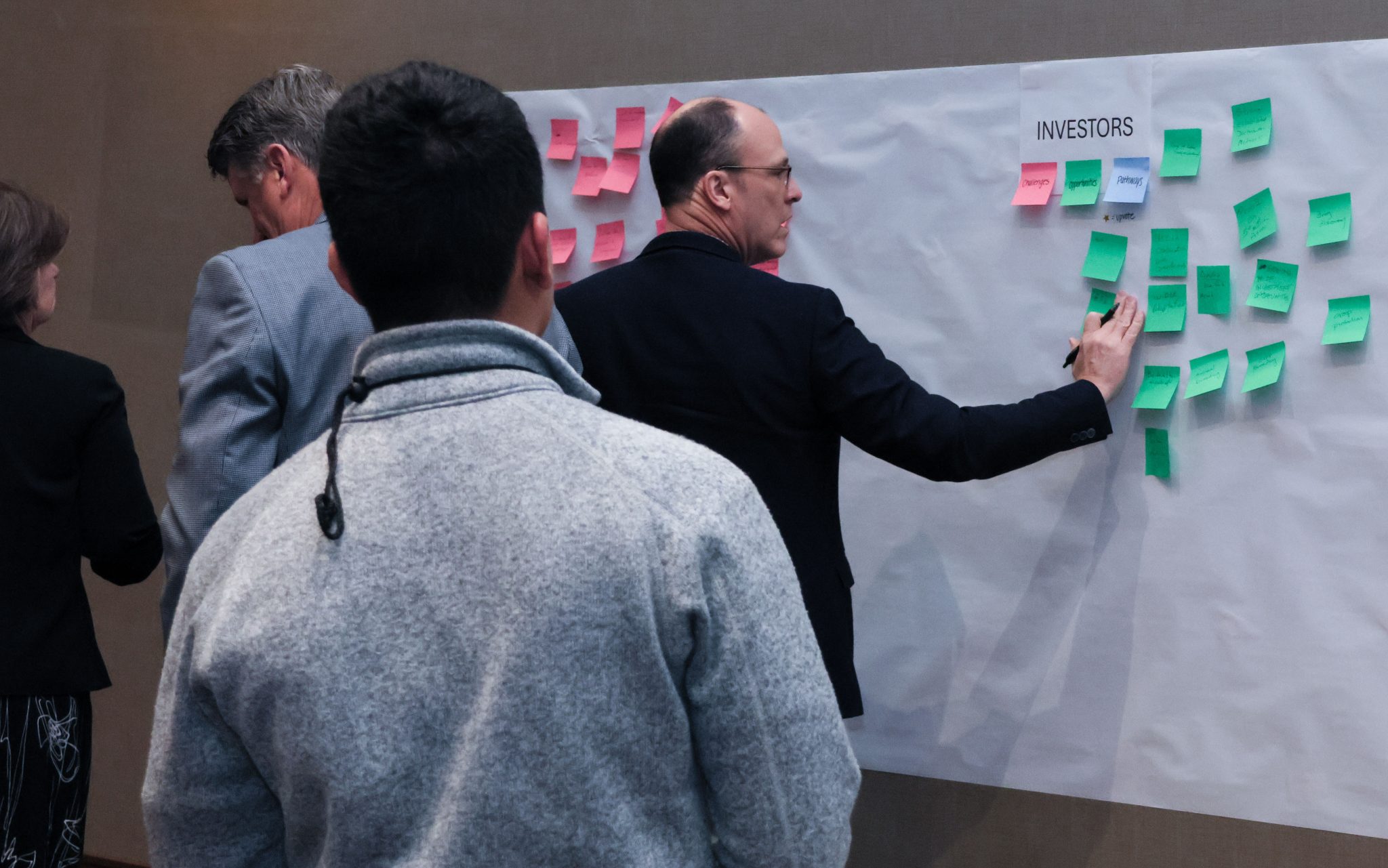
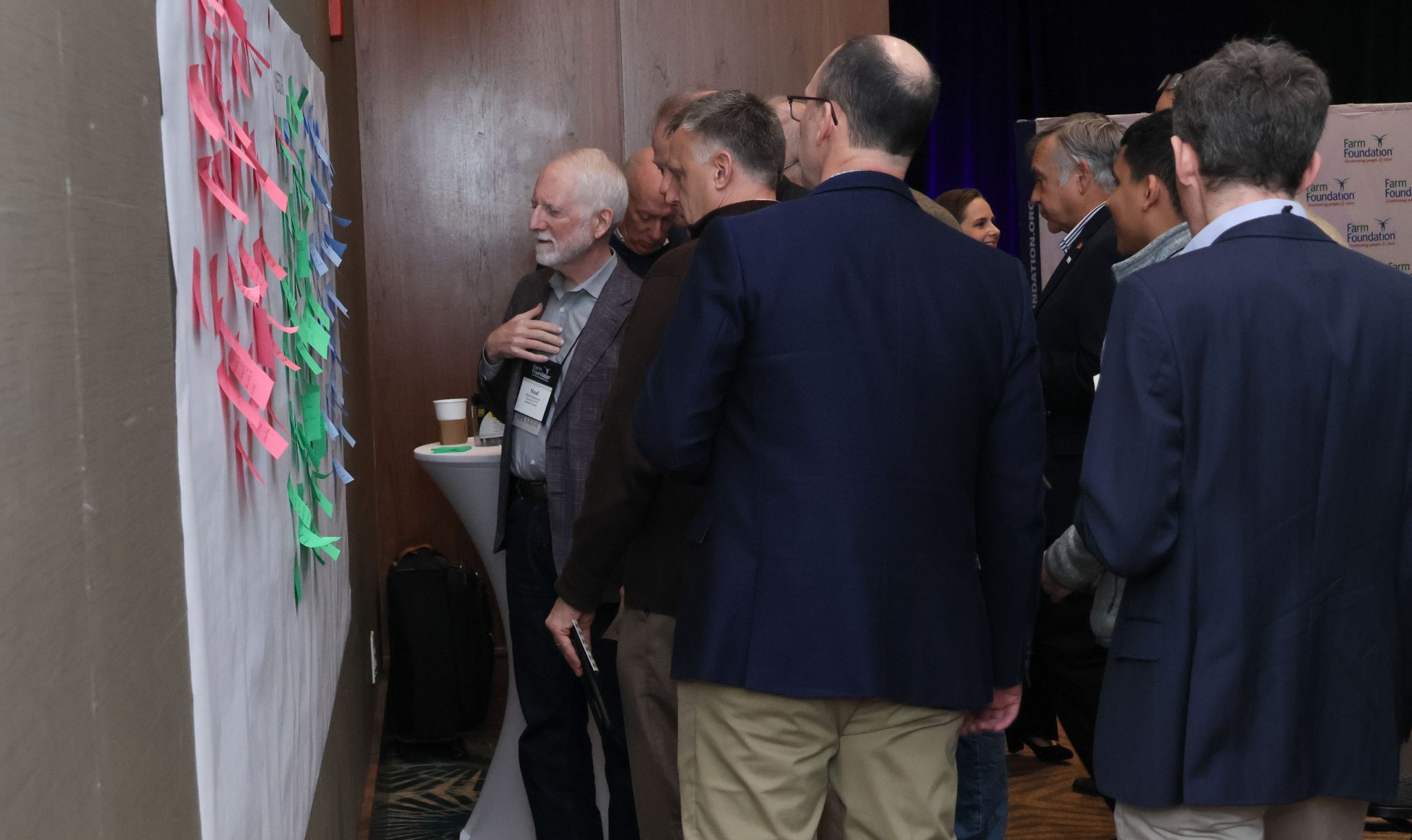
The January Round Table Meeting brought together thought leaders, farmers, innovators, and decision-makers from across the food and agriculture value chain to tackle some of the industry’s most pressing challenges. As we closed the meeting, we turned our focus to a topic that continues to shape the future of agriculture: biotech acceptance among key stakeholder groups.
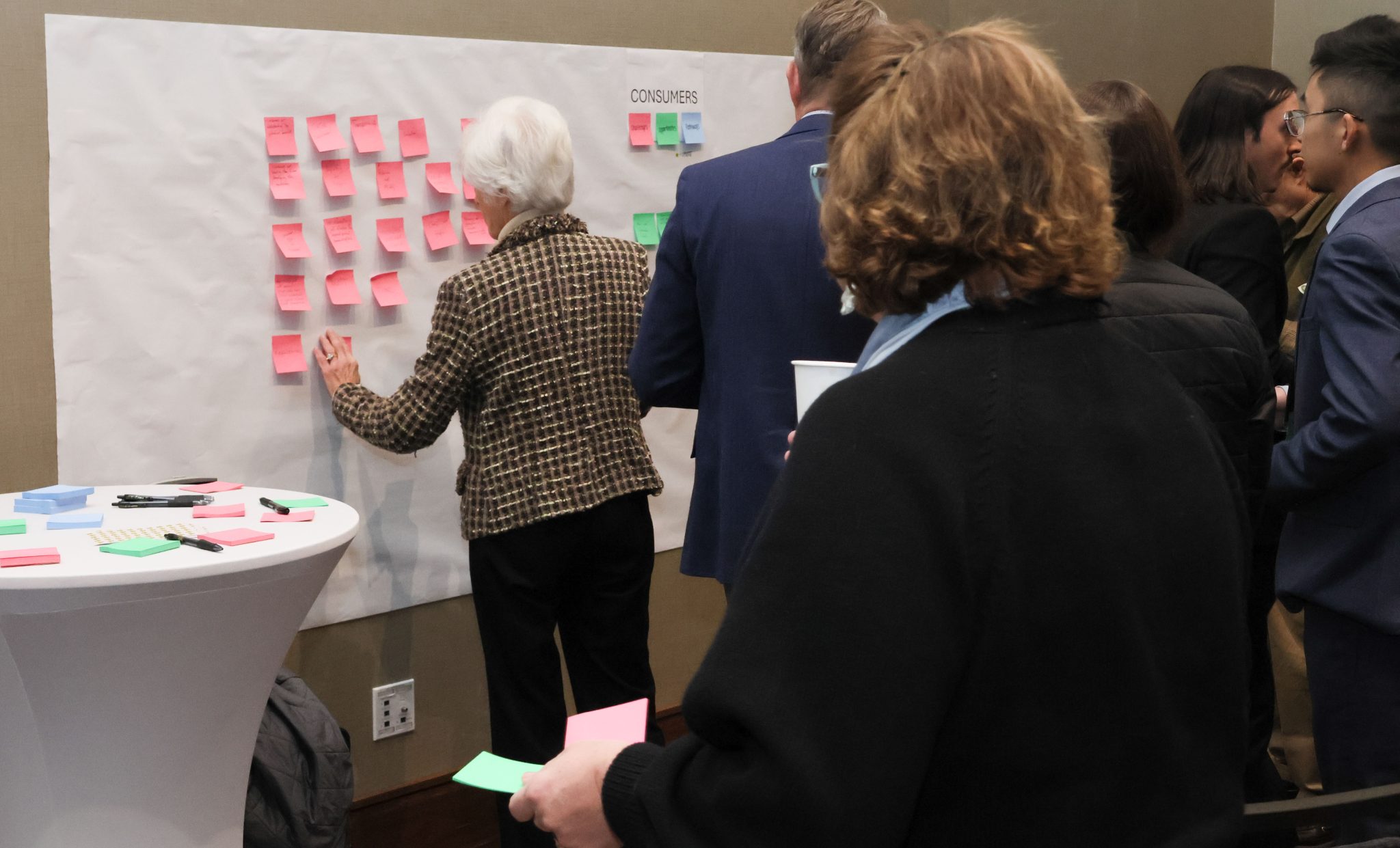
Through an engaging and interactive event storming session, participants explored the perspectives of producers, regulators, consumers, and investors. Each group shared unique insights, identified challenges, and brainstormed actionable solutions to build trust and drive innovation in biotechnology.
In this blog post, we’ll break down the key takeaways from the discussion, highlighting both the obstacles and opportunities ahead.
Producers: Championing Innovation and Access
The producer discussion highlighted the challenges and opportunities faced by producers when it comes to biotech acceptance:
Information and Education: Producers need access to clear, consistent information across the value chain to make informed decisions.
Adoption of Innovation: Ensuring traits and technologies are accessible at reasonable costs is critical for adoption.
Consumer-Centric Traits: Producers want to see more biotech traits developed that directly benefit consumers, creating stronger alignment across the food system.
Cost Reductions: Biotech solutions must also address the bottom line for producers.
Proposed Solutions for Producers:
Efforts should focus on developing accessible innovations, providing educational support, and aligning product development with consumer demand.
Regulators: Bridging Science and Policy
The regulator discussion revealed the critical role regulators play in shaping biotech acceptance and how current challenges can be reframed into opportunities:
New Administration, New Opportunities: A shift in the political administration opens doors for resetting regulatory approaches and fostering new collaborations.
Better Storytelling for New Products: Biotech innovations with tangible benefits—especially those connected to producers—offer compelling stories that can resonate with policymakers and the public.
Breaking the Litigation Cycle: Regulation often stems from fear rather than science, perpetuating a cycle of litigation and mistrust.
Proposed Solutions for Regulators:
Voting and Education: Engaging policymakers and educating them on science-based regulation are critical first steps.
Collaboration: Building stronger connections among businesses, government, consumers, and advisory groups can help align priorities. Farm Foundation can play an active role in fostering these partnerships.
Regulatory Reform: Streamlining FDA processes and addressing outdated regulatory hurdles can pave the way for innovation.
Consumers: Shifting Perceptions Through Education and Benefits
The group discussing consumer perspectives highlighted a gap between biotech advancements and consumer understanding:
Misinformation and Lack of Education: Many consumers receive conflicting or inaccurate information about biotech products, leading to confusion and mistrust.
Perceived Lack of Benefits: Consumers feel biotech advancements have largely been producer-focused, with limited visible advantages for them.
Health Concerns: Human health remains a key focus, with some consumers wary of biotech’s potential impact.
The Power of Partnerships: Collaboration with organizations and the amplification of collective voices can build trust and credibility.
Innovation for Consumers: Biotech has the potential to create exciting new products that directly benefit consumers, such as healthier or more sustainable food options.
Proposed Solutions for Consumers:
Education Campaigns: Leverage influencers, social media, and in-store experiences like product tastings to dispel myths and share success stories.
Engaging Youth: Develop interactive games or resources through programs like FFA and 4-H to educate younger generations about GMOs and biotech innovations.
Consumer-Centric Traits: Focus on developing biotech traits that resonate with consumer priorities, such as nutrition, sustainability, or affordability.
Investors: Fueling Innovation Ecosystems
The investor discussion zeroed in on the financial and structural needs to support biotech innovation:
Capital Access: Long-term funding models, such as 15-year funds or farmer angel networks, are essential to sustain biotech development.
Regulatory Streamlining: Investors need clarity and predictability in the regulatory process to confidently back biotech ventures.
Strengthening Partnerships: Enhanced collaboration between universities, startups, and industry players can accelerate the innovation pipeline.
Consumer-Focused Tools: Developing tools for growers that directly benefit consumers can increase market demand for biotech products.
Proposed Solutions for Investors:
Encourage Collaboration: Foster partnerships between public and private sectors, as well as between universities and startups, to create a thriving innovation ecosystem.
Regulatory Education: Streamline regulatory processes and keep investors informed about ongoing progress in both their specific areas of work and the broader biotechnology regulations to minimize uncertainty and improve decision-making.
Long-Term Investments: Create funding mechanisms that align with the extended timelines often required for biotech innovation and adoption.
Advancing Biotech Acceptance Together
The January Round Table Meeting’s closing session highlighted a critical truth: advancing biotech acceptance requires a collective effort. From producers navigating innovation access, to regulators striving for science-based policy, to consumers seeking clarity and benefits, and investors fueling the innovation ecosystem—each stakeholder group brings unique perspectives and challenges to the table.
What became abundantly clear during the discussion is that collaboration is not just beneficial; it’s essential.
By bridging gaps between groups and fostering mutual understanding, we can create a future where biotech innovations are not only accepted but embraced for their ability to transform agriculture, enhance sustainability, and improve lives.
At Farm Foundation, we are committed to serving as a convener and catalyst for progress. Whether it’s educating policymakers, engaging consumers, or fostering partnerships between universities, startups, and industry leaders, we aim to ensure that every voice is heard and every challenge met with actionable solutions.
Together, we grow stronger—and with that strength, we can unlock the full potential of biotechnology for the betterment of society.
In the Perspectives guest blog series, Farm Foundation invites participants from among the varied Farm Foundation programs to share their unique viewpoint on a topic relevant to a Farm Foundation focus area.Dr. Sandro Steinbach, the 2024 Farm Foundation Agricultural Economics Fellow, and Claire Citeau, a distinguished fellow at the Canadian Agri-Food Policy Institute, contributed this guest blog. In July 2024, they attended the Global Forum on Farm Policy & Innovation‘s second workshop, held in Washington D.C. on the topic of measuring sustainability outcomes to facilitate agricultural trade. An in-depth paper summarizing the event’s key takeaways and next steps is also now available.
As climate pressures increase and sustainable practices become a priority, the agricultural sector faces a unique challenge: balancing trade policies with the need for sustainable farming. In July 2024, global experts gathered at the Global Forum for Farm Policy & Innovation (GFFPI) workshop in Washington, D.C., to tackle these pressing questions. Here, we highlight key takeaways from the workshop on aligning global trade with sustainable agriculture.
Why Integrating Sustainability into Trade Matters
Global agriculture is at a crossroads as countries strive to boost productivity and meet sustainability goals without causing unintended trade disruptions. Trade plays a vital role in food security, yet poorly coordinated policies can lead to barriers, especially as more nations adopt individual sustainability measures. To keep the agricultural sector competitive and resilient, there’s a growing need for a unified framework to guide trade and sustainability.
The Challenges of Harmonizing Trade with Sustainable Agriculture
Sustainable agriculture protects natural resources, maintains profitability, and supports community well-being. While the concept is widely understood, applying it consistently across countries and trade agreements takes time and effort. The workshop underscored that each country faces unique hurdles in integrating sustainable practices. For example, while some regions prioritize carbon reduction, others focus on reducing food insecurity or supporting local farmers. As a result, a “one-size-fits-all” approach to sustainable trade isn’t feasible.
What Role Can Trade Agreements Play?
Trade agreements hold the potential to foster sustainability, but they must be crafted carefully. Adding sustainability chapters focused on environmental and labor standards can help, as can voluntary incentive-based programs that encourage best practices without restricting farmers’ flexibility. Workshop participants agreed that trade policy can be a powerful tool, but only if it promotes shared goals while respecting local contexts.
Adopting an Outcome-Based Approach to Measure Sustainability
One key takeaway from the workshop was shifting from traditional, input-based sustainability measures (such as mandating specific farming practices) to outcome-based approaches. This shift allows farmers to adapt and innovate while focusing on measurable results like soil health, carbon sequestration, and biodiversity. Though more complex, outcome-based metrics can yield more meaningful insights and foster an environment where sustainable practices are both encouraged and achievable.
The Importance of Global Standards and Local Flexibility
Global standards are essential for assessing sustainability fairly across different countries. However, rigid frameworks may overlook local realities, particularly for smallholder farmers who face unique challenges. Workshop discussions emphasized the importance of balancing global standards and local flexibility to ensure sustainability goals are relevant and achievable worldwide. This balance is critical for creating trade policies that don’t stifle innovation or penalize farmers in resource-limited regions.
Supporting Sustainable Innovation in Agriculture
International trade enables innovation by allowing the transfer of knowledge, technology, and best practices. Golden Rice, an innovation born of global collaboration to address vitamin A deficiency, was one example discussed at the workshop. Cross-border cooperation accelerates such breakthroughs, underscoring the need for open markets that allow agricultural innovations to reach areas most needed.
Recommendations for Sustainable Trade
The workshop concluded with actionable steps for aligning trade and sustainability:
Adopt Flexible, Science-Based Policies: Avoid rigid policies and instead focus on outcome-oriented, science-based standards that allow flexibility for farmers to adopt practices locally.
Invest in Consistent Metrics and Data Management: Developing universally accepted metrics will make sustainability more transparent and achievable, especially with emerging technologies like remote sensing and real-time data tracking.
Strengthen Global Cooperation: Collaborating with institutions like the WTO and FAO can help establish frameworks integrating trade with sustainability. Global collaboration is essential to create cohesive, effective standards.
Position Sustainability as a Trade Opportunity: Rather than viewing sustainability as a trade barrier, policymakers should consider it a pathway to new markets and greater competitiveness.
Involve Farmers in Policy Development: Policies should reflect the realities on the ground, including the needs and challenges of farmers. Ensuring farmers’ participation in policy discussions helps craft practical and impactful solutions.
The Path to a Sustainable Agricultural Future
As agriculture faces mounting challenges, aligning trade with sustainable practices is essential. With thoughtful policies and collaborative efforts, global trade can support a more sustainable and food-secure world. The insights from the GFFPI workshop provide a strong foundation for future discussions, reminding us that trade policies should empower, not hinder, the transition to sustainable agriculture. With aligned policies and a shared commitment, the agricultural sector can advance toward a more resilient, sustainable future.
Claire Citeau is a distinguished fellow at the Canadian Agri-Food Policy Institute. She is also a senior fellow at the Graduate School of Public and International Affairs at the University of Ottawa. Sandro Steinbach is an associate professor in the Department of Agribusiness and Applied Economics and the director of the Center for Agricultural Policy and Trade Studies at North Dakota State University. They can be reached at cciteau@uottawa.ca and sandro.steinbach@ndsu.edu, respectively.
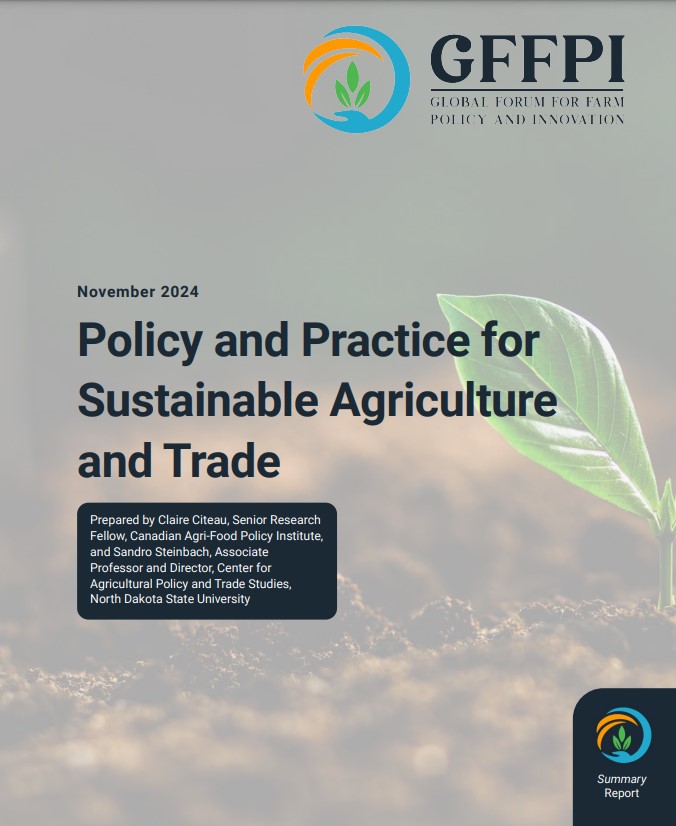
A new report from the Global Forum on Farm Policy & Innovation (GFFPI) highlights the complexities of balancing trade and sustainability objectives, emphasizing the pressing need to align trade rules with sustainability goals while avoiding unintended consequences.
The report, Policy and Practice for Sustainable Agriculture and Trade, is based on observations from the second workshop held by GFFPI, held in Washington D.C. in July 2024. The first workshop was hosted at the Organisation for Economic Co-operation and Development (OECD) in Paris in 2023 and focused on the ideal state of agriculture sustainability and trade.
The second workshop explored ways to integrate sustainability into global trade frameworks and develop standardized measurements to avoid unintended consequences. The workshop brought together over 70 participants representing 17 countries, including government officials, industry representatives, and trade policy experts. The discussions grappled with fundamental questions, including whose sustainability should be prioritized in trade agreements—the exporting country, the importing country, or global outcomes—and trade-offs between the environmental, social, and economic pillars of sustainability.
Key points identified in the report include:
Adopting an outcome-based approach to sustainability, starting with soil health, water, biodiversity and carbon measures as benchmarks.
Developing a Sustainable Agriculture Trade Framework with clear definitions, science-based standards and guiding principles.
Strengthening international cooperation to promote policy coherence GFFPI representatives were pleased to be able to further develop insights from the Paris workshop and push this important conversation forward.
“We are proud of and grateful for the global collaboration we have built over the last few years via GFFPI for respectful and evidence-based dialogue to elevate and advance possible pathways forward for agricultural trade and sustainability,” said Shari Rogge-Fidler, president and CEO of Farm Foundation.
Mark Titterington, co-founder and director of the Forum for the Future of Agriculture, agreed saying, “This is another strong contribution to the ongoing discussion on the role of trade policies in supporting the development of a more resilient and sustainable agri-food system. There is certainly a worthy case to consider for developing a global sustainable agriculture trade framework, underpinned by robust science, measurement and data, and which is outcome based. We were delighted to work with our partners in GFFPI in facilitating the discussion that led to this report and look forward to building on the key insights that emerged, also by bringing the European point of view and sensibilities to the discussion.”
The benefit of being able to share their specific point of view was shared by other GFFPI representatives. “As a trade-focused nation, Australian farmers know that our food-secure future depends on collaborative global action to meet shared goals,” said Katie McRobert, executive director of the Australian Farm Institute. “Trade can be a powerful lever to incentivize action on building natural, social, and economic capital in agricultural systems, provided that policies recognize unique local environmental and cultural contexts.”
When considering what comes next, the workshop highlighted the complex interplay between trade policy and agricultural sustainability and acknowledged there are many steps to make towards meaningful progress.
“The dialogue at the Washington workshop built on GFFPI’s past work, but underscored how much more work needs to be done to find solutions to the challenge of agriculture sustainability and trade,” said Tyler McCann, managing director of the Canadian Agri-Food Policy Institute. “This work needs to be done between countries and must include leaders in trade and sustainability to lead to meaningful outcomes.”
The Global Forum for Farm Policy and Innovation (GFFPI) leverages evidence and dialogue leading to increased understanding, substantive action, and enhanced outcomes for more sustainable agriculture around the world. GFFPI members include the Australian Farm Institute, the Canadian Agri-food Policy Institute, the Farm Foundation (United States) and the Forum for the Future of Agriculture (Europe).
On Thursday, July 18, 2024, Farm Foundation participated in the second Global Forum for Farm and Policy Innovation (GFFPI) workshop, held in Washington D.C. The focus of the workshop was “measuring sustainability outcomes to facilitate agricultural trade.” This was a priority identified in the previous workshop.
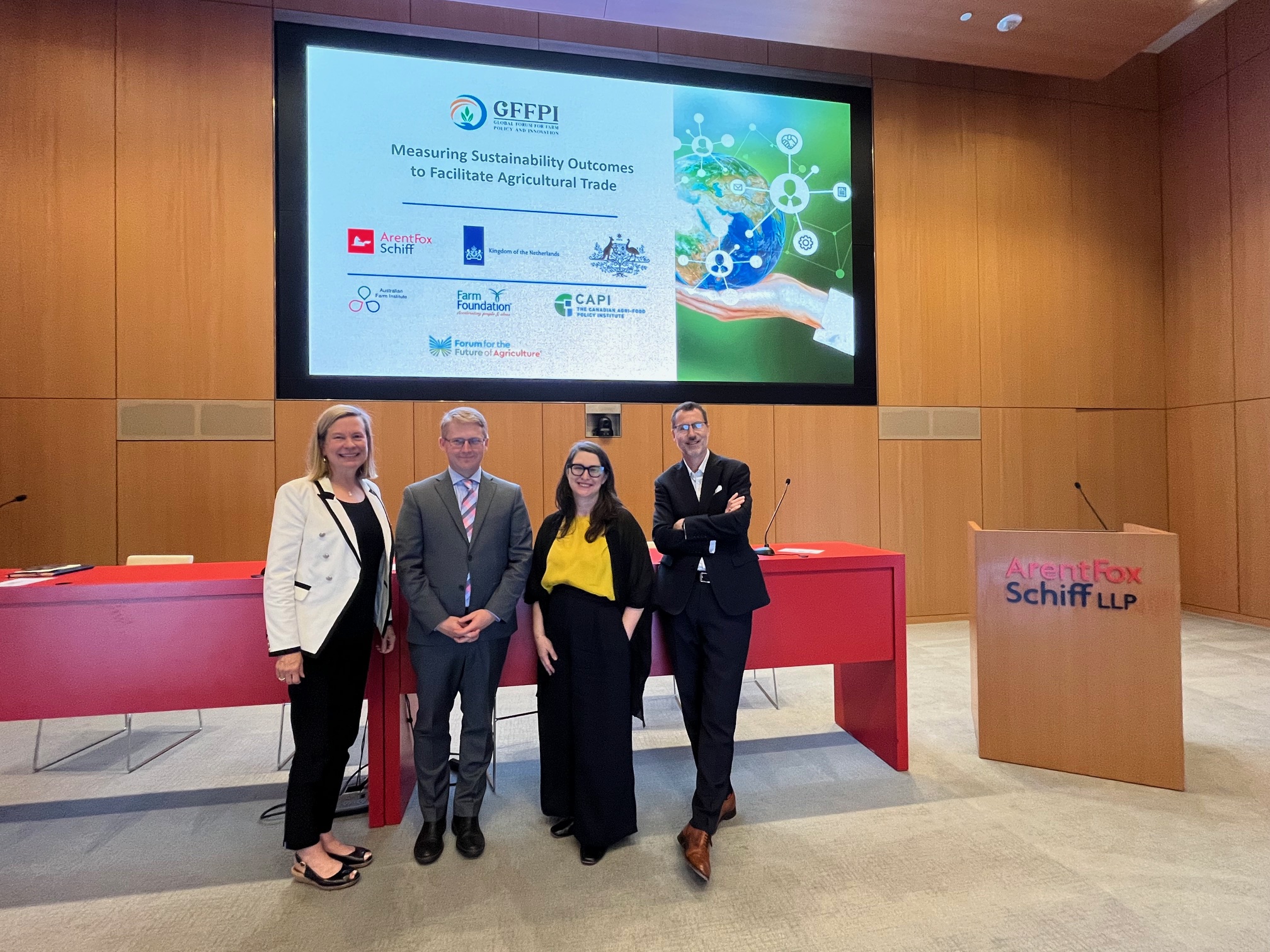
Leaders from the Global Forum for Farm and Policy Innovation (GFFPI) co-founder organizations at the second GFFPI workshop. From left: Shari Rogge-Fidler, president and CEO of Farm Foundation; Tyler McCann, executive director, Canadian Agri-Food Policy Institute; Katie McRobert, executive director, Australian Farm Institute; and Mark Titterington, co-founder and director, Forum for the Future of Agriculture. Photos provided by Emmanuelle Mikosz/Forum for the Future of Agriculture.
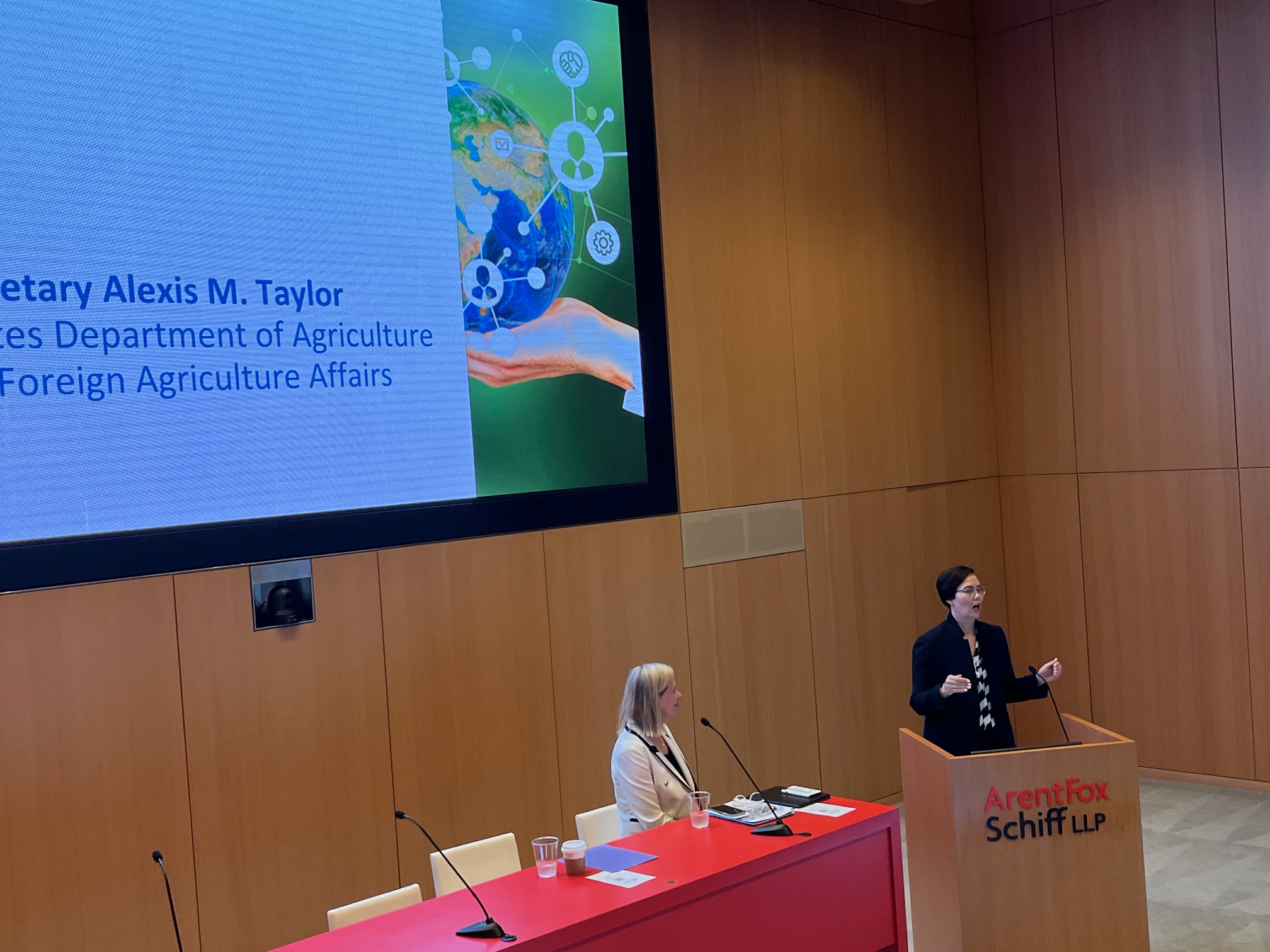
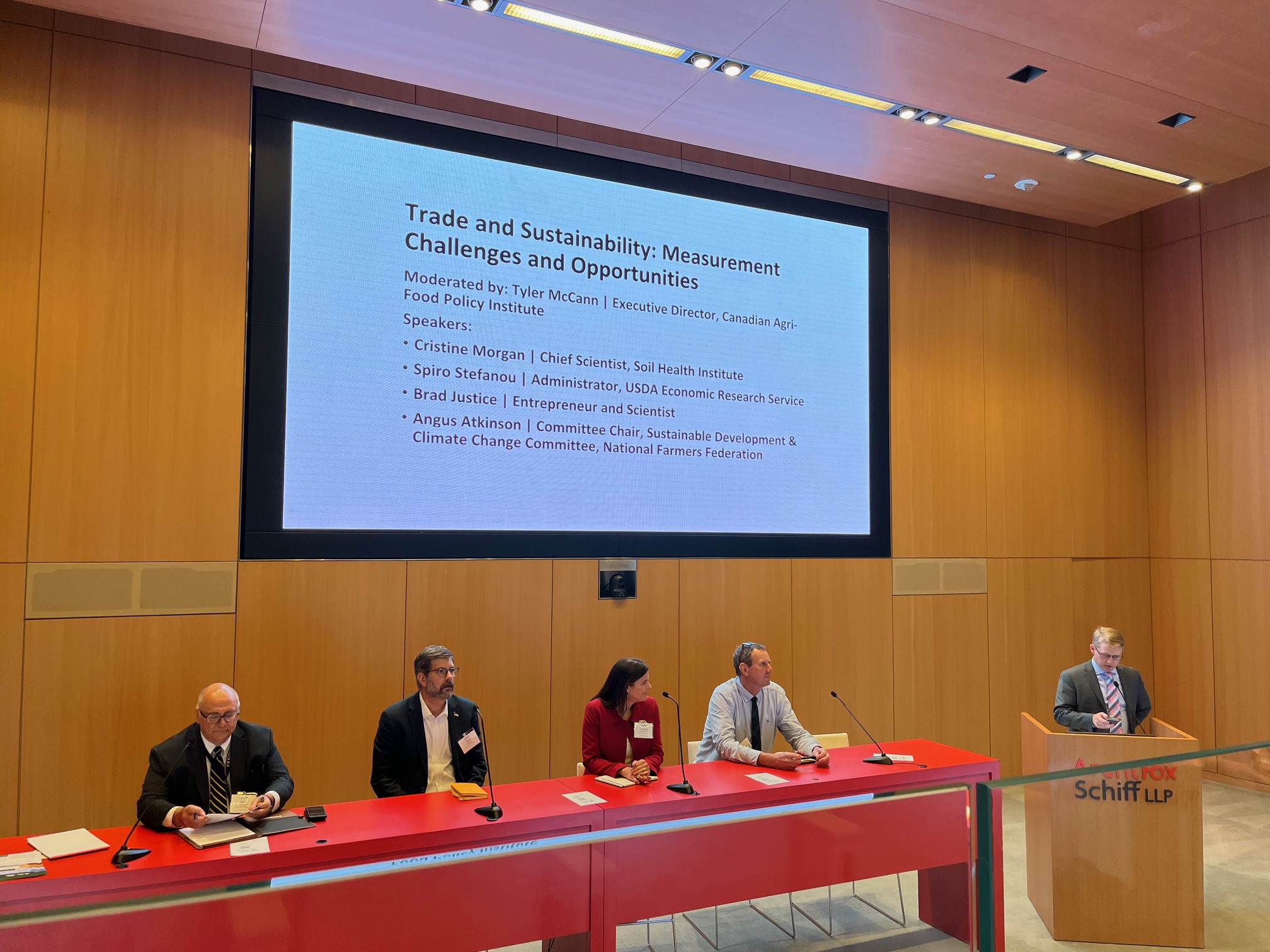
The nearly 70 participants representing 18 countries discussed the topics of an outcomes-based approach to trade and sustainability, and measuring challenges and opportunities in trade and sustainability. Farm Foundation President and CEO Shari Rogge-Fidler provided opening remarks and also facilitated small group discussions, along with Farm Foundation Vice President of Programs and Projects Martha King. U.S. Department of Agriculture Under Secretary for Trade and Foreign Agricultural Affairs Alexis Taylor spoke on the importance of trade and sustainability for global food and agriculture.
The first workshop, held in late 2023, brought together representatives from OECD countries and OECD Secretariat as well as industry experts from across Europe, North America, Japan, and Australia to discuss the role of trade and agriculture sustainability in an interactive and thought-provoking format. That workshop, held at the OECD in Paris, enabled stakeholders from around the world to identify common goals and priorities.
The Washington D.C. workshop was held in partnership with the Australian Farm Institute, Farm Foundation, the Canadian Agri-Food Policy Institute, and the Forum for the Future of Agriculture.
GFFPI events, including this one, support Farm Foundation’s mission of building trust and understanding about U.S. agriculture with global food and agricultural stakeholders. In addition, Farm Foundation offers a uniquely independent platform for these dialogues to advance and elevate trade and sustainability issues.
In the Perspectives guest blog series, Farm Foundation invites participants from among the varied Farm Foundation programs to share their unique viewpoint on a topic relevant to a Farm Foundation focus area. Michelle Klieger is a 2024 Farm Foundation Young Agri-Food Leader and president of Stratagerm Consulting. In this blog she discusses the European Union’s new deforestation regulations.
The European Union aims to raise the global bar with new Deforestation Regulations. Effective since June of 2023, the regulations ban imported goods that stand to profit off of deforestation practices. By devaluing and even penalizing these practices, the EU hopes to create a commodity trade standard that will reverse the effects of deforestation. They predict 177,920 acres of forests, or one quarter of Rhode Island, will be saved in 2025, and are optimistic that these steps will reduce air pollution.
Soy, palm oil, beef, coffee, and cocoa trades are expected to experience a significant impact due to these new requirements. Brazil, Argentina, Malaysia, Indonesia, Canada and parts of Africa are on edge as they consider trading options. Some argue this is the beginning of a new era, while others see it as a reorganization of supply chains.
Michelle Klieger is the president of Stratagerm Consulting, a food and agricultural consulting firm. An economist and a business strategist, she works with the global seed industry, ag tech companies, conventional and non-conventional agriculture firms, and philanthropic foundations.
Complexities of EU Regulations
For companies working to meet regulations, the process is complex. While individual companies must produce data to receive deforestation- free certification, entire supply chains must be vetted. Each industry faces unique obstacles. Soy, for example, goes from farm production, and is then transported to processing facilities, then moved onto crushers, then to product manufacturers, and finally to retailers. If at any point in the process operations have made use of deforested land, the trading company could be banned from exporting goods to EU countries. Palm oil batches typically mix fruit from many sources at once. Many of these companies can only trace a product after it has been processed and would need to develop brand new traceability methods to meet requirements.
Meeting the new regulations requires an investment in technology and manpower. In order to make products fully traceable many companies are purchasing GPS technology that allows them to accurately map and consistently monitor their farms. Similarly, if products must be tracked and segregated from planting all the way to a grocery store shelf, digital tracking technology will also be needed. Guaranteeing deforestation-free methods must include in person inspections done by real people traveling from farm to farm to see operations up close.
It’s a time consuming process to build out this framework, but one that many companies deem both valuable to the global environment and financially lucrative in the long run. Decisions involve farmers, transportation companies, processing plants and manufacturers, but they also must include government policy, technology and in some cases legal crossroads. There is no overnight shift, but rather a development of practices.
A Supply Chain Split
Already many companies are rerouting supplies to other buyers and avoiding EU regulations altogether. The trend prompts speculation that the new requirements will not raise the bar, but simply split or change the flow of supply chains. Brazil could turn to China as a new soy buyer and Indonesia could potentially trade palm oil to Africa. We’ve seen substitute shifts like these in the past with the U.S.-China trade war and sanctions on Russian energy. It may prove simpler and more cost effective to change buyers rather than invest in meeting new EU regulations. Many of these companies have little ability to enforce downline or upline adherence to regulation and they fear penalties.
Interestingly, in 2020 Brazil produced ⅓ of the world’s soy, but only 13% of crops account for 95% of the deforestation that occurred that year. The other 87% appear to have been produced on grassland and savannah areas. The scenario is true elsewhere and begs the question; will this create a new environmental imbalance that puts stress on other ecosystems? Companies looking to meet regulations could potentially exploit approved farming areas by over farming them.
Demand For a Different Type of Supply
Will it be harder to secure buyers or much used commodities? For the EU, value is placed not just on the product, but how it is sourced. The decision will impact both consumers and European agriculture.
European countries are braced to experience a decreased supply of things like chocolate and coffee. But, exactly how increased operating costs will be absorbed remains uncertain. Typically consumer prices reflect production cost increases, but in this situation one or more points along a supply chain may need to take ownership of costs to ensure tradability. The result, at least in the initial stages, would be lower profit margins for most of these companies and possibly higher purchase prices for consumers.
Several European countries are seeking reduced regulations and maintain that the current requirements are virtually impossible for small and medium sized farms to accommodate. They also argue that these regulations negatively impact many of the current sustainability processes farmers are working to implement for the sake of biodiversity, crop and grazing rotations. Farmers worry that they will not be able to produce the soy meal needed to feed their own livestock and that the EU will become too reliant on exports which would negatively affect the European ag sector.
Good News For U.S. Producers
The EU is not alone. Other countries have similar environmentally focused goals and policy in the works to support these goals. The United States has seen a growing consumer demand for traceability, prompting many businesses to begin the process of leveraging technology and better communication up and down supply chains to help customers make informed decisions.
The Forest Act of 2023 was birthed out of the same desire to stabilize regions of the world that have suffered from illegal deforestation and offer opportunities for many industries and individual businesses to clean up their processes. If it goes into effect, the Forest Act would be very similar to the EU’s Deforestation Regulation; banning products that have been produced on illegally deforested land and penalizing unmet requirements.
Many American operations are positioned to receive deforestation-free certification. Several top soy producers are predicted to meet regulations and be granted access to the EU markets. A welcome relief to farmers who have faced narrowing markets in recent years.
Exactly how competitive this “new” market will be, only time will tell. Traceability efforts take time. Unless trade lines were already working toward deforestation-free goals, it will take years for many of these supply chains to implement methods that meet EU regulations. In the meantime, it’s highly likely that global trade negotiations will be impacted and supply chains will shift in response to the environmental standard.

 Login
Login