
 Login
LoginAs energy-hungry data centers loom, Wisconsin ratepayers owe $1B on shuttered power plants

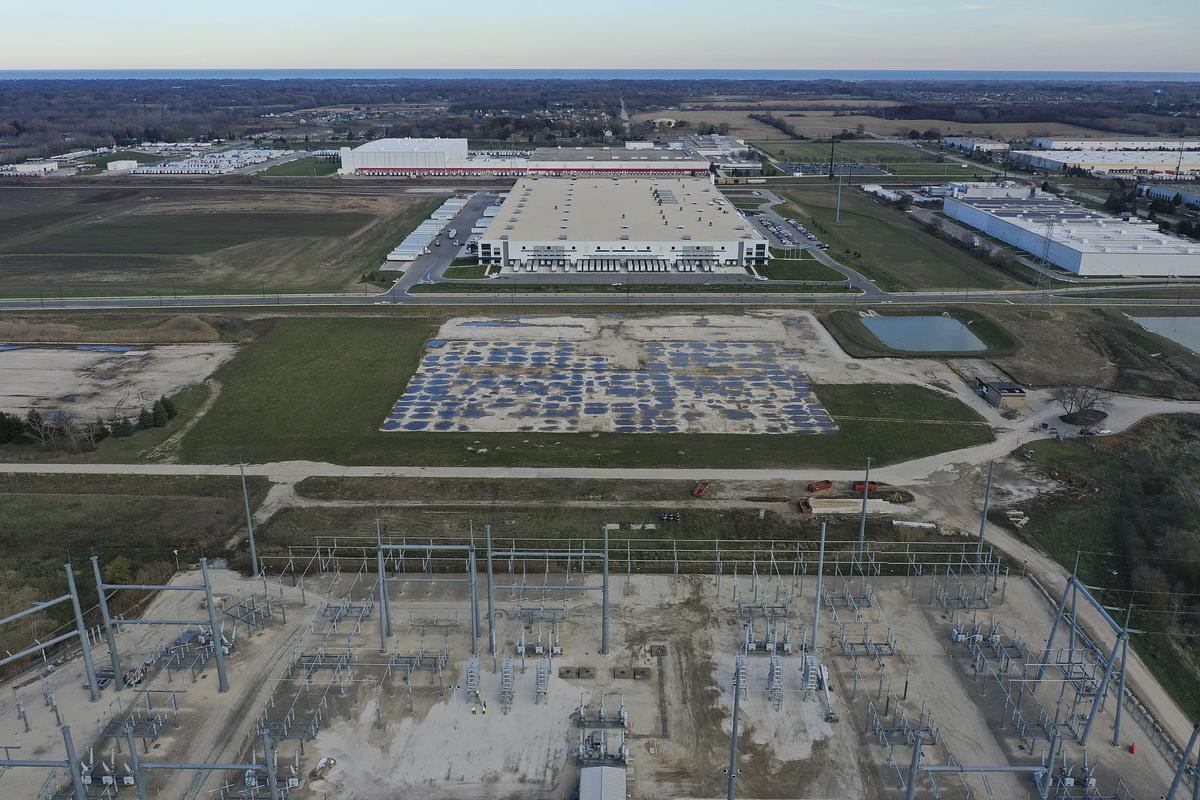
The former site of the We Energies Power Plant on Nov. 13, 2025, in Pleasant Prairie, Wis. (Photo by Joe Timmerman/Wisconsin Watch)
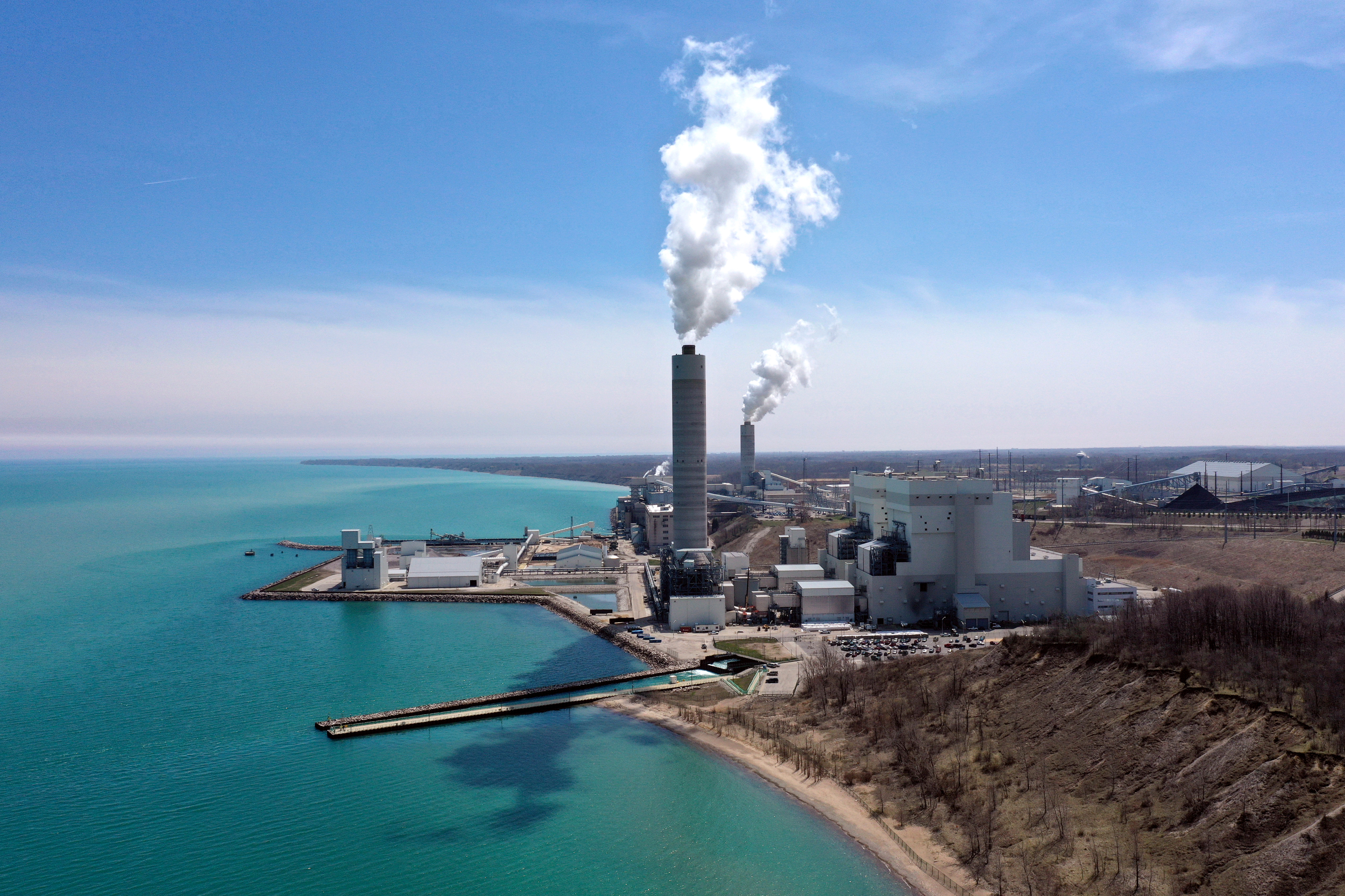
By some measures, the Pleasant Prairie Power Plant, once regarded locally as an “iconic industrial landmark,” had a good run.
Opened in 1980 near Lake Michigan in Kenosha County, it became Wisconsin’s largest generating plant, burning enough Wyoming coal, some 13,000 tons a day, to provide electricity for up to 1 million homes.
But over time, the plant became too expensive to operate. The owner, We Energies, shut it down after 38 years, in 2018.
We Energies customers, however, are still on the hook.
A portion of their monthly bills will continue to pay for Pleasant Prairie until 2039 — 21 years after the plant stopped producing electricity.
In fact, residential and business utility customers throughout Wisconsin owe nearly $1 billion on “stranded assets” — power plants like Pleasant Prairie that have been or will soon be shut down, a Wisconsin Watch investigation found.
That total will likely grow over the next five years with additional coal plants scheduled to cease operations.
Customers must pay not only for the debt taken on to build and upgrade the plants themselves, but also an essentially guaranteed rate of return for their utility company owners, long after the plants stop generating revenue themselves.
“We really have a hard time with utilities profiting off of dead power plants for decades,” said Todd Stuart, executive director of the Wisconsin Industrial Energy Group.
The $1 billion tab looms as Wisconsin utility companies aim to generate unprecedented amounts of electricity for at least seven major high-tech data centers that are proposed, approved or under construction. By one estimate, just two of the data centers, which are being built to support the growth of artificial intelligence, would use more electricity than all Wisconsin homes combined.
All of which raises an important question in Wisconsin, where electricity rates have exceeded the Midwest average for 20 years.
What happens to residents and other ratepayers if AI and data centers don’t pan out as planned, creating a new generation of stranded assets?
How much do Wisconsin ratepayers owe on stranded assets?
Of the five major investor-owned utilities operating in Wisconsin, two — We Energies and Wisconsin Public Service Corp. — have stranded assets on the books. Both companies are subsidiaries of Milwaukee-based WEC Energy Group.
As of December 2024, when the company released its most recent annual report, We Energies estimated a remaining value of more than $700 million across three power plants with recently retired units: Pleasant Prairie, Oak Creek and Presque Isle, a plant on Michigan’s Upper Peninsula.
Wisconsin Public Service Corp.’s December 2024 report listed roughly $30 million in remaining value on recently retired units at two power plants.
In total, utilities owned by WEC Energy Group will likely have over $1 billion in recently retired assets by the end of 2026.
The company also noted a remaining value of just under $250 million for its share of units at Columbia Generating Station slated to retire in 2029, alongside a remaining value of roughly $650 million for units at Oak Creek scheduled to retire next year.
Its customers will pay off that total, plus a rate of return, for years to come.
The company estimates that closing the Pleasant Prairie plant alone saved $2.5 billion, largely by avoiding future operating and maintenance costs and additional capital investments.
Both Wisconsin Power and Light and Madison Gas and Electric also own portions of the Columbia Energy Center, and Wisconsin Power and Light also operates a unit at the Edgewater Generating Station scheduled for retirement before the end of the decade. Neither company provided estimates of the values of those facilities at time of retirement. Andrew Stoddard, a spokesman for Alliant Energy, Wisconsin Power and Light’s parent company, argued against treating plants scheduled for retirement with value on the books as future stranded assets.
How stranded assets occurred: overcommitting to coal
In 1907, Wisconsin became one of the first states to regulate public utilities. The idea was that having competing companies installing separate gas or electric lines was inefficient, but giving companies regional monopolies would require regulation.
Utility companies get permission to build or expand power plants and to raise rates from the three-member state Public Service Commission. The commissioners, appointed by the governor, are charged with protecting ratepayers as well as utility company investors.

Stranded assets have occurred across the nation, partly because of the cost of complying with pollution control regulations. But another factor is that, while other utilities around the country moved to alternative sources of energy, Wisconsin utilities and, in turn, the PSC overbet on how long coal-fired plants would operate efficiently:
- In the years before We Energies pulled the plug on Pleasant Prairie, the plant had mostly gone dark in spring and fall. Not only had coal become more expensive than natural gas and renewables, but energy consumption stayed flat. By 2016, two years before Pleasant Prairie’s closure, natural gas eclipsed coal for electricity generation nationally.
- In 2011, We Energies invested nearly $1 billion into its coal-fired Oak Creek plant south of Milwaukee to keep it running for 30 more years. The plant, which began operating in 1965 and later became one of the largest in the country, is now scheduled to completely retire in 2026 — with $650 million on the books still owed. That will cost individual ratepayers nearly $30 per year for the next 17 years, according to RMI, a think tank specializing in clean energy policy. The majority of the debt tied to those units stems from “environmental controls we were required to install to meet federal and state rules,” WEC Energy Group spokesperson Brendan Conway said.
- In 2013, to settle pollution violations, Alliant Energy announced an investment of more than $800 million in the Columbia Energy Center plant in Portage, north of Madison. But by 2021, Alliant announced plans to begin closing the plant, though now it is expected to operate until at least 2029.
Various factors encourage construction and upgrades of power plants.
Building a plant can create upwards of 1,000 construction jobs, popular with politicians. Moreover, the Public Service Commission, being a quasi-judicial body, is governed by precedent. For example, if the PSC determined it was prudent to allow construction of a utility plant, that finding would argue in favor of approving a later expansion of that plant.
The PSC allowed utility companies “to overbuild the system,” said Tom Content, executive director of the Wisconsin Citizens Utility Board, a nonprofit advocate for utility customers. “I think the mistake was that we allowed so much investment, and continuing to double down on coal when it was becoming less economic.”
Utilities “profit off of everything they build or acquire,” Stuart said, “and so there is a strong motivation to put steel in the ground and perhaps to even overbuild.”
Conway, the WEC Energy Group spokesperson, argued that the utilities’ plans to retire plants amount to a net positive for customers.
“We began our power generation reshaping plan about a decade ago,” he wrote in an email. “That includes closing older, less-efficient power plants and building new renewable energy facilities and clean, efficient natural gas plants. This plan reduces emissions and is expected to provide customers significant savings — hundreds of millions of dollars — over the life of the plan.”
Guaranteed profits add to ratepayer burden
The built-in profits that utility companies enjoy, typically 9.8%, add to the stranded assets tab.
When the Public Service Commission approves construction of a new power plant, it allows the utility company to levy electricity rates high enough to recover its investment plus the specified rate of return — even after a plant becomes a stranded asset.
“We give them this license to have a monopoly, but the challenge is there’s no incentive for them to do the least-cost option,” Content said. “So, in terms of building new plants, there’s an incentive to build more … and there’s incentive to build too much.”
When the Pleasant Prairie plant was shut down in 2018, the PSC ruled that ratepayers would continue to pay We Energies to cover the cost of the plant itself, plus the nearly 10% profit. The plant’s remaining value, initially pegged at nearly $1 billion, remained at roughly $500 million as of December 2024.
Eliminating profits on closed plants would save ratepayers $300 million on debt payments due to be made into the early 2040s, according to Content’s group.
New ‘stranded assets’ threat: data centers
As artificial intelligence pervades society, it’s hard to fathom how much more electricity will have to be generated to power all of the data centers under construction or being proposed in Wisconsin.
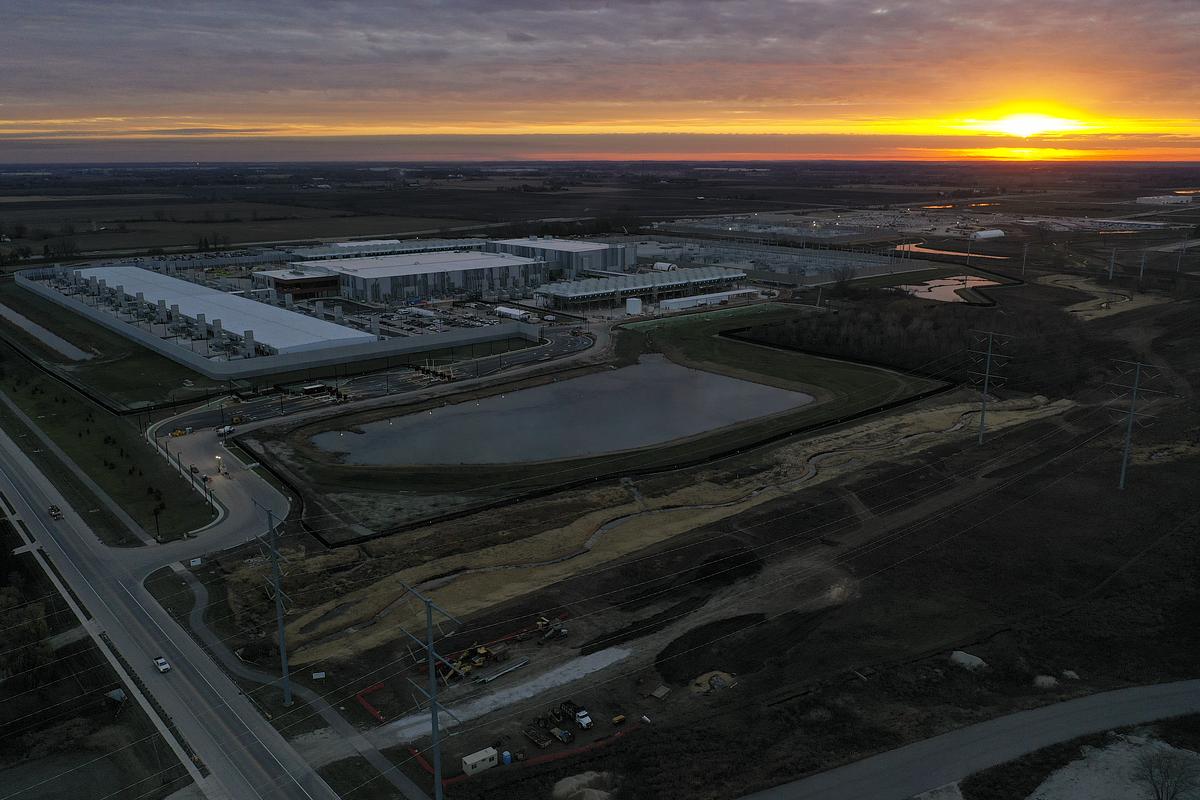
We Energies alone wants to add enough energy to power more than 2 million homes. That effort is largely to serve one Microsoft data center under construction in Mount Pleasant, between Milwaukee and Racine, and a data center approved north of Milwaukee in Port Washington to serve OpenAI and Oracle AI programs. Microsoft calls the Mount Pleasant facility “the world’s most powerful data center.”
Data centers are also proposed for Beaver Dam, Dane County, Janesville, Kenosha and Menomonie.
The energy demand raises the risk of more stranded assets, should the data centers turn out to be a bubble rather than boom.
“The great fear is, you build all these power plants and transmission lines and then one of these data centers only is there for a couple years, or isn’t as big as promised, and then everybody’s left holding the bag,” Stuart said.
In an October Marquette Law School poll, 55% of those surveyed said the costs of data centers outweigh the benefits. Environmental groups have called for a pause on all data center approvals. Democratic and Republican leaders are calling for data centers to pay their own way and not rely on utility ratepayers or taxpayers to pay for their electricity needs.
Opposition in one community led nearly 10,000 people to become members of the Stop the Menomonie Data Center group on Facebook. In Janesville, voters are trying to require referendums for data centers. In Port Washington, opposition to the data center there led to three arrests during a city council meeting.
Utilities are scheduled in early 2026 to request permission from the Public Service Commission to build new power plants or expand existing plants to accommodate data centers.
Some states, such as Minnesota, have adopted laws prohibiting the costs of stranded assets from data centers being passed onto ratepayers.
Wisconsin has no such laws.
Shifting cost burden to utility companies
Currently, ratepayers are on the hook for paying off the full debt of stranded assets — unless a financial tool called securitization reduces the burden on ratepayers.
Securitization is similar to refinancing a mortgage. With the state’s permission, utilities can convert a stranded asset — which isn’t typically a tradeable financial product — into a specialized bond.
Utility customers must still pay back the bond. But the interest rate on the bond is lower than the utility’s standard profit margin, meaning customers save money.
A 2024 National Association of Regulatory Utility Commissioners report noted that utilities’ shareholders may prefer a “status quo” scenario in which customers pay stranded asset debts and the standard rate of return. Persuading utilities to agree to securitization can require incentives from regulators or lawmakers, the report added.
In some states, utilities can securitize the remaining value of an entire power plant. Michigan utility Consumers Energy, for instance, securitized two coal generating units retired in 2023, saving its customers more than $120 million.
In Wisconsin, however, utilities can securitize only the cost of pollution control equipment on power plants — added to older coal plants during the Obama administration, when utilities opted to retrofit existing plants rather than switching to new power sources.
In 2023, two Republican state senators, Robert Cowles of Green Bay and Duey Stroebel of Saukville, introduced legislation to allow the Public Service Commission to order securitization and allow securitization to be used to refinance all debt on stranded assets. The bill attracted some Democratic cosponsors, but was opposed by the Wisconsin Utilities Association and did not get a hearing.
Democratic Gov. Tony Evers proposed additional securitization in his 2025-27 budget, but the Legislature’s Republican-controlled Joint Finance Committee later scrapped the provision.
Even Wisconsin’s narrow approach to securitization is optional, however, and most utilities have chosen not to use it.
We Energies was the first Wisconsin utility to do so, opting in 2020 to securitize the costs of pollution control equipment at the Pleasant Prairie plant. Wisconsin’s Public Service Commission approved the request, saving an estimated $40 million. “We will continue to explore that option in the future,” Conway said.
But the PSC expressed “disappointment” in 2024 when We Energies “was not willing to pursue securitization” to save customers $117.5 million on its soon-to-retire Oak Creek coal plant. The utility noted state law doesn’t require securitization.
Stuart said that if utilities won’t agree to more securitization, they should accept a lower profit rate once an asset becomes stranded.
“It would be nice to ease that burden,” he said. “Just to say, hey, consumers got to suck it up and deal with it, that doesn’t sound right. The issue of stranded assets, like cost overruns, is certainly ripe for investigation.”
Comprehensive planning required elsewhere — but not Wisconsin
Avoiding future stranded assets could require a level of planning impossible under Wisconsin’s current regulatory structure.
When the state’s utilities propose new power plants, PSC rules require the commission to consider each new plant alone, rather than in the context of other proposed new plants and the state’s future energy needs. Operating without what is known as an integrated resource plan, or IRP, opened the PSC to overbuilding and creating more stranded assets. IRPs are touted as an orderly way to plan for future energy needs.
“There’s no real comprehensive look in Wisconsin,” Stuart said. “We’re one of the few regulated states that really doesn’t have a comprehensive plan for our utilities.
”We’ve been doing some of these projects kind of piecemeal, without looking at the bigger picture.”

Structured planning tools like IRPs date back to the 1980s, when concerns about cost overruns, fuel price volatility and overbuilding prompted regulators to step in. Minnesota and Michigan require utilities to file IRPs, as do a majority of states nationwide.
Evers proposed IRPs in his 2025-27 state budget, but Republican lawmakers removed that provision because it was a nonfiscal policy issue.
Northern States Power Company, which operates in Wisconsin and four other Midwestern states, is required by both Michigan and Minnesota to develop IRPs. “Because of these rules, we create a multi-state IRP every few years,” said Chris Ouellette, a spokesperson for Xcel Energy, the utility’s parent company.
Madison Gas and Electric, which only operates in Wisconsin, argued that its current planning process is superior to the IRP requirements in neighboring states. “A formal IRP mandate would add process without improving outcomes,” spokesperson Steve Schultz said. “Wisconsin’s current framework allows us to move quickly, maintain industry-leading reliability and protect customer costs during a period of rapid change.”
How to influence decisions relating to stranded assets
The devil will be in the details on whether the Public Service Commission adopts strong policies to prevent the expected wave of new power plant capacity from becoming stranded assets, consumer advocates say.
The current members, all appointed by Evers, are: chairperson Summer Strand, Kristy Nieto and Marcus Hawkins.
The public can comment on pending cases before the PSC via its website, by mail or at a public hearing. The commission posts notices of its public hearings, which can be streamed via YouTube.

Among the upcoming hearings on requests by utilities to generate more electricity for data centers:
Feb. 12: We Energies’ request to service data centers in Mount Pleasant and Port Washington. We Energies says the fees it proposes, known as tariffs, will prevent costs from being shifted from the data centers to other customers. The “party” hearing is not for public comment, but for interaction between PSC staff and parties in the case, such as We Energies and public interest groups.
Feb. 26: Another party hearing for a case in which Alliant Energy also said its proposed tariffs won’t benefit the data center in Beaver Dam at the expense of other customers.
To keep abreast of case developments, the PSC offers email notifications for document filings and meetings of the commission.
The PSC would not provide an official to be interviewed for this article. It issued a statement noting that utilities can opt to do securitization to ease the financial burden on ratepayers, adding:
“Beyond that, the commission has a limited set of tools provided under state law to protect customers from costs that arise from early power plant retirements. It would be up to the state Legislature to make changes to state law that would provide the commission with additional tools.”
On Nov. 6, state Sen. Jodi Habush Sinykin, D-Whitefish Bay, and Rep. Angela Stroud, D-Ashland, announced wide-ranging data center legislation. One provision of their proposal aims to ensure that data centers don’t push electricity costs onto other ratepayers.
But there is no provision on stranded assets.
This article first appeared on Wisconsin Watch and is republished here under a Creative Commons Attribution-NoDerivatives 4.0 International License. To republish, go to the original and consult the Wisconsin Watch republishing guidelines.


