Reading view

There are new articles available, click to refresh the page.

Uber And Lucid Robotaxi Arrives Later This Year
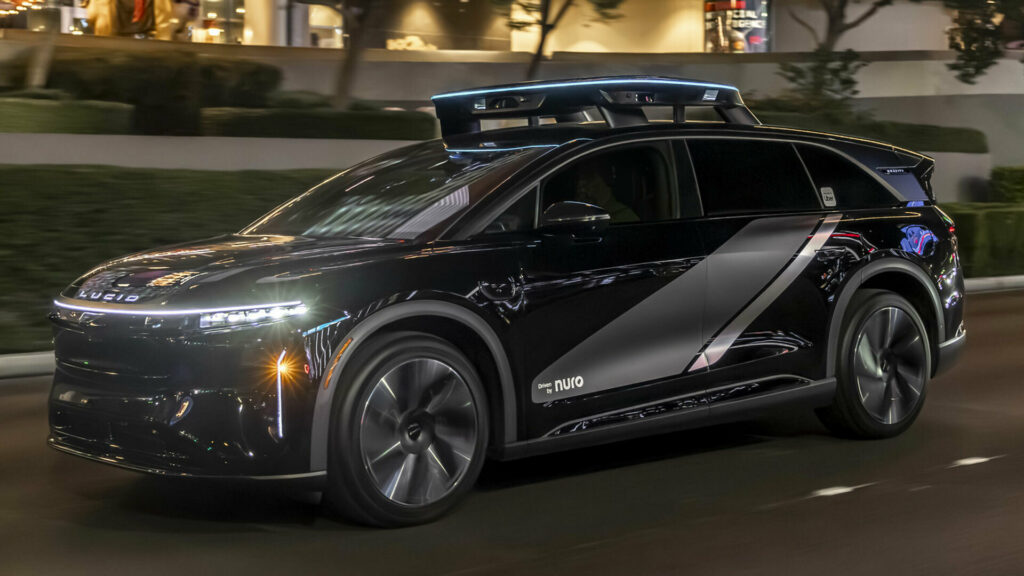
  • Lucid, Nuro, and Uber have shown a production-intent robotaxi at CES.
  • It’s based on the Lucid Gravity and is scheduled to launch later this year.
  • Operations will kick off in the San Francisco Bay Area, before going global.

Lucid, Nuro, and Uber have used CES to unveil their production-intent robotaxi as well as the model’s in-cabin rider experience. The companies also announced on-road testing began in December, ahead of a scheduled launch in the San Francisco Bay Area later this year.

Based on the Gravity SUV, the Level 4 robotaxi features a next-generation sensor array that consists of high-resolution cameras, solid-state lidar sensors, and radar sensors. These provide a 360° view of the vehicle’s surroundings and the equipment is integrated into the Gravity’s body as well as a roof-mounted halo.

More: Uber And Lucid Partner For Thousands Of Robotaxis

Information is fed to the Nuro Driver, which is a Level 4 autonomous driving system. It’s supported by Nvidia’s Drive AGX Thor, which allows for “high-performance” computing and real-time AI processing.

Uber’s role is to own and operate the robotaxis – along with third-party fleet partners – and allow for rides using the company’s popular ride-hailing platform.

An Intuitive User Experience

While the companies are still being coy on specifics, they revealed a handful of details about the user experience. This begins as soon as the robotaxi approaches as the ‘halo’ has multiple displays that show the rider’s initials, ensuring people get into the right vehicle.

Riders are envisioned to hop in the second-row, where they’ll be greeted by a screen that says their name and where they’re going. There’s also a digital button that enables them to open the liftgate and store luggage in the back.
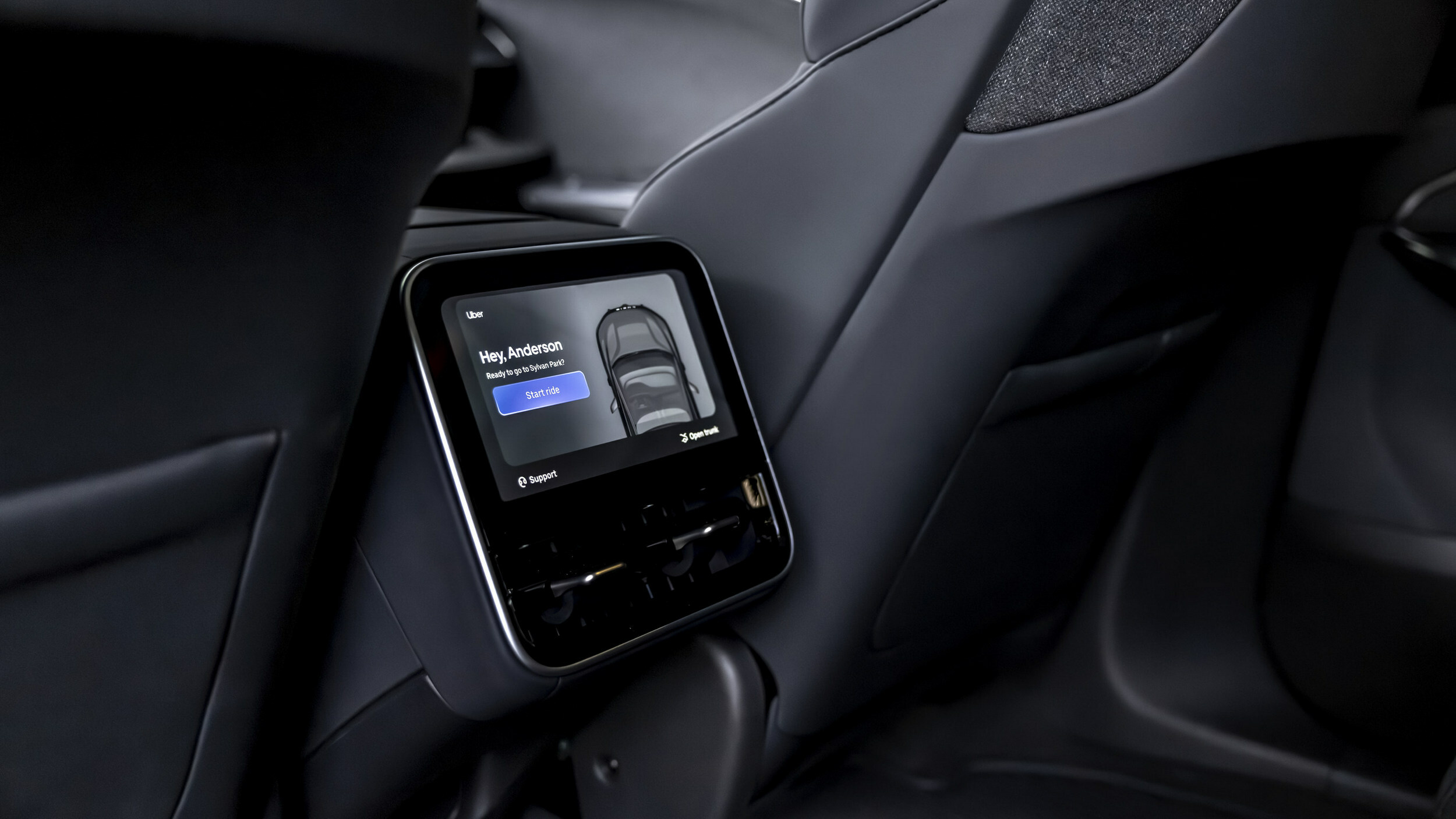
 Uber And Lucid Robotaxi Arrives Later This Year

Once riders are ready to go, they can tap “Start Drive.” The screen will then display their estimated drop off time and animations showing what the vehicle is doing. This includes “maneuvers such as yielding to pedestrians, slowing at traffic lights, changing lanes, and dropping off a passenger.”

Riders will be able to access a handful of vehicle controls including settings for the climate control system, heated seats, and audio system. They can also contact support and tell the vehicle to pull over to the side of the road. Users can also view a traditional Uber-style map, which isn’t much of a surprise considering the ride-hailing giant developed the experience.
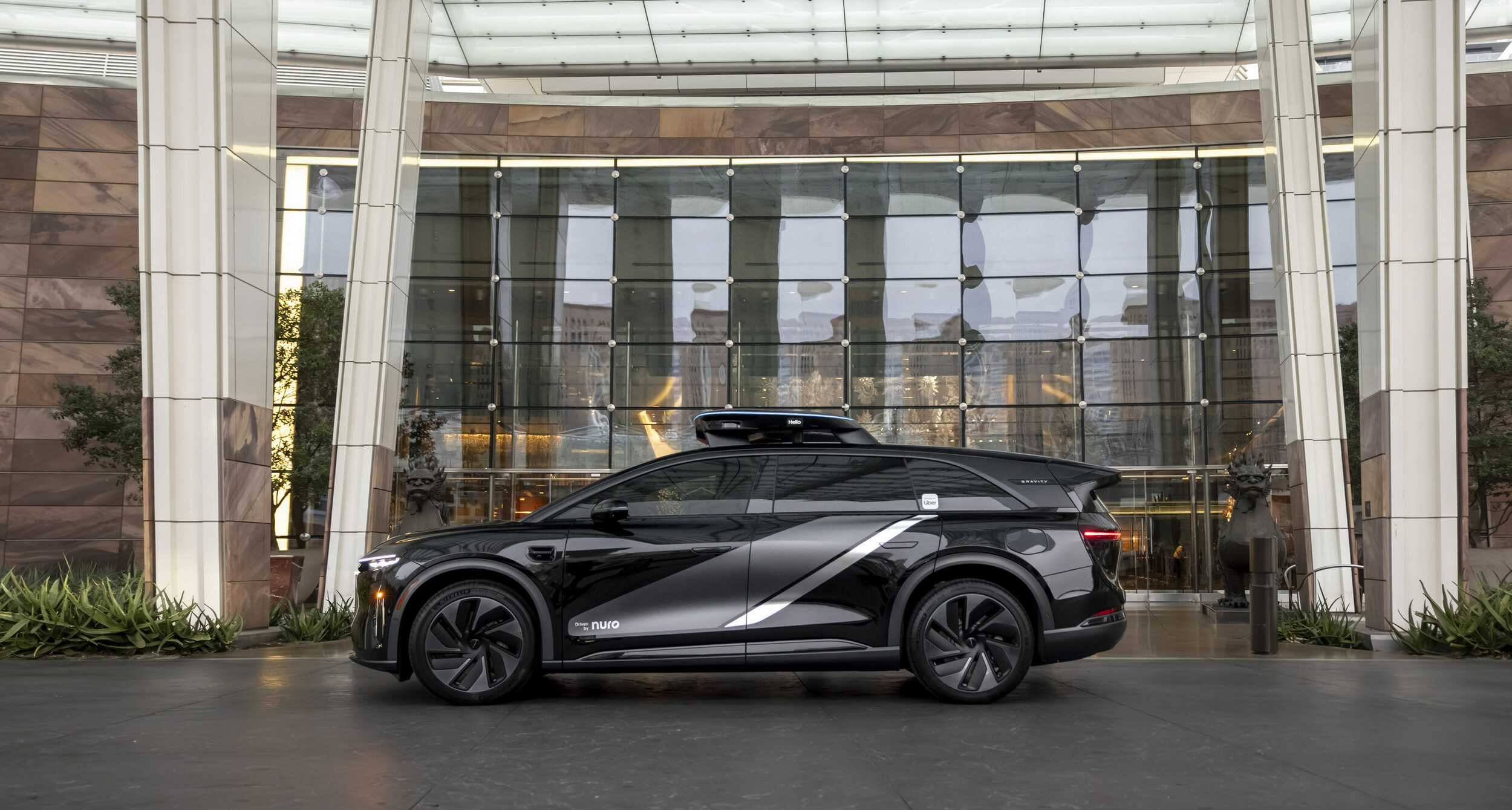
 Uber And Lucid Robotaxi Arrives Later This Year

While a number of riders will likely be traveling solo, the companies said the robotaxi is also great for groups. It can accommodate up to six passengers and their luggage at a time.

We’ll likely learn more about the robotaxi in the coming months, but Lucid is expected to begin production later this year in Arizona. The vehicles will then be deployed in the Bay Area.

If everything goes according to plan, Uber will deploy at least 20,000 Lucid robotaxis over six years in dozens of markets around the world.

\\\\

People Get Paid $24 Just To Walk Up And Shut A Robotaxi Door

  • Some robotaxis stall when doors are left slightly open by riders.
  • Workers say the job is often inefficient and barely profitable.
  • New robotaxi models may fix this with automated sliding doors.

Getting paid to shut a car door might sound like the setup for a joke, but in parts of Los Angeles, it’s become a legitimate line of work. As autonomous vehicles increasingly take to the streets, a small but growing number of local towing companies have found themselves serving as on-call assistants to robotaxis with limited physical capabilities.

Read: What Happened When Robotaxis Met A Citywide Blackout Is A Little Scary

For as much as $24 a pop, these companies are paid to close car doors left ajar by distracted passengers exiting Waymo’s self-driving vehicles. If the situation is more complicated, such as a car stranded mid-route, they can earn between $60 and $80 for helping get the vehicle moving again.

What Happens When Tech Forgets the Basics

 People Get Paid $24 Just To Walk Up And Shut A Robotaxi Door

A recent report highlights how tow truck drivers are now using an app called Honk, which contracts with Waymo’s autonomous EV fleet in the Los Angeles area.

If a rider exits without properly closing the door, the car won’t budge. It simply waits, parked awkwardly in the street, until someone shows up to finish the job. That someone often arrives thanks to a notification from Honk.

According to Cesar Marenco, owner of Milagro Towing in Inglewood, California, who spoke with The Washington Post, he handles around three jobs per week for Waymo through the Honk app, usually to shut a door or tow a vehicle that’s run out of charge.

It’s not exactly a money-maker. JKK Towing owner Evangelica Cuevas says that the Honk app doesn’t always provide them with the precise location of a vehicle, meaning they may have to walk around for up to an hour just to locate it.

When factoring in the fuel costs, receiving between $22 and $24 to close a door, or up to $80 to tow a vehicle, doesn’t always make it profitable.

The Cost of Chasing Robotaxis

 People Get Paid $24 Just To Walk Up And Shut A Robotaxi Door

Earlier this month, several of Waymo’s robotaxis stopped after a power outage at traffic lights throughout San Francisco. Several tow companies were alerted to the disruption. Not everyone believes the rates offered by Waymo are fair.

Jesus Ajuiñiga, manager of Alpha Towing and Recovery in San Francisco, told The Washington Post that he’s turned down Waymo calls. The rates, he says, don’t come close to the $250 he normally charges to tow an all-wheel-drive vehicle. And for some, that’s just too steep a compromise.

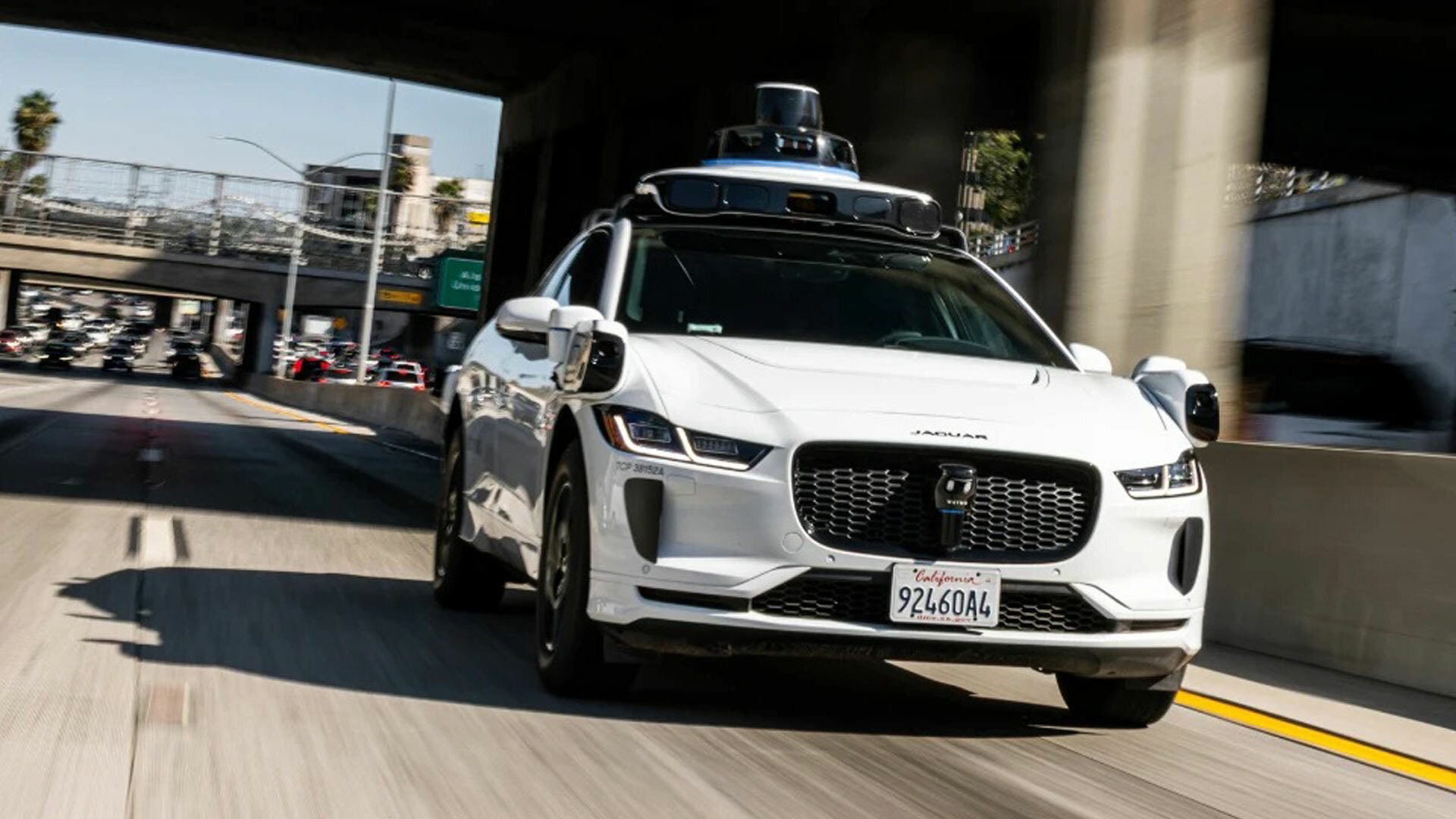
Things could start to change. Whereas the Jaguar I-Pace models primarily used by Waymo need their doors to be manually shut, the new robotaxis built by China’s Zeekr that Waymo is currently testing, have sliding doors like a minivan, meaning they can be opened and closed automatically.

 People Get Paid $24 Just To Walk Up And Shut A Robotaxi Door
Waymo’s latest robotaxi, built by Zeekr

Three Waymos Were Smart Enough To Arrive But Too Dumb To Figure Out How To Leave

  • Three Waymo I-Paces froze in a San Francisco dead-end standoff.
  • Two autonomous Jags made contact as a third robotaxi waited.
  • A human Waymo employee arrived to manually clear the scene.

Self-driving cars are supposed to eliminate traffic jams, human error, and awkward you-turn-or-mine eye contact at four-way stops. But last weekend, three Waymo robotaxis in San Francisco proved that even artificial intelligence can panic when faced with a bad decision and no escape route.

The scene unfolded on a hilly residential street in North Beach, where a TikTok video captured what can only be described as a low-speed robot showdown. Two Waymo Jaguar I-Pace SUVs ended up nose-to-side at an intersection that also happened to be a dead end.

A third Waymo arrived moments later, assessed the situation like a confused NPC, and came to a complete stop, effectively sealing the street shut.

Related: Waymo Robotaxi Rolls Through LAPD Crime Scene As Suspect Is Held At Gunpoint

Bystanders watched from the sidewalks as the cars sat motionless, their sensors apparently locked in an eternal debate about who should move first.

One resident trying to leave the area summed it up best by asking whether the cars were “just going to stay there forever.” For a few long minutes, that seemed like a real possibility.

Autonomous paralysis

According to an ABC7News report, the two robotaxis may have lightly contacted each other while one attempted a turn on the tight street. The third vehicle, doing what it was programmed to do, detected an obstruction and politely waited.

Unfortunately, polite waiting does not help much when everyone involved is a robot and no one will make a move.

Eventually, a Waymo employee arrived to manually intervene and restore order, proving once again that the most reliable fail-safe in autonomous driving is still a human with the ability to hook reverse and take a look over his shoulder.

Waymo expansion

To be fair to Waymo, the company remains the poster child for functional robotaxis. Its vehicles log millions of miles in San Francisco, Los Angeles, and Phoenix, mostly without fault, and are now venturing onto freeways. The company recently launched in Miami and plans to add services in Dallas, Houston, San Antonia, and Orlando.

Those cities can expect to experience their own Waymo glitches in time because moments like this are a reminder that self-driving cars excel at following rules, but struggle with edge cases that humans solve instinctively.

Lead image chii_rinna

❌