Reading view

There are new articles available, click to refresh the page.

Farley Just Realized $55K EV Trucks Don’t Sell, After Ford Made Sure That’s All It Sold
  • Ford will take a $19.5B charge tied to its EV shift in 2026.
  • F-150 Lightning sales dropped as prices climbed past $50,000.
  • CEO says high-end EVs aren’t selling at expected volume levels.

Rewind a few years and Ford, like most of its rivals, charged full speed into the electric future. The goal was clear: catch up to Tesla and help turn the U.S. into a thriving hub for EV innovation. Fast forward to today, and the future looks very different.

Read: Jim Farley Warns Europe It’s Selling Its Future To Chinese Carmakers

Much of Ford’s early EV effort hinged on the F-150 Lightning. Promoted by some as a cornerstone of the brand’s future, and initially the most affordable electric pickup in the States, the Lightning carried a lot of weight on its metaphorical bed.

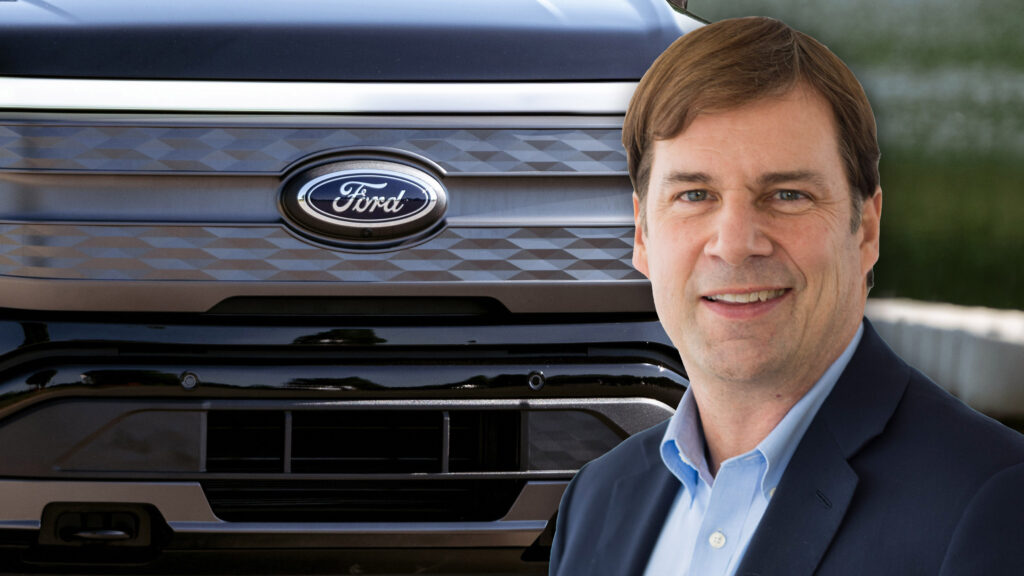
But just three years after it launched, Ford has pulled the plug. CEO Jim Farley recently confirmed that part of the reason comes down to simple economics: buyers aren’t lining up for EVs priced north of $50,000.

Are Expensive EVs the Problem?

During an interview with CNBC, Farley addressed Ford’s announcement that it will take a $19.5 billion charge in 2026, tied to its decision to pivot away from EVs and refocus on internal combustion models. According to him, the company’s electric lineup simply wasn’t aligned with what buyers actually want.

“More importantly, the very high-end EVs, the $50,000, $60,000, $70,000, and $80,000 vehicles, they just weren’t selling,” Farley said.

Back in 2021, when the F-150 Lightning was first revealed, the base price came in at a relatively digestible $39,974. But that didn’t last for long, as the Blue Oval made a series of price hikes. By 2025, the base model had swollen to $54,780, an increase of nearly 37 percent, pushing it out of reach for many of the truck buyers it was originally meant to appeal to.

\\\\\\\\\

Hybrids In Focus

While Ford is now shifting its focus away from EVs, that doesn’t mean it’s done with electric motors and battery packs. During the same interview, Farley said that the company is committed to “following customers to where the market is, not where people thought it was going to be, but to where it is today.”

As such, Ford will start to prioritize hybrid and extended-range EV models. There will be a “whole lineup” of new hybrid models, including a hybrid Bronco. Farley also pointed out that Ford has quietly secured the number three spot in U.S. hybrid sales, and dominates the hybrid truck space with an estimated 80 percent market share.

Farley added that the company expects its electric Model E division to reach profitability in 2029, three years later than initially expected. By 2030, he still expects half of Ford’s global sales to be electrified vehicles. But most of those, he clarified, will be hybrids and extended-range electrics, not pure battery EVs.
Ford Just Proved Ram Had The Better Idea With The Next Lightning

  • Ford has killed off the fully electric F-150 Lightning.
  • The model will return as a range-extended electric truck.
  • It promises over 700 miles of range using a gas generator.

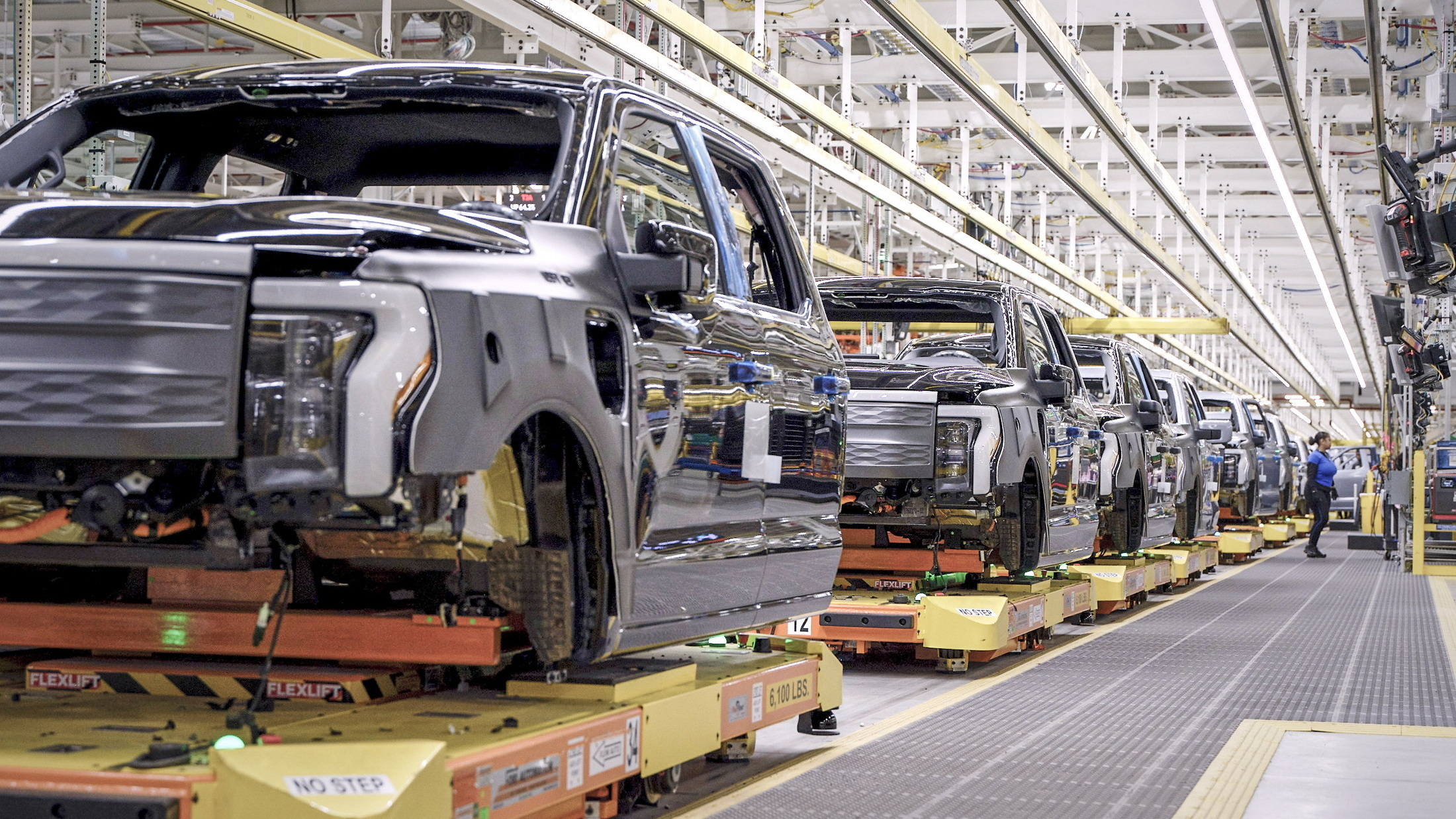
Ford had high hopes for the F-150 Lightning, but demand didn’t live up to expectations. As a result, production was indefinitely halted earlier this year so employees could focus on building more profitable and popular pickups at the Dearborn Truck Plant.

This left the fate of the F-150 Lightning up in the air and now we know it’s already dead. In a rather matter of fact way, Ford announced “production of the current F-150 Lightning ends this year.” They then clarified production has already “concluded.”

More: Ford’s CEO Talks Tariffs And New Range-Extended Vehicles

However, this isn’t the end of the story. Quite the opposite as Ford announced a second-generation F-150 Lightning, which will be an extended-range electric vehicle. In effect, Ford is admitting going fully electric was a mistake and they’re now following in the footsteps of the Ram 1500 REV, which used to be known as the Ramcharger.

The Blue Oval hasn’t disclosed much about the new model, but the headline figure is hard to miss: more than 700 miles (1,127 km) of total range. To put that number into perspective, the current F-150 Lightning maxed out at 320 miles (515 km).

\\\\\\\\\\\\\\

Ford went on to say the model will deliver the “pure EV driving experience” that customers love, while eliminating the need to stop and charge during long-distance trips. This will be made possible by an engine, which acts as a generator to recharge the truck’s battery pack.

The new model will presumably have a smaller and cheaper battery, but Ford confirmed the next Lightning will continue to offer “exportable electricity that can power everything from work sites to camp sites to homes during a power outage.” They added the new model “reinforces the F-Series legacy of innovation, giving owners the electric benefits they want with the reliability they need.”

 Ford Just Proved Ram Had The Better Idea With The Next Lightning

In a statement, Ford’s Doug Field said “Our next-generation F-150 Lightning EREV will be every bit as revolutionary [as the original]. It delivers everything Lightning customers love – near instantaneous torque and pure electric driving. But with a high-power generator enabling an estimated range of 700+ miles, it tows like a locomotive. Heavy-duty towing and cross-country travel will be as effortless as the daily commute.”

The second-generation F-150 Lightning will be assembled at the idled Rouge Electric Vehicle Center in Dearborn. There’s no word on when it will arrive, but it could be a ways off.

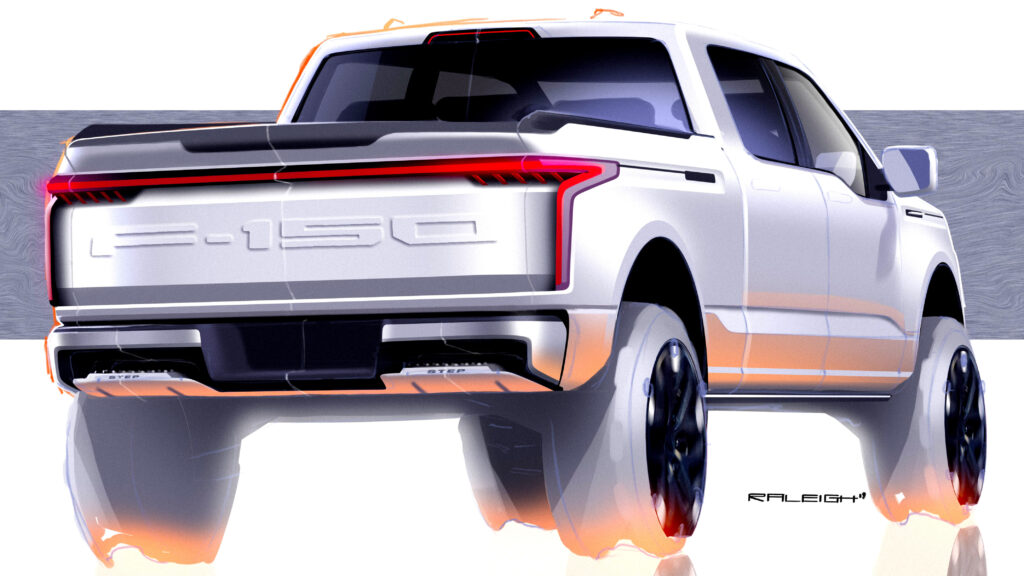
Note: Sketch of the current F-150 Lightning pictured in the opening image.

 Ford Just Proved Ram Had The Better Idea With The Next Lightning

These Dealers Say Ford Paid $600 For EV Repairs Worth Nearly 40 Times

  • Dealers say Ford only paid $600 per EV battery replacement.
  • They claim the real cost should be $22,600 per battery.
  • More lawsuits are reportedly being prepared in other states.

As more legacy automakers navigate the shift to electric vehicles, the complexity of servicing and supporting them is beginning to reveal fault lines, especially when it comes to who pays for what.

Ford is now facing allegations that it underpaid two New York dealerships for comprehensive EV battery replacements, according to a lawsuit filed in US District Court.

Read: Ford Accused Of Advertising A Missing Feature On New Trucks

And the trouble may not stop there, as attorneys say similar legal actions are in motion and could eventually be consolidated into a class action, raising the stakes for the company.

Jericho Turnpike Auto Sales and Patchogue 112 Motors allege that Ford has sidestepped state warranty reimbursement laws by issuing low flat-rate payments for full battery pack replacements, rather than covering the actual costs of the repairs.

The dealer says it has completed 15 EV battery replacements on Ford models since early 2024. Of those, Ford allegedly reimbursed the dealer just $600 per battery for 13 jobs that should have cost $22,600 each, leaving a gap of $286,200. In the remaining two cases, the dealer received $13,000 per battery. Even so, the lawsuit claims Ford still failed to pay the full amount.

Patchogue 112 Motors reports a similar pattern, stating it was paid only $600 per battery instead of the expected $22,600.

What Are Ford’s Responsibilities?

 These Dealers Say Ford Paid $600 For EV Repairs Worth Nearly 40 Times

At the heart of the lawsuit is the question of how franchised dealerships are compensated for warranty and service contract repairs.

The filling alleges that Ford ignored legal requirements despite a state statute requiring manufacturers to reasonably cover repairs and manufacturer service contracts not “less than the price and rate charged by the franchised motor vehicle dealer for like services to non-warranty and/or non-service contract customers.”

That includes the cost of parts plus a 40 percent markup. Dealers are also allowed, under the law, to apply their typical non-warranty retail markup on labor, which can range from 70 to 200 percent depending on the service. The lawsuit claims Ford has not followed these provisions.

Leonard Bellavia, one of the attorneys representing the dealerships, told Auto News that Ford isn’t alone. His firm is pursuing similar claims against other automakers in multiple states, all centered on what he describes as a pattern of failing to meet warranty payment obligations

\\\\\\\

Ford Accused Of Advertising A Missing Feature On New Trucks

  • Ford is being sued over missing safety tech in 2024 F-150 Lightnings.
  • Plaintiffs claim Ford misrepresented features listed on window stickers.
  • Company offered $100 refunds, but owners say that barely covers losses.

Ford’s electric pickup has long been seen as a bellwether for mainstream EV demand, but the latest news surrounding it has little to do with torque or battery range. Instead, the company now faces scrutiny of an entirely different kind inside a courtroom.

Read: F-150 Lightning Production Halted Indefinitely As Ford Bets On Gas Trucks Again

Ford is being sued in the United States over claims that certain 2024 F-150 Lightning models advertised with a Forward Sensing System were delivered without it. The lawsuit alleges that customers have “incurred damages” due to the missing safety feature and that the company’s efforts to make amends have fallen short.

Missing Sensors or Missing Disclosure?

The class action, filed in the US District Court for the Eastern District of California, argues that the window stickers on 2024MY F-150 Lightning models clearly state the vehicles are equipped with the Forward Sensing System, which includes several parking sensors on the front bumper.

Ford reportedly notified U.S. dealerships on March 31 that every 2024 F-150 Lightning advertised with the system was actually built without it. The company subsequently began contacting customers, offering a $100 refund to address what it described as a window-sticker error.

 Ford Accused Of Advertising A Missing Feature On New Trucks

What the Plaintiff Claims

The plaintiff named in this new lawsuit, Ibrahim Lunawadawala, contends that the refund offer is negligible, pointing out that installing equivalent aftermarket sensors would cost substantially more. The filing states that Ford “has been unwilling to provide adequate compensation to aggrieved consumers.”

“Plaintiff Lunawadawala has suffered an ascertainable loss because of Ford’s misrepresentations, including but not limited to, diminished value of his vehicle and other consequential damages,” the lawsuit continues, as cited by Carcomplaints.

Production Pause and Broader Troubles

This legal development arrives just weeks after Ford confirmed it had indefinitely paused production of the all-electric F-150 Lightning, redirecting resources toward gas and hybrid models instead.

The decision was made not just to address falling sales of the model, but also because of a huge fire at a Novelis aluminum plant in Canada that supplies Ford with the aluminum it needs for all F-150 models.  

\\\\\\\\

Sources: Law, CarComplaints

The F-150 Lightning Found a Way to Work From Home Before Ford Did

  • The Lightning can feed electricity back to the grid, earning cash.
  • Ford says owners can save $42 monthly, or nearly $500 each year.
  • Production of the electric pickup truck remains paused indefinitely.

Owning a Ford F-150 Lightning means saying goodbye to gas stations forever. That’s the promise, at least, though it comes with the unspoken reality of long waits while electrons trickle into the battery. On the bright side, your truck can double as a backup power source for your home, and if Ford’s to be believed, even earn a few bucks while it sits in the driveway.

Read: F-150 Lightning Production Halted Indefinitely As Ford Bets On Gas Trucks Again

The company is eager to promote its usefulness, recently dedicating an entire piece describing how owners can turn their EV into a “side hustle”.

How Does It Work?

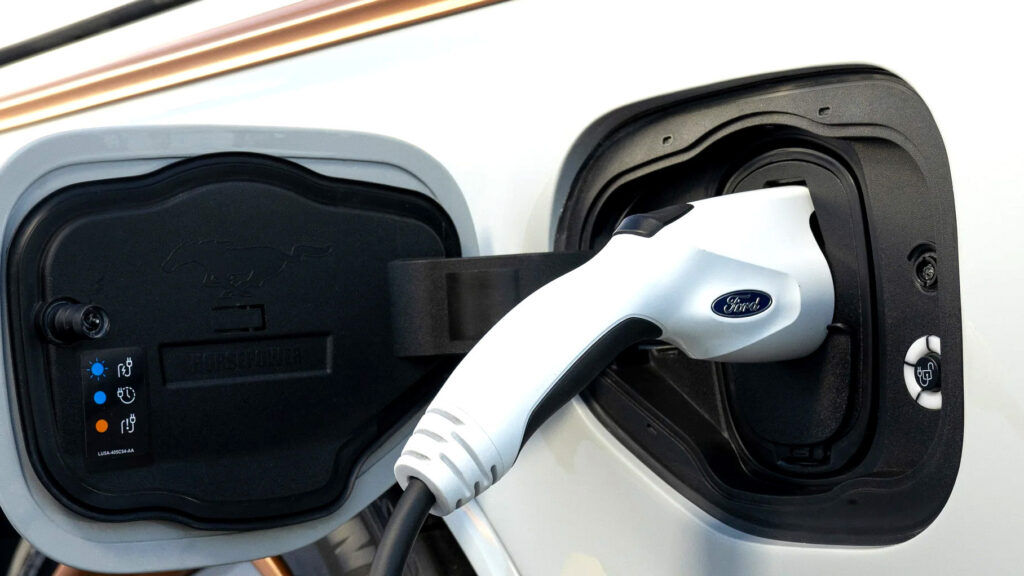
For some time, Ford’s Energy Rewards program has provided customers with bonuses for charging their F-150 Lightnings during off-peak times. It also has a system that allows the truck’s battery to serve as a backup generator during outages and blackouts.

In select US markets, owners can now charge their Lightning when electricity is cheaper (typically overnight during off-peak hours) and use the stored energy to power their home when grid prices are higher during peak times.

\\\

That’s not all. Customers can also return excess power from the F-150 back to the grid and get incentives from participating utility providers. According to Ford, customers can save up to $42 per month, or almost $500 per year, by using its new Home Power Management software.

The program has been launched in partnership with DTE Energy in Southeast Michigan. DTE will provide eligible owners the means to transfer power from the EV to their home.

Everything happens automatically, too, meaning the software optimizes the flow of energy to and from the battery pack while retaining battery health.

F-150 Lightning Production Paused Indefinitely

While the system is clever, it hasn’t done much to change the Lightning’s overall fortunes. Despite being the best-selling electric pickup in America this year, sales still trail Ford’s early projections. Earlier this month, production was officially paused with no restart date in sight.

With the federal EV tax credit gone and fuel economy penalties no longer enforced under the Trump-era rollback, Ford appears to be easing away from the Lightning experiment. The company now plans to build over 45,000 additional combustion-powered F-150s next year, signaling a quiet retreat to familiar ground

\\\\\\\
❌