Reading view

There are new articles available, click to refresh the page.

Ford’s Biggest Product Push In Years Will See 80% Of Its American Lineup Refreshed By 2029
  • Ford plans to refresh most of its global vehicle lineup by 2029.
  • A new internal group will unify design, EV, and software teams.
  • UEV platform focuses on weight reduction and system simplicity.

Ford is preparing one of its most aggressive product overhauls in years, and it is reorganizing itself to get there. The company plans to refresh 70 percent of its global portfolio by 2029 and, to support that effort, has created a new end-to-end internal organization that integrates its EV, digital, and design teams with its global industrial system.

According to Ford, this structure will “deliver one of the most intensive product, software, and services rollouts in Ford’s history.”

The new group, called Product Creation and Industrialization, will be led by Kumar Galhotra. Beyond the global target, Ford says 80 percent of its North American portfolio by volume will also be refreshed by 2029. That includes a next-generation F-150 and F-Series Super Duty, alongside a new mid-size pickup built on Ford’s Universal Electric Vehicle (UEV) platform.

Read: Jim Farley Promises A New Affordable Ford EV To Take On Tesla’s Model 3 And Y

Developed by a skunkworks team, the UEV platform uses unicastings to reduce weight and complexity. It also features an ultra-efficient powertrain and a fully zonal electrical architecture, supported by in-house software and advanced driver assistance systems.

More Electrified Options
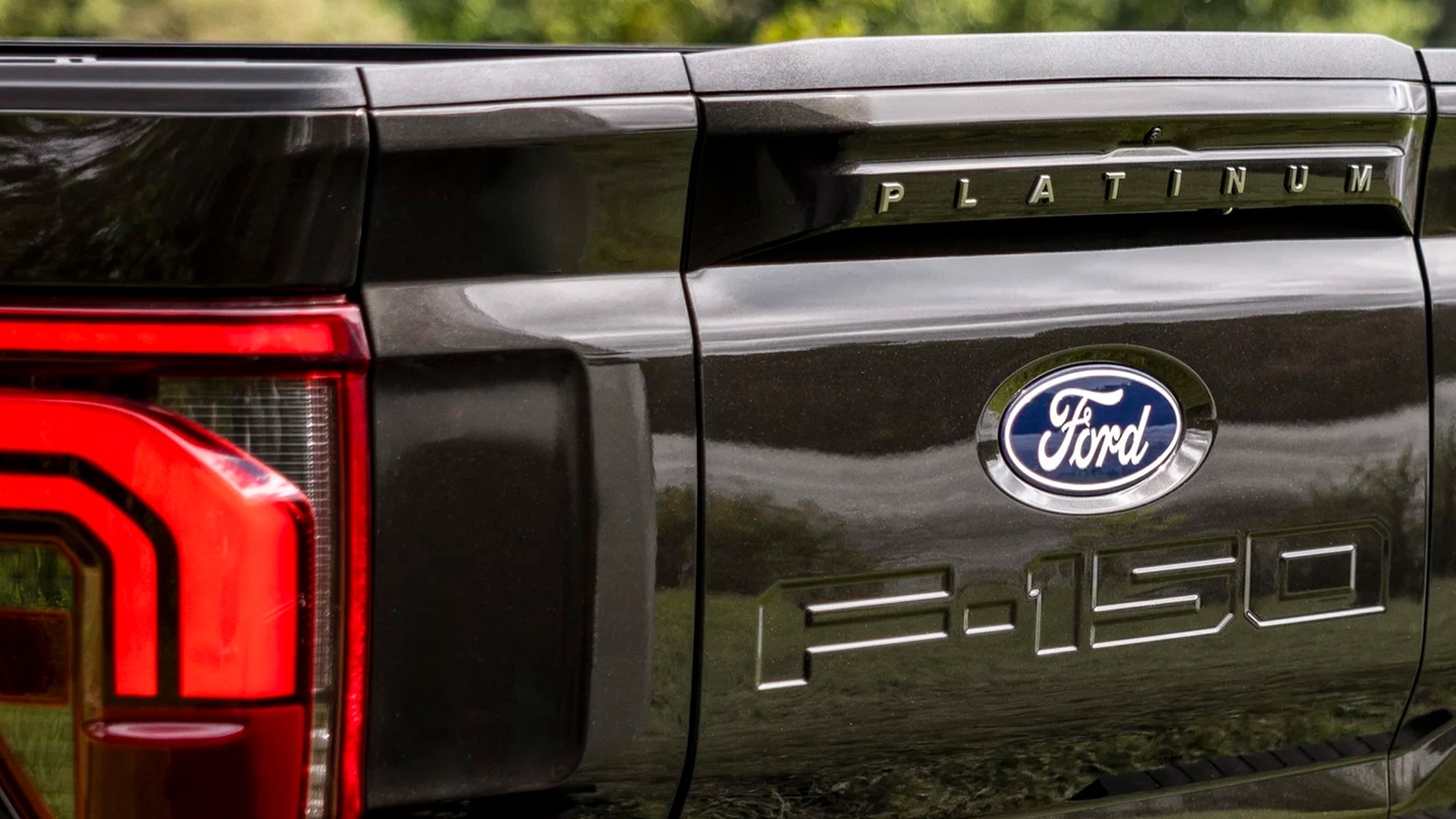
 Ford’s Biggest Product Push In Years Will See 80% Of Its American Lineup Refreshed By 2029

As part of Ford’s product updates, nearly 90 percent of its global nameplates will offer electrified powertrains by 2030, including hybrids, extended-range EVs, and full EVs. Interestingly, Ford notes that work on its UEV platform will benefit its hybrids, too, thanks to the new high-efficiency motors developed.

“This is the culmination of years of work and progress to create the modern Ford – a talented, unified organization capable of scaling high-quality, software-defined vehicles with a choice of propulsion, distinctive digital experiences and features, and a personalized ownership experience that improves over time,” Ford chief executive Jim Farley said in the announcement.

Doug Field Exits

Ford’s sweeping internal reset comes with a notable departure at the top. The company confirmed that Doug Field, who joined five years ago to steer its push into electrified, connected, and software-defined vehicles, will leave within the next month.

Field played a central role in shaping the newly formed Product Creation and Industrialization organization, the same group tasked with streamlining development across hardware, software, and manufacturing. His exit lands at a critical moment, as Ford leans on this structure to execute its broad product overhaul and move toward an 8 percent adjusted EBIT margin by 2029.
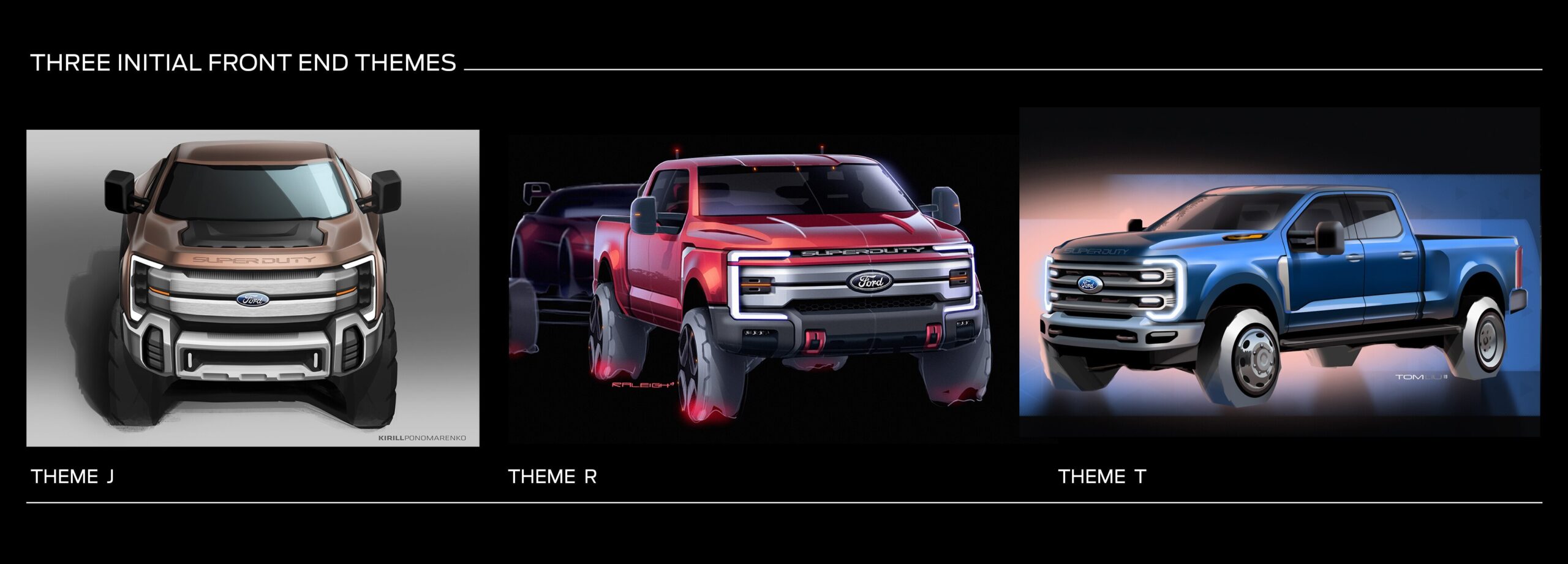
 Ford’s Biggest Product Push In Years Will See 80% Of Its American Lineup Refreshed By 2029
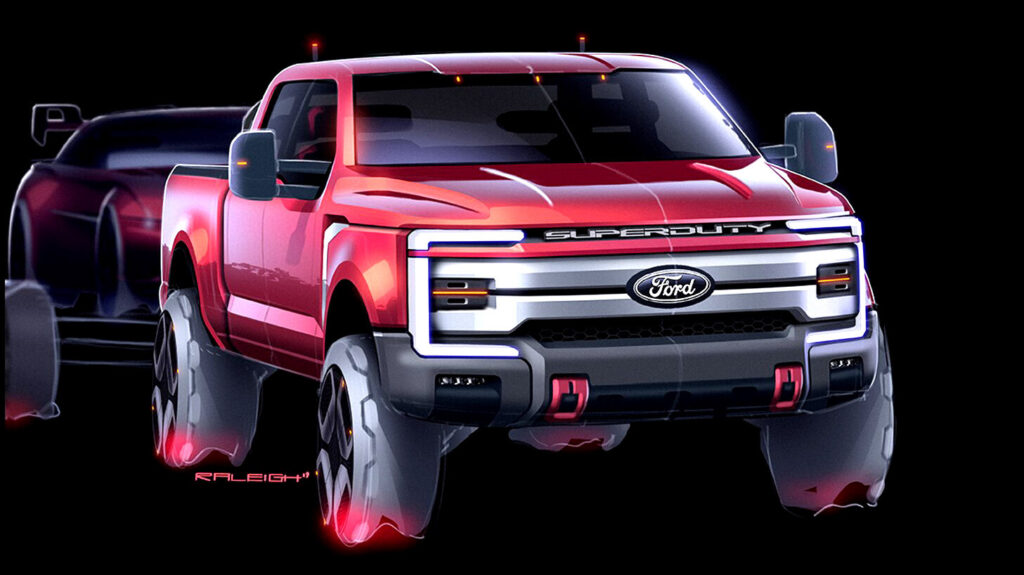
Ford Super Duty sketches from the past.

Ford’s F-150 Starts At $87,000 In Australia, And BYD Thinks That’s An Opportunity

  • BYD is developing a rival to the Ford F-150, Ram 1500, and Chevy Silverado.
  • The “super-sized” truck is a response to strong customer demand in Australia.
  • Company is also reportedly considering an EV counterpart to the Shark 6.

BYD isn’t content with just taking on the Ford Ranger. China’s most successful automaker is already looking to move up a weight class to challenge the Ford F-150. That next step won’t involve the US market, though, as this larger model is being developed with Australia in mind.

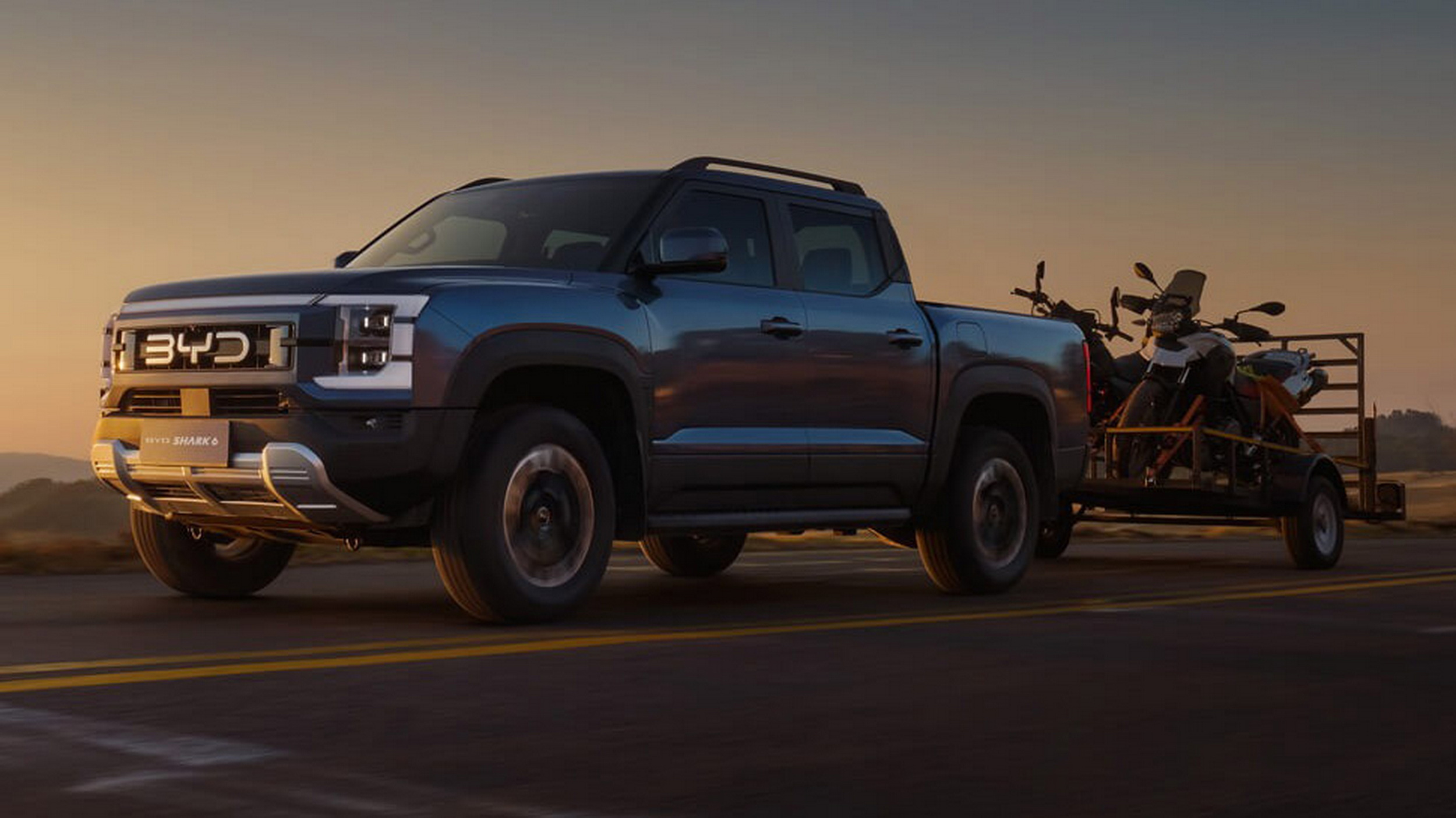
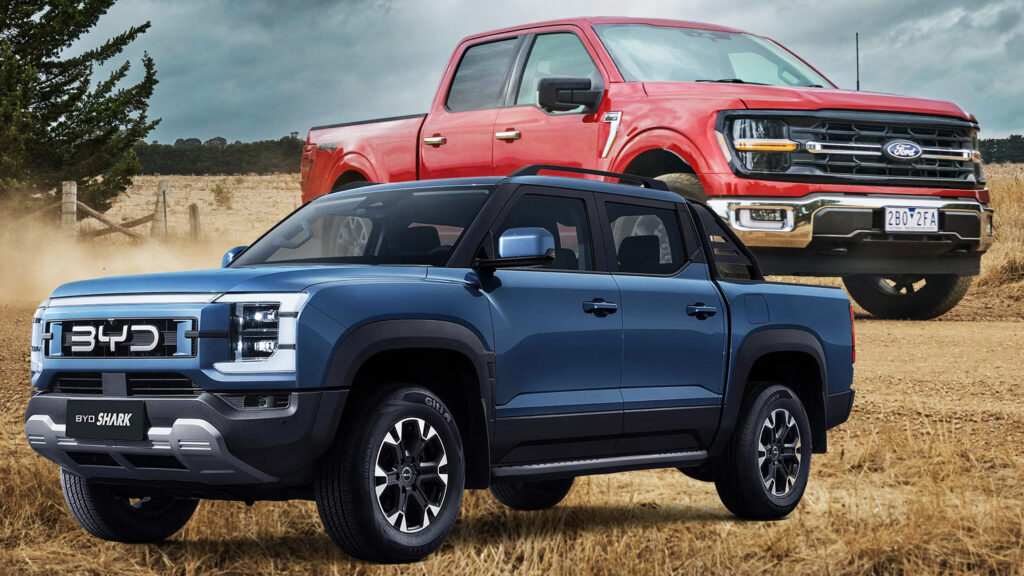
BYD’s first pickup in Australia, the Shark 6, arrived in late 2024 wearing a face that looked more than a little inspired by the F-150. At 5,457 mm (214.8 inches) long, it sits just beyond the typical midsize footprint and comes equipped with a plug-in hybrid powertrain.

More: Jim Farley Said Chinese Pickups Couldn’t Tow Like A Ranger. BYD Just Proved Him Wrong

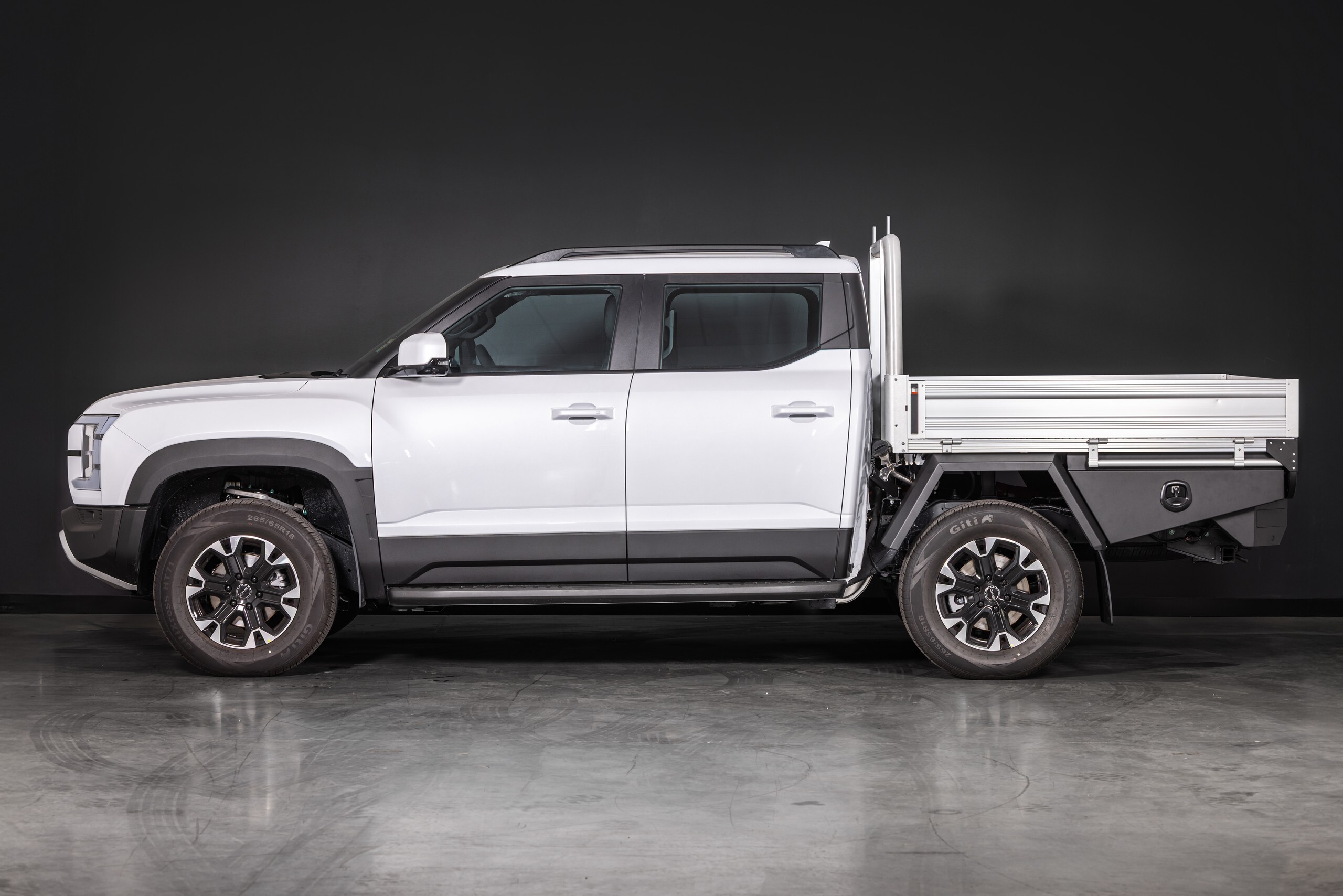
The Shark 6 was a runaway success, becoming Australia’s best-selling PHEV truck in 2025 with 18,073 deliveries. For 2026, BYD has doubled down, introducing a Performance trim with a more potent powertrain along with a chassis-cab bodystyle driven by customer demand.

Moving Up to the Heavyweights

However, Australians have been asking for something even bigger. Liu Xueliang, managing director of BYD Asia Pacific, said: “Some customers have requested a full-size Shark 6, similar in size to the Ford F-150. We are on our way to try to get there.”

 Ford’s F-150 Starts At $87,000 In Australia, And BYD Thinks That’s An Opportunity
BYD Shark 6

Word of the program first slipped out in early 2025, when David Smitherman, then CEO of EVDirect, said a full-size BYD pickup was “absolutely in development.” Since then, things have gone quiet on timing, but the working expectation points to a 2027 arrival if everything stays on track.

More: BYD Just Landed On Brazil’s Dirty List, And It Wasn’t For Its Cars

According to CarExpert, the real pressure isn’t coming from private buyers chasing something bigger. It’s fleet operators, particularly mining companies, that are pushing for a larger, more capable truck with electrification baked in from the start.

In Australia, the full-size segment currently includes the Ford F-150, Ram 1500, Chevrolet Silverado, and Toyota Tundra. With a combined sales of 8,763 units in 2025, full-size trucks are a niche compared to the midsize segment, as the Ford Ranger alone sold 56,555 units becoming Australia’s best-selling vehicle overall for the third consecutive year. Still, the profit margins are significantly higher, which explains BYD’s interest.

 Ford’s F-150 Starts At $87,000 In Australia, And BYD Thinks That’s An Opportunity
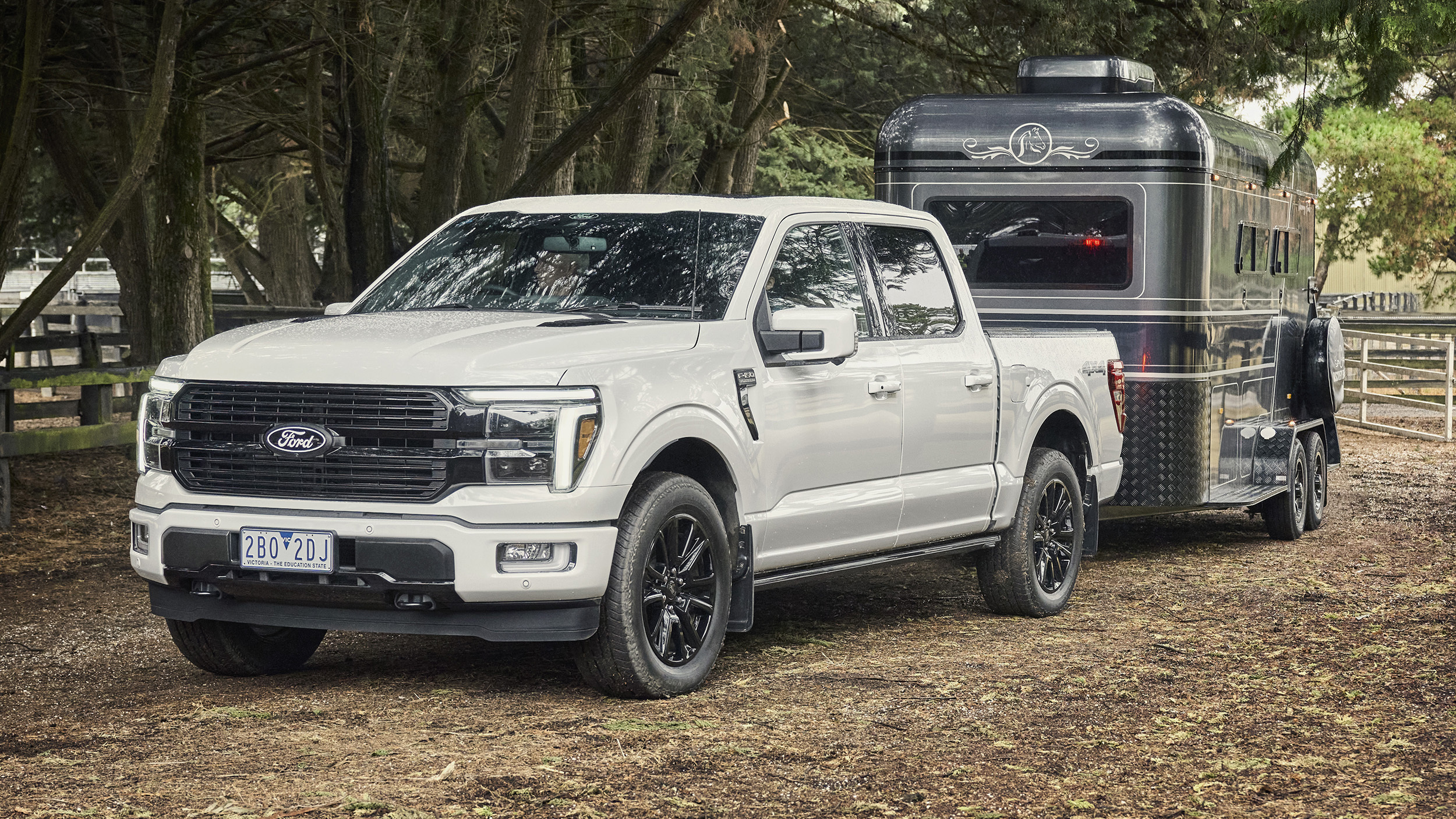
Australian-spec Ford F-150

Factory right-hand-drive conversions for full-size trucks don’t come cheap, and in Australia they can easily push past AU$150,000 (US$105,800). The F-150 starts from a little over AU$122,000 (US$87,000) in XLT trim climbing to over AU$152,000 (US$108,000) for the Lariat, both with the 3.5L engine. BYD sees an opening here. Build the truck properly from the start in right-hand drive, price it more sensibly, add a tech-heavy cabin and an electrified powertrain, and suddenly those inflated conversion costs start to look like yesterday’s problem.

More BYD Trucks On The Horizon

That move upmarket isn’t happening in isolation. Liu Xueliang has already suggested a fully electric counterpart to the Shark 6 is in development, aimed squarely at industries that no longer want diesel on site. Mining is the obvious target. If it lands as expected, it will go head-to-head with the electric workhorses now lining up, including the Toyota Hilux BEV, the upcoming Isuzu D-Max BEV, and the LDV eTerron 9.

More: Toyota’s Electric Hilux Costs $20K More Than The Diesel, And That’s Not Even The Worst Part

At the other end of the scale, BYD is also sketching out something smaller. A compact pickup is in the works, expected to ride on a unibody platform and use a plug-in hybrid setup. This one isn’t chasing job sites. It’s aimed at buyers who want the look and versatility of a pickup without committing to something oversized or overly serious.

 Ford’s F-150 Starts At $87,000 In Australia, And BYD Thinks That’s An Opportunity
BYD Shark 6 Cab-Chassis
❌