Reading view

There are new articles available, click to refresh the page.

VW’s Next Electric SUV Looks More Like A Tiguan
  • VW will rename the updated ID.4 as the ID. Tiguan in 2027.
  • Design shifts closer to the familiar look of the brand’s SUVs.
  • Physical buttons return, replacing the much-criticized sliders.

Volkswagen’s replacement for the ID.4 is not shaping up as a clean-sheet electric SUV. Instead, the company seems set to give the existing formula a fairly thorough rethink, reworking what it already has rather than tearing it up and starting again from scratch.

And it will likely arrive wearing a badge most buyers already know. Volkswagen is preparing to pin the Tiguan name onto what will become its core compact EV, a move meant to make the brand’s electric lineup feel less like a collection of tech codes and more like the VW showroom people already recognize.

Read: VW Locks Gas Tiguan In Until 2035 With Two Major Updates Planned

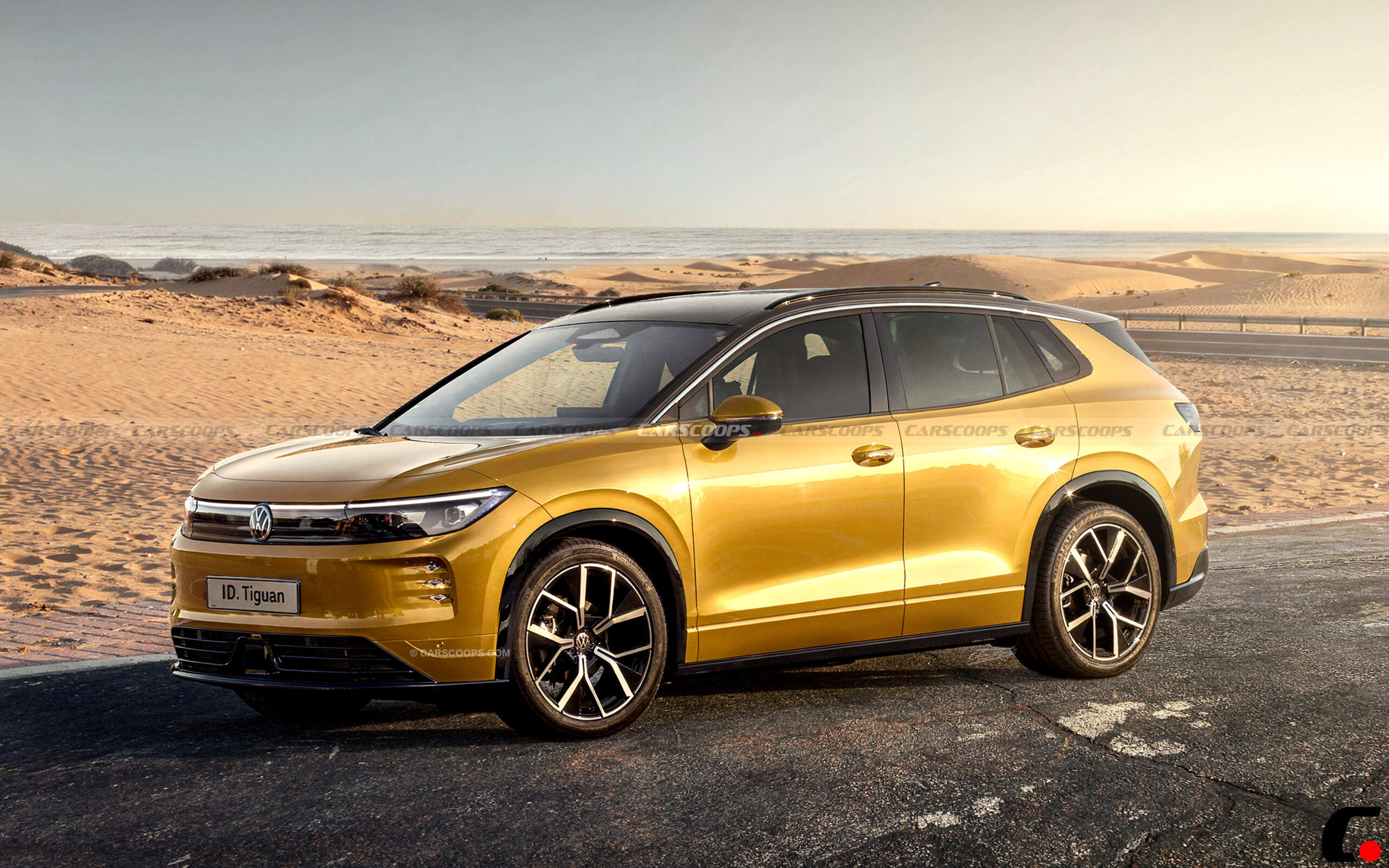
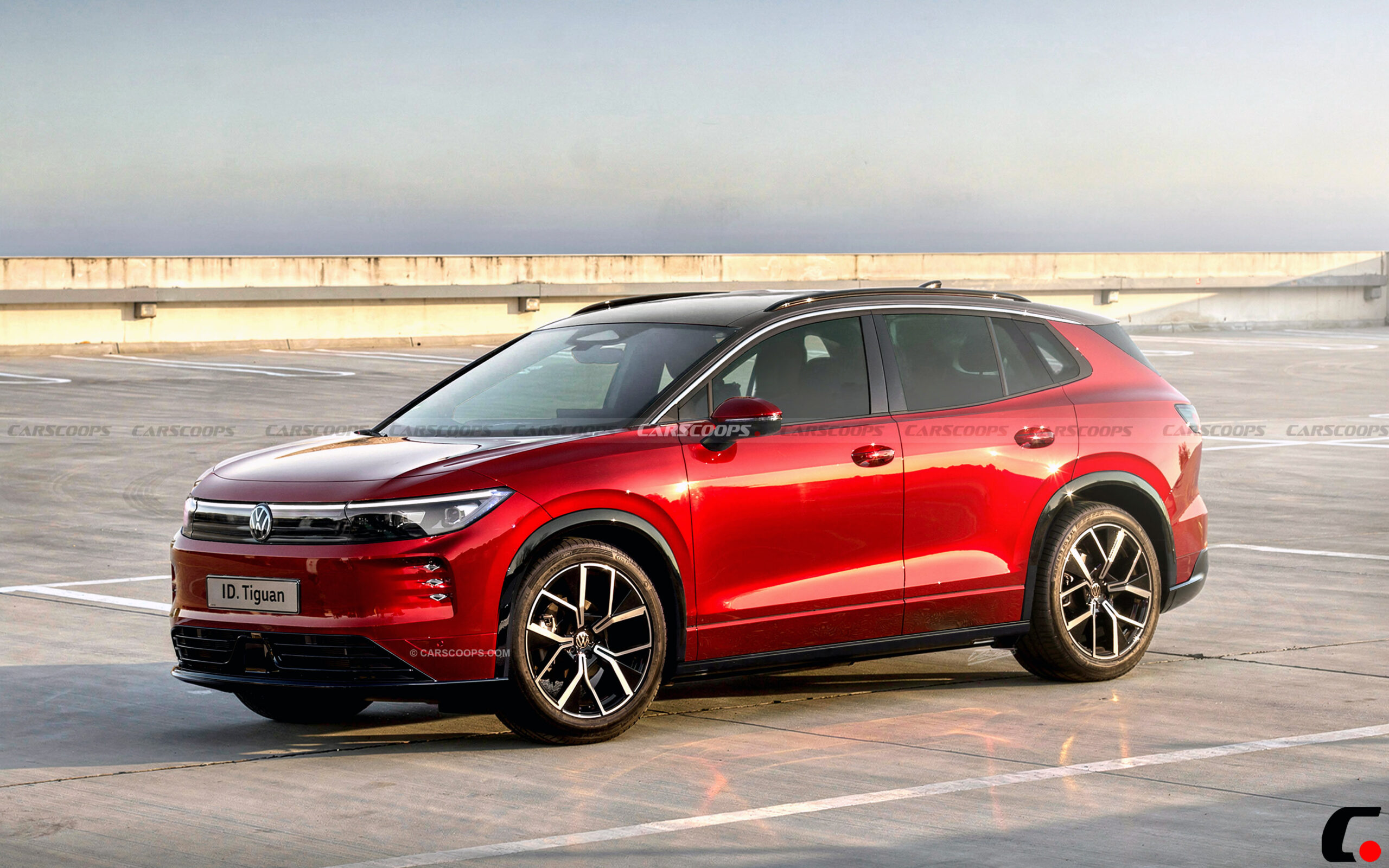
Recent prototype sightings give us a good idea of where the design is headed. Using those clues, we put together a production-style rendering and gathered everything currently known about the upcoming model.

Design Direction
 VW’s Next Electric SUV Looks More Like A Tiguan
Illustrations Josh Byrnes / Carscoops

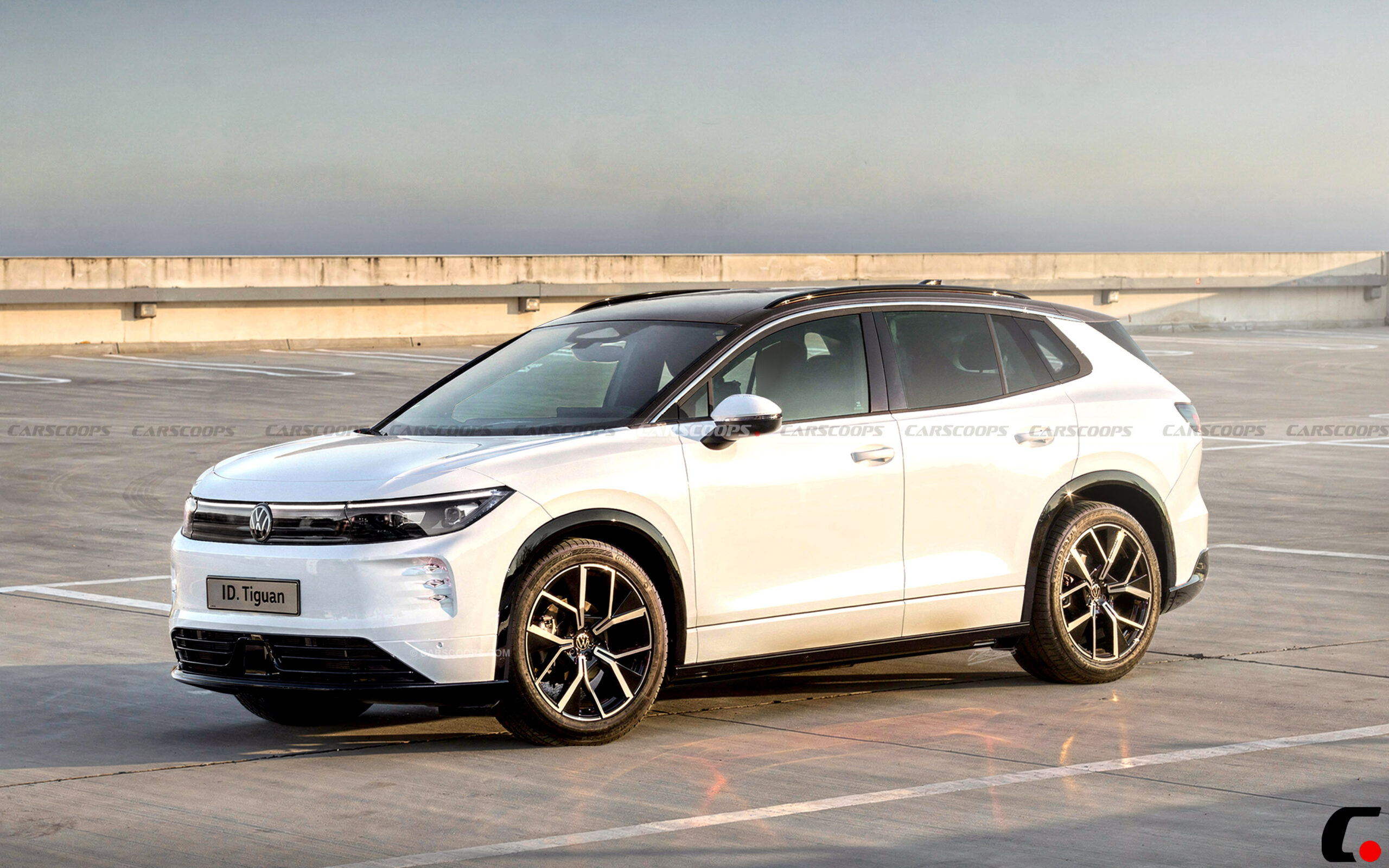
Arguably, the electric Tiguan won’t get your pulse racing in the same way, say, Mazda’s new CX-6e will, but that’s okay. Visually, the ID. Tiguan retains the ID.4’s underlying proportions but refines them with more conventional SUV cues.

Also: Kia Killed The Stinger, But An EV8 GT Might Redeem Everything

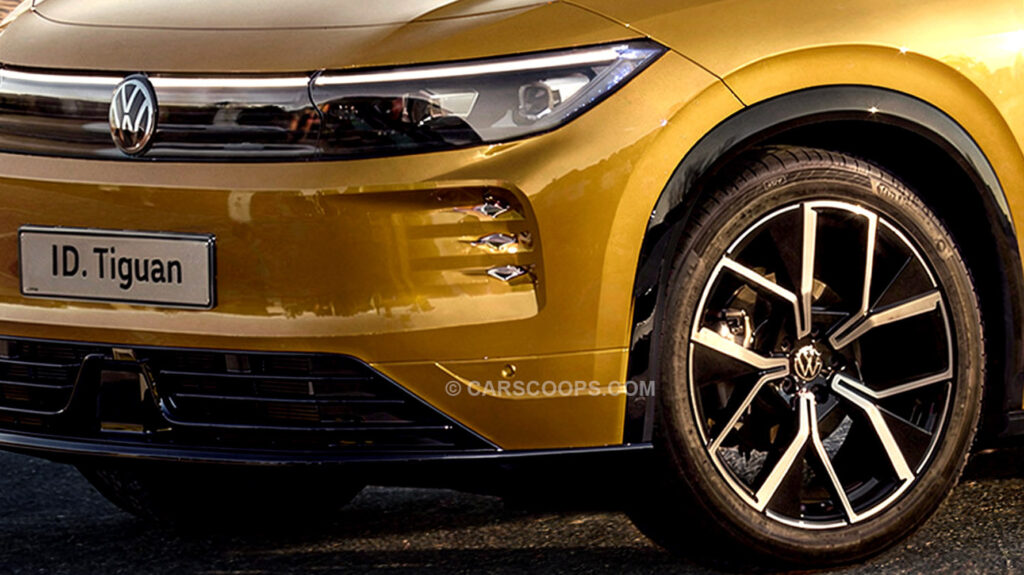
The front fascia is a squarer affair, ditching the rounded look in favor of rectangular LED headlights connected by a full-width light bar and an illuminated VW badge. A more upright bumper with subtle vertical elements exudes minimalism. 

In profile, it now has a straighter shoulder line, revised window graphics, and linear lower cladding. The roofline remains largely unchanged, while the flush door handles have been replaced by a conventional ‘pull-action’ setup. Out back, a full-width taillight cluster mirrors the front, while a revised bumper and subtle roof spoiler clean up the overall look.

Buttons Are Back!
 VW’s Next Electric SUV Looks More Like A Tiguan
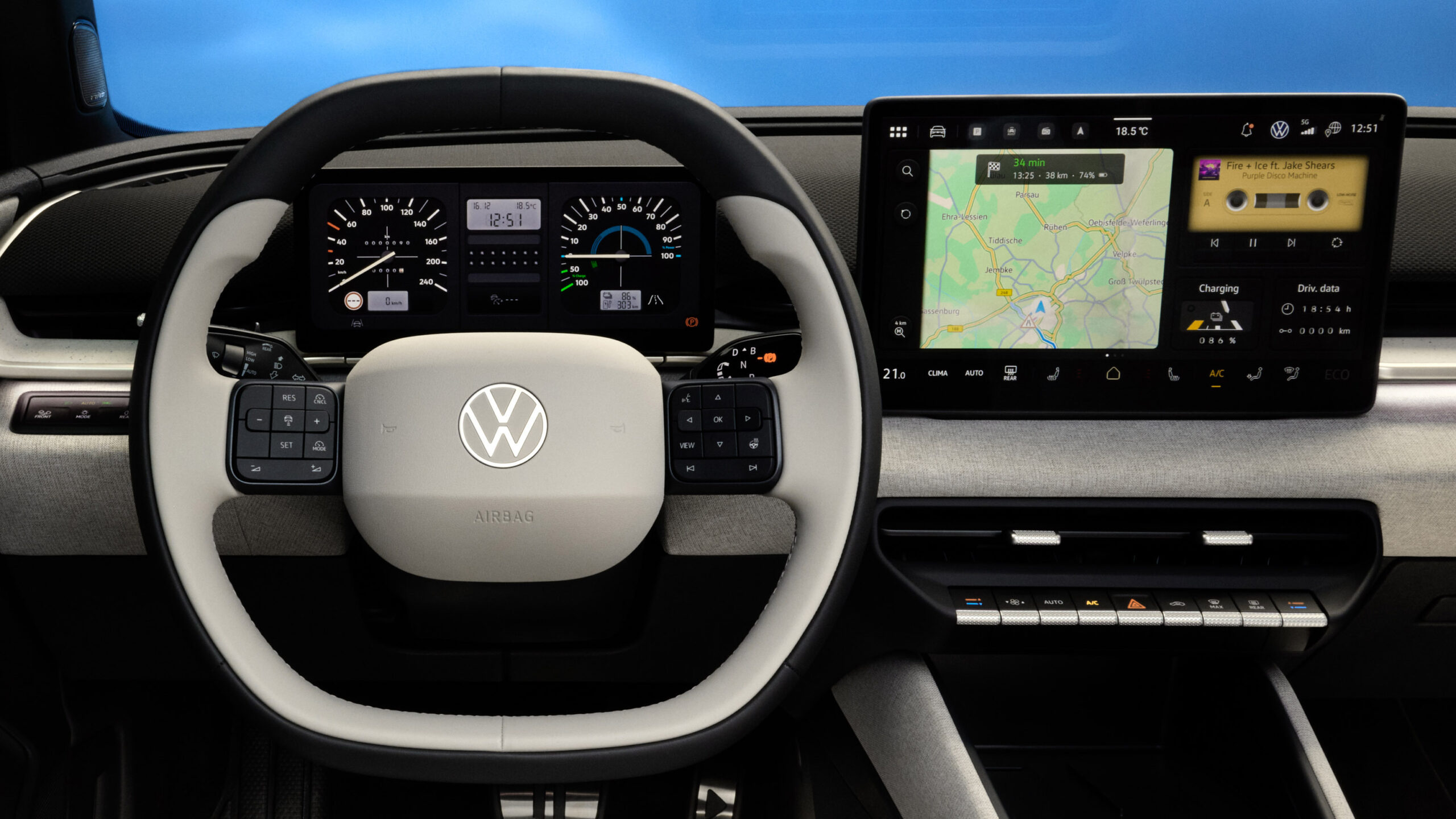
The ID. Polo shown here will be the first of several VWs to restore physical cabin controls.

Inside, the previous and much-despised haptic feedback and slider setup from the ID.4 will be ditched. A large infotainment screen will remain, but like the new ID. Polo, it will bring back proper physical buttons for the steering wheel and HVAC controls, plus an actual volume knob.

See: Ford’s $30K Electric Pickup Wants To Beat Cybertruck At Its Own Game

On the tech front, it will bring AI integration with ChatGPT, conversational voice commands, and other connected services. Interior quality is also set to improve, with increased recycled materials and fabric surfaces. Occupant space will largely stay the same, offering generous rear-seat legroom and a flat floor. 

Under The Skin
 VW’s Next Electric SUV Looks More Like A Tiguan
Illustrations Josh Byrnes / Carscoops

Under the skin, the ID. Tiguan will continue to ride on Volkswagen Group’s MEB architecture, most likely in its updated MEB+ form. The overall battery and chassis layout should remain familiar, with MacPherson struts up front and a multi-link rear suspension. Expect recalibrated driver-assistance systems and a handful of upgraded safety features to round out the updates.

As previously reported, powertrain options are also expected to closely mirror the current lineup with minor tweaks. Base variants will continue to use a single motor on the rear axle, developing around 282 hp (210 kW). Dual-motor, all-wheel-drive versions will yield close to 335 hp (250 kW).

Also: The Next Hyundai Elantra Will Look Nothing Like The Car In Your Driveway

The 400-volt system will employ LFP batteries with roughly 77kWh to 86kWh of capacity, targeting WLTP metrics in the 311-342 mile (500–550km) range, alongside improved DC fast-charging capability.

\\\\\\\\\\

Rivals and Reveal

When it arrives, the ID. Tiguan will find itself in very busy territory. The usual suspects are all here, including the Tesla Model Y, Ford Mustang Mach-E, Hyundai Ioniq 5, Kia EV6, Skoda Enyaq, Zeekr 7X, and Peugeot e-5008. Volkswagen is expected to reveal the model sometime in 2026, with sales likely following in 2027.

So, what do you make of the ID. Tiguan’s familiar, slightly more conventional look? Let us know your thoughts in the comments.
 VW’s Next Electric SUV Looks More Like A Tiguan
Illustrations Josh Byrnes / Carscoops

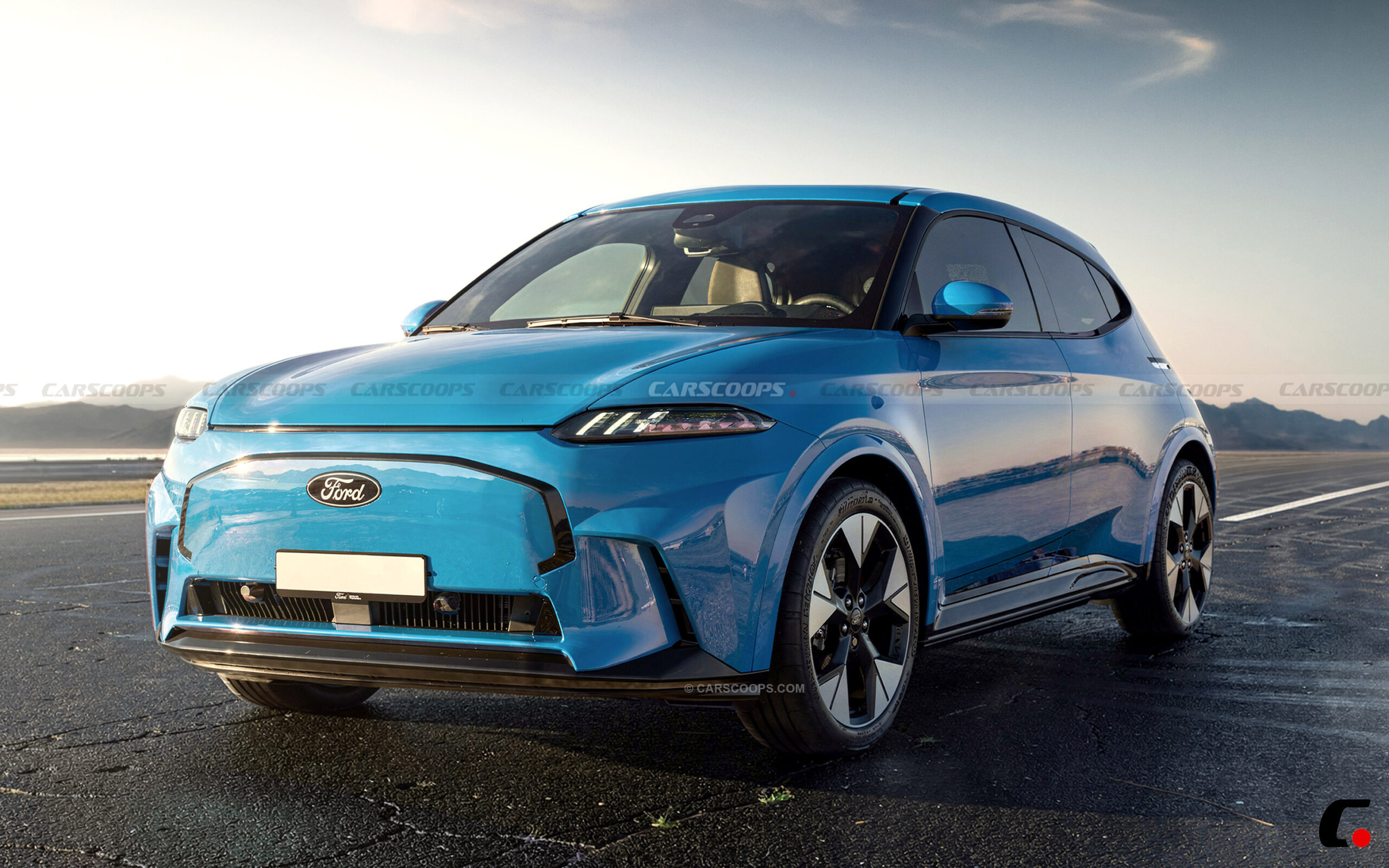
Ford Killed Fiesta For A Crossover, Now It Might Return Like This

  • Ford Fiesta could return as an all-electric model in Europe.
  • It will ride on Renault’s 400-volt AmpR Small platform.
  • Hotter ST version may join the lineup with around 200 hp.

Once thought to be permanently axed in favor of the Puma subcompact crossover, it appears the Ford Fiesta is poised for an electrified resurrection. The Blue Oval has turned to its strategic partnership with Renault Group to develop two affordable electric cars for Europe based on the French automaker’s AmpR Small platform.

Future Cars: Mercedes’ Smallest SUV Points To A Different Kind Of Compact Future

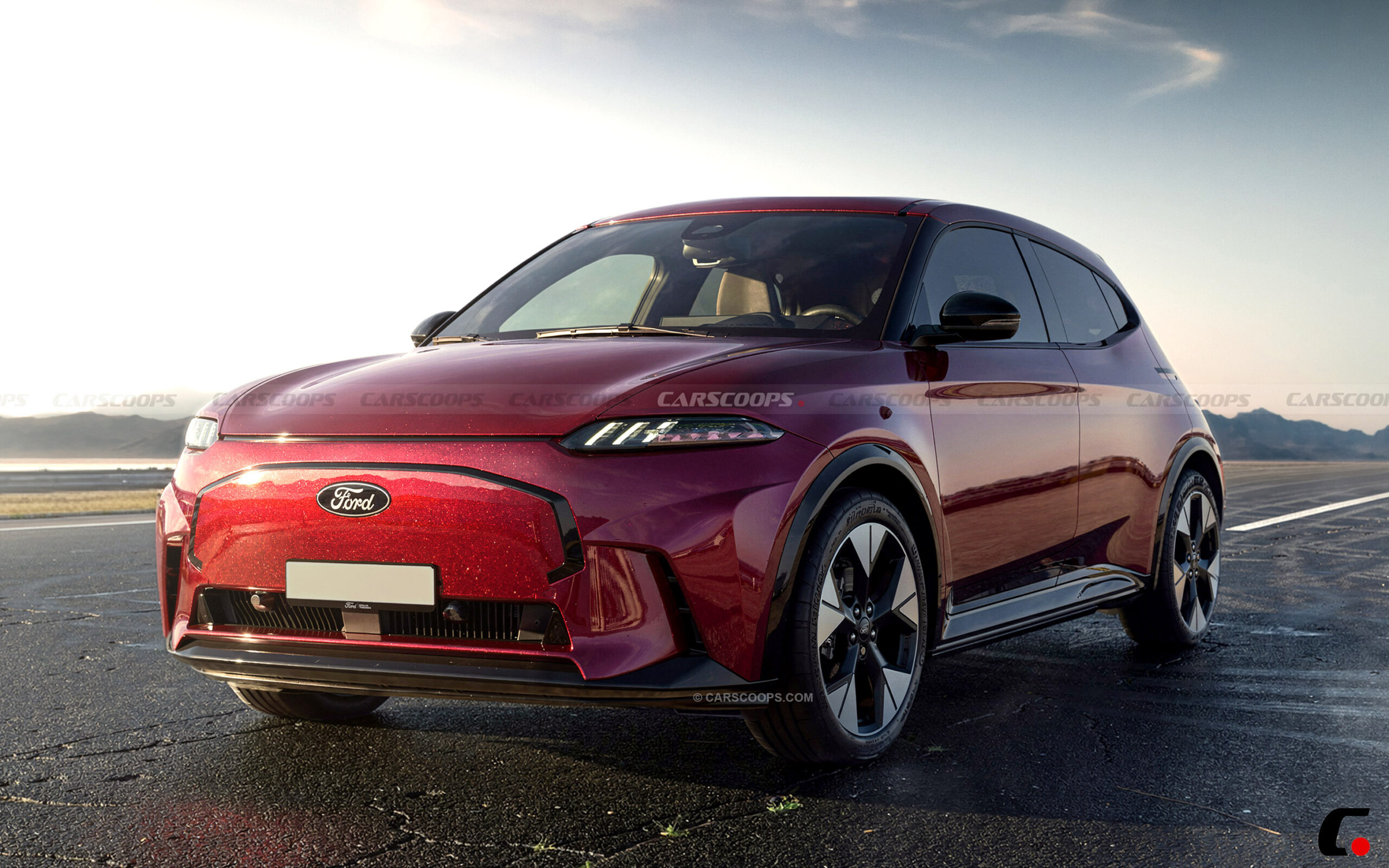
While the Fiesta EV has yet to be officially confirmed, intel suggests it’s all systems go. So we’ve pulled together everything we know so far, along with what to reasonably expect, including an exclusive illustration previewing how Ford’s smallest electric hatch might look in production form.

Fresh Look, Familiar Proportions

 Ford Killed Fiesta For A Crossover, Now It Might Return Like This
Illustrations Josh Byrnes / Carscoops

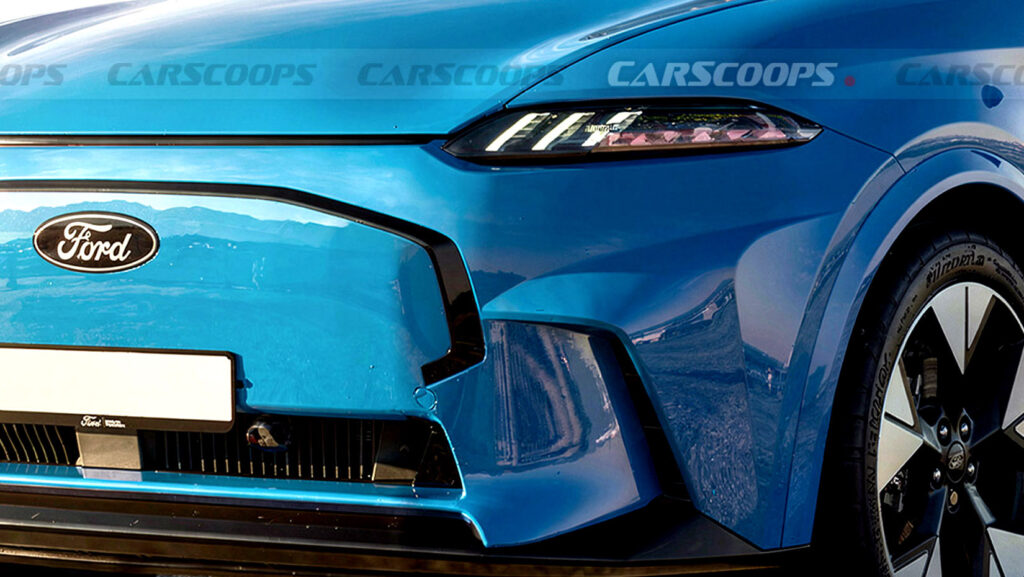
The basis for my render is the Renault R5, which is evident in its bite-size dimensions, short overhangs, and upright windscreen. Upfront, it adopts a clean, closed-off nose typical of most EVs with a smooth panel framed by a gloss-black moustache motif. Slim headlights with tri-DRLs sit high on the fascia, while subtle air intakes below aid cooling without adding visual clutter.

Read: Ford Quietly Ends Focus Production After 27 Years Without Even Saying Goodbye

In profile, it’s defined by a gently rising beltline, blacked-out a-pillars, and curvaceous surfacing inspired by Ford’s radical ‘Start’ that debuted in 2010. Out back, it appears wider due to a contrasting horizontal line that connects the taillights and the lower bumper, which sports a centrally located vertical fog lamp.

\\\\\\\\\\\

A Smart Interior

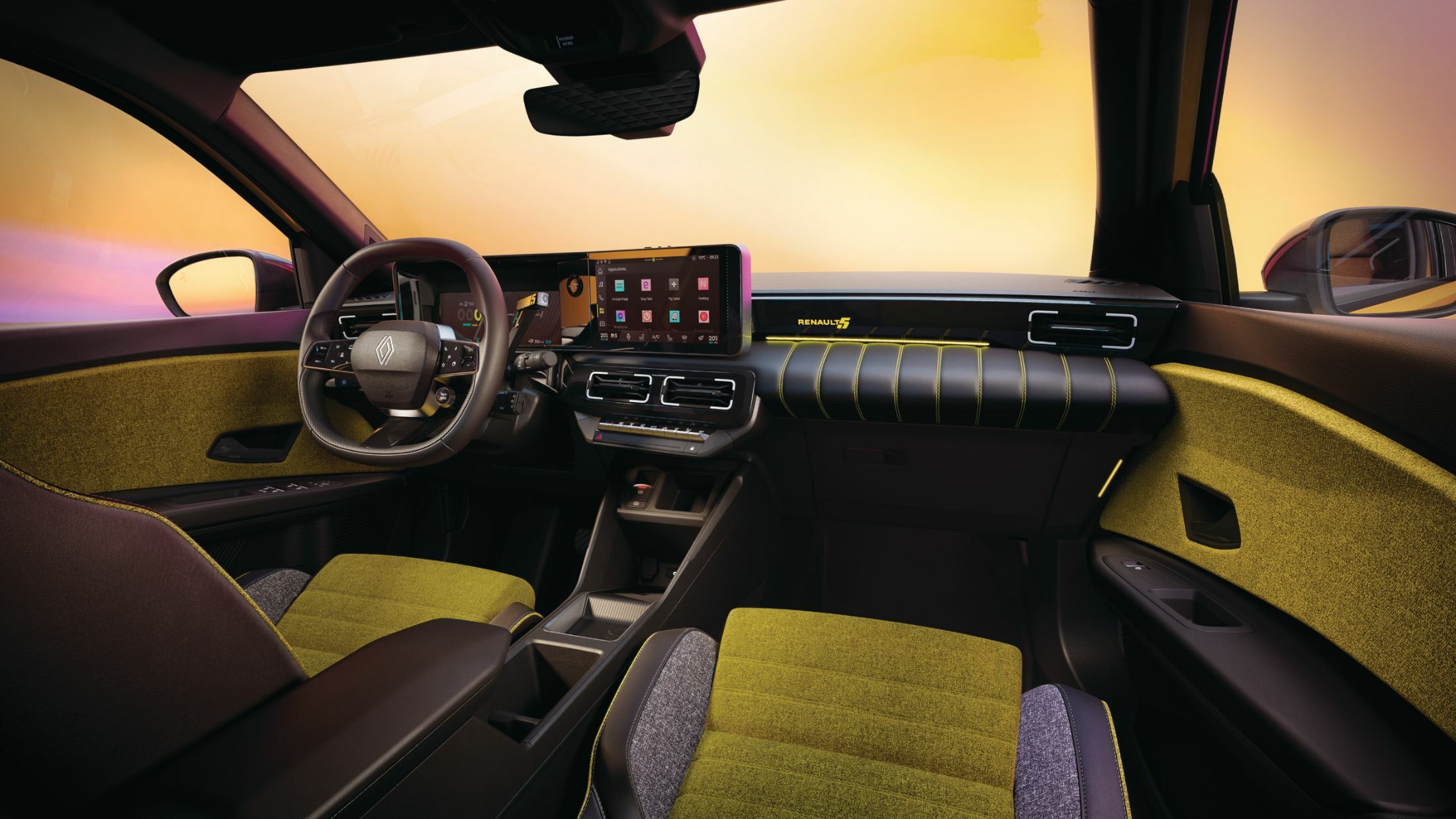
Inside, the Fiesta is expected to be a tech-laden affair, owing much of its electronic hardware to its French-supplied architecture. Sure, it’ll feature Ford-specific fonts and graphics, but underneath the dual 10-inch digital instrument cluster and infotainment screen, it’s a Google-based Renault operating system with over-the-air update capabilities.

Future Cars: Ford’s $30K Pickup Wants To Beat Cybertruck At Its Own Game

 Ford Killed Fiesta For A Crossover, Now It Might Return Like This
The new Renault 5’s interior.

Material quality should improve, with soft-touch surfaces and recycled fabrics replacing the budget plastics of past Fiestas. The dedicated EV platform should also help liberate cabin space, with overall dimensions expected to closely shadow those of the Renault 5.

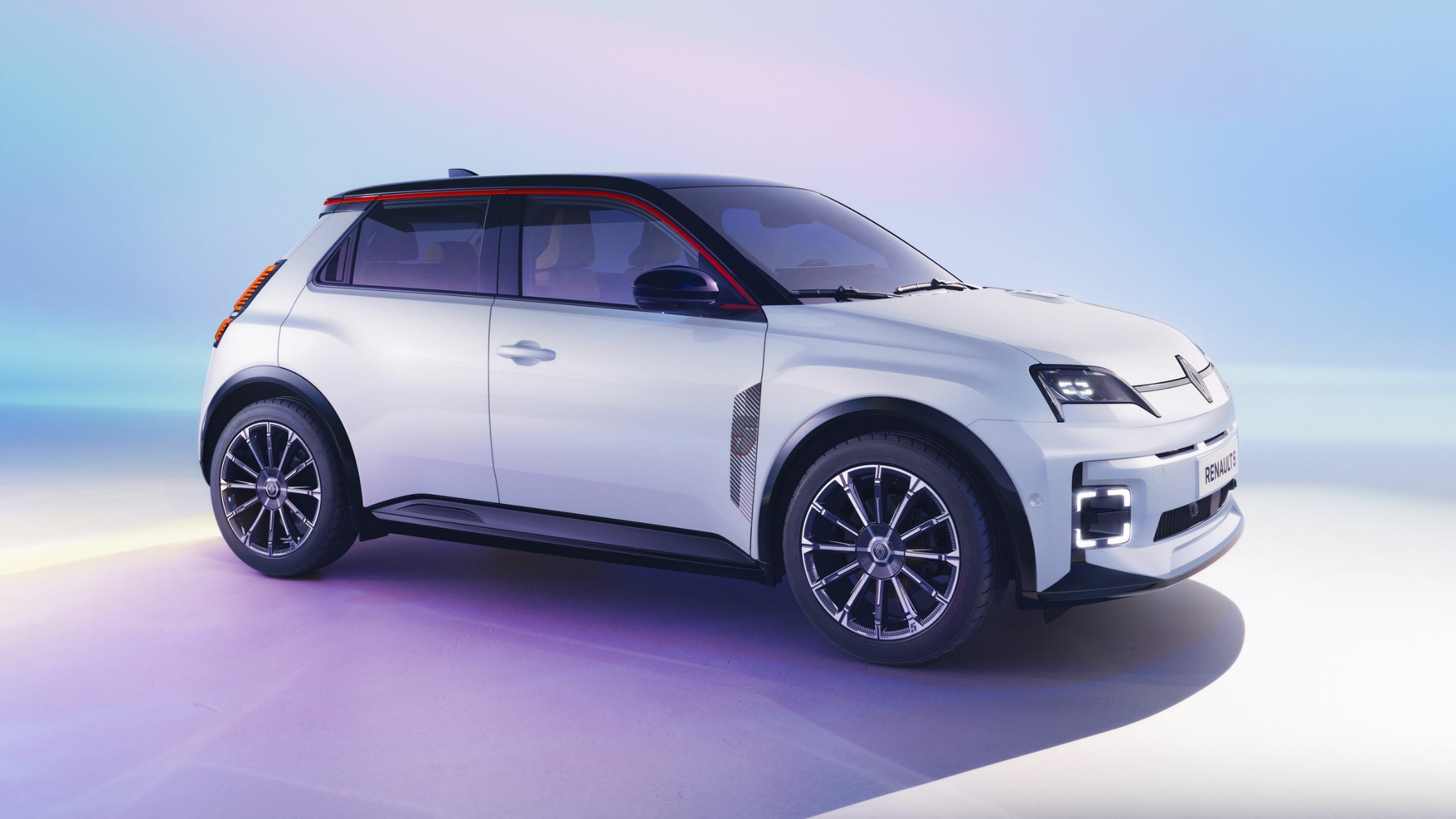
The electric French hatch measures 3,922 mm (154.4 inches) in length, 1,774 mm (69.8 inches) in width and 1,498 mm (59.0 inches) in height, with a wheelbase of 2,540 mm (100.0 inches). Sharing the same underpinnings, the Fiesta EV should sit in virtually the same size class, even if Ford gives it its own visual character.

Renault Platform

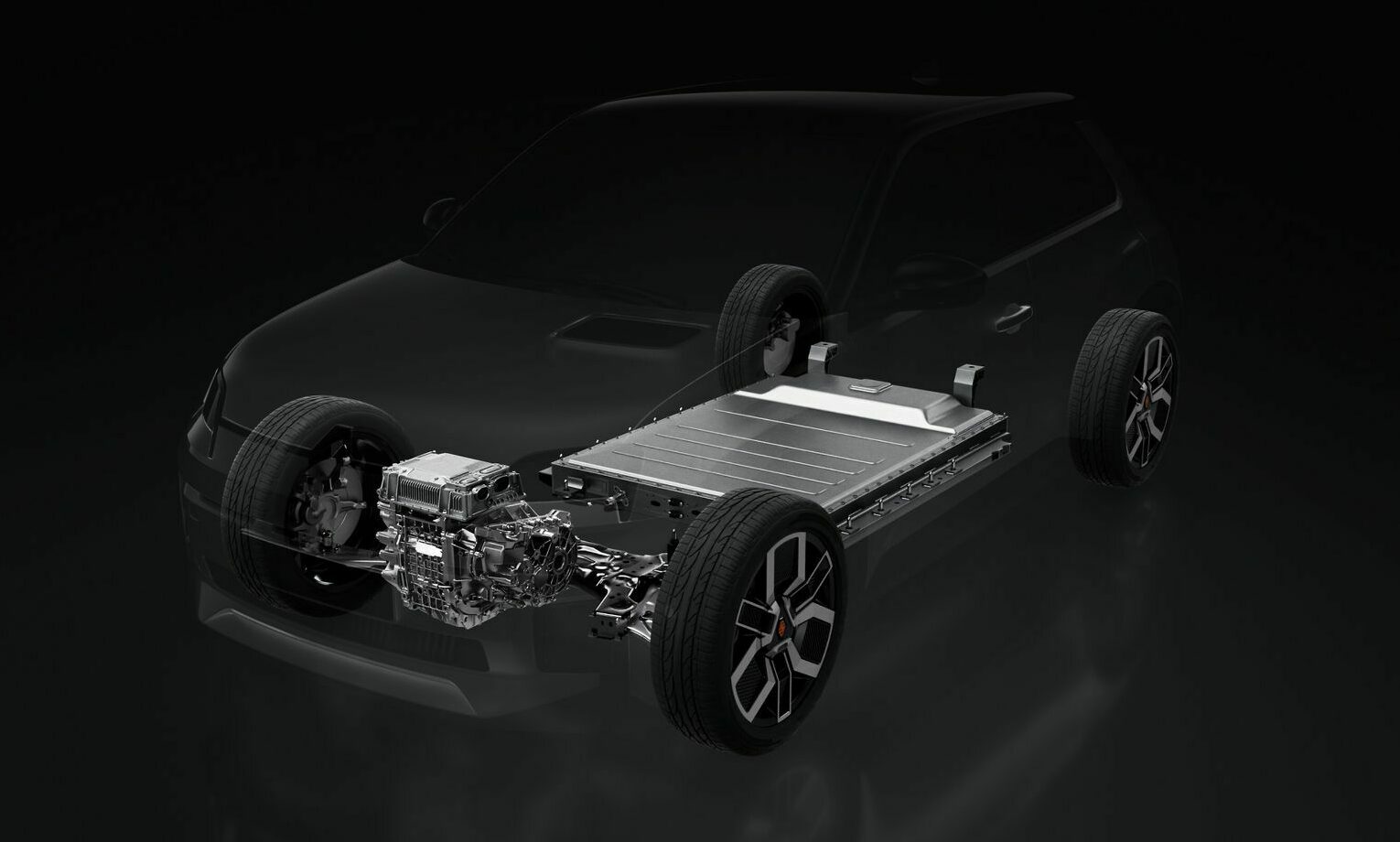
Based on the Renault group’s 400-volt AmpR-Small architecture, Ford Europe engineers will work their magic on ride and handling. It will likely have a multi-arm rear suspension and a low-mounted battery for comfort and taut body control.

 Ford Killed Fiesta For A Crossover, Now It Might Return Like This

Watts Over EcoBoost

Before the axe fell, the last Fiesta had a cracking wee 1.0-litre turbocharged 3-cylinder engine. Sadly, the three-pot thrum will be replaced by a front-drive, single-motor electric setup. It’s not all bad, though, with outputs projected to be in the 120-150 hp (88–110kW) range. We’d expect a spicier ‘ST’ variant to come later with up to 210 hp.

Also: Farley Says Ford Couldn’t Compete With Toyota And Hyundai, So It Stopped Trying

Expect 40 kWh and 52 kWh NMC battery options, with a range up to 248 miles (400km) on the WLTP cycle. Using the R5 as a reference, DC fast charging will max out at 101 kW, and it is expected to have vehicle-to-load and vehicle-to-grid capabilities.

Rivals And Reveal

 Ford Killed Fiesta For A Crossover, Now It Might Return Like This
Renault 5 EV

Competition will be fierce. Likely rivals include the Peugeot e-208, Opel Corsa-ECupra RavalKia EV2, Renault 5 E-Tech and Volkswagen ID.Polo. More about the Fiesta EV is expected to surface in the next 12 months, with a potential reveal likely to be late next year or early 2028.

Could it be offered outside Europe? It’s possible. But given the current tariff landscape, the Fiesta’s small footprint, and America’s cooling appetite for EVs following the end of the federal tax credit last year, a US launch feels highly unlikely.

Would you like to see the Fiesta reborn as an affordable EV? We’d love to hear your thoughts in the comments below.

 Ford Killed Fiesta For A Crossover, Now It Might Return Like This
Illustrations Josh Byrnes / Carscoops
❌