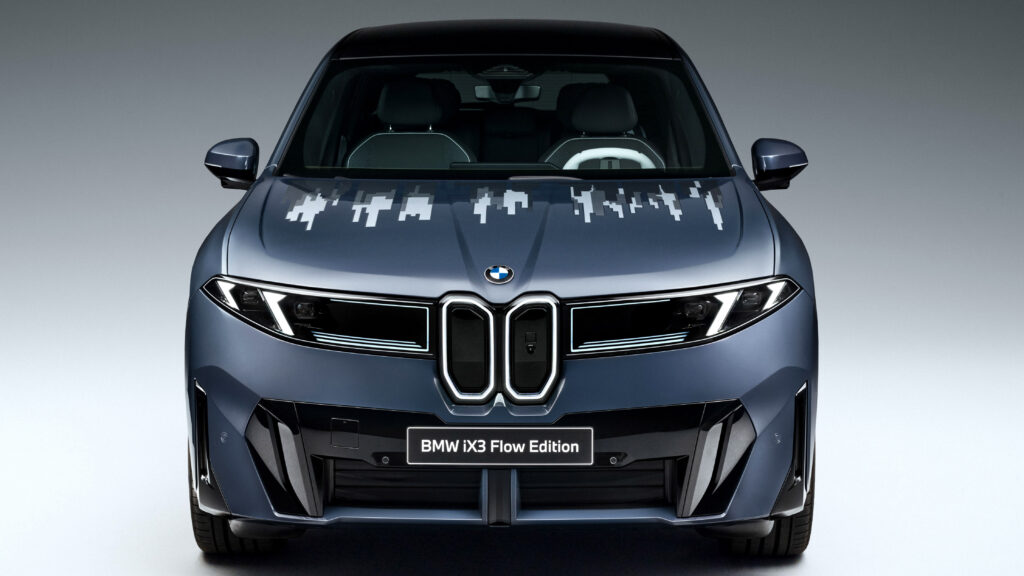
BMW has introduced the iX3 Flow Edition at Auto China.
It features a unique hood with integrated E Ink technology.
Users can select eight different animations to display.
Lighting used to be an afterthought, but now it plays a big role in automotive design. This is clear as automakers have embraced illuminated grilles, light bars, and glowing emblems.
BMW envisions taking things even further and they’re showcasing the possibilities with the iX3 Flow Edition concept. It features a hood infused with E Ink and “demonstrates the technology’s readiness for series production.”
The automaker has been playing around with E Ink for years and introduced the iX Flow concept in 2022. It’s now inching closer to road-going models as the automaker has integrated a display into a “large-scale bodywork element for the first time.”
In this case, it’s the hood and users can select between eight different animations. This includes illuminating the outline of a Chinese skyline in a moving pattern and lighting up the buildings themselves. The latter can be done in a variety of different ways and in multiple levels of brightness.
The resulting design is like a piece of automotive art that can range from “subtle to expressive.” BMW added the technology “makes innovation visible and conveys the driver’s style and mood in a personalized and context-sensitive way.”
BMW declined to say when we might see something like this on road-going models, but automakers have been aiming for more personalization. Audi has been doing this for awhile and models like the Q4 e-tron offer customizable daytime running light signatures.
The i3 Touring will shares its design with the sedan up to the B-pillars.
A longer roof and revised rear will give the wagon added practicality.
Production starts in 2027 following the sedan’s launch in late 2026.
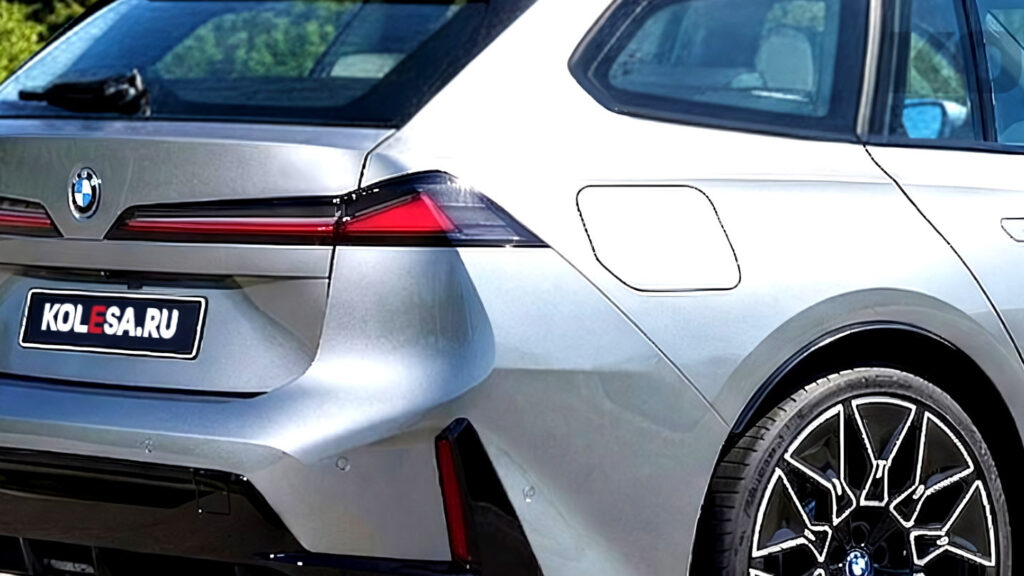
The new BMW i3 sedan has finally filled in enough blanks to picture what its more practical wagon sibling might look like. With BMW confirming an i3 Touring, independent artists have stepped in to interpret the brand’s vague teasers and turn them into something more tangible.
Nikita Chuyko from Kolesa and Theophilus Chin have each offered their own interpretation of the fully electric wagon, and while both follow the same basic blueprint, the details diverge. In each case, the sheet metal mirrors the i3 sedan up to the B-pillars. What distinguishes the i3 Touring is the extended roof and the redesigned tail.
BMW’s own teaser hints at a rising beltline behind the C-pillars, a small tweak meant to inject some visual tension into the longer body. Theottle leans heavily into that idea, exaggerating the upward sweep, while Chuyko opts for a more restrained interpretation. The production version could land somewhere in the middle, keeping things sporty without overdoing it.
Illustrations Kolesa / Nikita Chuyko
At the rear, both designers carry over the slim LED taillights and rear bumper from the i3 sedan, focusing their changes on the tailgate and the sloping rear glass. Theottle retains the sculpted lines beside the BMW emblem and adds a more contemporary roof spoiler, similar to the one seen on the iX3 SUV.
We suspect that the production i3 Touring will likely keep the sedan’s 114.1-inch (2,898 mm) wheelbase, meaning any increase in overall size will likely come from a longer rear overhang.
The interior will also be carried over, including the pillar-to-pillar display on the base of the windshield and the 17.9-inch infotainment touchscreen. Rear passengers should benefit from slightly improved headroom, along with a more generous cargo area.
Underneath, the i3 Touring will share its 800-volt Neue Klasse architecture with the i3 sedan and the iX3 SUV. A potential 50 xDrive variant is expected to produce 463 hp (345 kW / 469 PS) and 645 Nm (476 lb-ft) of torque, offering more than enough performance for a family-oriented model.
The i3 sedan targets an EPA range of 708 km (440 miles) between charges, though the wagon’s less aerodynamic shape will likely reduce that figure slightly. Even so, it should be capable of adding 249 miles (400 km) of range in just 10 minutes when connected to a 400 kW charger.
BMW has confirmed that production of the i3 sedan will begin in August 2026, with first deliveries scheduled for the fall. The i3 Touring is expected to follow in 2027, as part of the 40 new and updated models the company plans to introduce by the end of that year.
The Bavarian automaker is also preparing an ICE-powered 3-Series Touring, which will mirror the design and technology of the Neue Klasse-based i3 Touring while riding on an updated version of the current CLAR platform.
BMW’s i3 brings Neue Klasse platform and design to the all-new 3-Series sedan.
800-volt tech brings 440-mile range, blistering charging, and 463 hp via dual motors.
Cabin goes full sci-fi with pillar-to-pillar head-up display and angled touchscreen.
It’s over a decade since the original i3 hatch arrived to kick-start BMW’s electric journey. That quirky little compact is long gone, but now the i3 badge is back on another, very different EV that’s even more important. The new i3 is the first electric 3-Series offered outside of China and everything from the way it looks, to the way it’s powered, to the way drives, is all new.
Petrol fans will have to wait a few more months for their new G50 3-Series, a gas-powered range of sedans that looks very much like this one but rides on an updated version of today’s CLAR platform. Today, we only get to meet the NA0-code electric version, based around BMW’s Neue Klasse EV architecture, but much of what we’re learning about the design and the interior will also apply to the ICE car.
Longer, Wider, Lower, Hotter
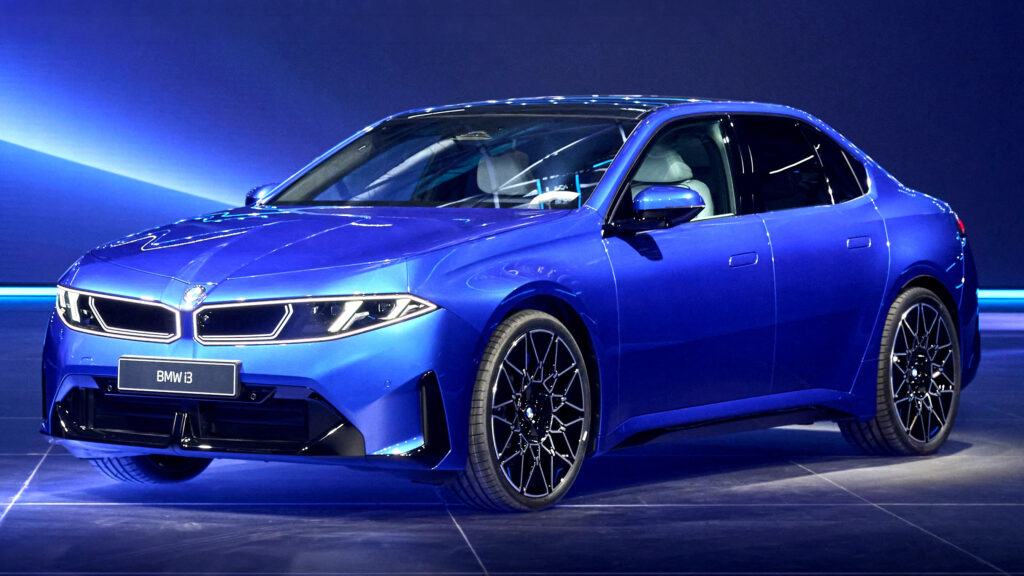
From the outside, the new i3 looks like a careful balancing act between familiar and futuristic. It’s not quite as lean as the various concepts that have previewed the look over the past few years, but it’s fresh, modern and has a kind of angular solidity that reminds us of the 1990s E36 with some E46 curves thrown in.
The front end gets the brand’s new visor face, along with a grille and lighting setup blended into one, as previously seen on the i3’s SUV brother, the iX3. And the side view reveals cleaner, unfussy surfaces with flush door handles and muscular swollen fenders even on the mid-ranking xDrive 50 launch model. Plus there’s a new assertive take on the classic Hofmeister C-pillar kink.
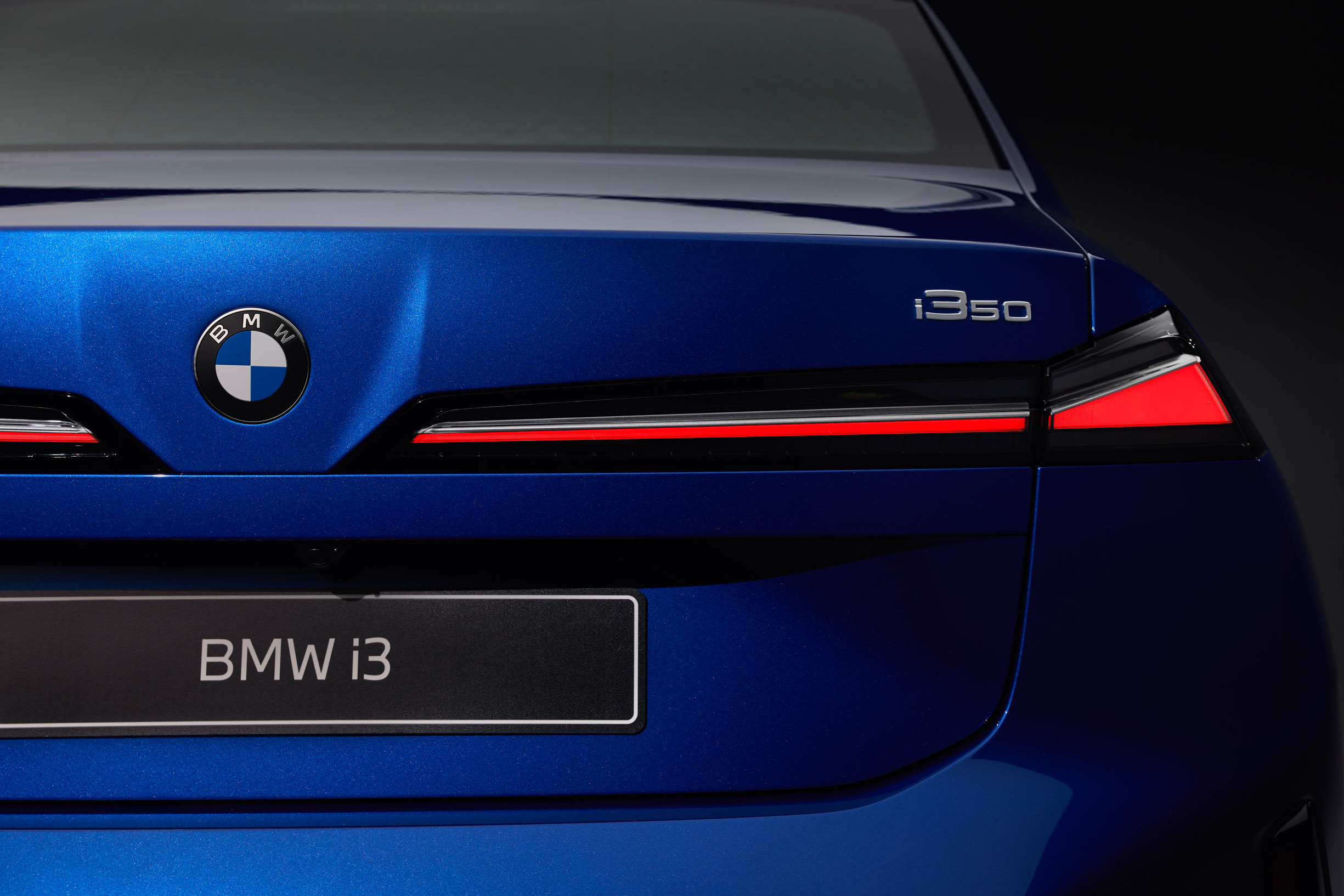
At the rear, the lights stay horizontal and reach into the shoulders and across the trunk lid to emphasize width. And you’ve probably noticed the strong new paint option. It’s called M Le Castellet Blue metallic, and is sure to be a massive hit. What doesn’t stand out as much from these images is that the 187.4-inch (4,760 mm) i3 is 1.8-inches (47 mm) longer, 1.5 inches (37 mm) wider, and 1.4 inches (36 mm) taller than the current gas-powered 3-Series in 330i xDrive form.
The 114.1-inch (2,898 mm) wheelbase is also 1.9 inches (47 mm) longer than the MY26 G20’s, although it still mostly retains traditional rear-drive sedan proportions. We say mostly, because the short distance between the front wheel-well opening and the driver’s door is a clue that there’s something very different going on under the hood.
2027 BMW i3 vs 2026 3-Series Sedan
Dimension
New i3
330i xDrive
Difference
Length
187.4 in (4,760 mm)
185.6 in (4,713 mm)
+1.8 in (47 mm)
Width
73.4 in (1,864 mm)
71.9 in (1,827 mm)
+1.5 in (37 mm)
Height
58.3 in (1,481 mm)
56.9 in (1,445 mm)
+1.4 in (36 mm)
Wheelbase
114.1 in (2,898 mm)
112.2 in (2,851 mm)
+1.9 in (47 mm)
Track (F)
63.2 in (1,605 mm)
61.9 in (1,573 mm)
+1.3 in (32 mm)
Track (R)
63.5 in (1,613 mm)
62.4 in (1,587 mm)
+1.1 in (26 mm)
SWIPE
Panoramic Dashboard
Inside, BMW seems determined to make the i3 feel like a concept car that accidentally made production. The cabin, which again borrows heavily from the iX3 SUV, features a wraparound-effect dashboard that runs into the door panels, large glass areas, and a standard panoramic roof, all of which should ensure life onboard feels less cave-like than in too many current cars.
The iX3’s controversial four-spoke steering wheel makes an appearance, and the central display is angled toward the driver, which is a nice reminder that somebody in Munich has been paying attention to 3-Series history.
The seats also sound promising, with even the standard chairs said to offer decent support as well as comfort, while optional multifunction seats and M Sport seats add extra lateral stick and a bit more theater. There are multiple interior themes, from leather-like materials to more upscale hides, and BMW says that buyers at the other end of the grade structure get cloth upholstery made from recycled fabrics, part of an i3 sustainability push that resulted in recycled materials being used for the wheels, bumpers and more.
Practicality hasn’t been ignored, either. The center console includes storage, wireless charging, and proper physical buttons for important stuff like the parking brake and hazards. But we’d like to see a few more non-digital buttons for other regularly-used functions, a philosophy VW is now employing on its newest EVs.
Infotainment And Tech
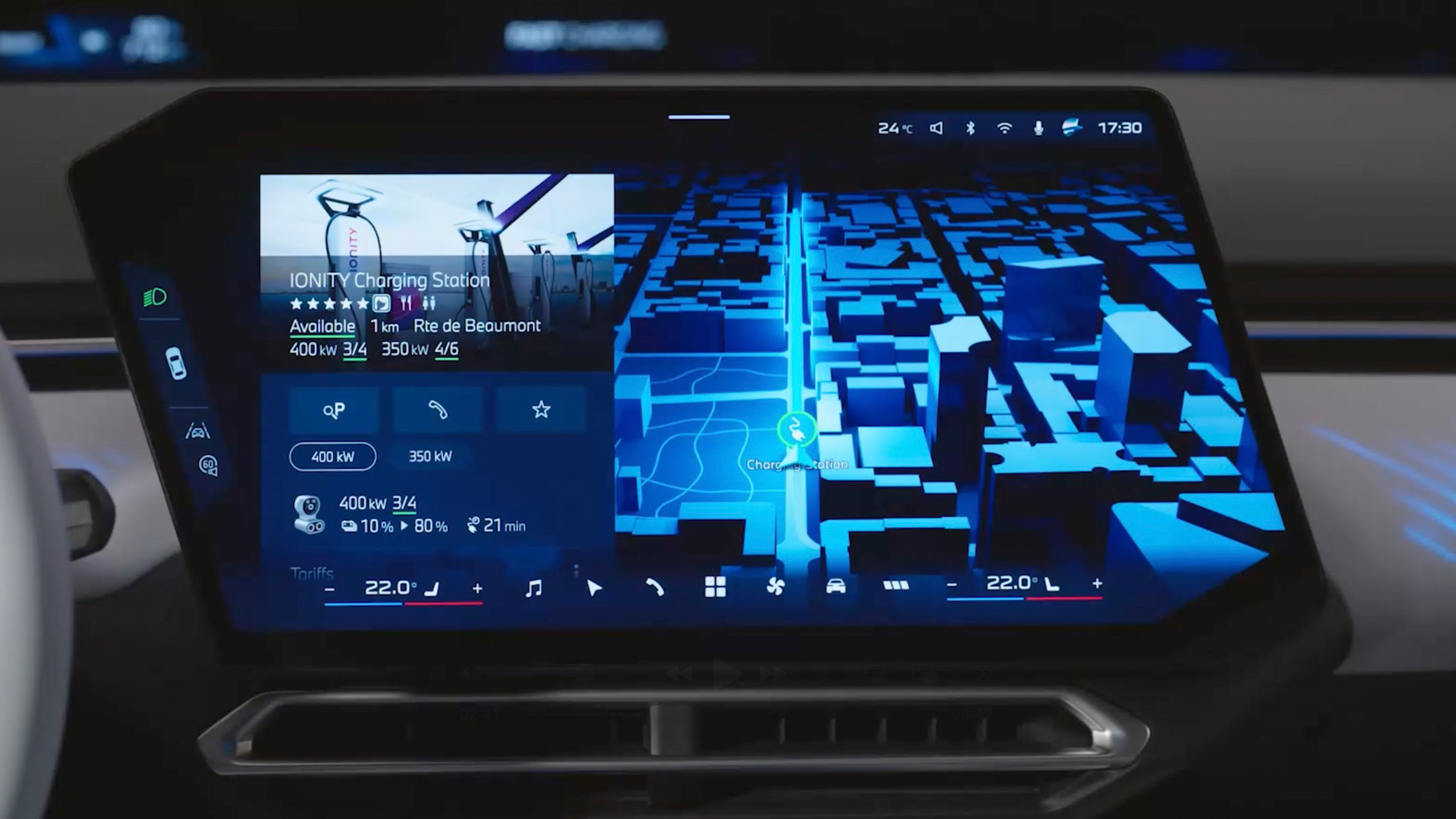
Now for the part where the i3 goes full spaceship. BMW’s new Panoramic IDrive combines a pillar-to-pillar lower windshield display, a massive 17.9-inch central infotainment screen, an optional 3D head-up display, and a new multifunction steering wheel with illuminated controls that only appear when needed.
That’s a lot, but BMW insists it’s all meant to reduce distraction rather than create it. Key information sits in the driver’s line of sight, while the central screen handles the rest. Widgets can apparently be dragged and dropped between displays, which sounds a bit like setting up your phone’s home screen, so should be intuitive. Voice control gets a major upgrade, too, using Amazon Alexa+ tech for more conversational responses and better access to cloud services.
BMW also says up to seven users can store their own profiles through a BMW ID, with settings for displays, seats, media, and more. So yes, your car now knows your name, your favorite songs, and probably your preferred ambient lighting color.
Powertrain
Underneath all the flashy design language and digital fireworks, the hardware is deadly serious. For now we’re only getting details on one model, the i3 50 xDrive, whose spec closely mirrors that of the iX3 xDrive50. That means dual motors, one on each axle, good for a combined 463 hp (469 PS / 345 kW) and 476 lb-ft (645 Nm) of torque.
You’ll no doubt be pleased to hear that the rear axle does most of the heavy lifting with an electrically excited synchronous motor, while the front gets an asynchronous motor to help with traction and overall efficiency. BMW says this combo cuts energy losses, reduces weight, and lowers manufacturing costs compared with the old setup.
More importantly, BMW keeps talking about how this car should drive. The new Heart of Joy control system manages drive, brakes, some steering functions, and recuperation, and supposedly reacts 10 times faster than previous systems. It sounds overly tech but BMW says it makes the car feel sharper, more predictable, and more natural on the move. There’s also a new five-link rear axle, standard stroke-dependent dampers, anti-roll bars with highly preloaded bearings, and an optional adaptive suspension setup.
Battery, Range, Charging
The i3 uses BMW’s sixth-generation eDrive setup, with an 800-volt architecture, cylindrical battery cells, and cell-to-pack construction. That means better energy density, flatter packaging, and up to an excellent 440 EPA miles (708 km) or 559 WLTP ones (900 km) on its preliminary test numbers. DC fast charging tops out at 400 kW, which is seriously punchy, allowing you at add 249 miles (400 km) in just 10 minutes.
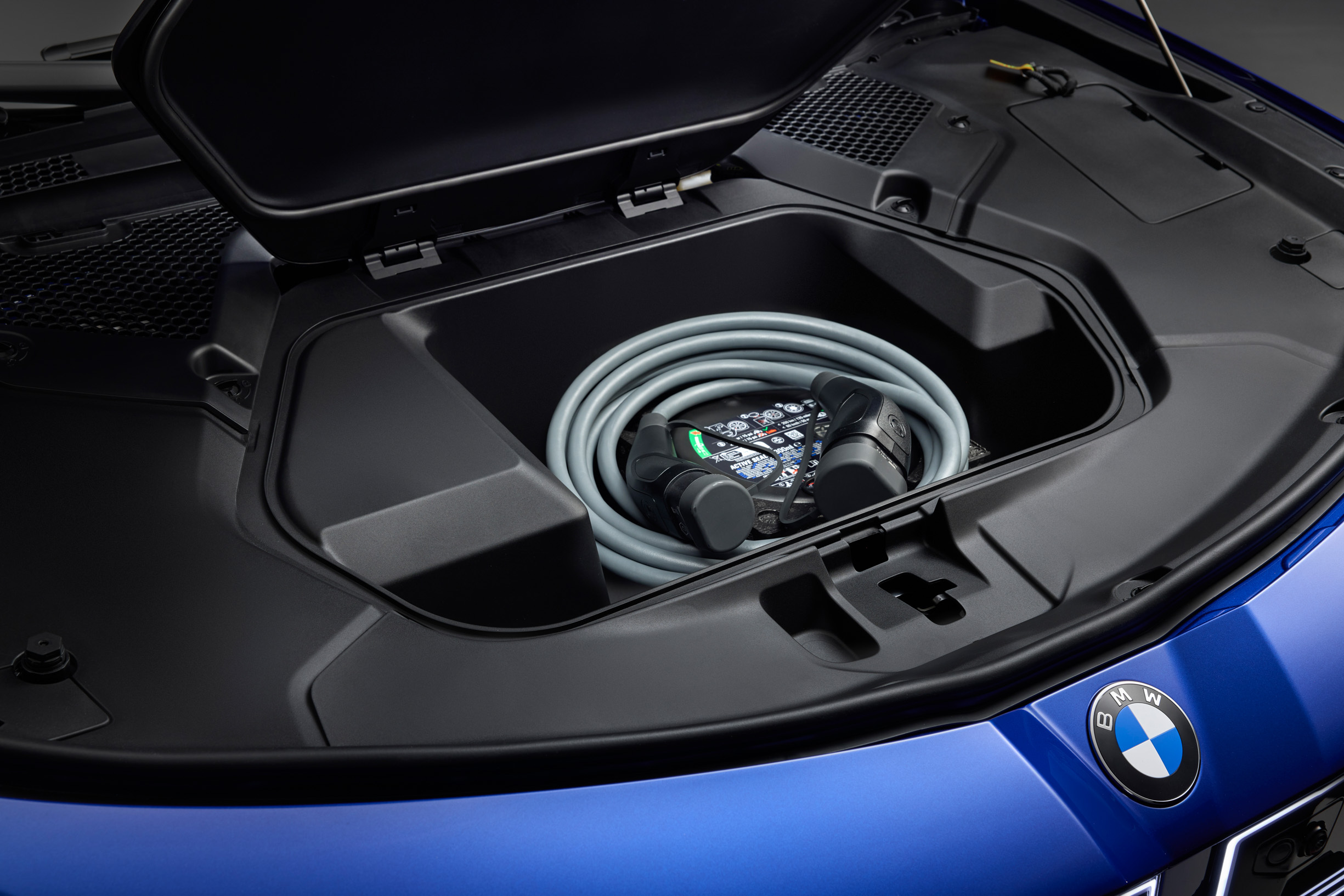
And like any self-respecting modern EV, the i3 gets bidirectional charging, so it can power appliances, help run a house, or send energy back to the grid. The charging flap even opens automatically when the car figures out you’re approaching a charger, and closes again by itself once you’ve finished charging. BMW’s route planning also factors in charging stops, station availability, costs, and nearby amenities. And in case wondering, yes, there’s a small frunk for a charging cable, but not much else.
When Can I Get One?
Production of the i3 starts in Munich in August, with first deliveries of MY27 cars beginning this fall. It’s one of the most important launches in BMW’s next wave, and not just because it’s electric. It’s also the first true EV version of one of the brand’s core nameplates, which gives it a lot more symbolic weight than your average new model reveal.
And the rollout doesn’t end here. More affordable single-motor models, plus more powerful M Performance ones, will follow, as will Touring wagons and combustion versions of the same. BMW is even working on the first ever electric M3. The 3-Series has never undergone such a radical transformation, and this eighth-generation car is bound to generate hate as well as love. Which side are you on?
BMW’s i3 brings Neue Klasse platform and design to the all-new 3-Series sedan.
800-volt tech brings 440-mile range, blistering charging, and 463 hp via dual motors.
Cabin goes full sci-fi with pillar-to-pillar head-up display and angled touchscreen.
It’s over a decade since the original i3 hatch arrived to kick-start BMW’s electric journey. That quirky little compact is long gone, but now the i3 badge is back on another, very different EV that’s even more important. The new i3 is the first electric 3-Series offered outside of China and everything from the way it looks, to the way it’s powered, to the way drives, is all new.
Petrol fans will have to wait a few more months for their new G50 3-Series, a gas-powered range of sedans that looks very much like this one but rides on an updated version of today’s CLAR platform. Today, we only get to meet the NA0-code electric version, based around BMW’s Neue Klasse EV architecture, but much of what we’re learning about the design and the interior will also apply to the ICE car.
Longer, Wider, Lower, Hotter
From the outside, the new i3 looks like a careful balancing act between familiar and futuristic. It’s not quite as lean as the various concepts that have previewed the look over the past few years, but it’s fresh, modern and has a kind of angular solidity that reminds us of the 1990s E36 with some E46 curves thrown in.
The front end gets the brand’s new visor face, along with a grille and lighting setup blended into one, as previously seen on the i3’s SUV brother, the iX3. And the side view reveals cleaner, unfussy surfaces with flush door handles and muscular swollen fenders even on the mid-ranking xDrive 50 launch model. Plus there’s a new assertive take on the classic Hofmeister C-pillar kink.
At the rear, the lights stay horizontal and reach into the shoulders and across the trunk lid to emphasize width. And you’ve probably noticed the strong new paint option. It’s called M Le Castellet Blue metallic, and is sure to be a massive hit. What doesn’t stand out as much from these images is that the 187.4-inch (4,760 mm) i3 is 1.8-inches (47 mm) longer, 1.5 inches (37 mm) wider, and 1.4 inches (36 mm) taller than the current gas-powered 3-Series in 330i xDrive form.
The 114.1-inch (2,898 mm) wheelbase is also 1.9 inches (47 mm) longer than the MY26 G20’s, although it still mostly retains traditional rear-drive sedan proportions. We say mostly, because the short distance between the front wheel-well opening and the driver’s door is a clue that there’s something very different going on under the hood.
2027 BMW i3 vs 2026 3-Series Sedan
Dimension
New i3
330i xDrive
Difference
Length
187.4 in (4,760 mm)
185.6 in (4,713 mm)
+1.8 in (47 mm)
Width
73.4 in (1,864 mm)
71.9 in (1,827 mm)
+1.5 in (37 mm)
Height
58.3 in (1,481 mm)
56.9 in (1,445 mm)
+1.4 in (36 mm)
Wheelbase
114.1 in (2,898 mm)
112.2 in (2,851 mm)
+1.9 in (47 mm)
Track (F)
63.2 in (1,605 mm)
61.9 in (1,573 mm)
+1.3 in (32 mm)
Track (R)
63.5 in (1,613 mm)
62.4 in (1,587 mm)
+1.1 in (26 mm)
SWIPE
Panoramic Dashboard
Inside, BMW seems determined to make the i3 feel like a concept car that accidentally made production. The cabin, which again borrows heavily from the iX3 SUV, features a wraparound-effect dashboard that runs into the door panels, large glass areas, and a standard panoramic roof, all of which should ensure life onboard feels less cave-like than in too many current cars.
The iX3’s controversial four-spoke steering wheel makes an appearance, and the central display is angled toward the driver, which is a nice reminder that somebody in Munich has been paying attention to 3-Series history.
The seats also sound promising, with even the standard chairs said to offer decent support as well as comfort, while optional multifunction seats and M Sport seats add extra lateral stick and a bit more theater. There are multiple interior themes, from leather-like materials to more upscale hides, and BMW says that buyers at the other end of the grade structure get cloth upholstery made from recycled fabrics, part of an i3 sustainability push that resulted in recycled materials being used for the wheels, bumpers and more.
Practicality hasn’t been ignored, either. The center console includes storage, wireless charging, and proper physical buttons for important stuff like the parking brake and hazards. But we’d like to see a few more non-digital buttons for other regularly-used functions, a philosophy VW is now employing on its newest EVs.
Infotainment And Tech
Now for the part where the i3 goes full spaceship. BMW’s new Panoramic IDrive combines a pillar-to-pillar lower windshield display, a massive 17.9-inch central infotainment screen, an optional 3D head-up display, and a new multifunction steering wheel with illuminated controls that only appear when needed.
That’s a lot, but BMW insists it’s all meant to reduce distraction rather than create it. Key information sits in the driver’s line of sight, while the central screen handles the rest. Widgets can apparently be dragged and dropped between displays, which sounds a bit like setting up your phone’s home screen, so should be intuitive. Voice control gets a major upgrade, too, using Amazon Alexa+ tech for more conversational responses and better access to cloud services.
BMW also says up to seven users can store their own profiles through a BMW ID, with settings for displays, seats, media, and more. So yes, your car now knows your name, your favorite songs, and probably your preferred ambient lighting color.
Powertrain
Underneath all the flashy design language and digital fireworks, the hardware is deadly serious. For now we’re only getting details on one model, the i3 50 xDrive, whose spec closely mirrors that of the iX3 xDrive50. That means dual motors, one on each axle, good for a combined 463 hp (469 PS / 345 kW) and 476 lb-ft (645 Nm) of torque.
You’ll no doubt be pleased to hear that the rear axle does most of the heavy lifting with an electrically excited synchronous motor, while the front gets an asynchronous motor to help with traction and overall efficiency. BMW says this combo cuts energy losses, reduces weight, and lowers manufacturing costs compared with the old setup.
More importantly, BMW keeps talking about how this car should drive. The new Heart of Joy control system manages drive, brakes, some steering functions, and recuperation, and supposedly reacts 10 times faster than previous systems. It sounds overly tech but BMW says it makes the car feel sharper, more predictable, and more natural on the move. There’s also a new five-link rear axle, standard stroke-dependent dampers, anti-roll bars with highly preloaded bearings, and an optional adaptive suspension setup.
Battery, Range, Charging
The i3 uses BMW’s sixth-generation eDrive setup, with an 800-volt architecture, cylindrical battery cells, and cell-to-pack construction. That means better energy density, flatter packaging, and up to an excellent 440 EPA miles (708 km) or 559 WLTP ones (900 km) on its preliminary test numbers. DC fast charging tops out at 400 kW, which is seriously punchy, allowing you at add 249 miles (400 km) in just 10 minutes.
And like any self-respecting modern EV, the i3 gets bidirectional charging, so it can power appliances, help run a house, or send energy back to the grid. The charging flap even opens automatically when the car figures out you’re approaching a charger, and closes again by itself once you’ve finished charging. BMW’s route planning also factors in charging stops, station availability, costs, and nearby amenities. And in case wondering, yes, there’s a small frunk for a charging cable, but not much else.
When Can I Get One?
Production of the i3 starts in Munich in August, with first deliveries of MY27 cars beginning this fall. It’s one of the most important launches in BMW’s next wave, and not just because it’s electric. It’s also the first true EV version of one of the brand’s core nameplates, which gives it a lot more symbolic weight than your average new model reveal.
And the rollout doesn’t end here. More affordable single-motor models, plus more powerful M Performance ones, will follow, as will Touring wagons and combustion versions of the same. BMW is even working on the first ever electric M3. The 3-Series has never undergone such a radical transformation, and this eighth-generation car is bound to generate hate as well as love. Which side are you on?

 Login
Login