
Reading view

There are new articles available, click to refresh the page.

Dacia’s New $21,000 EV Looks Like A Twingo Without The Fun
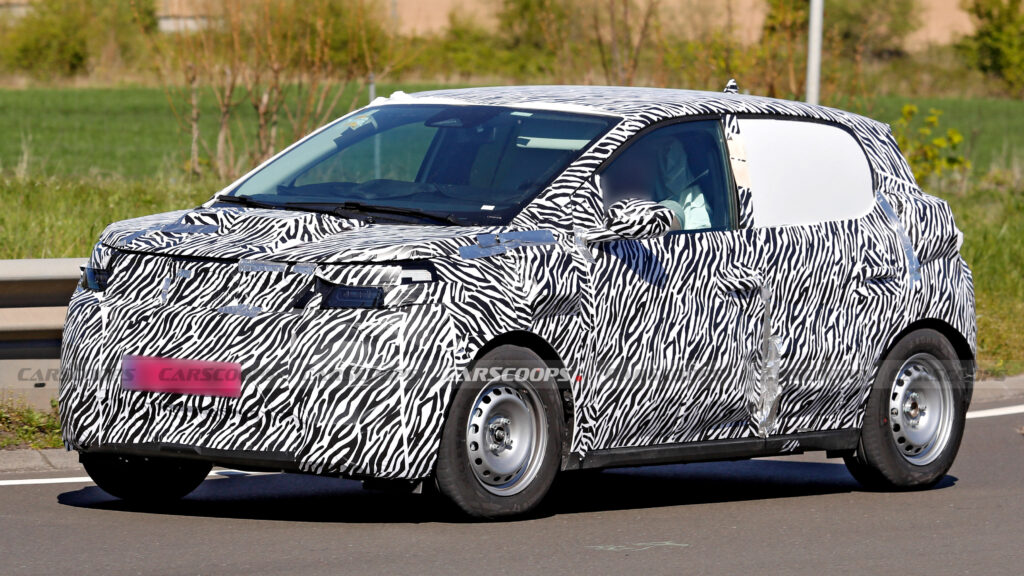
  • Dacia’s upcoming electric city car has been spied undergoing testing.
  • The small hatchback is due later this year with pricing under €18,000.
  • EV is based on the Renault Twingo E-Tech, but features unique styling.

Last month, Dacia unveiled their 2030 roadmap, which called for a “confident and decisive entry into electric mobility.” This will see them launch four new EVs by the end of the decade.

The first arrives later this year and will be an A‑segment electric hatchback based on Renault’s RGEV Small / AmpR Small platform. The model has been developed in less than 16 months and will cost less than €18,000 (about $21,200 / £15,700 at current exchange rates).

More: Dacia Confirms Four New EVs, Including Model That Costs Around $21k

That’s impressively cheap and spy photographers recently caught a prototype undergoing testing in Europe. Camouflage hides a number of details, but it’s pretty clear this is a reworked version of the Renault Twingo E-Tech.

Despite this, the Dacia has a unique front end with far more traditional headlights. We can also see a different front bumper that appears to have a wide lower intake as well as rugged body cladding.

\\\\\\\\\\

Baldauf

The profile appears to carryover largely untouched, while the rear end features new taillights that are mounted higher up than on the Twingo E-Tech. We can also see a unique bumper as well as what appears to be a more conventional liftgate.

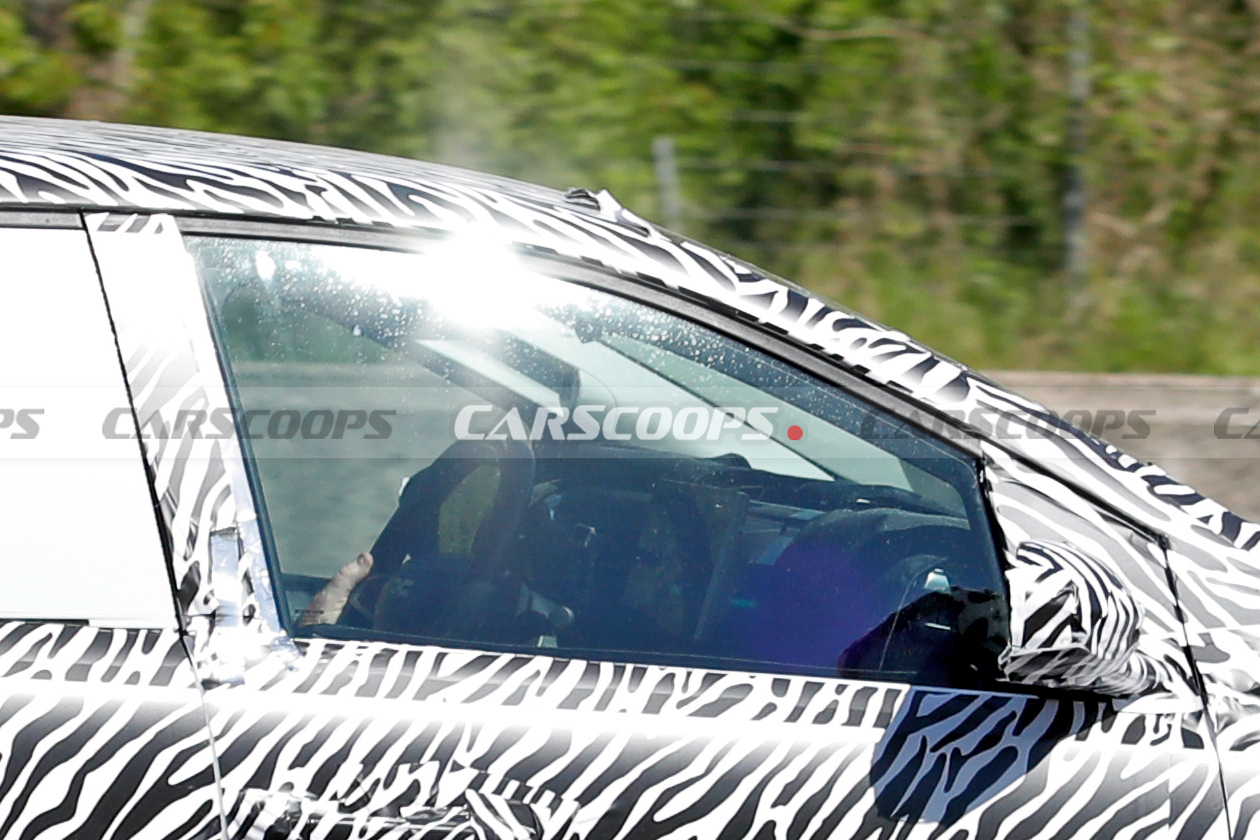
The single interior image doesn’t reveal much, but we can get a glimpse of a floating infotainment system as well as a Dacia-branded steering wheel. However, the model could echo the Twingo and adopt a 7-inch digital instrument cluster as well as a 10-inch central display.
 Dacia’s New $21,000 EV Looks Like A Twingo Without The Fun

Baldauf

We can also expect sliding rear seats that adjust up to 6.7 inches (170 mm). This enables owners to balance passenger space and cargo capacity. When luggage is what matters, there’s up to 12.7 cubic feet (360 liters) at your disposal. If that’s not enough room, the rear seats can be folded down to provide over 35.3 cubic feet (1,000 liters) of space.

The powertrain will likely carryover as well and this means we can expect an electric motor developing 80 hp (60 kW / 82 PS) and 129 lb-ft (175 Nm) of torque. This enables the Twingo to accelerate from 0-62 mph (0-100 km/h) in a leisurely 12.1 seconds, before topping out at a mere 81 mph (130 km/h).

To help keep costs down, the Twingo uses a small 27.5 kWh lithium iron phosphate battery pack. It provides a WLTP range of up to 163 miles (263 km), which isn’t much but likely fine for a city car.

\\\\\\\\\\\\

Baldauf

Radical Espace Reboot Leads Renault’s 36-Car Plan To Fight China’s Threat

  • Renault Group will introduce 36 new models by 2030 including 16 new EVs.
  • 800-volt RGEV platform offers 466-mile EV range, 879 with range extender.
  • Aims to cut EV costs by 40 percent and development times to just 24 months.

Renault has decided the best way to prepare for the future is to literally name its strategy after it. The company’s new futuREady plan promises dozens of new models, cheaper EVs, and dramatically faster development cycles as the French automaker tries to China-proof its business and become Europe’s “benchmark” carmaker.

The strategy builds on the Renaulution turnaround plan launched in 2021, which helped stabilize the company after several turbulent years. Now Renault wants to turn that recovery into long term growth with a roadmap that stretches through the end of the decade.

Related: Renault’s Making A Jimny, But Even The French Can’t Have It

The headline figure is simple enough. Renault Group plans to launch 36 new models in the next five years, including 22 in Europe and 14 for international markets. Electrification will be a lynchpin, with 16 of those European launches set to be fully electric.

Hybrids will still have a role, though. Renault says hybrid technology will remain in its European lineup beyond 2030 while continuing to expand globally where charging infrastructure isn’t yet ready for a full EV takeover.

Dacia Expansion

Each brand has its own role in the plan. Renault aims to strengthen its European position while expanding internationally, targeting more than 2 million annual sales by 2030 with half delivered outside Europe, including a production version of the chunky Bridger combustion SUV set to do battle with the Suzuki Jimny in India (see gallery below).

\\\\\\

Dacia will stick with its familiar value formula but add more electrification. By the end of the decade, about two thirds of its sales are expected to be electrified and the brand will expand further into the larger C segment.

Alpine will carry the performance torch and a new generation of the A110, this time as an EV, is coming alongside newer models like the electric A290 and A390. And the brand’s boss Philippe Krief confirmed that the electric A110’s platform will also be able to handle combustion power. But if you were hoping to buy one in the United States, Renault’s latest strategy rules out a North American adventure for any of its brands.

Compact Upgrade

One of the most important pieces of the plan is Renault’s upcoming RGEV medium 2.0 electric platform destined for its next generation of compact, C-segment vehicles. This architecture brings 800 volt charging technology to the company for the first time and promises some impressive numbers, including a 40 percent reduction in build costs. Renault teased its possibilities, and also the look of the next Espace, with the the R-Space Lab, a slippery EV concept (shown below).

\\\\\\\\\\\\\\\

Renault says EVs built on the platform could deliver up to 466 miles (750 km) of range, while a range extender version could stretch that figure to around 879 miles (1400 km). Power won’t be lacking either. The next-generation electric motor is expected to deliver up to 271 hp (275 PS).

Keeping Up With China

Software is another big piece of the puzzle. Future Renault models will move toward software defined vehicle architecture that allows most functions to be updated over the air and eventually managed by artificial intelligence systems. The company also wants to speed things up dramatically. Renault aims to reduce development cycles for new vehicles to just two years, something that will be crucial to keeping pace with Chinese automakers.

Renault’s platform strategy
Platform FamilyPlatformsTypeSegments / Purpose
Electric Passenger Car PlatformsRGEV SmallEV platformA and B segment small EVs
RGEV Medium 1.0EV platformFirst generation C segment EVs
RGEV Medium 2.0EV platformNext generation C and D segment EVs with 800V tech
Electric Commercial PlatformsRGEV Medium VanEV platformC segment light commercial vans
Modular Multi Energy PlatformsRGMP SmallModular platformB and C segment vehicles with multiple powertrains
RGMP MediumModular platformC and D segment vehicles
RGMP Pick-UpModular platformPickup trucks
Entry Level Multi Energy PlatformRGEPMulti energy platformAffordable entry level vehicles
Partner Based PlatformRGEAAdapted Geely GEA platformShared platform for some international models
Performance PlatformAPPAlpine performance platformAlpine sports cars
SWIPE
❌