
Reading view

There are new articles available, click to refresh the page.

Firewood banks offer heat, and hope, to rural homes in need

A person, wearing a shirt that reads "Interfaith … Burnett County … Crew," stands near stacked firewood and pallets beside a green shed, looking across a yard with large wood piles and wheelbarrows.
Reading Time: 5 minutes
Click here to read highlights from the story
  • As low-income households make tough decisions amid rising health care, food and utility costs, firewood banks are providing a community service to keep people warm through the cold winter months.
  • Organizations like the Alliance for Green Heat have helped serve the 2.3 million U.S. households that rely on firewood for heat, but the group has had to rebrand under the Trump administration, which placed a premium on harvesting timber from federal lands.
  • There are an estimated 250 firewood banks across the country. Resources are available to help start a firewood bank in regions that don’t have access to one.

When Denny Blodgett learned his northwest Wisconsin county intended to burn wood harvested during a road-widening project near his home, he thought it would be unthinkable for that fuel to go to waste.

As Blodgett recalls, he offered some of the harvested wood to an older man from his church, and word spread around his community of Danbury that he had firewood to give.

“And pretty soon, we’re helping 125 families,” said Blodgett, who founded Interfaith Caregivers’ Heat-A-Home program.

That was three decades ago.

Last year, volunteers delivered nearly 200 loads of split wood to local households.

And as the cost of living increases amid federal cuts to social safety net programs, struggling families increasingly face a winter of tough choices as they try to meet their basic needs.

Food, medicine or heat?

Interfaith is one of about 250 known firewood banks across the country that seek to ameliorate the demand for energy assistance.

There isn’t a clear definition for firewood banks, which have been around since at least the 1970s, but have roots in Native traditions since time immemorial. They can take the informal form of Good Samaritans delivering logs to neighbors to large take-what-you-need distribution sites operated by cities or Indigenous tribes.

But the common denominator to these networks of care is their low- or no-cost service to people who lack the means to purchase alternative forms of heat and process their own firewood. Often, both factors stem from the same issue, such as illness or aging.

The U.S. Census Bureau estimated as of 2020 that 2.3 million households in the United States rely on firewood as their primary source of heating fuel.

But one of the great paradoxes of what researchers term “fuel poverty” is that those struggling to keep their homes warm in rural, often heavily forested areas lack ready access to wood.

“I’ve got 20 acres of oak and hardwood here and a chainsaw and a log splitter, but I’m pretty much unable to really do much with it,” said Danbury resident Peter Brask, 78, who struggles with neuropathy. “I just still feel embarrassed asking for help because I’ve been so self-sufficient all my life.”

Last year’s wood delivery from Interfaith was a “lifesaver” for getting through the winter, the retired IBM software specialist said.

Blodgett, a former U.S. Air Force lieutenant colonel, purchases and accepts donated wood, delivered to a yard adjacent to his home. A processor cuts “cattywampus” piles of timber into smaller pieces, and volunteers split them into burnable portions.

The wood dries until it’s “seasoned.” The less moisture in a log, the cleaner and more efficiently it burns.

Firewood piles stand near a log splitter and wheelbarrow filled with cut logs in a dirt clearing, with open sheds, scattered chairs and a parked pickup truck near a wooded tree line.
The Interfaith Caregivers of Burnett County firewood bank in Danbury, Wis., photographed Oct. 3, 2025, is one of about 250 across the country. (Bennet Goldstein / Wisconsin Watch)
Large stacks of split firewood sit on pallets in a clearing, with a log splitter and a wheelbarrow labeled "ACE," in front of a wooded tree line.
The Interfaith Caregivers of Burnett County firewood bank, seen Oct. 3, 2025, in Danbury, Wis., assists about 125 families a year with home heating. (Bennet Goldstein / Wisconsin Watch)

Interfaith purchased two trailers a few years ago with money the group obtained from the Alliance for Green Heat, a nonprofit that advocates for the use of modern wood-burning heating systems.

Buoyed with money from the 2021 Bipartisan Infrastructure Law, it has issued more than $2 million in grants to firewood banks that help them purchase safety equipment, chainsaws and wood splitters, as well as smoke detectors for wood recipients.

Overlooking a renewable resource like wood at the potential cost to human health is unthinkable, said the organization’s founder John Ackerly, especially when so much potential firewood ends up in landfills — the “scraggly stuff” that lumber mills can’t offload. The U.S. Environmental Protection Agency calculated 12.2 million tons of wood ended up as municipal solid waste in 2018.

“Usually, firewood is not a very profitable thing to sell, very labor-intensive and very heavy,” Ackerly said.

Another opportunity presented by firewood banks is providing a local outlet that avoids spreading wood infested with invasive species. Banks also avert the dumping of wood sourced from storm-damaged trees, exacerbated by climate-change-magnified severe weather — winds and snow.

“We’re losing our power, our electricity in these storms all the time,” said Jessica Leahy, a University of Maine professor, who co-authored a guide to starting community wood banks. “It would be great to have everybody in the most carbon-neutral heating source for their house. That sounds great, but there are people burning their kitchen cabinets in order to stay warm.”

Now in its fourth year issuing grants with federal dollars, the Alliance for Green Heat had to rebrand after the Trump administration pushed for increased timber harvests on federal lands in the name of national economic security.

This year, firewood banks seeking grants must source wood from actively managed federal forests, a potential problem for the handful of states that lack them.

“Before, we really touted the program as serving ‘low-income populations’ with a ‘renewable, low-carbon fuel,’” Ackerly said. “We had to remove that language, but we were able to keep doing what we had been doing the same way.”

Researchers who mapped wood banks across the U.S. identified a second in Wisconsin — the Bear Ridge Firewood Bank, sponsored by the Stockbridge-Munsee Band of Mohican Indians — and a handful in other Midwestern states, including Indiana, Michigan and Minnesota. 

Clarisse Hart — director of outreach and education at Harvard Forest in Petersham, Massachusetts, and one of the researchers — said firewood banks often go by different names depending on the region: firewood assistance program, firewood for elders, firewood ministry, wood pantry and charity cut, to name a few.

Other exchanges happen behind the scenes, she said, often on private, community social media pages — making banks harder to identify.

Often, the operations depend on the commitment of volunteers. 

“A lot of people want to give back, but they don’t know what to do,” said Ed Hultgren, who started an Ozark, Missouri, wood bank in 2009. “It doesn’t have to be wood ministry. You find a gap in your area and see if there’s something you can do to fill it.”

Wayne Kinning — a retired surgeon who volunteers with his Fenton , Michigan, Knights of Columbus council — is one of a dozen or so men from St. John the Evangelist parish who cut, split and sell low-cost firewood. The proceeds support local charities.

“We donate all our time and even our chainsaws,” he said. “That, of course, then gives a person a sense of meaning in their day and a sense of worth in their giving.”

A person wearing a shirt that reads "Denny" stands beside a log splitter with a hand on a split log, with large piles of firewood behind the person.
Denny Blodgett, founder of a firewood bank project through Interfaith Caregivers of Burnett County, is seen Oct. 3, 2025, in Danbury, Wis. (Bennet Goldstein / Wisconsin Watch)

Among Blodgett’s helpers are a snowmobile club, several churches and a Jewish summer camp. Another dedicated volunteer — Wendy Truhler, 74, of Danbury — has assisted Blodgett for nearly two decades, since her spouse died.

“Listen, I helped my husband split for 30 years. I know how to lift and work a splitter and this and that,” she told Blodgett when she started. “I would rather be outside than glued to a little 12-inch computer screen.”

Blodgett delivers wood throughout the year, which takes the pressure off the winter rush.

He fills the extra time working on other Interfaith projects: constructing wheelchair ramps for families and running the Christmas for Kids program.

Last year, 335 children received toys and clothes from their wish lists. Families also get a $50 food card. And he makes sure they get another resource wood provides.

A decorated tree for Christmas.

Wisconsin Watch is a nonprofit, nonpartisan newsroom. Subscribe to our newsletters for original stories and our Friday news roundup.

Firewood banks offer heat, and hope, to rural homes in need is a post from Wisconsin Watch, a non-profit investigative news site covering Wisconsin since 2009. Please consider making a contribution to support our journalism.
From ski trails in Wisconsin to hiking paths in Phoenix, extreme heat is reshaping recreation — and our attitudes

Person in a hat, blue shirt and shorts walks on a rocky path.
Reading Time: 6 minutes

This story is from Floodlight, a nonprofit newsroom that investigates the powers stalling climate action. Sign up for Floodlight’s newsletter here

In south-central Wisconsin, near-record warmth in January and two record-breaking summer heat waves have cross-country skiers nervous they won’t be getting much snow this winter — again. 

And it’s not just skiers in Wisconsin who are worried. New research shows heat waves are prompting a growing number of Americans to make the connection between hotter weather and climate change. 

Ski seasons in the United States have shrunk by an average of 5.5 to 7.1 days between 2000 and 2019 compared to the 1960s and ’70s, according to a 2024 study by researchers from Canada and Austria. And in the coming 25 years, ski seasons could be even shorter — by between two weeks and three months — depending on how much the world reduces its greenhouse gas emissions, the researchers said.

Tamara Bryant, executive director of a cross-country ski club in Madison, Wisconsin, has seen this dynamic firsthand — both in her professional and personal lives.

“I remember the winters where my son could build snow forts in the front yard, year after year, and we’re just not getting the same (amount of snow),” she said. “Having a white Christmas is not something we can totally rely on.”

Madison’s chain of lakes also aren’t freezing like they used to, creating hazards for people who fish on the ice. 

Boy smiles and holds fish on icy lake.
Hilary Dugan, associate professor in the Center for Limnology at the University of Wisconsin-Madison, says back in the 1800s, lakes would remain frozen approximately 130 days a year, but now, on average, it’s about 75 days. Here, a young ice fisherman shows off his catch on Lake Monona in Madison in 2024. (Sharon Vanorny / Courtesy of Destination Madison)

Hilary Dugan, associate professor in the Center for Limnology at the University of Wisconsin-Madison, says back in the 1800s, lakes would remain frozen approximately 130 days a year, but now, on average, it’s maybe 75 days a year.

“That’s something that people around here notice because winter is a big part of life,” Dugan said. “Traditionally, winter would start in December (and) it would end probably like April. That meant that you could consistently go out and ice fish, cross-country ski, you know, winter recreation.

“We’re talking months of change — not just a couple of days.”

Heat curbs desert hiking 

More than 1,700 miles away in Phoenix, dangerous heat has prompted officials to close the city’s extensive system of mountain trails. But that hasn’t stopped some from hiking in 100-degree-plus weather, leading to emergency rescues and the death of a 10-year-old last year. 

The National Oceanic and Atmospheric Administration found 2024 was the hottest year in its 130-year climate record. NOAA reported the average annual temperature across the contiguous United States in 2024 was 55.5 degrees — or 3.5 degrees above the 20th-century average — heat that it said fueled a near-record number of tornadoes. 

Hotter summers and warmer winters are not only disrupting outdoor activities. The record-breaking heat has also been driving national concern about climate change — more so even than dramatic events such as wildfires and hurricanes, according to new research. 

Yale’s latest Climate Opinion Maps found that 65% of U.S. adults somewhat or strongly agree that global warming is affecting weather patterns, while 72% of adults nationally think global warming is real. 

Its recent study showed that people’s interest in learning more about climate change consistently spikes during weather events like heat waves. And the public’s interest in climate change increases in specific areas experiencing extreme weather events, researchers found. 

A desert trail, houses and mountains
The Phoenix Mountains Preserve is criss-crossed with trails. But extreme heat caused by climate change is making hiking them much more dangerous. (Andy Hall / Floodlight)

“Certain weather events — like heat waves — seem to produce consistent jumps in climate change interest across all regions simultaneously,” the researchers wrote, “while others — like wildfires — show more geographic variation.”

The study involved research through Yale’s partnership with Google. The team analyzed online search trends across the country, finding that searches on climate change followed “consistent and predictable patterns.”  

Heat waves in 2023 sparked consistent interest in climate change, the study found, while Hurricanes Helene and Milton in 2024 garnered an increase in searches only in the places affected by those storms. Similarly, interest in climate change increased during bouts of wildfires in the United States and Canada, but only in the areas most directly affected by the smoke, the study found.

The authors suggest the findings can be used by officials to help people prepare for extreme weather. And, the authors note, “this timing could help the public better understand the need to transition to renewable energy sources, reduce fossil fuels, update risk assessments, increase planning, and strengthen building codes.”

Heat not just inconvenient — it’s deadly

Climate Central’s analysis of heat streaks between 1970 and 2024 found that their frequency has at least doubled in nearly 200 cities across the Southwest, Northeast, Ohio River Valley and southeastern parts of the country — and those heat waves were attributed to greenhouse gas emissions. 

The data, released in July by the nonprofit group of scientists and climate researchers, also found heat waves are the leading cause of weather-related deaths in the United States. In 2023, the group reported that 2,325 people in the United States died from extreme heat — a record high. 

This heat, Phoenix Fire Department Capt. Rob McDade said, “It’s very dangerous.” In July 2024, a 10-year-old boy died from heat-related injuries while hiking South Mountain Park and Preserve with his family. 

In 2021, Phoenix adopted a safety program to restrict access on parts of the city’s 200-plus miles of trails during extreme heat — especially on rugged stretches where it’s more difficult for the fire department to rescue hikers.

“We have more people hiking than ever, and we are seeing rescues that have to happen that definitely are related to the heat,” said Jarod Rogers, deputy director of the city’s Parks and Recreation Department. 

Last year, between May 1 and Oct. 13, the city had 45 days of trail closures due to extreme heat. Since adopting the safety program, there have been fewer rescues — from 57 in 2021 down to 35 in 2024. 

“The proof is in the pudding,” McDade said. “Setting up these restrictions is dramatically cutting back those extreme (heat) day mountain rescues.”

Warm weather hits winter sports 

Rising temperatures are causing a different kind of risk in northern regions. Last winter, Dugan said she repeatedly heard about people being rescued after falling through melting lake ice.

“It felt higher than normal,” she said. “People are willing to go out on the thinnest ice to go get some fish. It’s definitely a passion for people here.”

Skiers are also feeling the burn from a warmer climate. Bryant, executive director for the MadNorSki Club (Madison Nordic Ski), said there has been little snow in recent years, shortening the cross-country skiing season. 

Annual snowfall in Madison has decreased over the past three winters from 70 accumulated inches in 2022 to 43 inches in 2023 and 22 inches in 2024. 

Bryant said popular ski races have had to cancel because of the lack of snowfall. Some event organizers have resorted to using artificially made snow. 

Birkie cross-country skiers ski on snow with trees in background.
The annual American Birkebeiner ski race in Cable, Wis., has had to adjust to less snow and warmer temperatures in recent years. In 2024, organizers used snowmaking machines to create a 10-kilometer loop instead of the normally linear 50- or 53-kilometer course. (Courtesy of American Birkebeiner Ski Foundation)

In 2017, organizers of the American Birkebeiner race (“Birkie”), which draws more than 10,000 nordic skiers to northern Wisconsin each year, canceled its cross-country ski races due to lack of snow.

In 2024, another low-snow year, Birkie organizers used snowmaking machines to create a 10-kilometer ski loop instead of the normally linear 50- or 53-kilometer course.

“In the photos, you would see this little white ribbon of snow on the trail, and it was brown everywhere else,” Bryant said, calling the recent lack of snow in Wisconsin “freaky.”

Birkie spokesman Shawn Connelly said the American Birkebeiner Ski Foundation has kept its ski events running thanks to donor funding to purchase the snow-making equipment. “As long as we have the cold, we’ll have the snow,” Connelly vowed, “and we’ll continue to host North America’s largest annual cross-country ski race.” 

Trump seeks to halt U.S. climate push 

While the Yale study shows Americans are increasingly concerned about climate change, President Donald Trump’s administration is moving in the opposite direction. 

In July, the U.S. Environmental Protection Agency proposed rescinding the 2009 Endangerment Finding, which scientifically characterized planet-warming greenhouse gases as a danger to human health and the environment. The ruling was used as the foundation for the federal government’s regulation of emissions from vehicles and power plants for the last 16 years. 

The proposal comes after the Trump administration gutted many of the initiatives of former President Joe Biden’s Inflation Reduction Act that aimed to reduce the country’s climate impact over the next two decades. 

Environmental advocates have accused the Trump administration of “burying its head in sand” when it comes to the climate crisis.

“Americans are already suffering from stronger hurricanes, more severe heat waves and floods, and more frequent fires,” Fred Krupp, president of the Environmental Defense Fund, said in a prepared statement. “(Americans) are watching these climate disasters get worse (and) the danger to their lives and health intensify.” 

Floodlight is a nonprofit newsroom that investigates the powers stalling climate action.

From ski trails in Wisconsin to hiking paths in Phoenix, extreme heat is reshaping recreation — and our attitudes is a post from Wisconsin Watch, a non-profit investigative news site covering Wisconsin since 2009. Please consider making a contribution to support our journalism.

It’s Getting Hot in Here: Climate Resilient Infrastructure to Combat Urban Heat Island Effect

As global temperatures continue to rise, cities are becoming increasingly vulnerable to the Urban Heat Island (UHI) effect, where urban areas experience significantly...

The post It’s Getting Hot in Here: Climate Resilient Infrastructure to Combat Urban Heat Island Effect appeared first on Cleantech Group.

Farm Foundation’s Meet Your Farmer Podcast with Steve Kaufman

Farm Foundation’s Meet Your Farmer podcast featured Steve Kaufman in season 1, episode 3.

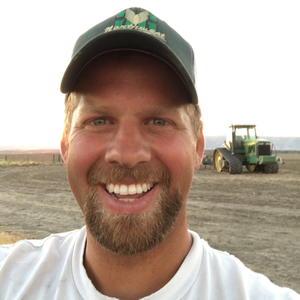
Steve is a fifth-generation farmer. He returned to his family’s Idaho farm full time in 2014 when his uncles and father were ready to retire. He and his two brothers farm 14,000 dryland crop acres, growing primarily winter wheat, spring wheat, peas, garbanzo beans, and canola. Prior to that, he worked at Northwest Farm Credit Services while also farming part time. Steve is an alum of Farm Foundation’s Young Farmer Accelerator Program.

In this episode, Steve talks about how gratifying it is to produce enough grain for 30 million loaves of bread on his farm, the hard work of trying to balance life with young kids and farm life, and what the process was like to switch over to no-till.

Listen to the episode.

Music: “Country Roads” by Sergii Pavkin from Pixabay

Reach us at communication@farmfoundation.org.

The post Farm Foundation’s Meet Your Farmer Podcast with Steve Kaufman appeared first on Farm Foundation.

❌