While social media continues to circulate claims linking acetaminophen to autism in children, medical experts say those fears distract from a far more serious and proven danger: overdose. Acetaminophen, found in Tylenol and many cold and flu remedies, is one of the leading causes of emergency room visits, hospitalizations, and acute liver failure in the United States.
Solid-state batteries could store more energy and charge faster than today’s batteries, but they tend to crack and fail over time. Stanford researchers found that a nanoscale silver treatment can greatly strengthen the battery’s ceramic core. The silver helps seal tiny flaws and prevents lithium from causing further damage. This simple approach could help unlock next-generation batteries.
When scientists sent bacteria-infecting viruses to the International Space Station, the microbes did not behave the same way they do on Earth. In microgravity, infections still occurred, but both viruses and bacteria evolved differently over time. Genetic changes emerged that altered how viruses attach to bacteria and how bacteria defend themselves. The findings could help improve phage therapies against drug-resistant infections.
A huge bar of iron has been discovered lurking inside the iconic Ring Nebula. The structure is enormous, spanning hundreds of times the size of Pluto’s orbit and containing a Mars-sized amount of iron. It was detected using a new instrument that allowed astronomers to map the nebula in far greater detail than ever before. The origin of the iron bar is still a mystery, with one theory suggesting it could be the remains of a vaporized planet.
Researchers have identified OTULIN, an immune-regulating enzyme, as a key trigger of tau buildup in the brain. When OTULIN was disabled, tau vanished from neurons and brain cells remained healthy. The findings challenge long-held assumptions about tau’s necessity and highlight a promising new path for fighting Alzheimer’s and brain aging. Scientists now believe OTULIN may act as a master switch for inflammation and age-related brain decline.
A Michigan dairy farm took a gamble on a new kind of soybean—and it paid off fast. After feeding high-oleic soybeans to their cows, milk quality improved within days and feed costs dropped dramatically. Backed by years of MSU research, the crop is helping farmers replace expensive supplements with something they can grow themselves. Demand has surged, and many believe it could reshape the dairy industry.
Toyota will double down on hybrids and ICE in key regions.
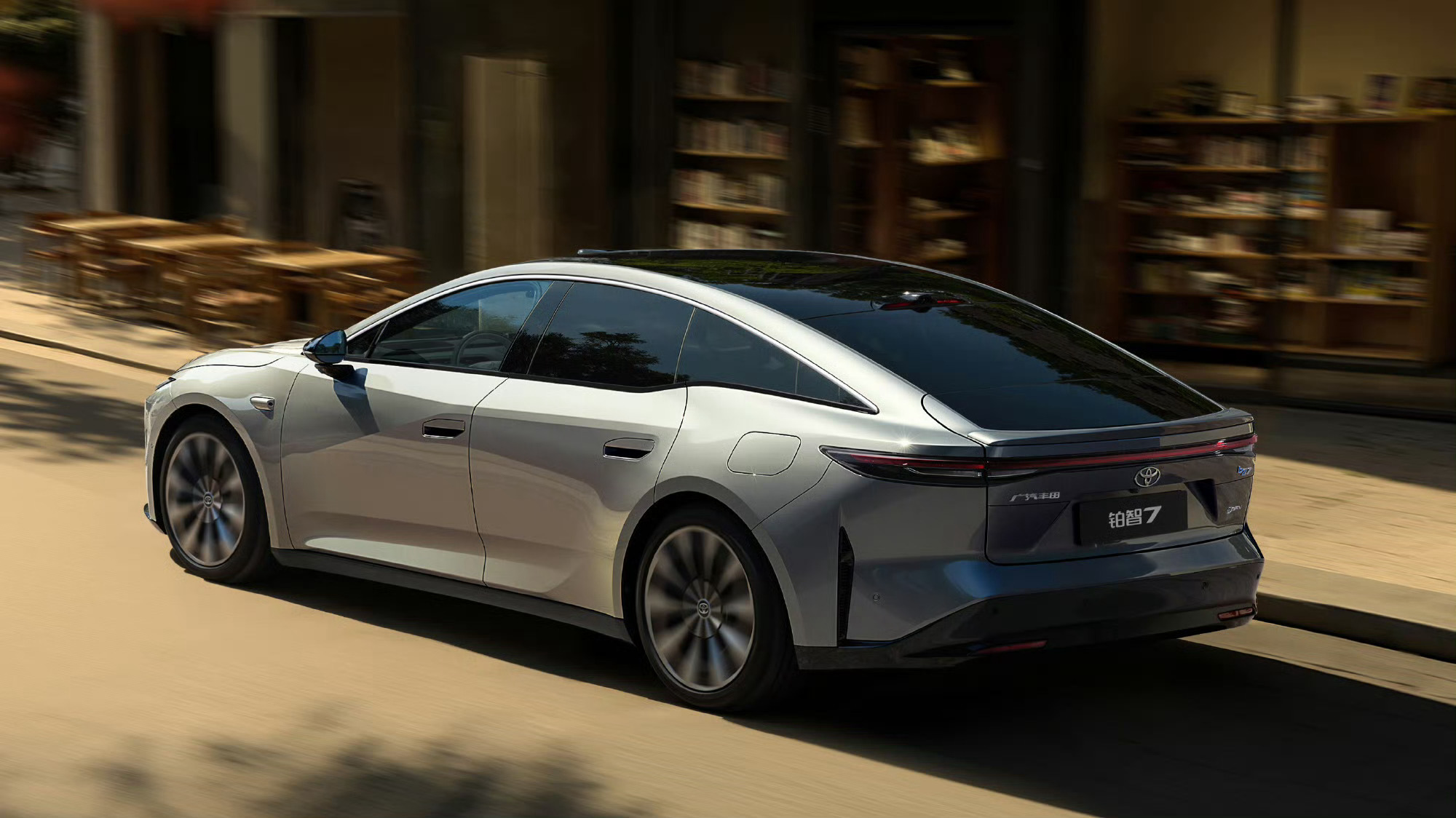
China will remain Toyota’s electric-first market going forward.
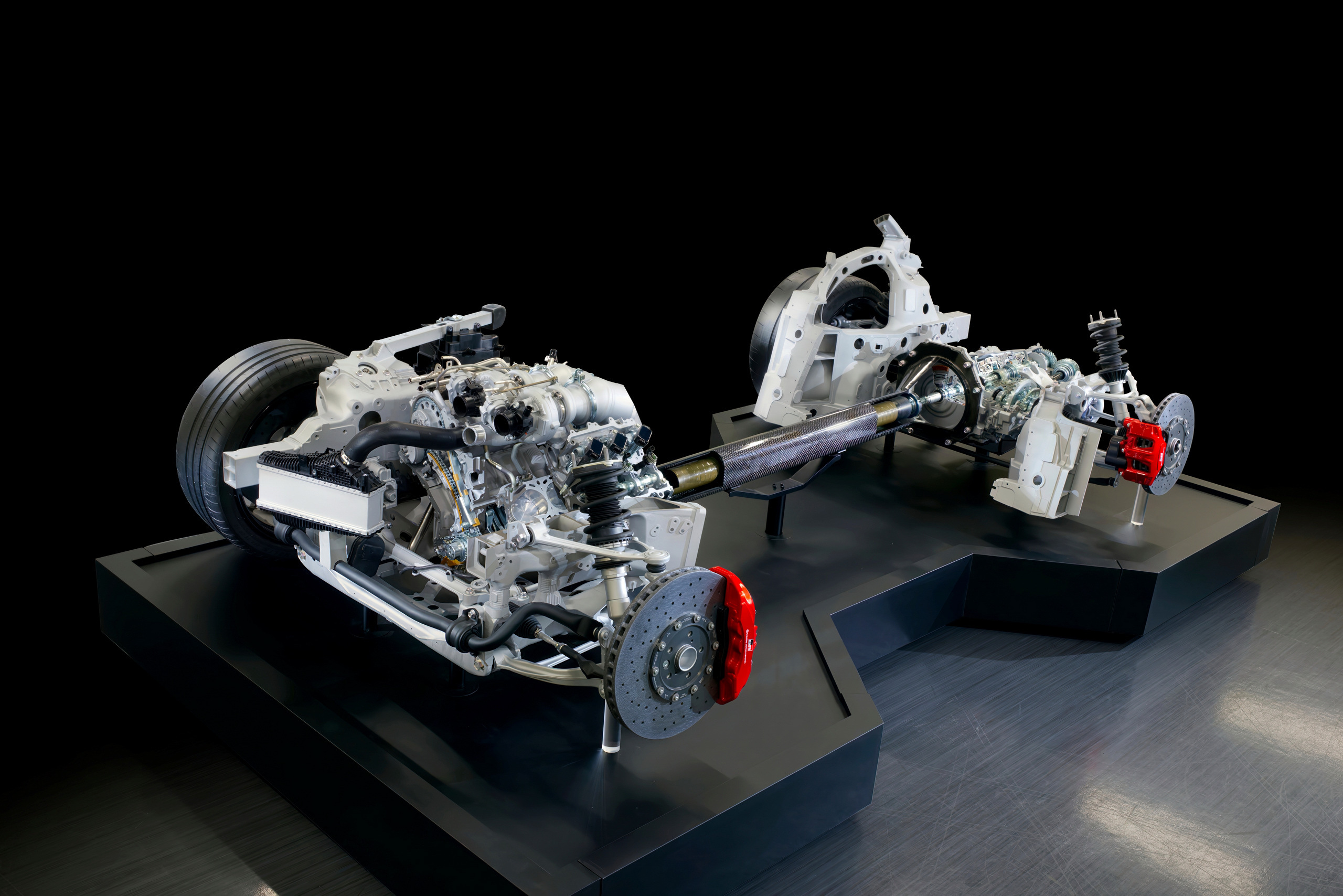
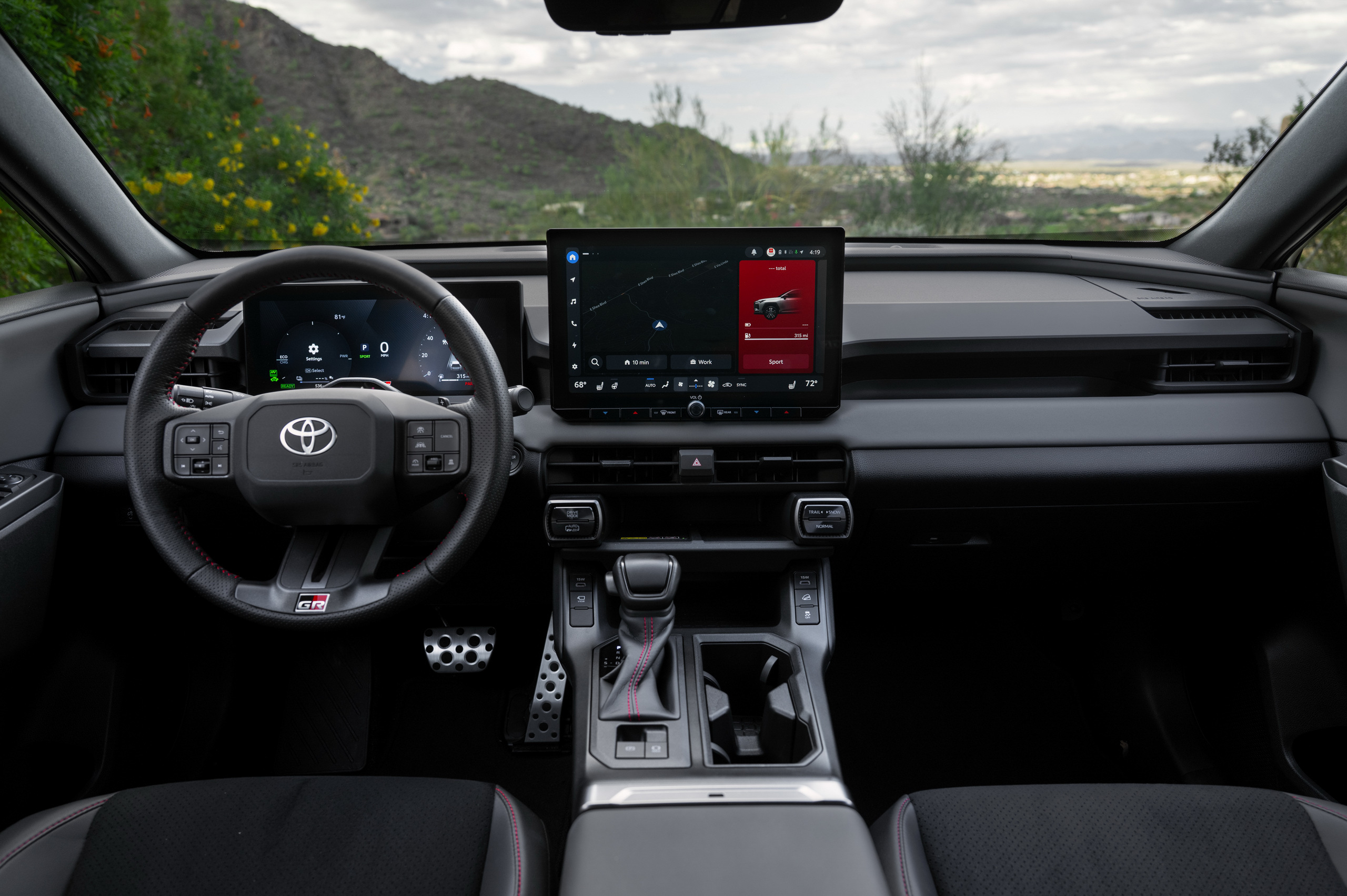
GR GT V8 hybrid proves Toyota’s engine push isn’t just talk.
Saying the automotive world is in a bit of limbo may be an understatement. On one hand, you have the world’s largest market, China, accepting EVs and plug-in hybrids in even greater numbers than ever before. Meanwhile, in Europe, manufacturers are pulling back on their EV manifestos as the European Union provides some respite in the face of slower-than-predicted adoption.
Toyota, by contrast, has always been pro-ICE. For years, the company has questioned its competitors and governments, who have been advocating exclusively for electric vehicles. And while the company has shown off various plans for EVs, they’ve maintained a more balanced approach.
Now, it may be clear that Toyota wasn’t going to say goodbye to combustion without a fight, but we imagine not many would have predicted the unveiling of the GR GT: a production-slated halo supercar with a ferocious twin-turbocharged 4.0-liter hybridized V8 engine.
The Fight for Identity
In an era of tightening emissions regulations and downsized powertrains, the decision to green-light a V8 may seem almost rebellious. But for Toyota, the GR GT isn’t about volume or compliance alone. It’s about identity.
Nikkei Asia notes that the GR GT has been built without the assistance of Yamaha, unlike its spiritual forefathers, the 2000GT and Lexus LFA. “Automobiles, as an industrial product, are in danger of becoming commoditized,” says Toyota Chairman Akio Toyoda. “The engine still has a role to play,” underscoring the importance of the in-house powerplant.
The reality is that Toyota’s focus on keeping engines around will permeate throughout its lineup for the foreseeable future. In June 2025, Toyota convened suppliers at an internal combustion engine rally, where executives outlined plans to develop new engines, including high-output units, while maintaining overall engine production volumes through 2030.
It was a clear signal that Toyota sees a long runway for combustion, even as the market fragments.
However, Toyota is still hedging its bets with EVs, especially when it comes to China. Over there, the car-buying population continues to march towards an all-electric future.
Toyota, like all foreign manufacturers, is feeling the pinch against local rivals. At a supplier event in Shanghai last summer, a Toyota executive drew rare applause by declaring, “In China, we will focus not on cars for the global market, but on cars made specifically for China.”
He added pointedly that if Japan’s headquarters hesitated on investment, he would “explain things to them directly.”
That shift is already visible in the product lineup. The bZ3X electric SUV, launched in March 2025 through GAC Toyota, was co-developed with Guangzhou Automobile Group and uses cost-effective lithium iron phosphate batteries. Priced from 109,800 yuan or about $15,300, it surpassed 10,000 units in monthly sales by November. A bZ7 electric sedan is set to follow.
Hybrid Momentum in America
Back in the US, where EV adoption is not as clear-cut, Toyota is investing in hybrid production. The move is driven by strong demand as hybrids accounted for roughly 13 percent of new-vehicle sales in the U.S. during the third quarter of 2025.
Toyota opened its new battery plant in North Carolina on November 12. Toyota Motor North America President Tetsuo Ogawa called it “a pivotal moment in our company’s history.”
On the same day, Toyota announced plans to invest up to $10 billion over five years to expand U.S. production of hybrids and related components, boosting output at five American plants and reducing reliance on Japanese imports.
Of course, building cars powered by everything from V8 hybrids to LFP-battery EVs is expensive. Toyota spent ¥1.3 trillion on R&D in the year ending March 2025, which is roughly on par with BYD, and well ahead of many rivals.
To manage the burden, Toyota has begun leaning more openly into partnerships, including work with NTT on AI-based crash prevention and a collaboration with Waymo on autonomous driving.
In a market increasingly obsessed with picking a single technological winner, Toyota’s refusal to do so may look risky. But if the global auto future really is plural rather than uniform, betting on engines, rather than shunning them, may yet prove to be the company’s most calculated move of all.
Time is quickly approaching for Immigration and Customs Enforcement to potentially launch a significant operation in Wisconsin, warns Darryl Morin, national president of Forward Latino.
“Unless there is a significant change in priorities, there will be a large enforcement action in Wisconsin,” Morin said in an email to supporters Saturday night.
Forward Latino is a national nonprofit advocacy organization based in Milwaukee that addresses community empowerment, democracy, civil rights and other issues such as hate crimes, gun violence and immigration.
Darryl Morin, national president of Forward Latino, speaks during a news conference in April 2025 after two arrests by federal immigration agents at the Milwaukee County Courthouse complex. (Devin Blake / Milwaukee Neighborhood News Service)
The organization is a host of the annual Emergency Gun Violence Summit in Milwaukee.
Morin said there is general consensus at various levels of government that leads him to believe a wide-scale ICE operation is coming to the state. He’s urging residents and others to prepare for that possibility.
“It is important that we do not cause panic, but encourage thoughtful planning and preparation,” he said.
Morin shared a number of resources in his email, including family-planning “to-do lists”; constitutional rights cards; and information for employers if ICE comes to their workplace. The information is available in English and Spanish on the Forward Latino website.
A surge of more than 2,000 federal officers in the Twin Cities has pitted city and state officials against the federal government, sparked daily clashes between activists and immigration officers and left Renee Good, a mother of three, dead.
President Donald Trump initially threatened to invoke the Insurrection Act in Minnesota in response to the protests, which would allow the deployment of active-duty military troops there. He backed off on that threat Friday.
Critics have accused Trump of abusing his power.
Protesters try to avoid tear gas dispersed by federal agents, Jan. 12, 2026 in Minneapolis. (Adam Gray / Associated Press)
Residents prepare for ICE operations in Milwaukee
Drea Rodriguez, global program officer at WomenServe, which works for gender equity, said she’s received more requests than ever from residents to coordinate “know your rights” training in Milwaukee.
“Trump has already proven he cares more about profit over people. We are an immigrant city,” Rodriguez said. “Soon we will be in his crosshairs again. No one is safe. Stay ready.”
Rodriguez said that while the protests against U.S. Immigration and Customs Enforcement in Minnesota and elsewhere are important, people should also limit business with companies that support Trump.
Hundreds of people gather near the Wisconsin State Capitol on Jan. 9, 2026 to remember Renee Good, a 37-year-old woman killed by a U.S. Immigration and Customs Enforcement agent in Minneapolis. (Joe Timmerman / Wisconsin Watch)
South Side resident Juanita Lara said her intuition is to carry her birth certificate as a precaution in case she’s stopped by an ICE agent.
Erika Wilson-Hale, who also lives on the South Side, said she believes parents should be careful about sending their undocumented children to school and that residents should take caution.
“If ICE does come you better be prepared, you better be ready,” she said. “Be wary because your rights will be violated. We are in scary times.”
Elected officials discuss possibility of ICE operations
State Rep. Ryan Clancy, D-Milwaukee, wrote in a Facebook post Saturday, Jan. 17 that “it’s not a matter of if (ICE) comes, it’s when.”
Clancy said Milwaukee doesn’t have a substantial plan to keep the community safe from ICE, but he and others do.
“The plan is that the community keeps us safe, through Voces De La Frontera’s ICE hotline and Comité Sin Fronteras ‘community verifier‘ program, through legal observers, through legislation and through mass mobilization,” he said.
Milwaukee County Executive David Crowley said in a prior email to NNS that, although the county cannot legally impede or interfere with the actions of federal immigration agents, “we will do everything in our power to keep our communities safe, informed and prepared.”
Mayor Cavalier Johnson said during a news conference after the Good shooting that federal immigration enforcement poses a risk to public safety.
“Occupying cities and targeting immigrant communities simply does not make our communities safer,” Johnson said.
Milwaukee Ald. Alex Brower is hosting a town hall on Feb. 2 to discuss ICE activities and operations in Milwaukee. That meeting will be held at The Vivarium, 1818 N. Farwell Ave., at 6:15 p.m.
Lt. Gov. Sara Rodriguez, who is running for governor, said in a Jan. 12 statement that there had been credible reports of increased ICE activity in Wisconsin. She called on state and local officials to take immediate action to protect public safety and civil rights “by adopting strong protections and transparency standards governing federal immigration enforcement operating in Wisconsin.”
Last month, the U.S. Food and Drug Administration approved the first daily GLP-1 pill in the U.S. A Wisconsin healthcare leader explains what people should know.
Tribes in Wisconsin and beyond are opposing the Trump administration’s proposal to end protections for millions of acres of roadless areas on national forest land.
The U.S. Department of Agriculture plans to send “bridge” payments to farmers who grow soybeans, cotton and other crops before March. Commodity groups and economists say the aid brings relief to farmers and their lenders, but they need long-term solutions.
Democratic leaders in Milwaukee say a proposed constitutional amendment would have dire consequences for programs aimed at diversity, equity and inclusion initiatives across the state.
Both violent and property crime are far below their 1990s peak, but some crimes see periodic rises.<br><br><a href="https://ourworldindata.org/us-crime-rates"><img src="https://ourworldindata.org/cdn-cgi/imagedelivery/qLq-8BTgXU8yG0N6HnOy8g/ad8c75ab-b3e2-4325-b53e-cf62e26f2600/w=1024"/></a>
U.S. Education Secretary Linda McMahon takes in a selection of grade school students’ patriotic artworks and high schoolers’ recent output in a special installation set up at Exeter-West Greenwich Regional Junior High and High School in Rhode Island on Monday, Jan. 12, 2026. (Photo by Alexander Castro/Rhode Island Current)
WASHINGTON — The U.S. Department of Education, for now, is backtracking on plans to garnish wages and seize tax refunds of student loan borrowers in default, the department announced Friday.
Less than a month after the agency said it would begin garnishing wages by sending notices to roughly 1,000 borrowers in default the first full week of January, the department said that the temporary delay would allow it to implement “major student loan repayment reforms” under Republicans’ tax and spending cut bill that President Donald Trump signed into law in 2025.
The delay would “give borrowers more options to repay their loans,” the department said.
It was not immediately clear from the announcement how long the pause would last.
Education Secretary Linda McMahon signaled earlier this week during the Rhode Island portion of her Returning Education to the States Tour that wage garnishment has been “put on pause for a bit.”
The agency resumed collections for defaulted federal student loans in May after a pause that began during the early weeks of the COVID-19 pandemic.
A borrower can have their wages garnished as a consequence of defaulting on their loans, and a loanholder can order an employer to withhold up to 15% of their disposable pay to collect defaulted debt without being taken to court, according to Federal Student Aid, an office of the Education Department.
The delay also applies to the Treasury Offset Program, which “allows the federal government to collect income tax refunds and certain government benefits (for example, Social Security benefits) from individuals who owe debts to the federal government,” per FSA.
Aissa Canchola Bañez, policy director for the advocacy group Protect Borrowers, said in a Friday statement that “after months of pressure and countless horror stories from borrowers, the Trump Administration says it has abandoned plans to snatch working people’s hard-earned money directly from their paychecks and tax refunds simply for falling behind on their student loans.”
“Amidst the growing affordability crisis, the Administration’s plans would have been economically reckless and would have risked pushing nearly 9 million defaulted borrowers even further into debt,” she added, while pointing to a Jan. 7 letter from Protect Borrowers and other organizations calling on McMahon to “immediately halt its plan to resume garnishment of millions of struggling borrowers’ wages.”
Nearly $800 million in funding for Wisconsin hospitals is in question due to potential rule changes under consideration by the Trump administration. (Photo by Thomas Barwick/Getty Images)
Nearly $800 million in funding for Wisconsin hospitals is in question due to potential rule changes under consideration by the Trump administration.
Wisconsin lawmakers and Gov. Tony Evers rushed to finish the state budget in July, ahead of federal legislation making it to President Donald Trump’s desk, to ensure the state draw down additional federal funds. Whether the state will be able to benefit from that funding is now uncertain.
The 2025-27 state budget included a provision to increase its Medicaid hospital assessment from 1.8% to 6% as a way to supplement the state’s Medicaid resources with matching contributions from the federal government. The change was meant to increase payments to hospitals and to offset the state’s funding for the Medical Assistance program. It was estimated to result in over $1 billion in additional revenue for Wisconsin hospitals.
A Legislative Fiscal Bureau analysis this week found that “preliminary federal guidance from the Centers for Medicare and Medicaid Services (CMS) has created some uncertainty about the allowability of changes to Wisconsin’s hospital assessment.”
The analysis said that if the increase is disallowed then it would lead to a general purpose revenue shortfall of $396 million annually — or $792 million in the 2025-27 biennium.
“CMS indicated that this matter will be addressed through formal rule making procedures, and thus will be subject to provisions of notice and public comment. Pending additional information from the federal government, the allowability of the Act 15 changes is not currently known,” the LFB analysis stated.
A group of eight Democratic state lawmakers, including state Rep. Steve Doyle and Sen. Brad Pfaff, both from Onalaska, sent a letter to U.S. Rep. Derrick Van Orden urging him to take action to help ensure Wisconsin receives the funds. Following the state budget, Van Orden claimed credit for helping secure the extra funds for the state.
“Our hospitals, and especially our rural hospitals were counting on that funding to keep their
doors open… At a time when our medical institutions are facing unprecedented financial challenges, we must do everything we can to ensure their ability to continue to operate. Our state budget was counting on it, and our constituents’ lives literally depend on it. We implore you to do everything in your power to reverse these catastrophic decisions,” the lawmakers wrote.
In the port city of Glasgow, Scotland, the masts of a famous ship that serves as a reminder of a proud shipping past have been removed for the first...
The dry bulk shipping market in West Africa continues to see massive transformation, as China’s appetite for minerals from the region surge. In the l...
[By Roland Rajah]Vietnam has again emerged as the apparent winner of Donald Trump’s trade wars, as was the case during his first presidency. Vietnam...

 Login
Login