
Normal view

There are new articles available, click to refresh the page.
Before yesterdayMain stream

China’s EV Boom Is Cooling, And The Big Names Are Feeling It

  • BYD sold 205,518 cars in January, down from 300,538 last year.
  • EV and plug-in hybrid sales both dropped compared to 2025.
  • Analysts say Beijing may revive incentives if sales stay low.

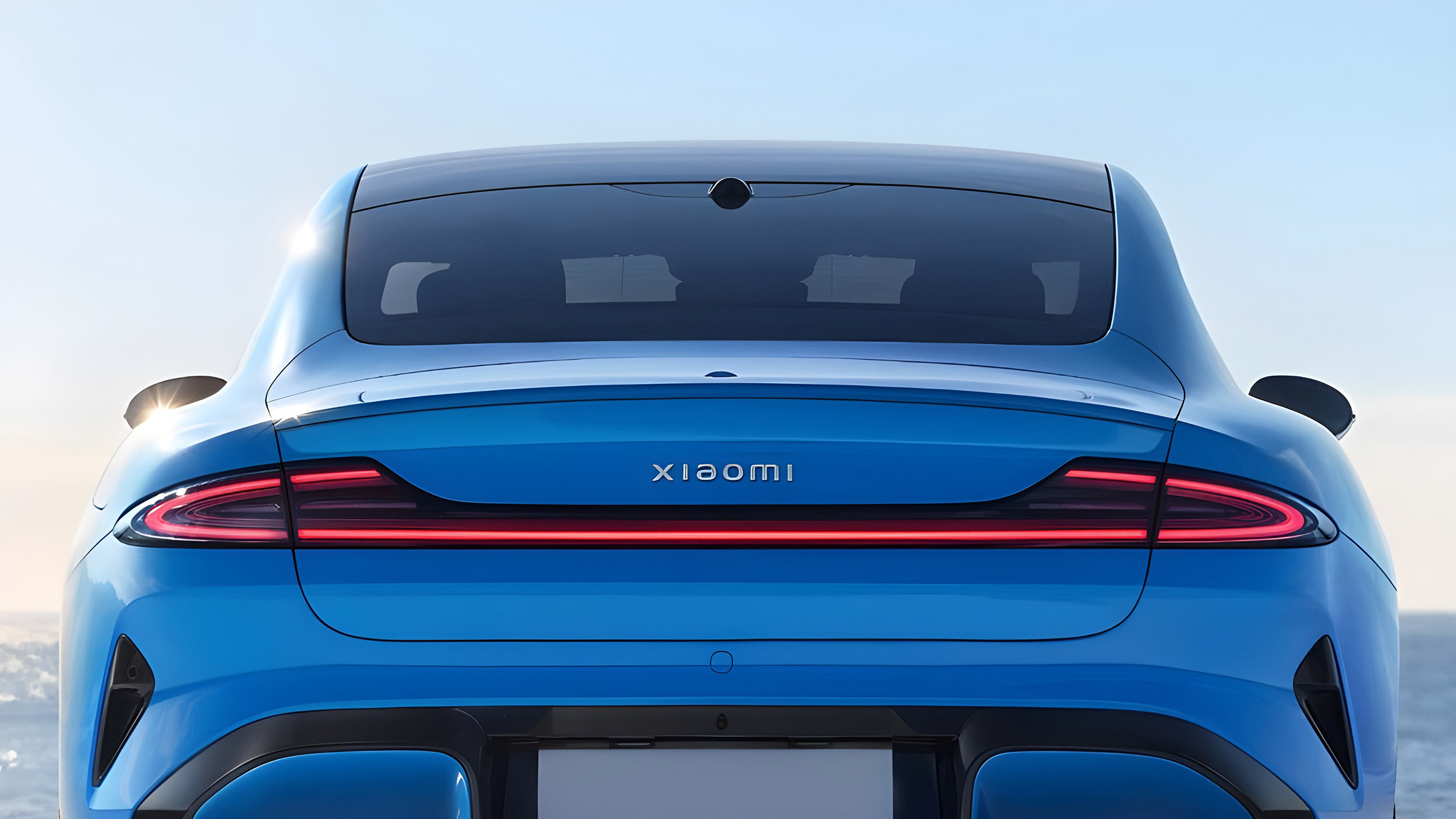
Demand for electric cars in China may be cooling, and some of the country’s biggest automakers are starting to feel the chill. Several of the most prominent domestic brands, including BYD, Xpeng, and Xiaomi, reported noticeable drops in January sales.

Data shows that BYD sold 205,518 vehicles in China last month. The number sounds solid on its own, but it marks a sharp decline from the 300,538 vehicles the company moved in January 2025.

Read: A $9,500 Hatch Stole Tesla’s Best-Seller Crown In China

Both BYD’s electric vehicles and plug-in hybrids were affected. Of the 205,518 vehicles sold last month, 83,249 were EVs and 122,269 were PHEVs. A year earlier, those numbers stood at 125,377 and 171,069 respectively. Exports took a hit too, dropping to 100,482 units in January from 133,172 in December.

Is Government Policy Slowing Sales?

These figures suggest weakening demand in China and possibly overproduction for overseas markets, but a recent government policy change may go some way to explaining the drop. As of January 1, the country reinstated a 5 percent purchase tax for new energy vehicles, having previously exempted them from a 10 percent tax for more than a decade, CNBC reports.
 China’s EV Boom Is Cooling, And The Big Names Are Feeling It

“We see increasing pressure on China’s auto market in 2026, driven by a combination of policy and competitive factors,” Helen Liu, partner at Bain & Company, told CNBC. She added that recent tax changes may prompt some consumers to delay purchases, while automakers hold back on new model launches.

“We know [EV sales will] slow, we just don’t know by how much,” added Tu Le, founder of Sino Auto Insights. “We’ll know much better after the first quarter is over.”

Rough Starts And Reversals

Xiaomi also struggled out of the gate. It sold 39,000 cars in January, which was an improvement over the same time last year, but a steep drop from the more than 50,000 EVs delivered in December. Xpeng’s January was even rougher. Sales fell 34.1 percent year-on-year to 20,011 units, and the month-on-month drop was starker still at 46 percent compared to December 2025.

Li Auto’s performance dipped as well, with deliveries slipping to 27,668 units for the month.

Competitors Capitalize

 China’s EV Boom Is Cooling, And The Big Names Are Feeling It

However, it’s not all bad news. One of the few bright spots was Aito, a newer brand backed by Huawei’s operating system, which reported more than 40,000 deliveries in January, marking a gain of more than 80 percent compared to the same month last year.

Sales at Leapmotor rose to 32,059, while Nio also reported an increase to 27,182 units. Geely sold more than 270,000 cars in January, a 1 percent increase year-on-year. Interestingly, its EV sales fell by 15 percent, while its PHEV sales rose 37 percent.

That performance has pushed Geely into second place in the country’s EV market behind BYD, thanks in part to strong momentum from its Galaxy and Zeekr brands.

Will China Step In?

The slowdown has fueled speculation that Beijing may step in once again. If the slump continues into the first quarter, analysts believe the government could reinstate certain subsidies or incentives

 China’s EV Boom Is Cooling, And The Big Names Are Feeling It

You Can Now Buy A 2-Seater Drone That Comes With Its Own Giant Minivan Garage

  • The Land Aircraft Carrier van includes a working eVTOL drone.
  • Xpeng will produce up to 10,000 units per year in Guangzhou.
  • The van runs an 800V EV platform with a range-extender setup.

If you thought Lexus’ six-wheeled minivan concept was a wild one, a radical reimagining floated as a possible LS flagship replacement, wait until you see what Xpeng has been working on.

The Chinese tech company has developed a six-wheel minivan of its own, only this one takes things even further. Packed in the back is a fully functional eVTOL aircraft. And while Lexus is still firmly in the daydreaming phase, Xpeng is already preparing for customer deliveries later this year.

Also: The Lexus LS Has Just Morphed Into A Bizarre Six-Wheeled Minivan

The six-wheeler, originally known as the AeroHT and now branded the Land Aircraft Carrier, is coming to market via Xpeng’s newly formed Aridge division, which focuses on aerial vehicles.

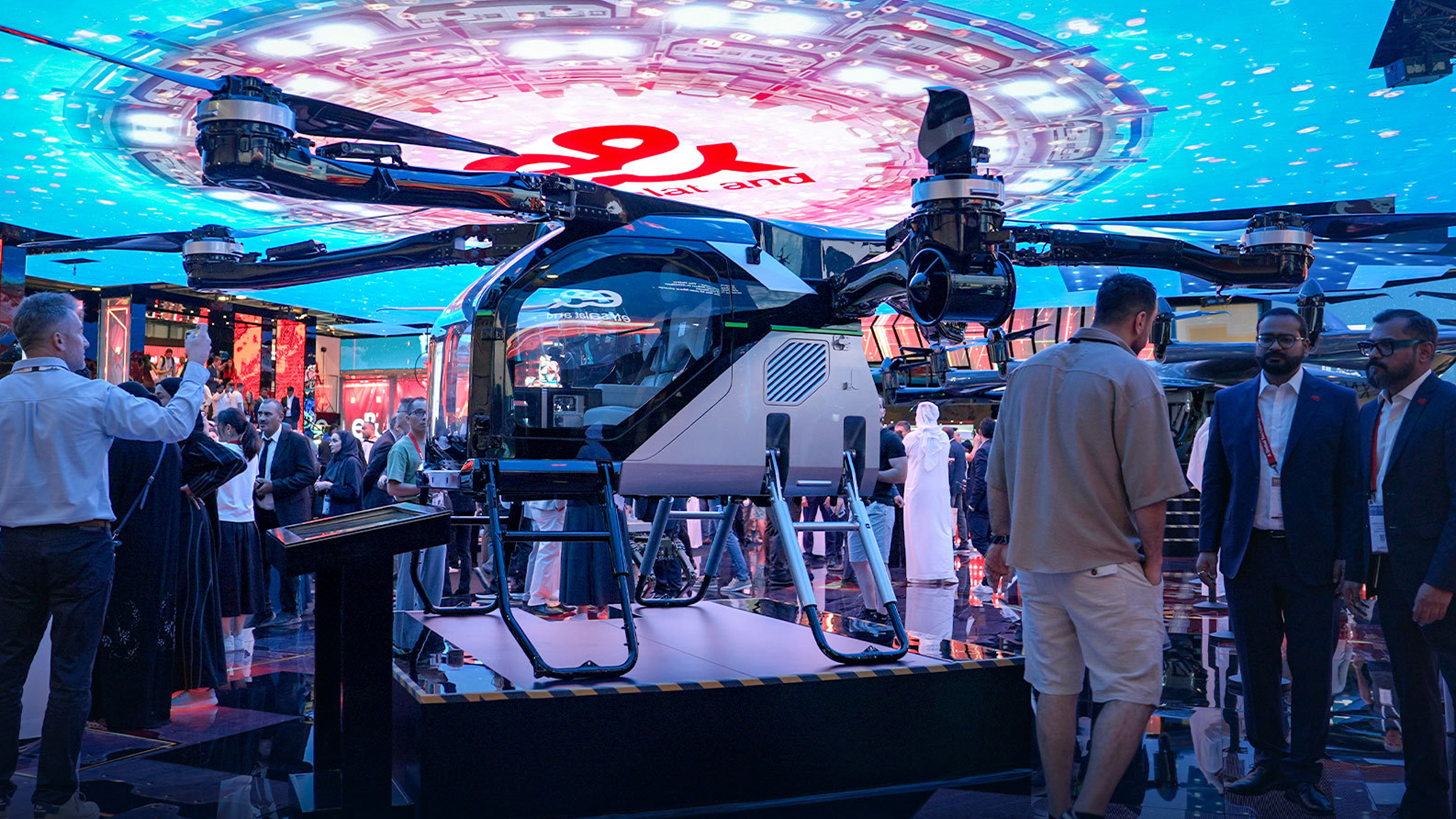
From a distance, it might pass for a modified cargo van with oversized ambitions, but this machine has a very specific purpose: it’s been built to transport and house one of Xpeng’s electric vertical take-off and landing aircraft.

Ready for Takeoff

Xpeng is manufacturing both the Land Aircraft Carrier and its matching eVTOL at a dedicated facility in Guangzhou. Production will start with 5,000 units per year, with plans to double that to 10,000. To keep the build process simple, Xpeng will offer only three exterior paint choices: Stellar Silver, Moonrock Gray, and Supernova White.

\\\\\\\\\

How Much Does It Cost?

The entire package, van and aircraft included, will start at around 2 million yuan, or approximately $287,000 at current exchange rates. The van itself stretches about 5.5 meters (18 feet) in length, spans 2 meters (6.6 feet) in width, and stands 2 meters tall. It’s sizable, but not unwieldy, especially considering it’s designed to carry an entire flying vehicle in its cargo area.

Read: VW’s Chinese Partner Is Building Cheaper Cars In Europe To Beat VW

Technical specs on the van’s powertrain are still relatively sparse. What we do know is that it will run on an 800-volt electrical system and feature a range-extender EV setup. The company is targeting a driving range of more than 620 miles (1,000 kilometers).

In a clever bit of design integration, the van’s trunk will also serve as a charging station for the onboard aircraft.

 You Can Now Buy A 2-Seater Drone That Comes With Its Own Giant Minivan Garage

Crash Raises Safety Concerns

Speaking of the aircraft itself, it’s made largely from carbon fiber and has six rotors. Although the eVTOL has received local airworthiness certification, a pair of prototypes collided with each other during a rehearsal flight at an airshow last September.

One of the aircraft crashed and burst into flames after the impact, but fortunately, no one was killed in the crash. However, the accident may erode some of the confidence those with an order have.

\\\\\\\\\\\\

VW’s Chinese Partner Is Now Building Cheaper Cars In Europe To Beat VW

  • Xpeng’s P7+ undercuts VW’s ID7 with a €43,600 starting price.
  • It uses 800V tech for faster 350 to 446 kW charging speeds.
  • Long-range P7+ offers 530 km versus ID7’s 619 km estimate.

While VW and Xpeng are teaming up to develop new EVs for China, the partnership hasn’t stopped a quiet rivalry from unfolding. Xpeng has just rolled out its latest electric sedan, the P7+, across European markets, and it’s not shy about naming its target, which is none other than the VW ID.7, one of Europe’s top-selling EVs.

Read: Xpeng P7+ Is The Latest Ultra-Efficient EV From China

The P7+ has already spent time on the Chinese market, but it recently arrived in Europe with more than just a new badge. It debuted in European specification at the Brussels Auto Show earlier this month and is now being built locally at Magna Steyr’s contract manufacturing facility in Graz, Austria.

Like the ID.7, it’s a streamlined, low-profile sedan with a strong focus on range and high-speed charging.

A Cheaper Entry, With Compromises

\\\\\\\\\\\\\\

One thing the Xpeng has going for it over the VW is price. In Germany, the entry-level P7+ starts at just €43,600 ($51,200), significantly undercutting the ID.7 that kicks off from €54,105 ($64,900). However, whereas the base ID.7 uses a 77 kWh battery and has a WLTP driving range of 385 miles (619 km), the base P7+ uses a much smaller 62 kWh pack, restricting its range to 283 miles (455 km).

Shoppers who want to travel farther between stops will need to pay at least €49,600 ($59,500) for the long-range model, which boasts a 75 kWh pack and a 329-mile (530 km) range. However, that pales in comparison to the flagship ID.7 Pro S with its 86 kWh pack and 440-mile (708 km) range.

Charging Without Compromise

\\\\\

According to Sven De Smet, head of brand and marketing at Xpeng Europe, who spoke to AutoNews, one of the key advantages of the P7+ is its faster charging capability. The VW tops out at 200 kW for DC fast charging, while the base P7+ can reach 350 kW, and the long-range version peaks at 446 kW.

“We believe charging is one of the pain points,” De Smet said. “A big battery is heavier, which means it consumes more electricity, which means you charge it more.”

Xpeng also points out that the smaller, lighter battery packs in the P7+ should have a positive impact on handling and overall driving dynamics. That could prove appealing to European drivers, who often place a premium on responsiveness and efficiency.

\\\\\\\\\\

The question now is whether the P7+ can match the ID.7’s strong European sales. Last year, VW moved 76,368 units of the ID.7 across the continent, putting it in seventh place among all EVs sold. That figure put it just 10,000 units behind the Tesla Model 3. Xpeng may be the challenger in this case, but it’s stepping into a crowded field.

Strategic Partners, Not Just Rivals

VW holds a five percent stake in Xpeng following a $700 million investment, but the ties run deeper than capital. The two brands are jointly developing several EVs for the Chinese market, including at least one model built on Xpeng’s Edward platform. VW has also committed to integrating aspects of Xpeng’s tech stack, including its proprietary Turing chip and VLA 2.0 software, into future models.

\\\\\\\\\\\\\\\\\\

Xpeng

❌
❌