Normal view

There are new articles available, click to refresh the page.
Today — 24 March 2026Main stream

Mazda’s 600 HP Pickup Idea Starts With A Chinese Truck That Doesn’t Behave Like One

  • Mazda is reportedly exploring a deeper tie-up with Changan.
  • The two already share a joint venture, offering the EZ-6 and EZ-60.
  • It’s reportedly considering a rebadge the Deepal E07 for its lineup.

Mazda isn’t ruling out a possible entry into the super-pickup sphere with a 600 hp (440kW) offering, but there’s a big caveat. If it does move forward, the result would be anything but a traditional Mazda. The idea, at least in its early form, centers on a rapid rebadge of the Deepal E07 transforming truck from China. Picture something closer to a Cybertruck-style ute than anything currently wearing a Mazda badge.

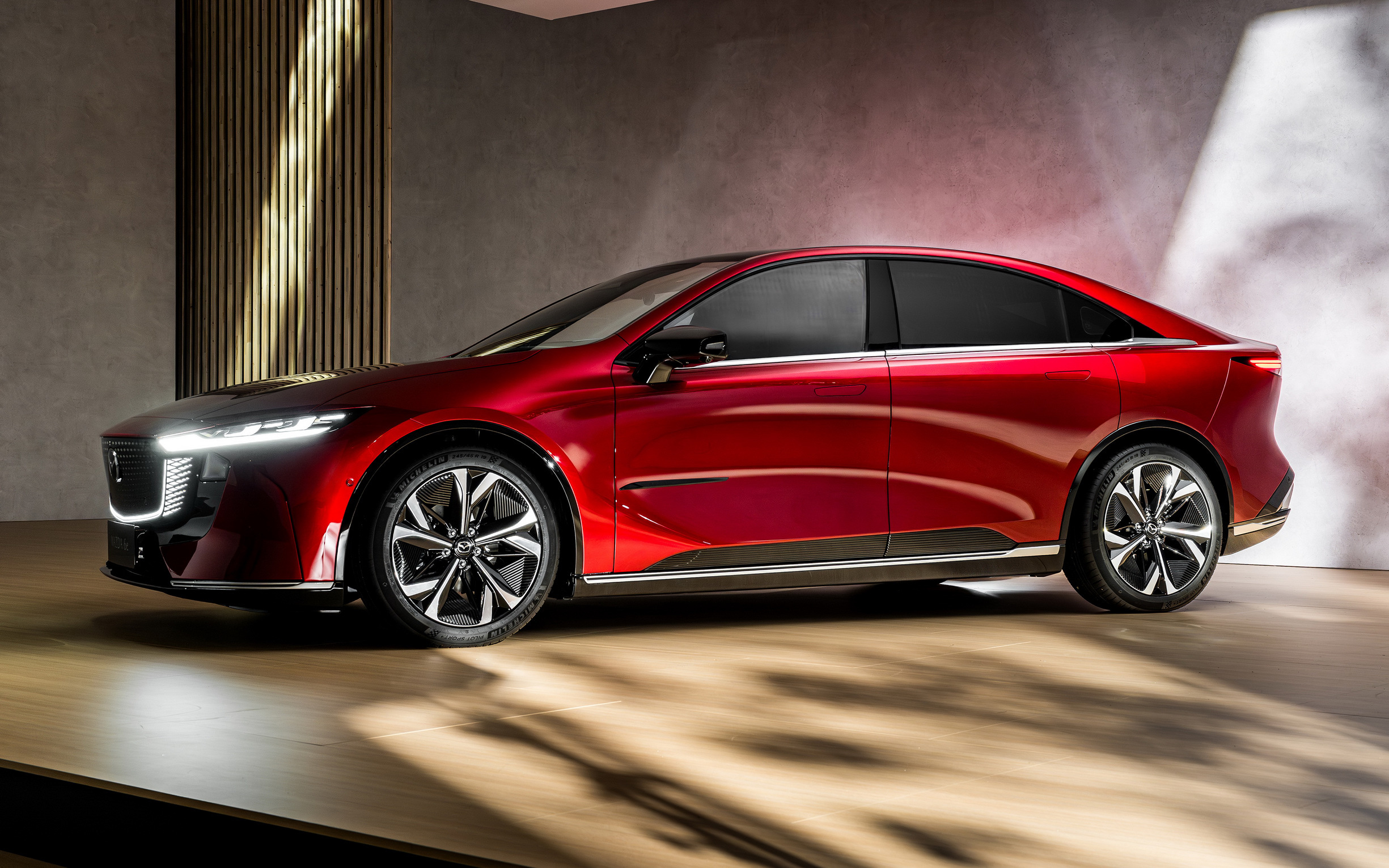
Changan, Deepal’s parent company, already maintains a close working relationship with Mazda. Through their joint venture in China, the Mazda 6e (also known as the EZ-6) sedan is produced by Changan and based on the Deepal L07. The upcoming Mazda CX-6e (EZ-60) SUV will also be manufactured in China.

Another Chinese-Based EV

The timing makes sense. Electric and plug-in hybrid pickups have been garnering more attention in markets like Australia, where buyers are in search of something functional, yet at the same time want something exciting to drive around. The fact that powerful pickups have a great amount of interest has already been shown by other manufacturers, such as BYD with the Shark 6, and the plug-in hybrid Ford Ranger.

\\\\\\\\\\\

Read: Mazda Admits It Learned From China, And Its Future EVs Will Show It

While Mazda has made its reputation for efficiency and clever engineering, especially with its Skyactiv technology, they don’t have an in-house developed ute or pickup, with the BT-50 workhouse based on the Isuzu D-Max. It would also do no harm to Mazda’s overall EV lineup, while offering a way to offset CO2 penalties.

But a ute producing about 600 hp (440 kW) would take things in a very different direction. While it’s not a current priority, Hiroshi Ozawa, General Manager of the Changan Mazda Automobile Technical Development Center, won’t rule out the possibility.

“My personal view is that Deepal E07 that pick up, the truck [that] opens up, it’s a very interesting vehicle,” said Ozawa, speaking to Carsales. “I like that kind of vehicle… In Australia I think customers may also like the kind of vehicle.”

Is The E07’s Time Now?

\\\\\\\\\\\\\

The Deepal E07 hasn’t had much attention outside of China, but it is already available in Australia, as well as other parts of South Asia. To bring you up to speed, it’s not a pickup in the traditional sense. The E07 is dubbed by the brand as a “transformer,” able to operate as both an SUV and a pickup, with a retractable glass portion revealing a bed.

Review: BYD Shark 6 Is Faster Than A Ranger Raptor But That Is Only Half The Surprise

It can be configured in either a single-motor rear-wheel-drive layout or an all-wheel-drive dual-motor version. Both versions are powered by a 90kWh battery, with a claimed range of up to 550km. That top-spec dual-motor AWD version can dispatch 0-100 km/h (0-96 mph) in just 3.9 seconds thanks to its 440 kW (590 hp) output.

At this stage, there’s no official word on whether the E07 will be getting the green light as a Mazda. Still, the fact that the company is openly discussing the potential of super ute shows that it’s thinking outside of its usual boundaries.

\\\\\\\\\\\

Photos Deepal, Deepal Australia, Deepal YouTube
Before yesterdayMain stream

China’s Rolling Out Solid-State Batteries This Year And The Range Claim Is Wild

  • The new battery delivers 400 Wh/kg energy density.
  • Mass production is planned to begin next year.
  • BYD, SAIC, GAC, and CATL are developing similar packs.

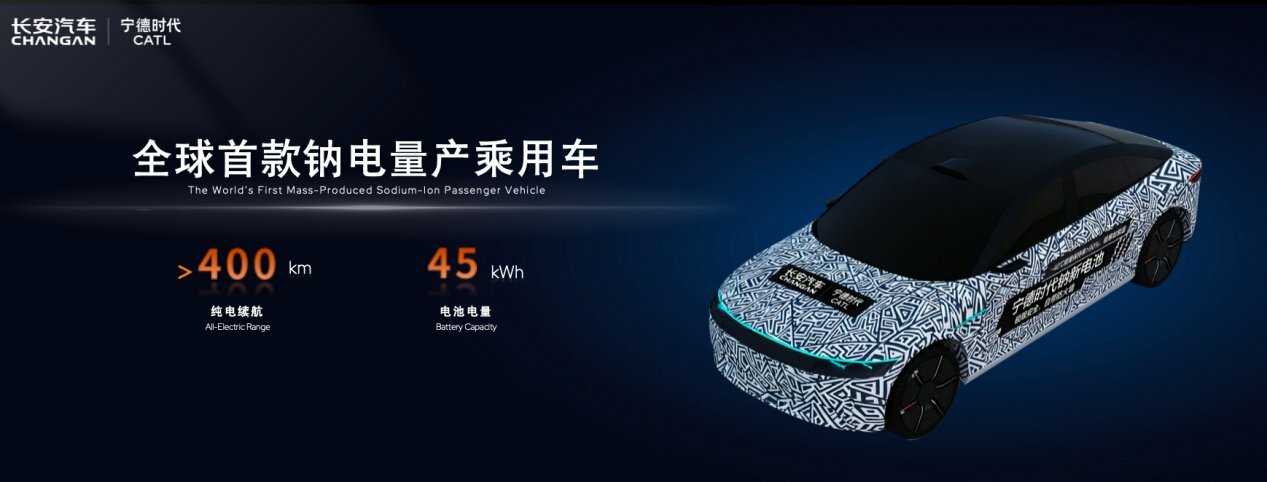
Solid-state batteries have been “just around the corner” for what feels like an entire EV generation. Now, they might actually be arriving. In the third quarter of this year, China’s Changan will begin fitting its new solid-state packs to robots and EVs, with full mass production slated for 2027.

According to Chinese media, Changan claims its new solid-state battery has an energy density of 400 Wh/kg, and EVs using it will be able to travel upwards of 932 miles (1,500 km) on a single charge. While you could argue that this much range borders on excessive, it would make future Changan models far better suited to long road trips through remote areas where charging infrastructure remains sparse.

Breakthrough Energy Density

 China’s Rolling Out Solid-State Batteries This Year And The Range Claim Is Wild

The pack is called the Golden Bell. Aside from being very energy-dense, it is said to be 70 percent safer than a conventional EV battery and, because this is 2026, it also uses artificial intelligence for remote diagnostics. Smarter batteries, apparently, are part of the plan.

Read: Avatr Just Extended The 06 In More Ways Than One

Changan will build these units under its new Jingzhongzhao solid-state battery brand. The company intends to manufacture fully solid-state packs while also producing liquid and semi-solid-state batteries that rely on a liquid electrolyte.

 China’s Rolling Out Solid-State Batteries This Year And The Range Claim Is Wild

China’s Solid-State Push

It is not alone. Other Chinese brands are also edging closer to making solid-state batteries mainstream. Earlier this year, Dongfeng Motor began testing its own solid-state battery in extreme cold weather. It has an energy density of 350 Wh/kg and a claimed range exceeding 620 miles (1,000 km). It also plans to roll them out in production cars this year, aiming for September.

BYD, Chery, SAIC, GAC, and CATL are all chasing similar breakthroughs. So are legacy names such as Mercedes-Benz, VW, BMW, Toyota, Nissan, Hyundai, and Honda. After years of promising headlines and laboratory milestones, solid-state batteries may finally be edging toward something tangible. If they deliver on even half of these promises, combustion engines will have one more reason to feel nervous.

 China’s Rolling Out Solid-State Batteries This Year And The Range Claim Is Wild

Sources: Changan, Carnewschina

Mazda Admits It Learned From China, And Its Future EVs Will Show It

  • Mazda says the CX-6e is a clear step beyond the 6e.
  • Working with Changan brought a steep learning curve.
  • Those lessons will shape Mazda’s future in-house EVs.

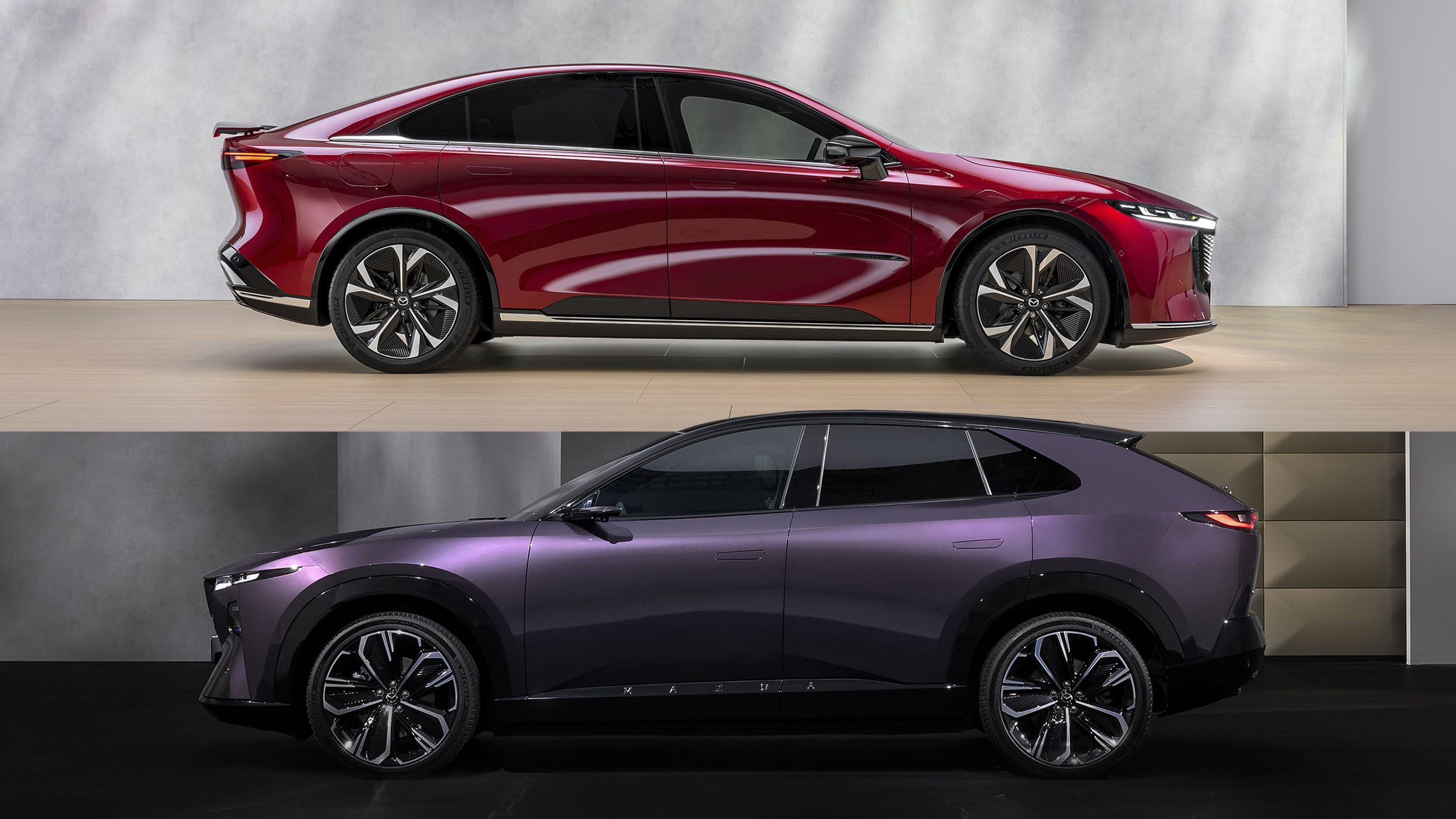
Mazda has moved on from the niche MX-30 crossover, reshuffling its fully electric lineup in China and select global markets, though not North America, with the 6e sedan and the CX-6e SUV. The two mechanically related EVs arrived in quick succession, yet a senior Mazda Europe executive says there is a noticeable development gap between them, largely due to the steep learning curve that came with partnering up with Changan.

Christian Schultze, Director of Technology Research at Mazda Europe, explained the process in an interview with AutoRAI. Both models are heavily based on the Deepal L07 sedan and S07 SUV from Changan’s dedicated EV brand, adapted for global markets under the Mazda joint venture.

Bridging Cultures Through Engineering

So what actually separates the Mazda 6e, launched in 2024, from the CX-6e that arrived a year later? According to Schultze, progress came in increments.

More: Mazda Secretly Built A V6 MX-5, Then Killed It Over One Ugly Problem

“I’d say we’ve taken another half-step forward. The 6e was the first joint development with our partner Changan Mazda Automobile for a car that would be sold in Europe. That was a huge learning experience for them, because they had never before developed a car specifically for the European market. It was also a learning experience for us, because we suddenly had to explain much more than we were used to heading into Hiroshima.”

 Mazda Admits It Learned From China, And Its Future EVs Will Show It
The Mazda 6e (above) and the CX-6e (below).

Schultze explained that while the R&D center in Hiroshima works seamlessly with the European team, adding Changan Mazda Automobile changed the dynamic. The shared understanding required for such projects had to be built from the ground up, a process that took more time and effort than Mazda initially expected.

More: New Mazda MX-5 NE Isn’t Going Electric, But It’s Not Staying Pure Either

Despite looking almost identical to the Chinese-spec Mazda EZ-6 sedan and EZ-60 SUV, the European versions had to meet different regulations. That proved challenging for engineers unfamiliar with European requirements.

“When we develop a car together with Hiroshima, we essentially already get about 98 percent of what we’re looking for. Then it’s mainly just fine-tuning here and there. With Changan Mazda Automobile, we had to go much further back to basics,” he said.

“For example, they had never created a setup for European radar systems. We had to explain the requirements and why they were important. What we appreciated was how quickly they responded and how willing they were to understand. But we first have to convey that understanding.”

The SUV Is More Mature

 Mazda Admits It Learned From China, And Its Future EVs Will Show It
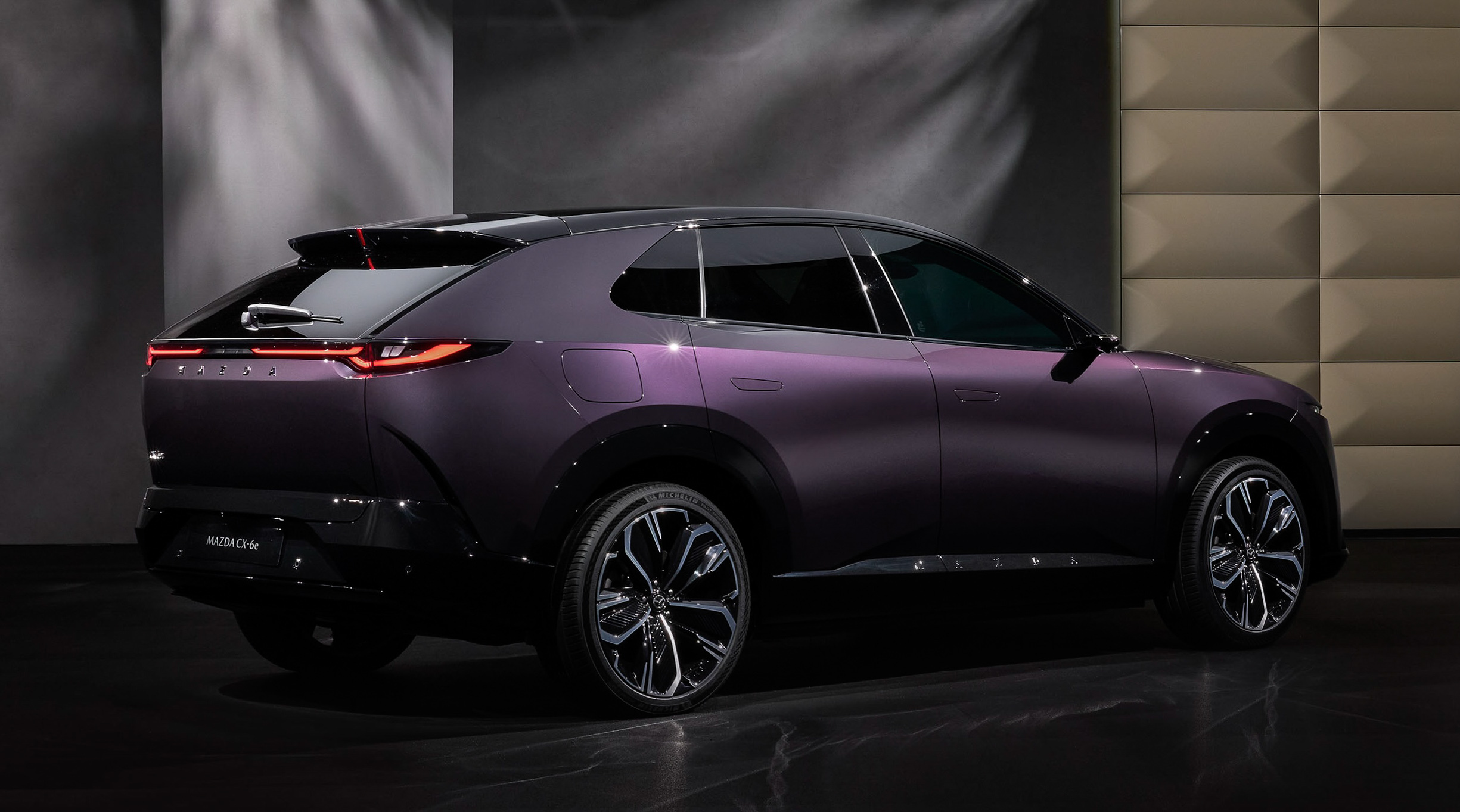
Mazda CX-6e

Despite the early hurdles, the knowledge gained from the 6e program helped Mazda refine the CX-6e.

Schultze noted that the SUV’s electric motor is a “further development,” offering “greater efficiency and a higher continuous power output” than the sedan. That fits with Mazda’s philosophy of making each new model incrementally better.

More: Mazda’s Rotary Sports Coupe Plan Faces A Roadblock It Can’t Engineer Around

The Mazda 6e sedan currently sold in mainland Europe and the UK produces 255 hp (190 kW / 258 PS) in Standard Range form and 241 hp (180 kW / 245 PS) in Long Range trim. The CX-6e retains the higher output with the larger 80 kWh battery.

Lessons Beyond One Platform

 Mazda Admits It Learned From China, And Its Future EVs Will Show It
Mazda6e

Schultze confirmed that R&D lessons from the Changan joint venture will influence future EVs built on Mazda-developed architecture.

“We’re pursuing a strategy where we collaborate with partners, for example, in the field of electric vehicles, and develop our own electric models. Our roadmap shows that one of the next EVs will be based on a fully Mazda-owned platform. Moreover, our insights are growing every day, thanks in part to market feedback. For example, we learned a lot from the reactions to the Mazda 3, and those insights have been incorporated into our internal objectives. The same applies to the lessons we’re learning from the CX-6e.”

More: This SUV Just Did Something Only Two Other Mazdas In History Have Ever Done

He also highlighted how modern technology allows continuous improvement without waiting for a facelift or full generational change.

“The great advantage of today’s world is that many systems are digital or electronic. This means we can implement improvements even during ongoing production. In the past, in the purely mechanical world, if a switch felt too heavy, it would stay that way for four years until the next model change. Fortunately, those days are behind us.”

 Mazda Admits It Learned From China, And Its Future EVs Will Show It
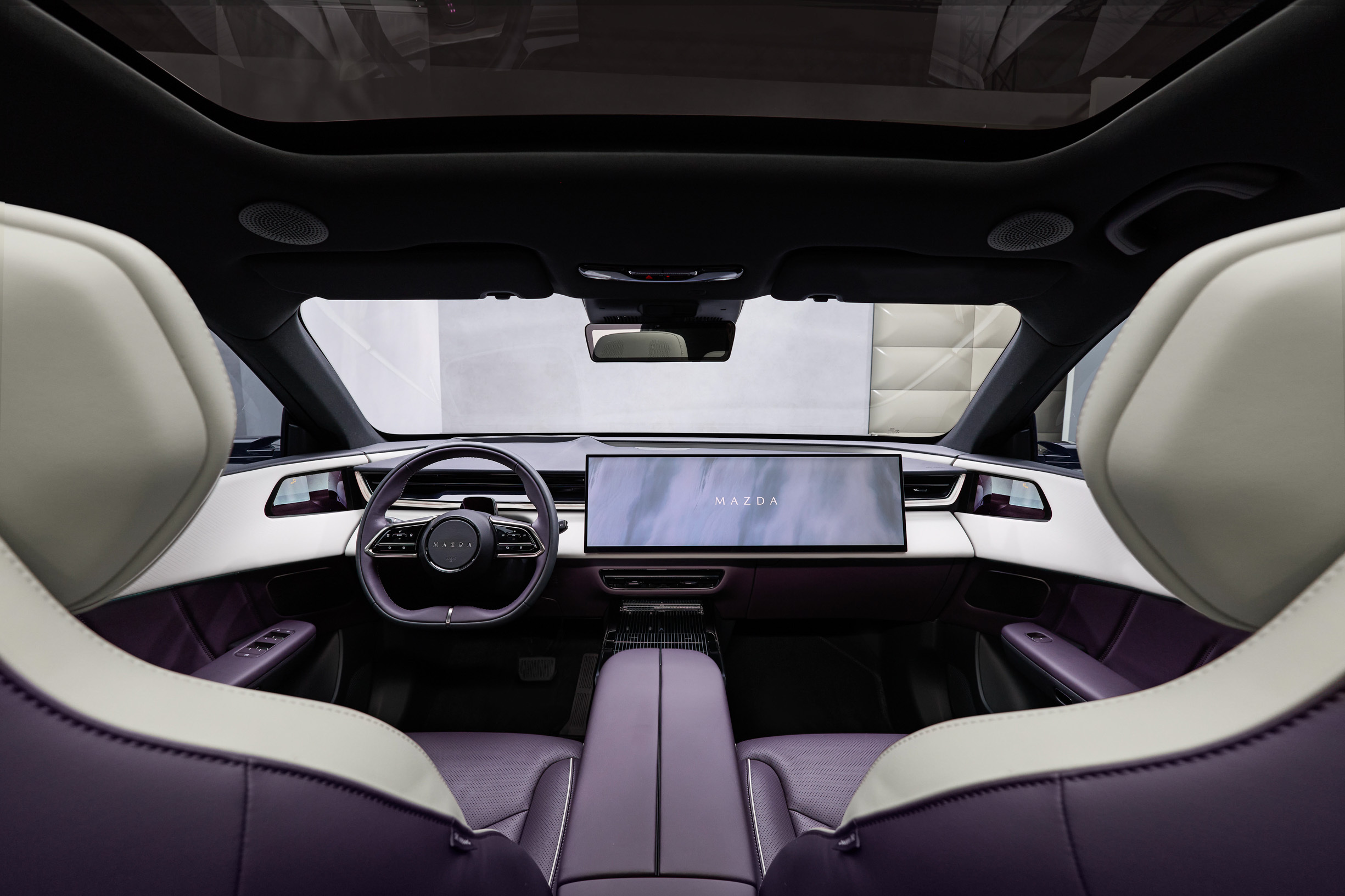
The interior of the Mazda CX-6e

China Powers The Return Of One Of Russia’s Most Famous Car Brands

  • Volga’s new model may be based on a Changan SUV.
  • A teaser suggests a sleek but fairly traditional design.
  • Production could begin in China for the Russian market.

The Russian car industry looks very different from the one that existed before the invasion of Ukraine four years ago. As Western automakers made a swift exit after the war erupted, Chinese brands moved in just as quickly, expanding their presence and absorbing a sizable chunk of the market. A few domestic names are also resurfacing, including one of its most Volga.

Read: Tesla Never Made A Cybervan, So A Russian Startup Did It First

The Volga name rose to prominence in the 1950s as a series of executive cars built and sold in Russia by local firm GAZ until 2012, when production ended. Back in its heyday, the Volga wasn’t something you simply drove. It was what you were driven in if you held the right title in the Soviet hierarchy. That alone turned it into a cultural fixture.

Now, after more than a decade on ice, the name is finally set to return, having initially been slated for a revival in 2024.

Volga, now under the umbrella of China’s Changan, presented three different vehicles in May 2024, known as the K30, X5 Plus, and K40. The trio included two crossovers and a sedan, each based on existing Changan vehicles sold in China. The plan was to build them in China and ship them to Russia for final assembly, with market launch targeted for late 2024.

\\\

For whatever reason, that rollout never materialized. Now, however, the Chinese-owned Volga appears ready to try again, launching a new Russian-language website and releasing a pair of teasers previewing its first model.

The vehicle shown in the teaser resembles one of the crossovers presented in 2024, though with subtle visual changes. A side-profile sketch suggests a conventional SUV silhouette, complete with a large grille, squared wheel arches, and a rear design with taillights that faintly echo the Audi Q8. Reports indicate it will be joined by two additional models.

A separate teaser for the cabin was also released, showing a flat-bottomed steering wheel, a digital instrument cluster, and a large central infotainment screen. In general, it looks quite conventional, which in this context may be exactly the point.

\\\\

Volga models previewed in 2024

Avatr Just Extended The 06 In More Ways Than One

  • Avatr 06T is a shooting brake version of the 06 sedan.
  • Targets Nio ET5T with BEV and EREV powertrains.
  • Debuts Huawei’s new LiDAR and ADS 4.0 tech suite.

Update: Following a series of teasers, Avatr has unveiled the first official photos of the wagon, revealing its exterior design in full for the first time.

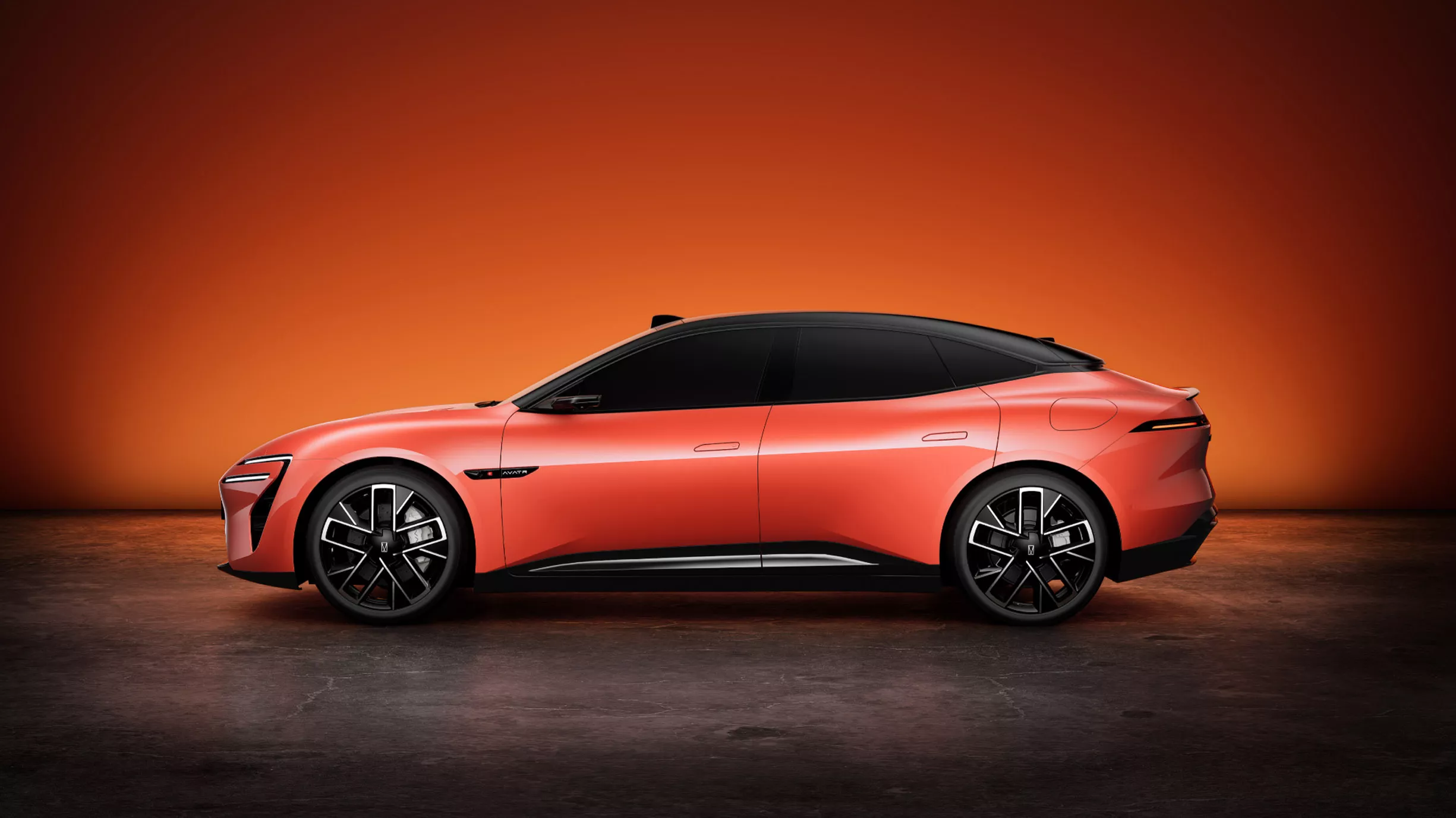
Even as SUVs continue to dominate global sales, the Chinese market still makes room for sleeker wagons. One of the latest to step forward is the Avatr 06T, a streamlined shooting brake designed as a more practical counterpart to the brand’s electric sedan aimed at the Tesla Model 3.

The automaker has revealed the exterior design of the new model ahead of an imminent debut. As expected, the front design, complete with split LED headlights, is carried over from the Avatr 06 sedan launched last year. What sets the 06T apart are the roof rails and an extended roofline that flows into a reshaped rear section.

More: Avatr’s 18-Foot Concept Makes The Ghost Look Petite And Germans Look Twice

The rear shoulders are more defined, and the rising beltline contributes to a sportier stance than the sedan, helped along by a prominent rear spoiler. The wagon also features a steeply inclined rear windscreen, setting it apart from the sedan’s windowless tail.

\\\\\\\\\\\\

The slim full-width LED taillights have a Jaguar-like feel and are paired with a sculpted bumper and an aerodynamic diffuser. The black cladding on the profile and tail sends crossover vibes, although Avatr designers decided to keep the wheel arches clean.

More: Kia Built A New Wagon In Mexico That Looks Better Than The Sedan

Another important update is the revised door handles that deviate from the flush design of the sedan. This is probably the company’s response to China’s new rules about door handles, and will gradually find its way to the rest of the lineup.

The 06T is expected to share the same 2,940 mm (115.7 inches) wheelbase as the 06 sedan, with an overall length of 4,855 mm (191.2 inches).

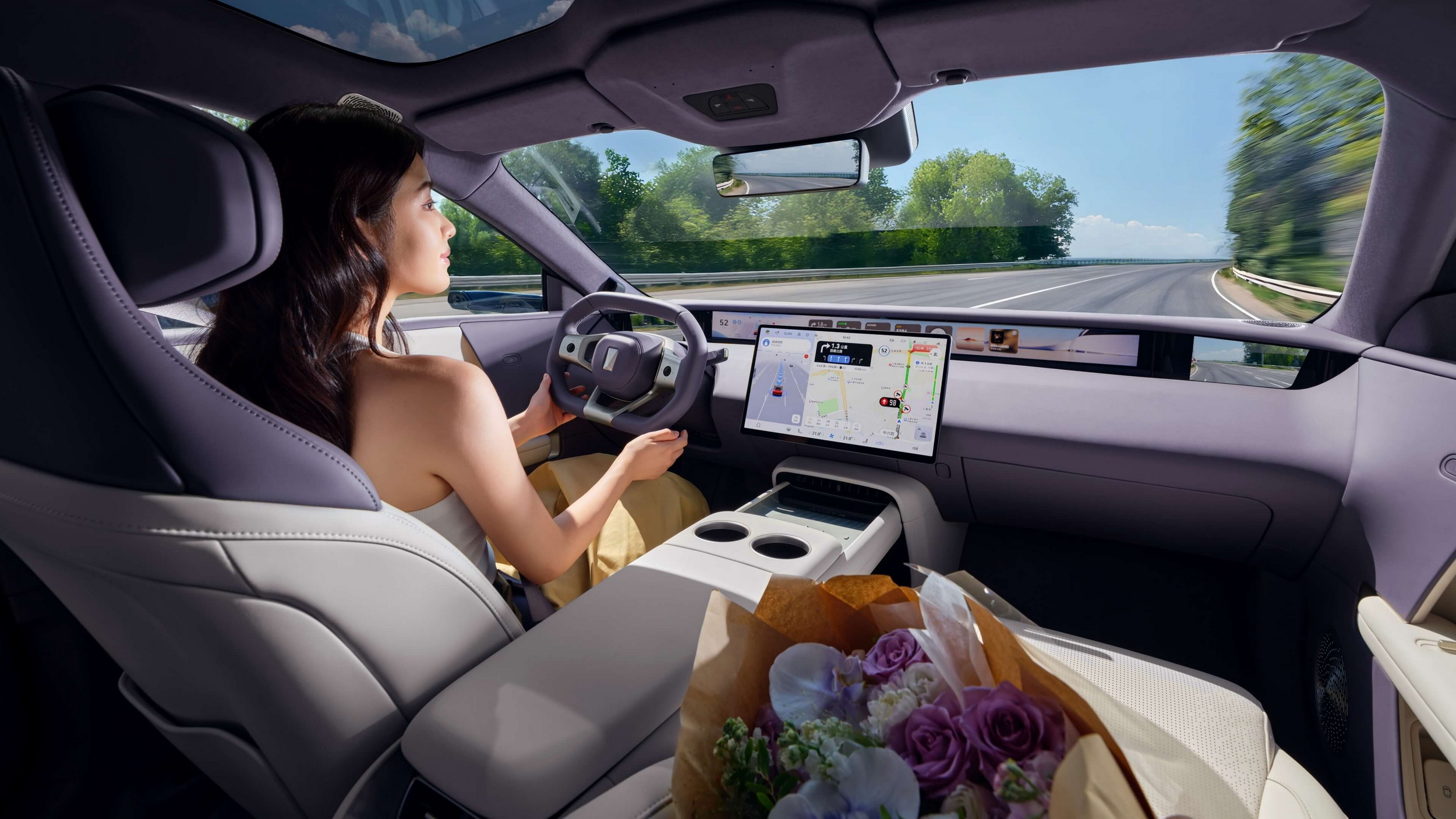
Inside, the layout will likely carry over too, including the 35.4-inch display along the base of the windshield and the 15.6-inch touchscreen running HarmonyOS 5.0. Rear passengers can expect more headroom and additional space for luggage.

 Avatr Just Extended The 06 In More Ways Than One
Avatr 06 Sedan

Huawei Hardware Takes the Lead

The wagon will be the first model to feature Huawei’s next-generation 192-line LiDAR sensor, mounted on the roof, along with the latest Qiankun ADS 4.0 driver assistance system. The updated LiDAR boosts detection range to 250 meters (820 feet), a 20 percent improvement over the previous version.

Underneath, the 06T is expected to share its platform with the 06 sedan and the closely related 07 SUV. Both offer a choice between fully electric and range-extender powertrains. The dual-motor EV delivers up to 590 hp (440 kW / 598 PS), while the EREV variant offers a combined range of up to 1,250 km (777 miles). Both versions support 5C fast charging.

\\\\\\\

When Will It Arrive?

The Avatr 06T is slated to launch in the Chinese market in the coming months. It will compete more directly with the Nio ET5T than with high-end wagon offerings like the Denza Z9 GT, Stelato S9T, and Zeekr 007 GT. Pricing hasn’t been announced, but the 06 sedan currently starts at ¥209,900 ($30,200) in China.

The growing appeal of the 06 and 07 has helped Avatr push average monthly sales to around 10,000 units in China. Even so, the automaker, backed by Changan, Huawei, and CATL, still needs higher volume to keep pace with rivals like Zeekr and Nio.

❌
❌