Normal view

There are new articles available, click to refresh the page.
Before yesterdayMain stream

Porsche’s New Patent Turns Racing Stripes Into A Battery Gauge

  • Porsche patented body panels that can change color electronically.
  • The system could add racing stripes in different drive modes.
  • Future EVs might display battery charge through exterior color changes.

It’s a question that dates back decades. Do you option your fancy sports car with or without visual flourishes like rally or racing stripes? Once you choose, changing your mind isn’t exactly an easy task. Installing or removing stripes is a painstaking process on one’s own and can cost thousands when a professional does the work.

Porsche owners might not have to make that choice in the near future. A new patent would allow them to switch from stripes to no stripes with the push of a button.

More: Tesla Files New Seat Patent For A Supercar That’s Been Sitting Since 2017

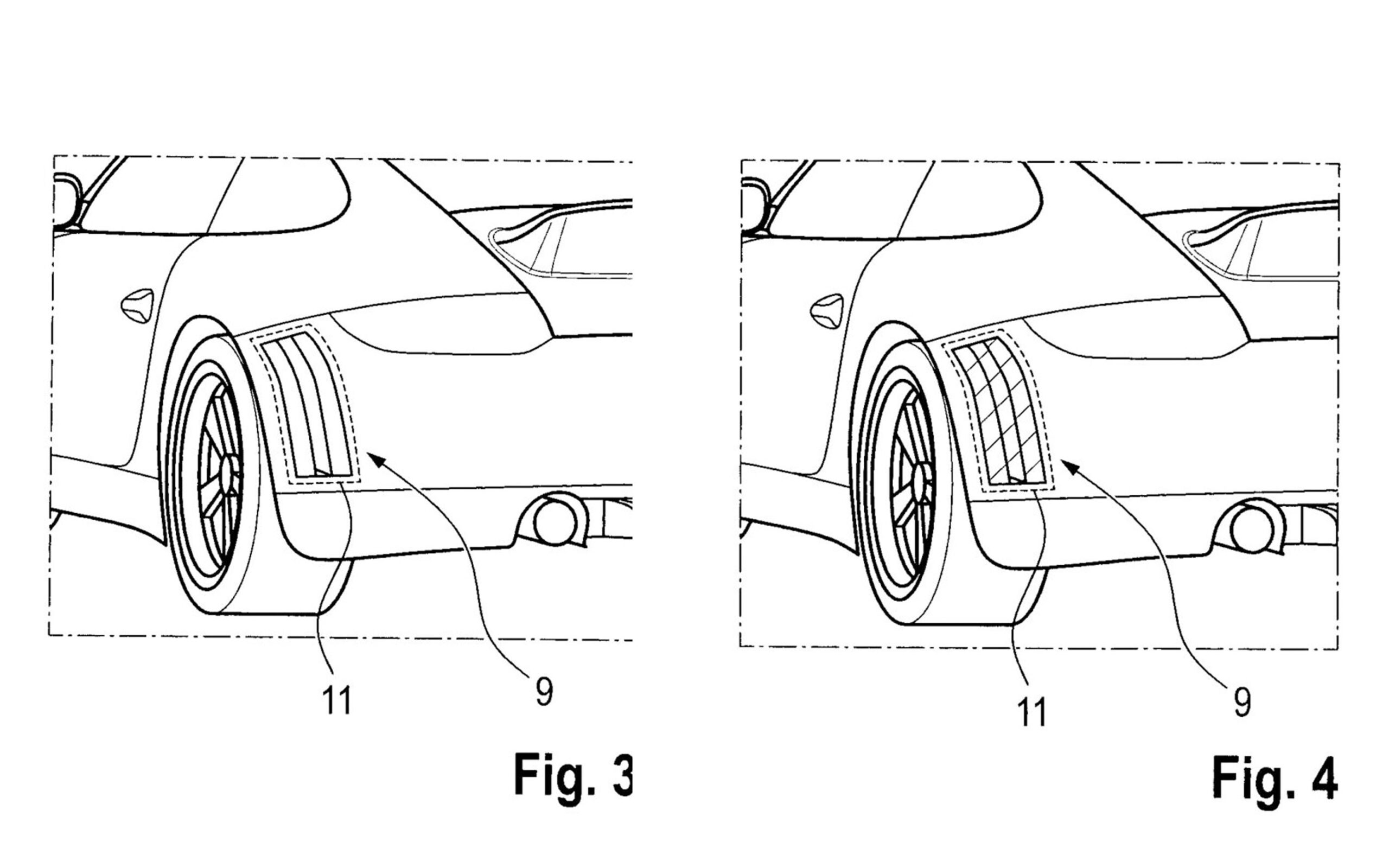
According to the newly published patent application that was first spotted by Jalopnik, Porsche’s system would use an “actively controllable, optically variable coating” applied to exterior body panels. When voltage is applied, the coating changes appearance.

The company says the technology could rely on either so-called electronic paper or paramagnetic coatings, both of which can alter their color when electricity is introduced. This kind of tech already exists, but it’s not used in this fashion.

Plenty of automakers use it for glass panels which allows the occupant to make the glass appear transparent or opaque on command. The big change here is using it on a body panel instead. According to the patent, Porsche owners would see the “rally stripes” appear when the car goes into Sport mode. Additional accents could also light up around areas like the diffuser or the side blades behind the rear wheels.

An EV Battery Indicator Too

\\\\\

Porsche says the idea is partly cosmetic, but there is a functional side too. The company notes that racing stripes could help identify one car from another during competition, especially when multiple identical cars are on track at the same time. Porsche also believes the same coating could act as an exterior battery gauge on EVs.

Instead of opening an app or looking at the dashboard, owners could glance at the car and instantly know how much charge remains. A panel might glow green when the battery is nearly full, yellow when it is running low, and red when it is close to empty.

While there’s no way to know for sure if or when Porsche gives this idea the green light, it’s very much the kind of tech we see popping up more and more across the bleeding edge of the industry. Sooner or later, someone will probably put it into production. Here’s hoping Porsche makes it happen and lets other automakers license the tech.
 Porsche’s New Patent Turns Racing Stripes Into A Battery Gauge

Credit: WIPO / Porsche

New Subaru Patents Fuel STI Hatchback Rumors

  • The rumored STI hatchback appeared in patent drawings in Japan.
  • A closer inspection suggests it is the Performance-B STI Concept.
  • Still, Subaru is rumored to be working on the return of a hot hatch.

The trail of breadcrumbs pointing to the return of a proper Subaru STI has been an entertaining one to follow. Shortly after the company put its new racing hatchback through testing, a set of patent drawings surfaced online, fueling more speculation about a potential production version.

The patents, filed at the Japan Patent Office, depict a Subaru hatchback with a wide body kit, WRX-sourced headlights, a new grille, and prominent aero components. It looks nearly identical to the Performance-B STI Concept from the 2025 Japan Mobility Show.

More: Subaru Says STI Is “Not Dead”, But Its Boxer May Be

A closer look reveals only minor differences, namely the absence of extra vents on either side of the signature hood scoop and the lack of tailpipes at the rear. The latter likely relates to the patent application itself, much like the blank wheels and simplified lighting details.

Concept Design Captured In Patents

\\\\\\\

Japan Platform for Patent Information

As reported by Top Gear Philippines, which spotted the filing on the Japan Platform for Patent Information, the documents were submitted on September 29, 2025, one month before the show car’s debut on October 30. The timing, combined with the near-perfect visual match, strongly suggest these drawings depict the Subaru Performance-B STI Concept rather than a rumored 2027 production model.

More: Subaru Showed Four New STI Models, And Not Even One’s A Real STI

A quick search of the same database shows that similar patents for the Subaru Performance-E STI Concept were filed on the very same day. They replicate the fully electric fastback’s design without any changes. This is standard practice, as automakers routinely secure design protection for both concepts cars and future production models ahead of their public debut to prevent copyright issues.

\\\\\\\

What About The Rumors?

While these patents likely exist for legal reasons, the timing of their discovery is what has enthusiasts paying attention. Subaru’s HiPerfX2 hatchback, essentially the racing counterpart to the Performance-B STI Concept, is set to compete in Japan’s Super Taikyu series, where it will double as a rolling development lab.

More: Subaru’s WRX STI Hatch Is Back On Track, Just Not On The Street

The race car pulls together an assortment of WRX STI sedan components, wrapped in a widebody hatchback silhouette that appears to draw from the Impreza. Under the hood sits a motorsport-tuned version of the turbocharged 2.4-liter boxer engine, producing 359 hp (268 kW / 364 PS), paired with a six-speed manual gearbox and an all-wheel-drive system.

\\\\\\\\\\

Subaru Performance-B STI Concept

Talk of a 2027 return for the WRX STI hatchback starts to make more sense when you look at the gaps forming in Subaru’s current lineup. The company has confirmed it will stop taking orders for the WRX sedan in Japan, along with the Levorg and Layback wagons, leaving some notable space to fill.

Another telling move is the removal of the STI Sport grade from the WRX range, which could be less about trimming options and more about clearing the stage for something more exciting with the STI badge.

Whether this all points to a routine model year reshuffle or a deeper generational reset, one that finally brings the STI badge back to a hot hatch, is still an open question.

\\\\\\\\\\\\\\

Subaru Performance-E STI Concept

Tesla Files New Seat Patent For A Supercar That’s Been Sitting Since 2017

  • Tesla filed a new “Vehicle Seat System” patent with the U.S. office.
  • The design replaces gears with flexible hinges for motion.
  • Electric motors are swapped for smaller multi-axis actuators.

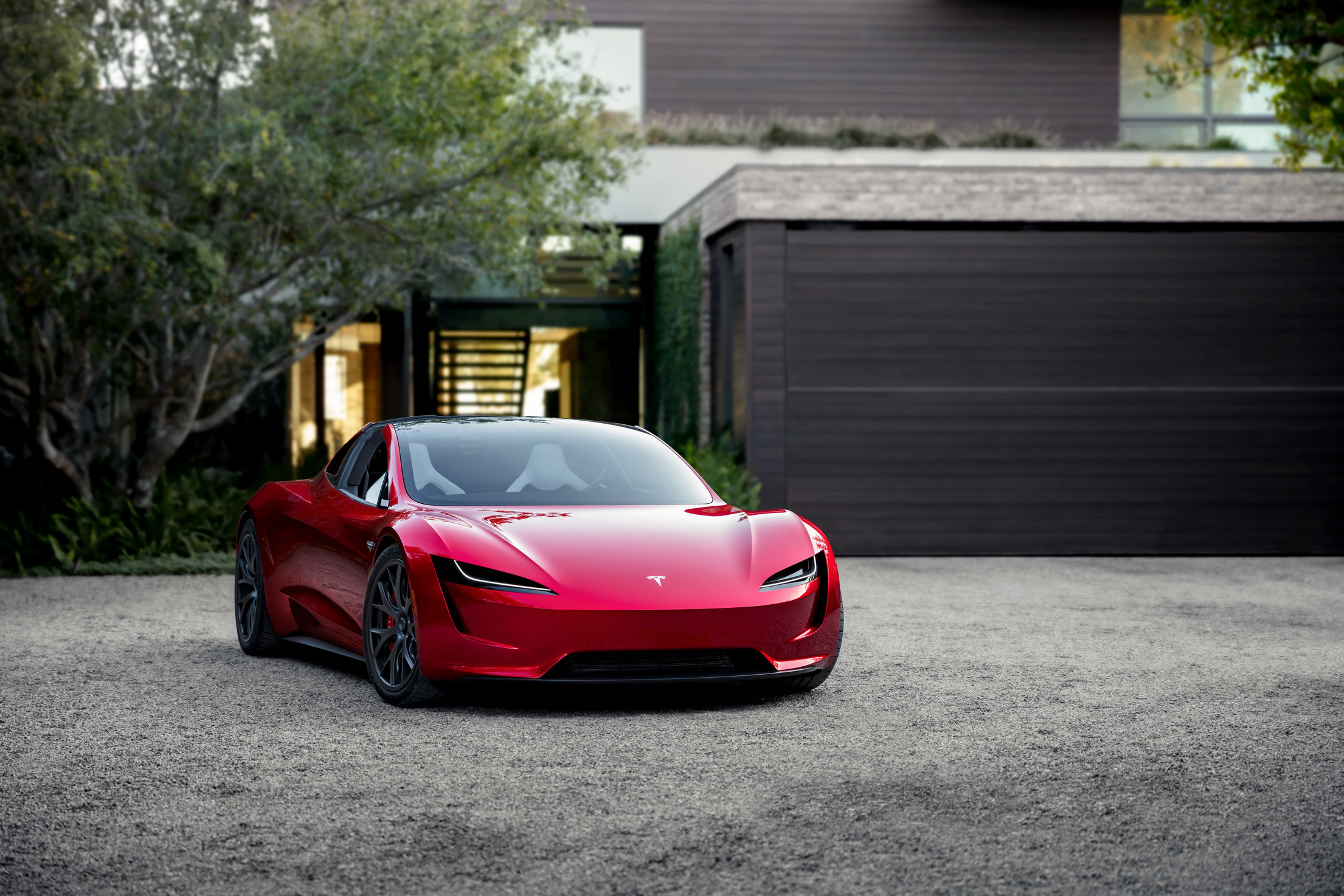
Tesla has a knack for dropping surprises at just the right time, and its latest patent has sent anticipation for the new Roadster skyrocketing. A filing published this month describes a new approach to performance seating, one that replaces the normal train of metal brackets and hinges with a single sculpted shell.

The document that was first spotted by Teslarati outlines a monolithic frame that integrates the seat base, backrest, headrest, and side supports into a single composite structure. It’s a radical departure from the multi-piece setups of most sports cars. The fact that such materials as Kevlar-nylon and carbon-nylon composites are mentioned gives us an indication of Tesla’s purpose of reducing unnecessary weight while providing the seat with more strength.

Read: This Might Be The Tesla Roadster’s Biggest Update Since 2017

Conventional seats also depend on dozens of connected parts, each of which adds mass and introduces possible points of failure. By making the seat all in one, the engineers are hoping for a lighter build with fewer places for the wear and tear of time.

Design Built For Performance

\\\

The patent also points out the way Tesla wants these seats to behave. Rather than having metal gears recline the structure, they depend on what they call an integrated flexible hinge which means the material itself flexes where it is needed to do so. And that allows the frame to bend in certain areas, but be rigid in others, enabling designers to fine-tune the seat for support during hard acceleration or tight cornering.

Tesla isn’t stopping at the frame though. The patent substitutes for ordinary electric motors and rails with small actuators that can move the seat in various directions. With the six degrees of freedom, the system is capable of moving the seat with more precision than most luxury vehicles. It’s a degree of adjustability normally reserved for high-end performance interiors.

An Imminent Reveal?

 Tesla Files New Seat Patent For A Supercar That’s Been Sitting Since 2017

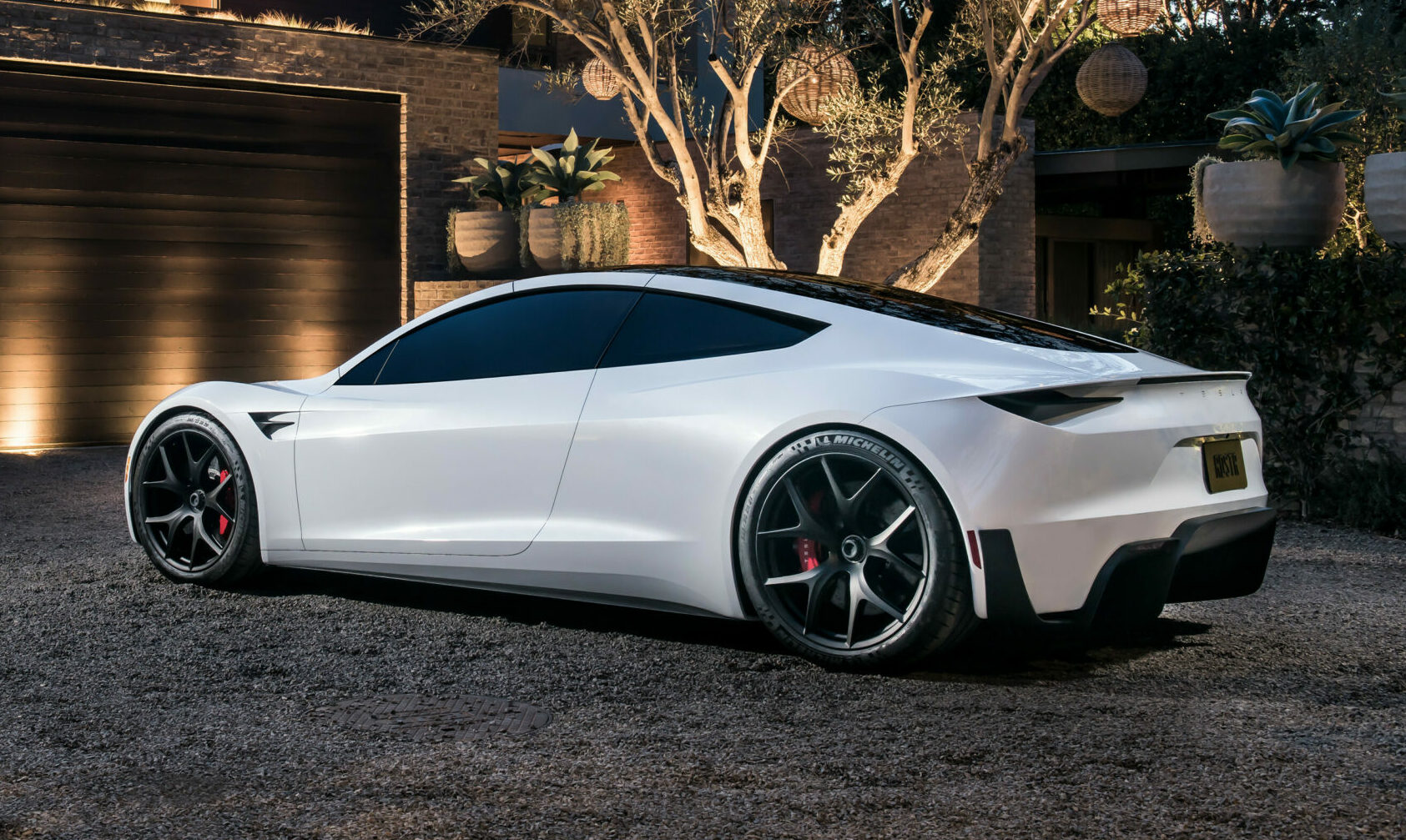
This patent comes at a time when Tesla fans also are watching closely. Elon Musk recently announced that the Roadster’s design reveal is on April 1, and it’s cause for high expectations for a car that has been stuck in the development limbo for years.

The timeline has stretched far beyond the original plan. Tesla first showed a Roadster prototype back in 2017 and initially targeted a 2020 launch. That deadline came and went. Still, recent trademark filings for updated Roadster badges suggest the company may finally be preparing to reveal the production version in full.

Weight reduction has always been one of Tesla’s tenets as an engineering company, as well as the move to large castings for structural components. A more graduated and integrated seating configuration makes a lot of sense in that strategy, especially for a vehicle that is eyeing extreme acceleration figures.

 Tesla Files New Seat Patent For A Supercar That’s Been Sitting Since 2017
❌
❌