Normal view

There are new articles available, click to refresh the page.
Before yesterdayMain stream

A Chinese Brand Most Americans Can’t Name Wants To Outsell Ford By 2030

  • The plan leans on overseas markets that barely know the brand exists
  • Plug-in hybrids and BEVs would make up 60 percent of that volume
  • Changan operates brands like Nevo, Deepal, Volga, Avatr, and Kaicene.

Last year, BYD and Geely were the only two Chinese automakers to firmly establish themselves among the planet’s top 10 largest car manufacturers by volume. By 2030, fellow Chinese brand Changan aims to join them and grow its global sales by more than two-thirds.

Heading into the Beijing Auto Show, Changan Automobile says it is aiming for 5 million annual sales by 2030, with a fallback target of 4 million if conditions tighten. Reaching the higher figure would make it the world’s fifth-largest carmaker based on 2025 volumes, putting it ahead of Ford at 4.4 million, Honda at 3.5 million, and Nissan at 3.2 million. The plan leans heavily on electrification, with plug-in hybrids and battery-electric models expected to account for 60% of total sales.

Read: This Chinese SUV Is Like A Cut-Price Xiaomi YU7, Except For What’s Under The Hood

The key to Changan’s desired growth will be overseas markets. Last year, it sold 638,000 vehicles outside China, but by 2030, it aims to increase this figure to between 1.4 million and 1.8 million units. Among the brands currently operated by Changan include Nevo, Deepal, Volga, Avatr, and Kaicene, while it also has joint ventures with Mazda and Ford.

Chinese Rivals Could Also Climb The Charts

\\\\\\\\\\\\\

Of course, Changan isn’t the only Chinese carmaker that wants to see more sales in the coming years. Geely, which ended 2025 as the world’s eighth largest car manufacturer with 4.12 million vehicles, is targeting 6.5 million sales in 2030. Additionally, BYD will be pushing for more sales, although it hasn’t announced a set target for 2030, Reuters notes.

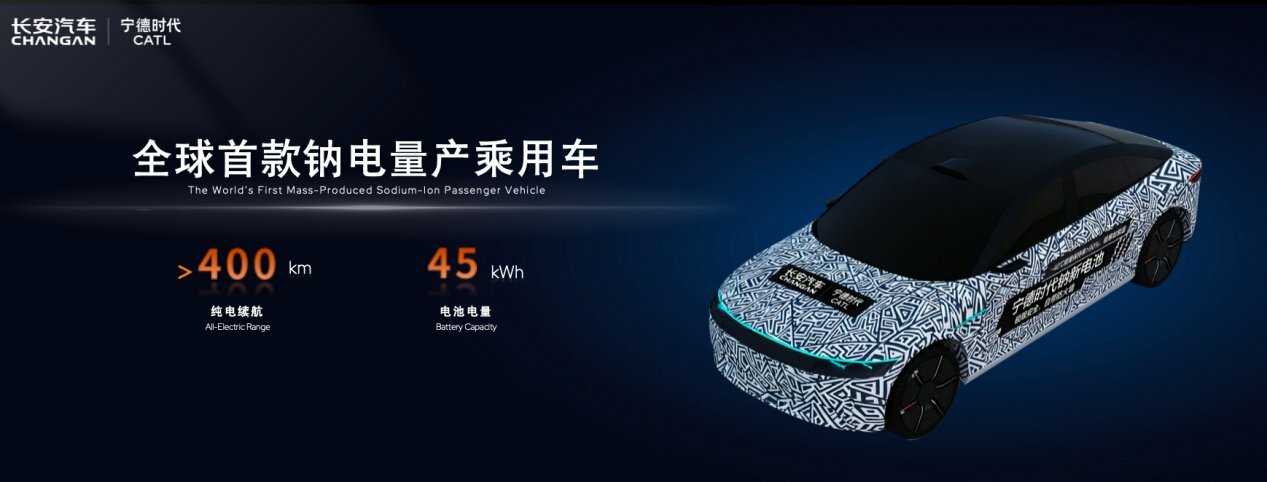
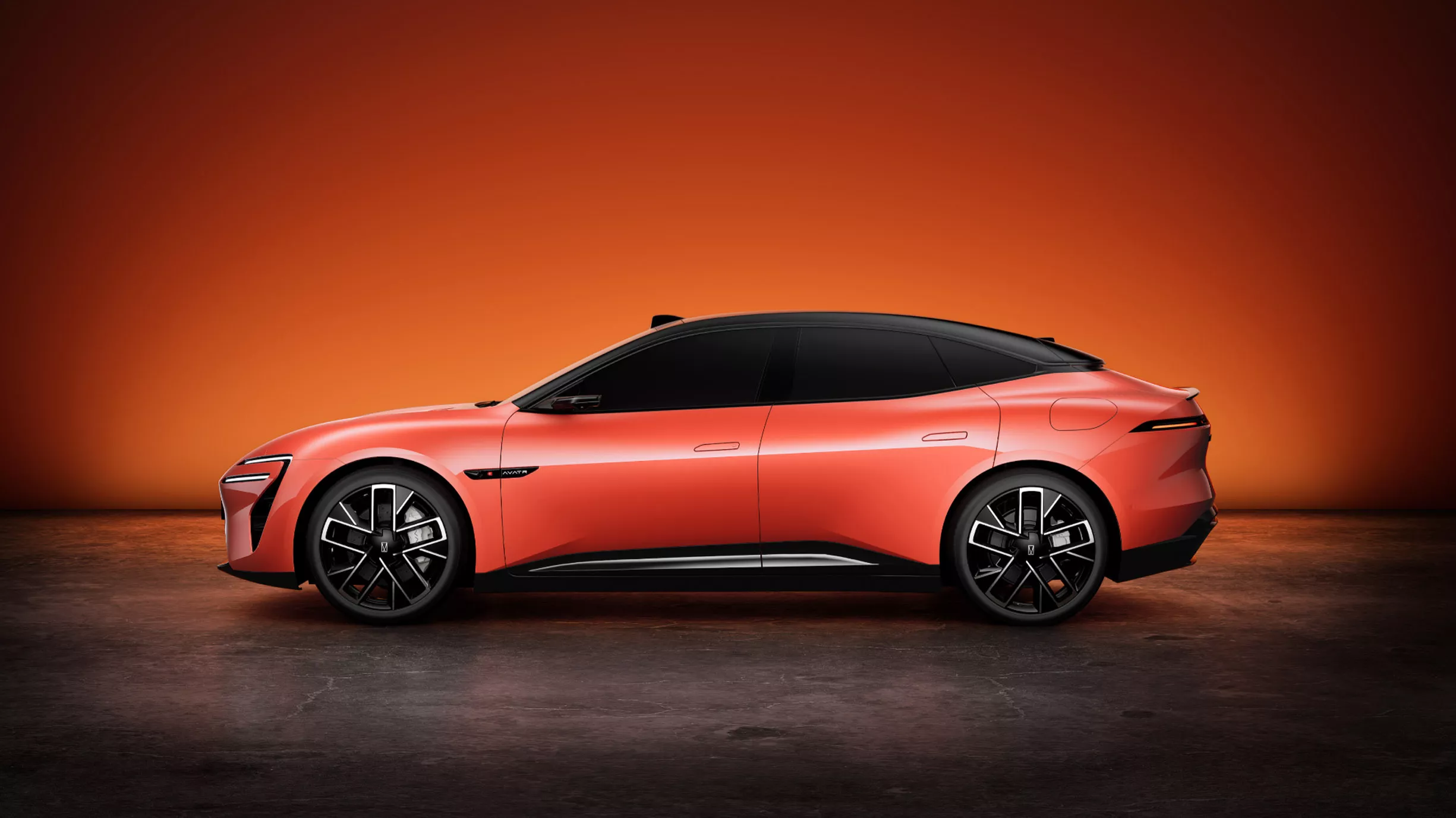
New technologies will play a part in Changan’s sales growth. The car manufacturer is gearing up to launch a pair of all-electric sedans using advanced sodium-ion batteries. As sodium-ion batteries are far cheaper to produce than existing lithium-ion batteries, these models could usher in a new era of even more ultra-affordable EVs in China. Most other major Chinese car companies are also developing sodium-ion batteries, including Geely and BYD.
\\\\\\\\\\\\

This Chinese SUV Is Like A Cut-Price Xiaomi YU7, Except For What’s Under The Hood

  • The Nevo Q06 will be sold as an EV and as a range extender.
  • Changan’s EREV version will use a 1.5-liter four-cylinder with 97 hp.
  • Sleek headlights and taillights help the new SUV catch the eye.

China’s EV scene isn’t short on low, sleek SUVs, and here’s another one sliding into the mix. Called the Changan Nevo Q06, it lands in roughly the same size and shape territory as the Xiaomi SU7, though this one looks set to come in at a lower price point, with less emphasis on outright performance.

Images published by China’s Ministry of Industry and Information Technology (MIIT) show the SUV shares obvious design similarities to the Nevo A06 sedan. With that in mind, it has a pair of split headlights with a full-width light bar, in addition to a black lower grille section and black air intakes.

Read: The Funky Changan Qiyuan E07 Is Part SUV, Part Truck, And All Electric

Changan has also equipped it with gloss black wheel arches, a roof-mounted LiDAR, and door handles sitting flush with the bodywork. The side profile looks particularly sleek, especially thanks to the flowing shoulder line and bulging rear quarter panels. Found at the rear is a light bar and a color-matched diffuser.

Early details also reveal the Nevo Q06 will come with 14 different wheel designs, a two-tone rear spoiler, optional privacy glass, and a panoramic glass door. The SUV is 4,837 mm (190.4 inches) long, 1,970 mm (77.5 inches) wide, and stands 1,670 mm (65.7 inches) tall with a 2,940 mm (115.7-inch) wheelbase.

A Powertrain For Everyone

\\\\

Unlike the YU7, which is sold exclusively as an EV, the Nevo Q06 will offer all-electric and range-extender powertrains. Two rear-driven electric models will be available, delivering 282 hp and 302 hp, respectively. Those seeking additional power can opt for a 444 hp dual-motor model that raises the top speed from 200 km/h (124 mph) to 230 km/h (143 mph).

There’s no word on the capacity of the available battery packs, but we know they will be LFP batteries sourced through Changan’s partnership with CATL.

Changan will also sell the Nevo Q06 as a range extender. This model will use a 1.5-liter naturally aspirated four-cylinder engine producing 97 hp, already used by several Deepal models, alongside a pair of electric motors at the rear axle. Details of the battery aren’t known, but it may get an innovative sodium-ion pack like the A06 sedan.

\\\\\

Mazda’s 600 HP Pickup Idea Starts With A Chinese Truck That Doesn’t Behave Like One

  • Mazda is reportedly exploring a deeper tie-up with Changan.
  • The two already share a joint venture, offering the EZ-6 and EZ-60.
  • It’s reportedly considering a rebadge the Deepal E07 for its lineup.

Mazda isn’t ruling out a possible entry into the super-pickup sphere with a 600 hp (440kW) offering, but there’s a big caveat. If it does move forward, the result would be anything but a traditional Mazda. The idea, at least in its early form, centers on a rapid rebadge of the Deepal E07 transforming truck from China. Picture something closer to a Cybertruck-style ute than anything currently wearing a Mazda badge.

Changan, Deepal’s parent company, already maintains a close working relationship with Mazda. Through their joint venture in China, the Mazda 6e (also known as the EZ-6) sedan is produced by Changan and based on the Deepal L07. The upcoming Mazda CX-6e (EZ-60) SUV will also be manufactured in China.

Another Chinese-Based EV

The timing makes sense. Electric and plug-in hybrid pickups have been garnering more attention in markets like Australia, where buyers are in search of something functional, yet at the same time want something exciting to drive around. The fact that powerful pickups have a great amount of interest has already been shown by other manufacturers, such as BYD with the Shark 6, and the plug-in hybrid Ford Ranger.

\\\\\\\\\\\

Read: Mazda Admits It Learned From China, And Its Future EVs Will Show It

While Mazda has made its reputation for efficiency and clever engineering, especially with its Skyactiv technology, they don’t have an in-house developed ute or pickup, with the BT-50 workhouse based on the Isuzu D-Max. It would also do no harm to Mazda’s overall EV lineup, while offering a way to offset CO2 penalties.

But a ute producing about 600 hp (440 kW) would take things in a very different direction. While it’s not a current priority, Hiroshi Ozawa, General Manager of the Changan Mazda Automobile Technical Development Center, won’t rule out the possibility.

“My personal view is that Deepal E07 that pick up, the truck [that] opens up, it’s a very interesting vehicle,” said Ozawa, speaking to Carsales. “I like that kind of vehicle… In Australia I think customers may also like the kind of vehicle.”

Is The E07’s Time Now?

\\\\\\\\\\\\\

The Deepal E07 hasn’t had much attention outside of China, but it is already available in Australia, as well as other parts of South Asia. To bring you up to speed, it’s not a pickup in the traditional sense. The E07 is dubbed by the brand as a “transformer,” able to operate as both an SUV and a pickup, with a retractable glass portion revealing a bed.

Review: BYD Shark 6 Is Faster Than A Ranger Raptor But That Is Only Half The Surprise

It can be configured in either a single-motor rear-wheel-drive layout or an all-wheel-drive dual-motor version. Both versions are powered by a 90kWh battery, with a claimed range of up to 550km. That top-spec dual-motor AWD version can dispatch 0-100 km/h (0-96 mph) in just 3.9 seconds thanks to its 440 kW (590 hp) output.

At this stage, there’s no official word on whether the E07 will be getting the green light as a Mazda. Still, the fact that the company is openly discussing the potential of super ute shows that it’s thinking outside of its usual boundaries.

\\\\\\\\\\\

Photos Deepal, Deepal Australia, Deepal YouTube

China’s Rolling Out Solid-State Batteries This Year And The Range Claim Is Wild

  • The new battery delivers 400 Wh/kg energy density.
  • Mass production is planned to begin next year.
  • BYD, SAIC, GAC, and CATL are developing similar packs.

Solid-state batteries have been “just around the corner” for what feels like an entire EV generation. Now, they might actually be arriving. In the third quarter of this year, China’s Changan will begin fitting its new solid-state packs to robots and EVs, with full mass production slated for 2027.

According to Chinese media, Changan claims its new solid-state battery has an energy density of 400 Wh/kg, and EVs using it will be able to travel upwards of 932 miles (1,500 km) on a single charge. While you could argue that this much range borders on excessive, it would make future Changan models far better suited to long road trips through remote areas where charging infrastructure remains sparse.

Breakthrough Energy Density

 China’s Rolling Out Solid-State Batteries This Year And The Range Claim Is Wild

The pack is called the Golden Bell. Aside from being very energy-dense, it is said to be 70 percent safer than a conventional EV battery and, because this is 2026, it also uses artificial intelligence for remote diagnostics. Smarter batteries, apparently, are part of the plan.

Read: Avatr Just Extended The 06 In More Ways Than One

Changan will build these units under its new Jingzhongzhao solid-state battery brand. The company intends to manufacture fully solid-state packs while also producing liquid and semi-solid-state batteries that rely on a liquid electrolyte.

 China’s Rolling Out Solid-State Batteries This Year And The Range Claim Is Wild

China’s Solid-State Push

It is not alone. Other Chinese brands are also edging closer to making solid-state batteries mainstream. Earlier this year, Dongfeng Motor began testing its own solid-state battery in extreme cold weather. It has an energy density of 350 Wh/kg and a claimed range exceeding 620 miles (1,000 km). It also plans to roll them out in production cars this year, aiming for September.

BYD, Chery, SAIC, GAC, and CATL are all chasing similar breakthroughs. So are legacy names such as Mercedes-Benz, VW, BMW, Toyota, Nissan, Hyundai, and Honda. After years of promising headlines and laboratory milestones, solid-state batteries may finally be edging toward something tangible. If they deliver on even half of these promises, combustion engines will have one more reason to feel nervous.

 China’s Rolling Out Solid-State Batteries This Year And The Range Claim Is Wild

Sources: Changan, Carnewschina

❌
❌