Reading view

There are new articles available, click to refresh the page.

Bentley Hasn’t Shown The Barnato SUV’s Face Yet, So We Did It For Them
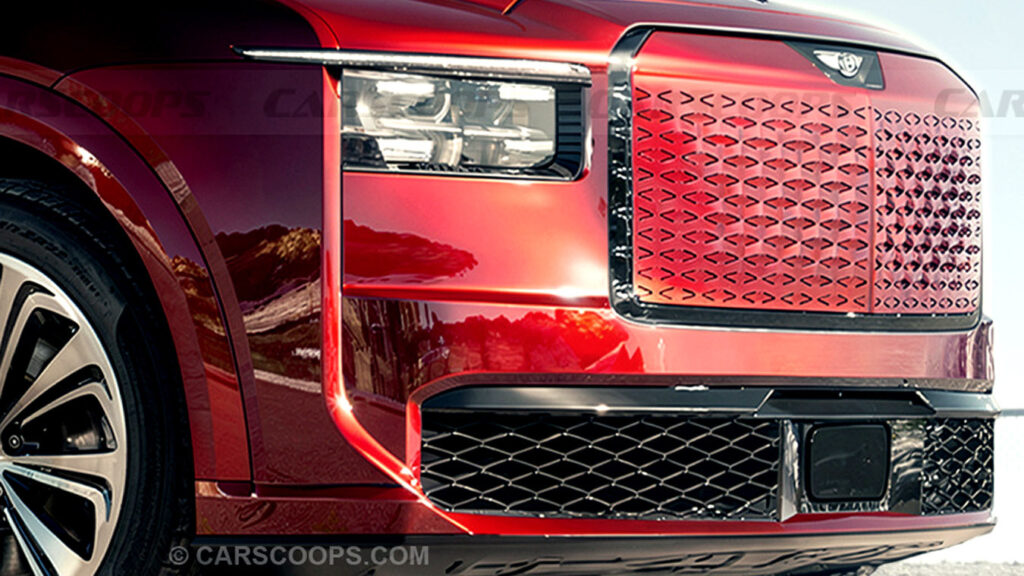
  • New Barnato will sit below the Bentayga as Bentley’s first fully-electric SUV.
  • Output could reach up to 1,140 hp, pointing to serious performance potential.
  • Its sleek styling draws from the EXP 15 concept with crisp, sharp, modern details.

Bentley is getting ready to widen its SUV lineup with a second high-riding model, one that will slot in below the Bentayga. This time, though, the formula changes. Instead of another combustion-powered offering, the new arrival is set to be fully electric.

Early reports pointed to the name ‘Mayon,’ which appeared in a trademark filing with the European Union Intellectual Property Office last year. However, more recent intel points to the ‘Barnato’ name being used; after all, it carries more heritage honoring Le Mans winner and Bentley owner Woolf Barnato. 

Future Cars: The Luxurious Hyundai Flagship We Never Got Is About To Change

Our sleuths behind the lens have already captured heavily camouflaged prototypes testing in winter conditions, yet we’ve gone one step further by digitally decoding its design and exploring everything else we know ahead of its expected debut.

Sleeker Than The Bentayga
 Bentley Hasn’t Shown The Barnato SUV’s Face Yet, So We Did It For Them
Illustrations Josh Byrnes / Carscoops

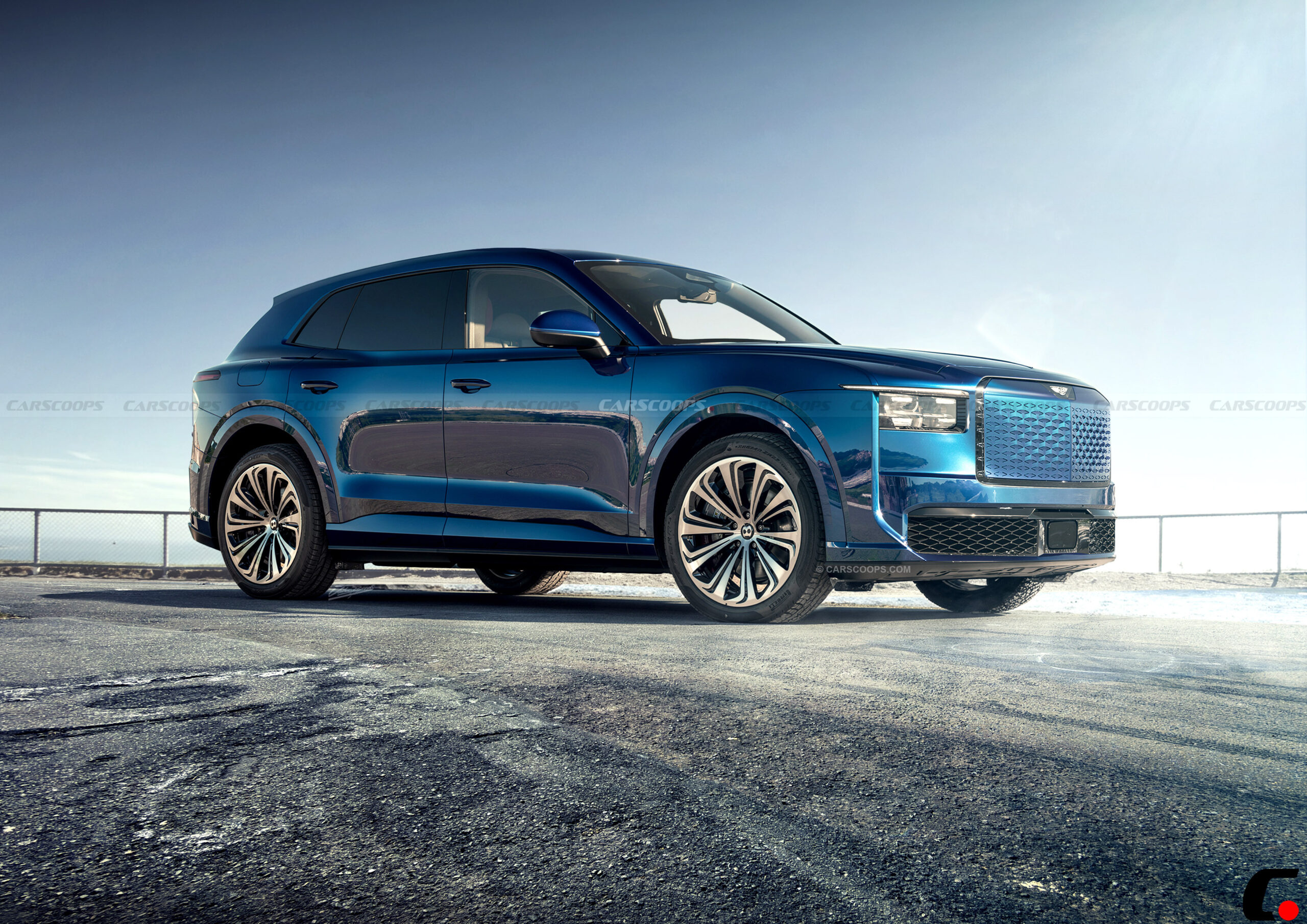
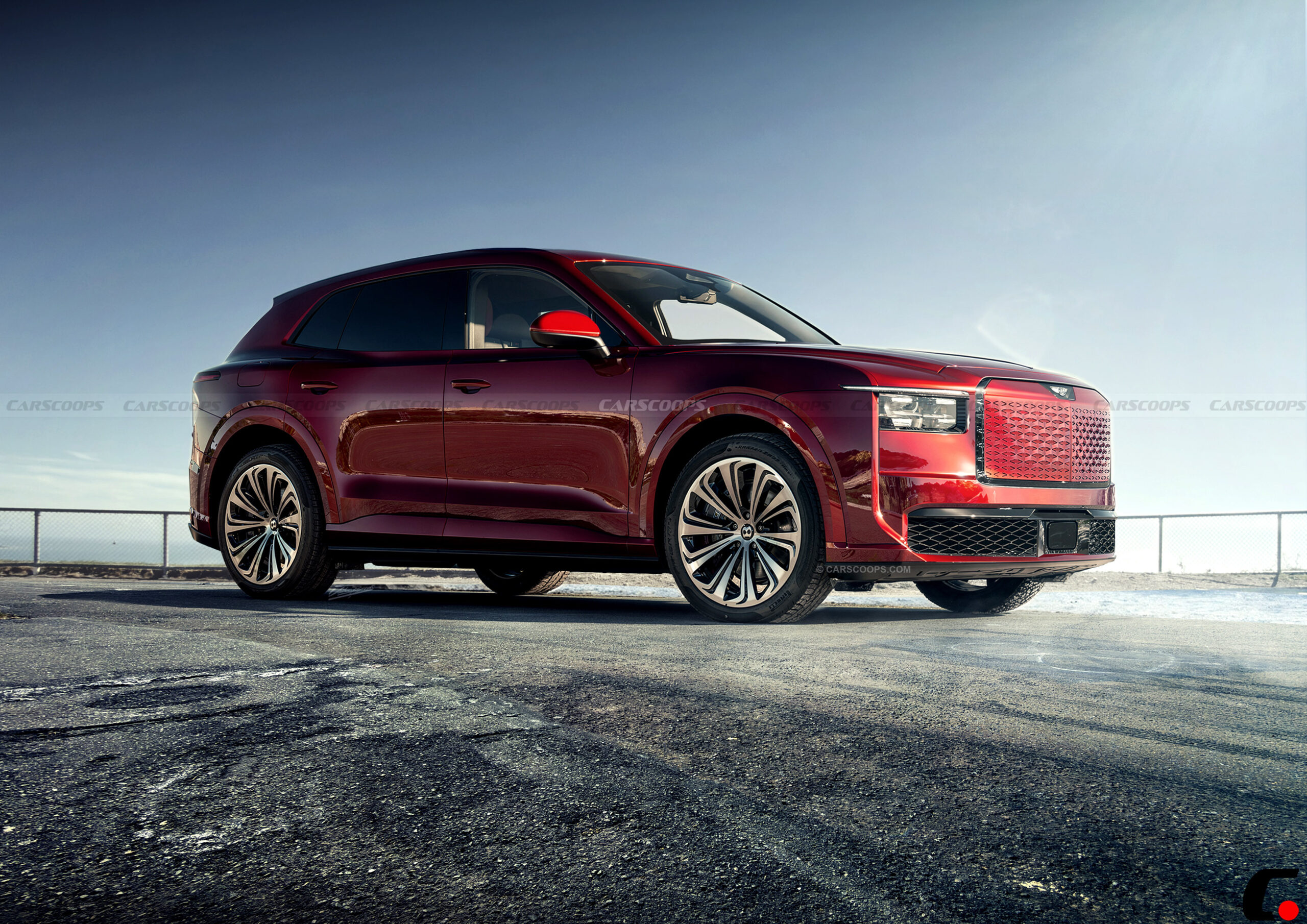
Unlike the much-criticised Bentayga, the Barnato is a sleeker affair that draws part inspiration from the brand’s futuristic EXP 15 concept.

At the front, the fascia evolves Bentley’s familiar matrix grille theme into a closed-off interpretation that hints at its electrified powertrain. The headlights adopt four distinct lighting elements, accompanied by a horizontal DRL strip that spears into the front fenders, and lower down, a wide lattice-detailed intake aids cooling and aerodynamic efficiency.

From the side, it appears shorter and more athletic than the Bentayga, with pronounced muscular haunches and frameless windows adding a sportier character. A scalloped shoulder line emphasises stately dynamism, while at the rear, the SUV features slim, jewel-like LED taillights, and a  Taycan-style rear diffuser profile aids airflow.

Digital Cabin Experience

\\\\

SH Proshots

Inside, Bentley is mixing old-school craftsmanship with a very modern digital backbone. Front and center sits a sweeping curved OLED display that cascades into the center console, echoing the layout seen in the latest Porsche Cayenne Electric. It runs on Android Automotive OS, backed by quicker processors, sharper AI voice control, and access to downloadable apps. There’s even a 3D digital model of the Barnato embedded in the system, letting occupants manage various functions directly through the interface.

Also: Bentley Rewrites Its Future With A New Flying Spur Sedan That Breaks All The Rules

Other goodies will include an OLED instrument cluster with 3D overlays, an augmented-reality head-up display, and digital key functionality. A new three-spoke steering wheel features physical buttons and knurled scroll wheels, and we can expect seating configurations to include four- and five-seat layouts.

There’s also a curious bit of hardware carried over from the wider VW Group playbook. A multi-function left-hand column stalk, first seen on the Audi Q3, joins a right-hand stalk that doubles as the transmission selector, similar to the setup in the Volkswagen ID.4. Even so, the materials and finish leave no doubt about where this sits in the hierarchy. It still feels unmistakably Bentley.

Platform And Powertrain

\\\\\\\\\\\\

The Barnato rides on the VW Group’s Premium Platform Electric (PPE) architecture shared with the upcoming Cayenne Electric. Battery capacity is expected to reach 113 kWh, enabling high-performance and long-distance touring. Bentley claims 100 miles (160 km) of range can be recovered in less than seven minutes.

Using the electron-equipped Porsche as a reference point, power levels could range from 402 hp (300 kW/408 PS) to over 1140 hp (850 kW) in flagship variants. All models will likely feature dual-motor all-wheel drive as standard, with the rear motor featuring direct oil cooling to manage heat during sustained performance driving.

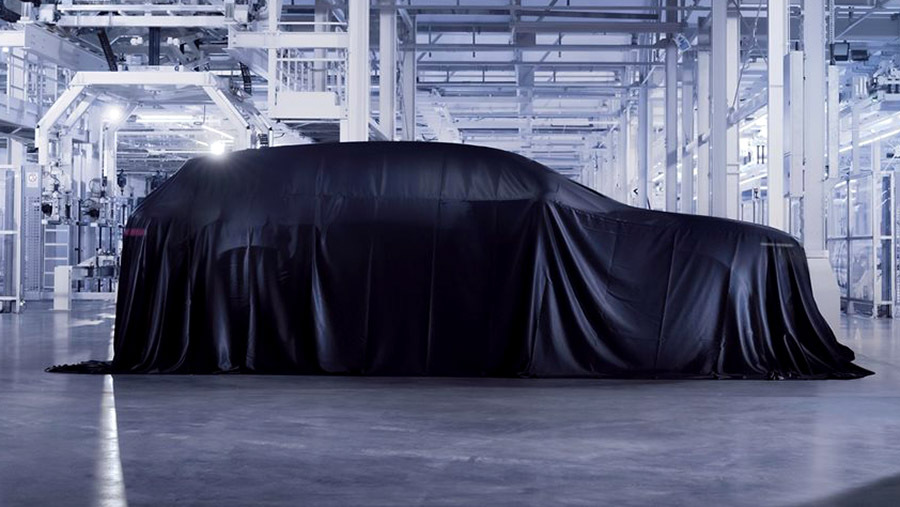
Rivals And Reveal
 Bentley Hasn’t Shown The Barnato SUV’s Face Yet, So We Did It For Them

The Barnato is being lined up for the top tier of performance SUVs, going head to head with heavy hitters like the Mercedes-Maybach EQS SUV, Rolls-Royce Cullinan, Lotus Eletre, Lamborghini Urus, Aston Martin DBXFerrari Purosangue and Luce, and the flagship Range Rover SV. Serious company, then.

Expect electrified offerings from Porsche to act as the technical yardstick here, setting the pace in areas like performance, software, and charging capability.
 Bentley Hasn’t Shown The Barnato SUV’s Face Yet, So We Did It For Them
Illustrations Josh Byrnes / Carscoops

VW’s Next Electric SUV Looks More Like A Tiguan

  • VW will rename the updated ID.4 as the ID. Tiguan in 2027.
  • Design shifts closer to the familiar look of the brand’s SUVs.
  • Physical buttons return, replacing the much-criticized sliders.

Volkswagen’s replacement for the ID.4 is not shaping up as a clean-sheet electric SUV. Instead, the company seems set to give the existing formula a fairly thorough rethink, reworking what it already has rather than tearing it up and starting again from scratch.

And it will likely arrive wearing a badge most buyers already know. Volkswagen is preparing to pin the Tiguan name onto what will become its core compact EV, a move meant to make the brand’s electric lineup feel less like a collection of tech codes and more like the VW showroom people already recognize.

Read: VW Locks Gas Tiguan In Until 2035 With Two Major Updates Planned

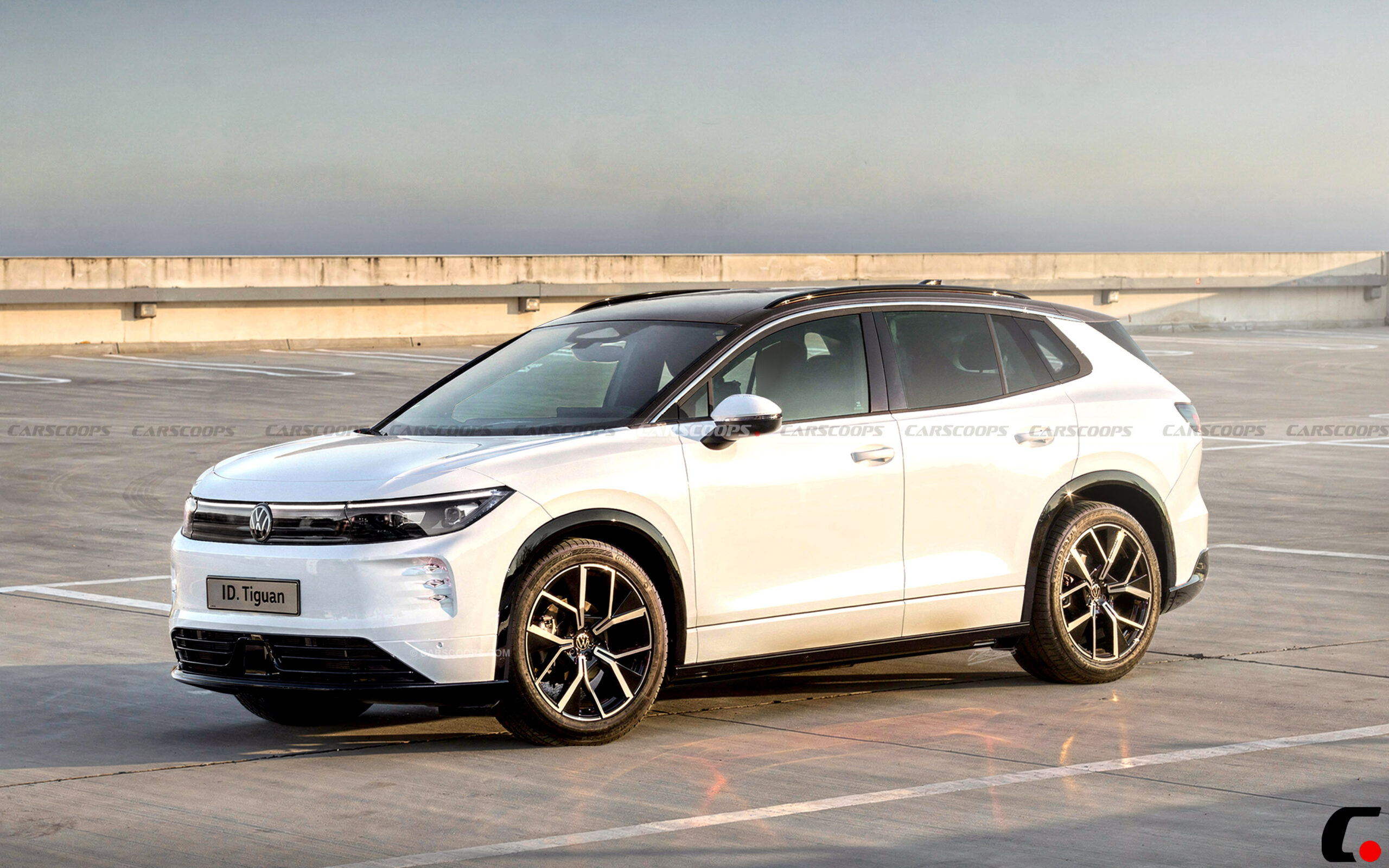
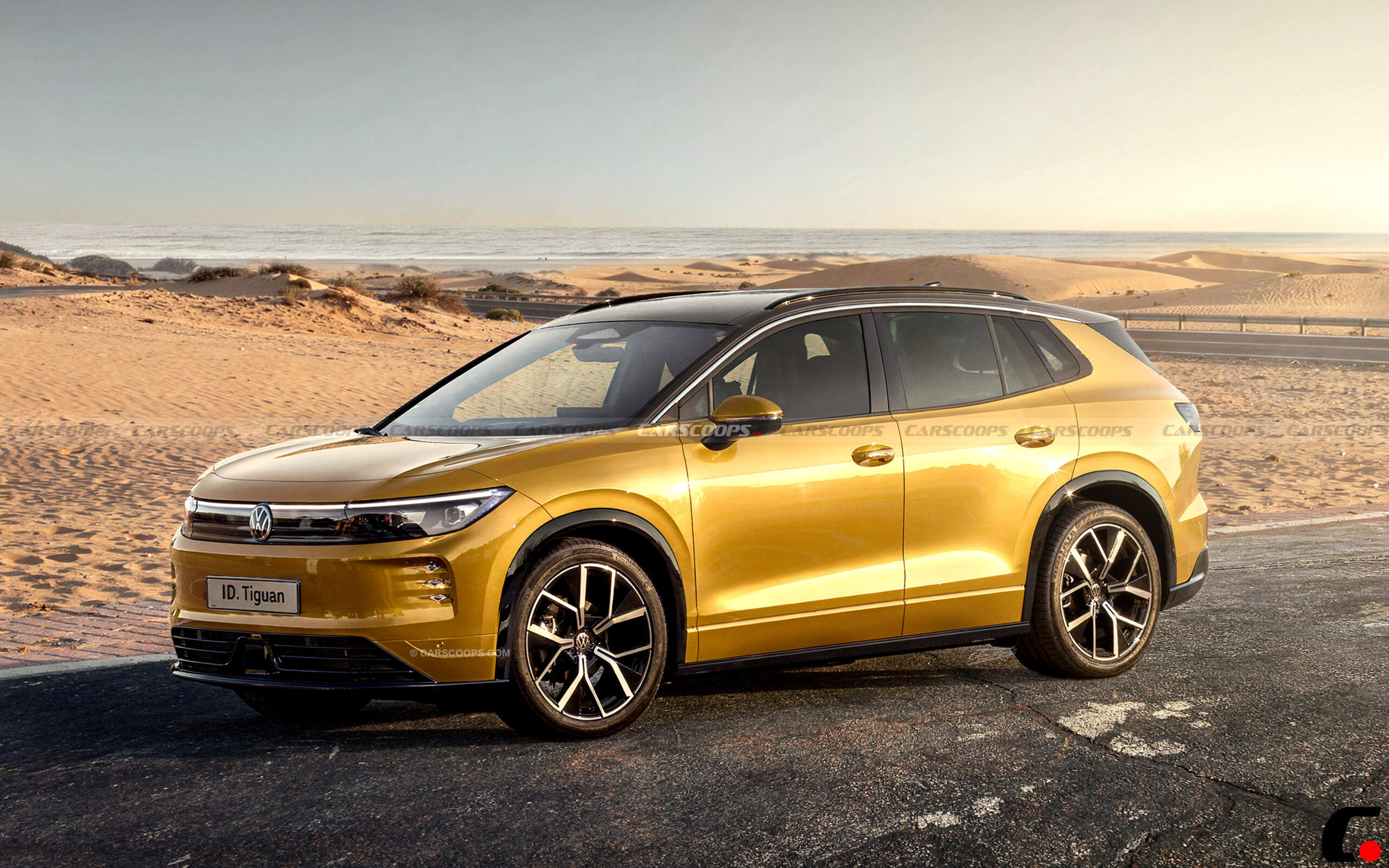
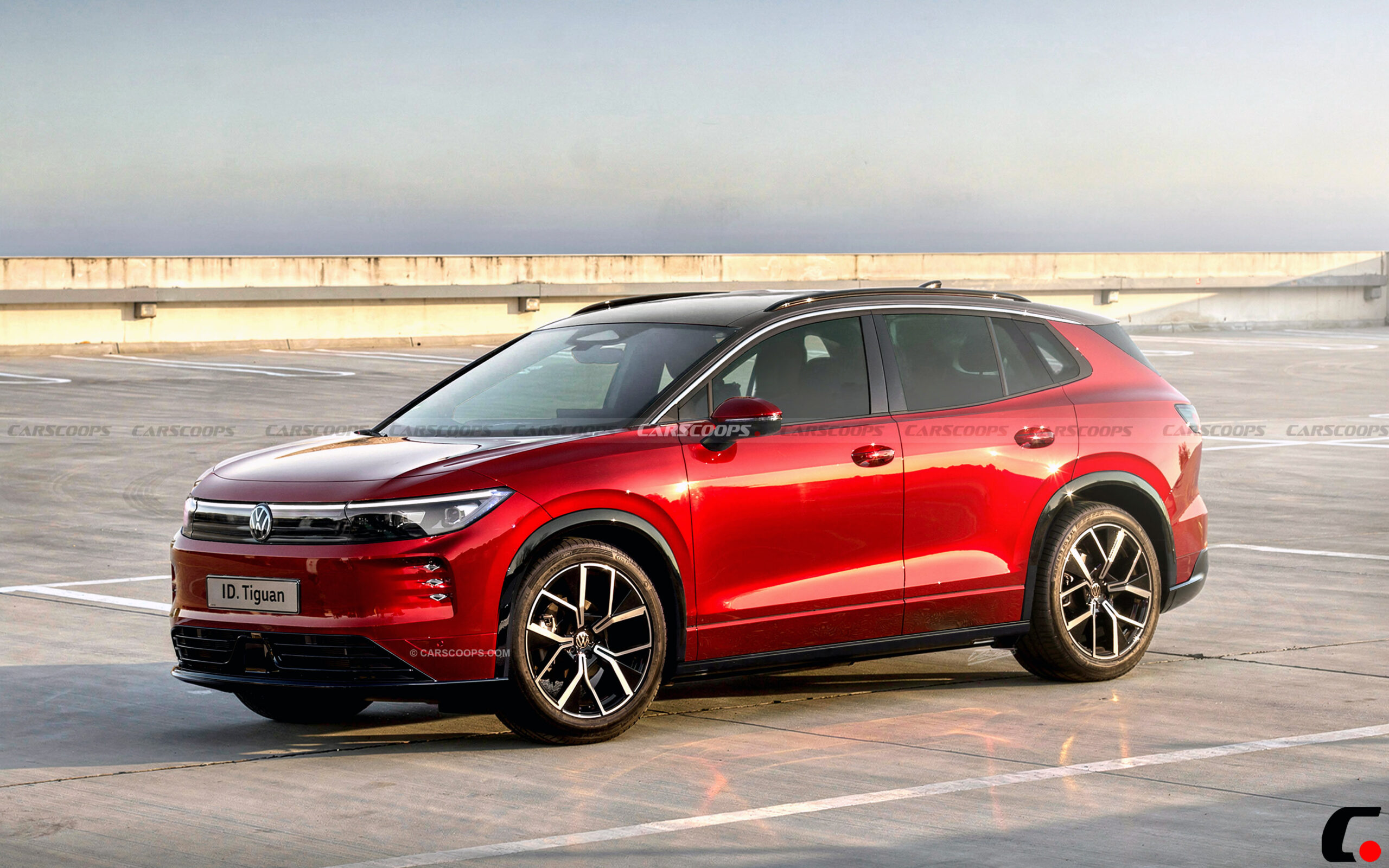
Recent prototype sightings give us a good idea of where the design is headed. Using those clues, we put together a production-style rendering and gathered everything currently known about the upcoming model.

Design Direction

 VW’s Next Electric SUV Looks More Like A Tiguan
Illustrations Josh Byrnes / Carscoops

Arguably, the electric Tiguan won’t get your pulse racing in the same way, say, Mazda’s new CX-6e will, but that’s okay. Visually, the ID. Tiguan retains the ID.4’s underlying proportions but refines them with more conventional SUV cues.

Also: Kia Killed The Stinger, But An EV8 GT Might Redeem Everything

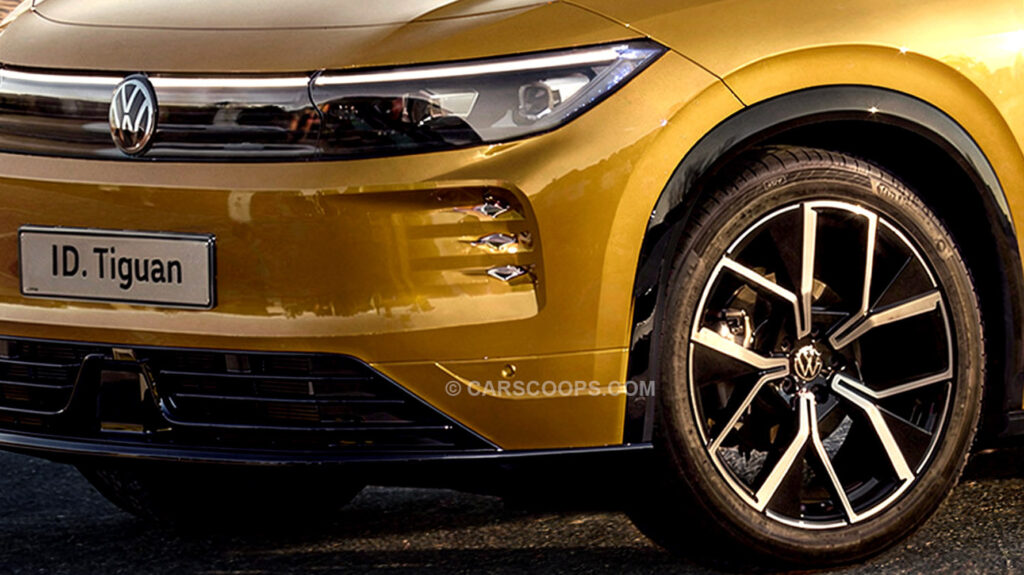
The front fascia is a squarer affair, ditching the rounded look in favor of rectangular LED headlights connected by a full-width light bar and an illuminated VW badge. A more upright bumper with subtle vertical elements exudes minimalism. 

In profile, it now has a straighter shoulder line, revised window graphics, and linear lower cladding. The roofline remains largely unchanged, while the flush door handles have been replaced by a conventional ‘pull-action’ setup. Out back, a full-width taillight cluster mirrors the front, while a revised bumper and subtle roof spoiler clean up the overall look.

Buttons Are Back!

 VW’s Next Electric SUV Looks More Like A Tiguan
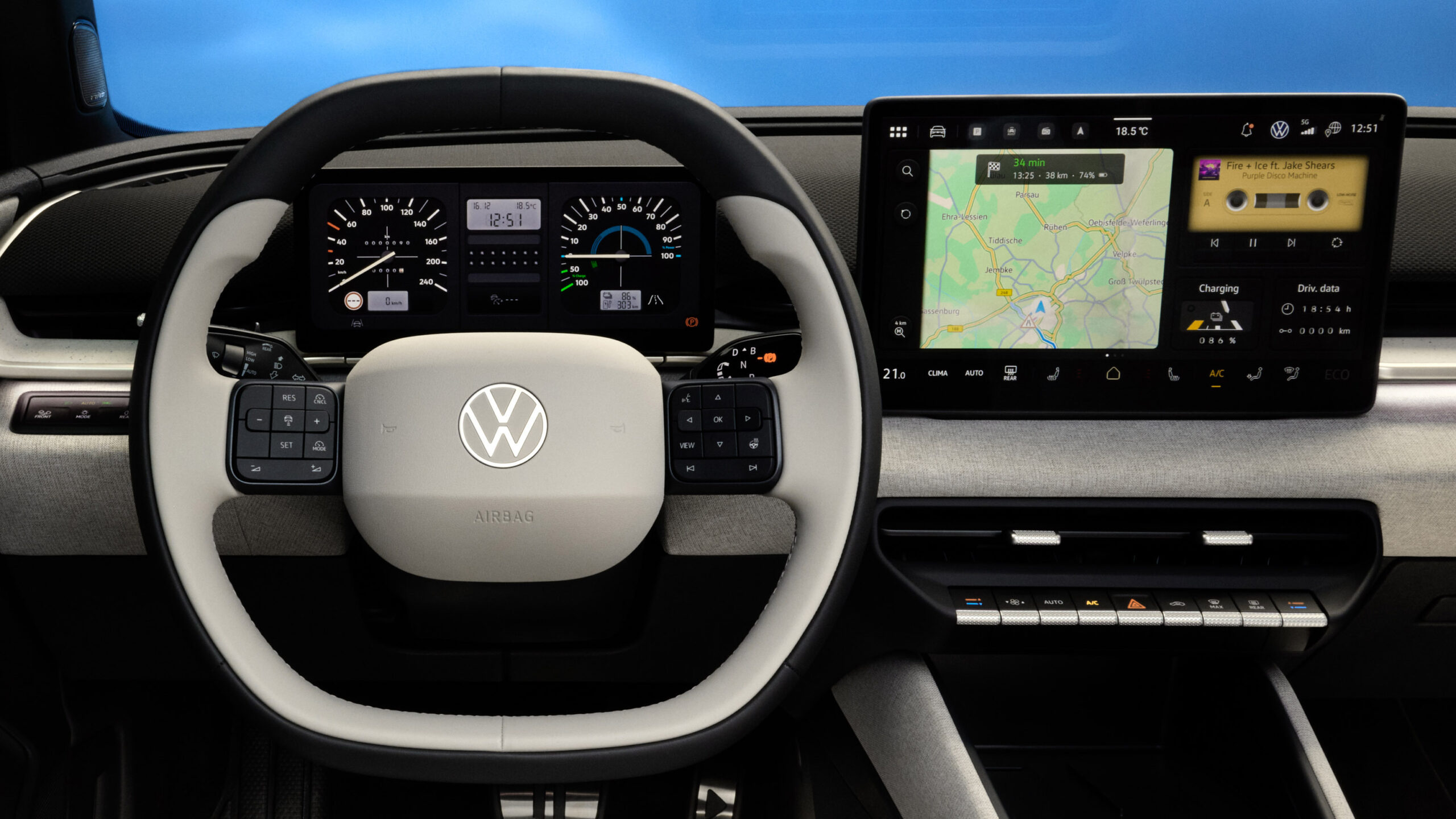
The ID. Polo shown here will be the first of several VWs to restore physical cabin controls.

Inside, the previous and much-despised haptic feedback and slider setup from the ID.4 will be ditched. A large infotainment screen will remain, but like the new ID. Polo, it will bring back proper physical buttons for the steering wheel and HVAC controls, plus an actual volume knob.

See: Ford’s $30K Electric Pickup Wants To Beat Cybertruck At Its Own Game

On the tech front, it will bring AI integration with ChatGPT, conversational voice commands, and other connected services. Interior quality is also set to improve, with increased recycled materials and fabric surfaces. Occupant space will largely stay the same, offering generous rear-seat legroom and a flat floor. 

Under The Skin

 VW’s Next Electric SUV Looks More Like A Tiguan
Illustrations Josh Byrnes / Carscoops

Under the skin, the ID. Tiguan will continue to ride on Volkswagen Group’s MEB architecture, most likely in its updated MEB+ form. The overall battery and chassis layout should remain familiar, with MacPherson struts up front and a multi-link rear suspension. Expect recalibrated driver-assistance systems and a handful of upgraded safety features to round out the updates.

As previously reported, powertrain options are also expected to closely mirror the current lineup with minor tweaks. Base variants will continue to use a single motor on the rear axle, developing around 282 hp (210 kW). Dual-motor, all-wheel-drive versions will yield close to 335 hp (250 kW).

Also: The Next Hyundai Elantra Will Look Nothing Like The Car In Your Driveway

The 400-volt system will employ LFP batteries with roughly 77kWh to 86kWh of capacity, targeting WLTP metrics in the 311-342 mile (500–550km) range, alongside improved DC fast-charging capability.

\\\\\\\\\\

Rivals and Reveal

When it arrives, the ID. Tiguan will find itself in very busy territory. The usual suspects are all here, including the Tesla Model Y, Ford Mustang Mach-E, Hyundai Ioniq 5, Kia EV6, Skoda Enyaq, Zeekr 7X, and Peugeot e-5008. Volkswagen is expected to reveal the model sometime in 2026, with sales likely following in 2027.

So, what do you make of the ID. Tiguan’s familiar, slightly more conventional look? Let us know your thoughts in the comments.

 VW’s Next Electric SUV Looks More Like A Tiguan
Illustrations Josh Byrnes / Carscoops
❌