Reading view

There are new articles available, click to refresh the page.

Unpopular abortion-homicide bills won’t fade, concerning reproductive rights advocates

Anti-abortion organizer Abby Johnson spoke at Students for Life of America’s annual National Pro-Life Summit on Jan. 24, 2026, behind former abortion clinic workers wearing “Make Abortion Murder Again” T-shirts. “I don’t think we’re going to hug and kiss our way out of this baby murder,” she told the student activists. (Photo by Sofia Resnick/States Newsroom) 

Anti-abortion organizer Abby Johnson spoke at Students for Life of America’s annual National Pro-Life Summit on Jan. 24, 2026, behind former abortion clinic workers wearing “Make Abortion Murder Again” T-shirts. “I don’t think we’re going to hug and kiss our way out of this baby murder,” she told the student activists. (Photo by Sofia Resnick/States Newsroom) 

Republican lawmakers in several states so far this year introduced bills that would legally treat abortion as homicide. 

The proposed laws could have implications not just for pregnancy termination but for certain fertility treatments or even some forms of contraception. Despite broad unpopularity, even within the mainstream anti-abortion movement, the measures continue to be introduced and debated in statehouses, concerning abortion-rights advocates. They fear the U.S. Supreme Court might someday consider the constitutionality of such a law, premised on giving legal personhood status to developing embryos. 

“Whether or not one of the laws, should it be enacted, makes it in front of the court, what it does is create an environment in which the court can seem as if it’s not being so extreme or stepping so far out of the mainstream,” said Madeline Gomez, managing senior policy counsel at Planned Parenthood Federation of America. “The court often likes to look to how many states have laws like this.”

While abortion-rights advocates are sounding the alarm on these abortion-homicide bills they say would exacerbate the consequences of state bans, supporters have grown more frustrated with anti-abortion groups and Republicans for not being fully committed to abolishing abortion. They belong to the movement’s steadily growing pro-prosecution wing and continue to develop policy and messaging strategies to promote abortion-homicide legislation.

Outside the March for Life rally in Washington, D.C., on Jan. 23, 2026, Virginia pastor Jason Garwood criticized mainstream anti-abortion groups and Republicans for not supporting laws that would give legal personhood to developing embryos and fetuses. (Photo by Sofia Resnick/States Newsroom)
Outside the March for Life rally in Washington, D.C., on Jan. 23, 2026, Virginia pastor Jason Garwood criticized mainstream anti-abortion groups and Republicans for not supporting laws that would give legal personhood to developing embryos and fetuses. (Photo by Sofia Resnick/States Newsroom) 

“We obviously disagree with the pro-life movement in large part — some of their organizations have stopped bills of abolishing abortion in places,” said Virginia pastor Jason Garwood protesting outside this year’s March for Life, holding a poster calling for a ban on in vitro fertilization. “We’re obviously opposed to Democrats, but we’re also opposed to Republicans who are compromised on the issue, who say one thing and do another, Donald Trump being one of the foremost. … I mean, Republicans have Congress, and we don’t have a bill to abolish abortion yet.”

Like Garwood, anti-abortion leader Abby Johnson believes a cultural change in the U.S. on abortion will not happen without the fear of murder charges. She is planning to launch a “Make Abortion Murder Again” college tour at major state schools this spring to help convince the next generation of adults to accept a reality where embryos and fetuses will have the same legal rights as the women and girls carrying them.

“Do I want to see women in jail? No, I don’t,” Johnson said. “Because I don’t want women to have abortions. It’s like, do I want to see people in jail for drinking and driving? I don’t, but I don’t want people to drink and drive.”

Most people don’t want to see women jailed for abortion. A recent Pew Research Center poll shows 60% public support for abortion in most or all cases, with surveyed conservatives and Republicans much more likely to support making abortion illegal in most or all cases. 

But University of Maryland School of Public Policy researcher Steven Kull found that when voters are confronted with the reality of criminalizing abortions in all cases, the political divide can shrink. Kull led a study of swing state voters ahead of the 2024 presidential election in Arizona, Georgia, Michigan, Nevada, Pennsylvania and Wisconsin. Large bipartisan majorities in these states said they did not want abortion to be criminalized before fetal viability, including Republicans (between 57% and 70%, depending on the state). 

Nationally, among those who favored making abortion a crime, 5% said the doctor should be punished, 5% said the woman, and 10% said both.

A 2025 survey published by reproductive rights legal nonprofits Pregnancy Justice and the National Women’s Law Center found that 59% of likely voters said they opposed granting legal rights to embryos and fetuses after learning about the criminal implications of these policies. 

Prosecuted for pregnancy outcomes 

So far this year, Republican lawmakers in IllinoisKentucky, South Dakota and Tennessee have introduced legislation that would treat abortion as homicide in law. Most efforts have already fizzled, including a controversial amendment to a Tennessee bill that would have penalized women who have abortions, including those who leave the state to end a dangerous pregnancy. 

Several legislatures saw abortion-homicide bills last year, including South Carolina, where support and the list of bill sponsors grew in 2026.

Some states already have some kind of personhood language on the books, while others, such as Arizona and Missouri, continue to consider it. And women have already been arrested and charged for crimes related to miscarriages and stillbirths, and for taking abortion pills.

In January a woman from Campton, Kentucky, where abortion is banned throughout pregnancy, was arrested and charged with fetal homicide after taking abortion pills and burying the remains near her home. Prosecutors dropped the homicide charges after a state attorney submitted a court filing saying the state’s fetal homicide laws cannot apply to pregnant women. She is still being charged with a misdemeanor related to concealing a birth.

Earlier this month in Georgia, where abortion is banned at around six weeks gestation, police charged a woman with attempted murder after she delivered a severely premature baby who died shortly after birth. As the Current has reported, one friend told a police officer the woman had taken the abortion-inducing drug misoprostol and a pain medication, but another friend contradicted that account to the news outlet and said she had only taken the pain medicine. 

The woman, a mother of two young boys, also faces a drug possession charge because the Georgia Legislature, like Louisiana’s and Texas’, has placed misoprostol on a list of “dangerous” medications, along with another abortion medication, mifepristone. Unlike other states, Georgia’s abortion ban does not explicitly exempt pregnant people from criminal charges.

As States Newsroom has reported, the most serious charges are often dropped in these types of cases, but the harms related to reputational damage and incarceration can be long-lasting.

“Postpartum people are being investigated and jailed while their mugshots are plastered across the news as they endure a deeply private and personal experience,” said Pregnancy Justice Senior Policy Counsel Kulsoom Ijaz in a statement

Ijaz co-authored a report earlier this year finding that between 2006 and 2024, states prosecuted at least 58 women after they lost pregnancies, including the handling of remains resulting from a miscarriage or stillbirth.

“Although many of these cases are eventually dropped, the damage can’t be undone,” Ijaz said.

Reproductive rights advocates say abortion-homicide bills would likely exacerbate issues created by existing state abortion bans, even for wanted pregnancies: When patients and providers fear legal prosecution, they might avoid necessary health care, including prenatal care and emergency procedures.

“By making abortion equivalent to murder or homicide, these bills are also trying to make it impossible for people to ask for help, impossible for people to offer that help,” Gomez said. “They’re meant to be isolating and stigmatizing and really saying this is the worst crime that we imagine in our code, and you should be scared to even talk about it or think about it or offer that help.”

Abortion opponents protested in Washington, D.C., on Jan. 23, 2026. There is a growing divide between the mainstream movement, which pushes policy and regulations that curb access to abortion, and so-called “abortion abolitionists,” who seek harsh, criminal penalties for women who have abortions. (Photo by Sofia Resnick/States Newsroom)

The promise of penalty

The mainstream anti-abortion movement spent the last half-century helping to pass incremental, strategic federal and state laws that made abortion harder to access and more expensive, eventually ending federal abortion rights. But groups like Abolitionists Rising, End Abortion Now and the Foundation to Abolish Abortion are pushing for near-total bans, with only exceptions for spontaneous miscarriages and life-saving medical procedures. 

More mainstream leaders like Students for Life of America’s Kristan Hawkins say abortion-homicide laws would set the movement back in terms of cultural acceptance and are not the silver bullet their supporters believe they are. 

“Abortion won’t end overnight,” Hawkins wrote in a recent Substack article. “Abortions will tragically continue … just like murder and theft continue. But, at some point, there will be an investigation, arrest, and prosecution. … The story won’t be: ‘The Pro-Life Movement Wants Justice for the Preborn Baby.’ It will be: “The Pro-Life Movement Wants to Jail & Execute Women.’”

Advocates more in the middle of this growing divide include Abby Johnson, who once worked as a Planned Parenthood clinic director but has spent the past two decades encouraging abortion-clinic staff members around the country to quit their jobs with the help of her organization And Then There Were None. Her profile grew in 2019 with the release of the movie “Unplanned,” based on her autobiography about her experience working for Planned Parenthood. 

Its veracity was challenged by an investigative reporter, and Planned Parenthood says Johnson has a track record of spreading false information about the organization’s mission, and sexual and reproductive health care.  

Johnson has advocated in legislatures and courts, trying to eliminate abortion rights in her home state of Texas and throughout the U.S. Last month, she testified in an amicus brief arguing medication abortion is gruesome in the abortion pill case Louisiana v. FDA. 

She is the rare female leader among the male-dominated groups that advocate for harsh penalties for women who have abortions. Johnson said she values her friendship with Hawkins, especially after having lost other friends and partnerships in the movement as her anti-abortion stance has become more radical. But while she criticizes the so-called abortion abolitionists for lacking grace, she criticizes the mainstream movement for focusing on regulation and treating women like victims instead of trying to deter them with harsh penalties. 

“I don’t think we’re going to hug and kiss our way out of this baby murder,” Johnson told the audience of about 2,000 predominantly university and high school students at Students for Life of America’s annual National Pro-Life Summit in late January.

She said the March for Life declined to partner with her on her next movie after having sponsored “Unplanned.” She said they told her the new one was too graphic.

A spokesperson for March for Life did not confirm but shared a written statement: “March for Life deeply values our fellow movement leaders and the dedication they bring towards building a future where every life is welcomed and protected.”

Johnson said she hopes the movie and the college tour, which is still being planned, could make harsher abortion penalties more palatable across the country. Harsher penalties would have saved her from choices she regrets, she said. 

“If there would have been some sort of consequence for my action at the time, I wouldn’t have had an abortion,” Johnson said. “That would have changed the trajectory of my life.”

This story was originally produced by News From The States, which is part of States Newsroom, a nonprofit news network which includes Wisconsin Examiner, and is supported by grants and a coalition of donors as a 501c(3) public charity.
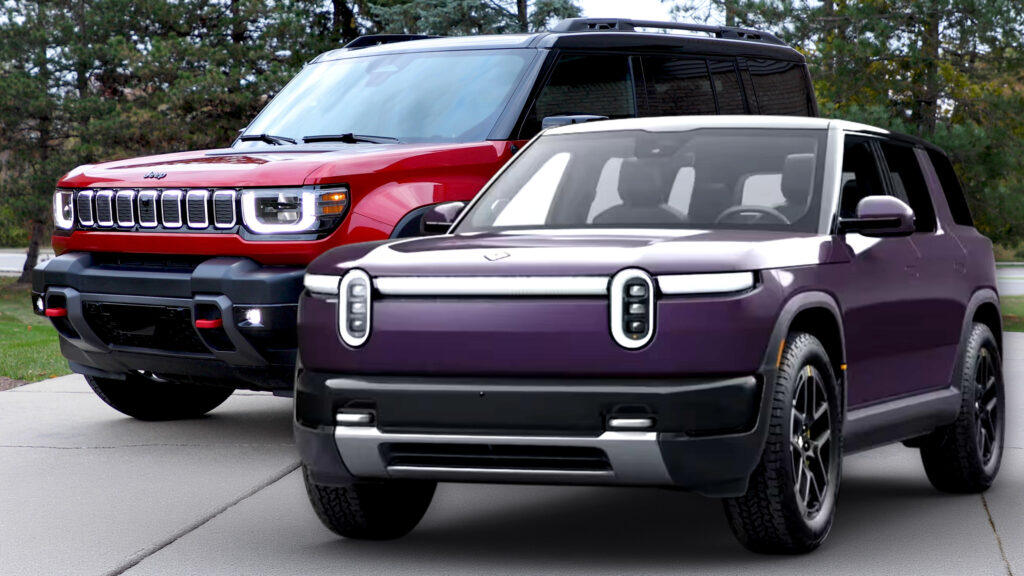
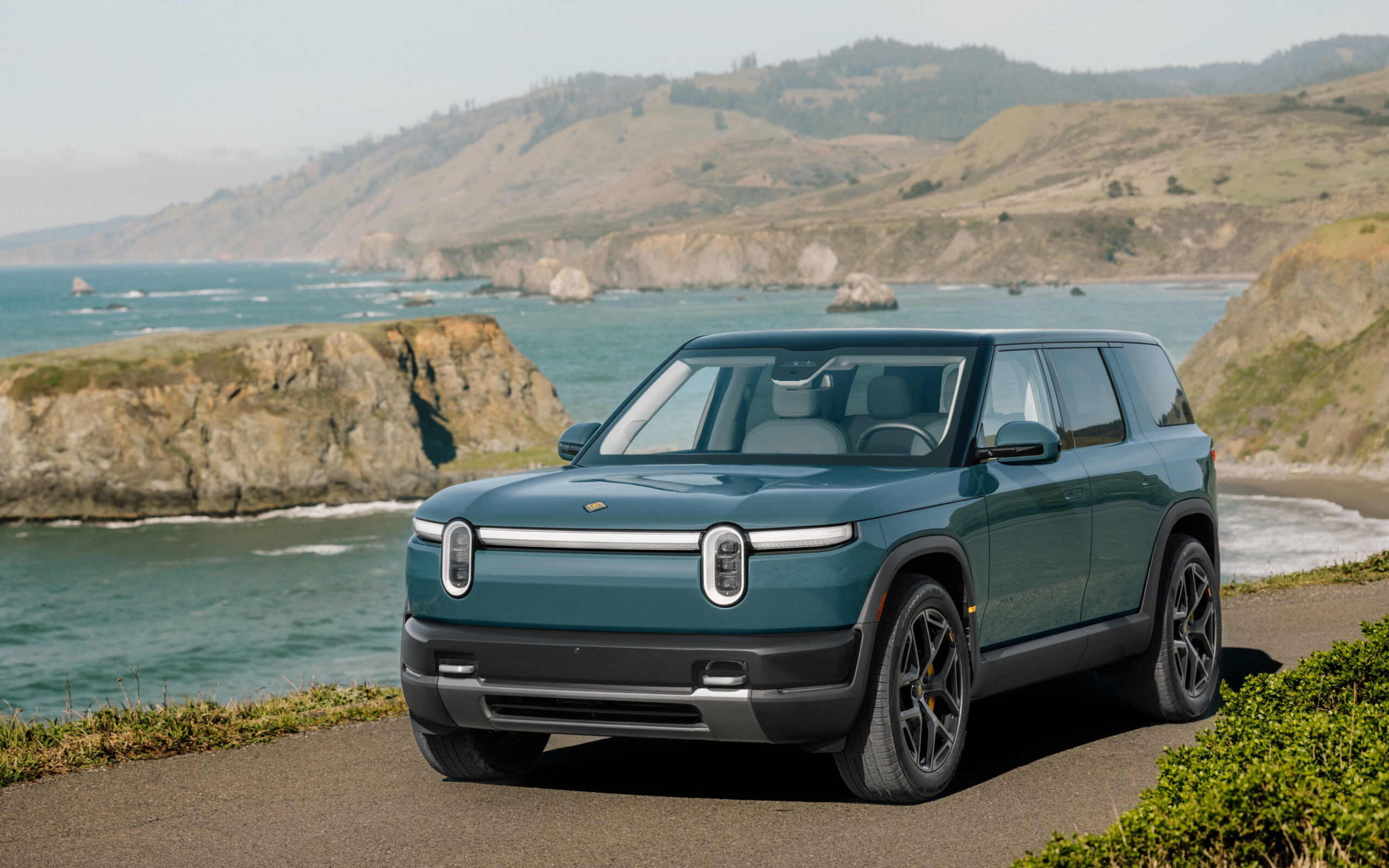
Rivian R2 And Jeep Recon Solve The Same Problem, But Which One Solves It For You?

  • Rivian and Jeep are launching similar electric SUVs this year.
  • The R2 is cheaper than the Recon and offers far more range.
  • Both have similar outputs at launch and other versions are coming.

Rivian introduced the highly anticipated R2 last week and a lot of people got sticker shock. While the company had promised a starting price of around $45,000, the launch model costs $57,990.

Price, Performance And Range

That’s significantly more expensive than expected, but it looks like a bargain compared to the 2026 Jeep Recon. It starts at $65,000 and has a 100 kWh battery pack that feeds a dual-motor all-wheel drive system producing 650 hp (485 kW / 659 PS) and 620 lb-ft (840 Nm) of torque. This enables the model to rocket from 0-60 mph (0-96 km/h) in as little as 3.6 seconds and travel up to 230 miles (370 km) on a single charge in Moab trim.

More: Rivian’s Most Affordable Model Arrives First In Its Most Expensive Form

The R2, on the other hand, has an 87.9 kWh battery and a dual-motor all-wheel drive system with 656 hp (489 kW / 665 PS) and 609 lb-ft (825 Nm) of torque. Those numbers are nearly identical to the Jeep and so is the 0–60 mph (0-96 km/h) time of 3.6 seconds.

The models also offer a similar recharging experience as the Recon’s battery goes from 5-80% in around 28 minutes, while the R2 goes from 10-80% in as little as 29 minutes. However, there’s a big difference as the R2 Performance has 330 miles (531 km) of range. That’s 100 miles (161 km) more than the Recon Moab and 80 miles (129 km) more than future versions of the SUV.

\\\\\\\\\\\

Off-Road Chops

Speaking of capability, the Recon Moab has 9.1 inches (231 mm) of ground clearance as well as approach, departure, and breakover angles of 33.8, 33.1, and 23.3 degrees. While the R2 sits higher off the ground at 9.6 inches (244 mm), it offers far less impressive angles of 25, 26, and 20.6 degrees. The Jeep rides on 18-inch wheels wrapped in 33-inch tires, while the Rivian has 21-inch wheels and 32-inch rubber.

Size And Cargo Space

In terms of size, the Recon measures 193.3 inches (4,911 mm) long, 87.4 inches (2,221 mm) wide, and 73.8 inches (1,875 mm) tall with a wheelbase that spans 112.9 inches (2,868 mm). This means it’s 7.4 inches (188 mm) longer than the R2, despite having a 2.7-inch (69 mm) shorter wheelbase.

\\\\\\\\\\\\\\\\\\\\\\\\\

Despite being smaller, the Rivian has more cargo space thanks to a 5.2 cubic foot (147 liter) frunk and a rear cargo compartment that can hold 79.4 cubic feet (2,248 liters) of luggage. The Recon, on the other hand, has a smaller 3 cubic foot (85 liter) frunk and a boot that holds 65.9 cubic feet (1,866 liters) of gear.

Equipment

While the R2 seems to be wiping the floor with the Recon, Jeep has a few tricks up its sleeve. The most notable is doors, rear quarter glass, and swing gate glass that can be removed without tools. This open air experience can further be enhanced by an optional Sky one-touch power top. That sounds a lot more fun than the R2, which has a drop down rear window and a panoramic glass roof.

\\\\\\\\\\\\\\\\\\\\

Rivian hasn’t said much about the crossover’s cabin, but buyers will find a Black Crater Signature interior with Birch wood trim. They’re joined by 12-way power front seats with heating and ventilation as well as heated rear seats and a heated steering wheel. Other highlights include a nine-speaker premium audio system and a flashlight integrated into the driver’s door.

The Recon’s interior looks a little less glamorous, but it has a 12.3-inch digital instrument cluster and a 14.5-inch infotainment system. They’re joined by Capri leatherette front seats with heating and eight-way power adjustment. Other highlights include a dual-zone automatic climate control system, ambient lighting, a wireless smartphone charger, and an 11-speaker Alpine premium audio system.

\\\\\\\\\\\\\\\\

Customers will also be able to get a Comfort Package, which includes ventilated front seats, heated rear seats, a digital rearview mirror, and a passenger camera.

With all that being said, which one interests you the most?

 Rivian R2 And Jeep Recon Solve The Same Problem, But Which One Solves It For You?

EV Buyers Didn’t Disappear, They Just Moved Somewhere Automakers Don’t Love

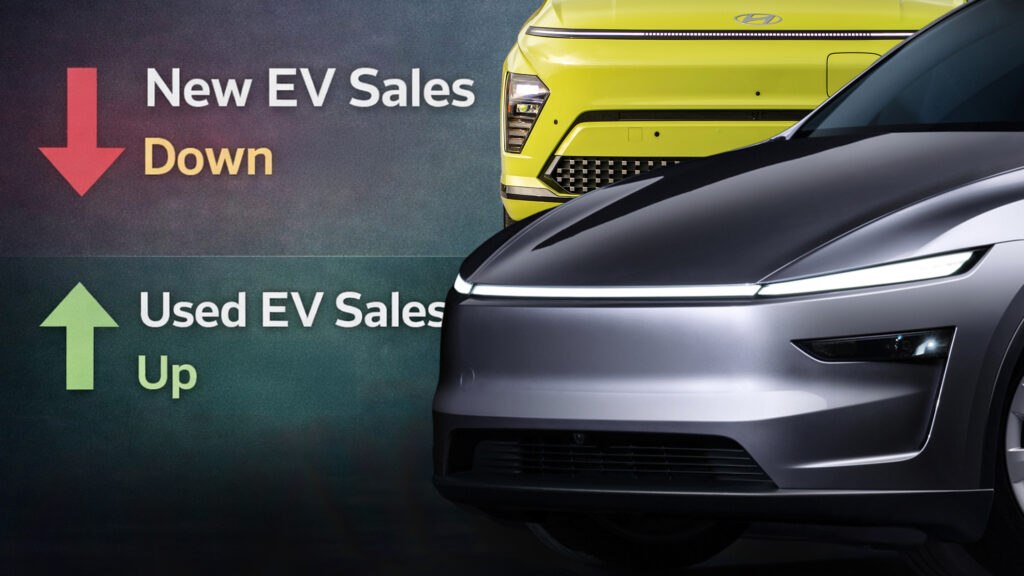
  • New EV sales dropped sharply year over year in Feb, but rose slightly versus Jan.
  • Used EV demand surged as prices fell and inventory tightened across the market.
  • Tesla still dominates, though rivals gained ground with strong February showing.

The war in Iran and resulting gas price spike might be making American drivers suddenly more interested in new EVs, but that’s obviously not reflected in February’s sales figures.

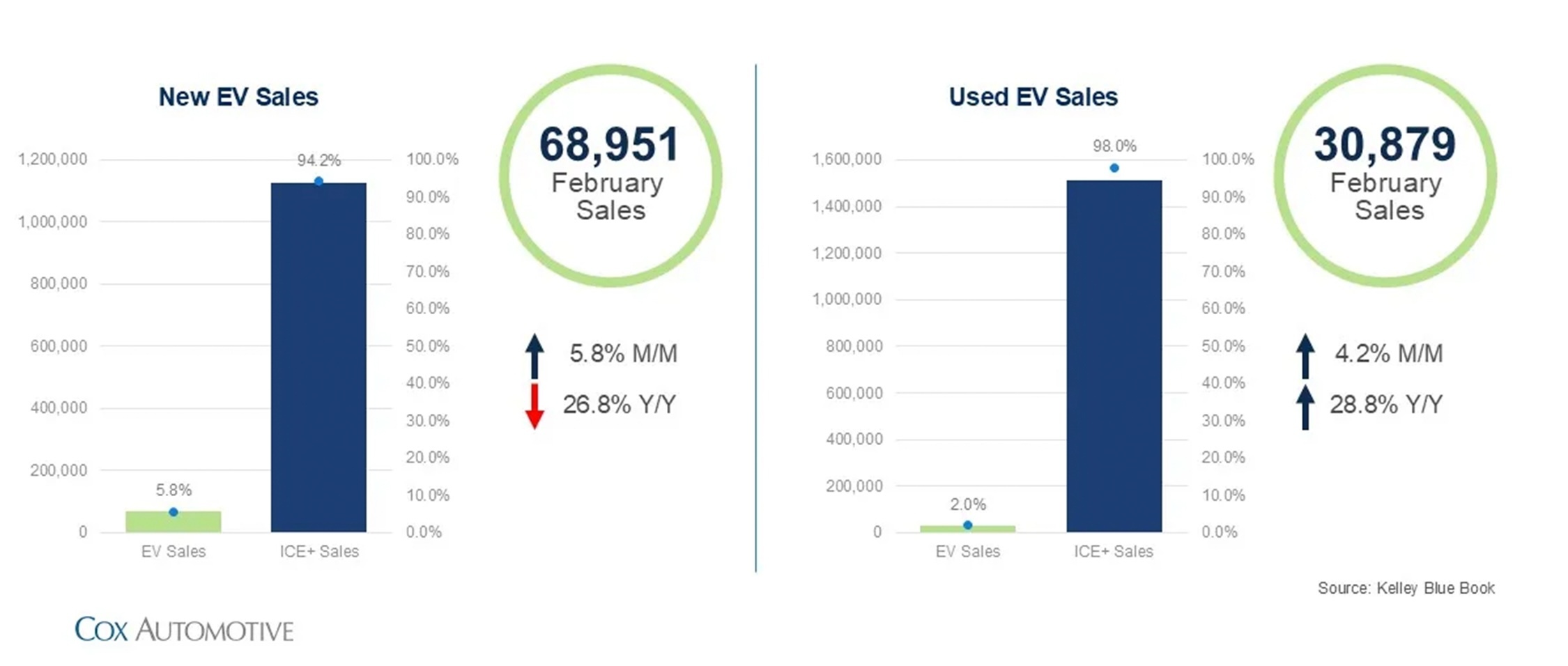
Data shows new EV sales came in just under 69,000 units last month, which sounds healthy until you notice that’s down a hefty 27 percent compared to last year. That total still marked a 5.8 percent increase compared to January and represented about 5.8 percent of all new vehicle sales.

There is a silver lining though, and it’s that those people who did buy an EV paid less for it as prices were pushed down across the board, Cox Automotive says.

More: Global EV Sales Just Fell 11%, But Carmakers Found A Surprising Backup Plan

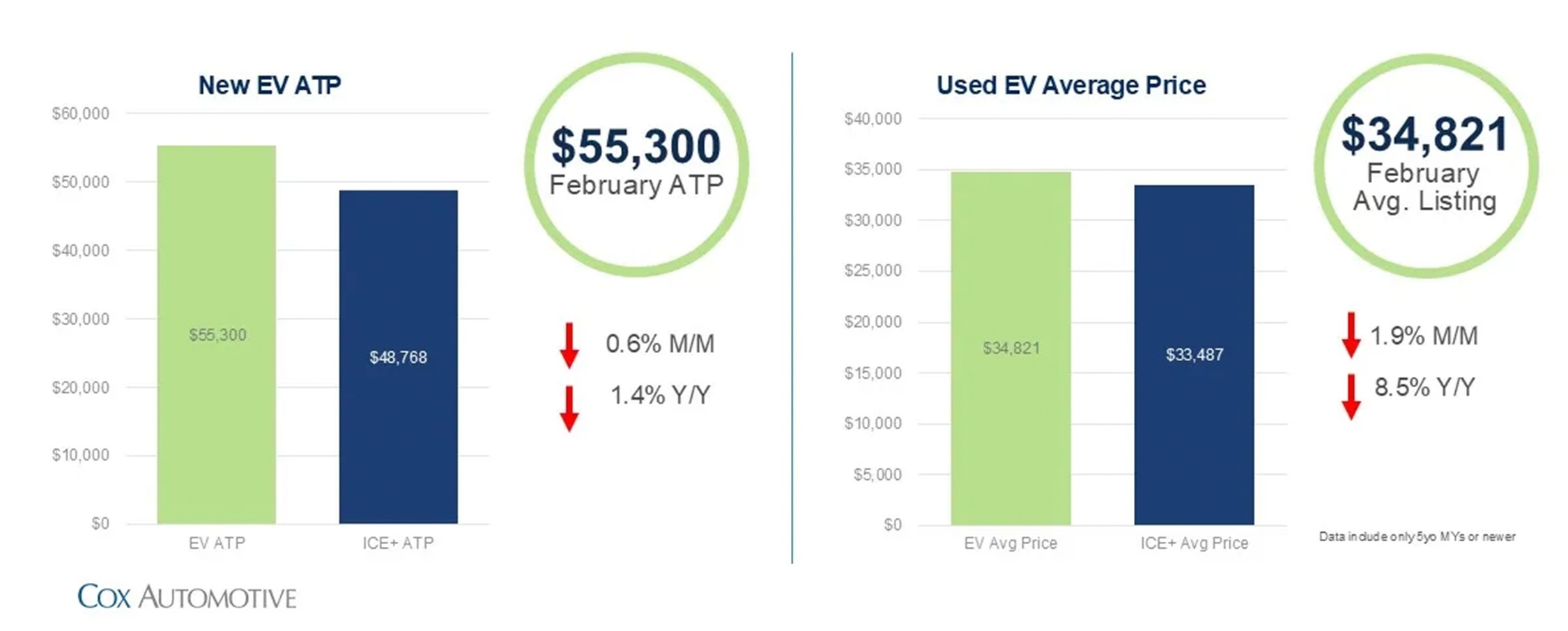
New EVs averaged around $55,300, dipping slightly from last year and narrowing the price gap with gas cars to its lowest ever. Incentives are doing a lot of work here, now making up more than 14 percent of the average transaction price.

 EV Buyers Didn’t Disappear, They Just Moved Somewhere Automakers Don’t Love

On average, incentives climbed to about $7,870 per vehicle, a clear sign automakers are relying heavily on discounts to keep buyers interested.

Tesla still leads the pack by a mile, shifting around 38,500 units, but even the world’s most famous EV company isn’t immune to gravity. Its share slipped 4 percent month over month as rivals started clawing back some ground.

Chevrolet had a particularly strong month, demand jumping 70 percent versus January, and Hyundai and Toyota also nudged forward, while Ford and Nissan’s performances suffered, as did EV sales overall.

Used Sales Head In The Opposite Direction

Meanwhile, the used EV market is quietly having a moment. Sales jumped nearly 29 percent year over year, with almost 31,000 units finding new homes. That’s not explosive growth, but it does show buyers are warming to second-hand electric cars, especially as prices keep sliding.

That figure also reflects a modest 4.2 percent increase from January, pointing to steady month-over-month momentum.

 EV Buyers Didn’t Disappear, They Just Moved Somewhere Automakers Don’t Love

We’ve already touched on the falling prices of new EVs, but prices for used ones are dropping even faster, and now average just under $35,000. That’s down more than 8 percent year over year, making them far more tempting for budget-minded buyers. In fact, many used EVs now cost less than their gas powered equivalents, which would’ve sounded wild not long ago.

The report also explains that inventory is tightening, especially for used EVs, suggesting demand is finally starting to match supply as the market  shifts from the oversupply headaches of recent months. But while Cox Automotive experts didn’t explicitly say that could lead to prices rising, simple supply and demand laws suggest to us they might.

In fact, used EV supply dropped to about 42 days, now slightly exceeding comparable gas vehicle levels for the first time in nearly a year.

 EV Buyers Didn’t Disappear, They Just Moved Somewhere Automakers Don’t Love

Cox Automotive

This 67,800-year-old handprint is the oldest art ever found

Researchers have uncovered the world’s oldest known cave art—a 67,800-year-old hand stencil in Indonesia. The unusual, claw-like design hints at early symbolic thinking and possibly spiritual beliefs. This discovery also strengthens the case that humans reached Australia at least 65,000 years ago. It offers rare insight into the creative lives of some of our earliest ancestors.

Webb Telescope spots “impossible” atmosphere on ancient super Earth

Astronomers have uncovered surprising evidence of a thick atmosphere surrounding TOI-561 b, a scorching, fast-orbiting rocky planet once thought too extreme to hold onto any gas. Using NASA’s James Webb Space Telescope, researchers found the planet is far cooler than expected for a bare rock, hinting at a heat-distributing atmosphere above a churning magma ocean. This strange world—where a year lasts just over 10 hours and one side is locked in eternal daylight—may even be rich in volatile materials, behaving like a “wet lava ball.”

New AI tool predicts cancer spread with surprising accuracy

Researchers have discovered that cancer spread isn’t random—it follows a kind of biological “program.” By studying colon tumor cells, they identified gene patterns that signal whether a cancer is likely to metastasize. Their AI model, MangroveGS, can predict this risk with about 80% accuracy and even works across multiple cancer types. This could transform how doctors decide who needs aggressive treatment and who doesn’t.

Scientists just found a hidden 48-dimensional world in quantum light

A routine quantum optics technique just revealed an extraordinary secret: entangled light can carry incredibly complex topological structures. Researchers found these hidden patterns reach up to 48 dimensions, offering a vast new “alphabet” for encoding quantum information. Unlike previous assumptions, this topology can emerge from a single property of light—orbital angular momentum.

Harvard engineers build chip that can twist and control light in real time

Scientists at Harvard have built a miniature device that can twist and tune light in real time. By rotating two stacked photonic crystals and adjusting their spacing with a tiny mechanical system, they can control how light’s “handedness” behaves. This allows the chip to distinguish between left- and right-circular polarized light with remarkable precision. The advance could lead to smarter sensors, faster communications, and new quantum technologies.

New pill cuts “bad” cholesterol by 60% in major trial

A new pill, enlicitide, reduced LDL (“bad”) cholesterol by about 60% in a large clinical trial, matching the power of injectable therapies. Because it’s taken orally, it could overcome one of the biggest barriers keeping patients from using current treatments. Researchers say many people still don’t reach safe cholesterol levels—even on statins—highlighting the need for better options.
❌