❌

Normal view

There are new articles available, click to refresh the page.
Before yesterdayVehicles

The Avatr 07 May Be The Best Case For Chinese Cars Yet | Review

PROS ›› The best self-parking tech we’ve experienced, solid build quality, looks unique,
CONS ›› Firm ride, tech overload, model tested was not quick

Avatr is likely a brand you’ve never heard of. And yet, it’s the kind of car company that is likely to shake you out of your slumber when you realize just how quickly China is developing its top-flight tech powerhouses. The Avatr 07 is another feather in the company’s cap. And while the 11 that we tested last year had its drawbacks, the 07 — which should be the 11’s smaller brother — outclasses it in many respects. It does so, seemingly by virtue of just, well, being newer.

But that’s the kind of progress a brand needs to display in what is a ruthless Chinese home market. Model cycles are short, and designers and engineers are constantly pushing to out-niche the competition with weird and wonderful features that can differentiate their products in what has to be the most crowded market for cars.

Review: The Avatr 11 Blends European Style And Chinese Tech But Still Comes With A Catch

That said, the Avatr 07 doesn’t attempt to win you over with gimmicks, although it does have a few. As a refresher, Avatr is a joint venture between state-owned automaker Changan, tech giant Huawei, and China’s largest battery manufacturer, CATL. Unlike the many copycats, who invariably deploy some kind of take on a Defender or Bronco in their lineup, Avatr has decided to take design seriously.

QUICK FACTS
› Model:2026 Avatr 07
› Dimensions:4,825 mm (189.9 inches) Length

1,980 mm (77.9 inches) Width

1,605 mm (63.2 inches) Height

2,940 mm (115.7 in) Wheelbase
› Curb Weight:2,225 kg / 4,905 lbs
› Powertrain:Rear-wheel drive with 82.16 kWh battery
› Output:99 kW (132 hp / 134 PS) and 365 Nm (273 lb-ft) of torque
› Transmission:Single Speed
› Performance:0-100 kmh (62 mph) in 13 sec, 180 kmh (112 mph) top speed
› Range:575 km / 357 miles (NEDC)
› On Sale:Now
SWIPE

A Closer Look At That Exterior

Avatr has invested in a design studio in Munich and has reportedly attracted top talent to their stable. Their chief designer is Nader Faghihzadeh. He’s the guy who penned the BMW i8. And the fact that the 07 genuinely isn’t a mish-mash of existing rival styling cues earns the 07 some brownie points in my book.

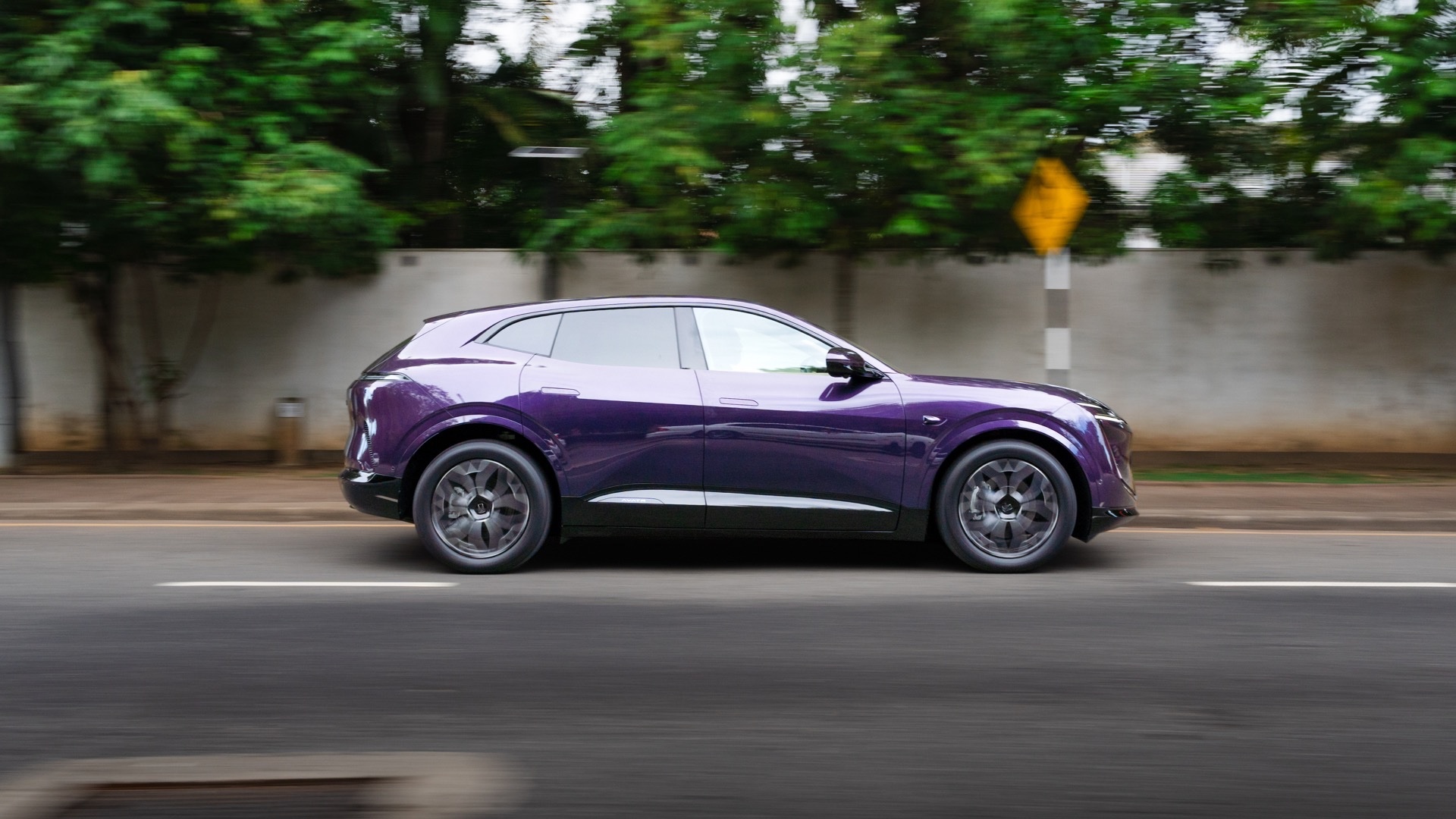
However, it’s not quite as imposing in person as the larger 11 was, even if it is just a smidgen smaller (4,825 mm / 190 inches vs 4,880 mm / 192.1 inches long). The styling is very much a continuation of the precedent set by the 11, but with a lower waistline, and an overall more rounded hatchback rear, vaguely reminiscent of the U.S. Honda HR-V in outline alone. Or, to put it another way, it’s the 11’s CliffsNotes, toned down for a broader audience. Kill Bill without so much of the Kill, if you will.

But that’s okay, because the 07 is meant to attract a larger audience to the brand, while staying somewhat stylish. The overall design, with its large arches and differently surfaced panels down the side, do make the car look a bit underwheeled in the spec we tested, with the predominantly black 20-inch wheels not standing out against the purple bodywork.

It All Comes Together Inside
 The Avatr 07 May Be The Best Case For Chinese Cars Yet | Review
Shervin Meerwald/Carscoops

Step into the Avatr 07 and its hard not to be impressed by the sheer quality of it all. We’re talking Nappa leather seats, real Dinamica microfiber suede on the roof, and an overall air of quality that will genuinely have the German big three scratching their heads. There are no shiny or creaky plastics (we can’t say the same about some Mercedes of late), and there’s an attention to detail that showcases that thought has been put into the design − even the lower B-pillar trim panel is wrapped in leather.

Ahead of the driver, at the base of the windscreen, is a cabin-wide thin strip of screen. This 35.4-inch display incorporates the use of widgets to add an extra layer of seriously useful customisation to the experience. Here you can select a number of things to display, including tire pressure, temperatures, power, and multimedia. In a world of pointlessly expanding screen real estate, it was more than refreshing to be able to glance at some of those excessive pixels and have it tell you something relevant to your drive.

The driver and passenger seats both feature heating, ventilation, and massage functionality, and a zero gravity mode (fancy word for saying the seat goes into a theatre-style recline mode) can come in handy when recharging the 07 at a public charger. The relaxation features are coupled with several scenario modes, which you can select through the display. Want to experience a pretty poor recreation of a roaring fireplace? Select the mode, and the screen will flicker a warm light, the heating will turn on, and you’ll hear the faint crackle of a wood fire piped through the audio. Of more use, though, is the Tesla-esque pet mode, which allows you to keep the cabin at a constant temperature, with a prominent message letting passersby know your furry friend is comfortable.

Spend a little more time inside though, and some issues start to creep to the surface. The AC vents, for instance, are designed to be invisible. It’s a nice concept that grabs the minimalism-to-the-max concept by the horns, but in practice it’s impractical. Want to change the direction of the airflow, and instead of quickly making a minor adjustment to a vent, you have to delve into a menu via the touchscreen and drag to where you want the airflow blowing.

\\\\\\\\

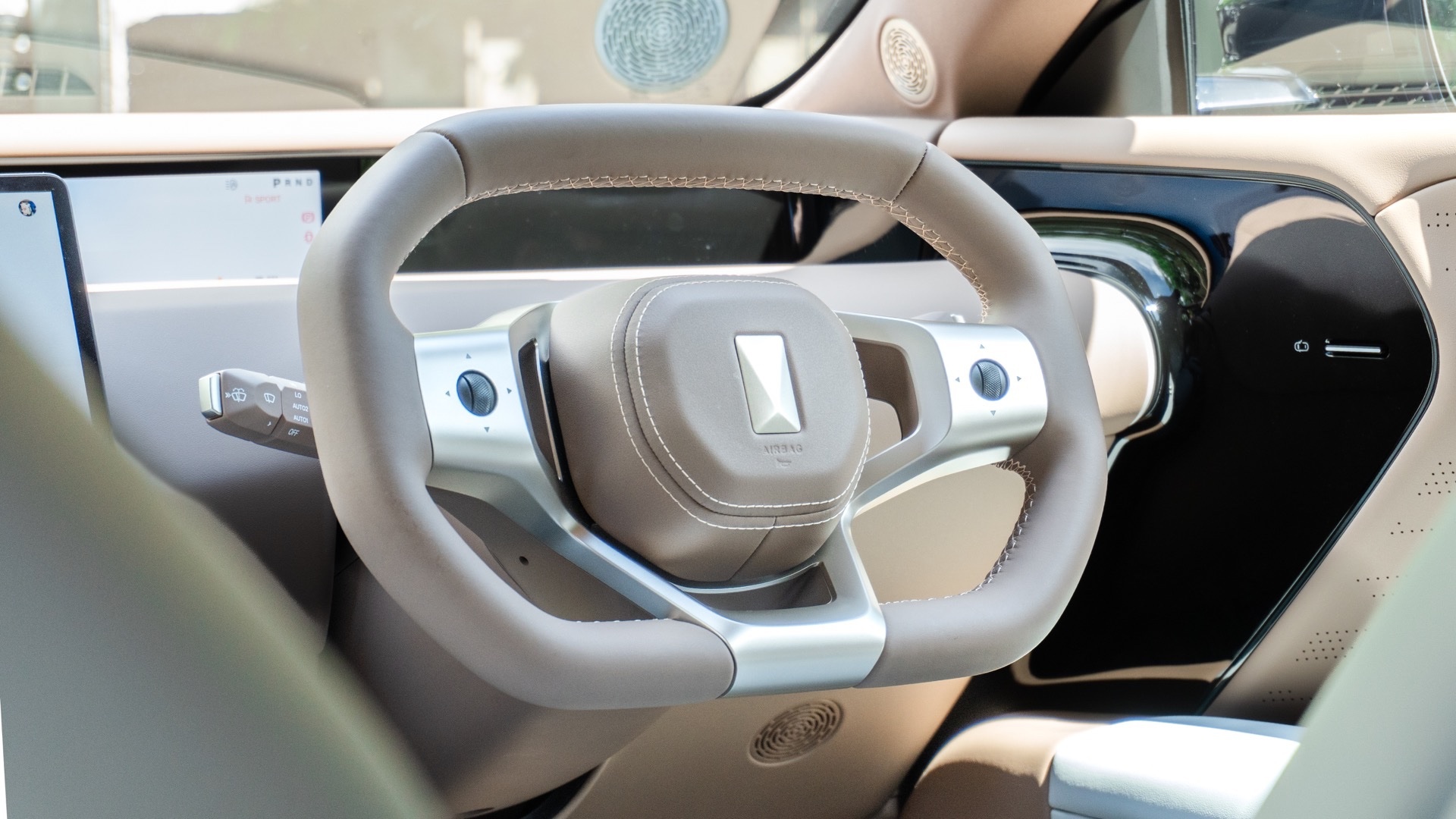
There’s the steering wheel, too. Arguably inspired by Tesla, the yoke is just not a great experience. F1 cars have them because your steering inputs are limited to a small range of motion. But in real road cars, as soon as you need to park (more on that later) and you have to do several lock-to-lock maneuvers, it just becomes a chore. Shuffling the wheel is impossible, and instead you have to half-palm it.

Another frustration is that the steering wheel and mirror adjustments need to be accessed through the screen too. We understand that this isn’t the first car, and it won’t be the last, to hide everything behind a screen, but for those of us who like to make minor corrections to our seating position, having an extra step to navigate is just an annoyance. And if we’re nitpicking, replacing the interior door pulls with push buttons seems like an exercise in frivolity.

Of course, none of that will be of concern if you opt to spend your time in the back. Now, for the Chinese market, rear space is a serious consideration, so much so that there are many long-wheelbase versions of various cars over there. There’s even a 07L, confined to China. But even in the standard 07, the legroom is seriously impressive. If the front-seat occupants are six-footers, there’s more than enough space to stretch out in the rear. If you require further legroom, then flip down the armrest, and you’ll find a set of touch-sensitive controls which allow you to move the front passenger seat forward. You can also electrically recline each outboard rear seat back, control the seat heating (but no ventilation), and open or close the moonroof sunshade, which spans the entire length of the passenger compartment.

The rear row can be folded to expand the 735-liter trunk space to 1,645 liters. There’s also a 90-liter frunk up front, providing another useful way of storing things.

Behind The Yoke
 The Avatr 07 May Be The Best Case For Chinese Cars Yet | Review

Our tested car was supplied in Sri Lanka, which receives a much smaller motor variant. This is due to punitive taxes on cars, similar to Singapore. So, what you get is a rear-mounted 99kW motor, which works out to 130 hp in old money. Despite the smaller motor, the cost of the car is still an astronomical $107,000 (LKR 35,500,000) in Sri Lanka. For perspective, in its home market of China, the 305 kW RWD version of the 07 retails for a much more palatable $34,300 (¥229,900), which makes it Toyota RAV4 money.

There’s also a tri-motor all-wheel-drive version with an insane 712 kW and 996 Nm of torque that’ll do the 0-62 mph (0-100 km/h) sprint in just 3.7 seconds. The price for that? It works out to around $41,755 (¥279,900 in China). No wonder the industry is sounding the alarm over their cars.

But back to our test unit. That limited motor output and the rather pudgy curb weight of 2,360 kg means that our Avatr 07 is not fast. Correction: It’s downright slow. It gets to 62 mph (100 km/h) in 13 seconds. That’s slower than the Mitsubishi Mirage, which, up until it was retired, held the unenviable title of the slowest-accelerating car on sale in the US, at 12.8 seconds.

\\\\\\\

The weird thing is though, that behind the wheel of the 07. It doesn’t feel as slow as it is. Whereas that 1.2-liter Mirage had access to just 74 lb-ft (100 Nm) of torque, the Avatr 07 still boasts an impressive 270 lb-ft (365 Nm). In practice, it means this heavy EV doesn’t run out of grunt and even manages to feel unstressed. And of course, being an EV, having access to all of that torque at once helps with the sensation of progress too, even if it’s just that: a sensation.

One sensation you’ll find hard to shake, though, is the ride. With an interior as luxuriously appointed as this, you’d expect the Avatr’s ride to be as cushioned as possible. Not so. The Avatr 07 handles well, thanks to its double wishbone suspension, but the lack of body roll quickly translates into an unsettling approach to potholes and smaller road imperfections.

Again, in other markets, the 07 is offered with the option of air suspension and continuous damping control. Not so here, and perhaps the engineers spent significantly less time on the coil-sprung version of the car. And while I wouldn’t call the 07 uncomfortable per se, the firm experience is less in line with the high expectations that the rest of the car’s build and tech have set.

The Party Trick

The real party piece with the Avatr 07, though, is its suite of connected systems. Unlike Tesla, Avatr chooses not to rely solely on cameras for its semi-autonomous tech and employs millimeter-wave radar as well. Combined with Huawei’s advanced processors and related tech, the 07 manages to impress on multiple safety fronts.

What the 07 can’t do in this region is self-drive like FSD can. It can, however, self-park. Now auto-parking in itself isn’t a massive boon. But the car’s walk-away parking is. Here, you’re given the option of parking the car centered within a space, or to the left or right side — ideal if you’re parking next to a wall for example and you could do with the extra room to squeeze out the door. You also get walk-away parking, which allows you to exit the car and let it park itself completely unsupervised. Similarly, you can summon it from said parking space, via the connected app.

See Also: China Wants To Build Cars In America. Should We Let Them In?

More than the concepts themselves, there’s a marked improvement in these operations from the now 4-year-old 11. When tested around pedestrians and busy traffic, the 07 was able to handle itself without freaking out at all, not needing the same kind of wide berth that its larger sibling did.

The Verdict

While it’s not perfect, the Avatr 07 stands as proof of just how quickly the tides are changing. The 11 we drove last year, already a car that was midway through its lifecycle at the time, was an impressive statement. The 07, even if it isn’t as flashy, manages to present itself as an almopst generational shift. There are no departures in design, materials, or even the basics behind the technology.

However, the experience of everything else — the design of the interior, the hushed ride, and the focus on premium materials — they all come together to paint the picture of a product that is very mature. It’s no longer experimental, like the 11, with its waterfall-inspired center speaker, electric doors, and gimmicky passenger screen, was. The 07 is a genuinely compelling car because it’s an excellent package.

I suspect not everyone will be happy about that. But the truth is, China’s home market is the most cutthroat we’ve seen. Manufacturers have to move the needle if they’re to survive. The benefit is we get to see that real-time shift. And yet something tells me, the best is still yet to come.
\\\\\\\\\\\\\\\\\

The Renault 4 Might Be The Best Retro EV Out There | Review

PROS ›› Styling, handling, equipment
CONS ›› Limited highway range, minor ergonomic quirks

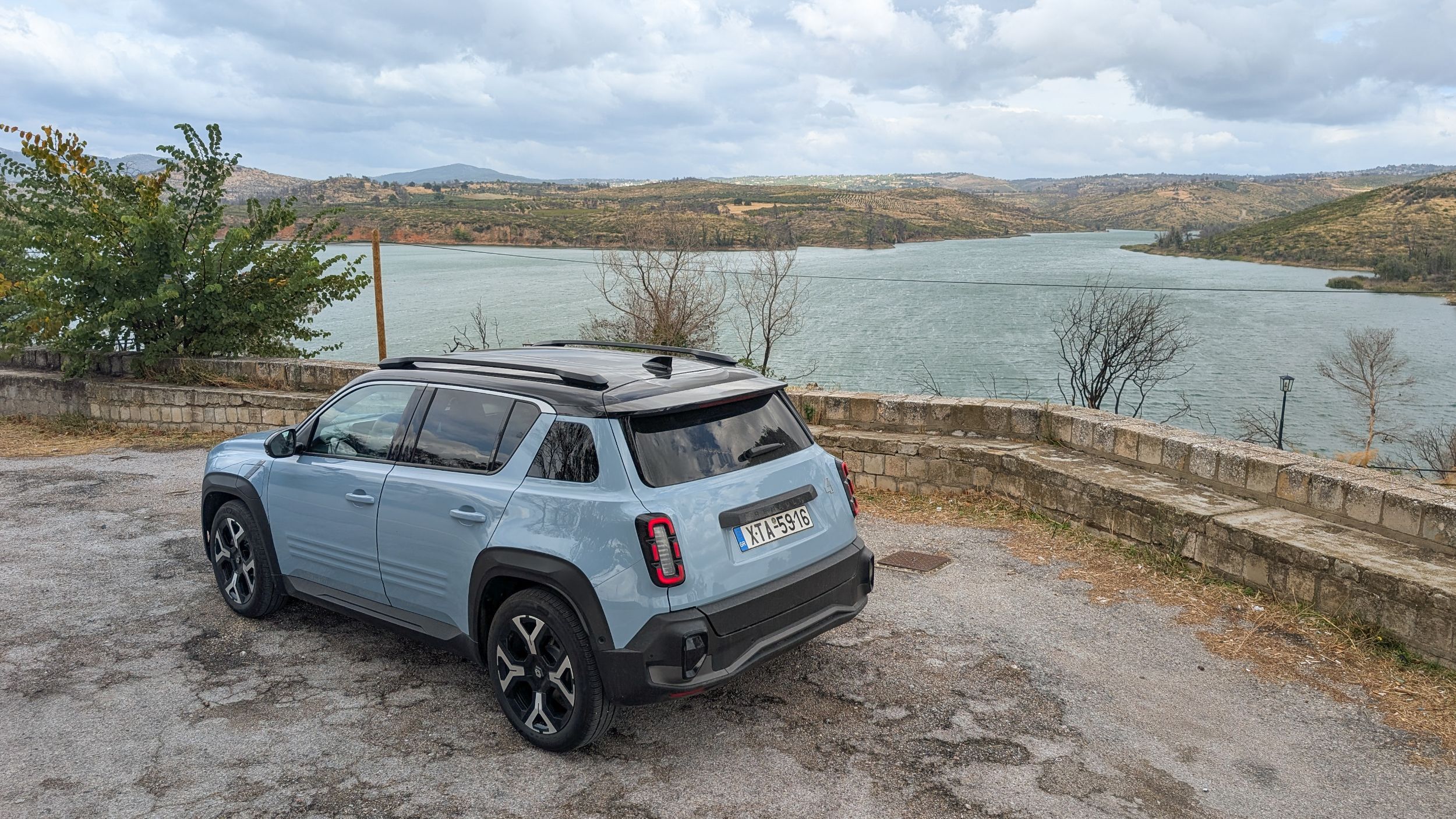
One would think that Europe has enough small SUVs to satisfy the growing demand, but every once in a while, a new addition to the segment proves there’s always room for one more. A fitting example is the Renault 4 E-Tech, an EV-only alternative to the Clio-based Captur with a retro-modern design and Renault 5 E-Tech underpinnings.

A few months after we drove the R5 hatchback, we got the keys to the R4 crossover which – unlike what the numbers may suggest – is a larger and more practical offering.

Review: The Fun 2026 Renault 5 EV America Will Never Get To Buy

Our press car is the mid-spec Techno trim, slotting right in between the entry-level Evolution and the flagship Iconic. Besides the standard Renault 4 E-Tech, the company is also offering a Plein Sud variant with a retractable fabric top creating an open-air feeling.

QUICK FACTS
› ModelRenault 4 E-Tech
› PowertrainSingle Electric Motor (FWD)
› Output148 hp (110 kW / 150 PS)
› Torque245 Nm (180 lb-ft)
› 0-100 km/h (0-62 mph)8.2 seconds*
› Top Speed150 km/h (93 mph)*
› Battery52 kWh Lithium-ion
› Range (WLTP)415 km (258 miles)
› Dimensions163.2 in L x 70.9 in W x 61.9 in H (4,144 x 1,800 x 1,572 mm)
› Wheelbase103.3 in (2,624 mm)
› Boot Capacity420 lt (14.8 cubic feet)
› Curb Weight1,462 kg (3,223 lbs)*
› Price (Greece)from €33,500 ($37,500)
SWIPE

*Manufacturer

 The Renault 4 Might Be The Best Retro EV Out There | Review

But let’s start with the basics. The original R4 was introduced in 1961 as the first front-wheel-drive passenger car by Renault. The 4L was designed to serve families and workers, and ended up selling 8.13 million units over its 33-year production run, becoming one of the most successful French vehicles in history.

Modern Revival With A Twist

Fast forward to the present, Renault has infused the spirit of the classic estate/hatchback into a modern electric crossover. The production version debuted in 2025, following the rugged Renault 4ever Trophy concept from 2022.

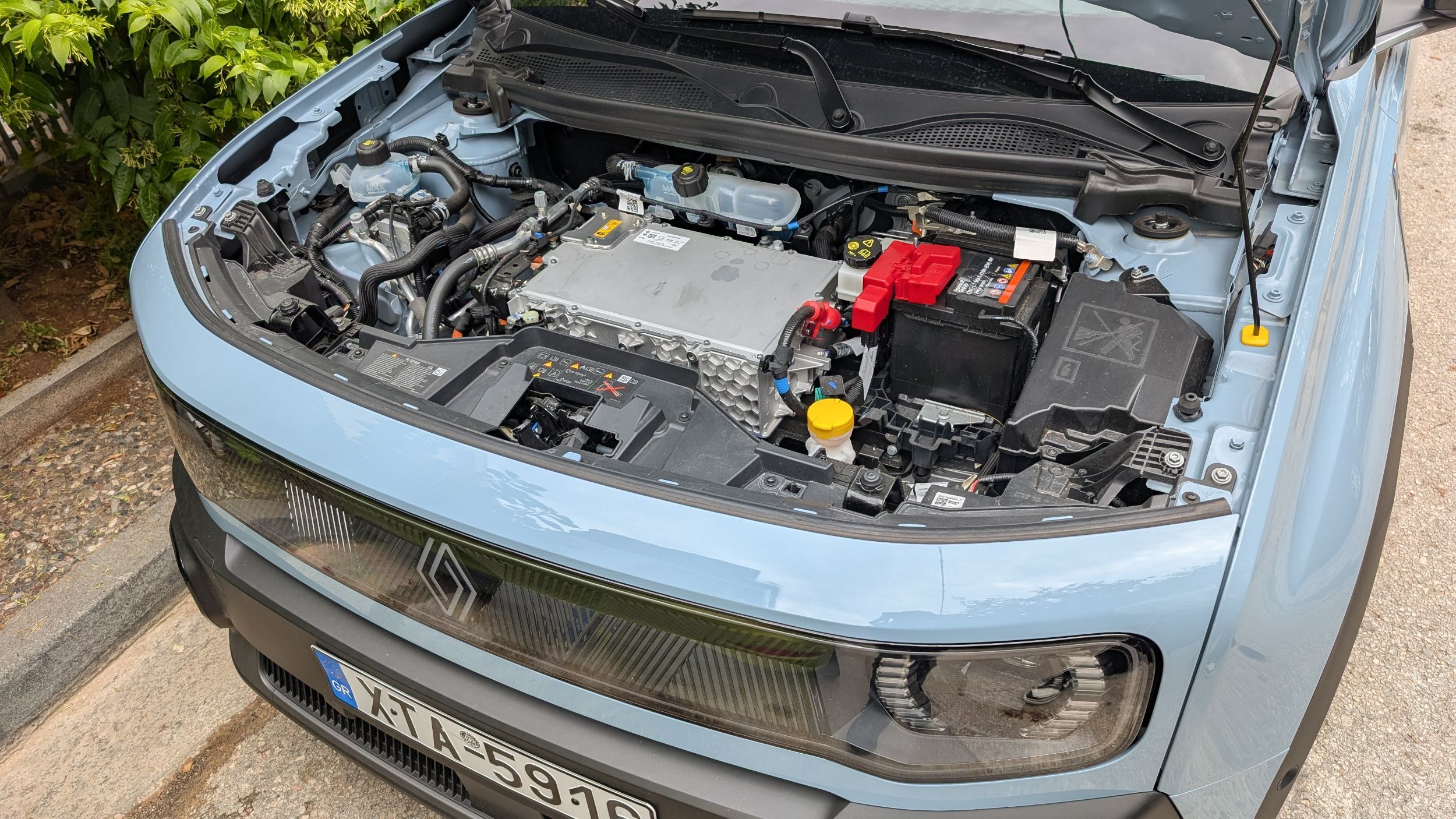
Of course, 64 years of evolution brought big changes to the technology and the footprint, with the R4 E-Tech being almost half a meter longer compared to its predecessor. Still, the EV remains on the smaller side of Europe’s B-SUV segment measuring 4,144 mm (163.2 in) long. When compared to the R5, the R4 is 222 mm (8.7 in) longer, with 84 mm (3.3 in) of the extra length between the axles.

\\\\\\\\\

Photos and Videos: Thanos Pappas/Carscoops

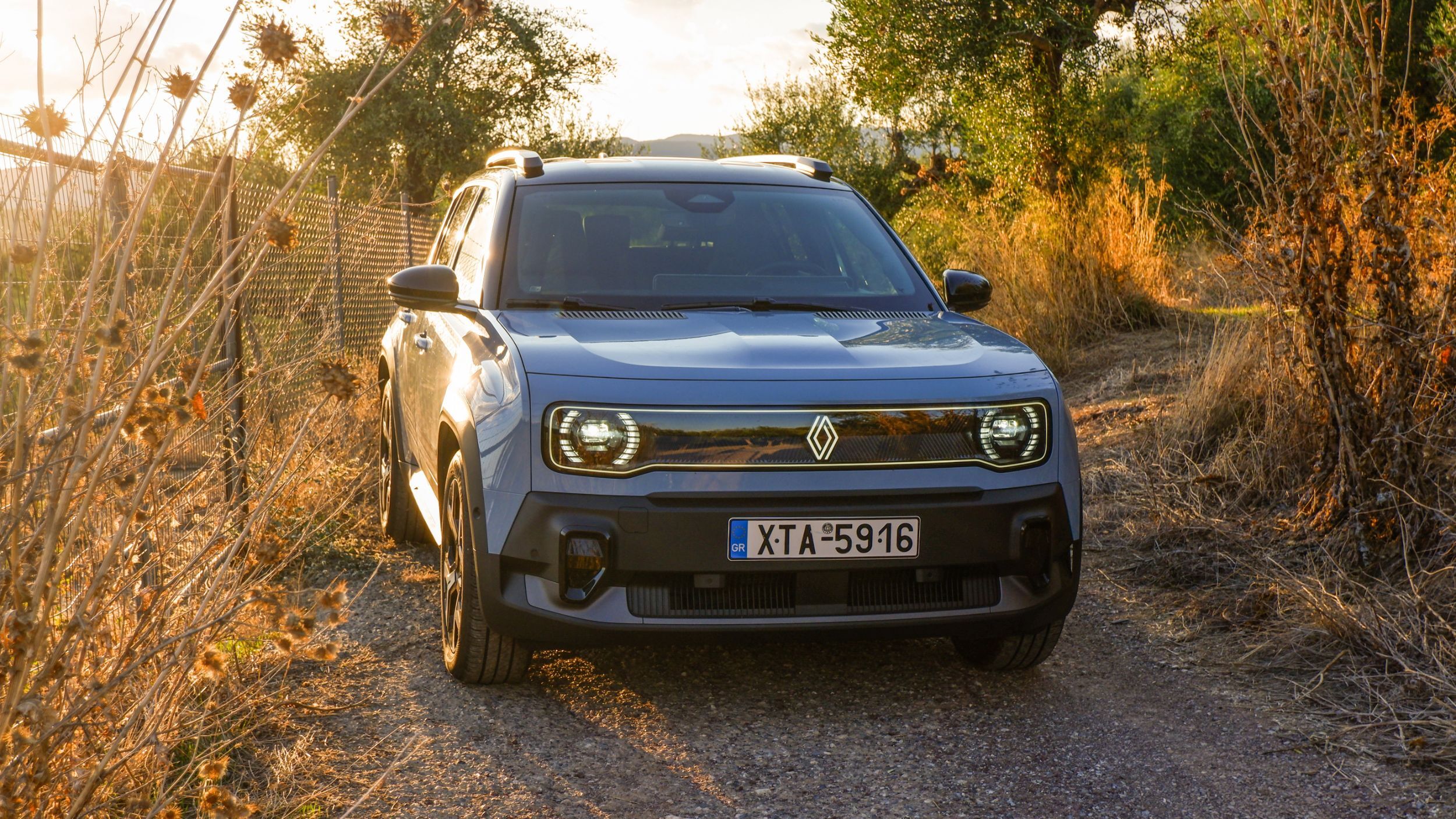
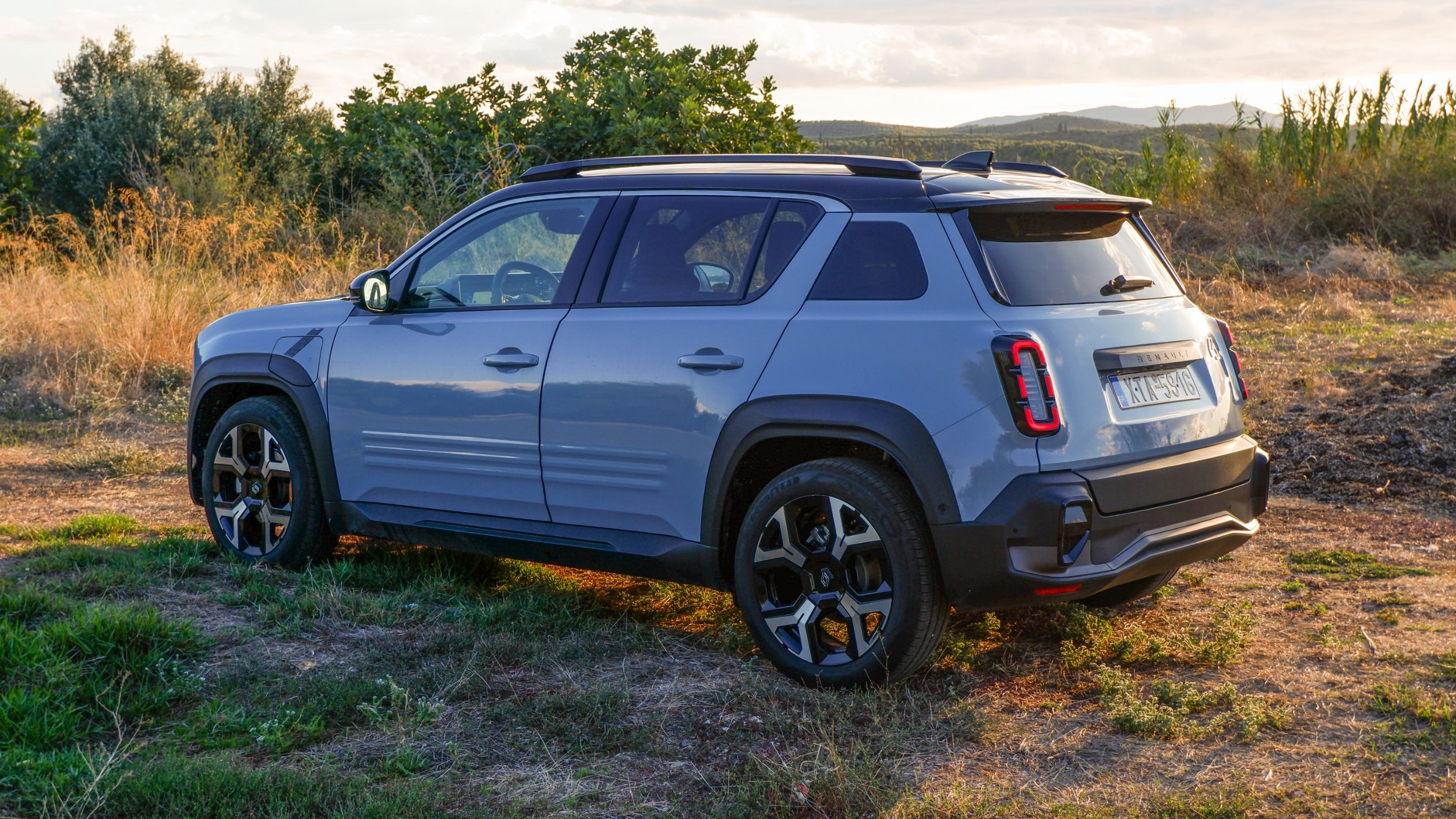
Despite the bump in dimensions and the jump into crossover territory, Renault designers managed to seamlessly integrate multiple styling references to the original. The R4 might not be as attractive as the R5, but it still turns heads on the road thanks to its retro yet fresh appearance.

More: Renault’s R4 Concept Just Became A Beach Buggy That Moonlights As A Pickup

Highlights include the tastefully illuminated grille integrating the semi-circular LED headlights, the protective cladding on the bumpers, the squared-off wheel arches, the sculpted lines on the profile, and the signature greenhouse. The pill-shaped LED taillights and black roof are reminiscent of the previous-gen Mini Countryman, but some of these features were taken from the classic 4L.

Modern Interior Design

\\\\\\\\\\\\\\\\\\\\\\\

Moving inside, the dashboard and and digital cockpit are carried over from the Renault 5 E-Tech. While the upper and lower sections are dominated by hard plastics, the fabric inserts on the dashboard and the door cards help improve the perceived quality.

Review: The 2026 Renault Austral Facelift Is Polished, But It Has A BMW-Sized Problem

The 10.1-inch infotainment display sits right in your face, but thankfully there’s a power button so you can switch it off when you’re driving at night. The Google-powered OpenR software is easy to use and responsive, although I did encounter a few Android Auto bugs during my time with it. The “Reno” AI assistant is also a bit annoying, popping up at random times.

Minor ergonomic issues include the volume buttons which are mounted on the top of the screen, even though there is a dedicated media stalk behind the steering wheel. Another thing that needs time to get used to is the position of the column-mounted gear selector, creating a stalk-heavy setup. On the bright side, the physical controls on the center console are a wonderful touch, giving you immediate access to the climate settings.

Space And Equipment

\\\\\\\\\\\\\\\

The real advantage of the R4 over the R5 lies in passenger accommodation thanks to the longer wheelbase and the taller roofline. Rear-seat headroom is generous and knee room is adequate, while the rear bench can accommodate three adults for short trips.

The 420 lt (14.8 cubic feet) boot is large enough for a vehicle of its size, although it would be nice to have a dedicated compartment for the charging cables since the electric motor occupies all of the space under the hood.

More: Renault’s E-Space Concept Reboots A Minivan Icon

I was also impressed with the standard equipment. Our mid-spec Techno trim comes with 18-inch alloy wheels, roof rails, the digital cockpit, a six speaker audio system, a wireless charging pad, four USB-C outlets, auto climate control, a hands-free tailgate, auto-folding mirrors, Multi-Sense drive modes, and a comprehensive ADAS suite with auto parking.

The only reason to upgrade to the flagship Iconic is if you really need the heated steering wheel and heated seats with a massaging function for the driver and synthetic leather upholstery. And the only important omission from entire lineup is rear climate vents, although this is common amongst B-SUVs.

Superb Road Manners

\\\\\\

Believe it or not, the greatest strength of the R4 E-Tech is how it drives. The EV-dedicated AmpR Small architecture is a lot more sophisticated than its size suggests. The superb suspension setup with a standard multi-link rear axle is only slightly softer than the R5, enough to make it a bit more comfortable without loosing its sharpness.

More: Can Pixels Beat Nostalgia? We Compared Nissan’s New Sub-€20k EV To Its Renault Twin Up Close

On B-roads, the R4 drives like more like a hatchback than a crossover, keeping its composure in the corners with almost no body roll. At full throttle and in slippery conditions the FWD setup might struggle to put the power on the road, causing torque steer. The steering might not be as communicative as in the Ford Puma, but it is quick and direct. In the Sport mode, it gets a slightly more weighted feel, making the driving experience more enjoyable than your average EV.

At the same time, the R4 offers a refined and quiet ride on the highway, while being zippy and agile in urban environments. Thankfully, Renault listened to our feedback and added a One Pedal drive function making life easier in everyday traffic.

 The Renault 4 Might Be The Best Retro EV Out There | Review

Our press car featured the flagship powertrain with a front-mounted electric motor producing 148 hp (110 kW / 150 PS), accelerating from 0-100 km/h (0-62 mph) in 8.2 seconds.

In reality, the R4 feels a lot faster than the number suggests, especially within the 40-120 km/h (25-75 mph) threshold. The Sport mode unlocks full power, the Comfort is slightly smoother in its response, while the Eco significantly limits the output for the sake of efficiency making it perfect for the city.

In terms of range, the R4 E-Tech with the 52 kWh battery can easily exceed 400 km (250 miles) in suburban and city traffic, meaning that the average driver will be charging it less often than once per week. However, if you are constantly driving at highway speeds, real-world range drops closer to 250-280 km (155-186 miles). Thankfully, the battery can replenish 15-80% of its energy in roughly half an hour when connected to a 100 kW DC charger. In my case, I only had to stop for 10-15 minutes to complete a 260 km (160-mile) journey.

 The Renault 4 Might Be The Best Retro EV Out There | Review

For buyers seeking a lower price point, Renault also offers a cheaper version with a 40 kWh battery offering a 310 km (193 mile) range, and a 118 hp (88 kW / 120 PS) electric motor. By the end of the year, the lineup will grow further with an entry-level Jogging variant featuring an even smaller 37 kWh battery, 305 km (190 miles) of range, and an 107 hp (80 kW / 110 PS) electric motor.

More: Alpine’s Hot Hatch Just Became More Stylish With A Simple Trick

Still, based on my experience with the 52 kWh battery, I wouldn’t recommend opting for the smaller units if you intend to use the R4 as a family hauler or outside the city walls. Fortunately, the 2027 model year updates have increased the range of the flagship variant to 415 km (256 miles). Overall, I believe that the R4 would still benefit from the addition of a longer-range battery option later in the product cycle.

As for a potential dual-motor AWD option like the one offered by the rival Kia EV3, it would certainly make the R4 more suitable for all-weather adventures, although there’s no indication there will ever be one. After all, even the larger Megane E-Tech and Scenic E-Tech EVs are exclusively available with FWD setups despite riding on the AWD-compatible AmpR Medium architecture.

Pricing And Rivals

\\\\\\\\\\\\

We tested the Renault 4 E-Tech in Greece, where it is priced from €28,900 ($32,400) for the base 40 kWh Evolution 120 PS model – dropping to as little as €24,400 ($27,300) when you account for the local EV subsidies and scrappage benefit. This is only €2,000 ($2,200) more expensive than the smaller Renault 5 E-Tech hatchback with the same powertrain, making it a good deal.

More: Renault 8 Gordini Is Back As A Bold Electric Coupe With Rally Heritage

Stepping up to the larger 52 kWh battery with 150 PS brings the entry point to €33,500 ($37,500) before subsidies for the Evolution trim. Our mid-spec Techno retains at €35,500 ($39,800), while the flagship Iconic tops out at €37,500 ($42,000). Finally, the Plein Sud canvas roof adds a €1,200 ($1,300) premium.

\\\\\

Key rivals in the crowded subcompact electric SUV segment include the Peugeot E-2008, Ford Puma Gen-E, Kia EV2 and EV3, Jeep Avenger Electric, Mini Aceman, Fiat 600e, as well as the budget-conscious and family-friendly Citroën ë-C3 Aircross.

More: Renault Rafale Hypnotic Is The Brand’s Most Expensive SUV To Date

Besides EVs, the model is also facing competition from numerous well-established hybrid and ICE alternatives like the super-popular Toyota Yaris Cross and the Dacia Duster. Another option is Renault Captur sibling which starts from as little as €20,900 ($23,400) for the cheapest LPG/gasoline version and from €24,500 ($27,500) for the self-charging hybrid.

Verdict

 The Renault 4 Might Be The Best Retro EV Out There | Review

The Renault 4 E-Tech does a great job in expanding the charm of the closely-related R5 hatchback by adding genuine day-to-day practicality without sacrificing much of its fun-to-drive character. While a longer-range battery option would have made it even more desirable, it already stands out as one of the most complete subcompact electric crossovers.

The combination of eye-catching looks with a generous equipment, and a superb chassis setup for the standards of the segment, makes the R4 E-Tech a compelling case for being the best mainstream retro EV on the market. Too bad it’s availability is currently limited to Europe and the UK.

The GAC Aion V Looks Odd But Is Incredible Value | Review

PROS ›› Well-priced, plush interior, has a fridge, efficient
CONS ›› Little brand value, unusual design

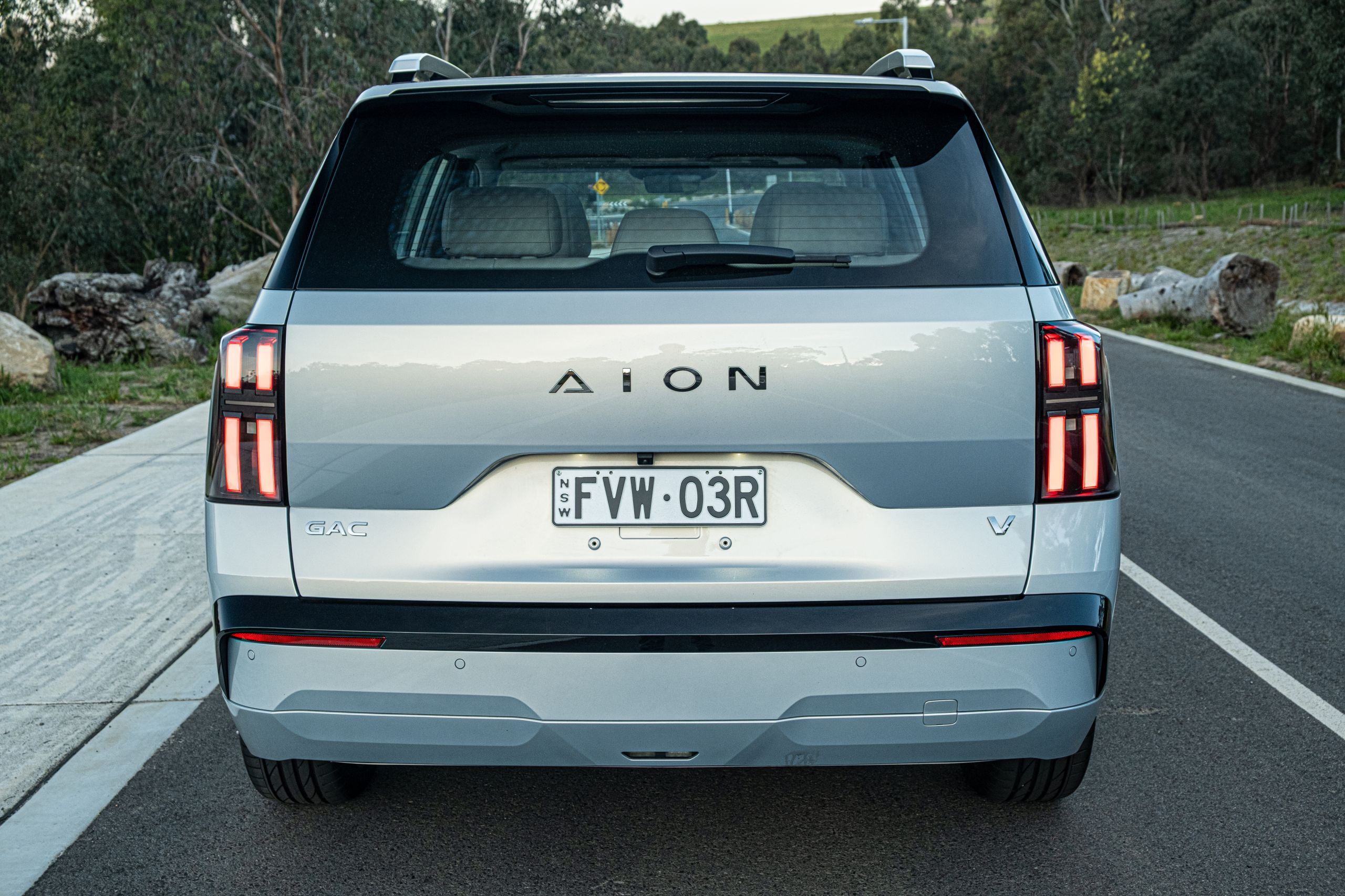
If you walked up to someone on the street and asked them what a GAC Aion V was, most would give you a blank stare. Those brave enough to answer might think it’s a fancy new washing machine, while others may guess it’s the name of an advanced hot-water system. It’s actually an electric SUV, and it’s launched in several markets, eager to shake up the EV establishment.

On paper, the Aion V seems almost too good to be true. This SUV promises space and comfort to match a Tesla Model Y, all while costing significantly less, having more impressive features, and being backed by one of China’s oldest and largest car manufacturers.

However, as we’ve seen with many other new cars from China, the specification sheet only tells part of the story. Building a compelling electric SUV isn’t easy. Has GAC managed to create one with the Aion V? The answer is a resounding yes.

QUICK FACTS
› Model:2026 GAC Aion V
› Starting Price:AU$44,590 (US$31,100) plus on-road costs
› Dimensions:181.2 x 72.9 W x 66.3 in H (4,605 x 1,854 x 1,686 mm)
› Wheelbase:109.2 in (2,775 mm)
› Curb Weight:1,880 kg (4,104 lbs)
› Powertrain:Single electric motor / 75 kWh battery
› Output:201 hp (150 kW) / 155 lb-ft (210 Nm)
› 0-62 mph7.9 seconds
› Transmission:Single speed
› Efficiency:14.8 kWh/100 km
› On Sale:Now
SWIPE
\\\\\\\\\\\\\\\\\\

Photos Brad Anderson/Carscoops

Two versions of the Aion V are sold in Australia. The entry-level Aion V Premium kicks off the range, priced from AU$42,590 (US$29,700) before fees, while sitting at the top of the family is the Aion V Luxury, which we recently drove, priced at AU$44,590 (US$31,000) before fees.

The Aion V is actually in its second generation, with this model first introduced in China in mid-2024. It’s underpinned by GAC’s AEP 3.0 platform, also used by the China-exclusive Toyota bZ3X. Several different battery packs are available depending on the region. These include a 62 kWh lithium-ion pack from CATL, a slightly larger 64.5-kWh LFP battery, a 75-kWH LFP, and a 90-kWh NMC battery. All versions sold in Australia come standard with the 75 kWh pack, directing power through a single front-mounted electric motor with 150 kW (201 hp) and 210 Nm (155 lb-ft)of torque.

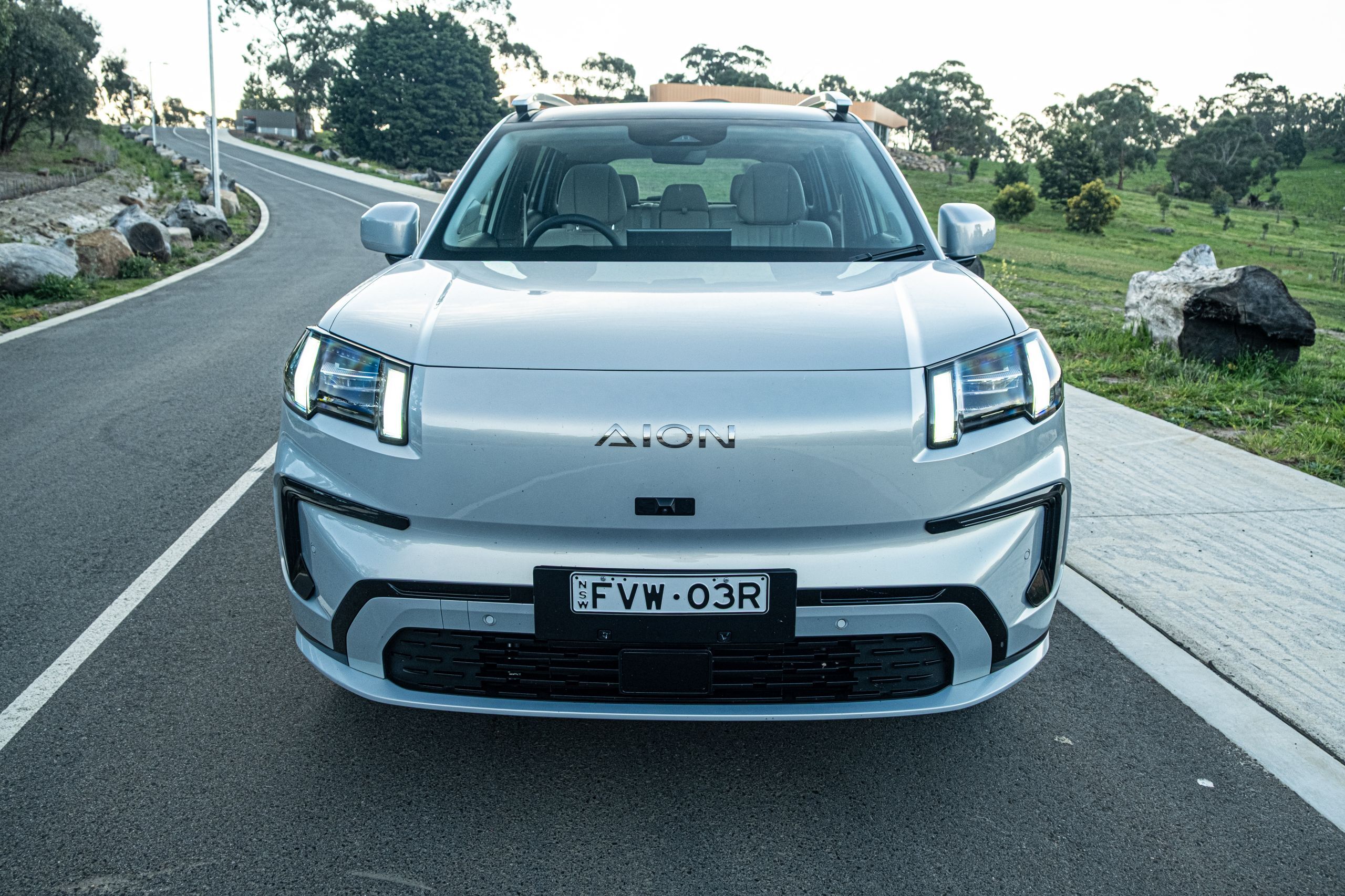
Although Chinese car brands have shown they can build cars at almost unthinkable price points, not all of them have figured out how to build a vehicle that’s nice to look at. As we experienced earlier this year with the Emzoom, M8 PHEV, and Aion UT, the Aion V isn’t exactly the most stylish SUV. It’s boxy, but not necessarily in a good way, and has a rather unusual stance on the road. Look past the odd design and peek inside the cabin, and you’ll understand where the Aion V starts to make a whole lot of sense.

Luxury On A Budget

\\\\\\\\\\\\\\\\\\\\\\\\\\\\\\\\\\\\\\\\\\

Photos Brad Anderson/Carscoops

The interior of the Aion V doesn’t compute with an SUV that costs less than AU$45,000 (US$31,400), or roughly the same as a Toyota Corolla ZR, which is now almost a decade old. It feels so well put together, and so premium, that you could easily be fooled into thinking you were sitting in a vehicle costing upwards of AU$70,000 (US$48,900).

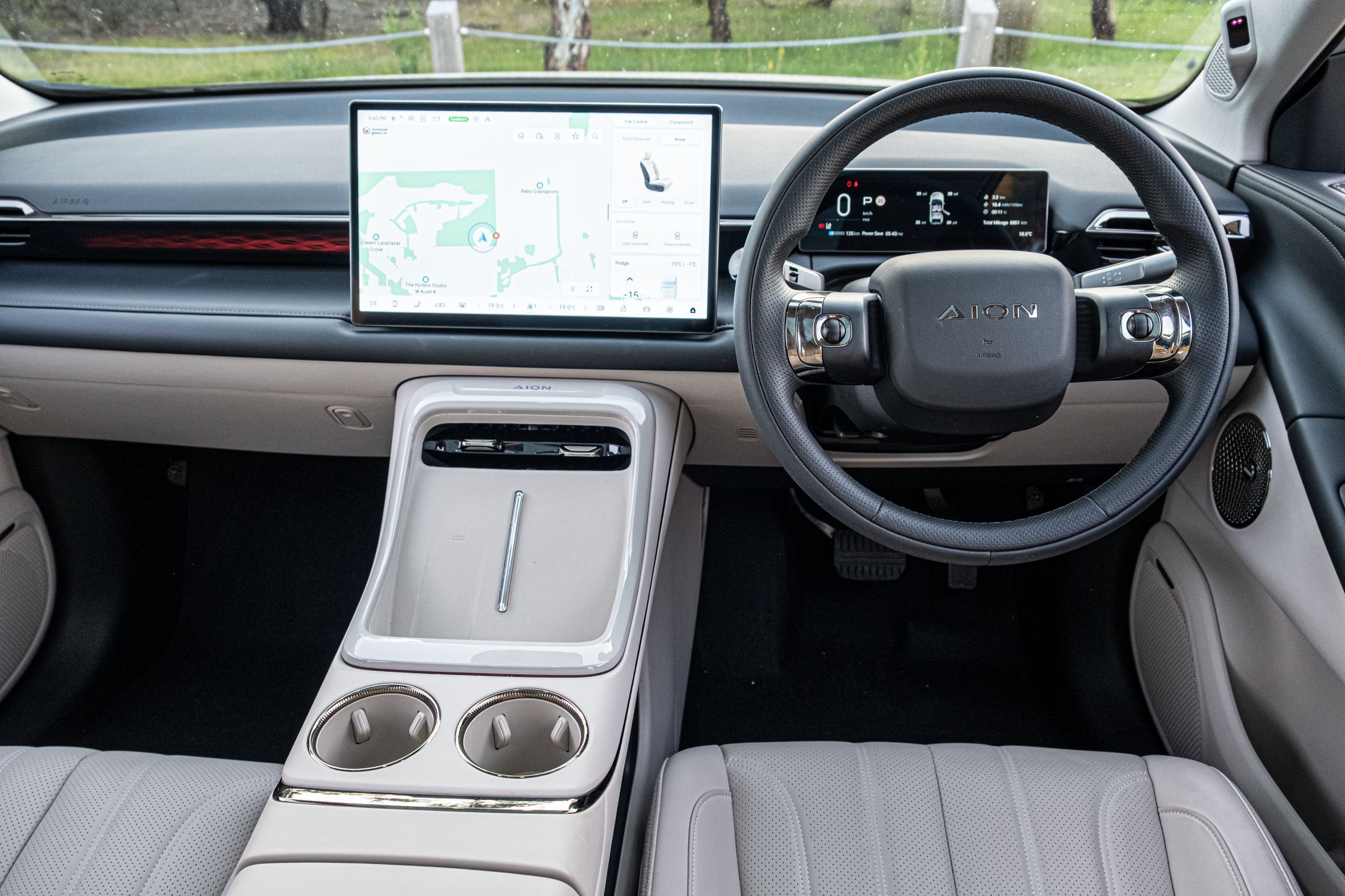
Obviously, the 14.6-inch infotainment display is what immediately catches the eye. It’s crisp and snappy, housing all important vehicle controls, including the climate functions. We hate screens used to adjust temperature and fan speed as much as anyone, but at least the Aion V has a shortcut menu locked at the bottom of the screen with these controls, making them a little easier to access while on the move.

 The GAC Aion V Looks Odd But Is Incredible Value | Review

The Aion V also comes standard with an 8.8-inch digital instrument cluster and a two-spoke steering wheel. In Luxury guise, the EV also comes standard with genuine leather seats that feel exceptionally premium. Better yet, both front seats include superb massage functions that work absolutely brilliantly. Unlike so many massaging seats where you can only feel a tiny pulse in your back, the Aion V’s seats deliver a surprisingly realistic feel, as if tiny fists are being firmly pressed into your back. Usually, this is something you’ll only find in cars worth six figures.

Review: China’s 2026 GAC Aion UT Is A Budget EV That Doesn’t Feel Cheap

Perhaps the single biggest party piece of the Aion V’s cabin is the fridge. Housed between the front seats where you’d ordinarily find the center console, it’s 6.6 liters and proved hugely beneficial in hot weather, keeping my drink bottle cool. It’s not just a fridge either. The temperature can be adjusted to as low as 5 degrees Fahrenheit (-15 degrees Celsius), so it doubles as a freezer. What’s more, the temperature can be increased to up to 122 degrees Fahrenheit (50 degrees Celsius) should you want to keep drinks or food warm.

\\\\\\\\\\\\\\\\\\\\\\\\\\\

Photos Brad Anderson/Carscoops

All important interior surfaces feel very premium. These include the two-tone door panels with diamond stitching, the soft-touch dashboard, and the felt used for the wireless smartphone charger.

The positives continue in the rear. While the Aion V’s 2,775-mm (109.2-inch) wheelbase isn’t huge, it feels certifiably palatial in the second row. There’s plenty of headroom and legroom for adults to sit comfortably in the back. The Luxury model even includes a fold-out table on the back of the front passenger seat. Add in a panoramic glass roof with a sliding cover – unlike a Tesla – and you get a cabin that feels beautifully executed.

This Is No Sporty SUV, And That’s Okay

 The GAC Aion V Looks Odd But Is Incredible Value | Review

Unlike a Tesla Model Y, which even in its simplest form has a sporty edge to it, there’s nothing sporty about the Aion V. That’s not to say it isn’t a lovely place to spend time, as it is.

Figures of 150 kW (201 hp) and 210 Nm (155 lb-ft) are par for the course for front-wheel drive EVs like this, matching figures like the Hyundai Elexio and Kia EV5, but down slightly on the Geely EX5 with its 160 kW (215 hp) and 320 Nm (236 lb-ft).

Torque steer is kept to a minimum, although there is a hint of it if you pin the throttle in Sport mode. I spent most of the week with the Aion V driving around in Power Save mode as it’s the only mode that enabled one-pedal driving. This let me average just 14.8 kWh/100 km across more than 300 km (186 miles) of driving, meaning it is very possible to meet GAC’s WLTP-claimed driving range of 510 km (317 miles).

\\\\\\\\\\\\\\\\\\\

Photos Brad Anderson/Carscoops

The lack of one-pedal driving in Sport or Comfort modes is disappointing, as is the lack of paddle shifters to make on-the-fly adjustments to the regenerative braking. This isn’t a big deal, but it is something that prospective buyers should be aware of.

Steering feel is good. Unlike some EVs, the Aion V’s steering isn’t so light that a strong gust of wind through an open window could turn the wheel. Instead, it’s nicely weighted, although it doesn’t do a good job of transmitting feedback from the road, so it can be a little difficult to determine what the front tires are up to.

GAC has also done a good job of calibrating the suspension. The Aion UT I tested earlier this year rode more like a premium German sedan than a cheap, electric hatchback, and it’s much the same as the V. Owing to the SUV’s larger size, it is a little firmer than the UT, but it never crashes over potholes or speed bumps, and instead rides over them gracefully and quietly.

 The GAC Aion V Looks Odd But Is Incredible Value | Review

Charging speeds are solid. GAC says the Aion V supports charging speeds of up to 180 kW, meaning the battery can be charged from 10-80 percent in roughly 24 minutes. While a base Tesla Model Y can charge at up to 250 kW, it costs roughly AU$13,000 (US$9,000) more than the Aion V. More direct rivals like the Geely EX5 and Hyundai Elexio have DC charging speeds capped at just 100 kW and 150 kW, respectively.

It’s not all sunshine and rainbows, though. My biggest gripe with the Aion V is its safety systems, which are an all-too-common theme among Chinese EVs. First is the driver-monitoring system, which is as hyperactive as a kid that’s just eaten a whole bag of M&Ms. Glance away from the road for a split second and it’ll start complaining, triggering an annoying ring until you look back at the road.

Similarly, the speed monitoring immediately alerts you even if you’re just momentarily 1 km/h over the speed limit. While these features are becoming more common, not just on cars from China but elsewhere in Asia, Europe, and the US, some brands have made it simple to disengage these alerts with conveniently placed shortcuts on the touchscreen. That’s not the case with the Aion V, as you have to dive into several menus to disable them every time you go for a drive.

\\\\\\\\\\\\\

Photos Brad Anderson/Carscoops

Verdict

The GAC Aion V is very impressive, especially given the price and all of the equipment on offer. I have no doubt the exterior design will put off some in the market for an electric SUV, but if you can look past some of the odd styling, it’s a well-rounded proposition.

For a vehicle costing less than AU$50,000 (US$34,900), the interior is the obvious highlight. It’s stylish, well-made, plush, and loaded with features. Combine a calming driving experience with great efficiency, and you get a mid-size electric SUV that’ll leave some legacy brands scratching their heads.

\\\\\\\\\\\\\\\\\\\\\\\\\\\\\\\\\\\\\\\\\\\\\\\\\\\\\\\\\\\\\\\\\\\\\\\\\\\\\\\\\\\\\\\\\\\\\\\\\\\\\\\\\\\\\\\\\\\\\\\\\\\\\\\\

Photos Brad Anderson/Carscoops

It Has An Odd Name, But The Deepal S07 Surprises | Review

PROS ›› Stands out, affordable, efficient
CONS ›› No brand recognition, slow, average range

A few years ago, Australians looking for a mid-size, all-electric SUV had very few options. Now, there’s never been more, and it seems as though a new option arrives every few months.

The Tesla Model Y still moves more units than any of the competition. Still, other models, including the Kia EV5, Hyundai Elexio, BYD Sealion 7, GAC Aion V, and Zeekr 7C, have opened up many options for buyers. Deepal is one of the newer Chinese automakers to launch locally and, backed by Changan, its S07 aims to upset the establishment.

Read: This Chinese SUV Is Like A Cut-Price Xiaomi YU7, Except For What’s Under The Hood

Sporting a coupe-inspired exterior, premium features, and an interior that feels genuinely considered, it seems promising. But is this enough to pull buyers away from the names they already trust? We recently spent a week living with the Deepal S07 to find out.

QUICK FACTS
› Model:2026 Deepal S07
› Starting Price:AU$47,990 (US$34,400)
› Dimensions:187 x 75.9 W x 63.9 in H (4,750 x 1,930 x 1,625 mm)
› Wheelbase:114.1 in (2,900 mm)
› Curb Weight:2,073 kg (4,570 lbs)
› Powertrain:79 kWh battery / single rear motor
› Output:214 hp (160 kW) / 236 lb-ft (320 Nm)
› 0-62 mph7.9 seconds
› Transmission:Single speed
› Efficiency:17.8 kWh/100 km
› On Sale:Now
SWIPE
\\\\\\\\\\

Photos Brad Anderson/Carscoops

Sold in a single configuration and offered with either 19- or 20-inch wheels, the S07 is currently available from AU$47,990 (US$34,400), including all on-road costs, or roughly AU$10,000 (US$7,200) less than when it initially launched locally in early 2025. This is very competitive, making the Deepal AU$2,000 (US$1,400) cheaper than a base Kia EV5, and more than AU$15,000 (US$10,800) less than a Tesla Model Y.

For a brand that has absolutely no heritage in Australia, nailing price is extremely important, so Deepal has at least done a good job in that regard.

The S07 has a 79.97 kWh ternary lithium battery pack, driving a rear-mounted electric motor with 160 kW (214 hp) and 320 Nm (236 lb-ft) of torque, roughly on par with other electric SUVs in this segment. One crucial area where the S07 lags the competition is charging, with a peak DC rate of just 92 kW, meaning it takes 35 minutes to charge from 30 to 80 percent. AC charging peaks at 11 kW. Notably, the S07 includes a 3.3 kW vehicle-to-load function, which is a nice addition.

\\\\\\\\\\\\\\\\\\\\\\\\\\\\\\

Photos Brad Anderson/Carscoops

Changan designed the S07 at its facility in Turin, Italy, and it stands out from much of the competition thanks to the coupe-SUV roofline and sporty lights. By comparison, the interior is typical of many current electric SUVs from China. For what it lacks in originality, it makes up for it with its material choices.

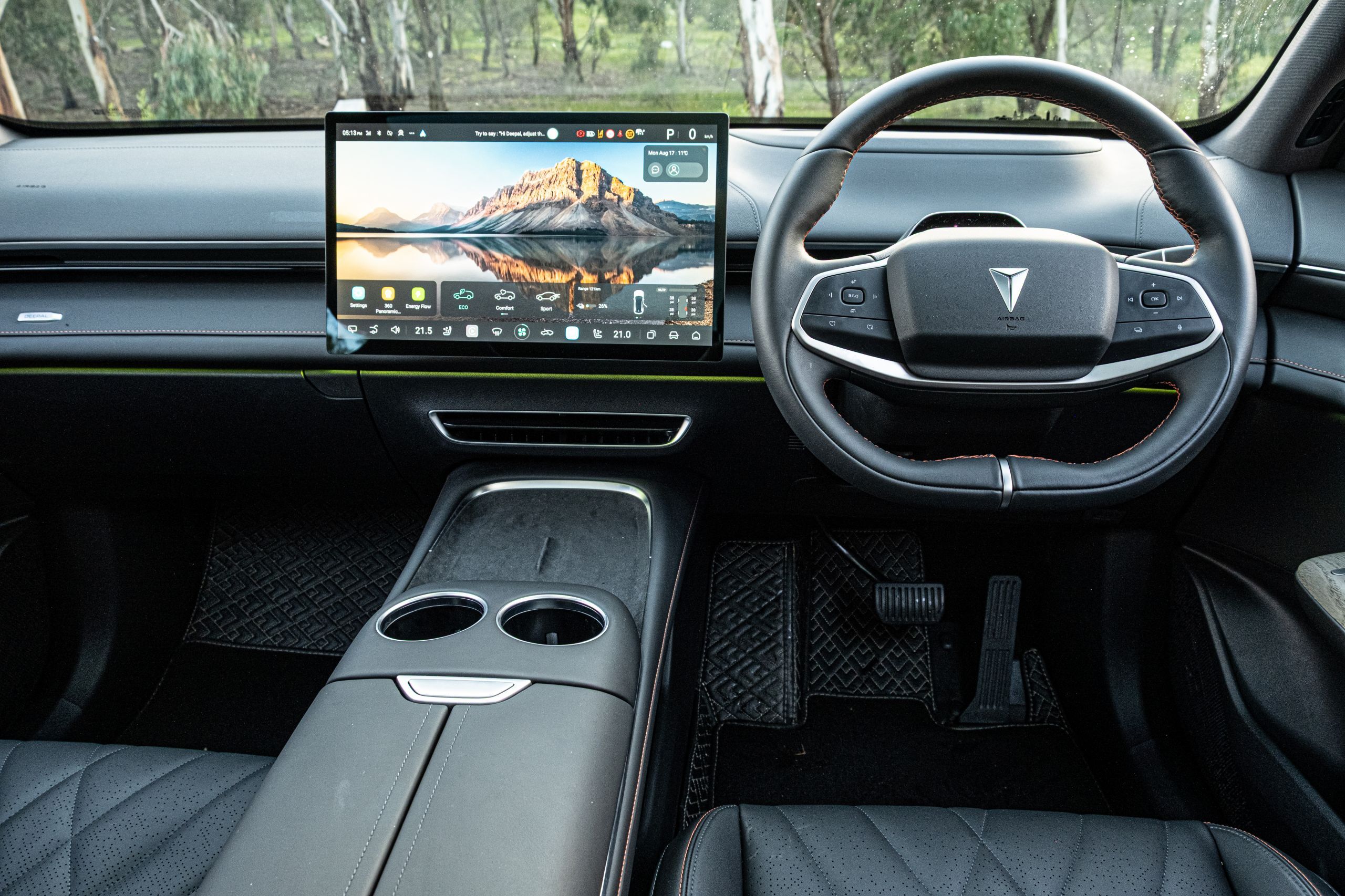
A 15.6-inch central infotainment display comes standard across the range and supports wireless Apple CarPlay and Android Auto. Like a Tesla Model Y, but unlike many of its competitors, the S07 doesn’t feature a separate digital instrument cluster, which is unfortunate. It somewhat makes up for this with a large, augmented-reality head-up display, but I would prefer a cluster.

The party piece of the S07’s cabin is that the central screen can sit centered or be angled toward the driver or passenger. It may only sound like a small thing, but it’s a great idea. After driving the Deepal for a week with the screen directed at me, it felt odd to step into another car with the screen centered. Several BYD’s have screens that can be positioned in portrait and landscape modes, but Deepal’s idea is better.

\\\\\\\\\\\\\\\

Photos Brad Anderson/Carscoops

Diving deeper into the screen reveals a tablet-like software package that’s easy to navigate, if a little overwhelming because of all the different controls and settings. The graphics are clear, and the responsiveness is excellent. Swipe down from the top, and you can configure several shortcut controls. You can also operate the climate control through the screen. It works okay, but I often had trouble turning the different vents on and off, as well as directing the air.

An annoying AI-powered voice assistant is also featured, greeting the driver every time they sit inside. Thankfully, you can turn it off.

The driving position is good, although it’d be nice if the seat could be lowered and there were more steering wheel adjustments. Soft-touch synthetic black leather adorns most interior parts, including the wheel, seats, center console, dashboard, and door panels, giving the cabin a premium feel. At the same time, the orange contrast stitching added some sporty flair. Our tester also had the same synthetic leather on the floor mats, which felt a little cheap.

 It Has An Odd Name, But The Deepal S07 Surprises | Review

At the rear, there’s enough space to fit two large adults with ease, plus separate climate controls and toggles to move the front passenger seat forward and back. Practicality is respectable, but far from class-leading. With the rear seats upright, you can fit 445 liters (15.7 cubic feet) in the rear, or 1,385 liters (48.9 cubic feet) with the seats folded down.

Smooth But Soulless

There’s a lot to like about the S07, although there are certainly elements that could be improved.

When the S07 first launched, it drew fierce criticism for feeling unfinished and having poorly calibrated safety systems. Several software updates over the past year have improved things, and they seem to have mostly worked.

When I first stepped into the Deepal, I was relieved to see that the overzealous driver monitoring system can be easily disabled through the swipe-down menu and, importantly, it remains off even after the S07 is turned off and switched back on. When I did use it, I found it overbearing, frequently telling me I was distracted no matter how focused I actually was.

\\\\\\\\\

Photos Brad Anderson/Carscoops

The S07 isn’t particularly quick, not that you’d expect, given it has a single motor. It takes about 7.9 seconds to reach 100 km/h (62 mph), and although this won’t get your heart pumping, it’s more than adequate for everyday driving.

Read: Avatr 07 Revealed As Yet Another Chinese EV Looking To Shock Tesla Model Y

The rear-wheel-drive setup also means the S07 avoids the torque steer found in some front-wheel-drive competition, like the Kia EV5 and Hyundai Elexio. The lighter front end also gives the S07 a pointy, direct feel when turning, while staying surprisingly flat through sweeping corners and tight hairpins.

The level of regenerative braking is highly customizable, which is welcome, but what’s not so welcome is the lack of a one-pedal driving mode, which seems like a silly exclusion in this day and age. Compounding that, the transition from regen to the mechanical brakes isn’t as smooth as it could be. It also doesn’t use steering wheel paddles for regen adjustments on the fly.

 It Has An Odd Name, But The Deepal S07 Surprises | Review

Ride comfort is good, and the S07 walks the fine line between sportiness and plushness well, quickly responding to imperfections in the road without sending too many thumps into the cabin. I think it could be a little softer, but that’s really clutching at straws. 

Deepal quotes a combined efficiency of 18.6 kWh/100 km and says the S07 gets up to 475 km of range, roughly on par with similarly priced competition. I averaged 17.8 kWh/100 km, so that claimed range is certainly achievable in the real world. It’s just a shame that using a public DC fast charger gets a little annoying given the slow peak speeds.

The automated driving functions need further improvement. While things like adaptive cruise control and lane-centering work relatively well, the S07 often hugs freeway lane lines rather than sitting in the center of a lane.

\\\\\\\\\\\\\\\\\\\

Photos Brad Anderson/Carscoops

Verdict

The Deepal S07 isn’t the best vehicle in the class, but at the current price point, it is a compelling package. Buyers eager for an EV that makes a statement on the road will find that in the S07, particularly in bright colors like Cosmic Yellow or Sunset Orange.

Sales data in Australia shows the S07 is performing reasonably well, with 522 examples sold through the end of June, making it more popular than something like a Leapmotor C10 and roughly on par with the Hyundai Elexio, although well down from the more than 3,000 Kia EV5s sold over the same time. For now, it’s not the best choice in the market, but it’s a solid option if you want something a little different. You’ll just have to live with the fact that you’ll be telling people you drive a Deepal.

\\\\\\\\\\\\\\\\\\\\\\\\\\\\\\\\\\\\\\\\\\\\\\\\\\\\\\\\\\\\\\\\\\\\\\\\\\\\\\\\\\\\\\\\\\\\\\\\\

Photos Brad Anderson/Carscoops

Zeekr’s 7GT Shooting Brake Is China’s 671-HP Case Against SUVs

PROS ›› Premium feel, spacious, quick, good range
CONS ›› Obtrusive TC, price unknown, heavy

Most legacy brands gave up building wagons and Shooting Brake models years ago, no doubt realizing that most new-car buyers are only interested in an SUV. As a company that’s barely five years old, you’d expect Zeekr to do the same, focusing purely on the segments of the luxury market where sales are the strongest.

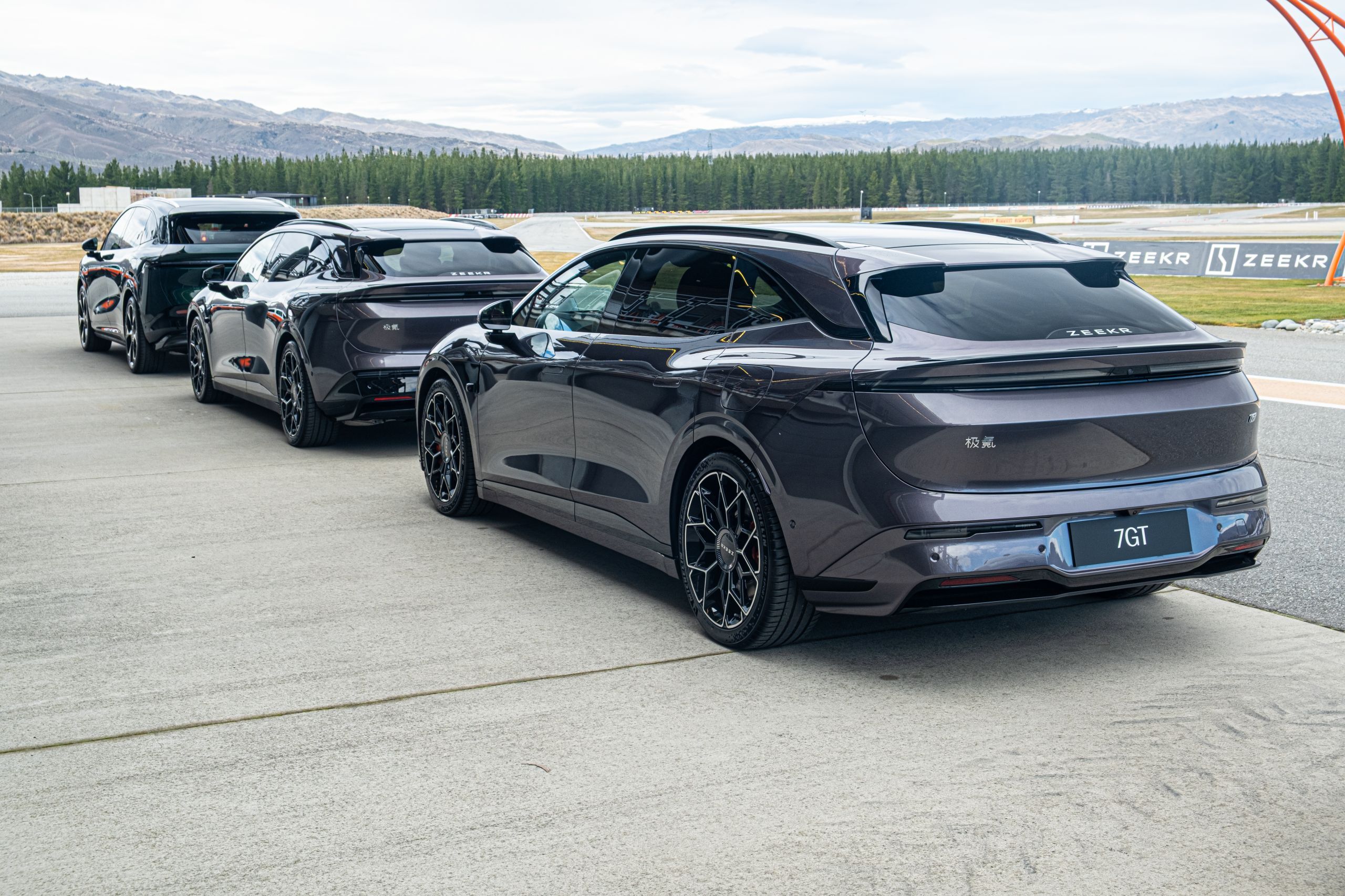
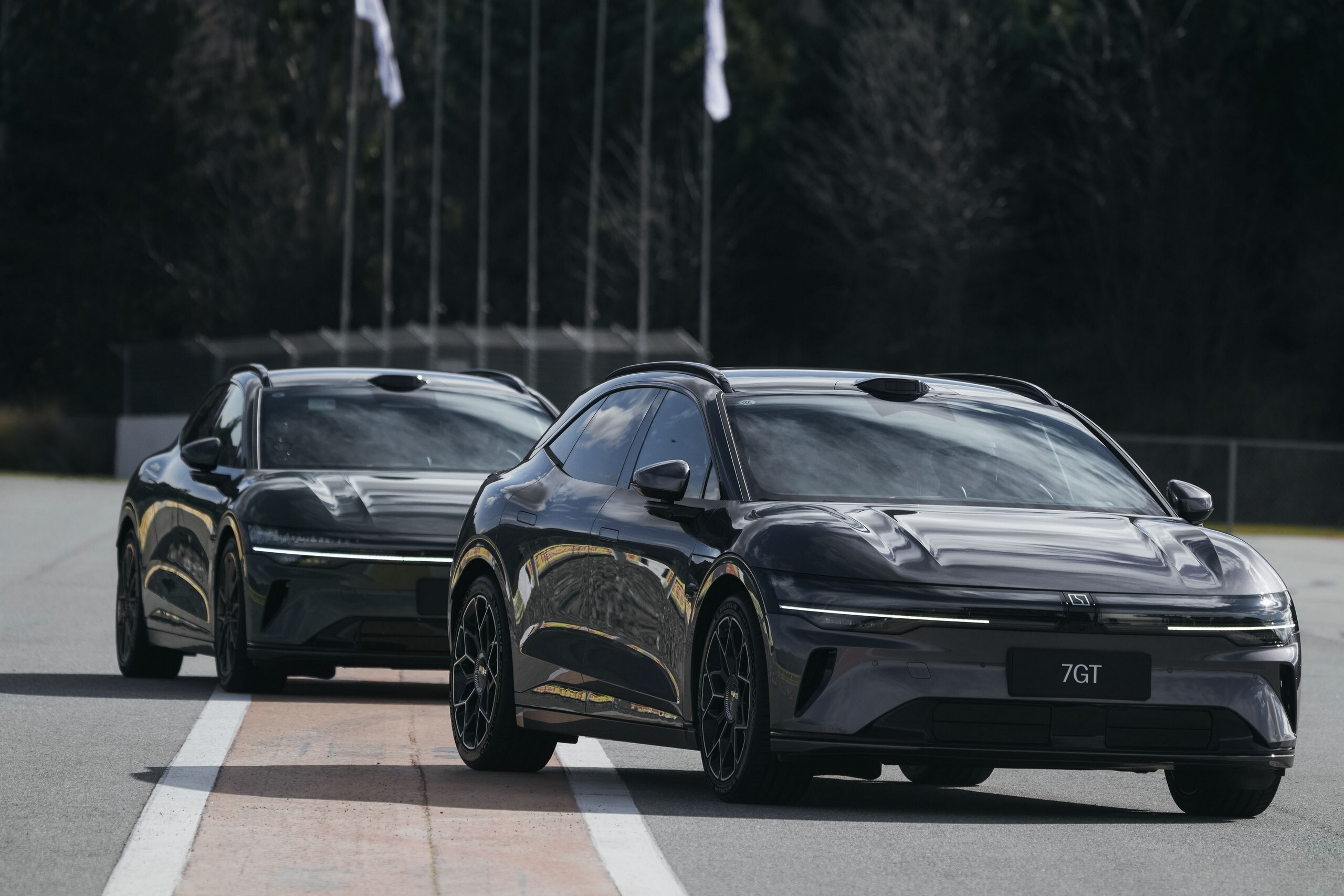
The 7GT, also badged as the 007 GT in China, proves that Zeekr is willing to take risks and offer a competitor to the Porsche Taycan Sport Turismo, a vehicle which itself hasn’t exactly been selling well. Based on the 007 sedan from a few years ago, it’s perhaps Zeekr’s most promising new model.

Review: We Drifted Zeekr’s Lineup On Ice, And The Cheapest One Surprised Us

Sales of the 7GT have been ongoing in China since last year, and it’ll soon launch in Australia and Europe as well. We recently had the opportunity to drive it on the track and in the snow to see whether it’s a legitimate rival to the Germans and whether it should be considered over other existing Zeekr models, like the 7X SUV.

QUICK FACTS
› Model:2027 Zeekr 7GT
› Starting Price:AU$TBC
› Dimensions:189.6 x 75.1 W x 57.3 in H (4,817 x 1,910 x 1,456 mm)
› Wheelbase:114.1 in (2,8900 mm)
› Curb Weight:2,285 kg (5,037 lbs) in Europe-spec
› Powertrain:75 – 103 kWh battery / RWD and AWD
› Output:671 hp (500 kW) / 516 lb-ft (700 Nm)
› 0-62 mph3.5 seconds (0-100 km/h)
› Transmission:Single speed
› Efficiency:TBC
› On Sale:Now
SWIPE
\\\\\\\\\\\

Photos Brad Anderson/Carscoops

Zeekr has been toying with the idea of bringing the 7GT to Australia since at least early 2025, showcasing it at car shows to gauge local appetite for the model. Prices have yet to be confirmed, but it’s expected to land at showrooms by the end of this year, or in early 2027.

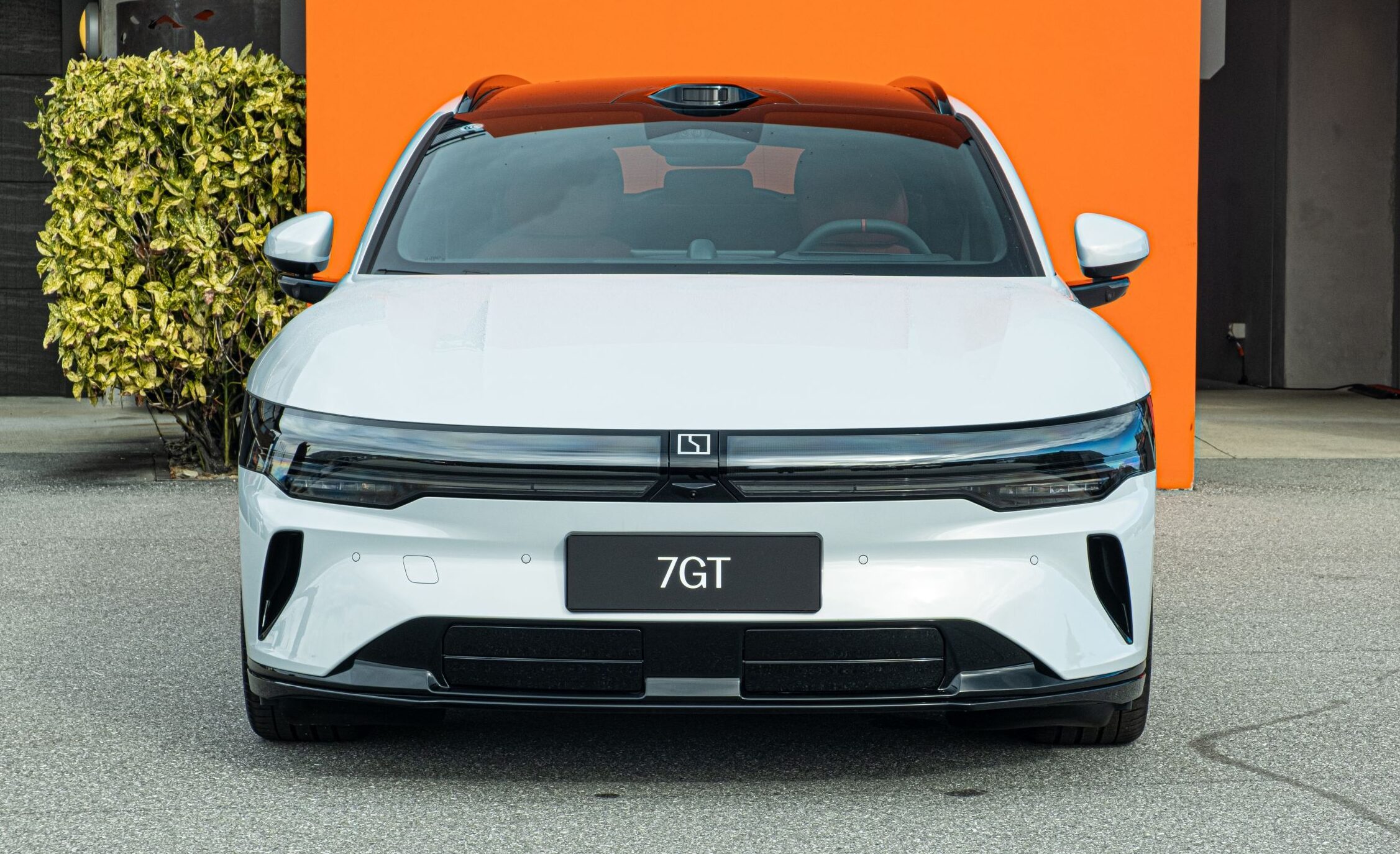
Visually, the front end shares much in common with the larger 7X, sporting a similar black band that incorporates a light bar and the main headlamps. Obviously, the extended roof, sloping rear window, and sharp D-pillars are the highlight, giving the 7GT an unmistakable presence when viewed in person.

Final specifications for Australia are still being ironed out, but the range is tipped to consist of three versions, and a potential fourth. Sitting at the base of the range will be a rear-wheel-drive model with a 75 kWh battery, 370 kW (496 hp) of power, and capable of hitting 100 km/h (62 mph) in a solid 4.8 seconds, all while covering as much as 702 km (436 miles) on a charge under the CLTC cycle. Sold alongside it will be a long-range rear-wheel-drive model with the same motor, paired with a larger 103 kWh pack.

 Zeekr’s 7GT Shooting Brake Is China’s 671-HP Case Against SUVs

Sitting at the top of the 7GT family will be a dual-motor, all-wheel-drive model pairing the 103 kWh battery with two electric motors producing 500 kW (671 hp), up slightly from the 475 kW (637 hp) promised for the European-spec model. We drove the rear-wheel-drive and all-wheel-drive models. At a later date, the 7GT may become available Down Under with the recently announced FR-Line performance kit, which adds orange brake calipers and increases power up to an astonishing 585 kW (784 hp).

Models equipped with the 75 kWh ShenDun Golden Battery can charge from 10-80 percent in 10.5 minutes, while those with the more advanced 103 kWh CATL Qilin battery charge from 10-80 percent in 10 minutes flat.

Oozing Luxury

\\\\\\\\\\\\\\\\\\

Photos Brad Anderson/Carscoops

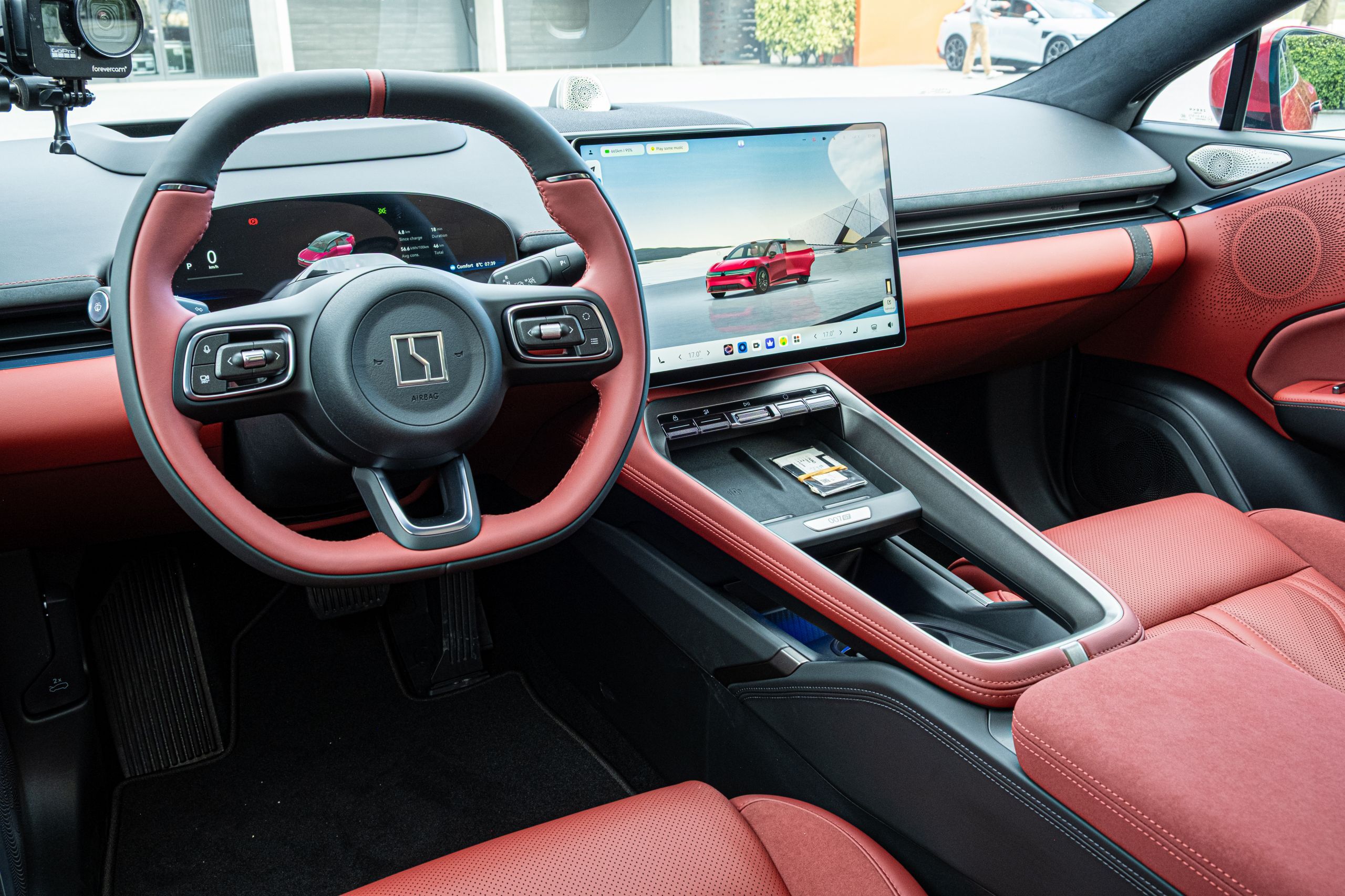
As we’ve discovered in other Zeekr models, the cabin of the 7GT feels more premium than lots of the established competition, including models from BMW and even the Audi S5 Avant we tested earlier this year.

While the 7GT could simply be considered a Shooting Brake version of the regular 007 sedan, which won’t be sold in Australia or Europe, Zeekr actually took some lessons learned from that car and applied them to the 7GT. After finding out from Chinese buyers that the 7GT was overly reliant on the touchscreen and lacked enough physical buttons, Zeekr has added plenty of physical switchgear to the 7GT.

For example, there are shortcut buttons and a volume roller dial positioned directly below the central touchscreen. The 7GT also gets the same excellent steering wheel as the 7X, rather than the 007’s wheel, which is borrowed from the smaller X and comes with some odd physical buttons and switches.

 Zeekr’s 7GT Shooting Brake Is China’s 671-HP Case Against SUVs

Obviously, much of the cabin is dominated by the 13.02-inch central infotainment display. As with the 7X and other Zeekr models, the carmaker’s software is excellent, largely mimicking Tesla’s in overall layout and operation. Those accustomed to driving new cars won’t have any trouble getting to grips with the detailed settings and menus, although others may find it a little overwhelming at first.

Positioned in front of the driver is a separate 15.4-inch display with a curved design that feels classy, although customization options for this screen are somewhat limited. The 7GT also comes standard with a 35.5-inch augmented reality head-up display.

The central tunnel houses two wireless smartphone charging pads, large storage cubbies, two cupholders, and a spacious center console. High-quality touches found throughout include the metal speaker grilles, the soft-touch leather across the door panels, dashboard, and seats, and the Alcantara-trimmed headliner. It feels fitting of a car worth well in excess of AU$100,000 (US$71,800), and the 7GT is expected to cost quite a bit less than that.

\\\\\\\\\\\\\\\\\\\\\\\\\

Photos Zeekr Australia

Other key features include 14-way power-adjustable front seats with heated, ventilated, and massaging functions. There’s also a heated steering wheel and acoustic glass, as well as a thumping audio system and a panoramic glass roof.

Viewed from the outside, you’d think that space in the rear of the 7GT would be incredibly limited, given how low the roof seems to sit. You can imagine my surprise when I slid my 6’2” frame into the rear and found I had roughly one inch of headroom, which is better than some SUVs out there and much better than something like the Audi S5 Avant. There’s also loads of legroom thanks to the 2,925 mm (115.1-inch) wheelbase.

In terms of practicality, the 7GT includes a ski hatch and 645 liters (22.7 cubic feet) of cargo space with the rear seats in position, or 1,737 liters (61.3 cubic feet) with them folded flat. That’s comparable to some SUVs so, clearly, the 7GT is not a vehicle that suffers from not being one of them.

How Does It Drive?

 Zeekr’s 7GT Shooting Brake Is China’s 671-HP Case Against SUVs

As development of the Australian-spec model is still ongoing, Zeekr shipped several left-hand-drive examples for us to test. While the steering wheel was on the opposite side, we were told everything else about the cars we tested was identical to the models that will be sold locally.

With a headline figure of 500 kW (671 hp) in the dual-motor, all-wheel drive 7GT, it’d be easy to confuse the EV as being a track-focused weapon in the same vein as the Hyundai Ioniq 6 N. But, as we learned while lapping the new Zeekr and completing tight, twisty Gymkhana setups, the track likely won’t be where the 7GT most excels.

RWD First

Our first experience was behind the wheel of a bright pink, rear-wheel-drive model on a Gymkhana course, designed to test the car’s low- and mid-speed dynamics. Immediately, the rear-wheel-drive model, with its 370 kW (496 hp), felt more than quick enough for fun.

\\\\\\\\\\\\\\\\

Photos Brad Anderson/Carscoops

Local weight figures have yet to be confirmed, but the 7GT will obviously weigh north of 2,200 kg (4,850 lbs). It does a good job of carrying its weight, though, even as we punished the tires. The suspension feels more road- than track-focused, which is a good thing, soaking up bumps well and feeling quite plush, all while keeping the 7GT locked to the pavement. Of course, a road test will be needed to see just how comfortable Zeekr’s latest car is, but initial impressions are good.

Holding the 7GT back is the traction control system. Zeekr didn’t want us to adjust or turn it off, so we kept it on. Attempting to accelerate out of corners with the TC on can be a little frustrating, as it clamps down on power even when you’re pointed straight ahead. Interestingly, the stability control allows a little bit of slip at the rear axle without issue; it’s just under power that the traction control is too obtrusive.

Our time in the rear-wheel drive 7GT also included several high-speed lane changes, similar to a moose test at around 90 km/h (56 mph). The car performed exceptionally well in this environment, responding to aggressive steering inputs without understeer.

 Zeekr’s 7GT Shooting Brake Is China’s 671-HP Case Against SUVs

Later in the afternoon, we had the opportunity to test the all-wheel drive 7GT on the track, following a 7X Performance pace car. Our track experience consisted of a single warm-up lap and two hot laps, though they were more like ‘warm’ laps, as we were unable to push the 7GT beyond about 80 percent of its capabilities.

As we discovered during the Gymkhana sessions, the 7GT has a neutral balance through most turns, although it can be pushed into controllable understeer if you’re a little too greedy on the entrance to a corner. With 500 kW (671 hp) on tap, the 7GT then picks up speed at a startling rate when pulling out of a turn.

However, the traction control once again proved to be annoying on the track, cutting power when accelerating out of turns. The front-end of the all-wheel drive model also isn’t quite as reactive as the RWD.

\\\\\\\\\\\\\\\\\\\\\\\\\\\\\\\\\\\\\\\\\\\\\\\\\\\\\\\\\\\\\\\\\\\\\\

Photos Zeekr Australia

The steering feel is good, and it’s easy to place the 7GT at speed. It’s also a piece of cake to control should the rear end want to get involved. Similarly, the brakes proved more than capable of a couple of reasonably quick laps, although we did hear some other journalists report a bit of fade.

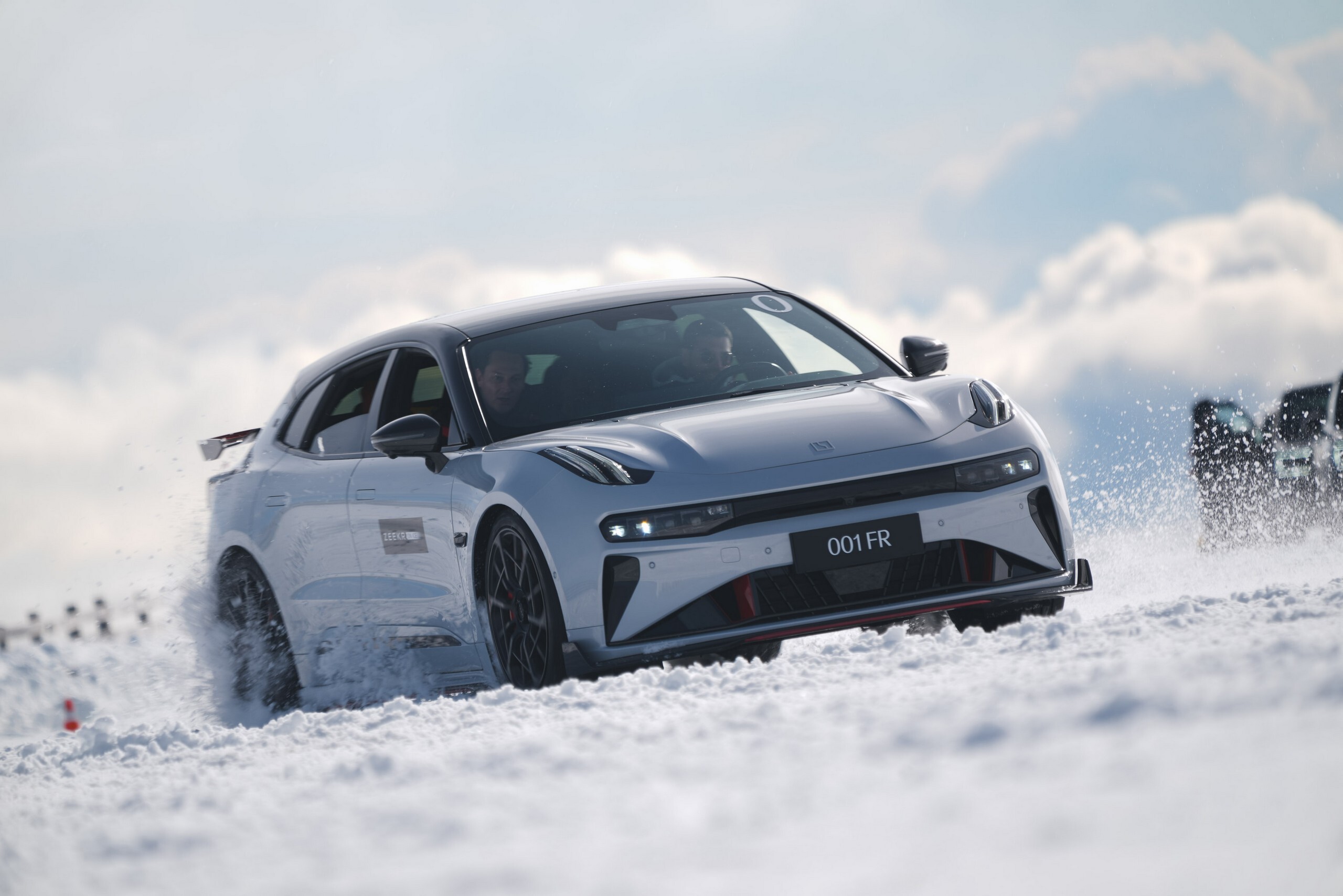
The following day, we also had the chance to drive the all-wheel-drive 7GT on snow and ice, alongside other Zeekr models like the X, 7X, 8X, 9X, and 001 FR. Finally, we were given the go-ahead to turn off the traction control on the sleek Shooting Brake completely, and it proved to be an utter joy to drift around.

\\\\\\\\\\\\\\\

Photos Zeekr Australia

Unlike other Zeekr models we sampled, the 7GT felt quite rear-biased on the snow. Turning the wheel and pinning the throttle was enough to kick out the tail, and subtle pressure on the accelerator pedal allowed for some lovely drifts. Here’s hoping the 7GT delivers a similar feeling on the street or on the track if the traction and stability control systems are disabled.

The all-wheel-drive model Australia will get is expected to hit 100 km/h (62 mph) in about 3.5 seconds. Sadly, we didn’t get the opportunity to test this, but we have little reason to doubt it’ll be achievable in the real world. Cars like the Tesla Model 3 Performance and Hyundai Ioniq 6 N are a little faster, but anything under 4 seconds is definitely real quick.

Verdict

The Zeekr 7GT probably won’t be a huge seller, and almost certainly won’t sell in the same volumes as the larger 7X, but based on the first drive, it seems worthy of all the same praise handed out to its SUV sibling. Like the 7X, the build quality of the 7GT is excellent, as is the technology it’s been loaded with.

I think Zeekr has also nailed the design, creating an estate that looks incredibly sleek yet remains spacious inside, so it will absolutely work as a family car. Importantly, prospective buyers shouldn’t be talked out of a Porsche Taycan, Audi RS e-tron GT, or Hyundai Ioniq 6 N because they think the 7GT will be a phenomenal on-track performer. It does well enough on the track, but we think it’ll feel even better on the road, and hopefully won’t have to wait too long to test it where owners will likely spend most, if not all, of their time behind the Chinese shooting brake’s wheel.

\\\\\\\\\\\\\\\\\\\\\\\\\\\\\\\\

Photos Zeekr Australia

Porsche’s 1,139-HP Cayenne Turbo Electric Is A Supercar In Family-SUV Clothing

PROS ›› Ferocious acceleration, engaging handling, rapid 400-kW charging
CONS ›› Middling range, weight, screen-heavy cabin, depreciation risk

Porsche wasn’t the first automaker to sell an SUV that felt quick. It was, however, the first to prove that an SUV could be truly athletic on pavement. The original Cayenne was somewhat unloved by many in the automotive sphere, but it set a new bar for an SUV that could do more than hustle down a straight road with a loud exhaust and too much body roll. It could attack curves in a way no other similar vehicle could. 

Now Porsche has a different, arguably tougher job. The 2027 Cayenne Electric arrives in a market already full of expensive electric SUVs, including the Lucid Gravity, Cadillac Vistiq, Volvo EX90, Mercedes EQS SUV, and BMW’s upcoming iX5. This time, being fast is not enough. The question is whether Porsche can make an EV SUV feel special enough to rewrite the rulebook again.

The Cayenne Turbo Electric certainly has the hardware to try. Its dual-motor system produces 1,139 hp and 1,106 lb-ft of torque with Launch Control engaged. That is four-figure power in a five-seat family SUV. The real question isn’t just whether or not the driving experience will be memorable. It’s whether it’ll be memorable enough and engaging enough to be a true sales success for the brand at a time when Americans are overlooking impressive EVs all over the market. 

Quick Facts
› Model:2027 Porsche Cayenne Turbo Electric
› Starting Price:$165,350, including destination ($198,180 as tested)
› Dimensions:196.3 x 78.0 x 65.9 in (4,985 x 1,980 x 1,674 mm)
› Wheelbase:119.0 in (3,023 mm)
› Curb Weight:5,860 lbs (2,658 kg)
› Powertrain:Dual electric motors / AWD / 113-kWh battery
› Output:Up to 1,139 hp (850 kW) / 1,106 lb-ft (1,500 Nm)
› 0-62 mph2.4 seconds (0-100 km/h)
› Transmission:Single speed
› Range:Up to 298 miles
› Towing Capacity:7,716 lbs (3,500 kg)
› On Sale:Now
SWIPE

Styling Befitting A Cayenne

\\\\\\\\\\\

Credit: Stephen Rivers for Carscoops

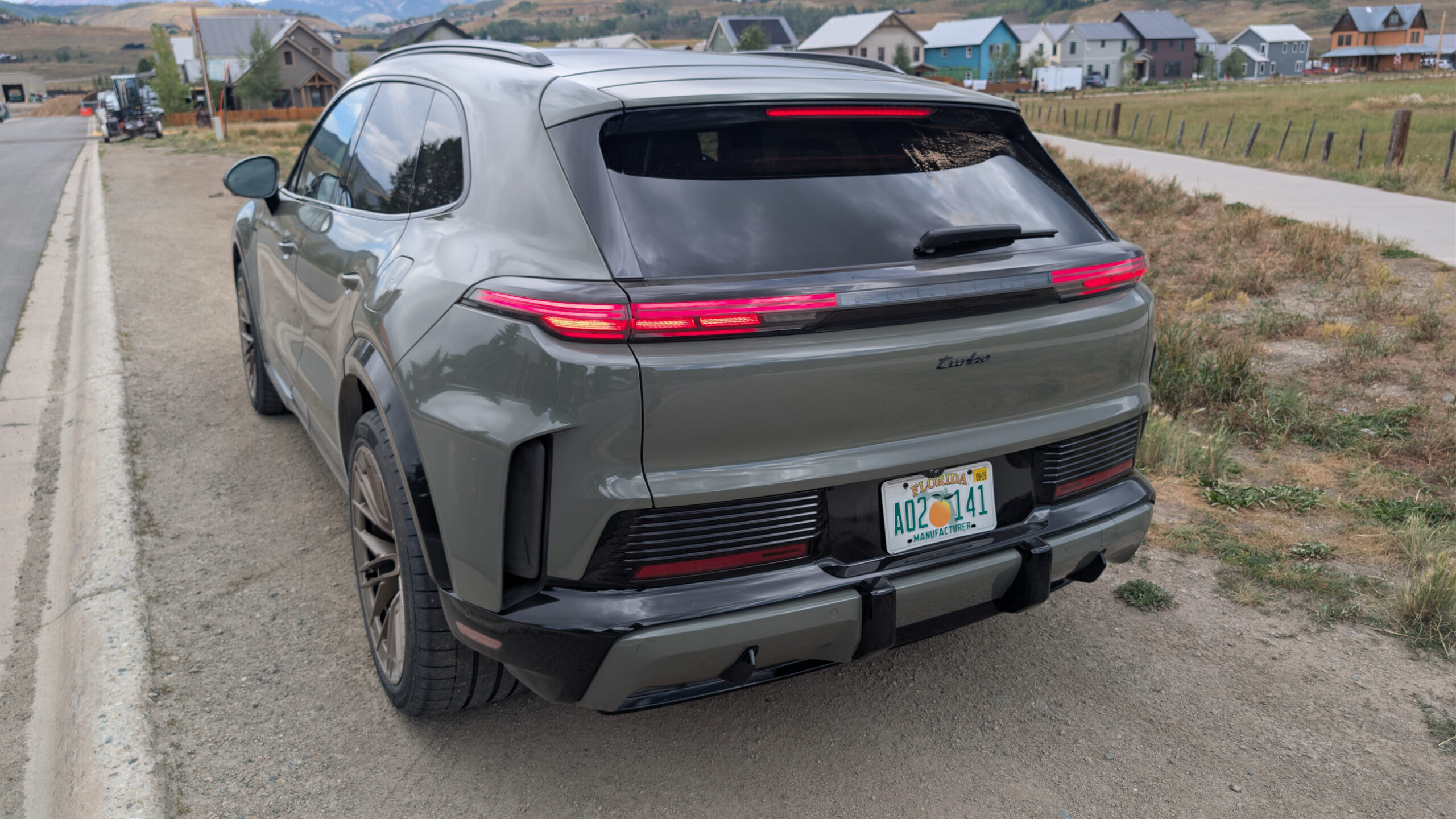
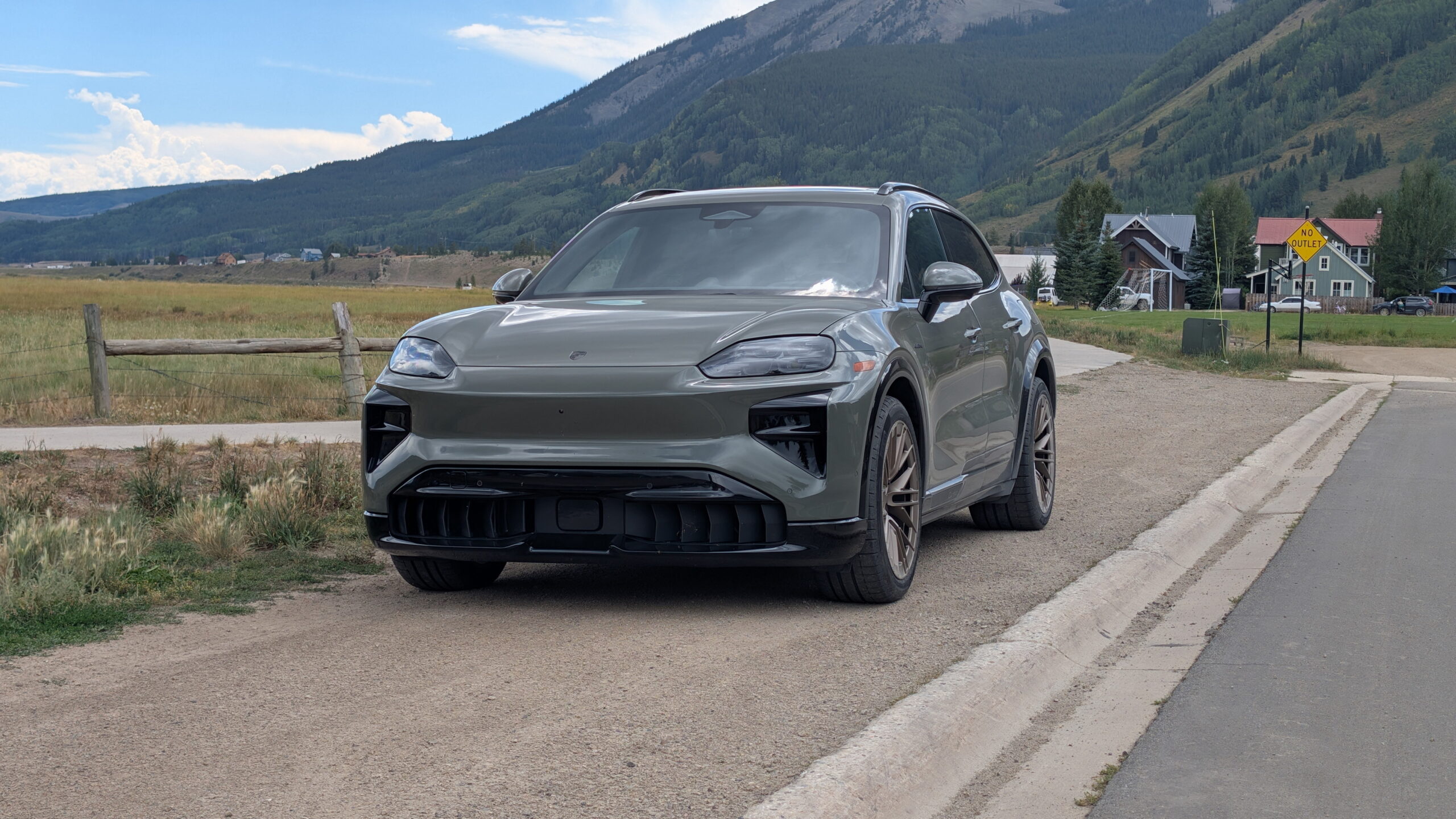
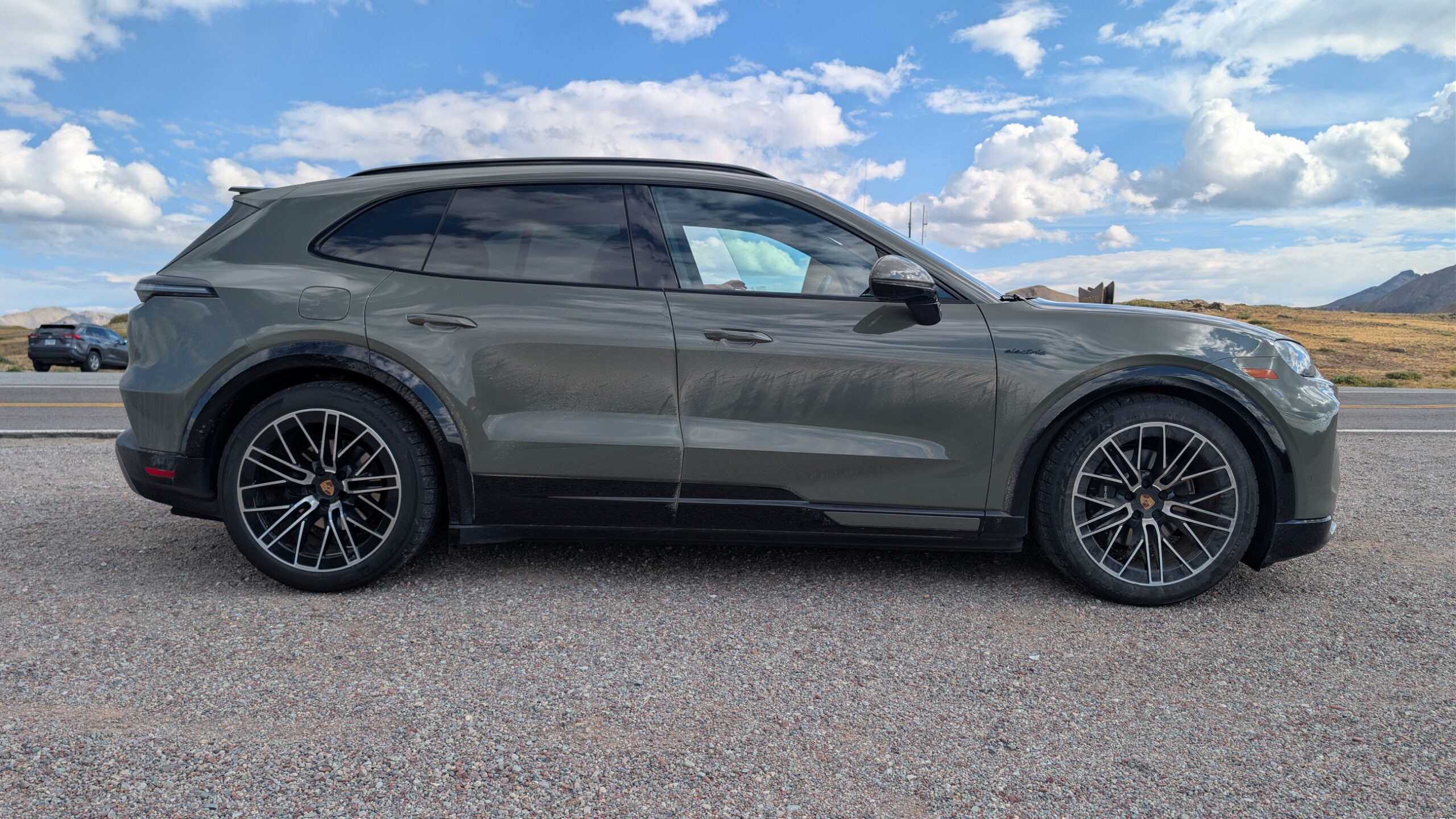
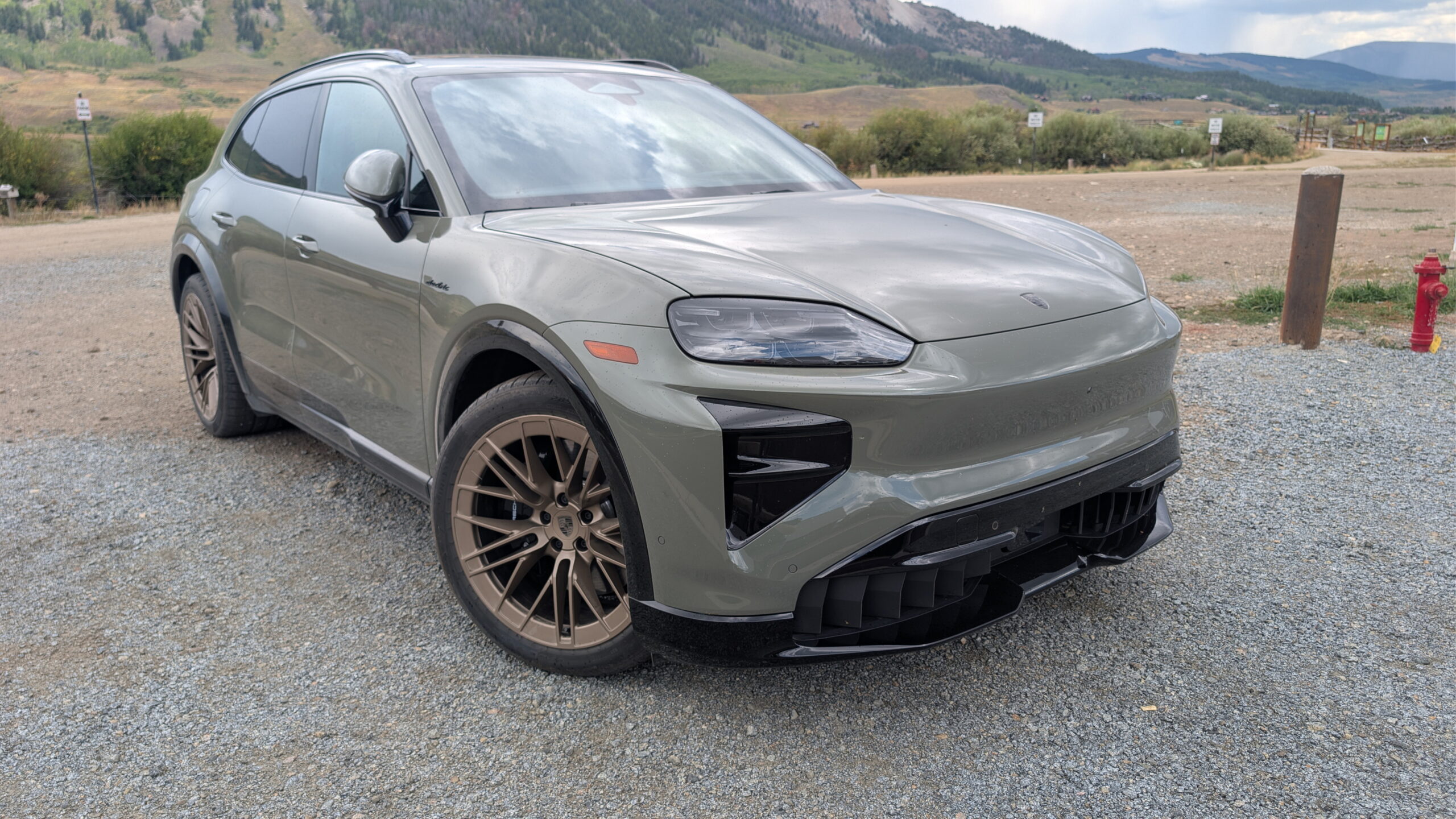
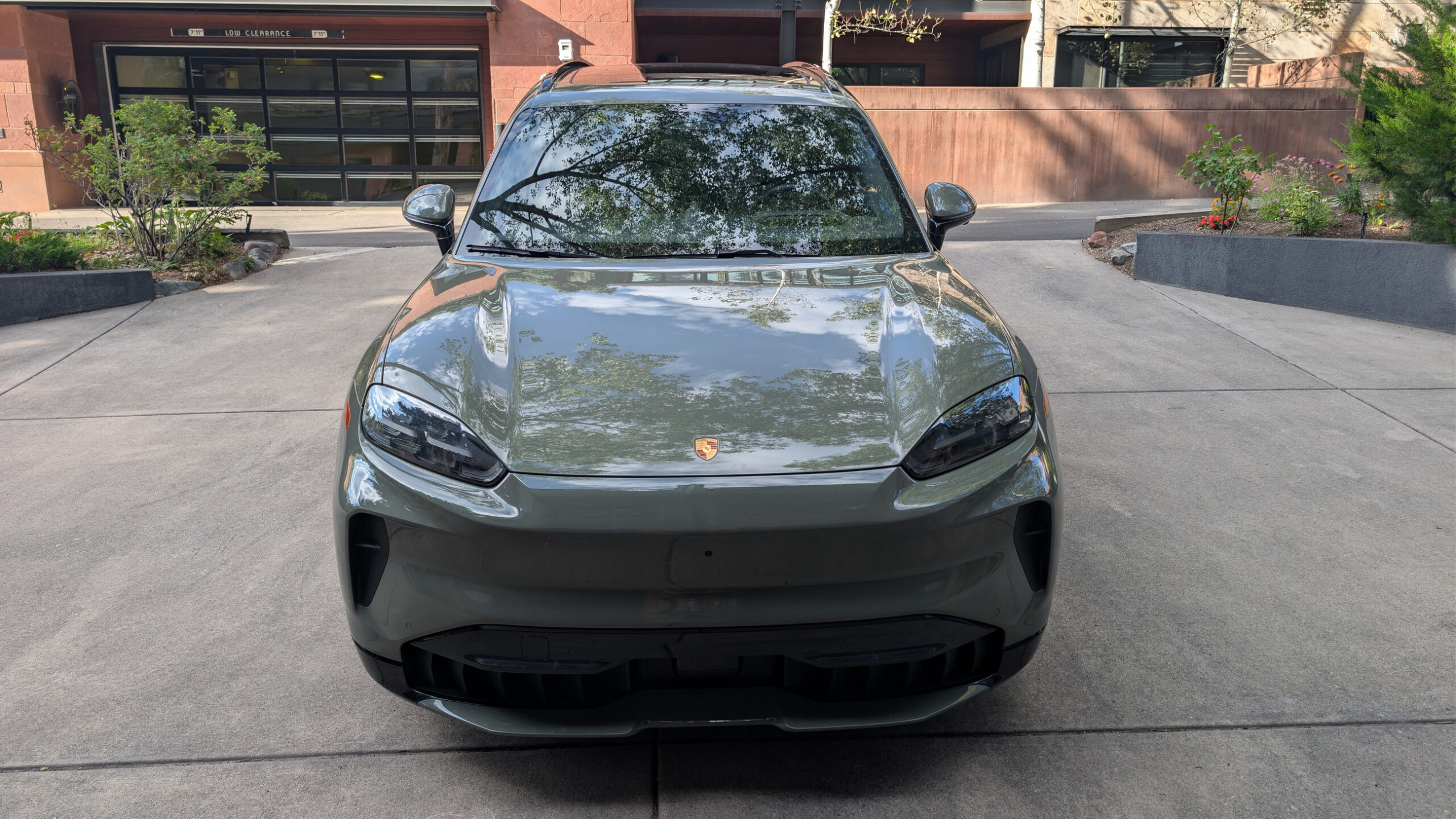
The overall look of the Cayenne Electric is stately. Not everyone will love the changes made in favor of identity and aerodynamics, but at least it doesn’t feel overstyled or too much like a jelly bean. Simple designs tend to age the best. That does not guarantee the Cayenne Electric will become a classic, but it has a much better shot than many. 

The headlights are the one element I am still not fully sold on. They are technically impressive and help emphasize the Cayenne’s width, but they do not have quite the same immediate warmth as the best Porsche lighting signatures. Everything else works. On the Turbo, the active aerodynamic blades at the rear even extend at speed to clean up airflow. You will never see them work from the driver’s seat, of course, but they are genuinely cool.

The reference vehicle here wears Monteverde Metallic over a brown Espresso leather cabin with black accents. It also gets rear-axle steering, Porsche Active Ride, the SportDesign package, 22-inch SportTechno wheels, performance summer tires, HD-Matrix headlights, a panoramic roof, and the Premium Package. The $163,000 starting point climbs to $198,180 quickly. That is Porsche ownership in a single sentence.

A Familiar Porsche Cabin, Just With More Glass

 Porsche’s 1,139-HP Cayenne Turbo Electric Is A Supercar In Family-SUV Clothing
Credit: Stephen Rivers for Carscoops

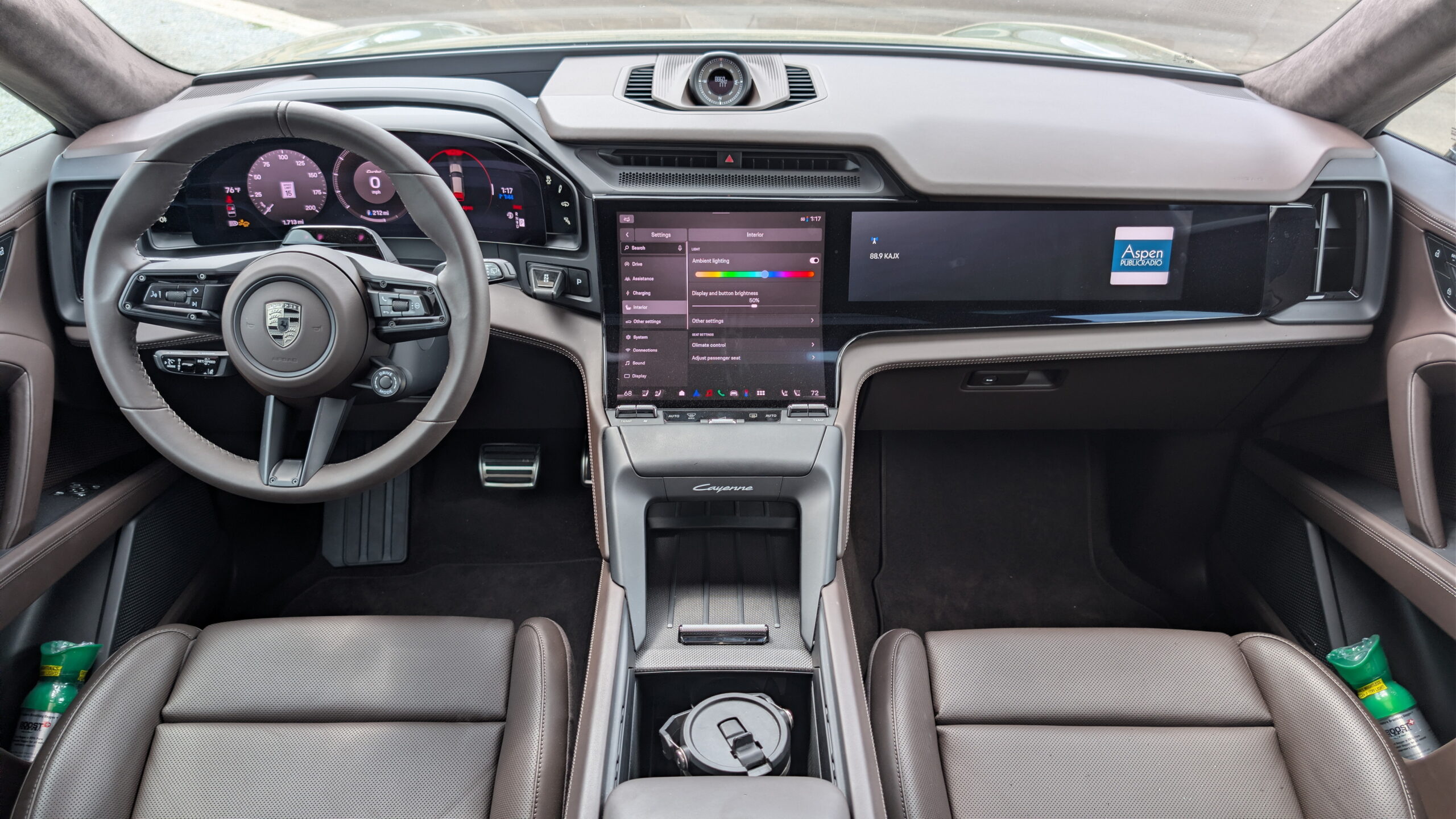
There are plenty of nods to the original Cayenne inside. The high center tunnel is still there. The steering wheel is recognizably Porsche. The seating position remains appropriately sporty for a Porsche, not just an SUV. It’s capable of settling in quite low, and that’s a big win. The chairs could plausibly come from one of Porsche’s sports cars, excluding the most hardcore GT models. They are supportive, comfortable, and genuinely attractive. The dashboard itself is a different deal entirely.

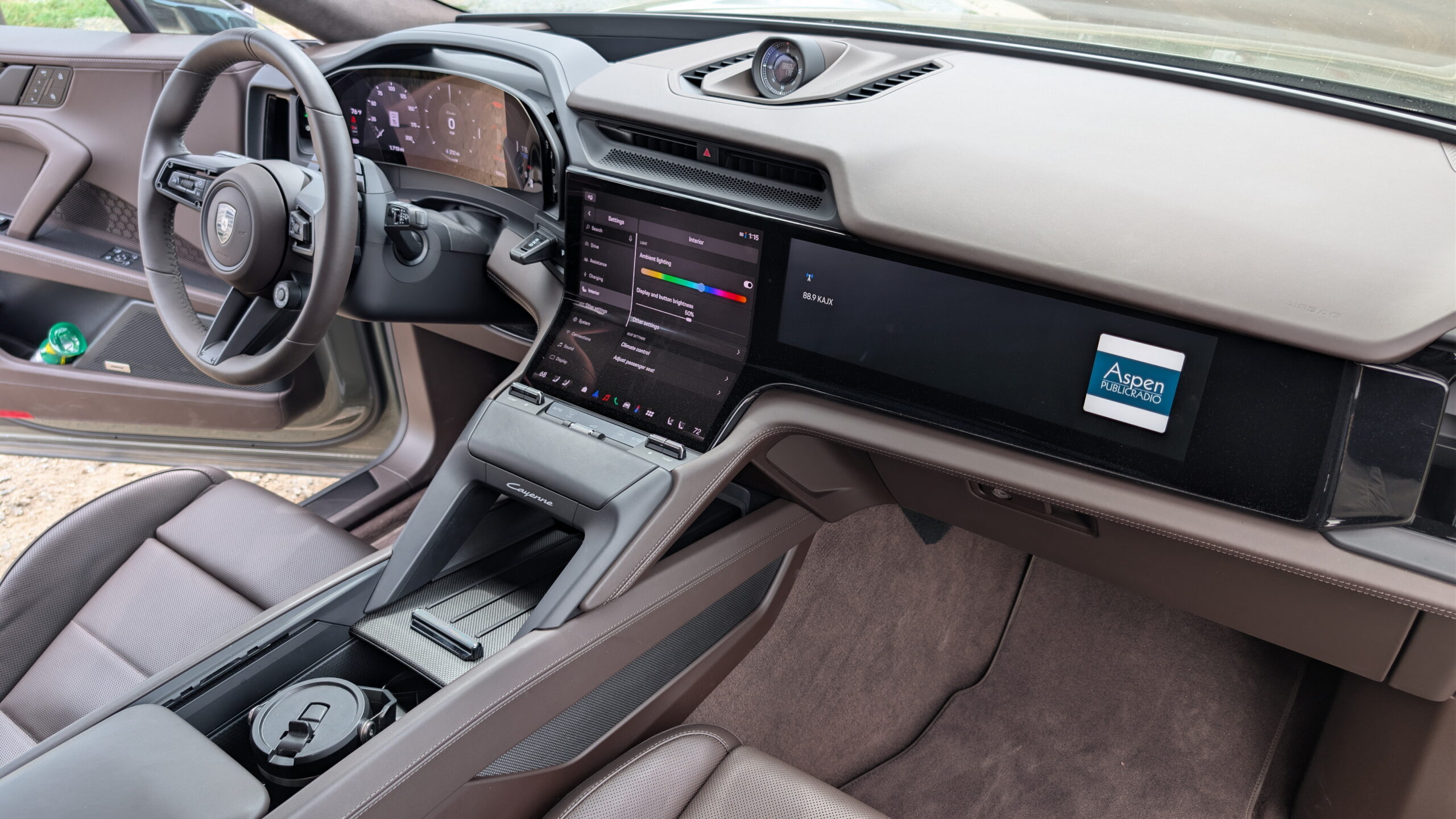
The centerpiece is Porsche’s curved Flow Display, which stretches down from the center stack toward the physical climate controls. It looks theatrical but is actually very functional in practice. The wrist rest below it enables genuinely easy use as the controls typically sit on the lower portion of the screen while the upper level shows the occupants what they’re managing. Many automakers expect drivers to operate giant touchscreens with one hand floating in mid-air. The wrist rest fixes that issue. 

Some buyers will absolutely decide there is too much screen here. They will not be wrong. In 10 years, this cabin could look dated in the same way early digital dashboards eventually do. Or it could develop the occasional electrical gremlin that turns its futuristic charm into a very expensive service appointment.

 Porsche’s 1,139-HP Cayenne Turbo Electric Is A Supercar In Family-SUV Clothing
Credit: Stephen Rivers for Carscoops

Right now, though, it feels appropriately over the top. The optional passenger display is one of the more feature-rich units in the business, and it reacts quickly enough that it does not feel like a tablet trapped in a dashboard. Users can connect bluetooth headphones, watch YouTube, and other things while their phone charges on the wireless dock in the console. 

Porsche also put the physical volume control in the middle of the climate controls, where the passenger can reach it without leaning across the cabin. More automakers need to figure this out. There is no reason the passenger should need to reach toward the driver’s side for a knob when the driver already has audio controls on the steering wheel.

\\\\\\\\\\\\\\\\\\\\\\

Credit: Stephen Rivers for Carscoops

The seats, upholstery, and major touchpoints feel appropriately expensive. The physical switchgear works well and provides a really nice tactile sensation during use. Some of it feels a little underwhelming, perhaps with its flat black color, but it should age well. The rear seats aren’t what I’d call spacious, but at six-foot-six, I still fit back there without feeling cramped. The seats themselves also offer quite a bit more lateral bolstering than just about everything else on the market. More performance-slanted SUVs should take note. 

Finally, the cargo space is genuinely useful. The Turbo model offers 26.4 cubic feet of space, while the Base and S versions offer 27.6 cubic feet. The Coupe models see a significant drop-off to 18.9 for Base and S and just 17.7 for the Turbo. 

Range And Charging

 Porsche’s 1,139-HP Cayenne Turbo Electric Is A Supercar In Family-SUV Clothing

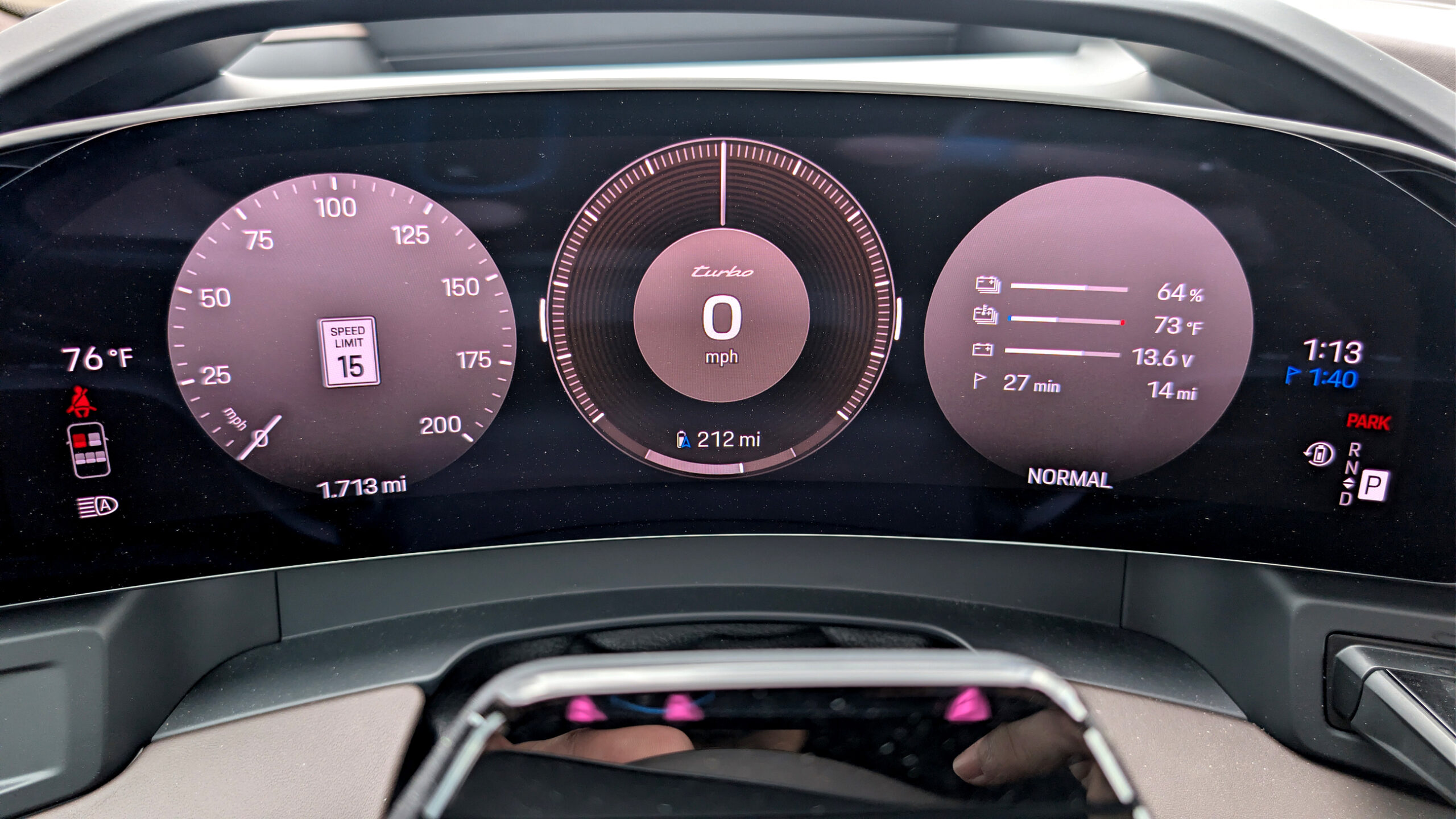
The Cayenne Turbo Electric is EPA-rated for 298 miles of range, or 303 miles with its range-oriented tire. That is fine. Not great, not embarrassing, just fine. The base Cayenne does better at 317 miles, while the Cayenne S is rated at 299 miles. Those are respectable numbers, but the Lucid Gravity makes the Porsche’s range look merely ordinary with up to 450 miles in Grand Touring form.

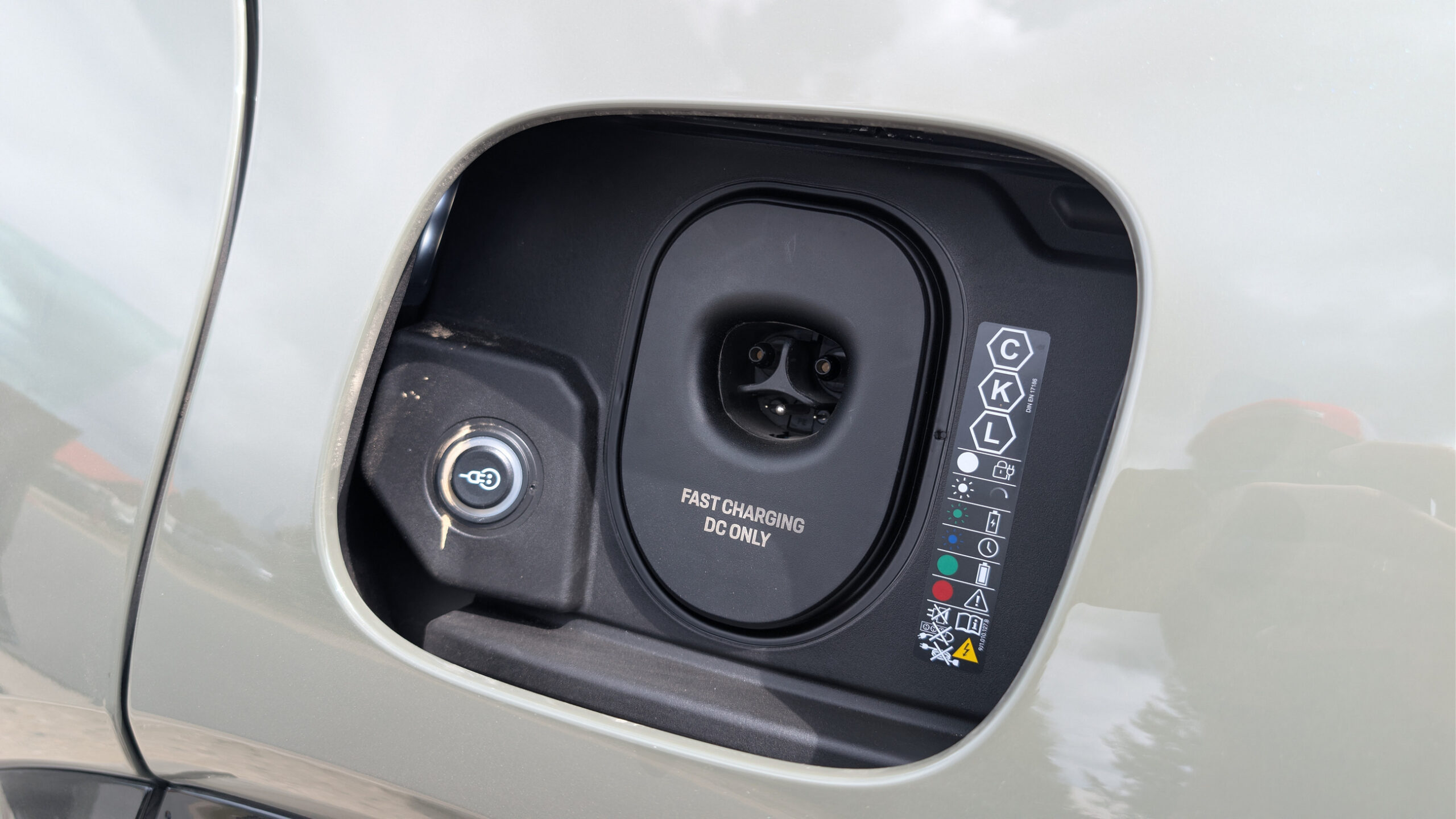
Where Porsche fights back is charging. Its 800-volt architecture can accept up to 400 kW under ideal conditions, allowing a 10-80 percent charge in as little as 16 minutes. That requires the right charger and the right battery conditions, obviously, but the capability matters. The Cayenne is built for drivers who will use it hard and cover long distances, not just people who want a fast commute appliance.

Driving Impressions: A Serious Testing Space

 Porsche’s 1,139-HP Cayenne Turbo Electric Is A Supercar In Family-SUV Clothing

Speaking of driving hard over long distances. Of all the places to test an EV, several mountain passes in the Colorado Rocky Mountains aren’t what most would consider ideal. After all, range is heavily affected by the environment, and climbing can diminish it quickly. Despite that, Porsche brought us out to Aspen, Colorado, to test these cars and then sent us on a 234-mile trek through Crested Butte and Buena Vista as well as over Independence and Cottonwood Pass. 

Driving the Turbo variant, with up to 1,139 hp (850 kW) when using launch control, the most immediate sensation is just how comfortable, quiet, and composed the car feels. Thanks to the active suspension, the Cayenne Turbo is almost always adjusting to suit the moment. By that, I mean that it has features that attempt, and almost always succeed, in countering any forces that a lesser SUV would feel under normal driving actions. 

 Porsche’s 1,139-HP Cayenne Turbo Electric Is A Supercar In Family-SUV Clothing

Under medium acceleration, the rear suspension actually lifts up very gently while the front lowers to keep the body level and cancel out the nose lift that is typical in just about every other vehicle, period. On braking, the opposite happens as the nose lifts rather than dips. In turns, the outer suspension lifts and the inner lowers. 

This is what Porsche called “helicoptering,” and while it sounds like a party trick, it basically eliminates the sometimes jarring feeling that an EV can create with its instant torque and regen. It also never makes the car feel disconnected, numb, or artificial, which could be the most impressive bit of that technology. 

 Porsche’s 1,139-HP Cayenne Turbo Electric Is A Supercar In Family-SUV Clothing
Credit: Stephen Rivers for Carscoops

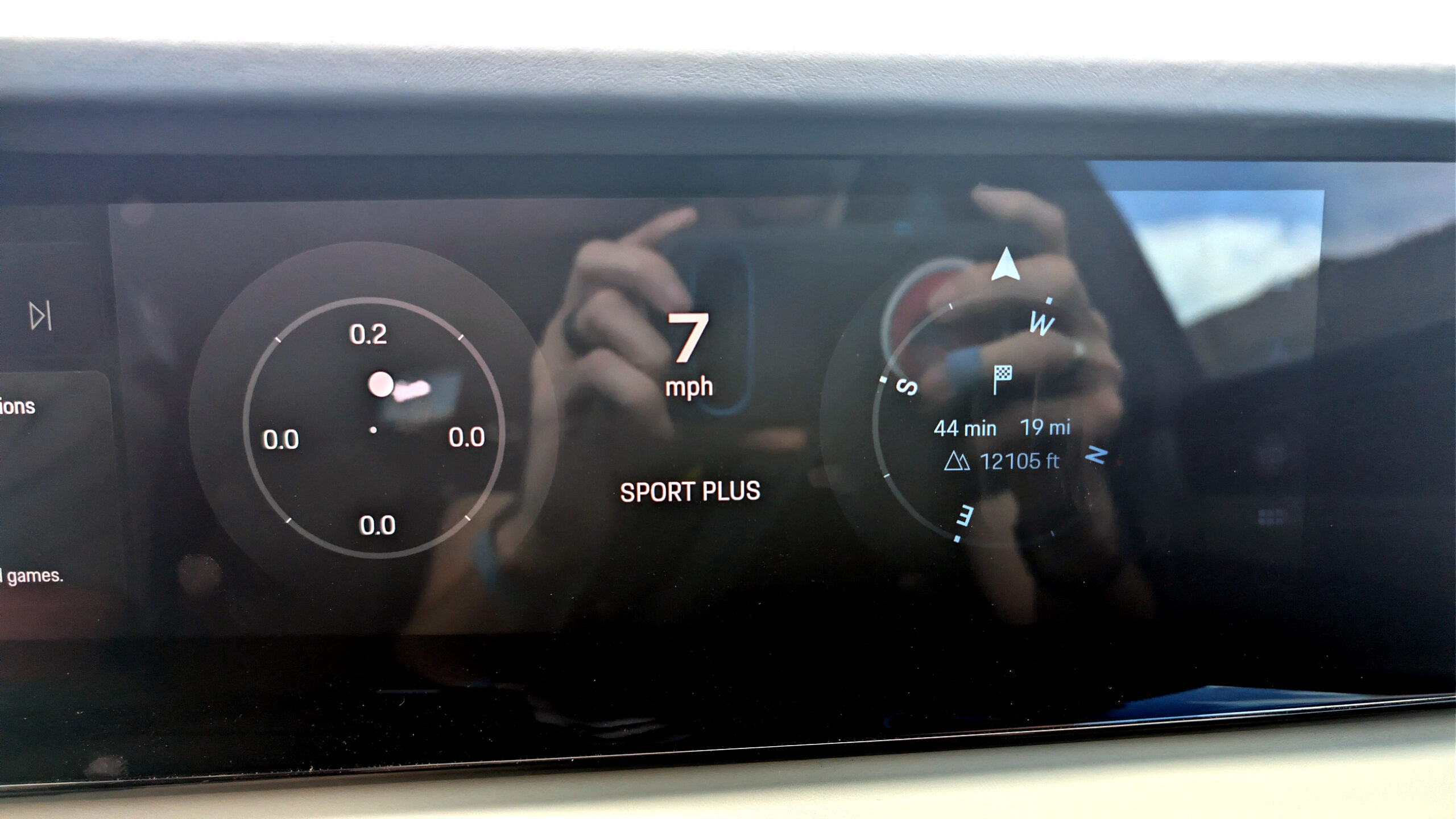
Then, there’s the real party trick in this SUV: its ability to go from stately five-passenger luxury cruiser to an absolute maniac. Spin the dial into Sport Plus, come to a stop, mash the brake, then the accelerator, let go of the brake, and it’ll do 0-60 in the real world in 2.4 seconds. Importantly, Porsche claims that figure, but we tested it on a real road literally less than a minute after driving on gravel, and it delivered a 2.5-second 0-60 time that registered as 2.3 when subtracting rollout. 

Porsche tells us it managed its run on a prepared surface. Car And Driver recently managed 2.1 seconds, also on a prepared surface. We intentionally tested on a real road and are happy to tell you that this car will basically do its published number whether you’re at the track or not. Still, those numbers alone really cannot express properly just how insane that type of acceleration feels. 

 Porsche’s 1,139-HP Cayenne Turbo Electric Is A Supercar In Family-SUV Clothing

The Cayenne needed under 116 feet to go from not moving to highway speed. The feeling from the driver’s seat is akin to being shot out of a cannon at your local Six Flags. Perhaps the most impressive bit, though, is that it requires basically zero skill to pull this off. Hold the wheel straight, and the clever differentials and motors will ensure the car does the job. Don’t get me wrong. A car that requires the driver to have genuine skill to pilot it at the very edge is far more enjoyable and engaging, but if you want a car that helps someone with less skill to catch the bug for improving their own ability, this is a serious gateway drug. 

The fun doesn’t stop when the straight lines run out, though. When not using launch control, the car moves around with a constant 844 hp (630 kW) on tap. The roads we drove were about as curvy and elevation-varied as they get. The Cayenne never  ever felt overly heavy despite a curb weight similar to some full-size pickup trucks. In fact, the car feels much smaller than its wheelbase would suggest. 

 Porsche’s 1,139-HP Cayenne Turbo Electric Is A Supercar In Family-SUV Clothing

Then, there’s the braking situation. Porsche doesn’t offer one-foot driving. That singular statement is somewhat intentional. The brand wants to encourage engagement and the way this car brakes demonstrates that. Often, the transition from regen to friction braking can be jittery or jarring. In the Cayenne, it’s indistinguishable. That level of granular control feels like it’s a part of everything this SUV does. Rear-wheel steering makes the SUV feel more nimble both on mountain roads and in town when a slightly tighter turning radius can make a gigantic difference. 

The Base Cayenne with 435 hp (325 kW) doesn’t come with all the same party tricks. It lacks the active suspension, the active aero, and rear-axle steering. Still, it feels properly composed and quick. In one section with a Turbo version both ahead and behind us, it didn’t feel overpowered or incapable of managing serious pace with its more powerful siblings. 

One more note. Porsche will sell the Cayenne with an off-road package and while we didn’t truly test it off-road, we did take it on several dedicated gravel roads where it continued to feel composed and confidence-inspiring. For those who want or need it, the SUV can tow 7,716 pounds (3,500 kg). 

Competition

 Porsche’s 1,139-HP Cayenne Turbo Electric Is A Supercar In Family-SUV Clothing
Credit: Lucid

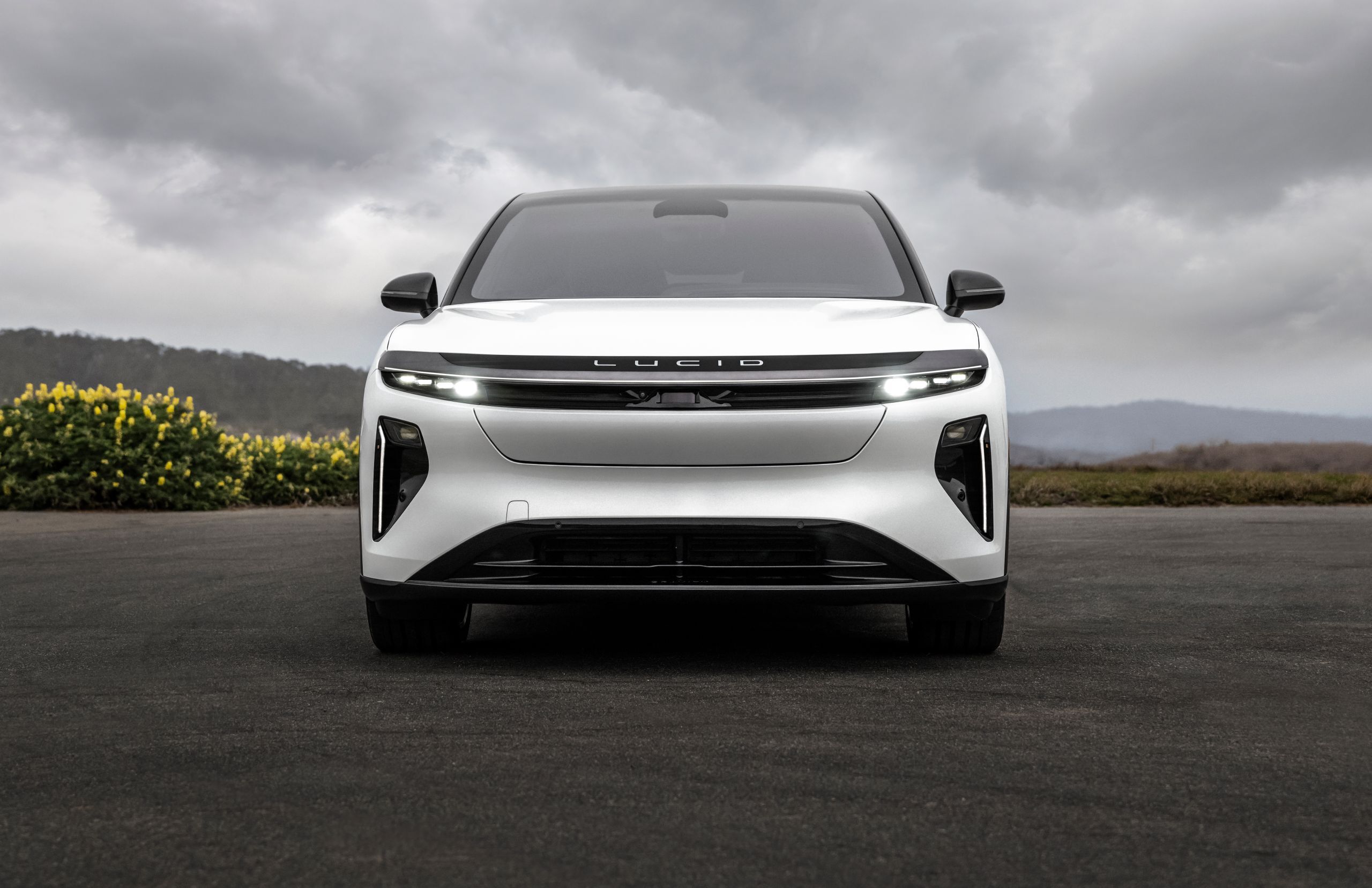
The Lucid Gravity is the Cayenne Electric’s biggest problem. It starts at $79,900 in Touring form, while the 828-hp Grand Touring starts at $98,900 and promises as much as 450 miles of range. Even the new 1,070-hp GT-S starts at $125,900, hits 60 mph in 3.1 seconds, and offers room for up to seven people along with a claimed 120 cubic feet of cargo space.

The Lucid cannot match the Cayenne Turbo’s 2.4-second sprint, nor does it have the same decades-long performance pedigree. But it makes a far more convincing case as the one EV in a well-off family’s garage that can genuinely do everything. It is quicker than almost anything needs to be, dramatically roomier, and better suited to long trips. Porsche has the badge, the chassis, and the more compelling driving experience. Lucid has the more rational argument.

\\\\\\\

Cadillac’s Vistiq makes a different kind of case. It starts at $77,395, offers three rows, up to 305 miles of range, 615 hp, a 3.7-second sprint to 60 mph, and standard Super Cruise. It is nowhere near as athletic or outrageous as the Cayenne Turbo, but it does much of the luxury-EV job for a lot less money. The Volvo EX90 takes an even calmer route. It is a safety-first, three-row family hauler with up to 305 miles of range and, in Twin Motor Performance form, 670 hp. Neither will tempt someone looking for a Porsche sports car in SUV form, but both make a strong argument for spending less.

Before BMW pulled it from America earlier this year, the iX was the closest traditional German alternative, particularly in M70 guise. The replacement is the new iX5, though Americans have to wait twice over, once for its Stateside launch next year, and again for the hotter M Performance and full-fat M versions, since the launch car tops out at 570 hp in iX5 60 AWD form. Mercedes’ EQS SUV leans harder into quietness and comfort. Both are good luxury EVs. None of these, though, feels as if they was engineered by people who spent their lunch breaks figuring out how to make a 5,860-pound SUV behave on a mountain road.

Verdict: A Porsche First, An EV Second

 Porsche’s 1,139-HP Cayenne Turbo Electric Is A Supercar In Family-SUV Clothing
Credit: Stephen Rivers for Carscoops

The Cayenne Turbo Electric does not make physics disappear. It is still enormously heavy, very expensive, and only fine when it comes to range. Its cabin also leans heavily into screens at a time when some buyers are already suffering from digital fatigue. And as impressive as the whole thing is, Porsche cannot ignore the ugly depreciation story surrounding some of its other EVs.

But it absolutely feels like a Porsche.

That might sound like faint praise in a vehicle with 1,139 hp, but it is not. Making an EV absurdly fast is easy compared with making one feel engaging, predictable, and genuinely enjoyable on a road that does not point straight ahead. The Cayenne manages that trick. It has the acceleration of a supercar, the composure of a luxury SUV, enough off-road ability to be more than a pavement princess, and the sort of granular brake and chassis control that makes driving it hard feel rewarding rather than intimidating.

 Porsche’s 1,139-HP Cayenne Turbo Electric Is A Supercar In Family-SUV Clothing

No, it probably will not rewrite the rulebook in quite the same way the original Cayenne did. The electric-SUV market is too crowded, and too good, for that. But Porsche has built one of the first electric SUVs that feels like it has a legitimate reason to exist beyond its powertrain.

The harder question is whether buyers will pay $110,000 – $200,000 for it—and whether they will still want to own it once the newness wears off. That part isn’t up to Porsche’s engineers anymore, but regardless of what happens next, they should be proud of what they’ve created.

 Porsche’s 1,139-HP Cayenne Turbo Electric Is A Supercar In Family-SUV Clothing
Photos Stephen Rivers / Carscoops

We Drifted Zeekr’s Lineup On Ice, And The Cheapest One Surprised Us

PROS ›› Luxurious, extremely powerful, bold looks
CONS ›› No brand cache, unknown prices, heavy

We’ve seen several Chinese car brands come and go over the past few years, failing to crack the ultra-competitive market in their home country or overseas. It’s a cut-throat industry, and new brands have to nail the performance, safety, technology, and practicality requirements of car buyers, all while delivering at a price point that most Western legacy brands couldn’t dream of matching.

Among those Chinese brands that appear to have proper staying power is Zeekr. The company was founded just five years ago as one of Geely’s EV- and plug-in-hybrid-focused luxury brands, and has already made aggressive expansions outside China into countries across Europe, Asia, Australia, and New Zealand.

Review: 2026 Zeekr 7X Performance Is Proof That Tesla Isn’t The Benchmark Anymore

Earlier this year, we spent a few days with the superb Zeekr 7X, finding it to be not only a real Tesla Model Y rival but also a legitimate competitor to the BMW iX3, all at a far lower price. For as impressive as the 7X is, Zeekr has several even more enticing products just around the corner, and we recently put a handful of them to the test, on snow and ice, no less.

\\\\\\\\

The focus of this preview was to get behind the wheel of the Zeekr 8X and 9X, two uber-luxurious SUVs that will land in Australia next year. Aimed at the BMW X5 and BMW X7, respectively, they both have the potential to shake up the luxury SUV market. We also spent some time behind the wheel of the smaller Zeekr X, the new 7GT shooting brake, and the brand’s wild 001 FR.

Zeekr 8X

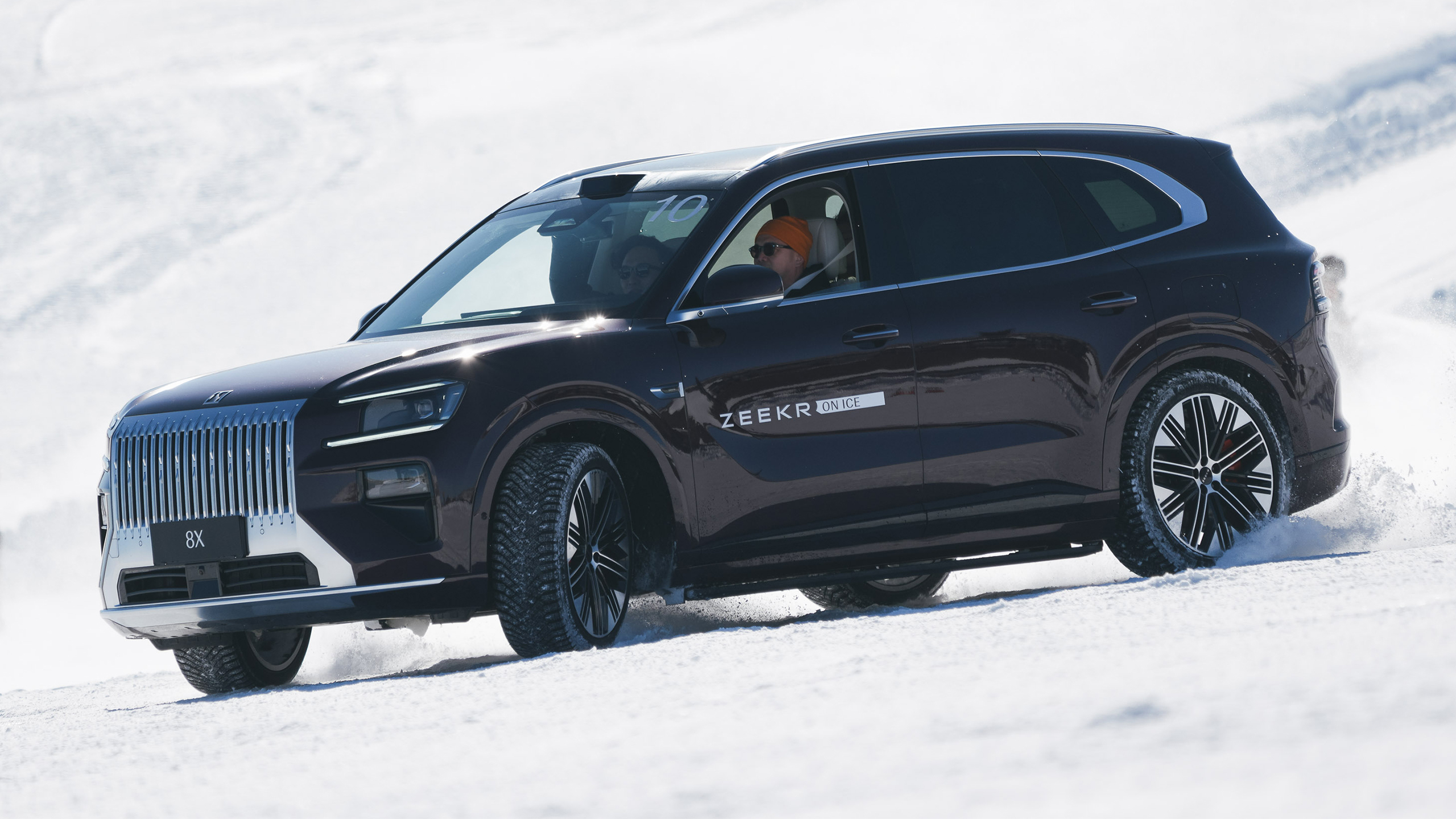
Due to time constraints, we didn’t get to drive the 8X, but we did get an up-close look at it and thoroughly explored the interior. It became immediately apparent that legacy brands like BMW, Mercedes-Benz, and Audi should be worried.

 We Drifted Zeekr’s Lineup On Ice, And The Cheapest One Surprised Us

Measuring in at 5,100 mm (200.8 inches) long, 1,998 mm (78.7 inches) wide, and standing 1,780 mm (70.1 inches) tall with a 3,069 mm (120.8-inch) wheelbase, the 8X is roughly 170 mm (6.7 inches) longer than an X5 and has 94 mm (3.7 inches) extra length between the wheels. It’s pretty big then, and it’s available with two or three rows of seats.

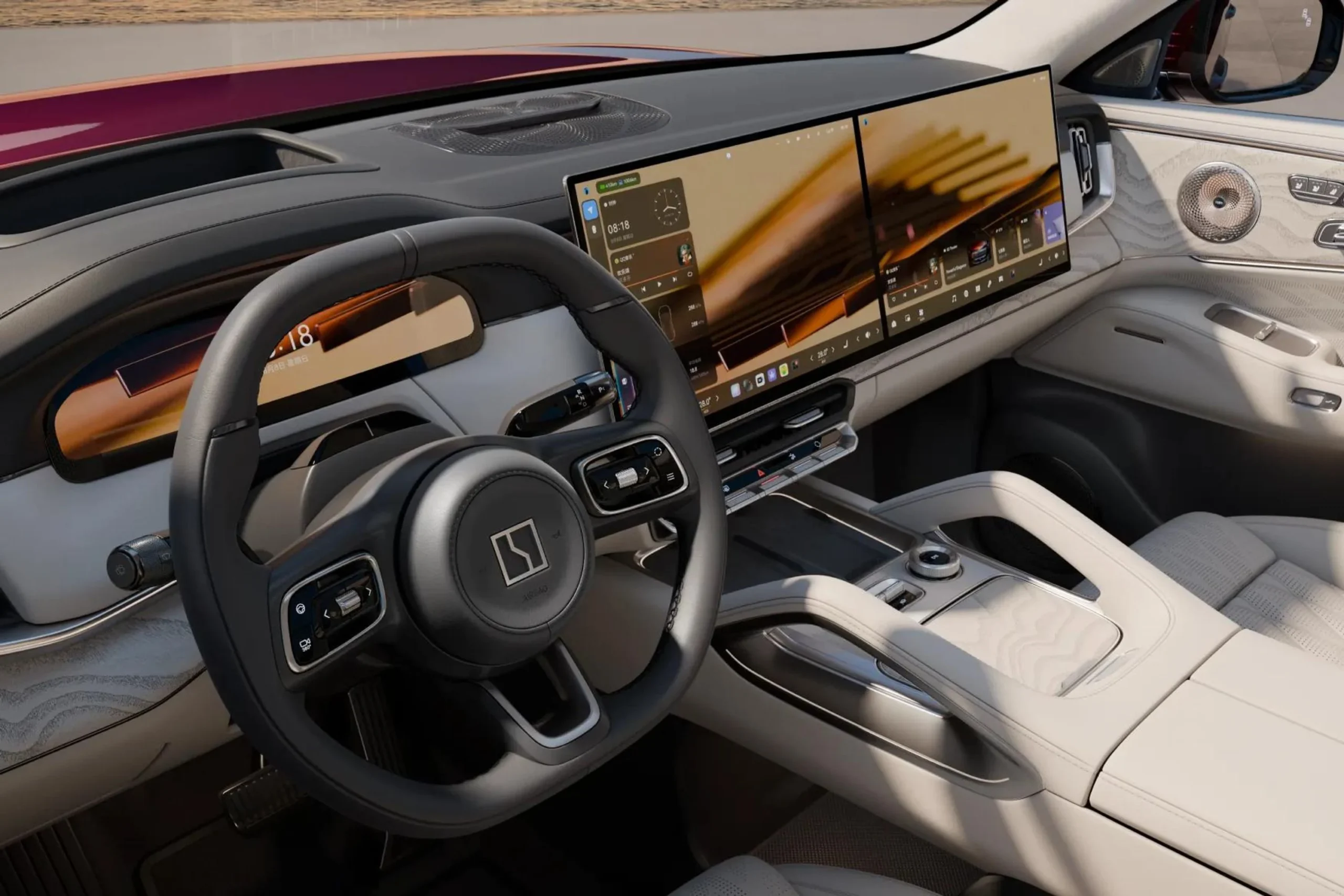
I’ve said it before, and I’ll say it again – Chinese brands have shattered the illusion that you need to pay premium money to get a high-class, luxurious interior. Zeekr says it wants to combine BMW’s luxury with Tesla’s technology. In the case of the 8X we experienced, it’s noticeably more luxurious than any X5, with premium leather surfaces, plenty of metallic touches, a suede headliner, and massive dual screens across the dashboard. In China, car buyers love having a big screen for the front-seat passenger, although we’re not convinced Australian buyers will be quite as receptive. The premium feel continues into the rear with plush seats, tables folding out from the front seats, and Mercedes-style seat adjustments on the doors.

\\\\\\\\\\\\\\\\\\

Then there’s the performance. Local specifications haven’t been confirmed, but in China, the 8X uses a 2.0-liter turbocharged four-cylinder engine paired with either two or three electric motors. The dual-motor version delivers 660 kW (885 hp), while the tri-motor has 1,030 kW (1,381 hp) and 1,410 Nm (1,039 lb-ft) of torque, and offers 55 kWh and 70 kWh batteries.

The Chinese Cullinan

\\\\\\\\\\\\\

Photos Brad Anderson/Carscoops and Zeekr Australia

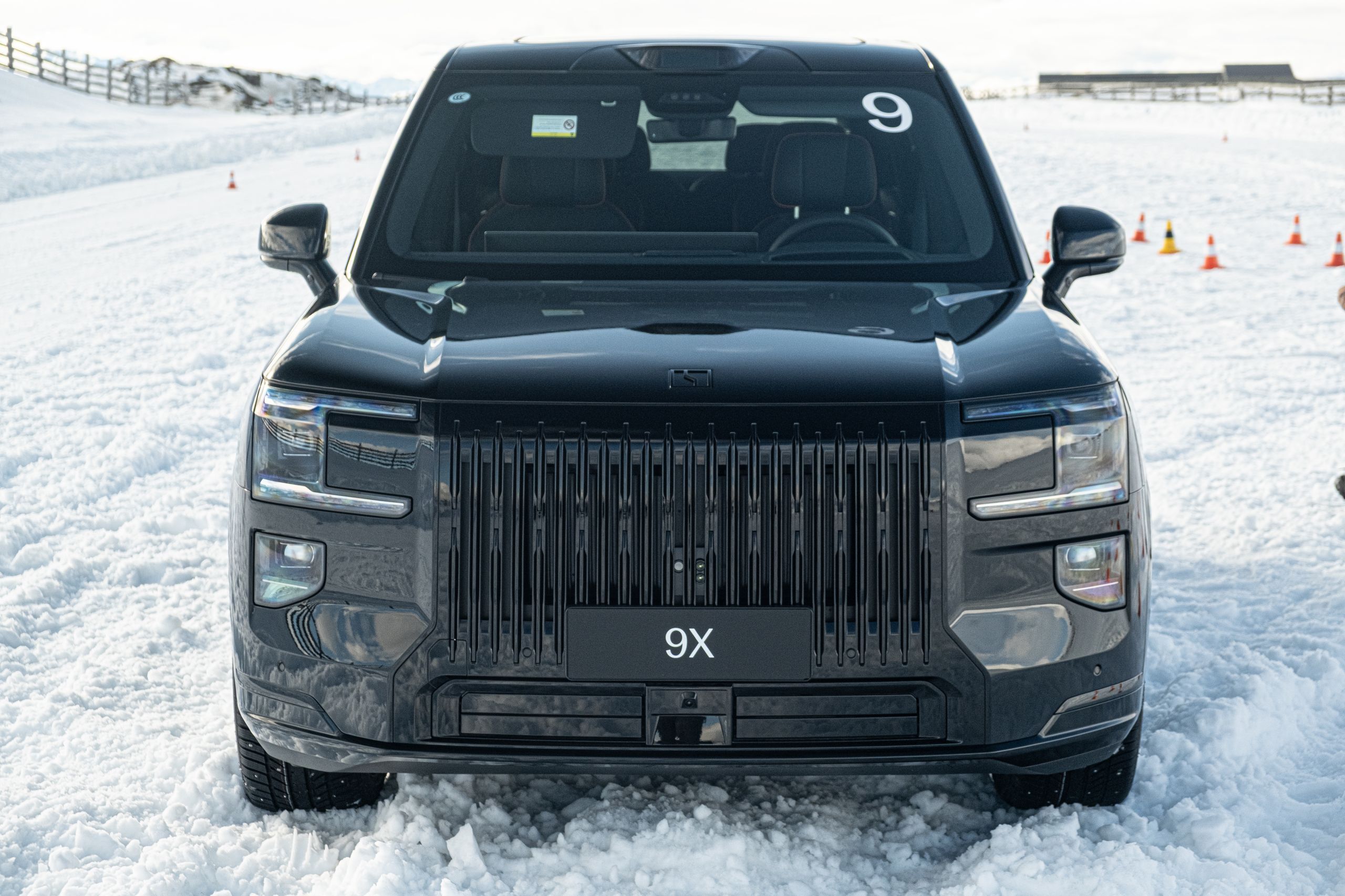
The Zeekr 9X takes things to another level entirely. It’s absolutely massive, measuring 5,239 mm (206.2 inches) long and featuring a 3,169 mm (124.7-inch) wheelbase. In Ningbo, China, where Zeekr is based, it’s been nicknamed the ‘Hangzhou Bay Cullinan,’ and since launching in late 2025, more than 62,000 examples have been sold. Not only will it soon land in Australia, but it’s also heading to Europe.

Like the 8X, the 9X uses Zeekr’s advanced new 900-volt electrical architecture. It is also available with 55-kWh or 70-kWh batteries and is configured as standard with a 2.0-liter turbo and either two or three electric motors. The example we drove was the tri-motor version, delivering a hypercar-rivaling 1,030 kW (1,381 hp) and 1,410 Nm (1,039 lb-ft) of torque. Zeekr isn’t saying whether or not Australia will get this version, but in Europe, power has been capped at 660 kW (897 hp), so something similar may be done Down Under.

 We Drifted Zeekr’s Lineup On Ice, And The Cheapest One Surprised Us

While I did drive the 9X in the snow, it was only for a few minutes, and objectively, it’s difficult to comment on how it performs based on that. On first impressions, it doesn’t feel too big, nor does it feel overpowered. We’re eagerly awaiting its local arrival to give it a proper test. For now, I can say it feels surprisingly dynamic given its size and weight, is happy to kick out its tail, and is easy to hold powerslides with.

Beyond the driving, or lack thereof, the 9X feels absolutely deserving of its nickname. It feels more special inside than an X7 and is more akin to a Mercedes-Maybach GLS in fit, finish, and choice of materials. As one industry colleague told me, it even seems to out-Cullinan a Cullinan, and that’s high praise. Whether or not it’ll stand the test of time like a Rolls-Royce remains another question, of course.

\\\\\\\\\\\\\\\\

Photos Brad Anderson/Carscoops and Zeekr Australia

The front half of the cabin is great, with a digital instrument cluster and a central infotainment screen as standard, although it is also offered in China with a passenger display. Taking lessons from the 007 sedan, which was almost entirely devoid of physical buttons, Zeekr has ensured that all subsequent models, including the 9X, have plenty of real switches, dials, and knobs.

The second row is the standout, featuring a pair of massive captain’s chairs similar to those in Zeekr’s 009 minivan. With heating, ventilation, and massaging functions, the 9X has them all, and the seats can even spin around 180 degrees.

Drifting On Snow

While I’ve driven on snow before on ski trips and the like, I’ve never had the opportunity to push EVs and plug-in hybrids with supercar power to their limits on snow and ice before. All the cars we tested were equipped with studded winter tires, but, as you’d imagine, they were all happy to kick out their tails with a healthy dose of throttle.

\\\\\\\\\\\\\\\

Photos Brad Anderson/Carscoops

I spent a good part of the session on snow behind the wheel of the refreshed 2026 Zeekr X, the company’s entry-level SUV. In all-wheel-drive configuration, it uses a 66 kWh NMC battery and has a pair of electric motors with 365 kW (489 hp) and 573 Nm (423 lb-ft) of torque. On the road, it can apparently hit 100 km/h (62 mph) in just 3.7 seconds.

While I wasn’t able to put the straight-line acceleration to the test, I was able to explore the X’s dynamics through a series of oversteer exercises and slaloms that were set up for us. Typically, the X doesn’t let owners completely turn off the traction and stability control systems, but the ones we tested had been tweaked to shut them down.

 We Drifted Zeekr’s Lineup On Ice, And The Cheapest One Surprised Us

Yanking hard on the steering wheel and pinning the accelerator is enough to send the X into easily controlled drifts. Much to my surprise, while enjoying some sideways action in the X, I never yearned for driving something with a combustion engine.

The Zeekr 7GT is one of the company’s most exciting new models. In July, it and the BMW iX3 became the first two cars to earn five-star safety ratings under Euro NCAP’s overhauled testing procedures. While we spent plenty of time driving it, we can’t yet comment on how it feels. Another Zeekr product I can comment on is the 001 FR.

Hypercar Power In A Sedan

 We Drifted Zeekr’s Lineup On Ice, And The Cheapest One Surprised Us

The 001 was Zeekr’s first model, a sleek shooting brake originally designed for the Lynk & Co brand but later adapted for Zeekr. Because of this, it’s at odds with the designs of other Zeekr models, instead sporting the design language of Lynk & Co. In FR guise, it’s an animal.

The car is fitted with a 100 kWh CATL battery and has four electric motors, combining to produce 1,248 hp that’s enough to send it to 62 mph (100 km/h) in just 2.02 seconds. It could be considered Zeekr’s answer to the Tesla Model S Plaid, though it’s arguably even more track-focused, with a host of carbon-fiber parts and huge AP Racing brakes.

Despite its extraordinary power, the 001 FR doesn’t feel intimidating, at least not on snow. It’s far more rear-biased than the likes of the X, 8X, and 9X, only requiring small throttle inputs to kick out the tail and hold slides.

Final Thoughts

\\\\\\\\\\\\

Zeekr Australia

Regardless of how you may feel about the age of electrification, there’s no denying we are living in very exciting times for the auto industry. In America, the EV evolution led to the creation of exciting firms like Rivian and Lucid, both of which have proven that a brand doesn’t need a century of history to develop, manufacture, and sell class-leading vehicles.

The same thing has happened in China. Thanks to huge investments from conglomerates like Geely and Chery, as well as juggernauts like BYD, the era of high-performance, ultra-luxurious vehicles being attainable only by the rich is long gone. Zeekr is still in its infancy, and there’s no telling where it’ll be in a decade, or two, or three decades. What it’s been able to build in the last five years is impressive, and vehicles like the 8X and 9X suggest the future is bright.

Whether Zeekr can attract Western buyers from established premium brands remains to be seen. In the segments where the 8X and 9X will compete, buyers of vehicles from rival brands like BMW, Mercedes, Audi, Land Rover, Bentley, and Rolls-Royce are fiercely loyal to what they know. If Zeekr can get prices right and deliver good after-sales service, there’s little stopping it from achieving the same success it’s enjoying in China elsewhere.

\\\\\\\\\\\\\\\\\\\\\\\\\\\\\\\\\\\\\\\\\\\\\\\\\\\\\\\\\\\\\\\\\\\\\\\\\\\\\\\\\\\\\\\

Zeekr Australia

❌
❌