Normal view

There are new articles available, click to refresh the page.
Before yesterdayMain stream

This Bonkers EV Drove 626 Miles And Still Had Juice Left In The Battery

  • Renault’s Filante Record 2025 topped 1,000 km at highway speeds.
  • It uses a Scenic E-Tech sized battery from Renault’s family EV.
  • Ultra-low drag and weight make it a testbed for future EVs tech.

Renault wrapped up 2025 with an impressive achievement, pushing the outer limits of electric vehicle efficiency. Its ultra-aerodynamic single-seater prototype managed to cover 626 miles (1,008 km) on a single charge. Even more striking, it did so in less than 10 hours, maintaining an average speed of 102 km/h (63 mph) throughout.

More: French Carmaker Unlocks Its Secret Design Vault And The Scale Models You Can Buy Are Wild

After the run, the EV still had 11 percent of its battery charge remaining. According to the company, that would have been enough for another 75 miles (120 km) at the same average speed, potentially extending the total range to 673 miles (1,083 km).

A Prototype With Unexpected Stamina

The car in question is the Filante Record 2025, a purpose-built concept that made its first appearance back in January. Originally, Renault aimed to attempt the record in July, but meeting the aerodynamic targets proved trickier than expected.

By October, the prototype was ready. Then weather in France got in the way, delaying things again. Eventually, the team relocated to Morocco and ran the test on December 18 at the UTAC high-speed proving ground, where conditions finally cooperated.

\\\\\\\\\\\\\\\

The Renault Filante Record 2025 (above) compared to the original prototype (below).

 This Bonkers EV Drove 626 Miles And Still Had Juice Left In The Battery

The design draws inspiration from Renault’s past record-setters, notably the 1925 40 CV and the 1956 L’Étoile Filante. Even so, several elements from the original prototype had to be reworked in the wind tunnel to meet the strict aerodynamic targets.

More: This Renault Prototype Launches Drones And Could Save Your Life

Changes involved removing the futuristic LED lighting, reducing the number of air intakes, and refining the fender shapes. Still, key features remained intact: the extended hood, transparent canopy, aircraft-style tail, F1-style driving position, and the ultraviolet-blue paint finish all carried through to the final version.

\\\\\\\\\\\\\\\\

The engineering effort went beyond just slicing through air. Renault also aimed to reduce rolling resistance and weight. To do this, the team used carbon fiber, aluminum alloys, and 3D-printed Scalmalloy components.

Michelin provided a bespoke set of low-drag tires, while the car’s steering and braking systems operated entirely by wire.

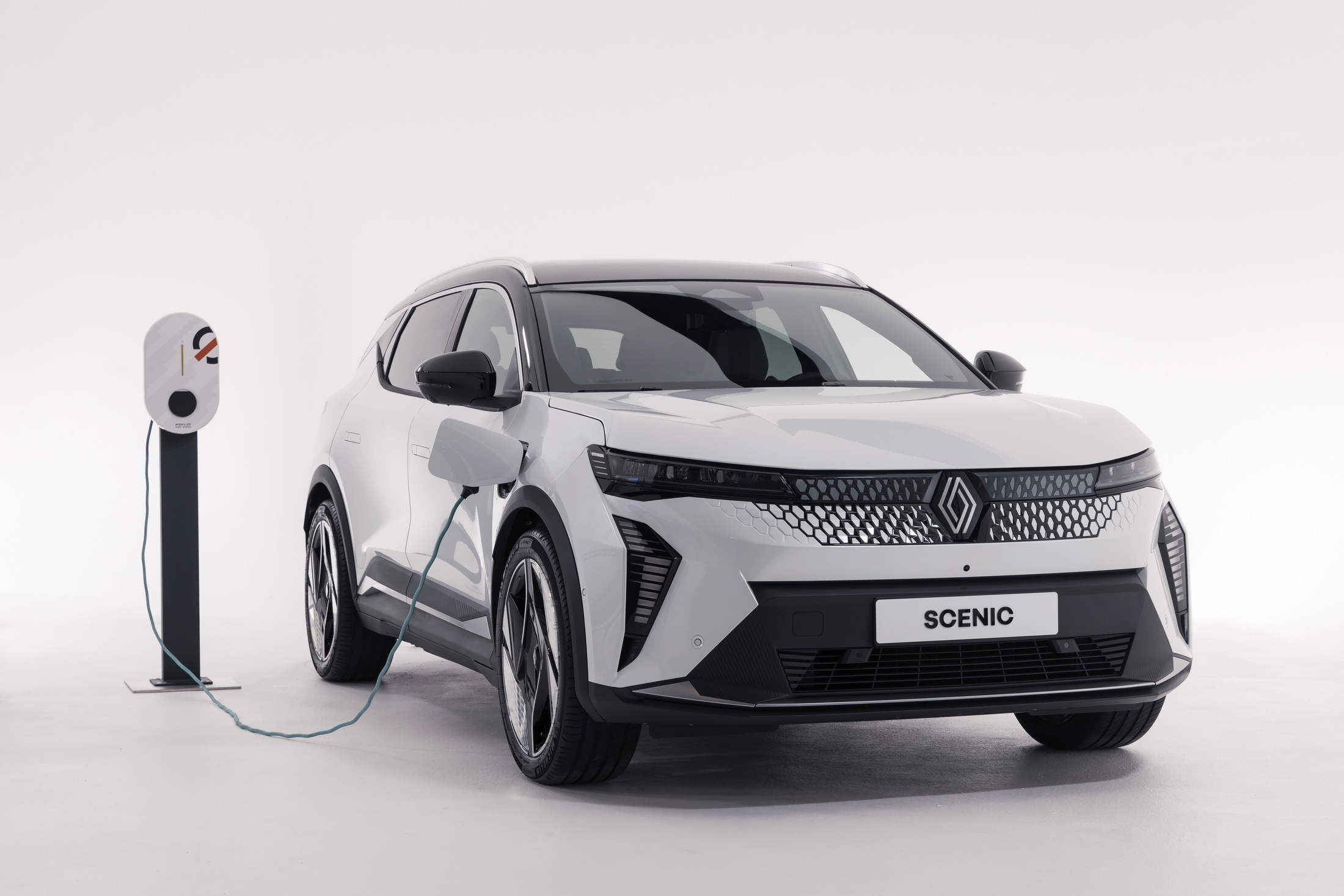
French firm Ligier handled the platform, chassis, and carbon tub, integrating an 87 kWh battery pack. For comparison, that’s the same capacity as the battery in the Scenic E-Tech, Renault’s midsize electric crossover.

The Impressive Record

On record day, three drivers rotated in and out of the single seat, covering 239 laps of the 2.6-mile (4.2 km) Moroccan circuit over 10 hours. There were no charging stops, just brief halts for technical checks and driver changes. That consistency helped maintain the 102 km/h (63 mph) average.

More: One Of Renault’s Hottest Badges May Be Coming Back Sooner Than You Think

The car posted an energy consumption figure of 7.8 kWh/100 km. That’s nearly half the official WLTP figure for the Scenic E-Tech, which uses the same battery and consumes 14.1 kWh/100 km under standard testing. And unlike those lab figures, this test was run at real-world highway speeds.

\\\\\\\\\\\\\\\\\\\\\\\\

Renault developed the Filante Record 2025 not only to celebrate its legacy of record-breaking prototypes, but also to explore ways of improving efficiency in production EVs, particularly for long-distance driving.

The hope is that insights from the project will carry over to future Renault models, helping drivers spend more time on the road as advances in battery and motor technology continue to evolve.
\\\\\\\\\\\\\\\\\\\\\\\\\\\\

Renault

One Of Renault’s Hottest Badges May Be Coming Back Sooner Than You Think

  • Renault admits it could build a hybrid-powered RS model again.
  • The new Clio is seen as a prime candidate for RS revival.
  • RS brand was officially axed in favor of Alpine performance.

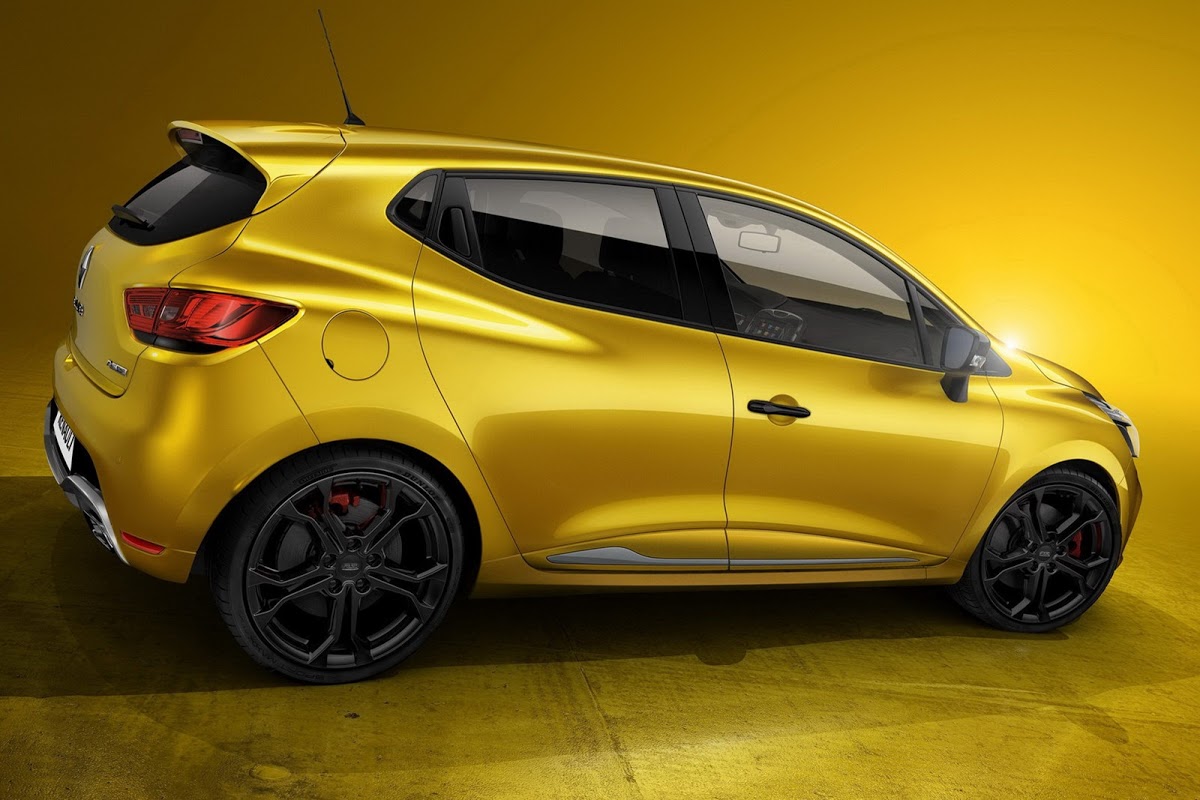
Renault may have wound down its RenaultSport division a little too soon. The decision to pull the plug on sporty models like the Megane RS and Clio RS wasn’t exactly met with cheers, and now there’s a hint it might not be permanent.

According to Renault’s global sales and operations director, Bruno Vanel, if there’s enough public appetite for a return, the RS badge could make a comeback.

Read: The World’s Favorite Renault Got Longer, Wider And Weirder

While recently speaking with Auto Express, Vanel confirmed that Renault has the technical resources on hand to resurrect a performance model, most likely in the shape of a new Clio RS. The brand’s existing portfolio of electric and high-power hybrid powertrains, he explained, includes hardware well-suited to a modern hot hatch.

Even though we’re sure many Renault enthusiasts would also love to see the Megane RS stage a comeback, that seems far more unlikely now that the Megane has morphed into an all-electric crossover.

In contrast, the new-generation Clio, unveiled just a few months ago, offers a more fitting foundation. The sixth-gen model arrived with a more aggressive design and enough visual punch to imagine it in RS trim. And crucially, it remains a hatchback.

 One Of Renault’s Hottest Badges May Be Coming Back Sooner Than You Think

“The good news is that we have the know-how internally to make such a car [a Clio RS],” Vanel told the magazine. “We also have hybrid powertrains; solutions to get high power with low CO2 emissions. This is really important now that we are more and more challenged on CO2.”

Vanel added that while there is no immediate plan to bring back the RenaultSport brand “for now,” he said that with enough interest, “maybe [Renault] can reconsider. We’ll wait a couple of months, and then we’ll think about it,” he added.

If Renault were to greenlight an RS version of the new Clio, it would most likely build on the current car’s hybrid system. In its range-topping E-Tech form, the Clio combines a 1.8-liter engine with an electric motor to produce 158 hp.

With some tuning, if that figure was lifted closer to 220 hp, it would position the Clio RS firmly into small hot hatch territory, largely matching the previous-generation on performance.

\\\\\\\\\\\\\\\\\

Source: Autoexpress

Ford Turns To French Carmaker To Revive Fiesta

  • Ford and Renault will collaborate on two new electric cars for Europe.
  • Renault 5 may inspire a new Fiesta in 2028, with a crossover to follow.
  • Both EVs will be built in France by Renault with unique Ford styling.

Ford has finally found a way back into Europe’s affordable small-car market by borrowing one of Renault’s smartest ideas.

Related: Renault Is Emptying Its Secret Vault And The Concept Cars Inside Are Unreal

The two automakers have announced a new strategic partnership that will see Ford launch at least two electric cars for Europe using Renault’s Ampr EV platform, the same architecture used in the Renault 4 and 5.

What’s Replacing the Fiesta?

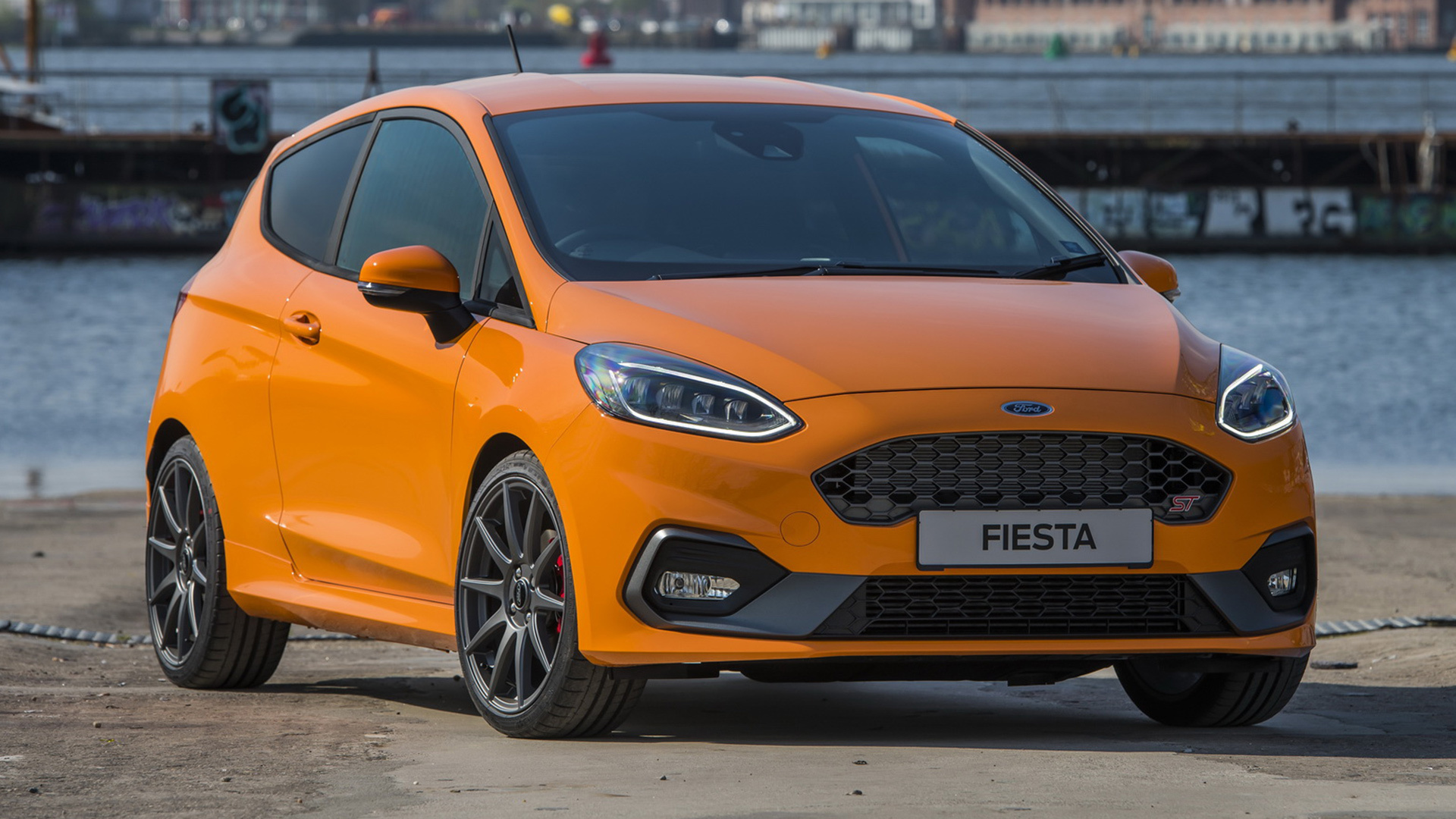
One of Ford’s upcoming EVs is expected to become a spiritual successor to the Fiesta, a car Ford unceremoniously killed off in 2023 after eight generations and nearly five decades.

The new electric supermini is due to arrive in early 2028 and will be built alongside the Renault 5 at Renault’s ElectriCity complex in Douai, France.

The second model will likely be a compact electric crossover based on the Renault 4, potentially replacing the Puma Gen-E somewhere down the line.

 Ford Turns To French Carmaker To Revive Fiesta
The discontinued Ford Fiesta.

Given Ford’s Explorer EV is based on VW’s ID.4 you might have expected Ford to borrow the upcoming ID.Polo and ID.Cross’s MEB platform for its new small cars, but instead it turned to Renault.

Crucially, Ford is insisting these won’t be lazy badge-engineering exercises. Unlike the new Nissan Micra, which is essentially a rebodied Renault 5, Ford says its new EVs will be “distinct Ford-branded vehicles” designed in-house.

Expect unique styling, bespoke interiors, and chassis tuning aimed squarely at delivering the driving feel Ford fans expect.

Under the skin, though, the shared EV hardware will be identical. That likely means front-mounted motors producing 121 hp (122 PS / 90 kW) in regular versions and 215 hp (218 PS / 160 kW) in a reborn Fiesta ST, plus battery options of 40 kWh and 52 kWh.

Can It Save Ford in Europe?

 Ford Turns To French Carmaker To Revive Fiesta
Renault

For Ford, time is of the essence. With Focus production ended, the Fiesta long gone and its Explorer and Capri electric SUV and crossover underperforming, the brand’s market share has cratered.

A Fiesta-sized EV priced close to the Renault 5’s expected €25,000 (£22k/$29k) mark could be exactly what Ford needs to regain relevance.

But a new lineup of subcompact EVs isn’t all we’ll see as a result of this partnership. The duo has also agreed to explore the possibilities of joining forces for new light commercial vehicles.

 Ford Turns To French Carmaker To Revive Fiesta
Renault

Renault’s New Electric Van Probably Looks Better Than Your Car

  • Renault has introduced the new Trafic E-Tech Electric.
  • It features 201 hp and two different battery packs.
  • The long-range variant can travel around 280 miles.

Renault has used Solutrans 2025 to introduce the new Trafic E-Tech Electric. It’s the company’s version of the Flexis Panel Van and the styling is virtually identical.

That being said, the latest variant features an illuminated Renault logo that is flanked by “light guides” and slender turn signals. They’re joined by low-mounted headlights and a familiar front bumper.

More: Renault And Volvo Joint Venture Unveils Three New Electric Delivery Vans

Since we’ve already seen the van before, we’ll briefly mention it has black plastic accents, a dynamic beltline, and asymmetrical rear doors. They’re joined by three dimensional taillights as well as large side doors that are designed to accommodate Euro pallets.

Two different versions will be available including an L1 that measures 191.7 inches (4,870 mm) long and has a cargo capacity of 180.1 cubic feet (5.1 cubic meters). The L2 has a 15.7-inch (400 mm) longer wheelbase and this enables it to hold up to 204.8 cubic feet (5.8 cubic meters) of cargo. Renault added both models are 74.8 inches (1,900 mm) tall, which enables them to access underground parking garages.

A Straightforward Interior

\\\\\\\\\

While cargo takes priority, the cockpit isn’t too shabby as it features three seats as well as a “tube-shaped dashboard.” They’re joined by a three-spoke steering wheel, numerous storage compartments, and Zeta blue-jean upholstery with grey accents and contrast stitching.

Buyers will also find a 10-inch digital instrument cluster and a 12-inch openR evo infotainment system, which is angled towards the driver. The latter features “tailored navigation that takes into account vehicle dimensions and load to avoid unsuitable routes.” There’s also an electric route planner, which suggests the best charging stops. Customers can also upgrade to Google built-in, which will be offered as an over-the-air on-demand feature.

Two Batteries With Up To 280 Miles Of Range

\\\\\\\\\\\\\\\\\

The Trafic E-Tech Electric rides on a skateboard platform and features a rear-mounted motor producing 201 hp (150 kW / 204 PS) and 254 lb-ft (345 Nm) of torque. It’s powered by two different battery packs.

The long-range battery will be available at launch and features a nickel manganese cobalt chemistry. It enables the van to have a range of around 280 miles (450 km) under the Worldwide Harmonized Light Vehicles Test Procedure.

Later on, Renault will offer an “urban-range” lithium iron phosphate battery. This variant promises to be affordable and capable of traveling nearly 217 miles (350 km) on a single charge.

 Renault’s New Electric Van Probably Looks Better Than Your Car

Buyers will also find 800V technology, which will enable the van to go from a 15% to 80% charge in approximately 20 minutes. They’ll be joined by Vehicle-to-Load (V2L) and Vehicle-to-Grid (V2G) capabilities.

Other highlights include a turning circle that is said to be equivalent to a Clio. The automaker is also aiming to use over 23% recycled materials on the van.

The Trafic E-Tech Electric will be built at the Sandouville plant, alongside the ICE-powered model. Production is slated to begin in late 2026 and the panel van will eventually be joined by chassis cab, platform cab, tipper, flatbed, and cargo box models.

 Renault’s New Electric Van Probably Looks Better Than Your Car

Renault’s Electric Megane Could Soon Burn Fuel Again

  • Renault developing hybrid powertrains for next Megane and Scenic by 2030.
  • Both models are electric-only now, but Megane sales remain below target.
  • Company favors a range-extender setup that never drives the wheels.

It’s been three years since Renault bravely reinvented its Megane and Scenic family models as EVs, and in another three years or so, the pair will shake things up again – this time by going back to petrol power.

More: The 4 And 5 Are Eating Megane Sales, But Renault Is Cooking Something

The next generation of both family EVs, due before the end of the decade, could offer a mix of fully-electric and hybrid powertrains, according to comments new Renault Group CEO Francois Provost made to media at last week’s Twingo launch.

What’s Next For Megane And Scenic?

“Bigger cars are one of our priorities,” new Provost told Auto Express magazine, subtly acknowledging that Renault’s electric push has worked well for the little 4 and 5, but less so on grown-up models like the Megane, which is struggling to find buyers.

“In the next mid-term plan we propose a new platform and solutions to continue our ambition to grow in the [compact] C-segment in the heart of Europe.”

That new platform will bring the next generations of the Megane and Scenic together with the next Austral, Espace, and Rafale, which are currently only available as hybrids.

Renault has no plans to abandon electric power for the Megane and Scenic, but will instead strengthen their appeal with more powertrain options to snare buyers still suspicious of anything without a gas tank.

 Renault’s Electric Megane Could Soon Burn Fuel Again

“We also think that if [adoption] is not as rapid as expected, perhaps you can complete this…with some extensions like range extender or plug-in hybrid, and that’s what we are working on,” Renault brand CEO Fabrice Cambolive told the magazine.

Of those two options, a Nissan E-Force-style range-extender solution – where the engine only charges the battery rather than drive the wheels – looks likely to get the nod, Cambolive said.

Refresh In The Meantime

\\\\\\\

But with combustion power still years away, Renault needs an intermediate plan to boost sales of the Megane and has a couple of ideas up its sleeve. One is an imminent facelift, and we’ve already seen a camouflaged prototype of this revised hatch on test.

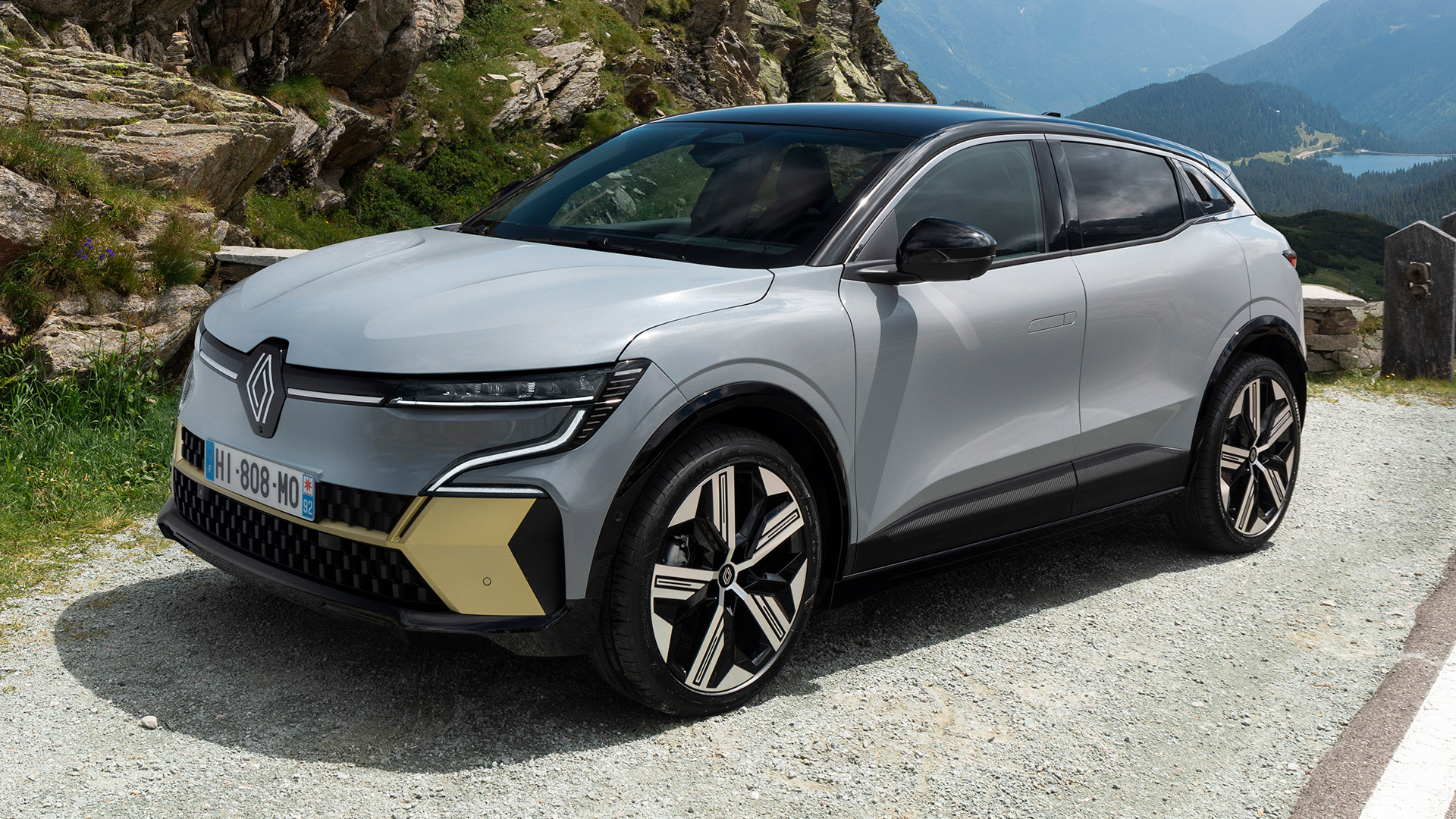
The other, likely to arrive at the same time, is a bigger battery. The largest battery currently available is a 60 kWh unit that gives a feeble 285 miles (459 km) of range, but the bigger Scenic has an 87 kWh pack which lasts 382 miles (615 km) between fills, and the Megane’s new Nissan Leaf cousin has a 75 kWh battery that provides a 303-mile (488 km) range.

 Renault’s Electric Megane Could Soon Burn Fuel Again

Sources: Auto Express

Renault’s Bug-Eyed Twingo Just Schooled VW On How To Do Cheap And Cheerful

  • Renault unveils its smallest EV yet, a modern take on the original Twingo.
  • A single 81 hp motor gives 62 mph in 12.1 seconds, top speed 81 mph.
  • The 27.5 kWh battery charges at 50 kW, reaching 80% in 30 minutes.

Low-resolution images of Renault’s new Twingo E-Tech leaked earlier this week, proving that the production car delivers almost all of the want-one factor that made the 2023 concept such a hit. But that leak only gave us half the story.

Today Renault gave its new baby EV a proper debut and filled us in on all the technical details that reveal whether the Twingo has some substance to go with that style.

Related: The New Renault Twingo Just Leaked And It’s Every Bit As Cute As You Hoped

We’ll not dwell too much on the exterior in light of the earlier leak and the fact that you can make up your own mind about the appeal of the cartoonish DRLs and whether you prefer the finished Twingo’s conventional door handles to the concept’s flush-fit versions.

However, we can probably all agree that the design works whether or not you remember the 1993 original it clearly apes, and to our eyes, it kicks BYD’s Dolphin Surf into next week.

The platform

 Renault’s Bug-Eyed Twingo Just Schooled VW On How To Do Cheap And Cheerful

So what is under the skin? Renault’s kept things simple, using a shortened version of the AmpR Small platform found under the 4, 5 and the 5’s Nissan Micra cousin. But where the 5 gives buyers the choice of 40 or 52 kWh batteries, the Twingo E-Tech makes do with a much smaller 27.5 kWh LFP battery to keep costs down and reflect its urban intent.

Small battery, solid city range

Renault says the pack has a new type of chemistry that is less dependent on cobalt and nickel and gives a WLTP range of 163 miles (262 km), versus 155 miles (250 km) for VW’s ID. Every1 concept, a thinly disguised preview of next year’s ID. Up.

DC charging is capped at a slothful 50 kW in the Twingo, but that should be viewed in the context of the battery size. Because it’s so tiny a 10-80 percent fill takes around 30 minutes.

How Quick Is It?

Power and performance figures follow a similar trend: they’re acceptable, but nothing special. We’re willing to bet Renault will add more powertrain options in time, but the sole setup available from launch consists of a single, front-mounted motor that makes 81 hp (82 PS / 60 kW) and a marginally more impressive 129 lb-ft (175 Nm). A Model 3 Plaid, it is not.

Zero to 62 mph takes 12.1 seconds, but let’s be honest, the Twingo’s natural habitat is the supermarket car park, not Silverstone. 

Tiny, but only on the outside

The party trick here isn’t the drivetrain anyway – it’s the packaging. At just 3,790 mm (149 inches) long, with a 2,490 mm (98 inches) wheelbase and weighing only 1,200 kg (2,650 lbs), the Twingo squeezes in what Renault says is proper adult space that rivals the roominess of cars from the segment above.

And the two independently sliding rear seats that can move up to 170 mm (6.7 inches) to trade legroom for the luggage kind.

\\\\\\\\\\\\\\\\\\\

And there’s a ton of it. Up to 360 liters (12.7 cu-ft) or over 1,000 liters (35.3 cu-ft) if you fold the rear seats. Now those are impressive stats – a Fiat 500e has half the carrying capacity, the supposedly bigger Renault 5 only provides 326 liters (11.5 cu-ft), and even a bigger-again VW Golf only gives you 381 liters (13.5 cu-ft).

Renault says you can also access the 50-liter (1.8 cu-ft) underfloor storage area even when you’ve already got stuff in the trunk.

Inside, Renault has tried hard to retain as much of the concept’s pizazz as possible while also cutting out enough cost to bring the Twingo to the street for “less than £20,000,” according to the UK PR team.

The final bill could be much lower because earlier reports suggested Renault was targeting €20,000, which is only £18k/$23k, and what Renault needs to reach to compete with BYD’s Dolphin Surf.

\\\\\\\\\\\\\\\\\\\

Lipstick gearstick

The dashboard features color-coordinated trim, the roof lining hides a “Twingo alphabet” pattern, and the gear selector is a customizable “e-pop shifter” shaped like lipstick. Because why shouldn’t your car be allowed to have personality, eh VW?

Tech is handled by a 7-inch digital cluster and a 10-inch central screen, with Google Maps and Google Assistant on top trims.

The Twingo even has its own avatar sidekick named Reno, who can help with charging info or answer questions like a tiny electric French Jeeves, and delivers an electronic welcome fanfare courtesy of Jean-Michel Jarre.

 Renault’s Bug-Eyed Twingo Just Schooled VW On How To Do Cheap And Cheerful

Is Renault Onto Something?

To sum up then, the Twingo looks great and has a freakishly large trunk but won’t set any records for range or acceleration. But if Renault can keep that price low enough – we’ll find out in the coming months – it has all the makings of a massive hit, and one that could potentially steal more than a few sales from the more expensive 5 E-Tech.

We’re looking forward to seeing how VW’s ID.Up compares when the two go head to head in 2026.

\\\\\\\\\\\\\\\\\\\\\

Renault

The New Renault Twingo Just Leaked And It’s Every Bit As Cute As You Hoped

  • Photos of the Renault Twingo EV surfaced online before its debut.
  • Production EV closely mirrors the 2023 concept and 1992 original.
  • The electric city car should start under €20K ($23K) before subsidies.

The Twingo is about to enter its fourth generation on November 6, yet a batch of leaked photos beat Renault to the punch, offering a clear look at both its exterior and interior before the official reveal. The little city car seems ready to make a comeback with familiar charm and a new electric heart.

The production version mirrors the 2023 concept almost to the letter. Only some small adjustments stand out, such as traditional door handles, wheel covers, slightly altered LED lighting, and reshaped bumpers with protective cladding for everyday practicality.

More: Renault’s $185,000 R5 Turbo Exposes What’s Really Wrong With EVs

The new Twingo keeps its frog-eyed face, compact one-box profile, and rounded rear that echo the spirit of the 1992 original, now stretched into a larger five-door body.

Altogether, it feels like another well-judged effort from Renault’s design team, following in the footsteps of the slightly bigger R5 that drew attention for its clean styling.

\\\\\\\\

What’s It Like Inside?

Inside, the cabin carries over much of the concept’s personality but tones down the materials for production reality. Hard plastics replace the show car’s high-end surfaces, and the seats now wear traditional fabric upholstery.

The dashboard hosts a floating infotainment screen above a smaller instrument cluster that looks familiar from Dacia’s parts bin.

More: Dacia’s EV Tortoise Just Got A Hare Transplant

Fortunately, Renault has kept physical climate controls on both the center console and the steering wheel. A yellow insert across the dashboard brings a splash of color, joined by an odd red piece between the front seats.

 The New Renault Twingo Just Leaked And It’s Every Bit As Cute As You Hoped

What Powers It?

Unlike its predecessors, the fourth generation of the Twingo will be exclusively available with a zero-emission powertrain. It will ride on the group’s AmpR Small architecture (former CMF-BEV), shared with the larger R5, R4, and Nissan Micra.

Renault has yet to release the detailed specifications, but the city car is expected to be fitted with a single electric motor and use a small lithium iron phosphate (LFP) battery.

The Twingo Against The World

In Europe’s A-segment, the Twingo will face competition from small EVs like the Dacia Spring and Leapmotor T03, as well as the upcoming VW ID.Every1 and an unnamed Nissan sibling. It will also overlap with budget-friendly B-segment contenders such as the Fiat Grande Panda and Citroën e-C3 twins.

Back in 2023, Renault’s then-CEO Luca de Meo promised that the new Twingo would start from under €20,000 ($23,000) before subsidies, with lease deals for as little as €100 ($115) per month.

Whether those numbers hold in today’s market remains to be seen. All should be confirmed on November 6, along with the technical breakdown and European rollout details.

\\\\\\\\\
❌
❌