Normal view

There are new articles available, click to refresh the page.
Before yesterdayMain stream

Every One Of These 15 Tesla Deaths Raises The Same Question

  • Tesla crashes where doors won’t open are drawing new scrutiny.
  • At least 15 deaths cited doors as a possible contributing factor.
  • More than half of those deaths occurred within the last year.

A new report has put the spotlight on a troubling pattern of fatal crashes in the US involving Teslas, where passengers were unable to open the doors, trapping them inside. As the brand’s EVs grow more common on American roads, so too does scrutiny over their safety features, or in this case, the lack of physical fail-safes in the event of a crash.

Read: Tesla Sued Again After Doors Wouldn’t Open As Car Burned

The investigation zeroes in on Tesla’s electronic door handles, a signature design feature that has since been adopted by several other automakers, raising concerns about an industry-wide trend toward software-dependent safety mechanisms.

During an ongoing investigation into safety concerns about these door handles, Bloomberg found evidence that at least 15 people have died in the past decade in incidents involving Teslas where locked or inoperable doors were cited as a potential factor in the victims’ inability to escape.

More than half of those deaths occurred within the past year, suggesting the issue may be becoming more common, or at least more visible, as awareness grows.

Behind the Numbers

The report acknowledges a critical limitation. There is no publicly maintained federal database that tracks fatalities specifically linked to electronic door handle malfunctions. As a result, the findings aren’t meant to represent a definitive or exhaustive total.

Instead, Bloomberg built its list by reviewing every known fatal electric vehicle crash involving fire in the US, then analyzing whether evidence suggested that the doors could not be opened either by occupants or emergency responders.

In each of the 15 cases they flagged, nonfunctional door handles were cited as having “impeded either the occupants’ efforts to escape or rescuers’ attempts to save those inside the vehicle.”

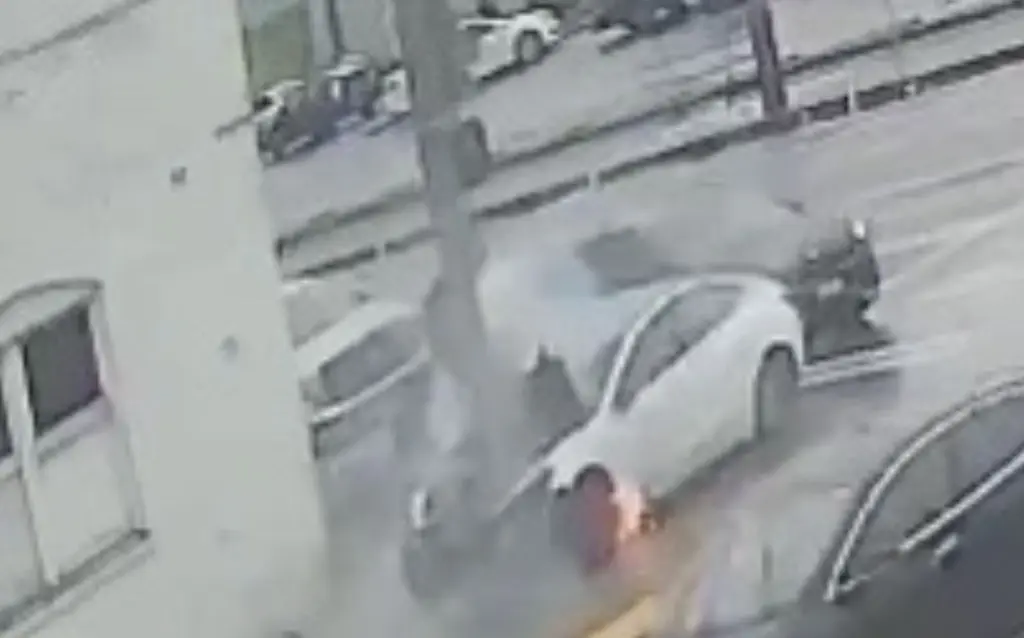
One such incident happened in Virginia, where a Tesla Model 3 skidded off a snowy highway, hit a tree, and caught fire. Footage from inside the patrol car shows that the officer was unable to open the Model 3’s door, forcing him to bash open one of the windows and pull out the driver.

Audio from the Wreckage

One fatal crash occurred in Wisconsin last year, killing five people inside a Tesla Model S. Audio from three 911 calls was later obtained, including one placed automatically by an occupant’s Apple Watch.

At least two of the occupants can be heard screaming and crying for help in the recordings, with one clearly saying, “I’m stuck” as the fire spread through the vehicle, ultimately claiming their lives. It remains unclear whether the other three victims survived the initial impact before the blaze took over.

Tesla Responds to Design Concerns

 Every One Of These 15 Tesla Deaths Raises The Same Question

Tesla, for its part, appears to have quietly acknowledged the concerns in part. In September, reports surfaced that the company was exploring revisions to its door handle system. Future models may include a combination of electronic and manual release mechanisms, something already standard in brands like Audi and Lexus.

Perhaps eager to reassure shoppers about the safety of its vehicles, Tesla recently launched a new page on its website focused purely on safety. There, the company explains that its vehicles are designed to automatically activate hazard lights and unlock doors in the event of a serious collision. It also notes that the vehicle can contact emergency services autonomously.

However, Tesla also includes a key disclaimer: these features “may not be available in all regions or for all vehicles based on build date.”

While Tesla appears to be making some moves to address the issue in the future, questions still remain, not just about the company’s design choices, but also about the regulatory landscape and the lack of clear oversight. The analysis doesn’t claim that electronic door handles are inherently unsafe, but it does point to the need for more reliable fail-safes in situations where delays can be deadly.

 Every One Of These 15 Tesla Deaths Raises The Same Question

Uganda’s Only Cybertruck Rolls In Viral Crash And Tesla’s Not Picking Up

  • Video shows a Cybertruck rolling onto its side during a left-hand turn.
  • The truck is widely believed to be the only Cybertruck in Uganda.
  • No official details on the owner, cause, or injuries have been released.

It’s always a shame when something rare goes up in smoke. That’s evidently what just happened in Uganda. According to circulating reports, a Tesla Cybertruck rolled while tearing around a local dirt race track, leaving it in a mangled state with little hope for recovery.

If the accounts are accurate, this electric pickup isn’t just rare in the African nation. It was the country’s only Cybertruck, privately imported and likely the pride of its owner until now.

More: Cybertruck Nails Crash Tests Until The Lights Go Out

Footage of the incident popped up on social media late last week, and while details are sparse, we can see the crash and the aftermath.

The video shows the truck approaching a left-hand turn, possibly cutting the corner a little too hard. Whether it was a berm on the inner side of the bend or just the weight of a huge vehicle trying to navigate a tight turn at high speed, the result is the same.

The Cybertruck rolls hard to the right, onto its side, then onto its roof, and finally it comes to rest on the driver’s side. So far, no confirmed details about the owner have been released.

Reddit

Previous reports suggest the truck was privately imported by a wealthy individual, but no local authorities, event organizers, or the owner themselves have stepped forward publicly.

Based on photos and videos of the aftermath, it’s clear that the truck will need significant repairs if it’s ever going to get back on the road. Just about every piece of glass is broken. The roof is crumpled to a degree and plenty of the plastic bits are damaged beyond repair.

Since Uganda doesn’t have any Tesla dealers, it’ll be interesting to see if there’s any route to salvaging the truck. It might end up being cheaper to just import another one.

The site of the crash, Garuga Race Track, located near Lake Victoria, is often used for casual motorsport events and recreational driving rather than professional racing. While most photos available of the track online show motorcycles, it’s clear that some vehicles, mostly rally-focused ones, have used the course.

Surface conditions, speed, and driver inputs remain unknown, and there has been no official statement explaining exactly what caused the rollover. Hopefully, everyone walked away without significant injury.

 Uganda’s Only Cybertruck Rolls In Viral Crash And Tesla’s Not Picking Up

Credit: ClaudeVille1

Three Waymos Were Smart Enough To Arrive But Too Dumb To Figure Out How To Leave

  • Three Waymo I-Paces froze in a San Francisco dead-end standoff.
  • Two autonomous Jags made contact as a third robotaxi waited.
  • A human Waymo employee arrived to manually clear the scene.

Self-driving cars are supposed to eliminate traffic jams, human error, and awkward you-turn-or-mine eye contact at four-way stops. But last weekend, three Waymo robotaxis in San Francisco proved that even artificial intelligence can panic when faced with a bad decision and no escape route.

The scene unfolded on a hilly residential street in North Beach, where a TikTok video captured what can only be described as a low-speed robot showdown. Two Waymo Jaguar I-Pace SUVs ended up nose-to-side at an intersection that also happened to be a dead end.

A third Waymo arrived moments later, assessed the situation like a confused NPC, and came to a complete stop, effectively sealing the street shut.

Related: Waymo Robotaxi Rolls Through LAPD Crime Scene As Suspect Is Held At Gunpoint

Bystanders watched from the sidewalks as the cars sat motionless, their sensors apparently locked in an eternal debate about who should move first.

One resident trying to leave the area summed it up best by asking whether the cars were “just going to stay there forever.” For a few long minutes, that seemed like a real possibility.

Autonomous paralysis

According to an ABC7News report, the two robotaxis may have lightly contacted each other while one attempted a turn on the tight street. The third vehicle, doing what it was programmed to do, detected an obstruction and politely waited.

Unfortunately, polite waiting does not help much when everyone involved is a robot and no one will make a move.

Eventually, a Waymo employee arrived to manually intervene and restore order, proving once again that the most reliable fail-safe in autonomous driving is still a human with the ability to hook reverse and take a look over his shoulder.

Waymo expansion

To be fair to Waymo, the company remains the poster child for functional robotaxis. Its vehicles log millions of miles in San Francisco, Los Angeles, and Phoenix, mostly without fault, and are now venturing onto freeways. The company recently launched in Miami and plans to add services in Dallas, Houston, San Antonia, and Orlando.

Those cities can expect to experience their own Waymo glitches in time because moments like this are a reminder that self-driving cars excel at following rules, but struggle with edge cases that humans solve instinctively.

Lead image chii_rinna

Nio EV Splits Open Like A Can Of Tuna In A Strange Crash

  • Nio EC6 hit a concrete barrier in Shanghai and split through the rear.
  • Driver and passenger escaped without injuries after the violent impact.
  • Battery pack survived the crash and avoided any fire or thermal issues.

All too often, we read about EVs catching fire after relatively minor accidents, and in some cases, occupants were trapped inside. This story is a little different though, as a Nio EC6 was recently destroyed in a crash in China, but remarkably didn’t catch fire despite almost completely splitting in two.

This incident happened in Shanghai on Monday. It’s understood that the light pink-colored EC6 hit a concrete crash barrier side-on after cutting in front of another vehicle, causing it to clip the rear of the Nio.

Local reports suggest that the top edge of the barrow, approximately 120 mm (4.7 inches) wide, applied an extraordinary amount of pressure on the C-pillar and the area of the floor.

Read: Nio’s Mass-Market Onvo Drops Its First 3-Row SUV With More Power Than An EV9 GT

This force caused a split through the rear of the car. Remarkably, the driver and passenger of the Nio were not injured in the crash. Additionally, the battery pack wasn’t severely damaged and did not catch fire.

According to a statement released by Nio, immediately after the crash, the vehicle’s onboard safety systems reported the accident. Nio staff were alerted to the impact and quickly responded to the scene, helping the occupants receive medical treatment.

Perhaps in a thinly-veiled dig at Tesla, Nio says that the EV’s doors immediately unlocked after the collision, allowing the driver and passenger to free themselves.

\\\\

Weibo

The car manufacturer also confirmed that the EC6’s driving assistance system was not enabled at the time.

The Nio EC6 was first unveiled in late 2019 before being thoroughly updated in February 2023. The example involved in this crash was one of the facelifted models.

It’s available with either a 75 kWh or 100 kWh battery pack and sold exclusively in dual-motor guise, producing a combined 483 hp and 516 lb-ft (700 Nm) of torque.

Sources: Weibo, Nio, CarNewsChina

Annoying Driver Aid Beeps Just Got Their Final Warning

  • Euro NCAP’s overhaul debuts more realistic, consumer-focused tests.
  • ADAS systems will be rated on usefulness, annoyance, and real driving.
  • EV door handles must stay powered after crashes to aid rescuers.

Euro NCAP is sharpening its safety pencil. The organization behind the star ratings brands love to boast about is rolling out a huge shake-up of its testing program for 2026 that includes a crackdown on those annoying ADAS warnings that plague modern cars.

More: Tesla Penalized Over A Word In Driver Assistance Tests And It Could Cost Them

The reboot splits vehicle safety into four clear stages: Safe Driving, Crash Avoidance, Crash Protection and Post-Crash Safety. Each category gets its own score and star ratings will depend on strong performance across all of them.

The idea is that cars must keep you out of trouble, protect you when things go wrong, and then help rescuers get you out quickly.

What Changes on the Road?

 Annoying Driver Aid Beeps Just Got Their Final Warning

One of the most headline-grabbing updates addresses a problem that has led to genuine tragedies. Electric vehicles with pop-out or powered door handles will now be required to keep those handles working even after a crash.

Fire crews have repeatedly complained that some EVs lock up after an impact and refuse to open, which slows rescues and in extreme cases costs lives. Euro NCAP wants that fixed – and soon.

Driver assistance systems are also getting a long overdue reality check. Until now most ADAS evaluations happened on a closed track where systems behaved like model citizens.

Out on actual roads things are rather different. Automatic lane-keeping can yank the wheel when you least expect it and constant beeps and bongs send drivers rushing for the off switch, defeating the whole point of the safety gear.

Rewards for Buttons

 Annoying Driver Aid Beeps Just Got Their Final Warning
Volvo

From 2026 cars will earn extra points for advanced driver-monitoring systems that genuinely keep tabs on a distracted driver rather than perform glorified blink detection. They can even gain credit if they can spot signs of alcohol or drug impairment and take action.

Meanwhile a long awaited change will finally reward cars that keep proper physical buttons for common controls. After years of touchscreen everything, drivers have made their frustration extremely clear.

Related: EU Regulators Say Drivers Are Dying Inside Cars With Electric Door Handles

Crash avoidance tests will expand to include more realistic scenarios that involve motorcyclists, cyclists and urban hazards.

Smoothness matters, too. Lane support that darts the wheel like a nervous cat will lose points even if it technically avoids an impact, and there will be rewards for vehicles that recognize when a driver presses the gas pedal when they meant to hit the brake.

Different Dummies

 Annoying Driver Aid Beeps Just Got Their Final Warning
Euro NCAP

Crash protection also gets more granular. Dummies with different body shapes ages and sizes will be used to reflect the people who actually sit in cars, echoing a move happening in US crash testing.

And simulations and sled tests will support full crashes for better accuracy, giving more detail about side-impact protection and the risk to pedestrians posed by structural areas like the windshield.

Also: Senators Want Cheaper Cars, Even If It Means Getting Rid Of Automatic Braking

Finally, the post-crash stage receives a modern boost with new rules for EV battery isolation, those flush handles rules we mentioned earlier, and automated SOS functions that must tell first responders how many people were in the car, even if seatbelts were not buckled.

Electric cars must also be able to warn drivers about battery-fire risks even after a crash.

The new protocols represent the biggest overhaul of NCAP testing since 2009, but we won’t have to wait another 17 years for the next big refresh. The organization says it will update its protocols every three years from 2026, a decision that reflects just how quickly assistance tech is evolving on new cars.

 Annoying Driver Aid Beeps Just Got Their Final Warning

Tesla Sued Again After Doors Wouldn’t Open As Car Burned

  • Lawsuit claims Model 3 doors failed to open after a fiery crash.
  • Witnesses tried rescuing the couple but couldn’t open the doors.
  • Complaint says Tesla sold cars with faulty door handle designs.

Another day brings another legal challenge for Tesla, this time centered on a tragic crash that once again raises questions about the company’s design choices.

The latest lawsuit claims that the electrically operated door handles of a 2018 Model 3 failed to function after a collision and subsequent fire, trapping one of the occupants inside and leading to her death.

Read: Trapped Children Die In Tesla Fire After Door Handles Allegedly Wouldn’t Open

It marks yet another serious concern for Tesla, one that could prove costly and push the automaker to reexamine how its vehicles handle emergency situations, particularly when power is lost.

Door Handles Under Scrutiny

Filed last week in the U.S. District Court for the Western District of Washington, the complaint outlines a sequence of events. On January 7, 2023, Jeffrey Dennis was driving his Tesla Model 3 with his wife in Tacoma, Washington, when the car reportedly accelerated suddenly and struck a utility pole at the corner of South 56th and South Washington Streets.

Shortly after impact, the EV caught fire. It’s alleged that several witnesses tried to open the Tesla’s doors to rescue the couple, but were unable to do so because they failed to operate without battery power. The lawsuit says that some witnesses even tried to break the Model 3’s windows with a baseball bat, but it also failed.

First responders eventually managed to extract the pair, though Wendy Dennis succumbed to her injuries at the scene. Jeffrey Dennis suffered severe burns to his legs.

Could It Have Been Prevented?

 Tesla Sued Again After Doors Wouldn’t Open As Car Burned
US District Court

The complaint says the Model 3 has a “unique and defective door handle design” that prevented rescuers from freeing the couple. It is also alleged that Tesla knew about the defect with the door handle but failed to address it, and continued to market and sell the popular EV.

The lawsuit doesn’t stop at the door handles. It also claims that Tesla’s Automatic Emergency Braking system failed to activate as the vehicle sped toward the utility pole. In addition, it accuses the company of using “a highly explosive battery chemistry” despite the existence of safer, more practical, and less costly alternatives.

Jeffrey Dennis is seeking financial relief for the wrongful death of his wife and his long-term injuries, as well as compensatory damages and punitive damages under California law.

Two Killed After Wrong-Way BMW Driver Crashes Into Cybertruck

  • The BMW sedan hit the Cybertruck, pushing it into an 18-wheeler.
  • Police are investigating if the BMW driver was impaired that night.
  • More than 230 people were injured in wrong-way crashes last year.

Crashes on Houston’s busy freeways are an unfortunate reality of city life, and one earlier this week proved especially tragic. The driver of a BMW was killed, and the driver of a Tesla Cybertruck died in hospital after the two vehicles collided in Houston, Texas.

Shockingly, police say the BMW’s driver had mistakenly entered the freeway, traveling the wrong way after driving down an exit ramp and heading westbound in the eastbound lanes.

Watch: Cybertruck Ripped In Half By A Mercedes Built Like A Tank

The crash occurred around midnight on October 28 along the I-10 Katy Freeway. According to police, the BMW, whose specific model hasn’t been identified, slammed into the Cybertruck and burst into flames almost instantly. The force of the impact also pushed the Tesla into an 18-wheeler.

Initially, it was only the driver of the BMW who was declared dead on the scene, and the driver of the Cybertruck was taken to a nearby hospital in critical condition. Sadly, the Tesla driver succumbed to their injuries.

Houston Police Department Sgt. Rebecca Dallas told KHOU that the BMW driver had entered the freeway in the opposite direction, ignoring multiple Do Not Enter and Wrong Way signs along the ramp.

Investigators are expected to conduct an autopsy of the BMW driver to see if they were impaired at the time of the collision. The name of the driver who caused the crash hasn’t been released. However, the driver of the Cybertruck has been confirmed as a 38-year-old father of two young children.

Accidents Like This Are Far Too Common

Accidents like this are far from rare. More than 1100 wrong-way fatalities have been recorded across Harris County in the past decade, and last year alone, 233 people were injured in similar incidents throughout the area. Clearly, something needs to be done to reduce these numbers.

Local authorities may need to explore a combination of measures, from adding more signage to exit ramps to enhancing driver education. Small changes could go a long way toward preventing future tragedies on Houston’s highways.

❌
❌