Normal view

There are new articles available, click to refresh the page.
Before yesterdayMain stream

Tesla’s $2.67B Cybertruck Battery Deal Is Now Worth Just $6,776

  • Tesla signed a $2.67B Cybertruck battery deal in 2023.
  • The deal has been slashed to just $6,776 after poor sales.
  • Cybertruck was expected to sell 250K yearly, hit under 20K.

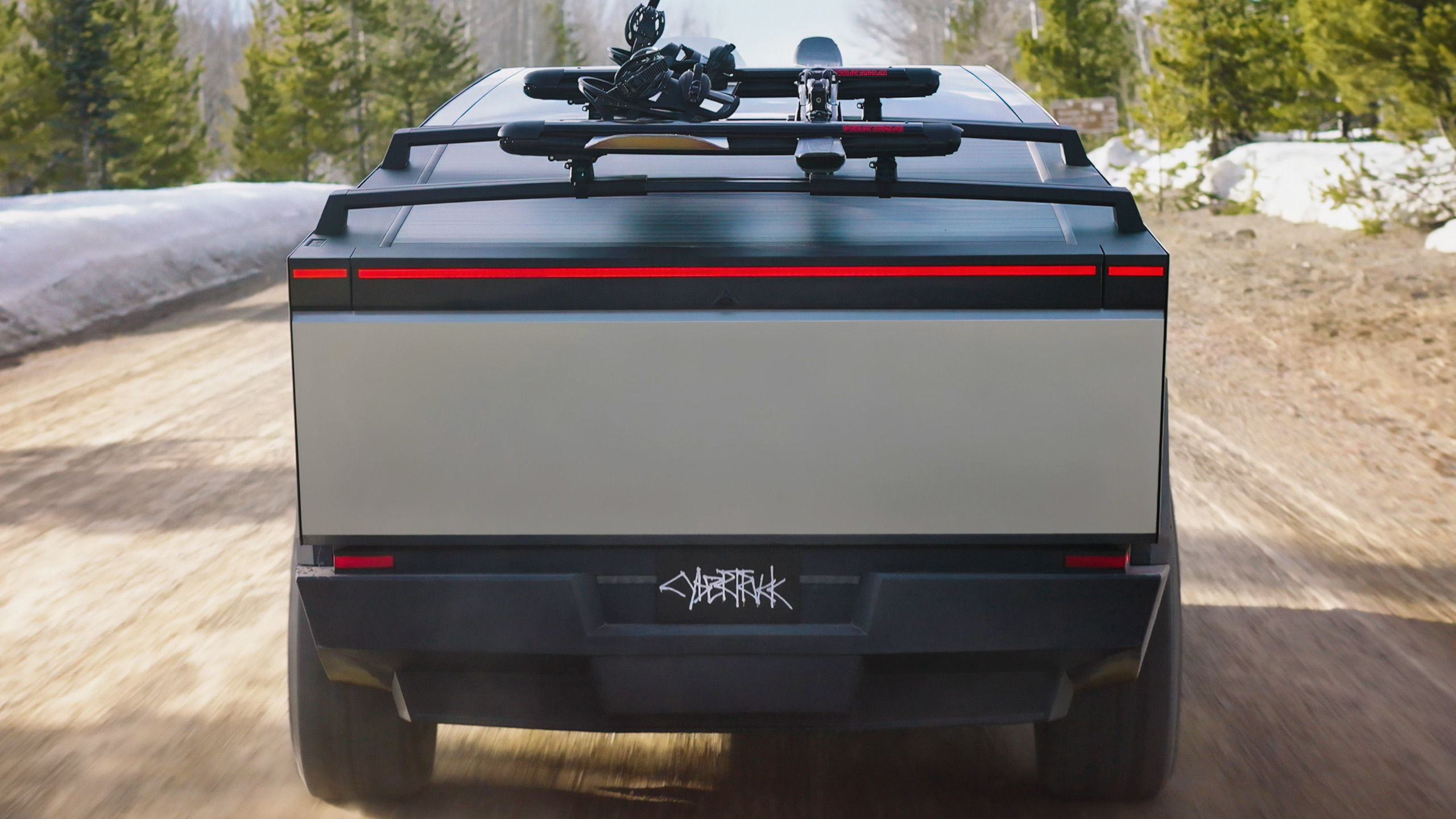
Several years ago, Elon Musk proudly proclaimed that Tesla would be moving as many as 250,000 Cybertrucks annually. The electric pickup was billed as a disruptive force, set to shake up the truck market. In reality, it hasn’t come anywhere near those targets. This year, Tesla is expected to sell fewer than 20,000 Cybertrucks, less than 10 percent of that overly ambitious goal.

Read: This Shop Tore Down A Cybertruck To Do What Tesla Wouldn’t In Europe

While you’ll never hear Tesla head honcho Elon Musk describe the Cybertruck as anything other than a raging success, lower-than-expected sales are hurting suppliers.

One notable casualty is L&F Co., a South Korean battery material supplier, which recently disclosed that its supply contract with Tesla had been cut by 99 percent, a shift attributed in part to sluggish demand for the truck.

A Contract Cut to the Bone

Back in February 2023, L&F had secured a sizable deal worth 3.83 trillion won (roughly $2.67 billion) to provide Tesla with high-nickel cathode material intended for the Cybertruck’s batteries. But that agreement has now been trimmed down to a token 9.73 million won, or about $6,776 at current exchange rates.
 Tesla’s $2.67B Cybertruck Battery Deal Is Now Worth Just $6,776

The original contract was tied to Tesla’s 4680 battery cells, which were first revealed in 2020. At the time, Tesla presented them as a major leap forward, central to its plan to rapidly expand production and eventually launch a $25,000 EV. That model has yet to materialize, and so far, the 4680 cells are used primarily in the Cybertruck.

According to an unnamed source with knowledge of the supply contract, L&F only needed to supply contract with small amounts of material as the development of the Cybertruck was repeatedly postponed. Bloomberg reports that policy and economic issues also affected the contract, including the elimination of subsidies through the Inflation Reduction Act.

SpaceX to the Rescue?

As Tesla continues to struggle with sluggish Cybertruck sales, a familiar buyer has entered the picture. According to a recent report, SpaceX has already purchased more than 1,000 Cybertrucks from Tesla, and that number could eventually climb to 2,000.

SpaceX hasn’t said why it’s buying so many Cybertrucks, but it likely has more to do with surplus stock than necessity. Either way, the move points to just how closely Musk’s companies operate, and hints that Tesla may be offloading inventory through its own back door.

 Tesla’s $2.67B Cybertruck Battery Deal Is Now Worth Just $6,776

Ford Kills Major Battery Deal As EV Plans Rapidly Unravel

  • Ford ended a $6.5B battery deal with LG due to EV demand.
  • LG disclosed cancellation in a regulatory filing this past week.
  • The deal was set to power over 500,000 Ford EVs per year.

Just days after dialing back its electric vehicle plans, and barely a week after abandoning its $11.4 billion battery venture with South Korean firm SK On, Ford has now cancelled another high-stakes battery deal. The automaker has scrapped a $6.5 billion agreement with LG Energy Solution, citing shifting market conditions and a cooling appetite for electric vehicles.

Read: Ford Pulled The Plug On More EVs Than You Realize

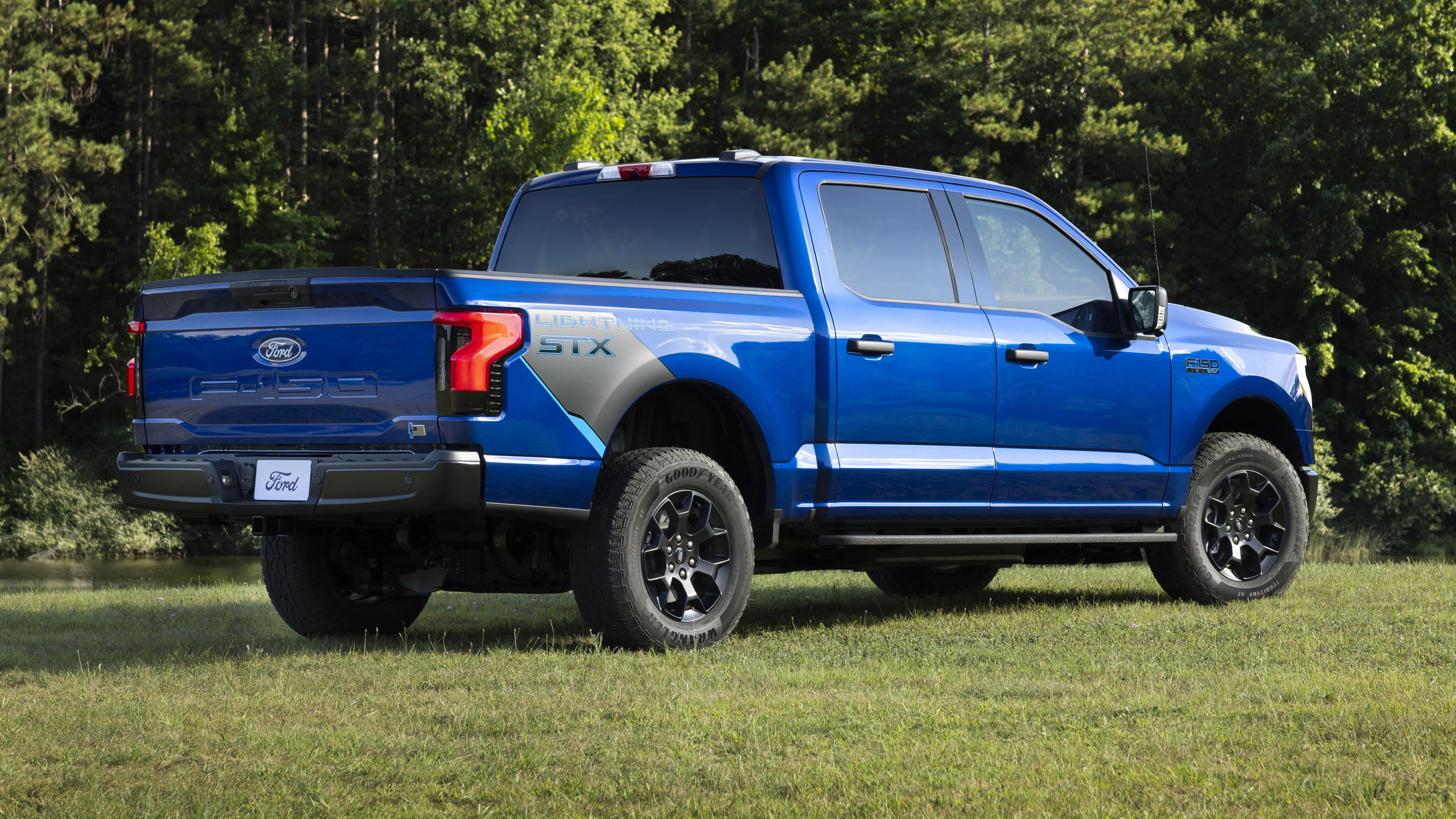
The cancellation came to light in a regulatory filing made by LG in South Korea. It lands shortly after Ford outlined a sharp pullback in its EV rollout, including the decision to shelve the all-electric F-150 Lightning. The $6.5 billion figure represents roughly a third of LG’s total revenue from the previous year.

The Scale Behind the Deal

Ford and LG originally signed the deal in October 2024. Under its terms, LG committed to supplying Ford with 34 GWh of batteries between 2026 and 2030, enough to power around half a million EVs annually, assuming each one carries a 75 kWh battery pack.

Beyond that, LG was also set to deliver an additional 75 GWh of batteries for Ford’s commercial vehicle lineup between 2027 and 2032. These packs were to be built at LG’s manufacturing plant in Poland, then fitted into vehicles destined for the European market.

 Ford Kills Major Battery Deal As EV Plans Rapidly Unravel

In its regulatory filing, LG said, “this matter concerns the counterparty’s [Ford’s] decision to discontinue the production of certain electric vehicle (EV) models due to recent policy changes and shifts in EV demand forecasts, and the subsequent notice of contract termination.”

EV Demand Runs Cold

Since President Donald Trump returned to the White House for his second term, the EV market has quickly undergone a significant shakeup. Demand for EVs in the US remained strong through the first nine months of the year, but sales collapsed the moment the $7,500 federal EV tax credit was axed.

Also: The EU Blinked And Gas Cars Live To See Another Generation

More recently, the Trump administration has loosened fuel economy regulations, encouraging carmakers like Ford to build more ICE models. On top of that, the European Commission softened its stance on zero-emissions mandates, most notably by proposing a 90 percent CO₂ reduction target for new vehicles by 2035, rather than a full ban on internal combustion engines.

Ford chief executive Jim Farley recently said he expects EV sales to fall by as much as 50 percent in the US due to these key policy changes.

 Ford Kills Major Battery Deal As EV Plans Rapidly Unravel

Hyundai Launches $7.5K Carbon Kit That Makes The Ioniq 6 N Even Wilder

  • Hyundai Ioniq 6 N now offers an optional N Performance package.
  • Carbon aero kit adds a swan-neck wing for extra track downforce.
  • Includes 20-inch forged wheels, racing stripes, and cabin upgrades.

The Hyundai Ioniq 6 N already cuts a fierce silhouette, but for some owners, that isn’t quite enough. They want something with more of a track-day attitude. Hyundai is answering that call with a new suite of N Performance Parts, led by a swan-neck rear wing reminiscent of the Porsche 911 GT3.

The optional accessory package also includes a more prominent splitter, sharper side skirts, and a diffuser extension. All of the components are finished in exposed carbon, contrasting the red accents found on the lower part of the bodywork.

More: Hyundai’s Next Performance SUV Could Be A Hybrid Rival To RAV4 GR Sport

The larger CFRP rear wing, which can also be ordered on its own, features a double-deck design adjustable to three positions: 8°, 0°, and -8°. Depending on the angle, it produces between 265 and 305 kilograms (584–672 pounds) of downforce at 257 km/h (160 mph).

A deflector mounted beneath the car trims lift and adds another 16 kilograms (35 pounds) of downforce at top speed.

\\\\\\\

Beyond the aerodynamic pieces, the package includes 20-inch forged wheels with a 12-spoke layout, finished in either black or white. They shave 1.5 kilograms (3 pounds) from the unsprung mass compared to the standard aero wheels of the same size.

To fine-tune the exterior, owners can add a racing stripe, a Sabelt tow strap, carbon center caps, and black wheel nuts.

Inside, the upgrades extend to a steering wheel wrapped in Pasubio leather, suede armrests, carbon fiber scuff plates, and floor mats marked with N Performance branding. The company also offers Ferodo brake pads designed for both street and circuit use.

More: Veloster’s Reincarnation Could Arrive As An Ioniq 3 N Hot Hatch

 Hyundai Launches $7.5K Carbon Kit That Makes The Ioniq 6 N Even Wilder

The Ioniq 6 N draws power from dual electric motors that produce a combined 641 hp (478 kW / 650 PS) and 770 Nm (568 lb-ft) of torque through the N Grin Boost function, launching it from 0–100 km/h (62 mph) in 3.2 seconds. True to N division form, the EV integrates systems such as simulated gear shifts, synthesized exhaust sounds, and an N Drift Optimizer.

What’s The Cost?

Hyundai first announced these N Performance Parts in July 2025. They’re now available to order in Korea before rolling out to other international markets. According to the Korean Car Blog, the full aero package is priced at ₩11,000,000 (equal to $7,500 at current exchange rates), while the rear wing alone costs ₩4,900,000 ($3,400).

In Korea, the Hyundai Ioniq 6 N starts at ₩79.9 million ($54,700). The U.S. version is expected to be priced from around $68,000 when it arrives next year.

 Hyundai Launches $7.5K Carbon Kit That Makes The Ioniq 6 N Even Wilder

Sources: TheKoreanBlog, Hyundai

❌
❌