Normal view

There are new articles available, click to refresh the page.
Before yesterdayMain stream

The Rivian R2’s Hidden Rear Wiper Has A Trick To Survive Winter

  • Rivian R2 launches by June priced from about $45,000.
  • Sliding rear glass disappears fully into the tailgate area.
  • It claims wiper placement improves driving range too.

Rivian will begin deliveries of the long-awaited R2 by June this year, finally giving a much larger slice of the public the opportunity to buy one of its EVs. In many ways, it marks a pivotal expansion for the brand into a more accessible segment. Priced to start at around $45,000, it closely resembles the R1S but in a smaller package, and it brings several new features with it.

Read: Rivian’s R2 Still Doesn’t Fix A Critical Flaw That Matters When Seconds Count

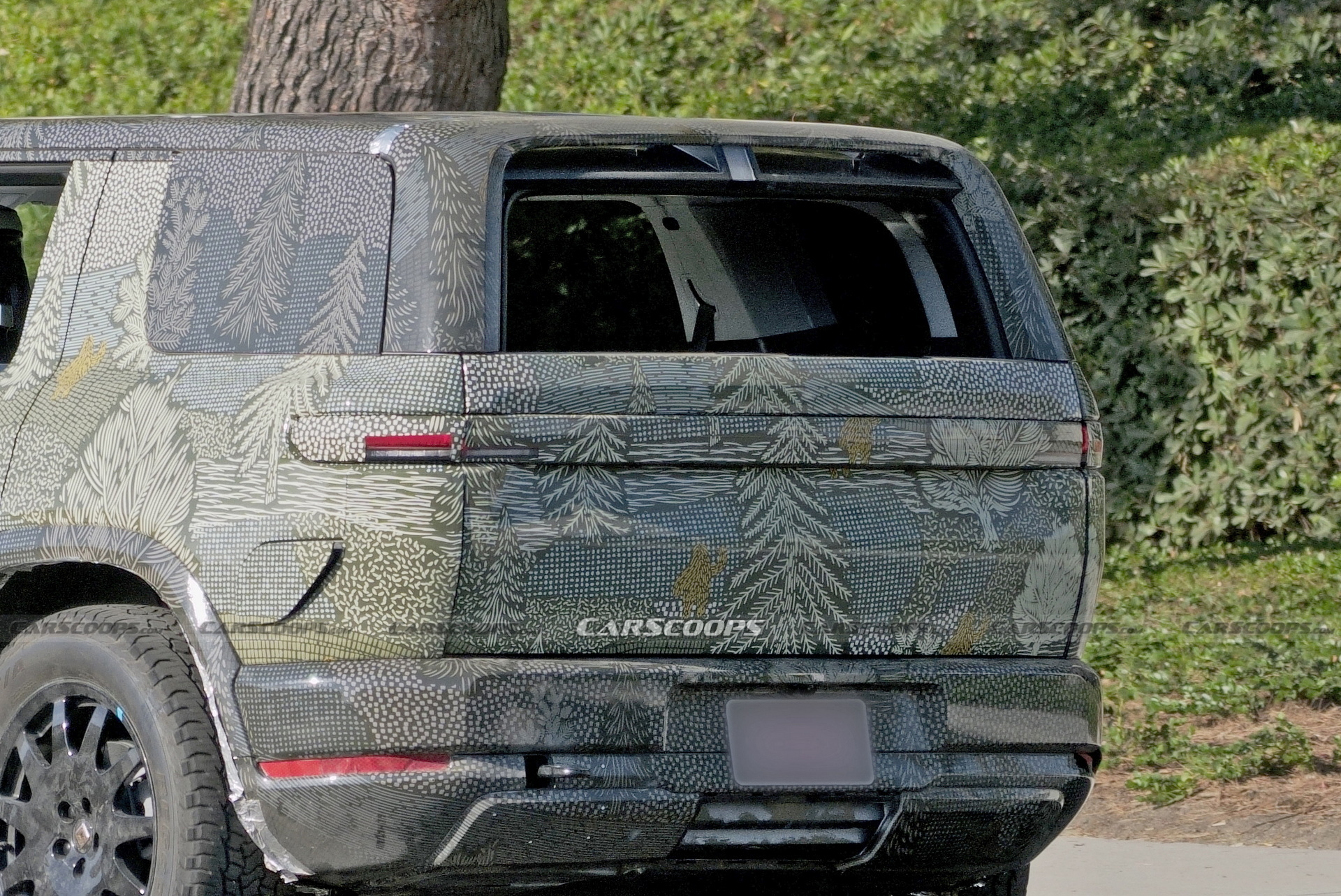
One of the highlights is the rear window. Seemingly inspired by vehicles such as the Toyota Land Cruiser, Lexus GX, and BMW 3 Series Touring, Rivian has designed a rear window that opens. However, rather than swinging open like some vehicles, the R2’s rear window rolls down into the tailgate, much like a side window.
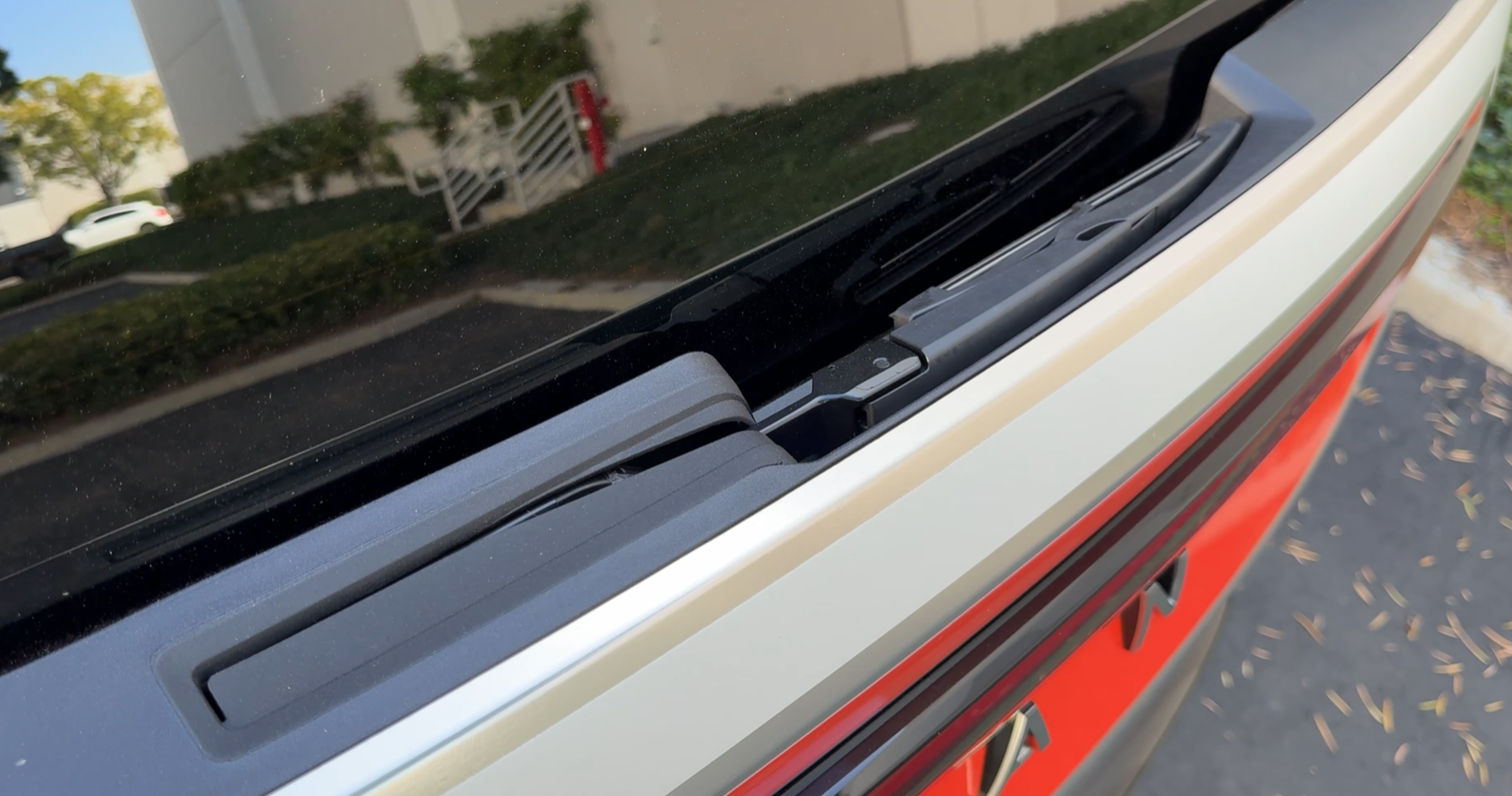
 The Rivian R2’s Hidden Rear Wiper Has A Trick To Survive Winter
Screenshots Doug Demuro/YouTube

This sliding setup presented a challenge when Rivian needed to develop a rear wiper. Because the glass disappears completely into the tailgate, mounting the wiper directly to it was not an option. The R2’s teardrop-shaped roof and spoiler also ruled out placing the wiper higher up. As a result, the company developed a compact holder for the wiper within the tailgate itself.

Some Reddit users have questioned how this arrangement will function in the depths of winter, when snow and ice could easily build up around the mechanism. Rivian appears to have anticipated those concerns.

According to InsideEVs, the small compartment housing the wiper includes a hidden drain that channels water out from beneath the tailgate, preventing it from pooling. For those in the Northeast already thinking about freezing temperatures, the holder-and-drain assembly also integrates a heating element designed to melt accumulated snow or ice and guide the water away.

Rivian says that by placing the rear wiper in this position, it has been able to boost the R2’s range by a considerable six miles. It no doubt caused headaches for some designers and engineers, but it could prove worthwhile. Here’s hoping it’s adequately tested in winter conditions before customer deliveries begin.
Rivian’s R2 Still Doesn’t Fix A Critical Flaw That Matters When Seconds Count

  • A handful of tech YouTubers recently got hands-on with the Rivian R2.
  • Like many other new EVs, Rivian is using electronic door handles.
  • Prices for the new mid-size R2 are expected to start at around $45,000.

After a string of high-profile crashes in the US and overseas, automakers are facing increased scrutiny over something as basic as door handle design. Once a simple mechanical feature, door handles have become unnecessarily complicated with the rise of electronic systems.

Companies like Tesla and Rivian are facing significant criticism for where they’ve located the emergency interior mechanical door releases if electronic issues prevent the buttons from working. Rivian’s solution for second-row passengers is particularly bad in the R1T and R1S, as they need to remove a large black plastic panel and then reach in to pull a cable to release the door.

Read: Rivian’s New $45,000 EV Is Coming By June

Is the upcoming Rivian R2 any better? Not really. A handful of tech YouTubers recently had the chance to check out pre-production versions of the R2, and JerryRigEverything has provided us with our first look at the R2’s mechanical latches.

Trouble In The Second Row

 Rivian’s R2 Still Doesn’t Fix A Critical Flaw That Matters When Seconds Count
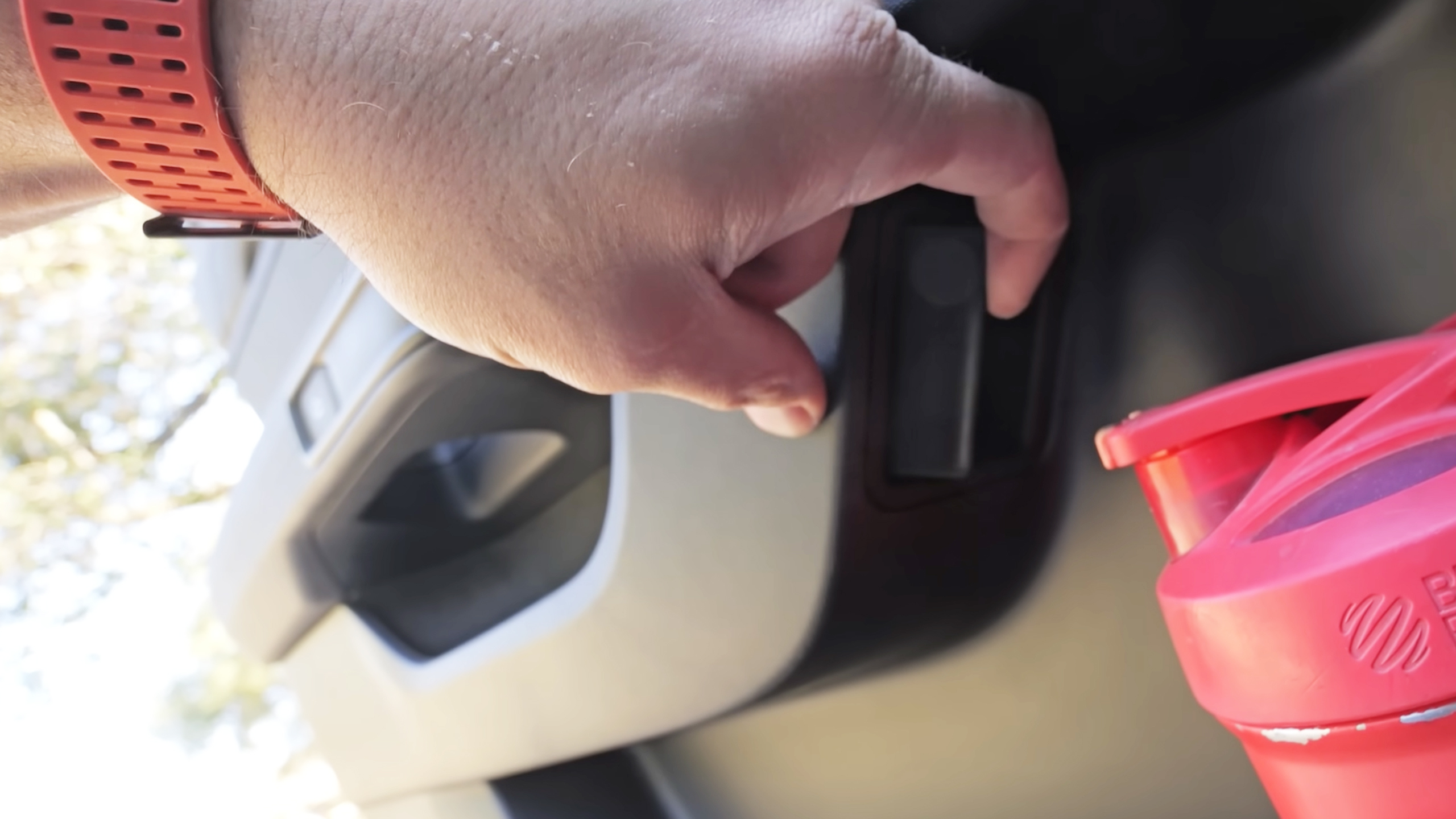
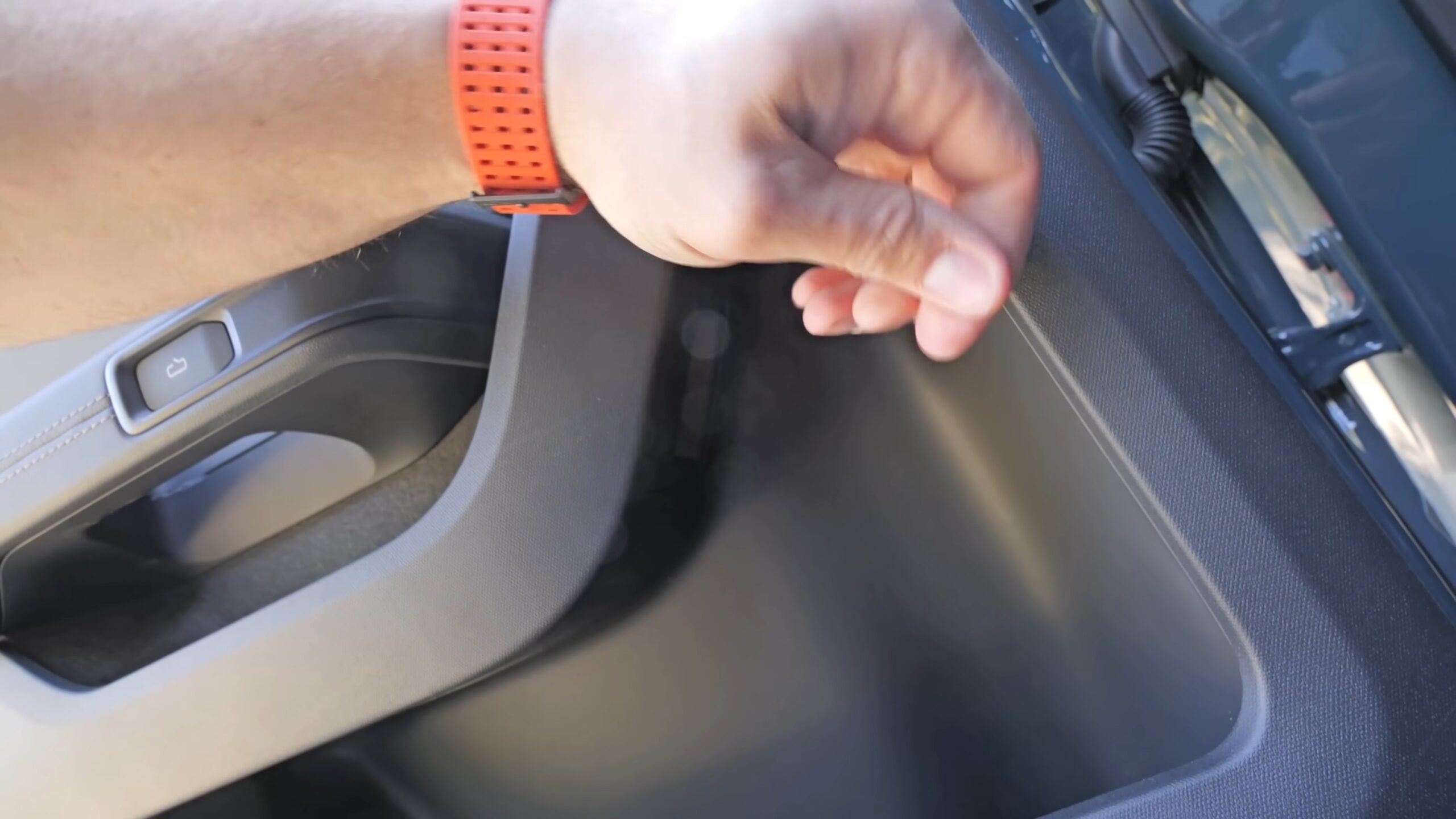
The front emergency manual latch (above) is much simpler than the concealed rear one (below).
 Rivian’s R2 Still Doesn’t Fix A Critical Flaw That Matters When Seconds Count
Screenshots JerryRigEverything/YouTube

The latch in the front row is quite simple. Positioned on the underside of the floating storage compartment is a little black plastic handle used to open the doors in emergencies. It’s similar to what’s found in the R1T and R1S, although the emergency releases on those models are larger and easier to identify.

Then there’s the rear. The release is in the same position as the one up front, but bizarrely, passengers have to remove a small plastic cover and then pull a cord, just like they do in the R1 models. The only upside is that the placement has changed slightly for the better.

If you have to give your backseat passengers a tutorial on something as basic as opening the doors in an emergency, the design isn’t clever, it’s flawed. Why Rivian didn’t just carry over the simpler front-door setup is anyone’s guess, but it comes across as needless complexity at best, or cost-cutting by reusing the same flawed design at worst.

Is An Update Happening?

There had been some talk of changes. Rivian was reportedly reworking the R2’s emergency releases in response to incidents involving drivers trapped in burning Teslas. But based on this early look, it doesn’t seem like any major improvement has been made compared to the R1 models.

Although, as this example was a pre-production model, it’s possible that things will be changed for production. Or at least, that’s what we hope.

More: China Officially Bans Pop-Out Door Handles, And The World May Follow

Rivian isn’t alone here. Beyond Tesla, unsurprisingly the poster child for controversial design choices, even Ford has run into trouble with the Mustang Mach-E’s door latches.

And it’s not just the inside of the car that’s raising concerns. Exterior pop-out door handles have created so much controversy that China has decided to ban them on all electric vehicles starting in 2027.

\\\\\\\\

Rivian’s New $45,000 EV Is Coming By June

  • Rivian R2 enters validation build phase ahead of mid-2026 launch.
  • Company’s Illinois plant expansion supports 215,000 units yearly.
  • The R2 targets over 300 miles of range and Supercharger access.

If the R1S and R1T were the cars that gave birth to Rivian, the upcoming R2 will be the one that decides whether the brand thrives or stays in infancy. And that moment is arriving quickly, as the mid-size SUV appears to be on track to reach its first customer driveways by June, thanks to the rapid expansion of Rivian’s production facility in Normal, Illinois.

The R2 could be make-or-break for the EV startup. If it’s a success, it could establish the EV brand as a serious mass-market player in the US. If it fails, Rivian may remain a niche brand forever.

Read: Rivian’s R2 Spotted With A Very Interesting Rear Window

It will be produced at a new 2.6 million-square-foot section of Rivian’s Illinois plant, and the first validation build vehicles have already started rolling off the line.

 Rivian’s New $45,000 EV Is Coming By June

These vehicles are production-intent, not pre-production prototypes, and will help validate key factory processes before Rivian can start building customer vehicles at scale.

As reported by WGLT, Rivian built the new manufacturing center in just 11 months, and at full capacity, the site will be able to produce up to 215,000 vehicles a year, including 155,000 R2s.

Rivian didn’t originally plan to build the R2 in Illinois. When the SUV was first announced in early 2024, the company said it would be assembled at a forthcoming $5 billion factory in Georgia.

That site, however, remains in early development, with substantial construction work expected to begin later this year. If completed as proposed, it could eventually build up to 400,000 vehicles per year, primarily R2 and future R3 models.

\\\\\\\\

RJ Scaringe/Instagram

The EV maker has yet to announce final specifications for the R2 and likely won’t do so until closer to its launch. When the SUV first appeared in prototype form two years ago, the company confirmed it would ride on an all-new midsize platform and be offered in single-, dual-, and tri-motor configurations.

We do have a few technical details already. The R2 will use 4,695-type cylindrical battery cells and, in its base form, deliver more than 300 miles (483 km) of range. It will also feature a built-in NACS port as standard, giving it access to Tesla’s Supercharger network without the need for adapters or retrofits.

The Price Question

Perhaps the most important detail is still the price. Rivian initially projected a starting MSRP of around $45,000. That number will be crucial if the company hopes to compete head-on with Tesla’s Model Y. Holding that price point could be key to making the R2 not just another statement piece, but a genuinely competitive offering in the heart of the EV market.

\\\\\\\

❌
❌