Normal view

There are new articles available, click to refresh the page.
Before yesterdayMain stream

Two Things Bother Us About The 2026 Geely EX5, But The Price Tag Kills Both | Review

PROS ›› Sleek looks, cheap, efficient, comfortable ride CONS ›› Annoying safety tech, smallish trunk, not fun to drive

The all-electric SUV space has transformed at a remarkable pace in recent years, shifting from niche curiosity to mainstream battleground. Over the past five years in particular, growth has been rapid, driven in no small part by a surge of ambitious entrants from China.

If you’re a Carscoops regular, you’ll no doubt be familiar with all of the new and compelling EVs coming out of the People’s Republic. It’s bad news for those living in the US, as none of them are available, but across Europe, Asia Pacific, and elsewhere, these EVs have forced legacy carmakers to up their game and cut prices, which is great news for consumers.

Read: Geely’s Swimming Defender Wants Land Rover’s Lunch

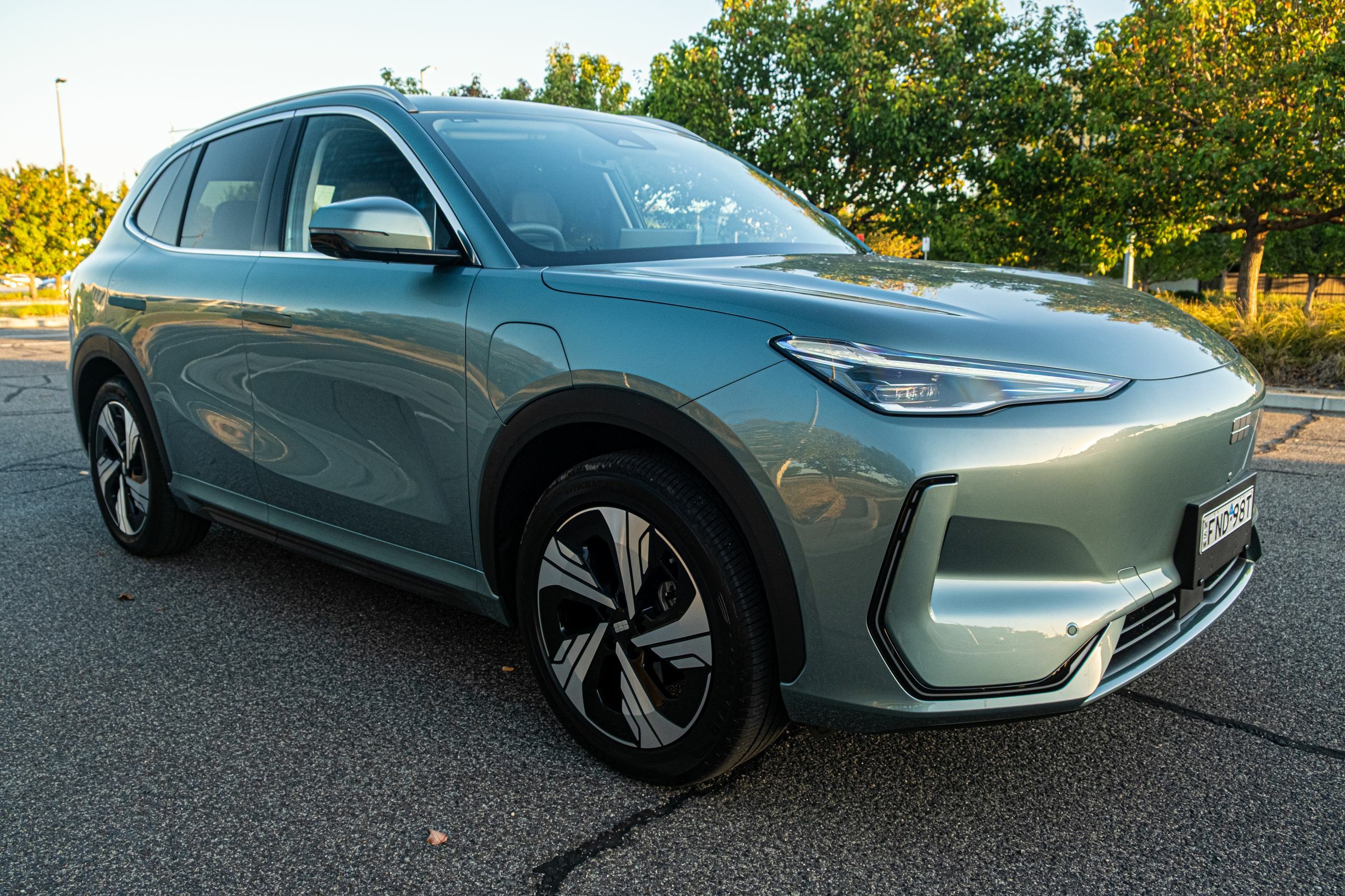
One of the country’s key players is the Geely Group, which continues to expand the reach of its core brand alongside a portfolio that includes Lotus, Volvo, Polestar, and Zeekr. In markets such as Australia, its most significant new EV is the Geely EX5, aimed squarely at the Tesla Model Y and competing Chinese models like the Xpeng G6 and BYD Sealion 7. It may not turn many heads or deliver an especially engaging drive, but it does tick loads of boxes.

QUICK FACTS
› Model:2026 Geely EX5 Inspire
› Starting Price:AU$45,990 ($32,500)
› Dimensions:181.7 L x 74.8 W x 65.7 in H (4,615 x 1,901 x 1,670 mm)
› Wheelbase:108.3 in (2,750 mm)
› Curb Weight:1,765 kg (3,212 lbs)*
› Powertrain:60.2 kWh battery / single electric motor
› Output:215 hp (160 kW) / 236 lb-ft (320 Nm)
› 0-62 mph6.9 seconds*
› Transmission:Single-speed
› Efficiency:16.2 kWh/100 km*
› On Sale:Now
SWIPE

*Manufacturer

\\\\\\\

Photos Brad Anderson/Carscoops

What Do You Get For Your Money?

Two versions of the Geely EX5 are currently available in Australia – the Complete and the Inspire. Last month, we lived with the flagship Inspire for a week. Prices start at AU$41,990 ($29,600) for the Complete and rise to AU$45,990 ($32,500) for the Inspire, which translates to AU$50,061 ($35,300) when factoring in on-road costs.

Neither the Complete nor the Inspire offers any optional extras. All customers must choose from one of six available paint finishes and two available interior colors.

The EX5 is slightly smaller than a Tesla Model Y and BYD Sealion 7, but it’s also considerably cheaper. The new Model Y Premium Rear-Wheel Drive starts at AU$58,900 ($41,600), a difference of AU$16,910 ($12,000), while the larger Sealion 7 kicks off from AU$54,990 ($38,800). The EX5 also undercuts the Xpeng G6, starting at AU$54,800 ($38,700), and the Leapmotor C10, priced from AU$47,990 ($33,900).
 Two Things Bother Us About The 2026 Geely EX5, But The Price Tag Kills Both | Review

The EX5 is based on Geely’s GEA architecture and features a compact 60.2 kWh lithium-iron phosphate battery pack with a single electric motor driving the front wheels. Both versions deliver the same 160 kW (215 hp) and 320 Nm (236 lb-ft) of torque.

Due to the small battery pack, the 430 km (267 miles) quoted range of the Complete and the 410 km (255 miles) driving range of the Inspire aren’t all that impressive, but the EX5 does promise to be pretty efficient, averaging as low as 15.8 kWh/100 km.

A Sleek Cabin

\\\\\\\\\\\\\\

Photos Brad Anderson/Carscoops

I stepped into my week with the EX5 just after handing back the keys to Geely’s new Starray EM-i plug-in hybrid. From behind the wheel, the two look and almost feel the same, which is certainly no bad thing.

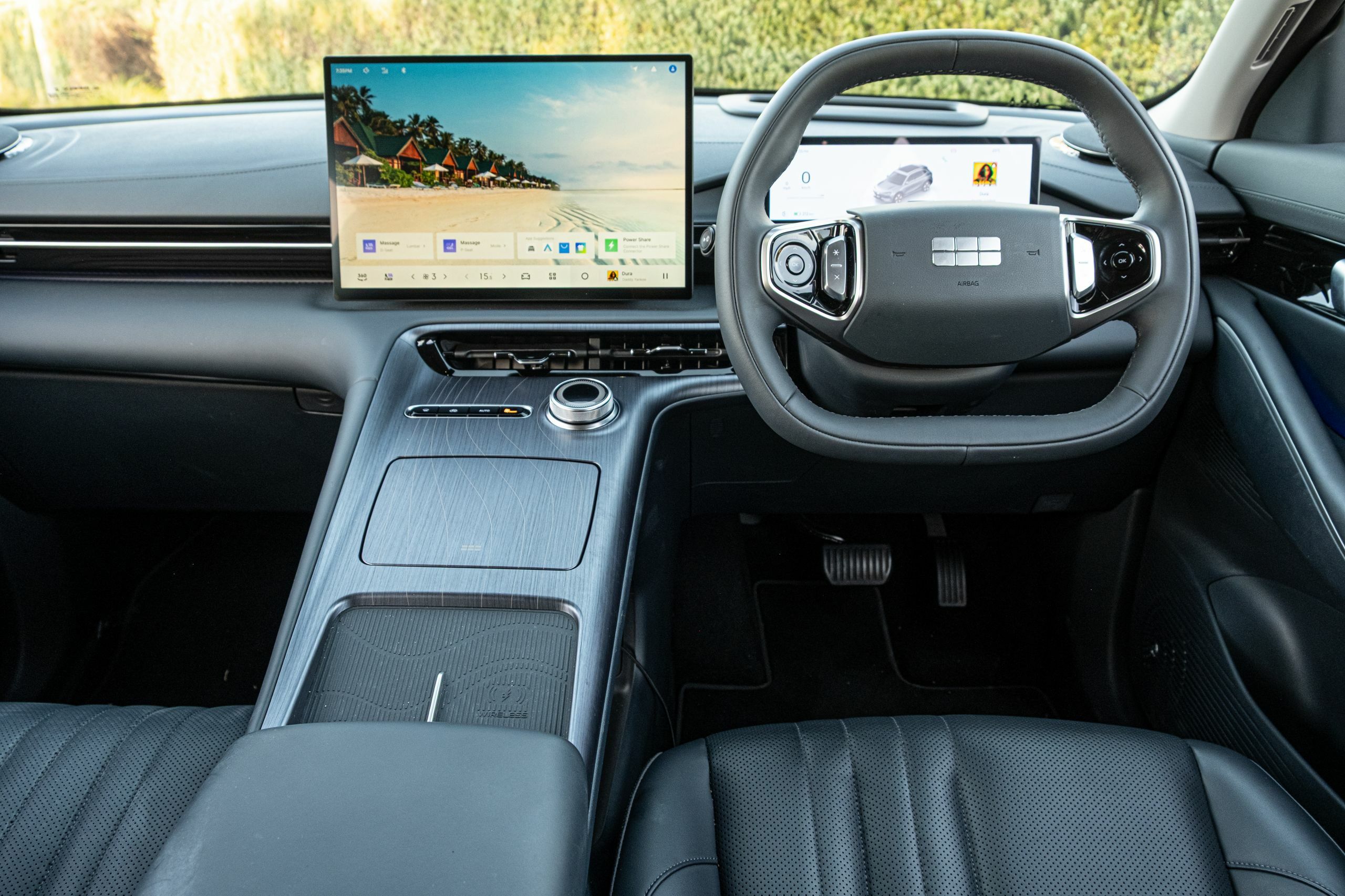
The EX5’s basic dashboard, steering wheel, door panels, and floating center console are all virtually identical to the Starray. While it’d be nice to have a little more differentiation between the two models, I can’t imagine there’ll be any EX5 buyers not completely satisfied with the fit and finish of the cabin.

Perched in the center of the dashboard is a 15.4-inch infotainment display using Geely’s Flyme OS. It’s an excellent system, using a snappy processor and having logical and easy-to-understand menus. I especially liked the ability to customize which functions remained fixed to the taskbar at the base of the screen, such as temperature controls, fan speed, and seat adjustments.
 Two Things Bother Us About The 2026 Geely EX5, But The Price Tag Kills Both | Review

A large 10.2-inch digital cluster is also used. Just like in the Starray EM-i, only the right side of it can be configured to display things like your media and trip functions. The rest of the screen remains unconfigurable.

Review: The 2026 Geely Starray EM-i Undercuts RAV4 By $5K And Feels Twice The Price

Our tester had the available black interior finish, and it felt more premium than the price tag would suggest. There are some areas with piano black plastic, including the steering wheel and parts of the door panels, but Geely hasn’t gone overboard with them. Found on the floating center console are climate-control shortcuts and a configurable scroll wheel.

The Good And The Bad

\\\\\\\\\\\\\\\\\\\\\\\\\

Photos Brad Anderson/Carscoops

Sliding into the driver’s seat for the first time, I was relieved that the faux leather felt very real and was beautifully soft to the touch. However, I was disappointed that, like in the Starray, there is no ability to adjust the lumbar support. This is an odd exclusion, particularly given that Geely has gone to the trouble of fitting ventilated, heated, and massaging front seats.

Speaking of the massage seats, they are superb and remarkably forceful, unlike most other cars in this price range with massage seats.

When launched, the EX5 only included wireless Apple CarPlay, but no Android Auto connectivity. Thankfully, our test car benefited from a software update just before we collected it, adding wireless Android Auto, which worked seamlessly. The Inspire also comes standard with a panoramic sunroof and a solid 16-speaker audio system.

Externally, the EX5 looks quite small, but much to my surprise, there’s plenty of room for adults in the second-row, including plenty of legroom and headroom. However, it seems Geely has robbed some cargo volume to make the rear seats as spacious as they are.

As such, there’s just 302 liters (10.6 cubic feet) of space in the rear, although this does increase to 410 liters (14.5 cubic feet) if you include the generous under-floor storage area. Fold the seats down, and you’re looking at 1,877 liters (66.2 cubic feet), or about 200 liters (7 cubic feet) less than the Starray.

Smooth And Sharp

\\\\\\\\\\\\\

Photos Brad Anderson/Carscoops

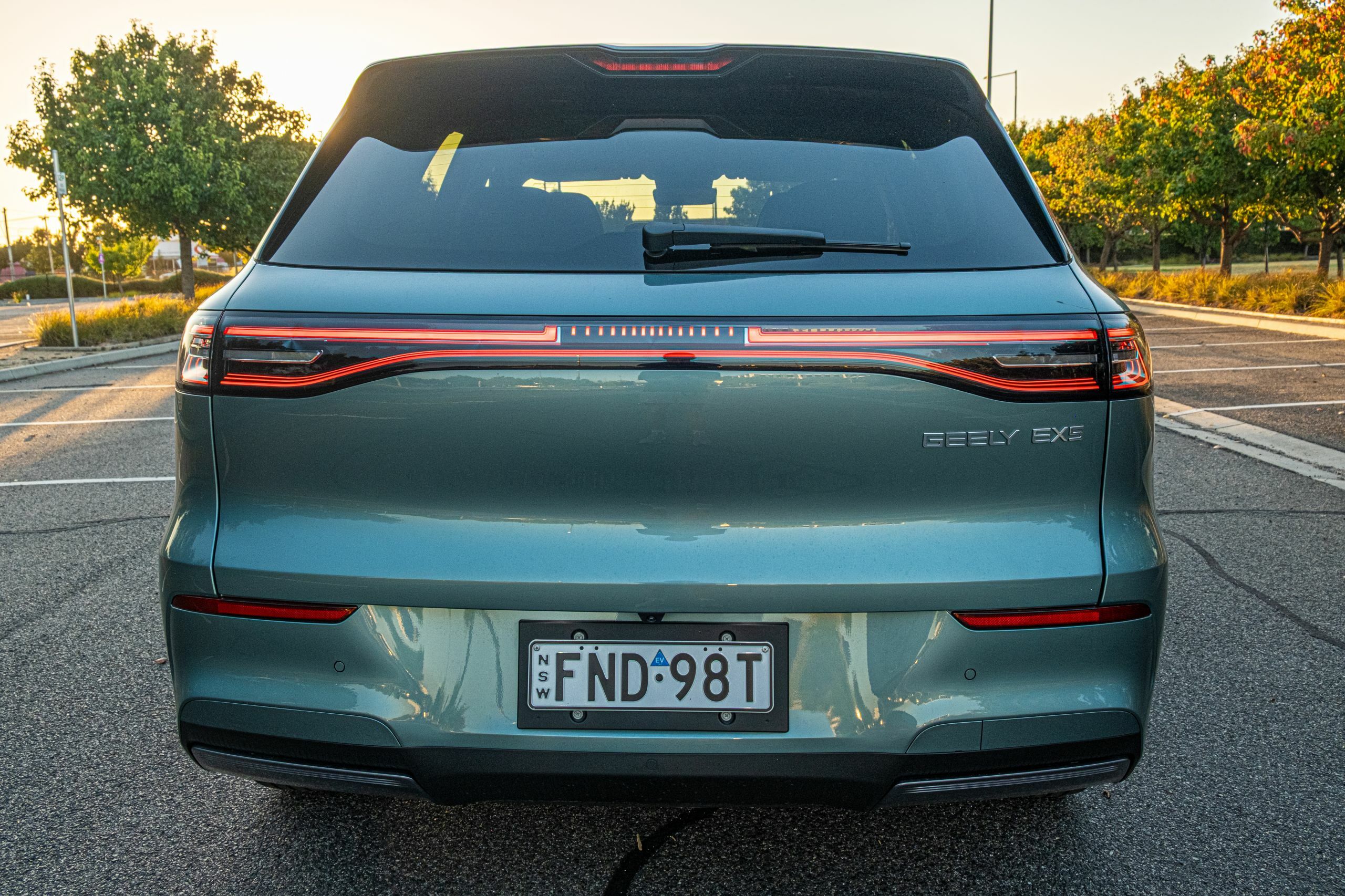
Spend any amount of time behind the wheel of the EX5, and it’s obvious that it feels just as polished as some of the more expensive competition.

As an EV like this should, it’s quiet on the open road, but it does have an especially loud pedestrian warning hum when driving at lower speeds. Figures of 160 kW (215 hp) and 320 Nm (236 lb-ft) are largely par for the course for a vehicle like this, and just so happen to be identical to the recently-launched Hyundai Elexio.

Review: Hyundai’s Chinese 2026 Elexio Gets So Much Right, And That’s The Frustrating Part

Power feels absolutely adequate. Were this a combustion-powered SUV, it may feel a little underpowered, but as all of the grunt is available the moment you stab the throttle, the EX5 gets going surprisingly well. Indeed, it can hit 100 km/h (62 mph) in 6.9 seconds, which is very respectable. Geely has also done a good job of ironing out any hints of torque steer under hard acceleration.
 Two Things Bother Us About The 2026 Geely EX5, But The Price Tag Kills Both | Review

Efficiency is also good. I averaged 16.2 kWh/100 km during my time with it, a lot better than I recently averaged in the larger and admittedly heavier Hyundai Elexio.

The ride also feels polished and plush, and that’s not something that can be said about many EVs. Given these vehicles have heavy battery packs in the floor, carmakers often give them quite harsh suspension setups. That’s not the case here as the EX5 eases over bumps smoothly and comfortably. Similarly, the steering is light and direct with several different settings to tweak the weighting.

What Could Be Improved?

\\\\\\\\\\\\\

Photos Brad Anderson/Carscoops

Just like we found in the Starray, most of the frustrations with driving the EX5 can be traced back to overzealous safety systems, like the speed limit warning and the driver monitoring system. In the more expensive Zeekr 7X, also from the Geely Group, these systems can be easily and quickly disengaged by swiping down from the top of the central screen and pressing on the large shortcut settings. Additionally, they stay off, even after you’ve left the car.

Things aren’t so easy in the EX5, as you have to dive into the menu in a process that can take 10-15 seconds. Whenever I would get ready to drive off, I’d have to disable them. It’d be nice to see Geely tap some of Zeekr’s UX engineers on the shoulder for some advice on how to incorporate similar shortcut toggles.

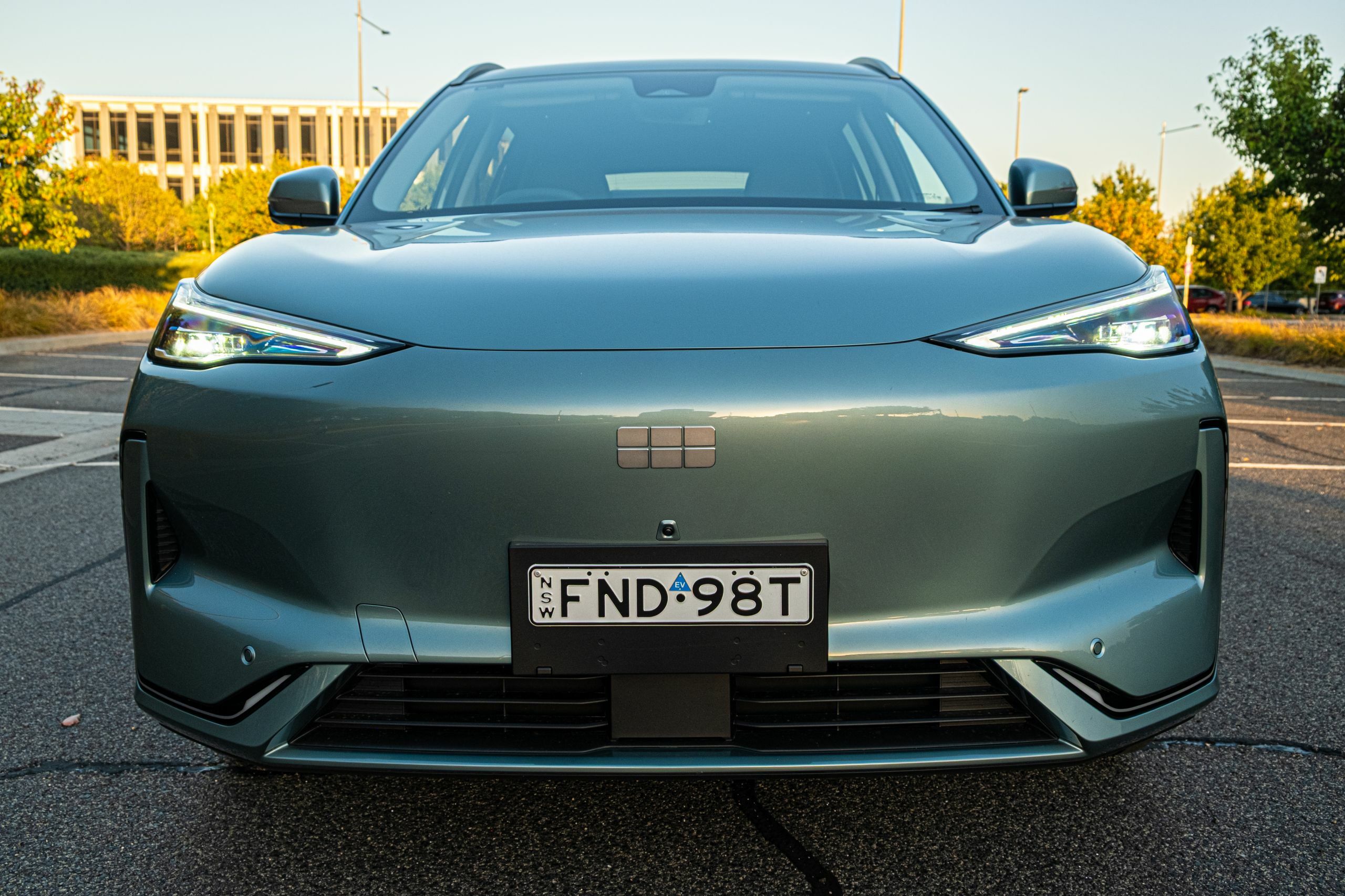
Is the EX5 particularly fun or engaging to drive? No, as it simply doesn’t have the performance or suspension setup to thrill, but it handles well, thanks in large part to the fact that it’s relatively light.

Shortly after we returned the keys to our 2025 model, Geely presented the 2026 EX5 in Australia, complete with a slightly larger 68.39 kWh battery, but retaining the same 160 kW (215 hp) front-mounted motor. In the future, we’d like to see Geely broaden the EX5’s appeal further, perhaps by launching a more powerful all-wheel drive version.
 Two Things Bother Us About The 2026 Geely EX5, But The Price Tag Kills Both | Review

Verdict

As it stands, the Geely EX5 is a very solid choice for those in the market for an all-electric, mid-sized SUV. While it’d be nice for some of the safety systems to be calibrated more accurately, the minor niggles they have aren’t a deal-breaker.

For growing families, the EX5 could prove to be a little too small, so it would be best suited to couples and those with young children. It’s well-priced, reasonably efficient, and comfortable to drive daily. However, even though the model we drove is known as the EX5 Inspired, it felt a little uninspired and isn’t the type of vehicle that tugs at the heartstrings, as is the case with a number of alternatives.

\\\\\\\\\\\\\\\\\\\\\\\\\\\\\\\\\\\\\\\\\\\\\\\\\\\\\\\\\\\\\\\\\\\\\\\\\\\\\\\\

Photos Brad Anderson/Carscoops

The 2026 BYD Sealion 7 Performance Promises Tesla Trouble, But The Details Say Hold On | Review

PROS ›› Quick, stylish design, competitive pricing CONS ›› Harsh ride, limited cargo, gimmicky features

While the likes of Tesla can sleep easily in the US, largely insulated from the surge of Chinese EVs sweeping through global markets, the situation looks very different overseas. In places like Malaysia, where we’re currently experiencing the BYD lineup firsthand, the competitive landscape is far more intense.

Review: 2026 Subaru Trailseeker Is An Insanely Fast Wagon That Just Happens To Be Electric

You’re probably already aware that brands like BYD have moved quickly to market with smaller and more affordable electric vehicles. What’s becoming clearer, however, is that they also seem to have an answer for nearly every category Tesla occupies.

Take the Sealion 7. In East Asia, it’s a mid size electric SUV that carries the Ocean Series legacy into a more premium segment. Available in both rear wheel drive and all wheel drive Performance variants, the Sealion 7 brings BYD’s e Platform 3.0 Evo, Blade Battery, and its so called Ocean Aesthetics design language into a very capable package.

QUICK FACTS
› Model:2026 BYD Sealion 7 Performance
› Dimensions:190.2 L x 75.8 W x 63.8 in H (4,830 x 1,925 x 1,620 mm)
› Wheelbase:115.4 in (2,930 mm)
› Curb Weight:2,340 kg (5,159 lbs)
› Powertrain:Dual electric motors / 82.56 kWh battery
› Output:290 kW / 690 Nm (509 lb-ft) of torque
› Performance:4.5 seconds 0–62 mph (0–100 km/h)*
› ChargingRapid Charger (150 kW DC)
› Range283 miles (456 km) WLTP*
› On Sale:Now
SWIPE

*Manufacturer

Or, if we strip away the brochure language, it may simply represent the next major headache for the Tesla Model Y.

But with the EV market at its most competitive, and BYD no longer alone in its export ambitions, the real question is whether the Sealion 7 can go toe to toe not just with Tesla, but with the growing wave of Chinese rivals also establishing themselves abroad.

Sealion? Ocean Aesthetics? What Does Any Of That Mean?

\\\\\\\\\

Photos Sam D. Smith / Carscoops

Okay, it’s a bit complex, but let’s try to break it down: BYD has multiple lines. For the domestic market, it has models under the Dynasty lines, and then you have the Ocean series, which, as the name implies, takes aquatic styling cues with sea-creature-based names. Seagull, Dolphin, and yes, Sealion. There are multiple Sealions as well, with the 5 being a Honda HR-V-sized competitor that’s also available with a hybrid drivetrain, and the Sealion 6 being a larger SUV in the vein of the Nissan Rogue.

Review: 2026 Zeekr 7X Performance Is Proof That Tesla Isn’t The Benchmark Anymore

The Sealion 7 is more akin to the Audi Q8, a more stylish approach for those who care about such things. And while the front end is very much BYD, in the fact that it’s a tad anonymous but inoffensive, the rear end has actually grown on me.

Rather than trying to make a bold, but frankly pointless statement by being objectionably coupe-like (I’m looking at you, Porsche Cayenne Coupe and BMW X6), it’s a more cohesive, perhaps egg-like, shape. Again, it’s not revolutionary, but nor is it different for the sake of being different either. It’s streamlined and more put-together in its execution, avoiding the awkward proportions that so many other “sporty” SUVs seem to cling to.

That Low Tapering Roofline Can’t Be Very Practical, Can It?

\\\\\\\\\\\

Photos Sam D. Smith / Carscoops

Well, rear-seat passengers don’t have to sacrifice too much in terms of headroom, which is a plus. However, after several airport runs, it was soon clear that boot space, or rather the shape of it, is not the Sealion 7’s strong suit.

First Drive: 2026 Geely Starray EM-i Undercuts RAV4 By $5K And Feels Twice The Price

That rounded-off rear does look nice, but when it comes to getting it to close when stuffed to the brim, you’re going to have to end up playing some suitcase tetris…or, in our case, moving some luggage to the passenger compartment instead.

\\\\\

Photos Sam D. Smith / Carscoops

It’s a common tradeoff: looks at the expense of practicality. But it’s also worth noting if you’re trying to decide between the more conventional Sealion 6 or the Sealion 7. Plus, it’s not all style over substance. There are some nice functional features too, such as proper air curtains in the front bumper, which help with airflow around the wheels.

It’s Still A Chinese Car, Right? How Stylish Can It Be?

 The 2026 BYD Sealion 7 Performance Promises Tesla Trouble, But The Details Say Hold On | Review

You’d be surprised. Yes, there are still a fair few (how should we put this?) “inspired” designs throughout the Chinese market, with the Land Rover Defender and Range Rover seemingly being the most imitated. The Sealion 7, though, looks to be cutting its own mold in many respects.

It’s the interior that really shines. Unlike the Atto 3 we tested earlier, this is a much more “conventional” setup. The interior quality feels premium, with soft-touch plastics everywhere, while the layout won’t have you scratching your head.

It still lacks physical AC controls, except there’s a button to turn the fan on and off. Not fan speed. Not temperature. Just on and off. Why?

Now, having spent some time with BYD products, I’m going to label the rotating screen as gimmicky. At 15.6 inches, it’s large enough for anything you’d want, and the hardware is beefy enough for the system to be super snappy and responsive. However, if you do use wireless CarPlay or Android Auto, as 90 percent of users will, the screen will force you to use it in its landscape orientation. Go figure.

\\\\\\

Photos Sam D. Smith / Carscoops

Still, there’s some great integration with the super-legible driver’s display and head-up display, the latter of which supports turn-by-turn navigation when using Google Maps. Both screens also do an excellent job of displaying info for the lane-keep assist and cruise control functions, which are noticeably less intrusive than earlier attempts from BYD.

First Drive: The 2026 Mazda CX-5 Gets Almost Everything Right, Except One Thing

The electric seats feature lumbar and adjustable under-thigh support, helping these chairs feel supportive, but not overly bolstered. The front seats are also ventilated, with up to three speeds of cooled air channeled to combat any hint of back sweat.

If you want to see more of the outside, there’s a full-length panoramic roof with an electrically controlled sunshade, and there are physical switches for drive modes and regen.

So, How Does It Drive?

 The 2026 BYD Sealion 7 Performance Promises Tesla Trouble, But The Details Say Hold On | Review

In a single sentence, it feels mature, but still not as polished as I’d have hoped. BYD may have had a few missteps in the past, but their premium product offerings are starting to feel closer to the semi-premium image they’re chasing in the way they drive.

The Performance AWD model we got to the keys to packs a dual-motor setup for AWD, producing 390kW (523 hp) and 690 Nm of torque. To get from 0-100 km/h (0-62 mph) you need just 4.5 seconds. That’s faster than a Porsche Cayenne Coupe S, all while offering an integrated battery, fast charging up to 230 kW, and being able to top up from 10-80 percent in around 24 minutes.

Also: This Family SUV Hits 62 MPH In Under 5 Seconds And Doesn’t Even Need A Charger

While figures are all well and good, there’s proper substance when you’re behind the wheel. While a proper enthusiast may want a quicker ratio rack, the Sealion 7’s steering is nicely weighted, and does a decent job of providing the kind of feedback that you need with 500+ hp under your right foot.

The car also handles better than expected. There’s a trend for Chinese SUVs to be a bit over-damped, with the ensuing wallow meaning that true confidence can’t be found. But the Sealion 7’s chassis not only feels dynamic through a set of quick corners, it also remains planted, more sedan-like than you may expect.

 The 2026 BYD Sealion 7 Performance Promises Tesla Trouble, But The Details Say Hold On | Review

There’s one huge penalty, though, experienced while driving on Malaysia’s roads. Over bigger, faster imperfections, such as expansion joints, the ride feels almost crashy. It’s the one chink in this BYD’s armor that would otherwise have convinced us that the Germans themselves had tuned this suspension. But alas, there’s still a lack of composure there.

Read: Top Chinese Carmakers Are Selling More Cars Abroad Than At Home

But at slower speeds, and over smaller humps, the Sealion 7 maintains a well-damped composure that you’d expect from something upmarket, and that’s despite riding on 19-inch rims. Also of note is that the Performance version of the Sealion 7 comes equipped with Michelin Pilot Sport EV tires, again, another sign that BYD is taking this segment of SUV seriously, rather than cheaping out on lesser-known rubber, as has been seen in the past.

You also get several drive modes, and they behave pretty much as expected. However, despite offering selectable “normal” and “larger” regenerative braking settings, there’s still no proper one-pedal driving mode. It’s not a dealbreaker, but it does feel like something future versions of the Sealion should include if it’s going to go head-to-head with Tesla

Verdict

 The 2026 BYD Sealion 7 Performance Promises Tesla Trouble, But The Details Say Hold On | Review

For the Malaysian market, the Sealion 07 comes in at RM 183,800 (equal to $25,900 a current rates) for the Premium model, or RM 199,800 ($28,100) for the AWD Performance. The latter undercuts Tesla’s Model Y Long Range AWD (RM 242,450) significantly, which is slower (0-62 mph in 4.8 seconds vs 4.5 seconds for the BYD), and has less range on the WLTP cycle.

But with more aggressive entries planned for East Asia, including the likes of Chery and Changan, the Sealion 7 is about to come up against tough competition. It highlights the fast-moving pace of the EV industry, particularly spurred on by the Chinese automakers who are keen to find market share outside of their home playing field.

\\\\\\\\\\\\\\\\\\

Photos Sam D. Smith / Carscoops

The 2026 Subaru Trailseeker Is An Insanely Fast Wagon That Just Happens To Be Electric | Review

PROS ›› Lots of utility, genuinely quick, NACS charging CONS ›› Odd shifter, questionable styling, sub-330-mile range

Subaru’s first EV, the Solterra, didn’t exactly set the world alight. Lukewarm demand and an awkward early recall made it feel more like a cautious toe-dip into electrification than a confident leap.

The 2026 Trailseeker is the opposite. It’s bigger, quicker, and more capable. And somehow, almost by accident, it has become the most powerful and fastest production Subaru ever built.

Review: Hyundai’s Chinese 2026 Elexio EV Gets So Much Right, And That’s The Frustrating Part

That alone would make it worth a look. But here’s where it gets interesting. We didn’t test the loaded Touring trim dripping in features. We didn’t even grab the mid-tier Limited. Instead, we spent a full week with the Trailseeker Premium, which, despite the name, is actually the base model. Yes, “Premium” is doing some heavy lifting here. This is the $39,995 version most buyers will realistically consider.

Quick Facts
› Model:2026 Subaru Trailseeker Premium
› Starting Price:$39,995 (excluding destination)
› Dimensions:190.8 L x 73.2 W x 65.9 in H (4,846 x 1,860 x 1,674 mm)
› Wheelbase:112.2 in (2,850 mm)
› Curb Weight:4,376–4,453 pounds (1,985–2,020 kg)
› Powertrain:Dual electric motors / 74.7 kWh battery
› Output:375 hp (280 kW)
› 0-60 mph:3.9 seconds (GPS verified)
› Transmission:Single speed
› Range:280 miles (452 km)
› On Sale:First-half of 2026
SWIPE

On paper, it reads like a greatest-hits list for Subaru loyalists. Standard Symmetrical AWD, 8.5 inches (216 mm) of ground clearance, 3,500 pounds of towing, and 375 horsepower (280 kW). That’s not exactly timid. Subaru claims 0-60 mph in 4.4 seconds. We tested it. It’s quicker than that. And after a proper stretch behind the wheel, we’re fairly convinced this so-called base model might be the smartest pick in the entire lineup.

Does It Look The Part?

\\\\\\\\

Photos Stephen Rivers / Carscoops

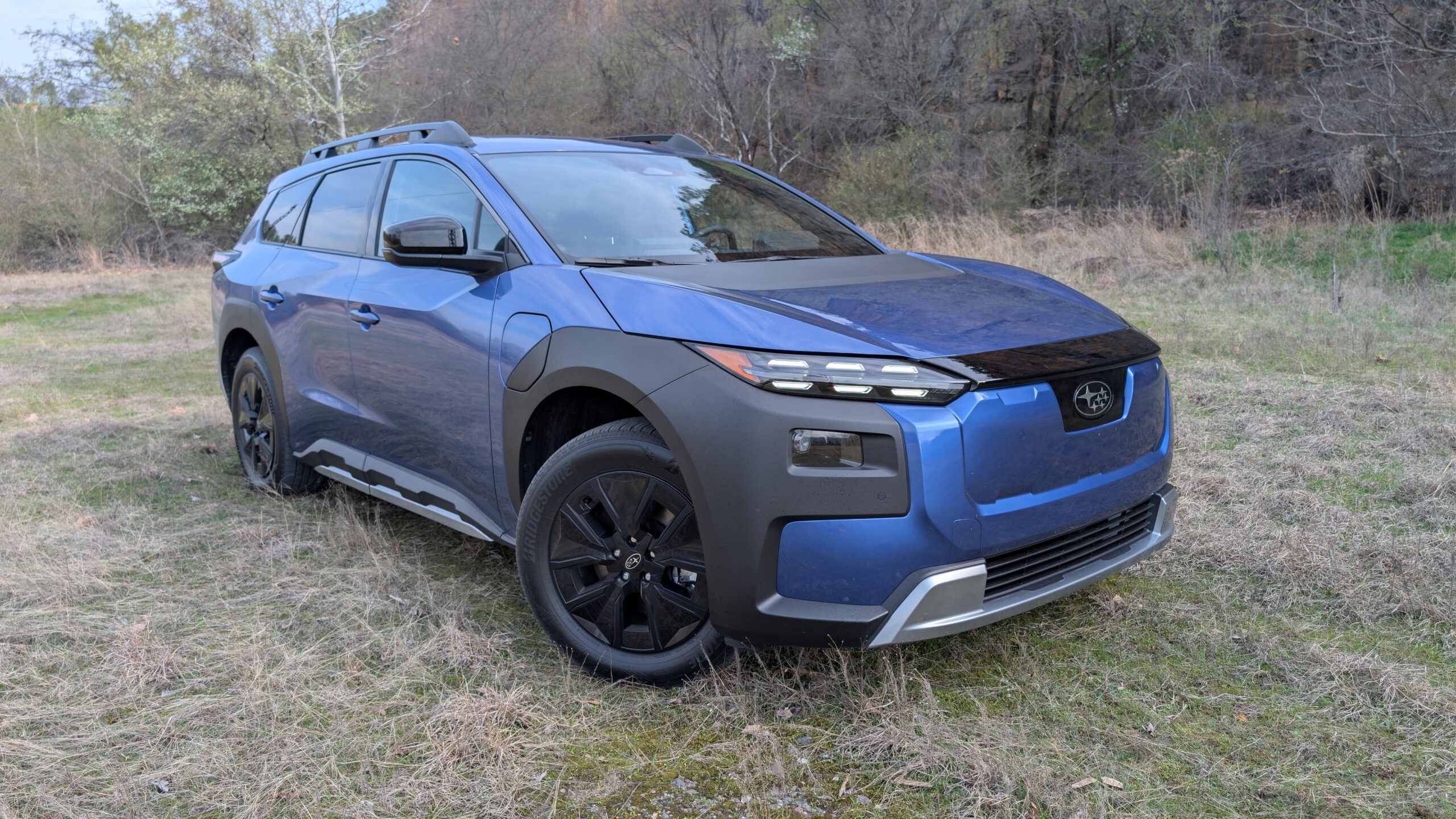
The Trailseeker looks like it belongs on a trailhead, not outside a charging station. Black lower cladding, ladder-style roof rails, squared-off proportions, and a clean light bar give it a tougher presence than the Solterra. It measures 190.8 inches (4,846 mm) long on a 112.2-inch (2,850 mm) wheelbase, stands 65.9 inches (1,674 mm) tall, and rides with best-in-class 8.5 inches (216 mm) of clearance.

More: Subaru’s New Trailseeker Costs $5,000 More Than The Outback

That clearance number matters. It puts the Trailseeker Premium ahead of rivals like the VW ID.4, Hyundai Ioniq 5 XRT, and Chevy Blazer EV AWD in pure ride height. That’s something Subaru emphasized heavily in its capability comparison charts. For buyers, it means worrying less when going over deeply rutted paths or rocky roads. 

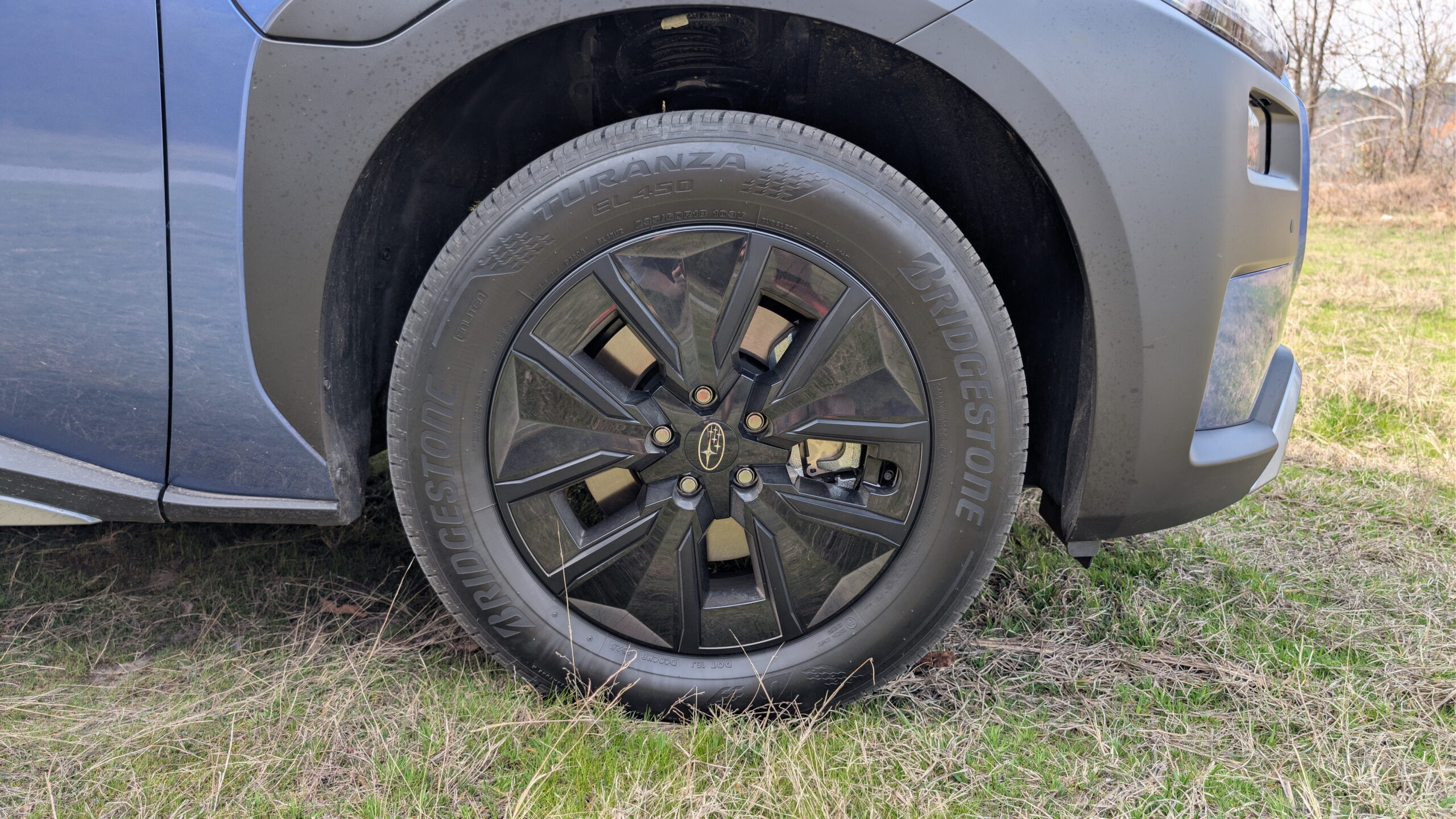
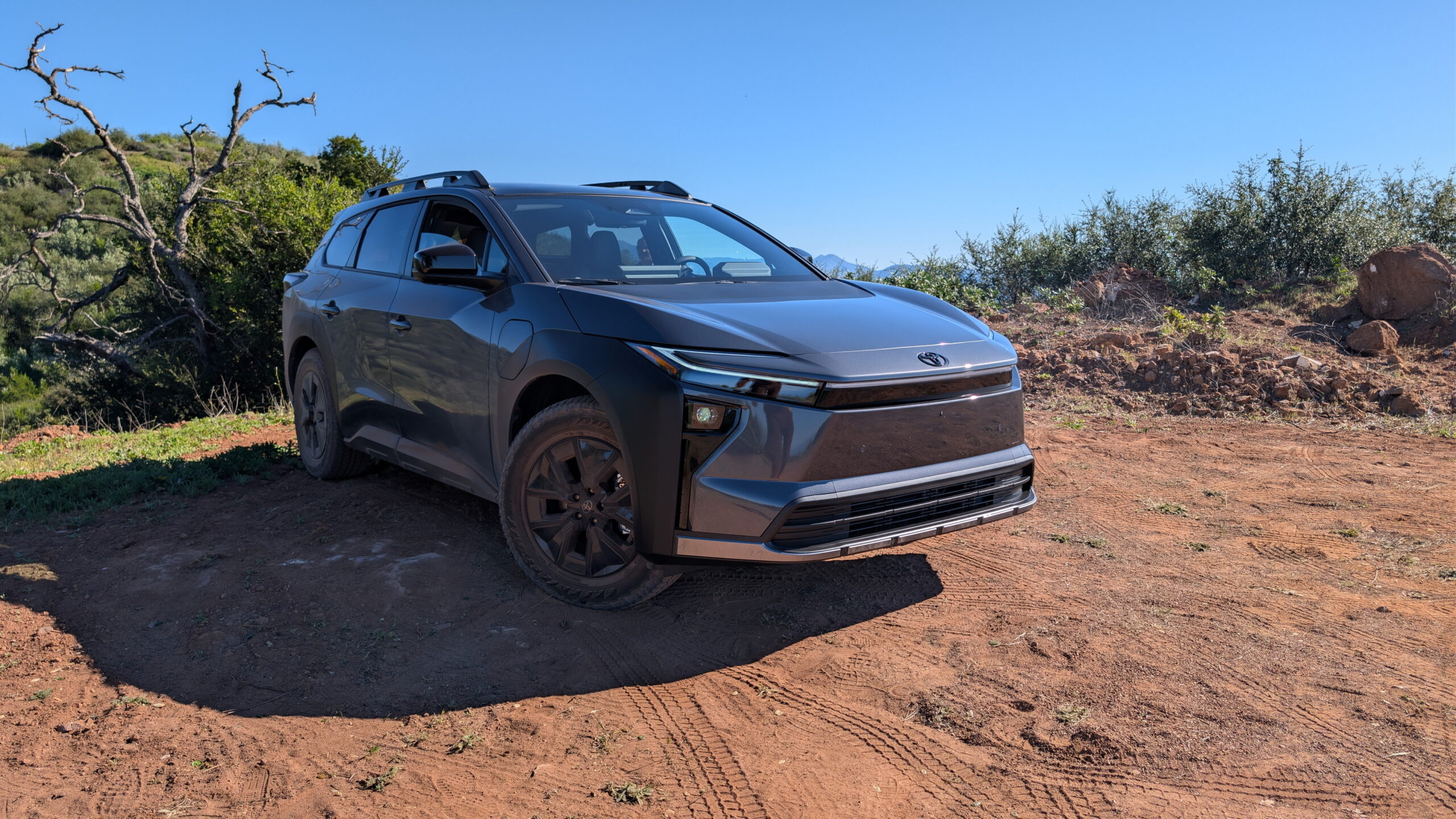
Even on 18-inch wheels with aerodynamic covers (Premium trim), it doesn’t look cheap. If anything, the smaller wheels add sidewall and reinforce the rugged vibe. Having now driven both this and the bZ Woodland, the Subaru appears a bit more cohesive in person. I’m still not sold on all of the plastic cladding, but I’d rather be seen in this than the Toyota personally. 

Tell Me About The Interior

\\\\\

Photos Stephen Rivers / Carscoops

This base Trailseeker had me searching for decontenting because it starts at $39,995. As we’ve covered, that’s thousands less than the base bZ Woodland. Despite my efforts, I never found anything that felt like a big letdown compared to the Toyota I tested a few weeks ago. Sure, we don’t have ventilated seats, heated outboard rear seats, or a panoramic sunroof, but honestly, those are luxuries, and what’s already here is pretty great for the money. 

Review: 2026 Toyota bZ Woodland Is Quicker Than A GR Corolla, But That’s Not Its Real Trick 

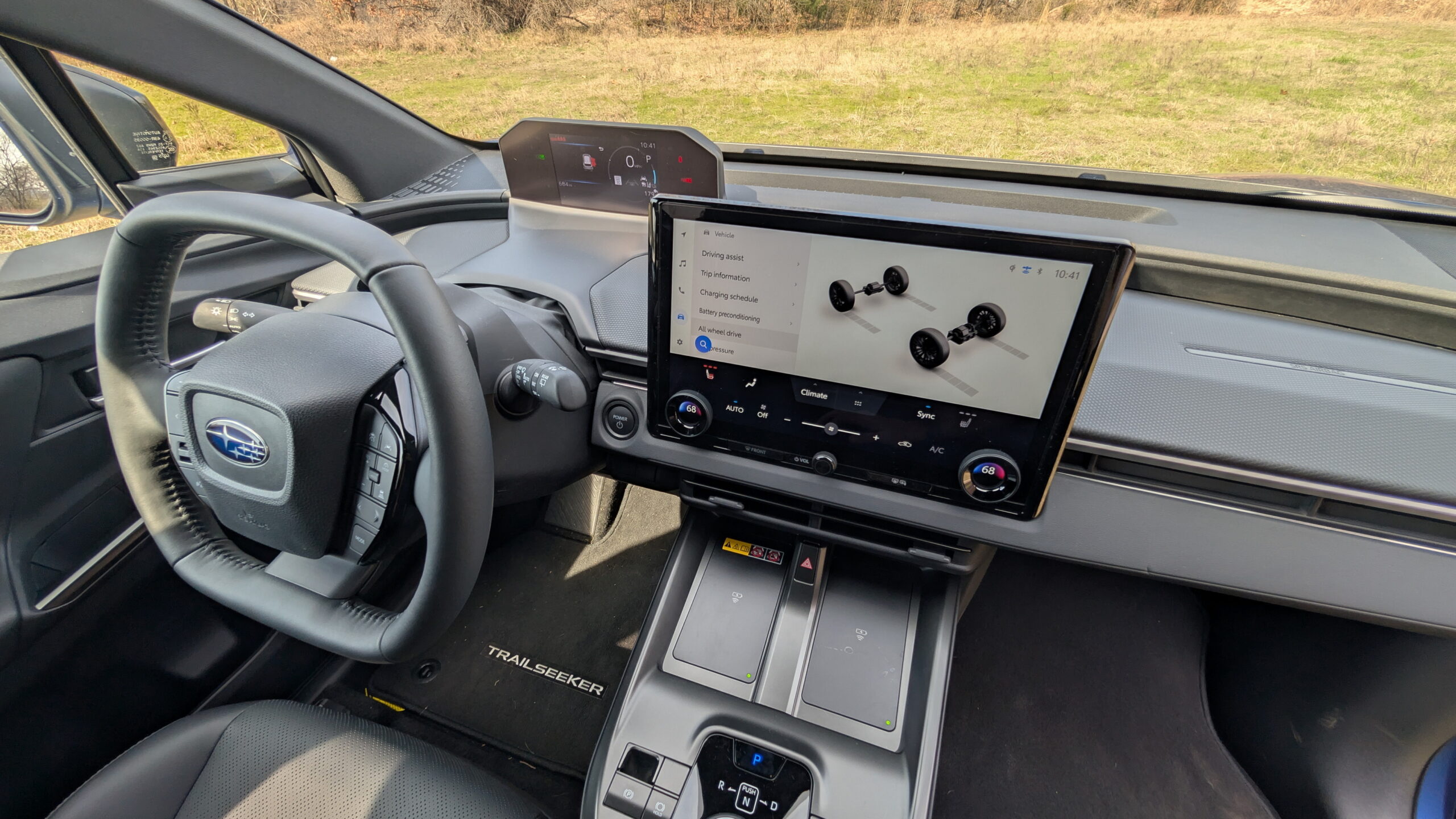
The dash has nice texturing, the steering wheel feels like it’s from the future, and the 14-inch infotainment screen is a massive leap forward for Subaru (thanks, Toyota!). The menu is intuitive and easy to navigate. Physical buttons exist for the volume, media on/off, defrost, hazards, and climate temperature. Fan speed, air flow direction, and heated seat settings are all in the touchscreen itself. It’s not as nice as having physical controls for everything, but it’s better than having none at all. 

 The 2026 Subaru Trailseeker Is An Insanely Fast Wagon That Just Happens To Be Electric | Review

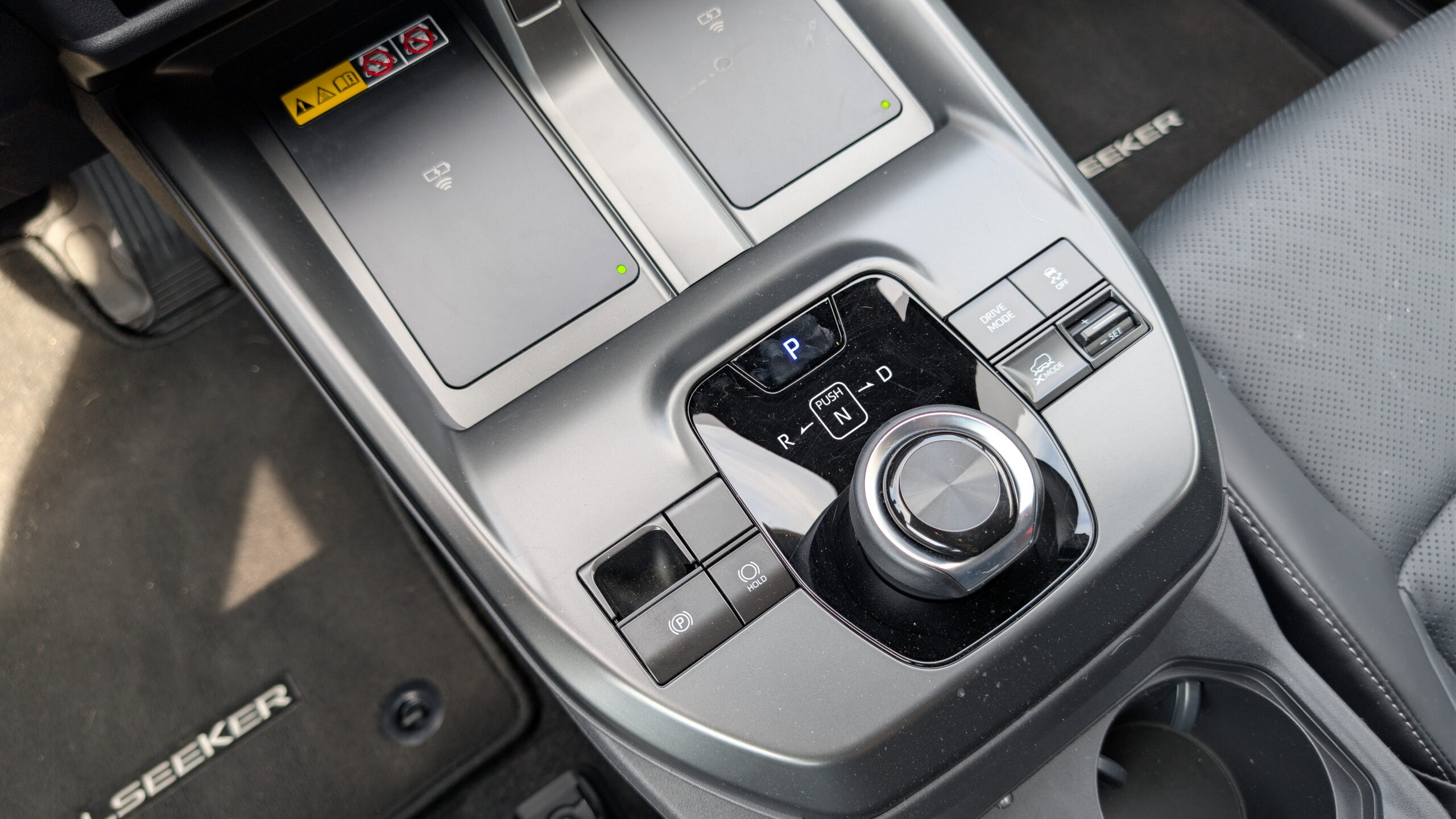
There are dual 15w wireless chargers under the screen, along with a parcel shelf underneath that. It’s key because there’s no glove box, so expect to store things differently in this car than in most others. A small ‘magic’ storage console sits behind the shifter and allows both front seat passengers to open it from their side, which is great. It doesn’t flip over like the one we tested in the latest Toyota RAV4. Speaking of that shifter, it’s one of the weirdest and perhaps least positive parts of this car. 

 The 2026 Subaru Trailseeker Is An Insanely Fast Wagon That Just Happens To Be Electric | Review

To use it, the driver pushes a ring down and then twists it left or right. Once you’re used to it it’s no big deal, but it does take getting used to. Everyone I handed the keys to needed a quick tutorial. Subaru places driving modes, of which there are three, normal, eco, and power, to the right of the shifter, along with X-Mode, a low-speed cruise control built for off-roading. 

First Drive: The 2026 Toyota C-HR Refuses To Grow Up And Goes All-In On EV Thrills

The seating is supportive and comfortable, but lacks the deep adjustability found in more expensive vehicles. That said, I’m happy to report that the Trailseeker can easily accommodate four adults who are above average height. The rear seats have just enough headroom for me at 6’6 to comfortably sit behind my own driving position in front. That’s impressive, though we should note that adding the panoramic sunroof detracts a bit of headroom. 

\\\\\

Photos Stephen Rivers / Carscoops

Speaking of space, there are over 30 cubic feet to use in the back of the Trailseeker. That’s a strong figure and reminds us why wagons are so practical in a world full of oversized SUVs. Fold the seats down, and cargo space more than doubles to over 70 cubic feet. That’s not half bad, though we wish Subaru had included a front truck to make that figure even bigger. Those who need even more space can tow up to 3,500 pounds. 

Shockingly Quick In Practice

 The 2026 Subaru Trailseeker Is An Insanely Fast Wagon That Just Happens To Be Electric | Review

Leave it to Subaru to cook up what it has in the Trailseeker from a driver’s perspective because it’s on two very different ends of the spectrum at the same time. For everyday pilots of this vehicle, it’ll feel totally normal, totally placid, and at times… it just seems to lack much character. Somehow, Subaru also just happened to make this the most powerful and quickest production car that it’s ever built. 

The steering is quick and communicative, the accelerator and brakes offer good linear feedback, and the chassis handles directional changes with composure and high aptitude. It even manages bad road conditions, gravel roads, rock-filled trails, and some off-road trails with ease and comfort. 

 The 2026 Subaru Trailseeker Is An Insanely Fast Wagon That Just Happens To Be Electric | Review
Stephen Rivers for Carscoops / A friend helped me snap this photo

There aren’t even any STI badges to show that performance envelope off. Every Trailseeker gets a dual AC synchronous motor setup with a combined 375 horsepower (280 kW). It leverages a 74.7 kWh battery pack, and Subaru says this wagon will rocket from 0-60 mph in just 4.4 seconds. It’s wrong about that, and we have the data to prove it. 

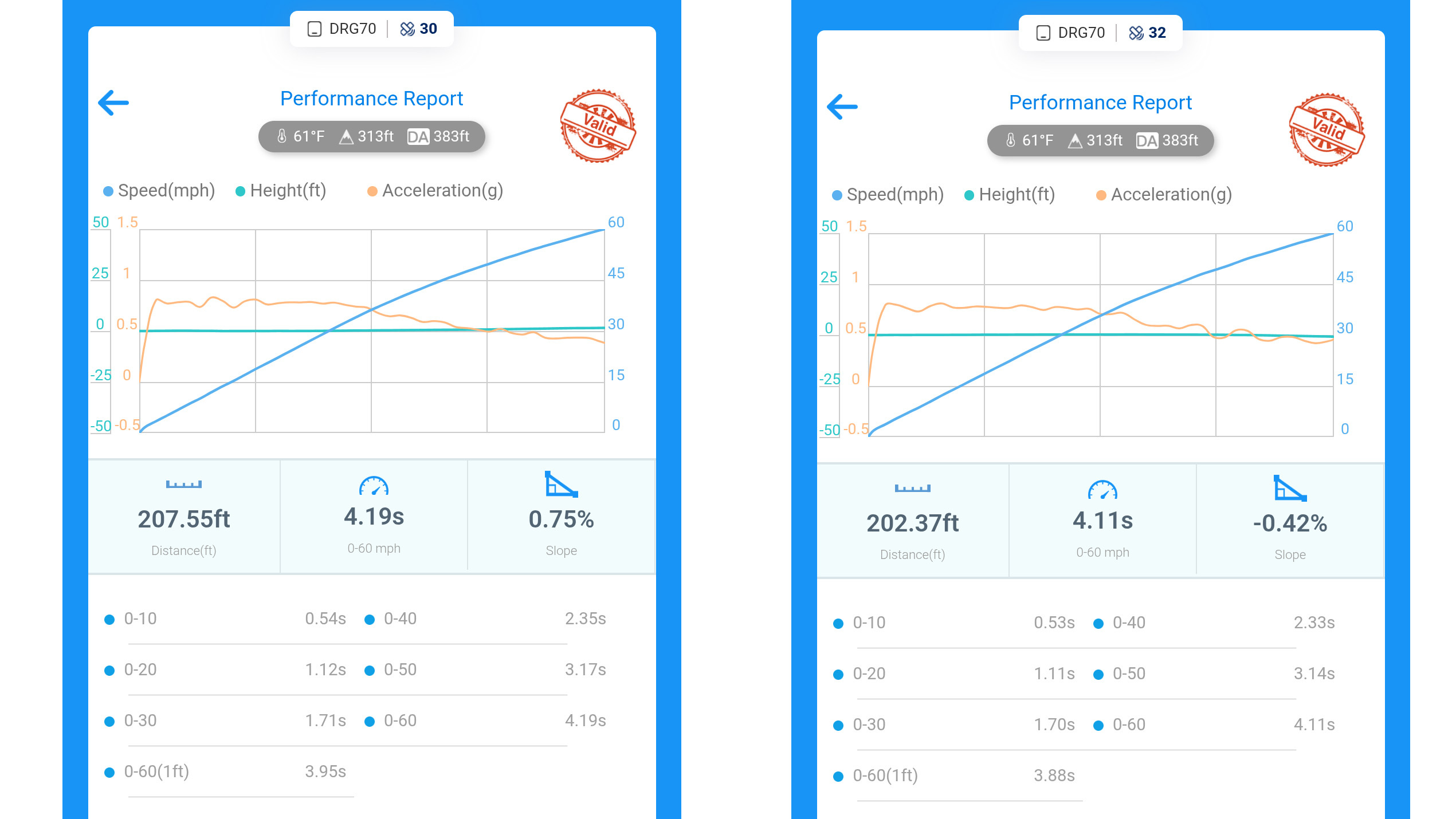
In the real world, we strapped a Dragy GPS tracker to ours and recorded multiple launches. With one foot of rollout, the quickest run came in at 3.88 seconds. Without rollout, it ran 4.11 seconds. You can read the full breakdown of our testing methodology and slope corrections in our separate acceleration analysis.

 The 2026 Subaru Trailseeker Is An Insanely Fast Wagon That Just Happens To Be Electric | Review
Stephen Rivers for Carscoops

That’s properly quick. Not “quick for a Subaru.” Just quick. In fact, it’s the fastest production Subaru we’ve ever tested. 

More importantly, the updated AWD logic gives it a stable, confidence-inspiring feel. It uses independent front and rear motors with variable power distribution, plus X-Mode with Snow/Dirt and Deep Snow/Mud settings. Grip is immediate and predictable, even when you provoke it.

Braking is handled by 12.9-inch front rotors and 12.5-inch rears, and regenerative braking offers multiple levels via paddles. It’s not WRX-level fun, but it’s far more engaging than most mid-size electric crossovers.

 The 2026 Subaru Trailseeker Is An Insanely Fast Wagon That Just Happens To Be Electric | Review

EPA-estimated range is 281 miles (452 km) for the Premium, slightly higher than the 274 miles quoted for Limited and Touring trims. Charging from 10–80 percent takes as little as 28 minutes at up to 150 kW, and it uses a standard NACS port for Supercharger access. We achieved a maximum estimated range of 239 miles as we achieved 3.2 miles per kW, but that’s with our 0-60 testing included. Drive like an adult, and the Trailseeker will almost certainly hit its 280-mile range. 

Plenty Of Competition

 The 2026 Subaru Trailseeker Is An Insanely Fast Wagon That Just Happens To Be Electric | Review

Subaru benchmarks the Trailseeker against the Kia EV6, Volkswagen ID.4, and Honda Prologue, but the reality is broader than that.

Tesla Model Y is the most obvious rival. In Long Range form, it offers more range and arguably better software. It also matches the Trailseeker’s 3,500-pound towing capacity and adds a usable frunk, something the Subaru notably lacks.

But the Model Y rides lower, lacks meaningful ground clearance, and doesn’t pretend to be trail-capable. If you want tech and efficiency first, Tesla wins. If you want capability baked into the chassis, Subaru has the edge.

Kia’s EV6 leans sportier. It feels lower, sharper, and more road-focused. In GT-Line or GT form, it’s quicker in a straight line, but it sacrifices ride height and off-road pretense. It’s the enthusiast’s EV crossover. The Trailseeker is the practical adventurer.

The Hyundai Ioniq 5 XRT gets closer philosophically. It adds rugged styling and a slight lift, but it still can’t match the Subaru’s 8.5 inches of clearance or 3,500-pound tow rating. Hyundai wins on interior tech polish and charging speed consistency. Subaru counters with real-world trail confidence.

The Toyota bZ Woodland is mechanically nearly identical. Same bones. Same dual-motor layout. Same basic mission. But in person, the Subaru feels more cohesive and slightly better resolved. And crucially, it undercuts the Toyota on price in base form. That matters.

The Trailseeker doesn’t dominate on range. It doesn’t dominate in outright interior luxury. What it does is combine quick acceleration, meaningful ground clearance, real towing capacity, and sub-$40,000 pricing in a way very few EVs currently do. That niche may be small, but it’s distinctly Subaru.

Final Thoughts

 The 2026 Subaru Trailseeker Is An Insanely Fast Wagon That Just Happens To Be Electric | Review

Here’s the surprising part: I’m not convinced you need to step up to the Limited or Touring. The Premium delivers the full 375-hp experience, the full AWD system, the full ground clearance, the same fast charging, and nearly identical range. The features it lacks feel like luxuries, not necessities.

That’s rare in today’s trim-walk world. If Subaru’s goal was to make its second EV feel unapologetically like a Subaru, capable, practical, quick, and ready for something more than commuting, it nailed it. And the base model might just be the smartest version in the lineup.

For those with just $5,000 extra to spend, they have their pick of the lineup… and the fastest production Subaru in history without giving up a shred of practicality. 

\\\\\

Photos Stephen Rivers / Carscoops

❌
❌