A masked U.S. Immigration and Customs Enforcement agent knocks on a car window in Minnesota on Jan. 12, 2026. (Photo by Nicole Neri/Minnesota Reformer)
Three new county sheriff’s offices have signed agreements with Immigration and Customs Enforcement that allow deputies to enforce federal immigration law.
The sheriffs of Dunn, Green Lake and Walworth counties have signed the agreements under ICE’s 287(g) program. ICE records show the Dunn County agreement was signed Feb. 10 while the other two are still pending. All three counties have signed on to the program under the warrant service officer model, which allows county sheriff’s deputies to arrest people targeted by ICE with administrative warrants.
With the three new agreements, 19 of Wisconsin’s 72 counties have joined the 287(g) program. Most of the counties have joined the program under the warrant service model while Kenosha and Marathon counties have joined under the jail enforcement model — which allows departments to notify ICE of undocumented immigrants detained in county jails. Kewaunee, Sauk and Waukesha counties have signed up under both models.
Dodge County does not have a 287(g) agreement with ICE but for years has had a contract to hold federal detainees in its county jail, which includes people arrested by ICE.
Immigrants’ rights and civil rights groups have criticized the 287(g) agreements, arguing that law enforcement openly stating its support for ICE and its often aggressive tactics discourages immigrants of all legal statuses from reporting crimes as victims or coming forward as witnesses.
“287(g) agreements do not make anyone safer — they stoke fear and erode trust, deter residents from reporting crime, and divert local resources away from addressing real public safety concerns and the needs of the community,” the ACLU of Wisconsin said in a statement in January after the Kenosha and Sauk county sheriffs signed their agreements.
U.S. Sen. Mark Kelly , D-Ariz., speaks on the failed grand jury indictment against him during a news conference at the U.S. Capitol on Feb. 11, 2026 in Washington, D.C. (Photo by Heather Diehl/Getty Images)
WASHINGTON — The Trump administration must explain to a circuit court before the end of March exactly why it appealed a lower court’s ruling that allows Arizona Democratic Sen. Mark Kelly to keep his retirement rank and pay while a First Amendment case about the “Don’t Give Up The Ship” video plays out.
The U.S. Court of Appeals for the District of Columbia Circuit’s order gives the Department of Justice until March 30 to provide a series of documents in its appeal of the district court’s preliminary injunction.
That ruling, from Senior Judge Richard J. Leon of the District of Columbia District Court, said Defense Department officials, including Secretary Pete Hegseth, erred when trying to apply rules that affect active-duty military members to Kelly, a retired Navy Captain.
“Secretary Hegseth relies on the well-established doctrine that military servicemembers enjoy less vigorous First Amendment protections given the fundamental obligation for obedience and discipline in the armed forces,” Leon wrote. “Unfortunately for Secretary Hegseth, no court has ever extended those principles to retired servicemembers, much less a retired servicemember serving in Congress and exercising oversight responsibility over the military. This Court will not be the first to do so!”
Leon was nominated by former President George W. Bush.
DOD seeks to downgrade Kelly retirement rank
The lawsuit began earlier this year after the Defense Department began proceedings to downgrade Kelly’s retirement rank and pay for appearing in the 90-second video.
The six Democrats, all of whom are former members of the military or intelligence agencies, said in the video they understood the people working in those fields “are under enormous stress and pressure right now.”
“Americans trust their military. But that trust is at risk,” they said. “This administration is pitting our uniformed military and intelligence community professionals against American citizens.”
They went on to say the “laws are clear” and that illegal orders can and must be refused. The video ended with them saying, “Don’t Give up the Ship,’ a long-held phrase in the U.S. Navy.
The Democrats’ video infuriated President Donald Trump, leading the Defense Department to open an investigation into Kelly.
Justice Department officials also launched an investigation into Kelly, Michigan Sen. Elissa Slotkin, Colorado Rep. Jason Crow, Pennsylvania Reps. Chris Deluzio and Chrissy Houlahan and New Hampshire Rep. Maggie Goodlander.
Kelly cites effects on millions of retired veterans
Kelly wrote on social media Tuesday, after the Justice Department filed its appeal on behalf of the Defense Department, that the Trump administration didn’t “know when to quit.”
“A federal judge told Donald Trump and Pete Hegseth that they violated my constitutional rights and chilled the free speech of millions of retired veterans,” Kelly wrote. “There is only one reason to appeal that ruling: to keep trampling on the free speech rights of retired veterans and silence dissent. I went to war to defend Americans’ constitutional rights and I won’t back down from this fight, no matter how far they want to take it.”
Sen. Dora Drake (D-Milwaukee), who chairs the Legislative Black Caucus, told reporters that the caucus’ policy agenda will serve as a guide in the future for drafting legislation. | Photo by Baylor Spears
With the potential for a Democratic majority next year, Wisconsin’s Legislative Black Caucus closed this year’s Black History Month by laying out its policy goals on issues ranging from housing to education to civic engagement for the next legislative session.
Each year, the caucus starts Black History Month with a celebration and ends it with a day of work by bringing community members together in the state Capitol for Black Advocacy Day to discuss the issues facing Black Wisconsinites, meet with Democratic and Republican legislators and network with other community members. The day was created by former Sen. Lena Taylor, who was a member of the caucus during her time in office and is now a Wisconsin circuit court judge in Milwaukee County.
Sen. LaTonya Johnson detailed some of the disparities that Black Wisconsinites face. (Photo by Baylor Spears/Wisconsin Examiner)
Lawmakers developed their plans from listening sessions with Black Wisconsinites in four communities across the state.
Sen. Dora Drake (D-Milwaukee), who chairs the caucus, told reporters that the caucus’ policy agenda will serve as a guide in the future for drafting legislation.
“We know that the landscape is changing, and so we want to be proactive and make sure that we have a clear agenda of setting policy for next year,” Drake said.
Drake and Sen. LaTonya Johnson (D-Milwaukee), who sits on the Joint Finance Committee, said they believe Democrats will be able to win majorities in the state Legislature in this year’s midterm elections. Democrats are two seats away from control of the state Senate and five seats in the state Assembly.
“We can’t continue to not address these issues,” Johnson said, specifically noting Medicaid and providing resources to the Wisconsin public school system.
During a briefing, Johnson was joined by her fellow caucus members as well as Milwaukee County Executive David Crowley, who formerly served in the state Assembly and is currently running in the Democratic primary for governor, and Wisconsin Voices executive director and former state Rep. David Bowen.
The platform covered seven issue areas: improving affordable housing and protecting renters; education, literacy and economic opportunity; expanding access to affordable, comprehensive health and mental health care; ending mass incarceration and creating a rehabilitative criminal legal system; protecting people’s ability to participate in the democratic process; and helping communities by ensuring they have safe roads, clean air and affordable housing.
Johnson detailed some of the disparities that Black Wisconsinites face.
Housing
“Poverty hits Milwaukee the hardest, especially for Black Milwaukeeans,” Johnson said, adding, “30% of Black residents in Milwaukee live below the poverty line, which is the highest rate among major U.S. metropolitan areas. [Only] 27% of Black [people are] homeowners in Milwaukee, compared to the 56[%] for white households; $37,000 is the median household income for Black families in Milwaukee. That ranks us dead last among the 50 largest metropolitan areas. Poverty among Milwaukee’s African-American children is a whopping 38.8[%], which is the third worst out of the 50 largest metropolitan areas.”
Housing and protections for renters are at the top of the caucus’ agenda. Priorities include tenants’ rights and developing housing affordability programs for communities with high displacement risk, including a first time homebuyers program and a home repairs program.
Johanna Jimenez of the Community Development Alliance, a Milwaukee-based organization dedicated to increasing homeownership for Black and Latino residents, told the Examiner that the organization supports the goals of the Black caucus and sees a need to connect with lawmakers and other advocates.
“People there are struggling to become homeowners, to rent affordably and to live in safe housing,” Jimenez said. “Even though, like, we do housing every day, coming together on a larger scale and with more people, it’s super important. We recognize that not one person, not one organization, can get everything done, but we do have proof that when we come together, we get more done, and we get laws passed, people protected and more resources coming down.”
Jimenez said prioritizing renters and helping people become homeowners is important to building and stabilizing communities. She noted that out-of-state investors, who buy up property in Milwaukee communities, especially on the city’s North Side, driving up prices and limiting options for first-time homebuyers, continues to be an issue
“The tenants that are in our neighborhoods, they want to live in the neighborhoods, and so if we can focus on homeownership and putting resources aside for homeowners rather than giving investors an ‘easy way in,’ it would help communities… help families thrive.”
The caucus wants increase the state minimum wage, which currently sits at $7.25 an hour, expand access to job training in high-demand fields, including technology and skilled trades, provide targeted support for Black-owned small businesses and entrepreneurs, including grants and low-interest loans, and expand state investment in economic development in underserved communities.
Education
Johnson noted that the graduation rate for white students in Wisconsin is roughly 92.7% while the graduation rate for Black children is 71% — the largest gap in the country.
“Absenteeism is also a strong predictor of involvement with youth in the criminal justice system,” Johnson said, noting that data from the 2023-24 school year shows that Black students in Wisconsin have chronic absenteeism rates that hover around 47%, which is more than four times higher than the 11.2% absenteeism rate for white students.
Under its platform, the caucus says that it wants to work to “fully fund” public schools with targeted resources to bring up low literacy scores; expand evidence-based literacy programs, including early childhood and reading intervention initiatives; strengthen accountability and transparency in voucher schools and support development and recruitment of teachers and culturally responsive curricula.
It also wants to help protect people’s participation in the democratic processes by establishing a “Wisconsin John Lewis Voting Rights Act” that would ensure fair electoral maps and end gerrymandering, strengthen voting rights protections and expand civic education and community-led voter outreach.
Criminal justice reform
Johnson said the caucus also wants to end the cycle of mass incarceration. One attendee shook her head in agreement and said “amen” as Johnson spoke.
Some caucus priorities in that area include reforming sentencing guidelines, increasing community oversight of law enforcement practices, expanding reentry programs and ending crimeless revocations.
One proposal from the caucus meant to help improve the state’s criminal justice system, which was introduced this week, is a constitutional amendment proposal that would ensure Wisconsin bans slavery and involuntary servitude without exceptions.
Black history
When the Wisconsin Constitution was adopted in 1848, it included a prohibition of slavery and involuntary servitude. The state joined the union to ensure it followed the Northwest Ordinance of 1787, which forbade slavery in the territory, and to establish itself as a free state. However, that provision includes an exception for slavery or involuntary servitude if it is imposed as punishment for a crime.
Last week, the Republican-led Assembly refused to take up a resolution to recognize February as Black History Month, which wouldn’t have an effect on policy in the state but which lawmakers said represents a recognition of their history, achievements and work that has shaped the state.
During the Assembly floor session last week, Rep. Supreme Moore Omokunde (D-Milwaukee) said Republicans’ refusal to recognize Black History Month was “a horrific attempt to silence Black voices and to give us a subtle inference that our history isn’t as important as we think it is.”
Moore Omokunde noted that in the past Republicans have easily passed resolutions to honor President Ronald Reagan, Charlie Kirk and Rush Limbaugh — who Moore Omokunde noted called once called President Barack Obama a “magic negro.”
“At most, we should aspire to be one of the few Black faces in white spaces, and in order to be successful, we should strip ourselves of all of our identity and our traditions…This is only a glimpse of what it’s like to be a Black legislator in this building,” Moore Omokunde said. “You’re welcome to be here, as long as you have a signed permission slip.”
This year’s resolution sought to recognize Black people with ties to the state including Marcia Coggs, who was the first Black woman to be elected to the state Legislature and the first Black lawmaker to sit on the powerful Joint Finance Committee, Bob Mann, who was the first Black player to play a regular season game for the Green Bay Packers, and Malcolm X, who was a prominent Black Nationalist during the Civil Rights movement and had “unique ties” to Wisconsin.
Malcolm X’s family lived in Wisconsin while he was young after they fled Nebraska due to harassment from the Ku Klux Klan and moved to Milwaukee. His young brother, Reginald, was born in Wisconsin’s largest city. The family lived on West Galena Street on Milwaukee’s North Side until 1929 when they relocated to Lansing, Michigan.
Malcolm X returned to Wisconsin many times in the 1960s, visiting Milwaukee and speaking to local communities about racial injustice. His work inspired grassroots organizing in the state.
This year was not the first time that lawmakers have fought over proposals to recognize Black History Month. The state Assembly passed a resolution in 2025 honoring the month, but the resolution left out names of any individual people. The Senate passed that resolution in March 2025.
Whether or not Democrats do win control of the Senate and Assembly in November, Johnson and Drake expressed confidence that Republicans would not be able to continue to block their work on the issues in the same way that they have for many years.
“Even if we just get one house, we’re in a better position to hold them accountable,” Johnson said. “They’ll literally have to answer for why these things aren’t good ideas, or why this isn’t good governance when they see the numbers that we’re dealing with.”
Vice President JD Vance speaks in Plover, Wisconsin on Feb. 26, 2026 | Screenshot via The White House
Vice President JD Vance did not utter the word “tariffs” a single time during his upbeat speech at a Plover, Wisconsin, machining plant Thursday. The visit, aimed at shoring up vulnerable Republican U.S. Rep. Derrick Van Orden ahead of the 2026 midterms, was part of a post-State of the Union victory lap Vance is taking to market the so-called Golden Age of prosperity President Donald Trump claims he and the Republicans have delivered to rural and blue-collar voters.
It’s a tough sell.
The latest Marquette University Law School poll, released the day before Vance parachuted into Wisconsin, shows Trump hitting a second-term low with Wisconsin voters, with 44% saying they approve of the job he’s doing and 54% saying they don’t approve. Across partisan affiliations, the rising cost of living is voters’ No. 1 concern, while 55% of respondents told pollsters tariffs are hurting Wisconsin farmers. Manufacturers are not happy, either.
“I can tell you from my experience running our company, from everyone I talk to in my networks — 95% of people in manufacturing — 99% do not support the tariffs,” said Sachin Shivaram, CEO of Wisconsin Aluminum Foundry, a Wisconsin-based company with locations across the Midwest.
Shivaram spoke on a press call with Wisconsin Sen. Tammy Baldwin ahead of Vance’s speech Thursday. Many business owners, he said, are afraid to publicly share their criticisms of the Trump administration. When he meets other leaders of manufacturing companies in boardrooms, he said, “It’s like, look, we can’t say anything about how dumb the tariff policy is, because we’re going to be the next one whacked on X.” But, he added, “it’s costing all of them, all of us, a lot of money.”
Tariffs have caused “chaos and uncertainty” for businesses, agreed Kyle LaFond, owner and founder of American Provenance and Natural Contract Manufacturing, a small business that makes personal care products. “Last year, when these tariffs were first instituted, I absorbed those costs as much as possible. I did that for about eight months,” LaFond said. “But that is not a sustainable business practice.” Ultimately, he said, businesses have to pass along the cost to their customers: “Tariffs are just attacks on the American consumer.”
Trump 's failure to deliver the economic miracle he advertised, along with devastating cuts to health care and the safety net, pose a looming problem for Republicans ahead of the midterms. The solution they’ve hit on is a combination of bluster, bullying and straight up lies.
There’s a reason slim majorities of Wisconsin voters chose Trump in 2016 and 2024. Vance put his finger on it in his speech at the Republican National Convention in Milwaukee. “When I was in the fourth grade, a career politician by the name of Joe Biden supported NAFTA, a bad trade deal that sent countless good jobs to Mexico.”
Wisconsin manufacturing workers and farmers suffered tremendously from global trade deals. Democrats and Republicans alike brushed aside their pain and tried to tell them that the booming stock market and increasing corporate profits were worth the crashing prices and job losses. Never mind the communities ruined and all the families that fell out of the middle class.
Trump and Vance spoke to those voters. In his convention speech, Vance cleverly tied global trade deals supported by both political parties to immigration.“Now, thanks to these policies that Biden and other out-of-touch politicians in Washington gave us,” he said, “our country was flooded with cheap Chinese goods, with cheap foreign labor.”
But the immigrants who make up 70% of the labor force on Wisconsin dairy farms did not drive the collapse of Wisconsin’s small-farm economy. They, too, were displaced by globalization that drove down prices and accelerated a “get big or get out” economy that has taken a heavy toll on working people on both sides of the border. The arrival of immigrants willing to work long hours for low pay on farms that were forced to expand rapidly to stay afloat was a blessing to farmers who simply couldn’t find American workers to fill those jobs.
Today’s increasingly virulent, demagogic attacks on those hardworking immigrants should make everyone queasy.
Alex Jacquez, a former White House economic official in the Biden administration who also worked for Sen. Bernie Sanders’ 2020 presidential campaign, sees Vance’s rise as a big win for the populist right. Vance’s criticism of global trade deals that hollowed out American manufacturing, and his appeal to the “forgotten” American workers who have never recovered from outsourcing, struck a nerve with voters across the industrial Midwest.
“But I think the question is whether the actual policies put forward are having the outcomes that they intend here,” Jacquez said in a phone interview Thursday.
Trump ‘s failure to deliver the economic miracle he advertised, along with devastating cuts to health care and the safety net, pose a looming problem for Republicans ahead of the midterms. The solution they’ve hit on is a combination of bluster, bullying and straight up lies.
In his Plover speech, Vance doubled down on Trump’s scapegoating of immigrants and Democrats in the State of the Union. Following up on Trump’s racist characterization of the entire Somali immigrant community in Minnesota as “pirates” responsible for plundering public aid, Vance blamed “‘illegal aliens” for fraud in public benefits programs and voting. He brought up Trump’s lurid descriptions of crimes committed by immigrants and, like Trump, excoriated Democrats for not standing up and cheering as the president subjected grieving parents to a gory rehash of violent attacks on their children.
The reason Democrats didn’t stand up during Trump’s speech, Vance suggested, is that “they answer to people who have corrupted this country. They answer to people who opened the border. They answer to people who got rich off of illegal immigrant labor. … We want American workers to get rich for working hard, not illegal aliens.”
Today’s increasingly virulent, demagogic attacks on those hardworking immigrants should make everyone queasy.
Sucker-punching Democrats on immigration was a goal of the State of the Union speech. And Republicans will keep on punching. Their sanctimonious horror at the very idea of their colleagues not standing up and cheering for the victims of violent criminals is a way of changing the subject away from the spectacle of masked federal immigration agents spreading murderous mayhem in Midwestern neighborhoods, and, of course, the fact that none of this is making American workers better off.
As Jacquez pointed out, “Certainly Trump has cracked down on immigration, but that doesn’t seem to be redounding to the benefit of native-born workers. We’ve seen the unemployment rate creep up even while fewer immigrants are working these days on the manufacturing side.”
“We lost manufacturing jobs in every single month of 2025,” he added. “There has been no resurgence whatsoever in actual people getting jobs in manufacturing and, in fact, in many sectors, some of the trade policies that Trump has advanced have been actively harmful.”
At the end of his speech, Vance took questions from local media that reflected the immediate concerns of voters in western Wisconsin.
What can his administration do to stop the closure of rural hospitals that are creating a health care desert in the district he was visiting?
Vance blamed the problem on the Biden administration, although rural hospital closures did not begin under Biden and are severely exacerbated by Medicaid cuts under Trump. Vance also claimed the Trump administration is now turning things around with the rural hospital fund included in the “Big Beautiful Bill Act” — $200 million of which was awarded to Wisconsin in December.
Derrick Van Orden also pumped the rural hospital fund in remarks ahead of Vance’s speech, saying it’s “just a lie” that Democrats care about rural health care, because they didn’t vote for the massive tax- and spending-cut bill that contained the rural health care fund.
KFF projects the fund will only make up for about one-third of the Republicans’ cuts to Medicaid in rural areas. And that offset is temporary. The rural health fund expires in five years. In Wisconsin, meanwhile, 250,000 people are losing their health care coverage because of the Medicaid cuts and changes to the Affordable Care Act passed by Republicans. Those losses are concentrated in rural areas, and have a cascading effect on rural hospitals and entire rural economies.
Van Orden, who has spent his whole political career calling for the elimination of the Affordable Care Act, reversed course and voted with Democrats to extend ACA subsidies last month — right after voting to block the same measure when Democrats brought it up the day before.
In answer to a question on the health care worker shortage and the aging population of rural Wisconsin, Vance took a swipe at college students who major in women’s studies. The Trump administration — which has focused on repealing a pandemic-era pause on student loan repayment, resumed garnishing the wages of student debtors and imposed less affordable repayment plans — wants to make it easier for people to study to become doctors and nurses without getting “layered up with debt,” Vance declared.
Will the Trump administration withhold Medicaid money from Wisconsin as it recently announced it will do to Minnesota, as punishment for the state’s refusal to hand over the sensitive, personal information of food assistance recipients and of voters?
In answer to that question, Vance said it was outrageous that Wisconsin Gov. Tony Evers and the Wisconsin Elections Commission have refused to hand over the data Trump is demanding, and left the open the option of withholding federal Medicaid money, saying Democrats “like to cheat” in “voter rolls and welfare rolls.”
Asked about farmers facing wildly fluctuating commodity prices, Vance celebrated the administration’s success in getting China to open up its market to U.S. soybeans. That’s a head-scratcher, since China was purchasing about half of all U.S. soybeans a year ago, before it stopped amid a trade war caused by Trump’s tariffs. That was a big problem for Wisconsin farmers who were suddenly stuck sitting on a bumper soybean crop after losing their biggest buyer. Even with the new deal, those farmers will not be made whole, Darin Von Ruden, president of the Wisconsin Farmers Union, told Wisconsin Public Radio, and China has now found new markets, setting up a long-term business loss.
Among Vance’s many preposterous claims, perhaps the most incredible was the picture he tried to paint of a caring, empathetic Trump, who wakes up every morning asking what he can do to solve the problems of the American people. Do even Trump’s supporters buy the idea that the man who made $4 billion off the presidency after just one year in office is driven by selfless concern for the needs of others?
On one occasion, Vance said, during a discussion of the soaring stock market, Trump asked earnestly what could be done for people who don’t own any stocks. The answer, he said, was Trump’s brilliant plan to give low-income workers a $1,000 federal match for retirement. That idea was actually signed into law by Biden four years ago.
Asked for his further ideas for investing in rural communities, Vance said his administration will mostly “just listen” to voters. He held up Van Orden as the administration’s point man for keeping in touch with constituents in rural Wisconsin. Unfortunately, Van Orden is so notorious for avoiding in-person contact with voters, Democrats have made a regular practice of visiting his district to hold town halls from which he is reliably, notably absent.
The claim that either he or the Trump administration is concerned about solving the problems of Wisconsin voters is the biggest lie of all.
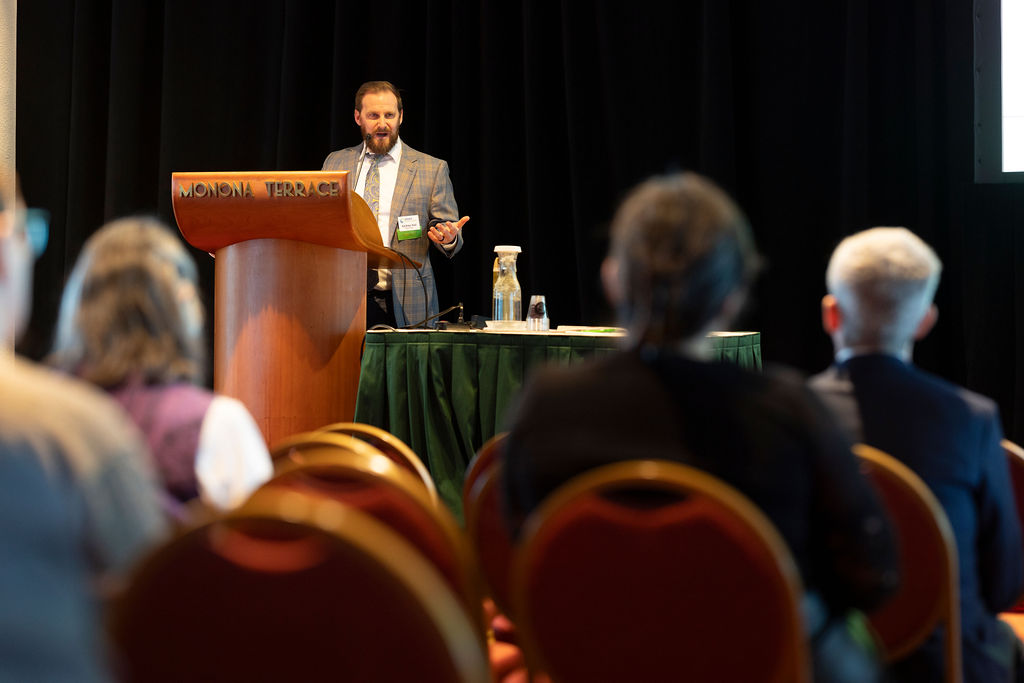
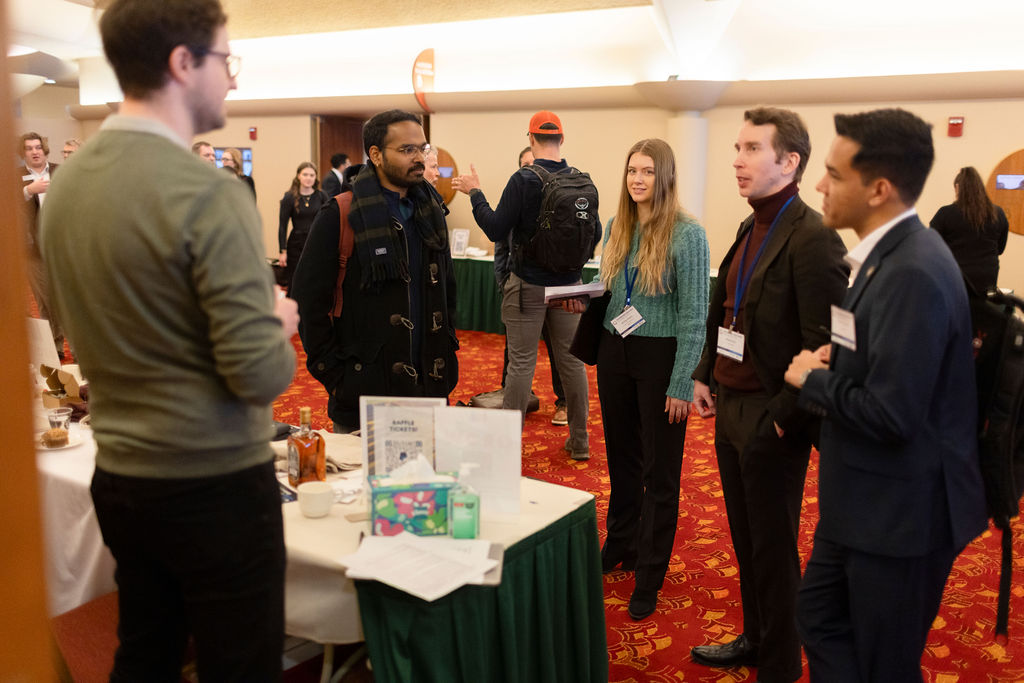
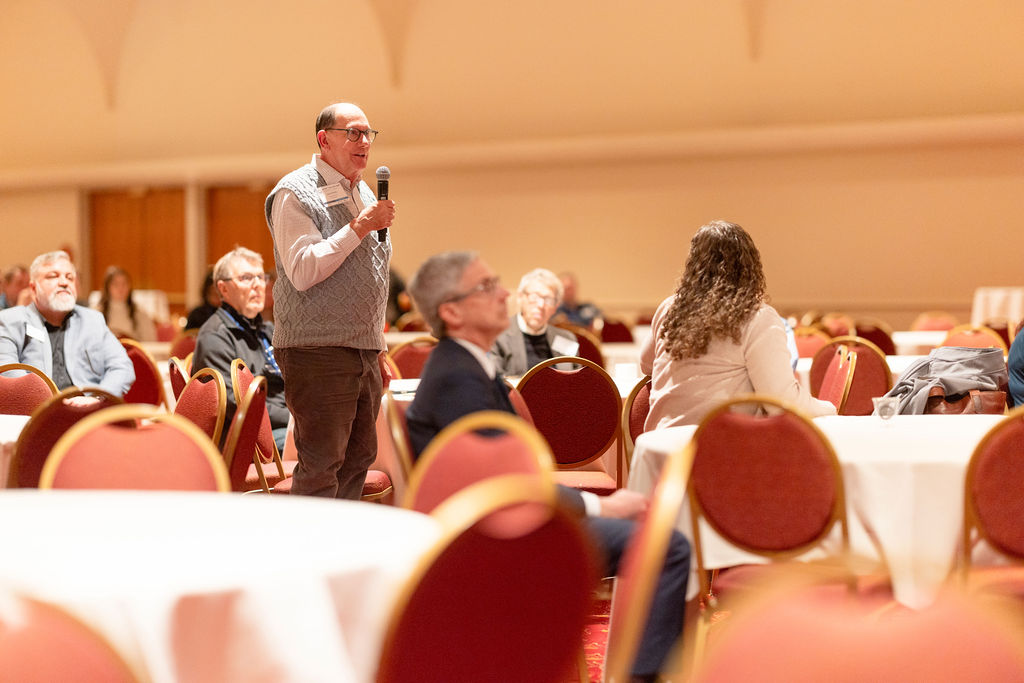
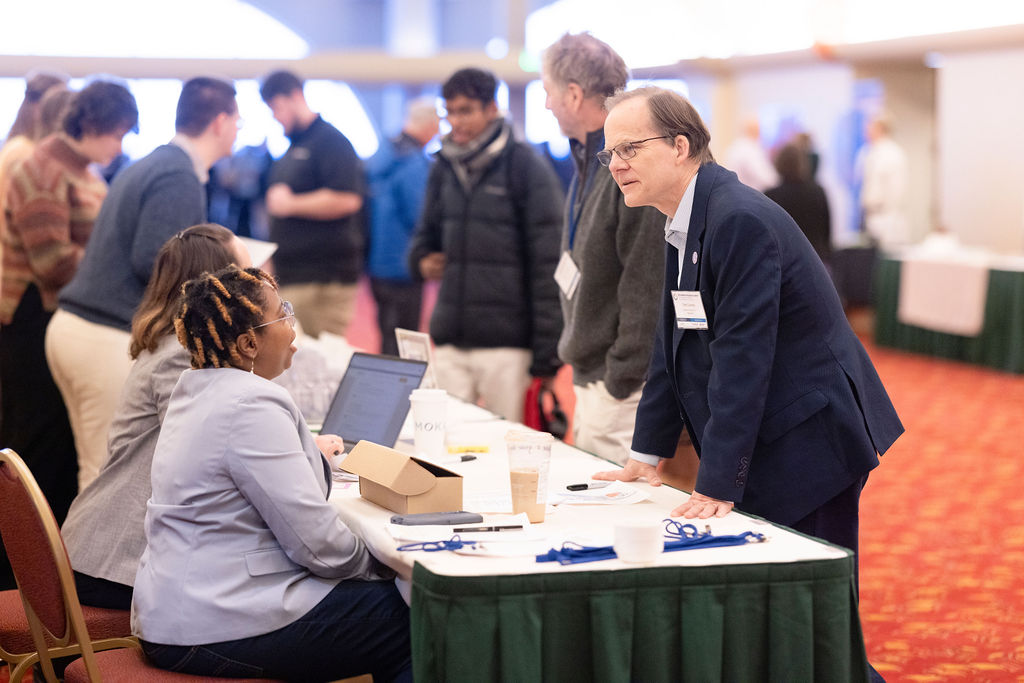
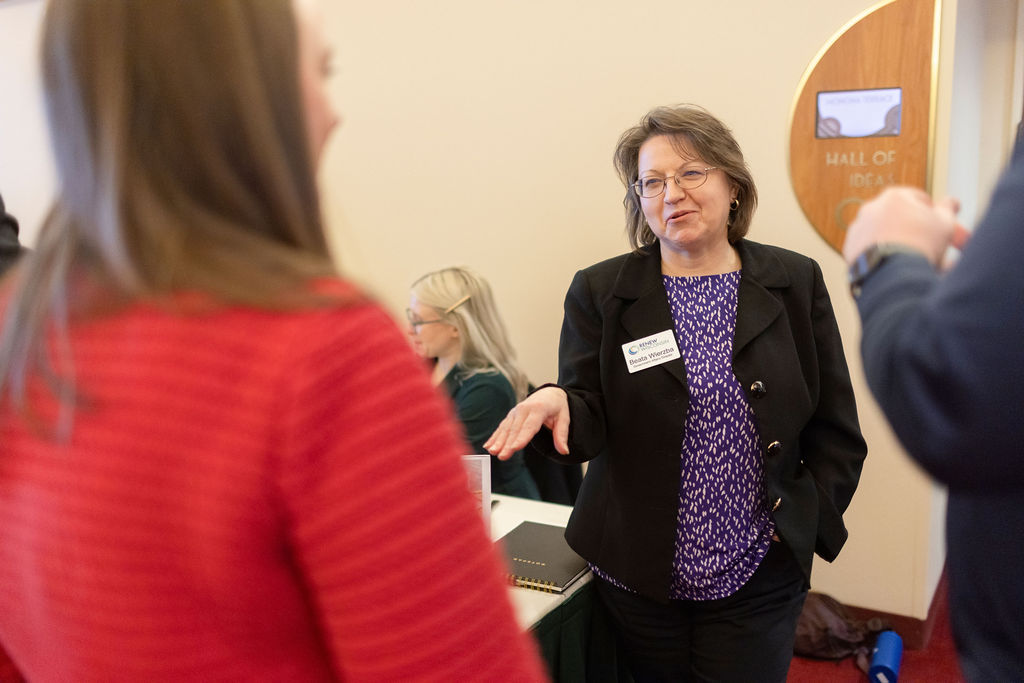
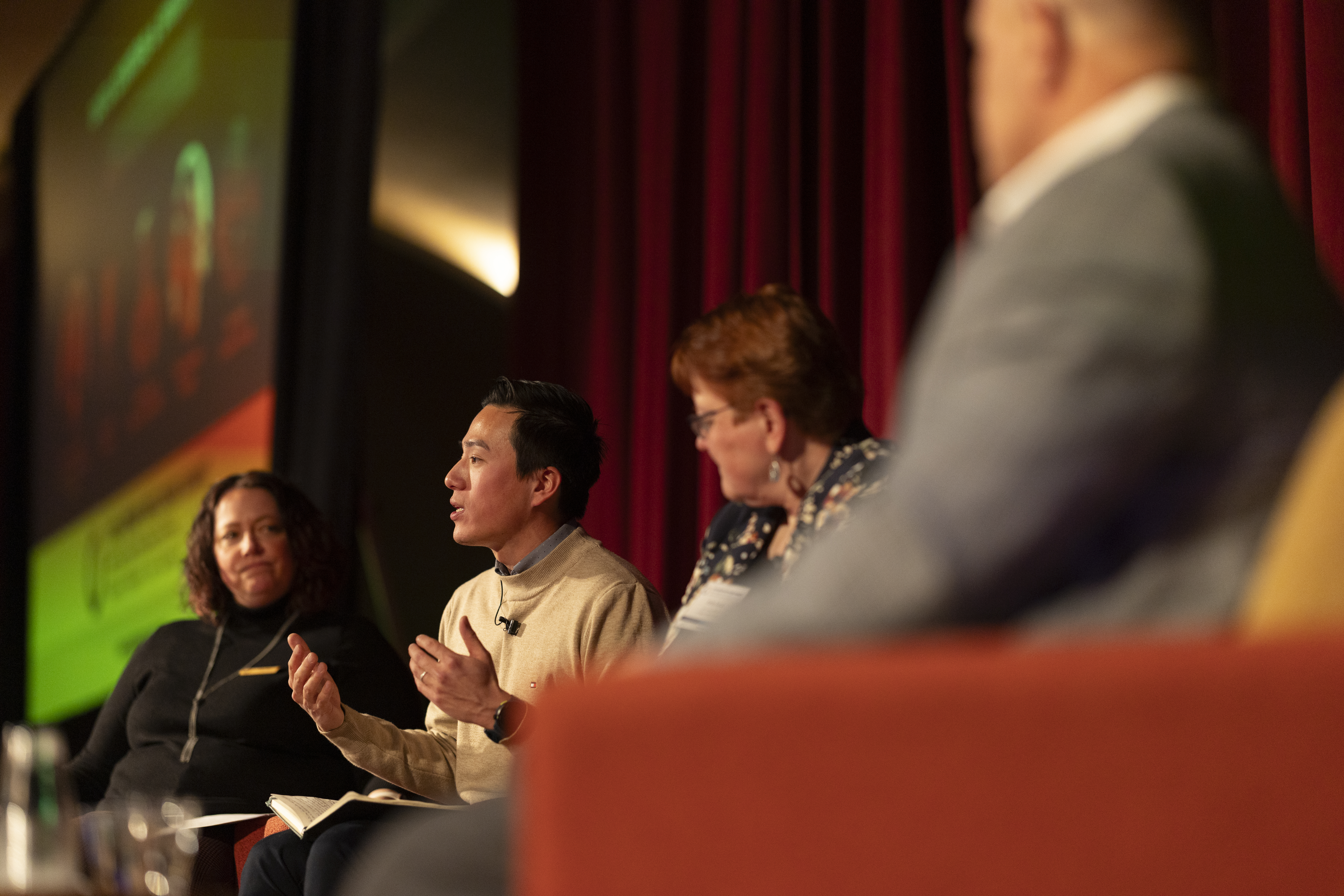
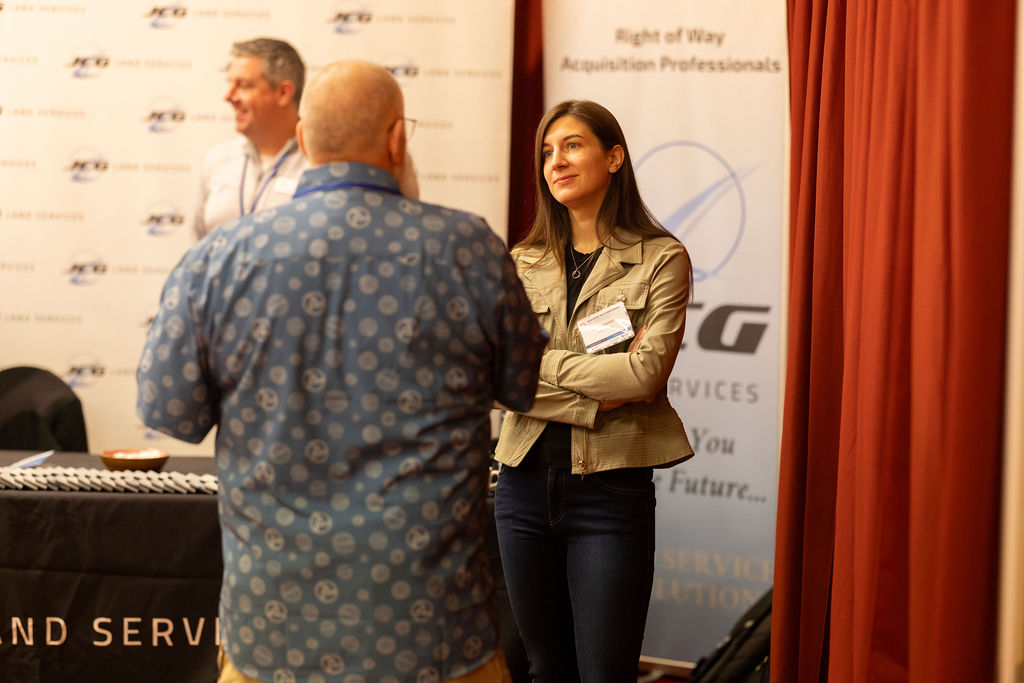
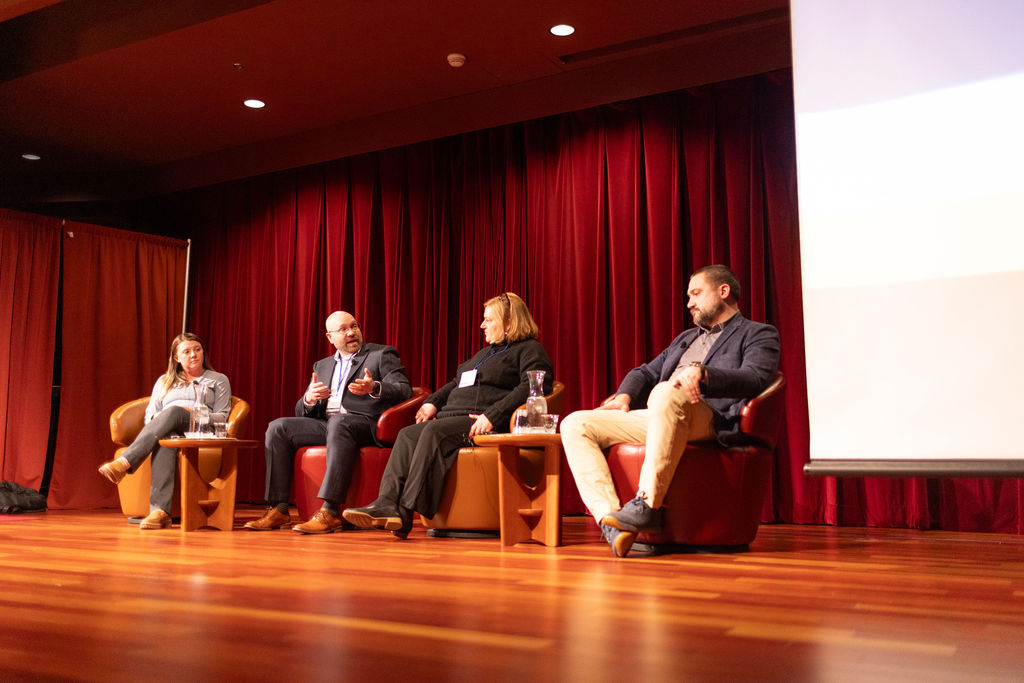
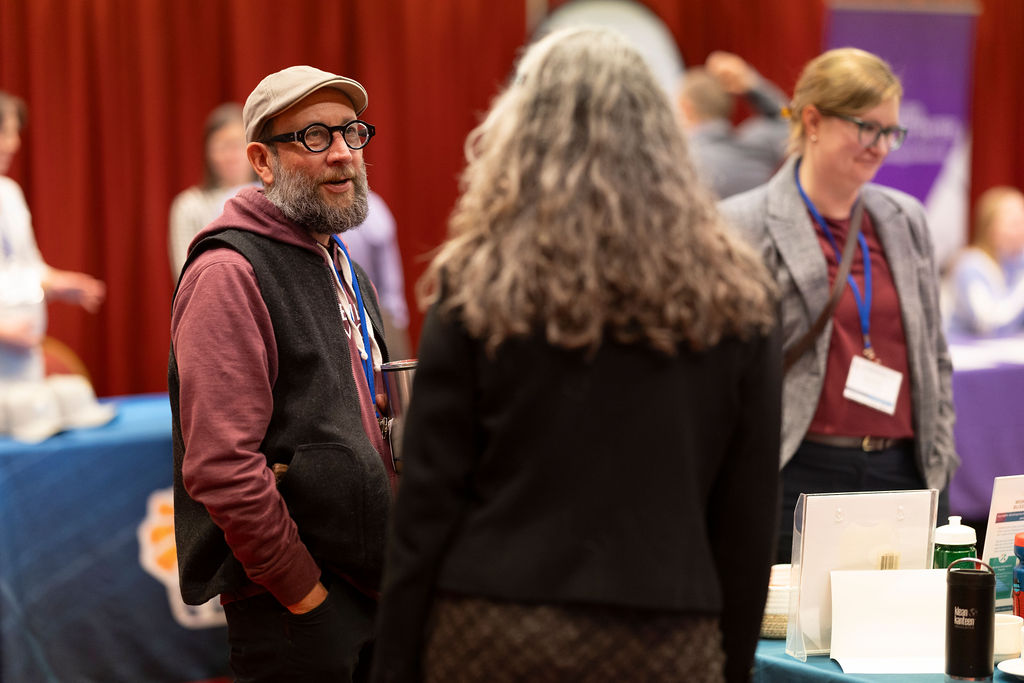
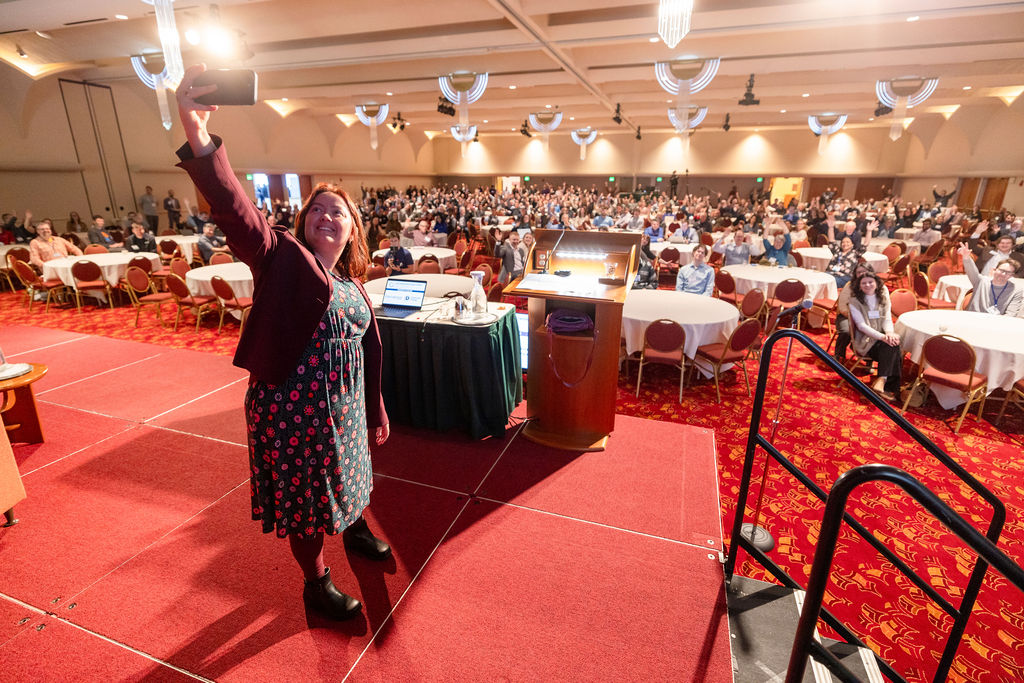
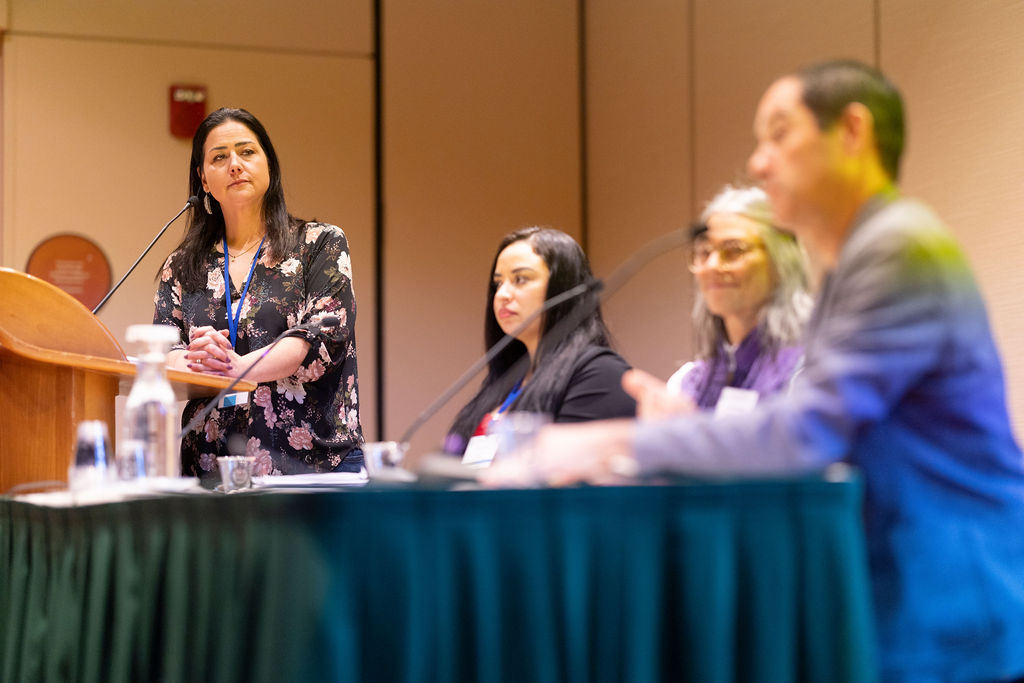
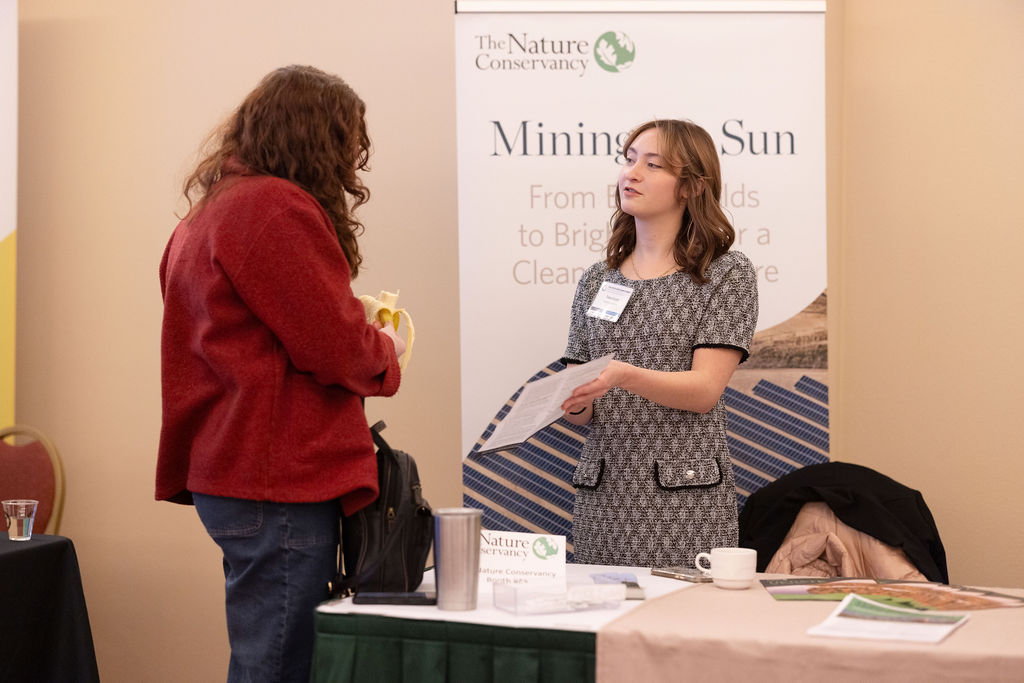
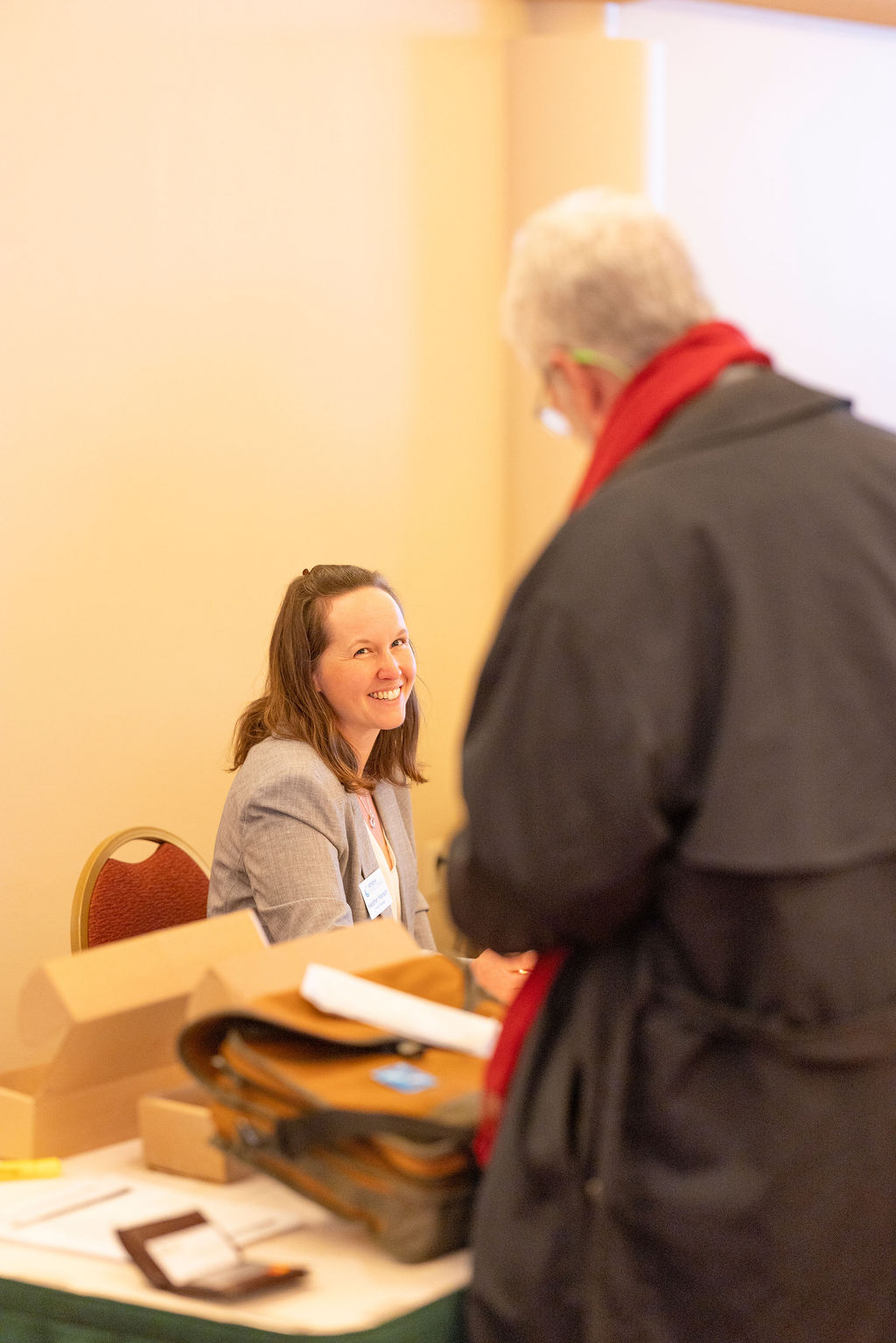
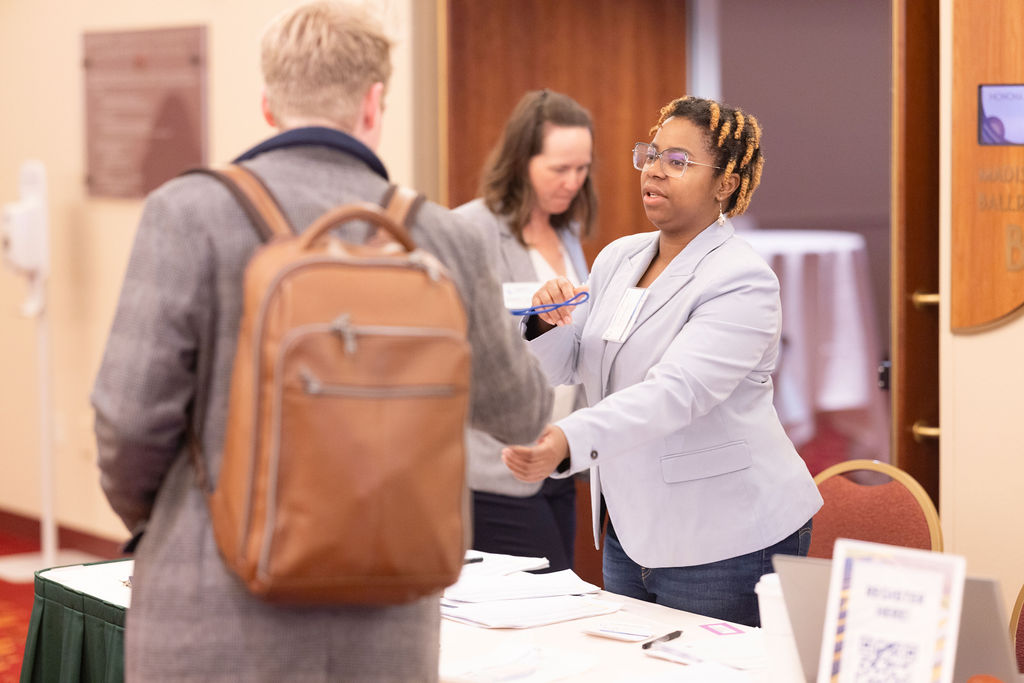
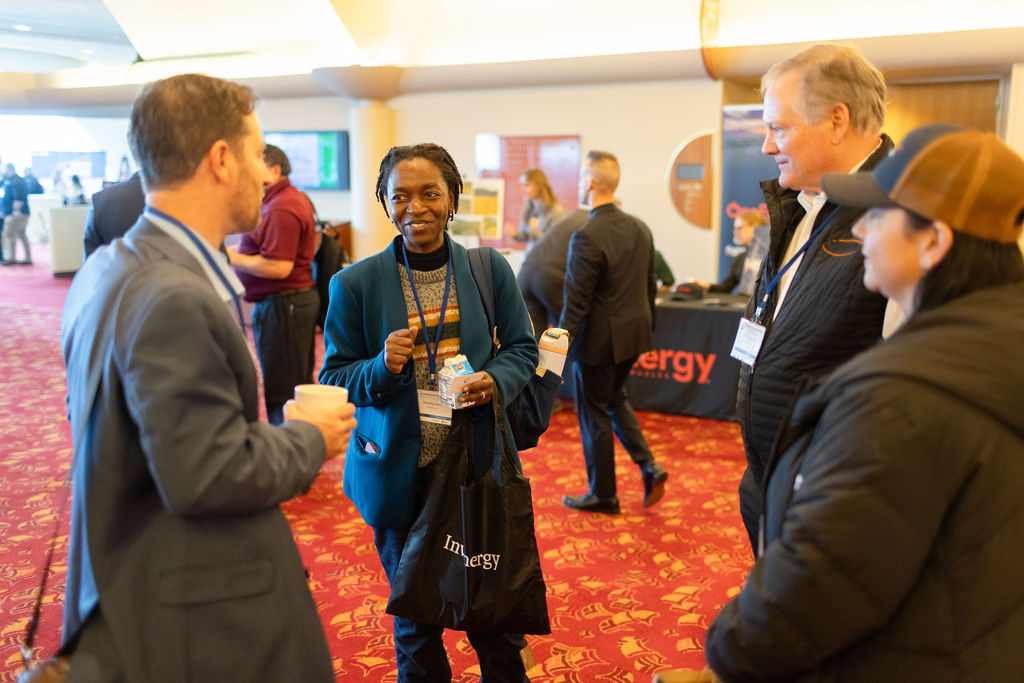
On Thursday, February 5, 2026, RENEW held our 15th annual RENEW Wisconsin Summit, presented by Invenergy and Dimension Energy. More than 600 Attendees from across the country joined us to discuss policy, legislation, and the future of energy, and how we will use clean energy to make Wisconsin more resilient! It’s hard to believe this event has been going on for so long, but it serves as proof that our industry is a resilient one.
This year, we made some small changes to our Summit, and we were happy to hear that most of them went unnoticed. That’s what we had hoped for! What changed, you ask? For the most part, we cut back on things that felt excessive, like the overall amount of food and some similar small parts of the Summit. Though we are all about clean energy, we also understand the importance of reducing waste in everything we do. Besides that, we did what we do every year — we focused on programming that we felt best represented current events so that we could have timely conversations about our industry, however difficult.
We certainly did have some interesting conversations this year, as well as a couple that might have been difficult or uncomfortable for some. That said, we hope you walked away from our programming with a stronger idea of the energy issues facing us in 2026 and some ideas of how we can address them. It’s our hope that the Summit serves as a launching pad for the remainder of the year. If our sessions on data centers, nuclear power, community benefits of utility-scale renewables, financing, or any of the others spurred an idea, we’d love to hear it. Together, we can turn these ideas into action as we continue to build a more resilient Wisconsin by expanding renewable energy.
And finally, we’d like to share some gratitude. The RENEW Wisconsin Summit comes together through the tireless efforts of our staff, board, volunteers, the many speakers who join us, our generous sponsors, and even our many attendees. The collective effort of the renewable energy industry is what makes this event so special, at least we certainly consider it special. It’s our hope that this event means something to all of you as well, because we’re doing it again. We admittedly don’t have many of the details worked out just yet for the 16th RENEW Wisconsin Summit, but we do know that we’ll be back on February 4, 2027. We hope you’ll join us then!
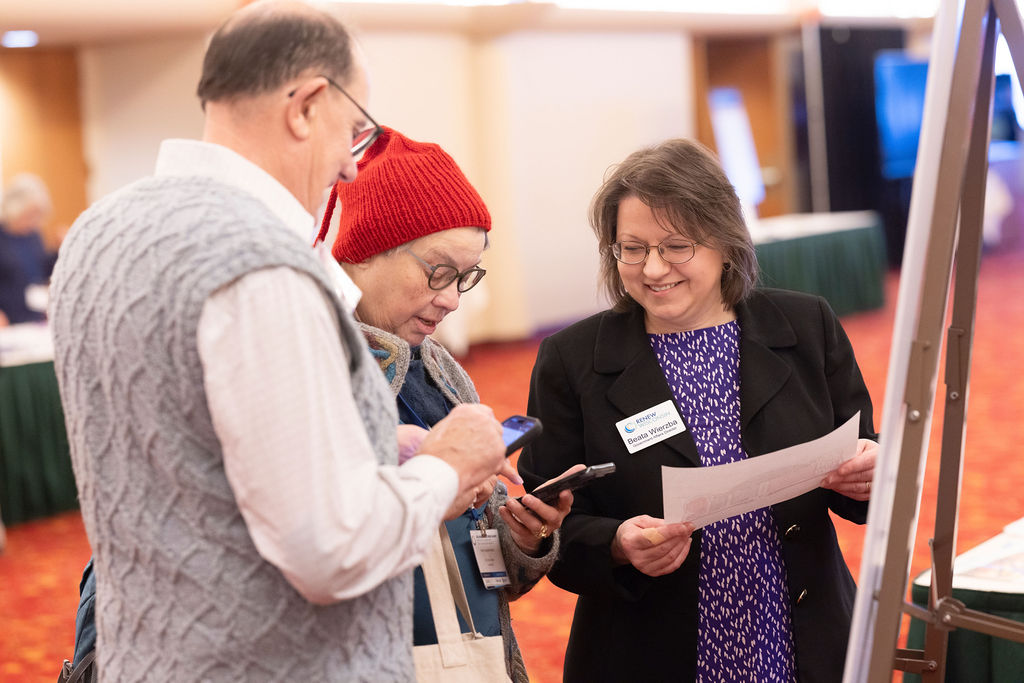
I know I already said “and finally,” but I do have one more thing. Below is a gallery of photos from the event. We know that photos don’t quite do it justice. We promise to have session recordings available within the next couple of weeks. Thanks again to everyone, you all make the yearly effort worth it!
In other words, Wisconsin voters won’t see Hong on the ballot until late summer.
A Marquette University Law School poll – published the same day as the misleading post – found 11% of Wisconsin voters said they plan to vote for Hong in the primary, compared to 10% for Mandela Barnes. A majority of voters, 65%, were undecided.
Polls do not determine election outcomes, and there is no guarantee that Hong will maintain that lead over the next six months.
This fact brief is responsive to conversations such as this one.
I have visited many after-school and summer programs across Wisconsin, from large urban sites to small rural schools, and what I’ve seen has stayed with me. I’ve watched students immersed in creative writing, acting and robotics. I’ve observed staff working one-on-one with kids navigating intense emotional challenges. And I’ve seen the smiles on middle schoolers’ faces as they reconnect with trusted mentors at the end of the school day. These programs are not “extras”; they provide crucial support to kids, families and entire communities.
The access gap
And yet, for far too many Wisconsin families, these opportunities remain out of reach. According to the latest America After 3PMreport, nearly 275,000 Wisconsin children who would participate in after-school programs are not enrolled because none are available. Four in five children who could benefit from these supports are missing out. Parents cite cost, lack of transportation and a simple lack of local programming as the biggest barriers.
The benefits are clear
The impact of these programs is undeniable. Parents overwhelmingly rate their children’s after-school programs as excellent or very good, reporting that they keep kids safe, build social skills and support mental wellness. Research in Wisconsin shows that students who participate in extracurricular activities are less likely to report anxiety or depression and more likely to feel a sense of belonging.
Out-of-school-time programs often provide the space for deep, long-term mentoring, a powerful protective factor in a young person’s life. While teachers are often stretched thin during the academic day, out-of-school-time staff can focus on the relational side of development.
The cost of instability
When funding is unstable, it undermines the very connections that make these programs transformative. Recently, a Boys & Girls Club director shared the human cost of budget constraints: They were forced to reduce a veteran staff member to part-time. This didn’t just trim a budget; it severed a multi-year mentorship. When that bond was broken, several youths stopped attending entirely.
Wisconsin lags behind national trends
Across the country, after-school and summer programs are increasingly viewed as essential to youth development. Twenty-seven states provide dedicated state funding for these programs; Wisconsin provides none. States as different as Alabama and Texas recognize that federal funding alone is not enough. So do our Midwestern neighbors.
Public support for these programs is strong and bipartisan. Families across Wisconsin want safe, enriching opportunities for their children. With a significant budget surplus, Wisconsin is uniquely positioned to invest in its future.
State leaders should view out-of-school programming as a foundation for safety, mental health and long-term economic opportunity. We have the resources; now we need the will. By committing to consistent state funding, we can ensure that every young person in Wisconsin has a place to belong when the school bell rings.
Daniel Gage is a consultant with the Afterschool Alliance and Wisconsin Out of School Time Alliance, focusing on advocacy and outreach. He co-founded the Wisconsin Partnership for Children and Youth, a coalition that promotes after-school and summer programs as vital for healthy youth development and future citizenship.
Guest commentaries reflect the views of their authors and are independent of the nonpartisan, in-depth reporting produced by Wisconsin Watch’s newsroom staff. Want to join the Wisconversion? See our guidelines for submissions.
This story was originally published on Investigate Midwest.
Lisa Lawler wasn’t surprised when diagnosed with breast cancer in 2025. Her mother had breast cancer and died in 2016. It seemed like cancer had become a common diagnosis for many of her neighbors and friends.
“With how many people seem to get cancer in our community, you just assume you will get it,” said Lawler, who lives in rural Hardin County, Iowa. “But no one really talks about what’s causing it.”
After 10 rounds of radiation and a surgery to remove the tumor, Lawler’s cancer was in remission. Last year, she took a test to determine if her cancer was likely genetic, meaning a high chance of recurrence, which could lead her to have her entire breast removed.
She was surprised by the results.
“The genetic test they ran for me was one that covered 81 genes that are typically related to breast cancer,” Lawler said. “After the test, they told me my cancer is likely not genetic, but likely environmental, based on these 81 genes.
“Your next thought is, then what’s in the environment that caused my cancer?”
Increasingly, pesticides are being blamed for rising cancer rates across America’s agricultural communities.
Hardin County, home to around 800 farms, has a pesticide use rate more than four times the national average and a cancer rate among the highest in the state.
Most of the 500 counties with the highest pesticide use per square mile are located in the Midwest. Sixty percent of those counties also had cancer rates higher than the national average of 460 cases per 100,000 people, according to an analysis of data from both the U.S. Geological Survey and the National Cancer Institute.
This story was produced as part of the Pulitzer Center’s StoryReach U.S. Fellowship.
Last year, Investigate Midwest, in partnership with the University of Missouri, investigated the link between agrichemicals and cancer in Missouri, finding that many were rural communities that already lacked access to health care.
Investigate Midwest expanded on that coverage by analyzing data across the country, along with interviewing more than 100 farmers, environmentalists, lawmakers and scientists as part of a partnership with the Pulitzer Center’s StoryReach U.S. Fellowship. The result was the picture of a nation at a crossroads in dealing with this public health crisis that has not just been ignored by state and federal health officials, but aided.
This story was also supported by the Fund for Investigative Journalism.
“Cancer is everywhere and it’s an experience that is unfortunately all too common,” said Kerri Johannsen, senior director of policy and programs at the Iowa Environmental Council, a Des Moines-based nonprofit that has been studying the state’s growing cancer rate.
Agrichemicals have helped America become a crop-producing power, increasing yields of commodity crops — such as corn and soybeans — used for food, fuel and animal feed.
Sprayed from airplanes, drones, tractors and handheld devices, these chemicals can drift through the air or run off into nearby rivers and streams.
And for decades, some farmers and pesticide users have developed neurological and respiratory issues. Thousands of lawsuits have alleged that pesticides and the companies that make them were to blame.
Pesticide manufacturers often rejected those claims while sometimes concealing research by their own employees that raised similar concerns. These companies — such as Bayer, Syngenta, Corteva and BASF — have also spent millions to lobby federal and state lawmakers for laws that would limit their legal liability and continue to allow them to sell agrichemicals.
“This is one of the most transparently reviewed products ever,” said Jessica Christiansen, the head of crop science communications for Bayer, speaking about her company’s production of Roundup, a glyphosate-based pesticide. “This product is so well studied … been on the market for over 50 years with thousands and thousands of studies. There is no linkage to cancer, there just isn’t.”
Under the Trump administration, the Environmental Protection Agency and U.S. Department of Agriculture have also hired dozens of former pesticide executives and lobbyists, some of whom have already pushed for deregulation of their industry. The Department of Health and Human Services has also altered its own reports to downplay the harm of pesticides.
Two states — North Dakota and Georgia — recently passed laws limiting their residents’ ability to sue pesticide companies, and at least a dozen other states will consider similar laws in the coming months.
“We’ve gotten to a point in the U.S. … where we’ve stopped treating pesticides as if they are dangerous tools,” said Rob Faux, who manages a small Iowa farm and has advocated against pesticide liability shield laws. “Instead, these companies tell these stories that these pesticides are completely safe and we are encouraged to use them anytime. We’ve been convinced that we must use them or we are not going to have enough food to eat.”
In Iowa, a state with heavy pesticide use — 53 million pounds last year — and the nation’s second-highest cancer rate, doctors and health officials have been sounding an alarm for years.
The state has become ground zero in the fight to limit the impact of pesticides on health and the environment. Farmers have gathered at the state Capitol to advocate for increased laws and funding to address the rising cancer rate. That advocacy likely helped defeat a bill last year that would have protected pesticide makers from some lawsuits.
I call myself a Republican, but this is not about politics; this is about money, about the almighty dollar.”
— Bill Billings, a resident of Red Oak, Iowa, who was diagnosed with cancer in 2024
“I believe the groups wanting this (bill) to go through didn’t expect any substantial resistance, but there was enough resistance,” said Faux, who also works for the Pesticide Action and Agroecology Network, a nonprofit advocating for less agrichemical use.
The Iowa bill was strongly opposed by environmental and health organizations, which have traditionally been left-leaning. But there was also strong opposition from many conservative residents and farmers.
“I call myself a Republican, but this is not about politics; this is about money, about the almighty dollar,” said Bill Billings, a resident of Red Oak, Iowa, who was diagnosed with cancer in 2024.
Initially, doctors told Billings, then 61, he would likely be dead in a matter of months after discovering lymphoma in his lungs. A health enthusiast and hospital administrator, Billings had been a regular user of Roundup, the popular Bayer pesticide used on farms and residential properties.
“The cancer specialist said, very directly, (my) cancer is a result of being exposed to chemicals,” Billings said. “In my records, it literally says that I have cancer as a result of exposure to Roundup and agrochemicals.”
Billings was prescribed a five-drug regimen, along with chemotherapy. In September, he was declared cancer-free.
Last year, he hired a lawyer to file a lawsuit against Bayer.
“The irony is … Bayer Pharmaceuticals makes one of the drugs that treated my cancer,” Billings said. “It’s disturbing to find out you are in this financial circle — not only as a consumer, but as a patient.”
Bill Billings in Red Oak, Iowa, on Jan. 21, 2026. (Geoff Johnson for Investigate Midwest)
The home of Bill Billings in Red Oak, Iowa, on Jan. 21, 2026. (Geoff Johnson for Investigate Midwest)
Surrounding neighborhood in Red Oak, Iowa, photographed Jan. 21, 2026. (Photos by Geoff Johnson for Investigate Midwest)
Research increasingly links pesticides to growing cancer risk
Cancer is a complex disease and can be caused by numerous environmental and genetic factors. Some links have been clear — such as smoking and lung cancer — while other forms can be impossible to trace back to an original cause.
But scientific research linking pesticides with certain types of cancers has been growing.
“Our findings show that the impact of pesticide use on cancer incidence may rival that of smoking,” scientists wrote in a 2024 study, which was published in Frontiers in Cancer Control and Society.
The study linked pesticides to prostate, lung, pancreas and colon cancers. Pesticides have also been associated with lymphoma and Parkinson’s disease, the study claimed.
Many doctors in agricultural communities say the link with pesticides is hard to deny.
“Iowa has a super high rate (of cancer) and when you look at all of our modifiable risk factors … tobacco, obesity, too many calories, highly processed foods, lack of physical activity, alcohol consumption, getting vaccinated for HPV, sun exposure, and so on, Iowa doesn’t really stand out dramatically at any of those,” said Dr. Richard Deming, medical director at MercyOne Cancer Center in Des Moines. “But one thing that distinguishes Iowa from other states is our environmental exposure to agricultural chemicals.”
Deming and other health experts also point to Iowa’s high radon levels, a naturally occurring radioactive gas produced by uranium and radium.
The state also has high levels of fertilizer-derived nitrate in its water, which has been associated with increased cancer risk.
“But we use tons of ag chemicals that make it quite likely that the volume of these chemicals is contributing to what we’re seeing in Iowa in terms of the increased incidence of cancer,” Deming said.
A direct correlation can be difficult to determine, as cancer development times can range from months to decades. Overlaying cancer rates onto a map, however, highlights the nation’s top crop and vegetable growing regions, where pesticide use is highest.
The Midwestern states of Iowa, Illinois, Nebraska and Missouri — leading corn-growing states — had the highest rates, while rates were also high in California and Florida, high fruit-growing states.
Lawler, who developed breast cancer in Hardin County, grew up on her family’s 400-acre farm, where her father grew corn and used 2,4-D, a pesticide made by Dow Chemicals. She and her siblings moved out of state after high school, but Lawler returned in 2010.
Pesticides have become indispensable in farming, Lawler acknowledged, but she wishes more people would ask questions about the risks.
“We change products all the time when we learn about the health impacts,” Lawler said.
These family photos show Lisa Lawler with her mother and siblings over the years. Lawler was recently diagnosed with breast cancer; her mother later died after a cancer diagnosis. The family believes years of farm pesticide and herbicide exposure may have contributed. (All photos courtesy of Lisa Lawler)
As lawsuits mount, Bayer pushes state laws to limit liability
In early 2022, Rodrigo Santos had just been promoted to the head of Bayer’s crop sciences division, a prestigious position within the German-based chemical company. But a global pandemic, climate change and a pending war in Ukraine were disrupting the global production and sale of crops — a direct hit to the company’s pesticide sales.
“The global food system is in crisis,” Santos wrote in a column for the World Economic Forum, going on to say that the world needed to grow more food without a significant increase in the amount of land devoted to crops.
But beyond the pandemic and war, another crisis presented an existential threat to one of the company’s top-selling products. Roundup, the glyphosate-based weed killer produced by Monsanto, which Bayer bought in 2018, had been blamed for causing cancer in thousands of lawsuits.
Since purchasing Missouri-based Monsanto, Bayer’s stock price has dropped more than 90% over five years.
In recent years, Bayer executives, including Santos, openly discussed discontinuing glyphosate production. We are “evaluating all the alternatives that we have for the business,” Santos told investors last year when asked about a possible sale of its Roundup division.
But while Bayer publicly said it was reconsidering its glyphosate business, a review of lobbying disclosure statements, campaign finance records, state legislative records and other documents reveals the world’s largest pesticide company remains committed to expanding its sales.
Under the Federal Insecticide, Fungicide, and Rodenticide Act, the EPA regulates the warning labels on pesticide products. While state-level lawsuits have claimed that federal labeling is insufficient, pesticide companies, including Bayer, have argued that federal regulations should trump state laws.
Bayer, along with other corporate agriculture groups, has pushed for bills in more than a dozen states that would codify the view that federal labeling regulations are sufficient warning, effectively voiding state-level lawsuits.
Christiansen, the head of crop science communications for Bayer, disputed that these laws will stop lawsuits and said courts have yet to begin interpreting those that have passed.
“Folks can still sue a company, and they should if there’s a problem,” Christiansen said. “But the litigation industry has a lot to lose with these (bills) that are out there.”
Founded by Bayer, the Modern Ag Alliance has lobbied for these bills and promoted opinion articles downplaying the health impacts of pesticides.
“If farmers lose access to crop protection products because of misguided ideological agendas, U.S. agriculture would be upended, potentially forcing many family farms to shut down and driving up food costs for every American,” said Elizabeth Burns-Thompson, executive director of the Modern Ag Alliance.
The Modern Ag Alliance has spent more than a quarter of a million dollars on state lobbying since 2024.
Most of the bills came up short in 2025, but Georgia and North Dakota passed liability shields that will complicate local lawsuits.
Georgia’s Senate Bill 144, which took effect Jan. 1, received some bipartisan support but was mostly approved by the Republican majority and opposed by Democrats.
Similar bills have been filed in at least 10 states for this year’s legislative sessions.
In 2024, the Iowa bill was passed by the state Senate with a 30-to-19 vote. Ahead of a vote in the House last year, farmer and environmental groups lobbied against the bill.
The session ended without the House taking up a vote. The bill could return in 2026, but Faux, the Iowa farmer, said he also worries about it being “snuck into” another bill or budget agreement.
“I don’t think we can just assume this fight is over,” Faux said.
In other states, backlash seemed to stop liability shield bills before they got started.
In Oklahoma, Rep. Dell Kerbs, a Shawnee Republican, authored a pesticide liability shield bill he said was meant to end “frivolous” lawsuits against pesticide makers.
“What’s happened in our country is we have … judges that have decided they need to be in the labeling business,” Kerbs said when introducing his bill at a Feb. 11, 2025, hearing of the House agriculture committee.
State Rep. Ty Burns, another Republican, asked Kerbs why he chose to author the bill.
“I was first approached by Bayer,” Kerbs responded.
“But this is a labeling bill; it is not an immunity bill. It is just clarifying on EPA labeling regulations,” Kerbs added. “There is nothing that prevents a lawsuit from any single person. This is not giving a free pass to kill people. This simply is saying that a frivolous lawsuit to potentially pad the pocket of somebody who was not reading the label is not a justification to add that to a label through a state district court.”
But when Burns asked Kerbs about opposition to the bill, especially from many farmers, Kerbs denied receiving any complaints.
“That is hard to believe,” Burns told Kerbs, “because I have been bombarded.”
The bill was never presented to the House for a vote.
After early promises, MAHA walks back pesticide oversight
While liability shield laws have been largely advanced by Republican lawmakers, the push to further regulate pesticides has transcended partisan lines.
Both left-leaning environmental groups and conservative health movements, which have targeted agrichemicals and some vaccines, have called for reducing or eliminating the use of pesticides.
Health and Human Services Secretary Robert F. Kennedy, Jr. has been a longtime critic of pesticides. In a May 2025 report, his Make America Healthy Again commission linked pesticide overuse to children’s health issues, which drew praise from both political camps.
George Kimbrell, co-executive director of the Center for Food Safety, which has advocated for stronger pesticide regulations, called the initial report a “baby step” forward and said he was encouraged after decades of inaction by the federal government.
“Going back my entire career, 20-plus years now of doing this work, it doesn’t matter if it’s a Democratic administration or a Republican administration, they have been beholden to and done the wishes of the pesticide industry,” Kimbrell told Investigate Midwest last year. “So, this is a unique moment where … there’s a chance that there could be some positive change in terms of responsible oversight for these toxins.”
Corporate agriculture groups heavily criticized the report, including the American Farm Bureau Federation and CropLife America, a national organization representing many large agrichemical companies, including Bayer, Corteva Agriscience and Syngenta.
Many of those groups and companies had been large financial backers of Trump. But Kennedy downplayed any concerns that the president would avoid taking a hard position against pesticide companies because of that support.
“I’ve met every president since my uncle was president, and I’ve never seen a president (like Trump), Democrat or Republican, that is willing to stand up to industry when it’s the right thing to do,” Kennedy said at a May 22, 2025, MAHA commission meeting as the president sat smiling to his right.
Three months later, Kennedy’s MAHA commission published its final report, which contained no calls to further regulate pesticides. In fact, it called for the federal government to work with large agrichemical companies to ensure public “awareness and confidence” in the EPA’s current pesticide regulations.
The U.S. Department of Health and Human Services did not respond to a request for comment from Kennedy.
Many of the groups that expressed optimism over the initial report were outraged over the change.
“This report is … a clear sign that Big Ag, Bayer, and the pesticide industry are firmly embedded in the White House,” said David Murphy, the founder of United We Eat and a former finance director for Kennedy’s presidential campaign.
The Trump administration has employed several pesticide executives, researchers and lobbyists at the EPA and the U.S. Department of Agriculture.
Kyle Kunker, who was a registered lobbyist for the American Soybean Association, an organization that has advocated for the legal liability shield laws at the state level, was hired last year to oversee pesticide policy at the EPA.
Three weeks later, the EPA recommended expanded use of dicamba-based herbicides, which federal courts had previously restricted. The EPA proposal was closely aligned with the position of the American Soybean Association.
In 2025, the EPA also hired Nancy Beck and Lynn Ann Dekleva, both of whom worked with the American Chemistry Council.
Last month, a coalition of MAHA supporters called for the removal of Lee Zeldin, administrator of the EPA.
Recent EPA decisions around pesticides “will inevitably lead to higher rates of chronic disease, greater medical costs, and tremendous strain on our healthcare system,” the group stated in a petition circulating online.
Several prominent MAHA influencers have joined the petition, posting anti-pesticide messages on social media under handles such as The Glyphosate Girl and the Food Babe. “The EPA is acting like the Everyone Poisoned Agency,” wrote Kelly Ryerson, on her Glyphosate Girl Instagram feed.
As the EPA advances pesticide use, the Trump administration has also asked the U.S. Supreme Court to rule that federal labeling laws invalidate state-level lawsuits.
“After careful scientific review and an assessment of hundreds of thousands of public comments, EPA has repeatedly determined that glyphosate is not likely to be carcinogenic in humans, and the agency has repeatedly approved Roundup labels that did not contain cancer warnings,” Trump’s solicitor general wrote in an amicus brief with the Supreme Court.
However, one of the studies the EPA has often cited in claiming pesticides are safe was recently retracted due to concerns about its authorship and potential conflicts of interest.
The report, published in 2000 by the scientific journal Regulatory Toxicology and Pharmacology, claimed Roundup “does not pose a health risk to humans.” The report has been the foundation for numerous other studies, court cases and policy decisions.
The journal retracted the study last year, noting that court cases had revealed that Monsanto employees had contributed to the study. “This lack of transparency raises serious ethical concerns regarding the independence and accountability of the authors of this article and the academic integrity of the carcinogenicity studies presented,” the retraction stated.
“This is just one example of how the current process of certifying these chemicals is broken in the U.S.,” said Colleen Fowle, water program director at the Iowa Environmental Council. “At the very least, we’re hoping that this (retraction) eliminates this specific research article from being cited in the future and concentrates more on independent peer-reviewed research as our basis to determine the safety of glyphosate.”
Investigate Midwest is an independent, nonprofit newsroom whose mission is to serve the public interest by exposing dangerous and costly practices of influential agricultural corporations and institutions through in-depth and data-driven investigative journalism. Visit online at www.investigatemidwest.org
Gal Dahan has lived in Milwaukee for six years, most of that time as an international student. Now she’s trying to figure out if there’s a path for her to stay.
Prior to its closure last year, Northland College in Ashland borrowed money from its endowment fund to cover its financial shortfall, causing funds to dwindle from $22 million in 2024 to $3.3 million this year.
Vice President JD Vance was in Plover Thursday, campaigning for Republican Congressman Derrick Van Orden in an effort to hang on to the GOP's slim majority in the U.S. House.
Gov. Tony Evers says he's optimistic that he and Republican legislative leaders will strike a deal to lower property taxes and increase school funding, even after the Assembly adjourned for the year without an agreement in place.
Wisconsin voters are more concerned with reducing their property taxes than increasing funding for public schools. Voters also say they’re less inclined to support a school referendum.
James Gill was the photographer on a PBS Wisconsin project that spanned decades, documenting the lives of Wisconsinites who served in the military. Over time, he took portraits of veterans of World War II and wars in Korea and Vietnam.
RSV activity is down for a second winter in a row. Some of the state's top infectious disease experts are cautiously optimistic that access to immunizations are contributing to the declining numbers.
The company behind the Old Wisconsin smoked sausage brand is planning a $125 million expansion in Sheboygan, the Wisconsin Economic Development Corp. announced Thursday.
An employee walks behind cattle on an Idaho dairy farm in an undated photo. Dairy farms in Idaho say they depend on immigrant workers without legal work authorization and oppose mandates to check legal status with the federal E-Verify system. (Photo courtesy of Idaho Dairymen’s Association)
Pressured by businesses on the importance of immigrant labor, some Republican states are backing off plans to require all employers to check for legal employment status before hiring workers.
State and federal legislation to require that employers use E-Verify, a federal system to check legal status, has been limited this year as a push grows from business interests that say checking status could hurt state economies. Business groups have cited the cost of complying with the laws and the potential loss of crucial immigrant workers who don’t have legal work authorization.
Millions of worksites around the country use E-Verify to ensure new hires are legal to work in the United States, but it isn’t required in all states or for every industry. Going after employers has not been as popular with Republicans as immigration enforcement aimed at detaining and deporting people living here illegally.
In Idaho, for instance, legislation that would require all employers to use E-Verify, crafted with help from the conservative Heritage Foundation, is awaiting state House consideration — while a more limited mandate for large state and local government contractors passed the state Senate Feb. 19.
“I think we should tread lightly, and private businesses should not be enforcement agencies,” said state Sen. Mark Harris, a Republican and rancher who sponsored the less-stringent bill, on the Senate floor before the vote.
Idaho Republican state Sen. Brian Lenney, who voted for the bill, spoke resentfully of business leaders who came to the state Capitol to lobby against the broader mandate for all employers to use E-Verify.
“There were men in suits holding a press conference downstairs to let the world know and tell Idaho which industries cannot survive without illegal labor,” Lenney said before the vote. “They’re trying to protect a system that keeps human beings cheap, compliant and silent. … Is this bill making a dent, like it should? Not really.”
An industry-funded report said a sharp drop in unauthorized labor from deportations could cost the state economy billions of dollars and reduce state tax revenue by almost $400 million. The report, funded by the Idaho Alliance for a Legal Workforce and prepared by regional economists, emphasized the importance of immigrants to certain industries: As much as 90% of the workforce in dairy production is foreign-born, for example, and half of those individuals might not be authorized to work in the U.S.
I think we should tread lightly, and private businesses should not be enforcement agencies.
– Idaho Republican state Sen. Mark Harris
There were 21 states with E-Verify requirements for contracts or business licenses as of 2024, federal data showed. Seventeen states had pending legislation to begin or expand E-Verify mandates as of Feb. 5, said Mick Bullock, a spokesperson for the National Conference of State Legislatures.
Some bills have not progressed after business opposition, such as an E-Verify mandate in Kansas opposed by the Kansas Chamber and the League of Kansas Municipalities. The chamber said the bill “would create an aggressive, invasive, and costly system of employment verification on all Kansas businesses” in 2025 testimony.
“The goal of this bill is to prevent illegal immigration, however with the bill’s broad definitions and severe penalties this legislation would suppress business operations,” the chamber wrote in submitted testimony.
Another example of a limited E-Verify mandate is a recent Ohio law. It applies only to nonresidential construction, despite testimony about illegal labor in residential construction. After Republican Gov. Mike DeWine signed the measure in December, it takes effect March 20.
An earlier version of the same Ohio bill passed the state House in 2024 but did not pass the state Senate. In a hearing at the time, Richard Ochocki, an organizer for the state plumbers and pipefitters union, said he spent three hours at an apartment and condo construction site in Columbus without finding even one person with the legal work status required to join the union.
“The flow of undocumented workers to Ohio has been steadily increasing over my five and a half years as an organizer. I have personally encountered undocumented workers in Cleveland, Canton, Ashland, Lima, Cincinnati, Dayton, and Columbus,” said Ochocki, speaking in favor of E-Verify, in prepared remarks.
Madeline Zavodny, a professor at the University of North Florida who has researched the effects of E-Verify on the labor market, said exemptions for short-term work such as agriculture or small business is common, but limiting it to part of one industry such as nonresidential construction is unusual.
“The more limited the law is, the less impact it would have,” Zavodny said. “And nonresidential construction may be heavily unionized in Ohio such that there’s not a lot of unauthorized workers anyway. Unauthorized workers are often day laborers who work primarily in residential construction, not nonresidential.”
Meg Rietschlin, majority owner of a construction firm that bids on schools, roads, culverts and other nonresidential construction projects in rural Crawford County, Ohio, said she requires her workers to have a valid driver’s license, which should be enough to show they have legal status. An E-Verify mandate would drive her out of business because of the additional paperwork, she wrote in 2024 testimony.
“If you inundate me with the requirement to collect so much information, I will cease to be,” Rietschlin wrote. “This proposed law is meant to drive the small contractor out of public works opportunities.”
A report Zavodny co-authored in 2015 found E-Verify mandates appeared to help some workers who compete with unauthorized workers, such as Mexican immigrants who became citizens and U.S.-born Hispanic people, but did not measurably help U.S.-born non-Hispanic white people.
A 2020 working paper published by the National Bureau of Economic Research found no evidence that E-Verify mandates improve the native-born labor market in general, and no evidence that people without work authorization moved away because of the mandates. Unauthorized workers may move from large businesses to small businesses that are less likely to comply with the mandates, the paper concluded.
As the Trump administration’s immigration crackdown ramped up last year, restaurants and construction lost the largest number of immigrant laborers compared with 2024, according to a Stateline analysis of federal data. Landscaping, building services and warehousing industries also lost tens of thousands of laborers.
Rick Naerebout, who represents about 350 Idaho dairy farmers as CEO of the Idaho Dairymen’s Association, said his members depend on unauthorized labor to run their farms that together produce more than 18 billion pounds of milk in 2025, behind only California and Wisconsin.
Idaho farms have not seen large-scale raids by Immigration and Customs Enforcement officers, Naerebout said, though there was one last year in South Dakota and one in New Mexico in June, among others. Naerebout said he believes President Donald Trump has paused most ICE raids on agriculture and tourism, as has been reported by The New York Times and Stateline.
Idaho should limit E-Verify mandates to government as the state Senate bill would do, and shouldn’t pass more stringent mandates as the other bills would do, Naerebout added.
“The president couldn’t be more clear that he wants there to be space for critical industries like agriculture to try and get to where we find the solution,” Naerebout said. “The irony is Idaho voted overwhelmingly for President Trump, and you’ve got Idaho Republicans now saying what the president’s doing isn’t good enough.”
Among other states, Tennessee has a broad E-Verify mandate for all businesses with at least 35 employees, though the exact number of employees has shifted over the years. Republican Gov. Bill Lee signed a law effective in 2023 that lowered the threshold from 50 to 35, and one proposed bill this year could shift it back to 50 employees.
The mandate has faced business opposition but “other than a brief period of adjustment implementation has gone very smoothly,” Republican Lt. Gov. Randy McNally said in a statement to Stateline. McNally and other state officials have collaborated with the Trump administration on a package of proposed state legislation this year, including making E-Verify mandatory for state and local government hires.
Florida also has an E-Verify mandate for employers with 25 or more employees, with a bill under consideration to expand it to all employers. It passed the state House in January and is now in a state Senate committee.
In Democratic-led California, employers starting this month must notify employees about their rights under state law, including a prohibition on using E-Verify in a discriminatory way to screen only some employees. A bill in Democratic-led New York, with 12 Democratic sponsors, would prohibit use of E-Verify to screen job applicants or check on existing employees, which is already prohibited by federal law. E-Verify can only be used legally after a job offer and before an employee has started work.
Meanwhile, some conservative-leaning states are moving to tighten rules. An Indiana bill would hold public works subcontractors accountable as part of an E-Verify mandate for public agency contracts and a West Virginia bill would require all employers to use E-Verify.
Federal legislation to mandate E-Verify for all employers has bogged down in recent years. A Senate bill last year did not progress beyond a committee, and a similar House bill bogged down in 2018.
Last year, Pennsylvania Republican U.S. Rep. Ryan Mackenzie introduced a bill that would require E-Verify for federal contractors only, saying it was “an area where mandatory E-Verify makes clear sense” in prepared testimony.
Mackenzie said he had sponsored an E-Verify law as a state lawmaker in 2019, and that it “has ensured there is a lawful workforce in the construction industry in my home state of Pennsylvania, protecting American workers from unfair competition, providing a level playing field for businesses, and helping to confirm all appropriate taxes are paid.”
Mackenzie’s bill on federal contractors had a committee hearing in January, during which California Democratic U.S. Rep. Zoe Lofgren said the bill would need an exemption for agriculture, since the government buys food and milk produced by undocumented workers for the military and schools on military bases.
“If we don’t exempt ag, we will have a very serious problem throughout the federal government, especially in our military that relies on ag products in feeding our soldiers,” Lofgren said. Her request to amend the bill was voted down.
This story was originally produced by Stateline, which is part of States Newsroom, a nonprofit news network which includes Wisconsin Examiner, and is supported by grants and a coalition of donors as a 501c(3) public charity.

 Login
Login