❌

Reading view

There are new articles available, click to refresh the page.

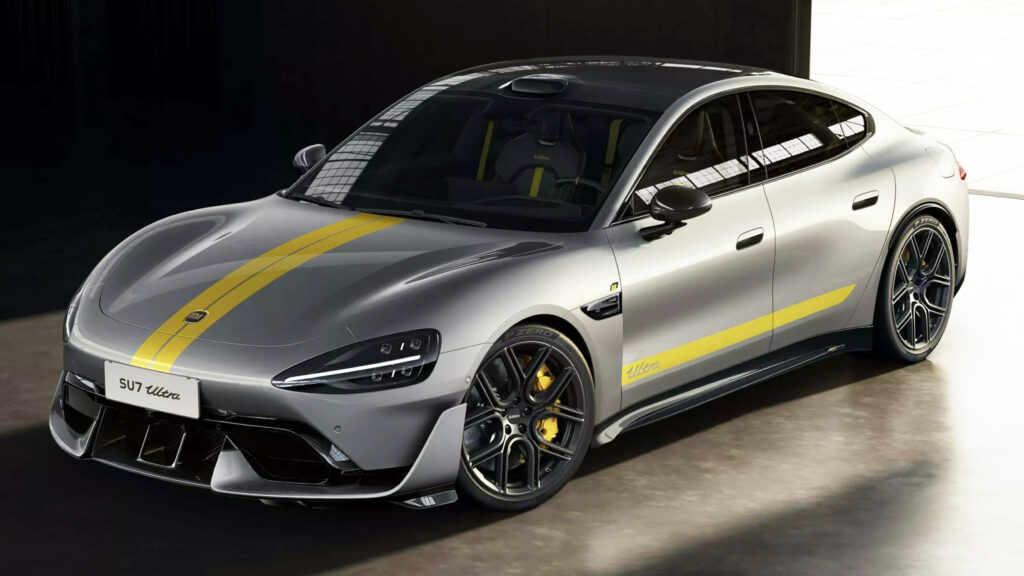
Xiaomi Conquered China In Two Years, Now It’s Coming For Europe
  • Xiaomi brings its EVs to Europe next year, starting in Germany.
  • Sales will run through dealers, not Xiaomi’s own direct model.
  • A China EV tariff of up to 45.3 percent could bite hard.

After conquering its home market of China with several exciting EVs, Xiaomi will soon start selling its cars internationally. Things will kick off in Europe next year, including in Germany, with the signing of several memorandums of understanding with dealership groups to make it happen.

Read: Xiaomi’s New $38,400 SUV Runs 314 Electric Miles Before Burning A Drop Of Gas

Xiaomi already operates a large research and development center in Munich, Germany, and will work alongside groups including LUEG Mobility GmbH, a Mercedes-Benz dealer, and Emil Frey Germany, one of the nation’s largest automotive dealership groups. Working with experienced partners will allow Xiaomi to hit the ground running with dealers that have already established trust with customers across Germany and have extensive experience in new-car sales.

\\\\\

In addition, working with dealerships rather than selling vehicles directly to consumers will give prospective buyers the chance to touch and feel Xiaomi products in the flesh before handing over any of their hard-earned cash.

Xiaomi’s models in Europe will be more expensive than the ones it sells in China. The EU imposes hefty tariffs on EVs imported from China, significantly increasing their prices. Xiaomi had yet to launch its first EV, the SU7 sedan, when the European Commission launched its investigation into Chinese EVs in 2023, and as a result, the technology company didn’t participate in the probe. As noted by the South China Morning Post, this means it could be hit with the highest possible duty of 45.3 percent.

\\\\\\\

Xiaomi’s Skynomad

Since it started selling vehicles, Xiaomi has delivered more than 700,000 units in China, a remarkable achievement given how new it is to this ultra-competitive industry. However, in China, Xiaomi is a well-established consumer product brand, often viewed as the ‘Apple of China.’ This gave it a huge competitive advantage over other new-vehicle brands as it’s already a trusted name.

Although Xiaomi products are also available in several overseas markets, they remain a relatively small player in regions like Europe and won’t be able to rely on familiarity to win over customers. Instead, it will need to convince shoppers with great features and competitive pricing, which is a tall task indeed, especially in the hotly contested markets of the Old Continent.
\\\\

Hyundai’s New Nine-Seat Electric Van Matches The ID. Buzz On Price And Beats It On Size

  • Hyundai opens European orders for the new Staria Electric.
  • It packs an 84 kWh battery and offers up to 430 km of range.
  • The electric van is priced from €57,450 ($66,800) in Germany.

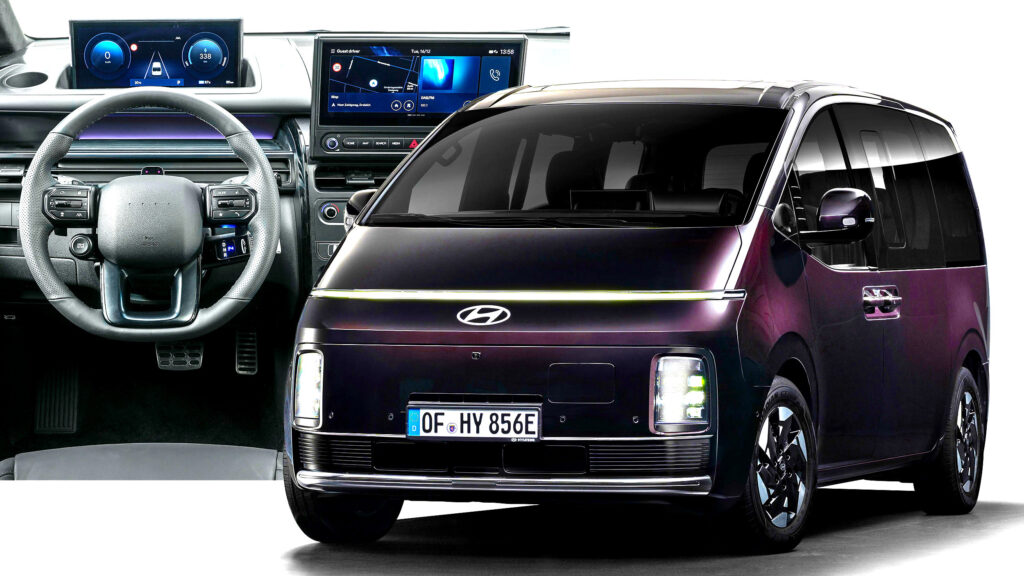
The Hyundai Staria Electric arrived in Korea earlier this year alongside the rest of the facelifted lineup, and the spaceship-shaped van has now made it to Europe, where Hyundai is positioning it against the VW ID. Buzz. The Staria is the bigger vehicle in every dimension that counts, with more room inside for people and their luggage.

Picking the Staria Electric out from its gasoline and hybrid siblings takes a look at the nose, where a redesigned front bumper hides the grille behind a smooth panel, adds a charging port, and puts active shutters in the lower intake. Aero wheels and a dedicated badge on the enormous tailgate finish the job.

More: Electric Kia PV7 Is Coming For The Ford Transit

At 5,253 mm (206.8 in) long, the Staria towers over the VW ID. Buzz and the Kia PV5. It also out-measures the standard Ford E-Tourneo Custom, VW e-Caravelle, Peugeot e-Traveller, Citroen e-Spacetourer, Opel Zafira-e Life, and Fiat E-Ulysse, though the long-wheelbase versions of those go further. It’s the same story with the new Mercedes-Benz VLE executive shuttle.

Generous Equipment

\\\\\

In Europe, the Staria Electric is available in three trim levels, called Trend, Prime, and Calligraphy. The base version comes standard with full-LED headlights, dual 12.3-inch displays, heated front seats, parking sensors, a reversing camera, a few ADAS and a three-row nine-seater layout.

More: Hyundai Is Now Charging You Extra For A Damn Gauge Cluster

The optional assistance package adds navigation, highway assist and a V2L adapter, while the premium package adds electric sliding doors and tailgate, sliding windows, sunshades, acoustic and heat-insulating privacy glass, plus a wireless charging pad. All of those come standard in the Staria Electric Prime which adds leather upholstery and ventilated front seats while offering an optional sliding roof for the first row and fixed panoramic roof for the second row.

 Hyundai’s New Nine-Seat Electric Van Matches The ID. Buzz On Price And Beats It On Size
The Staria Electric Trend and Prime (left) have a different look compared to the Caligraphy (right).

The pictured Staria Electric Calligraphy is the only version with a seven-seat layout, built around a pair of comfort seats in the second row with heating, ventilation, and relaxation functions. The flagship also gets ambient lighting, a Bose sound system, a 360-degree camera, a suede-style headliner, Nappa leather, and the Passenger View and Talk system.

More: You Can Sleep And Even Wash Your Dishes In This Hyundai Van, But You Can’t Buy It Yet

Outside, the Calligraphy separates itself with a different front bumper housing larger projection headlights, Parametric Pixel LED taillight towers that climb to the roofline, and an exclusive Galaxy Maroon paint option.

Space For Nine And Their Luggage

\\\\

Cargo capacity runs to 1,303 liters (46.0 cu ft) behind the third row in the nine-seater, with a 24-liter (0.85 cu ft) frunk for the charging cables. Towing capacity is 2,000 kg (4,409 lbs) and maximum payload is 750 kg (1,653 lbs).

More: Kia Brought Its Electric Van To America As Something New York Actually Needs

Under the skin, the van is powered by a single front-mounted electric motor producing 215 hp (160 kW / 218 PS). Energy is stored in a 84 kWh battery pack allowing WLTP range of up to 430 km (267 miles) between charges. Thanks to the 800-volt architecture, the Staria Electric can charge from 10-80% in approximately 20 minutes when connected to a DC charger, while it also gets a standard heat pump and battery heating system.

German Pricing

\\\\

In Germany, the the Hyundai Staria Electric starts at €57,450 ($66,800) for the entry-level Trend trim, €63,650 ($74,000) for the mid-tire Prime, and €66,950 ($77,800) for the flagship Calligraphy. The assistance and premium packages add €2,100 ($2,400) each, while the panorama package adds €1,300 ($1,500).

By comparison, the smaller VW ID. Buzz Pro with the long wheelbase and the 86 kWh battery starts at €57,887 ($67,300) in the same market. On the other hand, the VW e-Caravelle starts at €66,080 ($76,800) with the short-wheelbase and the 70.9 kWh battery.

\\\\

Hyundai

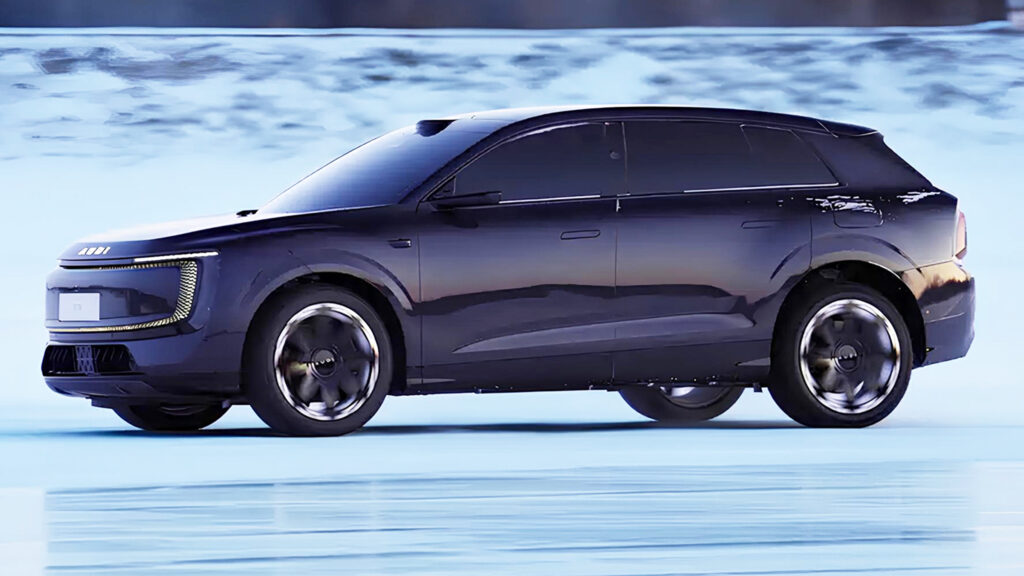
AUDIs Built For China Are Sneaking Into Germany For Double The Price, Still Cheaper Than Some Audis

  • Parallel imports of the Audi E5 Sportback and E7X are now available in Germany.
  • Importation and local homologation have caused large price premiums.
  • While pricier than in China, these AUDI models undercut some other Audi EVs.

Many of the EVs offered by Audi in Western markets aren’t exactly class leaders, especially compared to some of the company’s newer rivals. However, in China, the all-caps AUDI brand does sell two innovative electric vehicles that we suspect could sell quite well elsewhere, and they’ve just begun landing in Germany.

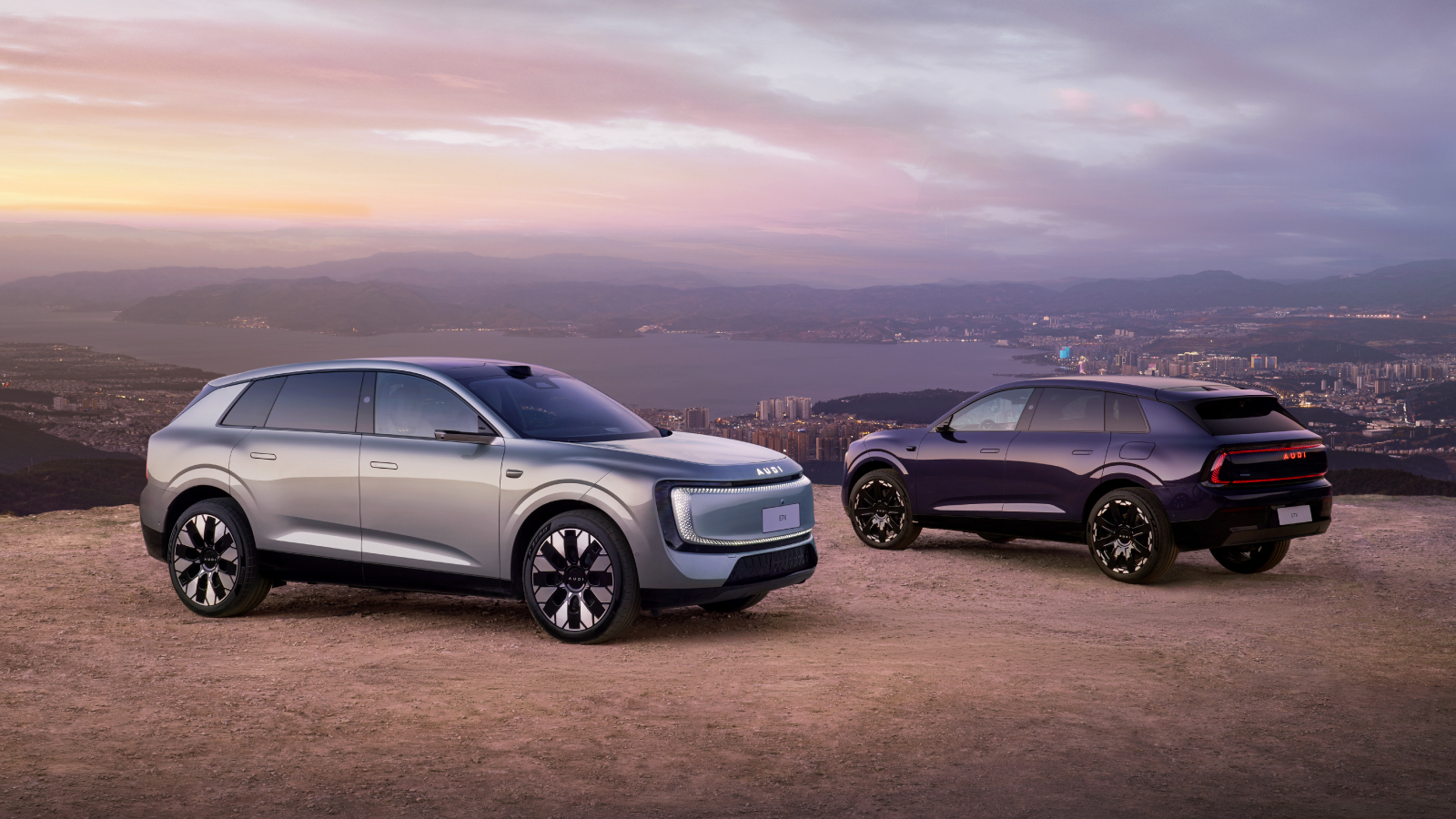
The AUDI E5 Sportback and E7X, introduced over the past 18 months in China, were developed specifically for the local market in partnership with SAIC Motor. They are not officially sold anywhere else, but European-based importer Auto China has started selling them in limited numbers in Germany.

Read: China’s Ringless AUDI EV Is Flopping Like Overcooked Noodles

Auto China, which also offers parallel imports of several vehicles from Xiaomi, SAIC, and Li Auto, purchased the vehicles in China, ships them to Germany, and homologates them for the local market. This makes them a lot more expensive than they are in Germany. In fact, Automobilwoche reports that the E5 Sportback costs €59,980 ($70,130), while the larger E7X SUV starts at €72,900 ($85,200).

Still Undercutting Euro Rivals

 AUDIs Built For China Are Sneaking Into Germany For Double The Price, Still Cheaper Than Some Audis
Audi E5 Sportback

To put those figures into perspective, the E5 Sportback starts at 205,990 yuan ($30,600) in China while the E7X is priced from 269,800 yuan ($40,100), meaning they cost roughly double when imported and sold in Germany by Auto China. Remarkably, even priced at €59,980 ($70,130) and €72,900 ($85,200), they’re still a lot cheaper than some of Audi’s homegrown products.

 AUDIs Built For China Are Sneaking Into Germany For Double The Price, Still Cheaper Than Some Audis
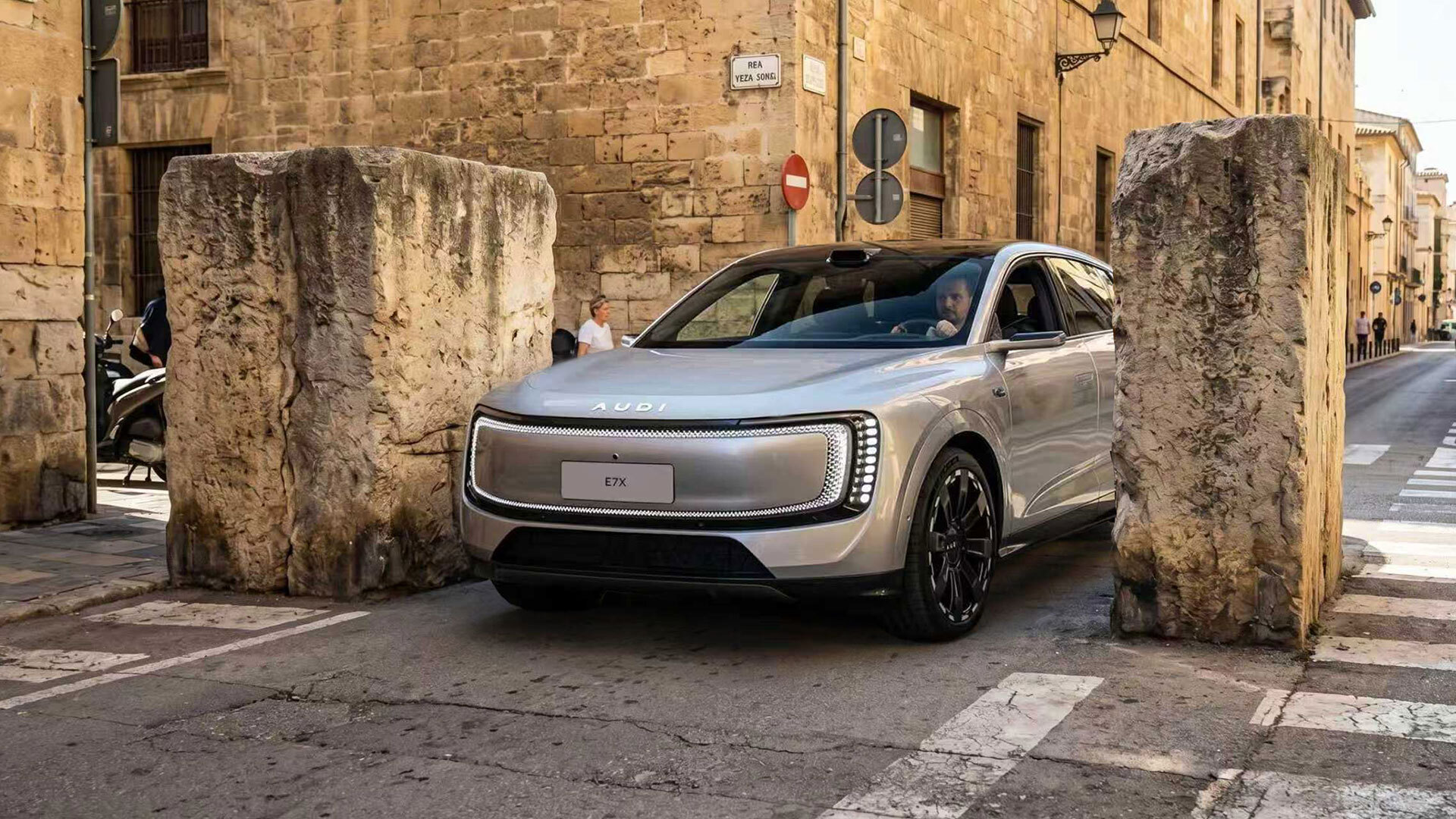
Audi E7X

Perhaps the closest model to the E5 Sportback is Audi’s own S6 Sportback e-tron, and it starts at €99,500 ($116,300). Whereas the Chinese model has twin electric motors and 776 hp, the S6 Sportback e-tron tops out at 543 hp. Similarly, the Audi SQ6 e-tron, which doesn’t appear anywhere near as luxurious as the E7X, is priced from €93,800 ($109,700), making it much more expensive than the imported E7X.

But if you live in Germany and are tempted, buying a parallel import has risks. Audi could pursue legal action to stop their sale. In 2023, this is what VW did when a German importer brought in 20 Chinese-market ID.6s with plans to sell them, but after a drawn-out legal process, was ordered to destroy them all. Even if Audi doesn’t move to ban the import and sale of its Chinese models, owners will likely not be offered service or repair support.

 AUDIs Built For China Are Sneaking Into Germany For Double The Price, Still Cheaper Than Some Audis
Audi E7X
❌